
夜市不是景点,是一座城市的另一副面孔 | Night Markets Aren't Tourist Attractions — They're a City's Other Face
夜市不是景点,是一座城市的另一副面孔 | Night Markets Aren't Tourist Attractions — They're a City's Other Face
带你去一个地方:台湾路夜市,武汉,晚上九点半。
Let me take you somewhere: Taiwanlu Night Market, Wuhan, 9:30 PM.
烤鱼摊的烟雾把整条街笼罩在一片白雾里,辣椒和孜然的气味混在一起,远远就能闻到。摊主是个四十多岁的男人,同时照看着三条鱼,手里的刷子蘸着红油在鱼身上来回涂抹,眼睛却在看旁边桌的客人有没有需要加料。他的妻子坐在收银台后面,手机屏幕亮着,但眼神一直在扫视整个摊位。两个人之间没有说话,但配合得天衣无缝。这是他们开了八年的摊子。
Smoke from the grilled fish stalls wraps the entire street in white haze. The smell of chili and cumin hits you from half a block away. The vendor is a man in his mid-forties, tending three fish simultaneously, his brush loaded with red oil sweeping back and forth across the skin, while his eyes check whether the customers at the next table need more seasoning. His wife sits behind the cash register, phone screen lit, but her gaze continuously sweeps the whole stall. They haven't exchanged a word, but their coordination is seamless. They've run this stall for eight years.
夜市的地理学
中国的夜市不是均匀分布的。它们在特定的城市文化土壤里生长得特别茂盛:成都、重庆、武汉、长沙、西安、郑州——这些城市的夜市密度和活跃程度,远超北京和上海。原因不复杂:气候、消费习惯、城市管理风格,以及一种难以量化的"夜生活意愿"。
China's night markets aren't evenly distributed. They thrive in particular urban cultural soils: Chengdu, Chongqing, Wuhan, Changsha, Xi'an, Zhengzhou — the density and vitality of night markets in these cities far exceeds Beijing or Shanghai. The reasons aren't complicated: climate, consumption habits, city management style, and a hard-to-quantify "willingness to be out at night."
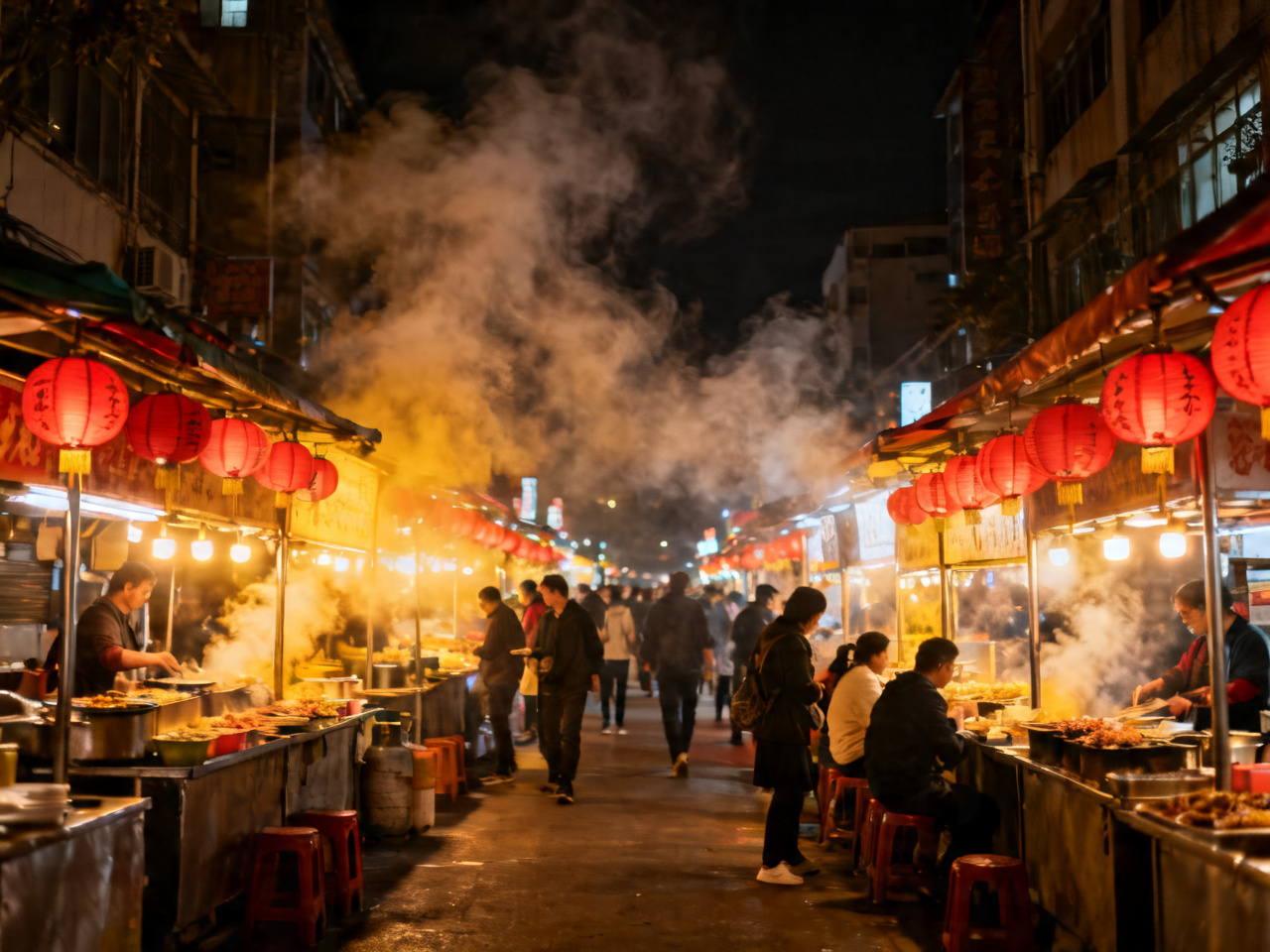
成都的夜市以串串和冒菜为核心,周边卫星摊位提供凉糕、钵钵鸡、冰粉。重庆的夜市更野,江边的露天摊位从傍晚开到凌晨两三点,江风把烤肉的烟吹散,食客坐在塑料凳上,对着夜景喝啤酒。西安的夜市集中在回民街和粉巷一带,烤肉、凉皮、泡馍的摊位一家挨着一家,游客和本地人混在一起,分不清谁是谁。
Chengdu's night markets revolve around string skewers and mao cai, with satellite stalls offering rice jelly, bowl-bowl chicken, and ice jelly desserts. Chongqing's are wilder — riverside open-air stalls run from dusk until 2 or 3 AM, river wind dispersing the grilling smoke, diners sitting on plastic stools drinking beer against the nightscape. Xi'an's night markets concentrate around Muslim Quarter and Fenxiang Lane, grilled meat, liangpi, and paomo stalls packed side by side, tourists and locals indistinguishable from each other.
逛吃路线:怎么走才不浪费
一个导游不会告诉你的事实:夜市的前三分之一通常是给游客准备的。摊位更整洁,价格更高,菜单上有英文,老板会主动招揽。真正好吃的摊位往往在夜市的中段或者末尾,或者在主街旁边的小巷里。
A fact no tour guide will tell you: the first third of most night markets is essentially set up for tourists. Stalls are tidier, prices higher, menus have English, vendors actively solicit. The genuinely good stalls tend to be in the middle or toward the end of the market, or tucked into the side alleys off the main drag.
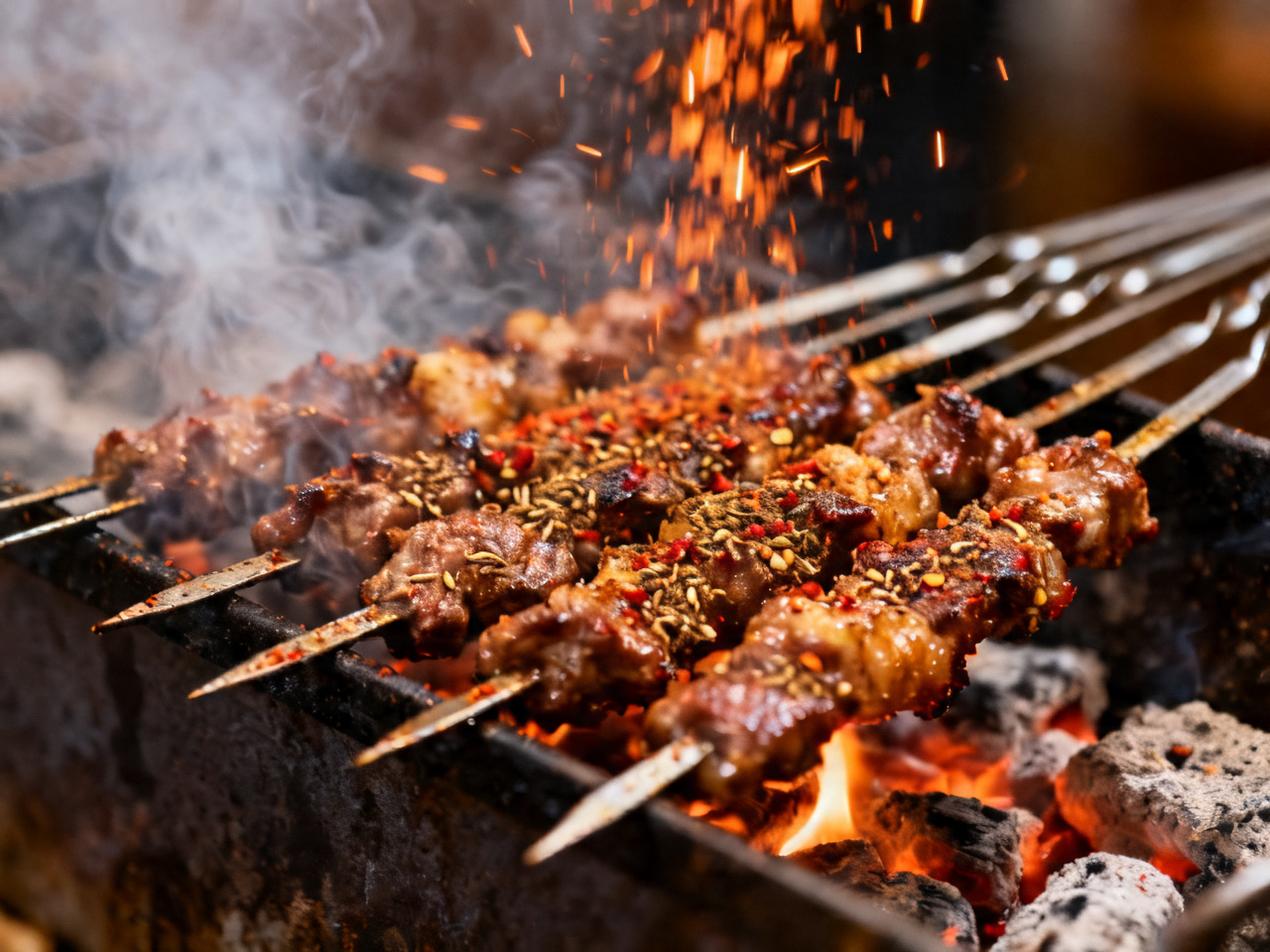
进入一个夜市,建议先走完全程再回头点单。用十五分钟把整个市场走一遍,观察哪些摊位前排队的人最多,哪些摊主在忙碌而不是在等待,哪些食物看起来是现做的而不是提前备好的。这三个指标比任何推荐榜单都可靠。
When entering a night market, walk the full length before ordering anything. Spend fifteen minutes covering the whole market: observe which stalls have the longest queues, which vendors are busy rather than waiting, which foods are being made to order rather than pre-prepared. These three indicators are more reliable than any recommendation list.
点单技巧:语言不是障碍
很多外国游客担心语言问题。实际上,夜市是语言障碍最低的饮食场景之一。指着别人碗里的东西说"这个",伸出手指表示数量,付钱找零——整个交易可以在零语言的情况下完成。
Many foreign visitors worry about the language barrier. In practice, night markets are among the lowest-barrier food environments in China. Point at what someone else is eating and say "this one," hold up fingers for quantity, pay and receive change — the entire transaction can complete with zero shared language.
几个有用的短句: - "这个多少钱" (zhège duōshao qián) — 这个多少钱 - "不辣" (bù là) — 不要辣 - "打包" (dǎbāo) — 打包带走 - "加一份" (jiā yī fèn) — 再来一份
A few useful phrases: - "zhège duōshao qián" — how much is this - "bù là" — not spicy - "dǎbāo" — to go / pack it up - "jiā yī fèn" — one more portion
时间窗口
夜市有它自己的时间节奏。大多数夜市在晚上七点后才真正热起来,九点到十一点是人流最密集的时段,也是摊主状态最好的时候——食材新鲜,节奏稳定,不会因为太忙而出错,也不会因为太闲而敷衍。
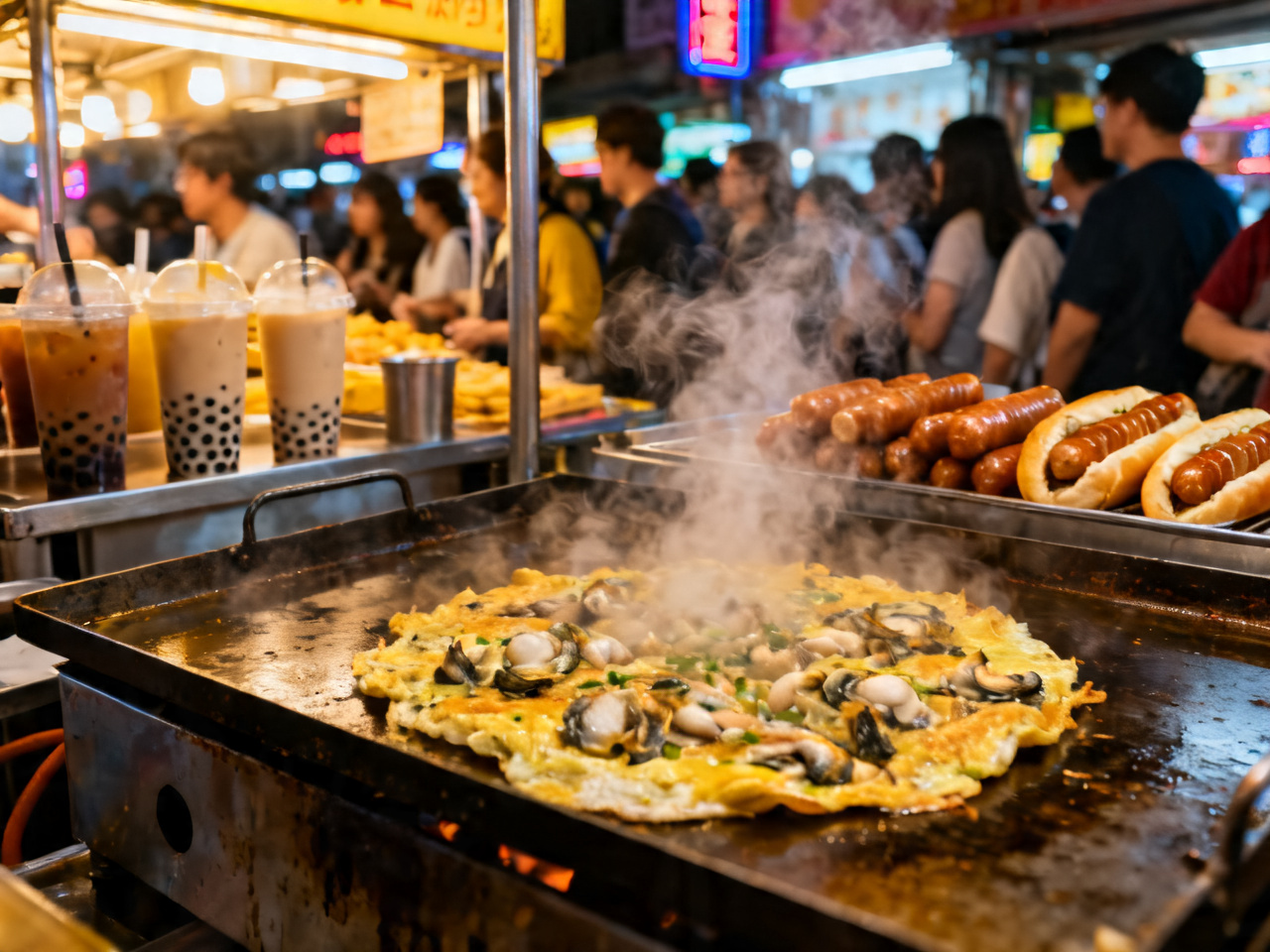
Night markets have their own temporal rhythm. Most don't truly come alive until after 7 PM. The peak window is 9 to 11 PM — this is when crowds are densest and vendors are at their best: ingredients still fresh, pace steady, not so slammed that quality slips, not so slow that effort fades.
凌晨之后的夜市有另一种气质。人少了,摊主开始收摊,但留下来的那些往往是最有意思的——有人在收拾,有人在数钱,有人坐下来自己吃一碗今晚没卖完的东西。这个时间段的夜市,更像是一个城市在卸妆。
After midnight, night markets take on a different character. The crowds thin, stalls begin closing, but those that remain are often the most interesting — someone packing up, someone counting cash, someone sitting down to eat a bowl of whatever didn't sell tonight. At this hour, a night market feels more like a city taking off its makeup.
夜市不需要攻略,需要的是时间和好奇心。带上一个空胃,走进去,跟着人群走,跟着气味走。城市会告诉你接下来该吃什么。
Night markets don't need a strategy guide. They need time and curiosity. Bring an empty stomach, walk in, follow the crowd, follow the smell. The city will tell you what to eat next.
延伸阅读 / Related Reads
- 中国八大菜系全览 | The 8 Great Cuisines of China
- 第一口就着了魔:一个外乡人在成都的麻辣沉沦 | Spellbound at First Bite: A Stranger's Descent into Chengdu's Heat
- 街头那碗热气,才是中国城市的真实体温 | Street Steam: The Real Pulse of Chinese Cities
- 花椒档案:一个植物学者眼中的四川味觉地图 | The Peppercorn Dossier: Sichuan's Flavor Map Through a Botanist's Eyes
- 华东五城10日经典环线 | 10-Day East China Five-City Loop
- 香包制作:我第一次发现香气也可以被一针一线缝起来 | Scented Sachet Making: The First Time I Realized Fragrance Could Be Sewn Together with Needle and Thread
- 第一晚住进朋友家前,我先把住宿登记这件事弄明白了 | Before Staying at a Friend’s Place in China, I Learned How Accommodation Registration Really Works
- 低价团不是不能报,但合同要比宣传页更重要 | Cheap Tours Are Not Always Bad, but the Contract Matters More Than the Brochure
- 龙舟不只是比赛:一个外国人看懂端午的三年 | Dragon Boats Aren't Just Racing: 3 Years of an Outsider Learning Duanwu
- 我在高铁站丢过方向,但没丢掉行程 | I Lost My Direction at a High-Speed Railway Station but Not My Trip
- 烤鸭不只是一道菜,它是北京给世界的一封信 | More Than a Dish: Peking Duck as Beijing's Letter to the World
- 螺蛳粉:一碗臭出国界的粉 | Luosifen: The Stinky Noodle That Conquered the World
- 从零下20度到四季如春:中国南北气候差有多离谱 | Minus 20 to Eternal Spring — China's North-South Climate Gap Is Wild
- 重庆不需要滤镜:一座让赛博朋克自惭形秽的城市 | Chongqing Needs No Filter: A City That Makes Cyberpunk Feel Inadequate
- 在中国穷游要花多少钱?每日预算全拆解 | How Much Does It Cost to Travel China on a Budget?
Comments (0)