
一笼一世界:在茶楼里读懂广东人 | One Basket, One World: Reading Cantonese Culture Through Dim Sum
一笼一世界:在茶楼里读懂广东人 | One Basket, One World: Reading Cantonese Culture Through Dim Sum
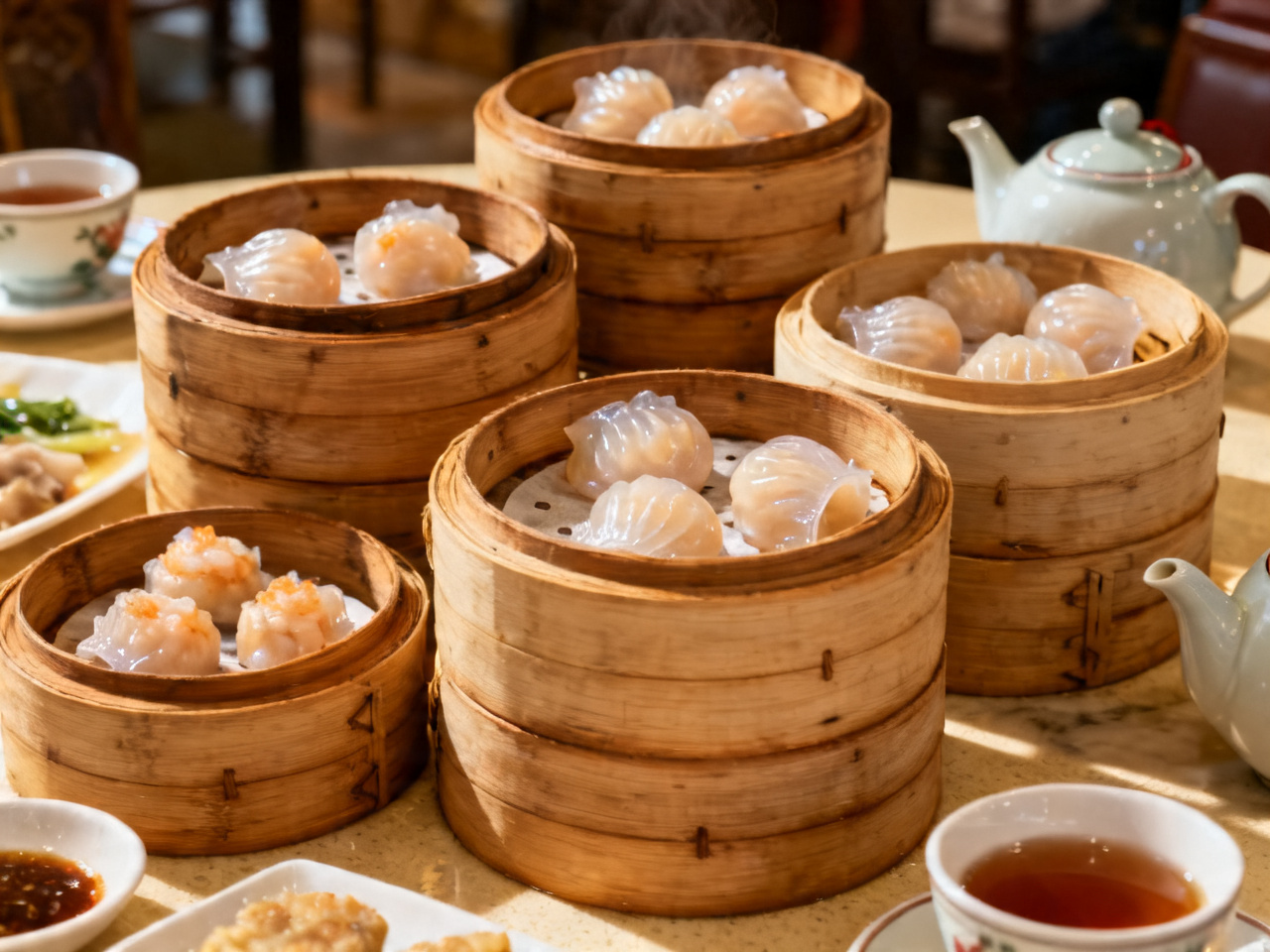
清晨七点,广州荔湾区的莲香楼刚刚开门,门口已经排了二十几个人。老街坊们拎着鸟笼,把笼子挂在门边的铁钩上,然后进去占座。服务员推着铁皮车穿梭在桌间,车上叠着热气腾腾的竹笼。一个穿白背心的老伯伸手拦住车,不说话,只用手指点了点最上层的那笼虾饺。这一幕,每天都在珠三角数百家茶楼里重复上演。
It's seven in the morning at Lianxiang Lou in Guangzhou's Liwan District, and there are already two dozen people queued outside. Old neighborhood regulars arrive carrying birdcages, hang them on iron hooks by the door, then head inside to claim their seats. Servers push metal carts between the tables, stacked with steaming bamboo baskets. An old man in a white undershirt reaches out to stop a cart, says nothing, and simply points at the top basket of har gow. This scene repeats itself every day in hundreds of teahouses across the Pearl River Delta.
点心这个词,字面意思是"点到心里"——用食物触碰内心。这个解释或许过于浪漫,但粤式点心确实有一种别处没有的细腻。它不是一顿饭,而是一种仪式,广东话叫"饮茶",喝茶,而不是"吃点心"。茶才是主角,点心是配角,但配角往往比主角更令人难忘。
The term dim sum (點心) literally means "touch the heart" — using food to reach something inside you. That interpretation may be overly poetic, but Cantonese dim sum does possess a delicacy found nowhere else. It isn't a meal so much as a ritual. In Cantonese it's called yum cha — drink tea — not "eat dim sum." Tea is the lead, dim sum the supporting role, yet the supporting cast often steals the show.
那些你必须认识的面孔
虾饺(Har Gow)是点心世界的皇帝。考核一家茶楼水准,老饕们只需要点一笼虾饺:皮要薄到透光,能隐约看见里面粉红色的虾肉;折要整齐,传统标准是不少于七折;咬下去,皮有弹性但不粘牙,虾肉爽脆,带着轻微的甜。做到这三点,这家茶楼就算过关了。
Har gow is the emperor of the dim sum world. To judge a teahouse, seasoned eaters need only order one basket: the skin must be thin enough to be translucent, the pink shrimp visible through it; the pleats must be neat, with the traditional standard being no fewer than seven folds; and when you bite in, the wrapper should be springy without sticking to your teeth, the shrimp crisp and faintly sweet. Hit all three marks, and the teahouse has passed.
烧卖(Siu Mai)是虾饺的老搭档,两者几乎总是同时出现,像是相声里的捧哏和逗哏。烧卖用猪肉和虾做馅,顶部敞开,点缀一粒橙红色的蟹籽或豌豆。它比虾饺更豪放,一口下去满嘴肉汁,是那种让人不自觉加快筷子速度的东西。
Siu mai is har gow's constant companion — the two almost always appear together, like a comedy duo. Siu mai is filled with pork and shrimp, open at the top and garnished with a dot of orange crab roe or a green pea. It's bolder than har gow: one bite floods your mouth with meat juices, the kind of thing that makes your chopsticks move faster without you noticing.
叉烧包分两派:蒸的和烤的。蒸叉烧包顶部自然开裂,像一朵白花,内馅是甜咸交织的叉烧肉;烤叉烧包表皮金黄油亮,带着焦糖香气。两者各有拥趸,争论从未停止,就像广州人争论哪家茶楼的早茶最正宗一样,永远没有答案。
Char siu bao comes in two camps: steamed and baked. The steamed version splits naturally at the top like a white flower, its filling a sweet-savory tangle of barbecued pork. The baked version is golden and glossy, carrying a caramel fragrance. Both have devoted followings, and the debate never ends — much like Guangzhou locals arguing over which teahouse serves the most authentic morning tea. There is no answer.
肠粉:被低估的天才
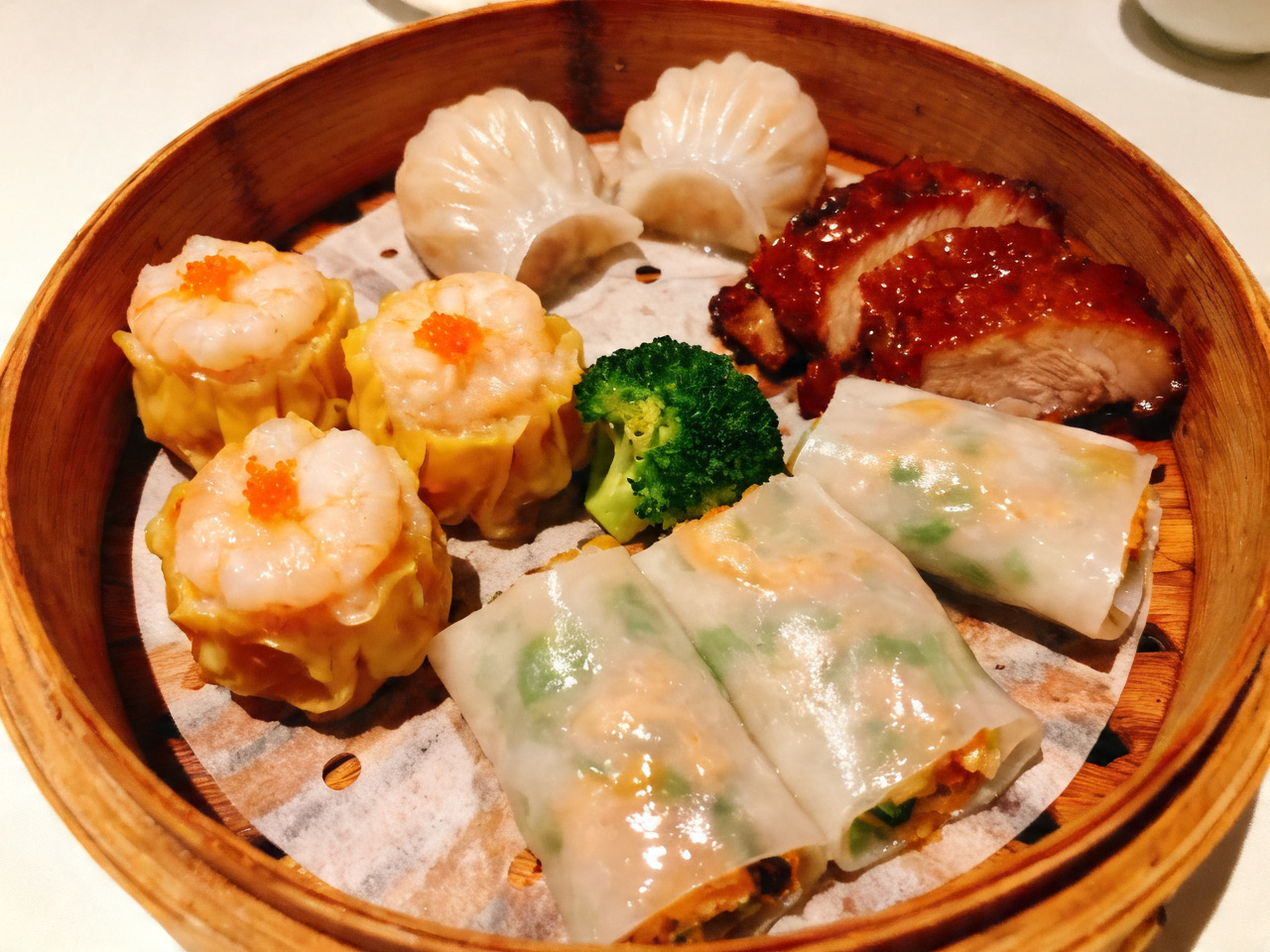
如果说虾饺是点心界的明星,肠粉就是那个被低估的天才。一张薄如蝉翼的米浆皮,裹着虾、牛肉或叉烧,淋上酱油和花生酱,软滑得像绸缎。广州街头的肠粉档,早上六点就开始营业,一个人站在蒸柜前,用刮板把米浆皮从蒸盘上刮下来,动作行云流水,十秒钟一份。
If har gow is dim sum's star, cheung fun is its underappreciated genius. A sheet of rice noodle thin as cicada wings wraps around shrimp, beef, or char siu, then gets drizzled with soy sauce and peanut sauce — silky smooth as satin. Cheung fun stalls on Guangzhou streets open at six in the morning, one person standing before a steam cabinet, scraping the rice sheet off the tray with a spatula in a motion fluid as water, one portion every ten seconds.
饮茶的时间逻辑
广东人把一天分成早茶、午茶、下午茶三个时段,但早茶是最重要的。周末的早茶可以从早上七点吃到中午十二点,一家人围坐,茶壶换了一壶又一壶,点心盘子叠了一层又一层。这不是在吃饭,是在叙旧,是在谈生意,是在让孩子认识七大姑八大姨。
Cantonese people divide the day into morning tea, afternoon tea, and late-afternoon tea, but morning tea reigns supreme. On weekends it can stretch from seven in the morning to noon — a whole family seated together, teapot after teapot refilled, dim sum plates stacking up. This isn't eating. It's catching up, doing business, letting children meet the aunts and uncles they only see twice a year.
有一个细节外地人常常不知道:在茶楼里,如果别人给你倒茶,你要用两根手指轻叩桌面,表示感谢。这个手势据说源自清朝,皇帝微服出巡时,臣子不能下跪行礼,便以手指代替叩头。真假难考,但这个动作已经成为粤式饮茶文化里最优雅的密码之一。
There's a detail outsiders often miss: in a teahouse, when someone pours tea for you, you tap two fingers lightly on the table as thanks. The gesture is said to originate in the Qing dynasty — when the emperor traveled incognito, ministers couldn't kneel, so they used their fingers to mimic the kowtow. Whether true or not, the gesture has become one of the most elegant codes in Cantonese tea culture.
去哪里找真正的点心
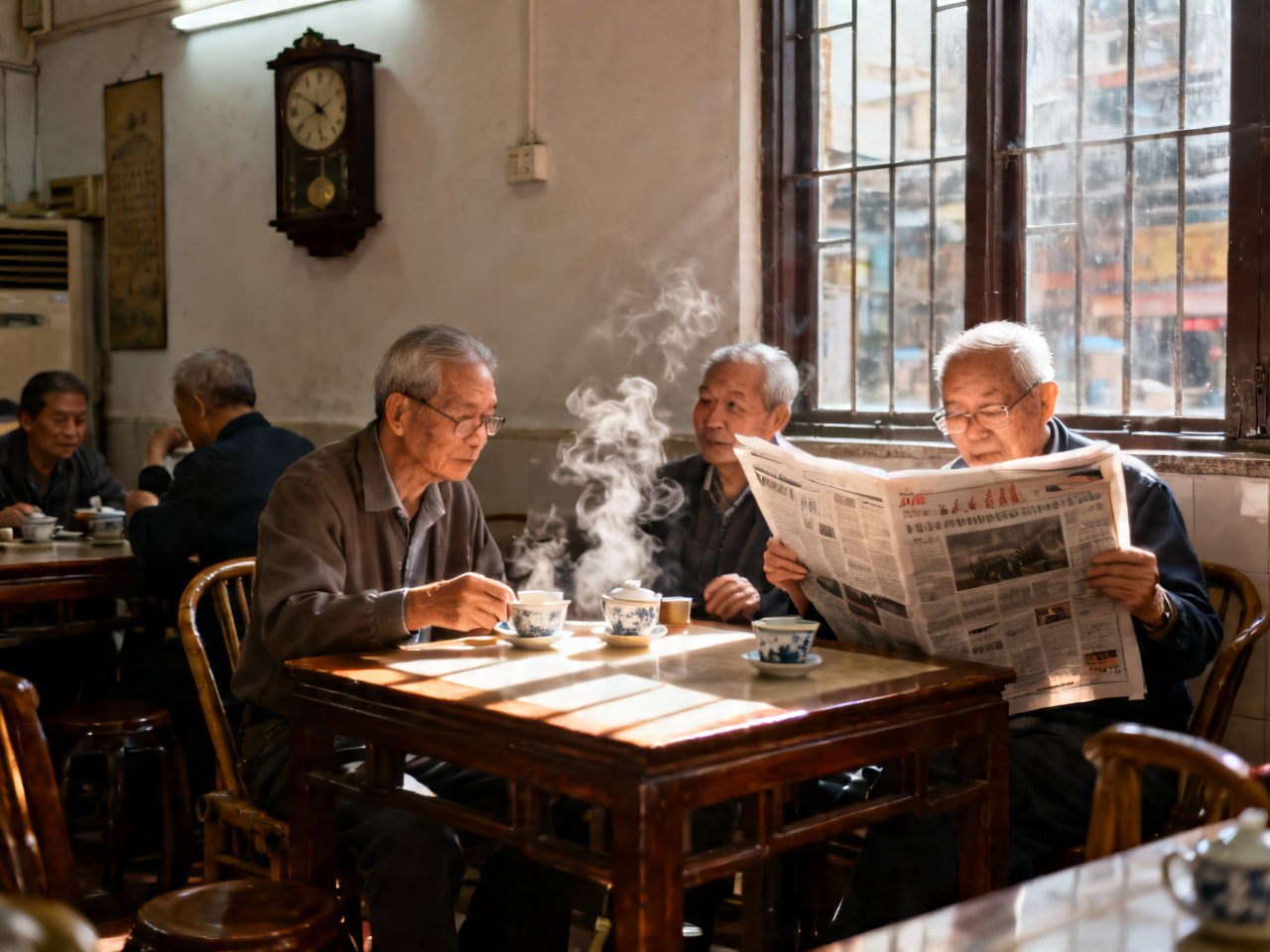
香港的点心以精致著称,米其林星级茶楼里,一笼虾饺的价格可以买广州街边十份肠粉。但精致不等于正宗,广州老城区的街坊茶楼,才是点心最本来的样子——嘈杂、热闹、实惠,充满烟火气。
Hong Kong's dim sum is known for refinement — in a Michelin-starred teahouse, one basket of har gow costs what ten portions of cheung fun would on a Guangzhou street. But refinement isn't the same as authenticity. The neighborhood teahouses of Guangzhou's old city are dim sum in its truest form: noisy, lively, affordable, full of the texture of everyday life.
顺德是另一个值得专程前往的地方。这个珠三角的小城被称为"中国厨师之乡",当地的点心有一种朴素的霸气:均安蒸猪、大良野鸡卷、伦教糕……这些名字在广州的茶楼菜单上几乎看不到,却是粤式饮食文化最深处的根。
Shunde is another place worth a dedicated trip. This small Pearl River Delta city is called "the hometown of Chinese chefs," and its dim sum carries an unassuming authority: steamed pork from Jun'an, wild pheasant rolls from Daliang, Lunjiao cake... These names rarely appear on Guangzhou teahouse menus, yet they are the deepest roots of Cantonese food culture.
下次当你坐进一家茶楼,看着服务员推着车从你身边经过,不妨放慢一点。那笼虾饺从揉面到上桌,经过了多少双手,承载了多少年的技艺传承。点心的"点",或许真的是在点什么——点一点时间,点一点人情,点一点那些日常里容易被忽略的美好。
Next time you settle into a teahouse and watch a server push a cart past you, slow down a little. That basket of har gow passed through how many hands from dough to table, carrying how many years of craft. The "touch" in dim sum — maybe it really is touching something: a touch of time, a touch of human warmth, a touch of the small beauties that daily life makes easy to overlook.
延伸阅读 / Related Reads
- 中国八大菜系全览 | The 8 Great Cuisines of China
- 第一口就着了魔:一个外乡人在成都的麻辣沉沦 | Spellbound at First Bite: A Stranger's Descent into Chengdu's Heat
- 街头那碗热气,才是中国城市的真实体温 | Street Steam: The Real Pulse of Chinese Cities
- 花椒档案:一个植物学者眼中的四川味觉地图 | The Peppercorn Dossier: Sichuan's Flavor Map Through a Botanist's Eyes
- 华东五城10日经典环线 | 10-Day East China Five-City Loop

- 银川那家红招牌小馆没有摆盘,却把西北夜风后的饥饿接得很稳 | A Small Red-Sign Eatery in Yinchuan Offered No Fancy Presentation, Yet It Caught My Hunger After the Desert Wind
- 中国旅游购物攻略:特产与纪念品 | China Shopping Guide: Local Specialties & Souvenirs
- 中国对游客安全吗?一个在华生活多年的人告诉你真相 | Is China Safe for Tourists? An Honest Answer from Someone Who Lives Here
- 美国人去中国旅行前必须知道的事 | What Americans Need to Know Before Traveling to China
- 四月江南烟雨游 | April in Jiangnan: Misty Rain and Ancient Water Towns
- 东北三省冬季8日游 | 8-Day Northeast China Winter Tour
- 中国新年:传统与习俗 | Chinese New Year: Traditions and Customs
- 第一口就着了魔:一个外乡人在成都的麻辣沉沦 | Spellbound at First Bite: A Stranger's Descent into Chengdu's Heat
- 元旦跨年旅游目的地盘点 | New Year's Eve Travel Destinations Roundup
- 在泉州看见海上丝路:寺庙、古港和街巷里的混合文化 | Quanzhou and the Maritime Silk Road: Temples, Port Traces, and Living Culture
Comments (0)