
在喀什,先让我停下来的不是景点,而是路口边那只刚出炉的馕 | In Kashgar, It Was Not a Landmark but a Fresh Naan Beside the Crossing That Made Me Stop
第一次到喀什,我先学会观察路口和人流 | On My First Day in Kashgar, I Learned to Read Crossroads and Crowds
-
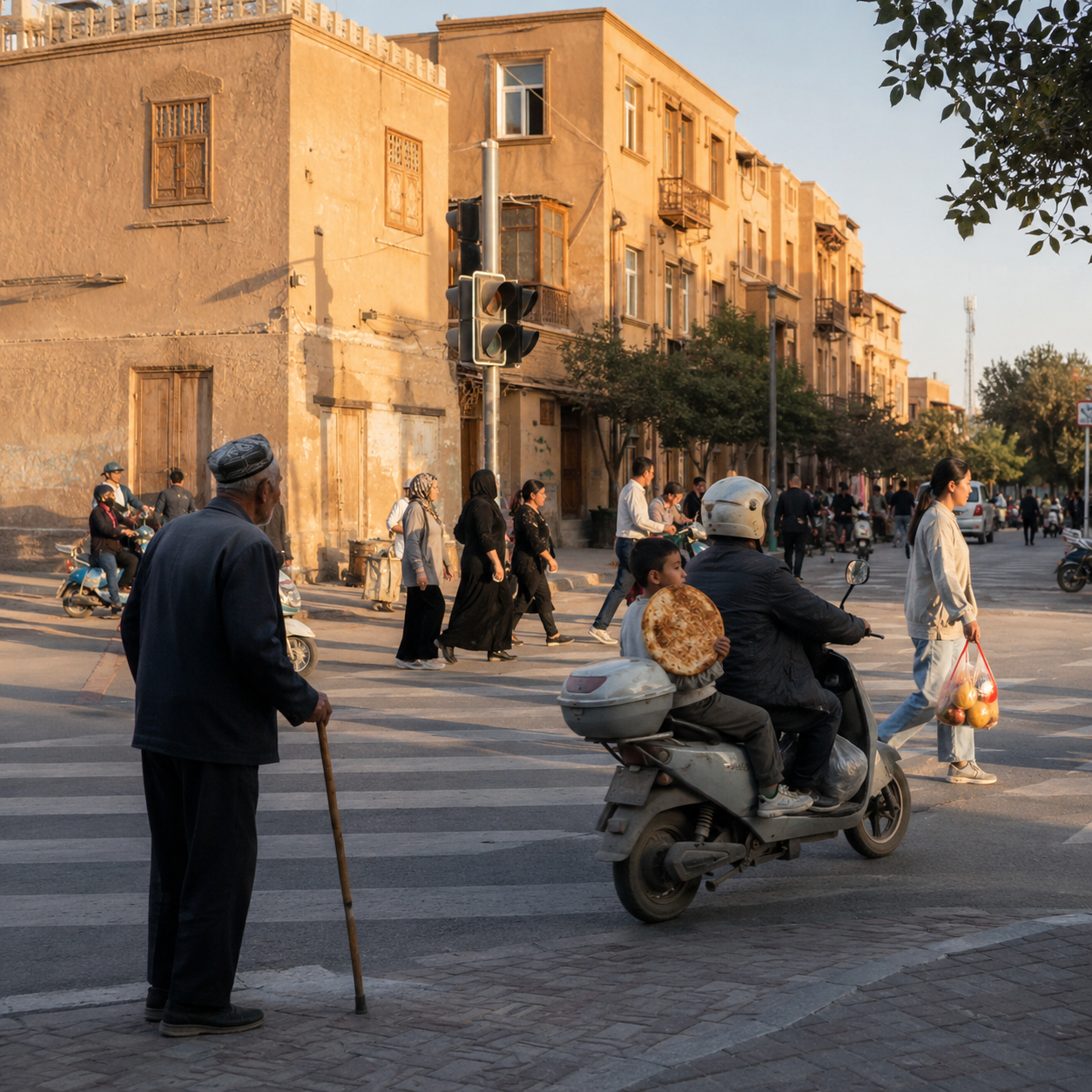
喀什的路口像一只永远醒着的眼睛,看见四面八方的人慢慢汇来,又慢慢散开。我站在老城边的一处十字路口,太阳还没完全落下,墙面被照成温暖的土黄色。电动车从身边轻轻滑过,车后座坐着孩子,手里抓着一块馕;戴花帽的老人拄着拐杖等绿灯;年轻人提着装满水果的塑料袋,从斑马线一端快步走到另一端。这里的人流不是单纯的拥挤,而像一条有节奏的河。它带着语言、气味、颜色和日常的重量,从每一条巷子流向路口,又从路口回到生活里。
-
A crossroads in Kashgar is like an eye that never fully sleeps, watching people from every direction gather slowly and disperse again. I stood at an intersection near the old city as the sun had not yet set completely, and the walls were warmed into an earthen yellow. Electric scooters slid gently past me, a child on the back seat gripping a piece of naan. An elder in a doppa cap waited for the green light with a cane. A young man carrying plastic bags full of fruit crossed quickly from one side of the zebra crossing to the other. The flow here is not mere crowding; it is a river with rhythm. It carries language, scent, color, and the weight of everyday life from every alley to the crossroads, then back into life again.
-
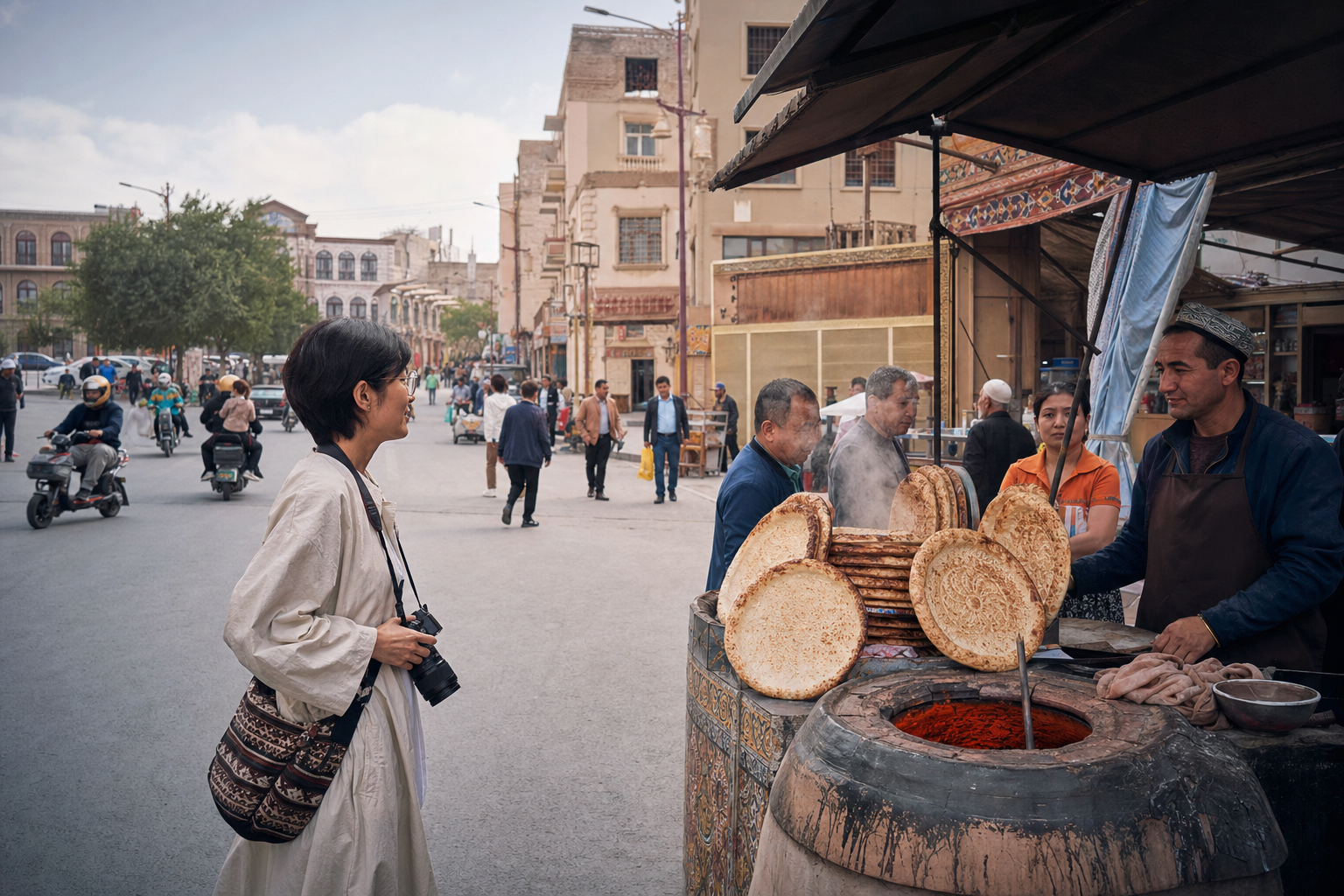
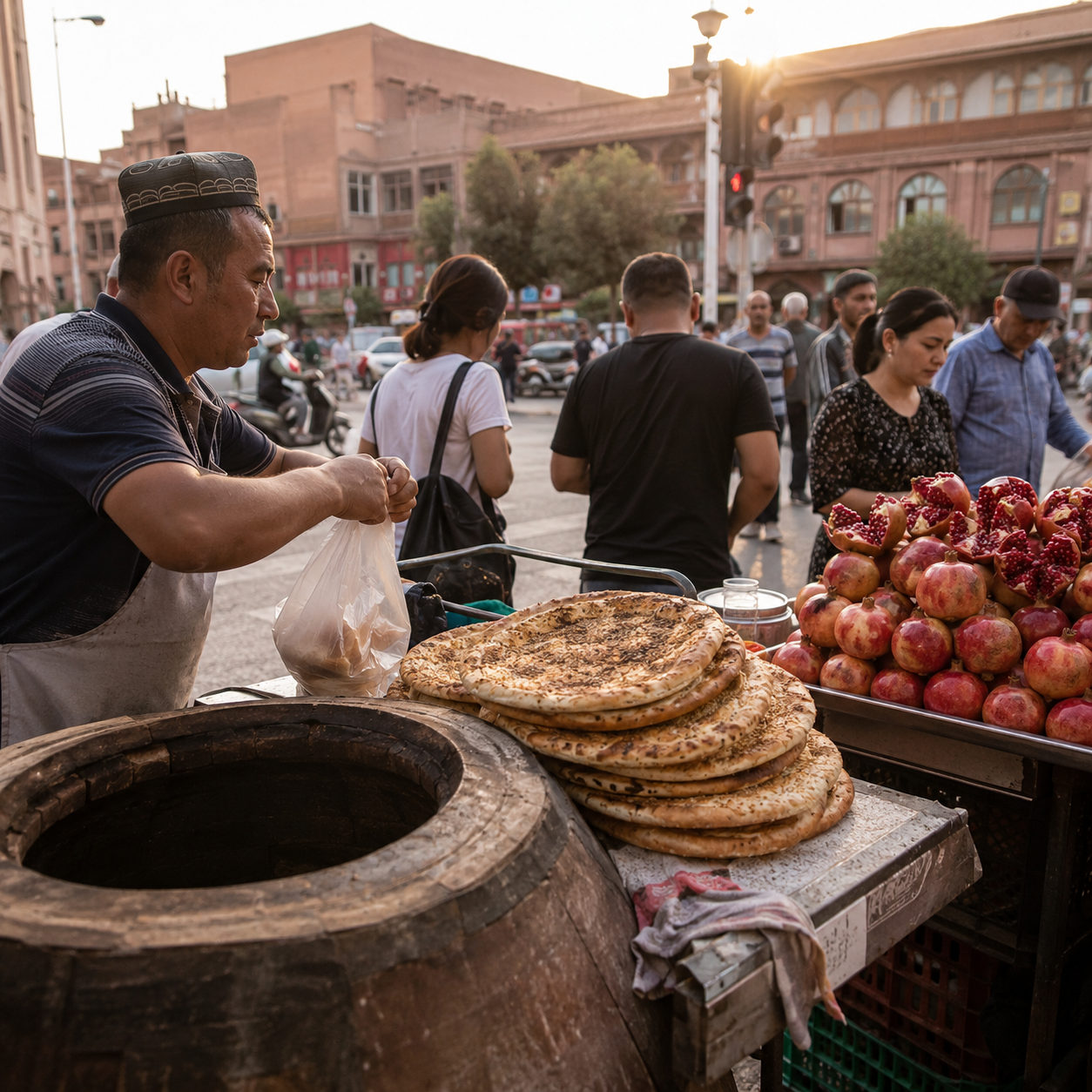
路口一角有卖馕的小摊,炉子旁边堆着刚出炉的圆饼,芝麻和麦香在热气里扩散。摊主动作很快,一手收钱,一手把馕装进袋子,偶尔抬头看一眼信号灯和人群。另一边是水果摊,石榴被切开,红籽在夕光里亮得像小灯。有人停下来问价,有人只是经过时看一眼,脚步没有真正停住。喀什的路口因此有一种特别的层次:交通在流动,买卖在进行,邻里在招呼,旅行者在张望。每一种动作都不同,却被同一盏红绿灯临时安排在一起。
-
At one corner stood a naan stall, fresh round breads piled beside the oven, sesame and wheat fragrance spreading through the heat. The vendor moved quickly, taking money with one hand and slipping bread into bags with the other, occasionally lifting his eyes to the signal light and crowd. On the other side was a fruit stand, pomegranates cut open so their red seeds shone like small lamps in the evening light. Some people stopped to ask prices; others only glanced while passing, their steps never fully pausing. The Kashgar crossroads therefore has a special layering: traffic flows, trade continues, neighbors greet one another, travelers look around. Each movement is different, yet the same traffic light temporarily arranges them together.
-
等灯的时候,我听见好几种声音重叠。汽车低低地响,电动车铃声短促,摊主的吆喝带着上扬的尾音,孩子的笑声从人群缝隙里跳出来。维吾尔语、普通话和偶尔的英语在空气里交错,有些我听得懂,有些听不懂,但都能感到它们属于这个地方。路口最真实的地方,正是这些不需要被翻译的节奏。人们看灯、让车、招手、侧身、加快或放慢脚步,身体先于语言完成沟通。一个陌生人稍稍停一下,另一个人便顺势过去,秩序就在这种细小的默契里生成。
-
While waiting for the light, I heard several kinds of sound overlapping. Cars hummed low, scooter bells rang briefly, vendors called with rising endings, and children’s laughter jumped out from gaps in the crowd. Uyghur, Mandarin, and occasional English crossed in the air. Some I understood and some I did not, but all felt as if they belonged to this place. The truest part of the crossroads lies in these rhythms that do not need translation. People watch the lights, yield to vehicles, wave, turn sideways, speed up or slow down; bodies communicate before language does. When one stranger pauses slightly, another passes naturally, and order forms inside this tiny tacit understanding.
-
喀什老城的建筑在路口周围展开,土色墙面、木格窗、拱形门洞和新的店招彼此相邻。阳光斜照时,墙上的纹理清楚得像手掌纹。人流经过这些墙,不停改变画面的重心:一群放学的孩子让街角突然明亮,一位推车卖瓜的男人让路口变得沉稳,几位穿鲜艳裙子的女士走过时,整条斑马线都像被颜色点燃。我站在原地,发现路口比任何观景台都更能说明喀什。观景台让人俯瞰城市,路口却让人被城市包围,并在包围中听见它的呼吸。
-
The buildings of Kashgar’s old city spread around the intersection: earthen walls, wooden lattice windows, arched doorways, and new shop signs standing beside one another. In slanting sunlight, the textures on the walls were as clear as palm lines. The passing crowd kept changing the center of the scene: a group of schoolchildren suddenly brightened the corner, a man pushing a cart of melons made the intersection feel grounded, and several women in vivid dresses seemed to ignite the whole zebra crossing with color. Standing still, I realized a crossroads explains Kashgar better than any viewing platform. A platform lets you overlook a city; a crossroads surrounds you with it and lets you hear its breathing.
-
红灯亮起,人群在路边聚成一弯。有人低头看手机,有人把孩子往身边拉近,有人趁停下的间隙整理头巾。几秒钟的等待让所有人的速度暂时归零,也让观察变得可能。我看见一位老人把手里的馕掰下一小块递给身旁的孙子,孩子接过后立刻咬了一口;看见两个年轻人隔着车流挥手,笑得很大声;看见一名外卖骑手把脚撑在地上,眼睛盯着前方,准备绿灯一亮就出发。路口的等待不是空白,它装满了生活正在调整姿势的瞬间。
-
When the red light came on, the crowd gathered in a curve at the roadside. Some looked down at phones, some pulled children closer, and some used the pause to adjust headscarves. A few seconds of waiting reset everyone’s speed to zero and made observation possible. I saw an elder break off a small piece of naan and hand it to the grandson beside him, who immediately took a bite. I saw two young people wave across the traffic and laugh loudly. I saw a delivery rider brace one foot on the ground, eyes fixed ahead, ready to leave as soon as the light turned green. Waiting at a crossroads is not empty; it is filled with moments in which life adjusts its posture.
-
绿灯亮起时,人群像被轻轻推了一下,同时向前。没有人真正奔跑,却每个人都知道自己该走的方向。老人慢一些,旁边的人便自然绕开;孩子走得跳跃,母亲的手稳稳牵着;骑车的人压低速度,从行人后面穿过。那一刻我想到,城市的性格往往藏在路口。宽阔大道可以展示规划,宏伟建筑可以展示愿望,而路口展示的是人与人如何相互容纳。喀什的路口有热度,也有耐心,许多方向在这里交叉,却并不急着把彼此推开。
-
When the light turned green, the crowd moved forward as if gently pushed. No one truly ran, yet everyone knew the direction they should take. Elders moved more slowly, and people naturally circled around them. Children stepped with little jumps while mothers held their hands steadily. Cyclists lowered their speed and passed behind pedestrians. At that moment I thought that a city’s character often hides at its intersections. Broad avenues can display planning, grand buildings can display ambition, but crossroads show how people make room for one another. A Kashgar crossroads has warmth and patience. Many directions cross here, yet they do not hurry to push one another away.
-
路口旁边的茶馆开着门,里面的灯比外面的夕阳更黄。几位男人坐在靠窗的位置喝茶,杯子很小,动作很慢,眼神却一直看着街。茶馆像一处岸边,路口人流像河,坐在里面的人既在生活之中,又稍稍离开生活。我从门口经过时,茶香和尘土味混在一起,形成一种喀什特有的平衡:干燥而温暖,粗粝而亲近。有人说来到喀什要看古城建筑,要看巴扎,要看清真寺。我觉得还要看一个普通路口,看人们如何在不经意之间把这座城过成自己的样子。
-
A teahouse beside the crossroads kept its door open, the light inside yellower than the sunset outside. Several men sat by the window drinking tea from small cups, their movements slow while their eyes remained on the street. The teahouse was like a bank, the crowd at the intersection like a river, and the people inside were both within life and slightly apart from it. As I passed the door, the scent of tea mixed with dust, forming a balance particular to Kashgar: dry yet warm, rough yet close. People say that in Kashgar one should see old city architecture, bazaars, and mosques. I think one should also watch an ordinary crossroads and see how people, without noticing, live the city into their own shape.
-
天色暗下去后,路灯和店灯接管了街面。白天清楚的土黄色变得柔和,招牌上的字开始发亮,车辆的前灯把斑马线切成一段一段。人流并没有减少,只是换了一种速度。买菜的人开始回家,夜市方向的人逐渐增多,孩子们比大人更兴奋,绕着父母转来转去。喀什的夜不是一下子热闹起来的,而是由许多路口慢慢点燃。每个路口都有一小团人声,一小片灯光,一点食物香气,连接起来,整座城市就有了夜晚的轮廓。
-
After the sky darkened, streetlights and shop lights took over the pavement. The clear earthen yellow of daytime softened, characters on signs began to glow, and vehicle headlights cut the zebra crossing into segments. The flow of people did not decrease; it simply changed speed. People carrying groceries started home, those heading toward the night market increased, and children were more excited than adults, circling around their parents. Kashgar’s night does not become lively all at once; it is gradually lit by many crossroads. Each intersection has a small cluster of voices, a small patch of light, and a little food aroma. Connected together, they give the whole city its nighttime outline.
-
我顺着人流走过一次斑马线,又从另一边折回来。第一次只顾看前方,第二次才注意到脚下的细节:白线边缘被车轮磨得发灰,路面有浅浅的裂纹,几颗石榴籽被踩破,留下红色的小点。旅行中我们常追求远处的标志物,却忽略脚下的证据。路口把这些证据集中起来:一只掉落的手套,一张写着价格的纸片,一串自行车轮印,一点从馕上落下的芝麻。它们都很小,却证明这座城市不是抽象的名字,而是被无数脚步持续写下的现场。
-
I crossed the zebra crossing with the flow once, then returned from the other side. The first time I only looked ahead; the second time I noticed details underfoot: the edges of the white lines had been grayed by tires, the road surface held shallow cracks, and a few pomegranate seeds had been crushed, leaving tiny red marks. In travel we often chase distant landmarks and overlook evidence beneath our feet. The crossroads gathers such evidence: a dropped glove, a paper slip with prices written on it, a row of bicycle tire marks, a few sesame seeds fallen from naan. They are small, but they prove the city is not an abstract name. It is a scene continuously written by countless footsteps.
-
一位卖花帽的老人把摊位摆在不远处,帽子的图案在灯下显得细密又鲜亮。我停下看,他拿起几顶给我比划,虽然语言不完全相通,但笑容和手势足够明白。旁边有本地人也在挑,老人先招呼他们,再回头招呼我,顺序自然,没有疏离。路口附近的买卖常带着这种临时的亲密:你可能只停留三分钟,却会被认真对待;你可能什么都不买,也会得到一个点头。喀什的人流并不把陌生人吞没,反而常在某个眼神或手势里给人留出位置。
-
An elder selling doppa caps had set up not far away, the patterns on the caps fine and bright under the light. I stopped to look, and he picked up several to show me. Although language did not fully connect us, smiles and gestures were clear enough. Local customers were choosing beside me; the elder greeted them first, then turned back to me, the order natural and without distance. Trade near a crossroads often carries this temporary intimacy: you may stop for only three minutes, yet you are treated seriously; you may buy nothing, yet receive a nod. The crowd in Kashgar does not swallow strangers. Instead, in a certain glance or gesture, it often makes a place for them.
-
夜里风起,尘土轻轻贴着地面走,车灯把它照成一层薄雾。路口的声音没有因为夜深而消失,只是从白天的明亮变成夜晚的低沉。远处传来音乐,近处有人谈价,摩托车启动时短短一震,又迅速汇入车流。站久了,我开始分辨人流里的方向:有些人去吃饭,有些人回家,有些人去工作,有些人只是散步。方向不同并不妨碍他们共享同一个路口。城市就是这样由共享构成的,哪怕共享的只是几秒钟的绿灯和一块被灯照亮的路面。
-
At night, wind rose and dust moved lightly along the ground, turned by headlights into a thin mist. The sounds of the crossroads did not disappear with the deeper night; they shifted from daytime brightness into nighttime depth. Music came from far away, bargaining from nearby, and a motorcycle gave a brief shudder as it started before quickly joining traffic. After standing for a long time, I began to distinguish directions within the crowd: some people were going to eat, some returning home, some heading to work, some simply walking. Different directions did not prevent them from sharing the same crossroads. A city is built from such sharing, even if what is shared is only a few seconds of green light and a patch of pavement under a lamp.
-
我想到喀什在很多人的想象里总带着遥远感,仿佛它位于地图边缘,也位于叙述的边缘。但站在这个路口,遥远感被人流一点点冲淡。这里没有边缘的冷清,只有中心的忙碌;没有抽象的异域,只有具体的生活。一个孩子把吃剩的馕递给母亲,一个司机摇下车窗问路,一个摊主把零钱压在水果袋下,防止被风吹走。这些动作在任何城市都可能发生,却因为发生在喀什的光和尘土里,带着不可替代的质感。路口让远方变成眼前,也让想象落到地面。
-
I thought of how Kashgar often feels distant in many people’s imagination, as if it lies at the edge of the map and the edge of narrative. But standing at this crossroads, distance was gradually diluted by the flow of people. There was no loneliness of an edge here, only the busyness of a center; no abstract exoticism, only concrete life. A child handed leftover naan to the mother, a driver rolled down the window to ask directions, a vendor pressed change beneath a fruit bag so the wind would not carry it away. Such actions could happen in any city, yet because they happened in Kashgar’s light and dust, they carried an irreplaceable texture. The crossroads turns faraway into present and brings imagination down to the ground.
-
临走前,我又在红灯旁停了一轮。人群聚起,绿灯亮,人群散开,过程平常得像呼吸,却让我不舍得移开目光。或许旅行最好的时刻,并不是站在某个著名地点前确认自己来过,而是在一个普通路口忽然意识到:这里的人也在赶时间,也在等人,也在买晚饭,也在照看孩子,也在为明天做准备。喀什因此不再只是远方的名字,而是一股经过身边的热流。它从路口涌来,又向巷子深处散去,留下车铃、馕香、灯光和人声,在记忆里久久不息。
-
Before leaving, I stopped for one more cycle beside the red light. The crowd gathered, the green light came on, the crowd dispersed. The process was as ordinary as breathing, yet I could not look away. Perhaps the best moment in travel is not standing before a famous site to confirm that you have been there, but suddenly realizing at an ordinary crossroads that people here are also rushing, waiting for someone, buying dinner, looking after children, and preparing for tomorrow. Kashgar therefore stops being only a distant name and becomes a warm current passing beside you. It surges from the crossroads and spreads into deep alleys, leaving bicycle bells, naan fragrance, lamplight, and human voices lingering in memory.
- 我在武汉学会先看早餐店的节奏,再决定要不要排队 | In Wuhan I Learned to Read the Breakfast Rhythm Before Joining the Line
- 我在中国小区楼下听懂收废品吆喝后,第一次不再把它当噪音 | After I Learned to Understand the Scrap Collector’s Call Below My Chinese Apartment, I Stopped Hearing It as Noise for the First Time
- 早上七点,广州人已经喝了两轮茶 | Morning Tea in Guangzhou: A Ritual Before the Rest of China Wakes Up
- 我在公寓快递架前学会的第一课,是别把自己的方便放在别人通道中间 | The First Lesson I Learned at My Apartment Delivery Shelf Was Not to Put My Convenience in Other People’s Way
- 南甜北咸是个谎言,但也不全是 | "Sweet South, Salty North" Is a Lie — But Not Entirely
- 在中国住酒店前先懂这五件事:押金、电梯、外卖和静音时间 | Five Things to Know Before Staying in Hotels in China
- 我在成都宽窄巷子喝盖碗茶:坐下来才看见成都节奏 | Sitting Down for Gaiwan Tea in Kuanzhai Alley, Chengdu
- 长沙宵夜:嗜辣之城的深夜食堂 | Late-Night Changsha: The Spice Capital's After-Dark Kitchen
- 传统服饰购买指南:网购与实体店推荐 | Where to Buy Traditional Chinese Clothing
- 我在中国黄昏公园里学会一个人坐着,不急着把空白填满 | In a Chinese Park at Dusk, I Learned to Sit Alone Without Rushing to Fill the Silence
Comments (0)