
在大同的风里看石窟与城墙 | Reading Grottoes and City Walls in Datong's Wind
在大同的风里看石窟与城墙 | Reading Grottoes and City Walls in Datong's Wind
清晨六点半,大同的天已经亮了,街边早餐铺刚掀开门帘,蒸笼白气被风一把扯散。我站在迎宾街口等车,手里捧着一碗热豆浆,起初以为这座城只是山西地图上一处灰扑扑的古迹集合:石窟该是沉默的石头,城墙不过复建后的拍照背景。司机摇下车窗催我上车,冷风灌进衣领,也把这个轻率的判断吹得有些站不住脚。
At half past six in the morning, Datong was already bright. A breakfast shop had just lifted its curtain, and the wind tore apart the white steam rising from its bamboo baskets. I stood at the corner of Yingbin Street waiting for a car, warming my hands around a cup of hot soy milk. At first, I imagined the city as little more than a grey collection of historic sites on a map of Shanxi: the grottoes would be silent stone, and the city wall merely a reconstructed backdrop for photographs. The driver rolled down his window and called me in. Cold air rushed down my collar, already beginning to unsettle that careless judgment.
车往西开,楼房渐渐让给矿区旧路和低缓山坡。司机姓郭,听说我要先去云冈,提醒我别只盯着大佛:“小窟里的人,更有意思。”他说完把暖风调高了一格。窗外的树枝一齐向东偏,天空却干净得没有遮拦。那一路我才明白,大同的风并不只是天气,它先把远近轮廓擦亮,再逼着人放慢脚步,重新看那些原本打算匆匆略过的地方。
The car headed west, where apartment blocks gradually gave way to an old mining road and low hills. The driver, Mr. Guo, heard that I was going to Yungang first and warned me not to stare only at the giant Buddha. “The people in the small caves are more interesting,” he said, turning the heater up a notch. Outside, every branch leaned east beneath a sky with nowhere to hide. During that drive, I began to understand that Datong’s wind was more than weather. It polished the outlines of near and distant things, then forced a traveler to slow down and reconsider places that had seemed easy to skim past.
云冈石窟入口还没有聚起太多人。走过长长的通道,风在开阔地上毫无遮挡,吹得耳朵发疼;可一靠近洞窟,声音忽然沉下来,只剩鞋底擦过石面的沙沙声。第五窟的大佛当然惊人,仰头时几乎会忘记呼吸,但真正让我停住的,是旁边石壁上一排不足手掌大的供养人。他们衣褶浅得像水纹,面孔有的清楚,有的已被岁月磨平,仍保持着向前的姿态。
There were not yet many visitors at the entrance to the Yungang Grottoes. Along the broad approach, the wind crossed the open ground without resistance and made my ears ache. Yet near the caves, the noise suddenly dropped away, leaving only the whisper of shoes against stone. The giant Buddha in Cave Five was as astonishing as expected; looking up at it, I nearly forgot to breathe. What truly stopped me, however, was a row of donor figures on a nearby wall, each smaller than my palm. Their robes folded like faint ripples. Some faces remained distinct while others had been worn smooth, but every figure still inclined forward.
我原来把“古老”理解成距离,仿佛年代越久,眼前的人就越难亲近。可在第六窟转角,一位讲解员用手电斜照石壁,让浮雕的眉骨、袖口和马匹轮廓从阴影里浮出来。她没有提高嗓门,只说工匠会先看石质,再决定一刀深、一刀浅。那一瞬间,宏大的年代缩成了一只握着凿子的手:它也会犹豫,会顺着岩层改方向,还得在昏暗里判断下一刀落在哪里。
I had once understood “ancient” as a form of distance, as though the older something was, the less approachable its makers became. At a corner in Cave Six, however, a guide angled her flashlight across the wall. Brow lines, cuffs, and the outlines of horses rose from the shadows. She did not raise her voice; she simply explained that craftsmen first read the quality of the rock, then chose whether the next cut should be deep or shallow. In that instant, a monumental age contracted into one hand gripping a chisel—a hand capable of hesitation, changing direction with the grain, and judging in dim light where the next strike should fall.
洞外的风再次迎面撞来,我却不再觉得它只会破坏游览兴致。细沙、寒冷和骤然变化的光,提醒人这些造像并非从博物馆恒温柜里诞生。它们面对过更长的冬天、更硬的风,也经历过颜色剥落与岩面开裂。站在檐下回望,佛像的安静不是与世界隔绝,而像是在风声里维持了很久的一次呼吸。石头没有说话,却让人的脚步自然变轻。
The wind struck me full in the face again outside, but I no longer regarded it as an inconvenience that spoiled the visit. Grit, cold, and sudden changes of light were reminders that these figures had not been born inside climate-controlled museum cases. They had faced longer winters and harsher winds, along with fading pigment and fractured rock. Looking back from beneath the sheltering eaves, I felt that the Buddhas’ stillness was not separation from the world, but a breath sustained for centuries amid the noise of the wind. The stone said nothing, yet everyone instinctively walked more softly.
午后回到城里,我从永泰门登上城墙。砖面被太阳晒暖,垛口外却仍有劲风。起初我嫌城墙太整齐,觉得新砖会把历史修成一张光滑明信片;走出几百米后,这个判断又变了。向内看,灰瓦院落、鼓楼和街巷层层收拢;向外看,车流、住宅与远处电厂的白烟铺展开来。城墙并没有把古今硬生生分开,反而给了人一条足够高、足够慢的线,让两种大同同时进入视野。
In the afternoon, I returned to the city and climbed the wall at Yongtai Gate. The sun had warmed the bricks, although a strong wind still pressed through the battlements. At first, the wall looked too neat to me; I suspected that new masonry had polished history into a postcard. After a few hundred metres, that judgment changed as well. Inside the wall, tiled courtyards, the Drum Tower, and narrow lanes folded toward one another. Outside, traffic, apartment blocks, and white plumes from a distant power plant spread across the plain. Rather than cutting old Datong away from the present, the wall offered a line high and slow enough to hold both cities in view at once.
城墙上有位卖热水的阿姨,见我双手缩在袖口里,笑着问:“云冈回来吧?那边风更硬。”她替我把杯盖拧紧,又指向北面,说等太阳低一点,屋顶会先变成铜色。我依她的话在角楼旁多等了二十分钟。风推着云影掠过城砖,檐角的铃偶尔响一声,骑车的人从脚下街道经过,车铃短促清亮。所谓古城气氛,原来不靠把现代生活藏起来;恰恰是热水、车流和旧屋檐同时存在,城墙才不只是模型。
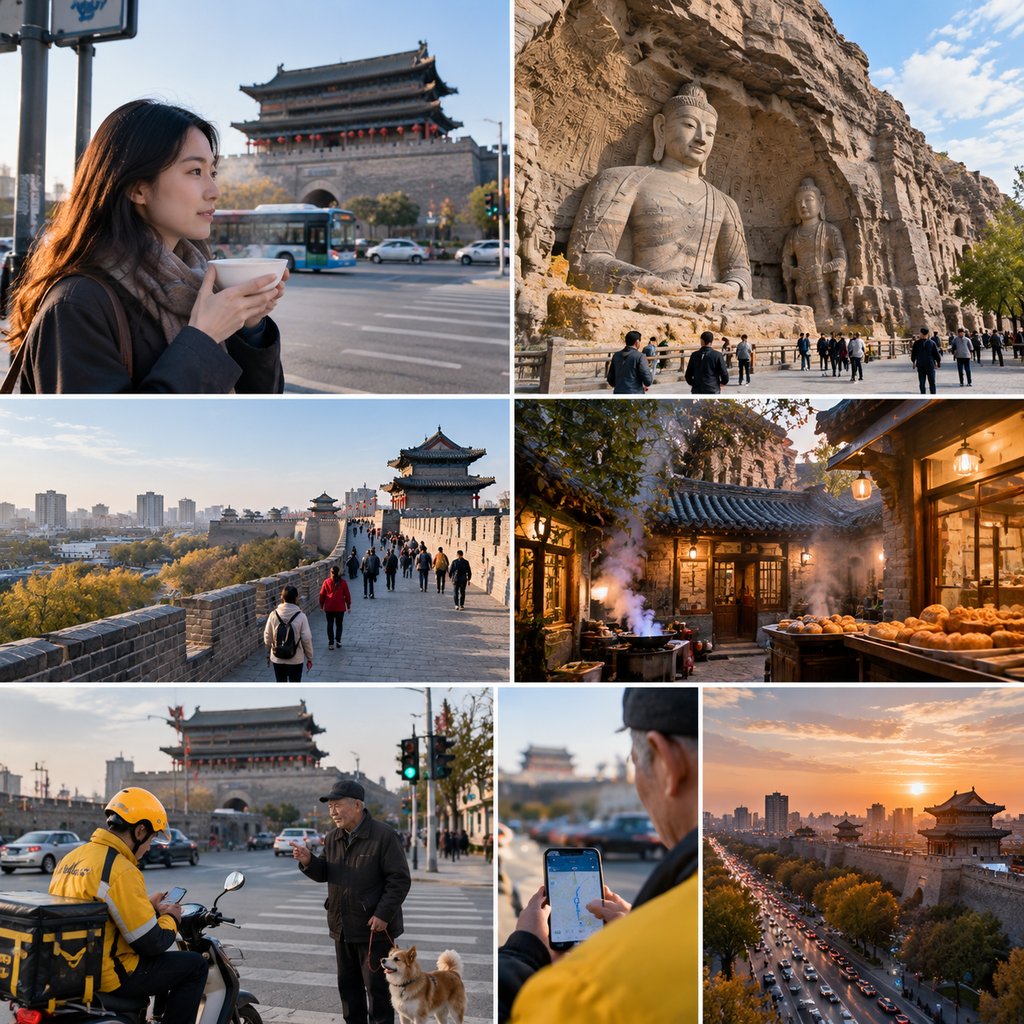
A woman selling hot water on the wall noticed my hands tucked into my sleeves and laughed. “Back from Yungang? The wind is harder over there.” She tightened the lid of my cup and pointed north, telling me that the rooftops would turn copper when the sun dropped lower. I followed her advice and waited another twenty minutes beside a corner tower. Wind pushed cloud shadows over the bricks, a bell beneath the eaves sounded now and then, and cyclists passed along the street below with brief, bright rings. I realized that an old city does not gain atmosphere by hiding modern life. The wall felt real precisely because hot water, traffic, and weathered roofs remained present together.
傍晚下城时,腿已经发酸,脸也被吹得发紧。我没有得到一座安静封存的古都,反而遇见了一座不断让人修正目光的城市:在云冈,细小人物把宏大历史拉回手边;在城墙,新旧街景彼此校准。临走前我又回头看了一眼,夕光贴着砖脊退去,风从城门洞里穿过,发出低低的回声。早晨那碗豆浆的热气早已散尽,可大同没有因此变冷,它只是用风把石头、街道和人的日常吹到了一起。
When I descended at dusk, my legs ached and the wind had tightened the skin on my face. I had not found a silent ancient capital sealed away from time. Instead, I had met a city that kept correcting the way I looked: at Yungang, tiny human figures brought immense history back within reach; on the wall, old and new streets adjusted each other’s scale. Before leaving, I turned once more. Evening light withdrew along the brick ridge, and wind moved through the gate tunnel with a low echo. The steam from my morning soy milk was long gone, yet Datong did not feel colder. Its wind had simply blown stone, streets, and ordinary life into the same frame.
第二天我又去了云冈,不是因为第一遍没看见大佛,而是想验证郭师傅那句“小窟里的人”。上午的光从洞口斜进来,浮尘在光柱里缓慢移动。我在一组乐舞人物前蹲下,差点把其中一位头戴高冠、鼻梁深刻的形象直接认成“外国使者”。旁边一位做记录的年轻人提醒我,造像中的面貌、服饰和身份不能靠现代人的第一眼对应;北魏平城汇集不同地域的人群,图像又经过工匠概括,所谓异域特征既可能指向真实交流,也可能是造型程式。
I returned to Yungang the next day, not because I had failed to see the great Buddha, but because I wanted to test Mr. Guo’s remark about “the people in the small caves.” Morning light entered at an angle, and dust drifted slowly through its beams. Crouching before a group of musicians and dancers, I almost labeled a figure with a tall headdress and pronounced nose a “foreign envoy.” A young visitor taking notes cautioned me that faces, clothes, and identities in sculpture cannot be matched by modern viewers at a glance. Northern Wei Pingcheng drew people from many regions, while craftsmen also simplified what they saw. Features that appear foreign may reflect real exchange, artistic convention, or both.
这句话纠正了我另一个习惯:总想替石壁上的每张脸迅速找到国籍、民族和职业,好像贴好标签就算读懂。其实供养人、飞天、伎乐和守护形象承担的功能不同,位置、手势、随身器物、与主尊的关系都比单独一张脸更可靠。我开始先看整组构图,再看人物朝向,最后才留意衣领、靴子和冠帽。不能确定时就把疑问保留下来。承认“尚不能判断”并不会削弱旅行,反而让眼前的人物摆脱猎奇说明,重新回到洞窟自身的秩序里。
That comment corrected another habit of mine: the urge to assign every carved face a nationality, ethnicity, and occupation, as though a label amounted to understanding. Donors, celestial dancers, musicians, and guardians served different purposes, and their placement, gestures, objects, and relation to the central image are more reliable clues than a face alone. I began with the full composition, then followed the figures’ orientation, and only afterward examined collars, boots, and headgear. When the evidence remained uncertain, I left the question open. Saying “I cannot yet tell” did not diminish the visit; it freed the figures from exotic labels and returned them to the visual order of the cave.
风也会制造人物误判。站在洞口逆光处,深凹的眼窝容易显得更深,残损的嘴角会被阴影连成胡须,褪色痕迹则可能被看成特殊纹样。我换到侧面,等一阵云过去,再看同一尊小像,先前以为严厉的神情竟柔和下来。那位年轻人没有替我公布标准答案,只让我比较相邻三尊的雕刻方式。并排观察之后,我才发现它们的眉弓和唇线本就采用相近处理,并非三位性格鲜明的真实肖像。光线给石头临时添了一层表情,而游客常把这层表情误当成身份。
Wind can also encourage false readings of people. Against the light at a cave entrance, recessed eyes appear deeper, damage near a mouth may join with shadow and resemble a beard, and faded pigment can look like an unusual pattern. I stepped sideways, waited for a cloud to pass, and studied the same small figure again. The expression I had called severe became unexpectedly gentle. The young visitor did not announce a definitive answer; he asked me to compare three neighboring figures. Seen together, their brows and lips followed the same carving method rather than depicting three sharply distinct personalities. Light had lent the stone a temporary expression, and travelers often mistake that expression for identity.
午后再上城墙,我也不再把“修得新”与“没有历史”画等号。今天能走到的城墙包含修复与重建,眼前砖石并非每一块都从古代原位保存下来;但这不表示城址、尺度和城市记忆都是虚构。更诚实的看法,是同时承认物质年代有差别,也追问修复为何采用这样的轮廓、城门怎样连接街道、人在高处如何重新理解古城格局。若只拍一张没有人的城楼,容易得到“完整古城”的幻觉;若只对着新砖冷笑,又会错过城墙作为当代公共空间的真实生命。
When I climbed the wall again that afternoon, I no longer treated “recently restored” as another way of saying “without history.” The wall people walk today includes restoration and reconstruction; not every visible brick has remained in its ancient position. Yet that does not make the site, its scale, or the city’s memory imaginary. A more honest approach is to acknowledge differences in material age while asking why this outline was chosen, how the gates connect with the streets, and how elevation helps people read the old urban plan. An empty photograph can create the illusion of a perfectly preserved ancient city. Scoffing only at the new bricks, however, misses the wall’s genuine life as a public space today.
靠近和阳门的一段,几个放学的孩子迎风骑车,老人扶着栏杆慢走,保洁员把被吹到墙根的纸片逐一夹起。我先前总爱把穿古装拍照的人视作“破坏真实”的游客,这次却停住了判断。一个女孩替奶奶整理披风,问她年轻时城门周围是什么样;老人指着城内讲了很久,手势越过新铺的砖面,落向已经改变的街区。衣服也许是租来的,谈话却不虚假。人物与地方的关系,不能从服装样式直接推断,正如石窟里不能凭鼻梁和帽子仓促认定来历。
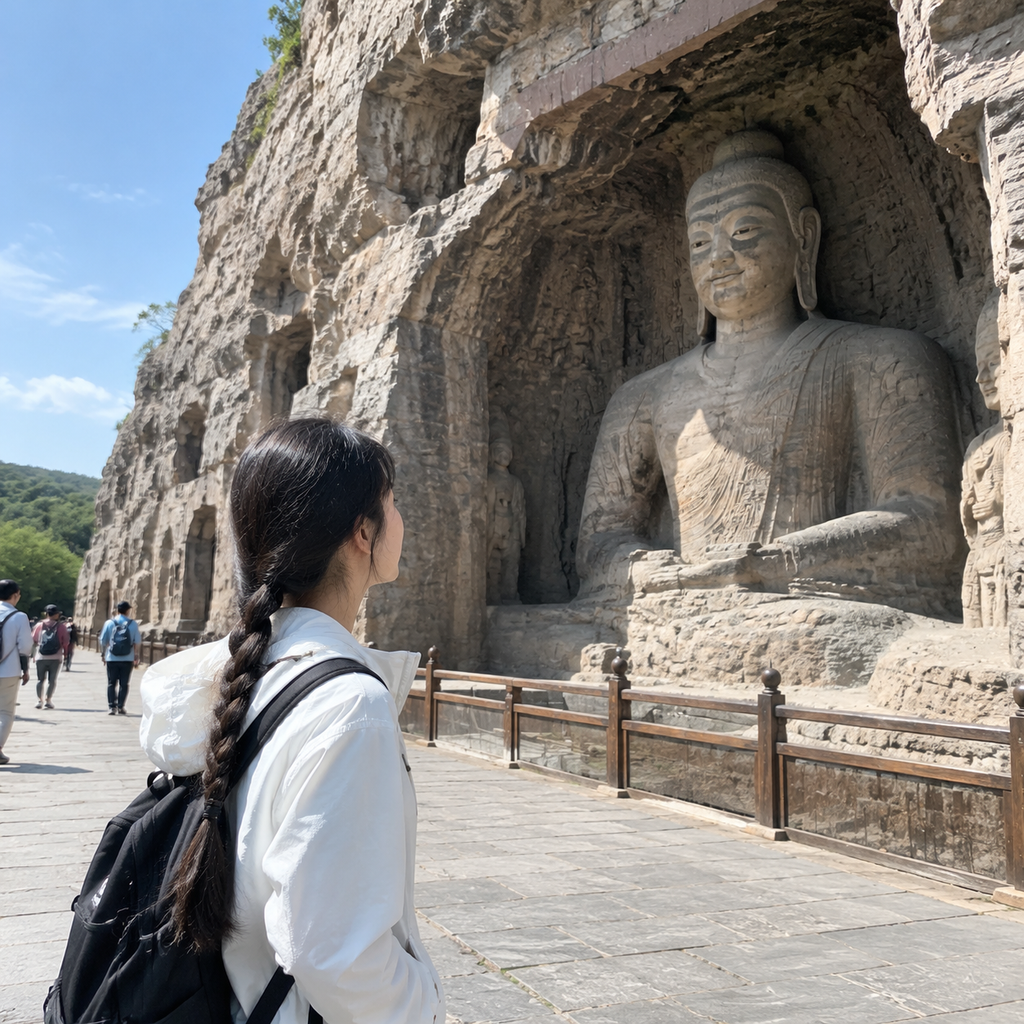
Near Heyang Gate, several schoolchildren cycled into the wind, older residents walked slowly with hands on the rail, and a cleaner picked scraps of paper from the base of the wall one by one. I used to dismiss visitors posing in historical costume as people who weakened a place’s authenticity, but this time I withheld judgment. A girl adjusted her grandmother’s cape and asked what the gate area had looked like in her youth. The grandmother spoke for a long time, gesturing across the newly laid bricks toward neighborhoods that had since changed. The costume may have been rented; the conversation was not false. A person’s relationship to a place cannot be inferred from clothing alone, just as a figure’s origin at Yungang cannot be decided from a nose or hat.
大同的风把这种观看方式变得很实际。拍石窟时,我会先收起连拍,站稳后看光是否遮住细部;遇到不认识的人物,不急着在社交平台写断言,而是记录洞窟位置和人物与周边造像的关系。走城墙时,我会把新砖、旧街、居民活动都纳入画面,不故意裁掉现代楼房来制造“穿越感”。风大时帽带要系紧,纸质地图也要折好放回口袋,因为一张飞进围栏的纸不仅狼狈,也会给维护人员添麻烦。慢一点,不是为了装深沉,而是给证据多留几分钟。
Datong’s wind made this way of looking practical. When photographing the caves, I now lower the camera first, steady myself, and check whether the light is hiding details. If I cannot identify a figure, I resist posting a quick declaration and instead note the cave location and the figure’s relation to surrounding images. On the wall, I include new bricks, old streets, and residents in the same frame rather than cropping out apartment blocks to manufacture a sense of time travel. In strong wind, I fasten my hat and fold the paper map back into my pocket; a sheet blown behind a barrier is not only embarrassing but extra work for the staff. Slowing down is not a performance of seriousness. It simply gives evidence a few more minutes.
我还学会把问题问得具体些,不再追着工作人员问“这个人到底是谁”,而是问这件器物怎样辨认、这一组人物为何面向同一方向、残存颜色是否属于同一时期。问题一变,对方给出的线索也更清楚;即使没有结论,我也知道下一眼该看哪里。旅行中的修正并非把一种确定答案换成另一种,而是把仓促的肯定改成可以继续观察的问题。
I also learned to make my questions more precise. Instead of pressing staff to tell me exactly who a figure was, I asked how an object could be identified, why a group faced the same direction, or whether surviving colors belonged to the same period. Once the question changed, the clues in the reply became clearer. Even without a conclusion, I knew where to look next. Correction in travel is not always replacing one certainty with another; sometimes it means turning a hasty claim into a question that remains open to observation.
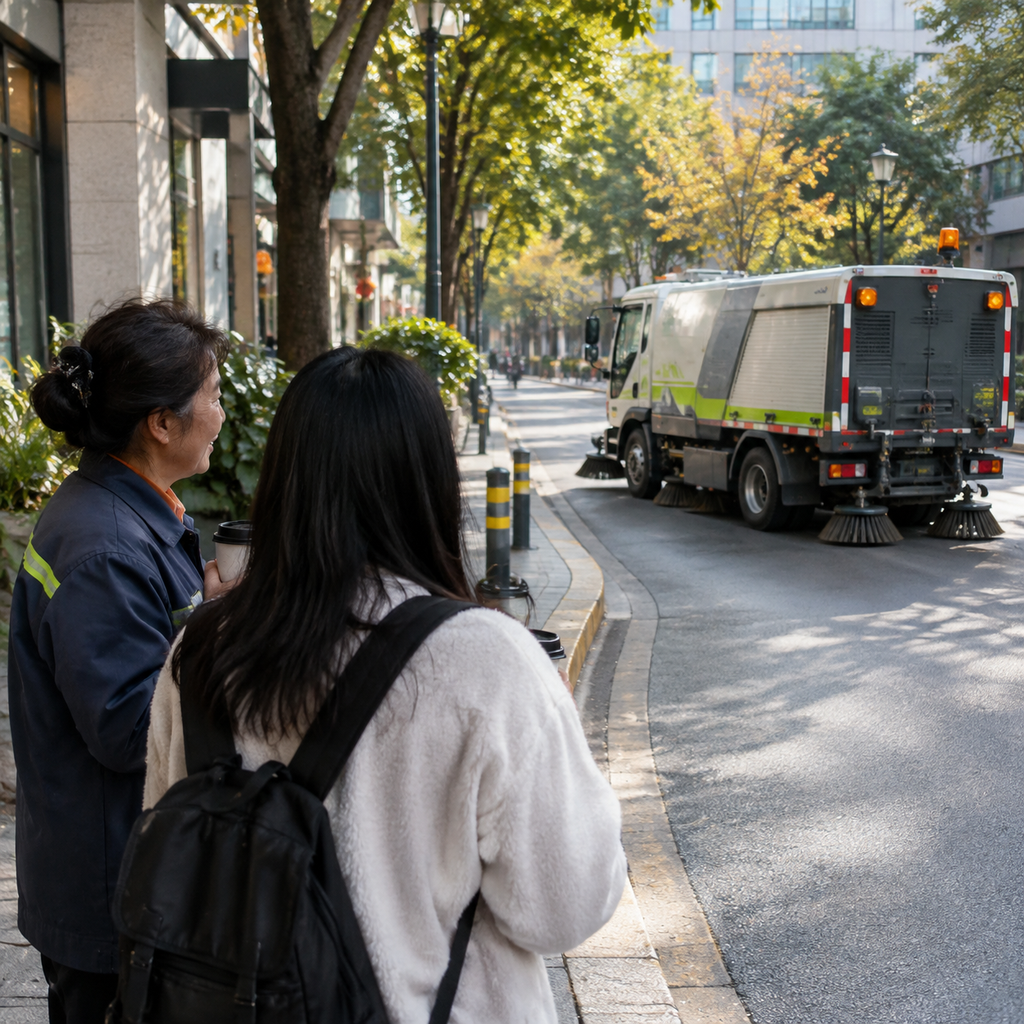
太阳落到屋脊后,城门洞里的风声比前一晚更低。我买了杯热茶,没有再问卖水阿姨哪一处最适合拍照,只和她一起看清扫车沿内街缓缓转弯。远处屋顶留下暗红的边,车灯在拱门下亮起又消失。我终于懂得,大同并不要求游客在“古老”与“现代”、“原物”与“修复”、“本地人”与“异乡人”之间匆忙选边。它更像那阵不停改变方向的风:先吹乱你的标签,再让石窟中的面孔、城墙上的行人和此刻站着的自己,各自回到应有的位置。
After the sun slipped behind the roofs, the wind in the gate tunnel sounded lower than it had the previous evening. I bought a cup of hot tea but did not ask the water seller for the best photograph. We simply watched a cleaning vehicle turn slowly along the inner street. A dark red edge lingered on distant rooftops, while headlights appeared beneath the arch and vanished again. I finally understood that Datong does not ask visitors to choose hastily between ancient and modern, original fabric and restoration, local people and outsiders. It resembles the wind that keeps changing direction: first scattering our labels, then allowing the faces in the grottoes, the pedestrians on the wall, and the observer standing here to return to their proper places.
其实那天从云冈回城时,我特意没有直接叫车到城墙脚下,而是在清远街口下车,把第二天下午剩下的路留给双脚。正午的风贴着街面穿过来,卷起一小阵尘土,又被面馆门口的蒸汽压住。店里一位伙计见我反复看导航,伸手在屏幕上点出一条更省力的走法:先沿街到鼓楼附近吃饭,等日头偏西再登墙,免得迎着最硬的风走完整段。我照做,点了一小碗刀削面。面片厚薄并不完全一样,入口有筋道,醋香从热气里冲出来,刚才被风吹僵的脸慢慢恢复了知觉。
In fact, when I returned from Yungang that day, I chose not to ride directly to the foot of the wall. I got out near Qingyuan Street and left the rest of my second afternoon to my own feet. The midday wind skimmed along the road, lifting a brief swirl of dust before steam from a noodle shop pressed it down. A server noticed me checking the map again and again and pointed out an easier route on my screen: eat near the Drum Tower first, then climb after the sun leaned west, rather than fighting the strongest wind along the entire wall. I followed his advice and ordered a small bowl of knife-cut noodles. The pieces were not perfectly even, but they had a firm bite, and the sharp fragrance of vinegar rose through the steam. Feeling gradually returned to the face the wind had numbed.
饭后走向城墙,我才注意到风在地面和高处有不同脾气。街巷里,它被房屋切成一阵一阵,只会突然掀动店招;登上台阶后,风却从垛口连续压过来,几乎没有喘息。入口处的工作人员看见我把围巾松松搭着,叫我先绕紧再走,还提醒靠近角楼时别只顾着看手机。她说得很具体:北段开阔,侧风会把人推向内侧,若拍照最好先站定,再举相机。我起初觉得这只是普通的安全提醒,走到第一个转角才发现,身体确实会在毫无准备时偏半步。城墙的尺度不是地图上的一圈线,而是风落在肩膀上的真实重量。
Only after lunch, on my way to the wall, did I notice that the wind had different tempers at street level and above. Between buildings, it arrived in broken bursts and merely flipped shop signs. Once I climbed the steps, however, it pressed continuously through the battlements without pause. An attendant saw my scarf hanging loose and told me to wrap it securely before walking on. She also warned me not to stare at my phone near the corner towers. Her advice was precise: the northern stretch was exposed, a crosswind could push a person inward, and anyone taking a photograph should plant both feet before raising the camera. I first treated it as routine safety guidance. At the first corner, an unexpected gust shifted my body half a step. The wall’s scale was no longer a line around a map; it was the real weight of wind against my shoulders.
我没有急着环行,而是每到一座铺房便停一会儿。背风面仍留着太阳的暖,手掌贴近砖面能感觉到细微温度;跨出阴影,耳边立刻只剩呼呼声。两名老人从后面赶上来,其中一位把手背在身后,熟练地沿内侧走。他说自己天气好时常来,不为看景,只为活动腿脚,风大就少走两个城门。这句“少走两个城门”让我放下非得完成整圈的执念。旅行不是凭门票把每一米都占有,身体冷了、腿沉了,转身也是一种清醒。于是我在和阳门附近折回,把多出的时间留给墙内街巷,而不是在风里证明耐力。
I did not hurry to complete a circuit. At each watch house I paused for a while. The sheltered side still held the sun’s warmth, and my palm could sense a faint temperature in the bricks; stepping beyond the shadow brought the roar of air back to my ears. Two elderly men caught up from behind. One walked confidently along the inner edge with his hands clasped behind him. He said he came often in good weather, not for sightseeing but to keep his legs moving, and on windy days he simply passed two fewer gates. That phrase released me from the urge to finish the whole wall. Travel does not mean claiming every metre because a ticket has been bought. When the body grows cold and the legs turn heavy, turning back can be the sensible choice. Near Heyang Gate, I reversed direction and gave the saved time to the streets below instead of proving my endurance to the wind.
下墙后,我沿着灯刚亮起来的街道往住处走,没有再寻找另一处“必看”景点。修鞋摊的师傅正把小板凳搬进门,水果店老板用夹子收起遮风的帆布,几个学生围着烤红薯的铁桶等找零。风被城墙和房屋挡住后温和许多,只在巷口把塑料帘吹开一道缝。我从那道缝里看见一家小饭馆,玻璃蒙着白雾,便进去要了碗羊杂汤。老板把香菜碟推过来,问我是不是在墙上冻久了。我点头,他笑着说大同人看风不看日历,早晚多带一层衣服总不会错。第二天就这样落在一碗汤里,不壮阔,却把石窟的冷、城砖的热和街巷的烟火接到了一起。
After descending, I walked back toward my lodging along streets where the lamps had just come on, no longer searching for another “essential” sight. A shoe repairer carried his low stool indoors, a fruit seller folded a windbreak with a pair of tongs, and several students waited for change around a metal drum of roasting sweet potatoes. Sheltered by the wall and the buildings, the wind softened; only at the mouth of an alley did it lift a plastic curtain. Through the gap I saw a small restaurant with fogged windows and went in for a bowl of lamb offal soup. The owner pushed over a dish of coriander and asked whether I had stayed too long on the wall. When I nodded, he laughed and said people in Datong watched the wind rather than the calendar, so carrying one extra layer in the morning and evening was never a mistake. My second day settled into that bowl of soup—not grand, but joining the grottoes’ chill, the bricks’ stored warmth, and the smoke of ordinary streets.
回到房间后,我把外套搭在椅背上,袖口抖出几粒细沙。窗缝仍有低低的哨声,桌上的城墙票根被吹得挪了一寸。我用水杯压住它,在笔记本上画下当天真正记住的路线:不是从一个著名建筑赶往另一个,而是从云冈洞口的逆光,到清远街的热面,再到和阳门的横风,最后拐进冒着汤气的小店。风贯穿其中,却不再只是让人抱怨的阻力。它决定我何时停、从哪边走,也让我看见谁会提醒陌生人系好围巾,谁知道哪一面砖墙还存着太阳。
Back in my room, I hung my coat over a chair and shook several grains of grit from the cuffs. A low whistle still came through the window frame, and the ticket from the wall slid an inch across the desk. I pinned it beneath my water cup and drew the route I truly remembered: not a race from one famous monument to another, but a path from backlight at Yungang’s cave mouths to hot noodles on Qingyuan Street, then the crosswind at Heyang Gate, and finally a small restaurant clouded with soup steam. Wind ran through it all, yet it was no longer an obstacle to complain about. It decided when I stopped and which side I walked on. It also revealed who would remind a stranger to tighten a scarf and who knew which face of the brickwork still held the sun.
第三天下午,我把行程故意排空,只带一支铅笔重返云冈。过午后的光不再笔直照进洞口,而是沿着岩壁缓慢挪动,像有人把一块旧绸布从石面上轻轻抽走。检票口外,一位父亲正替儿子系紧帽绳,孩子却盯着宣传册上的飞天问:“他们一直在天上吗?”父亲没有急着答,带他进窟后寻找相似的衣带。我跟在后面保持一段距离,发现孩子先数手臂,再数乐器,最后才看脸。他没有成年人那种迅速命名的焦虑,反倒把每个疑问留得很宽。
On the third afternoon, I deliberately left my schedule empty and returned to Yungang carrying only a pencil. The post-noon light no longer entered the caves in a straight beam. It crept along the rock, as if someone were slowly drawing a piece of old silk away from the surface. Outside the ticket gate, a father tightened the cord of his son’s cap while the boy pointed to a flying celestial figure in the brochure and asked, “Are they always in the sky?” Rather than answering immediately, the father led him inside to search for similar ribbons. Following at a distance, I noticed that the child counted arms first, then instruments, and looked at faces last. Unlike adults, he felt no urgency to name everything; he left generous room around each question.
在一处较暗的窟前,值守人员提醒大家不要倚靠围栏。一个背相机的男人刚抬起镜头,又因后面有人踮脚而主动蹲低。他拍完没有马上走,而是侧身让一位拄杖的老人靠近。老人看得很慢,嘴里低声辨认莲花、火焰和衣纹,同行的姑娘则把她的话记在手机里。两人偶尔争论一句,老人说“我小时候听的是另一种讲法”,姑娘便笑着把两种说法都留下。洞窟里的时间因此不只属于北魏,也包含一个家庭怎样保存记忆、怎样允许记忆有出入。
At a darker cave, an attendant reminded everyone not to lean against the barrier. A man with a camera raised it, then crouched when he noticed someone behind him standing on tiptoe. After taking his picture, he stepped aside so an elderly woman with a cane could move closer. She studied the wall slowly, murmuring the names of lotus petals, flames, and folds of cloth, while a younger woman recorded her comments on a phone. Now and then they disagreed. “I heard a different explanation when I was little,” the older woman said, and the younger one laughed and kept both versions. The cave’s time no longer belonged only to the Northern Wei; it also held the way a family preserves memory and allows memory to vary.
出了洞窟,午后的风已经带上一点干燥的暖意。广场边有人把围巾压在石凳上分馒头,塑料袋被吹得噼啪响;一位保安追了几步,替他们按住差点飞走的餐巾纸。吃饭的人连声道谢,把剩下的纸都塞进背包侧袋。这个小插曲几乎不会进入任何游记,却比刻意摆出的“当地生活”更准确:风突然加力,陌生人伸手,大家把眼前的小麻烦收拾妥当,再各自继续下午。远处洞窟仍沉在山壁里,近处的人却让石窟周围有了呼吸和体温。
Outside the caves, the afternoon wind carried a trace of dry warmth. At the edge of the square, a family held down scarves on a stone bench while sharing steamed buns, and a plastic bag snapped loudly in the gusts. A security guard hurried over and caught a napkin before it escaped. They thanked him repeatedly and tucked every remaining sheet into a side pocket of their backpack. The incident would never enter most travel accounts, yet it described local life more accurately than a staged scene: the wind strengthened without warning, a stranger reached out, everyone dealt with the small disturbance, and the afternoon resumed. The caves remained still in the distant cliff, while the people nearby gave their surroundings breath and warmth.
回城后,日头还悬在西边,我从南城门慢慢往北走。城砖白天积下的热从鞋底透上来,迎面的风却把汗迅速吹干。角楼阴影里,两个维修师傅坐在工具箱上休息,一个把手套翻过来拍掉灰,另一个用保温杯盖喝水。他们身后是游客争相取景的飞檐,脚边却放着卷尺、刷子和几块等待处理的砖。有人问他们是不是“天天在古代上班”,年长的师傅笑着说,刮风天最现实,先看哪块标识牌松了,哪扇门被吹得关不上。宏伟轮廓下面,总有这些不入镜的检查和修补。
Back in the city, the sun still hung in the west as I walked slowly north from the southern gate. Heat stored in the bricks rose through my soles, while the headwind dried the sweat almost at once. In the shadow of a corner tower, two maintenance workers rested on their toolboxes. One turned his gloves inside out and beat away the dust; the other drank from the lid of a thermos. Behind them stood the upturned eaves everyone wanted to photograph, while at their feet lay a measuring tape, brushes, and several bricks awaiting attention. A visitor asked whether they “worked in ancient times every day.” The older worker laughed. Windy days, he said, were very practical: first check which signs had loosened and which doors would no longer close. Beneath every grand silhouette are inspections and repairs that rarely enter the frame.
再往前,一群年轻人租了自行车,其中一位女孩始终不敢放开刹车。逆风把她的外套鼓成小帆,同行者骑出十几米又折回来,没有催她,只示范怎样降低重心。卖饮料的小哥也探出身子提醒,过角楼前先慢下来,拐过去可能突然遇到横风。女孩试了两次,终于稳稳穿过那段阴影,笑声被风吹得断断续续。我原以为在城墙上观察人物,就是寻找服装、年龄或职业上的“地方特色”;真正有意思的却是人与风如何协商:有人压住帽檐,有人替同伴挡一下,有人知道哪个转角最容易失去平衡。
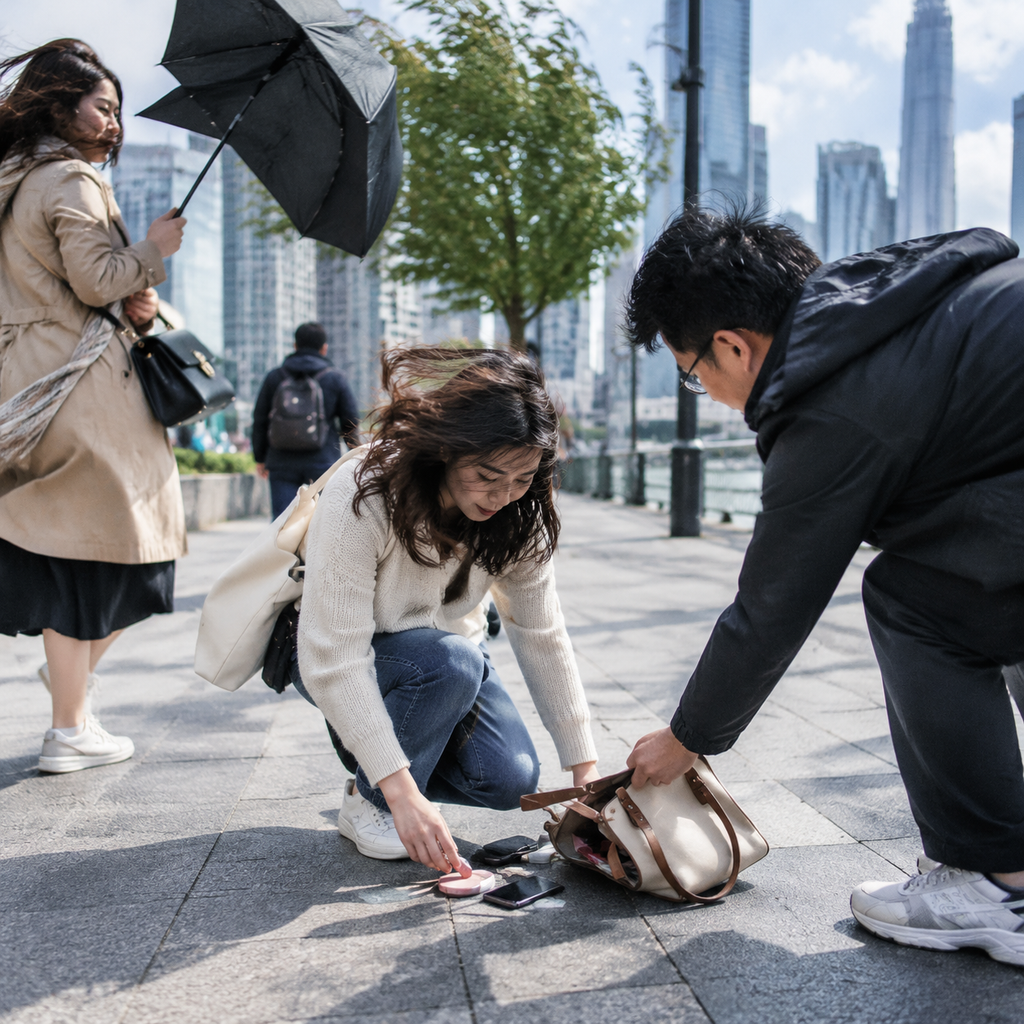
Farther on, a group of young people had rented bicycles, but one woman kept squeezing the brakes. The wind filled her jacket like a small sail. Her companions rode a dozen metres ahead, then came back without urging her and demonstrated how to lower her center of gravity. A drink seller leaned out to add that she should slow before the corner tower because a crosswind might strike just beyond it. After two attempts, she crossed the shadow steadily, her laughter breaking into pieces in the gusts. I had assumed that observing people on the wall meant looking for local character in clothing, age, or occupation. What mattered more was how people negotiated with the wind: one held a hat brim, another sheltered a companion, and someone else knew exactly which turn could upset a rider’s balance.
临近黄昏,墙内的院子开始冒出饭香。风把炒葱和煤烟的气味送上来,又很快换成甜点铺烤面的暖香。一个送外卖的骑手在城门下等红灯,抬头看了一眼城楼,随即低头确认订单;旁边遛狗的老人和他聊了两句,告诉他北边那条街正在修路。灯变绿前,骑手把路线重新划了一遍,朝老人扬扬手机表示谢意。站在高处看,这只是车流里一个几秒钟的停顿;若把目光放低,它却是城市运转的细小接力。城墙提供了俯瞰的高度,也提醒我别把地面上的人缩成移动的小点。
Toward evening, cooking smells began to rise from courtyards inside the wall. The wind carried up fried scallion and coal smoke, then replaced them with the warm sweetness of baking dough. A food-delivery rider waited at a red light beneath the gate, glanced up at the tower, and immediately looked down to confirm an order. An older man walking his dog exchanged a few words with him and explained that a street to the north was under repair. Before the light changed, the rider redrew his route and lifted his phone in thanks. From the wall, it was only a pause of several seconds in the traffic. Seen more closely, it was one small relay in the city’s daily operation. The wall offered the height to look down, but also warned me not to reduce the people below to moving dots.
风到傍晚反而收了一阵,先前一直被吹斜的旗子垂下来,城砖上的脚步声突然清楚。卖热水的阿姨认出我,问这次有没有找到所谓最好的机位。我说没有,但看见维修师傅、学骑车的女孩,还有给骑手指路的老人。她听完笑了,把刚烧开的水往纸杯里倒:“那你今天看得比昨天多。”杯壁很快烫手,我两只手轮换着捧。她转身替下一位客人找零钱,动作利落,似乎那句话只是随口一说,却恰好替这几天的观察落了一个朴素注脚。
By evening, the wind briefly eased. Flags that had leaned all afternoon fell slack, and footsteps on the bricks suddenly became distinct. The hot-water seller recognized me and asked whether I had finally found the best camera position. I said no, but told her about the maintenance workers, the woman learning to ride, and the old man giving directions to the courier. She laughed as she poured freshly boiled water into a paper cup. “Then you saw more today than yesterday.” The cup quickly grew too hot, and I shifted it from hand to hand. She turned to make change for the next customer, brisk and unceremonious. Her remark seemed casual, yet it supplied the simplest note beneath everything I had observed.
我在城墙的缓坡处遇到一位背着画夹的中年人。他没有像游客那样举起手机,而是把夹板压在膝盖上,等风停的空隙迅速勾几笔。纸面上没有完整的城楼,只有一段被夕阳切亮的垛口、一个弯腰捡纸的保洁员和远处拖着长影的骑车人。我问他为什么不画最醒目的角楼,他说:“角楼大家都看得到,难的是把旁边的人也留下。”说完,他用铅笔尖在纸上点了点,那里正是一个孩子替奶奶按住披风的地方。那一小块灰色被他反复擦过,像是在为一个短暂动作争取更长的停留时间。
I met a middle-aged man carrying a portfolio on the sloping section of the wall. Unlike most visitors, he did not raise a phone. He balanced a board on his knee and sketched quickly whenever the wind paused. His paper held no complete tower, only a battlement cut by evening light, a cleaner bending to pick up a scrap, and a cyclist dragging a long shadow. I asked why he had not drawn the most conspicuous corner tower. “Everyone can see the tower,” he said. “The difficult part is keeping the people beside it.” He tapped the pencil at a small patch where a child had held down her grandmother’s cape. He erased and redrew that grey area several times, as if trying to give a brief gesture a longer life.
这番话让我又想起云冈那些小小的供养人。它们之所以动人,不是因为尺寸小,而是因为它们没有被大佛的体量吞掉;工匠把一个跪姿、一双合拢的手、一截向前倾的衣袖安排在合适的位置,才让整座洞窟不只剩下一个宏大的中心。城墙上的画家做的事情也相似。他把视线从“最值得拍的建筑”移开,去看谁在维护、等待、照顾和赶路。古迹的意义并不自动出现,必须有人愿意把这些关系看进去。
That remark brought me back to the small donor figures at Yungang. They move us not merely because they are tiny, but because the giant Buddha does not swallow them. A kneeling posture, two joined hands, and a sleeve leaning forward are placed carefully enough to keep the cave from becoming nothing but a monumental centre. The painter on the wall was doing something similar. He shifted his gaze away from the “most photogenic building” and watched those who maintained, waited, cared, and hurried. A monument’s meaning does not appear automatically; someone has to look closely enough to see the relationships around it.
我没有再打扰他,沿着垛口往前走。此时城内的声音已经换了层次:饭店后厨的铁勺碰到锅沿,电动车经过减速带时发出轻响,楼上有人把窗户推开,电视里的对白被风剪成几截。一个小男孩趴在砖墙边问母亲,为什么这些砖有的颜色深、有的颜色浅。母亲没有把答案说满,只让他摸摸看,随后提醒他手掌不要伸出垛口。孩子先缩回手,又指着一块有细小裂纹的砖问:“它是不是也在变老?”这句稚拙的问题比“这里有多少年历史”更接近我此刻的感受:城墙不是停止变化的物件,而是在人们的使用、修补和提问中继续成为城市的一部分。
I did not interrupt him again and walked on beside the battlements. The sounds inside the city had changed register: an iron ladle striking a kitchen pot, the soft rattle of an electric scooter crossing a speed bump, a window being pushed open upstairs, and fragments of television dialogue cut apart by the wind. A young boy leaned over the bricks and asked his mother why some were darker than others. She did not fill in the whole answer. Instead, she let him touch one while reminding him not to put his hand beyond the battlement. He pulled back, then pointed at a hairline crack and asked, “Is it getting old too?” His innocent question felt closer to what I had learned than asking how many years the wall had stood. The wall was not an object frozen against change; through use, repair, and questions, it kept becoming part of the city.
天色继续往下沉,城墙上的游客也渐渐稀疏。先前骑车的女孩把车停回租赁点,手指冻得不太灵活,扣了两次才把锁合上。饮料摊的小哥递给她一张纸巾,让她先擦掉掌心的汗再操作。她的同伴在旁边翻看照片,惊讶地发现最好的一张并不是大家并排站在城楼前,而是她迎着横风歪歪斜斜骑过转角的背影。她笑着说那一刻其实很怕摔,照片却把慌张拍成了勇敢。小哥听见后摇头:“不是勇敢,是你后来知道风从哪边来。”这句区分很细,却说出了经验如何发生:人未必突然变得无所畏惧,只是开始辨认环境,也相信身边的人会及时提醒。
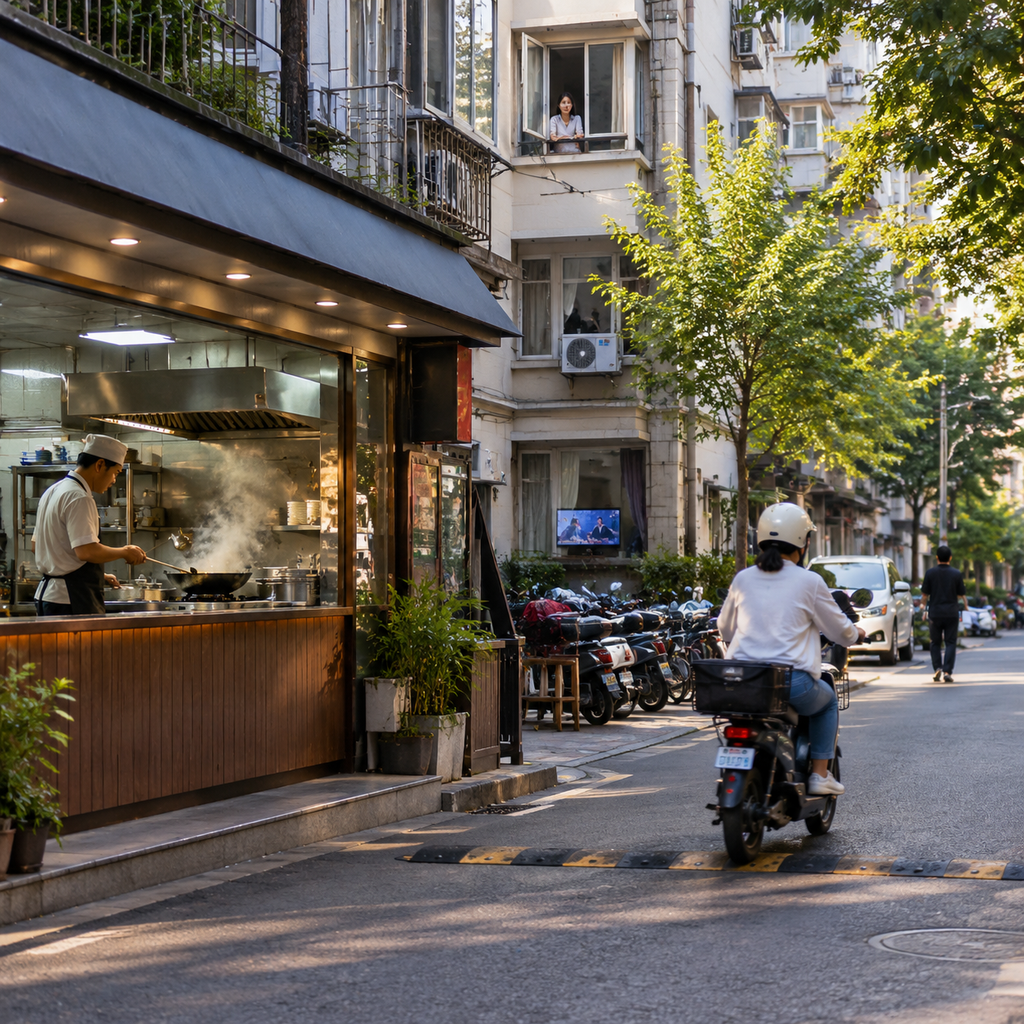
As the sky darkened, visitors on the wall gradually thinned. The woman who had been learning to cycle returned her bicycle to the rental point. Her cold fingers were clumsy, and she needed two attempts to close the lock. The drink seller handed her a tissue and suggested wiping the sweat from her palm first. Nearby, her companions reviewed their photographs and discovered that the best image was not the group posing before a tower. It showed her back as she wobbled around the corner into a crosswind. She laughed and said she had actually been afraid of falling, although the picture made her fear look like courage. The seller shook his head. “Not courage. You had learned which way the wind came from.” It was a subtle distinction, but it explained how experience grows: we do not suddenly become fearless; we begin to read our surroundings and trust that others will warn us in time.
站在这里再想石窟,我也明白“理解人物”并不等于替每一尊形象编出完整身世。更重要的是确认自己看见了什么,又有哪些部分仍被时间遮住。残存的颜料可以提示衣饰层次,乐器与队列可以帮助辨认场景,雕刻位置能够说明人物在整体叙事中的作用;但名字、口音、个人命运常常无法追回。面对这种缺口,想象力可以帮助我们靠近,却不能冒充证据。真正的尊重不是把沉默填满,而是在能说明处仔细说明,在不能确定处停住,并记得石壁背后曾有设计者、开凿者、供养者以及无数后来照看它的人。
Thinking back to the grottoes from the wall, I also understood that “reading the people” did not mean inventing a complete biography for every figure. What mattered was distinguishing what I could see from what time had concealed. Surviving pigment may reveal layers of clothing; instruments and processions may clarify a scene; placement can show a figure’s role within a larger composition. Names, accents, and individual lives, however, are often beyond recovery. Imagination can help us approach such gaps, but it cannot pose as evidence. Respect does not mean filling every silence. It means describing carefully what can be known, stopping where certainty ends, and remembering the designers, carvers, donors, and generations of caretakers behind the stone.
真正准备下城时,卖热水的阿姨已经开始收摊。她把纸杯一摞摞套好,又用旧毛巾擦净保温桶边缘。我替她按住被风掀起的塑料布,她忽然问:“明天还来吗?”我说大概不会,车票已经买好。她点点头,没有说欢迎再来,只从箱子底找出一只更厚的杯套给我,叫我下坡时慢些,城门内那段砖路入夜后容易看不清高低。这个告别没有任何纪念性,却把我三天里得到的提醒全收在了一起:先看风向,脚下留神,不懂就问,别人伸手时也替他按住一点。
When I finally prepared to leave the wall, the hot-water seller was closing her stall. She stacked the paper cups, then wiped the rim of the thermos with an old towel. I held down a plastic cover that the wind kept lifting, and she suddenly asked, “Coming again tomorrow?” I said probably not; my ticket was already booked. She nodded without offering a ceremonial invitation to return. Instead, she found a thicker cup sleeve at the bottom of a box and told me to walk slowly downhill because the uneven bricks inside the gate were difficult to see after dark. There was nothing monumental about the farewell, yet it gathered the lessons of three days into one exchange: read the wind, watch your footing, ask when you do not know, and hold something down when another person needs a hand.
城门洞把灯光收成一条长长的黄色通道。我走到一半,听见身后画夹的卡扣轻响,那位画画的中年人也下来了。他把当天那张速写夹在腋下,纸角仍露出一点,正好能看见保洁员弯着的背。他与我并肩走了几步,只说风夜里还会更大,出门要把领口扣好。洞外公交车刚靠站,车门打开时暖气和报站声一同涌出。我上车后隔着玻璃看见他转向另一条街,阿姨的摊灯也随即熄灭。没有人站在那里替旅程作结,大同只是让每个人沿自己的路回家。
The gate tunnel gathered the lights into a long yellow passage. Halfway through, I heard the click of a portfolio clasp behind me. The painter was descending too, carrying the day’s sketch under one arm. One corner remained visible, just enough to show the cleaner’s bent back. He walked beside me for a few steps and said only that the wind would grow stronger at night, so I should fasten my collar. A bus pulled in beyond the arch. When its doors opened, warm air and the recorded stop announcement spilled out together. From behind the window, I watched him turn into another street just as the light at the woman’s stall went dark. No one remained to provide a formal ending to the journey. Datong simply let each person follow a different road home.
第二天清早,郭师傅送我去车站。他还是把暖风调高一格,问云冈的小人物有没有看懂。我说只懂了一点:不能急着替他们命名,也不能因为不知道名字就看不见他们。等红灯时,他用手指敲了两下方向盘,说这就够了,许多本地人去过几次也还在看。车窗外,城墙轮廓从楼房间露出片刻,又被早班车遮住。我忽然觉得这比完整的告别画面更合适——古迹不是固定在远处等人仰望,它会在上班、送客、买早点的间隙不断出现,提醒人昨日所见还没有结束。
Mr. Guo drove me to the station early the next morning. As before, he turned the heater up one notch and asked whether I had understood the little figures at Yungang. I said I understood only this: I should not rush to name them, yet not knowing their names did not mean I had failed to see them. At a red light, he tapped the steering wheel twice and said that was enough; many locals had visited several times and were still looking. Outside, the outline of the wall appeared briefly between apartment blocks, then disappeared behind a commuter bus. It seemed a more fitting farewell than an unobstructed final view. Monuments do not wait at a distance to be admired. They keep entering the gaps between work, departures, and breakfast, reminding us that what we saw yesterday is not finished.
列车启动后,我在小桌板上摊开那支带去云冈的铅笔。笔尖已经磨钝,木杆上沾着洞外的细尘。我试着凭记忆画一只供养人的袖口,画了几次都不对,最后只留下三条不确定的线。窗外,大同的楼房和开阔地迅速向后退,风再也听不见了;但我没有把那三条线擦掉。它们提醒我,观看不一定要以辨认成功结束,留下一点未经填满的空白,也是在承认古人的生活比游客的一次到访更复杂。
After the train began to move, I placed the pencil I had carried to Yungang on the tray table. Its point was blunt, and fine dust from outside the caves still clung to the wood. I tried to draw the cuff of a donor figure from memory, failed several times, and finally left only three uncertain lines. Datong’s buildings and open ground slipped rapidly behind the window, and I could no longer hear the wind. Yet I did not erase those lines. They reminded me that looking need not end in successful identification. Leaving part of the space unfilled can acknowledge that ancient lives were more complex than a traveler’s brief visit.
口袋里的厚杯套被我带上了车,上面没有店名,只压着一道折痕。我想起阿姨收摊时的手、画者纸上弯腰的保洁员、郭师傅敲方向盘的两根手指,也想起洞窟中那些没有姓名却仍保持姿态的小人物。大同最终留给我的,不是一张把古今解释清楚的结论,而是一组具体的手势:凿子落下前的判断,横风来时的提醒,塑料布掀起时顺手的一按。城墙消失在窗后,我把杯套夹进笔记本,正好压住那三条尚未画完的线。
I had carried the thick cup sleeve onto the train. It bore no shop name, only a crease. I remembered the seller’s hands as she closed her stall, the cleaner bending in the painter’s sketch, Mr. Guo’s two fingers tapping the steering wheel, and the nameless figures in the caves still holding their poses. What Datong left me was not a conclusion that neatly explained past and present, but a set of particular gestures: the judgment before a chisel falls, a warning when a crosswind arrives, and a hand holding down a lifted sheet of plastic. The wall disappeared behind the window. I slipped the cup sleeve into my notebook, where it came to rest over the three unfinished lines.
- 雨停以后,我在武夷山把茶路走成了溪边慢线 | After the Rain Stopped, I Turned Wuyi Mountain’s Tea Road into a Streamside Walk
- 银川那家红招牌小馆没有摆盘,却把西北夜风后的饥饿接得很稳 | A Small Red-Sign Eatery in Yinchuan Offered No Fancy Presentation, Yet It Caught My Hunger After the Desert Wind
- 广州早茶怎么点:两个人也能吃得体面不浪费 | Cantonese Dim Sum for Two: How to Order Smart
- 开元路那盏旧灯亮起来时,我才走进厦门的夜里 | I Entered Xiamen’s Night When That Old Lamp Lit Up on Kaiyuan Road
- 六月在成都躲避开午后的热,我发现了更舒服的旅行节奏 | In June Chengdu, Everything Went Smoother Once I Stopped Fighting the Midday Heat
- 一笼一世界:在茶楼里读懂广东人 | One Basket, One World: Reading Cantonese Culture Through Dim Sum
- 北京十大必游景点 | Top 10 Must-Visit Places in Beijing
- 中国节假日全解:春节、黄金周与调休制度 | Chinese Holidays Explained: Spring Festival, Golden Week & the Adjusted Schedule System
- 西安夜市排队课:别盲追最长队伍 | A Xi’an Night Market Lesson: Don’t Chase the Longest Queue Blindly
- 零下二十多度的哈尔滨,先考验的不是勇气,是手机电量 | In Harbin Below Minus Twenty, the First Test Was Not Courage but Phone Battery
Comments (0)