
我在中国小区楼下听懂收废品吆喝后,第一次不再把它当噪音 | After I Learned to Understand the Scrap Collector’s Call Below My Chinese Apartment, I Stopped Hearing It as Noise for the First Time
我在中国小区楼下听懂收废品吆喝后,第一次不再把它当噪音 | After I Learned to Understand the Scrap Collector’s Call Below My Chinese Apartment, I Stopped Hearing It as Noise for the First Time
午后我在中国住的小区楼下改稿,窗户开着,风不大,声音却一阵一阵往上送。最先钻进耳朵里的不是孩子玩闹,也不是汽车喇叭,而是一种我刚来时完全听不懂、后来却越来越熟悉的节奏:三轮车慢慢经过时带出来的喇叭声,纸箱被拖拽时粗糙的摩擦声,还有一句被拉长了的招呼,像在空气里反复敲门。我第一次听见这种声音的时候,坦白说只觉得吵。我是外国人,刚搬进中国小区那会儿,总爱把城市声音分成“正常背景”和“需要抱怨的噪音”。收废品的吆喝,在我当时的分类里,显然属于后者。
That afternoon, I was editing drafts by the window in the compound where I live in China. The wind was light, but the sounds from downstairs kept rising in waves. What reached me first was not children playing or car horns, but a rhythm I had not understood at all when I first arrived and now recognized instantly: the loudspeaker from a tricycle cart, the rough scraping of cardboard being dragged, and a drawn-out call that sounded like someone knocking on the air again and again. The first time I heard it, I will admit it honestly, I thought it was just noise. As a foreigner newly living in a Chinese residential compound, I used to divide urban sounds into “normal background” and “things worth complaining about.” The scrap collector’s call clearly fell into the second category.
那天我本来想关窗,可楼下忽然热闹起来。我探头往下看,看到一辆有些旧的三轮车停在单元门口,车斗里已经堆着扁平纸箱、塑料瓶袋、废金属和几样我分辨不出的旧杂物。一个师傅站在车旁边,没有我想象中那种“随便收一收就走”的匆忙。他反而像在进行一项很熟练的流动作业:哪一类东西放哪一边,纸板怎么压平,金属怎么单独搁,连绳子都绕得很利索。我还没来得及继续判断这件事是否“扰民”,就看见隔壁楼的一位阿姨抱着一大摞快递纸箱走过来,后面又跟着一个叔叔,手里提着一个旧电饭锅和一台不转了的小风扇。
I was about to shut the window, but downstairs suddenly grew lively. I leaned out and saw an old tricycle cart stopped near the entrance of my building. The back was already packed with flattened boxes, bags of plastic bottles, bits of scrap metal, and several old household items I could not identify at first glance. The man beside the cart was not moving with the careless haste I had imagined. He looked more like someone carrying out a practiced mobile system: one type of material on one side, cardboard flattened in a certain way, metal set aside separately, rope wound neatly. Before I could continue deciding whether this counted as “disturbing the peace,” I saw a neighbor from the next building approach with a huge armful of delivery boxes. Right behind her came an older man holding a broken rice cooker and a small fan that clearly no longer worked.
我下楼扔垃圾时,刚好撞上这一幕,于是脚步不由自主慢了下来。在我长大的地方,旧家电、旧纸箱当然也会被处理,但通常意味着专门开车去回收站,或者等固定日期,把东西放到指定位置。过程是安静的、制度化的,也是有点疏远的。可我在中国小区门口看到的这一套完全不同。它不是隐藏在城市背后的系统,而是明明白白出现在日常生活表面的一段流动秩序。有人吆喝,有人回应,有人临时下楼,有人顺手把囤了一周的纸箱清出来。那种连接感非常具体,具体到脚步声、金属碰撞声、塑料袋沙沙作响的声音。
When I went downstairs to take out my trash, I happened to walk straight into that scene, and my pace slowed on its own. Where I grew up, old appliances and used cardboard certainly get recycled too, but the process usually means driving to a recycling center or waiting for a fixed collection day and leaving things at a designated place. It is quiet, standardized, and somehow distant. What I was seeing at the entrance of a Chinese compound felt entirely different. The system was not hidden behind the city; it was right there on the surface of daily life, moving in public view. Someone called out, someone answered, someone came downstairs at the last minute, someone finally cleared out a week’s worth of delivery boxes. The sense of connection was physical and specific, carried by footsteps, clinks of metal, and the rustle of plastic bags.
我站在垃圾分类桶旁边,装作整理袋子,其实在偷看。那位阿姨一边把纸箱递过去,一边跟师傅确认价格,语速很快,显然不是第一次打交道。师傅把几张纸板在腿边一磕,压平,绑住,再把秤挂起来。我原本以为“收废品”只是把旧东西拉走,谁给得多就卖给谁,可真正站近了看,才发现里面还有经验、信任、时间安排,甚至还有一点邻里默契。阿姨笑着说家里最近网购多,箱子攒得占地方;师傅回她一句最近纸价一般,但“收走了家里也清爽”。那一瞬间我忽然明白,这件事对很多住户来说,意义不只是换几块钱。
I stood beside the sorting bins pretending to adjust my trash bag, but really I was watching. The auntie handed over her cardboard while quickly confirming the price with the collector in a tone that made it obvious this was not their first exchange. He struck the cardboard against his leg, flattened it, tied it, and then hung up the scale. I had assumed that “collecting scrap” simply meant hauling old things away and selling them to whoever paid more. But seeing it up close, I realized it also involved experience, trust, timing, and even a certain neighborhood understanding. The woman laughed and said she had too many online shopping boxes at home lately and they were taking up space. The collector replied that the cardboard price was only average these days, but at least once it was gone, the apartment would feel clear again. In that moment, I understood that for many residents, this was about more than receiving a few yuan.
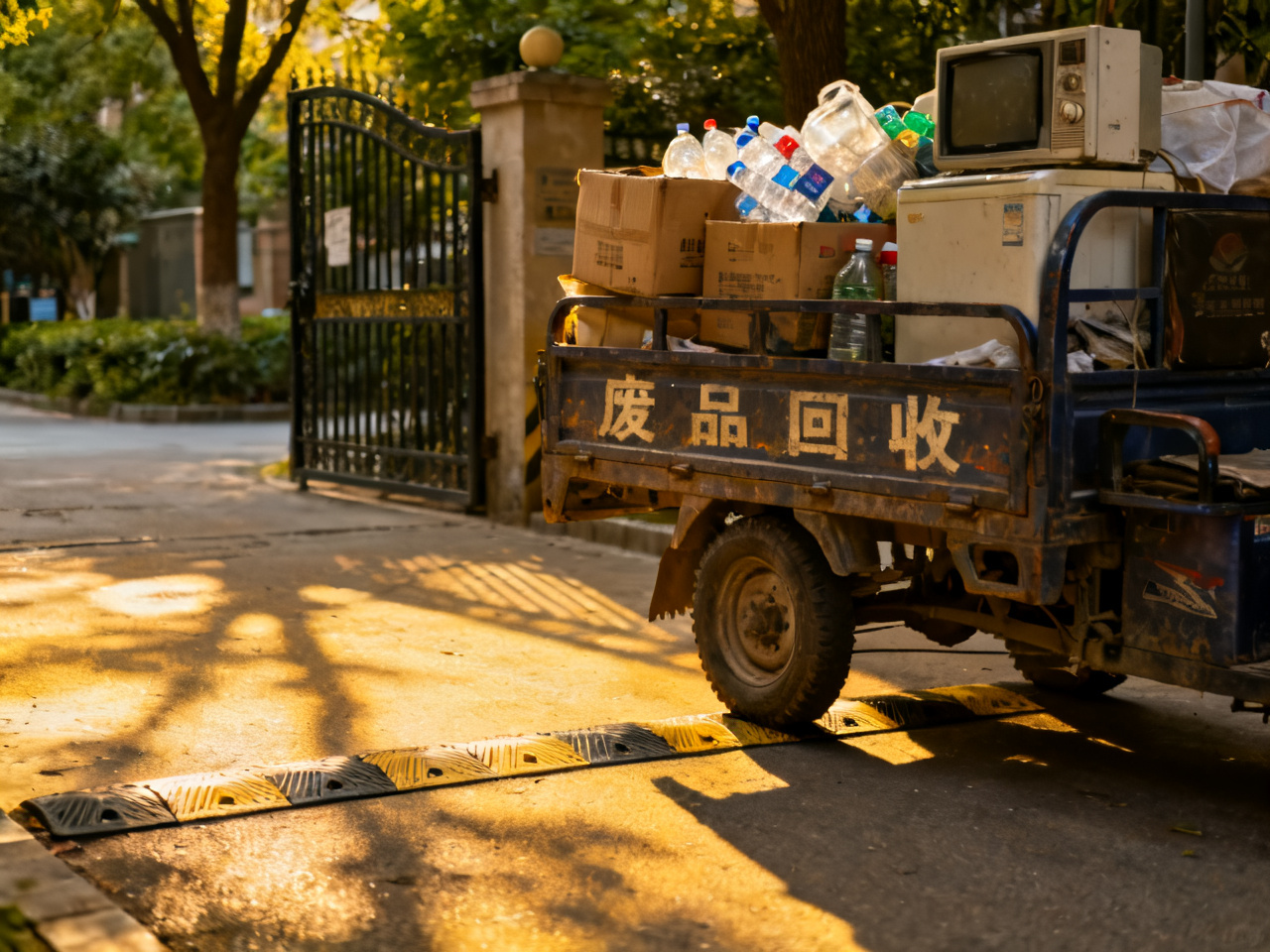
[Image 1: A scrap-collection tricycle at the entrance of a residential compound, lit by afternoon light, with cardboard, plastic bottles, and old household items piled in the back.]
我后来和保安也聊过一次。他说这种上门或到门口流动收废品的人,很多小区住户都熟,大家知道大概什么时候会来,也知道哪些东西值得留着一起处理。保安讲得很平常,可我听得很认真,因为这正是我这个外来者最容易忽略的部分:城市不是只靠写在墙上的规则运转,也靠无数居民长期形成的“知道怎么做”。什么时间下楼不会挡道,东西先大致分类会更快,玻璃和刀片要单独说一声,旧电器最好先把线绕起来。这些细节没有人专门教我,却都藏在眼前的动作里。
I later chatted once with the security guard, who told me that many residents know these roaming scrap collectors well. People roughly know when they might appear and what kinds of things are worth setting aside until then. He said it casually, but I listened carefully, because this is exactly the layer that I, as an outsider, most easily miss: a city does not run only on rules written on walls. It also runs on countless habits built over time, on residents simply knowing how things are done. What time to come downstairs so you do not block the entrance, how sorting things roughly in advance speeds everything up, why broken glass or blades should be mentioned separately, why old appliances are easier to move if the cord is wrapped first. No one formally taught me these details, yet they were all visible in people’s movements.
最让我改观的,是一次我自己也参与进去。那天我房间里正好有几只攒着没扔的快递纸箱,还有一个坏掉的台灯。我听见楼下熟悉的喇叭声,本来还在犹豫要不要拿下去,总担心自己中文说得不够顺,怕问价时显得笨拙。结果我刚出单元门,那位师傅看见我抱着纸箱,先朝我点了点头,很自然地说:“放这边就行。”那种语气不是在特别照顾外国人,也不是把我当成新鲜对象,而是把我当成一个终于也进入这套日常流程的人。我一下子轻松下来,跟着他的话把纸箱放到旁边,又把坏台灯递过去,补了一句“这个也可以吗?”
What changed my view most was the day I joined the process myself. I had several delivery boxes in my room that I had been saving, plus a broken desk lamp. When I heard the familiar loudspeaker downstairs, I hesitated for a moment. My Chinese is usable, but not always smooth, and I worried I would sound awkward asking about the price. But as soon as I stepped out of the building carrying the boxes, the collector saw me, nodded, and said naturally, “Just put them over here.” His tone did not treat me as a special foreign guest, nor as some amusing novelty. It treated me as one more person finally entering this ordinary local routine. I relaxed immediately, set the boxes where he indicated, handed him the lamp, and added, “Can this go too?”
他看了一眼,说可以收,但灯和纸板分开算。我忽然觉得很有意思:哪怕只是几件旧东西,也不是混成一堆往车上一扔,而是有一套朴素但明确的判断标准。等他称完,我拿着那一点并不重要的钱,却有一种奇怪的参与感。不是因为“卖废品”这件事本身多新鲜,而是因为我第一次不再把这种声音当成自己生活外部的背景音。我听懂了它和楼里的住户、和网购后的纸箱、和家里替换下来的旧电器、和那些并不豪华却很高效的日常安排之间的关系。
He glanced at the items and said yes, but the lamp and the cardboard would be counted separately. I found that unexpectedly fascinating. Even for just a few old objects, nothing was simply tossed together into a pile. There was a plain but clear logic behind the sorting. When he finished weighing them, the small amount of money in my hand did not matter much, yet I felt a strange sense of participation. Not because “selling scrap” was somehow thrilling, but because for the first time I no longer heard that call as background noise from outside my own life. I understood how it connected to the residents upstairs, to delivery boxes from online shopping, to old appliances being replaced, and to all the practical routines that keep everyday life efficient without making a show of it.
后来每次再听见那种收废品的喇叭声,我的反应都变了。我不会再下意识皱眉,反而会想:今天是不是又有人把阳台角落清空了,是不是哪一家终于舍得把占地方的旧风扇送走了,是不是楼上某位邻居又把一周的快递箱整理好了。以前我只从声音的“响不响”来判断它,现在我会从声音背后的流动看它。那是一种把旧东西重新拉回循环里的能力,也是一种很接地气的城市智慧。它不需要华丽的宣传词,不需要被包装成某种“现代生活方式”,它就那么自然地发生在楼下,在日常里完成。
Now, every time I hear that scrap-collector loudspeaker again, my reaction is different. I do not instinctively frown anymore. Instead, I think: maybe someone finally cleared a balcony corner today; maybe one household has at last let go of an old fan that was taking up space; maybe an upstairs neighbor has bundled together a week’s worth of delivery cartons. I used to judge the sound only by how loud it was. Now I hear the circulation behind it. It is a way of pulling old things back into use again, and also a very grounded kind of urban intelligence. It does not need polished slogans. It does not need to be packaged as some fashionable “sustainable lifestyle.” It simply happens downstairs, inside ordinary life, and gets the job done.
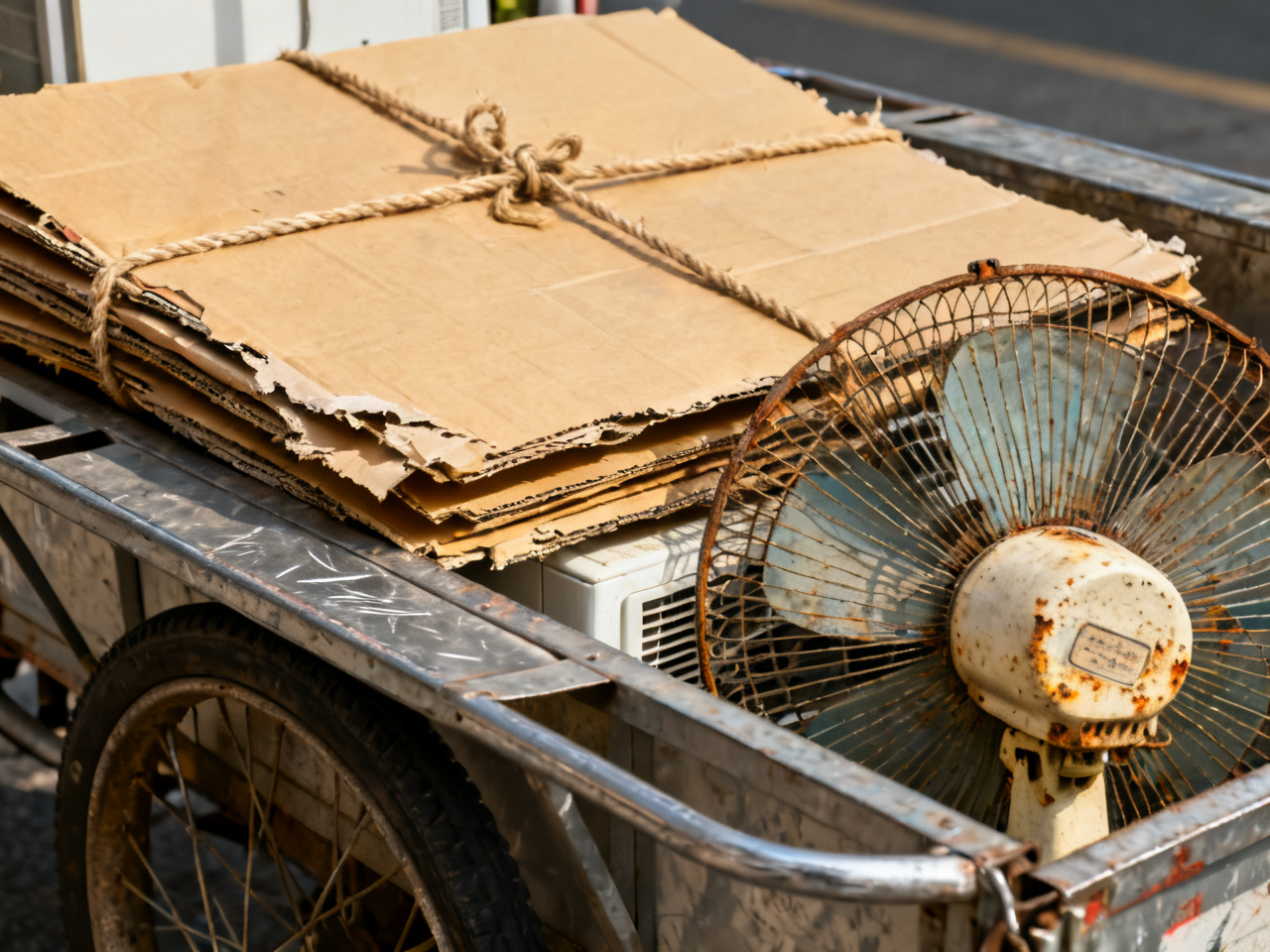
[Image 2: A close view of sorted cardboard and old appliances, with tied bundles of boxes, an old fan, and small electronics placed neatly beside the tricycle cart.]
作为一个长期在中国生活的外国人,我越来越觉得,真正让我理解一座城市的,往往不是那些宏大的地标,而是这些起初被我误判的小场景。小区门口收废品的吆喝声就是这样。它一开始只像打断我午后安静的一种动静,后来却变成我认识中国城市生活的一把钥匙。它提醒我,很多秩序不是冷冰冰地摆在那里等人服从,而是在重复中被人共同维护,在交易、问答、搬运和让路之间一点点长出来。那一刻我看见的不是杂乱,而是城市怎样让旧东西继续流动,也让彼此不必多解释的人,依然顺畅地连接起来。

- 昆明菜市场里的花和菜,让我重新认识日常审美 | Flowers and Vegetables in a Kunming Market Changed How I See Everyday Beauty
- 夜宵去哪里:西安、长沙、重庆三城口味地图 | Late-Night Food Map: Xi'an, Changsha, and Chongqing
- 我怎么把自己练成一个“半个中国人”:从排队、问路到饭桌节奏的融入笔记 | How I Trained Myself into a Half-Local in China: Notes on Queues, Directions, and Table Rhythm
- 我在北京胡同便利店刷不过码的那一分钟,后来成了最好用的支付预案 | The Minute My QR Code Failed in a Beijing Hutong Store Became My Best Payment Backup
- 剪纸日记|在红纸与窗光之间学习耐心 | Paper-Cutting Diary | Learning Patience Between Red Paper and Window Light
- 洛阳牡丹花期里,我学会把热闹拆成几个小时 | During Luoyang Peony Season, I Learned to Divide Crowds by the Hour
- 站在深圳北站外第一个红灯前,我开始读懂这座城的速度 | At My First Red Light Outside Shenzhen North, I Began to Read the City’s Speed
- 中山装与唐装:男士传统服饰怎么穿 | Zhongshan Suit & Tang Suit: Men's Traditional Wear
- 孩子在北京地铁里第一次自己问路 | When My Child Asked for Directions Alone on the Beijing Subway
- 七月暑假全家游路线规划 | July Summer Family Trip Route Planning
Comments (0)