
我在中国黄昏公园里学会一个人坐着,不急着把空白填满 | In a Chinese Park at Dusk, I Learned to Sit Alone Without Rushing to Fill the Silence
我在中国黄昏公园里学会一个人坐着,不急着把空白填满 | In a Chinese Park at Dusk, I Learned to Sit Alone Without Rushing to Fill the Silence
我刚到中国时,很怕一个人在公园里坐着,尤其是傍晚。白天还好,大家都像在路上:散步、遛狗、带孩子、拍照。可到了天色开始往下沉的时候,长椅上的停留忽然变得更明显。你不再像是在“经过”,而像是在把自己交给一段没有任务的时间。对那时的我来说,这种状态有点暴露,也有点不安。我总觉得如果一个人坐着,就应该同时做点什么,比如看手机、喝东西、回消息,不然就像没有理由待在那里。
When I first arrived in China, I was uneasy about sitting alone in a park, especially at dusk. Daytime felt easier because everyone seemed to be in motion: walking, walking dogs, bringing children, taking photos. But when the light began to sink, staying on a bench became more visible. You were no longer merely passing through. You were giving yourself over to a stretch of time with no task inside it. Back then, that felt exposed and slightly unsettling to me. I kept thinking that if I sat alone, I should at least be doing something—checking my phone, drinking something, replying to messages—or else I had no reason to be there.
第一次真正改变我的是一个很普通的傍晚。公园不大,树下有几张旧长椅,旁边有人慢慢踢毽子,远一点的大妈把便携音箱放得不高不低,够她们自己跳舞,也不会压过鸟叫和孩子说话的声音。我原本只是路过,脚有点累,就坐了五分钟。结果坐下以后我发现,没有人因为我一个人坐着而多看我一眼。有人提着菜从园门口穿过去,有人绕着小路快走,有人把保温杯放在凳边发呆。那一刻我才第一次意识到,在中国很多公园里,独自坐着本身就是一种非常正常的存在方式。
What first changed me was an entirely ordinary evening. The park was small, with a few old benches under the trees. Nearby, someone was gently kicking a shuttlecock, and farther off a group of aunties had a portable speaker set at a level that was enough for dancing but not so loud that it erased the birds or the children’s voices. I had only meant to pass through. My feet were tired, so I sat for five minutes. Once I sat down, I noticed that nobody looked at me twice for being alone. Someone crossed the gate carrying vegetables, someone power-walked around the path, someone placed a thermos beside the bench and simply stared ahead. In that moment, I realized for the first time that in many Chinese parks, sitting alone is itself a completely normal way to exist.
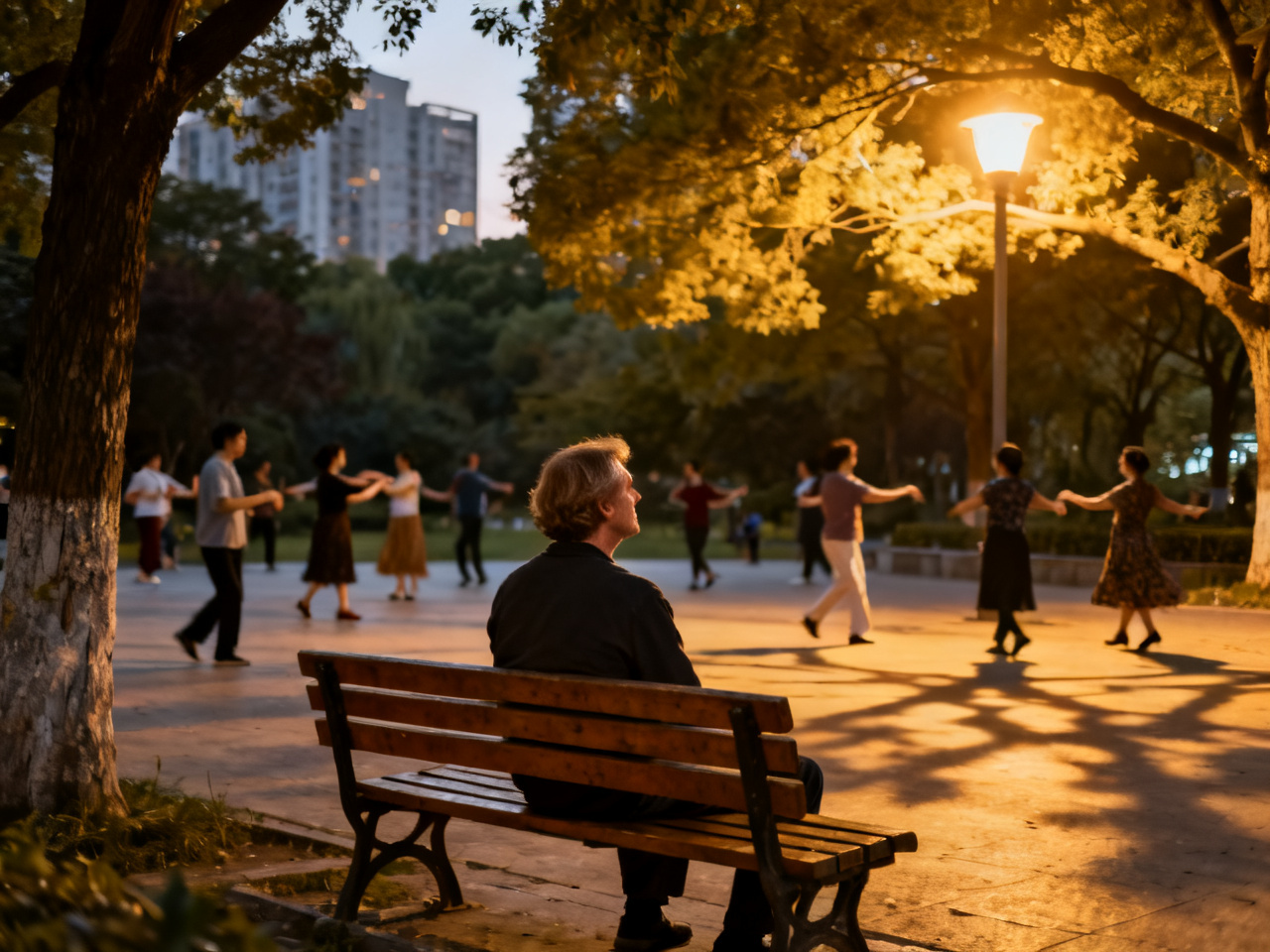
后来我开始慢慢学会这种傍晚的节奏。它不是“打发时间”,而更像把白天从身上卸下来一点。天还没全黑,树影已经先变深,长椅边的说话声也会变轻。有人在打最后一圈太极,有人推着婴儿车往外走,有人只是坐着看路灯一盏一盏亮起来。对外国人来说,这种场景很有帮助,因为它让你明白,融入中国生活不一定总靠积极开口、积极移动、积极安排。有时候你只是先把自己安静地放在一个公共节奏里,很多紧绷感就会自己松掉。
Later I slowly learned the rhythm of that hour. It was not really “killing time.” It felt more like taking part of the day off my shoulders. The sky was not fully dark yet, but the tree shadows deepened first, and the voices around the benches softened. Someone completed a final round of tai chi, someone pushed a stroller toward the exit, someone simply sat and watched the streetlights come on one by one. For foreigners, this kind of scene helps a great deal, because it shows that entering life in China does not always require active speaking, active movement, or active planning. Sometimes you just place yourself quietly inside a shared public rhythm, and a lot of tension loosens on its own.
我也慢慢明白,公园傍晚最珍贵的地方,在于它允许你“不产出”。你不需要消费,不需要解释,不需要证明自己正在有效利用时间。和商场、咖啡店、车站不一样,公园对人的要求很低。你可以坐十分钟,也可以坐半小时;可以看人打牌,也可以只听树叶声。这个经验让我越来越认同先通过小动作进入中国日常的意义,因为很多时候,真正有用的第一步不是做更多,而是学会在一个地方自然地待着。
I also gradually understood that the most precious thing about a park at dusk is that it allows you to produce nothing. You do not need to consume, explain yourself, or prove that you are using time efficiently. Unlike a mall, a café, or a station, a park asks very little from a person. You can sit for ten minutes or for half an hour. You can watch people play cards or simply listen to the leaves. This experience made me believe even more in the value of entering Chinese daily life through small actions, because often the most useful first step is not doing more. It is learning how to stay somewhere naturally.
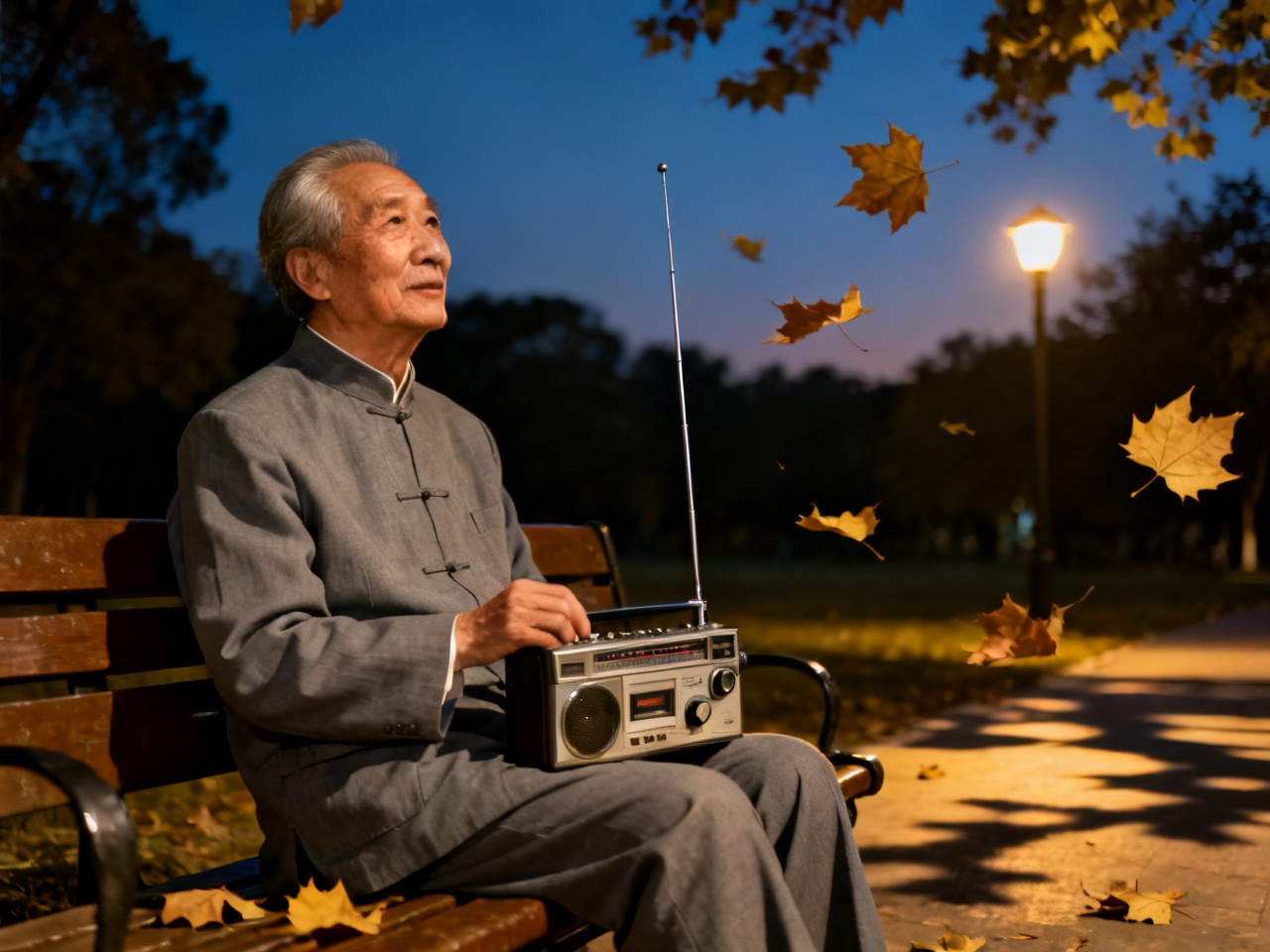
后来有一次我在南方城市的小公园里,连续坐了三个傍晚。第一天我还会条件反射地掏手机,第二天开始会把手机放在包里,第三天甚至能只是抬头看天色一点点变灰。我记得旁边总有一个老爷爷准时出现,拎着收音机坐在固定位置,也不怎么和人说话。那种安稳感很细,却很有力量。我忽然意识到,自己以前不是不会独处,而是不会在公共空间里安心独处。中国公园傍晚教我的,正是这种不需要把孤单立刻解释成问题的能力。
Later, I spent three evenings in a row in a small park in a southern city. On the first day, I kept reaching for my phone automatically. On the second, I started leaving it in my bag. By the third, I could simply look up and watch the light turn gray by degrees. I remembered that an elderly man always appeared on time nearby, carrying a small radio and sitting in the same place without talking much to anyone. The steadiness of that was subtle, but strong. I suddenly realized that the problem had never been that I could not be alone. It was that I did not yet know how to be peacefully alone in public. What Chinese parks at dusk taught me was exactly that ability—the ability not to treat solitude as a problem that needs immediate explanation.
现在如果有人问我,在中国最温和地学会独处的地方是哪里,我多半会说:去黄昏的公园坐一会儿。不要急着拍照,不要急着走流程,也不要急着把每一分钟都变成任务。先坐下,听一听别人的脚步和风声,看一看天色怎样从亮变暗。你会慢慢发现,一个人待着并不等于被世界落下,反而像是终于和这个城市的呼吸对上了拍子。对我来说,那是中国日常里非常安静、但非常重要的一课。
If someone asks me now where I learned the gentlest form of being alone in China, I would probably say: go sit in a park at dusk for a while. Do not rush to take photos, do not rush to turn the moment into a checklist, and do not rush to make every minute into a task. Sit down first. Listen to other people’s footsteps and the wind. Watch how the light changes from bright to dim. Slowly, you may find that being alone does not mean being dropped by the world. It can feel more like finally matching your breathing to the city’s. For me, that has been one of the quietest and most important lessons in everyday China.
- 中国西部丝绸之路探险 | Silk Road Adventures in Western China
- 国庆出行避坑指南 | National Day Travel Tips: Avoiding the Crowds
- 在景德镇看一只碗怎么出生:窑火、白粉和老师傅的手势 | Watching a Bowl Be Born in Jingdezhen: Kiln Fire, White Clay Dust, and a Master's Hands
- 剪纸日记|在红纸与窗光之间学习耐心 | Paper-Cutting Diary | Learning Patience Between Red Paper and Window Light
- 张家界最难写的,不是山有多像电影,而是两次惊叹之间身体怎么喘口气 | The Hardest Part of Writing Zhangjiajie Is Not How Cinematic the Peaks Look but How the Body Breathes Between Two Moments of Awe
- 磁湖边跑步者递来的纸巾,让我重新安排黄石的一天 | A Runner’s Tissue Changed How I Planned a Day by Cihu Lake in Huangshi
- 美国人去中国旅行前必须知道的事 | What Americans Need to Know Before Traveling to China
- 我在重庆第一次学会先确认自己在哪一层,再决定往哪边走 | In Chongqing, I Learned to Confirm My Floor First Before Deciding Which Way to Go
- 海河风正冷的时候,一家小馆先把我的天津安顿下来了 | On a Cold Haihe Evening, a Small Eatery Settled Me into Tianjin
- 遵义老城坡道上,我把台阶数错了 | I Lost Count of the Steps on Zunyi’s Old-Town Slopes
Comments (0)