
都江堰的水没有被堵住:我沿着分流口看一座工程怎样工作 | Dujiangyan’s Water Was Not Blocked: How I Read Its Flow
都江堰的水没有被堵住:我沿着分流口看一座工程怎样工作 | Dujiangyan’s Water Was Not Blocked: How I Read Its Flow
我先看见了水,而不是答案 / I Saw the Water Before I Found the Answer
早上九点多,我从都江堰景区入口走进去,手里还捏着一张没有完全展开的地图。前一晚我对朋友说,这里大概就是一座很大的古代水坝:把河水拦住,蓄起来,再从某个地方放出去。这个判断听起来顺手,因为我脑子里的水利工程总有一道横在河上的高墙,水在墙前变深,城市在墙后获得稳定的水。那天的岷江并没有配合我的想象。水声先到了,白亮的水面从石岸边分成几股,互相错开,又在更远处重新显出共同的方向。我站在树影和湿石头的气味里,突然发现自己甚至说不清哪一段才算“坝”。
A little after nine in the morning, I entered the Dujiangyan scenic area holding a map that I had not fully unfolded. The night before, I had told a friend that this must be a huge ancient dam: block the river, store the water, and release it somewhere downstream. The idea felt convenient because the water projects in my head usually had a tall wall across a river, deeper water in front, and a dependable supply behind it. The Min River did not cooperate with that picture. I heard the water before I understood it. Its bright surface split beside the stone bank, moved in separate strands, and then seemed to recover a shared direction farther away. Standing among tree shade, damp stone, and spray, I realized I could not even say which part was supposed to be “the dam.”
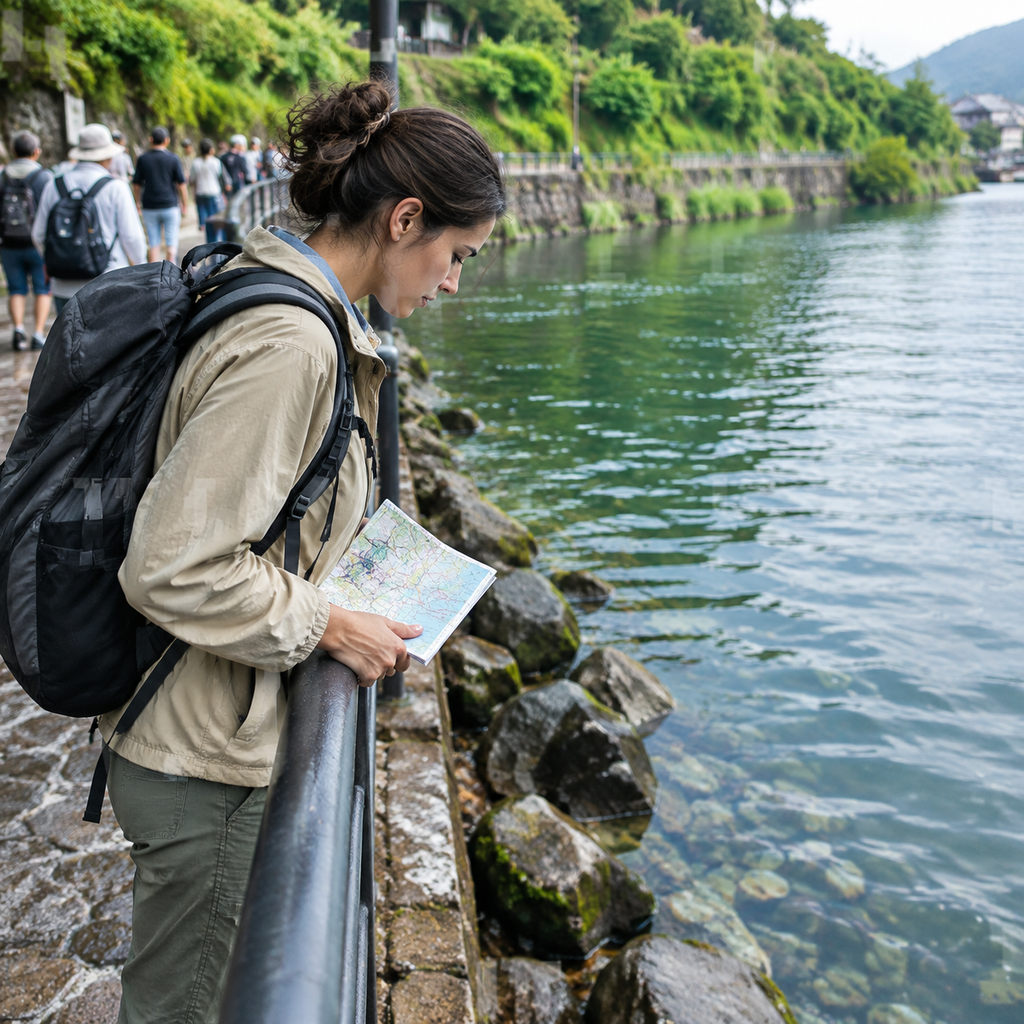
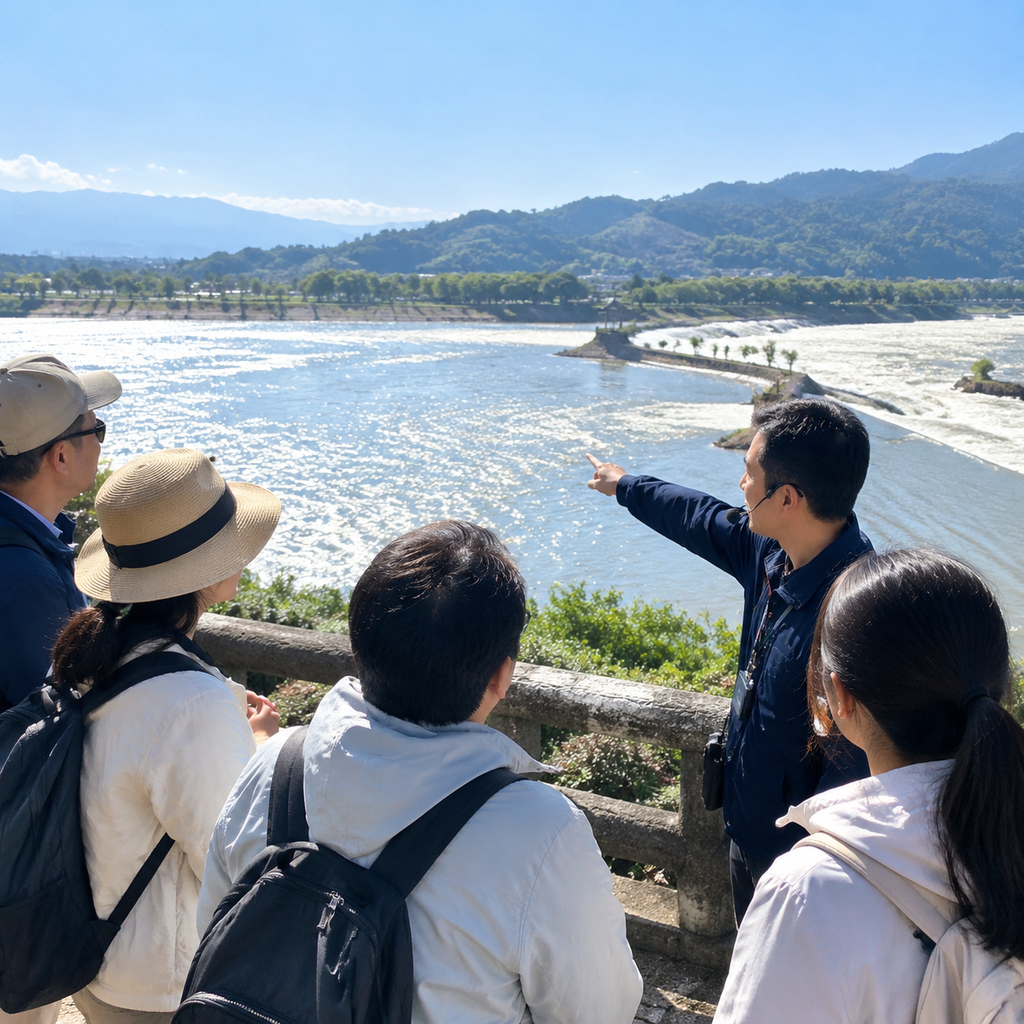
我先没有急着拍照,而是站在一处能同时看见河面和堤岸的地方。靠近我的水流并不整齐,窄的地方跑得快,宽的地方显得松,水面上的反光被石头切成一小片一小片。岸边有人举着手机寻找最开阔的角度,导游的旗子在前方移动,孩子把手伸向栏杆外又被大人拉回来。我把地图上的线条和眼前的水反复对照,越看越觉得地图把复杂的动作压成了几条静止的线。水不会按照地图上的箭头保持一个姿势,它会绕、会撞、会回旋,也会在地势变化后选择另一条路。
I did not rush to take photographs. I stood where I could see both the water and the bank. The current was not uniform: it moved quickly through narrow passages and looked looser where the channel widened, while reflections broke into small pieces against the stones. Visitors searched for the widest view with their phones; a guide’s flag moved ahead, and an adult pulled a child’s hand back from the railing. I compared the lines on the map with what was in front of me. The map had pressed a complicated set of movements into a few motionless strokes. Water does not keep the posture of an arrow. It bends, collides, eddies, and chooses another path when the ground changes.
这一次停留让我先改了一个词。我不再把都江堰理解为“把水关住的地方”,而开始把它看作一套让水分开、转弯、减速、排沙并继续向前的关系。这个说法还不完整,却比“大坝”更接近我当时看到的现场。它也提醒我,判断一座工程不能只看有没有一面壮观的墙,还要看水进来以后被允许做什么,哪些力量被引导,哪些风险被放走,哪些方向被保留下来。
That pause changed one word for me. I stopped treating Dujiangyan as a place where water is shut in and began to see it as a set of relationships that lets water divide, turn, slow, shed sediment, and continue. The description was still incomplete, but it was closer to the site in front of me than “dam.” It also reminded me that an engineering work cannot be understood only by looking for an impressive wall. I needed to ask what the water was allowed to do, which forces were guided, which risks were released, and which direction was preserved.
一道堤把我的视线掰开 / A Levee Pulled My Eyes Apart
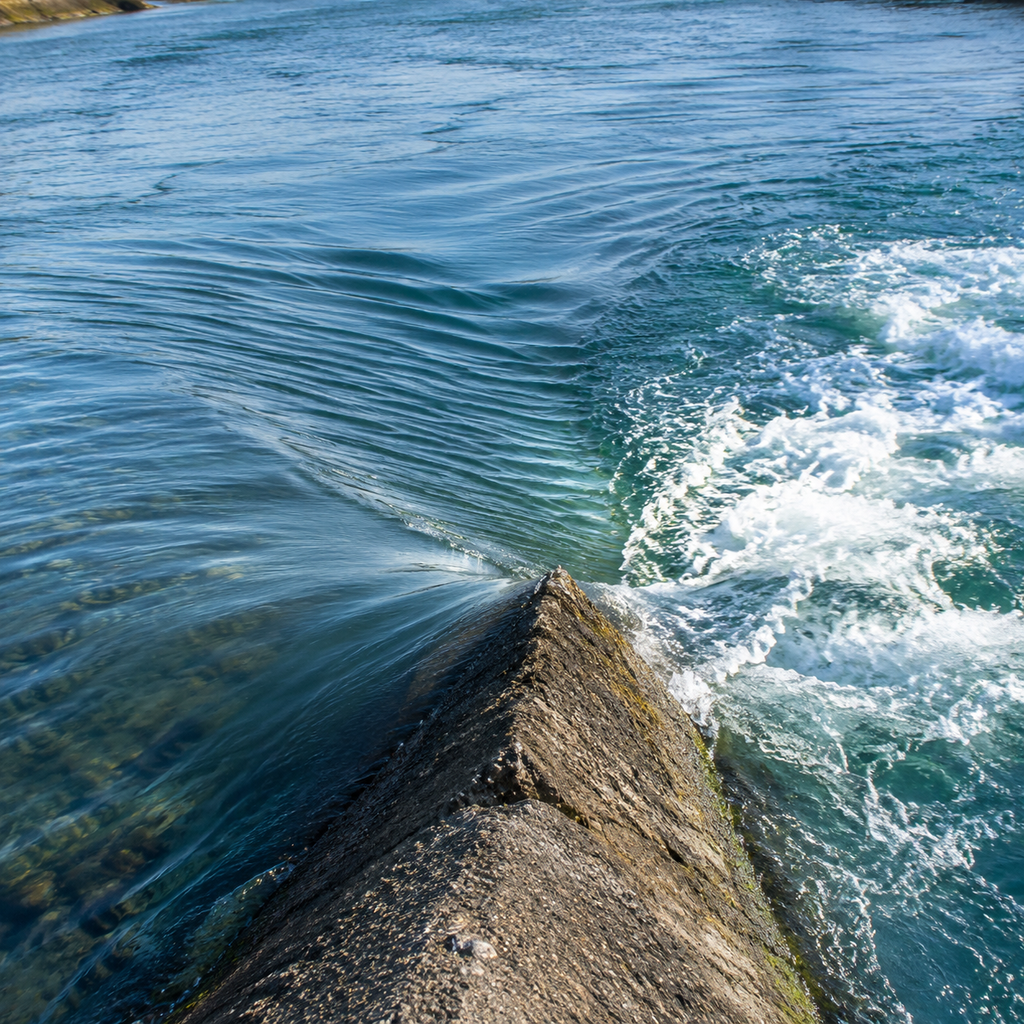
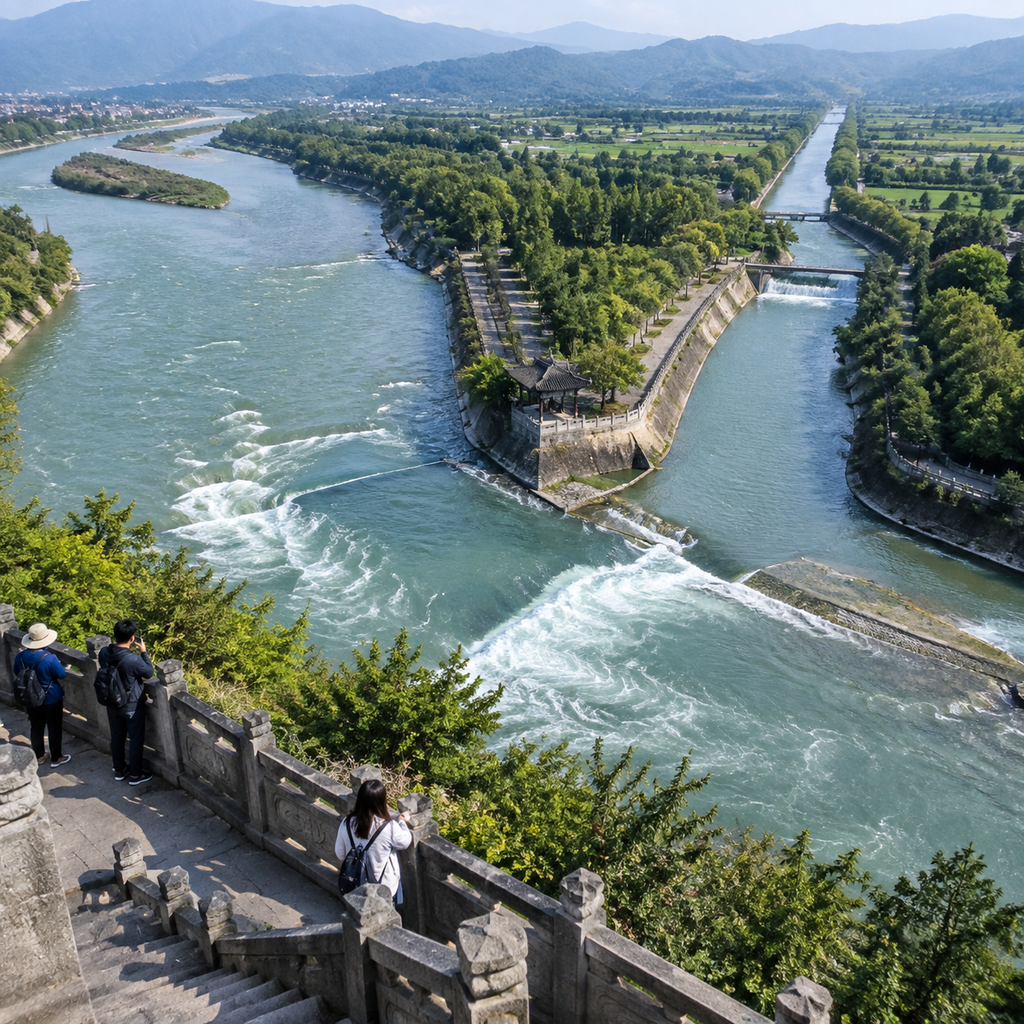
走到鱼嘴分水堤附近时,我第一次比较清楚地看见了“分流”不是一个抽象名词。堤体像伸进水中的尖端,把来水的路线从中间推开;两侧水面的颜色、速度和声音都不完全相同。站在岸上看,我很容易把它当成一条孤立的建筑物,低头看脚边的石块,又能感觉到它其实在和河床、岸线、上游来水一起工作。尖端的位置不是为了好看,堤岸的方向也不是随便摆出的轮廓。它们共同把一股过于集中的水变成几股可以继续安排的水。
Near the Yuzui diversion levee, I saw more clearly that “diversion” was not an abstract word. The levee reached into the river like a point and pushed the incoming flow apart. The water on its two sides differed in color, speed, and sound. From the bank, I could easily treat the structure as an isolated object; when I looked down at the stones by my feet, I sensed that it was working together with the riverbed, the shoreline, and the upstream current. The point was not placed for appearance, and the line of the levee was not a random outline. Together they turned one overly concentrated flow into several flows that could be managed further.
我沿着栏杆慢慢挪动,每走几步就停下来观察水面的纹理。靠近分水处,水像被一把看不见的梳子梳过,细小的波峰排列得更密;离开尖端之后,不同方向的水各自留下了纹路。有一段水面看起来很平,声音却并不小,另一段水面翻着白沫,反而让我分辨不出它到底流向哪里。那时我才意识到,速度不应该只凭视觉判断,声音、波纹和岸边漂浮物的位置也在告诉我水的运动。工程观察不是找一个漂亮的静止画面,而是把多个信号拼成一段过程。
I moved slowly along the railing, stopping every few steps to study the texture of the surface. Near the diversion point, the water looked as if an invisible comb had passed through it, with smaller crests packed more closely together. Beyond the point, the separate currents left their own patterns. One stretch looked calm but sounded strong; another rolled with white foam and made its direction difficult to read. I realized that speed should not be judged by sight alone. Sound, ripples, and the position of floating bits along the bank were also evidence of movement. Observing engineering was not about finding one beautiful still image. It was about combining several signals into a process.
旁边的讲解员没有急着把全部名词一次讲完。他先让我看两边的水,再说分水堤的作用和内外江的分配有关,具体的比例会受到来水状况和工程设计的影响,不能把它背成永远不变的数字。我很感谢这句保留。旅行中的讲解常常被压缩成一个朗朗上口的参数,听完似乎就懂了;但站在河边,我更需要知道数字背后有什么条件。水量、季节、河道形态和泥沙都会改变现场的表现,比例不是脱离环境独立存在的口号。
The guide did not rush to give me every technical term at once. He first asked me to look at the water on both sides, then explained that the diversion levee was related to distributing flow between the inner and outer channels. The exact share depends on incoming water and the design conditions, so it should not be memorized as one timeless number. I appreciated that qualification. Travel explanations are often reduced to a catchy parameter that makes listeners feel they understand everything. At the river, I needed to know what conditions stood behind the number. Flow, season, channel shape, and sediment can all change what appears on site; a ratio is not a slogan independent of its surroundings.
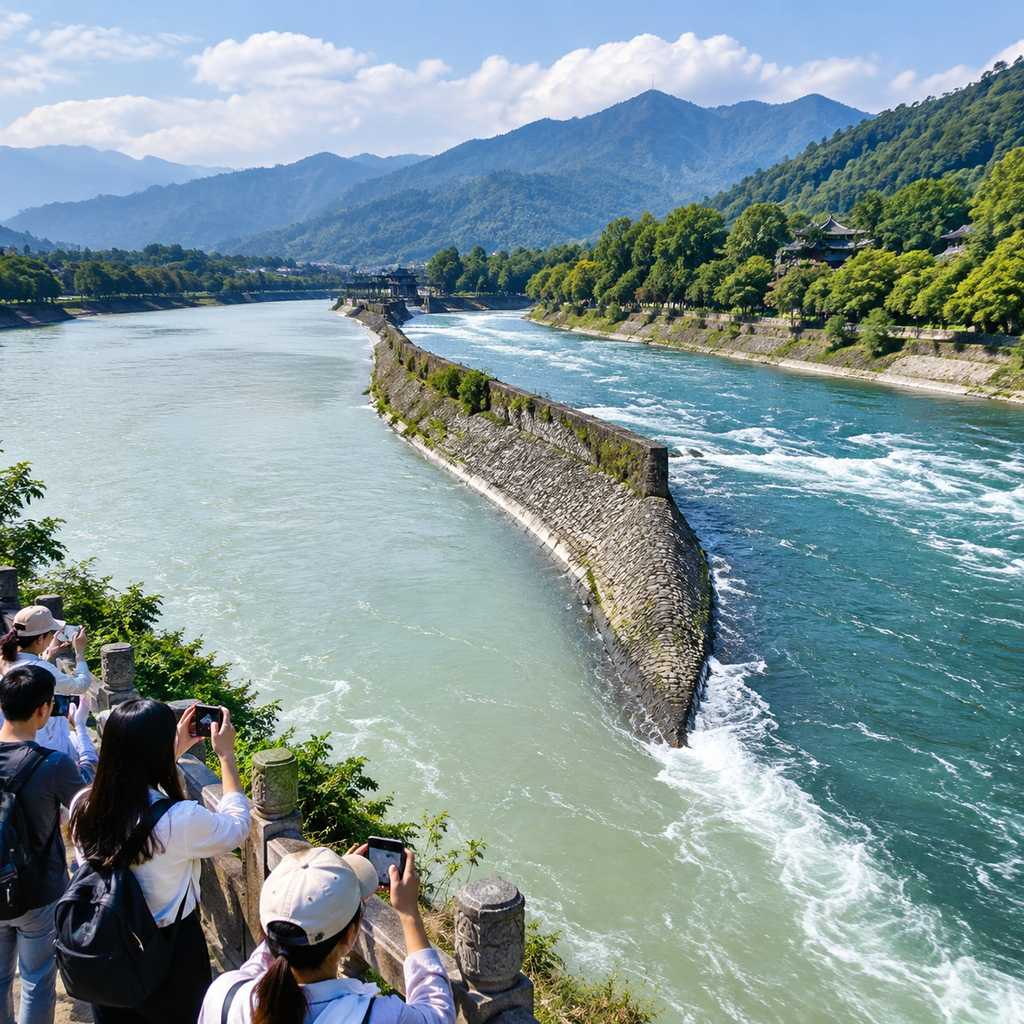
我把这段信息记在手机里,却没有立刻转身去找下一个景点。我开始留意岸边的高度变化:有些位置让人离水很近,能看见水线贴着石面移动;有些位置则把人抬高,只能从上方看水道的分叉。堤岸既保护人,也制造观察角度。它不是一条单纯的边界,一边挡住危险,一边把水的方向展示出来。我以前参观建筑时总把栏杆、台阶和观景平台当成附属设施,那天却发现它们也在组织我的判断。
I wrote this information in my phone but did not immediately move on. I began noticing changes in the bank’s height. In some places I was close enough to see the waterline slide over the stone; in others I stood higher and could see the branching channels from above. The bank protected people, but it also created viewpoints. It was not merely a boundary. It held back danger while revealing direction. When I visited architecture before, I treated railings, steps, and platforms as secondary facilities. That day I realized they were also organizing the way I judged what I saw.
我误认的那面“大坝” / The “Dam” I Had Imagined
中午前,我又一次把目光投向远处的水面,试图找出那座想象中的大坝。它始终没有出现。都江堰当然有堤、渠、口和岸线,也有需要维护和管理的工程构造,但它的核心经验不是站在一堵横贯河流的墙前,看水被储存在一侧。这里的水一直在动。它被分到不同方向,经过不同宽度的河道,遇到不同的坡度和障碍,然后继续进入更广阔的灌溉和城市生活网络。我的错误不只是把一个名词用错,而是把“控制水”想成了“停止水”。
Before noon, I looked across the water again, trying to locate the huge dam I had imagined. It never appeared. Dujiangyan certainly includes levees, channels, outlets, and banks, all of which require maintenance and management, but its central experience is not standing before a wall spanning the river and watching water stored on one side. Here the water keeps moving. It is sent in different directions, passes through channels of different widths, meets different slopes and obstacles, and continues into a wider network of irrigation and urban life. My mistake was not only a wrong noun. I had imagined “controlling water” as “stopping water.”
讲解员后来指向水道的走向,提醒我注意飞沙堰相关的排洪排沙作用。我没有把这听成一条可以脱离条件的万能说明,而是回头看水面和河岸的关系:当来水变大时,水流需要有能够分担压力的路径;泥沙也不能全部被带进需要保持通畅的渠道。具体的运行效果与水势、河道和维护状况相关,现场不可能用一次肉眼观察把所有机制都证明完,但至少可以理解一个原则:工程不是把所有水都抓在手里,而是给多余的水和泥沙留下出口。
The guide later pointed toward the channel and drew my attention to the role associated with Feishayan in flood discharge and sediment management. I did not take this as a universal statement detached from conditions. Instead, I looked again at the relationship between the surface and the banks. When incoming water increases, the current needs paths that can share the pressure; sediment also cannot all be carried into channels that must remain usable. The exact effect depends on water force, channel conditions, and maintenance, and one visual visit cannot prove every mechanism. Still, I could grasp a principle: the project does not try to hold every drop in its hands. It provides ways for excess water and sediment to leave.
我注意到“排沙”这个词改变了我的观看方式。此前我只关心水是否被分开,后来开始看水中颜色较深的带状区域,看靠近岸边的沉积,看某些水面为什么显得浑浊而另一些地方相对清亮。我不敢根据一次路过就给每个现象下结论,因为泥沙会随水势和位置变化;但我可以确认,河流带来的东西不只有水。石粒、细沙、漂浮物和水的力量一起进入工程,工程若只考虑水量而不考虑携带物,就很难长久保持有效。
The word “sediment” changed the way I watched. At first I cared only about whether the water had split. Then I began looking at darker bands in the current, deposits near the bank, and why one stretch appeared cloudier while another looked clearer. I did not want to assign a final explanation to every sight from one passing visit, because sediment changes with force and position. But I could confirm that a river brings more than water. Stones, fine sand, floating matter, and moving force all enter the system. A project that considered only volume and ignored what the water carries would struggle to remain effective.
我以前会把古代工程和现代城市分开想:古代的东西属于历史,城市供水属于今天的管道、泵站和水厂。都江堰把这条分界线搅乱了。站在渠水和河流交接的视线里,我想到水最终会进入田地,也会进入居民生活所依赖的城市系统。今天人们使用的具体供水环节当然还涉及现代设施,不能简单说一条古渠替代了所有现代系统;可是水资源的来源、分配和风险控制仍然可以追溯到这种“让水继续走、让不同需求获得水”的思路。
I used to separate ancient engineering from the modern city. Ancient works belonged to history; urban water supply belonged to pipes, pumps, and treatment plants. Dujiangyan disturbed that boundary. Looking along the meeting lines of channels and river, I thought about water eventually reaching fields and the urban systems on which residents depend. Modern supply of course involves modern infrastructure, so it would be inaccurate to say that an ancient channel replaces every contemporary system. Yet the source, distribution, and risk-management questions still connect to the idea of letting water continue while directing it toward different needs.
宝瓶口不是一个“放水开关” / Baopingkou Was Not a Simple Water Switch
下午的光线从树叶缝里落下来,我沿着道路走到宝瓶口一带。这里的名字很容易让人产生一个简单画面:像一个瓶口,只要把水引到这里,就能通过一个开关控制去向。现场再次把我的想象拆开。水道的宽窄、岸壁的形状、入口和出口之间的落差,共同影响水如何通过;人站在岸边只能看到其中一段,还要把上游的分流、下游的渠道以及季节变化放回同一张图里。
In the afternoon light, I followed the path toward the area of Baopingkou, with leaves breaking the sunlight into moving patches. The name easily creates a simple image: a bottle neck with a switch that controls the water once it enters. The site dismantled that image again. The channel’s width, the shape of its walls, and the change in level between entrance and exit all affect how water passes through. From the bank I could see only one section. I had to place the upstream diversion, downstream channels, and seasonal variation back into the same picture.
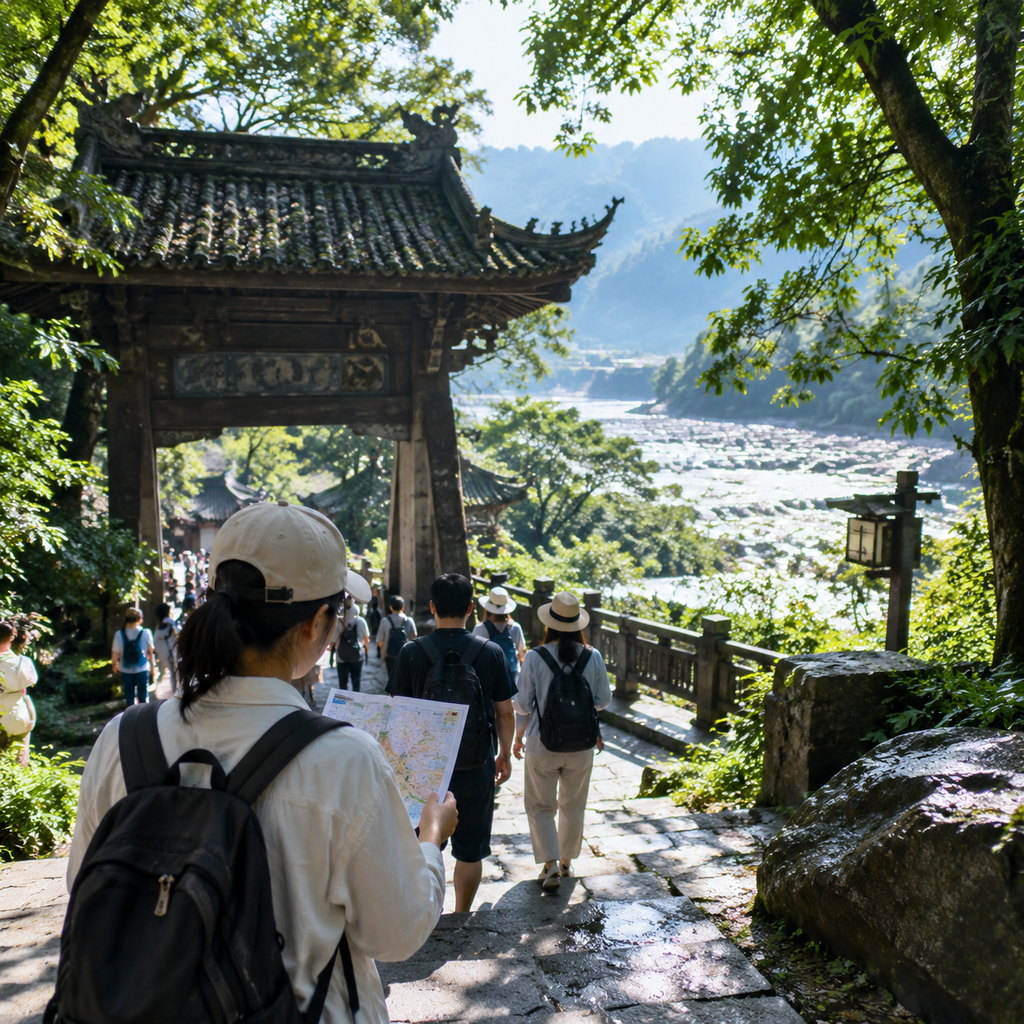
我在这里遇到一位带着小册子的游客。他问讲解员,宝瓶口是不是“把水一开一关”的地方。这个问题和我早上的误会几乎一样,所以我没有急着笑。讲解员用手指了指水面,说这里更像一个受到地形和工程边界约束的通道,关键在于水流经过时形成怎样的分配与调节,而不是像水龙头那样随手开合。那几句话没有夸张的戏剧性,却让我真正明白,古代水利设施的“口”通常不是一个孤立开关,而是整个系统中的控制节点。
Here I met another visitor carrying a small booklet. He asked the guide whether Baopingkou was a place that simply turned the water on and off. His question was almost identical to my morning misunderstanding, so I did not laugh. The guide pointed at the surface and explained that it was more like a channel constrained by terrain and engineered boundaries. What mattered was how flow was distributed and regulated as it passed through, not a casual opening and closing like a tap. The exchange was not dramatic, but it made the point clear: an ancient water outlet is not an isolated switch. It is a control point inside a larger system.
我靠近栏杆看水进入较窄的通道,水声变得集中,像许多小声音被压到一处。岸壁上的湿痕让我看到水位曾经留下的边界,但我没有把每一道痕迹都当成固定水位的证据。现场观察有自己的限度:我能看到当时的水面、石壁上的颜色、游客行走的距离,却看不到一年中不同水情的完整变化。因此,可靠的理解既需要眼前的感受,也需要讲解中对条件的提醒。只凭一张照片,水利工程会被误读成一座静物。
I leaned toward the railing as water entered the narrower passage. The sound became concentrated, as if many small voices had been pressed into one place. Damp marks on the wall suggested former water boundaries, but I did not treat every mark as proof of a fixed water level. On-site observation has limits. I could see the current moment, the colors on the stone, and the distance visitors kept from the edge, but not the full range of water conditions across a year. A sound understanding needs both immediate sensation and the guide’s reminders about conditions. From one photograph alone, a water project can be misread as a still object.
我也开始理解为什么“分流”必须和“岸”一起看。水道不是画在纸上的线,它要有可以承受冲刷的边缘,有让人维护、检查和通行的空间,也要有在水势变化时不至于立刻失去方向的形状。堤岸的材料和坡面不只是视觉风格,至少在我能观察到的层面,它们在处理水与土地的接触。水把岸脚冲湿,岸把水面限制在某个范围,二者之间没有绝对静止的胜负,只有不断调整的接触。
I also began to understand why “diversion” has to be studied together with the “bank.” A channel is not a line drawn on paper. It needs edges that can withstand erosion, room for maintenance and inspection, and a shape that does not immediately lose direction when the force changes. The material and slope of a bank are not merely visual style. At least at the level I could observe, they manage the contact between water and land. Water wets and presses against the bank; the bank keeps the current within a range. There is no permanently settled victory between them, only an ongoing negotiation at their point of contact.
从河水想到城市的水 / From River Flow to City Water
离开主要观景点后,我没有马上去找纪念品店,而是在一段相对安静的路边坐了几分钟。手机里刚才记下的词从“景点”变成了“来源、路径、分配、排放、维护”。这几个词让我想到自己住的城市:打开水龙头时,我只看到水从出口出现,很少会想到它在到达那里之前经过了多少次判断。水从哪里来,经过什么处理,怎样进入不同片区,暴雨时多出来的水往哪里去,这些问题平时被藏在基础设施后面。
After leaving the main viewing area, I did not go straight to the souvenir shops. I sat beside a quieter stretch of path for a few minutes. The words in my phone changed from “attraction” to “source, path, distribution, discharge, maintenance.” They made me think of the city where I live. When I turn on a tap, I see only water appearing at the outlet; I rarely think about the decisions made before it arrives. Where does it come from? What treatment does it receive? How is it sent to different neighborhoods? Where does excess stormwater go? Daily life hides these questions behind infrastructure.
都江堰让我看见,城市用水不是“有水”这么简单。一个地方要有稳定的生活,既要有水源,也要有把水送到需要位置的通道;既要能利用平常的水,也要准备面对过多、过急或夹带泥沙的水。不同城市的具体系统当然各不相同,不能用一个古代工程概括所有现代供水问题,但都江堰提供了一个很有力量的观察角度:水利不是单次建成的物品,而是长期处理自然力量和社会需求之间关系的工作。
Dujiangyan showed me that urban water is not simply a matter of “having water.” A stable everyday life needs a source and channels that can bring water where it is needed. It must use ordinary flows while preparing for water that is excessive, sudden, or full of sediment. Each city has its own system, so one ancient project cannot summarize every modern supply problem. Still, Dujiangyan offers a powerful way to look: water management is not a finished object built once. It is long-term work that negotiates between natural forces and social needs.
我想到一个很具体的生活瞬间。下雨天,我家附近的路口常会出现一小片积水,车轮经过时把水推到路边,人行道上的行人会下意识往里侧躲。那时我只把它看成排水不便,从没把水的速度、路面的坡度、井口的位置和附近低洼处放在一起想。站在都江堰的岸上,我突然明白,工程的好坏经常藏在“水有没有按预期走”这件小事里。壮观的景观只是入口,真正的作用要回到普通人的脚下、田地里和城市管网中。
I thought of a very ordinary moment at home. After rain, a small pool often forms near an intersection. Passing cars push water toward the curb, and pedestrians instinctively move toward the inside of the sidewalk. I used to see it only as an inconvenience. I never considered the speed of the water, the road’s slope, the drain’s position, and the nearby low ground together. On the bank at Dujiangyan, I understood that engineering often hides in a small question: did the water go where it was expected to go? The grandeur is only an entrance. The real effect returns to people’s feet, fields, and urban networks.
讲解员说到维护时,我尤其留意。游客容易把古代工程想成建成后就永远自动运行的奇迹,好像石头一放好,水便会永久服从。可我看到的堤岸有清理、检查和管理的痕迹,也听到他把工程效果和持续维护联系起来。水会改变河床,泥沙会移动,极端天气会带来超出日常经验的压力。历史价值并不意味着它脱离现实规律,恰恰相反,它让我看到一项工程能否延续,既取决于初始设计,也取决于后来的人是否持续理解并照料它。
I paid particular attention when the guide mentioned maintenance. Visitors can imagine an ancient project as a miracle that runs forever after construction, as if placing the stones were enough to make the river obey permanently. Yet I saw signs of cleaning, inspection, and management along the banks, and heard him connect performance with continued care. Rivers reshape beds, sediment moves, and severe weather can bring forces beyond everyday experience. Historical value does not free a project from physical reality. It shows the opposite: whether an engineering system lasts depends on its original design and on whether later generations continue to understand and care for it.
我重新走了一遍自己的路线 / I Retraced My Own Route
傍晚前我又回到早上经过的那段堤岸。这次我没有再寻找一个可以替代“都江堰”的单一名词,而是按水流的次序回想:上游来水先抵达,分水堤让方向出现差别;不同通道承担不同的行进方式;飞沙堰相关的结构提醒我注意洪水和泥沙;宝瓶口则让我把一个入口放回整套分配关系中。每个名字都不是孤零零的景点标签,只有放在前后水路里,才开始有动作和意义。
Before evening, I returned to the bank I had passed in the morning. This time I was no longer searching for one word that could replace “Dujiangyan.” I retraced the sequence of the water. Upstream flow arrived; the diversion levee created different directions; separate channels carried different forms of movement; the structures associated with Feishayan reminded me to consider floods and sediment; Baopingkou made me place an outlet back inside the larger distribution relationship. Each name was more than an isolated attraction label. It gained movement and meaning only when placed within the water’s route.
我还发现,沿岸步行本身就是理解工程的方法。站在一个点上,我只能看见水面的一种状态;向前走,视线会从横向分流转向纵向下泄,再转向岸壁和渠道的连接。脚底踩过干燥的石板,又经过被雾气打湿的路面,身体的移动让我意识到工程拥有尺度。它不是模型里几条线,也不是讲解牌上几个名词,而是需要人在空间中走动,才能感知水声远近、坡度变化和不同位置的风险。
I found that walking along the bank was itself a way of understanding the project. From one point I could see only one condition of the surface. Moving forward changed my view from lateral division to downstream movement, then toward the connection between wall and channel. My feet crossed dry stone and then damp pavement touched by mist. That bodily movement made me aware of scale. The project was not a few lines in a model or a handful of terms on an information board. It required movement through space to sense the changing distance of sound, the slope, and the risks at different positions.
我把“看水”的方法也带回了旅行安排里。以后遇到河道、古桥、堤坝或水渠,我不会只问它什么时候建、拍照从哪边最好看,还会多问几句:水从哪里来?它被分到哪里?岸边为什么在这里变窄或变高?如果水量增加,工程有没有留下缓冲和转移的可能?这些问题并不保证我能立刻读懂复杂设施,却能阻止我把所有水利建筑都套进一面“大坝”的模板。
I carried this way of looking at water into future travel. When I encounter a river channel, an old bridge, a levee, or a canal, I will not ask only when it was built or which side gives the best photograph. I will also ask: Where does the water come from? Where is it sent? Why does the bank narrow or rise here? If the volume increases, is there room for buffering or diversion? These questions will not make me understand a complex facility instantly, but they can stop me from forcing every water project into the template of one large dam.
当然,我仍然是一个短暂停留的游客。我没有测量流速,没有进入管理区域,也没有把现场所见当成完整的专业调查。正因为如此,我更愿意把这次经历写成一次认知被纠正的观察,而不是冒充技术报告。讲解信息给了我方向,水面和堤岸给了我证据的片段,步行让这些片段彼此连接;三者合在一起,我才知道自己早上的判断为什么太快。
Of course, I was still a visitor making a short stay. I did not measure flow velocity, enter restricted management areas, or treat what I saw as a complete professional survey. That is why I prefer to describe the visit as an observation in which my understanding was corrected, rather than pretend to write a technical report. The explanation gave me direction, the surface and banks gave me fragments of evidence, and walking connected those fragments. Together they showed me why my morning judgment had been too quick.
水最后流向哪里 / Where the Water Finally Leads Me
离开时,天色已经偏软,游客的声音在树后渐渐散开。我在出口附近停了一下,回头看不到完整的工程全貌,只能看到一截堤岸、一段水面和被夕光擦亮的波纹。这个不完整的视线反而合适,因为都江堰不是靠一个正面全景就能解释清楚的地方。它需要我承认视野有限,再沿着分流、堤岸、渠道和讲解慢慢补齐关系。
When I left, the light had softened and the visitors’ voices were fading behind the trees. Near the exit, I stopped and looked back. I could not see the whole project, only a piece of levee, a stretch of water, and ripples touched by evening light. The incomplete view felt appropriate. Dujiangyan cannot be explained by one frontal panorama. It asks me to admit that my view is limited, then slowly rebuild the relationships among diversion, banks, channels, and explanation.
我早上以为水利工程的力量来自阻挡,傍晚却更相信它也来自安排。安排不是让河流变得安静,也不是把自然力量消除,而是在不可避免的流动里设置方向、分出空间、留下余地。对普通城市生活来说,这种安排最后会变成很朴素的结果:田地得到灌溉,居民获得用水,过多的水有地方疏解,泥沙不至于毫无选择地进入每一条渠道。每一项具体设施都有自己的边界,不能被我一句话夸大;但这套关系的启发确实清楚。
In the morning I thought the power of water engineering came from blocking. By evening I trusted another source of power: arrangement. Arrangement does not make a river silent or erase natural force. It sets directions, separates spaces, and leaves room within unavoidable movement. In ordinary urban life, the result can be plain: fields receive irrigation, residents gain access to water, excess flow has somewhere to be relieved, and sediment is not carried without choice into every channel. Each facility has its limits and should not be exaggerated by one sentence, but the insight from the relationship is clear.
我终于明白,现场纠正我的不是某个漂亮的定义,而是水本身。水没有停在一堵墙前等我确认,它一边发出声音,一边在分流口改变方向,在堤岸边留下湿痕,在狭窄通道里加快声势,然后继续往前。讲解员只是帮我把这些现象连成语言。真正让我放下“单一大坝”想象的,是我发现水从未被要求成为一件静止的展品。
I finally understood that what corrected me on site was not a polished definition but the water itself. It did not wait before a wall for me to confirm my idea. It made its sound, changed direction at the diversion point, left damp traces along the bank, gathered force in the narrower channel, and moved on. The guide helped me connect those observations with language. What made me let go of the image of a single dam was the discovery that the water had never been asked to become a motionless exhibit.
回到成都的住处后,我洗手时想起那段水声。水从城市里的水龙头落进洗手池,声音很轻,轻到几乎不像一条河的后代。我知道两者之间隔着现代设施、处理流程和复杂管理,也知道不能把都江堰简单写成城市用水的全部答案。但那天之后,我会在听见水声时多想一秒:它从哪里来,经过谁的安排,又怎样在不停止流动的情况下抵达我手边。这个问题比我出发前带来的答案小,却也更真实。
Back at my room in Chengdu, I remembered the river sound while washing my hands. Water fell from the urban tap into the basin with a quietness that made it seem unrelated to a river. I knew modern facilities, treatment processes, and complex management stood between the two, and I knew Dujiangyan could not be presented as the whole answer to urban water. Still, since that day I pause for one extra second when I hear water: Where did it come from, whose arrangements did it pass through, and how did it reach my hand without being forced to stop? The question is smaller than the answer I brought with me, but it is more honest.
我后来又把这次观察拆成几个动作,想看看自己究竟是在哪里改变判断的。第一个动作是先找来水方向,而不是先找建筑正面;第二个动作是沿岸移动,让同一股水在不同位置露出不同速度;第三个动作是同时看水面和岸脚,留意冲刷、湿痕、漂浮物与堤岸高度的关系;第四个动作是听讲解里的条件词,例如“通常”“需要根据水情”“与维护有关”,而不是只记最响亮的结论。这样的看法并不神奇,却能让我避免把一个复杂系统压扁成一张景点照片。
Later I broke the visit into a few actions to see exactly where my judgment had changed. First, I looked for the direction of incoming water instead of searching for the front of a building. Second, I walked along the bank so the same current could reveal different speeds from different positions. Third, I watched the surface and the bank foot together, noticing the relationship among erosion, damp marks, floating matter, and bank height. Fourth, I listened for conditions in the explanation, words such as “usually,” “depending on water conditions,” and “related to maintenance,” rather than remembering only the loudest conclusion. None of this was magical, but it kept me from flattening a complex system into one scenic photograph.
我还专门回看了自己最初的“大坝”想象,发现它有一个被忽略的前提:我默认水必须先被储存,城市才有资格使用它。可在都江堰的现场,水的价值并不只来自停留时间,也来自它能否被带到合适的地方。水流经过分水、转向和渠道安排后,仍然保持着流动性;工程的成就不是把河变成池子,而是把河流的力量转译成可以服务土地和生活的方向。这个差别听起来细小,实际上改变了我看待许多基础设施的方式。
I also revisited my original dam image and found an overlooked assumption inside it: I had assumed that water had to be stored first before a city could make use of it. At Dujiangyan, however, water’s value did not come only from how long it stayed. It also came from whether it could reach the right places. After diversion, turning, and channeling, the water remained in motion. The achievement was not turning a river into a pond, but translating the river’s force into directions that could serve land and daily life. The distinction sounded small, yet it changed how I look at many kinds of infrastructure.
在一处较高的堤岸上,我看到游人对水流的判断也各不相同。有人只看哪边更白,认为翻起泡沫的水一定更急;有人盯着漂浮的叶片,用它们的移动来猜方向;还有人把手机贴近栏杆,试图把声音录下来。没有一种观察可以单独覆盖全部情况,但这些动作提醒我,普通人也能从很有限的线索开始理解工程。专业测量有它的工具和标准,旅行者则可以先学会把眼睛从“好不好看”移到“发生了什么”。
From a higher section of the bank, I watched visitors judge the current in different ways. Some looked only at which side appeared whiter and assumed that more foam meant faster water. Others watched floating leaves to guess the direction. A few held their phones close to the railing to record the sound. No single observation could cover everything, but these actions reminded me that ordinary visitors can begin with limited clues. Professional measurement has its instruments and standards; a traveler can first move attention from “does it look good?” to “what is happening here?”
水与岸的关系也让我想起城市里常被忽视的边缘地带。河道旁的道路、护栏、台阶和排水口,平时不太会被人当成城市风景;只有在暴雨、涨水或施工时,人们才会突然意识到这些边缘决定了通行是否安全。都江堰的堤岸把这种边缘放大给我看:边界不是把水和人永远隔绝,而是在允许接近、方便维护和防止失控之间寻找尺度。一个人站在哪里、能看多近、维修人员怎样到达,都是工程运行的一部分。
The relationship between water and bank also reminded me of overlooked edges in cities. Roads, railings, steps, and drains beside a channel are rarely treated as scenery. Only during heavy rain, rising water, or construction do people suddenly notice that these edges determine whether movement remains safe. Dujiangyan magnified this edge for me. A boundary does not simply separate people and water forever; it searches for a workable scale between access, maintenance, and loss of control. Where a person can stand, how close one can look, and how maintenance workers can reach the bank are all part of operation.
我在讲解中听到的另一个重要提醒,是不要把“古老”自动等同于“简单”。我以前总觉得古代没有现代仪器,所以工程只能依赖粗略经验;现场却让我看到,长期面对同一条河流,需要积累对水势、季节、河床和土地需求的细致认识。这里不能据此编造某位古人的具体计算过程,也不能把所有现存结构都直接还原成某个年代的原貌,但可以承认一种工程智慧:当工具有限时,人们仍然必须认真观察自然,并把观察变成可重复的安排。
Another important reminder in the explanation was not to equate “old” with “simple.” I used to think that without modern instruments, ancient engineers could rely only on rough experience. The site suggested something more demanding: living with the same river requires accumulated attention to force, season, riverbed, and the needs of the land. This does not allow me to invent a particular ancient calculation or restore every surviving structure to one exact historical moment. It does allow me to recognize an engineering intelligence: when tools are limited, people still have to observe nature carefully and turn observation into repeatable arrangements.
我把这层理解放回到旅行者最容易犯的错误里。我们常常先记住一个名词,再把现场往名词里塞:看到堤就叫坝,看到入口就叫闸,看到分叉就叫人工河。名词当然有用,尤其在查资料和听讲解时,它能帮助我们定位;但名词若在观察之前出现,就会替我们决定应该看什么。那天我先误认,随后被水声、分叉和讲解拉回来,才知道知识并不是把现场换成术语,而是让术语重新贴回现场。
I placed this insight alongside a common traveler’s mistake. We often remember a noun first and then force the site into it: a levee becomes a dam, an opening becomes a gate, and a fork becomes an artificial river. Nouns are useful, especially for finding information and following an explanation. But when a noun arrives before observation, it decides what we are allowed to see. I misidentified the place first, then the sound, branching water, and explanation pulled me back. I learned that knowledge is not replacing the site with technical terms; it is making the terms fit the site again.
回程时我在桥上停了更久,观察水面反光怎样被桥影切断,又怎样在影子之外恢复。桥上的人流不断经过,有人停下来,有人只走过;河水却不因为游客的注意力改变而停止。那一刻我觉得,工程知识最有趣的地方不在于它能把自然完全驯服,而在于它承认自然会持续变化,因此提前设计出分担、转移和调整的可能。人可以离开,季节会更换,水仍要沿着一套被反复照料的关系继续走。
On the way back, I stayed longer on a bridge, watching the bridge shadow cut the reflection and seeing it recover beyond the shade. People kept crossing: some stopped, others simply continued. The river did not stop because visitors changed their attention. That was when engineering knowledge seemed most interesting to me. Its strength was not in completely taming nature, but in recognizing that nature would keep changing and designing possibilities for sharing, diverting, and adjusting the force. People can leave and seasons can turn, but the water still has to move through relationships that are repeatedly cared for.
如果朋友再问我都江堰是不是一座大坝,我不会只回答“不是”,也不会立刻抛出一串术语。我会先请他站到水边,找出水从哪个方向来,再陪他走一段,让他看分流前后的水面变化。等他开始问为什么两侧声音不同、为什么堤岸在这里转向、为什么多余的水需要出口,我才会说,这是一套由分流、渠道、堤岸和调节共同构成的水利工程。答案应该从水的动作开始,而不是从我背熟的定义开始。
If a friend asks me again whether Dujiangyan is a dam, I will not answer only “no,” nor immediately throw a string of technical terms at him. I will ask him to stand beside the water, find the direction from which it arrives, and walk with me for a while to watch the surface before and after diversion. When he begins asking why the sounds differ, why the bank turns there, and why excess water needs an outlet, I will explain that this is a water-management system formed by diversion, channels, banks, and regulation. The answer should begin with the water’s movement, not with a definition I memorized.
那天最后留在我脑中的不是一个完整的远景,而是几处互相牵连的细节:分水堤尖端旁边被拉长的水纹,堤脚一块颜色更深的湿石,讲解员说到水情时略作停顿的语气,游客为了听清水声而暂时放低手机的动作,还有城市回程路上水管和雨水口安静地藏在路面下。这些细节没有组成一幅宏大的宣传画,却让我知道一座工程怎样进入人的日常。它不一定总被看见,但它会通过水是否顺利抵达、道路是否及时排水、土地是否得到滋养,悄悄留下结果。
What stayed in my mind was not a complete panorama but a group of connected details: the lengthened ripples beside the point of the diversion levee, a darker wet stone at the bank foot, the guide’s brief pause when he mentioned water conditions, a visitor lowering his phone to hear the river, and the pipes and storm drains quietly hidden beneath the roads on the way back to the city. These details did not form a grand promotional picture. They showed me how an engineering project enters daily life. It may not always be visible, but it leaves results through whether water arrives smoothly, roads drain in time, and land receives what it needs.
我把水带回日常 / I Carried the Water Back into Daily Life
第二天早上,我在住处楼下买水,店门口的地面还留着夜雨的暗色。老板把几瓶水从冰柜里取出来,瓶身外面很快蒙上一层细小的水珠。我忽然想到,城市里一瓶可以随手拿走的水,背后并不是“水自己到了这里”这么简单。它需要被生产、处理、运输、摆上货架,也需要有人把空瓶和废弃包装继续处理。都江堰让我看见的是河流尺度的分配,但这种分配意识也能落到最小的日常动作里:我使用多少,浪费多少,是否把水和垃圾都当成用完即消失的东西。
The next morning, I bought water downstairs. The pavement outside the shop still held the dark color of overnight rain. The shopkeeper took several bottles from the cooler, and tiny beads of condensation quickly formed on their sides. I suddenly thought that a bottle of water available at a moment’s notice did not simply “arrive by itself.” It had to be produced, treated, transported, placed on a shelf, and eventually accompanied by the handling of empty bottles and packaging. Dujiangyan showed me distribution at the scale of a river, but that awareness can reach the smallest daily action: how much I use, how much I waste, and whether I treat water and rubbish as things that disappear after use.
我没有把这个念头写成对自己的训话,因为那样很快就会变成一句正确却没有触感的口号。我只是开始留心洗澡时水温调整的时间,刷牙时水龙头是不是一直开着,雨后小区里积水先往哪边退。以前这些都是背景,现在却像一张很小的城市地图。水从高处往低处走,井盖和排水沟改变它的路线,树坑吸收一部分雨水,车辆经过又把剩下的水推向路边。它们不像都江堰那样拥有醒目的名字,却同样在决定一座城市如何和水相处。
I did not turn this thought into a lecture to myself. That would quickly become a correct sentence without any texture. I simply began noticing how long it took to adjust the shower temperature, whether the tap remained open while brushing my teeth, and which way water retreated first in the neighborhood after rain. These things had been background; now they looked like a small map of the city. Water moves from high ground to low ground, covers and drains change its route, tree pits absorb some of it, and passing vehicles push the rest toward the curb. None has a famous name like Dujiangyan, yet each helps determine how a city lives with water.
我也开始重新理解“分流”这个词的日常含义。它不只指把河水送往不同渠道,也可以指在一个系统里给不同风险安排不同出口。暴雨时,地面径流不能全部留在道路中央;生活污水不能和雨水任意混在一起;城市用水也不应该只从“有没有”来判断,还要考虑高峰时段、管网维护和突发中断。每个城市的设计和管理方式有差别,我不能从都江堰直接推导出具体的现代方案,但我能把问题问得更准确:哪里是入口,哪里是分配点,哪里需要缓冲,哪里必须防止混流。
I also began to understand the everyday meaning of “diversion.” It does not refer only to sending river water into different channels. It can also mean giving different risks different exits within a system. During heavy rain, runoff cannot all remain in the middle of a road. Domestic wastewater should not be mixed with stormwater without thought. Urban water access should not be judged only by whether water exists; peak demand, network maintenance, and unexpected interruptions matter too. Each city has different designs and management practices, so I cannot derive a modern plan directly from Dujiangyan. I can, however, ask more precise questions: Where is the entrance? Where is the distribution point? Where is buffering needed? Where must mixing be prevented?
回想景区里的堤岸,我还想到一个常被忽略的事实:人们只有在能够接近、看见和理解基础设施时,才更容易意识到它需要被照料。景区把水边的部分结构展示给游客,是因为这里既有历史价值,也有公共教育的功能;而城市里的管线、泵房、蓄水设施和排水系统常常藏在墙后、地下或道路下,普通人很难看到。看不见并不等于不重要,恰恰可能需要通过标识、开放日、学校课程或社区说明,让人知道水从哪里来、哪里存在风险、为什么维护不能被忽略。
Remembering the banks at the scenic area, I thought about an often overlooked fact: people are more likely to understand that infrastructure needs care when they can approach, see, and understand it. The scenic area reveals parts of the water’s edge because they have historical value and a public-education role. In cities, pipes, pump rooms, storage facilities, and drainage systems are often behind walls, underground, or beneath roads, so ordinary people rarely see them. Invisible does not mean unimportant. It may make signs, open days, school lessons, or community explanations even more valuable, helping people know where water comes from, where risks exist, and why maintenance cannot be ignored.
那位讲解员没有把游客变成工程师,也没有要求我们记住一整套专业词汇。他做的事情更像是把注意力调到正确的位置:看分叉,不只看建筑;看水势,不只看颜色;听条件,不只听结论。我后来发现,旅行中的知识最适合从这种调焦开始。它不要求我离开现场去背一篇百科,而是让我回到现场,多看十分钟,多走一段岸线,再把自己的问题说清楚。一个好的解释不是替我看完,而是让我看见原来没有看见的关系。
The guide did not turn visitors into engineers or ask us to memorize an entire vocabulary. He did something more useful: he adjusted our attention to the right place. Look at the branching, not just the structure; look at the force, not just the color; listen for conditions, not just conclusions. I later found that travel knowledge works best when it begins with this adjustment of focus. It does not require leaving the site to memorize an encyclopedia entry. It asks me to return to the scene, watch for ten more minutes, walk another stretch of bank, and state my question more clearly. A good explanation does not see everything for me. It lets me notice relationships I had missed.
我现在很少把“看懂”理解成能够马上复述所有名称。对都江堰这次短暂的观察来说,我能记住的其实只有几条有顺序的线:来水先出现,工程让它分开;分开的水各自受到河道和岸线约束;过多的水和泥沙需要被考虑;渠道把水继续送向土地和城市;这一切不能脱离日常维护。它们未必足以替代专业课程,却足以改变我站在河边时提出的问题。知识有时不是增加答案的数量,而是让第一个问题不要再问错。
I now rarely define “understanding” as being able to repeat every name immediately. From this short observation of Dujiangyan, I retained only a few lines in sequence: incoming water appears first, and the project makes it divide; the separate flows are constrained by channels and banks; excess water and sediment have to be considered; channels carry water onward toward land and cities; none of it is separate from maintenance. These points cannot replace a professional course, but they are enough to change the questions I ask beside a river. Sometimes knowledge does not increase the number of answers. It makes sure the first question is no longer wrong.
后来我再次经过一座城市里的小桥,桥下的水比岷江安静得多,水面漂着两片被雨打落的叶子。桥边没有讲解牌,也没有游客停下来排队拍照,只有一个清洁人员弯腰捡起卡在栏杆旁的塑料袋。我看着他把袋子放进手推车,突然觉得这也是水利故事的一部分。大工程负责安排方向,小动作负责不让通道被日常垃圾堵住;一个人在地图上显得很小,却可能直接改变水下一次降雨时能否顺利通过。那一刻,我对“维护”这个词有了比景区讲解更具体的感觉。
Later I crossed a small bridge in another city. The water beneath it was much quieter than the Min River, with two leaves shaken loose by rain floating on the surface. There was no information board and no line of visitors taking photographs. A cleaner bent down and picked up a plastic bag caught beside the railing. I watched him put it into his cart and suddenly felt that this was also part of a water story. Large works arrange directions; small actions keep everyday rubbish from blocking a passage. One person may look tiny on a map, yet that person can directly affect whether water passes through smoothly during the next rainfall. In that moment, “maintenance” became more concrete to me than any scenic explanation.
我不会因此把所有城市问题都归结为个人动作,也不会把都江堰写成一套可以原样搬走的答案。城市用水涉及规划、建设、管理、生态和公共投入,个人节约只是其中很小的一层。正是因为它小,我才愿意把它留下:关水龙头时知道自己在减少一滴不必要的流量,看到排水口被堵时知道那不是与我无关的景观,经过河岸时愿意遵守护栏和步道的边界。理解工程之后,旅行者能做的未必是评价它多伟大,而是少给它增加一份可避免的负担。
I will not use this experience to reduce every urban problem to individual behavior, nor will I present Dujiangyan as an answer that can be copied unchanged. Urban water involves planning, construction, management, ecology, and public investment; personal conservation is only a small layer. Precisely because it is small, I am willing to keep it. When I turn off a tap, I know I am reducing an unnecessary flow. When I see a blocked drain, I know it is not scenery unrelated to me. When I walk beside a river, I respect the railings and paths. After understanding infrastructure, a traveler’s role may not be to praise how grand it is, but to avoid adding a burden that can be prevented.
这次旅行给我的最后一个改变,是我不再急着寻找“中心”。在都江堰,我先找一座中心建筑,后来才发现中心在水流之间不断移动:有时是分水堤的尖端,有时是堤岸承受水力的位置,有时是渠道转向的地方,有时是城市里一个不起眼的排水口。中心不是永远固定的物体,而是某个时刻最需要被理解的关系。水往哪里走,人的视线就应该跟到哪里。
The final change this journey made was that I no longer rush to find a “center.” At Dujiangyan, I first searched for a central building, then realized that the center kept moving within the flow. Sometimes it was the point of the diversion levee, sometimes the bank facing the force, sometimes a channel turning, and sometimes an unnoticed drain in a city. The center is not always a fixed object. It is the relationship that most needs to be understood at a given moment. Wherever the water goes, my attention should follow.
- 云南雨季反向玩法:人少、景美、预算可控 | Yunnan in Rainy Season: Fewer Crowds, Better Value
- 我第一次在中国用公共洗衣房,才发现洗衣这件小事也有一套共享秩序 | The First Time I Used a Public Laundry Room in China, I Realized Even Washing Clothes Has a Shared Order
- 我花了三个月搞明白中国龙到底是什么东西 | It Took Me Three Months to Figure Out What the Chinese Dragon Actually Is
- 广州早茶怎么点:两个人也能吃得体面不浪费 | Cantonese Dim Sum for Two: How to Order Smart
- 甘南:被遗忘的藏区秘境七日行 | Gannan: A 7-Day Journey Through Tibet's Forgotten Frontier
- 中国城市的绿色脉络:那些被树荫覆盖的街道 | China's Green Veins: The Tree-Lined Streets That Define Its Cities
- 第一次去中国,你可能准备错了 | First Trip to China: You're Probably Preparing for the Wrong Things
- 我在中国县城汽车站学会先看人群走向,再找检票口 | I Learned at a Chinese County Bus Station to Watch Where People Flow Before Looking for the Gate
- 中国高铁怎么买票?外国人全流程指南 | How to Buy China's High-Speed Rail Tickets: A Complete Guide for Foreigners
- 云贵川大环线15日自驾 | 15-Day Yunnan-Guizhou-Sichuan Road Trip
Comments (0)