
一碗面能走多远:从兰州到潼关,西北人用面食丈量土地 | How Far Can a Bowl of Noodles Take You: Measuring the Northwest by Wheat
一碗面能走多远:从兰州到潼关,西北人用面食丈量土地 | How Far Can a Bowl of Noodles Take You: Measuring the Northwest by Wheat
中国有多少种面条?这个问题没有标准答案,但有一个粗略的共识:光是陕西一省,就有臊子面、油泼面、biangbiang面、浆水面、棍棍面等数十种,每个县都可能有自己的版本。如果把甘肃、宁夏、青海、新疆算进来,西北的面食版图大得惊人——不是因为这里的人懒得发明其他食物,而是因为小麦在这片土地上生长了几千年,面粉早已成为西北人表达创造力的基本语言。
How many kinds of noodles exist in China? There's no definitive answer, but a rough consensus holds that Shaanxi Province alone has dozens — saozi noodles, oil-splashed noodles, biang biang noodles, fermented water noodles, stick noodles — with every county potentially claiming its own variation. Factor in Gansu, Ningxia, Qinghai, and Xinjiang, and the Northwest's noodle map becomes staggering in scope. Not because people here lacked imagination for other foods, but because wheat has grown on this land for thousands of years, and flour long ago became the Northwest's native language of creativity.
兰州:一碗牛肉面的城市信仰
研究者注意到一个有趣的现象:兰州本地人通常不说"兰州拉面",他们说"牛肉面",或者直接说"牛大"(牛肉大碗的缩写)。"兰州拉面"这个名字,更多是这道面食走向全国之后被外界贴上的标签。在兰州本地,这碗面的身份认同要朴素得多——它就是早饭,是每天早上七点前必须完成的仪式。
Researchers have noted an interesting phenomenon: Lanzhou locals rarely say "Lanzhou lamian." They say "beef noodles," or simply "niu da" — shorthand for a large bowl of beef. "Lanzhou lamian" is largely a label applied by the outside world as the dish spread nationally. In Lanzhou itself, the identity of this bowl is far more modest — it's breakfast, a ritual that must be completed before 7 AM.
清晨六点半,兰州市中心某家开了三十年的牛肉面馆,门口已经排了二十几个人。厨师站在案板后,双手拉着一团面,在空中抻出细如发丝的线面,动作快到几乎看不清。汤是前一天晚上就开始熬的牛骨汤,清澈,金黄,表面漂着几滴红油。一碗端上来:面、汤、白萝卜片、牛肉片,最后一勺辣椒油。食客们站在门口或者蹲在路边,五分钟吃完,碗一推,去上班。
At 6:30 AM outside a beef noodle shop that's been open for thirty years in central Lanzhou, twenty-odd people are already in line. The cook stands behind the counter, pulling a mass of dough between his hands, stretching it into hair-thin strands in the air — the motion almost too fast to follow. The broth has been simmering since the night before: beef bone stock, clear and golden, a few drops of red oil floating on the surface. A bowl arrives: noodles, broth, white radish slices, beef, one final spoonful of chili oil. Diners eat standing at the door or squatting on the curb. Five minutes, bowl pushed aside, off to work.
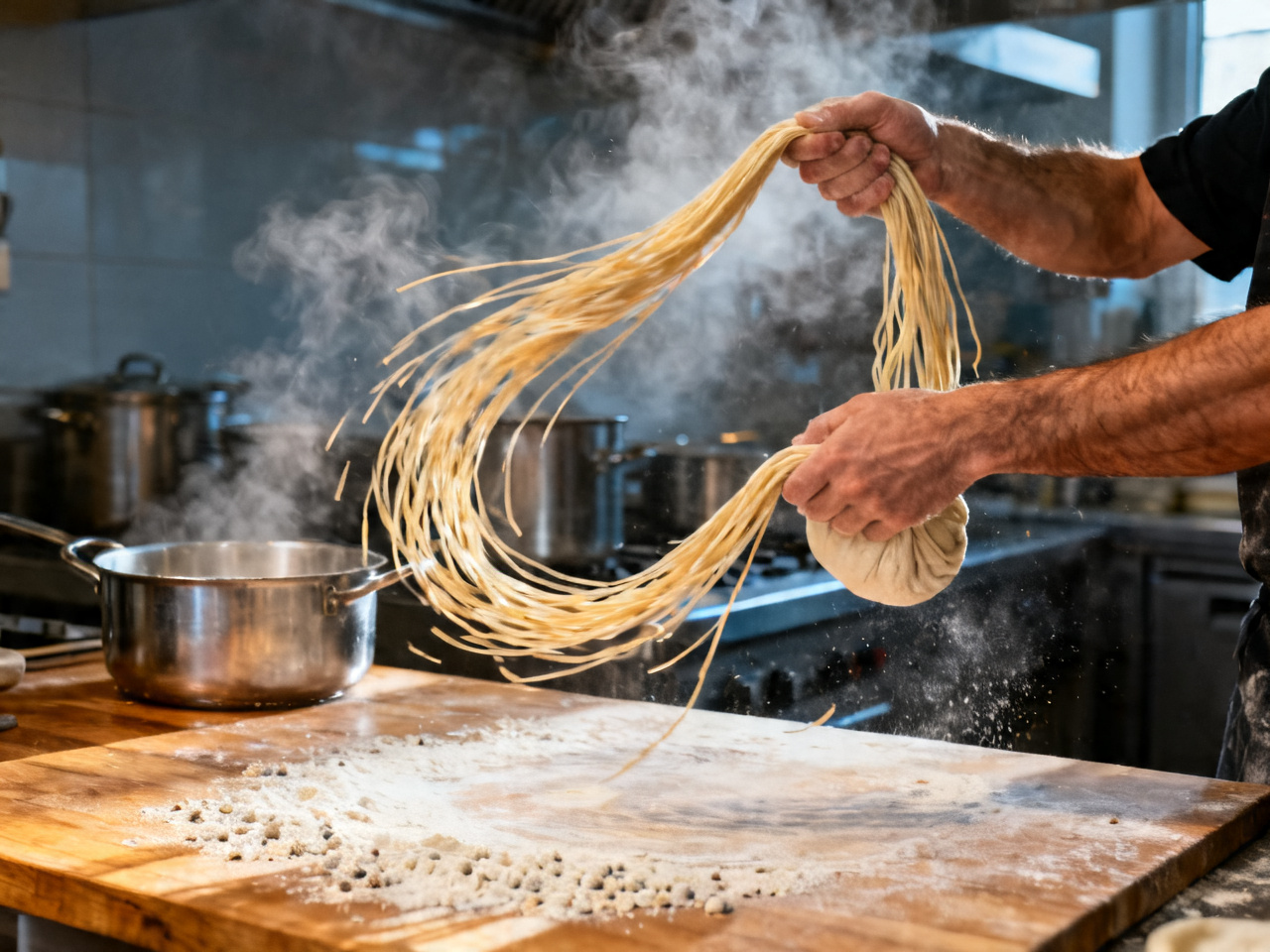
兰州牛肉面有一个行业内部的标准,叫"一清二白三红四绿五黄":汤清、萝卜白、辣椒油红、香菜蒜苗绿、面条黄亮。这五个维度构成了评判一碗牛肉面是否合格的基本框架。任何一项偏差,老食客都能立刻察觉。
Lanzhou beef noodles have an industry standard known as "one clear, two white, three red, four green, five yellow": clear broth, white radish, red chili oil, green cilantro and garlic shoots, yellow-bright noodles. These five dimensions form the basic framework for judging whether a bowl meets the mark. Any deviation, and a seasoned local will notice immediately.
西安:面食的另一种哲学
如果说兰州的牛肉面代表了精准和速度,西安的面食哲学则走向了另一个极端:厚重、粗犷、不讲究精细。
If Lanzhou's beef noodles represent precision and speed, Xi'an's noodle philosophy moves in the opposite direction: thick, bold, unconcerned with delicacy.
biangbiang面是西安面食的代表符号。面条宽如腰带,长可过膝,煮好后盛在大碗里,浇上滚烫的油泼辣子,撒上盐、醋、葱花,滋啦一声,香气四溢。吃这碗面需要一定的技巧——面条太宽太长,筷子夹起来容易滑落,很多人干脆用手辅助,把面条送进嘴里,吃完嘴边难免沾上辣油,这是西安人不在乎的事。
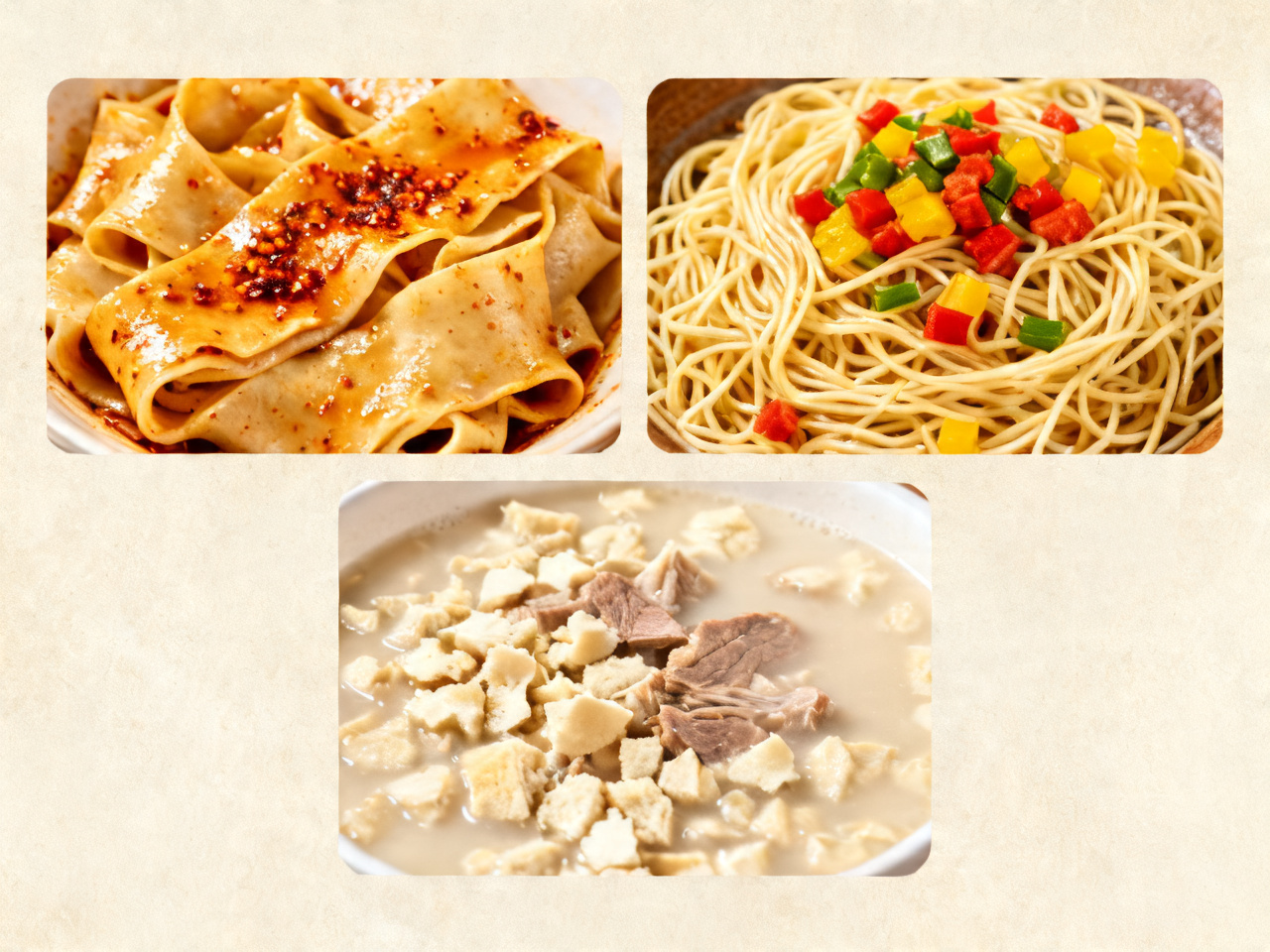
Biang biang noodles are Xi'an's signature. The noodles are as wide as a belt, long enough to drape over a knee, served in a large bowl with scalding oil-splashed chili poured over the top, then salt, vinegar, and scallions — a sizzling sound, fragrance everywhere. Eating this bowl requires some technique: the noodles are too wide and long to grip cleanly with chopsticks, and many diners use their hands to guide the noodles into their mouths. Chili oil ends up around the lips. Xi'an people don't mind.
肉夹馍是西安街头另一个不可绕过的存在。严格来说它不是面食,但它和面食的关系密不可分——馍是用发面烤制的,外脆内软,剖开后塞入卤好的腊汁肉,肥瘦相间,汤汁渗入馍里。西安人对肉夹馍的评价标准很简单:肉要够烂,馍要够脆,汤汁要够多。一个好的肉夹馍摊位,每天能卖出几百个。
Rou jia mo — meat sandwiched in flatbread — is another unavoidable presence on Xi'an streets. Strictly speaking it isn't a noodle dish, but its relationship with flour is inseparable: the mo is baked from leavened dough, crisp outside and soft within, split open and stuffed with braised pork — fat and lean interleaved, juices soaking into the bread. Xi'an locals judge a rou jia mo by three simple criteria: the meat must be tender enough, the bread crisp enough, the juices plentiful enough. A good stall can sell several hundred in a day.
甘肃深处:那些没有走出去的面
兰州牛肉面走遍了全国,但甘肃还有很多面食从未离开过本地。天水的呱呱,用荞麦粉制成,切成条状,拌上辣椒油和醋,口感弹韧,味道酸辣,是天水人的早餐执念。张掖的搓鱼面,面团搓成两头尖的小鱼形状,煮在羊肉汤里,朴素到几乎没有装饰,但汤的鲜味让人难忘。
Lanzhou beef noodles have traveled the entire country, but Gansu holds many noodle dishes that have never left home. Tianshui's gua gua is made from buckwheat flour, cut into strips, dressed with chili oil and vinegar — chewy, sour, spicy, a breakfast obsession for locals. Zhangye's cuo yu mian has dough rolled into small fish shapes, tapered at both ends, cooked in lamb broth — almost no garnish, but the depth of the broth is unforgettable.
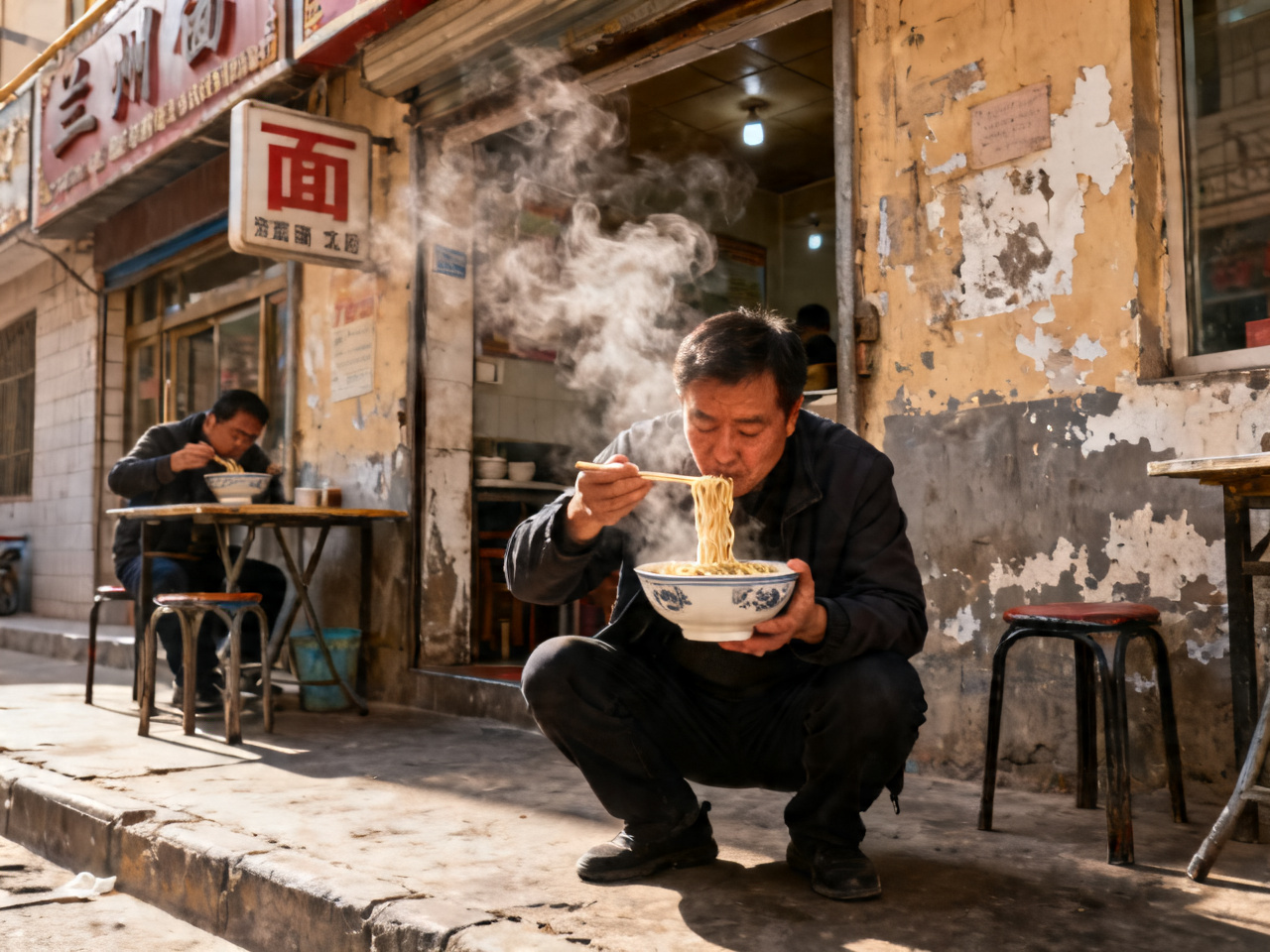
这些面食没有连锁化,没有品牌化,它们存在于特定的地理和气候条件下,和当地的食材、水质、甚至海拔都有关系。离开了那片土地,味道就会变。这不是遗憾,这是地方性食物最诚实的特质。
These dishes haven't been franchised or branded. They exist within specific geographic and climatic conditions, tied to local ingredients, water quality, even altitude. Take them away from that land and the taste changes. This isn't a limitation — it's the most honest quality of truly local food.
西北的面食地图,越深入越宽广。一碗面的尽头,是另一碗面的起点。
The Northwest's noodle map grows wider the deeper you go. At the end of one bowl, another begins.
延伸阅读 / Related Reads
- 中国八大菜系全览 | The 8 Great Cuisines of China
- 第一口就着了魔:一个外乡人在成都的麻辣沉沦 | Spellbound at First Bite: A Stranger's Descent into Chengdu's Heat
- 街头那碗热气,才是中国城市的真实体温 | Street Steam: The Real Pulse of Chinese Cities
- 花椒档案:一个植物学者眼中的四川味觉地图 | The Peppercorn Dossier: Sichuan's Flavor Map Through a Botanist's Eyes
- 华东五城10日经典环线 | 10-Day East China Five-City Loop

- 在中国打车这件事,没你想的那么难 | Ride-Hailing in China: Easier Than You Think
- 大运河边读一座城市 | Reading a City Along the Grand Canal
- 烤鸭不只是一道菜,它是北京给世界的一封信 | More Than a Dish: Peking Duck as Beijing's Letter to the World
- 景德镇陶瓷伴手礼选购指南 | Jingdezhen Ceramics Souvenir Buying Guide
- 遵义老城坡道上,我把台阶数错了 | I Lost Count of the Steps on Zunyi’s Old-Town Slopes
- 在景德镇看一只碗怎么出生:窑火、白粉和老师傅的手势 | Watching a Bowl Be Born in Jingdezhen: Kiln Fire, White Clay Dust, and a Master's Hands
- 六月荷花观赏地全国推荐 | June Lotus Viewing Spots Across China
- 螺蛳粉:一碗臭出国界的粉 | Luosifen: The Stinky Noodle That Conquered the World
- 绍兴黄酒的慢饮法:从乌篷船到晚饭桌 | A Slow Way to Drink Shaoxing Wine: From Black Canals to the Dinner Table
- 微信与支付宝双钱包搭配策略 | Using WeChat Pay and Alipay Together
Comments (0)