
第一次在中国面馆学会先看桌上调料再加辣 | The First Lesson I Learned in a Chinese Noodle Shop Was to Check the Table Seasonings Before Adding Chili
第一次在中国面馆学会先看桌上调料再加辣 | The First Lesson I Learned in a Chinese Noodle Shop Was to Check the Table Seasonings Before Adding Chili
我第一次一个人在中国小面馆吃午饭,是在一个闷热得让玻璃窗都蒙上一层水汽的中午。门口挂着塑料帘子,进出的人一掀开,外面的热气和里面滚烫的面汤味就会短暂地撞在一起。店里不大,几张木桌挨得很近,筷子筒、醋瓶、辣椒油、小碟咸菜都摆在桌面中央,风扇在头顶慢慢转,带着一点红油和花椒混出来的香气。后厨不时传来漏勺碰锅沿的脆响,老板娘高声报着桌号,刚端上来的面在空气里冒着白汽。我以前总以为,中国餐馆里的辣度主要靠点单时说清楚,想吃微辣、中辣还是重辣,关键都在那一两句话里。
The first time I had lunch alone in a small Chinese noodle shop was on a humid noon so sticky that the windows had fogged over. A strip of plastic hung over the entrance, and each time someone pushed through it, the heat from outside collided briefly with the heavy steam of noodle broth inside. The shop was small, with wooden tables set close together. Chopstick holders, vinegar bottles, chili oil, and little dishes of pickles sat in the center of each table. A fan turned slowly overhead, moving around the aroma of red chili oil and Sichuan pepper. From the kitchen came the crisp sound of strainers hitting the edge of metal pots, while the owner called out table numbers in a loud voice. Fresh bowls of noodles arrived trailing white steam into the room. I used to assume that in Chinese restaurants, the spiciness of a dish depended mainly on what you said while ordering—mild, medium, or very spicy, all decided in that brief exchange.
那天我点的是一碗看起来很普通的牛肉面。店员把面端上来时,汤面上已经浮着一层薄薄的红油,香是很香,可我看隔壁桌有人又往碗里加了一大勺辣椒,动作熟练得像根本不用思考。我一下就被这种画面带偏了,心里想,既然大家都在自己加辣,那我也应该这样吃才算懂行。于是我刚拿起勺子,就准备往自己那碗面里再添一勺。还没等我真正倒进去,端面过来的店员看见了,立刻笑着拦了我一句:“先尝汤,再加,不然太重。”这句提醒来得特别及时,我的勺子停在半空中,突然意识到自己差点把一碗面改造成根本救不回来的样子。
That day I ordered what looked like a very ordinary bowl of beef noodles. When the server placed it in front of me, a thin layer of red oil was already floating on the broth. It smelled wonderful, but I noticed that someone at the next table had added a full spoonful of extra chili without hesitation, as if this was simply what one did. The image pulled me in immediately. I thought that if everyone was customizing the spice at the table, then perhaps that was the proper way to eat here. So I picked up the spoon and was just about to add chili to my own bowl. Before I could tip it in, the server who had brought the noodles saw me and quickly laughed and said, “Taste the broth first, then add more, or it’ll get too heavy.” The warning came at exactly the right moment. My spoon froze in midair, and I realized I had nearly transformed the whole bowl into something I could not undo.
后来我先喝了一小口汤。入口并不是我预想的那种直接冲上来的爆辣,而是先有牛骨和酱油煮出来的厚味,然后才慢慢有一点辣意从舌尖往两侧散开,最后喉咙里留下一点温热。那一刻我马上明白,桌上的调料不是在默认告诉你“这碗还不够味”,而是在给每个人留出一个自己微调的空间。有的人本来就喜欢重口,会加很多;有的人只需要一点点香气;还有人可能先加醋,再决定要不要动辣椒油。真正熟悉这种吃法的人,往往不是一坐下就把所有调料都倒进去,而是先判断原汤本身的底子,再决定下一步。
Then I took a small sip of the broth first. The taste was not the immediate explosive heat I had expected. It began with the deep savor of beef bones and soy sauce, then a measured hint of spice spread gradually from the tip of my tongue outward, leaving a gentle warmth in my throat. In that moment I understood that the condiments on the table were not there to announce that the bowl was incomplete. They were there to give each diner room to adjust it personally. Some people truly like strong flavors and will add a lot. Some need only a little extra fragrance. Others may add vinegar first and decide about chili oil afterward. People who really know how to eat this way usually do not dump everything in at once. They first judge the base broth itself and only then decide what comes next.
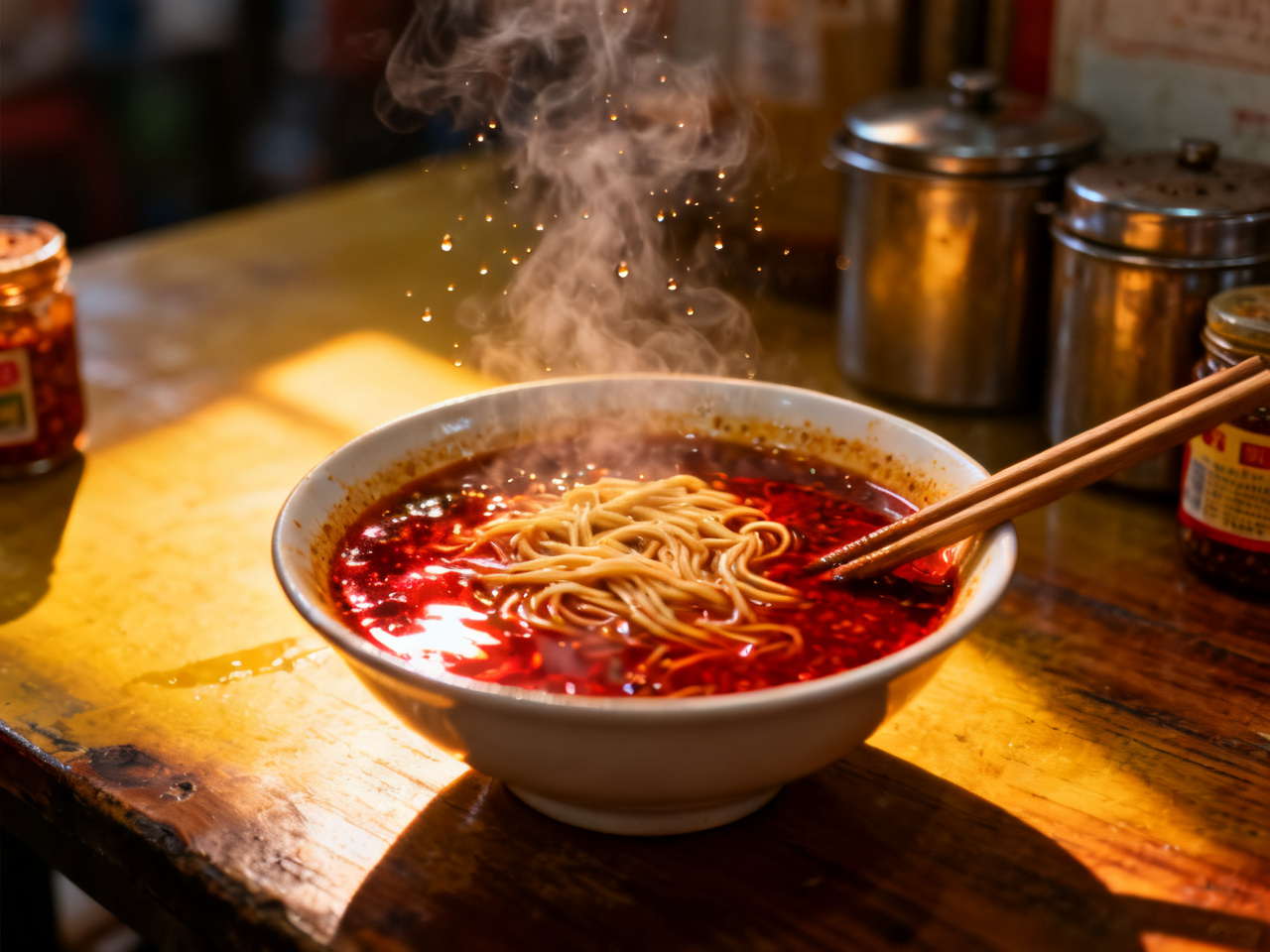
我开始观察周围的人,才发现桌上这些瓶瓶罐罐其实藏着一整套很细的饮食习惯。一个穿白衬衫的上班族坐下以后,先拿筷子把面翻了翻,让底下的配料和上层的汤均匀一点,然后只沿着碗边滴了几滴醋。另一位阿姨加的是店里自制的辣酱,但只挑了半勺,还会先在勺背上轻轻刮一下,不让太多辣渣一起掉进去。靠门那桌的年轻人则先吃了几口,觉得不够刺激,才把桌上的辣椒粉撒了一圈。每个人都在用同样一张桌子上的调料,却吃出了完全不同的版本。那种差别不是为了炫耀懂吃,而是一种很自然的分寸感:先尊重原味,再按自己的口味慢慢修正。
As I began to watch the people around me, I realized that these little bottles and jars on the table contained a whole system of subtle food habits. One office worker in a white shirt sat down, stirred the noodles lightly so the ingredients at the bottom mixed more evenly with the broth, and then added only a few drops of vinegar along the edge of the bowl. An older woman took some of the shop’s homemade chili paste, but only half a spoonful, even scraping the back of the spoon slightly so too many chili flakes would not fall in. A younger man near the door ate several bites first, decided the flavor was not intense enough, and only then dusted a ring of chili powder on top. Everyone was using the same condiments from the same table, yet each person produced a completely different version of the dish. The difference was not about showing off food knowledge. It came from a very natural sense of proportion: respect the original taste first, then adjust slowly according to yourself.
我以前有个误区,总觉得在外面吃辣,关键是把“我能吃多辣”说清楚。可在中国很多面馆里,辣度常常不是一次性交代完的,而是分成两部分:厨房决定基础,桌上决定细节。这个逻辑和我以前熟悉的点单方式很不一样。也正因为这样,桌边的辣椒油、辣椒粉、蒜水、陈醋才不只是装饰,而是这顿饭的一部分。我差点一上来就加太多,其实暴露的是一种很常见的外来者心态:还没弄清楚规则,就先急着照着别人最显眼的动作模仿。可真正好用的办法不是模仿最快的那个人,而是先尝一口、停一下、再判断。
I used to think that the key to eating spicy food outside was simply to explain clearly how much heat I could handle. But in many noodle shops in China, the spice level is often divided into two parts: the kitchen sets the base, and the table determines the details. That logic is quite different from the ordering style I used to know. This is exactly why the chili oil, chili powder, garlic water, and aged vinegar at the table are not mere decoration. They are part of the meal itself. The fact that I nearly added too much at once revealed a very common outsider instinct: trying to imitate the most visible move before understanding the rules. But the truly useful method is not copying the fastest person at the next table. It is tasting first, pausing, and then deciding.
还有一点让我特别喜欢这种面馆文化,就是它给了客人一种非常具体、非常低门槛的参与感。厨房把面煮好,已经完成了最重要的部分,可最后那一点口味上的归属,仍然留给了坐在桌前的人。你可以什么都不加,直接接受这碗面的标准答案;也可以一点点试,把它调成最适合自己的一版。这个过程很像我后来慢慢理解的很多中国日常:公共系统往往先给你一个能运行的基础版本,至于更贴近你自己的节奏,得靠你在边上观察、在实践里摸索。桌上的调料只是很小的例子,却把这种逻辑体现得特别清楚。
Another thing I came to love about this noodle-shop culture was the very concrete, low-pressure sense of participation it gives the diner. The kitchen cooks the noodles and completes the most important work, but that final layer of flavor ownership is still left to the person at the table. You can add nothing at all and accept the standard version of the bowl. Or you can experiment little by little and shape it into the version that suits you best. The process reminds me of many other parts of daily life in China that I slowly came to understand. Public systems often give you a workable base version first. If you want something closer to your own rhythm, you learn it by observing from the side and figuring it out through practice. The seasonings on the table are only a small example, but they express that logic very clearly.
后来我再去类似的面馆,已经不太会一坐下就手忙脚乱。我会先看桌上有什么调料,顺便看看哪些是这家店自己做的,哪些只是常见基础款。面端上来以后,我先吃两口,记住汤底原本的味道,再决定要不要加辣、加多少、加哪一种。有时我会只滴一点辣椒油,让香味更明显;有时天气冷,我会加少许白胡椒,让整碗面更暖;有时根本什么都不动,因为原味已经很完整。慢慢地,我从那个差点把整勺辣椒倒进碗里的外国人,变成了会先看、先尝、再动手的人。这不是什么了不起的进步,却让我觉得自己更真正地进入了这里的吃饭节奏。
Later, when I returned to similar noodle shops, I no longer felt the urge to do everything at once the moment I sat down. I would first look at what condiments were on the table and notice which ones seemed homemade and which were standard basics. Once the noodles arrived, I would eat a few bites first, remember the original flavor of the broth, and only then decide whether to add spice, how much, and which type. Sometimes I added just a little chili oil to bring out the aroma. Sometimes, on a cold day, I added a small amount of white pepper to make the whole bowl feel warmer. Sometimes I changed nothing at all because the original flavor was already complete. Little by little, I changed from the foreigner who nearly tipped a whole spoonful of chili into the bowl into someone who looks first, tastes first, and then acts. It is not a dramatic achievement, but it made me feel more genuinely inside the eating rhythm here.
顺着这个判断方法继续看,中国夜宵和街边饮食节奏和中国城市里的深夜便利店观察也能互相印证。
Following the same way of reading a scene, 中国夜宵和街边饮食节奏 and 中国城市里的深夜便利店观察 also reinforce this habit from other angles.
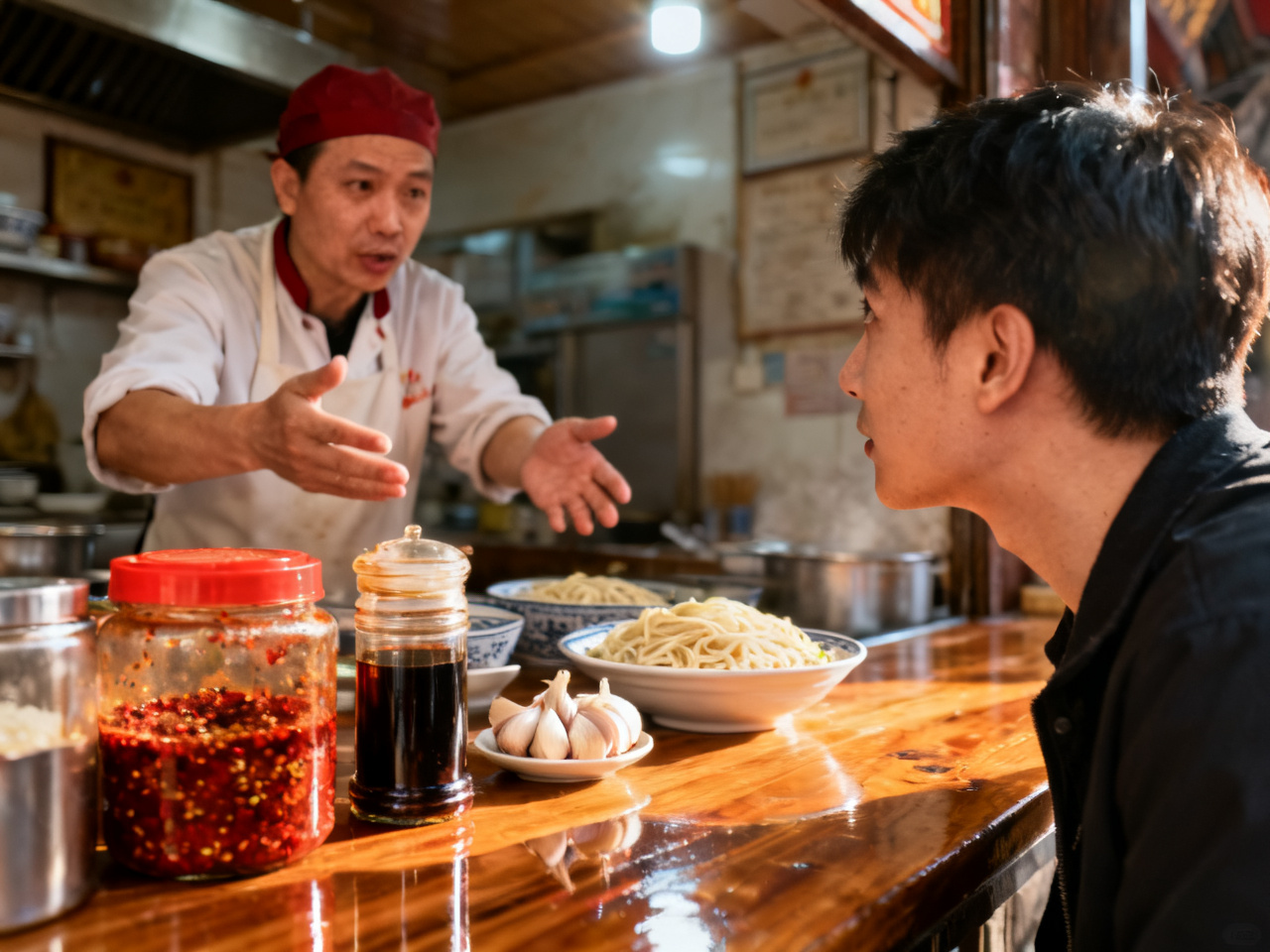
现在如果有刚来中国的朋友问我,在面馆里最容易犯的错误是什么,我会说,不是不会点单,而是还没喝第一口汤,就急着把桌上的辣全加进去。先看桌上放了什么,再想这些调料是用来补什么,不够再慢慢加,这样比任何口头上的“我要中辣”都更可靠。那位店员当时提醒我的一句“先尝汤”,现在回头看,简直像一条适用于很多场景的小原则。先别急着改造眼前的东西,先理解它原本怎样成立。对我来说,中国面馆教会我的,从来不只是怎么吃一碗更好吃的面,也是一种很实用的生活方法:先尝一口,再决定下一步。
Now, if a friend newly arrived in China asks me what mistake is easiest to make in a noodle shop, I would say it is not failing to order properly. It is rushing to pour in all the chili before tasting the first sip of broth. First check what is already on the table, then think about what each seasoning is meant to add, and only after that adjust gradually if needed. That is far more reliable than any verbal declaration of wanting medium spice. Looking back, the server’s quick warning—“taste the broth first”—now feels almost like a small rule that applies to many other situations too. Do not rush to modify what is in front of you before understanding how it works in its original form. For me, what Chinese noodle shops taught me was never only how to eat a bowl of noodles more deliciously. They also taught me a very practical way to live: take one taste first, and then decide what comes next.

- 中国景区门票预约与排队技巧 | Booking Tickets and Beating Queues at Chinese Attractions
- 青岛这座城,白天该先进馆,晚上才适合把海慢慢走出来 | In Qingdao, the Day Belongs to Museums First, and the Sea Should Be Walked Out Slowly at Night
- 热海蒸汽打湿车票后,我把腾冲行程缩短了 | Steam at Rehai Wet My Ticket and Made Me Shorten the Tengchong Plan
- 工作日中午排队十分钟后,我才真正听懂中国午饭高峰的节奏 | After Ten Minutes in a Weekday Lunch Line, I Finally Understood the Rhythm of China’s Noon Rush
- 我带着一只行李箱在天津站外学会了先找节奏,再找景点 | Outside Tianjin Station I Learned to Find Rhythm Before Sights
- 陪妈妈在无锡看五月太湖烟雨,我终于学会听她慢慢讲年轻时的事 | Walking with My Mother Through Taihu Mist in Wuxi, I Finally Learned to Listen to Her Younger Stories Slowly
- 螺蛳粉:一碗臭出国界的粉 | Luosifen: The Stinky Noodle That Conquered the World
- 我在公寓快递架前学会的第一课,是别把自己的方便放在别人通道中间 | The First Lesson I Learned at My Apartment Delivery Shelf Was Not to Put My Convenience in Other People’s Way
- 九月开学季:短途周末游推荐 | September Weekend Getaways Near the City
- 天黑了才是正片开始 | When the Sun Sets, the Real Show Begins — China's Night Economy
Comments (0)