
第一次一个人进中国银行,我学会先取号再去找窗口 | The First Time I Entered a Chinese Bank Alone, I Learned to Take a Number Before Looking for a Counter
第一次一个人进中国银行,我学会先取号再去找窗口 | The First Time I Entered a Chinese Bank Alone, I Learned to Take a Number Before Looking for a Counter
我第一次一个人走进中国银行大厅时,犯了一个现在想起来很典型的错误:我以为“办事”最有效率的方式,就是直接冲向窗口。那天下午外面很热,我推开银行玻璃门,迎面就是冷气、叫号声、皮椅,还有一种很正式却并不紧张的秩序感。大厅比我想象中安静,几个人坐着等号,有人低头看手机,有人把单据夹在腿上。作为一个外国人,我当时脑子里只有一个朴素的想法:既然我只是来办个小业务,赶紧找个空着的柜台问一声,应该最快。结果我刚朝窗口走了两步,就被大堂经理很客气地拦住了。
The first time I walked alone into a Chinese bank branch, I made a mistake that now feels almost textbook: I assumed the most efficient way to handle a task was to go straight to the counter. It was a hot afternoon outside. The moment I pushed through the glass doors, I was hit by air conditioning, number announcements, leather chairs, and a sense of order that felt formal without being tense. The lobby was quieter than I had expected. A few people were seated waiting for their turn; some looked at their phones, others held forms on their knees. As a foreigner, I had one simple thought in my head: I only needed to do a small banking task, so the fastest thing must be to find an open window and ask directly. I had taken only a couple of steps toward the counter when the lobby manager stopped me very politely.
她没有表现出不耐烦,反而像见多了这种情况一样,先笑了一下,然后朝门口旁边那台机器指了指,说先取号。我顺着她的手看过去,才注意到那台我刚才完全忽略的叫号机。机器旁边还有简洁的说明,不同业务对应不同选项。那一瞬间我有点尴尬,因为在很多我熟悉的场景里,主动走去窗口开口问,通常会被理解成积极;可在这里,真正积极的做法反而是先进入流程。也就是从那一次起,我慢慢明白,在中国很多正式空间里,先取号、先排进系统,比先解释自己要办什么更重要。
She did not sound impatient at all. In fact, she looked like someone who had seen this exact mistake many times before. She smiled, pointed toward a machine near the entrance, and said I needed to take a number first. I followed her gesture and finally noticed the ticket machine I had completely ignored on the way in. There were clear options on it for different types of services. I felt slightly embarrassed, because in many situations I was used to, walking up to a counter and asking directly would be seen as proactive. Here, however, the truly effective move was to enter the process first. That was when I began to understand that in many formal spaces in China, taking a number and placing yourself into the system matters more than launching into your explanation immediately.
我走到机器前,认真看了一遍。虽然中文界面不算复杂,但我还是下意识放慢了速度,生怕按错。那种感觉很像我刚来中国时面对很多机器和流程的共同心态:不是完全不会用,而是担心自己在别人都熟悉的节奏里显得太生疏。好在大堂经理很快跟过来,问我办什么业务,然后帮我确认该选哪一项。我按下按钮,机器吐出一张小小的号码单,上面印着数字和业务类别。我把那张纸拿在手里,忽然有种奇怪的踏实感,好像直到这一刻,我才真正从“闯进来的人”变成“正在等待的人”。
I walked over to the machine and read everything carefully. The interface was not especially complicated, but I still slowed down instinctively, worried I might press the wrong option. It was the same feeling I had in many machine-based or process-heavy situations when I first came to China: not total inability, but the fear of looking clumsy in a rhythm everyone else seemed to know already. Fortunately, the lobby manager came over, asked what I needed, and helped me confirm which option to choose. I pressed the button, and the machine printed a small ticket with a number and service category on it. Holding that slip in my hand gave me an unexpectedly solid feeling. Until that moment, I had been the person barging in. With that ticket, I became someone properly waiting within the system.
接下来的一步也很有意思。她没有让我继续站在窗口前等,而是示意我去旁边等候区坐下。我起初还想,站着是不是更方便,一听到号码就能立刻过去。可等我真坐下来,看着整个大厅的运行,我才发现这种安排并不是为了让人“被动等待”,而是为了让每个人都不要互相打断。窗口前没有一排焦虑探头探脑的人,工作人员也不用不停回答“到我了吗”“这里能办吗”。大家各自拿号、坐下、等显示屏或者广播,轮到谁,谁再起身。这种秩序感对我这个外来者来说,既新鲜又很有教育意义。
The next step was interesting too. She did not tell me to remain standing near the counter. Instead, she gestured toward the seating area and asked me to sit and wait there. At first I thought standing might be more convenient. If I heard my number, I could just move immediately. But once I actually sat down and watched the lobby operate, I realized the arrangement was not designed to make people passively wait. It was designed so that people would not keep interrupting one another. There was no anxious line of customers craning their necks near the counters. The staff did not have to keep answering, “Is it my turn?” or “Can I do this here?” Everyone took a number, sat down, watched the screen or listened for the announcement, and stood up only when called. For me as an outsider, that sense of order felt both unfamiliar and quietly instructive.
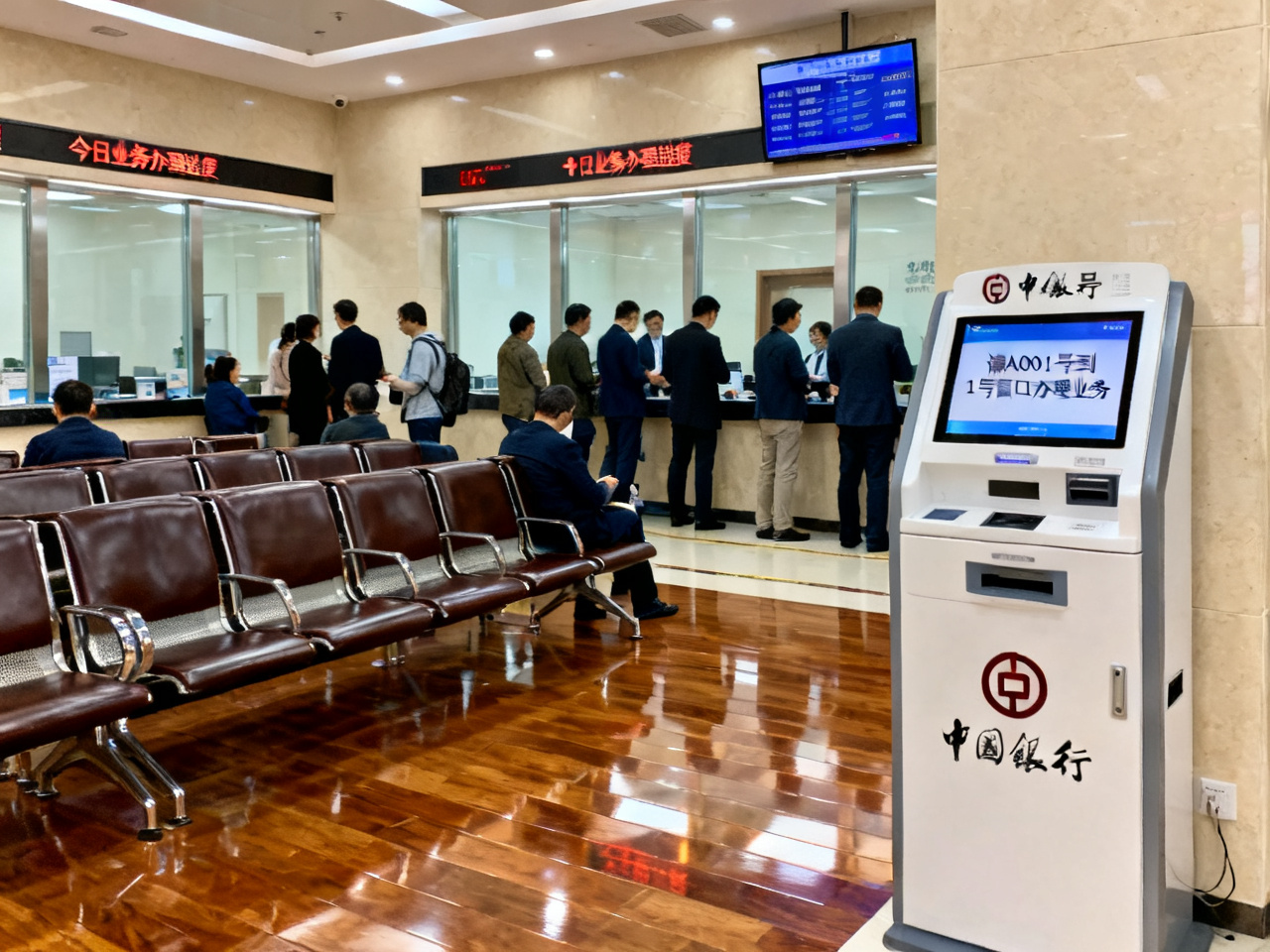
[Image 1: The bank lobby’s ticket machine and waiting area, with leather seats, an electronic display, and the number-taking kiosk in one frame.]
我坐下以后,开始观察周围的人。一个年轻人刚进门就熟练地取号、坐下、拿出手机;一位阿姨先去填表,填完又回到座位上;还有一位老人慢慢走向机器,大堂经理马上上前帮忙。整个大厅并不热闹,但一点也不僵硬。对我来说,最值得注意的是,机器并没有让服务变冷,反而让人的帮助更精准了。因为前面的步骤被流程接住,工作人员就不用把精力耗在重复性的解释上,而可以把注意力留给真正需要帮助的人,比如第一次来的我,比如不太熟悉机器的老人。那一刻我忽然意识到,叫号机不是在替代人与人之间的沟通,它是在先把混乱挡掉。
Once I sat down, I started observing the people around me. A young man came in, took a number without hesitation, sat down, and pulled out his phone. An older woman filled out a form first, then returned to her seat. An elderly man walked slowly toward the machine, and the lobby manager immediately stepped in to help. The whole lobby was not noisy, but it also did not feel stiff. What struck me most was that the machine did not make the service colder. In a way, it made human help more precise. Because the early steps were absorbed by the process, the staff did not have to spend all their energy repeating the same instructions over and over. They could save their attention for people who actually needed guidance, like me on my first visit, or like older customers unfamiliar with the interface. In that moment, I realized the ticket machine was not replacing human interaction. It was filtering out chaos before it could spread.
轮到我的号码时,广播念了一遍,屏幕也亮了。我赶紧站起来,生怕自己慢半拍。走到窗口前,我把号码单和证件一起递过去,心里反而比刚进门时更平静。因为到了这个阶段,很多不确定性已经消失了。我不用担心自己站错地方,不用猜哪个窗口空着,也不用担心是不是打断了别人。流程已经替我完成了“排队、归类、确认顺序”这些本来会让我紧张的事。窗口工作人员问什么,我就答什么,整个过程比我预想中顺利得多。真正节省时间的,不是我刚进门时那股想冲过去的冲动,而是前面那张小小的号码单。
When my number was called, the announcement played and the screen lit up at the same time. I stood immediately, worried I might lose a second by reacting too slowly. At the counter, I handed over my ticket and identification, and I actually felt calmer than I had when I first entered. By that point, many uncertainties had already been removed. I did not have to worry whether I was standing in the wrong place, guessing which counter was free, or accidentally interrupting someone else’s turn. The process had already handled the parts that usually make me tense: queuing, categorization, and sequence. Once I was there, all I had to do was answer the staff member’s questions. The whole thing went more smoothly than I had expected. What really saved time was not my original urge to rush toward the counter; it was that small printed ticket.
后来我跟朋友说起这件事时,他笑我像把银行当成菜市场。我也笑,因为他说得并没有错。我刚来中国时,常常把“主动”理解成先开口、先争取、先靠近窗口。但中国很多正式机构给我的经验恰恰相反:越是看起来程序明确的地方,越不需要你靠冲上去证明自己着急。先取号,先找位置,先等系统叫到你,这不是被动,而是一种对共同秩序的配合。你一旦理解这一层,整个人就会轻松很多。因为你不必时刻猜测“我现在是不是该去问”,你只需要顺着这个空间已经设计好的节奏走。
Later, when I told a friend about the experience, he joked that I had treated the bank like a wet market. I laughed, because he was not entirely wrong. When I first came to China, I often equated being proactive with speaking first, pushing forward first, and getting physically closer to the service point. But many formal institutions in China taught me the opposite lesson: the clearer the procedure, the less you need to prove your urgency by rushing. First take a number. Then find a seat. Then wait until the system calls you. That is not passivity. It is cooperation with a shared order. Once you understand that layer, you become much more relaxed. You no longer have to keep guessing whether now is the moment to go ask someone something. You simply follow the rhythm the space has already been designed to provide.
我甚至开始把这种经验带到别的场合。去政务大厅也好,医院某些窗口也好,甚至一些热门餐厅门口也好,我都会先下意识找“入口流程”在哪里:先扫码?先取号?先登记?这和我过去的直觉很不一样。过去我总觉得机器和流程会把事情变复杂,尤其对外国人来说更容易出错。可在中国生活久了,我越来越感到,很多时候正是这些看上去有点机械的小步骤,帮我减少了语言压力和社交压力。只要先进入流程,我不需要一上来就把一切解释得又快又完整,也不必在窗口前因为紧张而说错重点。
I even started applying this lesson elsewhere. Whether I am entering a government service hall, waiting at certain hospital counters, or approaching the entrance of a popular restaurant, I now instinctively look for the “entry process” first: do I scan something, take a number, or register somewhere? This is very different from my old instincts. I used to think machines and procedures only made things more complicated, especially for foreigners who were more likely to make mistakes. But after living in China for a while, I have increasingly felt that these small, slightly mechanical steps often reduce both language pressure and social pressure for me. As long as I enter the process first, I do not have to explain everything immediately, quickly, and perfectly. I also do not risk blurting out the wrong thing at the counter because I am nervous.
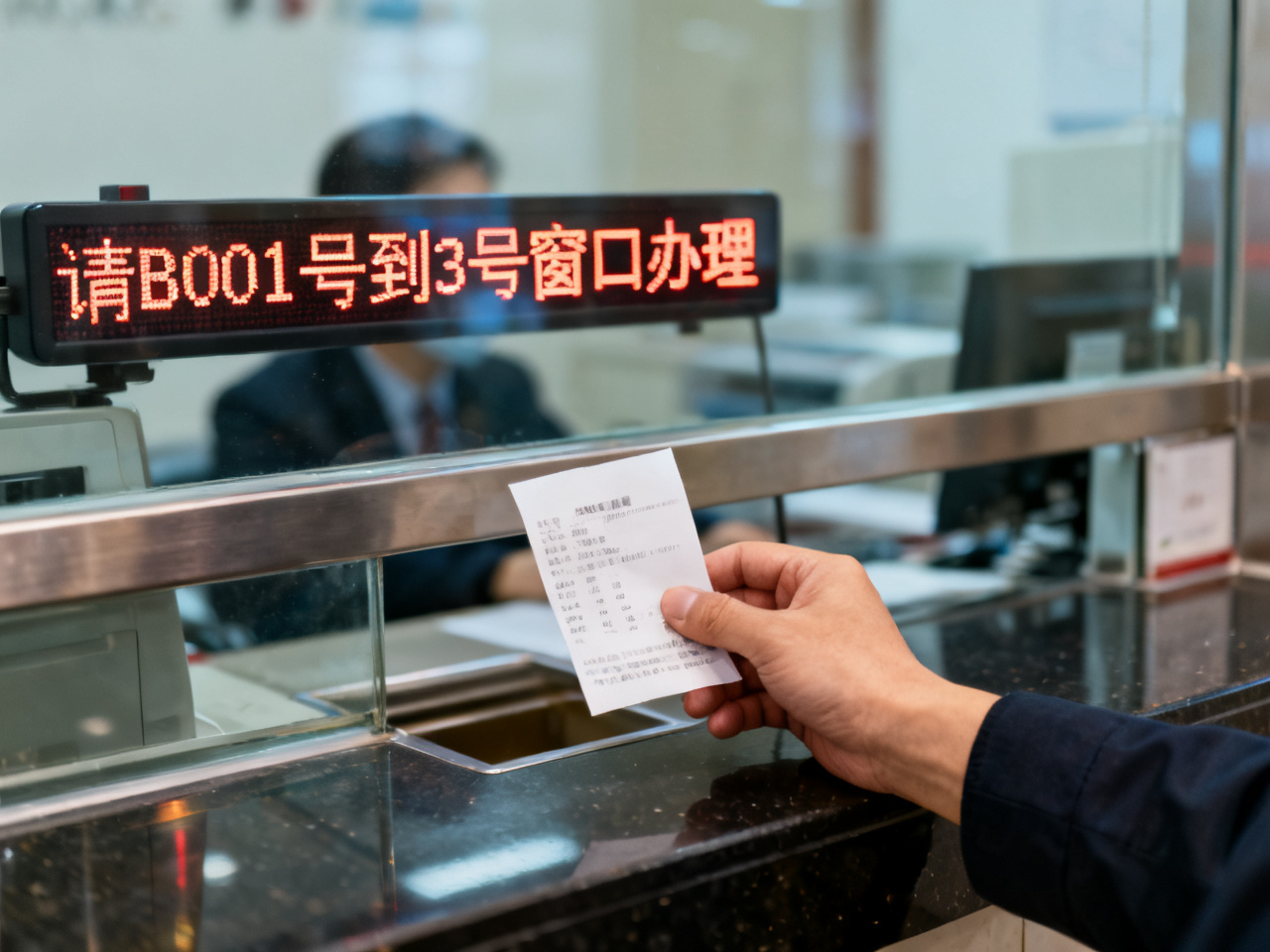
[Image 2: A close view of the service window and number ticket, with the printed slip in hand and the electronic call screen visible in the background.]
现在回头看,我记住的其实不只是银行大厅那台叫号机,而是它背后那种很中国式、也很现实的办事逻辑:先把每个人放进同一个清楚的序列里,再分别处理具体问题。对一个外国人来说,这样的逻辑一开始可能显得不够“灵活”,因为它不会因为你先冲到窗口就为你临时开路。但正因为如此,它反而让人安心。你知道自己该做什么,也知道别人会按同样的规则行动。那天下午,我从银行出来时,太阳还是很大,门口的热气一下扑回来,可我心里却轻松了不少。因为我学会的不是怎样更快挤到前面,而是怎样先取号,再找个空位坐下,把自己放进这个秩序里。很多时候,这才是在中国把事情办顺的真正第一步。

- 五一黄金周最热门目的地 | Top Destinations for May Golden Week
- 佛山老街那家杂货铺门前的圆灯,把一整条街照得比名片更真实 | The Round Lamp Outside a Foshan Old-Street General Store Lit the Street More Truthfully Than Any Brochure
- 敦煌老街真正留人的,常常不是夜色多辽阔,而是灯下那口杏皮水和炉火 | What Truly Holds You on Dunhuang’s Old Street Is Not the Vast Night but the Apricot Drink and Firelight Under the Lamps
- 兜里留一点现金,让我在小镇车站不慌 | Keeping a Little Cash Helped Me Stay Calm at a Small-Town Station
- 厦门老街小店的午饭,让我明白“本地味道”不是网红菜单 | Lunch in a Small Xiamen Old-Street Shop Taught Me Local Flavor Is Not a Viral Menu
- 很多人第一次敢把中国行程定下来,往往是因为先在上海找到了顺手感 | Many People Finally Commit to a China Trip Because Shanghai Gives Them a First Sense of Ease
- 三天玩转上海:完整旅行指南 | Shanghai in 3 Days: Complete Travel Guide
- 版画拓印体验:我第一次明白一张纸为什么也能“接住时间” | Print Rubbing Experience: The First Time I Understood How Paper Can Catch Time
- 五月在南浔陪孩子看雨落到河面,我们全家第一次接受“今天少去一个景点也没关系” | Watching Rain Touch the Canal in Nanxun, Our Family Finally Accepted That One Less Stop Could Still Mean a Full Day
- 东北三省冬季8日游 | 8-Day Northeast China Winter Tour
Comments (0)