
泥塑体验:我第一次觉得泥土不是材料,而是一种很慢的语言 | Clay Figurine Experience: The First Time I Felt Earth Was Not a Material, but a Slow Language
泥塑体验:我第一次觉得泥土不是材料,而是一种很慢的语言 | Clay Figurine Experience: The First Time I Felt Earth Was Not a Material, but a Slow Language
我一直觉得,泥土是一种很诚实的材料。它不会像金属那样发亮,也不会像丝绸那样立刻让人觉得精致。它甚至有点安静,安静到你起初会误以为它只是“还没完成”的东西。可我在中国第一次认真看泥塑、又亲手试着捏一小件之后,才发现泥土其实一点也不沉默。它只是说话很慢,要靠手掌的温度、指尖的轻重、还有制作者对人物和动物神态的理解,才把话一点点讲出来。作为一个来自墨西哥的旅行者,我原本对陶土、民间泥偶并不陌生,但中国泥塑仍然给了我一种很新的震动:它不是把泥变成器皿,而是把泥变成神情。
I had always felt that earth is an honest material. It does not shine like metal, nor does it immediately suggest refinement the way silk does. In fact, it can seem almost too quiet, so quiet that at first you may mistake it for something unfinished. But the first time I seriously observed Chinese clay figurines and then tried shaping a small piece myself, I realized that clay is not silent at all. It simply speaks slowly. It needs the warmth of the palm, the pressure of the fingertips, and the maker’s understanding of animal or human expression before it begins to say anything. As a traveler from Mexico, I was not unfamiliar with clay, terracotta, or folk figurines. Yet Chinese clay sculpture still gave me a new kind of jolt: it does not merely turn earth into vessels. It turns earth into expression.
我原以为泥塑只是“捏小人”,结果它比我想得细得多 | I thought clay figurines were simply about shaping little figures, but the craft was far more subtle than I expected
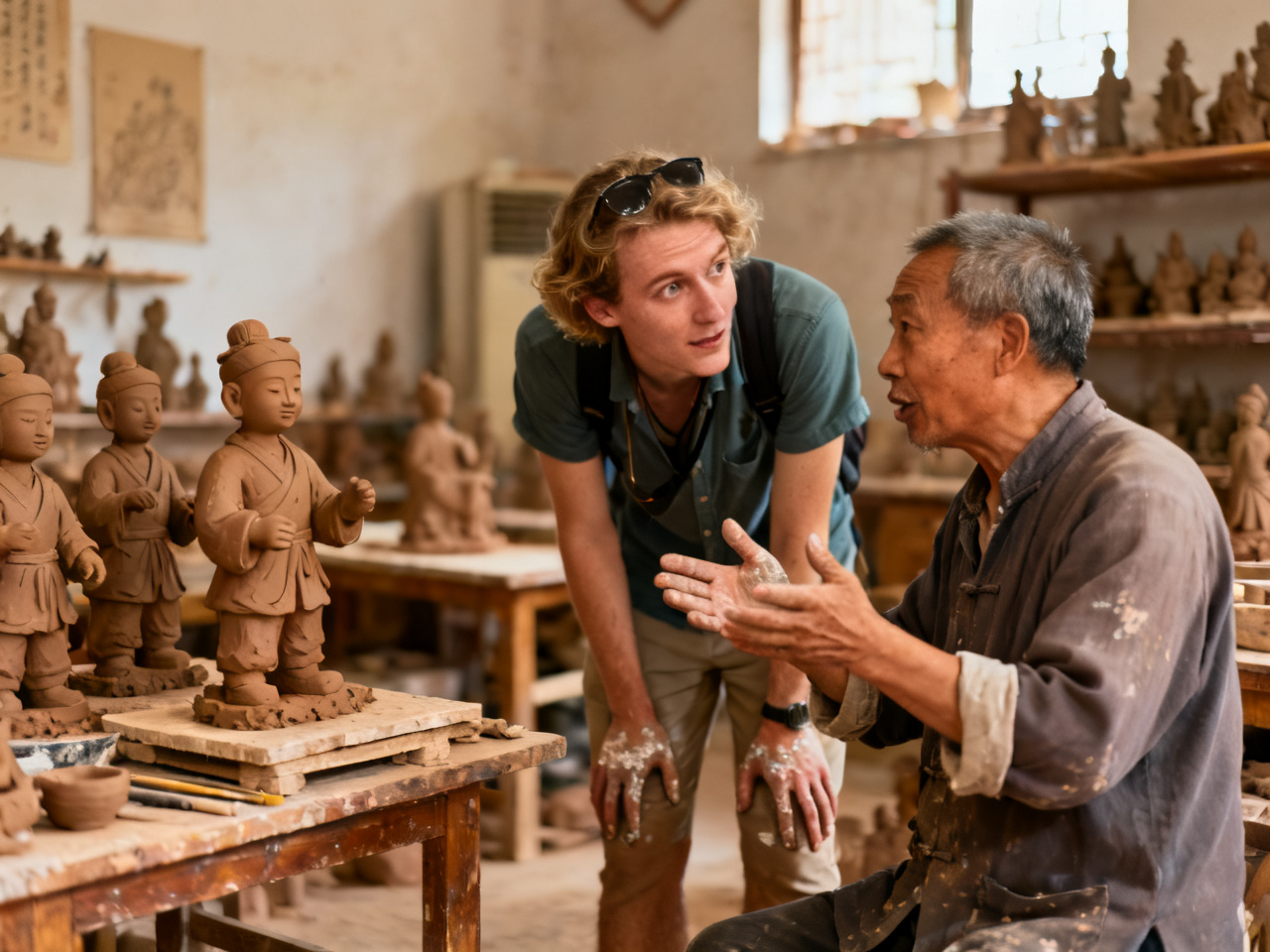
第一次走进体验空间时,桌上摆着几团湿润的泥、细木签、小刀、压纹工具,还有一些已经完成的小作品:胖乎乎的娃娃、神气的小老虎、带戏曲神态的人物头像,还有颜色鲜亮、动作夸张的民间形象。它们的尺寸都不大,却很容易把人的目光拉过去。因为越小的东西,如果还能做出神态,就越说明手艺不简单。
The first time I entered the workshop, the table held lumps of moist clay, thin wooden picks, small knives, texturing tools, and several finished examples: plump child figures, spirited little tigers, theatrical faces, and brightly colored folk characters frozen in exaggerated poses. None of them were large, yet they drew the eye immediately. With small objects, expression becomes even more impressive, because the smaller the form, the harder it is to make it feel alive.
老师先没有让我急着做完整的人物,而是叫我先试着捏一个头,再捏一只手,最后再看怎么把它们接到身体上。这个顺序一下就提醒了我:泥塑不是随便往上加泥,而是在不断判断比例、重心和表情。脸如果太平,就没精神;鼻子高一点,整个人物的气质都会变;眼睛哪怕只挑出一点点弧度,情绪也会完全不同。那一刻我忽然理解,泥塑最难的地方不是“像不像”,而是“活不活”。
The instructor did not ask me to make a complete figure right away. Instead, she told me to begin with a head, then a hand, and only afterward think about how they attach to the body. That order immediately taught me something important: clay figurine making is not just piling up material. It is a constant act of judging proportion, balance, and expression. If the face is too flat, it feels lifeless. Raise the nose slightly, and the whole personality changes. Tilt the eyes by just a tiny curve, and the emotion shifts completely. In that moment, I understood that the hardest part of this craft is not whether it looks correct, but whether it feels alive.
真正上手以后,我才明白“泥很听话”其实是一种误会 | Once I started working with it, I realized that saying clay is obedient is a misunderstanding
很多人在旁边看泥塑,都会觉得这门手艺很直观:泥软,可以捏,可以按,好像比木头、竹子、金属都更容易接近。我一开始也是这么想的。可真正动手以后,我马上发现泥并不“顺从”。它太湿的时候站不住,太干的时候又容易裂;你想把脸颊推圆一点,另一边可能就被手指碰塌;你刚做好的袖口,也许在转动作品时就被自己不小心抹平了。泥土当然可塑,但正因为可塑,它也会把你的犹豫、急躁和不稳定全部记录下来。
When people watch clay work from the side, they often assume it is a very intuitive craft. Clay is soft, pressable, shapeable, and seems more approachable than wood, bamboo, or metal. I thought so too at first. But once I actually began, I quickly discovered that clay is not obedient at all. If it is too wet, it cannot hold itself up. If it is too dry, it cracks. You try to round a cheek slightly, and another part collapses under your finger. A sleeve you just finished may flatten when you rotate the piece. Clay is certainly flexible, but precisely because it is flexible, it records all your hesitation, impatience, and instability.
我做的是一个非常基础的小老虎。老师说,虎在很多中国民间泥塑里很常见,因为它有护佑、辟邪、勇气和孩子气并存的感觉。听到这里我就很喜欢:一种动物可以同时威风又可爱,这本身就很民间。可等我真的开始做,才发现“可爱”是最难做的。耳朵太尖,会显得凶;眼睛太圆,又会显得呆;嘴巴如果没处理好,整个表情就会一下失去灵气。老师拿起工具,在我的作品上轻轻挑了一下眼角、压了一下嘴边,那个小老虎立刻像醒过来一样。我站在旁边,真有一种被点醒的感觉。
I made a very basic little tiger. The instructor explained that tigers are common in many Chinese folk clay traditions because they combine protection, courage, playfulness, and childlike charm. I loved that idea immediately: an animal that can feel powerful and adorable at the same time is already deeply folk in spirit. But once I tried making one, I realized that cuteness is one of the hardest things to shape. If the ears are too sharp, it becomes fierce. If the eyes are too round, it looks dull. If the mouth is not handled well, the entire figure loses its spark. The instructor took a tool, lifted the outer corner of one eye slightly, pressed near the mouth, and suddenly my little tiger seemed to wake up. I remember standing there feeling as if I had been taught not just a technique, but a way of seeing.
中国泥塑最打动我的,是它把“土气”变成了一种亲近感 | What moved me most was how Chinese clay figurines turn earthiness into intimacy
我很喜欢“土气”这个词在这里的反转。平常它有时会被当成不够时髦的意思,可泥塑让我觉得,真正好的民艺恰恰要保留一点土气。那不是粗糙,而是一种不假装离生活很远的气质。中国泥塑里常见的题材——娃娃、生肖、小兽、戏曲人物、神话形象——往往都不是高高在上的,它们看起来和人很近,像是会出现在庙会、集市、节庆、柜子上、孩子手边,或者某个家庭角落里的东西。
I came to love the reversal built into the idea of earthiness. In everyday speech, something earthy can sometimes be dismissed as unsophisticated. But clay figurines made me feel that a truly strong folk craft should preserve a little earthiness. That does not mean crudity. It means a temperament that does not pretend to stand far away from life. The common subjects of Chinese clay figurines—children, zodiac animals, little beasts, opera characters, mythic figures—usually do not feel remote or elevated. They feel close to ordinary people, like things that belong at temple fairs, markets, seasonal festivals, cabinets, children’s hands, or some corner of a family home.
也正因为这样,我会觉得泥塑和很多“只适合看”的艺术不一样。它当然也值得陈列,但它最迷人的地方,是你能想象它进入生活之后的样子。一个泥老虎不只是一个造型,它可能是给孩子的祝愿;一个胖娃娃不只是一个人物,它可能象征丰足、热闹和家庭对下一代的期待。泥土本来是地上的东西,可一旦被塑成这些形象,它就开始携带感情和愿望。这种变化让我很感动。
That is also why this craft feels different to me from art forms that are mainly meant to be observed from a distance. Clay figurines can certainly be displayed, but their greatest charm lies in how easily you can imagine them entering life. A clay tiger is not only a shape; it may carry a wish for protection. A plump child figure is not just a character; it may stand for abundance, liveliness, and family hope. Earth begins as something underfoot, but once shaped into these forms, it starts carrying feeling and wish. I found that transformation deeply moving.
它让我想起墨西哥的民间陶土,但两种亲切感长得并不一样 | It reminded me of Mexican folk clay traditions, but the warmth of the two cultures takes different forms
作为墨西哥人,我很自然会想到自己熟悉的民间陶土与泥偶传统。墨西哥很多地方也会用泥土做人物、动物和节庆场景,尤其是那些带着强烈地方色彩的手工艺品,常常一眼就很热闹:颜色明亮,造型外放,场面感很强,有时甚至像一个完整的小世界。那种魅力很像我们对节日和社区生活的理解——不是把情绪藏起来,而是愿意把欢乐、信仰和死亡、家庭与日常全部一起摆在眼前。
As a Mexican, I naturally thought of the folk clay and terracotta traditions I know from home. In many parts of Mexico, clay is also used to make human figures, animals, and festive scenes. Those handmade objects often feel lively at first glance: bright in color, extroverted in form, and full of miniature world-building. Their charm reflects a familiar Mexican way of understanding community and celebration—not hiding emotion, but placing joy, belief, death, family, and daily life visibly together.
但中国泥塑给我的感觉更集中,也更“捏在一个表情里”。它不一定靠大场面取胜,而是很擅长把精神收进一个小体量里:一只虎的眉眼,一个娃娃的脸颊,一位戏曲人物的姿态,往往就已经足够把意味说出来。墨西哥民间陶土有时像在讲一整个节日或一整条街的故事,而中国泥塑常常像把故事浓缩进一个角色本身。一个偏向场景,一个偏向神态;一个更铺开,一个更凝练。两种都很亲切,但亲切的方式并不一样。
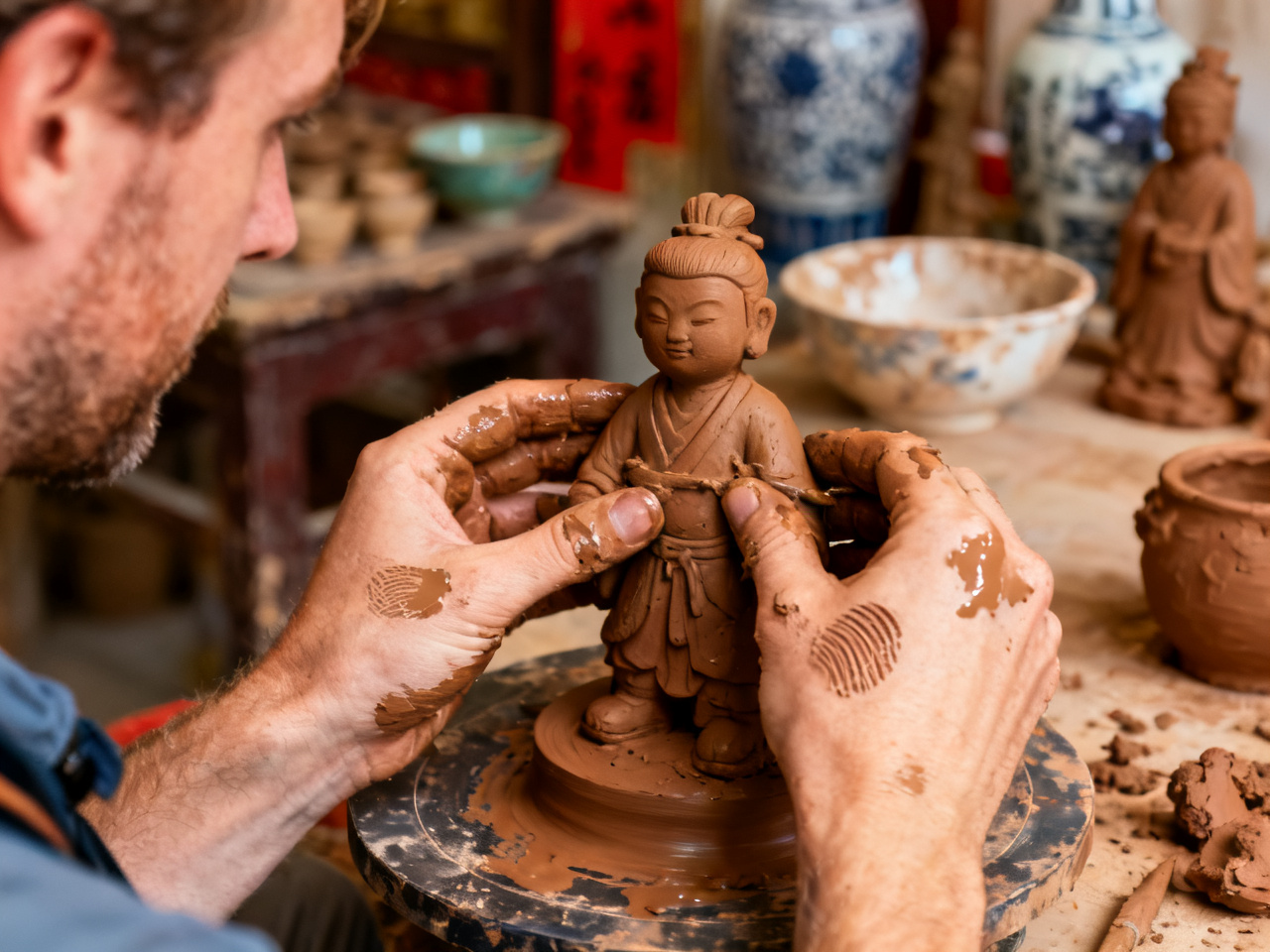
But Chinese clay figurines gave me a more concentrated feeling, as if the meaning had been pressed into a single expression. They do not always depend on a large scene. Instead, they excel at compressing spirit into a small body: the brows of a tiger, the cheeks of a child, the posture of an opera figure. That is often enough to communicate everything. Mexican folk clay can sometimes feel like it is telling the story of a whole festival or a whole street, while Chinese clay figurines often condense the story into the role itself. One tradition opens outward into scene; the other tightens inward into expression. Both feel intimate, but they arrive there differently.
我第一次理解,为什么很多民艺最后都会回到“人像不像人”这个问题 | For the first time, I understood why so many folk arts return to the question of whether a figure feels human
做完自己的小作品以后,我看着老师桌上的那些成品,突然特别能理解为什么泥塑常常让人停下来多看一会儿。因为它们身上有一种很直接的人情味。哪怕做的是动物,你也会从眼睛、嘴角、身体姿态里看出性格;哪怕做的是神话人物,也不会完全脱离普通人的情绪。它们会有得意、憨厚、倔强、喜庆、机灵,甚至一点点淘气。这些东西不是写在说明牌上的,而是被捏出来的。
After finishing my own small piece, I looked again at the instructor’s finished works and finally understood why clay figurines often make people stop and stare a little longer. They carry such direct human feeling. Even when the subject is an animal, you can read personality through the eyes, mouth, and posture. Even when the subject is mythic, it does not feel cut off from ordinary emotion. You can sense pride, innocence, stubbornness, festivity, cleverness, even a little mischief. None of this is written on a label. It is shaped by hand.
这也让我重新理解“民艺”这个词。真正好的民艺不一定追求完美无瑕的对称,不一定追求学院派那种严密写实。它追求的是让一个形象足够有生命,能被普通人喜欢,能被孩子记住,能在节日、礼物或家庭陈设里留下温度。泥塑正是这样:它用最朴素的材料,完成了一件其实很复杂的事——让泥土看起来像有心情。
This also reshaped my understanding of the phrase folk art. The best folk art does not always aim for flawless symmetry or academic realism. It aims to give a figure enough life that ordinary people can love it, children can remember it, and families can keep it as part of seasonal ritual, gifting, or domestic warmth. Clay figurines do exactly that. With the plainest material, they achieve something surprisingly complex: they make earth appear to have mood.
如果你在中国旅行时遇到泥塑,我建议你一定要看手,而不只是看成品 | If you encounter clay figurines in China, watch the hands, not only the finished object
现在如果我在中国的老街、民俗馆或者非遗体验空间再看到泥塑,我已经不会只把它当成“可爱的手工摆件”了。我会先看做的人怎么取泥、怎么按、怎么接、怎么修,尤其会看他们如何处理眼神和嘴角。因为泥塑最珍贵的瞬间,往往不是完成以后,而是在一团泥慢慢长出表情的时候。那种变化很小,却很有力量。
Now, when I encounter clay figurines again in old streets, folk museums, or heritage workshops in China, I no longer see them merely as cute handmade ornaments. I watch how the maker lifts the clay, presses it, joins parts together, and refines the details—especially how they handle the eyes and mouth. The most precious moment in this craft often comes not after the piece is finished, but while a lump of clay slowly begins to grow an expression. The transformation is small, yet powerful.
如果有机会亲手试一次,我会非常推荐。你也许做不出多复杂的作品,但你会立刻明白,为什么这种看起来“很朴素”的民间手艺,其实藏着极细的观察力。对我这个来自墨西哥、原本就喜欢民间陶土手艺的人来说,中国泥塑最珍贵的地方,不是它让我看到一种陌生材料,而是它让我重新认识了熟悉的泥土:原来同样是土,在不同文化手里,真的会长出不同的表情。而中国泥塑长出来的,是一种特别温厚、直接、又带着祝愿的生命感。
If you ever have the chance to try it yourself, I would strongly recommend it. You may not produce anything complicated, but you will immediately understand why this apparently simple folk craft contains such refined powers of observation. For someone like me, a Mexican traveler who already loves folk clay traditions, the greatest gift of Chinese clay figurines was not that they introduced me to an unfamiliar material. It was that they made me rediscover a familiar one. The same earth, in different cultures, can grow entirely different expressions. And in Chinese clay figurines, the expression that emerges feels warm, direct, and full of blessing.

- 我在高铁站丢过方向,但没丢掉行程 | I Lost My Direction at a High-Speed Railway Station but Not My Trip
- 我在中国黄昏公园里学会一个人坐着,不急着把空白填满 | In a Chinese Park at Dusk, I Learned to Sit Alone Without Rushing to Fill the Silence
- 皮影戏:光与影之间的千年叙事 | Shadow Puppetry: A Thousand Years of Storytelling Between Light and Shadow
- 青岛这座城,白天该先进馆,晚上才适合把海慢慢走出来 | In Qingdao, the Day Belongs to Museums First, and the Sea Should Be Walked Out Slowly at Night
- 扬州雨后最动人的,不是园子名气,而是鞋底碰到湿石板的那一下 | In Rainy Yangzhou, the Most Moving Thing Is Not a Famous Garden but the Sound of Shoes on Wet Stone
- 中国茶文化 | Chinese Tea Culture
- 中国新年:传统与习俗 | Chinese New Year: Traditions and Customs
- 中国凉菜:一桌好饭从凉菜开始 | Chinese Cold Dishes: Every Great Meal Starts Here
- 我原以为汉代节日只是热闹,后来才发现真正难忘的是厨房里那股蒸汽 | I Used to Think Han Festivals Were Only About Excitement, Until I Realized the Kitchen Steam Was What Stayed With Me
- 贵阳晚饭最先把人叫醒的,往往不是招牌菜,而是那口酸汤 | In Guiyang, What Wakes You at Dinner Is Often Not a Signature Dish but the Sour Broth
Comments (0)