
版画拓印体验:我第一次明白一张纸为什么也能“接住时间” | Print Rubbing Experience: The First Time I Understood How Paper Can Catch Time
版画拓印体验:我第一次明白一张纸为什么也能“接住时间” | Print Rubbing Experience: The First Time I Understood How Paper Can Catch Time
我原本以为,版画拓印是一种比较“安静”的中国民间工艺,安静到甚至不太容易让第一次接触的外国游客立刻兴奋起来。毕竟它不像戏曲那样有声音,不像灯会那样有光,也不像节庆食品那样能马上调动味觉。可真正坐到工作台前,看老师把纸覆在刻版上、刷水、按压、拍打、再慢慢揭起的时候,我很快就改变了想法。它的魅力并不张扬,却有一种特别稳的力量,好像所有好东西都要先经过纸、手和耐心,才肯慢慢显出来。
I used to think print rubbing was one of those quieter Chinese folk crafts, so quiet that a foreign visitor might not be excited by it at first contact. After all, it does not have the sound of opera, the glow of lantern fairs, or the immediate sensory pull of festival food. But once I actually sat at a worktable and watched the instructor place paper over a carved surface, wet it, press it, tamp it, and slowly lift it away, I changed my mind very quickly. Its charm is not showy, but it has a very steady force, as if good things must first pass through paper, hands, and patience before they are willing to appear.
老师先让我摸了一下版面。那些纹样用手指触碰时并不复杂,甚至显得有些朴素,可一旦纸贴上去,凹凸关系就突然变得重要起来。她告诉我,拓印最关键的不是“画”出什么,而是如何让材料自己把图案说出来。纸要服帖,水分要适中,力度不能乱,墨色也不能贪多。听她讲这些细节,我忽然意识到,这门工艺和我之前理解的“复制图像”完全不一样。它不是机械地转印,而是一种让纸去倾听表面的过程。
The instructor first let me touch the carved surface. By fingertip, the pattern did not seem especially complicated; in fact, it almost felt plain. But once the paper was laid over it, the raised and recessed relationships suddenly became crucial. She told me the heart of rubbing is not to “draw” an image, but to let the material reveal the image by itself. The paper must sit closely, the moisture must be right, the force must be controlled, and the ink cannot be greedy. Listening to these details, I realized this craft was completely different from what I had imagined as simple image reproduction. It is not mechanical transfer. It is a process in which paper learns how to listen to a surface.
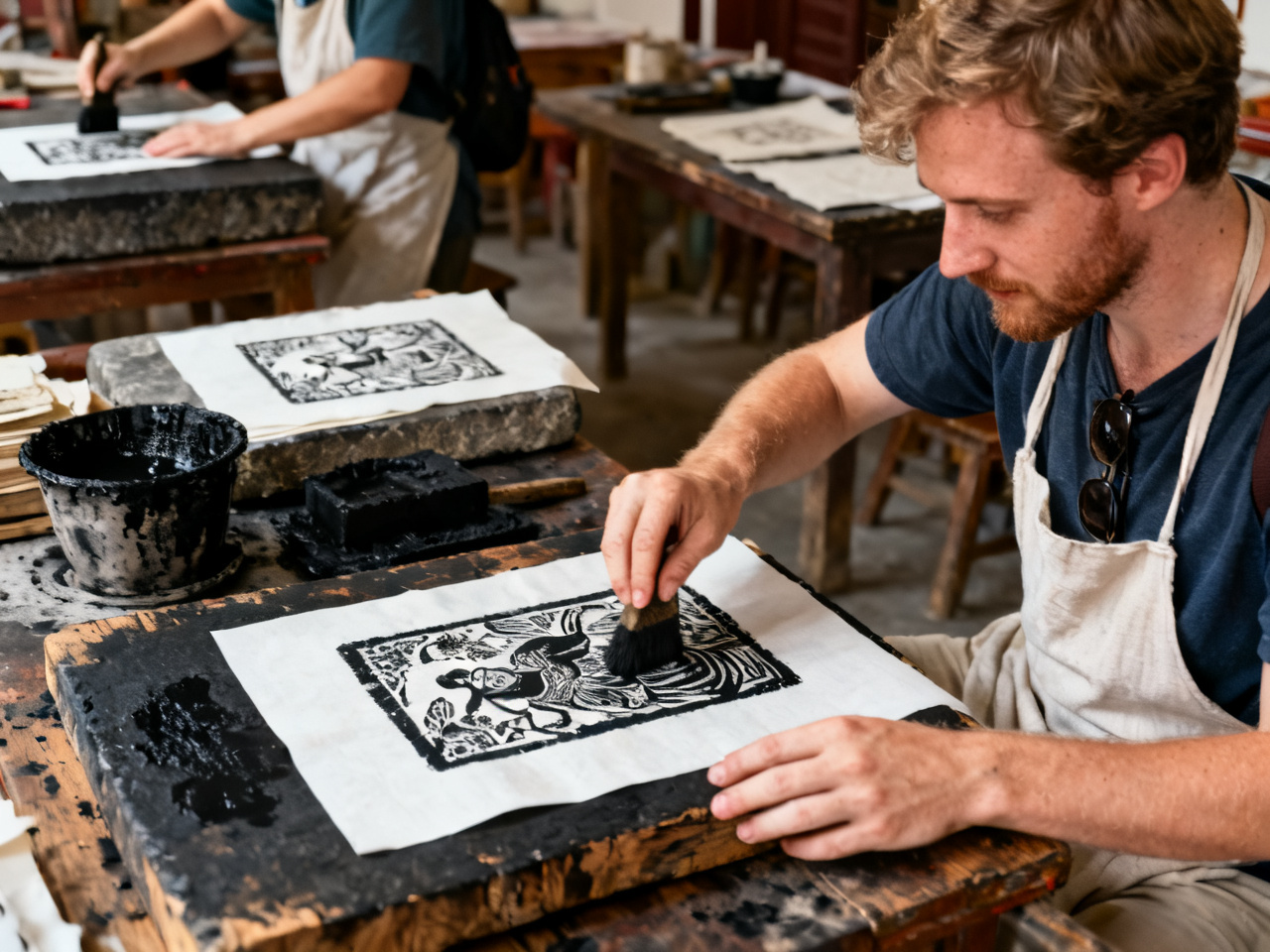
真正动手时,我才知道为什么它看起来平静,做起来却很考验人。纸稍微偏一点,边缘就会不整;拍打的节奏不均,纹样就出不齐;上墨太快,层次会发死;太慢,又容易失去连贯感。我做的是一张不算复杂的小型花纹拓片,但光是让图案完整浮现出来,就已经让我全神贯注。那种专注很特别,因为你并不是在不断添加内容,反而更像是在等待隐藏的东西逐渐现身。
Only when I began working did I understand why it looks calm yet demands so much from the person doing it. If the paper shifts even slightly, the edge becomes untidy. If the tapping rhythm is uneven, the pattern emerges incompletely. If the ink comes too fast, the layers turn flat; too slow, and the continuity is lost. I made a small, relatively simple floral rubbing, but even getting the pattern to emerge in a complete way required total concentration. That concentration felt unusual because I was not constantly adding content. Instead, I was waiting for something hidden to come gradually into view.
我尤其喜欢揭纸的那个瞬间。和很多中国手作一样,答案不会在第一秒就完全给你,而是在你准备得差不多之后,突然完整地出现。刚开始覆纸时,眼前只有湿润的白和模糊的起伏;可到了最后,线条、边界、纹理和留白会一起站出来。那一刻我非常能理解为什么很多人会对版画和拓印着迷:它让“显现”本身变成一种观看经验。
I especially loved the moment of lifting the paper. Like many Chinese handcrafts, the answer is not given to you in the first second. It appears suddenly only after enough preparation has been made. At first there is only damp white paper and vague relief beneath it. But at the end, line, edge, texture, and empty space all step forward together. In that moment, I fully understood why so many people are fascinated by print and rubbing traditions: they turn revelation itself into an experience.
因为我来自日本,所以我很自然地把这次体验和自己熟悉的木版印刷文化联系起来。日本也有非常成熟的版画传统,尤其是木版画,强调刀法、套色、纸张和图像的整体控制。我从小就知道版画在日本不仅是艺术品,也是一种有技术纪律的视觉文化。但这次在中国体验拓印,我感受到的重点稍微不同。日本版画常常让我先想到构图、色彩和完成后的画面张力;中国拓印则更让我注意“原物表面”与“纸上痕迹”之间的关系。一个更像是创造图像,一个更像是让时间和触感留下证词。
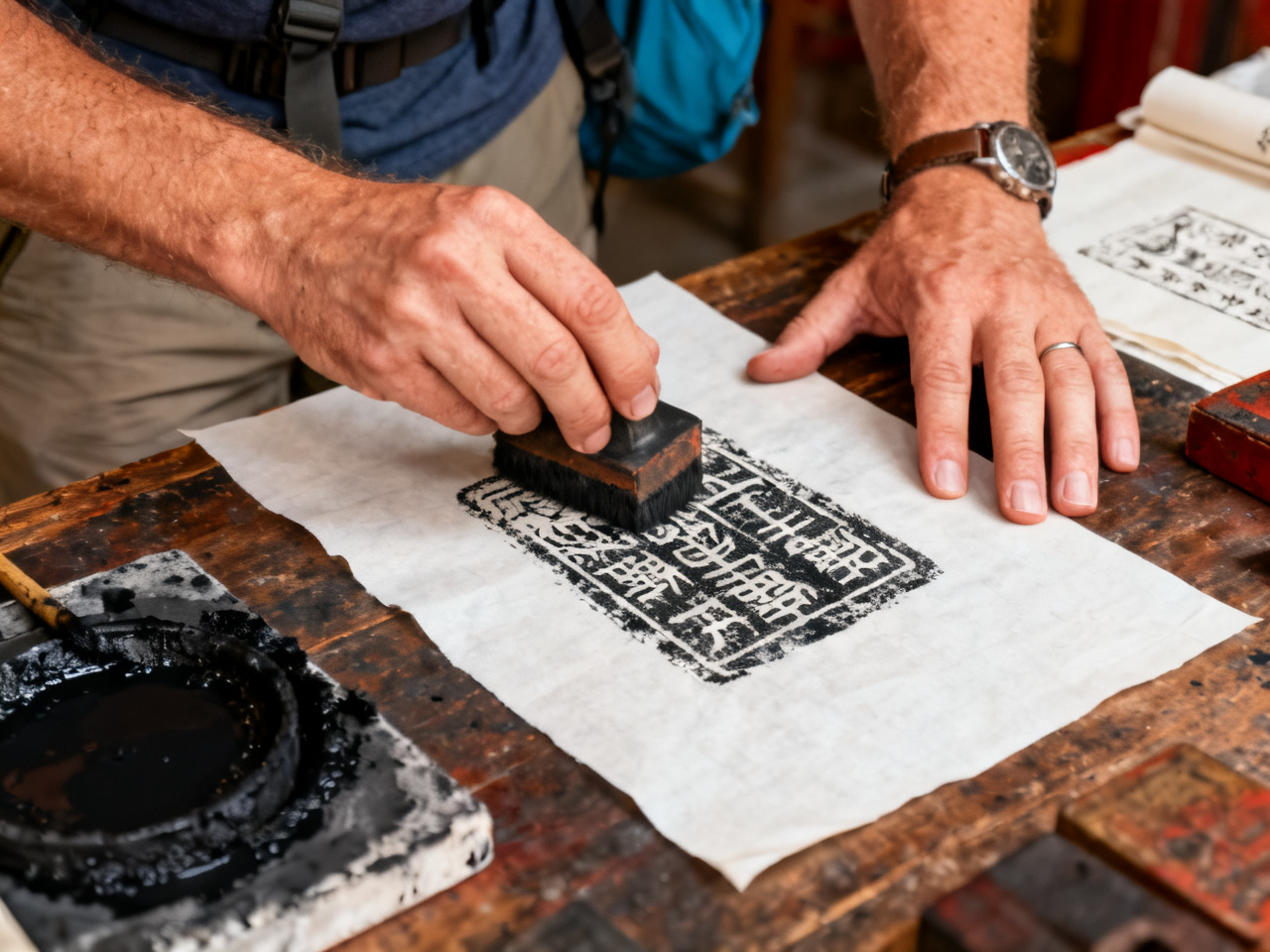
Because I come from Japan, I naturally connected this experience with the print traditions I know from home. Japan also has a highly developed woodblock culture, one that emphasizes carving, registration, paper, and overall control of the image. I grew up understanding that printmaking in Japan is not only art, but a visual culture shaped by strong technical discipline. Yet in this Chinese rubbing experience, the emphasis felt slightly different. Japanese print traditions often make me think first of composition, color, and the tension of the finished image. Chinese rubbing made me focus more on the relationship between an original surface and the trace left on paper. One feels more like image creation; the other more like allowing time and touch to leave testimony.
这种差异让我很着迷。它提醒我,同样是纸和版,同样需要手工控制,不同文化却会把重点放在完全不同的地方。中国拓印给我的感觉尤其“沉着”。它不急着讨好观看者,不急着制造强烈效果,而是先要求你相信材料、相信步骤、相信慢慢显现的价值。对一个习惯了快节奏旅行的人来说,这几乎像一种温和的训练。
That difference fascinated me. It reminded me that even when two traditions share paper, carved surfaces, and manual skill, different cultures can place importance in completely different places. Chinese rubbing felt especially composed to me. It does not rush to please the viewer or produce a dramatic effect. It first asks you to trust the materials, the sequence, and the value of gradual revelation. For someone used to fast-paced travel, that felt almost like a gentle form of training.
如果有外国朋友问我,哪一种中国民艺最适合想练习耐心的人,我会很愿意推荐版画拓印。它的门槛不是高高在上的那种难,而是每一步都在提醒你:好结果来自细致的配合,而不是急着完成。等我把自己做好的那张拓片拿在手里时,我最强烈的感受并不是“我完成了一件作品”,而是“我终于跟一种观看世界的方式接上了线”。原来一张纸不只是拿来承载图像,它也可以安静地接住时间、纹理和一双手曾经如何认真停留过。
If foreign friends asked me which Chinese folk craft I would recommend to anyone wanting to practice patience, I would gladly choose print rubbing. Its difficulty is not the distant, intimidating kind. Instead, every step reminds you that good results come from careful cooperation rather than speed. When I finally held my finished rubbing in my hands, my strongest feeling was not simply that I had completed a piece. It was that I had connected with a different way of seeing. Paper, I realized, does not only carry images. It can also quietly catch time, texture, and the record of how seriously a pair of hands once paused there.

- 皮蛋:一颗被误解的中国蛋 | Century Egg: China's Most Misunderstood Delicacy
- 外国人在中国买东西被拒收现金怎么办? | What To Do When a Chinese Shop Refuses Your Cash
- 天还没热起来,长安早市已经把一天的味道摆出来了 | Before the Heat Rose, Chang'an's Morning Market Had Already Laid Out the Flavor of the Day
- 把重庆说成超大城市很容易,难的是教人第一晚从哪层开始不慌 | Calling Chongqing Massive Is Easy; Showing a Visitor Where to Begin on the First Night Without Panic Is Harder
- 我带父母第一次来中国,不是先去最红景点,而是先把一天过顺 | When I Brought My Parents to China for the First Time, I Focused on a Smooth Day Before Famous Sights
- 刺绣体验:我第一次发现“安静”也可以有这么强的存在感 | Embroidery Workshop: The First Time I Realized Quietness Could Have Such a Strong Presence
- 在西安回民街吃一天,胃和钱包都很满足 | A Full Day of Eating on Xi'an Muslim Quarter
- 在地铁口停好共享单车那一刻,我才明白锁车并不等于结束 | The Moment I Properly Parked a Shared Bike Outside the Metro, I Understood That Locking It Is Not the End
- 脸谱绘制体验:我第一次明白一张脸为什么可以先于台词说话 | Opera Face-Painting Workshop: My First Time Understanding How a Face Can Speak Before the Lines
- 三月桃花源:寻访世外桃源 | March Peach Blossom: Finding Utopia in China
Comments (0)