
在地铁口停好共享单车那一刻,我才明白锁车并不等于结束 | The Moment I Properly Parked a Shared Bike Outside the Metro, I Understood That Locking It Is Not the End
在地铁口停好共享单车那一刻,我才明白锁车并不等于结束 | The Moment I Properly Parked a Shared Bike Outside the Metro, I Understood That Locking It Is Not the End
我第一次在杭州早高峰骑共享单车去地铁站时,脑子里想的只有一件事:别迟到。早上的空气还带着一点前夜留下的凉意,可地铁口外已经完全醒了。早餐铺蒸汽往上冒,豆浆杯和塑料袋在行人手里晃来晃去,电动车从辅路上一辆接一辆滑过,提示音、刹车声和远处公交车报站声叠在一起。最扎眼的还是地铁口旁边那大片共享单车,黄色、蓝色、绿色挤成一团,有的整齐贴着停车线,有的斜着压住别人的车把,还有几辆直接横在边缘,像是被匆忙的人随手丢下。我那时候作为一个刚适应中国城市节奏的外国人,理所当然地以为,只要骑到站口、落锁、手机显示结束计费,这件事就算完成了。
The first time I rode a shared bike to a metro station during Hangzhou’s morning rush, I had only one thought in my head: do not be late. The morning air still carried a trace of coolness left over from the night, but outside the station everything was already fully awake. Steam rose from breakfast stalls. Soy milk cups and plastic bags swung in people’s hands. Electric scooters slid past one after another on the side road, while warning chimes, brake sounds, and the distant voice of buses announcing stops layered over each other. What stood out most was the huge patch of shared bikes by the metro entrance. Yellow, blue, and green frames were crammed together. Some sat neatly along the parking lines. Others leaned diagonally across neighboring handlebars. A few were simply dumped sideways at the edge as if someone had abandoned them in a rush. At that time, as a foreigner still learning the tempo of Chinese city life, I naturally assumed that once I reached the station, locked the bike, and saw the charge stop on my phone, the task was finished.
结果我差点把车停在最糟糕的位置。那天我顺着人流冲到站口外,看见前面已经没什么空位,就把车头一拐,准备把车斜着靠在一排车旁边,自己好赶紧进站。就在我准备按下锁的时候,旁边一位穿反光背心的协管员抬手示意我等一下。他语气并不重,只说:“别停这儿,盲道要留出来。”我低头一看,才发现脚边那条带凸点的黄色盲道正从人行道中间穿过去,而我那辆车如果斜停下去,车尾正好会卡在上面。那一瞬间我一下子有点尴尬,因为在我原来的判断里,那只是一块“还凑合能塞一辆车”的空隙;可在别人的日常路线里,那其实是必须保持畅通的一条线。
I almost parked in the worst possible place. That morning I followed the crowd to the station entrance, saw that there seemed to be little room left, and turned my handlebars as if I could just wedge the bike diagonally against a row of others and hurry into the station. Just as I was about to lock it, a parking assistant in a reflective vest raised a hand to stop me. He was not harsh. He only said, “Don’t leave it here. The tactile path has to stay clear.” I looked down and realized that the yellow tactile paving with raised dots was running straight through the middle of the sidewalk beneath me. If I had left the bike there at an angle, the back wheel would have blocked it exactly. In that instant I felt a sharp flush of embarrassment. In my own mind, I had only seen a gap where one more bike could probably fit. In other people’s daily routes, it was a line that absolutely had to remain open.
我把车重新推开,往旁边走了几米,才看到地上其实有很清楚的停车框线,只是被早高峰的人流和杂乱车身盖得不那么显眼。更重要的是,我开始注意到,真正会停车的人并不是“找到地方就放”,而是在很短时间里完成一套判断:车头朝哪边不挡别人推出下一辆,车身有没有压到盲道,后轮会不会卡住人行道最窄的拐角,旁边那辆倒了会不会连带压倒一排。有人停好以后还会顺手扶正旁边被碰歪的车,让整排重新贴齐线。那几秒钟看起来很小,可它其实决定了接下来半小时里,这个站口是顺畅还是混乱。
I pushed the bike away and walked a few meters before noticing that the parking boxes on the ground were actually quite clear, only less visible beneath the rush-hour crowd and the tangle of bike frames. More importantly, I began to notice that people who really knew how to park did not just “find a spot and leave.” In a matter of seconds, they ran through a whole set of judgments: whether the handlebar direction would block someone trying to pull out the next bike, whether the frame crossed the tactile path, whether the back wheel jammed the narrowest corner of the sidewalk, and whether a fallen bike there could knock down a whole row. Some people, after parking their own bike, even straightened the one beside it if it had been nudged crooked, restoring the row to the painted line. Those few seconds may look tiny, but they determine whether that station entrance will feel smooth or chaotic for the next half hour.
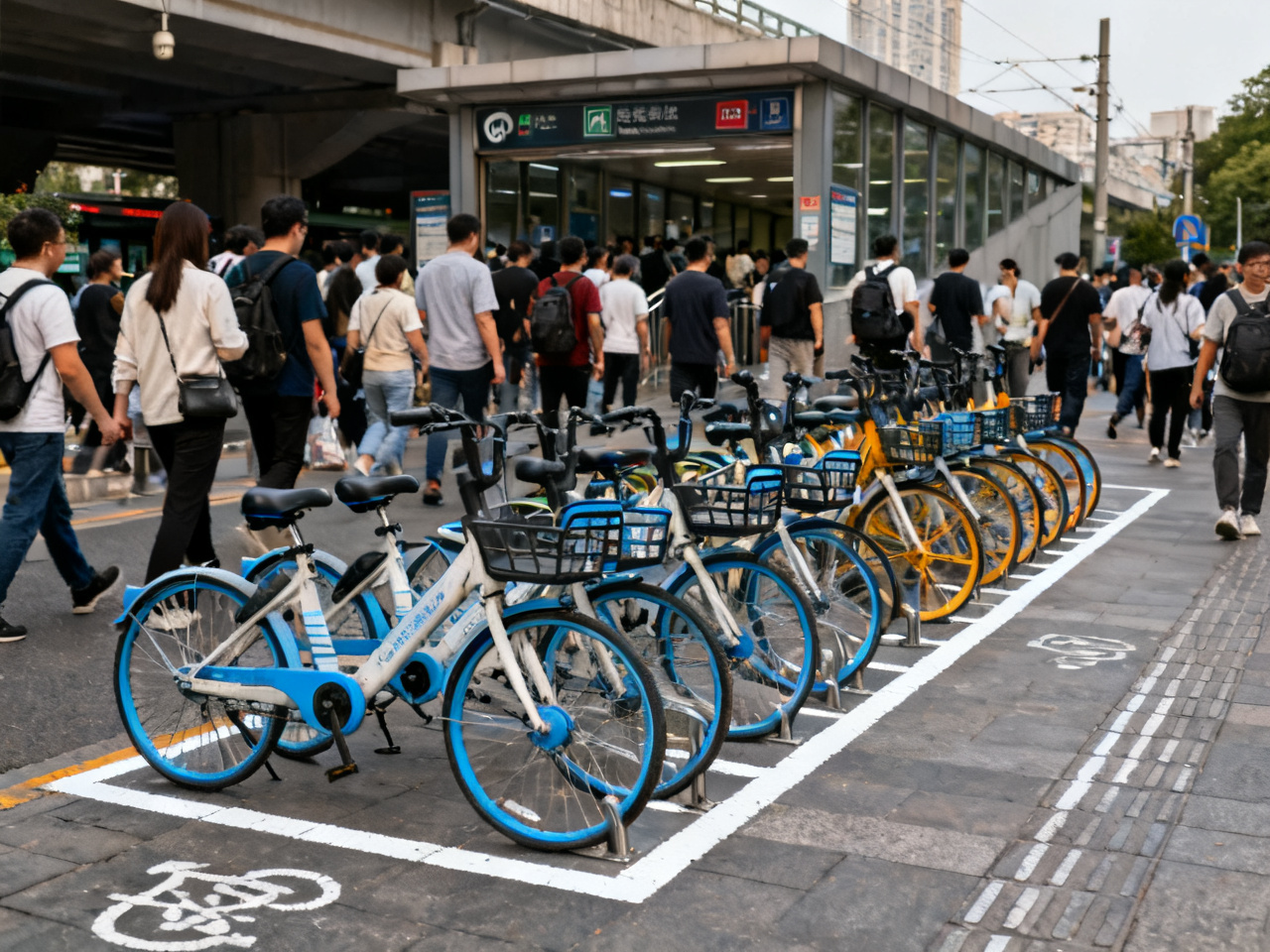
后来我连续几天特意在旁边多看了一会儿,才发现共享单车停放区其实特别能体现中国城市里一种很务实的公共默契。大家都赶时间,这一点非常明显:有人边走边看手机里的地铁码,有人背着电脑包小跑进站,有人一手拎包子一手锁车,动作快得像排练过。可就是在这种赶的状态里,很多人仍然会本能地给别人留出下一步。一个骑手把车推进框线后,会稍微抬一下后轮,让它和前排更平;一个上班族发现自己车把勾住别人刹车线,会马上退半步重新摆;甚至有人明明已经扫码结束了,又折回来把倒下的一辆扶起来。没有人站在那里发表公共文明宣言,但一排车能不能整齐,往往就靠这些没人夸奖的小动作。
Over the next few days, I deliberately lingered nearby and watched more closely. That was when I realized that a shared-bike parking zone is an excellent example of a practical public understanding in Chinese cities. Everyone is in a hurry. That much is obvious. Some people are checking their metro QR codes while walking. Some are jogging toward the station with laptop bags bouncing on their shoulders. Some lock their bike with one hand while holding breakfast buns in the other, moving as if the sequence were rehearsed. Yet even in that rushed state, many people still instinctively leave the next step open for others. One rider pushes the bike into the painted box and then lifts the back wheel slightly so it aligns better with the row ahead. An office worker notices their handlebar has hooked another bike’s brake cable and immediately steps back to fix it. Some people even scan out and then return a few steps to raise a bike that has fallen over. Nobody stands there making speeches about civic behavior, but whether a row of bikes stays orderly often depends on exactly those unpraised movements.
我以前总觉得,共享单车最重要的是“好借、好骑、好还”,后来才意识到,“好还”并不是系统里跳出一个成功页面那么简单。尤其在地铁口这种高密度空间里,归还并不只是和平台完成一次交易,也是和现场的陌生人完成一次交接。你乱停一下,后面可能就有老人绕不过去;你把车头歪着塞进去,下一位要抽车的人可能得多拽两次;你图自己省两秒,把车压在盲道边缘,真正吃亏的是看不见你这点偷懒的人。对外国人来说,这一点特别容易忽略,因为我们很容易把共享单车理解成一种纯粹个人化的便利工具,但在中国这种使用密度极高的环境里,它更像一个不断被多人接力使用的公共接口。
I used to think the most important thing about shared bikes was that they should be easy to unlock, easy to ride, and easy to return. Later I understood that “easy to return” is not as simple as a successful screen on the app. Especially around metro entrances, where space is dense, returning a bike is not only a transaction with a platform. It is also a handoff to a crowd of strangers on the ground. If you park carelessly, an older person may have to detour around you. If you jam your bike in at an angle, the next person trying to pull one out may have to yank twice. If you save yourself two seconds by pressing a bike into the edge of the tactile paving, the person who really pays is the one who cannot see your small laziness. For foreigners, this is especially easy to miss, because it is tempting to understand bike sharing as a purely personal convenience tool. In a place where usage density is this high, though, it behaves more like a public interface passed from one person to the next.
有一次我晚高峰出站,看见一排车已经被停得乱七八糟,最外面那辆几乎横在盲道和台阶之间。一个推婴儿车的妈妈卡在那里,得先把车头抬一点才能过去。她没有发火,只是皱着眉把婴儿车挪出一个角度。那一幕让我印象很深,因为它说明停车这件事带来的后果,往往不会落在停车的人自己身上,而是落在下一个到场的人身上。也正因为如此,协管员提醒我时,我后来越想越觉得那句“盲道要留出来”不是单纯在管我,而是在替一整串我看不见的人提前说话。
One evening during the commute home, I saw a row of bikes parked in complete disorder, with the outermost one almost lying across the space between the tactile path and a short step. A mother pushing a stroller got stuck there and had to lift the front wheels slightly to squeeze through. She did not get angry. She only frowned and adjusted the stroller’s angle. That scene stayed with me because it showed how the consequence of parking badly often does not fall on the person who did it. It falls on whoever arrives next. That is why, the more I thought about it, the more that assistant’s reminder—“the tactile path has to stay clear”—felt less like a scolding directed at me and more like someone speaking in advance for a whole line of people I could not yet see.
顺着这个判断方法继续看,中国城市公共秩序观察和中国地铁口的人流节奏也能互相印证。
Following the same way of reading a scene, 中国城市公共秩序观察 and 中国地铁口的人流节奏 also reinforce this habit from other angles.
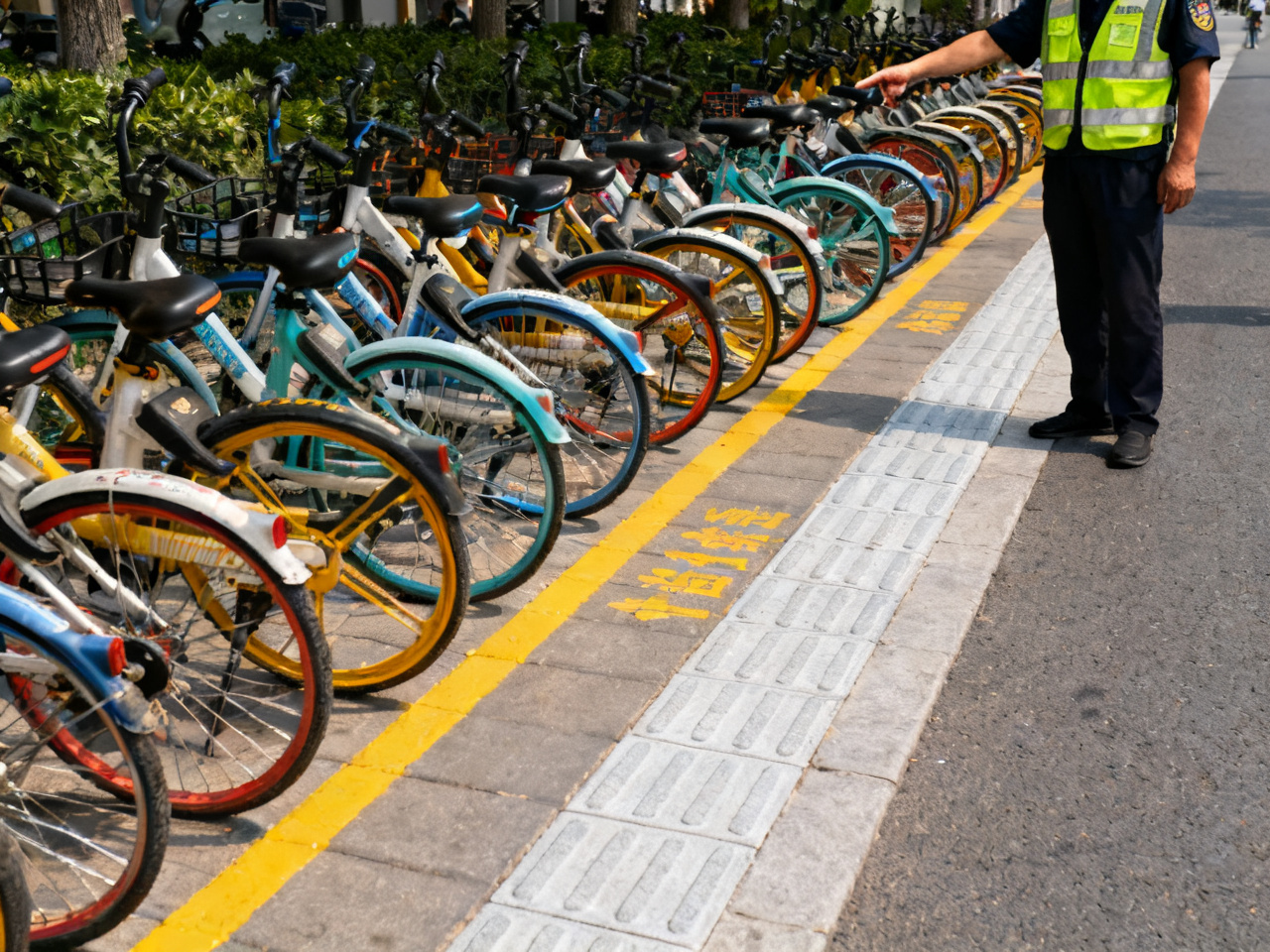
现在我每次骑共享单车到地铁口,都会多留几秒。先看停车线,再看盲道,再看自己这辆车会不会让旁边那辆更难取出来。如果附近已经有点乱,我甚至会顺手扶正一辆歪掉的车,因为我知道这不是多么伟大的举动,只是把自己该收的尾收干净而已。如果有刚来中国的朋友问我,共享单车最容易学漏掉的规矩是什么,我会说,不是怎么扫码,也不是怎么关锁,而是别把“结束行程”理解成只对自己结束。在中国很多高频公共空间里,真正成熟的做法往往是:你离开之前,先想想你留下的东西会怎样影响下一个人。对我来说,学会在停车时给盲道和人流让出那一点位置,才算真正学会了在这里“还车”。
Now, every time I ride a shared bike to a metro entrance, I leave myself a few extra seconds. First I look for the painted parking line, then the tactile path, then whether my own bike will make the next one harder to pull out. If the area already looks messy, I will even straighten one crooked bike nearby, because I know this is not some grand moral act. It is simply finishing my own part properly. If a friend newly arrived in China asks me what rule about shared bikes is easiest to miss, I would say it is not how to scan the code and not how to lock the bike. It is not treating “ending the ride” as something that ends only for yourself. In many high-frequency public spaces in China, the more mature habit is to ask, before leaving, how what you leave behind will affect the next person. For me, learning to leave that little bit of space for the tactile path and for the flow of people was the moment I truly learned how to return a bike here.
- 本人在台州临海古城墙的五月雨雾里,第一次把“看景”变成了“听城” | In Linhai's May Mist, I Stopped Just Seeing the Scenery and Started Listening to the City
- 在中国夜间抵达后,我怎样判断回酒店的路最稳妥 | How I Judge the Safest Way Back to My Hotel After Arriving Late in China
- 中国茶具:完美伴手礼 | Chinese Tea Set: A Perfect Gift
- 昆明蓝花楹城市漫步:把春天走成一条紫色街巷 | A Jacaranda Walk in Kunming: Turning Spring into a Purple Street
- 火锅点单避坑指南:第一次吃别踩这些雷 | Hot Pot Ordering Survival Guide: Avoid These Mistakes on Your First Visit
- 在绍兴,一张公交卡小票和一座小桥一起把我领进了城 | In Shaoxing, a Transit Receipt and a Small Bridge Led Me into the City Together
- 中国高铁出行完全指南 | Complete Guide to China's High-Speed Rail
- 长沙一碗米粉的早晨,教我别只看招牌菜 | One Morning Bowl of Rice Noodles in Changsha Taught Me Not to Only Chase Signature Dishes
- 熟食店玻璃柜前那句“几个人吃”,让我第一次学会在中国别只按克数点菜 | The Question “How Many People Are Eating?” at a Deli Counter Taught Me Not to Order Only by Weight in China
- 中国饮品文化:从功夫茶到网红奶茶 | Chinese Drink Culture: From Kung Fu Tea to Viral Milk Tea
Comments (0)