
在绍兴,一张公交卡小票和一座小桥一起把我领进了城 | In Shaoxing, a Transit Receipt and a Small Bridge Led Me into the City Together
第一次到绍兴,我先学会观察路口和人流 | On My First Day in Shaoxing, I Learned to Read Crossroads and Crowds
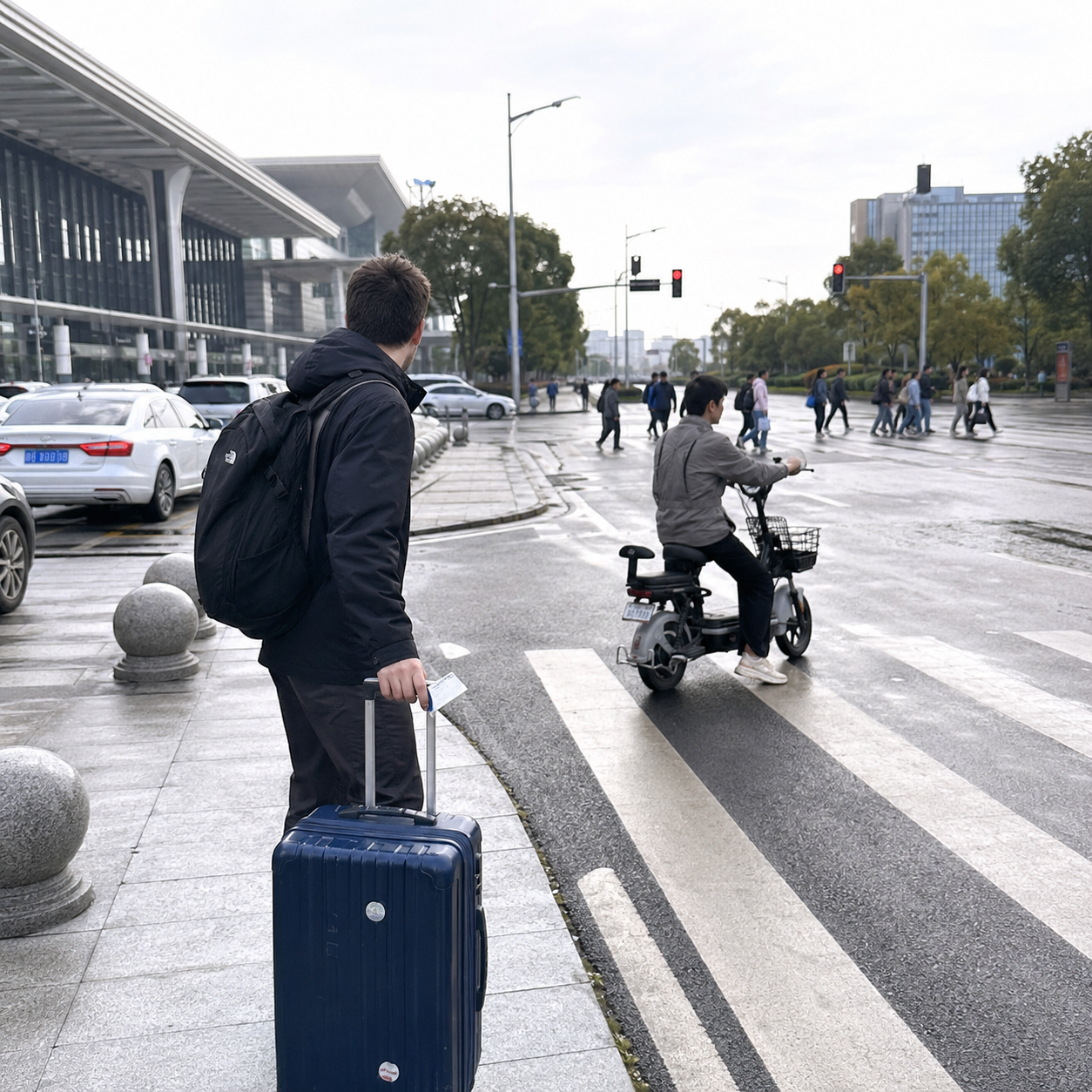
早上七点二十,我拖着深蓝色行李箱站在绍兴北站外的出租车上客区,箱轮卡在一条很浅的砖缝里,右手还捏着刚从机器里吐出来的公交卡充值小票。空气里有潮湿的米香和雨后水泥的味道,一位穿灰色夹克的师傅把电动车停在斑马线外,脚尖点着地,眼睛没有看红绿灯,而是看着对面一群学生的脚步。我来自捷克布尔诺,习惯了街口车辆先停、人再慢慢走的节奏,来到绍兴的第一个小时,我发现自己如果只盯着灯,就会错过真正决定道路节奏的东西:人流从哪里积起来,电动车在什么时候松开刹车,老人怎样用伞尖给自己留出一条窄路。
At 7:20 in the morning, I stood outside Shaoxing North Railway Station in the taxi boarding area with a dark blue suitcase, its wheel caught in a shallow crack between paving bricks, while my right hand still held a bus card top-up receipt fresh from the machine. The air smelled of damp rice and rain-washed concrete. A man in a gray jacket stopped his electric scooter outside the zebra crossing, one toe touching the ground, his eyes not fixed on the traffic light but on the feet of a group of students across the road. I come from Brno in the Czech Republic, where I am used to cars stopping first and people crossing slowly afterward. During my first hour in Shaoxing, I realized that if I watched only the light, I would miss what actually set the rhythm of the street: where the crowd gathered, when scooter riders released their brakes, and how an elderly person used the tip of an umbrella to open a narrow path.
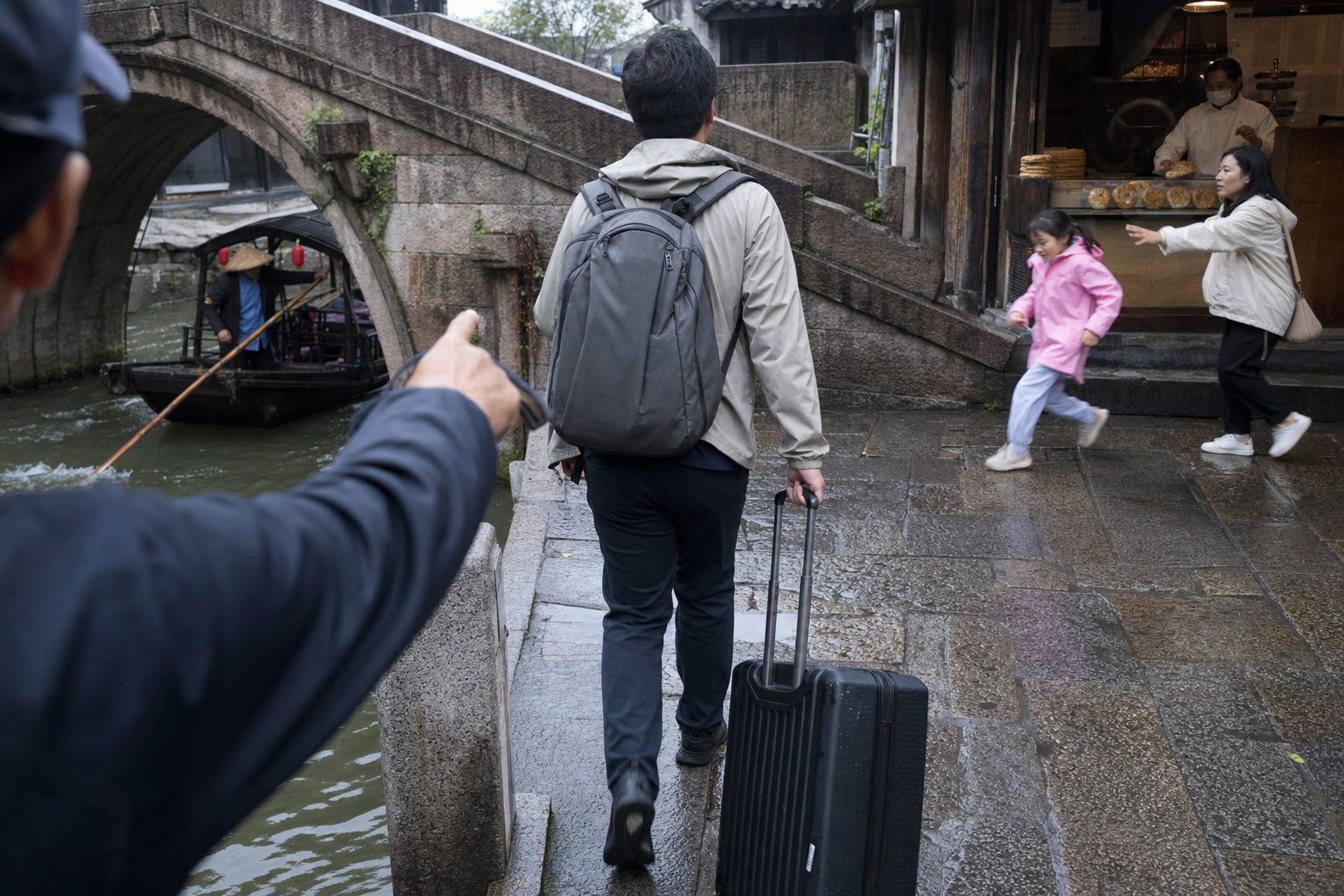
我住的民宿在仓桥直街附近,司机把车停在一座小桥边,让我沿着石板路往里走。他没有说太多,只抬手指了两次:一次指向桥洞下缓慢滑过的小船,一次指向前方拐角处卖烧饼的摊位。我拖着箱子过桥时,桥面略微发滑,箱轮发出不均匀的响声。一个穿粉色雨衣的小女孩从我身边跑过,母亲在后面轻声喊她慢点,喊声被桥下水声切成短短几段。我忽然意识到,绍兴给外来者的欢迎不是一块巨大的牌子,而是一连串需要放慢脚步才能接住的提示。
My guesthouse was near Cangqiao Straight Street. The driver stopped beside a small bridge and told me to walk along the stone-paved lane. He did not say much; he only pointed twice, once toward a boat moving slowly under the arch of the bridge, and once toward a sesame flatbread stall around the corner. As I pulled my suitcase across the bridge, the surface was a little slippery, and the wheels made an uneven sound. A little girl in a pink raincoat ran past me while her mother called softly for her to slow down, the voice broken into short pieces by the sound of water below. I suddenly understood that Shaoxing did not welcome a newcomer with a huge sign. It offered a string of small cues that could be received only by walking more slowly.
民宿老板姓鲁,五十岁上下,穿一件洗得很软的黑色棉布外套。他见我进门,先把我箱子提过门槛,又从柜台后拿出一张手绘小地图。地图上没有把景点画得很大,反而用红笔圈出三个路口:一个通向早市,一个靠近公交站,一个在河边茶馆旁。他说我第一天不要急着看完什么,先把这几个口子认熟,晚上回来就不容易走错。我以为他是怕外国客人迷路,后来站在那些路口看了十分钟,才明白他是在教我读这座城的句读。
The guesthouse owner, whose surname was Lu, looked around fifty and wore a black cotton jacket washed soft with age. When I entered, he first lifted my suitcase over the threshold, then took a hand-drawn map from behind the counter. On the map, the tourist sites were not enlarged. Instead, three crossroads were circled in red: one leading to the morning market, one near a bus stop, and one beside a riverside teahouse. He said I should not hurry to see everything on my first day. I should learn those openings first, so it would be harder to lose my way when I returned at night. I thought he was simply worried about a foreign guest getting lost. After I stood at those corners for ten minutes, I understood that he was teaching me how to read the punctuation of the city.
我放下行李后出门,先走到早市那个路口。摊贩把青菜码在塑料筐里,叶子上还挂着细水珠,卖鱼的人用剪刀刮鱼鳞,声音像细碎的硬雨。路并不宽,但人没有撞成一团。买菜的阿姨们看起来并不急,她们会在摊前停两秒,斜着身子让后面的人先过去,再转回来讨价还价。一个骑车送豆浆的年轻人从人缝里穿过,他没有按喇叭,只低声说“借过”,声音刚够前面两个人听见。我跟着他的路线看,才发现这条街不是靠标线管理,而是靠彼此提前半步的判断。
After leaving my luggage, I went first to the crossroad by the morning market. Vendors stacked green vegetables in plastic baskets, fine drops of water still clinging to the leaves, while a fish seller scraped scales with scissors, the sound like small hard rain. The road was not wide, yet people did not crash into one another. The women buying vegetables did not seem rushed. They paused two seconds in front of a stall, leaned sideways to let someone pass behind them, then turned back to bargain. A young man delivering soy milk rode through the gaps without honking. He only said “excuse me” in a low voice, loud enough for the two people ahead. Following his line with my eyes, I discovered that the street was not managed mainly by painted markings but by everyone’s half-step-ahead judgment.
我原本想立刻去鲁迅故里,因为那是我出发前唯一能准确发音的地名。可是早市把我拦住了。一个卖梅干菜的摊位前,老板娘把黑褐色的菜干抓起来给我闻,问我是不是第一次来。我点头,她笑着把一小撮放进白色塑料袋,说可以让民宿老板煮蛋时放一点。我想付钱,她摆手,说这么一点不算买卖。她没有把我当成必须被安排的游客,也没有把自己的热情做成表演。她只是把一座城市的味道递到我手里,让我带回去。
I had originally wanted to go straight to Lu Xun’s Former Residence, because it was the only place name I could pronounce accurately before arriving. But the morning market held me back. At a stall selling preserved mustard greens, the owner lifted a handful of dark brown dried greens for me to smell and asked whether it was my first visit. I nodded. She smiled, put a small pinch into a white plastic bag, and said I could ask the guesthouse owner to add it when boiling eggs. I tried to pay, but she waved her hand and said such a tiny amount was not a transaction. She did not treat me as a tourist who needed to be arranged, nor did she turn her kindness into a performance. She simply placed the flavor of a city into my hand and let me carry it back.
到第二个路口时,我开始认真看红绿灯之外的细节。公交站旁有一棵树,树下站着三位老人,两位拎布袋,一位拿着折叠凳。他们并没有排成直线,却都知道谁先来。公交车靠站前,人群往前轻轻涌了一下,又很快分开,让下车的人先落脚。我本能地往后退,怕挡路,一位老人看见后用绍兴话说了一句我听不懂的话,又用普通话补了一句:“不要怕,看脚下。”我低头看,才发现站台边缘有一条被鞋底磨亮的浅线,人们都在那条线后面等。
At the second crossroad, I began to watch details beyond the traffic light. Beside the bus stop stood a tree, and under it were three elderly people: two carrying cloth bags and one holding a folding stool. They were not arranged in a straight line, yet they all knew who had arrived first. Before the bus pulled in, the crowd surged forward gently, then quickly opened so passengers getting off could step down first. Instinctively, I moved backward, afraid of blocking the way. One old man saw me and said something in Shaoxing dialect that I could not understand, then added in Mandarin, “Don’t be afraid. Watch your feet.” I looked down and noticed a faint line polished by shoe soles at the platform edge. Everyone was waiting behind it.

我上了公交车,车厢里有淡淡的雨伞布味和早餐葱油的味道。司机左手扶方向盘,右手在每次到站前轻轻按一下报站按钮。车里没有人高声说话,但并不安静,塑料袋摩擦、手机短音、硬币落进投币箱的声音混在一起。我站在后门附近,扶着银色立杆,看窗外白墙黑瓦一段段退后。每到一个路口,车速都会先慢下来,司机的眼神扫过右侧电动车、左侧行人和前方斑马线,像在读一张随时变化的乐谱。
I got on the bus. Inside, there was a faint smell of umbrella fabric and scallion oil from breakfast. The driver held the wheel with his left hand and lightly pressed the stop announcement button with his right before each stop. No one spoke loudly, but the bus was not silent. The rubbing of plastic bags, short phone tones, and coins dropping into the fare box mixed together. I stood near the rear door, holding a silver pole, watching white walls and black tiles retreat outside the window. At every crossroad, the bus slowed first, and the driver’s eyes swept over scooters on the right, pedestrians on the left, and the zebra crossing ahead, as if reading a score that kept changing.
我在鲁迅故里附近下车,没有急着进门,而是站在入口外看了几分钟。旅行团的旗子从远处过来,散客从侧面汇入,附近居民提着菜从另一条小巷穿过去。这里的人流比早市更复杂,却仍然有一种自我分层的秩序:拍照的人靠墙,找门票的人靠右,路过的人走中间偏窄的一条线。我以前在欧洲的老城也见过游客挤满街道,但那里常常是游客把生活挤走;在绍兴这个上午,生活没有退场,它只是给游客让出一块临时站脚的地方。
I got off near Lu Xun’s Former Residence but did not hurry inside. Instead, I stood outside the entrance for several minutes. Tour groups with flags approached from the distance, independent visitors joined from the side, and local residents carrying vegetables crossed through another alley. The flow here was more complex than at the morning market, yet it still had a self-layering order: people taking photos stayed near the wall, people looking for tickets kept to the right, and passersby used a narrow line through the middle. I had seen tourists fill old streets in Europe too, but there the tourists often pushed daily life away. On this morning in Shaoxing, life had not left the stage. It simply gave visitors a temporary place to stand.
在一面粉墙前,我遇到一位来自杭州的退休语文老师。她看见我盯着门楣上的字,问我是不是懂鲁迅。我说只读过英文翻译里的几篇短文,很多地方还不明白。她没有立刻解释作品,而是指着巷口说,绍兴人看文字和看路有一点像,表面很窄,里面转折很多。她说话时,一辆三轮车从我们身后慢慢经过,车上放着几捆竹帘,竹篾边缘轻轻擦过空气。我觉得她的比喻不是课堂上的比喻,而是从脚下这条巷子长出来的。
In front of a whitewashed wall, I met a retired Chinese literature teacher from Hangzhou. Seeing me stare at the characters above a doorway, she asked whether I understood Lu Xun. I said I had read only a few short pieces in English translation, and many parts were still unclear to me. She did not immediately explain the works. Instead, she pointed toward the mouth of the alley and said that people in Shaoxing read writing a little like they read roads: the surface may be narrow, but inside there are many turns. As she spoke, a tricycle passed slowly behind us carrying several bundles of bamboo blinds, their edges brushing the air lightly. Her metaphor did not feel like one from a classroom. It felt as if it had grown out of the lane beneath our feet.
中午我在咸亨酒店附近的小店吃面。店面不大,木桌被擦得发亮,墙上贴着菜单,字迹因为油烟显得有些温柔。我点了一碗笋干肉丝面,老板问我要不要加一点黄酒,我以为他指的是喝的酒,连忙摆手。他笑着解释,是汤里提味的一点,不会醉。我坐在门口,看外面人来人往,面汤里浮着浅浅的油花,笋干有泥土和阳光一起晒过的味道。那一刻,我对绍兴的理解从地图移到了舌头上。
At noon, I ate noodles in a small shop near Xianheng Hotel. The place was not large. The wooden tables had been wiped shiny, and the menu on the wall looked softened by cooking smoke. I ordered noodles with shredded pork and dried bamboo shoots. The owner asked whether I wanted a little yellow rice wine added. I thought he meant a drink and quickly waved my hand. He laughed and explained that it was only a little in the soup for flavor and would not make me drunk. I sat by the entrance, watching people pass outside. Small circles of oil floated in the broth, and the dried bamboo shoots tasted of earth and sunlight together. At that moment, my understanding of Shaoxing moved from the map to my tongue.
下午的雨停得很慢,像有人把一块湿布拧了又拧,却总有几滴落下来。我撑着伞走到河边茶馆那个路口。水面比我想象得安静,乌篷船靠岸时只发出轻轻的木头碰撞声。茶馆门口坐着两个男人下棋,棋盘旁放着一只玻璃杯,杯里的茶叶竖着沉在水中。我停在屋檐下收伞,一个男人抬头看我,说可以坐,不喝茶也可以躲雨。我点了一杯龙井,虽然知道这不是绍兴最独有的选择,但那一刻我需要的不是正确性,而是热水和一个看雨的位置。
The afternoon rain stopped slowly, as if someone kept wringing a wet cloth yet a few drops always remained. I carried an umbrella to the crossroad by the riverside teahouse. The water was quieter than I had imagined, and when a black-awning boat came to shore, it made only a soft wooden knock. At the teahouse entrance, two men sat playing chess. Beside the board stood a glass cup, with tea leaves sinking upright in the water. I paused under the eaves to fold my umbrella. One man looked up and said I could sit, and that even without ordering tea I could take shelter from the rain. I ordered a cup of Longjing, though I knew it was not the most specifically Shaoxing choice. At that moment, I did not need correctness; I needed hot water and a place from which to watch rain.
茶馆里的时间不像手机上的时间。手机一亮,分钟就被切得很细;茶馆一坐下,时间反而变成一整块,里面有水声、棋子声、杯盖碰杯沿的声音。老板娘给我续水时,问我从哪里来。我说捷克,她想了想,说她年轻时听过一个捷克动画片的名字,但记不全了。我们一起在手机上查,她看到熟悉的鼹鼠图案后笑了,像找回一件很久以前放错抽屉的小东西。绍兴在这一刻不再只是我学习的对象,它也在通过我想起远处的东西。
Time inside the teahouse was not like time on a phone. When the phone screen lit up, minutes were cut into thin slices; once I sat in the teahouse, time became one whole piece containing water sounds, chess piece sounds, and the tap of a cup lid against the rim. When the owner refilled my hot water, she asked where I was from. I said the Czech Republic. She thought for a moment and said she had heard the name of a Czech cartoon when she was young, though she could not remember it completely. We looked it up together on my phone, and when she saw the familiar little mole, she smiled as if she had found a small object misplaced in a drawer long ago. In that moment, Shaoxing was no longer only something I was studying. Through me, it was also remembering something far away.
傍晚我按民宿老板画的路线往回走。街灯亮起后,白墙变得更柔,河水把黄色灯影揉成细长的线。白天看过的路口在夜里换了性格:早市空了,只剩几片菜叶贴在地上;公交站人少了,树影比人影更明显;茶馆旁的河风凉了一点,棋盘收起,门口多了三辆电动车。我没有打开导航,只把手机放在口袋里,靠早上记住的桥、树、摊位和水声走。第一次在陌生城市不用蓝点牵着走,我心里有一点小小的骄傲。
In the evening, I followed the route drawn by the guesthouse owner. After the streetlights came on, the white walls softened, and the river kneaded yellow reflections into long thin lines. The crossroads I had seen during the day changed character at night: the morning market was empty, with only a few vegetable leaves stuck to the ground; the bus stop had fewer people, and tree shadows were more visible than human shadows; the river wind near the teahouse was cooler, the chessboard had been put away, and three more scooters stood by the door. I did not open navigation. I kept my phone in my pocket and walked by the bridge, tree, stall, and water sounds I had memorized in the morning. For the first time in an unfamiliar city, I was not being pulled along by a blue dot, and I felt a small private pride.
回到民宿时,鲁老板正在前台旁给一盆兰花剪黄叶。我把早市老板娘给的梅干菜拿出来,他一看就笑,说这家摊位给得少但味道正。他问我今天去了哪里,我没有按景点顺序回答,而是说我看了三个路口。他点点头,好像这个答案比报出几个名胜更让他放心。他说绍兴的路口要慢慢看,河多,桥多,老房子多,急着走就只剩照片;慢一点,人才会记得你,路也会记得你。
When I returned to the guesthouse, Mr. Lu was trimming yellow leaves from an orchid beside the front desk. I took out the preserved mustard greens the market owner had given me. He laughed as soon as he saw them and said that stall gave small portions but had the right flavor. He asked where I had gone that day. I did not answer by listing sites in order. I said I had watched three crossroads. He nodded, as if this answer reassured him more than the names of famous places would have. He said Shaoxing’s crossroads needed slow watching: there were many rivers, many bridges, and many old houses. If you hurried, only photos would remain. If you slowed down, people would remember you, and the roads would remember you too.
晚上九点,我坐在房间的小木桌前,把湿袜子搭在椅背上,把那张手绘地图摊开。窗外有人推车经过,轮子压过石板,声音从远到近又从近到远。我在地图的三个红圈旁写下自己的注记:早市看肩膀,公交站看脚下,茶馆口听水声。这些字不像旅行笔记里给别人看的建议,更像我和这座城刚刚建立的一套暗号。它们让我知道,陌生并不一定要靠大量信息来解决,有时只要找到几个能反复确认的点,心就会安静下来。
At nine that night, I sat at the small wooden desk in my room, hung my damp socks over the back of a chair, and spread out the hand-drawn map. Outside the window, someone pushed a cart past, its wheels pressing over stone slabs, the sound coming from far to near and then near to far. Beside the three red circles on the map, I wrote my own notes: at the morning market, watch shoulders; at the bus stop, watch feet; at the teahouse entrance, listen for water. These words did not feel like advice written for other travelers. They felt like a set of signals newly created between the city and me. They taught me that unfamiliarity does not always need to be solved by large amounts of information. Sometimes, if you find a few points you can confirm again and again, your heart becomes quiet.
第二天清晨,我又经过早市路口,那个卖梅干菜的老板娘正把一块蓝布铺在摊位上。她看见我,问昨晚有没有迷路。我说没有,因为我记得她的摊子、桥和公交站。她满意地点头,又低头整理菜干。旁边一个少年把一筐鸡蛋放下时动作太急,几枚蛋轻轻碰在一起,她立刻伸手扶住筐边,嘴里说慢一点。这个“慢一点”不是责备,而像绍兴给每个匆忙的人递出的一只手。我站在路口,看一辆车停下、一位老人过街、一个孩子绕开水洼,知道自己第一天真正学到的不是路线,而是怎样把脚步交给眼前的生活。
The next morning, I passed the morning market crossroad again. The woman selling preserved mustard greens was spreading a blue cloth over her stall. When she saw me, she asked whether I had lost my way the previous night. I said no, because I remembered her stall, the bridge, and the bus stop. She nodded with satisfaction and lowered her head to arrange the dried greens. Beside her, a teenage boy set down a basket of eggs too quickly, and several eggs tapped softly against one another. She immediately steadied the edge of the basket and said, “Slow down.” It was not a scolding. It felt like a hand Shaoxing extended to every hurried person. I stood at the crossroad, watching a car stop, an elderly person cross, and a child step around a puddle, knowing that what I had truly learned on my first day was not a route, but how to let my steps answer the life in front of me.

- 我在大理的风里,重新听见自己说话 | In Dali’s wind, I heard myself speak clearly again
- 西安兵马俑:完整参观指南 | Xi an Terracotta Warriors: A Complete Guide
- 清晨到达北京,我才知道第一天行程不能排太满 | Arriving in Beijing at Dawn Taught Me Not to Overpack the First Day
- 第一次去中国,你可能准备错了 | First Trip to China: You're Probably Preparing for the Wrong Things
- 我在西安回民街试了三种肉夹馍:哪一家更值得排队 | I Tried Three Roujiamo in Xi'an Muslim Quarter
- 澳门找零钱的三次停顿,让我重新安排过关路线 | Three Change-Making Stops Rebuilt My Macao Route
- 夜市烧烤摊的烟火气,教我别只找网红餐厅 | Smoke from a Night Grill Taught Me Not to Only Chase Viral Restaurants
- 支付宝绑定国际银行卡实操 | Alipay Foreign Card Binding Walkthrough
- 八月节庆旅游:赶上最热闹的庙会 | August Festival Travel: Catch the Liveliest Temple Fairs
- 冬至温泉之旅:全国最佳泡汤地 | Winter Solstice Hot Spring Tour
Comments (0)