
一次小小的药店交流,怎么让我开始信任在中国开口求助这件事 | How a Small Pharmacy Interaction Taught Me to Trust Asking for Help in China
一次小小的药店交流,怎么让我开始信任在中国开口求助这件事 | How a Small Pharmacy Interaction Taught Me to Trust Asking for Help in China
我以前在中国最不愿意进去的一类店,其实不是大超市,也不是银行,而是药店。不是因为害怕买药,而是因为药店里的需求很难只靠指一指解决。你往往得描述症状、说明轻重、回答对方追问,最好还要听懂建议。对刚开始适应中文日常的人来说,这种场景特别容易让人退缩。我常常走到门口又放慢脚步,心里先把最坏情况演一遍:如果我说不清怎么办?如果店员问快了怎么办?如果我买错了又怎么办?
The kind of shop I used to hesitate over most in China was not the supermarket or the bank. It was the pharmacy. Not because medicine itself frightened me, but because a pharmacy often asks for more than pointing at an object on a shelf. You may need to describe symptoms, explain how serious they are, answer follow-up questions, and understand the advice that comes back. For someone still adjusting to everyday Chinese, that kind of setting can make you shrink instantly. I often slowed down at the entrance and mentally rehearsed the worst-case scenario first: what if I cannot explain it clearly, what if the staff ask questions too quickly, what if I buy the wrong thing?
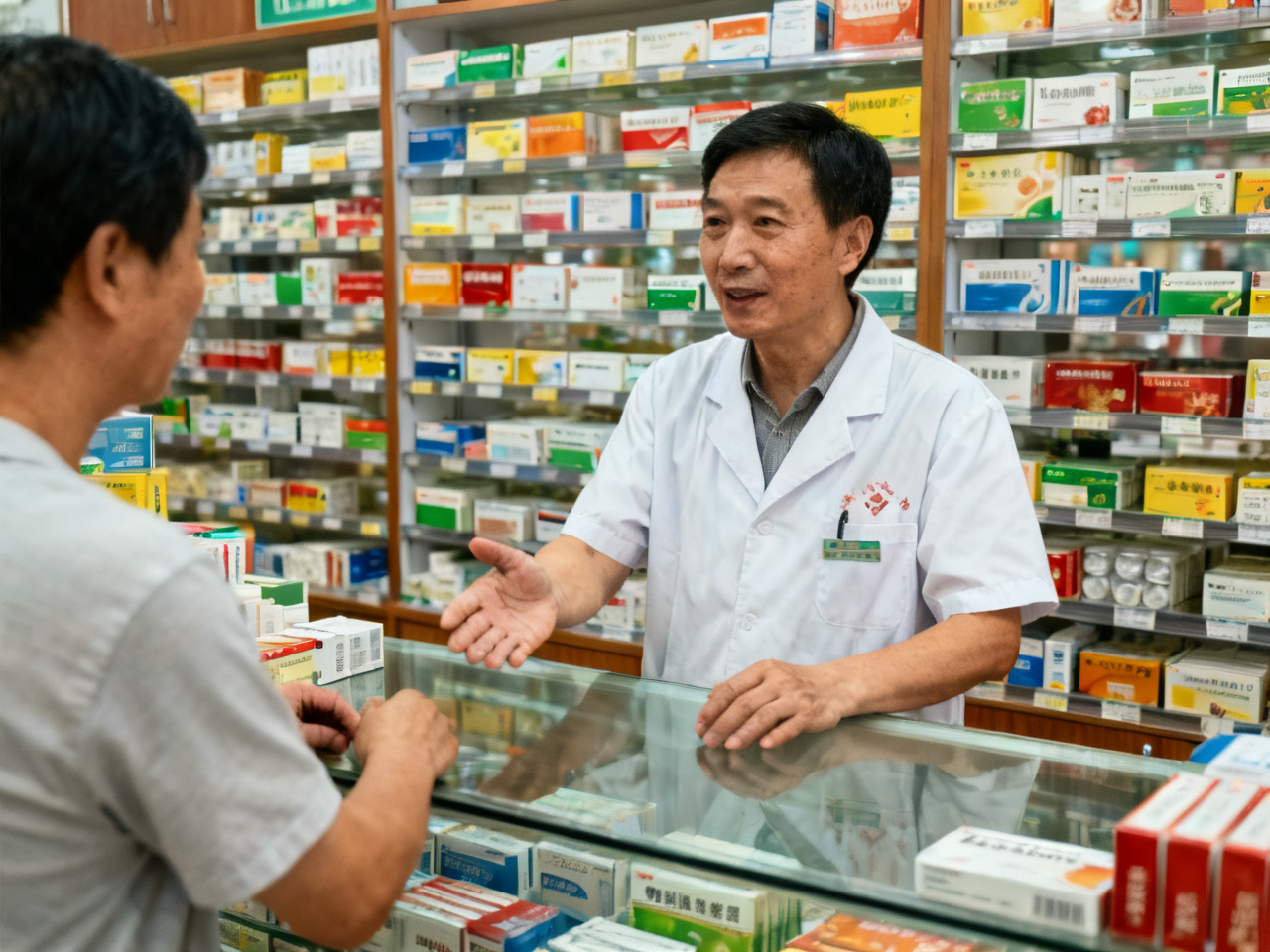
真正让我改观的是一次很小的感冒药经历。那天我喉咙有点痛,不算严重,但说话发干,晚上还有点轻微发热。我在街边看到一家社区药店,灯光很白,玻璃门上贴着常见药品和医保标志。我站了两秒才进去,开口也没有多复杂,只是先说自己喉咙疼、可能有点着凉。店员没有表现出任何不耐烦,反而先把语速放慢,问我是咳嗽多一点,还是吞咽时更明显;有没有发烧;要不要冲剂,还是更方便吃片剂。那一连串问题并不难,却让我立刻放松下来,因为我第一次感觉到,对方是在帮我把表达补完整,而不是等我一次性说对。
What changed my mind was a very small cold-medicine interaction. My throat hurt that day. It was not serious, but speaking felt dry, and I had a light fever by evening. I saw a neighborhood pharmacy on the street, lit by bright white light, with common medicine ads and medical-insurance signs on the glass door. I stood outside for two seconds before going in. I did not say anything complicated. I simply started by saying that my throat hurt and I might have caught a chill. The staff showed no impatience at all. Instead, they slowed their speaking and asked whether the coughing was stronger or whether swallowing hurt more, whether I had a fever, and whether I preferred granules or tablets. None of those questions was especially difficult, but they relaxed me immediately, because for the first time I felt that the other person was helping complete my meaning rather than waiting for me to get everything perfect in one try.

后来回想,那次建立信任的关键并不是药本身,而是交流方式。药店店员很擅长把一个模糊的不舒服,拆成几步能回答的小问题。你不需要一开始就像医生那样描述全部情况,只要先把最明显的感觉说出来,后面的信息常常会在对话里一点点长出来。对外国人来说,这是一个很重要的发现:在中国,很多看起来专业、容易紧张的场合,并不要求你完美开场,反而更看重你愿不愿意先给出第一个可用线索。这也让我更能理解自然求助为什么常常比标准表达更有效。
Looking back, the key thing that built trust was not the medicine itself but the style of communication. Pharmacy staff are often good at breaking a vague discomfort into several small answerable questions. You do not need to describe everything like a doctor from the first sentence. You only need to offer the clearest feeling first, and the rest of the information often grows out of the conversation step by step. For foreigners, that is an important discovery: in China, many settings that look specialized and intimidating do not actually require a perfect opening. They care more about whether you are willing to provide the first usable clue. That helped me understand even more clearly why natural help-seeking often works better than standard-perfect phrasing.
我后来也学会了一点小策略。进药店前,不用先把所有词都准备好,只要先想清楚三个核心:哪里不舒服,多久了,有没有发烧或咳嗽这种明显症状。剩下如果听不懂,可以让对方说慢一点,或者拿包装给你看。很多社区药店其实很习惯处理这种日常、半专业的交流,节奏反而比大医院轻得多。你会发现,一旦跨过第一次门槛,后面再去买创可贴、口罩、肠胃药,心里的阻力会小很多。因为你已经知道,这类店不是用来考你的,而是用来帮你把问题缩小到可处理的范围里。
I later learned a small strategy too. Before entering a pharmacy, there is no need to prepare every word in advance. It is enough to clarify three core things first: what feels wrong, how long it has been happening, and whether you have an obvious symptom like fever or coughing. If something is hard to understand, you can ask the staff to slow down or show you the packaging. Many neighborhood pharmacies are actually very used to this kind of everyday semi-specialized exchange, and the rhythm is much lighter than in a major hospital. Once you get over the first threshold, later visits for bandages, masks, or stomach medicine become much easier mentally. You realize the place is not there to test you. It is there to help reduce a problem to something manageable.
后来有一次我又去另一家药店,只是想买普通创可贴,却看到一个外国游客站在感冒药架前明显有点犹豫。店员走过去问了两句,对方先是卡壳,随后就慢慢把症状说出来。整个过程几乎和我第一次经历时一样:不是靠一句完美中文解决,而是靠双方一起把意思拼出来。那时我突然很确定,自己建立起来的信任并不是偶然运气,而是这种小店日常里真实存在的一种合作感。它不夸张,却非常稳。
Later, I went into another pharmacy just to buy ordinary bandages and noticed a foreign visitor hesitating in front of the cold-medicine shelves. A staff member walked over and asked a couple of questions. The visitor stumbled at first, then slowly described the symptoms. The whole process looked almost exactly like my own first experience. It was not solved by one perfect sentence in Chinese. It was solved by both sides building the meaning together. At that moment, I felt sure that the trust I had developed was not a lucky accident. It came from a real kind of cooperation that exists in these small everyday shops. It is not dramatic, but it is steady.
现在如果有人问我,在中国哪一种小型日常互动最容易意外地建立信任,我会想到药店。因为你带着一点不舒服进去,往往会带着一种“原来我可以开口”的轻松出来。那次小小的交流并没有改变什么宏大的事情,却实实在在地降低了我对很多陌生场景的戒备。对我来说,它教会我的不是药名,而是一个更有用的判断:在中国日常生活里,很多帮助其实离你比想象中更近,只要你愿意先把门推开。
If someone asks me now which kind of small everyday interaction in China can unexpectedly build trust, I think of pharmacies. You go in carrying a bit of discomfort, and often come out carrying the relief of realizing that you actually can ask. That tiny exchange did not change anything grand, but it genuinely lowered my guard toward many unfamiliar situations. What it taught me was not the names of medicines. It taught me a more useful judgment: in everyday life in China, help is often closer than you imagine, as long as you are willing to push the door open first.

- 共享单车不是难用,难的是先看停车区 | Shared Bikes Are Not Hard; the Hard Part Is Checking Parking Zones First
- 在景德镇看一只碗怎么出生:窑火、白粉和老师傅的手势 | Watching a Bowl Be Born in Jingdezhen: Kiln Fire, White Clay Dust, and a Master's Hands
- 我在公寓快递架前学会的第一课,是别把自己的方便放在别人通道中间 | The First Lesson I Learned at My Apartment Delivery Shelf Was Not to Put My Convenience in Other People’s Way
- 北京故宫与胡同深度游 | Beijing: Forbidden City & Hutong Deep Dive
- 雨后的绍兴黄酒馆里,老板一句话让我重新理解“慢” | In a Shaoxing Yellow Wine Tavern After Rain, One Sentence Changed How I Understood Slowness
- 酒店前台帮我确认订单时,我学会别只依赖邮箱 | At a Hotel Front Desk, I Learned Not to Rely Only on Email
- 我在杭州学会先看公交站牌再上车 | In Hangzhou I Learned to Read the Bus Stop Before Boarding
- 一次小小的药店交流,怎么让我开始信任在中国开口求助这件事 | How a Small Pharmacy Interaction Taught Me to Trust Asking for Help in China
- 低价团不是不能报,但合同要比宣传页更重要 | Cheap Tours Are Not Always Bad, but the Contract Matters More Than the Brochure
- 从广州吃到潮汕:一条被低估的美食公路 | Guangzhou to Chaoshan: An Underrated Foodie Road Trip
Comments (0)