
我在重庆磁器口边走边吃陈麻花:现金和扫码怎么备份 | Walking and Snacking in Ciqikou, Chongqing: Payment Backup Plan
我在重庆磁器口边走边吃陈麻花:现金和扫码怎么备份 | Walking and Snacking in Ciqikou, Chongqing: Payment Backup Plan
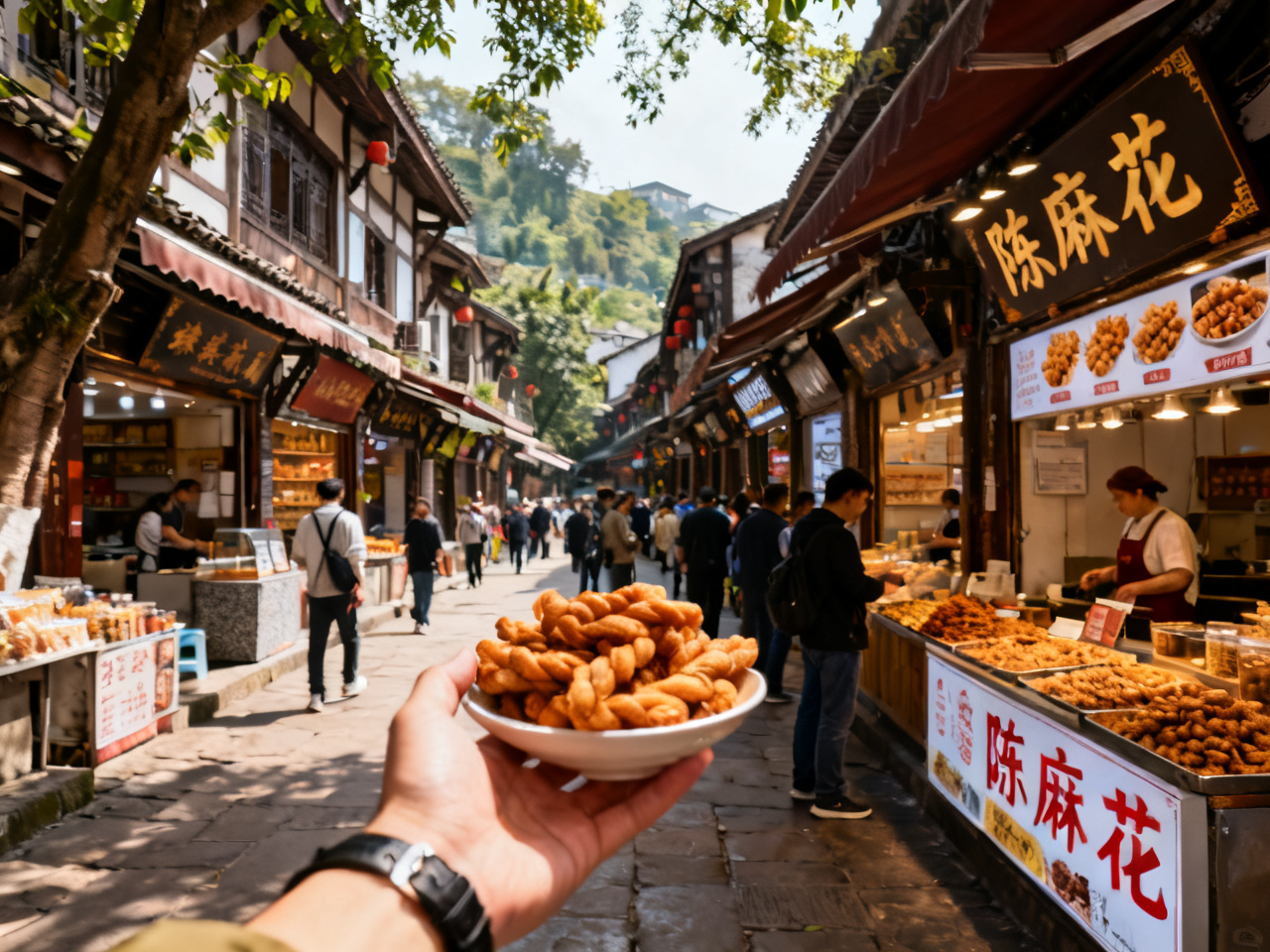
磁器口适合边走边吃,这句话很多人都知道,但真正到了现场,你会发现“边走边吃”其实是一种需要节奏感的动作,不只是嘴上咬着陈麻花,手里再拿杯冰粉那么简单。重庆的坡、台阶、转角、老街拐弯,再加上游客、拍照的人和突然停下来的队伍,会让你的身体始终处在一种微微调整重心的状态。这个时候,支付方式如果只有单线方案,你就容易被打断:刚在一家店买了陈麻花,手机还停在付款成功页面,往前走几步又看到辣卤、糍粑、现炸小酥肉,想再买时才发现网络慢了、电量掉得快了,或者手上已经拿满东西,不方便再解锁。磁器口不是那种你坐下来安静点一桌菜的地方,它更像一条不断发出诱惑的食物走廊,每十几米就有新的香味钻出来,支付策略必须跟这种移动中的消费场景匹配。
Many people know that Ciqikou is ideal for walking and snacking, but once you are actually there, you realize that “walking and snacking” is a physical rhythm, not merely eating Chen Mahua while holding a bowl of iced dessert. Chongqing’s slopes, steps, corners, and old-street turns, mixed with tourists, photo stops, and lines that suddenly halt, keep your body constantly adjusting its balance. In that setting, if your payment setup has only one path, you get interrupted easily. You buy Chen Mahua at one stall, your phone still shows the successful payment page, then a few steps later you see spicy braises, glutinous rice cakes, or freshly fried snacks. When you want to buy again, you discover that the network has slowed, the battery is dropping, or your hands are already full and unlocking the phone is awkward. Ciqikou is not the kind of place where you calmly sit down and order a whole table. It is more like a corridor of edible temptations, with new aromas appearing every few meters, and your payment plan has to fit that moving environment.
我那次在磁器口吃陈麻花,最先记住的不是甜辣麻香,而是手部管理。听起来很琐碎,但非常真实:一只手拿纸袋,一只手拿手机,零钱和纸巾夹在一起,背包又挂在肩侧,前面台阶有人停下来拍照,后面还有游客想超过你。这时如果店家说“扫码”,你得迅速判断自己是给对方扫,还是扫台上的码;如果手机亮度不够,太阳又正斜着照进街里,屏幕会反光;如果你刚吃了糍粑或者麻辣串,手指沾了油,指纹识别都可能变得迟钝。所以我现在在这种街区,基本采用“现金兜底、主码常开、副码待命”的办法。主码常开,意思是进入高密度购买区之前,就把最常用的支付 app 调出来,并调高亮度;副码待命,意思是另一套支付 app 已登录、能立刻切换;现金兜底,则是分开放,别和票据、门票、发票混在一起,最好放在最容易单手抽出的口袋里。
What I remember most from eating Chen Mahua in Ciqikou is not the sweet-spicy aroma first, but hand management. That sounds trivial, yet it is intensely real: one hand holds a paper bag, one hand holds the phone, tissues and loose cash get squeezed together, the backpack hangs from one shoulder, someone ahead stops on the steps to take photos, and tourists behind want to pass. Then the shop says “scan,” and you must instantly know whether they will scan your code or you should scan theirs. If the screen brightness is low and the sun strikes the lane at an angle, glare makes the display hard to read. If you just ate sticky rice cake or spicy skewers, oily fingers can even slow fingerprint recognition. So in streets like this, I now use a method of “cash as floor, main code always ready, backup code on standby.” Main code always ready means opening your most-used payment app before entering a dense buying area and turning up the brightness. Backup code on standby means the second payment app is already logged in and ready for an immediate switch. Cash as floor means separating bills from receipts and other paper, ideally in a pocket that can be accessed with one hand.
陈麻花本身也很适合拿来说明为什么要做支付备份。它往往不是你磁器口唯一想买的东西,却常常是你最容易“顺手就买一包”的东西。正因为单笔金额不大,人会放松警惕,觉得付款失败了再试一次也无所谓。但景区的购买冲动是连锁的:一旦第一笔不顺,后面每一笔你都会更烦躁。尤其是和朋友同行时,有人已经边走边吃起来了,你还停在店门口折腾手机,会迅速打断队伍节奏。我的建议是,把磁器口的支付心理想成爬坡:不是冲刺一次,而是保持呼吸。每做一笔小额支付,都尽量像复制一个稳定动作——停一秒、看金额、出示码、确认成功、收好手机再走。不要一边移动一边扫,不要在台阶中段突然停下核对交易记录,也不要把最后百分之五的电量赌在“再买这一家应该没问题”。很多旅行中的小狼狈,都是从这种自我安慰开始的。
Chen Mahua itself is a perfect example of why payment backups matter. It is usually not the only thing you want in Ciqikou, yet it is often the easiest item to buy “just casually.” Because the amount is small, people drop their guard and think that a failed payment can simply be retried. But impulse buying in a scenic street works like a chain: if the first transaction goes poorly, every purchase after that feels more irritating. This is especially obvious when traveling with friends. Someone else is already eating while walking, and you are still at the doorway wrestling with your phone, breaking the group rhythm at once. My suggestion is to treat payment in Ciqikou like climbing a slope: not a single sprint, but controlled breathing. For each small purchase, repeat one stable motion—pause, check the amount, show the code, confirm success, put the phone away, then move on. Do not scan while walking, do not stop halfway on steps to check transaction history, and do not gamble your last five percent of battery on “one more stall should be fine.” Many small travel embarrassments begin with exactly that kind of self-comforting thought.
如果同行的人里有长辈,现金的重要性会更高一点。不是因为扫码不行,而是因为磁器口有些店铺门面窄、排队短促,现金在某些瞬间反而更快,尤其是买低价零食、矿泉水、纸巾时。你不用每次都掏现金,但要让它真的可用:面额别太大,最好提前换出一些零钞;放的位置别太深,别需要先卸下背包才能拿到;更不要把所有现金都塞在一个拉链层里,和证件混在一起。对年轻人来说,更现实的备份仍然是双扫码体系,因为重庆这种游客集中的街区,大多数时候扫码依然最顺。只是别让“扫码最顺”变成“我只准备扫码”。我甚至建议在进磁器口前先做一个一分钟检查:电量够不够、移动网络是否稳定、常用支付 app 是否需要重新登录、银行卡有没有异常提醒。这个检查看似仪式感太强,但真到了拥挤热闹的街上,它能帮你省掉很多临时焦躁。
If older family members are with you, cash becomes slightly more important. Not because QR payment is weak, but because some Ciqikou shops are narrow and fast-moving, and in certain moments cash can actually be quicker—especially for inexpensive snacks, bottled water, or tissues. You do not need to pay cash every time, but it needs to be genuinely usable: avoid carrying only large bills, prepare some smaller notes, keep them somewhere accessible without removing your backpack, and do not bury all your cash in a single zip pocket together with your ID. For younger travelers, the more practical backup is still a two-app QR system, because in a tourist-heavy street in Chongqing, scanning remains the smoothest choice most of the time. The key is not letting “QR is best” turn into “I prepared only QR.” I even suggest a one-minute check before entering Ciqikou: Is the battery sufficient? Is mobile data stable? Do your payment apps require a fresh login? Has your bank sent any unusual alert? It may sound overly ceremonial, but on a crowded lively street, that tiny check can save a surprising amount of stress.
我喜欢磁器口,恰好就是因为它不整齐。陈麻花的香气会从一条巷口飘到另一条巷口,店铺的叫卖声、锅里热油的噼啪声、游客讨论辣不辣的声音都混在一起。你低头能看见石板被鞋底磨得发亮,抬头能看见吊脚檐边和密密的招牌。这样的街区不适合用“标准化逛法”对付,而应该用一种更接地气的机动策略:吃到哪儿算哪儿,看到喜欢的就下手,但支付不能掉链子。如果你想比较不同城市里这种“边走边买”的节奏感,可以顺着看武汉过早稳选,那篇更像早晨快节奏中的点单训练;也可以看看顺德一日食单旧稿,理解如何把零散美食串成不慌乱的线。至于电子支付本身的旧经验,数字支付旧经验里那些关于双平台、亮屏、低电量预警的提醒,放在磁器口尤其有用。说到底,陈麻花只是起点,真正重要的是你能不能在这条老街里,一边吃,一边走,一边把自己的节奏守住。
What I like about Ciqikou is precisely that it is not tidy. The aroma of Chen Mahua drifts from one alley to another, and the cries of vendors, the crackle of hot oil, and tourists debating how spicy something is all blend together. Looking down, you see stone paving polished bright by countless shoes; looking up, you see old eaves and dense signs. A street like this is not suited to a standardized touring method. It calls instead for a flexible, grounded strategy: buy what you like when you see it, keep moving, but never let payment fail at the wrong moment. If you want to compare this rhythm of “walking and buying” across cities, it helps to read 武汉过早稳选, which feels like training in fast breakfast ordering, or 顺德一日食单旧稿, which shows how to string scattered food stops into a line without panic. For digital payment itself, the reminders in 数字支付旧经验—dual platforms, screen brightness, and low-battery awareness—are especially useful in Ciqikou. In the end, Chen Mahua is only the starting point. What really matters is whether you can keep your own rhythm while eating, walking, and moving through this old street.

- 第一次在中国药店买感冒药,我学会先说症状再看品牌 | The First Time I Bought Cold Medicine in a Chinese Pharmacy, I Learned to Describe Symptoms Before Looking at Brands
- 东北三省冬季8日游 | 8-Day Northeast China Winter Tour
- 北京到西安:穿越历史之旅 | Beijing to Xi'an: A Journey Through History
- 走到一半就下城墙,是我在南京学会的第一个正确决定 | Getting Off the Wall Midway Was the First Right Decision I Learned in Nanjing
- 十二月的中国:北方玩雪,南方过冬 | December in China: Snow Up North, Warmth Down South
- 剪纸日记|在红纸与窗光之间学习耐心 | Paper-Cutting Diary | Learning Patience Between Red Paper and Window Light
- 青岛的啤酒不只在海边喝:一顿旧城晚饭把我留下来 | Qingdao Beer Took Me Beyond the Coast for an Old-City Dinner
- 福建土楼与海岸线7日游 | 7-Day Fujian Tulou & Coastline Tour
- 张家界的山还没出现以前,我先学会把手机变成一把可靠的小工具 | Before Zhangjiajie’s Peaks Even Appeared, I Learned to Turn My Phone into a Reliable Tool
- 传统服饰购买指南:网购与实体店推荐 | Where to Buy Traditional Chinese Clothing
Comments (0)