
围炉而坐,这顿饭没有终点 | The Meal That Never Ends: China's Hot Pot Ritual
围炉而坐,这顿饭没有终点 | The Meal That Never Ends: China's Hot Pot Ritual
有一种饭局,开始容易,结束难。
There is a kind of meal that's easy to start and hard to end.
重庆人管火锅叫"烫",动词,不是名词。"走,去烫一顿。"这个字精准得令人叫绝——食物在沸腾的红汤里翻滚,被烫熟,被烫入味,人也在热气和辣味里被烫得面红耳赤、汗流浃背。一顿火锅下来,人是松的,话是多的,关系是近的。
In Chongqing, hot pot is called tang — a verb, not a noun. "Let's go get scalded." The word is brilliantly precise: food tumbles in boiling red broth, scalded to doneness, scalded through with flavor, and the people around it get scalded too — faces flushed, sweat running, loosened up. After a hot pot meal, people are relaxed, talkative, closer to each other than before.
锅底:一切的起点
观察一桌火锅,先看锅底。重庆老火锅的锅底是牛油锅底,颜色深红,表面漂着一层厚厚的牛油和辣椒,花椒粒在里面若隐若现。这锅底不是调出来的,是炒出来的——牛油、豆瓣酱、干辣椒、花椒、老姜、大蒜,在大铁锅里用猛火翻炒四十分钟以上,香气才算出来。
To read a hot pot table, start with the broth. Chongqing's old-style hot pot uses a tallow base: deep red, with a thick layer of beef fat and chilies on the surface, Sichuan peppercorns half-hidden beneath. This broth isn't mixed — it's stir-fried. Beef tallow, doubanjiang, dried chilies, peppercorns, old ginger, garlic, all cooked in a large iron wok over high heat for forty minutes or more before the fragrance is right.
北方的涮羊肉是另一个极端:清汤,或者只放几片姜和葱段。锅底的克制,是为了让羊肉本身的鲜味说话。内蒙古的羊,草原上长大,肉质细嫩,没有膻味,在清汤里涮十秒,蘸一口麻酱,是另一种境界的满足。
Northern-style lamb hot pot sits at the opposite extreme: clear broth, or just a few slices of ginger and scallion. The restraint in the base exists to let the lamb speak for itself. Lamb raised on Inner Mongolian grasslands is tender and mild, with none of the gaminess people fear. Ten seconds in clear broth, a dip in sesame paste — a satisfaction of an entirely different register.
食材的民主
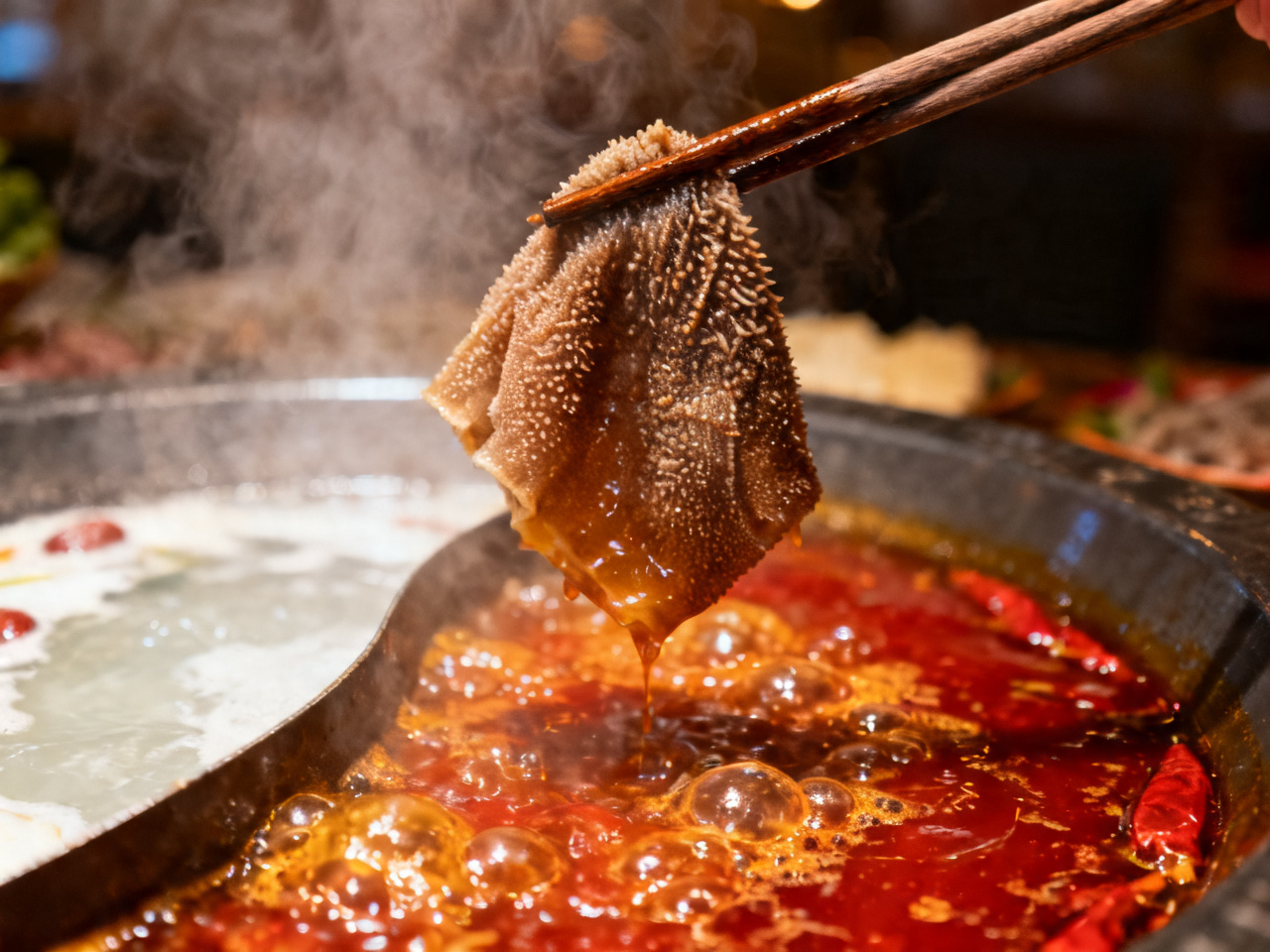
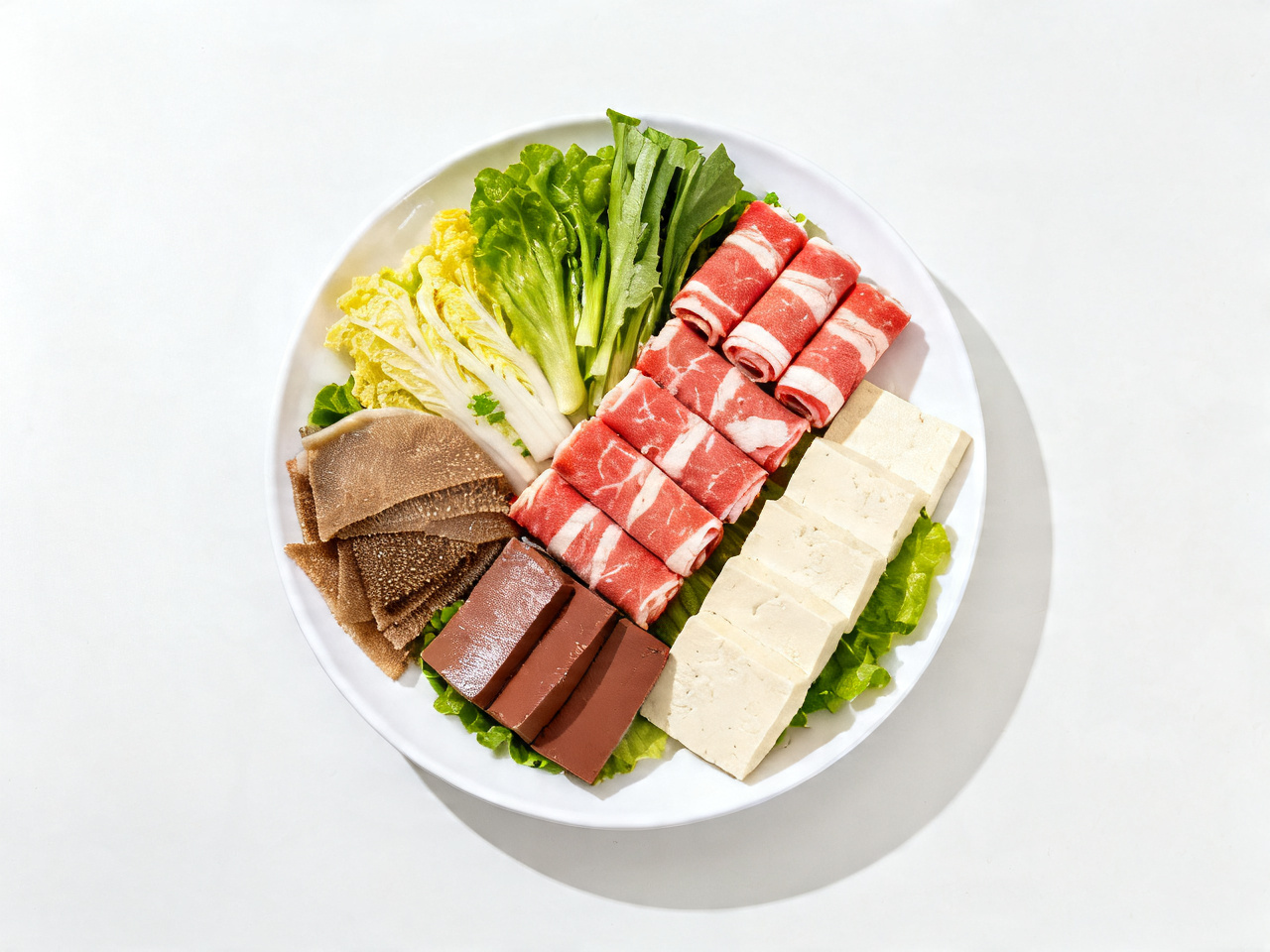
火锅有一种别的烹饪方式没有的民主性:所有食材在同一口锅里,没有谁比谁更高贵。毛肚和鸭血,在重庆火锅里的地位不亚于牛肉。毛肚要"七上八下"——在锅里烫七八次,每次两三秒,烫到刚好断生,口感脆而不韧。这个动作需要专注,稍微分心,毛肚就老了。
Hot pot has a democracy that other cooking methods lack: all ingredients share the same pot, and none is nobler than another. Tripe and duck blood hold a status in Chongqing hot pot no lower than beef. Tripe requires the "seven up, eight down" technique — dipped in and out of the broth seven or eight times, two to three seconds each, until just cooked through, crisp but not tough. The motion demands focus; one moment of distraction and the tripe turns rubbery.
周五晚上九点,重庆解放碑附近的一家老火锅店,室外坐了三十几桌,每桌都支着一口咕嘟咕嘟冒泡的锅。服务员穿梭其间,手里同时端着四五盘食材。邻桌一对情侣在争论要不要加鸭肠,另一桌的中年男人已经脱了外套,只穿背心,对着锅底大口喝汤。空气里全是辣椒和牛油的香气,混着啤酒和汗味,嘈杂而真实。
Friday night, nine o'clock, an old hot pot restaurant near Jiefangbei in Chongqing. Thirty-some tables fill the outdoor seating, each with a bubbling pot at its center. Servers weave between them carrying four or five plates at once. At the next table, a couple argues about whether to order duck intestines. At another, a middle-aged man has shed his jacket and sits in his undershirt, drinking broth straight from the ladle. The air is thick with chili and tallow, mixed with beer and sweat — noisy and completely real.
蘸料哲学
重庆人和成都人在蘸料问题上存在根本分歧。重庆传统是干碟:辣椒面、花椒面、芝麻,干的,用来蘸刚出锅的食材,滋滋一声,香气四溢。成都人偏爱油碟:香油打底,加蒜泥、葱花、香菜,有时候还要打一个生鸡蛋进去,用来降温,也用来中和辣味。
Chongqing and Chengdu people hold fundamentally different views on dipping sauce. Chongqing tradition favors the dry dish: ground chilies, ground Sichuan pepper, sesame — dry, for dipping food straight from the pot, a sizzle and a burst of fragrance. Chengdu people prefer the oil dish: sesame oil as a base, with minced garlic, scallion, cilantro, sometimes a raw egg cracked in to cool the food and temper the heat.
外地人初来乍到,往往不知道该怎么调蘸料。其实没有标准答案。火锅店老板娘见过太多人,她说:蘸料这件事,调到自己喜欢就行,别管别人怎么说。这句话,也适用于火锅之外的很多事情。
Visitors often don't know how to compose their dipping sauce. There's no standard answer. A hot pot restaurant owner who has seen thousands of customers put it simply: mix it until you like it, and don't worry about what anyone else says. That advice applies to a lot of things beyond hot pot.
火锅的社交方程式
火锅是中国饮食文化里社交属性最强的一种形式。它要求共享,要求等待,要求面对面。手机在火锅桌上的存活率极低——锅里的东西随时会熟,随时需要捞,注意力必须在桌上。这或许是火锅在社交媒体时代反而越来越流行的原因之一:它强制人们回到当下,回到彼此。
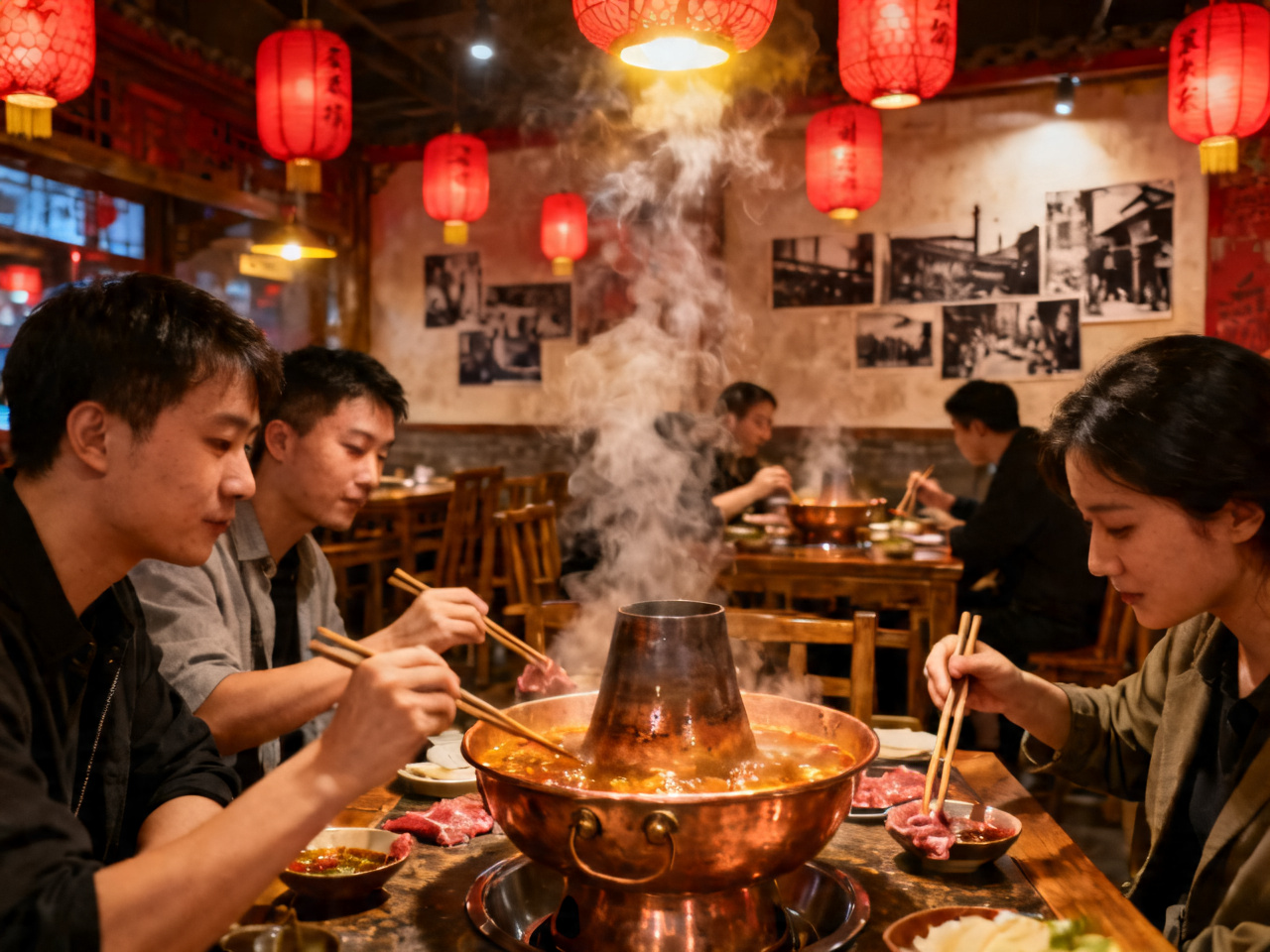
Hot pot is the most socially charged form of Chinese dining. It demands sharing, waiting, and face-to-face presence. Phones have a low survival rate at a hot pot table — things in the pot are always about to be done, always needing to be fished out, and attention must stay at the table. This may be part of why hot pot has grown more popular in the social media age, not less: it forces people back into the present moment, back toward each other.
一个人也可以吃火锅。成都有很多"一人食"火锅店,小锅,单人座,隔断设计,让独自用餐的人不会感到尴尬。但说实话,一个人吃火锅,总觉得少了点什么。那个"少了的东西",大概就是火锅真正的灵魂。
You can eat hot pot alone. Chengdu has many single-diner hot pot restaurants — small pots, solo seats, partitioned booths that spare solo diners any awkwardness. But honestly, eating hot pot alone always feels like something is missing. That missing thing is probably hot pot's actual soul.
冬天,窗外下着雨,屋里一口锅烧得正旺,对面坐着你想见的人。这种时候,时间是可以停下来的。
Winter. Rain outside the window. A pot boiling hard inside. Across the table, someone you wanted to see. At moments like this, time is allowed to stop.
延伸阅读 / Related Reads
- 中国八大菜系全览 | The 8 Great Cuisines of China
- 第一口就着了魔:一个外乡人在成都的麻辣沉沦 | Spellbound at First Bite: A Stranger's Descent into Chengdu's Heat
- 街头那碗热气,才是中国城市的真实体温 | Street Steam: The Real Pulse of Chinese Cities
- 花椒档案:一个植物学者眼中的四川味觉地图 | The Peppercorn Dossier: Sichuan's Flavor Map Through a Botanist's Eyes
- 华东五城10日经典环线 | 10-Day East China Five-City Loop
- 中国白酒与黄酒:送礼自饮怎么选 | Chinese Baijiu & Huangjiu: Gift & Tasting Guide
- 夏季避暑胜地:高原与海岛 | Summer Escapes: Plateaus & Islands
- 臭豆腐:闻着臭吃着香的街头传奇 | Stinky Tofu: The Street Snack That Smells Awful and Tastes Amazing
- 三月桃花源:寻访世外桃源 | March Peach Blossom: Finding Utopia in China
- 在绍兴,一张公交卡小票和一座小桥一起把我领进了城 | In Shaoxing, a Transit Receipt and a Small Bridge Led Me into the City Together
- 面子、关系与人情:读懂中国社会的三把钥匙 | Face, Guanxi & Renqing: Three Keys to Understanding Chinese Society
- 第一次进广州,最先扑到脸上的往往不是景点感,而是早餐摊那股热气 | When You First Enter Guangzhou, What Hits Your Face Is Often Not Landmark Energy but the Heat from Breakfast Stalls
- 在中国保持联网 | Staying Connected in China
- 热海蒸汽打湿车票后,我把腾冲行程缩短了 | Steam at Rehai Wet My Ticket and Made Me Shorten the Tengchong Plan
- 读懂中国历史 | Understanding Chinese History
Comments (0)