
泉州古城不适合一口气走完:我把海丝路线拆成几次停留 | Quanzhou Old City Is Not a One-Sitting Walk
泉州古城不适合一口气走完:我把海丝路线拆成几次停留 | Quanzhou Old City Is Not a One-Sitting Walk
泉州古城给我的第一个印象不是某一座著名建筑,而是街道之间那种不肯被一条直线概括的密度。巷口刚刚收窄,前面又露出一片开阔的天;骑楼的阴影还没有走完,墙缝里已经钻进带着咸味的风。我原本把海丝路线当成一张需要完成的清单,后来才发现,真正适合这里的不是冲刺,而是把脚步交给街区,让一次出门变成几次有间隔的抵达。
My first impression of Quanzhou Old City was not a single famous building, but a density that refused to fit into one straight line. A lane narrowed, then the sky opened again; before I had left the arcade’s shade, a salty breeze was already slipping through the wall. I had treated the Maritime Silk Road route as a checklist. Later I learned that this place rewards intervals, not a sprint: let the neighborhood set the pace and turn one outing into several arrivals.
我从较早的时候开始走,街面还没有完全热起来,清扫后的石板留下浅浅的湿痕。鞋底每一次落下都能听见不同的回声:靠墙处闷,门洞里空,转角处则被远处的车声托住。这样的街巷没有明显的“开始”和“结束”,只有一层层被打开的生活尺度。我先不急着找景点,只记住自己经过了什么颜色的门、哪一段屋檐把光截成了细条,以及哪条路让风忽然从侧面迎来。
I started early, when the streets had not fully warmed up and faint damp marks remained on the stone paving. Each step made a different echo: dull beside a wall, hollow under a doorway, carried by distant traffic around a corner. These lanes had no clear beginning or end, only layers of everyday scale. I did not hurry toward sights. I noticed colored doors, eaves that cut sunlight into thin strips, and the lanes where wind suddenly met me from the side.
古城的街巷常常让地图显得过于自信。屏幕上的两处标记看起来相距不远,真正走起来却要经过几次转身、几段高低不一的路面和不断变化的人流。我把手机放进口袋,偶尔才拿出来确认方向,免得眼睛一直贴在蓝色线路上,错过门楣、砖墙和街边树影。路线在纸面上可以很清楚,身体却会用步幅、呼吸和肩膀的松紧告诉我,它到底有多长。
The lanes often made my map look too confident. Two markers seemed close on the screen, yet reaching them meant several turns, uneven paving, and shifting crowds. I put my phone away and checked it only when necessary, so my eyes would not remain fixed on a blue line and miss lintels, brick walls, and tree shadows. A route may be clear on paper, but my stride, breathing, and relaxed or tense shoulders revealed its real length.
我先经过一座宗教建筑的外部。那时我没有急着进入,也没有把门口当成必须打卡的终点,只站在不妨碍出入的位置,看它怎样与周围住宅、店铺和巷道相处。屋顶的轮廓从电线之间显出来,墙面在晨光里并不均匀,有些地方亮,有些地方仍留着潮气。建筑的意义不只在它单独站立时的庄严,也在它被日常道路包围之后,怎样成为居民转弯时熟悉的参照。
I first passed a religious building from the outside. I did not rush in or treat its entrance as a required checkpoint. I stood where I would not obstruct anyone and watched how it met nearby homes, shops, and lanes. Its roofline appeared between wires, while the wall held both morning brightness and damp shade. Its meaning was not only in isolated grandeur, but also in the way it became a familiar turning point within ordinary neighborhood life.
我对宗教建筑的外部观察,慢慢从“看见什么”变成“保持什么距离”。我会退到街对面,让门前的人流先通过;会降低声音,不把别人的礼拜、停留或进出变成我的背景;也会留意自己是否占住了最佳拍摄位置。石材、木门、屋脊和装饰当然值得看,但更值得尊重的是这座建筑仍在使用,而不是只供游客观看。停留的时间因此不必很长,目光却可以更完整。
My outside observation of religious buildings gradually changed from asking what I could see to asking what distance I should keep. I stepped across the street for people to pass, lowered my voice, and avoided turning worshippers’ movements into scenery. I also noticed whether I was blocking the best viewpoint. Stone, timber doors, roof ridges, and decoration mattered, but so did the fact that the building remained in use rather than existing only for visitors. A short pause could still hold a complete gaze.
走出那片较安静的墙影后,街巷的声音重新叠起来。自行车铃声、推门声、远处交谈和路边施工的轻响彼此没有排练,却形成了古城自己的节拍。我没有试图给每一种声音命名,只让它们提醒我:这里不是一座布置好的露天展馆。每当我想加快速度,某个低矮的檐口、一道旧墙的补丁,或者一只在门边晒太阳的猫,都会把我的注意力拉回眼前。
After leaving the quieter shade of the walls, the sounds of the lanes layered together again. Bicycle bells, doors opening, distant conversations, and soft construction noise had not been rehearsed, yet they formed the old city’s rhythm. I did not try to label each sound. They reminded me that this was not a staged open-air museum. Whenever I sped up, a low eave, a patch on an old wall, or a cat resting by a doorway pulled my attention back to the present.
我把最初一段行走控制在自己还能从容回头的长度。这里的“从容”不是走得慢,而是走完一小片区域后,仍然知道刚才看见的建筑和巷口如何连在一起。我在一处不挡路的公共空间边缘坐下,喝了几口水,让脚踝从持续转弯的紧张里松开。休息点不需要有特别的名字,也不必成为攻略上的明星;只要能让我坐一会儿、观察人流而不妨碍别人,就足以让路线重新获得层次。
I kept the first walking stretch short enough that I could still turn around calmly. Calm did not mean moving slowly; it meant finishing one small area while remembering how the buildings and lane entrances connected. At the edge of a public space, away from the flow, I sat and drank water, letting my ankles release the tension of constant turns. A rest point needed no famous name. If I could sit, watch people, and stay out of the way, it gave the route another layer.
泉州的海并不总是直接出现在视线里,但海风会先抵达。它穿过街口时,带走一点室内的闷热,把衣角轻轻向后推;在两面高墙之间,它又变得细而有力,像一条看不见的巷子。我凭风判断自己正在接近更开阔的方向,却不把这种感觉当成精确导航。风会转,街也会转,只有把它当作身体收到的提示,而不是地图上的箭头,才不会因此走得过急。
The sea is not always visible in Quanzhou, but the sea breeze arrives first. At a junction it carried away a little indoor heat and pushed my shirt hem back; between tall walls it became narrow and firm, like an invisible lane. I used it as a clue that I was nearing a more open direction, not as precise navigation. Wind turns, and streets turn too. It helped only when I treated it as a bodily signal rather than a map arrow.
风吹过带有不同材质的街面时,感觉也不一样。开阔处的风把热量带走得快,狭巷里的风却夹着墙面和人群的温度,走几步就要重新适应。我开始留意遮阴的连续性:一小段树下的冷意之后,也许接着是反光强烈的水泥路;屋檐能够遮住头顶,却未必能挡住从侧面来的晒意。分段步行的好处,就在于我可以根据这些微小变化调整,而不是让身体被一张固定行程推着走。
The breeze felt different across different surfaces. In open spaces it removed heat quickly; in narrow lanes it carried the warmth of walls and people, forcing me to readjust every few steps. I began to notice whether shade continued: coolness beneath a tree might give way to glaring concrete, and an eave could cover my head without blocking side sunlight. The advantage of walking in sections was the freedom to respond to these small changes instead of being pushed by a fixed itinerary.
中午前,我又在另一座宗教建筑外停留。它的外观没有被我当作一张孤立的立面,而是和周围的店面招牌、居民楼窗户、路边停放的车辆一起看。某些装饰需要退后几步才看得完整,某些细节则只有在走近后才会显露。我不猜测看不清的年代,也不替建筑补上没有证据的故事,只把能确认的形状、光线和使用痕迹留在记忆里。克制并没有减少观看,反而让观看更诚实。
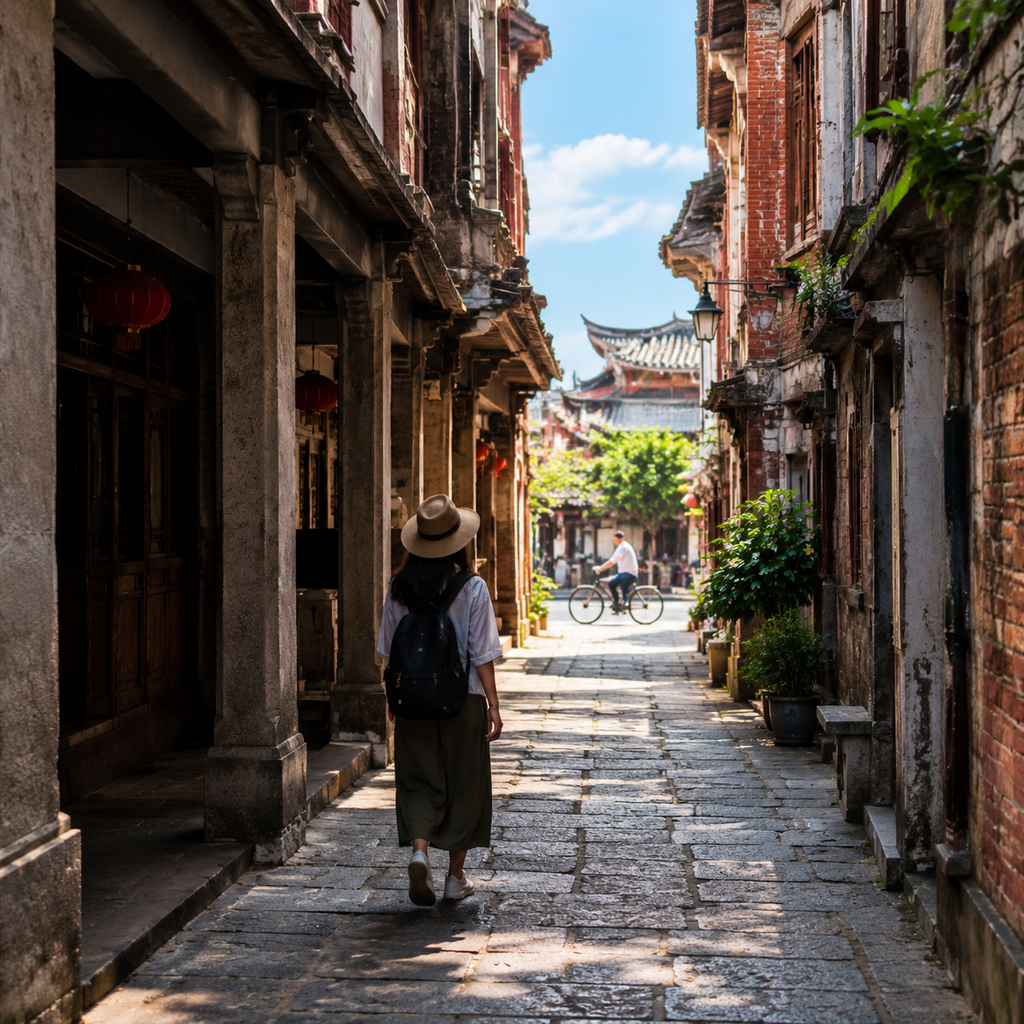
Before noon I paused outside another religious building. I did not isolate its façade from shop signs, apartment windows, or vehicles along the street. Some details appeared only after I stepped back; others emerged when I moved closer. I did not guess at an unclear date or invent a story without evidence. I kept the shapes, light, and marks of use that I could actually observe. Restraint did not diminish the view; it made the view more honest.
我原先以为,只要把几座建筑连起来,就能得到一条完整的海丝路线。实际走过之后,我觉得“完整”更像是几种尺度同时出现:宏大的交流想象、宗教建筑安静的外部轮廓、居民每天穿行的窄路,还有我自己在热气里变得越来越具体的脚步。路线不是把这些东西排成一列,而是允许它们互相打断。一次突然停下,往往比一次连续赶路更接近古城的真实结构。
I once thought that connecting several buildings would create a complete Maritime Silk Road route. After walking it, completeness seemed to involve several scales at once: the grand idea of exchange, quiet religious façades, narrow paths used every day, and my increasingly tangible steps in the heat. The route did not line them up; it allowed them to interrupt one another. An unexpected pause often came closer to the old city’s structure than uninterrupted progress.
我在一个有树荫的边缘位置吃了随身带着的简单食物,刻意没有把休息安排成一场需要评价的消费。背靠墙时,我可以看到人从不同方向经过,也能听见风把树叶吹得忽远忽近。休息让我重新整理相机里的照片,却没有马上删除那些看似普通的门洞和墙角。它们在当时没有成为高潮,但恰好记录了路线如何从一处建筑滑向另一处生活。
I ate something simple I had carried with me at the edge of a shaded area, deliberately avoiding a rest that required judging a purchase. With my back against a wall, I could see people arriving from different directions and hear the wind move the leaves closer and farther away. I reviewed my photographs but did not quickly delete ordinary doorways and corners. They were not dramatic moments, yet they recorded how the route slipped from one building into another life.
下午开始后,我明显感到步子没有早上那么轻。不是疼痛,也不是必须立刻停止的疲惫,而是一种注意力变窄的感觉:我开始只看前方几米,听见声音却懒得分辨,面对熟悉的屋檐也不再抬头。更危险的是,我仍然想按照原计划继续,好像完成最后几个标记就能证明今天没有浪费。这个念头让我停在路边,第一次认真承认,体力和注意力都已经下降。
As afternoon began, my steps were clearly less light than in the morning. It was not pain or an urgent need to stop, but a narrowing of attention: I watched only a few meters ahead, heard sounds without distinguishing them, and stopped looking up at familiar eaves. Worse, I still wanted to continue as planned, as if reaching the last markers would prove the day had not been wasted. I stopped beside the road and admitted that both energy and attention had fallen.
我拿出地图,却没有继续寻找最近的下一处建筑,而是把原本连贯的路线拆开。距离较远、需要反复穿行的部分先放下,已经走过的街区也不再回头补拍。我改为沿着相对熟悉的方向缓慢移动,找一个能够坐下的地方,之后直接离开古城核心,给下一次停留留出空间。这个决定看起来像是少完成了一截,实际上让我避免在疲惫中把街巷看成没有区别的背景。
I opened the map, but instead of searching for the next building, I broke the continuous route apart. I postponed the farther section that required repeated crossings and did not turn back to photograph what I had missed. I moved slowly toward a more familiar direction, found a place to sit, and then left the core area, saving the rest for another visit. It looked like abandoning part of the plan, but it kept exhaustion from turning every lane into the same background.
路线调整之后,街道的宽窄不再是需要克服的条件,而成了我可以选择的节奏。宽一点的路让我把肩膀放下来,窄一点的巷子则只走一小截,看到感兴趣的门面便停下,不再想着必须穿透它。海风在傍晚前又从某个拐角涌来,我没有追着风走,只顺着它带来的凉意把脚步放慢。身体一旦不再和计划争执,古城反而显出更多细节。
After changing the route, the width of the streets was no longer an obstacle to overcome but a rhythm I could choose. A broader road let my shoulders drop; in a narrow lane I walked only a short stretch and stopped at an interesting frontage instead of insisting on crossing it. Before evening, the sea breeze entered through a corner again. I did not chase it; I simply slowed with the coolness it brought. Once my body stopped arguing with the plan, more detail appeared.
我后来才理解,休息点并不是路线上的空白。坐下时,我看见一位居民把需要晾晒的东西往阴影里挪,也看见路口的人流在某个时间突然变薄。没有必要知道他们的姓名、职业或故事,观察到这些动作本身就足够让我意识到:古城首先是一个生活场所,其次才是我的旅行材料。好的停留不把别人变成风景,而是让我学会不去打扰风景里的生活。
I later understood that a rest point was not a blank in the route. While seated, I saw a resident move something to be dried into the shade and noticed the flow at the junction suddenly thin. I did not need names, occupations, or invented stories. These small actions reminded me that the old city was a living place before it was travel material. A good pause did not turn people into scenery; it taught me not to disturb the life within the scenery.
我把第二次行走留给另一片街区,只安排了几处相互靠近的观察点。出发前,我先看天气和自己的状态,再决定要不要把范围扩展。这样的准备听起来不如“从早走到晚”有气势,却让我有机会把同一面墙在不同光线下重新看一遍。走路不一定要不断更换目标,有时目标不变,变化的是我与它之间的距离、角度和耐心。
For my second walk, I chose another neighborhood and arranged only a few nearby observation points. Before leaving, I checked the weather and my own condition before deciding whether to widen the area. This sounded less heroic than walking from morning to night, but it let me see the same wall again under different light. Walking did not require constant new targets. Sometimes the target stayed still while distance, angle, and patience changed.
古城里的门常常半掩着,里面的暗处与外面的亮处交界清楚。我不会因为看见一线室内就伸头张望,只在公共道路上观察门框如何承接屋檐的重量,观察进出者如何自然地绕开门前的位置。建筑外部有一种边界感:它邀请你注意,却不允许你把注意变成占有。每次我意识到这一点,都会把相机放低一些,让眼睛先完成不带记录压力的观看。
Doors in the old city were often half closed, with a clear border between indoor darkness and outdoor brightness. I did not lean in when I glimpsed an interior. From the public path, I watched how doorframes carried the eaves and how people naturally moved around the entrance. Exteriors had a sense of boundary: they invited attention without granting possession. Whenever I remembered this, I lowered my camera and let my eyes look without the pressure to record.
我也留意不同街面留下的脚感。平整的石板让步子容易变快,细碎的铺装却会提醒我把重心放稳;路边临时铺开的材料改变了鞋底的声音,积水干后的暗色痕迹则提示刚刚过去的天气。它们不是景点介绍里最容易被写下的内容,却直接影响我怎样走。路线体验从来不只发生在视线里,脚底、膝盖和呼吸也在共同阅读这座城市。
I noticed how different surfaces felt underfoot. Smooth paving made my steps quicken, while small irregular stones asked me to steady my balance. Temporary materials changed the sound of my shoes, and dark marks left by dried water hinted at recent weather. These were not the easiest details to put in a sightseeing description, yet they shaped how I moved. A route is read not only by the eyes, but also by feet, knees, and breath.
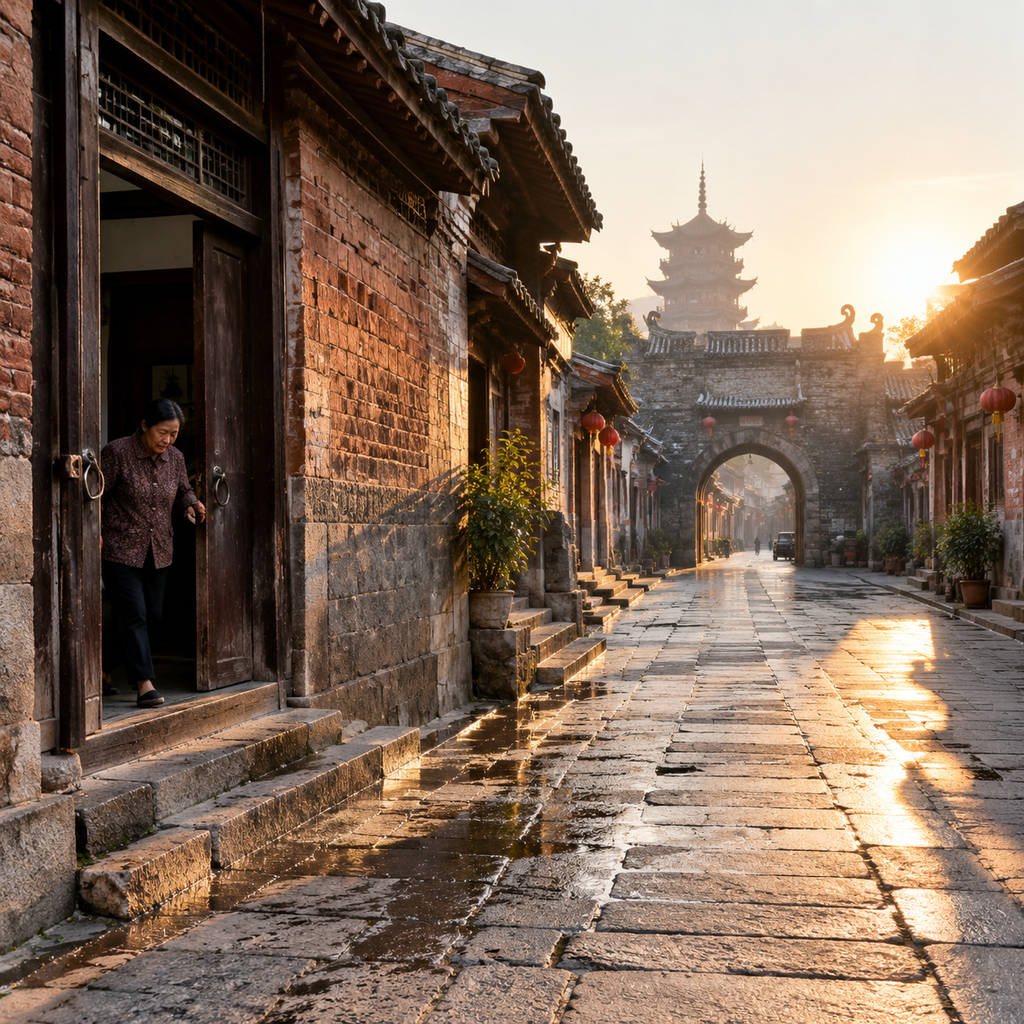
一处宗教建筑的墙面在傍晚显出比白天更柔和的颜色。我站在远处,不把它和某个宏大结论强行连接,只观察光线怎样沿着墙角移动,观察屋顶线条怎样被附近枝叶切断。外部观看也可以很有层次:先看它如何占据街景,再看它如何接受天气,最后看它如何在居民日常经过时保持安静。这样的安静不是空白,而是长期使用留下的秩序。
A religious building’s wall took on softer colors toward evening. I stood at a distance without forcing it into a grand conclusion, watching light travel along the corner and branches interrupt the roofline. Exterior observation could have layers: first how the building occupied the street, then how it received weather, and finally how it remained quiet as residents passed. This quiet was not emptiness, but an order shaped by long use.
海风到了傍晚变得更有方向感,似乎从街区外一直推向内侧。我知道这只是当时的感觉,于是没有把它写成固定规律,只把它当作提醒:如果风开始变凉,光线也在收束,今天就不必再加码。旅行中最容易被忽略的是结束的时机。一个地方不会因为我少走一条巷子就消失,反而会因为我在合适的时候离开,保留下一次再来的愿望。
By evening, the sea breeze seemed to have a clearer direction, pushing inward from beyond the neighborhood. I knew it was only a sensation of that moment, so I did not turn it into a rule. I treated it as a reminder: when the breeze cooled and the light narrowed, there was no need to add more. The right time to finish is easily ignored. A lane would not disappear because I skipped it; leaving well preserved my wish to return.
我把没有走完的部分记在纸上,不写“下次一定完成”,只记下几个开放的问题:某条巷子在早晨是否更安静?那座建筑的侧面从哪个角度看得更清楚?如果从另一处进入,是否可以少一次折返?问题比结论更适合保存路线的弹性。它们让我下一次出发时不是去补交作业,而是继续和古城建立一段尚未结束的对话。
I wrote the unfinished parts on paper, not promising to complete them next time. I noted open questions instead: Is one lane quieter in the morning? From which angle is the building’s side clearer? Would another entrance avoid a backtrack? Questions preserve a route’s flexibility better than conclusions. They meant my next visit would not be homework, but another turn in an unfinished conversation with the old city.
第三次停留时,我已经不再试图把海丝路线想成一条必须首尾相接的线。我从一段熟悉的街口进入,先看周围的屋檐和门洞,再决定往哪边走。前两次留下的记忆像一层不精确的底图,使我知道哪里适合慢下来,哪里容易被人流推着走,哪里需要把相机收起来。熟悉并没有减少惊喜,只减少了无谓的慌张。
On my third visit, I no longer imagined the Maritime Silk Road route as a line that had to connect from beginning to end. I entered through a familiar junction, studied the eaves and doorways, and then chose a direction. Memories from the earlier walks formed an imprecise base map: where to slow down, where crowds might carry me along, and where to put my camera away. Familiarity did not reduce surprise; it reduced needless haste.
这一次我特别注意建筑与街道的交接处。墙脚可能被车辆和行人的反复经过磨得发亮,门前的台阶则在阴影中保持着另一种颜色;屋面排水留下的痕迹,把雨天和晴天连接起来。观察这些边缘,比只看正面更能理解建筑如何参与生活。它没有被封在一块说明牌后面,而是承受风、雨、尘土和每天经过的脚步。
This time I paid special attention to where buildings met the street. Repeated passage by vehicles and pedestrians might polish a wall base, while steps in shade kept another color; marks from roof drainage connected rainy and clear days. These edges explained a building’s participation in life better than a frontal view alone. It was not sealed behind an information panel; it received wind, rain, dust, and daily footsteps.
我没有把所有看见的宗教符号都解释成同一种文化答案。泉州的街区本来就有交叠的层次,外部空间里常常同时出现不同年代、不同功能和不同审美留下的痕迹。对我来说,先把差异看清,比急着把它们归纳成一句漂亮的话更重要。旅行写作如果只追求顺滑的结论,就会抹平现场原本存在的复杂;而街巷的复杂,正是它值得反复走的原因。
I did not turn every religious symbol I saw into one cultural answer. Quanzhou’s neighborhoods contain overlapping layers, with marks from different periods, functions, and aesthetics appearing together outside. For me, seeing the differences clearly mattered more than quickly compressing them into a polished sentence. Travel writing that seeks only smooth conclusions erases the site’s complexity. That complexity is exactly why the lanes deserve repeated walks.
休息时,我把鞋带重新系紧,也检查肩带是否一直压在同一处。这样的动作很小,却能改变后面的步行感受。身体疲劳不一定以剧烈疼痛出现,有时只是脚步变得拖沓、眼睛开始跳过细节、对方向判断的耐心减少。我现在会把这些信号当作路线信息,而不是意志薄弱的证据。承认需要休息,不会让旅行变短;它让剩下的时间不被勉强消耗。
During a pause, I retied my shoes and checked whether my shoulder strap had been pressing the same spot. Small adjustments changed the next stretch. Fatigue did not always arrive as sharp pain; sometimes it was dragging steps, eyes skipping details, and less patience with orientation. I now treated these signals as route information, not evidence of weak will. Admitting the need for rest did not shorten the trip; it kept the remaining time from being wasted by force.
我在一段较长的街道上走得很慢,故意让前后两个路口之间留下完整的感受。墙上的颜色并不统一,修补处、褪色处和新近清洁过的地方彼此相邻;街边的植物把硬朗的线条软化,风一吹,影子便从门槛上撤开。慢下来之后,我发现“古城”不是一个静止的外观,而是一种持续被维护、被使用、被改变的状态。
I walked slowly along a longer street, allowing the stretch between two junctions to register as a whole. Wall colors were uneven, with repairs, fading, and recently cleaned areas beside one another. Plants softened hard lines, and wind pulled shadows away from thresholds. Slowing down showed me that “old city” was not a frozen appearance, but a condition continuously maintained, used, and changed.
我曾经担心把路线拆成几次,会损失那种一次完成后的满足感。后来我发现,拆分反而让每次出发都有明确的重心:一次看街巷的转折,一次看建筑如何站在生活中,一次感受风和光线,一次只走自己还有余力欣赏的部分。满足感不再来自数字上的完成,而来自我能说清楚这一次为什么停、下一次为什么再来。
I once worried that dividing the route into several visits would lose the satisfaction of finishing in one go. Instead, each outing gained a clear center: lane turns, buildings within daily life, wind and light, or a stretch I still had the energy to appreciate. Satisfaction no longer came from a completed number. It came from knowing why I stopped this time and why I would return.
街边的短暂阴影是我最常使用的休息信号。它可能来自一棵树、一个退进的门廊,或者相邻建筑形成的窄缝。停下前我会先看脚下和身后,确保自己不挡住通行,再让眼睛适应明暗变化。休息不只恢复体力,也帮助我重新看见色彩:热光里被忽略的青灰墙面、门框上的木纹、石板缝里细小的绿色,都会在这一刻重新出现。
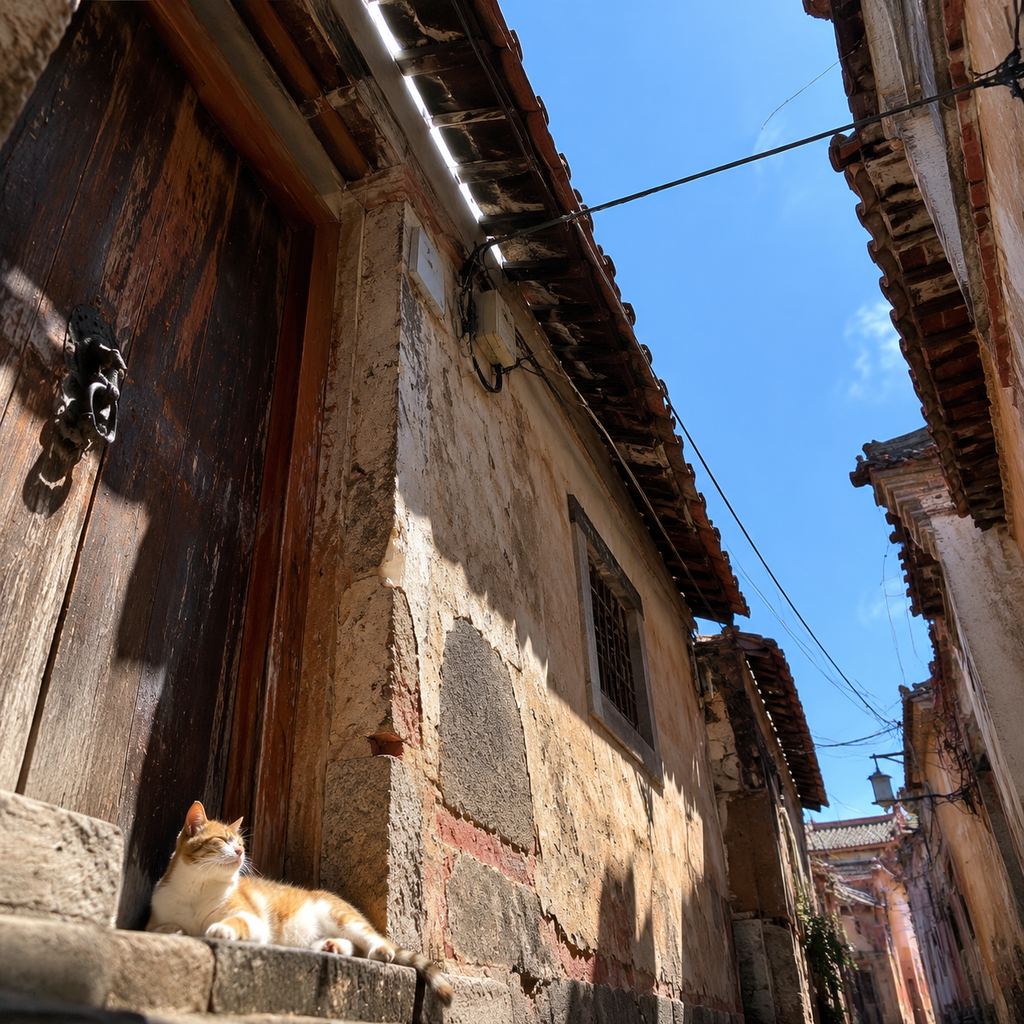
Brief patches of shade became my most useful resting signals. They might come from a tree, a recessed porch, or a narrow gap between buildings. Before stopping, I checked the ground and the space behind me so I would not block passage, then let my eyes adjust. Rest restored more than energy; it restored color: blue-gray walls, wood grain on a frame, and tiny green traces between paving stones returned to view.
我也学会不把海风浪漫化。风大的时候,纸张会被吹动,声音会变得凌乱,汗水蒸发得更快,却不代表我可以忽略补水和遮阳。旅行叙述很容易把风写成一种只负责制造情绪的力量,但身体接收到的风同时包含舒适与消耗。真正的海边气息并不只在诗意里,它也要求我更现实地安排步行长度、停留位置和离开时间。
I also learned not to romanticize the sea breeze. When it strengthened, papers moved, sounds became scattered, and sweat evaporated faster, but that did not make hydration or shade less important. Travel writing can make wind a force that serves only mood, yet the body receives both comfort and expenditure. The coastal feeling was not merely poetic; it required realistic decisions about walking length, where to pause, and when to leave.
有一回我在巷口再次看见早先经过的屋檐,竟然花了几秒才想起自己曾经从另一侧看过它。这个小小的错认让我意识到,疲劳会改变空间记忆。注意力下降时,熟悉的纹理会彼此重叠,方向感也不再可靠。于是我没有继续凭印象判断,而是停下来确认道路,再沿着较清楚的边界移动。比起逞强走错,承认暂时分不清更安全,也更诚实。
Once at a lane entrance I saw an eave I had passed earlier, yet it took seconds to recognize it from the other side. The small confusion showed me how fatigue changes spatial memory. When attention falls, familiar textures overlap and direction becomes unreliable. I stopped, confirmed the road, and moved along a clearer boundary. Admitting that I was temporarily unsure was safer and more honest than pretending and getting lost.
我把路线调整后的那段短行程看成一次重新学习。它没有大景观作为奖励,只有几处我已经知道会出现的转角和墙面。正因为目标不再新鲜,我才有机会注意到自己如何走路:是否习惯低头,是否把身体放在道路中央,是否在有人靠近时及时让开。古城教给我的不仅是看建筑,也包括怎样作为一个行走者进入别人的日常秩序。
I regarded the shortened route after my adjustment as another lesson. It offered no grand vista, only corners and walls I already knew. Because the targets were no longer new, I could notice how I walked: whether I looked down, occupied the center, or moved aside promptly when someone approached. The old city taught me not only to look at buildings, but also how to enter another person’s daily order as a walker.
几次停留之间,我没有刻意追求相同的天气。阴天让墙面的层次变得平缓,晴天则把屋檐和门洞的边界切得很清楚;风弱时,街道显得更像一条安静的通道,风起时,远处的海意会从看不见的方向加入其中。不同条件下走同一片区域,让我不再把一次印象当成全部。城市不是一次拍摄就能固定的对象。
Between visits, I did not try to arrange identical weather. Cloud softened the layers of walls, while sun cut the boundaries of eaves and doorways sharply. When wind was weak, streets felt like quiet passages; when it rose, an unseen sense of the sea entered from beyond. Walking the same area under different conditions kept one impression from becoming the whole truth. A city cannot be fixed by one photographic moment.
到了傍晚,街巷的光线开始收低,我把最后一处观察安排在不用赶路的位置。那是一面从远处就能辨认的墙,不需要我穿过拥挤的路口,也不需要为了角度站到别人通行的地方。我站了一会儿,看颜色慢慢失去锋利,听风声和脚步声混在一起。结束因此没有仪式感,却有一种稳稳落地的感觉:今天的路线已经够了。
Toward evening, the light lowered across the lanes, so I chose a final observation point that did not require rushing. It was a wall recognizable from a distance, needing neither a crowded crossing nor a place that blocked others for a better angle. I watched its colors lose their sharpness and heard wind merge with footsteps. The ending had no ceremony, but it landed firmly: today’s route was enough.
回看这几次步行,我最想保留的不是一张完整线路图,而是几个身体记得的片段:从窄巷走向开阔处时肩膀突然松开,站在宗教建筑外退后一步时视野变宽,风从墙角穿过时皮肤先于眼睛知道方向,以及注意力下降后我终于愿意改计划。它们把海丝路线从抽象的历史名词变成一条需要用身体理解的城市路径。
Looking back, I wanted to keep not a complete route map but several bodily memories: shoulders releasing when a narrow lane opened, a wider view after stepping back from a religious building, skin sensing direction before eyes when wind crossed a wall corner, and the moment I changed plans after attention declined. These turned the Maritime Silk Road from an abstract historical phrase into an urban path understood through the body.
泉州古城适合留下空白。空白不是不知道去哪儿,也不是懒得把资料查清,而是承认街道之间有些经验不能被提前填满。你可以知道建筑的大致位置,却不知道当天哪一束光会落在门槛上;可以知道海在城市外,却不知道风会在哪个拐角提醒你它存在。把时间留给未知,路线才不会只剩下抵达与离开两个动作。
Quanzhou Old City is well suited to blank spaces. A blank does not mean ignorance or a refusal to prepare; it means accepting that some experience cannot be filled in advance. You may know roughly where a building stands, but not which beam of light will fall across its threshold. You may know the sea lies beyond the city, but not which corner will let the breeze announce it. Time for uncertainty keeps a route from becoming only arrival and departure.
我现在会把每次出门分成“进入、观看、歇下、离开”几个自然阶段,却不把它们写成必须服从的步骤。进入时先让自己适应街巷,观看时不急着解释,歇下时检查身体和方向,离开时给下一次保留余地。这样安排并没有让旅行变得僵硬,反而让我有能力在现场改变顺序。真正可靠的路线,是允许现实参与设计的路线。
Now I naturally let each outing move through entering, looking, resting, and leaving, without turning them into mandatory steps. I let myself adjust on entry, avoided rushing to explain while looking, checked my body and direction during rest, and preserved room for a return when leaving. This did not make travel rigid; it gave reality a role in changing the order. A dependable route is one that lets the real place help design it.
我也不再把少走的路当成损失。少走一截,可能意味着多看一面墙的阴影,多听一会儿风从屋檐下经过,或者在注意力尚未完全耗尽前离开。旅行的价值不总是覆盖面积,有时是保留感受的清晰度。如果我为了完成而把后半段走成模糊的连续动作,那么所谓完整只存在于记录里,不存在于记忆里。
I no longer treat a skipped stretch as a loss. It may mean seeing one more wall in shadow, hearing wind beneath an eave, or leaving before attention is completely spent. Travel is not always about coverage; sometimes it is about preserving clarity. If I turn the latter half into a blurred sequence just to finish, completeness exists only in a record, not in memory.
有些街巷在地图上只是连接点,在脚下却会变成停留本身。门口的台阶给我一个自然的退让位置,树影让热度短暂降低,墙面之间的风使我抬起头,远处传来的声音则提醒我不要把视线锁在一个方向。路线的意义由这些连接点慢慢长出,而不是由终点宣布。古城最耐看的地方,往往藏在“去某处”的途中。
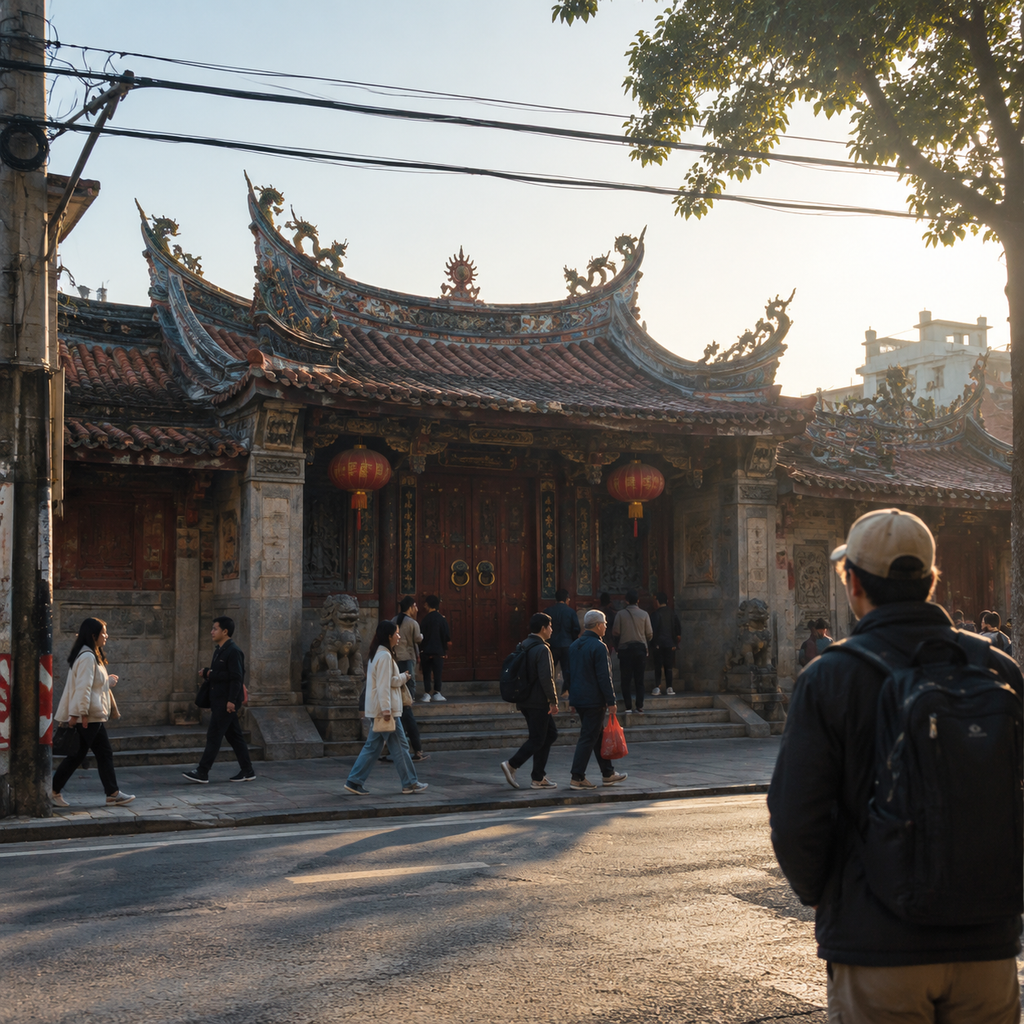
Some lanes were merely connectors on a map, yet under my feet they became destinations in themselves. A doorstep offered a natural place to step aside, tree shade briefly reduced the heat, wind between walls made me look up, and a distant sound reminded me not to lock my gaze in one direction. The route’s meaning grew from these connectors rather than being announced by a destination. The most lasting views often lay on the way to somewhere else.
当我再次经过那些建筑外部时,记忆里已经有了不同天气、不同光线和不同疲劳程度的参照。我没有因此觉得自己“拥有”了它们,反而更清楚自己只是短暂地经过。建筑比我的行程稳定得多,街道也不会因为我今天来或不来而停止变化。意识到这一点,让我在观察时更谦逊:我记录的是一次关系,而不是替一个地方下最终定义。
When I passed those exteriors again, memory held references from different weather, light, and levels of fatigue. I did not feel that I owned them; I understood more clearly that I had only passed briefly. Buildings were more stable than my itinerary, while streets continued changing whether I came or not. This made my observation humbler. I was recording one relationship, not issuing a final definition of a place.
最后一次离开古城时,海风没有特别强,街面也没有为我准备某种戏剧性的告别。我只是沿着较宽的道路走出去,偶尔回头,看屋脊在普通的城市背景里逐渐变小。那一刻我想起自己最初的冲动:想在一天里把所有重要的地方连起来。现在我更愿意承认,泉州的路线不是一根绳子,而是一组可以反复拾起、暂时放下、再从不同方向接续的线。
When I finally left the old city, the sea breeze was not especially strong and the streets offered no dramatic farewell. I simply followed a broader road outward, looking back now and then as rooflines grew smaller within the ordinary city. I remembered my first impulse to connect every important place in one day. Now I preferred to admit that Quanzhou’s route was not one rope, but a set of threads that could be picked up, set down, and continued from different directions.
如果要把这段经历留给下一次来泉州的人,我不会给出一条必须照走的顺序。我只会建议把海丝路线拆成几次停留:给街巷留一点迷路式的观察,给宗教建筑外部留足尊重的距离,给海风和阴影留出身体可以响应的时间,也给自己预留在体力或注意力下降时改变计划的权利。这样走,未必看得最多,却更可能真正看见。
If I were to leave this experience for a future visitor to Quanzhou, I would not prescribe a fixed order. I would suggest dividing the Maritime Silk Road route into several stays: leave room for wandering observation in the lanes, keep a respectful distance from religious exteriors, allow time for the body to respond to wind and shade, and reserve the right to change plans when energy or attention falls. You may see less, but you are more likely to truly see.
我后来在一条较窄的巷子里重新检查了当天拍下的照片。画面里的屋檐、墙脚和门框看上去比现场更整齐,可我记得真实行走时它们并不孤立:有人从旁边经过,风把衣角吹向一侧,脚下的铺装让步幅不断调整。照片能够保存形状,却保存不了我为让路而侧身的那一秒,也保存不了停下后重新听见远处声音的过程。因此我不再用照片数量判断观察是否充分,而是看自己是否记住了建筑与街道共同产生的动作。
Later, in a narrow lane, I reviewed the photographs from that day. Eaves, wall bases, and doorframes looked tidier in the images than they had on site, yet I remembered that they were never isolated while walking: someone passed beside me, wind pushed a shirt hem sideways, and the paving kept changing my stride. A photograph could preserve shapes, but not the second when I turned to make room or the process of hearing distant sounds again after stopping. I therefore stopped judging observation by the number of photographs and asked whether I remembered the shared movement of buildings and streets.
有一段路的坡度几乎感觉不到,直到我走了几分钟,才发现小腿一直在用力。这样的变化提醒我,古城步行的消耗不只来自距离,也来自频繁转弯、避让和寻找落脚处。于是我把下一处观察点放得更近,走到墙边时先松开手指,再让视线从地面慢慢移到屋顶。身体恢复一点之后,颜色和材质重新变得清楚,原本被疲劳遮住的细节才再次进入注意力。
One stretch was so gently sloped that I noticed the effort in my calves only after several minutes. It reminded me that walking in the old city draws energy not only from distance, but also from repeated turns, yielding space, and finding secure footing. I placed the next observation point closer, relaxed my fingers beside the wall, and moved my gaze gradually from the ground to the roof. Once my body recovered a little, colors and materials became clear again, and details hidden by fatigue returned to attention.
宗教建筑的外墙有时会让人自然放慢,但放慢并不等于长时间占据门前。我更愿意把观察分成几次短暂的停顿:先在远处确认轮廓,再在不妨碍通行的位置看材料和光影,最后离开一点,让整体重新回到街景中。这样既能看到建筑,也能看见它与邻近巷道之间的距离。外部空间的意义往往正藏在这种关系里,而不是只在最醒目的装饰上。
The exterior of a religious building sometimes made me slow naturally, but slowing did not mean occupying its entrance for a long time. I preferred several brief pauses: first confirming the outline from afar, then examining material and light where I did not obstruct passage, and finally stepping away so the whole building returned to its streetscape. This allowed me to see both the structure and its distance from nearby lanes. The meaning of an exterior space often rested in that relationship, not only in its most conspicuous decoration.
海风变弱以后,街巷并没有失去与海的联系。空气里的湿润感、墙面反光的变化和偶尔变远的声音,仍然使我意识到城市并非封闭的盒子。我不把这些感觉写成天气规律,只在行走时用它们提醒自己调整水分、衣物和速度。风强时需要稳住纸张,风弱时则更容易听见脚步和门轴的声响,两种状态都值得观察,只是身体的应对方式不同。
When the sea breeze weakened, the lanes did not lose their connection with the sea. Humidity in the air, changing reflections on walls, and sounds that sometimes seemed farther away still made the city feel open rather than sealed. I did not turn these impressions into weather rules; I used them as reminders to adjust hydration, clothing, and speed. Strong wind required me to secure loose paper, while weak wind made footsteps and door hinges easier to hear. Both conditions were worth observing, though the body responded differently.
到最后,我给每次分段步行留下的记录越来越简洁:走过哪几条街,在哪个阴影边缘停过,哪座建筑只从外部看了轮廓,什么时候发现注意力已经不够。简洁不是删掉体验,而是把它从夸张的叙述里放回可核对的细节中。下一次再走时,我可以依据这些细节重新选择方向,也能提前知道什么时候应该休息。泉州古城因此不需要被一次讲完,它会在一次次有限而清醒的步行里继续展开。
By the end, my notes from each walking section became simpler: which streets I crossed, where I paused at the edge of shade, which building I viewed only from outside, and when I noticed that attention was no longer enough. Simplicity did not remove experience; it returned it from exaggerated narrative to checkable details. On a later walk, I could choose a direction from those details and recognize earlier when rest was needed. Quanzhou Old City did not need to be told all at once. It could keep opening through limited, attentive walks.
还有一次,我从一段有连续骑楼的街面慢慢穿过。屋檐投下的阴影并不平均,有些地方宽得足以让两三个人错身,有些地方却被台阶、停放物和门前活动切得很碎。我没有把这些不整齐当成需要抱怨的障碍,而是把它们视为提醒:在真正的街区里,步行者需要不断让出空间。绕开一处门前,停在阴影边缘,等一辆车通过,这些短暂的停顿让路线拥有呼吸,而不是让人觉得被耽搁。
On another walk, I moved slowly along a street with continuous arcades. The shade was uneven: broad enough in places for people to pass each other, then broken by steps, parked objects, and activity at doorways. I did not treat this irregularity as an inconvenience. It reminded me that a walker in a real neighborhood must continually make room. Stepping around an entrance, waiting at the shade’s edge, and letting a vehicle pass gave the route breathing room rather than making it feel delayed.
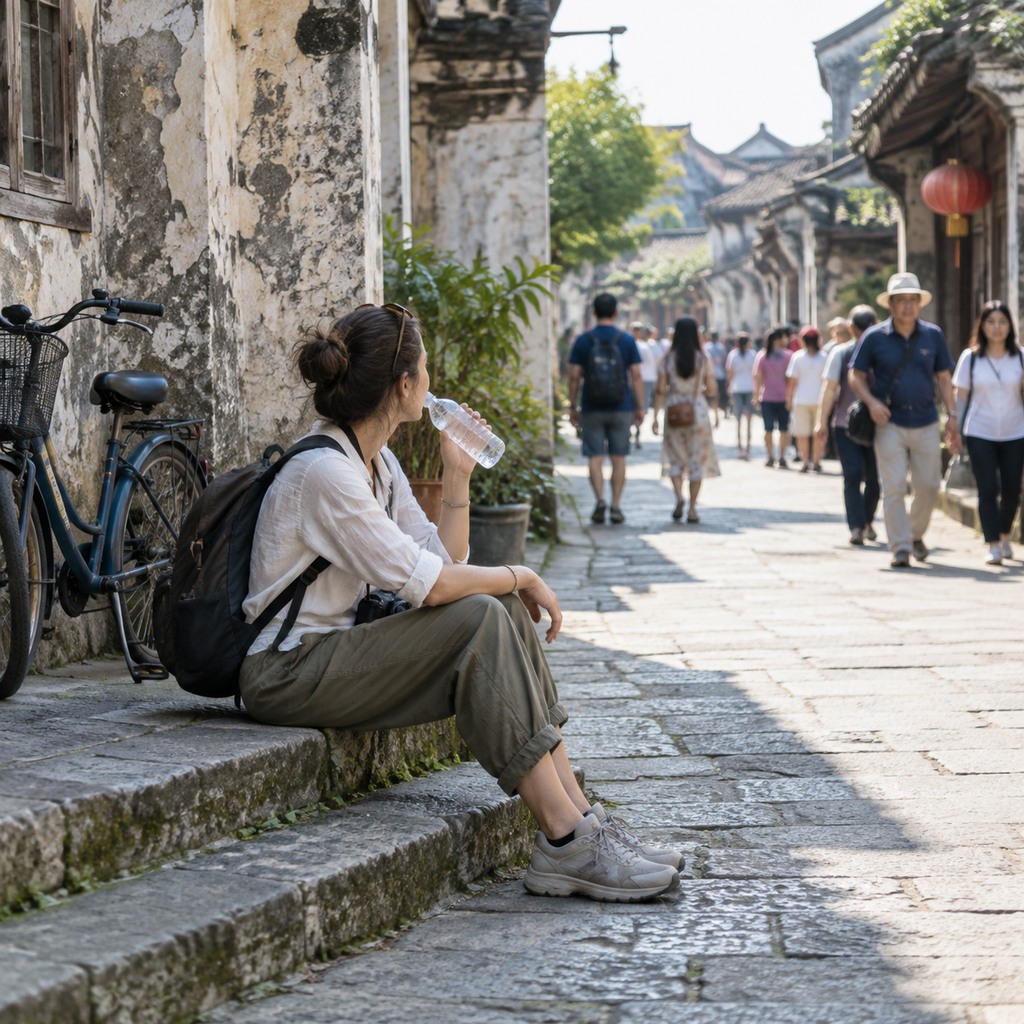
临近文末时,我又把一小段路线放在清晨走了一遍,专门比较同一处街角在安静时和人流增多后的差别。没有人群遮挡时,墙脚的连接方式、门槛的高度和屋檐的投影更容易看清;有人经过时,我的注意力则必须先放在避让上。两种状态都是真实的街道,只是观看的优先次序不同。行走者不能要求生活为自己暂停,能够在变化中调整视线,本身就是理解古城的一部分。
Near the end of my notes, I walked a short stretch again in the early morning to compare the same corner when it was quiet with its later, busier state. Without people passing, the wall base, threshold height, and eave shadow were easier to see; when the flow increased, my first responsibility was to make room. Both conditions belonged to the real street, but they changed the order of attention. A walker cannot ask daily life to pause. Adjusting one’s gaze as conditions change is itself part of understanding the old city.
那天我在一处不显眼的阴影边缘坐了很短时间,先让脚底从硬路面带来的紧绷感缓下来,再回想刚才经过的巷口。休息时没有继续翻看地图,因为方向已经足够清楚,反复确认反而会把身体重新拉回赶路状态。我听见风从建筑之间穿过,声音时强时弱;等呼吸恢复均匀,才起身沿着不拥挤的方向离开。休息点的作用不是延长行程,而是帮助我带着完整的感受结束这一段。
That day I sat briefly at the edge of an unremarkable patch of shade. I first let the tension from the hard pavement leave my feet, then recalled the lane entrances I had just passed. I did not keep studying the map, since the direction was clear enough and repeated checking would pull my body back into travel mode. I heard wind pass between buildings, sometimes stronger and sometimes softer. Once my breathing became even, I stood and left along the less crowded direction. A rest point did not extend the outing; it helped me end the stretch with a complete impression.
我现在更愿意把体力变化写进路线本身,而不是放在路线之外。早些时候,我可以同时观察屋顶、门窗和路面;走久以后,我只能选择其中一层,先保证脚步稳定,再挑一个最值得停下的细节。注意力缩小时,少看并不代表看得敷衍,前提是我知道自己为什么选择。把范围缩小,反而让我更认真地看一块受潮的砖、一处反复修补的墙角,或一道被侧光勾出的屋脊边缘。
I now prefer to include changes in energy within the route itself rather than treating them as something outside it. Earlier, I could observe roofs, doors, and paving at once; after walking longer, I had to choose one layer, steady my feet first, and then select one detail worth a pause. Seeing less did not mean seeing carelessly, as long as I understood the reason for the choice. Narrowing the field made me look more closely at a damp brick, a repeatedly repaired corner, or a roof edge picked out by side light.
这几次分段行走也让我明白,外部观察需要给建筑留出不被我解释的部分。墙面可以记录风雨,屋顶可以成为方向参照,门前的距离可以显示它如何进入街区生活,但我仍然不能凭几眼就替它补齐历史。对看不清的细节保持沉默,对正在使用的空间保持边界,和认真描述自己实际感受到的疲劳一样,都是可靠观看的条件。泉州古城的丰富不靠夸大来成立,街巷、海风、建筑和人的日常已经足够具体。
These walks also taught me that exterior observation must leave part of a building unexplained. A wall can record wind and rain, a roof can serve as an orientation point, and the distance before an entrance can show how it joins neighborhood life, but a few glances cannot complete its history. Remaining silent about unclear details, keeping boundaries around spaces in use, and describing fatigue honestly are all conditions for reliable looking. Quanzhou Old City does not need exaggeration to be rich; its lanes, sea breeze, buildings, and daily life are already concrete enough.
我开始用很简单的方式给每次步行留余量:不把所有感兴趣的方向都写进当天的计划,也不因为某个转角看起来很近就立刻加进去。余量并不是浪费,它使我可以在遇见一段安静街巷时放慢,也可以在阳光突然变强时提前找阴影。尤其是在古城这样细部密集的地方,路线越被塞满,观察越容易变成匆忙的确认;留出空隙,反而能让我分辨每条街不同的气味、声音和坡度。
I began to leave slack in each walk in a simple way: I did not add every interesting direction to the day, nor did I immediately include a corner just because it looked close. Slack was not waste. It let me slow down in a quiet lane or seek shade when the sunlight sharpened. In an old city dense with detail, the fuller a route becomes, the more observation turns into hurried confirmation. Space helped me distinguish each street’s sounds, slopes, and atmosphere.
宗教建筑附近尤其让我意识到,路线的速度会改变观看的伦理。赶路时,人容易把门口、台阶和墙面当作构图素材,甚至没有发现那里正是别人需要通行、停留或保持安静的地方。慢下来以后,我会先确认自己的站位,再看建筑与道路的关系;如果周围显得繁忙,我宁可放弃某个角度,也不会停在不合适的位置。外部观察的价值,不在于收集得多,而在于知道何时应该把视线和脚步一起收回。
Near religious buildings, I became especially aware that walking speed changes the ethics of looking. When rushing, it is easy to treat entrances, steps, and walls as compositional material and miss that people need those places for passage, pause, or quiet. Slowing down, I checked my position before studying the building’s relation to the road. If the surroundings felt busy, I gave up an angle rather than standing badly. The value of exterior observation lies not in collecting more, but in knowing when to withdraw both gaze and feet.
有时我会沿着一面长墙走,而不急于寻找它背后是什么。墙面上不同的修补、雨水留下的线条、贴近地面的磨损,都让我想到时间并不只存在于说明文字中。它也在材料的变化里,在每一次被擦拭、被触碰、被风吹干之后留下的痕迹里。这样的观察不需要把细节夸大成传奇;我只需要承认,自己看见的是长期日常的一小部分,而这一小部分已经足够丰富。
At times I walked beside a long wall without hurrying to discover what lay behind it. Different repairs, rain traces, and wear near the ground suggested that time does not exist only in explanatory text. It also appears in material change, in marks left after wiping, touch, and drying wind. This kind of observation does not need to inflate details into legend. I only had to admit that I was seeing a small portion of long daily life, and that portion was already rich.
海风让我重新理解街巷的开口。一个路口并不只是把两条路接在一起,它也决定空气如何进来、声音怎样被带远、人在热的时候有没有机会缓一缓。遇到风时,我有时会停几秒,不是为了等待某种景观,而是让身体确认温度的变化。这样做看似没有效率,却能避免把所有感受压缩成照片和坐标。风过去以后,街道还是那条街道,但我的步伐往往更稳。
The sea breeze helped me understand openings in the lanes. A junction does more than connect two roads: it determines how air enters, how sound travels away, and whether someone in the heat can ease their pace. When wind arrived, I sometimes stopped for a few seconds, not to wait for a view but to let my body register the temperature change. It seemed inefficient, yet it kept experience from being compressed into photos and coordinates. After the wind passed, the street remained the same, but my steps were steadier.
我没有把每次休息都安排在同一类地方。有时是公共空间的边缘,有时是能短暂停留又不影响行人的阴影处,有时则干脆提前结束,到更适合恢复精神的地方坐下。重要的不是找到一个完美休息点,而是及时承认自己需要停。尤其在注意力开始飘散时,继续走下去未必能增加收获,反而可能让我忽略脚下、误读方向,或对周围的人失去耐心。停下来,是为了把耐心带回路上。
I did not use the same kind of place for every rest. Sometimes it was the edge of a public space, sometimes a shaded spot where I could pause without affecting pedestrians, and sometimes it meant ending early and sitting somewhere better suited to recovery. The point was not finding a perfect rest point, but admitting the need to stop in time. When attention began to drift, continuing did not necessarily add anything; it could make me miss my footing, misread direction, or lose patience with others. I paused to bring patience back to the route.
把路线分段以后,我对“错过”的感觉也变了。错过不再只是没有抵达某个标记,更可能是今天的光线不适合、脚步不适合,或者我还没有准备好认真看那一片区域。把它留到以后,并不意味着逃避;恰恰是承认地方比我的时间表更大。下一次从新的方向接近时,原本没走的路也许会变成最自然的开场,而不是上一回留下的缺口。
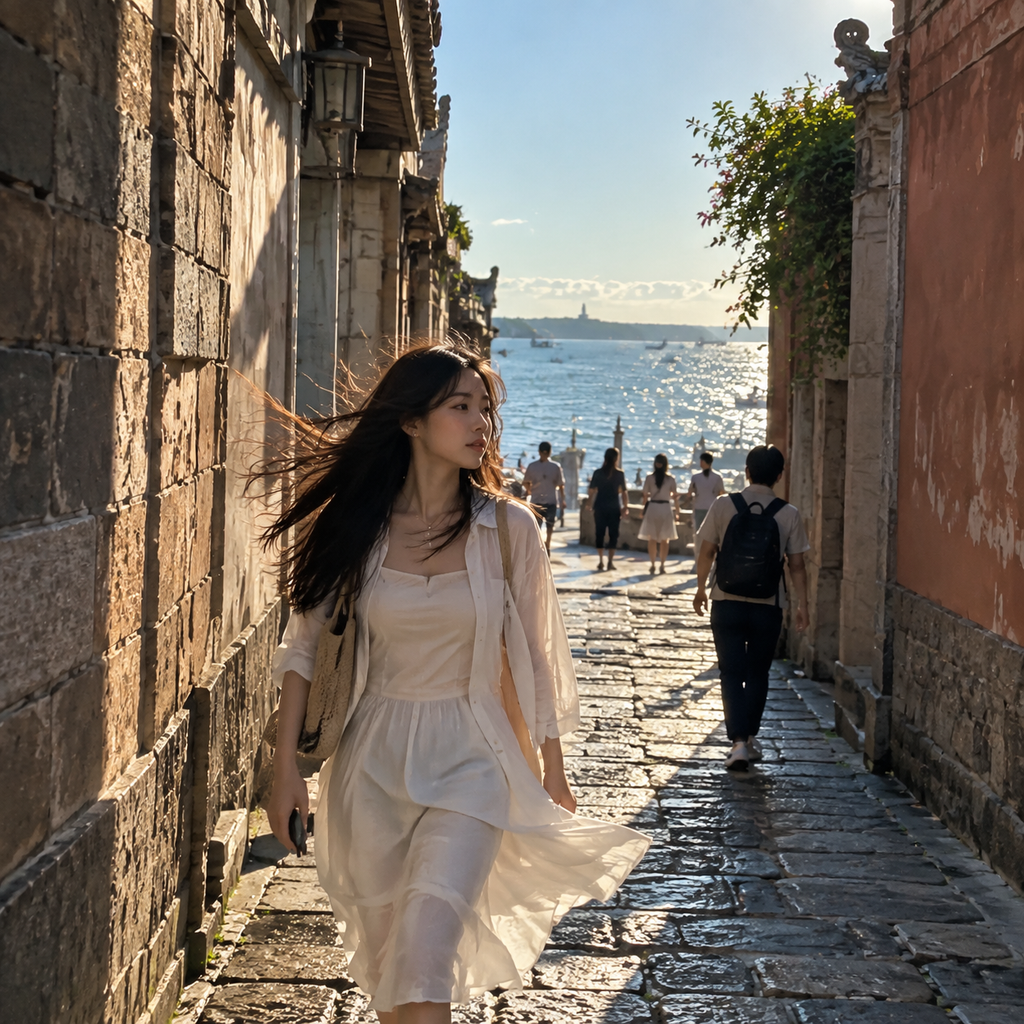
After dividing the route, my sense of missing out changed. Missing something no longer meant only failing to reach a marker. It could mean that the day’s light, my steps, or my attention were not right for an area yet. Leaving it for later was not avoidance; it admitted that the place was larger than my timetable. Approaching from another direction on a future visit could turn the unwalked road into the most natural beginning, not a gap left behind.
泉州古城最终留给我的,是一种不必急于完成的步行观。每一次停留都有自己的边界,每一次离开都不是结束,而是把尚未看清的部分交还给未来。街巷会继续承受脚步,墙面会继续接受光线,海风会从不同方向进入,而我只需要在下一次抵达时重新调整呼吸。走不完并不可惜,走得清楚、走得尊重,才是这条路线最值得带走的部分。
Quanzhou Old City left me with a way of walking that did not need completion. Each stay had its own boundary, and each departure returned what I had not understood to the future. Lanes would continue receiving footsteps, walls would continue receiving light, and sea wind would enter from changing directions. On my next arrival, I would only need to adjust my breathing again. Not finishing was no failure; walking clearly and respectfully was what mattered most.
后来我又把一段很短的街巷放进一个单独的下午。那天并没有安排新的目标,我只是从熟悉的路口往前走,经过几处已经看过的门洞,再在一段不太拥挤的屋檐下停住。没有新鲜感催着我赶路,反而能听见门轴轻响、鞋底擦过地面的细声,以及风从相邻院墙上方掠过时突然变薄的声音。短路线因此不显得单调,它把注意力从“下一处在哪里”转回“这一处正在发生什么”。
Later, I set aside a very short stretch of lanes for a single afternoon. I had no new destination that day. I simply moved forward from a familiar junction, passed several doorways I had already seen, and stopped beneath an eave where the flow was not too busy. Without novelty pushing me onward, I could hear a hinge, the faint scrape of shoes, and the breeze thinning as it slipped above a neighboring courtyard wall. The short route was not dull; it shifted my attention from “where is the next place?” to “what is happening here now?”
这一次我更在意街道的交接面:住宅门口和公共道路之间有没有留下让人自然错身的宽度,店铺外沿的物件是否把通行线压窄,转角处的人是否需要先探身确认来向。这样的观察没有壮观的画面,却决定了我能不能舒服地走下去。我把相机背带往里收,遇到迎面而来的人就靠边,必要时干脆停住。步行者的礼貌不是额外加上的规则,而是古城空间能够继续运转的条件。
This time I paid closer attention to the seams between street spaces: whether a doorway left enough room for people to pass naturally, whether objects outside a shop narrowed the walking line, and whether someone at a corner had to lean out to check approaching traffic. None of this made a dramatic picture, yet it determined whether I could keep walking comfortably. I pulled my camera strap inward, moved aside for people coming toward me, and stopped altogether when needed. A walker’s courtesy was not an optional extra; it was part of what kept the old city functioning.
我还发现,休息点会改变我对下一段距离的判断。坐下之前,一条巷子看起来只是地图上几分钟的延伸;喝水、放松脚趾、让眼睛从强光里缓过来之后,同一条巷子会显出更多需要留意的地方:地面是否突然变滑,墙根有没有被遮挡的高差,前方的阴影能不能连续一段。休息不是把路线暂停,而是把粗略估计换成更接近身体实际状况的判断。重新站起来时,我不一定更有力,却通常更清醒。
I also found that a rest point changed how I judged the distance ahead. Before sitting down, a lane looked like a few more minutes on the map. After drinking water, relaxing my toes, and letting my eyes recover from glare, the same lane revealed more to consider: whether the ground became slippery, whether a hidden change in level lay near the wall, and whether shade continued far enough ahead. Rest did not pause the route; it replaced a rough estimate with one closer to my body’s actual condition. When I stood again, I was not always stronger, but I was usually clearer.
宗教建筑的外部也值得在这种清醒状态下再看一遍。远看时,我先辨认它在街区中的位置:是被连续的房屋夹在中间,还是在某个开口处获得一小片天空;近看时,再看墙体与门槛怎样承受潮气、尘土和反复经过的脚步。我不把看不懂的装饰强行解释,也不把偶然看到的活动写成普遍规律。对外部的耐心观察,给我的不是一套答案,而是知道哪些地方应该停留,哪些地方只适合安静经过。
Religious exteriors were also worth seeing again in this clearer state. From a distance, I first noticed their position in the neighborhood: whether they were enclosed by continuous houses or received a small patch of sky at an opening. Up close, I looked at how walls and thresholds met dampness, dust, and repeated footsteps. I did not force an explanation onto decorations I could not understand, nor turn an activity I happened to see into a general rule. Patient observation gave me not a fixed set of answers, but a sense of where to pause and where simply to pass quietly.
海风有时让人误以为前方一定更开阔,其实它也可能只是穿过两栋建筑形成的短暂气流。我在一次转弯后跟着凉意多走了几步,发现前面仍是窄巷,风却已经从另一面折回。这个小小的落差提醒我,不要把舒服的体感马上变成路线命令。风适合帮助我调整呼吸和速度,不适合替我决定方向。方向仍要靠路口、周围标志和必要的地图确认,身体的感觉则负责告诉我什么时候该缓一缓。
The sea breeze sometimes made me assume that a wider space must be ahead, but it could just as easily be a brief current passing between two buildings. After one turn, I followed the coolness for a few extra steps and found another narrow lane ahead; the air had already bent away. That small mismatch reminded me not to turn a pleasant sensation into an instruction. Wind could help me adjust breathing and speed, but it could not choose my direction. Junctions, visible surroundings, and an occasional map check still did that, while my body told me when to ease off.
分段走的另一层好处,是每一次重新进入都能看见自己的变化。第一次来时,我把街面当成需要迅速穿越的连接;第二次来时,我开始注意人流与阴影;再后来,我会在注意力变窄之前主动结束。体力变化不再只是“累”或“不累”两个开关,而是一条渐渐变暗的刻度线。肩膀变紧、脚步变重、抬头次数减少、对声音失去分辨力,这些信号一旦同时出现,我就知道该把剩余路线交给下一次,而不是用意志把它拖成一段模糊的路。
Another benefit of walking in sections was that each re-entry showed me how I had changed. On the first visit, I treated the streets as connections to cross quickly. On the second, I noticed crowds and shade. Later, I learned to finish before my attention narrowed. Physical change was no longer an on-or-off switch called “tired” or “not tired,” but a scale that gradually dimmed. Tighter shoulders, heavier steps, fewer upward glances, and less ability to separate sounds were signals. When they appeared together, I knew to give the remaining route to another visit instead of dragging it into a blurry passage through willpower.
离开时我也会给自己留一个回看的机会,但不为了证明已经走了多远。站在较宽的道路边,我看见窄巷里的光被屋檐截成几块,听见里面的声音渐渐被车辆声盖住;再往前,风变得开阔,皮肤上的凉意不再贴着墙走。这个变化让我知道自己正在离开古城的细部,而不是把今天的经验全部封存。还有一些门洞、侧墙和转角没有被我看见,正好让路线保持开放。
When leaving, I also gave myself a chance to look back, not to prove how far I had walked. From the edge of a broader road, I watched the lane’s light break into pieces beneath the eaves and heard its sounds gradually covered by traffic. Farther on, the breeze opened out, and the coolness on my skin no longer traveled along a wall. The change told me I was leaving the old city’s close detail, not sealing away the whole experience. Doorways, side walls, and corners remained unseen, which was exactly what kept the route open.
所以我现在更愿意把泉州古城的海丝路线理解成一组可以呼吸的片段:一段街巷之后接一段停坐,一次建筑外部观察之后接一段不带相机的行走,风变凉时缩短距离,注意力变薄时提前离开。这样的安排并不削弱历史感,反而让历史不再悬在远处。它落到墙面承受的雨痕、门口必须让开的半步、脚底辨认出的路面变化,以及我愿意在还看得清楚时停下来的决定里。
That is why I now understand Quanzhou Old City’s Maritime Silk Road route as a group of breathable fragments: a stretch of lanes followed by a seated pause, an exterior observation followed by a camera-free walk, a shorter distance when the breeze turns cool, and an earlier departure when attention thins. This does not weaken the sense of history. It brings history down from a distant idea into rain marks on walls, the half-step needed to make room at a doorway, changes recognized underfoot, and the decision to stop while I could still see clearly.
- 昆明下雨的晚上,我在菌子火锅店学会了什么叫“鲜到发亮” | On a Rainy Night in Kunming, Mushroom Hot Pot Taught Me What Bright Freshness Means
- 八月海滨全攻略:中国最值得去的海滩 | August Beach Guide: China's Best Coastal Destinations
- 早上七点,广州人已经喝了两轮茶 | Morning Tea in Guangzhou: A Ritual Before the Rest of China Wakes Up
- 青岛海岸三站法:栈桥、八大关和崂山怎么排更顺 | Qingdao in Three Stops: Pier, Badaguan, and Laoshan in Better Order
- 老城汤馆门口那点热气,比洛阳夜景更早把人留下来 | The Steam Outside an Old-City Soup Shop Held Me Before Luoyang’s Nightscape Did
- 绍兴黄酒的慢饮法:从乌篷船到晚饭桌 | A Slow Way to Drink Shaoxing Wine: From Black Canals to the Dinner Table
- 我在广州真正走顺的那天,是从一顿饭开始给路线排节奏的 | The Day Guangzhou Finally Became Easy for Me Was the Day I Let a Meal Set the Rhythm of the Route
- 中国丝绸制品 | Silk Products from China
- 我在西安夜市学会了把付款失败当成流程的一部分 | In a Xi’an Night Market I Learned to Treat Payment Failure as Part of the Process
- 旗袍租赁体验:哪里拍照最好看 | Qipao Rental Experience: Best Photo Spots
Comments (0)