
在建水古井边安排一场慢旅行 | A Slow Journey Around Jianshui's Ancient Wells
在建水古井边安排一场慢旅行 | A Slow Journey Around Jianshui's Ancient Wells
凌晨六点四十分,我在临安街附近一间小客栈的木楼上醒来。窗缝里钻进来的不是闹钟声,而是推车轮子碾过青石板的咯吱声,接着是一声拖长的吆喝。雨在夜里下过,屋檐还一滴一滴往下落。我把外套搭在手臂上,沿着楼梯下楼,先不急着找景点,只想看看建水人怎样开始一天。
At 6:40 a.m., I woke in a small wooden inn near Lin’an Street. What pulled me out of sleep was not an alarm but the creak of a cart rolling over stone, followed by a long street call. Rain had fallen overnight, and the eaves were still dripping. I carried my jacket downstairs without rushing toward a landmark. I wanted to see how Jianshui begins an ordinary day.
客栈老板娘正在门口扫水,她把竹扫帚横着推,水痕便在门槛外聚成一条细亮的线。她看见我拿着地图,笑着说:“先去看井,再吃米线,肚子有底,脚才走得远。”我原本打算直奔朝阳楼拍日出,听完这句,临时把路线改成从古井开始。这个改变后来证明很重要,因为建水的慢,不是少看几个景点,而是先把自己放进当地人的时间里。
The innkeeper was sweeping water from the entrance, pushing the bamboo broom sideways so that a thin bright line gathered outside the threshold. Seeing my map, she smiled and said, “See a well first, then eat rice noodles. Your feet go farther when your stomach is settled.” I had planned to rush to Chaoyang Tower for sunrise, but I changed course. That decision mattered: Jianshui’s slowness is not about skipping sights, but about entering local time first.
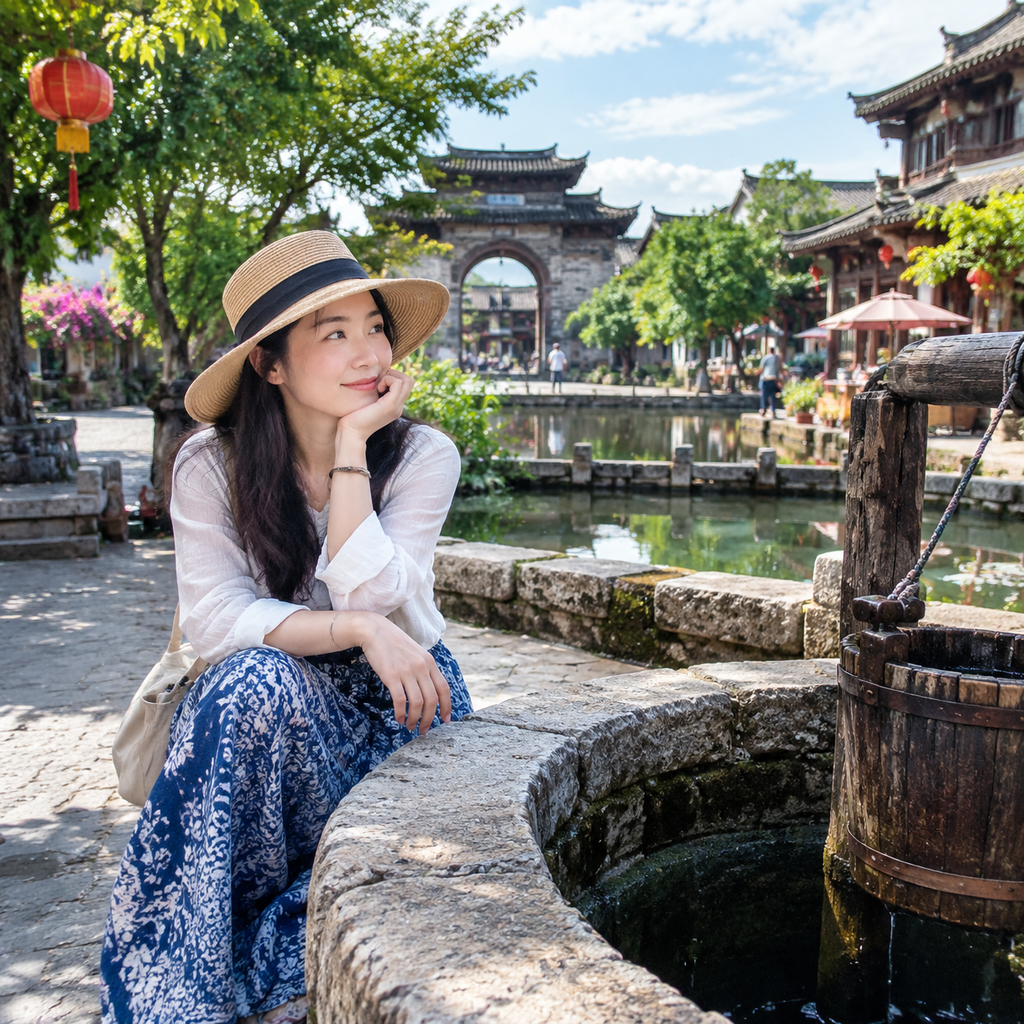
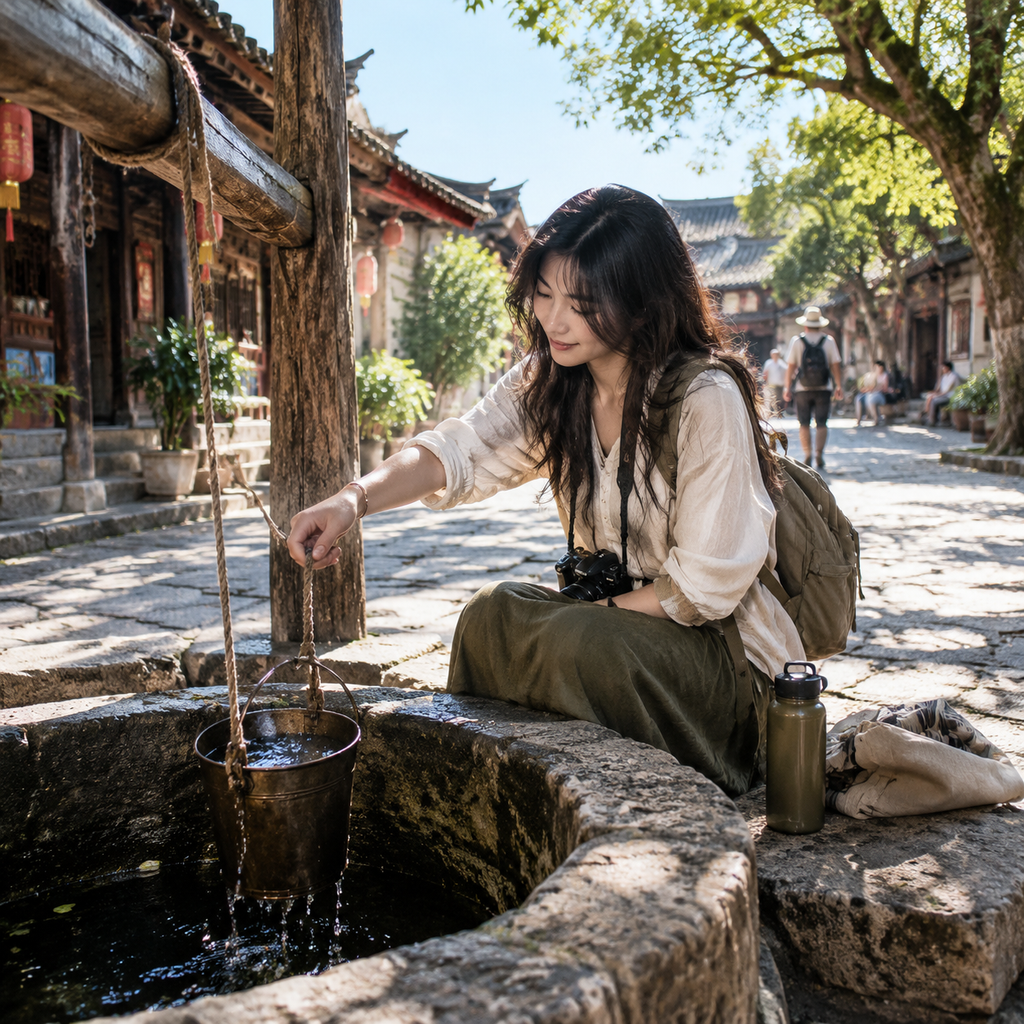
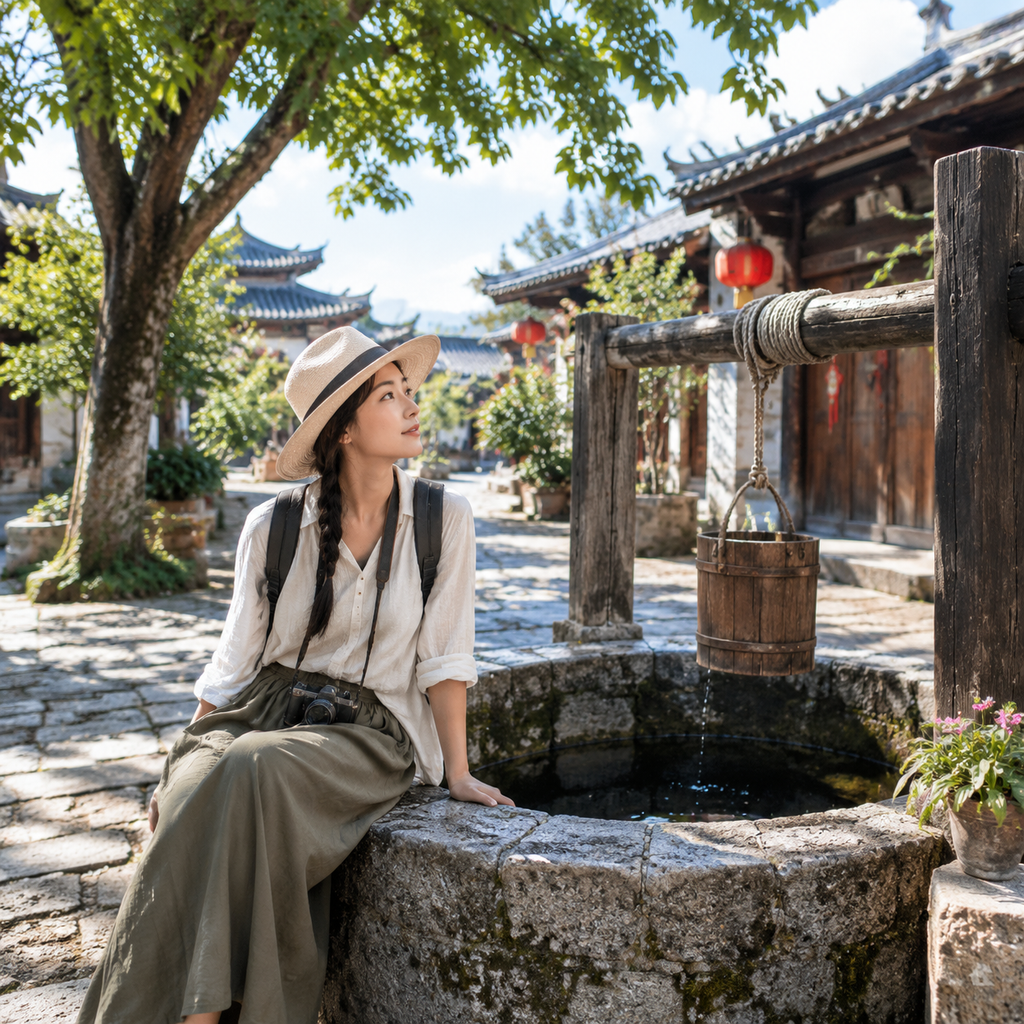
我沿着湿漉漉的街面走了几分钟,来到一口被屋檐和树影护住的老井边。井栏摸上去有些凉,石头边缘被无数只手磨得圆润。井水没有传说里那么神秘,却清清楚楚映出一小块灰蓝的天空。一个穿校服的女孩背着书包来打水,她把桶绳绕过木柄,低头检查结扣,再用力往下放。绳子摩擦井沿,发出一阵短促的沙沙声。
After several minutes on the wet street, I reached an old well sheltered by eaves and tree shadows. The stone rim felt cool, its edges rounded by countless hands. The water was not mysterious in a theatrical way, but it reflected a neat patch of gray-blue sky. A schoolgirl in uniform came for water. She looped the rope around the handle, checked the knot, and lowered the bucket carefully. The rope rasped against the stone with a brief, dry sound.
我问她这里是不是每天都有人来,她没有停下动作,只说以前更热闹,现在大家也会用自来水,不过老人还是喜欢到井边洗菜、聊天。她把桶提上来时肩膀向后一收,水面晃出一圈圈银色波纹。我突然明白,古井并不只是一件被观看的古物,它仍然是街坊关系的一个小小圆心。旅行者若只拍井栏,反而错过了它正在发生的部分。
I asked whether people still came every day. Without stopping, she said that the well used to be busier; now most households use tap water, but older residents still come to wash vegetables and talk. When she lifted the bucket, her shoulders pulled back and silver rings moved across the surface. I understood that an ancient well is not merely an object to be viewed. It remains a small center of neighborhood life, and photographing only the rim misses what is still happening around it.
我没有继续追问井的年代,也没有急着把它和别处的古井比较。旁边一位穿深蓝马甲的老人把一把芹菜放在井栏上,边择叶子边观察我。他说,早上看井要看水光和人,不要只看石头;要是太阳出来,井里的光会从灰变成淡金。我把手机收回口袋,第一次觉得这趟旅行不需要每五分钟留下一个证明。
I did not press for the well’s exact age or compare it with wells elsewhere. An elderly man in a dark blue vest placed celery on the rim and watched me while trimming the leaves. He said that in the morning one should look at the water’s light and the people, not only the stone; when the sun arrived, the water would shift from gray to pale gold. I put my phone away and felt, for the first time, that this trip did not need proof every five minutes.
七点半左右,我顺着人声走到米线摊。摊主是一位头发利落的阿姨,她先把粗米线抖进滚水,再用长筷子拨散,蒸汽贴着她的手背往上升。汤锅里有骨头和香料的气味,旁边小碟里的酸腌菜带着微微发酵的酸香。她问我吃什么,我脱口而出说“最有名的”,她立刻笑了:“建水米线没有一个统一答案,你先说要不要热汤、要不要肉、能不能吃辣。”
Around 7:30, I followed voices to a rice-noodle stall. The vendor, a brisk-haired auntie, shook thick rice noodles into boiling water and separated them with long chopsticks. Steam rose along the back of her hand. The broth smelled of bones and spices, while a small dish of pickled vegetables carried a gentle fermented tang. When I asked for “the most famous one,” she laughed. “Jianshui rice noodles have no single answer. Tell me first: hot broth, meat, and how much chili?”
我这才发现,点一碗米线也有自己的顺序。我说要热汤、少辣、加一份薄薄的肉片,她没有把我的选择当成外行,而是把辣椒放在小碟里,提醒我先尝汤,再决定是否添。米线端上来时,汤面浮着一点油光,碗沿烫得我立刻换了拿法。第一口汤并不猛烈,先是咸鲜,随后才有胡椒和辣椒的暖意。腌菜咬下去脆脆的,把热汤的厚度拉开了。
I learned that ordering a bowl of rice noodles has its own sequence. I asked for hot broth, little chili, and thin slices of meat. She did not treat me like a clueless outsider; she placed the chili separately and told me to taste the broth before adding anything. The bowl arrived with a fine sheen of oil, and the hot rim made me change my grip. The first sip was savory, then pepper and chili warmed my mouth. The crunchy pickle opened up the richness of the broth.
坐在我对面的年轻人把香菜推到碗边,听见我说这汤很香,便指着桌上的小罐说:“这个不是越多越好,先一点点。”他说完用筷子尖挑起一小撮辣椒,拌匀后才继续吃。我照着他的动作做,果然没有被辣味盖住汤底。那一刻我学到的不是一道菜的标准答案,而是建水式的耐心:让味道一层层出现,让陌生人也能在一张小桌子上学会怎么吃。
The young man opposite me pushed cilantro to the side of his bowl. When I said the broth smelled wonderful, he pointed to a jar and said, “It is not better just because you add more. Start with a little.” He lifted a small pinch of chili with the tip of his chopsticks and mixed it in. I followed him and kept the broth’s flavor intact. What I learned was not a fixed recipe, but a Jianshui kind of patience: let flavors arrive in layers, and let a stranger learn at a shared table.
吃完米线,我沿临安街慢慢向朝阳楼走。街边铺面陆续开门,卷帘门向上抬时金属发出沉闷的响声,卖豆腐的店把木牌擦了一遍,药铺门口摆着几盆晒过太阳的草药。临安街的好看不在于它时时都像一张整理好的照片,而在于店主把生活搬到街面上,抹布、水桶、竹筛和招呼声共同组成了街道的纹理。
After breakfast, I walked slowly along Lin’an Street toward Chaoyang Tower. Shops were opening one by one. Metal shutters made a heavy rattle as they rose, a tofu seller wiped his wooden sign, and several pots of sun-dried herbs stood outside a pharmacy. Lin’an Street is appealing not because it always looks like a composed photograph, but because shopkeepers bring life onto the street. Cloths, buckets, bamboo trays, and greetings form its texture.
我在一家卖布鞋的小铺前停下,老板娘正用拇指压平鞋面上的线头。她听说我从井边走来,便指给我看一条窄巷,说那里面安静,但雨后地砖滑,别只顾抬头看屋檐。我顺着她手指的方向走进去,鞋底果然在青石上轻轻打滑,只好把步子放小。巷子里没有所谓的宏大景观,只有墙根潮气、木门上的铜环和一只躲雨的黄猫,却让我比匆忙穿过主街更接近这座城。
I paused at a small shoe shop where the owner pressed loose threads flat with her thumb. When she heard I had come from the well, she pointed to a narrow lane and warned me that the tiles were slippery after rain. I followed her direction and immediately felt my soles slide, so I shortened my steps. There was no grand view in the lane: only dampness near the walls, a brass ring on a wooden door, and a cat hiding from rain. Yet it brought me closer to the town than hurrying along the main street.
朝阳楼比我想象中更有分量。走近时,楼体的红色在阴天里不刺眼,檐角向上挑起,像把街上的嘈杂托到更高处。入口附近有游客举着自拍杆,也有本地人靠着墙等朋友。我站在楼下仰头太久,脖子发酸,旁边的保安大叔笑着提醒我往后退两步,退到街口再看,楼的比例会更完整。我照做,果然看见屋檐、楼身和远处天空形成了更稳的层次。
Chaoyang Tower had more weight than I expected. Its red structure was gentle rather than glaring under the cloudy sky, while the upturned eaves seemed to lift the street noise above us. Tourists held selfie sticks near the entrance, and local people leaned against the wall waiting for friends. I stared upward until my neck hurt. A security guard laughed and told me to step back toward the street corner. From there, the tower’s roofline, body, and open sky formed a calmer composition.
我原来把朝阳楼当成早晨必须完成的打卡点,到了以后才发现,它更适合拿来校准速度。楼下的人流一阵快一阵慢,卖水的小车发出轮轴声,风把檐下的旗子吹得啪嗒作响。我没有登楼,也没有追着人群拍照,而是站在街边看了十几分钟。一个男孩把手里的面包掰给鸽子,母亲轻轻按住他的手腕,告诉他不要把食物撒得到处都是。这样的细节比“我来过”更能留下位置感。
I had treated Chaoyang Tower as a morning check-in obligation. Once there, I realized it was better used to recalibrate my speed. Crowds surged and thinned, a water cart clicked along, and wind snapped the flags under the eaves. I did not climb or chase photographs. I watched for more than ten minutes. A boy tried to break bread for pigeons, and his mother gently held his wrist, asking him not to scatter food everywhere. That small correction gave me a stronger sense of place than simply proving I had arrived.
从朝阳楼去朱家花园,我没有按地图上最直的线路走,而是绕到一段有老宅门脸的街道。门楣上的木雕被雨水打深了颜色,排水沟里漂着几片桂花叶。一个骑电动车的叔叔从身后经过,车铃响了两下,我赶紧贴到墙边。他没有催我,只在拐弯处回头确认我让出了路。这座古城的步行并不等于随意横穿,慢下来也要保持对别人通行节奏的尊重。
To reach Zhu Family Garden, I chose not to take the straightest route on the map. I detoured through a street of old house fronts. Rain had darkened the wooden carvings above the doors, and several osmanthus leaves floated in the drain. A man on an electric scooter rang twice behind me, and I moved close to the wall. He did not rush me; at the turn he looked back to make sure the way was clear. Walking slowly in an old town still means respecting how others move.
朱家花园的入口让我把声音放低了。门内的天井承接着一片浅白的天光,砖地还留着雨后的水印,廊柱之间有细细的阴影。讲解员没有用夸张的口气催大家拍照,而是指着一处门槛说,旧宅里门槛、天井、廊道并非孤立装饰,它们把家人进出、会客和避雨的动作组织起来。我踩过门槛时下意识收紧脚步,忽然意识到建筑的尺度是由身体感受到的,而不是只由镜头记录的。
At the entrance to Zhu Family Garden, I instinctively lowered my voice. Pale daylight filled the courtyard, rain marks remained on the brick floor, and narrow shadows lay between the columns. The guide did not rush us into exaggerated photo poses. Instead, she pointed to a threshold and explained that thresholds, courtyards, and corridors were not isolated decorations; they organized the movements of family members, guests, and people seeking shelter. Crossing it, I slowed down and felt architecture through my body rather than only through a camera.
我在一间偏厅里遇到一位带着孙女的奶奶。小女孩伸手想摸木雕,奶奶把她的手轻轻拢回来,又指向旁边的说明牌,让她先看图案里的花和鸟。女孩蹲下来数了半天,最后说自己找到了两只鸟。奶奶没有急着给答案,只问她“你觉得它们在说什么”。我站在旁边听着,觉得这座宅院的教育方式也很像它的空间:不把人一下推到结论前,而是留一段可以观察、停顿和自己发现的距离。
In a side hall, I met a grandmother with her granddaughter. The girl reached toward a wood carving, and the grandmother gently gathered her hand back, pointing instead to the information panel and asking her to look at the flowers and birds first. The child crouched down and counted for a long time before announcing that she had found two birds. Her grandmother did not give the answer; she asked what the birds might be saying. The garden taught through space in much the same way: it left room for looking, pausing, and discovering.
中午前后,雨又落下来,先是几粒重重的水点砸在瓦上,随后变成密密的白线。我本来想趁雨小去团山,再赶回城里吃晚饭,低头看了一眼鞋面上的泥,立刻知道这个判断太乐观。客栈老板娘发来消息,说团山和小火车更适合留出半天,不要把乡村线路硬塞进古城的一上午。我第一次在行程中承认“看不完”,并不是失败,反而让后面的选择清楚起来。
Around noon, rain returned. At first heavy drops struck the tiles, then a dense white curtain formed. I had planned to go to Tuanshan as soon as the rain eased and return for dinner, but one look at the mud on my shoes told me the plan was too optimistic. The innkeeper messaged me that Tuanshan and the small train deserved half a day, not a rushed addition to a morning in the old town. Admitting that I could not see everything was not failure; it made the next choice clearer.
我把原定的一日路线拆成两天:今天留在古城,明天再去团山和小火车;如果时间或天气不合适,就只保留其中一项。这个取舍听起来简单,实际却改变了我的心情。以前我总把景点当作必须从清单上划掉的格子,后来才发现,路线的价值也在于给天气、体力和临时相遇留位置。雨声把朱家花园的檐廊变成一条长长的听觉通道,我索性坐下来,看水从瓦当边缘连成帘子。
I split the original day into two: the old town today, Tuanshan and the small train tomorrow, with the option of keeping only one if time or weather failed. The choice sounded simple but changed my mood. I used to treat sights as boxes to tick. Now I saw that a route also needs space for weather, energy, and accidental encounters. Rain turned the eaves of Zhu Family Garden into a long corridor of sound, so I sat down and watched water gather into curtains along the tiles.
下午雨势变细,我沿着临安街回走,路过一家卖汽锅的店。店主把铜锅盖掀开,热气带着菌子和肉汤的香味扑出来,他赶紧用布垫住锅耳,把锅挪到里侧。店里有人讨论晚上吃什么,有人把湿伞靠在门边。这样的室内声响让我感到古城并没有因为下雨暂停,它只是把活动从街面收进屋檐下,人的生活仍然按照自己的节拍往前走。
In the afternoon the rain thinned. I walked back along Lin’an Street and passed a shop selling steam pots. The owner lifted a copper lid, and steam carrying the scent of mushrooms and broth rushed out. He used a cloth to grip the handle and moved the pot inward. Customers discussed dinner while wet umbrellas leaned by the door. The old town had not stopped because of rain; it had simply moved daily life beneath the eaves.
我在一家小茶馆里躲了半小时,窗外的水泥路被洗得发亮,行人撑伞经过时,伞面颜色一把一把掠过玻璃。茶馆里一位年轻店员拿抹布擦桌,擦到我旁边时问我第二天是不是要去团山。我说想坐小火车,也想看村落,他马上提醒我别把两个方向理解成“到站下车就全部看完”,乡村线路需要看发车安排和回程衔接。这个提醒让我把明天的重点从贪多改成先保证能顺利回来。
I hid in a small teahouse for half an hour. Outside, the concrete road shone after the wash, and umbrella colors swept past the glass one by one. A young staff member wiped tables and asked whether I planned to visit Tuanshan the next day. I said I wanted both the small train and the village. He reminded me not to assume that getting off at a station meant seeing everything; rural routes require attention to departures and the return connection. I changed tomorrow’s priority from collecting sights to making sure the journey worked.
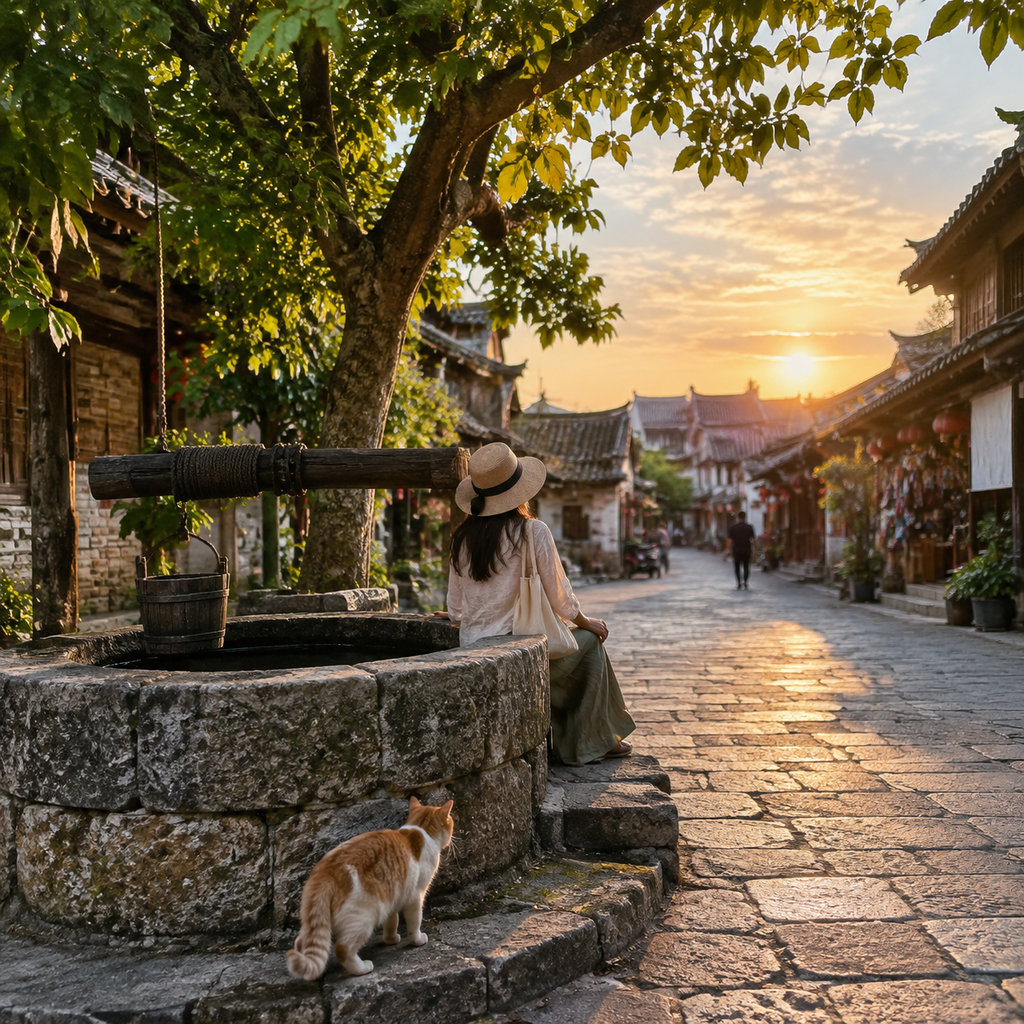
傍晚雨停,我又去看了一次古井。早晨那位老人已经不在,井边换成两个拎菜篮的阿姨,她们把青椒和豆角放在石栏上,边挑边聊家里孩子。夕阳没有完全出来,云层裂开一道橘色的缝,井水里映着的不是完整天空,而是一小块被屋檐切开的亮色。我没有打扰她们,只站在稍远处听菜叶落进篮子的轻响,感觉一天的路线在这里慢慢合拢。
At dusk, after the rain stopped, I returned to the well. The old man was gone; two women with vegetable baskets now rested green peppers and beans on the stone rim while talking about their children. The sun did not fully emerge, but an orange opening appeared in the clouds. The well reflected not the whole sky, only a bright fragment cut by the eaves. I stayed at a respectful distance and listened to leaves landing in the baskets. The day’s route seemed to close there.
晚上我重新整理背包,只留下水、薄外套、充电宝和一把折伞,连原本准备带去团山的三脚架也放回房间。老板娘看见后说,明天若坐小火车,手里东西越少越好,车窗边的风和乡路的颠簸会让人不断换位置。我问她团山最值得看什么,她想了一会儿说:“看房子怎么和田地挨在一起,也看人家门口有没有人坐着。”她没有把答案说成景点名称,反而让我期待那些不在宣传图里的画面。
At night I repacked: water, a light jacket, a power bank, and a folding umbrella. I left the tripod in the room. The innkeeper said that if I took the small train, less luggage would be better; the wind by the window and the bumps of the rural road would keep me changing seats. When I asked what mattered most at Tuanshan, she thought and said, “See how the houses sit beside the fields, and see whether anyone is sitting outside a doorway.” Her answer made me anticipate scenes that would never appear as a landmark name.
第二天早上,天放晴得很慢。六点多时云还压在屋顶上,我没有重复前一天的错误去追日出,而是坐在客栈门槛上喝了一杯热茶。茶杯外壁的水汽沾湿了指尖,巷子里传来扫地声和摩托车启动声。等光线真正亮起来,我才出门。对我来说,这已经是建水教会的第一个具体动作:先听一会儿,再决定脚往哪里走。
The next morning cleared slowly. Before six-thirty, clouds still pressed low over the roofs. I did not repeat my first-day mistake by chasing sunrise. I sat on the inn’s threshold and drank hot tea. Condensation dampened my fingertips, while sweeping and motorcycle engines rose from the lane. I left only after the light strengthened. Jianshui had taught me a practical gesture: listen for a while before deciding where your feet should go.
去团山的路上,城市的砖墙逐渐让给田边的土路和低矮民居。车窗外有一排排玉米秆,叶尖在晨风里轻轻抖动,远处山线被薄雾擦得不太清楚。同行的一位大叔把窗户推开一点,风立刻把他的帽檐掀起来,他笑着按住帽子,又把窗户拉回原处。车厢里有人递纸巾,有人把装水的塑料袋往脚边收,大家在颠簸中自然调整身体,乡路的真实感就是这样从小动作里冒出来的。
On the way to Tuanshan, city brick walls gradually gave way to field paths and low houses. Rows of corn stalks trembled in the morning wind, and mist softened the distant ridges. A man traveling with us opened the window slightly; the wind immediately lifted his hat brim. Laughing, he held it down and closed the window halfway. Someone passed tissues, another moved a water bag under a seat. People adjusted themselves naturally through the bumps, and the reality of a rural route emerged from these small gestures.
我一度误判团山的距离,以为下车后很快就能把村落、古建筑和周边景色全部串起来。到了以后才发现,村巷的转折比地图上的线条复杂,几处入口看起来相似,手机定位又在墙与树之间来回跳。我跟着一位背竹篓的阿姨走了几分钟,才意识到自己方向反了。她把竹篓往肩上挪了挪,指着另一条巷子说,想看老宅就往那边,想去田边则沿着水沟走。
I misjudged Tuanshan’s scale. I assumed I could quickly connect the village lanes, old buildings, and surrounding views. In reality, the lanes turned more often than the map suggested, several entrances looked alike, and my phone position jumped between walls and trees. After following a woman carrying a bamboo basket for several minutes, I realized I was going the wrong way. She shifted the basket on her shoulder and pointed me toward the old houses, adding that the fields lay in the other direction along the irrigation ditch.
我按照她的建议先去看老宅,放弃了原本想一口气走到最远田埂的念头。转过一个门洞,光线突然从树荫里亮出来,院墙上有新补过的灰泥,门内晾着几件衣服,木窗缝里透出电视声。这里没有被清空成博物馆的安静,生活和旧建筑挨得很近。我站在门外看了片刻,等一位老人把自行车推过,再侧身让路。误判后的调整,反而让我看见了团山仍然有人居住的部分。
I followed her advice and visited the old houses first, abandoning my plan to march straight to the farthest field edge. Through one doorway, light suddenly opened from the shade. Fresh gray plaster patched the wall, clothes hung inside, and television sound leaked through a wooden window. The village was not emptied into museum silence; life stood close to the old architecture. I waited outside while an elderly man pushed a bicycle through, then stepped aside. Correcting my mistake let me see the inhabited side of Tuanshan.
团山的房屋让我不断停步。墙面有些地方被雨水洗出深浅不一的纹理,门簪和木格窗的线条仍然清楚,屋檐下却挂着塑料水管和一顶褪色的遮阳帽。一个小男孩蹲在门口给自行车链条上油,他把黑色油瓶捏得很慢,生怕滴到地上。父亲从屋里探头出来,提醒他先垫一块纸板。我看着这对父子的配合,觉得古村最动人的不是“保存得像过去”,而是旧空间继续容纳今天的动作。
Tuanshan’s houses made me stop repeatedly. Rain had drawn uneven dark patterns across the walls; the carved door details and wooden lattice windows remained clear, yet plastic pipes and a faded sun hat hung beneath the eaves. A boy crouched outside, oiling a bicycle chain. He squeezed the bottle slowly so it would not drip on the ground. His father leaned out and told him to place cardboard underneath. The village moved me not because it looked frozen in the past, but because old space still held today’s gestures.
我没有把团山走到最远处,因为上午的体力已经被前一天的古城步行和今天的颠簸消耗了一部分。同行的大叔说他要继续去看田,我则沿水沟返回车站附近。我们在分开前互相确认了回程方向,他还把自己的水递给我一口。我发现一到两天的建水行程没有唯一的正确安排:如果偏爱建筑,可以把时间留给朱家花园和团山;如果更在意生活气息,古井、临安街和米线摊就值得多留一个早晨。
I did not walk to the farthest edge of Tuanshan. The previous day’s old-town walking and that morning’s bumps had already used part of my energy. The man traveling with me continued toward the fields, while I returned along the ditch toward the station. Before separating, we confirmed the way back, and he offered me a sip of water. A one- or two-day Jianshui trip has no single correct arrangement. Architecture lovers can give time to Zhu Family Garden and Tuanshan; those seeking daily life should keep an extra morning for the well, Lin’an Street, and rice-noodle stall.
小火车的速度比我想象中还慢,车轮经过接缝时有规律地轻震,窗外的树影一格一格向后移动。孩子趴在窗边数电线杆,数到一半被隧道般的树荫遮住,便改数经过的牛和晒在院墙上的玉米。坐在前排的奶奶把一袋橘子拆开,给旁边小朋友递了一个。车厢里没有持续的讲解声,只有风声、轮轨声和零碎的交谈,这种慢把沿途从背景变成了内容。
The small train moved even more slowly than I expected. The wheels gave a regular tremor over each joint, and tree shadows slid backward in separate frames. A child by the window counted utility poles, then switched to cows and corn drying on courtyard walls when shade hid the poles. A grandmother in front opened a bag of oranges and offered one to a nearby child. There was no constant narration, only wind, rail sounds, and scattered conversation. The slowness turned the passing landscape into the story itself.
我在车窗上看见自己的倒影,脸上还留着前一天没有睡足的倦意,却比清晨追朝阳楼时松弛许多。列车经过田地,泥土的湿气从开着的缝隙里送进来,夹着植物被晒热后的青草味。有人举起相机,有人干脆把手肘搭在窗台上发呆。我也把相机放下,认真看一头水牛从沟边抬头,耳朵扇了两下,又低下去继续吃草。旅行并非每一秒都要有观点,有时看清一头牛的动作就够了。
I saw my reflection in the train window. I looked tired from the short night, yet far more relaxed than when I had chased the light at Chaoyang Tower. Moist earth entered through the open window gap, mixed with the green smell of plants warmed by the sun. Some passengers raised cameras; others simply rested elbows on the sill and drifted into thought. I put mine away and watched a water buffalo lift its head by the ditch, flap its ears twice, and return to grazing. Not every second needs an opinion. Sometimes one clear animal movement is enough.
回到建水城里已经接近傍晚,我没有再安排新景点,而是去早晨那家米线摊附近走走。阿姨认出我,问我今天是不是去了团山。我说走错过一次路,她把手里的漏勺停在半空,笑着说:“走错才会记得,下次就不会只看直线了。”她又给我舀了一小碗清汤,没有米线,只放了几片葱。我捧着碗站在摊边,热气扑到鼻尖,疲惫忽然有了一个具体的落点。
I returned to Jianshui near dusk and did not add another attraction. I walked back toward the rice-noodle stall. The vendor recognized me and asked whether I had visited Tuanshan. I told her I had taken a wrong turn. She paused with the strainer in midair and laughed: “You will remember a wrong turn. Next time you will not trust only the straight line.” She ladled me a small bowl of clear broth with scallions but no noodles. Holding it by the stall, I felt steam touch my nose, and my tiredness found a precise place to settle.
我最后一次经过临安街时,铺子已经亮起暖黄的灯。朝阳楼的轮廓在暮色里变成深色剪影,街边有人收起遮雨布,有人把最后一筐蔬菜搬进店里。那口古井被一盏侧灯照着,井水不再映天空,只映出一圈安静的光。我把手伸到井栏上,石头已经没有清晨那么冷。两天里我看过建筑、吃过米线、坐过小火车,也在错误的巷口重新选择过方向;真正带走的,是知道什么时候该继续,什么时候该停下。
On my last walk along Lin’an Street, warm yellow lights had appeared in the shops. Chaoyang Tower was a dark outline in the evening, while vendors folded rain covers and carried the last baskets of vegetables inside. A side lamp touched the old well; the water no longer reflected the sky, only a quiet ring of light. I rested my hand on the rim, which was no longer cold. In two days I had seen architecture, eaten rice noodles, ridden the small train, and corrected myself at a wrong lane. What I carried away was knowing when to continue and when to stop.
离开前的那个晚上,我把地图折成四折,夹进记事本,没有把所有走过的巷子标出来,只在古井旁画了一个小圆点,在团山那处走反的入口旁写下“先问再走”。清晨老板娘说的那句话也被我记了下来:肚子有底,脚才走得远。下一次如果只来一天,我会选择古井、米线、临安街、朝阳楼和朱家花园,把团山与小火车留给下一次;如果有两天,我会让第二天从乡路开始,不再用城市景点的速度要求一座村庄。
On my final night, I folded the map into four and placed it in my notebook. I did not mark every lane I had walked. I drew a small circle beside the well and wrote “ask before walking” near the entrance where I had gone wrong in Tuanshan. I also recorded the innkeeper’s morning sentence: a settled stomach carries the feet farther. With only one day, I would choose the well, rice noodles, Lin’an Street, Chaoyang Tower, and Zhu Family Garden, saving Tuanshan and the small train for another visit. With two days, I would begin the second morning on the rural road instead of forcing a village to move at city speed.
第二天离开时,客栈门口的水已经干了,竹扫帚靠在墙边,扫帚梢上粘着几片细叶。我背起包,先回头看了一眼那段湿过的青石路,然后朝车站走。路过古井时,井边正好有人放下一篮青菜,水桶碰到石栏,发出清脆的一声。我没有停下来拍照,只把这声响记在心里。建水的慢旅行就这样结束:不是以一个宏大的远景收尾,而是以一只水桶轻轻碰到井沿的声音,提醒我还会回来。
When I left on the second morning, the water outside the inn had dried. The bamboo broom leaned against the wall, its bristles holding a few fine leaves. I shouldered my bag and looked once at the stone road that had been wet. Near the well, someone placed a basket of greens down, and a bucket tapped the rim with a clear note. I did not stop to photograph it; I kept the sound instead. My slow journey in Jianshui ended not with a grand panorama, but with a bucket touching ancient stone, reminding me that I would return.
我后来把这条路线写在一张旧车票的背面,字写得很小,却把几个决定写得很清楚。古井要放在早晨,因为那时井边的水光、人声和买菜动作最完整;米线要紧跟在后面,因为一碗热汤可以把刚醒的身体安顿下来;临安街不宜安排成匆忙穿越,它的细节藏在开门、扫水、搬菜和招呼客人的间隙里。朝阳楼可以看,但不必把它当成必须登上的高点,站到街口退两步,反而更能看见楼与街的关系。
Later I wrote the route on the back of an old ticket, in tiny but decisive notes. The well belongs in the morning, when its light, voices, and market gestures are most complete. Rice noodles should follow, because hot broth settles a newly awakened body. Lin’an Street should not be treated as a corridor to rush through; its details live between opening doors, sweeping water, carrying vegetables, and greeting customers. Chaoyang Tower is worth seeing, but it need not be conquered from above. Two steps back at the street corner revealed its relationship with the street better.
我还记下了朱家花园给我的一个提醒:看宅院不能只找最漂亮的门窗。那天我在廊下站着,雨水从檐口落到石阶,落点被风吹得忽左忽右;一位讲解员把伞柄往身边收了收,好让后面的人通过。她讲的是建筑,我看到的却是空间怎样安排人与人之间的距离。门槛让脚步变慢,天井把光接进屋里,回廊让避雨、会客和观看同时发生。若只用广角镜头把院子拍满,身体对这些尺度的感受反而会被抹平。
Zhu Family Garden left me with another reminder: an old residence should not be reduced to its prettiest windows and doors. I stood under the corridor while rain fell from the eaves, the wind moving the drops slightly from side to side. A guide drew her umbrella closer so people behind could pass. She was explaining architecture, while I was noticing how space arranged distance between people. Thresholds slowed feet, courtyards received light, and corridors allowed shelter, visiting, and looking at once. A wide-angle photograph might include everything while erasing how the body feels those proportions.
我在建水也逐渐学会了辨认“该不该继续”。鞋底湿滑时,不去追一个远处的门楼;米线已经吃得很饱时,不为了拍照再加一碗;小火车回程时间临近时,不为了田埂尽头的一棵树离开站点太远。当地人说这些话时并不把它们包装成旅行哲理,只是顺手提醒一句。我把它们听进去了,后来每一次调整都少了一点焦躁,多了一点对环境的信任。
In Jianshui I gradually learned to recognize when to continue and when not to. If my soles were slippery, I would not chase a distant gate tower. If the noodles had already filled me, I would not order another bowl merely for a photograph. If the small train’s return time was near, I would not walk too far for one tree at the end of a field ridge. Local people did not present these as travel philosophy; they simply offered a practical warning. Listening made each adjustment less anxious and more attentive to the surroundings.
古井边那位穿深蓝马甲的老人后来没有再出现,但他的观察方法一直留在我脑中。我开始留意一个地方有没有人反复经过,哪些动作只在清晨发生,哪一张凳子总被放在屋檐最干的位置。旅行中的“可核实”对我来说也不再只是把地名记对,而是确认古井确实有取水和择菜的人,临安街确实有店铺按自己的时间开门,团山的老宅确实仍被日常生活触碰。这样的确认比背诵一串年代更有重量。
The man in the dark blue vest did not appear again, but his way of observing stayed with me. I began noticing who passed a place repeatedly, which gestures happened only in the morning, and which stool was always placed beneath the driest part of an eave. For me, verifiable travel became more than spelling a place name correctly. It meant seeing people draw water and sort vegetables by the well, shops open according to their own rhythm on Lin’an Street, and old houses in Tuanshan still touched by daily life. That carried more weight than memorizing a list of dates.
如果只剩一天,我会把路线压缩成一条不赶路的弧线:早起看古井,吃建水米线,沿临安街走到朝阳楼,再把下午交给朱家花园。古井和米线占住早晨,是因为它们会让人从“游客”变成一个正在吃饭、听声音、让路的人;朝阳楼承担城市入口的辨认;朱家花园则把步行后的速度再往下调。如果还想加入团山,只能接受少看一处室内细节,不能把乡村往返当成附加的十分钟。
With only one day, I would shape the route into an unhurried arc: see the well early, eat Jianshui rice noodles, walk along Lin’an Street to Chaoyang Tower, and give the afternoon to Zhu Family Garden. The well and breakfast occupy the morning because they turn a visitor into someone eating, listening, and making way. Chaoyang Tower helps identify the city’s entrance, while Zhu Family Garden lowers the pace after walking. If Tuanshan must be added, I would accept seeing less indoors; a rural round trip cannot be treated as a ten-minute extra.
如果能住两晚,我会把第二天完整留给团山和小火车,不再给自己安排晚上的密集拍摄。早上的车窗适合看田地和村屋,抵达后先确认回程,再决定走老宅还是水沟;中午留一点空白,饿了就找简单食物,累了就坐在树荫下。小火车最值得的不是把站点收集齐,而是让眼睛适应低速,让窗外的一片玉米、一只水牛、一个晾衣服的院墙都获得足够长的观看时间。
If I could stay two nights, I would reserve the entire second day for Tuanshan and the small train, without scheduling dense evening photography. The morning window is best for fields and village houses. After arriving, I would confirm the return first, then choose between old residences and the irrigation ditch. I would leave lunch flexible: find simple food when hungry, sit in shade when tired. The small train’s value is not collecting every stop, but letting the eyes adjust to low speed so a cornfield, a buffalo, or a wall with drying clothes can be seen long enough.
我的误判也值得保留下来,因为它不是一个可以轻易删掉的插曲。我把地图上的短线当成了脚下的短路,把“附近”理解成“很快”,把能看见的景色误当成能从容看完的景色。那位背竹篓的阿姨没有批评我,只用一句话替我重新分开了两个方向。旅行有时就是这样被陌生人轻轻扶正:不是替你走完,而是告诉你哪条路通向老宅,哪条路通向田边,然后把选择还给你。
I keep my mistake because it was not disposable background. I treated a short line on the map as a short walk, “nearby” as “quick,” and visible scenery as scenery I could calmly finish. The woman with the bamboo basket did not criticize me. One sentence separated two directions again. Travel is sometimes gently corrected by a stranger—not by someone walking for you, but by someone telling you which lane leads to old houses and which follows the fields, then returning the choice to you.
离开建水后,我在车上打开那张写满字的车票,发现背面还沾着一点米线汤的油痕。窗外的山线向后退,车内空调吹得手背发凉,我却想起古井石栏的温度,想起朱家花园檐下连续的雨声,也想起小火车经过田地时孩子突然喊出的那句“看,牛”。这些声音和触感没有被路线表格收进去,却比表格更准确地说明了我为什么愿意再来。
After leaving Jianshui, I opened the ticket covered in notes. A faint mark of rice-noodle broth still stained its back. The mountain line receded outside, and the air-conditioning cooled my hands, but I remembered the well’s stone rim, the continuous rain beneath Zhu Family Garden’s eaves, and the child suddenly shouting, “Look, a cow!” A schedule could not contain those sounds and textures, yet they explained more accurately why I would return.
我想再去一次古井,不是为了补拍一张更清楚的照片,而是想看看那口井在另一个季节怎样接住光。也许会遇到不同的老人,也许临安街的摊位换了位置,也许团山的水沟边长出更高的草。路线可以重走,天气不会重演,人的动作也不会完全重复。正因为如此,建水适合慢慢去,不必一次把它解释完。
I want to visit the well again, not to take a sharper photograph, but to see how it receives light in another season. I may meet different elders, find stalls in new positions on Lin’an Street, or see taller grass beside Tuanshan’s ditch. A route can be walked again, but weather will not repeat and people’s gestures will never be identical. That is why Jianshui rewards a slow visit; it does not need to be explained all at once.
When I left on the second morning, the water outside the inn had dried. The bamboo broom leaned against the wall, its bristles holding a few fine leaves. I shouldered my bag and looked once at the stone road that had been wet. Near the well, someone placed a basket of greens down, and a bucket tapped the rim with a clear note. I did not stop to photograph it; I kept the sound instead. My slow journey in Jianshui ended not with a grand panorama, but with a bucket touching ancient stone, reminding me that I would return.
若把古井、米线和临安街排在同一个早晨,步行的方向最好顺着生活声响走,而不是只盯着地图上的最短线。我会先从客栈出门到古井,站在井栏外等取水、买菜的人完成动作,再沿着有店铺开门的巷口走向临安街。到米线摊时先说明要热汤、少辣还是加肉,吃完不要马上叫车,沿街消一会儿食,再把朝阳楼放在上午后段。这样走,古井的水声、锅里的蒸汽、卷帘门的响动会一段段接上,脚下也不会在清晨就被赶得太快。
If I place the ancient well, rice noodles, and Lin’an Street in one morning, I would follow the sounds of daily life rather than the shortest line on a map. I would leave the inn for the well, stand outside the rim until people finished drawing water or sorting vegetables, and then take the lane where shops were opening toward Lin’an Street. At the noodle stall, I would specify hot broth, mild chili, or meat before eating. Instead of calling a car immediately afterward, I would walk long enough to settle the meal and put Chaoyang Tower later in the morning. The well’s water, the steam from the pot, and the clatter of shutters would then connect step by step without rushing my feet.
如果下午只剩两三个小时,朝阳楼和朱家花园可以连成一段清楚的步行线,但要先看自己的鞋底和天气。雨后从临安街拐进老巷,经过朝阳楼时退到街口看完整檐线,然后沿着不积水的街面去朱家花园;进入宅院后把伞收在门边,沿门槛、天井和回廊慢慢走一圈。若鞋袜已经湿透,或者雨又把石板打亮,就不要为了再找一处角度继续深入,直接回客栈换鞋。返程不是路线的失败,而是让第二天还能有力气走到乡路上的实际安排。
If only two or three hours remain in the afternoon, Chaoyang Tower and Zhu Family Garden can form a clear walking segment, but I would first check my soles and the weather. After turning from Lin’an Street into the old lanes, I would step back at the street corner to see the tower’s full roofline, then follow the least waterlogged pavement to Zhu Family Garden. Inside, I would leave the umbrella by the entrance and make one unhurried circuit through the threshold, courtyard, and corridors. If my socks were soaked or rain began shining on the stones again, I would stop searching for another angle and return to the inn to change shoes. Turning back is not a failed route; it is the practical choice that leaves strength for the rural road tomorrow.
建水米线适合在路线中承担一个真正的停靠点,而不是被写成匆忙填饱肚子的空档。离开摊位前,我会把汤喝到合适的温度,问清楚第二天乡路或小火车的返程时间,再决定是否还能去团山。若回程班次已经逼近,就留在城里沿临安街走到古井;若时间宽裕、天气干爽,才把水、薄外套和充电宝装进小包,先确认返程位置,再进入团山的老巷。走到岔路时,朝老宅还是朝田边只能选一个,选定后就按水沟、门洞和村口的方向标记返回,不用把每条路都走遍。
Jianshui rice noodles should serve as a real pause in the route, not a blank interval for hurried refueling. Before leaving the stall, I would let the broth cool to a comfortable temperature, ask about the return time for the rural road or small train, and only then decide whether Tuanshan still fit. If the return departure were close, I would remain in town and walk from Lin’an Street back toward the well. If time were generous and the weather dry, I would pack water, a light jacket, and a power bank, confirm the return point first, and then enter Tuanshan’s old lanes. At a fork, I would choose either the old houses or the fields, mark the way back by the ditch, doorway, and village entrance, and resist trying to cover every lane.
返程那天我没有把最后一小时塞进新的景点。走到临安街尽头时,朝阳楼的红色已经被午后的光照得发暖,我买了一只纸袋,把米线摊旁剩下的腌菜装好,准备在车上配着干粮吃。经过古井,我听见有人把水桶放下,便侧身让开井边的位置;再往前走,朱家花园的白墙从树影后露出一角,我没有折回去,而是把车票、地图和那张写着回程时间的便签放进外套内袋。车站广播响起后,我拉紧背包肩带,随着第一批乘客踏上台阶。
On the day of departure, I did not cram another attraction into the final hour. At the end of Lin’an Street, Chaoyang Tower’s red walls had warmed under the afternoon light. I bought a paper bag and packed some pickled vegetables from beside the noodle stall to eat with a simple snack on the bus. Passing the well, I heard someone set down a bucket and moved aside to leave room at the rim. Farther on, one corner of Zhu Family Garden appeared behind the trees; I did not turn back. I placed the ticket, map, and note with the return time inside my jacket. When the station announcement sounded, I tightened my backpack straps and followed the first passengers up the steps.
- 西安兵马俑:完整参观指南 | Xi an Terracotta Warriors: A Complete Guide
- 苏州园林不是用来赶场的,我在一扇漏窗前停了十分钟 | Suzhou Gardens Are Not for Rushing; I Stopped Ten Minutes Before One Lattice Window
- 中国旅游必备App大全 | Essential Apps for Traveling in China
- 读一面敦煌壁画的次序:从洞窟入口开始 | How to Read a Dunhuang Mural: Begin at the Cave Entrance
- 起飞前一夜,我把第一次中国独行准备明白了 | The Night Before Takeoff, I Finally Understood How to Prepare for My First Solo Trip to China
- 从大连到湛江:中国沿海城市的海鲜吃法 | Seafood Along China's Coast: From Dalian to Zhanjiang
- 摊位编号不重要,重要的是你站在哪座城市 | The Stall Number Doesn't Matter — What Matters Is Which City You're Standing In
- 初秋的阿勒泰不只在草原上:我沿河谷重新排了自驾线 | Altay in Early Autumn: Rebuilding a Drive Along the Valleys
- 在南京城墙脚下,我第一次看清一座古城不是景点,是还在运转的日常 | Beneath Nanjing’s Wall, I First Saw That an Ancient City Is Not a Sight but an Ongoing Daily Life
- 我在中国景区、酒店和餐厅踩过的支付坑 | Payment Lessons I Learned the Hard Way at China's Tourist Spots, Hotels & Restaurants
Comments (0)