
从贵阳到荔波的慢线 | The Slow Line from Guiyang to Libo
从贵阳到荔波的慢线 | The Slow Line from Guiyang to Libo
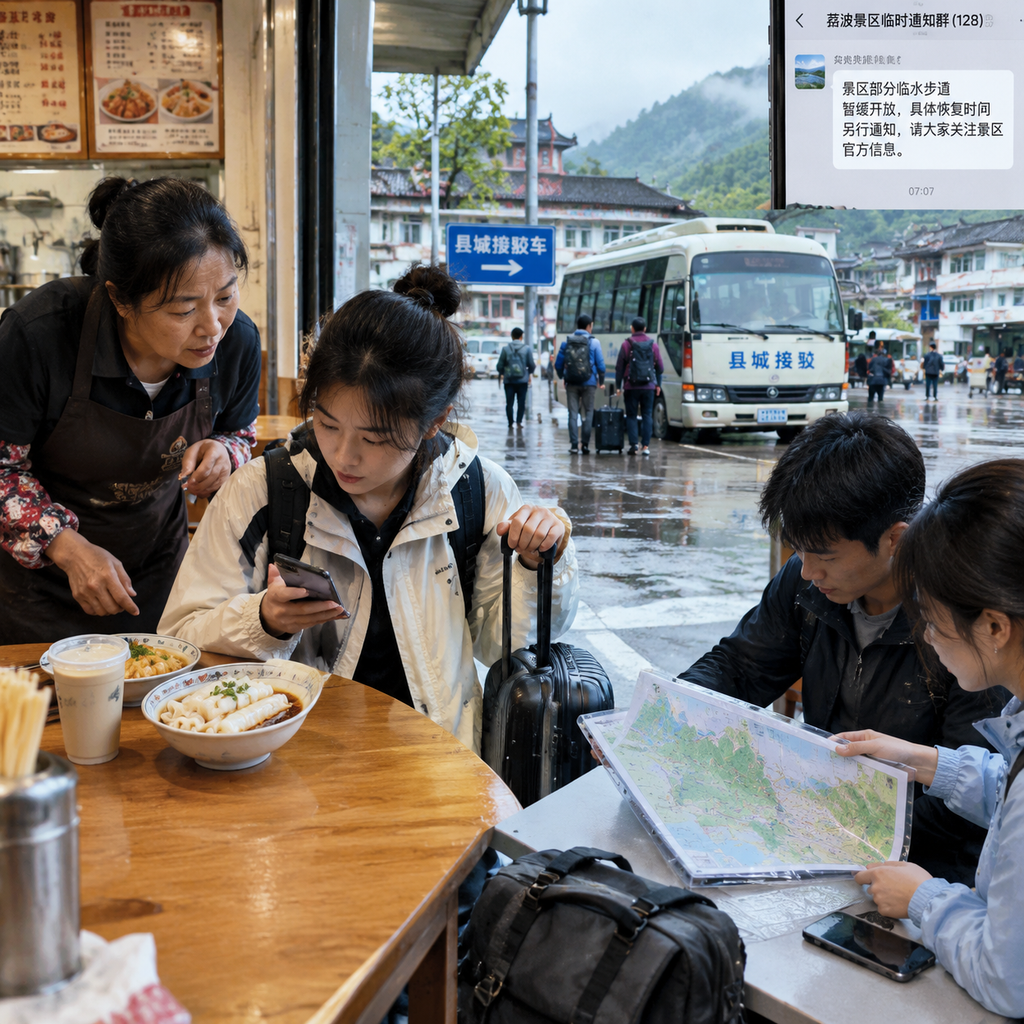
清晨六点十分,贵阳的天还像一张没冲洗好的灰照片。我拖着箱子从喷水池附近的小旅馆出来,轮子碾过昨夜积水,发出细碎的沙沙声。街角早餐铺刚掀开蒸笼,白汽贴着檐口散开。我买了两个素粉包和一杯豆浆,老板娘见我一手扶箱、一手翻手机,便问:“去北站还是东站?”我盯着地图上那个醒目的“贵阳站”,很有把握地说去火车站。她把夹包子的竹夹停在半空:“你这趟车,票上写的是贵阳北。”我低头再看,才发现自己把出发城市当成了车站名。
At 6:10 in the morning, Guiyang looked like a gray photograph that had not fully developed. I pulled my suitcase out of a small hotel near Penshuichi, its wheels whispering through puddles left by the night. A breakfast stall on the corner had just lifted the lid of its steamer, sending white vapor along the eaves. I bought two vegetable buns and a cup of soy milk. Seeing me steady the suitcase with one hand while scrolling with the other, the owner asked, “North Station or East Station?” I pointed confidently at “Guiyang Railway Station” on my map. Her bamboo tongs paused in midair. “Your ticket says Guiyang North.” Only then did I realize I had mistaken the city of departure for the actual station.
这一误判把从容削掉了二十分钟。我钻进一辆网约车,司机老周听完经过,没有催,也没笑,只把手机支架往左掰了掰,说早高峰还没完全醒,走黔灵山路来得及。车窗外,早餐摊、送菜三轮车和穿校服的学生依次向后滑。隧道出口忽然亮起来,远处楼群像从湿雾里长出。老周在红灯前敲了敲方向盘,提醒我荔波站离县城和小七孔都还有一段,不能把“下高铁”当成“已经抵达”。这句话后来成了整段路最有用的标记。
That mistake cost me twenty comfortable minutes. I slipped into a ride-hailing car, and the driver, Lao Zhou, neither rushed me nor laughed when he heard the story. He simply tilted his phone mount to the left and said the morning peak had not fully awakened; Qianlingshan Road should still get us there in time. Breakfast stalls, vegetable tricycles, and students in uniform slid past the window. At the mouth of a tunnel the light suddenly opened, and distant towers seemed to grow out of the damp mist. Tapping the steering wheel at a red light, Lao Zhou reminded me that Libo Station was still some distance from both the county town and Xiaoqikong. “Getting off the train is not the same as arriving,” he said. It became the most useful sentence of the journey.
贵阳北站里,广播声和滚轮声一层压着一层。我先顺着“出租车”标志下了一段扶梯,才觉得方向不对;抱着保温杯的保洁阿姨抬起下巴,指我折回二层进站口。我小跑过去,背包在肩后一下下撞,安检筐里的豆浆还温着。检票后我没有立刻坐下,而是先到服务台确认:高铁到荔波站,出站后再接景区直通车或县城客运。工作人员用笔在纸质小票背面画了一个小箭头,写下“出站右侧”。路线终于从手机里一团会缩放的蓝线,变成了几个可以照着做的动作。
Inside Guiyang North, announcements pressed down over the clatter of suitcase wheels. I followed a taxi sign down an escalator before realizing I was going the wrong way. A cleaner holding a thermos lifted her chin and pointed me back toward the second-floor entrance. I broke into a short run, my backpack thumping against my shoulder while the soy milk in the security tray was still warm. After checking in, I went to the information desk instead of sitting down. The staff confirmed the sequence: high-speed rail to Libo Station, then a shuttle either toward the scenic area or into the county town. On the back of a paper slip, she drew an arrow and wrote, “Right side after exit.” The route stopped being a tangle of blue lines on a phone and became a handful of actions I could follow.
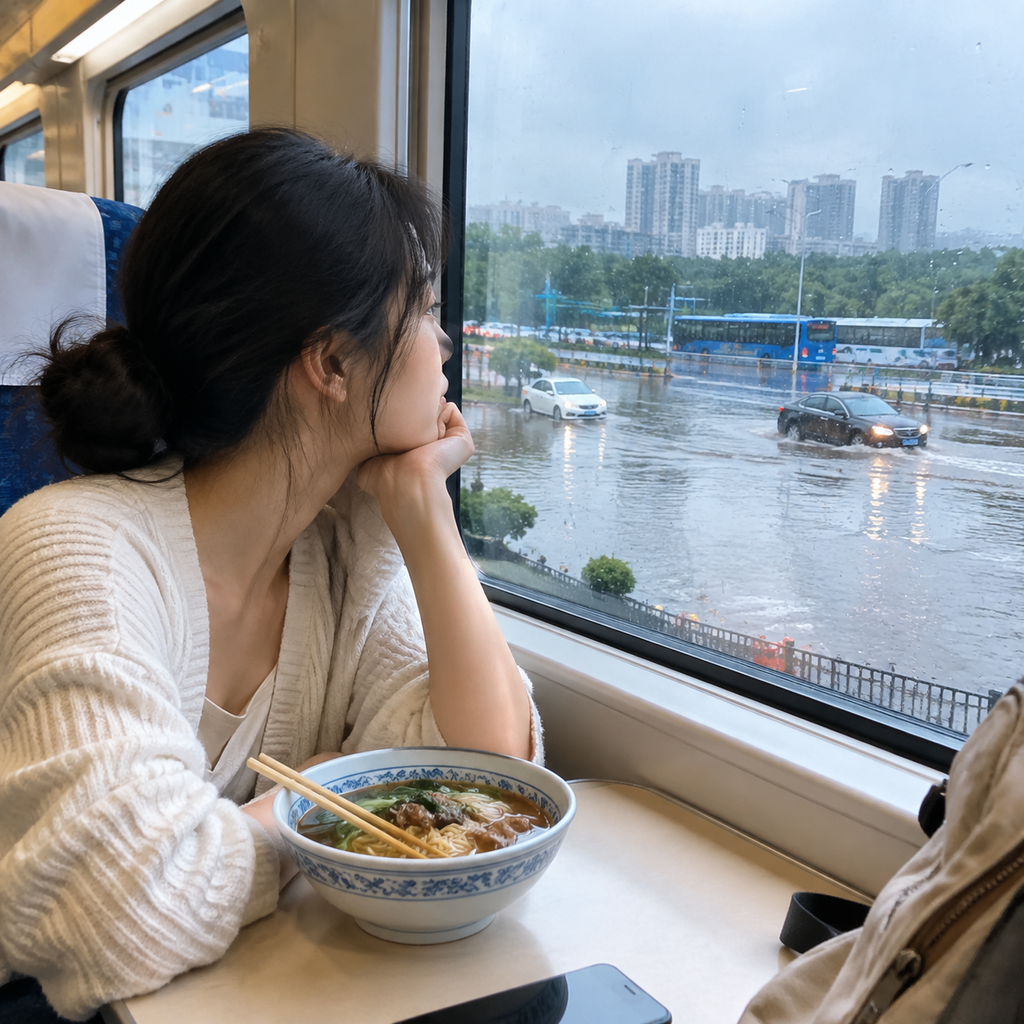
列车离开贵阳后,城市很快被折进山背。窗外不是一路开阔的风景,而是隧道、短促的亮光、稻田和村屋反复交替。邻座姑娘把行李架上的外套取下来搭在膝上,说前面可能有雨。果然,经过都匀一带时,雨点先在玻璃上稀疏地试探,几分钟后便拉成斜线。山腰的雾往下压,树木只剩深浅不一的绿影。我原本担心雨会毁掉抵达,却发现它让速度变得可见:近处水珠急退,远山却像始终停在原位。
Once the train left Guiyang, the city quickly folded behind the mountains. The view was not a continuous panorama but a repeated rhythm of tunnels, brief bursts of light, rice fields, and village houses. The young woman beside me took a jacket from the luggage rack and laid it across her knees, saying there might be rain ahead. Near Duyun, a few drops tested the window; within minutes they had become slanting lines. Mist pressed down the slopes until the trees were reduced to layers of green shadow. I had worried that rain would spoil the arrival, but instead it made speed visible: nearby droplets raced backward while the distant mountains seemed to remain still.
到荔波站时,雨势已经收细。站前广场的地砖发亮,几辆接驳车停在雨棚外,司机们举着写有目的地的牌子。我又犯了一个小错,看见“小七孔”三个字便跟着人群往左走,直到一位穿蓝雨衣的调度员拦住我,问我今晚住哪里。听到县城的客栈名,他用手里的票夹轻轻点向右边:“你坐县城线,不是景区线;今天先落脚,明早再去更稳。”我把已经抬上台阶的箱子拉下来,轮子在湿地上打了个滑,自己也忍不住笑了。
By the time I reached Libo Station, the rain had thinned. The paving stones on the forecourt shone, and several shuttle buses waited beyond the canopy while drivers held signs with their destinations. I made another small mistake: spotting the words “Xiaoqikong,” I followed the crowd to the left. A dispatcher in a blue raincoat stopped me and asked where I was staying that night. When I gave the name of a guesthouse in the county town, he tapped his ticket folder toward the right. “You need the county bus, not the scenic-area bus. Settle in today and go tomorrow morning—it will be steadier.” I pulled my suitcase back down from the step; its wheels skidded on the wet ground, and I had to laugh at myself.
车开出站区,公路沿着起伏的山脚向前。雨刷左右摆动,车内混着潮湿衣服、塑料座椅和橘子皮的气味。前排一位带孩子的父亲把起雾的车窗擦出一个圆,孩子贴过去数路边的水牛。我没有急着打开攻略,只把老周那句话重新想了一遍。首次真正的抵达并没有落在站台,也没有落在某块景区牌子前;它发生在我坐对了接驳车、看见县城屋顶从雨幕后慢慢显出来的时候。司机在桥头减速,我扶住滑向过道的箱子,终于不再赶路。
The bus left the station and followed the rising and falling foothills. The wipers swung from side to side, while the cabin smelled of damp clothes, plastic seats, and orange peel. In the front row, a father wiped a circle in the fogged window, and his child leaned close to count the water buffalo beside the road. I did not reopen my guide. Instead, I thought again of Lao Zhou’s sentence. This first arrival had happened neither on the platform nor beneath a scenic-area sign. It came when I boarded the correct shuttle and watched the roofs of Libo County slowly emerge behind the curtain of rain. As the driver slowed at a bridge, I caught my suitcase sliding into the aisle and, at last, stopped hurrying.
但山雨没有就此退场。接驳车离开站区十来分钟后,天色忽然又沉了一层,雨点砸在车顶,密得像有人撒下一把豆子。公路钻进两面青山夹出的窄谷,弯道接着弯道,速度随即慢下来。司机关掉音乐,提醒大家系好安全带,说这种雨通常来得猛、走得也快,宁可晚到二十分钟,也不在积水路段抢时间。车厢里原本急着打电话催客栈的人安静下来。我看着护栏外的溪水被雨雾揉成灰白色,才明白地图上平滑的一条线,落进贵州山地后会被坡度、能见度和每一道弯重新计算。
But the mountain rain had not finished with us. About ten minutes after the shuttle left the station area, the sky darkened another shade and rain hammered the roof like a handful of beans being scattered overhead. The road entered a narrow valley between green mountains, bend following bend, and the bus immediately slowed. The driver switched off the music and asked everyone to fasten their seat belts. Rain like this, he said, often arrived violently and left just as quickly; he would rather arrive twenty minutes late than rush through standing water. Even the passengers calling their guesthouses fell quiet. Beyond the guardrail, the stream blurred into gray-white mist. The smooth line on my map was being recalculated by every slope, blind corner, and change in visibility.
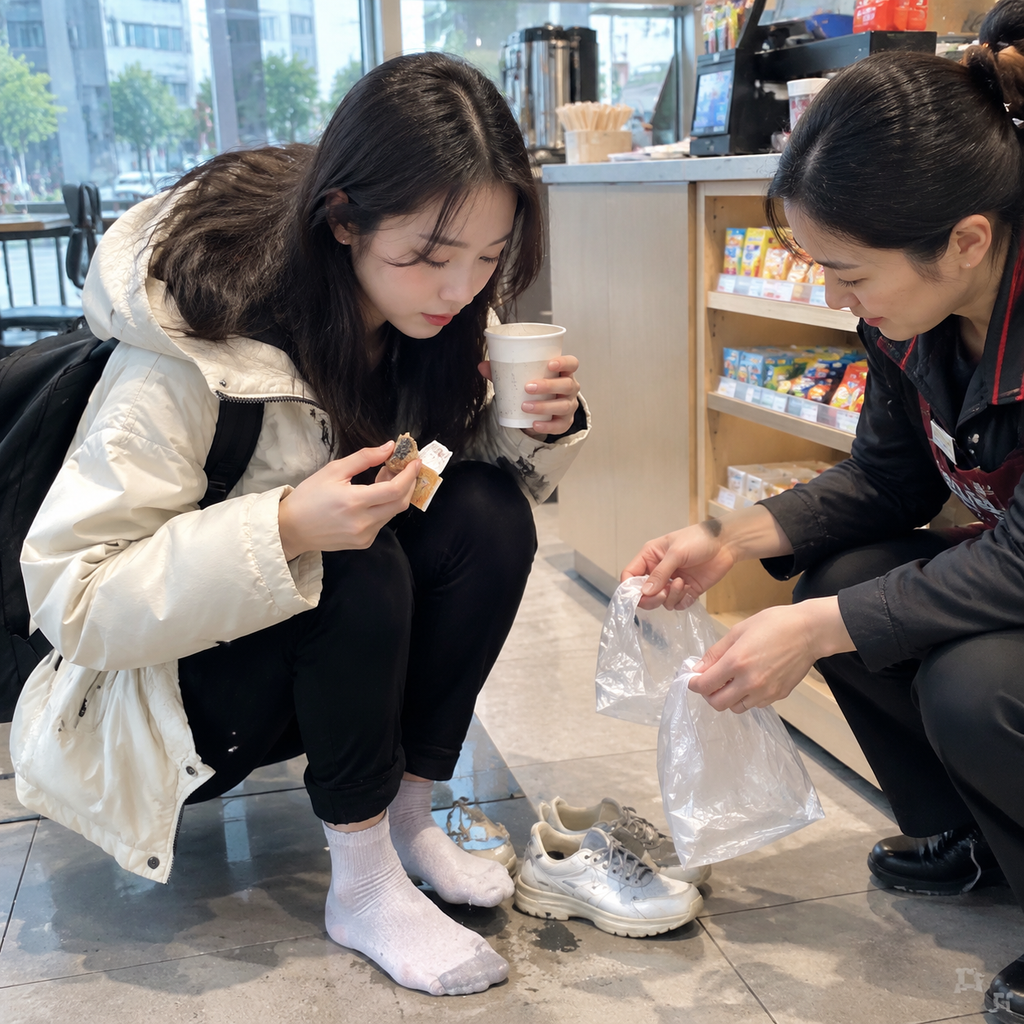
行程过半,司机把车拐进一处不大的公路服务区,让大家下车活动十五分钟,也顺便等最急的一阵雨过去。这里没有精致咖啡馆,只有便利店、热水机和一排被风吹得滴水的塑料雨棚。我用纸杯接了热水,把早晨剩下的粉包掰开吃,柜台阿姨见我鞋袜湿了一圈,递来两个薄塑料袋,让我套住袜子再穿鞋,至少别让脚一路发冷。几位乘客围着插座给手机充电,孩子蹲在门口看雨水沿台阶汇成小沟。十五分钟不长,却把车厢里那股焦躁散掉了;重新上车时,没人再问还要多久。
Halfway through the journey, the driver pulled into a small roadside service area so everyone could stretch for fifteen minutes while the hardest burst of rain passed. There was no polished café, only a convenience shop, a hot-water dispenser, and plastic awnings dripping in the wind. I filled a paper cup and broke apart the rice bun left from breakfast. Noticing the wet ring around my shoes and socks, the woman at the counter handed me two thin plastic bags and suggested slipping them over my socks before putting my shoes back on, so my feet would not stay cold for the rest of the ride. Passengers gathered around electrical outlets, while a child crouched at the doorway watching rainwater form a tiny channel down the steps. Fifteen minutes was enough to drain the impatience from the bus; when we boarded again, nobody asked how much longer it would take.
雨弱下来后,山的轮廓重新出现,路边偶尔闪过种玉米的坡地和黑瓦屋顶。司机说正常情况下,从站区到县城这段接驳并不算漫长,但雨天不能只看导航给出的分钟数;若赶当天的小七孔末班接驳,任何一次减速都可能把计划推倒。我原先还想把行李丢进客栈就去古镇看夜色,此刻干脆给前台发消息,请他们先帮我留一碗热汤,再确认第二天去小七孔的乘车点。回复很快来了:雨后樟江水汽重,今晚适合在县城短走,景区留到早上。这个建议没有让我觉得少看了什么,反而像给疲惫找到了合理出口。
When the rain eased, the outlines of the mountains returned, with occasional flashes of corn terraces and black-tiled roofs beside the road. The driver explained that the transfer from the station to the county town was not especially long in normal conditions, but on a rainy day the navigation estimate meant little. If someone was trying to catch the final same-day shuttle to Xiaoqikong, every slowdown could undo the plan. I had intended to drop my luggage at the guesthouse and hurry out to see the old town after dark. Instead, I messaged reception, asking them to save me a bowl of hot soup and confirm the boarding point for Xiaoqikong the next morning. Their answer came quickly: after rain, mist hangs heavily over the Zhangjiang River; take a short walk in town tonight and leave the scenic area for morning. It felt like giving the day a more breathable shape.
接近县城时,我们又在一处岔路口停了几分钟。前方一辆去景区方向的小巴正在换乘乘客,行李从后备厢一件件传下来,雨伞碰在一起,像一排突然开合的花。有人临时改去小七孔附近住宿,有人和我一样坚持进县城。调度员上车核对目的地,把第二天首班车的大致候车位置告诉我们,还特意说雨后不要卡着开园时间出发,最好留出道路清理和排队的余量。我把原计划里的“开门即入园”改成“早餐后看天气再走”,并把大七孔从当天傍晚移到第二天下午;少赶一个节点,整条路线反而清楚了。
Near the county town, we stopped for several minutes at a junction. A minibus bound for the scenic area was transferring passengers, luggage passing piece by piece from the rear compartment while umbrellas bumped together like flowers opening and closing. Some travelers changed their lodging to somewhere near Xiaoqikong; others, like me, continued into town. A dispatcher boarded to verify destinations, told us roughly where to wait for the first bus the next morning, and stressed that after heavy rain we should not plan around the exact opening time. Road clearing and queues both needed a margin. I changed “enter at opening” to “check the weather after breakfast,” and moved Daqikong from that evening to the following afternoon. With one fewer deadline to chase, the whole route became clearer.
客栈门口的石阶还在往下滴水。前台姑娘撑伞出来接我,先把箱子提过最滑的两级,又指着墙上的简图解释:今晚只沿樟江走到风雨桥附近,路面若积水就从菜市场那条亮堂的街返回;明早确认景区接驳正常,再去小七孔,游览时从较高的一端往低处走,鞋底湿滑便放弃最远的支线。我把原本塞得满满的一日安排拆成两半,洗过热水澡后只带手机和一把伞出门。桥边灯光落在涨水的河面上,被水纹拉成长长的金线,雨声轻了,饭馆里酸汤的热气却越来越浓。
Water was still dripping from the stone steps outside the guesthouse. The receptionist came out under an umbrella, lifted my suitcase over the two slipperiest steps, and used a simple wall map to explain the revised route. That evening I should walk only along the Zhangjiang River toward the covered bridge; if water gathered on the pavement, I could return along the brighter street by the market. In the morning, I should first confirm that scenic shuttles were running normally, then visit Xiaoqikong, starting from the higher end and moving downward. If the paths stayed slick, I could drop the farthest side trail. I split my crowded one-day plan into two. After a hot shower, I went out carrying only my phone and an umbrella. Lamps beside the bridge stretched into long gold threads across the swollen river, the rain softened, and steam scented with sour soup thickened outside the restaurants.
那晚我没有抵达任何著名观景点,只在桥下听了几分钟流水,又回客栈把湿鞋垫抽出来晾在窗边。窗外偶尔还有车驶过,轮胎切开积水,声音由近到远。贵阳到荔波这一程教我的并不是怎样把每一段交通压到最短,而是给山雨留下位置:车程可以慢,服务区可以停,换乘可以重新确认,抵达后也可以把路线拆开。第二天清晨,我看到屋檐滴水已经变得稀疏,便把折好的简图放进口袋。那张纸上有几处被雨手指晕开的蓝墨,比手机里笔直的路线更像真正走过的路。
That night I reached no famous viewpoint. I listened to the river beneath the bridge for a few minutes, then returned to the guesthouse and pulled the wet insoles from my shoes to dry beside the window. Cars still passed occasionally, their tires slicing through puddles before the sound faded away. The journey from Guiyang to Libo had not taught me how to compress every transfer into the shortest possible time. It taught me to leave room for mountain rain: a drive may slow, a service stop may stretch, a transfer may need checking again, and an arrival plan may be divided in two. The next morning, when the dripping from the eaves had grown sparse, I folded the hand-drawn map into my pocket. Its blue ink had blurred beneath damp fingers, and it looked more like a road truly traveled than the perfect line on my phone.
第二天六点半,荔波的清晨是从楼下卷粉摊的一声“加不加辣”开始的。河面浮着薄雾,临街铺子的卷帘门才拉起一半,青石板还湿着。我在客栈门口试踩鞋底,前台姑娘小岑追出来,把一根登山杖塞到我手里。她说西门地势较高,乘车到西门后顺势往东走,对膝盖省一点;若从东门进,最经典的水景来得早,却要把更多力气留给回程和上坡。我原先只想抢最早一班,听她说完,改乘七点二十的县城接驳,先把卷粉吃完,也让湿鞋干透。
At half past six the next morning, Libo woke to a rice-noodle vendor downstairs calling, “Chili or no chili?” Thin mist floated above the river, shop shutters were only halfway up, and the flagstones were still wet. I tested the grip of my shoes outside the guesthouse. Xiao Cen, the receptionist, hurried after me and pressed a trekking pole into my hand. The west gate, she explained, sat higher; entering there and walking east with the slope would be kinder to my knees. Starting at the east gate brought the famous waterscapes sooner, but demanded more strength for climbs and the return. I had planned to seize the earliest bus. Instead, I chose the 7:20 county shuttle, finished my rolled rice noodles, and gave my shoes time to dry.
接驳车爬出县城时,太阳在云缝里露了不到五分钟。喀斯特峰丛一座贴着一座,灰白岩壁从浓绿里斜露出来,像还没擦净的骨头。同行的摄影爱好者阿泰见我把折伞收进背包,摇头说山里晴不等于不下雨,让我把雨衣放在最外层。车刚过两个弯,雨果然从对面山谷推来,先是树冠发白,随后水点敲满玻璃。到西门时,风把雨斜送进雨棚,游客都挤着穿鞋套。阿泰没急着冲进去,只指给我看远处峰腰:雾若贴山不动,雨还会续;雾开始上提,才适合下坡。我们因此多等了十分钟,避开最硬的一阵。
As the shuttle climbed out of the county town, the sun appeared through a gap in the clouds for less than five minutes. Karst peaks crowded against one another, pale rock faces showing through the dense green like bones not quite wiped clean. A photography enthusiast named A-Tai saw me tuck my folded umbrella deep inside my pack and shook his head. Sunshine in these mountains did not mean the rain was over, he said; my raincoat belonged in the outer pocket. Two bends later, rain pushed across the opposite valley—the treetops turned pale first, then drops covered the windows. At the west gate, wind drove rain beneath the shelter while visitors crowded together pulling on shoe covers. A-Tai did not rush inside. Pointing at the middle of a distant peak, he said that mist clinging motionless to the slope meant more rain, while lifting mist signaled a safer descent. We waited ten minutes and missed the hardest burst.
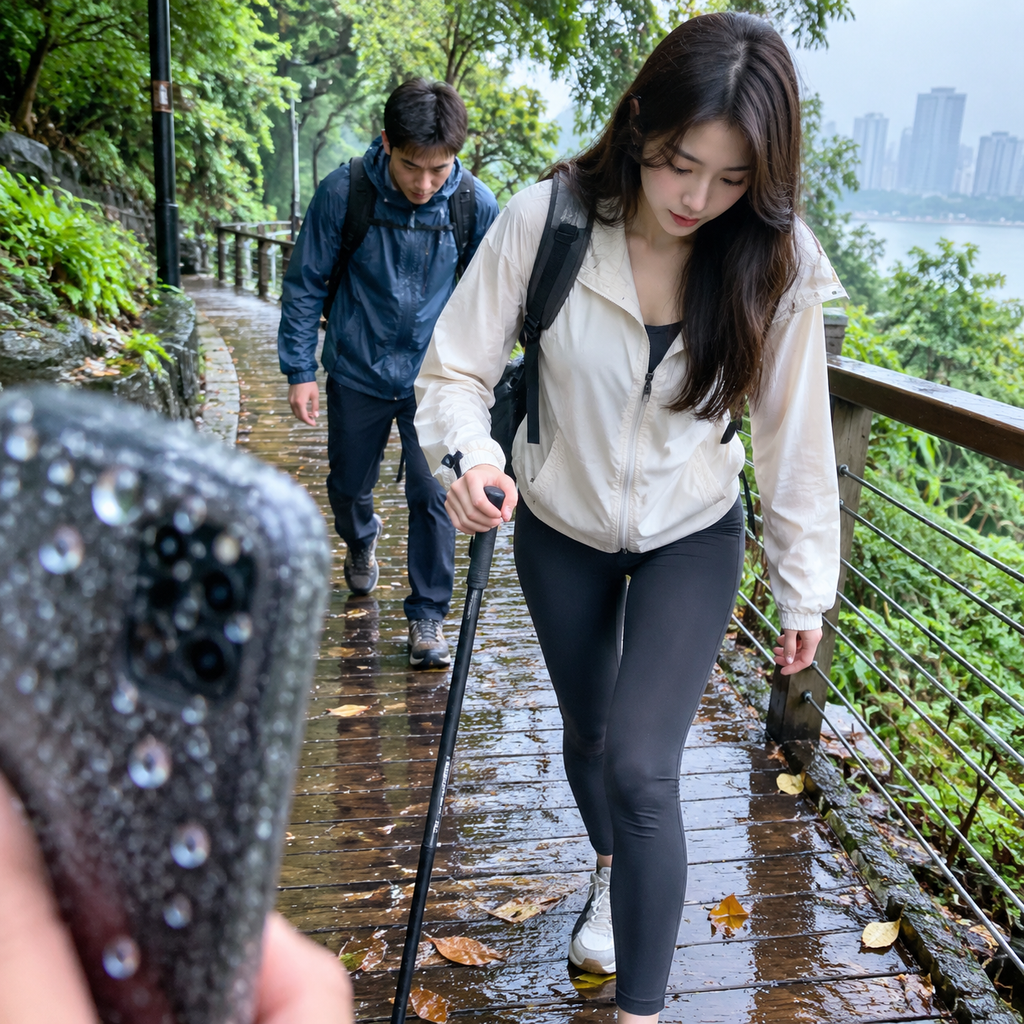
西门进去后,观光车把人送到卧龙潭附近。水在雨后呈出浓得不真实的蓝绿,瀑布沿弧形坝面铺开,声响盖过人声。我举起手机才发现镜头全是细水珠,小岑借我的杖此时比相机有用:木栈道湿滑,落叶黏在转弯处,每一步都得先点稳再落脚。到了鸳鸯湖换乘口,我在划船和继续步行之间犹豫。船工看见我裤脚已湿,直截了当地说,若还想认真走水上森林,就别把腿力和时间都花在等船上。阿泰去排船,我则搭短驳车跳过一段重复景观;两个人的路线在翠谷瀑布重新合拢,谁也没有因为少看一处而扫兴。
After entering through the west gate, a sightseeing bus carried us near Wolong Pool. The rain had deepened the water into an almost unreal blue-green, and the waterfall spread over the curved weir, loud enough to cover every voice. I raised my phone only to find the lens stippled with droplets. The pole Xiao Cen had lent me was far more useful than the camera: wet leaves clung to bends in the wooden walkway, and every step required planting the tip before shifting my weight. At the Yuanyang Lake transfer point, I hesitated between boating and continuing on foot. Seeing my soaked trouser cuffs, a boatman put the choice plainly: if I wanted to walk the Water Forest properly, I should not spend both leg strength and time waiting for a boat. A-Tai joined the boat queue; I used a short shuttle to skip a repetitive section. We met again at Cuigu Waterfall, and neither of us felt cheated by what we had left out.
水上森林比照片里更费腿。水流贴着石缝穿过林根,有些路段看似平缓,鞋底却不断在浅水、碎石和台阶间变换受力。我走到一处岔口时,小腿已经发紧,还想跟着“全程步行”的指示继续。负责疏导的景区师傅看我停下来揉腿,问我是不是还要去拉雅瀑布和六十八级跌水。他在地图上用指甲划出一段,说前方最好的办法不是硬撑,而是走完水上森林后乘一站车,再把体力留给响水河沿线。我照做后,呼吸很快稳下来。旅行中的取舍忽然变得具体:不是删掉风景,而是把有限的脚力放在水声、林荫和真正想看的路段上。
The Water Forest demanded more from my legs than its photographs suggested. Streams threaded between stones and tree roots; even gentle-looking sections forced my feet to adjust constantly among shallow water, loose rock, and steps. At a fork, my calves tightened, yet I still wanted to follow the sign for the full walking route. A staff member managing the flow of visitors saw me rubbing my leg and asked whether I also planned to visit Laya Waterfall and the Sixty-Eight-Level Cascades. Tracing the map with his fingernail, he advised me not to force the next stretch: finish the Water Forest, ride one shuttle stop, and save my legs for the Xiangshui River. Once I followed his advice, my breathing settled quickly. The trade-off became tangible—not deleting scenery, but spending limited strength on the sound of water, the forest shade, and the sections I truly wanted to see.
午后雨又密起来,拉雅瀑布的水雾几乎和山雨接在一起。我们沿响水河慢慢往小七孔古桥方向走,六十八级跌水一层接一层翻白,靠河的石径不断有人停下让路。阿泰从鸳鸯湖回来,兴奋地翻照片,却承认排船和划船耗掉了将近一个小时;我少了湖上的镜头,却还能稳稳走完最后一段。到古桥前,他的相机包越来越沉,我便替他拿雨伞;他则在陡台阶处回头接住我的手杖。原本各自做出的路线选择,到这里反而成了互相补位。桥身横在碧水上,湿透的七孔石拱颜色更深,伞沿滴下的水珠在我们之间连成一串。
By afternoon the rain had thickened again, and the spray from Laya Waterfall seemed to merge with the weather itself. We moved slowly along the Xiangshui River toward the ancient Xiaoqikong Bridge. The sixty-eight cascades flashed white one after another, and people repeatedly paused on the narrow riverside path to let others pass. A-Tai returned from Yuanyang Lake delighted with his photographs, though he admitted that waiting for and rowing the boat had consumed nearly an hour. I lacked his lake images, but still had enough strength to complete the final stretch. Near the bridge, his camera bag grew heavier, so I carried his umbrella; at a steep stairway, he turned and steadied my trekking pole. Choices we had made separately became ways of helping each other. The bridge lay across the turquoise water, its seven rain-darkened arches beneath a chain of drops falling from our umbrella rims.
东门出口的候车区挤着收伞的人,湿气从衣袖和鞋面往上冒。我本来还惦记着回县城后去大七孔,腿却在坐下那一刻诚实地发酸。小岑发来一句:“能轻松下楼再考虑加景点。”我站起来试了两级台阶,便放弃加码,改坐直达县城的接驳;若住景区附近,此时留在东门更省折返,若像我住县城,确认末班车并早点排队更稳。车开动后,阿泰隔着过道给我看古桥的长曝光,我把那根沾着红泥的登山杖横放膝上。窗外喀斯特山峰又被雨收进雾里,这一天留下的不是走满所有岔路的得意,而是仍有力气在到站时自己提起背包。
At the east-gate waiting area, people crowded together closing umbrellas, dampness rising from sleeves and shoes. I was still considering Daqikong after returning to town, but the ache in my legs became honest the moment I sat down. Xiao Cen sent a message: “Only add another sight if you can still walk downstairs easily.” I stood, tested two steps, and abandoned the extra stop in favor of a direct shuttle to the county town. Travelers staying near the scenic area could avoid backtracking by remaining near the east gate; those based in town, like me, were better served by confirming the final bus and queuing early. Once the bus moved, A-Tai showed me his long-exposure image of the old bridge across the aisle. I laid the trekking pole, now streaked with red mud, over my knees. Outside, rain folded the karst peaks back into mist. The satisfaction of the day was not having walked every branch of the route, but still having enough strength to lift my own backpack when we arrived.
车到县城客运点时已近傍晚六点,雨停了,鞋里却像藏着一小块冷海绵。我没有立刻弯腰搬箱子,而是坐在站棚下喝完半瓶温水,等急促的心跳慢下来。阿泰伸手要替我提背包,旁边维持秩序的大姐却先提醒:“走完湿路别猛坐太久,先把脚踝转开,再慢慢起。”我照着做了几圈,发紧的小腿果然松了一点。雨后疲劳最会骗人:人在瀑布边兴奋时不觉得累,一坐进返程车,寒意、饥饿和酸胀才一起追上来。此时能不能加夜游,不该看手表还剩多少时间,而要看下车时步子是否稳定、袜子是否湿透、胃里有没有东西。
It was nearly six in the evening when the bus reached the county transport stop. The rain had ended, but each shoe seemed to hold a small, cold sponge. Instead of bending immediately for my luggage, I sat beneath the shelter, finished half a bottle of warm water, and waited for my heartbeat to slow. A-Tai offered to lift my backpack, but the woman directing passengers spoke first: “After a wet walk, don’t sit still for too long. Circle your ankles, then stand slowly.” A few rotations did ease my tight calves. Fatigue after rain is deceptive. Excitement beside the waterfalls hides it; only on the return ride do chill, hunger, and soreness catch up together. Whether to add an evening outing should depend less on time left on the clock than on steady steps, dry socks, and whether there is food in your stomach.
客栈离下车点不过十来分钟,我仍把这段路当作恢复测试。先走亮堂平坦的主街,不抄沿河湿滑的小巷;上坡时能完整说完一句话,膝盖也没有发软,才继续自己背包。经过药店门口,小岑正撑伞来接我,看见裤脚的泥点便让我别急着洗热水澡,先换干衣、喝汤,等身体不再发冷再冲洗。她还摸了摸登山杖底端,笑说红泥已经替我记了里程。那碗酸汤粉端上来时,热气扑到脸上,我才发现手指一直凉着。盐分、热食和二十分钟安静,比多打卡一处夜景更有效。
The guesthouse was only a little over ten minutes from the drop-off, but I treated the walk as a recovery test. I stayed on the bright, level main street rather than cutting through a slick riverside lane. Only when I could speak a full sentence uphill and felt no weakness in my knees did I keep carrying my own pack. Xiao Cen met me near a pharmacy under an umbrella. Seeing mud on my trouser cuffs, she told me not to jump straight into a hot shower: change into dry clothes, drink some soup, and wait until the chill passed. She touched the red mud on the pole tip and laughed that it had recorded my mileage. When a bowl of sour-soup noodles arrived, steam struck my face and I finally noticed how cold my fingers were. Salt, hot food, and twenty quiet minutes restored me better than another night-view checkpoint could have.
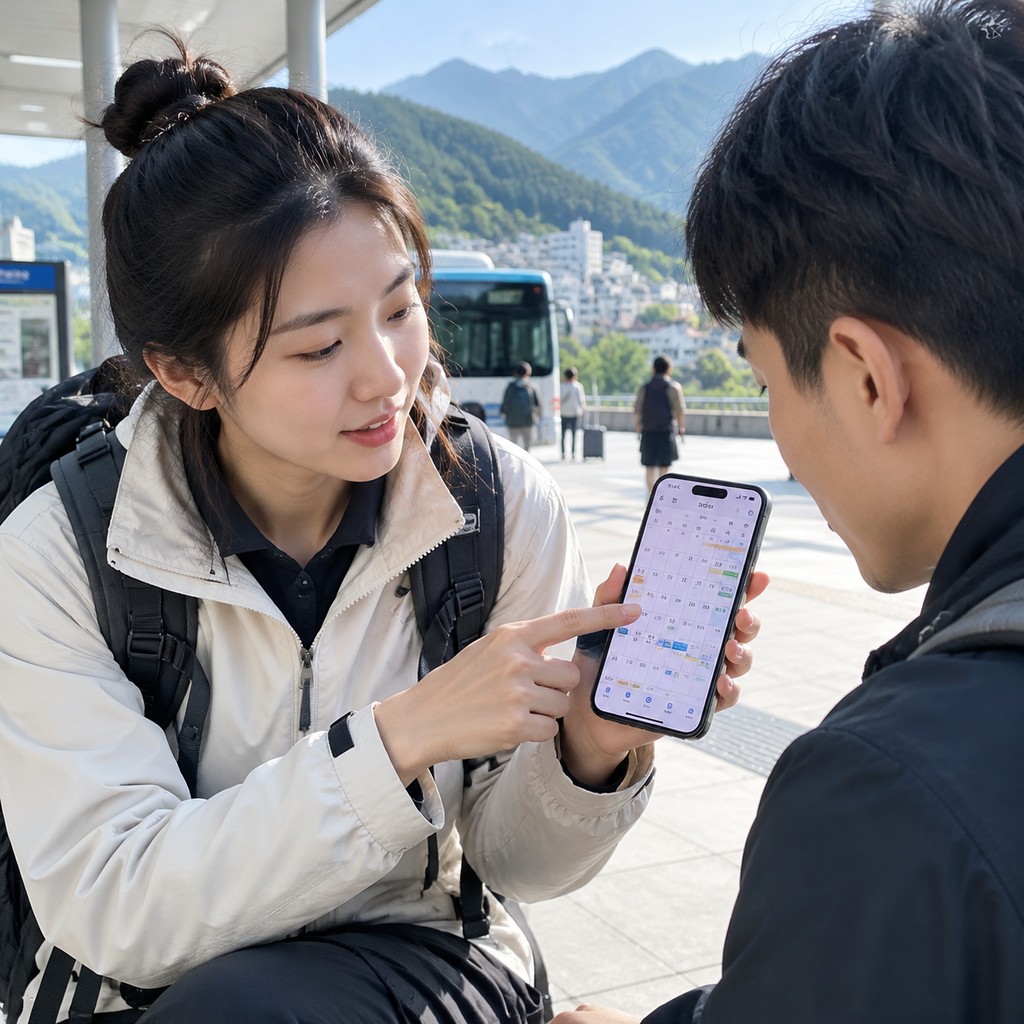
吃过饭,我和阿泰把第二天返程逐项核对。他去荔波站搭晚些的高铁,我则要先回贵阳住一夜;两条安排都不能只写“打车去车站”。小岑让我们先确认县城到荔波站的接驳发车点,再按雨天车程多留至少一班车的余量。若末班接驳时间不合适,就让客栈代约正规车辆,并把车牌和上车位置发给同行人;不要到了退房时才临时拼车,更不要听见司机说“来得及”便把安检时间也算进公路车程。她指着手机日历说,山区返程最值钱的不是最快方案,而是错过一环后仍有下一种走法。
After dinner, A-Tai and I checked the next day’s return journey item by item. He would take a later high-speed train from Libo Station, while I planned to spend a night in Guiyang. Neither plan could be reduced to “take a taxi to the station.” Xiao Cen had us confirm the county shuttle’s boarding point first, then leave at least one full departure of extra margin for rainy-road conditions. If the final shuttle did not fit, the guesthouse could arrange a licensed vehicle and send its plate number and pickup location to a companion. She warned us not to wait until checkout to improvise a shared car, and not to let a driver’s “we’ll make it” erase the time needed for security. Pointing at the calendar on her phone, she said the most valuable return plan in the mountains was not the fastest one, but one that still offered another move if a connection failed.
第二天离开前,小岑又把人物提醒说得很细:老人不要只带折叠伞,湿台阶上应空出一只手扶栏杆;带孩子的家庭先约定走散后的集合点,别让孩子追着观光车跑;独自旅行者上车后把车牌和预计抵达时间发出去;摄影者则要把镜头取舍放在体力之后,背包一旦让肩膀持续发麻,就该收机。若脚踝已肿、胸闷头晕或发冷不止,不要用“再走十分钟”测试意志,应就近找工作人员或医疗点。她说这些话时正把我的湿雨衣折进一个旧塑料袋,动作平常,却比任何口号都可靠。
Before we left the next day, Xiao Cen made her advice specific to different travelers. Older visitors should not rely on a folding umbrella alone; on wet steps, they need one free hand for the railing. Families with children should agree on a meeting point before entering and never let a child chase a sightseeing bus. Solo travelers should send someone the vehicle plate and estimated arrival time after boarding. Photographers must place physical condition ahead of the next shot; if a camera bag causes lasting numbness in the shoulder, it is time to pack the camera away. A swollen ankle, chest tightness, dizziness, or persistent chills should not be challenged with “just ten more minutes”—find staff or a medical point nearby. As she spoke, she folded my damp raincoat into an old plastic bag. The ordinary gesture made her warning more dependable than any slogan.
返程车驶上桥时,昨夜浑浊的河水已经透出一点青色。我没有为没去成大七孔遗憾,只把荔波站、贵阳北站和住处之间的转乘截图分别存好,避免山区信号忽弱时临时翻找。阿泰在前一站下车,背起相机包前敲了敲我的登山杖,说下次晴天再补那条支线。车门合上,他隔着玻璃抬手告别。我的小腿仍酸,却不再发冷,背包也能稳稳提起。进下一条隧道前,我又把车票、充电线和干袜子放到随手可取的位置,并设好提前一站的静音闹钟。这些小准备让返程不必再变成一场追赶。山峰向后退去,杖尖那圈干掉的红泥留在脚边,提醒我这趟路最完整的部分,恰恰是知道在哪里继续走,在哪里停下来,以及怎样把自己安全送回去。
As the return bus crossed the bridge, a trace of green had returned to the river that had been muddy the night before. I did not regret missing Daqikong. Instead, I saved separate screenshots for the transfers among Libo Station, Guiyang North, and my lodging, so weak mountain reception would not leave me searching at the last minute. A-Tai got off one stop earlier. Before lifting his camera bag, he tapped my trekking pole and said we could complete that side trail on a clear day. The doors closed and he waved through the glass. My calves were still sore, but the chill was gone and I could lift my backpack steadily. Before the next tunnel, I checked that my ticket, charging cable, and dry socks were all within reach, then set a quiet alarm for the station before mine. Small preparations kept the return from turning into another race. As the peaks receded, the dried ring of red mud on the pole rested beside my feet. It reminded me that the fullest version of this journey was knowing where to keep walking, where to stop, and how to bring myself safely back.
其实那天早晨出发前,路线还有过一次更彻底的改动。七点刚过,客栈群里传来景区部分临水步道暂缓开放的消息,我正想照旧去西门,小岑却把前台那张塑封地图转了半圈:先坐县城接驳到东门,等现场确认观光车和栈道状态;若上游雨势减弱,再乘景区车去卧龙潭,由西向东走。她没有替我决定,只让我先回答一件事——今天最想看的究竟是古桥、跌水,还是把每个点都盖章。我说想听水声,她便在响水河一带画了个圈。原本僵硬的全线穿越,变成了随雨移动的路线。
In fact, the route had undergone a more fundamental change before we left that morning. Just after seven, the guesthouse group chat reported that some waterside paths were temporarily closed. I was about to head for the west gate as planned, but Xiao Cen turned the laminated map at reception around. She suggested taking the county shuttle to the east gate first and checking the sightseeing buses and walkways on site. If the rain upstream eased, I could then ride to Wolong Pool and walk from west to east. She did not decide for me; she asked what mattered most—seeing the old bridge, following the cascades, or collecting every checkpoint. I said I wanted to hear the water, so she circled the Xiangshui River. A rigid end-to-end crossing became a route that could move with the rain.
东门值班的工作人员老覃成了这次调整真正的推手。他的雨帽边缘一直往下滴水,却耐心把游客分成两拨:赶时间的人先看古桥,愿意等的人留意西门方向的车况。我把返程车票给他看,他算了算,说最迟三点半就应往出口收,不要拿末班接驳赌山路畅通。见我担心绕行会漏掉核心景色,他指向雨幕后的一线白水:“瀑布不会因为你少走两公里就变小。”这句带笑的提醒让我先沿东侧短走,等十一点收到上游放行通知,再反向接入主线。
A duty officer at the east gate, Lao Qin, became the person who truly moved the revised plan forward. Rain dripped steadily from the rim of his hood as he divided visitors into two groups: those pressed for time could see the old bridge first, while those willing to wait should watch the road status toward the west gate. I showed him my return ticket. After calculating the margin, he told me to begin moving toward the exit no later than 3:30 rather than gamble on the final shuttle and a clear mountain road. When I worried that the detour would omit the essential scenery, he pointed to a white ribbon of water behind the rain. “A waterfall does not become smaller because you walk two kilometers less.” His amused reminder sent me on a short eastern walk first; when the upstream section reopened at eleven, I joined the main route in reverse.
这条临时走法反而让我看清荔波山水的层次。早上的古桥一带水色偏灰,桥缝里带着湿苔的气味;中午云脚升高后,卧龙潭才慢慢透出蓝绿,林间蝉声也从稀疏变得密起来。阿泰在岔路口追上我,手里多了一把从服务点借来的长柄伞。他说西侧一段刚清过落枝,能走,但靠水的石阶仍滑。我们约好他在前探路,我隔两级台阶再下;遇到窄处,他先收伞让上行游客通过。我原本把同行理解为一起打卡,此刻才发现,雨天同行更像彼此替对方多看一步。
The improvised route revealed the layers of Libo’s landscape more clearly. In the morning, the water near the old bridge was gray, and the joints between the stones smelled of wet moss. By noon, the cloud base had lifted; only then did Wolong Pool slowly recover its blue-green color, while the cicadas in the forest grew from scattered calls into a steady chorus. A-Tai caught up with me at a junction carrying a long-handled umbrella borrowed from a service point. He said fallen branches had just been cleared from a western section, though the waterside steps remained slick. We agreed that he would test the path ahead while I kept two steps behind. At narrow spots, he closed his umbrella first to let uphill visitors pass. I had once thought traveling together meant collecting the same sights; in rain, it meant looking one step farther for each other.
下午两点,云层忽然压低,老覃通过景区广播提醒靠河游线提前回撤。阿泰还想等一束光照进潭面,我指了指他已经起雾的相机包;他沉默几秒,主动把三脚架缩回去。我们没有原路折返,而是按工作人员指引搭一段观光车,避开刚出现落石警戒的林道,再从东门直接接县城班车。候车时雨打在金属棚顶,响得几乎听不清报站。老覃走过来逐辆核对目的地,特意把我安排在靠前座位,说到县城若仍下大雨,别在路边临时下车,宁可到客运点再叫车。山雨调整至此不只是少看景点,而是把每一个移动环节重新扣紧。
At two in the afternoon, the clouds suddenly dropped and Lao Qin used the scenic-area broadcast to call visitors back early from riverside routes. A-Tai still wanted to wait for a shaft of light to enter the pool, but I pointed at his camera bag, already fogged with moisture. After a few silent seconds, he collapsed the tripod himself. We did not retrace our steps. Following staff instructions, we rode a sightseeing bus past a forest path newly marked for rockfall risk, then transferred directly to the county bus at the east gate. Rain struck the metal shelter so loudly that station calls were barely audible. Lao Qin walked from vehicle to vehicle checking destinations. He placed me near the front and said that if heavy rain continued in town, I should not get off beside the road but ride to the transport stop and call a car there. Adjusting for mountain rain no longer meant merely seeing fewer sights; it meant tightening every link in the journey.
回程也因此分成晴雨两套。晴天可按县城接驳预留正常换乘,抵达荔波站后再过安检;雨天则把出发提前一班,手机里同时留好客栈约车电话和高铁改签入口。我的列车原定傍晚出发,看到公路积水后便在车上改成稍晚一班,宁愿在车站吃碗粉,也不让司机赶速度。到站前,司机师傅接到前方短时管制通知,绕行了一段乡道。车内有人开始焦躁,他只说:“票能改,弯道不能削。”十几分钟后重新并回主路,那句话让全车安静,也让我确信改签不是失败,而是把不可控的山路从计划里拿掉。
The return therefore split into fair-weather and rain-weather versions. On a clear day, the county shuttle could run on its usual margin before station security. In rain, I would leave one departure earlier and keep both the guesthouse car number and the rail-ticket change page ready on my phone. My train was originally scheduled for early evening, but after seeing standing water on the road I changed to a later service while still on the bus. I would rather eat a bowl of noodles at the station than make a driver hurry. Near the station, our driver received notice of a brief road restriction and detoured through a village route. Some passengers grew restless. He said only, “A ticket can be changed; a bend cannot be cut shorter.” When we rejoined the main road ten minutes later, the bus was quiet, and I knew the ticket change was not a failure. It had removed an uncontrollable mountain road from the timetable.
在荔波站候车厅,阿泰终于把相机包放在座椅下,去买了两杯热茶。他把其中一杯推给我,说那束没等到的光就留给下次。我打开鞋袋确认干袜子还在,又给小岑发去登山杖已经擦净的照片。窗外雨幕里,接驳车一辆接一辆停稳,乘客先收伞,再抬行李,没有谁再冲着门跑。广播响起时,我们各自背包,却都先看了一眼对方有没有站稳。第二天的荔波没有按原计划把所有景点交出来,却用古桥的苔味、卧龙潭渐亮的水色和一次从容改签,把山水、人物与回程真正连成了一条路。
In the waiting hall at Libo Station, A-Tai finally set his camera bag beneath a seat and bought two cups of hot tea. Sliding one toward me, he said the beam of light he had missed could wait for another visit. I opened my shoe bag to check that the dry socks were still there, then sent Xiao Cen a photograph of the cleaned trekking pole. Beyond the windows, shuttles stopped one after another in the rain. Passengers closed their umbrellas before lifting their luggage; nobody ran at the doors. When the boarding announcement sounded, we shouldered our packs but each first checked that the other was steady. Libo’s second day had not surrendered every sight on the original plan. Instead, the smell of moss on the old bridge, the gradually brightening water of Wolong Pool, and one unhurried ticket change joined landscape, people, and the journey home into a single road.
列车进站前,我还有半小时,便没有马上钻进检票队伍,而是在候车厅尽头找了个靠墙的位置做最后一次恢复。先脱下湿鞋,把脚趾慢慢张合,再用保温杯贴着小腿滚动;接着吃掉背包里剩下的香蕉和几块苏打饼干,小口喝水,不让空胃在高速行驶时翻腾。阿泰去接热水,回来时递给我一小包纸巾,说镜头可以等,发冷的脚不能等。十几分钟后,我能不扶椅背连续走到洗手间,肩膀也不再因为背包带而发麻,这才确认身体已经从景区的兴奋里真正落地。
With half an hour left before boarding, I did not immediately join the queue. I found a place against the wall at the far end of the waiting hall and made one final recovery check. I removed my damp shoes, slowly spread and curled my toes, then rolled my thermos along each calf. I ate the banana and soda crackers left in my pack and sipped water so an empty stomach would not rebel on the fast-moving train. A-Tai returned from the hot-water dispenser with tissues and said that a lens could wait, but cold feet could not. Ten minutes later, I could walk to the restroom without holding the seatbacks, and the straps no longer made my shoulders numb. Only then did I know my body had truly come down from the excitement of the scenic area.
上车后,我把大背包放上行李架,只留下车票、薄外套和水在座位旁。列车钻入第一个长隧道时,窗玻璃变成一面黑镜,我看见自己头发还带着雨后潮气,脸色却比傍晚刚出东门时松弛许多。乘务员推车经过,我买了一盒温牛奶,没有用咖啡把疲倦硬压下去。到都匀附近,耳朵里持续了一天的瀑布轰鸣才渐渐淡掉,取而代之的是车轮均匀的轻响。我设了四十分钟闹钟,闭眼前又把贵阳北的出站口截图调出来;休息和下一次换乘不再互相争抢,而是各有位置。
Once aboard, I placed the large pack on the luggage rack and kept only my ticket, a light jacket, and water beside the seat. As the train entered its first long tunnel, the window became a dark mirror. My hair still held the dampness of mountain rain, but my face looked far more relaxed than it had at the east gate. When the service cart passed, I bought warm milk instead of forcing the fatigue down with coffee. Near Duyun, the waterfall’s roar that had lingered in my ears all day finally faded into the train’s even murmur. I set an alarm for forty minutes and opened the screenshot of the exit at Guiyang North before closing my eyes. Rest and the next transfer no longer competed; each had its own place.
抵达贵阳北时,站台边缘还留着一层雨水反光。我没有随着第一拨人冲扶梯,而是等过道松开,先在座位旁活动膝盖,再取下背包。出站大厅比清晨明亮得多,便利店烤肠的香味、接站人群的说话声和出租车通道的蓝色灯牌一起把我拉回城市。原计划中,我还想去吃一顿夜宵,此刻只在站内买了清淡的粥和一瓶电解质水,随后按预先保存的上车点叫车。司机到达后先报尾号,我也把车牌发给客栈。返程最后一段没有意外,靠的不是运气,而是把每个容易慌乱的小口子提前缝好。
When we reached Guiyang North, a sheen of rain still reflected along the platform edge. I did not rush toward the escalator with the first wave of passengers. I waited for the aisle to clear, moved my knees beside the seat, and only then lowered my backpack. The exit hall was much brighter than it had been that morning. The smell of grilled sausages, the voices of people meeting arrivals, and the blue signs above the taxi channel pulled me back into the city. I had once planned a late supper, but bought plain congee and an electrolyte drink instead, then booked a car at the pickup point I had saved. The driver stated the final digits of his plate, and I sent the full number to the guesthouse. The last section passed without trouble not because of luck, but because every small opening for panic had been closed in advance.
客栈房间里,我没有立刻整理照片。先把湿衣分开挂好,用毛巾垫住还在滴水的鞋,再平躺十分钟,让脚踝略高于枕头。洗澡后若小腿仍紧,就只做轻缓伸展,不用力按揉;若酸痛越来越重,或者关节出现明显肿胀,第二天便不再安排长距离步行。那晚我把闹钟调迟半小时,喝完粥才给家里报平安。窗外的贵阳刚停雨,楼下公交驶过湿路,红色尾灯被拉成两道细线。身体恢复不是把疲劳抹掉,而是让它逐渐回到可以判断、可以照顾的范围里。
Back at the guesthouse, I did not begin sorting photographs. I hung the wet clothes separately, placed a towel beneath the dripping shoes, and lay down for ten minutes with my ankles slightly raised. After showering, I used only gentle stretches if my calves remained tight, without deep pressure. If soreness intensified or a joint became visibly swollen, the next day would contain no long walk. I set the alarm half an hour later than usual and finished the congee before telling my family I was safe. Outside, the rain in Guiyang had just stopped. A city bus crossed the wet street, its red taillights stretching into two fine lines. Recovery did not mean erasing fatigue; it meant bringing it back within a range I could read and care for.
临睡前,我终于翻到古桥那张照片。画面边缘有一滴没擦净的雨水,七孔石拱因此微微发虚,阿泰的伞尖也只露出半截。若按出发前的标准,这不是一张合格的旅行照;可我没有裁掉那滴水。它让我记得老覃让我们提前回撤,记得小岑递来的登山杖,也记得自己在东门诚实地放弃了大七孔。第二天早上,我下楼归还塑料鞋袋,走过前台时已经能平稳提起箱子。老板问荔波最值得看的是什么,我想了一下,说是雨停以后,大家都没有急着走的那几分钟。门外的梧桐叶还在滴水,我拉开箱杆,轮子越过门槛时没有打滑,也没有再回头核对行程。
Before sleeping, I finally opened the photograph of the old bridge. A drop I had failed to wipe from the lens blurred one edge of the seven stone arches, and only the tip of A-Tai’s umbrella appeared in the frame. By the standards I had carried at departure, it was not a successful travel photograph, yet I did not crop the drop away. It held Lao Qin’s early retreat warning, the trekking pole Xiao Cen had lent me, and my honest decision at the east gate to give up Daqikong. The next morning, I returned the plastic shoe bag downstairs and could lift my suitcase steadily as I passed reception. The owner asked what had been most worth seeing in Libo. After a moment, I answered: the few minutes after the rain stopped, when nobody was in a hurry to leave. The plane-tree leaves outside were still dripping. I raised the suitcase handle, and its wheels crossed the threshold without slipping; this time, I did not turn back to check the itinerary.
- 我们在常熟尚湖的五月雨里轮流拿伞拍照,最后笑到谁都不在乎照片拍没拍好 | Passing One Umbrella Around in Changshu's May Rain, We Laughed Until None of Us Cared About the Photos Anymore
- 中国高铁旅行攻略:如何用高铁串联你的中国行 | China by High-Speed Rail: How to Link Your Entire Trip on the Bullet Train
- 成都大熊猫与宽窄巷子 | Chengdu: Giant Pandas & Kuanzhai Alley
- 中国茶叶选购:龙井普洱铁观音怎么挑 | Buying Chinese Tea: Longjing, Pu'er & Tieguanyin
- 我在西安学会先看城墙边的风,再决定傍晚走多远 | In Xi’an I Learned to Feel the Wind by the City Wall Before Deciding How Far to Walk at Dusk
- 我在杭州小馆里第一次听懂“清淡一点” | In a Hangzhou Eatery, I Finally Understood “A Little Lighter”
- 二月冬末旅游:南方暖意正浓 | Late Winter Travel: Warmth in Southern China
- 都江堰的水没有被堵住:我沿着分流口看一座工程怎样工作 | Dujiangyan’s Water Was Not Blocked: How I Read Its Flow
- 夜市烧烤摊的烟火气,教我别只找网红餐厅 | Smoke from a Night Grill Taught Me Not to Only Chase Viral Restaurants
- 水果摊前站了十五分钟,我才学会在中国买水果不是只看价格 | Fifteen Minutes at a Fruit Stall Taught Me That Buying Fruit in China Is About More Than Price
Comments (0)