
泉州西街入夜以后,一盏圆灯就能把面线糊和人情都照热 | Once Night Falls on West Street in Quanzhou, One Round Lamp Can Warm Both Noodles and Human Feeling
泉州老街的一盏灯,让我看见生活比景点更耐看 | One Lamp on an Old Street in Quanzhou Showed Me Daily Life Outlasts Attractions
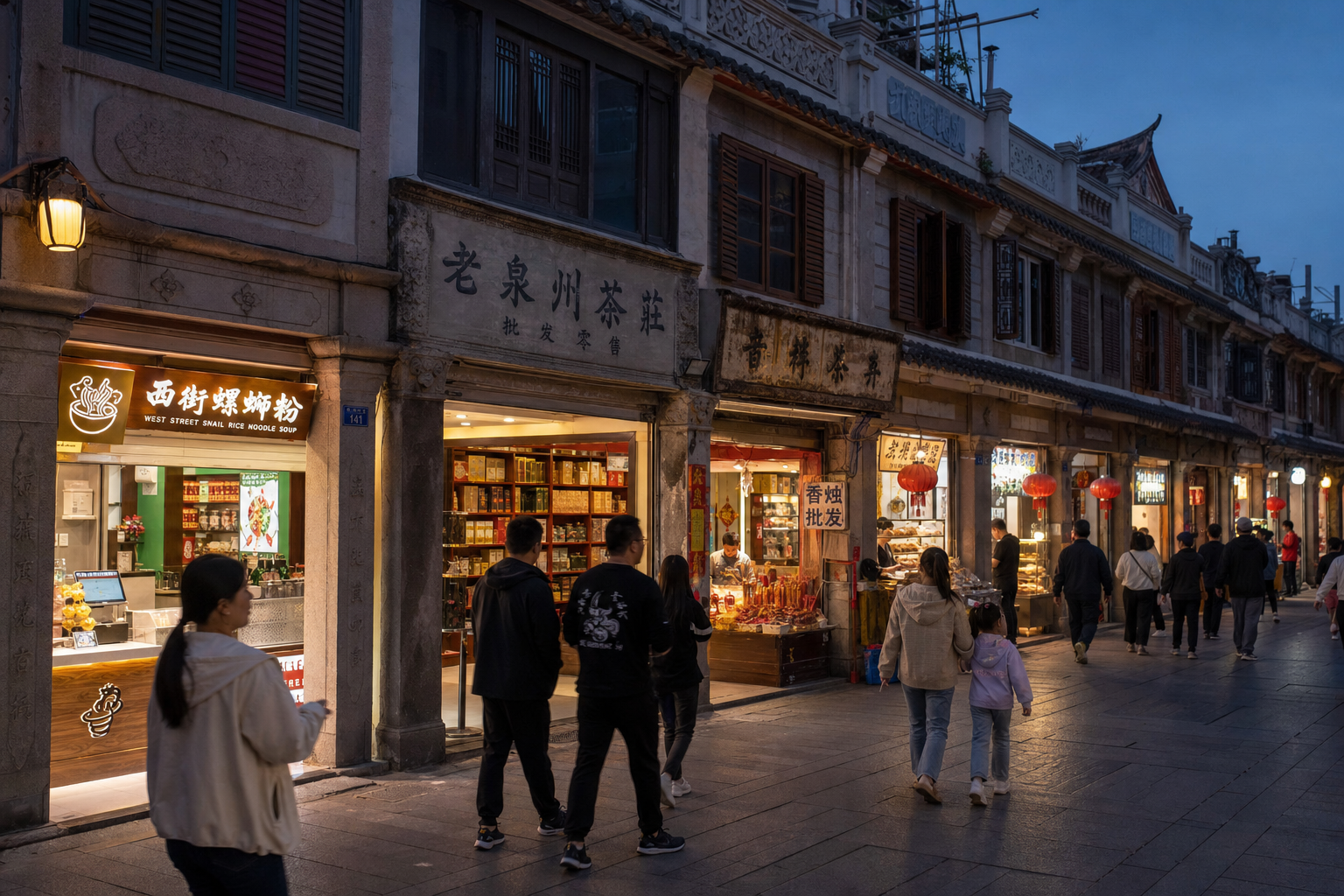
泉州的老街灯,常常不是在天完全黑下来的时候才被注意到。傍晚刚落下,天空还带着一点蓝灰,骑楼下的店铺已经陆续亮起灯,光从门口铺出来,落在石板路上,也落在来往人的鞋面上。我沿着西街慢慢走,身边是卖面线糊的小店、写着旧招牌的茶铺、摆着香烛和糕点的柜台。白天的泉州热闹而明亮,许多细节被阳光推到眼前;夜色一来,老街却像把声音收低了一点,让灯光替它继续说话。那些灯并不强烈,有的是暖黄的,有的是偏白的,有的藏在屋檐下,只照亮一小块砖墙。它们不像商场灯牌那样急着吸引人,而是安安静静守着门口,像老街自己留下的眼睛。
The old street lamps of Quanzhou are often noticed before the sky becomes completely dark. When evening has just settled and the sky still carries a little blue-gray, shops under the arcades begin to light up one after another. Light spreads from doorways onto stone slabs and onto the shoes of people passing by. I walked slowly along West Street, with small shops selling mianxianhu, tea stores with old signs, and counters displaying incense, candles, and pastries beside me. Quanzhou in daytime is lively and bright, with many details pushed forward by the sun. But when night arrives, the old street seems to lower its voice and lets the lamps continue speaking for it. Those lights are not intense. Some are warm yellow, some lean white, and some hide under eaves, illuminating only a small piece of brick wall. They do not rush to attract people like mall signs. They quietly guard each entrance, like eyes the old street has kept for itself.
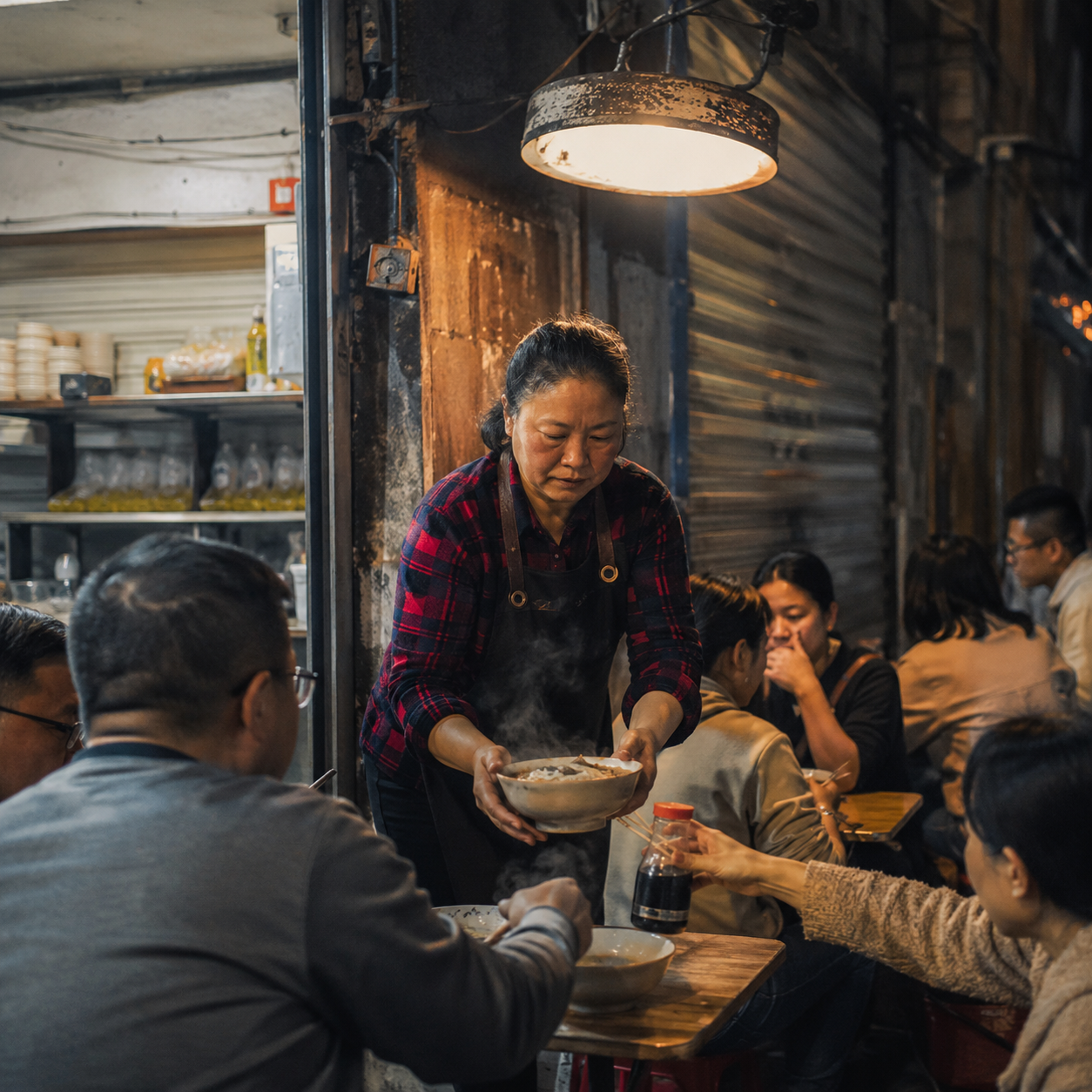
我最先停下来的地方,是一盏挂在小吃店门口的圆灯。灯罩有些旧,边缘沾着油烟,灯光透出来时带着一点柔软的雾气。店里坐满了吃夜宵的人,碗筷声、点单声和锅里的热气一起往外涌。老板娘把一碗面线糊端到门口的小桌上,汤面上浮着胡椒和葱花,旁边的人把醋瓶递过去,动作熟得像已经重复过许多年。那盏灯照着他们的手,也照着桌面上细小的汤渍。泉州的老街灯并不只是照明,它让这些平凡动作有了可被看见的温度。一个城市的夜晚如果只有亮度,会显得空;有了这样带着烟火气的光,夜才真正落到生活里。
The first place where I stopped was beneath a round lamp hanging at the entrance of a snack shop. The lampshade was a little old, with grease smoke on its edge, and the light passing through it carried a soft mist. The shop was full of people eating late-night food, and the sound of bowls and chopsticks, orders, and steam from the pot all surged outward together. The owner brought a bowl of mianxianhu to a small table by the door. Pepper and scallions floated on the soup, and someone beside the table passed over the vinegar bottle with a movement so familiar it seemed to have been repeated for many years. That lamp shone on their hands and on the tiny stains of soup on the tabletop. Quanzhou’s old street lamps are not merely for illumination. They allow these ordinary gestures to hold a visible warmth. If a city’s night had only brightness, it would feel empty. With light that carries the smell of daily life, night truly settles into living.
继续往前,街边的老屋在灯光下显出不同于白天的层次。红砖墙白天看起来结实而粗粝,到了夜里,砖缝里的阴影被拉深,墙面像有了更长的记忆。木门半开着,门内一盏小灯照着神龛,香火的红点忽明忽暗。泉州的宗教气息并不只存在于大庙和宏大的仪式里,它也藏在老街的灯下,藏在一家人门口的小供桌、墙角的香炉、门楣上的字迹里。路过的人不一定停下,却会自然放慢脚步,像知道这里有某种比行程更长久的东西。灯光把这些角落轻轻托出来,不解释,也不催促,只让它们在夜里继续存在。
As I continued, the old houses along the street revealed layers different from those in daylight. Red brick walls look solid and rough by day, but at night the shadows inside the mortar lines deepen, and the walls seem to hold a longer memory. A wooden door stood half open, and a small lamp inside shone on a household shrine, where red points of incense brightened and dimmed. Quanzhou’s religious atmosphere does not exist only in large temples and grand ceremonies. It also hides beneath old street lamps, in a small offering table at a family doorway, an incense burner in a corner, and characters above a lintel. Passersby may not stop, but they naturally slow down, as if knowing that something here lasts longer than an itinerary. The light gently lifts these corners into view. It does not explain or urge; it simply lets them continue existing in the night.
我走到一处巷口时,灯光突然变窄了。主街上的热闹还在身后,巷子里只有几盏低低的灯,照着潮湿的墙根和停在门边的电动车。远处传来孩子练琴的声音,断断续续,不算熟练,却让巷子显得有人气。泉州的老街常常就是这样:几步之外是游客、招牌和排队的小吃,再拐进去一点,就是居民自己的夜晚。灯光在这里没有装饰性,它只负责让人看清脚下的路、门前的台阶和晾在窗边的衣服。可是正因为这种朴素,它显得更可靠。旅行中的灯有很多种,有的为了拍照,有的为了商业,有的为了仪式;老巷里的这几盏灯,只是为了让人回家。
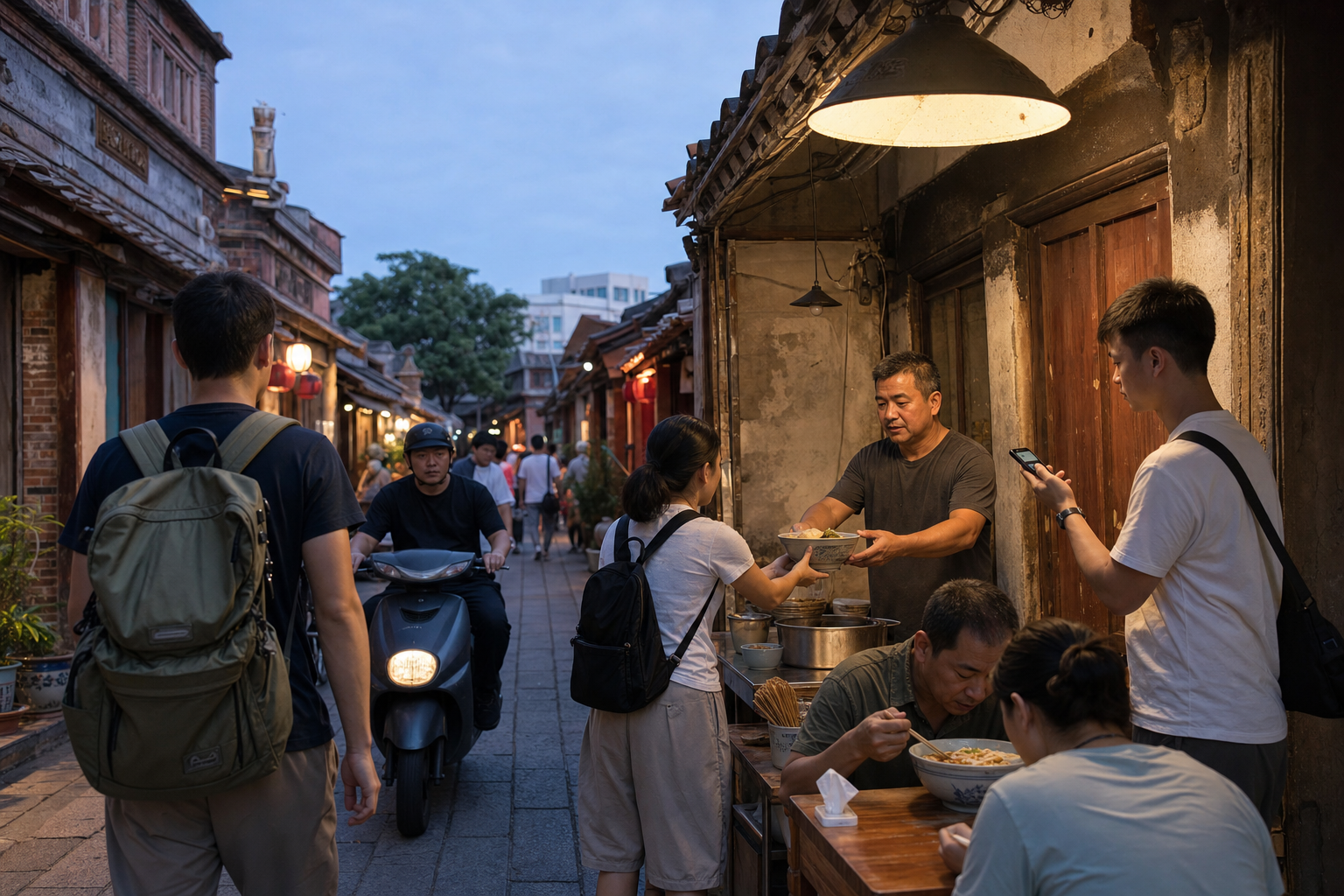
When I reached an alley entrance, the light suddenly narrowed. The liveliness of the main street remained behind me, while inside the alley there were only a few low lamps shining on damp wall bases and electric scooters parked by doorways. From farther in came the sound of a child practicing an instrument, intermittent and not very skilled, but it made the alley feel inhabited. Quanzhou’s old streets are often like this: a few steps away are tourists, signs, and lines for snacks; turn a little farther in, and it becomes the residents’ own evening. The light here has no decorative purpose. It is only responsible for helping people see the road underfoot, the steps before doors, and clothes hanging near windows. Yet precisely because of this plainness, it feels more dependable. There are many kinds of lights in travel: some are for photos, some for business, some for ceremony. These lamps in the old alley are simply for people going home.
回到主街时,游客比刚才更多了。有人举着手机拍钟楼,有人站在店门口研究菜单,有人一边走一边吃炸醋肉,纸袋被热气撑得鼓起来。老街灯把每个人的脸照得一闪一闪,像把陌生人的表情临时借给这条街。泉州的夜并不是单一的怀旧,它也很现实,很拥挤,很会做生意。可这些现实并不破坏老街,反而让它保持活着的状态。如果老街只剩安静和古旧,就容易变成展品;如果灯下还有人排队、争论、等朋友、找零钱,它就仍然是一条街,而不只是被保护起来的背景。灯光让新旧并排站在一起,彼此不必完全解释。
When I returned to the main street, there were more visitors than before. Some held phones to photograph the clock tower, some stood at shop entrances studying menus, and some walked while eating fried vinegar pork, paper bags bulging with heat. The old street lamps lit each person’s face in flashes, as if lending strangers’ expressions temporarily to the street. Quanzhou’s night is not a single note of nostalgia. It is also realistic, crowded, and skilled at business. But these realities do not damage the old street; instead, they keep it alive. If an old street had only quietness and age, it could easily become an exhibit. If people still line up, argue, wait for friends, and look for change under the lamps, then it remains a street, not merely a preserved backdrop. The light lets old and new stand side by side without forcing them to explain each other completely.
我在一家茶铺门口坐了一会儿。店里没有很亮的灯,只有几盏小灯照着茶罐和木桌,茶水的颜色在杯子里显得深而稳。店主说话很慢,给客人续水时也不急。门外人流不断经过,门内却像有一层薄薄的安静。泉州的老街灯让我想到闽南人对生活的安排:热闹可以有,生意可以忙,香火可以旺,但总要留一小块地方给坐下、喝茶、听风。灯光如果太亮,人就只想赶快看清;灯光稍暗一点,反而让人愿意停久。那一晚,我并没有在茶铺里听到什么特别的故事,却记住了杯壁上的光和门外脚步声交替出现的节奏。
I sat for a while at the entrance of a tea shop. The lights inside were not very bright; only a few small lamps shone on tea tins and wooden tables, making the color of the tea in cups look deep and steady. The owner spoke slowly and was not hurried when refilling water for guests. Outside the door, people kept passing, while inside there seemed to be a thin layer of quietness. Quanzhou’s old street lamps reminded me of how Minnan people arrange life: liveliness may exist, business may be busy, incense may burn strongly, but there must always be a small space left for sitting down, drinking tea, and listening to the wind. If light is too bright, people only want to see clearly and move on quickly. When light is a little dimmer, people become willing to stay longer. That night, I did not hear any special story in the tea shop, yet I remembered the rhythm of light on the cup wall alternating with footsteps outside.
夜更深时,钟楼附近的灯光显得稳定而醒目。它不是最高的建筑,却像老街的一个停顿符号,所有人走到附近都会抬头看一眼。灯照在白色墙面上,让钟楼带着一点舞台感,但它周围的声音仍然是生活化的:有人问公交末班车几点,有人催同伴快一点,有人给家里打电话说马上回去。这样的组合很泉州。它有海丝历史,有寺庙和古迹,也有一晚饭、一班车、一句家常电话。老街灯把这些不同尺度放在同一个夜晚里,既照见历史的轮廓,也照见当下的琐碎。对旅行者来说,这比单独看一座建筑更有意思,因为城市从来不是一张静止的照片。
As the night deepened, the lights near the clock tower appeared steady and clear. It is not the tallest building, but it feels like a pause mark for the old street, and everyone passing nearby seems to look up at least once. Light falls on the white walls, giving the clock tower a slight sense of stage, yet the sounds around it remain everyday sounds: someone asks when the last bus leaves, someone urges a companion to hurry, and someone calls home to say they will be back soon. This combination feels very Quanzhou. It has Maritime Silk Road history, temples, and ancient remains, but it also has a dinner, a bus, and a casual family phone call. The old street lamps place these different scales into the same evening, illuminating both the outline of history and the triviality of the present. For a traveler, this is more interesting than looking at a building alone, because a city is never a still photograph.
我后来沿着街慢慢往回走,发现灯光也会改变人的步速。白天走路时,人容易被目的地牵着;夜里灯一盏盏亮着,脚步反而像被切成许多小段。走到一盏灯下,看一眼摊子;走到下一盏灯下,听一阵闽南语;再往前,闻到花生汤的甜味,或看见墙上旧广告的残痕。灯不是把整条路一次性照透,而是给人一个又一个小小的停留理由。泉州老街的魅力,也许就藏在这种断续的节奏里。它不要求你立刻理解全部,只让你在一段光里停一下,再走进下一段光。
Later I walked slowly back along the street and realized that light can change a person’s pace. In daytime, walking is easily pulled by destination. At night, with lamps lit one after another, footsteps seem to be divided into many small sections. Under one lamp, you glance at a stall; under the next, you listen to a burst of Minnan speech; farther on, you smell the sweetness of peanut soup or see traces of an old advertisement on a wall. The lamps do not illuminate the entire road all at once. They offer one small reason after another to pause. Perhaps the charm of Quanzhou’s old streets hides in this intermittent rhythm. It does not require you to understand everything immediately. It only lets you stop within one patch of light, then walk into the next.
临近离开时,我站在路边看店铺一间间收拾。摊主把招牌灯关掉,门口的白炽灯还留着;年轻人把桌椅叠起来,老人把香炉移进门内。灯灭的时候,老街并没有突然失去生命,只是把白天和夜晚的热闹一点点收回屋里。最后还亮着的,往往是最朴素的灯:楼梯口的灯、门楣下的灯、巷尾的一盏路灯。它们不为游客存在,却成了我最愿意记住的部分。因为正是这些灯说明,泉州的老街不是为了被看见才发光,它本来就有人居住,有人经过,有人归来。
Near the time I left, I stood by the road and watched shops closing one by one. Stall owners turned off sign lights while leaving a plain bulb at the doorway; young people stacked tables and chairs, and elders moved incense burners inside. When lights went out, the old street did not suddenly lose life. It simply gathered the liveliness of day and night back indoors little by little. The lights that remained were often the simplest ones: a stairwell light, a lamp beneath a lintel, a streetlamp at the alley’s end. They did not exist for tourists, yet they became the part I most wanted to remember. Because these lights show that Quanzhou’s old streets do not shine in order to be seen. They shine because people live here, pass here, and return here.
回到住处后,我从窗外还能看见远处几处微弱的灯点。它们不像景点照片那样清楚,却让我觉得这一晚没有结束得太彻底。泉州的老街灯给我的印象,不是华丽,也不是古董般的完整,而是一种持续的陪伴感。它陪着小吃摊开火,陪着居民回家,陪着香火在门内慢慢烧,陪着游客把脚步从热闹处带向安静处。旅行中我们常常寻找最亮的地方,可有时候真正留下来的,是那些不太亮、却恰好照到生活边缘的灯。它们让一座老城在夜里不显得遥远,而是像一位熟悉路的人,提着灯,慢慢把你送到街口。
After returning to my lodging, I could still see a few faint points of light in the distance from the window. They were not as clear as scenic photographs, but they made me feel that the evening had not ended too completely. The impression Quanzhou’s old street lamps gave me was not magnificence, nor the completeness of an antique, but a sense of continuing companionship. They accompany snack stalls lighting their fires, residents going home, incense slowly burning indoors, and travelers moving from lively places toward quiet ones. In travel, we often seek the brightest places. Yet sometimes what truly remains is a lamp that is not very bright but happens to shine on the edge of life. Such lamps make an old city feel not distant at night, but like someone who knows the road well, carrying a light and slowly seeing you to the street corner.
- 西安和洛阳最打动人的,不是朝代名词多,而是今天还走得到那些旧年代边上 | What Makes Xi’an and Luoyang Compelling Is Not Their Dynastic Vocabulary but the Way You Can Still Walk Up to the Past Today
- 我在广州真正走顺的那天,是从一顿饭开始给路线排节奏的 | The Day Guangzhou Finally Became Easy for Me Was the Day I Let a Meal Set the Rhythm of the Route
- 桂林米粉先拌还是先喝汤,我在一张小桌前改了吃法 | Mix First or Taste the Broth First? My Guilin Noodle Lesson
- 我带父母第一次来中国,不是先去最红景点,而是先把一天过顺 | When I Brought My Parents to China for the First Time, I Focused on a Smooth Day Before Famous Sights
- 漆扇体验之后,我第一次发现“流动的颜色”也能有秩序 | After Trying Lacquer Fans, I Realized for the First Time That Flowing Color Can Also Have Order
- 扬州雨后最动人的,不是园子名气,而是鞋底碰到湿石板的那一下 | In Rainy Yangzhou, the Most Moving Thing Is Not a Famous Garden but the Sound of Shoes on Wet Stone
- 丽江古城深度游:纳西文化与雪山美景 | Lijiang Old Town: Naxi Culture & Snow Mountain Views
- 三月桃花源:寻访世外桃源 | March Peach Blossom: Finding Utopia in China
- 我在服务区吃到一碗热汤,才懂中国公路旅行的细节 | A Hot Soup at a Highway Service Area Showed Me the Details of Road Trips in China
- 佛山醒狮:一头狮子背后的江湖 | Foshan Lion Dance: The Martial World Behind a Lion
Comments (0)