
牛肉下锅前,潮州人先把时间切薄 | Before the Beef Enters the Pot, Chaozhou Cuts Time Thin
牛肉下锅前,潮州人先把时间切薄 | Before the Beef Enters the Pot, Chaozhou Cuts Time Thin
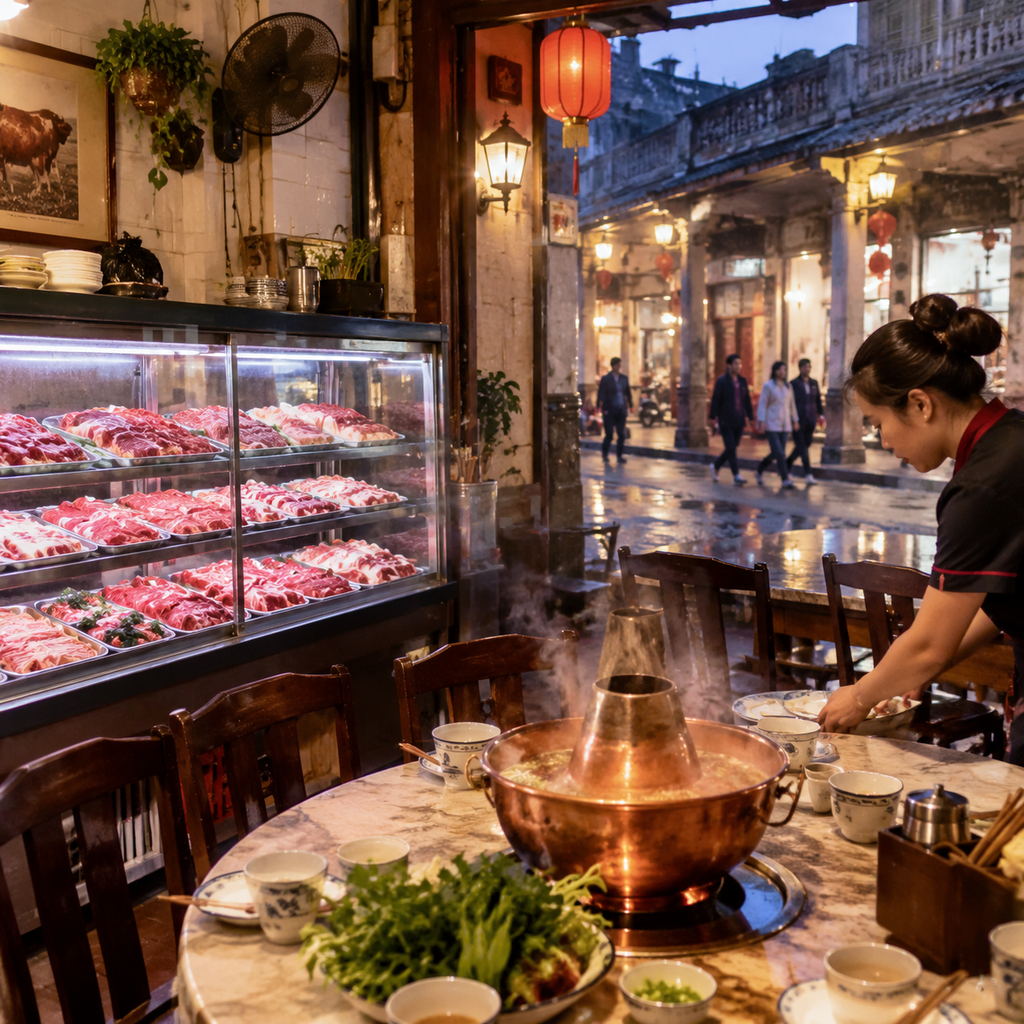
我到潮州时,把第一顿牛肉火锅留给了抵达之后最不急的一段时间。圆桌靠近门口,门外的人声、骑楼下缓慢经过的脚步和店内铜锅升起的细汽混在一起。冰柜里的牛肉按部位摆放,红色、白色和带着细密纹理的部分各有自己的样子。桌上还没有堆满盘子,锅也没有立刻进入最猛烈的沸腾。我坐下来先看店员怎样整理桌面,怎样确认人数,怎样把一顿饭拆成能够被一口口理解的次序。对我而言,潮州牛肉火锅的入口并不是夹起第一片肉,而是承认这顿饭需要时间。
When I arrived in Chaozhou, I kept my first beef hotpot meal for the least hurried part of the day. The round table was near the entrance, where passing footsteps beneath the arcades mixed with voices outside and the fine steam rising from the brass pot. Beef in the display case was arranged by cut, each red, white, and finely marbled section carrying a different visual character. The table was not yet crowded with plates, and the broth had not reached its most vigorous boil. I watched the staff clear the surface, confirm the number of diners, and divide the meal into an order that could be understood bite by bite. For me, the meal began when I accepted that it needed time.
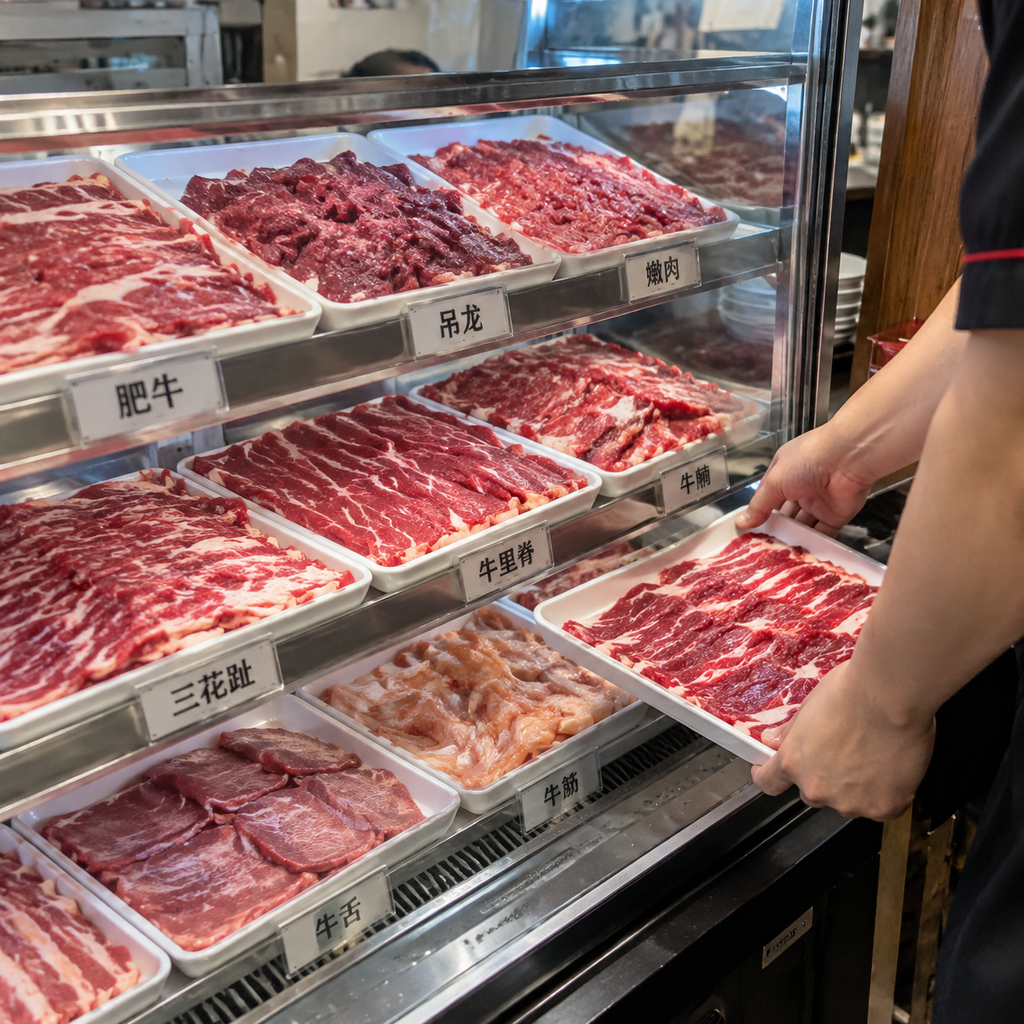
第一次面对潮州牛肉火锅的部位名称,我没有急着表现得熟悉。匙柄、吊龙、胸口朥以及其他切法,在本地食客眼中或许有清楚的差别,对刚到这里的我却像一张需要慢慢阅读的地图。我把问题交给店员,请对方按照口感和肥瘦给出适合先吃的选择。这样的询问不是把决定全部交出去,而是承认地方知识有它的顺序。店员的手在冰柜、砧板、盘子之间移动,我看见点单并非抽象的菜单选择,而是一次对肉质、人数和当下胃口的协调。
When I first faced the names of Chaozhou beef cuts, I did not pretend to know them. Qiebing, diaolong, chest fat, and other preparations may have clear distinctions for local diners, but to me they formed a map that required patient reading. I asked the staff to suggest a starting point according to texture and fat content. Asking was not surrendering every decision; it was recognizing that local knowledge has an order. The staff member's hands moved between the case, cutting board, and plates, and I saw that ordering was not an abstract menu choice but a negotiation among the meat, the number of people, and our appetite at that moment.
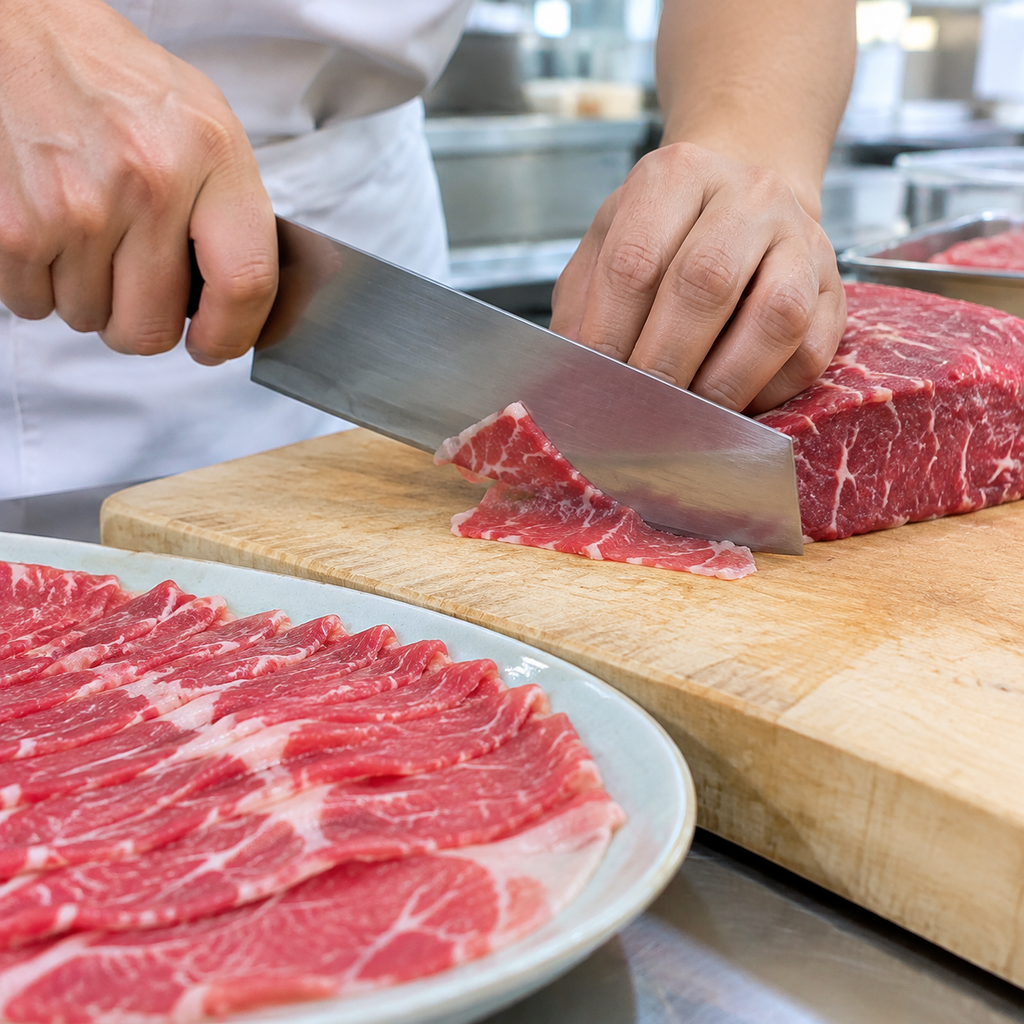
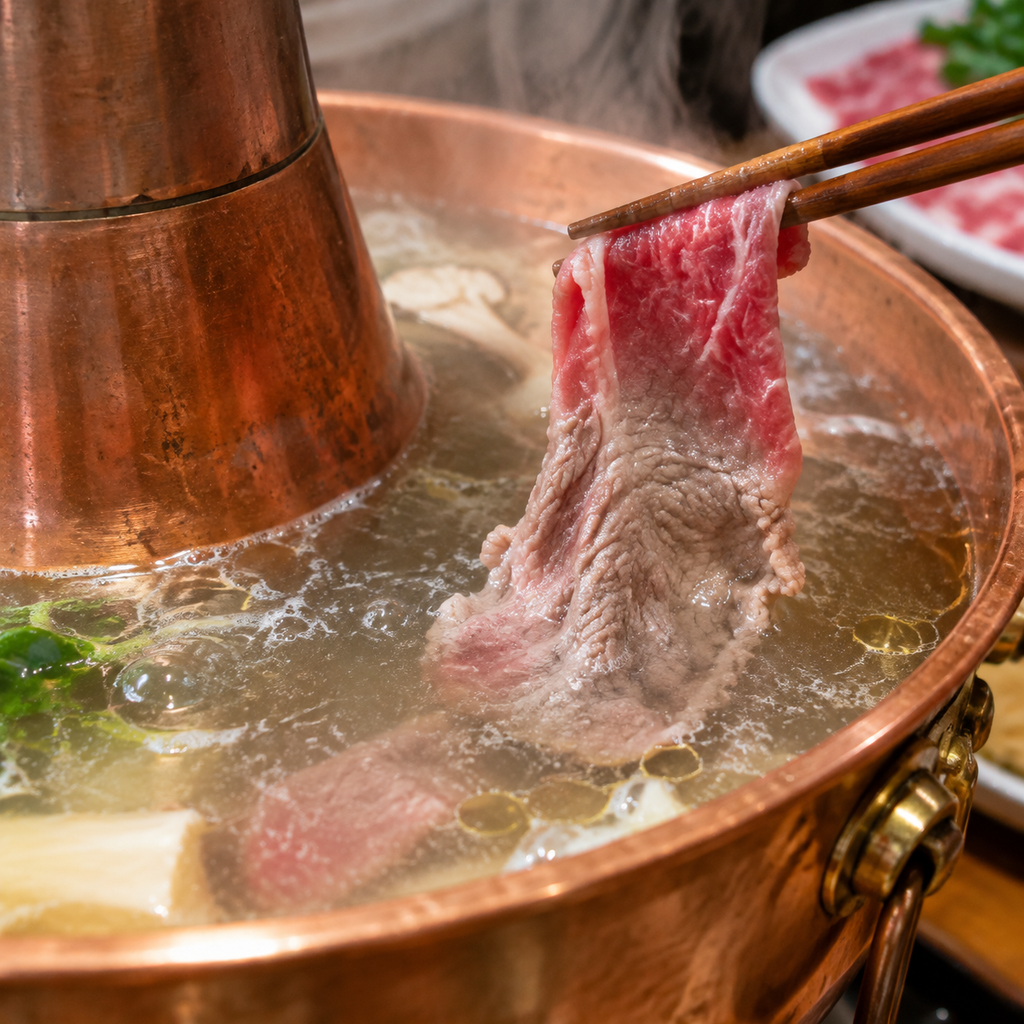
我尤其留意切肉的厚薄。肉片太厚,下锅之后需要更久才能从外到内变熟,客人容易为了等熟而把它留在汤里;肉片太薄,又可能在夹取、涮动和蘸取之间失去完整的口感。合适的薄度让火候变成一件很短却很清楚的事:筷子夹住边缘,肉片在汤面下轻轻摆动,颜色从鲜红转向粉褐,纤维开始收紧,边角微微卷起。刀下的每一片并不只是重量的减少,也是把烹煮判断压缩到几秒钟之内。
I paid particular attention to the thickness of the slices. A slice that is too thick needs longer to cook from the outside inward, inviting a diner to leave it in the broth while waiting. One that is too thin may lose its shape between lifting, swishing, and dipping. The right thinness turns heat control into something brief but legible: I held a slice by its edge, moved it gently below the surface, and watched its bright red color become pinkish brown as the fibers tightened and the edges curled. Every cut from the knife reduced more than weight; it compressed a cooking decision into a few seconds.
锅里的时间没有统一答案。我先按照店员建议尝试,记住肉片入汤时的状态,再根据下一片的厚度、部位和自己想要的弹性略作调整。偏瘦的肉片在滚汤里停留太久,嫩度会向紧实转移;停留太短,中心又可能还没有展开。带脂肪的部位则有另一套节奏,油脂受热后变得柔软,薄片有时很快接近透明,入口留下更明显的润泽。所谓“几秒”不是一条适用于每一片肉的规则,而是由刀工、锅温、部位和筷子的动作共同决定的观察单位。
There is no single answer for how long a slice should remain in the pot. I began with the staff's suggestion, noted the condition of the meat as it entered the broth, and adjusted the next slice according to its thickness, cut, and the elasticity I wanted. A lean slice left in the rolling broth too long moves from tender toward firm; left too briefly, its center may not have opened. Fatty cuts follow another rhythm: as the fat warms, it softens, and a thin slice can quickly become nearly translucent, leaving a richer smoothness on the tongue. “A few seconds” is not a rule for every slice. It is an observation shaped by the knife, the heat, the cut, and the movement of the chopsticks.
我把第一盘肉分成几次下锅,没有让所有人同时把筷子伸向同一个位置。锅中央的水流最强,边缘的温度和翻滚方式又会变化,手腕轻轻移动,肉片便能在不同位置受热。有人喜欢肉刚变色就捞起,有人愿意多停留一会儿;同桌的人不必追求完全一致,反而可以借着同一锅汤比较各自的判断。店员偶尔经过,收走空盘,补上新的肉片或提醒桌面留出空间。火锅桌上的秩序,就是这样由许多小动作维持的。
I divided the first plate into several additions instead of sending every pair of chopsticks toward the same spot at once. The strongest current sits near the center, while temperature and movement change toward the rim; a small movement of the wrist lets a slice meet heat in another position. One diner may lift the beef as soon as its color changes, while another lets it remain a little longer. We did not need to agree completely. The same pot allowed us to compare our judgments. Staff passed by from time to time, clearing empty plates, bringing another portion, or making room on the table. The order of the meal was maintained by these small actions.
清汤是我理解这顿饭的另一把尺子。汤里没有浓重酱色替牛肉先发言,锅面浮动的油花、牛肉下锅后的香气和随后加入的蔬菜会逐渐改写味道。刚开始时,我把肉捞到小碟里,先不蘸任何东西,分辨纤维在牙齿之间的回弹和脂肪在舌面上的停留。原味并不等于单调,它要求我把注意力放在温度、肉汁和切面上。等到连续吃了几片,我才拿起蘸碟,让沙茶把香气推向更深、更厚的一侧。
The clear broth became another measure for understanding the meal. Without a heavy color or dense sauce speaking first, the broth lets the beef's fragrance, the small sheen of fat on its surface, and the vegetables added later gradually reshape the flavor. At the beginning, I placed the meat in a small dish without dipping it, separating the spring of the fibers from the way the fat remained on my tongue. Plain flavor is not the same as blandness; it asks me to notice temperature, juices, and the cut surface. After several slices, I reached for the dipping bowl and let satay sauce move the aroma toward something deeper and fuller.
沙茶酱的存在感很强,却不必成为每个人的固定答案。我见同桌有人只取一点,让肉片带着轻微的坚果和香料气息;也有人把蒜泥、辣椒和鱼露放在自己的小碟里,边吃边调整比例。我先用沙茶轻点一片瘦肉,再试一片脂香明显的部位,发现同一种蘸料会因为油脂不同而呈现不同的重量。蘸料不是把所有差异抹平的覆盖层,而像一条岔路,让一片肉从清亮的汤味走向辛香、咸鲜或更饱满的方向。
Satay sauce has a strong presence, but it need not be a fixed answer for everyone. I watched one companion take only a little, allowing the meat to carry a restrained nutty and spiced aroma. Another mixed garlic, chili, and fish sauce in a personal dish, adjusting the balance while eating. I touched satay sauce to a lean slice and then tried it with a fattier cut, discovering how the same dip gained a different weight when the fat changed. Dipping sauce is not a layer that erases distinctions. It is a fork in the road, sending a slice from the clear broth toward spice, saltiness, freshness, or greater fullness.
胸口朥让我更清楚地感到厚薄和时间彼此牵连。薄薄一片在锅里受热很快,颜色和透明度的变化几乎就在筷子尖下完成。它不是越久越好,过了合适的点,原本有弹性的感觉会向软烂或过度紧缩移动。因为油脂丰厚,我不会把它连续吃很多片,而是夹在偏瘦部位之间,让口腔重新获得节奏。这里的“穿插”并非讲究的仪式,而是食客在桌边自然形成的安排:一片瘦肉,一点蘸料,下一片带脂肪的肉,再夹些蔬菜,让味觉不被单一路线拖住。
Chest fat made the connection between thickness and time especially clear to me. A thin piece heats rapidly, and the changes in color and translucence happen almost beneath the tip of the chopsticks. It is not improved by staying longer. Past the right point, its springiness shifts toward softness or excessive tightening. Because it is rich in fat, I did not eat many pieces in succession. I placed it between lean cuts so my mouth could recover its rhythm. This alternation was not a formal ritual; it was a natural arrangement around the table: a lean slice, a touch of sauce, a fatty piece, then vegetables, keeping the palate from being pulled along a single track.
我也开始观察食客的手。刚入座的人往往先看别人怎样夹、怎样放、怎样捞,熟悉的人则把动作做得很轻,不会在锅里反复翻找。有人负责把生肉推到锅边,有人照看已经变色的肉片,有人把蘸料往同伴面前挪一点。小孩会盯着牛丸,年长者可能更在意汤的温度和蔬菜是否煮透,独自吃饭的人则可以把一片肉完整地交给自己的判断。店里的热闹不是声音越大越好,而是每个人都能找到参与这口锅的方式。
I began watching the diners' hands as well. New arrivals often first study how others lift, lower, and retrieve the meat, while practiced diners make small movements without searching through the pot. One person might guide raw slices toward the rim, another watches for pieces that have changed color, and someone shifts a dipping bowl closer to a companion. A child may keep an eye on the beef balls; an older diner may care more about broth temperature and vegetables cooked through; a solo visitor can give each slice entirely to personal judgment. The liveliness of the room does not depend on volume. It comes from everyone finding a way to take part in the same pot.
点单的方式也在改变我的进食速度。若一开始把所有部位、蔬菜、粿条和牛丸一起铺开,桌面很快变得拥挤,肉片还没有下锅便要在盘中等待。分批点单更适合两三个人慢慢比较:先选少量偏瘦的部位,确认口感,再补带脂肪的切片;等汤吸收了几轮肉香,加入蔬菜和粿条;到了后段,是否需要牛丸由实际食量决定。这样的安排没有神秘标准,也不是为了延长消费,而是让每一盘食物在抵达餐桌后都尽量接近它该被吃掉的时间。
The way I ordered also changed my pace of eating. When every cut, vegetable, rice noodle, and beef ball arrives at once, the table soon becomes crowded and slices wait on plates before entering the pot. Ordering in stages suits two or three people who want to compare slowly: begin with a small amount of lean meat, confirm the texture, then add fattier slices; after the broth has taken on several rounds of beef aroma, add vegetables and rice noodles; near the end, let actual appetite decide whether beef balls are needed. There is no secret standard here, and the purpose is not to extend the meal. It is to let each plate arrive at a time close to when it can be eaten well.
我在桌边学到的另一件事,是不要把“快”误认为“熟练”。熟练的动作反而很节制:夹肉时不把筷子大幅挥动,入锅时不溅起汤水,捞起时不让肉片在锅里反复拖行。锅很热,生熟餐具最好分开,生肉夹不要直接碰到已经入口的食物;这类注意事项并不破坏轻松的气氛,反而让一桌人更安心。旅行中的一顿饭常常容易被拍照和赶路切碎,但我发现,把注意力放回筷子和锅面,反而能让时间重新连续起来。
Another thing I learned at the table was not to confuse speed with skill. Skilled movements are restrained: chopsticks lift without broad gestures, the slice enters without splashing, and the cooked beef is retrieved without being dragged repeatedly through the broth. The pot is hot, and separate utensils for raw and cooked food are best; a utensil used for raw meat should not go directly to food already being eaten. These precautions do not spoil the relaxed mood. They help everyone feel at ease. Travel meals are easily broken into fragments by photographs and schedules, but bringing my attention back to the chopsticks and the surface of the pot made time continuous again.
潮州的饮食节奏不只存在于火锅里。我从街上走进店时,能看见早餐时段的蒸汽已经升起,也能想象店铺在午后热意中把动作放缓,夜里再让圆桌恢复交谈。骑楼把阳光切成一段一段,巷子里的脚步有快有慢,工夫茶的冲泡更把等待变成日常动作。牛肉火锅与这些生活片段相互呼应:它不急着用浓味抢先,不把所有食材一次交付,而是让人通过顺序感受变化。地方味道因此不只是某种配方,也是一种安排事情的方式。
Chaozhou's food rhythm exists beyond the hotpot. Walking in from the street, I saw steam already rising during the breakfast period, and I could imagine shops slowing their movements through the afternoon heat before round tables became conversational again at night. Arcades divided sunlight into sections, alley footsteps moved at different speeds, and gongfu tea made waiting an ordinary action. Beef hotpot echoes these parts of daily life: it does not rush to seize attention with heavy flavor, does not deliver every ingredient at once, and lets diners feel change through sequence. Local taste is therefore more than a recipe. It is also a way of arranging things.
旅行安排若要容纳这顿饭,最好给它留下弹性。我不把火锅塞进两个景点之间的狭窄空档,也不在开锅前就预设必须吃完哪些部位。抵达潮州后,可以先沿着街区走一段,观察店铺、骑楼和人流,再找合适的地方坐下来;饭后留出消化和散步的时间,去喝茶或继续看夜里的街道。具体出发时间、排队情况和店铺安排需要以当天现场信息为准,我不会用一个无法核实的营业承诺替别人规划。旅行表上的空白,有时正好容纳一锅汤从清亮到醇厚的变化。
An itinerary that includes this meal should leave room to breathe. I did not squeeze the hotpot into a narrow gap between two attractions, nor did I decide before the broth boiled that every cut had to be eaten. After arriving in Chaozhou, I could walk through a neighborhood, observe its shops, arcades, and flows of people, and then sit down when the meal made sense. Afterward, time for digestion and a walk allowed tea or evening streets to enter the day. Departure times, queues, and shop arrangements should be checked locally on the day; I would not plan for someone else around an operating promise I cannot verify. The blank space in an itinerary can hold the transformation of a broth from clear to rounded.
我还发现,同行者之间的食量差异会直接改变一锅汤的节奏。有人只想尝几片,便需要把点单拆得更小;有人对脂肪敏感,可以先从瘦肉和蔬菜开始;有人不吃辣,蘸料就保持清淡,把辣椒单独放在一旁;有人避开内脏或特定部位,提前说明比下锅后才发现更从容。店员的推荐可以帮助我们理解选择,但每个人的身体感受仍然是最后的尺度。我喜欢一桌人不必为了所谓完整而勉强自己,能吃多少、想停多久,都可以在餐桌上被尊重。
I also found that differences in appetite directly change the rhythm of a shared pot. Someone who wants only a few slices needs smaller orders; someone sensitive to rich fat can begin with lean meat and vegetables; someone who avoids spice can keep the dip mild and leave chili separately; anyone avoiding offal or a particular cut should mention it before the food enters the pot. Staff suggestions can help us understand the choices, but each person's physical response remains the final measure. I prefer a table where no one forces an idea of completeness. How much we eat and how long we pause can both be respected.
我把不同厚度的肉片当作一组关于时间的练习。厚一些的切面让等待变长,锅边的水汽、同桌的谈话和自己的判断会一起进入这段等待;薄一些的切面把变化压到很短,几乎需要立刻决定捞还是留。切肉的人先替食客处理了复杂度,食客再用筷子把剩下的复杂度接过来。刀工和火候并不是两个分开的技术名词,它们在一片肉上碰面。肉片的形状、纹理和油花,都会提醒我:食物的口感不是端上桌才开始形成的。
I treated slices of different thicknesses as exercises in time. A thicker cut lengthens the wait, allowing steam, conversation, and judgment to enter the interval. A thinner cut compresses change into a very short moment, requiring an immediate decision to lift or leave it. The person cutting the beef handles part of the complexity first, and the diner takes over what remains through the chopsticks. Knife work and heat control are not separate technical terms; they meet in one slice. Its shape, grain, and fat pattern all remind me that texture does not begin only when food reaches the table.
粿条和蔬菜在后段出现时,已经不是单纯的填饱。前面几轮牛肉让汤底增加了新的层次,蔬菜带来水分和清爽,粿条吸住汤汁,也把一顿饭从集中辨认肉的阶段带向更舒缓的收尾。我通常不会一开锅就把粿条全部放入,因为那样会让桌面和锅面同时失去辨识度;等肉吃到一个自然停顿,再让它们进入,汤的用途便发生变化。牛丸是否加入,也应该听从同行者的食量和当时的兴趣,而不是为了把菜单上的项目逐一打勾。
When rice noodles and vegetables arrived later, they were more than a way to fill the stomach. Several rounds of beef had added another layer to the broth; vegetables brought water and freshness, while rice noodles absorbed the soup and moved the meal from focused tasting toward a gentler close. I usually did not add all the noodles at the start, because that would make both table and pot harder to read. At a natural pause in the meat, their arrival changed what the broth was for. Whether to add beef balls should likewise follow the appetite and interest of the people eating, rather than a desire to tick every menu item.
我在牌坊街附近走动时,仍会想起店内那块砧板。街道上的店铺各自有自己的开合,行人不会以同一种速度通过,茶杯被放下又被重新斟满。城市的节奏并不等于缓慢,而是知道哪些动作必须快,哪些动作值得慢下来。肉要切得薄,是为了让成熟迅速而精准;一顿饭要分次推进,是为了让人及时感到饱足;旅行路线留出余地,是为了不让目的地只剩下打卡后的离开。三种时间在我心里渐渐重叠。
While walking near Paifang Street, I continued to think of the cutting board inside the restaurant. Shops along the street opened and closed on their own schedules, pedestrians did not move at one shared speed, and teacups were set down before being filled again. A city's rhythm is not simply slowness. It knows which actions must be quick and which deserve patience. Beef is sliced thin so cooking can be rapid and precise; a meal advances in stages so diners can notice fullness; an itinerary leaves room so a destination is not reduced to checking in and leaving. Three kinds of time gradually overlapped in my mind.
饭后我没有马上寻找下一项必做的活动。口腔里还留着沙茶的香、清汤的温度和牛脂的润,我沿小巷走到可以喝工夫茶的地方,让步行把餐桌上的密度慢慢摊开。茶汤的清爽并不负责抹掉刚才的味道,而是给味觉一个转换的台阶。有人会把饭后散步安排在自己的路线里,有人只想回到住处休息,这些都是合理的选择。潮州的旅行不需要每一段都填满,留出一小段无目的的路,也能让一顿饭继续发声。
After eating, I did not immediately search for the next required activity. The aroma of satay, the warmth of the broth, and the smoothness of beef fat still remained, so I walked through an alley toward a place serving gongfu tea and let the walk gradually spread out the density of the table. The tea's freshness did not erase the earlier flavors; it offered the palate a step toward transition. Some travelers may place an after-meal walk into their route, while others may return to rest. Both are reasonable. A day in Chaozhou does not need every interval filled. A short purposeless walk can let the meal continue speaking.
回想那顿饭,我最清楚的不是哪一盘肉排在第一位,而是手在锅边不断做出的小决定。肉片下锅,筷子停一下;颜色改变,马上判断;原味之后换蘸料;吃到油脂较重的部位,穿插蔬菜;桌面拥挤,就先让空盘离开。每个动作都很小,却没有一个是多余的。地方饮食的性格往往藏在这种重复动作里,不靠夸大的标签,也不需要把普通食客塑造成懂行的人。只要愿意看、愿意问、愿意等,陌生的部位名称也会逐渐变得有意义。
Looking back on the meal, I remember less about which plate came first than the small decisions made around the pot. A slice entered, the chopsticks paused; its color changed, and I judged; plain beef gave way to a dipping sauce; a rich cut was followed by vegetables; when the surface became crowded, empty plates left first. Each gesture was small, and none was unnecessary. The character of local food often hides in repeated actions like these. It does not depend on exaggerated labels or on turning an ordinary diner into an expert. With a willingness to watch, ask, and wait, unfamiliar cut names gradually become meaningful.
后来我再想到“把时间切薄”这句话,觉得它并不是说潮州人把所有事情都做得匆忙。恰恰相反,肉片被切薄之后,食客才有机会在短时间里连续比较;火候越短,对注意力的要求越高;判断越快,越需要前面漫长的看、问和等待作基础。薄片把时间藏在了刀痕里,也把一顿饭的节奏交给了每个人。旅行者可以从一口原味开始,从半片肉开始,从一次不确定的询问开始,不必先掌握完整的知识才配坐到锅边。
When I later returned to the phrase “cutting time thin,” I realized it did not mean that people in Chaozhou hurry through everything. Quite the opposite: thin slices give diners the chance to compare continuously in short intervals. The shorter the cooking time, the more attention it requires; the faster the judgment, the more it depends on the looking, asking, and waiting that came before. The knife marks hide time inside the slice and hand the rhythm of the meal to each diner. A traveler can begin with one plain bite, half a slice, or one uncertain question. Complete knowledge is not a prerequisite for sitting beside the pot.
如果我把这顿饭写进行程,我只会记录可以负责的事实:潮州牛肉火锅适合边吃边观察部位、厚薄和火候;清汤、沙茶、蒜泥、辣椒和鱼露可以让食客形成不同的味觉路线;分批点单有助于保持桌面清楚,也方便同行者按食量调整;具体店铺、价格、营业安排和当天是否需要等待,应当以现场或官方公开信息为准。这样的记录看起来没有一张“最值得”的名单完整,却更诚实,也更有用。它把地方经验留给真正到达餐桌的人。
If I were to write this meal into an itinerary, I would record only what I can stand behind: Chaozhou beef hotpot rewards attention to cuts, thickness, and heat; clear broth, satay, garlic, chili, and fish sauce open different flavor routes; ordering in stages keeps the table readable and lets companions adjust to appetite; specific restaurants, prices, operating arrangements, and waits should be checked through local or official public information. Such a note may look less complete than a list of what is supposedly best, but it is more honest and more useful. It leaves local experience to the people who actually reach the table.
在潮州,牛肉下锅前的那一刻并不空白。砧板上的刀痕、盘中肉片的纹路、锅面升起的水汽、店员收盘和补菜的动作、同桌食客各自的夹取速度,都已经把这一餐的时间切成许多薄片。真正入口的只是其中一片肉,真正被我带走的却是对节奏的重新认识:快,应该快在恰到好处的成熟;慢,应该慢在观察、交谈和走过街巷。那口锅让我记住,地方味道不是被迫赶路时得到的结论,而是人在一张桌边逐渐学会的分寸。
Before the beef enters the pot in Chaozhou, that moment is not empty. The knife marks on the board, the grain of the slices, steam above the broth, staff clearing plates and adding food, and each diner's pace with chopsticks have already divided the meal's time into thin pieces. What reaches my mouth is only one slice, but what I carry away is a renewed sense of rhythm: speed belongs to reaching the right doneness, while slowness belongs to observing, talking, and walking through the streets. The pot taught me that local flavor is not a conclusion reached while rushing between stops. It is a sense of proportion learned gradually at the table.
清晨的潮州适合把胃口留得轻一些。我不会因为晚上想吃牛肉火锅,就在白天刻意空腹到疲惫;同样,也不会因为早上吃了当地小食,便把晚餐当成必须完成的任务。旅行中的饮食并不是互相竞争的清单,而是一日身体感受的连续安排。若白天步行较多,傍晚坐下时更容易分辨自己真正需要多少;若天气闷热或同行者精神不佳,少点一些、慢一点开始,也比为了计划而勉强更合适。火锅可以成为一天的重心,却不必吞掉整天。
Early morning in Chaozhou is a good time to keep the appetite light. I would not exhaust myself by fasting through the day simply because I planned to eat beef hotpot at night; nor would I turn dinner into a compulsory task because I had eaten local snacks in the morning. Food on a trip is not a set of competing checklists but a continuous arrangement of how the body feels through a day. After more walking, it can be easier to tell how much is truly needed by evening. In humid weather, or when companions are tired, ordering less and beginning more slowly may be wiser than forcing the plan. Hotpot can be the center of a day without consuming the whole day.
坐在店里,我会把手机放到不妨碍夹菜的位置,而不是让它占住盘子和蘸碟之间最方便的空隙。拍一两张照片当然没有问题,但肉片的颜色变化很快,端着手机等待所谓完美画面,常常会错过它最适合入口的时刻。更何况,同行者的手势、锅中水汽和桌面逐渐清爽的过程,本来就比一张堆满食材的照片更接近这顿饭的真实样子。我宁愿在吃完一轮之后再记下感受,也不愿让记录把动作打断成许多不相干的片段。
At the table, I keep my phone where it does not interfere with chopsticks, plates, or dipping bowls. Taking one or two photographs is fine, but a slice changes color quickly, and waiting with a phone for a perfect image often misses the moment when it is best to eat. The gestures of companions, the steam above the pot, and the table gradually becoming clear are closer to the reality of the meal than a single photograph crowded with ingredients. I would rather write down an impression after a round of eating than let the act of recording break the meal into unrelated fragments.
对于不熟悉的部位,我不再只问“哪个最好”,而会问它偏瘦还是偏肥、口感更嫩还是更有弹性、适合先吃还是放在中段。问题换一种方式,回答也更容易落到自己的需要上。所谓好吃,从来不是脱离身体的排名;有人喜欢脂肪带来的柔滑,有人更喜欢瘦肉清楚的纤维感,有人愿意尝试变化,有人只想找到稳定的一盘。潮州牛肉火锅允许这种差异存在,因为每一盘肉都能按小份、按轮次进入同一锅汤,而不是要求全桌人同步接受同一种答案。
For cuts I do not know, I no longer ask only which one is “best.” I ask whether it is lean or fatty, tender or springy, and whether it suits the beginning or middle of the meal. Framed this way, the answer lands more easily on what I actually need. Deliciousness is never a ranking detached from the body. Some diners value the smoothness of fat, others prefer the clear grain of lean meat; some want variety, while others seek a reliable plate. Chaozhou beef hotpot makes room for these differences because each plate can enter the same broth in small portions and separate rounds, rather than requiring everyone at the table to accept one answer at once.
店内动作越多,我越意识到一顿顺畅的饭不是凭空发生的。有人把待下锅的盘子转向方便夹取的一侧,有人及时把空碟叠起,有人发现汤面太满便暂缓添加食材,有人把已经熟好的肉夹到同伴碗里。服务人员在过道中穿行,既要照应新入座的客人,也要回应加菜、收盘和结账的需要。作为食客,我能做的并不复杂:让通道保持通畅,不把个人物品摊得太开,在需要时说清楚需求。这些微小配合让店里的节奏更平稳,也让自己的桌子不必从容貌上看起来却实际一团忙乱。
The more movement I noticed in the room, the more I understood that a smooth meal does not happen by itself. Someone turns a waiting plate toward the easier side to reach, someone stacks empty dishes, someone pauses additions when the surface of the broth grows too full, and someone transfers cooked meat into a companion's bowl. Staff move through the aisles while attending to new tables, added dishes, cleared plates, and payment needs. What I can do as a diner is simple: keep the passage open, avoid spreading personal items across the table, and state needs clearly when they arise. These small forms of cooperation steady the room's rhythm and keep my own table from looking composed while actually becoming chaotic.
锅温也会随着一顿饭推进而改变。开始时汤头相对清楚,后来连续下肉、蔬菜和粿条,水量、油脂和食材都会影响翻滚的方式。于是我不把前十分钟得到的时间判断机械地用到最后。若锅面不再像刚开时那样活跃,就多观察肉片的颜色和触感;若服务人员建议调整火力或补充汤水,也把它当作维护口感的一部分。火候并非某个固定数字,而是一张随锅、随食材、随时间移动的图。知道它会变,比背住一个精确秒数更能帮助旅行者吃得安心。
The temperature of the pot changes as a meal progresses. At the beginning the broth is relatively clear; later, repeated additions of beef, vegetables, and rice noodles alter the water level, fat, and movement of the boil. I therefore do not apply the timing judgment from the first ten minutes mechanically to the end. If the surface is no longer as active as it was at the start, I watch the color and feel of each slice more closely. If staff suggest adjusting the heat or adding broth, I treat that as part of maintaining texture. Heat control is not a fixed number but a map that moves with the pot, the ingredients, and time. Knowing that it changes is more useful than memorizing an exact number of seconds.
我喜欢把一顿火锅的中段留给交谈。刚开始时,大家忙着辨认部位、调蘸料、找适合自己的下锅时间;吃到中段,动作已经熟悉,谈话才会自然地从食物延伸到当天看见的街景、明天可能去的方向,或者只是旅途里的琐事。锅在中间持续发出声音,却不要求谁一直说话。沉默也可以存在,尤其当每个人都在专心处理自己筷子上的一片肉。这样的桌面没有表演性,反而让我觉得旅行中真正舒适的陪伴,往往来自允许彼此按自己的节奏安静一会儿。
I like to leave the middle of a hotpot meal for conversation. At the start, everyone is busy identifying cuts, mixing dips, and finding a personal cooking time. By the middle, the movements have become familiar, and talk can naturally extend from the food to streets seen earlier that day, directions for tomorrow, or ordinary details of travel. The pot continues making sound in the center without demanding that anyone speak constantly. Silence can exist too, especially when each person is focused on the slice at the end of the chopsticks. There is no performance in such a table. It makes me feel that comfortable companionship on a trip often comes from allowing one another to be quiet at a personal pace.
离开餐桌之后,我会重新检查接下来的路线是否真的必要。若已经吃得饱,就不需要为了完成地图上的标记再穿过很远的街区;若夜里仍想走走,便挑一段能安全、轻松完成的步行,而不是把自己逼进紧凑的时间表。对外地访客来说,交通、天气、道路状态和个人体力都比一份固定攻略更具体。潮州的街巷、牌坊、茶桌和夜色值得看,但它们并不要求在同一个晚上全部收集。把晚餐前后的时间留给实际感受,往往能减少不必要的赶路。
After leaving the table, I reassess whether the next part of the route is truly necessary. If I am already full, I do not need to cross a distant neighborhood merely to complete a map marker. If I still want to walk at night, I choose a stretch that can be finished safely and comfortably instead of forcing myself into a tight schedule. For visitors from elsewhere, transport, weather, road conditions, and personal energy are more concrete than any fixed guide. Chaozhou's alleys, arches, tea tables, and evening light are worth seeing, but they do not demand collection in a single night. Giving the hours around dinner to actual feeling often reduces unnecessary rushing.
我没有把潮州牛肉火锅理解成一种需要背诵的地方考试。网上和口耳相传的推荐会给出许多部位、顺序和蘸料组合,可是任何一套说法一旦脱离当时的肉片、锅温、同桌人数和个人口味,就只能算参考。旅行者可以带着好奇心进入店里,却不必把好奇心变成占有欲。尝到两三种有差别的口感,知道自己更喜欢什么,已经足够让一顿饭有收获。余下的部分可以留给下一次,不必在一次抵达中把地方饮食的全部意义耗尽。
I did not understand Chaozhou beef hotpot as a local examination to be memorized. Online and word-of-mouth recommendations offer many cuts, sequences, and dipping combinations, but once any formula is separated from the actual slices, pot temperature, number of diners, and individual taste, it is only a reference. Travelers can enter with curiosity without turning curiosity into a need to possess everything. Trying two or three clearly different textures and learning what one prefers is already enough for a meaningful meal. The rest can remain for another visit; there is no need to exhaust the meaning of a local cuisine in a single arrival.
这份克制也影响我怎样处理信息。涉及店名、价格、营业时间、排队时长或某一家店的具体做法,我只会在能够核实的公开渠道里查找,并且把信息视作可能变化的当日线索,而不是永远有效的承诺。本文不以未经验证的商户细节制造确定感,也不借虚构对话增加所谓现场感。我能真实写下的,是围着一锅清汤观察肉片变色的经验,是在潮州街区行走时感到的时间差,是旅行者可以用来安排自己一餐的谨慎方法。事实边界清楚,叙事才不必靠夸张支撑。
This restraint also shapes how I handle information. For restaurant names, prices, operating hours, waiting times, or the specific practices of one business, I would look only through public channels that can be checked, and I would treat the result as a clue for that day rather than a permanent promise. This essay does not manufacture certainty from unverified merchant details or invent dialogue to create a false sense of presence. What I can write truthfully is the experience of watching slices change in clear broth, the time differences I felt walking through Chaozhou streets, and a careful method travelers can use to arrange a meal. When the factual boundary is clear, the narrative does not need exaggeration to stand.
最后一轮汤里,我仍然会留一点耐心。也许只放一把粿条,也许只喝几口被食材重新塑造过的汤;是否继续,取决于胃口,而不是对结尾的想象。桌面上的盘子已经少了,最初不认识的部位也有了大致的性格,同行者可能正在讨论下一步去哪里,或者只是静静坐着。那一刻,我不会急着给这顿饭下结论。潮州牛肉火锅的魅力不在于某一个唯一正确的动作,而在于它让切肉、下锅、等待、蘸取和散步都拥有适当的位置。时间没有被浪费,只是被切得足够薄,让人看见它。
In the final round of broth, I still keep some patience. Perhaps I add only a small portion of rice noodles, perhaps I drink a few sips of soup remade by the ingredients; whether to continue depends on appetite rather than an imagined ending. Fewer plates remain, cuts that were unfamiliar at first have acquired a general character, and companions may be discussing where to go next or simply sitting quietly. At that moment, I do not rush to deliver a verdict on the meal. The appeal of Chaozhou beef hotpot is not one uniquely correct action. It gives cutting, lowering, waiting, dipping, and walking each an appropriate place. Time has not been wasted; it has been sliced thin enough to be seen.
傍晚再回到火锅桌前,我会先留意砧板旁的节奏,而不是急着把菜单上的名称逐一勾选。切肉的人把大块牛肉顺着纹理安放,手掌压住肉面,刀锋向前推时并不追求夸张的速度。片子落到盘中,彼此没有黏成一团,边缘保留着可被筷子夹住的余地。这样的细节对食客很实际:肉片如果折叠得太紧,夹起时容易带动旁边几片;若在桌上摊得清楚,同行的人便能各取一片,看到它的厚薄、油花和纤维方向,再决定这一片该怎样处理。旅行中第一次面对陌生部位,不必把自己变成鉴定者。看清一盘肉的样子,已经能帮助人少犯一点急。
When I returned to the hotpot table in the evening, I first watched the rhythm beside the cutting board instead of trying to tick off every name on the menu. The person cutting the beef set a larger piece along its grain, held the surface steady, and pushed the blade forward without seeking theatrical speed. The slices landed on the plate without sticking into one mass, their edges left free for chopsticks to grasp. This is practical for diners: tightly folded slices can pull their neighbors along when lifted, while clearly arranged slices let companions take one at a time, see its thickness, fat, and grain, and decide how to handle it. On a first encounter with unfamiliar cuts, a traveler need not become an expert. Simply seeing a plate clearly already reduces the urge to rush.
我会把刚端来的第一盘肉先放在桌边较凉的位置,不让它挤在沸锅、蘸碟和手机之间。坐下以后,先确认谁想吃得清淡,谁不碰辣,谁只打算尝几口,这比马上争论哪个部位更受欢迎有用得多。两个人同行时,可以一人负责观察锅面,另一人从盘中取肉;三四个人一起吃,则更需要把生肉盘和已经吃过的小碟分出位置。桌面不大时,空盘及时叠起,纸巾和杯子靠边,手伸过去就少一些碰撞。它们看起来像琐事,却决定了大家是否能在锅开以后从容地夹取,而不是每一轮都让筷子在盘子、碗和调料之间找路。
I place the first plate that arrives at a cooler edge of the table, rather than squeezing it between the boiling pot, dipping bowls, and phones. Once seated, it is more useful to establish who wants a mild meal, who avoids chili, and who only plans to taste a little than to debate which cut is most popular. With two people, one can watch the pot while the other takes slices from the plate. With three or four, it becomes more important to separate raw-meat plates from small dishes already used for eating. On a compact table, empty plates can be stacked promptly, tissues and cups moved to the edge, and hands will meet fewer obstacles. These may seem minor, but they determine whether everyone can lift food calmly after the broth boils instead of searching for a route between plates, bowls, and condiments every round.
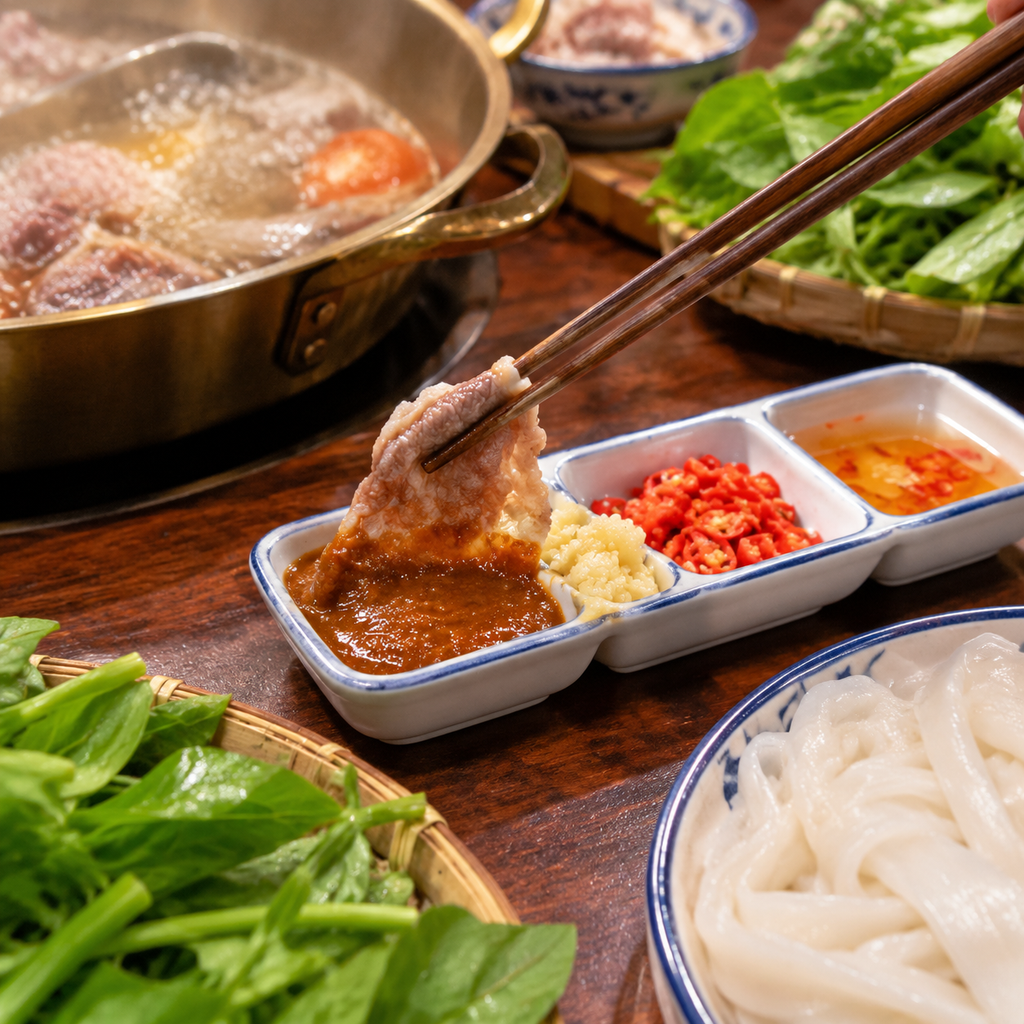
锅刚开始翻滚时,我不把一整盘肉同时放进去。肉片重叠后,颜色会互相遮住,边缘熟了而中间仍在等待,捞起的人也很难知道自己夹到的是哪一片。更稳妥的动作是一次放入一两片,筷子捏住靠近边缘的地方,让肉在汤里展开,再顺着水流轻轻带动。看见红色退去、切面由亮变柔,便把它提到碗里。若想要更有弹性,可以稍早一点捞起;若偏好熟一些的口感,就让它多停留一个短暂的呼吸。这个等待没有必要被说成精确的秒数,因为锅的火力、肉的薄度和每次下锅的数量都在变化。能看懂变化,比记住一个数字更可靠。
When the pot first begins to roll, I do not send an entire plate of beef into it at once. Overlapping slices hide one another's color: the edges may cook while the middle is still waiting, and the person lifting them cannot easily tell which slice has been caught. A steadier action is to add one or two at a time, hold near an edge, allow the beef to open in the broth, and guide it gently with the current. When the bright red recedes and the cut surface softens in color, I lift it into my bowl. For a springier bite, I lift it slightly earlier; for a more cooked texture, I let it remain for one brief breath longer. This wait need not be treated as an exact number of seconds, because heat, slice thickness, and the amount added each time all change. Reading the change is more reliable than memorizing a number.
有些食客习惯把肉在锅里来回涮得很快,我更愿意把动作放小。肉片入汤后,筷子不必大幅搅动,也不必把它反复压到锅底。轻轻展开,等汤重新包住切面,再顺势捞起,肉汁不容易被粗暴的动作带走,锅面也不会被几双筷子搅得没有秩序。和同行者一起吃时,我会避开别人正在照看的那一小块区域,不把生肉直接丢到对方刚要捞起的熟肉旁边。若锅内同时有蔬菜或粿条,更要给每种食材留一点位置。共享一口锅并不要求严格的规矩,但一桌人愿意彼此看一眼,很多等待就不会变成争抢。
Some diners swish their beef back and forth very quickly. I prefer to make the movement smaller. Once a slice enters the broth, the chopsticks need not stir broadly or press it repeatedly to the bottom. I let it unfold, wait for the broth to cover the cut surface again, and then lift it with the current. The juices are less likely to be driven away by rough handling, and the pot stays orderly rather than being churned by several pairs of chopsticks. When eating with companions, I avoid the small area another person is watching and do not drop raw beef beside a cooked slice they are about to retrieve. If vegetables or rice noodles are already in the pot, each ingredient needs some room as well. Sharing one pot does not require strict ceremony, but when people notice one another, waiting rarely turns into a scramble.
蘸料放在肉片离开锅之后才真正开始发挥作用。我会先用一只干净的小碟接住原味的第一口,不急着让沙茶盖过汤和肉的气息。接着再取少量沙茶,观察它和偏瘦部位搭在一起时留下的咸香;若肉片带着较明显的油脂,就把蘸料减一点,避免味道和脂肪在口中同时变得过重。蒜泥、辣椒或鱼露也可以分开放,先用筷尖沾一点试味,再决定是否加入自己的小碟。这样做不是为了把吃饭弄得复杂,而是让每个人能随时停下来调整。对不吃辣的人来说,调料不混在一起尤其重要;对想尝试的人来说,分开也意味着一次尝错不会影响整顿饭。
Dipping sauce begins to matter only after a slice leaves the pot. I catch the first plain bite on a clean small dish and do not hurry to let satay cover the aroma of broth and beef. Then I take a modest amount of satay and notice the savory, spiced note it leaves with a lean cut. When a slice carries more visible fat, I reduce the sauce so flavor and richness do not become heavy together. Garlic, chili, and fish sauce can also remain separate: I touch the tip of the chopsticks to each one first, then decide whether it belongs in my bowl. This does not make eating needlessly complicated. It lets each diner pause and adjust. For someone who avoids spice, keeping condiments separate is particularly useful; for someone experimenting, it means one unsuccessful taste will not affect the entire meal.
吃到第二轮时,等待的感觉会和刚开锅不同。第一片肉下去时,所有人都盯着颜色变化,筷子动作带着试探;到了第二轮,大家开始知道自己的位置,谁看锅,谁取盘,谁先把熟肉放进旁边的小碗,几乎不必开口商量。可这种熟悉并不代表可以放松到忽略细节。连续下肉以后,汤面会有新的油光,锅边的翻滚也可能变得不均匀,我仍然会把肉片摊开再捞。若某片粘在盘底,不会用力扯到飞起,而是先让筷尖从边缘进入,慢慢把它分开。很多所谓会吃的经验,其实就是不让一个小动作打乱下一步。
By the second round, waiting feels different from the first boil. When the first slice enters, everyone watches the color, and the chopsticks move experimentally. By the next round, people know their places: who watches the pot, who reaches for the plate, and who transfers cooked beef to a small bowl, often without discussion. Familiarity does not mean ignoring detail. Repeated additions bring a new sheen to the broth and may make the boil uneven, so I still spread a slice before lifting it. If one sticks to the plate, I do not yank it upward. I slide the tip of the chopsticks beneath an edge and separate it slowly. Much of what looks like confidence at the table is simply refusing to let one small movement disrupt the next.
我会给自己设一个很宽松的顺序:先尝能看出纹理的瘦肉,再试带油花的部分,之后才考虑更浓的蘸料和主食。这个顺序不是固定菜单,也不意味着所有人都应照做。它只是帮助我在陌生环境里减少混乱。若第一片已经觉得满足,就可以暂停;若同桌有人还没有吃够,可以把自己的节奏放慢,不必跟着对方一片接一片。两个人共用一盘肉时,最好让每人都有机会先选一次,再把剩余的交给当下胃口。三四个人时,盘子可以顺时针传递,也可以放在最容易够到的位置,关键是别让一个人长期负责所有夹取。吃饭的公平,有时就体现在谁都不用一直伸手。
I use a loose sequence for myself: first a lean cut whose grain is easy to notice, then a piece with visible fat, and only later a stronger dip or a starch. This is not a fixed menu and should not be imposed on everyone. It simply reduces confusion in an unfamiliar setting. If the first few slices are enough, I can pause; if a companion still has an appetite, I can slow down without matching every bite. When two people share a plate, it is considerate to let each choose first once and then leave the rest to current appetite. With three or four, the plate can pass clockwise or remain where it is easiest to reach. The important point is that one person should not have to do all the reaching. Fairness at a meal can be as simple as nobody having to keep stretching an arm.
等待并不只是等肉熟。肉片下锅以后,我常常会听桌边的声音:汤勺碰到锅沿,杯子在木桌上轻轻移动,门外有人经过,服务人员把新盘放下时短暂的一声落桌。若没有这些声音,等待也不会因此失去意义。它让人有时间确认手机是否还有电、明天的交通是否需要重新查看、同行者是不是已经累了。用餐过程里突然发现有人胃口下降,最实际的处理不是坚持原来的点单,而是先暂停下肉,喝水,看看已熟的食物是否足够。旅行安排必须能容纳这种变化,毕竟人的身体不会按照地图上的箭头准时行动。
Waiting is not only the time required for beef to cook. After a slice enters, I often listen to the table: a ladle touching the rim, a cup shifting softly on the wooden surface, someone passing outside, and the brief sound of a new plate being set down by staff. Waiting would still matter without these sounds, but they make the interval tangible. It gives me time to check the phone's battery, reconsider whether tomorrow's transport needs checking, and notice whether a companion is tired. If someone's appetite suddenly falls, the practical response is not to defend the original order. It is to pause additions, drink water, and see whether the cooked food already on the table is enough. An itinerary must hold such changes because a body does not move according to map arrows on schedule.
有时我会把一片肉先夹到自己的小碟里,再决定是否蘸取,而不是刚捞起就直接送入口中。这样能让多余的汤水先流回碟中,也给自己一个短暂的判断时间。若肉片带着较多脂肪,碟边留下的光泽会提醒我下一口可以换成蔬菜;若瘦肉口感偏紧,则可以缩短下一片在锅中的停留。食客的动作不是孤立的,每一口都会影响下一口。甚至蘸料的量也会随着前面吃过的东西变化:连续几片原味之后,一点沙茶很突出;连续几片浓味之后,清汤和青菜反而更能把味觉拉回来。桌边没有一条永远正确的轨道,只有不断修正的手。
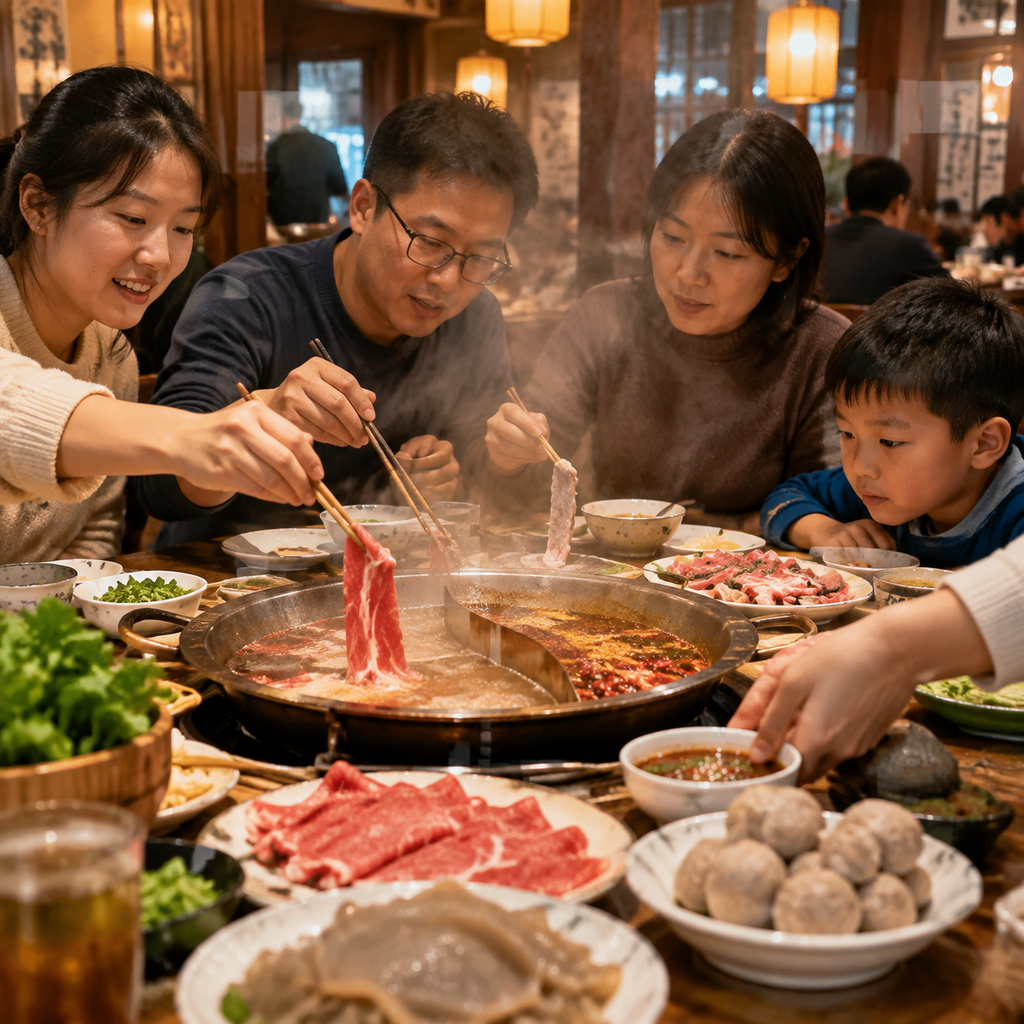
Sometimes I place a slice in my small dish before deciding whether to dip it, rather than sending it straight to my mouth. Excess broth can drain away, and the pause gives me a moment to judge. If the slice carries a generous amount of fat, the sheen left at the edge suggests that vegetables might suit the next bite. If lean beef feels firmer than expected, I shorten the next slice's time in the pot. A diner's gestures are connected; each bite affects the next. Even the amount of sauce changes with what came before. After several plain slices, a little satay feels vivid; after several strong flavors, clear broth and greens pull the palate back. There is no permanent track at the table, only hands making small corrections.
我注意到,熟悉这类火锅的人往往不会把自己的判断说得很满。他们可能夹起一片,先看一下,再根据锅面状态决定放在哪里;也可能把某个部位让给第一次尝试的人,同时提醒对方不要久煮。提醒如果说得简短,反而容易被接受,因为食客仍然保留选择权。作为外地人,我更愿意把这种帮助当成现场学习,而不是把每个动作都理解成必须服从的规矩。有人喜欢把肉多煮一会儿,有人只吃全熟,只要分清自己的偏好并照顾生熟卫生,桌上的差异并不会破坏共同用餐。相互提醒和相互干预之间,始终需要留一点距离。
I noticed that diners familiar with this style of hotpot rarely state their judgments too absolutely. They may lift a slice, look at it, and then choose a place in the pot according to the current boil. They may also give an unfamiliar cut to a first-time diner while noting that it should not be left too long. A brief reminder is often easier to accept because the diner keeps the right to choose. As a visitor, I prefer to treat such help as local learning rather than a rule that must be obeyed in every detail. One person may prefer beef cooked longer and another may eat only fully cooked food. Once personal preference and raw-cooked hygiene are respected, differences need not disturb the shared meal. Between reminding and interfering, a little distance is always useful.
到了后段,锅里的食材会让桌面出现另一种秩序。生肉盘逐渐空下来,蔬菜叶片变软,粿条从边缘沉入汤中,碗里的蘸料也只剩下不同深浅的痕迹。我不会为了拍出“吃光了”的效果,把最后几样全倒进锅里。若同行者还想喝汤,可以先用勺子舀出一小碗,避免继续添加把味道推得太浓;若大家已经饱了,就把火力调小或请店员协助处理,不让锅一直空烧。结账前清点随身物品、确认没有把手机放在热锅旁、让通道保持畅通,这些都是离桌前的实际动作。好的收尾不是突然站起,而是让下一位食客能顺利接上这张桌子。
Toward the end, the ingredients create another kind of order. The raw-meat plate grows empty, vegetable leaves soften, rice noodles sink from the edge into the broth, and the dipping bowls hold marks of different depths. I do not pour in the last items merely to produce a photograph of a completely cleared meal. If companions still want soup, we can ladle a small bowl before adding more, rather than pushing the flavor too far. If everyone is full, the heat can be lowered or staff can be asked to help; there is no need to leave the pot boiling unattended. Before paying, I check personal belongings, make sure the phone is not beside the hot pot, and keep the passage clear. A good ending is not an abrupt rise from the table. It leaves the next diner able to use the table smoothly.
饭后路线也应该从身体状态出发。若口中仍有浓重的沙茶味,短距离慢走比立刻寻找下一处远景更适合;若天气潮湿,走到骑楼下或较有遮蔽的街段,脚步会轻松一些;若同行者已经疲倦,就不必为了看完一条街而继续延长夜路。旅行者可以在饭前先选两三个大致方向,但把最后的决定留到离桌以后。店外的风、人流和道路亮度都会改变判断。遇到不熟悉的路口,我会优先使用当日可查的地图和交通信息,也会根据实际照明、行人数量与体力选择返回。吃得好并不自动等于走得远,舒适地结束同样属于行程的一部分。
The route after dinner should begin with the body's condition. If satay still feels strong, a short slow walk may suit better than immediately searching for a distant view. In humid weather, a stretch beneath arcades or other shelter can make each step easier. If companions are tired, there is no need to extend the night simply to finish one street. Travelers can choose two or three broad directions before the meal while leaving the final decision until after leaving the table. Wind, crowds, and road lighting may change the judgment. At an unfamiliar junction, I use current map and transport information, then choose a return based on actual lighting, the number of pedestrians, and remaining energy. Eating well does not automatically mean walking far. Ending comfortably is also part of the itinerary.
第二天的安排可以故意留出一个不依赖晚餐表现的早晨。若前一晚吃得较晚,早餐不妨延后一点,先喝水、整理随身物品,再决定是去看街区还是前往下一处目的地。若前一晚已经走过许多路,第二天可以把重点放在较短的步行和较长的停留,不必重复密集移动。潮州的街巷适合用眼睛看,也适合在一个转角处停几分钟:看骑楼的阴影怎样落在地面,看店门怎样开合,看路人如何在狭窄处互相让行。火锅教我的安排方式延伸到这里,重要的不是填满每个空格,而是给观察留出真正能发生的时间。
The morning after can deliberately remain independent of how the previous dinner went. If the meal ended late, breakfast can wait a little while I drink water, organize my belongings, and decide whether to explore another neighborhood or move toward the next destination. If the previous day involved extensive walking, the next day can emphasize shorter distances and longer pauses rather than repeating dense movement. Chaozhou's streets reward looking, but also stopping for a few minutes at a corner: noticing how arcade shadows fall on the ground, how shop doors open and close, and how pedestrians make room in a narrow passage. The way I arrange a hotpot meal extends here. The point is not to fill every blank, but to give observation enough time to occur.
我不会把这顿饭写成只有熟客才能理解的暗号。对第一次来的食客,最有用的准备可能只是穿着方便坐下和起身的衣服,把贵重物品放在远离锅边的位置,提前说清楚忌口,点单时保留加减空间。进店后先看别人怎么处理生肉和熟肉,再问自己真正想尝什么;下锅时少量开始,捞起后先尝原味;蘸料从少到多,觉得过重就换一口蔬菜或清汤;吃饱以后及时停止,而不是为了证明来到潮州便把所有项目完成。这些动作没有把地方食物变成流程表,却能让陌生人更快进入餐桌。
I would not describe this meal as a code understood only by regulars. For a first-time diner, the most useful preparation may be simple: wear something comfortable for sitting and rising, keep valuables away from the pot, state dietary restrictions clearly, and leave room to add or reduce an order. After entering, watch how raw and cooked food are handled, then ask what you genuinely want to taste. Begin with small additions, try a slice plain, and increase sauce gradually. If the flavor becomes too strong, return to vegetables or clear broth. Stop when full instead of completing every item to prove that you came to Chaozhou. These actions do not turn local food into a checklist. They help a newcomer enter the table sooner.
回到街上时,我的手指还记得筷子夹住薄片的力度。那种力度不能太松,否则肉片会滑回锅里;也不能太紧,否则边缘会被夹破,动作反而失去从容。旅行里的许多判断都像这样,没有一个漂亮的标准答案,只有在当下把握分寸。什么时候下锅、什么时候捞起、什么时候加沙茶、什么时候停下,都要结合眼前的食材和同行者的状态。潮州牛肉火锅之所以适合被慢慢写,不是因为它需要神秘化,而是因为一顿饭里有足够多具体的小动作,能够把“地方味道”还原成一个人真正参与过的过程。
Back on the street, my fingers still remembered the pressure needed to hold a thin slice with chopsticks. Too little pressure and the beef slips back into the pot; too much and its edge tears, making the gesture less calm. Many travel judgments work this way. There is no beautiful universal answer, only proportion in the moment. When to add a slice, lift it, use satay, or stop depends on the food in front of us and the condition of the companions. Chaozhou beef hotpot rewards a longer account not because it needs mystery, but because one meal contains enough concrete gestures to turn “local flavor” back into a process a person has actually taken part in.
Public Source Notes
地方饮食观察 公开地方文化资料 公开餐饮卫生常识

- 丽江的雨停在屋檐上以后,我开始跟着水渠和石板路慢慢走 | After Rain Stopped Along Lijiang’s Eaves, I Began Following the Canals and Stone Lanes Slowly
- 脸谱绘制体验:我第一次明白一张脸为什么可以先于台词说话 | Opera Face-Painting Workshop: My First Time Understanding How a Face Can Speak Before the Lines
- 宁波码头边的海鲜饭,不是菜单教会我的 | Seafood Rice Beside a Ningbo Pier Was Not Something the Menu Taught Me
- 五月在婺源的雨后清晨,我跟着民宿老板去看一片刚亮起来的白墙黑瓦 | One Rain-Washed Morning in Wuyuan, I Followed a Guesthouse Owner Toward White Walls Just Beginning to Glow
- 中国红:一种颜色如何定义一个文明 | Chinese Red: How One Color Defines a Civilization
- 中国寺庙参观礼仪完全指南 | The Complete Guide to Temple Etiquette in China
- 西藏拉萨朝圣之旅:布达拉宫与大昭寺 | Lhasa Pilgrimage: Potala Palace & Jokhang Temple
- 二十四节气:中国人骨子里的时间密码 | The 24 Solar Terms: China's Ancient Calendar Hidden in Plain Sight
- 街头那碗热气,才是中国城市的真实体温 | Street Steam: The Real Pulse of Chinese Cities
- 中国礼仪与风俗 | Chinese Etiquette and Customs
Comments (0)