
丽江的雨停在屋檐上以后,我开始跟着水渠和石板路慢慢走 | After Rain Stopped Along Lijiang’s Eaves, I Began Following the Canals and Stone Lanes Slowly
雨后的丽江,我把赶路改成了慢走 | After Rain in Lijiang, I Changed Rushing into Slow Walking
-
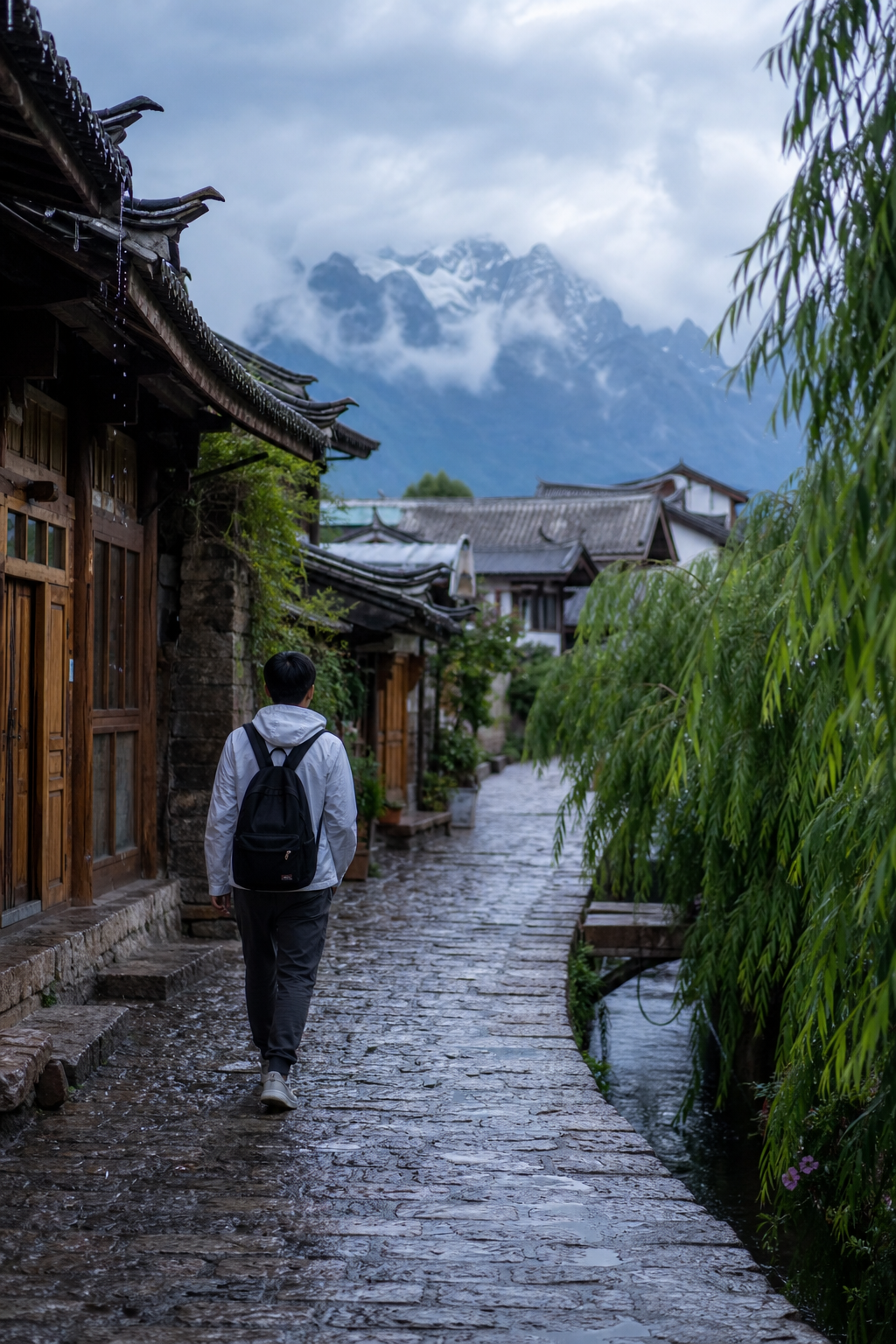
雨停在午后,丽江的石板路像刚被轻轻擦亮,灰蓝的缝隙里还存着细小的水珠。我从古城边缘走进去,不急着看哪一座院门,也不急着找哪一家店,只让鞋底顺着湿润的坡度慢慢向前。屋檐还在滴水,滴答声落在木门槛旁,像有人把一天的喧哗调低。远处的玉龙雪山被云遮住半肩,近处的柳枝垂在水渠上,叶尖挂着雨后清气。这样的丽江不需要被安排,只要放慢脚步,它就会把巷子的转弯、墙上的苔痕、窗下的花盆,一件一件递到眼前。
-
The rain stopped in the afternoon, and the stone lanes of Lijiang looked as if they had been gently polished, with tiny beads of water resting in the gray-blue cracks. I entered from the edge of the old town, not hurrying toward any courtyard gate or shop, letting my soles follow the damp slope forward. The eaves were still dripping, each drop landing beside wooden thresholds like someone turning down the volume of the day. In the distance, Jade Dragon Snow Mountain hid half a shoulder behind clouds; nearby, willow branches leaned over the canal with the clean scent of rain on their tips. This version of Lijiang does not need an itinerary. If you slow down, it hands you the turns of alleys, moss on walls, and flowerpots under windows one by one.
-
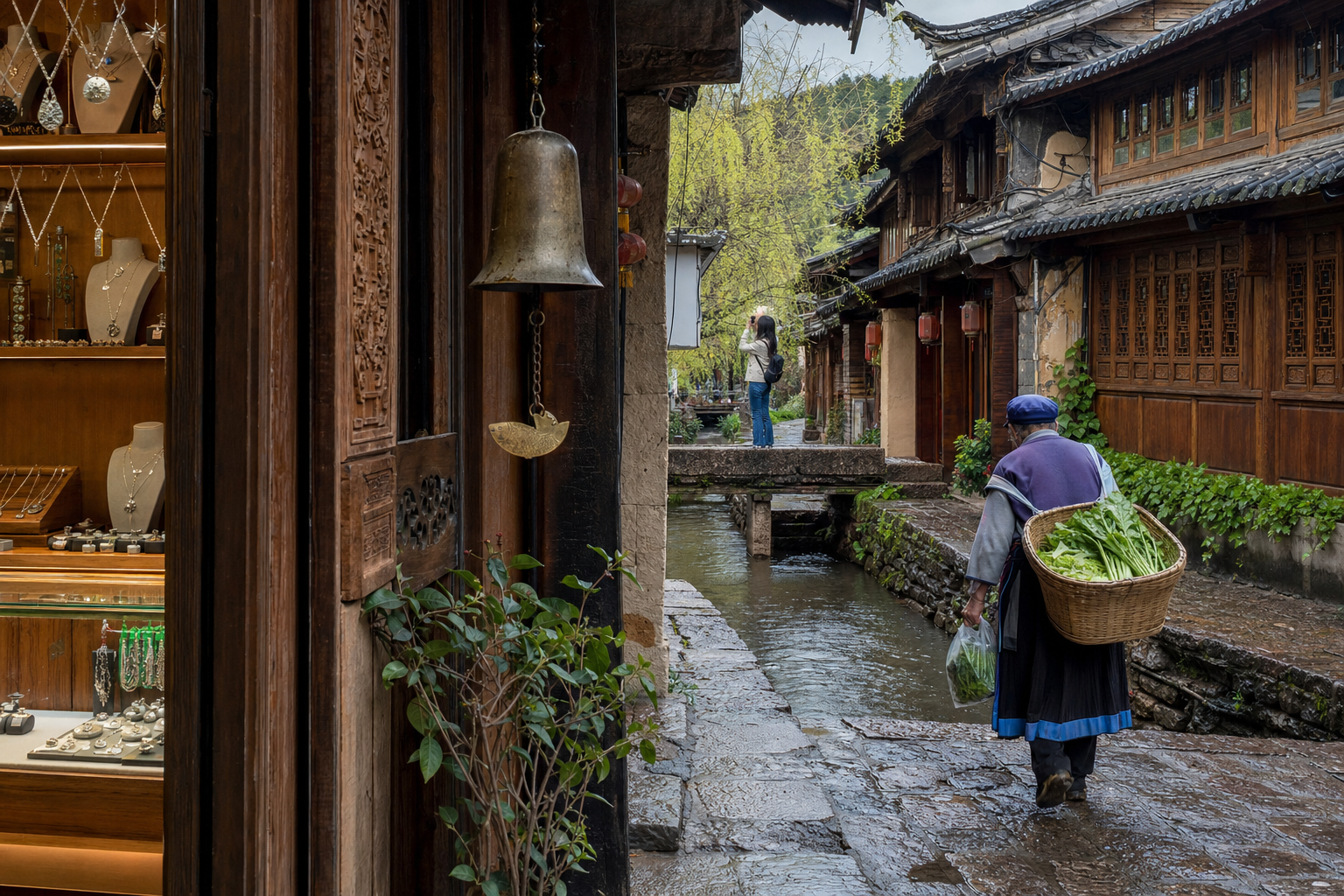
雨后的空气有一种被筛过的透明,连招牌上的字也显得更沉静。纳西人家的木楼沿街排开,雕花的窗棂被雨水浸出深色,像一页页旧书突然恢复了墨迹。我经过一家银器铺,门口的铃铛被风拨了一下,声音很轻,和水渠里流动的声响混在一起。小桥不宽,桥面泛着湿光,有游客停在桥中央拍照,也有本地老人拎着菜篮从旁边走过,谁都没有催促谁。慢走的好处就在这里:你不再把城市当作景点清单,而是把它当作一段正在呼吸的时间。
-
After rain, the air has a filtered transparency, and even the characters on shop signs appear calmer. Naxi wooden houses line the street, their carved window lattices darkened by moisture, like old pages suddenly regaining their ink. I passed a silver shop; a bell at the doorway was stirred by the wind, its faint sound mingling with the water in the canal. The small bridge was narrow and glossy. Some travelers paused in the middle for photos, while a local elder passed with a vegetable basket, and no one hurried anyone else. This is the gift of walking slowly: the town stops being a checklist of sights and becomes a length of time that is still breathing.
-
我沿着水渠向前,水面漂着几片落花,颜色被雨洗得更淡,却更耐看。渠边的石栏并不整齐,有的边角磨圆,有的凹处积水,映出一小块天空。丽江的水总像在替古城说话,它不大声,却一直在旁边提醒你,山上的雪、城里的井、屋檐下的生活,都有一条看不见的线相连。雨后慢走时,这条线更清楚。你会注意到一户人家门口晾着刚洗过的蓝布,也会注意到咖啡馆里有人把窗推开,让潮湿和热气互相交换。
-
I followed the canal forward. A few fallen blossoms floated on the surface, their colors washed pale by rain yet more durable to the eye. The stone rail beside the water was uneven; some corners were rounded by use, some hollows held puddles reflecting small pieces of sky. Water in Lijiang always seems to speak for the old town. It is not loud, but it keeps reminding you that mountain snow, city wells, and life under eaves are tied by an invisible thread. Walking slowly after rain, that thread becomes clearer. You notice freshly washed blue cloth drying at a doorway, and you notice someone in a café pushing open a window so damp air and warm air can trade places.
-
四方街附近比巷子里热闹些,可雨后的人声也变得柔软。鼓声从一家店里传出来,节奏被湿润的空气包着,没有平日那么锋利。卖鲜花饼的小店打开蒸箱,玫瑰和面皮的香气立刻溢出门外,和雨后木头的味道混合成一种很丽江的气息。我买了一块,站在屋檐下慢慢吃,饼皮还温,馅心甜而不腻。身边有人讨论下一站去哪里,我却忽然觉得,不去哪里也可以。雨后的古城像一张刚展开的地图,但最值得看的不是目的地,而是空白处的停顿。
-
Around Sifang Street there were more people than in the side alleys, yet the voices after rain had softened. Drumbeats came from a shop, wrapped in humid air and less sharp than usual. A flower-cake store opened its steamer, and the scent of rose and pastry spilled into the street, mixing with the smell of wet wood into something distinctly Lijiang. I bought one and ate it slowly under the eaves. The crust was warm, the filling sweet without being heavy. People nearby discussed where to go next, but I suddenly felt that going nowhere was also acceptable. The old town after rain is like a freshly unfolded map, but what is most worth seeing is not the destination; it is the pause in the blank spaces.
-
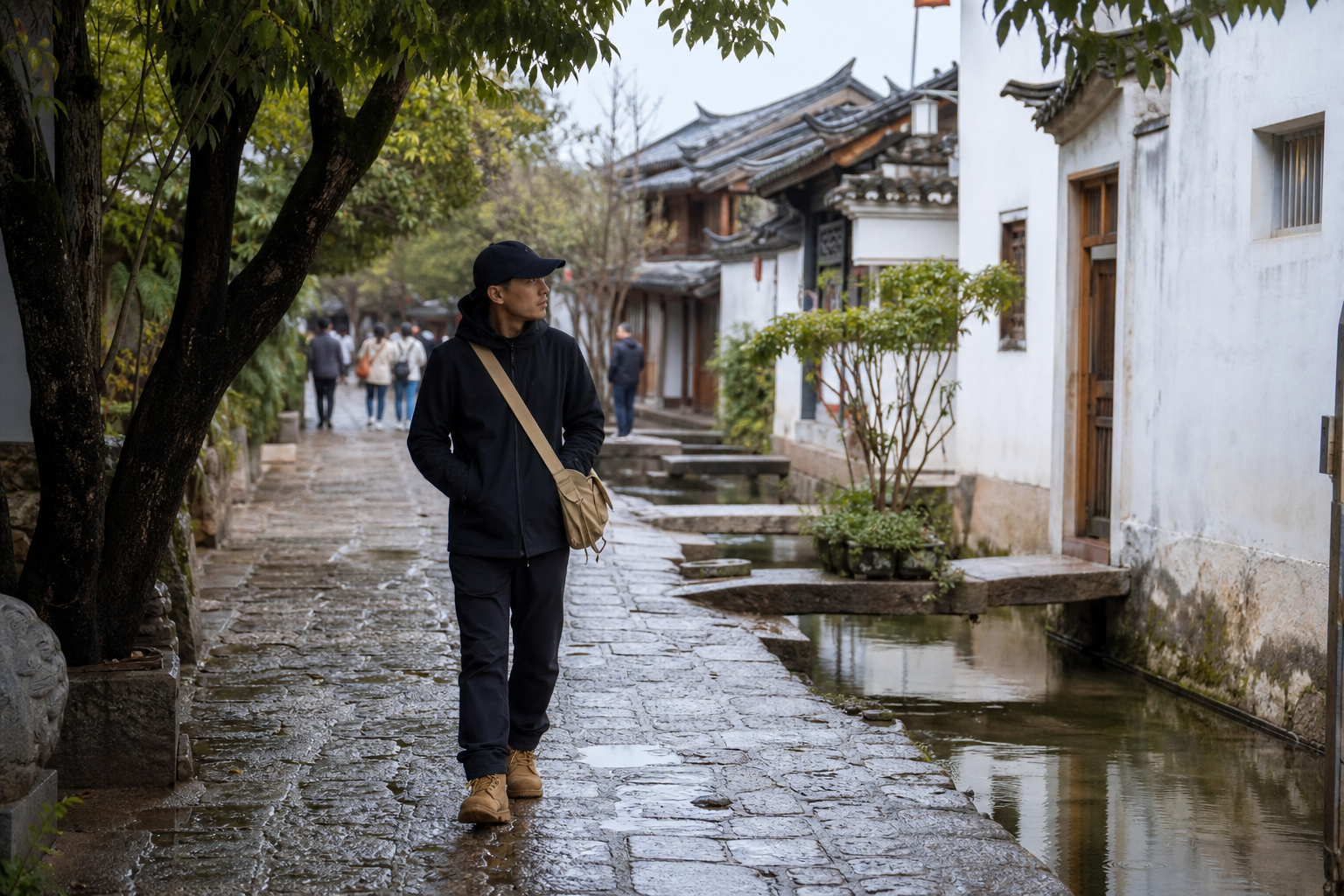
走到一条更窄的巷子时,墙根的苔藓亮得像新生的绒。几只猫从门缝里探头,确认雨停之后,才踩着石阶出来。它们比人更懂得慢,先嗅一嗅空气,再绕过水洼,最后停在一把竹椅下面。巷子深处有一位阿姨在整理花盆,手上沾着泥,她把被雨打弯的枝叶扶正,动作小心,像是在安慰一群刚醒来的孩子。我站了一会儿,没有拍照,只是看着。旅行里有些画面一旦被镜头固定,反而失去温度;留在记忆里,水汽和呼吸都还在。
-
In a narrower alley, moss at the base of the wall shone like newborn velvet. A few cats peered from door cracks and, after confirming the rain had stopped, stepped out onto the stone steps. They understood slowness better than people: first sniffing the air, then circling puddles, finally settling beneath a bamboo chair. Deeper in the alley, an auntie was arranging flowerpots. Mud clung to her hands as she lifted rain-bent stems and leaves with careful motions, as if comforting children just waking up. I stood there for a while and did not take a photo. Some travel scenes lose warmth once fixed by a lens. Kept in memory, their mist and breathing remain alive.
-
丽江的雨后还有一种声音,是脚步和水面的互相回应。鞋底落在石板上,轻轻一响,旁边水渠也像跟着应一声。转角处的风带着湿凉,从巷口穿来,又被一排木楼挡住。很多店铺开始重新把门口的布帘拉开,彩色披肩挂出来,银饰摆出来,茶叶罐摆出来,古城像一个刚睡醒的人,伸了伸懒腰。可我更喜欢它还没有完全热闹起来的片刻:半开门的光、未擦干的桌面、老板低头整理零钱,这些细节比叫卖更有耐心。
-
Lijiang after rain also has a sound made by footsteps answering water. A sole touches stone with a soft note, and the canal beside it seems to reply. At a corner, a damp cool wind comes through the lane, then is stopped by a row of wooden buildings. Many shops begin to lift their curtains again: colorful shawls are hung, silver ornaments set out, tea tins arranged. The old town is like a person just waking, stretching slightly. But I prefer the moment before it becomes fully lively again: light from a half-open door, tabletops not yet wiped dry, a shopkeeper bending over change. These details have more patience than any sales call.
-
我走过木府外的一段路,墙面被雨洗得干净,黄色的土墙和深色瓦檐对比更明显。游客三三两两地经过,有人把伞收进包里,有人还舍不得合上,伞面上的水珠一路滚落。慢走并不是故意拖延,而是让身体重新学会和地方保持同样的速度。丽江的速度本来就不该被赶路打乱:水慢慢流,云慢慢散,茶慢慢热,老人慢慢讲一件年轻时的事。你若急着抵达,就只会看见门票和路牌;你若慢下来,才会看见时间本身怎样落在屋檐上。
-
I walked along a road outside Mufu Mansion, where rain had washed the walls clean and sharpened the contrast between yellow earth walls and dark tiled eaves. Travelers passed in small groups. Some folded umbrellas into bags; others could not yet bear to close them, letting beads of water roll from the fabric as they walked. Slow walking is not deliberate delay; it is letting the body relearn the pace of a place. Lijiang’s pace should not be disturbed by rushing: water flows slowly, clouds scatter slowly, tea warms slowly, elders slowly tell stories from youth. If you hurry to arrive, you see only tickets and signs; if you slow down, you see time itself settling on the eaves.
-
傍晚临近,雨云从屋顶后面移开,天色露出一点淡金。湿石板开始反光,像有人在地面铺了一层薄薄的光。酒吧街的灯还没有完全亮起,白天和夜晚之间留着一段安静的缝隙。我坐在水边的矮凳上,看店员把灯串一盏盏试亮,看游客把相机收起来又拿出来,看一只狗从桥上走过,抖了抖身上的水。丽江在这个时刻显得非常日常,也非常珍贵。它不需要用传奇证明自己,只凭雨后这段缓慢的光,就足够让人记住。
-
As evening approached, rain clouds shifted from behind the rooftops and the sky revealed a little pale gold. Wet stone began to reflect, as if someone had spread a thin layer of light over the ground. The bar street lights had not fully come on, leaving a quiet seam between day and night. I sat on a low stool by the water and watched a staff member test strings of bulbs one by one, watched travelers put cameras away and take them out again, watched a dog cross the bridge and shake water from its coat. Lijiang at this moment felt completely ordinary and completely precious. It did not need legends to prove itself; this slow light after rain was enough to be remembered.
-
有人说古城商业化了,雨后慢走时我也能看见那些相似的商品、相似的音乐和相似的招牌。但同一条街上仍然有许多无法复制的东西:瓦片边缘的水线,老人袖口的磨损,孩子踩进水洼时突然笑出的声音,陌生人让路时轻轻侧身的动作。旅行不是替一个地方辩护,也不是替它定罪,而是在复杂之中找到仍然真实的部分。丽江把真实藏得很细,需要你在雨后、在慢步里、在不急着评价的时候,才看得到它的纹理。
-
Some people say the old town has become commercial, and while walking slowly after rain I can also see the similar goods, similar music, and similar signs. Yet on the same street there remain many things that cannot be copied: the waterline along tile edges, the worn cuffs of an elder’s sleeves, the sudden laughter of a child stepping into a puddle, the slight turn of a stranger making room. Travel is not about defending a place or condemning it. It is about finding what is still genuine within complexity. Lijiang hides truth in small textures, and you see them only after rain, in slow steps, when you are not rushing to judge.
-
夜色真正降下时,灯笼在水面上摇成一串红影。雨后的凉意从石板底下升起来,我把外套拉紧,继续往回走。白天看见的巷口变得陌生,木门后的灯把窗纸照得温暖,像每一户都守着自己的小宇宙。游客的脚步渐渐多起来,音乐也开始清晰,可我心里仍保留着下午那段湿润的安静。慢走带来的不是占有,而是让一个地方在你身上留下节奏。离开丽江以后,也许你记不清哪座桥叫什么,却会记得雨后鞋底落下的声音。
-
When night truly fell, lanterns swayed into strings of red reflections on the water. Coolness rose from beneath the stones, and I pulled my jacket closer as I walked back. Alley entrances I had seen by day became unfamiliar; lamps behind wooden doors warmed the window paper, as if every household guarded its own small universe. Travelers’ footsteps increased, and music grew clearer, yet I still carried the damp quiet of the afternoon. Slow walking does not give you possession of a place; it lets a place leave its rhythm in you. After leaving Lijiang, you may not remember the name of each bridge, but you will remember the sound of your soles after rain.
-
回到古城口,我又回头看了一眼。雨水让丽江显出一种不加修饰的层次:新的店铺贴着旧的墙,喧闹的人群走过安静的水,明亮的灯光照在被岁月磨平的石头上。矛盾并没有消失,却被雨后的空气暂时调和。也许一座古城真正吸引人的地方,不在于它是否完全保持过去,而在于它怎样把过去、现在、远方来客和本地生活放在同一条街上,让它们彼此碰撞又彼此让步。我在这条街上慢慢走过,像读完一封被雨打湿却仍能辨认字迹的信。
-
At the entrance of the old town, I turned back once more. Rain had revealed Lijiang’s unpolished layers: new shops against old walls, noisy crowds passing quiet water, bright lights falling on stones smoothed by years. The contradictions had not vanished, but the post-rain air temporarily reconciled them. Perhaps the true attraction of an old town is not whether it has perfectly preserved the past, but how it places past and present, distant visitors and local life, on the same street, allowing them to collide and yield to one another. I walked slowly through that street as if finishing a letter dampened by rain yet still legible.
-
这次雨后慢走没有壮阔的故事,也没有必须打卡的结论。它只是让我明白,丽江最动人的时候,常常不在最热闹的广场,也不在最明亮的夜景,而在雨刚停、脚步刚放慢、心里刚腾出空位的瞬间。那时你会发现,古城并不是静止的风景,而是一种缓慢流动的关系:人与水、木头与石头、山云与灯火、外来者与日常生活,都在同一场雨后重新靠近。写下这些时,我仍能想起湿润的风穿过巷子,想起一滴水从檐角落下,像替这趟行走画上轻而圆的句点。
-
This slow walk after rain had no grand story and no conclusion that demanded a check-in photo. It simply taught me that Lijiang is often most moving not in its busiest square or brightest night view, but in the instant after rain stops, footsteps slow, and the heart makes room. Then you discover that the old town is not a frozen scene but a slowly flowing relationship: people and water, wood and stone, mountain clouds and lamplight, visitors and daily life all draw closer again after the same rain. As I write this, I can still recall the damp wind moving through the alley and a drop of water falling from an eave, placing a soft, round period at the end of the walk.
-
如果以后再来,我想仍选一个雨后的下午,不问路线,不看排行榜,只从一条有水声的小巷开始。也许会遇见不同的花、不同的猫、不同的店主,也许雪山仍藏在云后,古城仍在争议里前行。但我相信,只要愿意慢走,丽江就会把最细小的真实交出来:一块石头的温度,一盏灯的等待,一段水声的方向,以及人在远方忽然变安静的理由。旅行终究不是把世界看完,而是在某个地方学会重新看见。雨后的丽江,正适合教人这件事。
-
If I come again, I would still choose an afternoon after rain, asking no route and checking no rankings, beginning only from a small lane with the sound of water. Perhaps I would meet different flowers, different cats, different shopkeepers; perhaps the snow mountain would still hide behind clouds, and the old town would still move forward amid debate. But I believe that as long as one is willing to walk slowly, Lijiang will offer its smallest truths: the temperature of a stone, the waiting of a lamp, the direction of flowing water, and the reason a person suddenly grows quiet far from home. Travel is not about seeing the whole world; it is about learning to see again somewhere. Rain-washed Lijiang is well suited to teach that lesson.
- 五月在西安城墙下看夜城,我第一次觉得历史不是课本里的东西 | Walking Xi'an's City Wall at Night in May Was the First Time History Stopped Feeling Like a Textbook
- 大运河边读一座城市 | Reading a City Along the Grand Canal
- 凌晨五点的生料粉摊,把我带进了玉林 | A 5 A.M. Rice-Noodle Stall Led Me into Yulin
- 中国旅游医疗与保险指南 | Medical & Insurance Guide for China Travel
- 把天气留在行程里:秋天去喀纳斯的公路节奏 | Leave Weather in the Itinerary: An Autumn Road Rhythm for Kanas
- 我原以为古装秀会很“复古”,直到看见现代妆发把整场秀台点亮 | I Expected an Ancient-Costume Show to Feel Purely Historical Until Modern Hair and Makeup Lit Up the Entire Runway
- 我站在屋檐下面,才明白中国古建筑为什么先让人慢下来 | I Understood Why Traditional Chinese Architecture Slows the Body Only After Standing Under the Eaves
- 手机支付失败后我学会准备备用方案 | After My Mobile Payment Failed, I Learned to Prepare a Backup Plan in China
- 中国的户籍制度到底是怎么回事? | What Exactly Is China's Hukou System?
- 泉州西街入夜以后,一盏圆灯就能把面线糊和人情都照热 | Once Night Falls on West Street in Quanzhou, One Round Lamp Can Warm Both Noodles and Human Feeling
Comments (0)