
青岛的啤酒不只在海边喝:一顿旧城晚饭把我留下来 | Qingdao Beer Took Me Beyond the Coast for an Old-City Dinner
青岛的啤酒不只在海边喝:一顿旧城晚饭把我留下来 | Qingdao Beer Took Me Beyond the Coast for an Old-City Dinner
傍晚五点多,我从海边往回走,鞋底还粘着一层细沙,手机里的路线却只剩下一个很简单的安排:看完海,找地方吃饭,然后回去。风从岸边斜着吹过来,衣服袖口有一点凉,远处的水面被晚光压成灰蓝色。我原本以为这会是一个标准的青岛夜晚,海岸线负责风景,啤酒负责气氛,吃什么只是中间的填空。
A little after five in the evening, I walked back from the coast with fine sand still clinging to my soles. My phone showed a very simple plan: see the sea, find dinner, and return. The wind came sideways from the shore, cooling my cuffs, while the water turned a muted blue-gray under the fading light. I had assumed this would be a standard Qingdao evening: the coast for the view, beer for the mood, and dinner as a gap between them.
我没有马上离开海边。海风在堤岸上显得很有力,吹得人自然加快脚步,可一转进有树的街口,声音就变了,浪声被墙面和车辆的低响隔开,脚下也从平整的硬地换成了有坡度的路。我站在路边重新看了一眼地图,发现旧城并不是海岸的附属背景,它有自己的方向,甚至有自己的晚饭时间。
I did not leave the shore immediately. On the embankment, the wind was strong enough to make me walk faster, but after I turned into a tree-lined street, the sound changed. The waves were divided by walls and the low hum of traffic, and the flat pavement gave way to a sloping street. I looked at the map again and realized that the old city was not merely a backdrop to the coast. It had its own direction, and its own time for dinner.
我沿着一段向上的路走,经过旧房子的外墙和被晚霞照亮的窗框。这里没有海边那种一眼就能拍下来的开阔,转角常常挡住下一步视线;但正因为看不全,我反而开始注意门口摆着的折叠椅、墙根的自行车、窗内亮起的白灯。一个老人把塑料凳从门槛旁挪开,让骑车的人通过,动作很轻,却把街道的尺度交代得很清楚。
I walked up a gradual slope past old facades and window frames lit by the last orange light. Nothing opened into a single photograph as easily as the coast. Corners hid what came next, so I began noticing folding chairs by doorways, bicycles against walls, and white lights appearing indoors. An older man quietly moved a plastic stool away from a threshold so a cyclist could pass. That small gesture explained the scale of the street better than any landmark could.
我原来想把晚饭也安排在海边,理由很实际:吃完就能继续吹风,走累了也容易找到回程方向。可是旧城里的气味先改变了我的判断。不是某一种强烈的香味,而是油锅、葱蒜、烤物、潮湿石墙和啤酒麦芽气息混在一起,时近时远,随着巷口的风一阵阵送过来。我的步子慢下来,开始想知道这些味道到底从哪一扇门里出来。
I had planned to eat by the sea as well, for practical reasons: I could keep enjoying the wind afterward, and the way back would be easy to recognize. The old city changed my mind through smell first. It was not one overpowering aroma, but a mixture of hot oil, scallions, garlic, grilled food, damp stone walls, and malt drifting in and out with the air. My pace slowed, and I began wondering which doorway produced each layer.
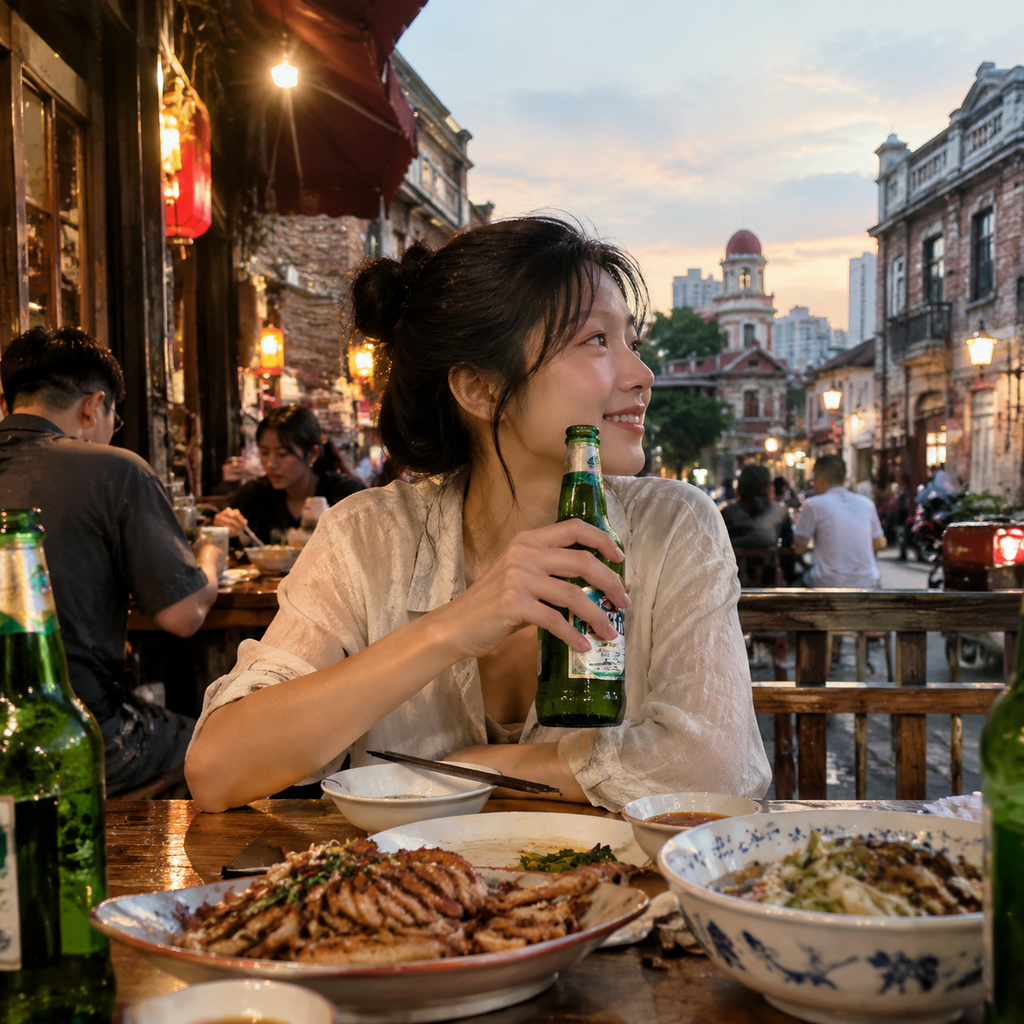
我没有去寻找一个必须被记住的店名,也没有把晚饭当成打卡任务。我选了一家从街外能看见几张桌子的普通小馆,门口有人进出,里面的灯光不亮不暗,足以看清桌面。店里没有刻意制造海洋主题,墙上也没有把啤酒写成唯一主角。这样的安排让我松了一口气,因为我想吃一顿饭,而不是继续完成一张关于青岛的明信片。
I did not look for a restaurant name that had to be remembered, and I did not treat dinner as a checklist item. I chose an ordinary small eatery where a few tables were visible from the street. People were coming and going, and the lighting was bright enough to see the tabletops without being harsh. There was no forced ocean theme, and beer was not presented as the only attraction. I felt relieved. I wanted a meal, not another postcard version of Qingdao.
坐下以后,我先看邻桌怎么做。靠墙的一桌坐着几位本地食客,桌面不大,盘子却摆得很有秩序:先来的凉菜靠里,刚端上的热菜放在中间,杯子沿着桌边排开。他们没有急着碰酒,而是先把一盘海菜和一份热菜分开夹到小碟里。有人把转盘轻轻推了一下,给刚落座的人留出放包的位置,整张桌子随之重新有了余地。
After sitting down, I watched how the neighboring table handled the meal. A few local diners sat against the wall. The table was small, yet the dishes were arranged with quiet order: cold dishes toward the inside, hot plates in the center, glasses along the edge. They did not reach for the beer immediately. Instead, they divided a sea-vegetable dish and a hot plate into small bowls. Someone gently shifted the lazy Susan to make room for a newcomer’s bag, and the whole table gained space again.
这个动作让我意识到,青岛餐桌上的啤酒并不一定是开场哨。它可以等菜,可以跟着聊天走,也可以只是夹菜之间的一口清爽。以前我在旅行中常把啤酒理解成地点标签,到了啤酒城市就觉得应该大杯畅饮;那天我第一次认真想,饮用边界其实由身体、食物、风和回程共同决定,而不是由城市名决定。
That gesture made me realize that beer at a Qingdao table does not have to be the opening whistle. It can wait for the dishes, follow the conversation, or simply refresh the mouth between bites. During past trips, I often treated beer as a location label: in a beer city, I assumed I should drink large amounts. That evening I thought seriously about the boundary of drinking. It is set by the body, the food, the wind, and the return journey, not by the city’s name.
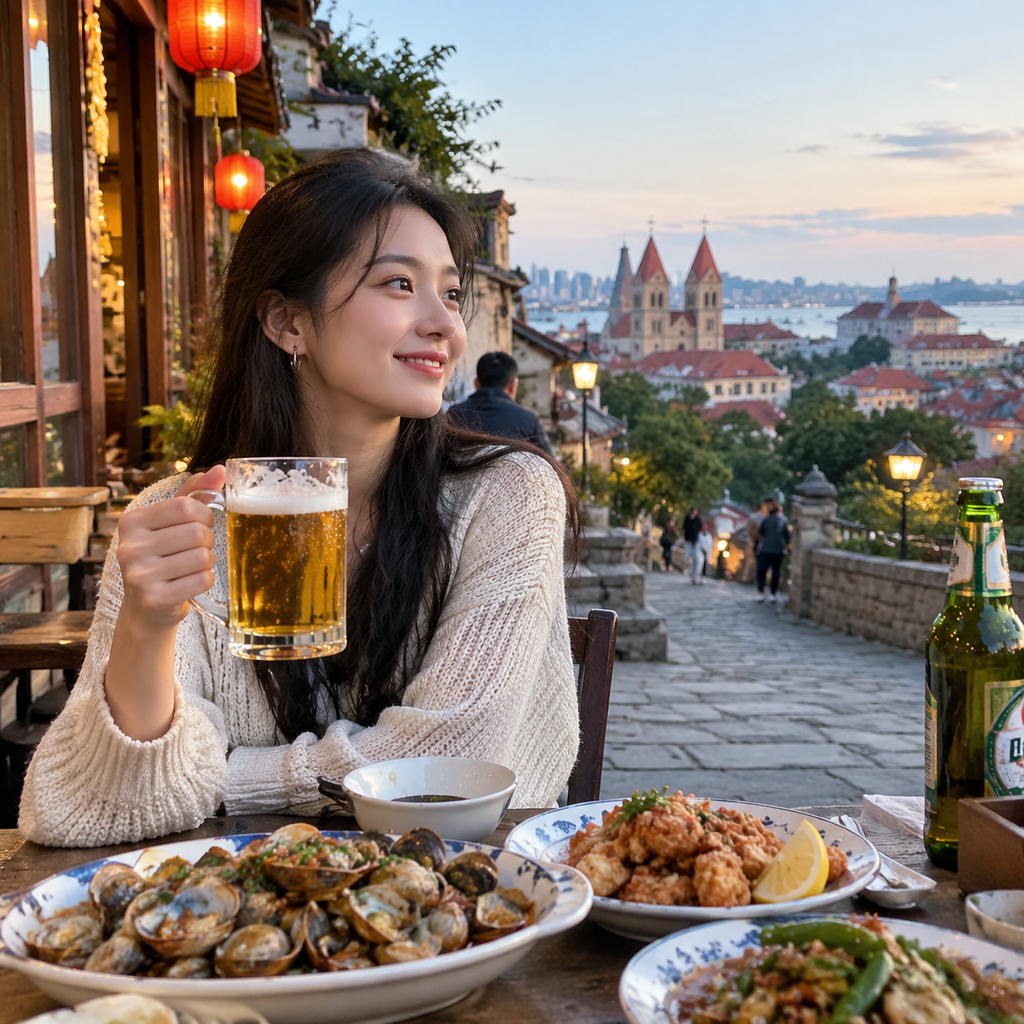
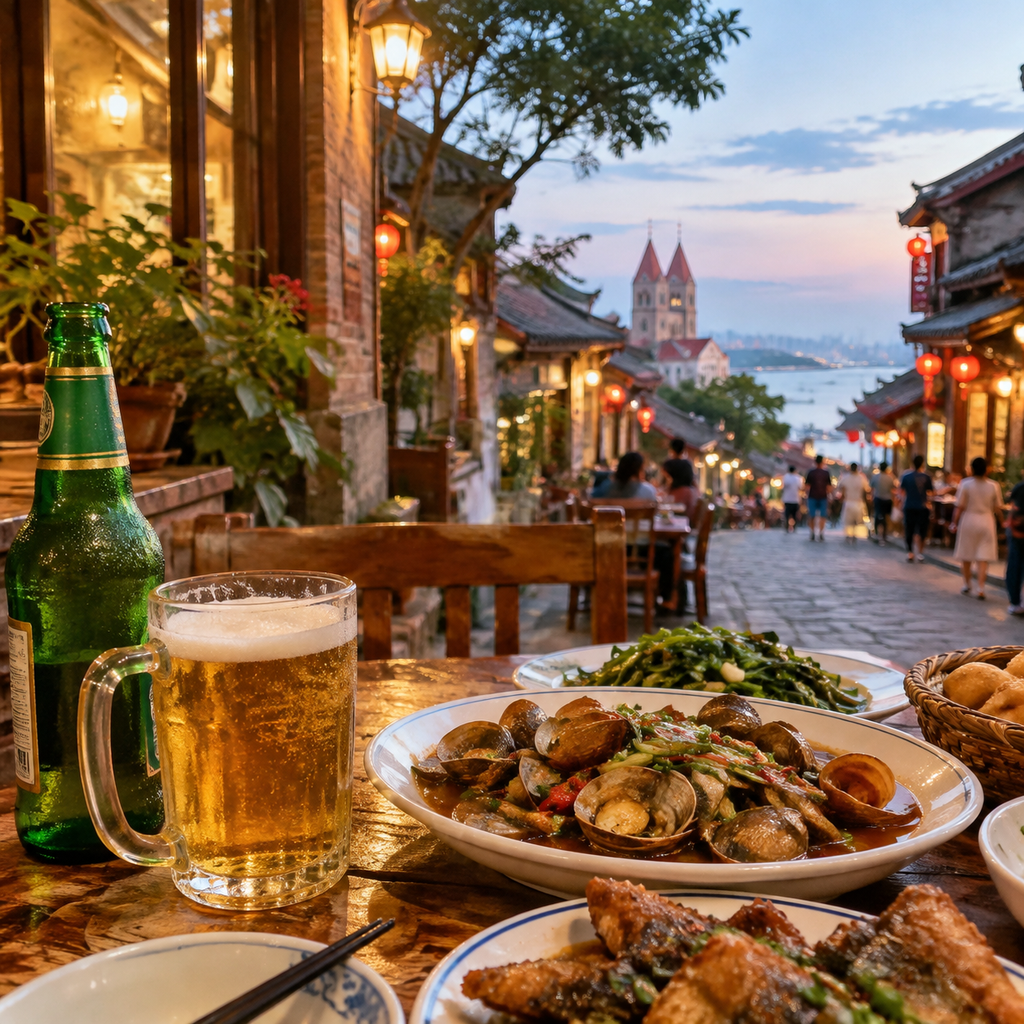
我点了一杯啤酒,没有把“来青岛”当成必须证明酒量的理由。杯壁上的水汽很快凝成细小的水珠,手指碰上去有一阵凉。我先吃了几口菜,等胃里有了底,再慢慢喝。泡沫退下去以后,麦芽的味道没有想象中夸张,反而把海鲜和咸鲜味衬得更干净。它不是海风的复制品,却和海风一样,带着一种让人愿意停留的轻松。
I ordered one glass and did not treat “being in Qingdao” as a reason to prove my tolerance. Condensation quickly gathered on the glass, leaving my fingers cold when they touched it. I ate several bites before drinking slowly. Once the foam settled, the malt taste was less dramatic than I had expected. It made the savory, briny flavors of the seafood feel cleaner. It was not a copy of the sea breeze, but like the breeze, it created an ease that made me willing to stay.
菜陆续上桌,我先吃到的是一盘清爽的小菜,随后是热气更足的海鲜和主食。具体做法并不需要被我夸张成城市秘闻,真正有意思的是吃法的次序。邻桌有人先把汤汁拌进米饭,有人只夹食材不碰盘底,还有人把壳集中到一只空碟里,桌面一直保持清楚。我跟着调整自己的筷子,不再只顾着拍照,也不再把每一盘菜都当成独立的景点。
The dishes arrived one by one: first a cool, crisp side dish, then seafood with more heat, followed by a staple. None of the cooking methods needed to be inflated into a secret of the city. What interested me was the order of eating. At the neighboring table, one person mixed sauce into rice, another took only the ingredients and left the liquid, while someone else gathered shells onto an empty plate. Their tabletop stayed clear. I adjusted my chopsticks accordingly, stopped treating every plate as a separate attraction, and stopped reaching for my camera so often.
我尤其留意到他们喝酒的频率。不是每句话后面都要碰杯,也不是每道菜都要举杯庆祝。有人聊到兴起时喝一口,低头剥虾时把杯子推远,起身接电话前先把杯底放稳。酒在这张桌子上有存在感,却没有抢走人的注意力。我以前把“啤酒文化”想得太热闹,直到看见这种克制,才明白日常饮用比宣传画面更能说明边界。
I paid particular attention to how often they drank. There was no toast after every sentence and no raised glass for every dish. Someone took a sip when the conversation became lively, pushed the glass away while peeling shrimp, and steadied it before standing to answer a phone call. Beer had a presence on the table without taking over anyone’s attention. I had imagined beer culture as something louder. Seeing this restraint showed me that everyday drinking explains the boundary better than promotional images do.
靠门的位置坐着一位独自吃饭的人。他把外套搭在椅背上,先喝了几口热汤,再打开手机看消息;服务员端菜过来时,他把手机扣在桌角,没有边看边夹。吃到一半,他向店里要了纸巾,把桌沿溅到的一点汤汁擦掉。这个人几乎没有说话,却让整个晚饭多了一层真实:旧城餐桌不是给游客专门搭出的舞台,很多人只是下班后认真吃自己的饭。
A solo diner sat near the door. He placed his jacket over the chair, drank a few spoonfuls of hot soup, and checked messages on his phone. When the server brought a dish, he turned the phone face down at the corner instead of eating while reading. Midway through the meal, he asked for a tissue and wiped a small splash from the table edge. He barely spoke, yet he added something real to the evening. The old-city table was not a stage built for visitors. Many people were simply eating carefully after work.
海风在旧城里没有消失,只是变得不连续。它从两栋房子之间钻进来,把门帘吹得向内鼓起;过一会儿又被墙挡住,空气恢复温热。我的杯子因此喝得更慢,出门前也开始考虑身体状态。若一直在海边,风会让人误以为自己很清醒;进了街巷,安静下来,才知道酒意和疲劳仍然存在。
The sea breeze had not disappeared in the old city; it had simply become intermittent. It slipped between two buildings and puffed the doorway curtain inward, then vanished behind a wall and left the air warm again. I drank more slowly and began considering how I felt before leaving. On the shore, the wind can make a person think they are completely alert. In the quieter lanes, I could tell that alcohol and fatigue were still there.
我把第二杯的念头放下了。这个决定并不戏剧化,甚至没有谁提醒我。我只是看见邻桌把最后一瓶酒分给几个人,剩下的量很少;有人已经开始吃主食,有人拿出外套准备离开。我算了算自己还要走一段坡路,再加上夜里不熟悉的街口,觉得一杯刚好。青岛的啤酒边界,在那一刻变成一个很具体的判断:喝到还能好好走路、好好认路、好好吃完饭。
I let go of the idea of a second glass. The decision was not dramatic, and nobody had to warn me. I simply noticed the neighboring table sharing the last small amount of a bottle, while one person had moved on to the staple and another was putting on a jacket. I still had a sloping walk ahead and unfamiliar corners to navigate at night. One glass felt right. Qingdao’s beer boundary became a practical judgment: drink only as much as still lets you walk steadily, read the streets, and finish dinner properly.
饭吃到后半程,桌面上的动作比味道更吸引我。服务员把空盘叠到一旁,并没有从客人手边硬挤过去;邻桌把筷子横放在碗口,示意暂时不需要添菜;有人把最后几只花生推到桌子中间,谁伸手都方便。这样的细节很小,却使餐厅显得有节奏。人们不是被菜单带着走,而是在互相避让、等待和补位中把一顿饭完成。
During the latter half of the meal, the movements around the table interested me more than the flavors. The server stacked empty plates to one side without forcing an arm through anyone’s place. At the next table, diners laid chopsticks across their bowls to signal that they did not need another dish yet. Someone pushed the last peanuts toward the center so anyone could reach them. These details were small, but they gave the restaurant a rhythm. People were not simply following a menu; they were finishing a meal through waiting, yielding, and making space for one another.
我也开始尝试把注意力从“这顿饭值不值得”移到“这顿饭让我怎样待在这里”。窗外经过的人越来越少,店内的玻璃上浮起一层薄薄的雾气。有人推门进来,夹着一阵冷风和街边的湿气;门合上后,热菜的香味又重新聚拢。那种一开一合的温度变化,让我觉得旧城的夜晚不是一个景点的延长线,而是一种持续发生的生活。
I began shifting my attention from whether the meal was “worth it” to how the meal allowed me to remain there. Fewer people passed outside, and a thin mist appeared on the restaurant window. Each time someone opened the door, cold air and damp street smells entered; once it closed, the aroma of hot dishes gathered again. This repeated change in temperature made the old-city night feel less like an extension of a sightseeing spot and more like daily life continuing in front of me.
结账时我没有询问一个听起来很诱人的固定价格,也没有把没有核实过的细节写进备忘录。我只按现场菜单和实际消费处理,确认桌上的东西都算清楚,再把外套穿好。旅行中,诚实面对一顿饭的范围很重要:知道自己吃了什么,知道自己喝了多少,也知道哪些感受只是当晚的感受,不必包装成所有人都适用的结论。
When it was time to pay, I did not invent an attractive fixed price or record details I had not verified. I followed the menu and the actual order, checked that everything on the table had been counted, and put on my jacket. On a trip, it matters to be honest about the scope of a meal: know what you ate, know how much you drank, and know which feelings belong only to that evening rather than turning them into a universal conclusion.
出门后我没有回海边。原来的路线在脑子里还很清楚:沿岸走回去,找一处能看见灯光的地方,再结束这一天。但饭后的身体不想立刻回到开阔的风里,我也突然不想把旧城只当作去餐馆的通道。于是我转向一条灯光更连续的街,沿着屋檐、坡道和亮着的窗户慢慢走,把夜间路线从海岸线改成了旧城内部。
After leaving, I did not return to the shore. The original route was still clear in my mind: walk along the water, find a place with lights, and end the day. Yet my body did not want to step straight back into the open wind after dinner, and I no longer wanted to treat the old city as a corridor to a restaurant. I turned onto a street with more continuous lighting and walked slowly past eaves, slopes, and illuminated windows. My night route shifted from the coast to the inside of the old city.
饭后步行和到达餐馆时的走路完全不同。来时我在寻找答案,注意门牌、转角和店面;饭后我不再急着确认自己在哪里,只让脚步顺着坡度变化。上坡时我把手机收起来,听鞋底与路面摩擦的声音;下坡时我放慢速度,避免因为酒和疲劳而踩空。路边一辆电动车经过,我向旁边让出位置,等它过去再继续走。
Walking after dinner felt completely different from walking toward the restaurant. On the way there, I had been looking for answers, studying signs, corners, and storefronts. Afterward, I no longer needed to prove exactly where I was. I let my steps follow the changing slope. Going uphill, I put my phone away and listened to my soles against the pavement. Going downhill, I slowed down so alcohol and fatigue would not make me misstep. When an electric scooter passed, I moved aside, waited, and continued.
一处小广场边有几个人坐着聊天,桌面上放着纸杯和零食袋。孩子在旁边短暂地跑过,成年人很快把他叫回到身边。没有人把这段空间布置成夜游节目,却有很多互相照看和不打扰的动作。我站在稍远的位置看了一会儿,忽然明白旧城最耐看的部分不在建筑立面本身,而在居民如何把门口、台阶和路边的一点空地用成自己的晚上。
Near a small square, several people sat talking with paper cups and snack bags on a table. A child ran briefly toward the edge, and an adult quickly called him back. No one had arranged the space as a night-tour performance, yet there were many gestures of watching over one another without intruding. I stood at a respectful distance for a while and realized that the old city’s most lasting feature was not the facade alone. It was how residents turned doorways, steps, and small patches of pavement into their evening.
我经过一扇半开的窗,里面传出碗筷碰撞声,随后是抽油烟机短暂加大的声音。那不是餐馆最适合拍照的声音,却让我想起刚才桌边的秩序。旅行者常常在意一座城市端出来什么,其实也可以留意它如何收拾一张桌子,如何把空盘移开,如何在拥挤的门口给别人让出半步。生活感不是装饰,它藏在这些不需要解释的动作里。
I passed a half-open window and heard bowls and chopsticks touch, followed by the brief increase of an exhaust fan. It was not the kind of sound a restaurant would choose for a photograph, but it brought back the order around my table. Travelers often focus on what a city serves. It is equally revealing to notice how it clears a table, moves an empty plate, or gives someone half a step at a crowded doorway. Daily life is not decoration; it hides in gestures that need no explanation.
我本来把啤酒和海边绑定得很紧:蓝色水面、风、杯子里的泡沫,三样东西叠在一起才算完整。那顿饭却把这个组合拆开了。啤酒可以在旧房子的灯下喝,海风可以在没有海景的巷口被感觉到,食物也可以让一个人改变原先的路线。地点并没有失去特色,只是特色不再被我限制在最容易被看见的地方。
I had tightly linked beer with the seaside: blue water, wind, and foam in a glass had to appear together for the experience to feel complete. Dinner separated that combination. Beer could be enjoyed beneath old-house lights, the sea breeze could be felt in a lane without a sea view, and food could make a person change an earlier route. Qingdao did not lose its character. I had simply stopped limiting that character to the places easiest to photograph.
我又走回几小时前经过的一个路口。白天看起来只是普通的分岔,晚上却有不同的层次:一侧是亮着灯的店门,另一侧是安静的墙面,远处偶尔传来车轮压过井盖的声音。我的胃已经不再空,脚步也不需要追赶风。我在这里停下来,确认回程方向,再决定继续走一小段,而不是立刻打开打车软件。
I returned to an intersection I had passed a few hours earlier. In daylight it had looked like an ordinary fork, but at night it had layers: lit storefronts on one side, a quiet wall on the other, and the occasional sound of tires crossing a manhole cover. My stomach was no longer empty, and my feet no longer needed to chase the wind. I paused, confirmed the direction back, and decided to walk a little farther instead of opening a ride-hailing app immediately.
这段停留也有实际边界。我没有往过暗的巷子里钻,没有为了寻找“更本地”的画面离开有照明和人流的路线。旧城夜行的乐趣不需要靠冒险证明,尤其在喝过酒以后,更应该把识路、脚下安全和回程安排放在前面。好吃的晚饭让路线变得更长,却不应该让判断变得更松。
The walk still needed practical boundaries. I did not enter unusually dark lanes or leave lit, populated streets just to find a more “local” image. Enjoying the old city at night does not require proving anything through risk, especially after drinking. Knowing the way, watching the ground, and keeping the return plan clear come first. A good dinner made my route longer, but it should never make my judgment looser.
路过一家便利店时,我进去买水。冷柜门打开的一瞬间,冷气贴到脸上,和街上的湿暖形成明显反差。店员把找零和小票放到柜台边,我接过水后没有继续逗留。这个小停顿把晚饭和夜行重新接起来:酒不是结束,水、脚感和清醒程度才决定我还能走多远。
When I passed a convenience store, I went in for water. The instant I opened the cooler, cold air touched my face, a sharp contrast with the damp warmth outside. The cashier placed the change and receipt at the edge of the counter, and I took the water without lingering. That brief stop connected dinner to the walk again. Beer was not the ending; water, the feeling in my feet, and my alertness determined how far I could continue.
我把水瓶握在手里,沿着坡路下行。瓶身的冰凉逐渐被掌心捂热,街灯在湿润的路面上拉出短短的反光。海边的风此时只剩下衣领处偶尔的一次掠过,反而更容易感觉到自己走路的节奏。饭后不需要立刻寻找下一个大景观,消化、辨路和观察邻里生活,本身就是夜晚的一部分。
I held the water bottle as I went downhill. Its cold surface slowly warmed under my palm, while streetlights made short reflections on damp pavement. The coastal wind now touched only my collar from time to time, making it easier to feel my own walking rhythm. After dinner, I did not need to chase another major view. Digestion, navigation, and noticing neighborhood life were already part of the night.
我想起刚才邻桌那只被推到中间的花生碟。它没有被谁郑重地介绍,却一直在那里,谁想吃就伸手,谁不想吃也不会被催促。那种共享不是热闹的口号,而是给别人留下选择。回想这顿饭,我记住的并不是某一道菜应该怎样被形容,而是桌面如何容纳不同的速度:有人喝得慢,有人吃得快,有人只坐一会儿,有人把夜晚交给一整顿饭。
I thought of the small dish of peanuts pushed toward the center at the neighboring table. Nobody formally presented it, yet it stayed there for anyone who wanted it, without pressuring anyone who did not. That kind of sharing was not a loud slogan; it left room for choice. Looking back, I remembered less how a particular dish should be described than how the table held different speeds: someone drank slowly, someone ate quickly, someone stayed briefly, and someone gave the whole evening to dinner.
如果有人问我青岛啤酒应该在哪里喝,我现在不会只指向海边。海边适合让风把人的注意力打开,旧城餐桌则适合让人把注意力收回来。一个地方看海,一个地方看人怎样吃饭、等菜、分食和离开。两者并不竞争,真正重要的是不要把其中一个误认为另一个的替代品。
If someone asks me where Qingdao beer should be enjoyed, I would no longer point only toward the coast. The shore opens attention through wind, while an old-city table gathers attention back through food and company. One place lets you watch the sea; the other lets you watch people eat, wait, share, and leave. They are not competitors. The important thing is not to mistake one for a substitute for the other.
我也不会把“边喝边走”说成一种浪漫安排。喝酒以后,长距离步行、复杂换乘和临时改道都需要更谨慎;海风带来的清凉并不等于酒精已经消失。那晚我选择一杯、吃饱、买水、走照明较好的路,最后按自己的状态结束。这样的边界看起来不够传奇,却让一顿饭真的能够改变路线,而不是把夜晚变成一连串勉强。
I would not describe drinking while walking as a romantic plan. After alcohol, long walks, complicated transfers, and spontaneous detours all require more care. Cool sea air does not mean the alcohol has disappeared. That night I chose one glass, ate enough, bought water, followed better-lit streets, and ended according to my condition. The boundary was not legendary, but it allowed dinner to genuinely change the route instead of turning the night into a chain of forced choices.
我走到一段能看见远处天色的街口时,海已经退到背景里。并不是我不想再看它,而是晚饭留下的味道和旧城的灯光占据了更近的位置。几个人从餐馆门口出来,先站在檐下穿外套,再分头走向不同方向;有人回头确认同伴跟上,有人把门帘替后面的人扶住。夜晚就在这些小动作里继续往前。
When I reached a street corner where I could still see the distant sky, the sea had moved into the background. It was not that I no longer wanted to see it; the meal’s flavors and the old-city lights had simply become more immediate. Several people left a restaurant and paused beneath the eaves to put on jackets before splitting in different directions. One looked back to make sure a companion was following; another held the curtain for the person behind. The night moved forward through these small gestures.
那顿饭没有给我一个可以复制的固定清单。它只让我记住几个在现场形成的判断:先看自己的体力,再决定是否沿海走;先吃几口,再决定喝多少;先观察一张桌子怎样运转,再决定自己怎样点菜;吃完不要急着追下一个景点,给旧城一点时间,也给身体一点回应。判断越具体,旅行越不容易被漂亮的想象牵着走。
That dinner did not give me a fixed checklist to copy. It left me with a few judgments formed in the moment: check your energy before choosing a coastal walk; eat a little before deciding how much to drink; observe how a table works before ordering; after dinner, do not rush toward another attraction, but give the old city time and let the body respond. The more concrete the judgment, the less likely a trip is to be led by a beautiful fantasy.
我后来又在街上走了很久吗?没有。走到觉得脚步开始变沉,我就结束了这段散步,回到交通清楚的地方。改变夜间路线并不意味着一定要把旧城走遍,也不意味着餐馆后面必须接一场漫无目的的探险。对我来说,真正的变化是把“吃饭之后回去”改成了“吃饭之后看看这里怎样入夜”,长度由当晚的身体来决定。
Did I walk for a very long time afterward? No. When my steps began to feel heavy, I ended the walk and returned to a place with clear transportation. Changing the night route did not mean covering the whole old city, nor did it require an aimless adventure after the restaurant. The real change for me was replacing “return after dinner” with “see how this place enters the night after dinner,” while letting my body decide the distance.
回到住处前,我在路口最后喝了一口水,手里还留着啤酒杯曾经带来的凉意。海风、旧墙、热菜、邻桌推开的花生碟和湿路面的反光,已经不再是几段分开的记忆,它们被一顿普通晚饭串到了一起。青岛没有要求我在海边把夜晚喝完;它只是让我在旧城坐下,吃饱,然后舍不得马上离开。
Before returning to where I was staying, I took one last drink of water at the corner. My hand still seemed to remember the chill of the beer glass. The sea breeze, old walls, hot dishes, the peanut dish pushed across the neighboring table, and reflections on damp pavement were no longer separate memories. An ordinary dinner had tied them together. Qingdao had not asked me to drink the whole night by the sea. It had simply made me sit down in the old city, eat properly, and hesitate before leaving.
第二天回想那条路线,我最先想到的仍然不是哪一处海岸线,而是餐馆门帘被风吹起的样子。门外是带着潮气的街,门内是热菜和说话声;人可以在两种温度之间进出,也可以在一杯酒和一瓶水之间调整自己。旅行的方向有时不是地图决定的,一张桌子、一阵气味和一次不急着离开的选择,就足以让夜晚换个走法。
When I remembered the route the next day, I first thought not of a particular section of coast, but of the restaurant curtain lifting in the wind. Outside was a damp street; inside were hot dishes and conversation. People could move between the two temperatures, and adjust themselves between a glass of beer and a bottle of water. A travel direction is not always decided by a map. A table, a smell, and one choice not to leave immediately can be enough to give the night a different way forward.
第二天早上,我把昨晚没有走完的海岸线重新看了一遍。地图上的蓝线没有变,原定的海边安排也没有因此失效,只是它不再拥有唯一的优先顺序。昨晚如果硬要沿岸走下去,我大概会一边赶路一边担心时间和体力,看到的海也未必比饭前更多。把路线留到状态更合适的时候,反而让那段海岸线保留了余地。
The next morning, I looked again at the stretch of coast I had not finished walking the night before. The blue line on the map had not changed, and the original seaside plan had not become useless. It simply no longer had to come first. If I had forced myself to continue along the shore, I would probably have spent the walk watching the time and my energy. I might not have seen more of the sea. Leaving that stretch for a better moment gave it room instead.
我记得的还有晚饭结束前那一小段安静。邻桌已经收拾得差不多,几个人把杯子集中到一边,空碟叠起来时没有发出很大的声响。有人把椅子往后拉,先看了一眼身后,再让同桌的人出去。这样的离席并不整齐,甚至有一点拖沓,却很像真正的晚上:每个人都有自己的节奏,桌子也要等所有动作完成后才真正空下来。
I also remembered the brief quiet before dinner ended. The neighboring table was nearly cleared, with glasses gathered to one side and empty plates stacked without much noise. Someone pulled back a chair, checked behind them, and let the others leave first. Their departure was not perfectly synchronized; it was a little slow. That made it feel like a real evening. Each person had a different pace, and the table became empty only after all those small movements were finished.
我后来才发现,所谓啤酒饮用边界并不是一条事先画好的线。它会随着有没有吃东西、风有多大、还要走多远而移动,也会受到睡眠、情绪和对路况熟不熟的影响。那晚我能做的只是把这些因素放在一起看,不把一杯酒的轻松误认为可以继续喝的许可。杯子放下以后,晚饭仍然完整,夜路也没有被酒意改写。
Only later did I understand that a drinking boundary is not a line drawn in advance. It moves with whether you have eaten, how strong the wind is, and how far you still need to walk. Sleep, mood, and familiarity with the streets matter too. That night, all I could do was consider these things together and avoid mistaking the ease of one glass for permission to keep drinking. Once the glass was down, dinner was still complete, and the walk had not been rewritten by alcohol.
旧城的海风也让我重新认识了“靠近海”这件事。真正走进街巷以后,我看不见连续的水面,却能从门帘的摆动、衣领的凉意和湿气的变化里判断风经过了哪里。它不必一直强烈,断断续续反而让人更注意周围的遮挡。墙角、屋檐和门口的布帘把风分成许多小段,人的身体也在这些小段之间不断调整。
The old city’s sea breeze also changed how I understood being near the sea. Once I was inside the lanes, I could not see an uninterrupted stretch of water, but I could tell where the air had passed from the movement of curtains, the coolness at my collar, and changes in dampness. The wind did not need to remain strong. Its interruptions made the shelter around me more noticeable. Corners, eaves, and doorway curtains divided it into short passages, and my body adjusted between them.
饭后那段路上,我没有再把邻桌的人当成可以替城市发言的样本。他们只是那一晚坐在附近吃饭的人,动作给了我观察的入口,却不能替我下结论。有人把壳收好,有人把酒杯推远,有人先穿外套,这些都说明当时的选择,不代表所有青岛人的生活方式。旅行记录如果愿意承认这个范围,反而会少一些空泛的热闹,多一点可信的触感。
During the walk after dinner, I stopped treating the people at the neighboring table as samples who could speak for the city. They were simply diners who happened to sit nearby that night. Their actions gave me a way to observe, but they could not provide my conclusions. Gathering shells, moving a beer glass away, and putting on a jacket first described choices in that moment, not every Qingdao resident’s way of life. A travel record becomes more credible when it admits that limit.
我也没有把那顿饭写成一次突然改变人生的转折。它更像一个很小的偏移,发生在看地图、闻到食物、坐下吃饭和决定只喝一杯之间。原定海岸线没有被否定,只是晚饭把我从“必须按计划完成”带到了“可以根据状态调整”。这种改变很轻,轻到当晚未必察觉,却足以让旅行少一点任务感。
I would not describe the dinner as a sudden life-changing turning point. It was a small shift that happened between checking the map, smelling food, sitting down, and deciding to have only one glass. The planned coastline was not rejected. Dinner moved me from having to complete a plan to adjusting it according to my condition. The change was so slight that I might not have noticed it that night, yet it reduced the sense of travel as a task.
回到住处后,我没有继续整理一份完整的夜游清单,只在备忘录里留下几个词:旧墙、热菜、门帘、花生、水、坡路。它们看起来不像景点名称,也不能直接复制成攻略,却比一串被安排好的顺序更接近那晚的实际。等下一次再到青岛,我也许仍会去海边,但不会再把晚饭前后都锁在同一条线上。
After returning to where I was staying, I did not assemble a complete night itinerary. I wrote only a few words in my notes: old walls, hot dishes, a doorway curtain, peanuts, water, and sloping streets. They were not attraction names and could not be copied directly into a guide, but they were closer to what actually happened than a prearranged sequence. The next time I visit Qingdao, I may still go to the shore, but I will not lock both sides of dinner onto the same line.
所以,旧城晚饭留住我的地方,不是它替海边提供了一个更好的答案,而是它让我暂时放下了“答案必须在下一站”的习惯。坐在桌边时,我只需要把菜吃完,把酒停在合适的位置,留意身边的人怎样为彼此让出一点空间。走出去以后,我也只走到身体愿意的地方。原计划因此变了形,却没有变得失控;海岸线仍在那里,旧城则把这一晚多留了一会儿。
That is why the old-city dinner kept me there. It did not offer a better answer in place of the shore; it let me put aside the habit of assuming the answer had to be at the next stop. At the table, I only needed to finish the food, stop the beer at a suitable point, and notice how people made a little room for one another. Outside, I walked only as far as my body allowed. The plan changed shape without losing control. The coast remained, while the old city kept the evening with me a little longer.
第二天白天,我又从那家小馆附近经过,却没有特意进去询问昨晚的菜名。门口正在擦桌子,几把椅子倒扣在桌面上,地面留下刚拖过的水痕。这样的场景没有晚上的热闹,却让我想起餐馆不是只在客人坐下时才存在。它有准备、忙碌、收拾和重新打开的时刻,一顿晚饭只是其中一段。
In daylight the next day, I passed near the small eatery again, but I did not go in to ask the names of the dishes from the night before. Someone was wiping the tables, several chairs were turned upside down on their surfaces, and the floor showed marks from a recent mopping. The scene lacked the liveliness of evening, yet it reminded me that a restaurant does not exist only when guests sit down. It has moments of preparation, work, clearing, and reopening, while a dinner is only one stretch within that cycle.
我站在街角看了一会儿,发现白天的旧城把许多昨晚藏起来的细节放回原处。墙面上的修补痕迹更清楚,门框的颜色也没有夜灯下那么统一;一辆送货车停在不妨碍通行的位置,司机把纸箱一件件搬进门内。昨晚我只看见客人如何用桌子,白天则看见一顿饭怎样从街道的日常劳动里长出来。
I stood at the corner for a while and saw the old city return details that the previous night had hidden. Repairs on the walls were clearer, and the colors of the doorframes were less even than they had seemed under the night lights. A delivery vehicle stopped without blocking the way, and its driver carried boxes inside one by one. The night had shown me how guests used a table; daylight showed how a meal grew from the ordinary labor of the street.
我没有因为这些观察就给那顿饭增加新的情节。旅行记录最容易在第二天变得过于完整,仿佛记忆会自动补上所有空白。其实我只知道自己坐过哪一类位置,喝过一杯啤酒,吃完以后走过有灯的坡路,也记得邻桌几次让出空间。其余没有确认的部分,就让它保持模糊,不必为了文章的顺滑而替它编造背景。
I did not add new events to the dinner because of these observations. Travel memories can become too complete on the following day, as if they automatically fill every blank. In fact, I only knew the kind of seat where I had sat, that I had drunk one glass of beer, that I had walked along lit slopes afterward, and that the neighboring table had made room several times. Everything else that I had not confirmed could remain indistinct rather than gaining an invented background for the sake of a smoother article.
回到昨晚走过的路上,我开始留心那些会影响步行判断的细小变化。哪一段路面因为潮气显得发亮,哪一个转弯前有车辆容易驶出,哪一处门口虽然明亮却堆着杂物,这些都比“这里很适合散步”更有用。饭后走路不是把地图上的线条变成腿上的里程,而是持续读取环境,再把速度调到自己能够负责的范围。
Back on the route from the previous night, I paid attention to small changes that affected walking decisions. A damp patch made one section of pavement shine; a vehicle could emerge before one turn; a doorway was bright but partly occupied by stacked items. These observations were more useful than saying that a place was simply good for a walk. Walking after dinner is not just turning a line on a map into mileage. It means reading the surroundings continuously and keeping the pace within a range for which you can remain responsible.
旧城的坡度在白天也没有变得温柔。上坡时,晚饭带来的饱足感会让胸口略微发紧;平路上则容易因为街景有趣而不知不觉加快。昨晚选择停下并不是因为路线不值得,而是因为身体已经给出足够明确的信号。旅行中有些放弃并不削弱体验,反而让人保留再次走完的可能,也避免把一时兴致变成第二天的负担。
The slopes of the old city had not become gentler in daylight. On an uphill stretch, the fullness from dinner made my chest feel slightly tight, while on level ground the interesting street scene could make me speed up without noticing. Stopping the night before did not mean the route was unworthy. My body had given a clear enough signal. Some decisions to turn back do not weaken an experience; they preserve the possibility of returning and prevent a momentary impulse from becoming the next day’s burden.
我想起进店时那扇门帘被风顶起的弧度。它不是持续向同一个方向摆动,门一开,风就把布料往里送;门一关,布帘又慢慢垂下来。邻桌的人进出时,有人顺手扶住,有人让它自然落回去,没有谁把这个动作当作值得讲述的礼貌。正因为没人强调,它才显得像旧城生活的一部分,而不是为游客准备的表演。
I remembered the curve of the doorway curtain when I entered. It did not swing steadily in one direction. When the door opened, the wind pushed the fabric inward; when the door closed, it slowly fell back. When people at the neighboring table came and went, some held it briefly and others let it settle on its own. Nobody treated the gesture as notable courtesy. Because it was not emphasized, it felt like part of old-city life rather than a performance prepared for visitors.
那晚我还注意到,邻桌的人并不总是同时吃饭。有人等一盘菜凉到合适的温度,先把碗里的主食吃完;有人夹到一口后停下来听别人说话;有人起身去门外接电话,回来时桌面已经替他留好了位置。这样的不同步没有让饭局散掉,反而让每个人都有了呼吸的空隙。共同吃饭不一定要求共同做同一件事。
That night I also noticed that the neighboring diners did not eat at exactly the same time. One waited for a dish to cool and finished the staple in his bowl first. Another paused after taking a bite to listen to someone else. A third stepped outside to answer a call and returned to find that space had been kept at the table. Their different timings did not break the meal; they gave everyone room to breathe. Eating together does not require everyone to do the same thing at the same moment.
这让我重新看待啤酒在桌上的位置。杯子可以被放在手边,也可以被推到不容易碰倒的角落;有人把它当作谈话的间隔,有人把它当作搭配咸鲜食物的饮品。无论怎样,它都不应该替人决定速度。真正需要被尊重的是自己的反应:脸是否发热,脚步是否稳定,注意力是否还能跟上路口和车流,而不是别人杯中的剩余量。
This changed how I viewed the place of beer on the table. A glass could remain within reach or be pushed into a safer corner where it would not be knocked over. For one person it marked a pause in conversation; for another it complemented savory food. In either case, it should not decide a person’s pace. What deserves attention is one’s own response: whether the face feels hot, the steps remain steady, and attention can still follow intersections and traffic, not how much remains in someone else’s glass.
我没有把不再续杯写成一种高明的自律。那只是当时最合适的选择,和天气、食量、睡眠以及回去的方式都有关。如果第二天有人在相同的街口坐下,也不必复制我的数量或路线。可供参考的不是“一定只喝多少”,而是吃饭时保持对状态的感知,承认风景不会因为少喝一杯就消失,夜晚也不会因为早点回去而失败。
I would not describe declining another glass as a sophisticated act of self-discipline. It was simply the most suitable choice for that moment, shaped by the weather, the amount of food, sleep, and the way I planned to return. Someone sitting at the same street corner the next day would not need to copy my quantity or route. The useful lesson is not a fixed number of drinks, but staying aware of one’s condition and remembering that the view does not disappear because of one fewer glass, and the night does not fail because it ends earlier.
晚饭前,我总觉得海岸线是一条必须完成的承诺;晚饭后,我才发现它也可以是一条等待合适时机的线。海边的开阔很迷人,但开阔会把人的脚步拉长,让人误以为只要继续走就能不断获得新的景色。旧城的墙面则不断截断视线,逼着我在每个路口重新判断。路线因此不再是单向推进,而是由一连串小小的停顿组成。
Before dinner, I had treated the coastline as a promise that had to be completed. After dinner, I realized it could also be a line waiting for a better moment. The openness of the shore is compelling, but it can lengthen a person’s steps and create the illusion that continuing will always produce another view. Old-city walls interrupt the sightline and force a new decision at each corner. The route becomes less a one-way advance and more a series of small pauses.
走在这些暂停之间,我听见不同距离的声音叠在一起。近处是鞋底擦过石面的沙沙声,稍远处有人关卷帘门,再远一点是车辆从宽路上经过。海风偶尔把潮气送进来,却没有把所有声音抹平。正是这种不完整的声场,让我感觉自己不是在一个被安排好的夜游空间里,而是在居民仍然使用的街区里借道而行。
Between these pauses, I heard sounds layered at different distances. Nearby came the soft scrape of soles on stone; a little farther away someone pulled down a rolling shutter; beyond that, vehicles passed along a wider road. The sea breeze occasionally carried dampness in, but it did not erase the other sounds. This incomplete soundscape made me feel that I was not moving through a staged night-tour space, but passing through a neighborhood that residents were still actively using.
经过一处卖熟食的窗口时,我没有再买东西,只看见里面有人把刚擦过的托盘放回架上。玻璃上有热气,外面的灯光被折成一片模糊的亮色。这个窗口让我想到饭桌与街道之间其实没有清楚的界线:食物从后厨到桌面,再从桌面进入人的脚步和记忆;街上的风、衣服上的潮气,也会跟着人一起带进店里。
When I passed a window selling prepared food, I did not buy anything else. I only saw someone return a freshly wiped tray to its shelf. Steam clouded the glass, turning the outside lights into a blurred patch of brightness. The window made me think that the boundary between a table and a street is not clear. Food moves from the kitchen to the table and then into a person’s steps and memory, while street wind and damp fabric enter the restaurant with the guests.
我继续往前走,却刻意没有寻找昨晚所有经过的点位。记忆如果被一一核对,往往会变成另一种任务;我更愿意保留一点方向上的误差。那条坡、那面墙、那家亮灯的门可能彼此相邻,也可能只是被同一种夜色放在了一起。对我来说,它们共同构成了路线改变后的感受,而不是一张必须精确复原的地图。
I continued, deliberately avoiding an attempt to identify every point from the night before. When memory is checked one location at a time, it can become another task. I preferred to keep some directional uncertainty. The slope, the wall, and the lit doorway might have been close together, or they might simply have been joined by the same night light. Together they formed the feeling of a changed route, not a map that needed to be reconstructed with perfect precision.
如果晚饭没有发生,我大概会按原计划沿海走回去。那条路线并没有错,只是它不会让我注意到门口如何给人让路、杯子怎样被推远、空盘如何被叠起,也不会让我在买水时感到街道的温度变化。晚饭把我从风景的连续观看带进了动作的连续观看,路线改变的原因因此不是某个宏大的决定,而是注意力换了一个落脚处。
If dinner had not happened, I would probably have walked back along the coast as planned. That route would not have been wrong, but it would not have shown me how people made room at a doorway, how a glass was moved away, how empty plates were stacked, or how the street’s temperature changed when I bought water. Dinner moved me from continuously watching scenery to continuously watching gestures. The route changed because my attention found a different place to rest, not because of a grand decision.
夜里回到交通较清楚的地方后,我先确认了回程,再把手机放回口袋。这个顺序看似琐碎,却让我心里更稳。旅行中,路线自由并不等于信息混乱;可以临时改变目的地,也要保留知道如何离开的能力。尤其喝过啤酒以后,提前确认最后一段怎么走,比临时凭兴致再加一站更能保护这顿晚饭留下的好心情。
After reaching a place with clearer transportation at night, I confirmed the return route before putting my phone back into my pocket. The order seemed trivial, but it made me feel steadier. Freedom of route does not mean losing basic information. A destination can change temporarily while the way out remains clear. Especially after drinking beer, confirming the final leg in advance protects the good feeling of dinner better than adding another stop on impulse.
我把那晚的“留下来”理解得更具体了。它不是在旧城停留到很晚,也不是拒绝离开,而是让晚饭拥有足够的时间影响身体和判断。吃完以后,我没有马上把自己交给下一项安排;我让热气散去,让水补进来,让脚步告诉我什么时候该停。留下来有时只是多坐十分钟,或者沿着一条亮着灯的街走到下一个熟悉路口。
I came to understand “staying” that night in a more practical way. It did not mean remaining in the old city until very late or refusing to leave. It meant giving dinner enough time to affect my body and decisions. After eating, I did not immediately hand myself over to the next scheduled activity. I let the heat fade, drank water, and let my steps tell me when to stop. Staying can mean sitting ten more minutes or walking along a lit street to the next familiar intersection.
海边和旧城之间也不必被安排成二选一。可以在海风里开始傍晚,再在旧墙之间吃饭;可以把没有走完的岸线留给第二天,再把当天的夜晚交给一张普通桌子。这样的组合没有固定顺序,也不需要把每个空间都消费到最大。真正有价值的是,前一处地方留下的身体感受能够参与下一处地方的判断。
The shore and the old city do not have to be arranged as an either-or choice. One can begin the evening in the sea breeze and eat among old walls, leave an unfinished stretch of coast for the next day, and give the current night to an ordinary table. There is no fixed order and no need to consume every space to the maximum. What matters is that the physical feeling left by one place can participate in the decision made in the next.
我现在回想那顿饭,最清楚的画面仍然是桌边的细节:有人把包放到腿上给别人挪位置,有人把汤匙擦干后才放回碗旁,有人举杯前先看了一眼同桌是否正在夹菜。它们都不是宏大的青岛符号,却让城市从背景变成了相处方式。海风负责把我带进这个晚上,邻桌的人则让我看见晚上如何被一顿饭维持住。
When I think back to that dinner, the clearest images are still the details around the table: someone held a bag on their lap to make room, someone dried a spoon before setting it beside a bowl, and someone checked whether a companion was serving food before raising a glass. None was a grand symbol of Qingdao, yet together they turned the city from a backdrop into a way of being with others. The sea breeze brought me into the evening; the neighboring diners showed me how a meal sustained it.
因此,若再为青岛安排一个类似的晚上,我会给晚饭留出可以改变计划的空白。我仍会看风向、看体力,也会先想好回程的大致方向;但不会把海岸线写成不可修改的命令。遇到合适的旧城街口,闻到让人愿意坐下的饭香,就可以停一停。只要饮酒有边界,步行有判断,路线被一顿饭改写并不是失误,而是旅行正在发生。
So if I arrange a similar evening in Qingdao again, I will leave enough blank space for dinner to change the plan. I will still consider the wind and my energy, and I will think through the general direction home, but I will not write the coastline as an unchangeable command. If I reach a suitable old-city corner and smell food that makes me want to sit down, I can pause. As long as drinking has a boundary and walking includes judgment, allowing dinner to rewrite the route is not a mistake. It is travel happening in real time.
我还记得自己离桌时的动作比平时慢了一点。不是因为餐厅里有什么值得郑重告别的场面,而是吃饱以后,身体会自然提醒人不要立刻冲向下一件事。我先把手机、钱包和水瓶分别放回口袋,再检查椅子旁边有没有落下东西,最后才跟着门口的人走出去。这样的顺序很普通,却让酒后的离开有了清楚的边界。
I also remember leaving the table a little more slowly than usual. There was no scene that required a formal farewell. After eating enough, the body simply reminds you not to rush toward the next thing. I put my phone, wallet, and water bottle back in separate pockets, checked beside the chair for anything left behind, and followed the people near the door outside. The ordinary sequence gave my departure a clear boundary after drinking.
门帘再次被风吹起来时,我没有马上判断外面的温度。站在门槛上停了一秒,先让眼睛适应街灯,再感受风从脸侧经过。海风并没有变成一种可以依赖的醒酒办法,它只是提醒我,街道和餐馆是两种不同的环境。离开室内以后,步伐、衣服和注意力都需要重新调整,不能把刚才坐在桌边的状态直接带出去。
When the doorway curtain lifted in the wind again, I did not judge the outdoor temperature immediately. I paused on the threshold for a second, let my eyes adjust to the streetlights, and then felt the air pass along my face. The sea breeze was not a way to sober up; it only reminded me that the street and the restaurant were different environments. After leaving, my pace, clothing, and attention all needed adjustment. I could not carry the exact state of sitting at the table outside.
邻桌的人出来得比我早一些。他们没有站在门口大声商量下一站,只在檐下短暂聚拢,确认人都到了以后才分开。有人把空手垂在身侧,有人把外套领子拉高,剩下的人沿着不同方向走开。那一刻我没有听清他们在说什么,也不需要听清。动作已经足够说明,晚饭结束后,每个人都在重新安排自己的夜晚。
The people from the neighboring table came out a little before I did. They did not loudly discuss the next stop. They gathered briefly under the eaves, separated after making sure everyone was there, and went off in different directions. One let their empty hands hang at their sides; another pulled the jacket collar higher. I could not hear what they said, and I did not need to. Their movements showed that each person was rearranging the rest of the night after dinner.
我沿着亮着灯的路走了一段,经过刚才想过却没有进去的几个门口。饭前我会把它们当成选择,比较哪一处更近、哪一处看起来更方便;饭后它们只是街景的一部分。某个窗口里有人收碗,另一处门口摆着刚搬回去的椅子,路边的纸箱被靠到墙边。餐馆之外的收尾动作,让这条街不再只有迎客的一面。
I walked along the lit street for a while, passing several doorways I had considered but not entered earlier. Before dinner, I would have treated them as choices, comparing which seemed closer or easier. After dinner, they were simply part of the street. Someone was clearing bowls behind one window; chairs had been moved back inside another doorway; cardboard boxes had been placed against a wall. These closing actions showed that the street had more than its welcoming side.
走到坡度变缓的地方,我把手机拿出来看了一眼,却没有重新打开原来的海岸线导航。那条路线仍然可以留到第二天,或者留给下一次状态更好的晚上。对计划做出调整并不需要编一个特别充分的理由,吃饱、喝过酒、风向改变,已经足以构成当晚的实际情况。地图负责提供方向,身体负责决定此刻走不走。
When the slope became gentler, I took out my phone but did not reopen the original coastal navigation route. That walk could wait until the next day, or until another evening when I felt better prepared. Adjusting a plan did not require an especially grand reason. Being full, having had alcohol, and facing a changing wind were enough facts for that night. The map provided direction; my body decided whether to continue.
我经过一张靠墙的小桌,桌上还留着几只没有收走的杯子。店里的人从旁边经过时,把其中一只向里推了推,免得被路过的衣服碰倒。这个动作让我想起刚才邻桌整理桌面的方式:没人专门宣布要保持整齐,但每个人都顺手做一点,空间就不会马上变得拥挤。旧城的夜晚有很多这样的微小维护,通常不会被写进旅行计划。
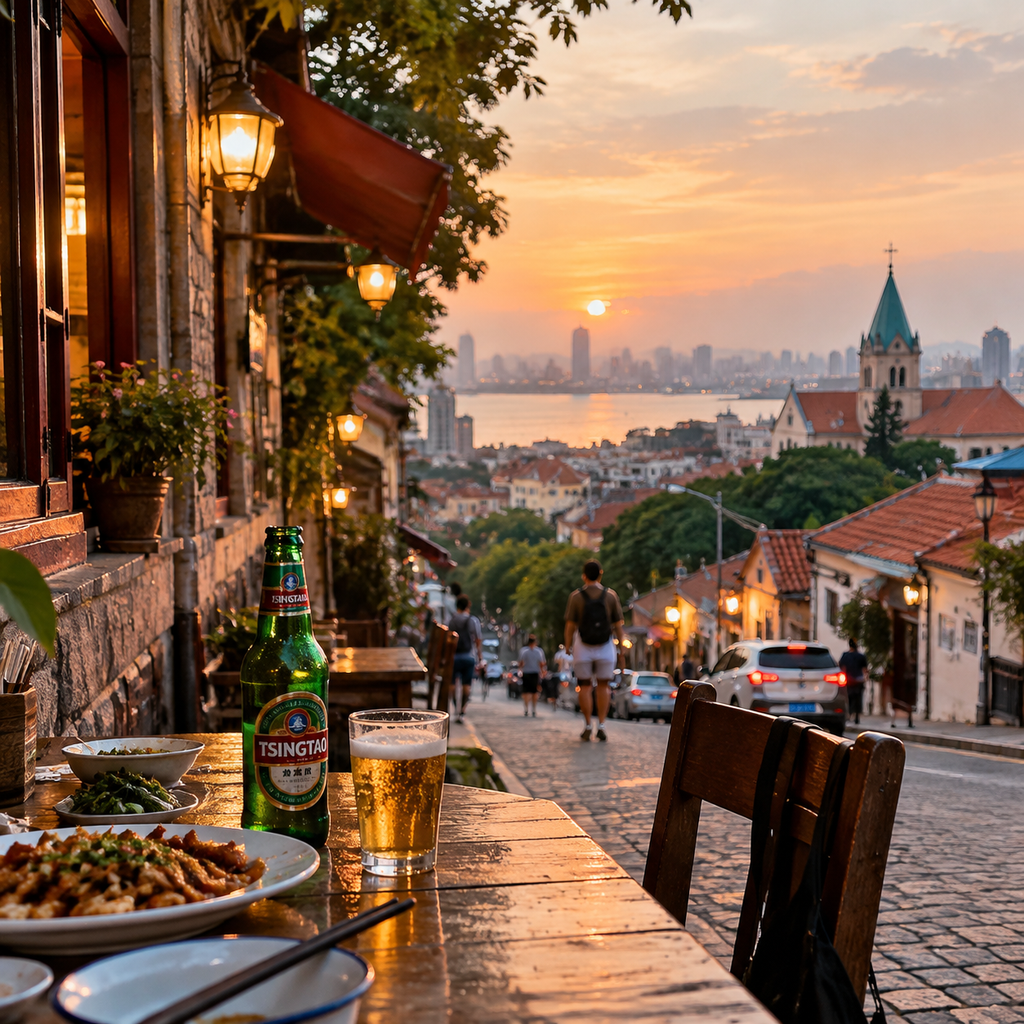
I passed a small table against a wall with several glasses still waiting to be cleared. Someone from inside walked past and pushed one farther in so a passing coat would not knock it over. It reminded me of the neighboring table arranging its own space. Nobody announced that the table had to stay orderly, yet each person did a small part and the space did not become crowded at once. The old city’s night contained many such quiet acts of maintenance, rarely included in travel plans.
我最后没有把这晚归纳成“海边还是旧城更好”。这样的比较会把本来可以连续发生的两种体验硬拆成选择题。海边给了我离开室内的风,旧城给了我坐下来吃饭的理由;饭后路线则让我看见,行程可以在中途改变,而不必因此失去方向。那杯啤酒只占晚饭的一部分,晚饭也只占青岛夜晚的一部分。
In the end, I did not summarize the night as a choice between the coast and the old city. That comparison would force two experiences that can follow one another into a multiple-choice question. The shore gave me wind and open space; the old city gave me a reason to sit down for dinner. The walk afterward showed that an itinerary can change midway without losing direction. The beer was only part of dinner, and dinner was only part of a Qingdao night.
等我真正准备回去时,街上的风已经没有刚出餐馆时那么明显。也许是路线转了弯,也许是屋墙挡住了气流,我没有再追着寻找它。手里的水已经喝掉一部分,脚步依旧稳,回程方向也能确认。原定的海岸线因此被我留在地图上,而不是被匆忙完成。它没有消失,只是从今晚的必做事项,变成了可以认真对待的下一次行走。
By the time I was truly ready to return, the wind on the street was less noticeable than it had been outside the restaurant. Perhaps the route had turned, or the walls had blocked the air. I did not chase it. Some of the water was gone, my steps remained steady, and I could confirm the way back. I left the planned coastline on the map instead of completing it hurriedly. It had not disappeared; it had changed from tonight’s obligation into a walk worth taking properly another time.
临走前我又回头看了一眼餐馆里面。靠窗那桌已经撤掉了大半,桌面上只剩一只装着壳的碟子和几双交错放着的筷子。服务员没有急着把所有东西一次性搬走,而是先把挡路的空盘移开,再把还没吃完的小碟放回客人伸手方便的位置。这样的收桌顺序让我觉得,餐馆并不是在饭点结束时突然切换成另一种状态,而是在一连串小动作中慢慢把热闹收拢。
Before I left, I looked back into the restaurant once more. Most of the table by the window had been cleared, leaving only a dish of shells and several pairs of crossed chopsticks. The server did not carry everything away in one hurried sweep. First, the plates blocking movement were moved aside; then the small dishes that people might still reach were returned to convenient positions. The order of clearing showed that the restaurant did not suddenly switch modes when dinner ended. It gradually gathered the bustle through a series of small movements.
我站在门外等了几秒,等眼睛适应街灯,也等胃里的饱足感从明显变成平稳。刚才坐着的时候,我容易把一杯啤酒理解成一段舒缓的背景;现在站起来,身体给出的信息更准确。肩膀有些松,脚底却比饭前更沉,嘴里还留着咸鲜味。把这些感觉分开看,才不容易被“海风很凉、所以我应该没事”的错觉带着走。
I waited outside for a few seconds, letting my eyes adjust to the streetlights and the fullness in my stomach settle into something steadier. While seated, it was easy to treat a glass of beer as a gentle background to the meal. Once standing, my body offered more accurate information. My shoulders felt relaxed, but my soles were heavier than before, and a savory taste remained in my mouth. Separating these sensations made it harder to be misled by the thought that cool sea air meant everything was fine.
街对面有人把一扇卷帘门往下拉,金属摩擦声在夜里显得格外清楚。拉到一半时,他先把门槛里的纸箱向旁边踢开,又回头招呼里面的人把最后一把椅子搬出来。路人从门前经过时自然绕开,没有谁停下来指挥。那几秒让我看见旧城夜晚的另一面:饭后路线不只是从一个消费空间走向另一个空间,也会经过店铺收摊、住户收物和街道恢复原来宽度的过程。
Across the street, someone pulled down a rolling metal shutter, its scraping sound unusually clear in the night. Halfway down, he nudged a cardboard box away from the threshold and turned back to signal someone inside to bring out the last chair. Passersby simply went around the work without anyone directing them. Those few seconds revealed another side of the old city at night. A post-dinner route does not merely connect one place of consumption to another; it passes through shops closing, residents putting things away, and the street gradually returning to its usual width.
我没有因为吃得满意就继续寻找更热闹的地方。相反,满足感让选择变得简单:不需要再用一处新景象证明今晚没有浪费,也不需要用第二杯酒延长刚才的气氛。人在旅行中很容易把“还可以再来一点”误认为“还应该再来一点”,尤其当周围的灯光、笑声和风都在推着人往前。可身体真正需要的,往往只是把已经发生的事情安稳地消化完。
I did not look for a livelier place simply because dinner had been satisfying. Satisfaction made the next choice easier: I did not need a new view to prove that the evening had not been wasted, nor another glass to prolong the mood. While traveling, it is easy to mistake “a little more is possible” for “a little more is necessary,” especially when lights, laughter, and wind seem to push you onward. What the body often needs is simply time to digest what has already happened.
我沿着街边继续走,遇到一个需要穿过的窄口,便提前收起水瓶,给迎面而来的人留出完整的位置。对方也侧身让了一下,双方没有说话,脚步却在同一瞬间调整好了。这样的相遇没有故事高潮,却比某些被精心安排的互动更能说明夜间行走的分寸。喝过酒以后,我更愿意把这种不打扰别人当成路线的一部分,而不是只关注自己能不能走到下一个目标。
I continued beside the street and, at a narrow passage, put the water bottle away early so the person approaching would have the full space. They shifted aside as well, and without speaking, both of us adjusted our steps at the same moment. It was not a dramatic encounter, yet it expressed nighttime courtesy more clearly than some carefully staged interaction. After drinking, I was more willing to treat not disturbing others as part of the route rather than focusing only on whether I could reach the next target.
巷口的风忽然大了一些,墙上的旧广告纸被吹得翘起一角。我伸手压住自己的衣摆,站到屋檐下避了片刻。海风在这里不是持续吹来的大背景,而像一位偶尔出现的提醒者,告诉我开阔处和遮蔽处的体感差别。饭后的步行因此有了更细的刻度:迎风时不逞强,背风时不加快,觉得热就脱外套,觉得冷就把领口拢好。
The wind suddenly strengthened at the mouth of the lane, lifting one corner of an old poster on the wall. I held down my coat hem and paused beneath an eave. Here, the sea breeze was not a constant backdrop but an occasional reminder of the difference between open and sheltered spaces. The walk after dinner acquired finer measurements: do not push yourself into the wind, do not speed up when it falls away, remove a layer if you feel warm, and close the collar when the air turns cold.
我想起饭桌旁那位独自用餐的人。他吃得不快,却一直知道自己的东西放在哪里;手机放下时屏幕朝里,起身时先检查外套口袋。那种专注不是刻意表现出来的礼仪,而是对自己和周围空间都熟悉后的自然动作。我无法知道他是否也要去海边,也不知道他会不会把一顿饭看得这么仔细,但他的安静让我重新注意到,旅行观察最可靠的部分往往来自不被解释的习惯。
I thought of the solo diner near the table. He ate slowly, yet always knew where his belongings were; when he set down his phone, the screen faced inward, and before standing he checked his jacket pockets. This was not a performance of etiquette, but a natural result of knowing both oneself and the surrounding space. I had no idea whether he was heading for the coast or whether he would remember dinner so carefully. His quietness reminded me that the most reliable part of travel observation often comes from habits that are never explained.
经过一个亮着白灯的门洞时,我看见里面堆着刚洗过的杯子,杯口朝下,水珠沿着玻璃向下滑。灯光照在杯底,形成一圈圈浅亮的边。我没有进去问它们来自哪张桌子,只在门外停了一下。晚饭之后,很多东西都从“正在使用”变成“等待下一次使用”:杯子、椅子、门帘,甚至那条被我放弃的海岸线。它们没有消失,只是暂时退出了我的行程。
At a doorway lit by a white lamp, I saw freshly washed glasses stacked upside down, droplets sliding down their sides. The light caught their bases and formed pale rings. I did not enter to ask which table they had come from; I simply paused outside. After dinner, many things shift from being in use to waiting for another use: glasses, chairs, curtains, and even the stretch of coast I had chosen not to walk. None had vanished. They had only stepped out of my itinerary for the moment.
我把剩下的路分成了几个很短的决定,而不是想着“还要走多久”。先走到下一个灯柱,再走到能看见交通标志的路口,然后在有座椅的地方停一下。这样做并不显得胆小,反而让我更清楚地感觉到步行的节奏。大目标会让人只盯着终点,小决定则让人看见脚下的坡、旁边的车和前方人流的变化。
I divided the remaining walk into several short decisions instead of thinking about how long I still had to go. First, I would reach the next lamp post, then the intersection where a traffic sign was visible, and then pause near a seat if one appeared. This did not feel timid; it made the rhythm of walking clearer. A large goal keeps the eyes fixed on the destination, while small decisions reveal the slope underfoot, the vehicles nearby, and changes in the flow of people ahead.
在第二个路口,我听见远处传来几声碰杯的脆响,随后又被汽车驶过的声音盖住。那个声音让我想起,啤酒并没有因为我离开餐馆就成为夜晚的中心。它只在某个桌面上短暂出现,和热菜、谈话、推椅子、擦桌边共同构成一段时间。离开以后,真正陪我走路的是清醒的判断,而不是杯子留下的气氛。
At the second intersection, I heard several crisp clinks of glasses in the distance before the sound was covered by passing traffic. It reminded me that beer had not become the center of the night simply because I had left the restaurant. It had appeared briefly on a particular tabletop, sharing that stretch of time with hot food, conversation, moving chairs, and wiping the edge of the table. Once I left, what accompanied me was clear judgment, not the mood left by the glass.
我没有把“少喝一点”写成对青岛的拒绝。恰恰相反,正因为想把城市看得更完整,才不能让饮酒把注意力压缩成一片轻飘飘的兴奋。旧城晚饭的好处,在于它允许我同时感受味道和节制,既能举杯,也能把杯子放回桌面;既能听邻桌笑声,也能在对方需要挪动时立刻让出空间。边界不是削弱体验,而是保护体验继续发生。
I did not regard drinking less as a rejection of Qingdao. If anything, wanting to see the city more completely meant not allowing alcohol to compress attention into a weightless burst of excitement. The old-city dinner let me experience flavor and restraint together: I could raise a glass and also return it to the table; I could hear laughter nearby and immediately make room when someone needed to move. A boundary did not weaken the experience. It protected the experience so it could continue.
夜色更深以后,旧房子的窗户一扇扇变成稳定的亮面。饭前我会把这些窗户当成背景,饭后却会猜测里面正在进行什么普通的事情:有人洗碗,有人收拾书包,有人把阳台上的衣服往里收。猜测当然不能当作事实,但这种不确定性让脚步变得柔和。我不再试图占有街景,只承认自己从旁边经过,短暂地接触到一座城市的生活表面。
As the night deepened, the windows of the old houses became steady patches of light. Before dinner I would have treated them as background; afterward I found myself imagining ordinary activities inside: someone washing dishes, someone packing a schoolbag, someone bringing laundry in from a balcony. These guesses were not facts, but their uncertainty softened my steps. I no longer tried to possess the street scene. I accepted that I was passing beside it, briefly touching the surface of a city’s life.
走到交通清楚的地方后,我才重新拿出手机。屏幕的亮光照在手背上,地图显示出的蓝点已经离餐馆远了一段。我没有因为偏离原路线而焦虑,反而觉得这段偏离有了一个合适的收口。导航可以重新计算,但它不会替我判断今晚是否还适合继续。把手机留到需要的时候再打开,也是一种让自己不被路线牵着走的办法。
Only after reaching a place with clear transportation did I take out my phone again. The screen lit the back of my hand, and the map showed that the blue dot was already some distance from the restaurant. I was not anxious about leaving the original route. The detour had reached a suitable close. Navigation could recalculate, but it could not decide whether I was still fit to continue that night. Keeping the phone away until it was needed was another way of refusing to be pulled along by the route.
回程车经过时,车窗反射出街灯和我的身影,海风已经只剩衣服上的一点凉。那顿饭没有把我带到更远的地方,却把青岛的夜晚从一条直线变成了几层相互叠着的空间:海边的开阔、旧城的遮挡、餐桌的亲近、门口的停顿,以及饭后重新确认方向的谨慎。路线变长的不是地图距离,而是我愿意留意的内容。
When the ride back passed by, the window reflected streetlights and my own outline, while the sea breeze had become only a trace of coolness on my clothes. Dinner had not taken me farther, but it turned Qingdao’s night from a straight line into several overlapping spaces: the openness of the shore, the shelter of the old city, the closeness of the table, the pause at the doorway, and the care of confirming the way home afterward. What became longer was not the map distance, but the amount I was willing to notice.
如果下一次再遇到相似的傍晚,我仍可能先去海边,也仍可能点啤酒,但不会提前规定这两件事必须怎样衔接。我会先看风和身体,再看餐馆里的人怎样用桌子;会在吃饭时给旁边的人留下动作空间,也会在离开后把路线拆成自己能负责的短距离。至于那条没有走完的岸线,它可以等一个没有酒意、没有疲劳、也不必赶时间的晚上。
If I encounter a similar evening again, I may still go to the shore first and may still order beer, but I will not decide in advance exactly how the two must connect. I will read the wind and my body, then watch how people use the table. During dinner, I will leave room for others to move; afterward, I will divide the route into short distances I can responsibly manage. As for the unfinished coastline, it can wait for an evening without alcohol in my system, without fatigue, and without a need to hurry.
我把水瓶放进包里时,瓶盖没有拧到最紧,走了几步才发现里面有轻微的晃动声。于是我停下来重新拧好,再继续向前。这个细小的返工很像那晚的路线:不是所有事情都要一次决定正确,发现不合适时停一下,调整,确认,再走就够了。旅行不必靠连续不断的兴奋维持,能够在中途修正,本身就是一种可靠的轻松。
When I put the water bottle into my bag, I had not tightened the cap fully and noticed a faint sloshing after a few steps. I stopped, tightened it properly, and continued. That tiny correction resembled the route that night. Not every decision has to be perfect the first time. When something feels wrong, pause, adjust, check, and then walk on. Travel does not need a constant stream of excitement. Being able to correct course is itself a dependable form of ease.
我最终记住的不是“晚饭改变了路线”这句漂亮的话,而是改变发生时的具体顺序:先闻到巷子里的油香,再看见邻桌把酒杯推远;先吃到热菜,再意识到风不能替身体保持清醒;先在门口停下,再决定不回海岸;最后用水、灯光和稳当的脚步把自己带回去。顺序一旦清楚,青岛的夜晚就不再像一张必须完成的照片,而像一顿还在慢慢散开的饭。
What I finally remembered was not the polished phrase that dinner changed the route, but the exact order in which the change happened: first the smell of oil in the lane, then the neighboring table moving its glasses away; first the hot food, then the realization that wind could not keep the body alert; first the pause at the doorway, then the decision not to return to the coast; and finally water, streetlights, and steady steps carrying me back. Once the order was clear, Qingdao’s night no longer felt like a photograph that had to be completed. It felt like a meal still slowly unfolding.
街口的灯把地面照成一块一块不连续的亮色,我沿着这些亮处慢慢向前。旧城的路并不总是笔直,房屋之间留下的缝隙有时很窄,行人经过时需要彼此侧身。饭前我可能会嫌这样的路线绕远,饭后却觉得弯路替夜晚保留了层次。每走过一个转角,海边留下的开阔感就退后一点,门窗、台阶和墙角的细节则近了一点。
Streetlights made the pavement bright in separate patches, and I moved slowly from one patch to the next. The old-city roads were not always straight, and the gaps between buildings could be narrow enough that pedestrians had to turn sideways for one another. Before dinner I might have considered such a route inefficient. After dinner, I felt that the bends gave the night more layers. With each corner, the openness left by the coast receded, while doors, steps, and wall edges came closer.
一阵风从身后推来时,我没有立刻把它理解成海边的召唤。它可能只是穿过街道的气流,也可能带着远处水面的湿意,但身体能感到的只有肩背短暂变凉。风的方向并不需要被命名,重要的是它提醒我把衣服拉好,把步子放稳。旅行中的感受有时就是这样,先落在皮肤上,过一会儿才变成一句能够说清楚的话。
When a gust pushed from behind, I did not immediately interpret it as a call from the sea. It might simply have been air moving through the street, perhaps carrying moisture from the water, but my body felt only a brief coolness across my shoulders. The wind did not need a name. It reminded me to pull my jacket closer and steady my steps. Travel impressions often arrive this way, first on the skin and only later as a sentence that can be explained.
我路过一家还在收拾的饭馆,门内的人把盛过热菜的碗逐只冲洗,水声在夜里格外清楚。靠近门边的桌子已经擦干,只剩下几滴水沿着桌沿往下滑。没有客人催着他们赶快结束,店里的工作也没有因为夜色而变得潦草。这样的收拾过程让我想到,晚饭并不在最后一口食物咽下时突然消失,它还会以洗碗、擦桌和归置椅子的方式继续一会儿。
I passed a restaurant that was still cleaning up. Inside, someone rinsed bowls that had held hot dishes, and the sound of water was unusually clear at night. A table near the entrance had already been wiped, with only a few drops sliding down its edge. No customer was urging the staff to finish, and the work had not become careless because darkness had arrived. It made me think that dinner does not vanish with the last bite. It continues briefly through washing bowls, wiping tables, and returning chairs.
我没有停下来拍那扇门,也没有试图从一个收尾动作推断整家店的性格。夜里看到的东西毕竟有限,有限并不妨碍它有意义,只是需要把判断放在合适的范围里。刚才那顿饭属于我自己的几个小时,邻桌的动作属于他们自己的相处方式,眼前的清洁属于这家店当时的工作。把这些边界留清楚,记忆反而更稳定,不会被夸大的形容词冲淡。
I did not stop to photograph the doorway or use one closing action to define the entire restaurant. What can be seen at night is limited. That does not make it meaningless, but it does require judgments to stay within their proper scope. The dinner belonged to my own few hours, the neighboring table’s movements belonged to their way of being together, and the cleaning belonged to that restaurant’s work at that moment. Keeping those boundaries clear made the memory steadier and less diluted by exaggerated adjectives.
走过一段没有店铺招牌的墙面后,我听见身后有人把自行车的支架踢开。骑车的人先观察前方,再从路边缓慢起步,没有突然切入行人的路线。我侧身让开,他从旁边经过,车铃只响了一下。旧城夜路上的秩序不是由大声提醒维持的,更多时候靠每个人提前看一眼、留半步、等一秒。晚饭后我的注意力正好能够捕捉这些细小变化。
After passing a wall without shop signs, I heard someone fold up a bicycle stand behind me. The rider looked ahead before starting slowly, without cutting suddenly into the pedestrians’ path. I moved aside, and the bicycle passed with one brief ring of the bell. Order on an old-city street was not maintained by loud instructions. More often, people looked ahead, left half a step, and waited one second. After dinner, my attention was calm enough to notice those small adjustments.
我开始理解,邻桌动作之所以留在记忆里,并不只是因为它们看起来有地方特色。它们和我自己的行走发生了对应:桌边把酒杯推远,街上就把车流让开;桌面为一只包挪出位置,门口就为同行的人留出半步;有人先吃主食再继续聊天,我也在饭后让身体先决定方向。餐桌上的克制和街道上的谨慎,原来可以用同一种节奏连接起来。
I began to understand why the neighboring table’s movements stayed with me. It was not merely because they seemed local. They echoed my own walking: a glass moved away from a plate became traffic given room in the street; space made for a bag became half a step left for a companion; someone eating the staple before continuing a conversation became my own decision to let my body choose the direction after dinner. Restraint at the table and caution on the street could be linked by the same rhythm.
我在一个拐角处停下来喝水,瓶盖拧开时发出很轻的声音。那一刻,胃里的饱足感、喉咙里的清凉和脚底的酸胀同时变得明显。喝过一杯啤酒并没有让这些感觉消失,反而让我更愿意承认它们。所谓尽兴不一定是把杯子喝空,也可以是知道什么时候把杯子放到一旁,让水、空气和安静重新进入身体的判断。
At a corner, I stopped for water, and the cap made a faint sound as I opened it. At that moment, fullness in my stomach, coolness in my throat, and soreness in my soles all became noticeable at once. Having a glass of beer had not erased these sensations; it made me more willing to acknowledge them. Enjoyment does not have to mean emptying a glass. It can also mean recognizing when to set it aside and let water, air, and quiet return to the body.
从远处传来一声短促的笑,随后是椅脚在地面上拖动的声音。我顺着声音看过去,只看见一片被树影切开的门口,没看见里面的人。旧城把许多生活片段藏在视线之外,听见不等于拥有,经过也不等于理解。对旅行者来说,留下一个没有被填满的空白并不是遗憾,它让观察不至于越过别人的生活边界。
A short laugh came from farther away, followed by the scrape of a chair on the pavement. I looked toward it and saw only a doorway divided by tree shadows, not the people inside. The old city kept many fragments of life outside a passerby’s view. Hearing something did not mean possessing it, and passing by did not mean understanding it. For a traveler, leaving an unfilled space was not a loss. It kept observation from crossing into someone else’s life.
我原先把夜间路线想得太像一条需要完成的线,起点是海边,终点是住处,中间只允许安排几个明显的停靠点。旧城晚饭把这条线变成了可以折返、停顿和缩短的路径。吃饭不是把行程切断,而是让路线获得一次重新评估的机会:还剩多少体力,风是否合适,是否需要水,哪条街灯光更稳定。地图没有替我做决定,却把可选择的范围摊在眼前。
I had imagined the night route too much like a line that had to be completed: the shore at one end, my lodging at the other, with only a few obvious stops allowed between them. Dinner in the old city turned that line into a path that could bend, pause, or shorten. Eating did not interrupt the itinerary. It gave me a chance to reassess it: how much energy remained, whether the wind felt suitable, whether I needed water, and which street had steadier lighting. The map did not decide for me, but it showed the available range.
我在一处台阶前看见有人把外卖袋放到脚边,先腾出双手开门,再提袋子进去。门开合之间,屋里暖黄的光落到台阶上,几秒后又被门板收回。这个画面和海边的长风没有相同的尺度,却同样让我感到青岛夜晚的流动。人们在不同的室内外之间进出,食物、酒、水和衣服跟着他们移动,城市并不需要一直站在远景里才有气息。
At a set of steps, I saw someone place a takeaway bag by their feet, free both hands to open a door, and then carry the bag inside. As the door opened, warm yellow light fell across the steps, then disappeared behind the panel a few seconds later. The scene had a different scale from the long wind at the coast, yet it conveyed the movement of Qingdao’s night in its own way. People moved between indoors and outdoors, carrying food, drinks, water, and clothing with them. A city does not need to remain in a distant view to have atmosphere.
那晚我没有继续寻找更刺激的酒,也没有把旧城的安静解释成某种神秘。安静可能只是晚饭后的时段,可能是街巷的遮挡,也可能是我已经吃饱后不再急于捕捉信息。旅行者的状态会改变景物的音量,同一条路在不同时间、不同身体里会有不同的重量。承认这一点,比给城市贴上一个永远安静或永远喧闹的标签更接近现场。
That night I did not search for stronger alcohol or explain the old city’s quietness as something mysterious. The quiet might have come from the hour after dinner, from the shelter of the lanes, or from my own full stomach making me less eager to collect information. A traveler’s condition changes the volume of a place. The same street carries different weight at different times and in different bodies. Admitting that felt closer to the scene than labeling the city forever quiet or forever loud.
经过一段低矮屋檐时,风从檐角绕过来,带着一点油烟和潮气。我想起饭桌上那些没有被单独命名的味道,它们离开餐盘以后仍然留在衣服和头发里。吃饭与走路并不是两个相互独立的体验,食物的气味会跟着人进入街道,街道的空气也会反过来改变人对食物的回忆。旧城餐桌因此有了延伸,不在盘子收走时结束。
Under a low eave, the wind curved around the corner carrying a little cooking smoke and dampness. I thought of the unnamed smells at the table, which remained in my clothes and hair after leaving the plates. Eating and walking were not separate experiences. Food smells followed a person into the street, while street air changed how the food was remembered. The old-city table therefore extended beyond the meal. It did not end when the plates were taken away.
我走到一处较宽的路面,前方的灯光变得连续,偶尔有车辆从身旁经过。这里不再像刚才那样需要频繁侧身,但我仍然没有加快。饭后慢下来并不是为了制造一种文艺的姿态,而是让身体有机会把饱足、酒意和夜间温度重新协调。走得太快会让人错过门口的动作,也会让人错误地以为自己还有足够精力去完成原定的一切。
I reached a wider stretch of pavement where the lights became continuous and vehicles passed now and then. There was less need to turn sideways, but I still did not speed up. Slowing down after dinner was not an attempt to create a poetic pose. It gave my body time to reconcile fullness, alcohol, and the night temperature. Walking too fast would have made me miss the gestures at doorways and might have made me mistakenly believe I still had enough energy to complete everything originally planned.
我想到很多人来青岛时会先问哪里看海、哪里喝酒、哪里拍夜景,这些问题当然有实际价值。但一顿饭也可以提出另一组问题:坐下后是否真的开始吃,喝酒时有没有给身体留余地,邻桌如何共享有限桌面,饭后哪一条路让人更容易保持清醒。问题一旦从地点转向动作,城市就不再只是几个可被标注的坐标,而变成一连串需要现场判断的关系。
Many visitors to Qingdao first ask where to see the sea, where to drink beer, and where to photograph the night view. Those questions have practical value. A meal can raise another set of questions: did you actually begin eating once seated, did you leave room for your body while drinking, how did the neighboring table share limited space, and which street made it easier to stay alert afterward? Once questions shift from places to actions, a city becomes more than marked coordinates. It becomes a series of relationships requiring judgment on site.
我并不觉得这套判断只适用于青岛,也不想把它包装成一条人人都要遵守的规则。它只是从那张小桌和那条夜路里长出来的经验。不同的人会有不同的饮酒限度、步行能力和对风的感受,同行者也可能让路线完全不同。真正可靠的部分不是照抄我的选择,而是把吃饭、喝酒、天气、路况和回程放在同一张现实的桌面上衡量。
I do not think this way of judging belongs only to Qingdao, nor do I want to present it as a rule everyone must follow. It grew from that small table and that night street. Different people have different limits with alcohol, walking, and wind, and companions can change a route completely. The reliable part is not copying my choices. It is weighing food, drinking, weather, road conditions, and the return journey together on the same practical surface.
我继续走时,路边一家店把最后一盏靠门的灯调暗了些。里面还有人说话,外面却已经显出关门前的安静。几张桌子被并拢,椅子倒扣到桌面上,只有一张靠墙的桌子还留着水杯。这样的变化让我知道夜晚正在进入下一阶段,也提醒我不要把任何一间店、任何一条街当成永远为游客保持开放的布景。
As I continued, a shop dimmed the last light near its entrance. People were still talking inside, but outside it had taken on the quiet of closing time. Several tables were pushed together, chairs turned upside down onto the tabletops, and only one wall-side table still held water glasses. The changes told me that the night was moving onward. They also reminded me not to treat any shop or street as scenery kept permanently open for visitors.
我把剩下的水喝完一半,决定向交通更清楚的方向走。这个选择没有抹掉刚才的闲逛,反而给它画出了自然的结束位置。好的饭后步行不是越长越好,好的夜间路线也不是越复杂越值得。它应该让人从餐桌的热气走到街道的空气里,再在清醒和疲劳之间找到一个不需要勉强的停点。
I drank half of the remaining water and decided to head toward a place with clearer transportation. That choice did not erase the wandering. It gave the walk a natural endpoint. A good post-dinner walk is not necessarily the longest one, and a good night route is not necessarily the most complicated. It should carry a person from the warmth of the table into the street air, then find a stopping point between alertness and fatigue without forcing either.
回望旧城时,我仍然能看见一些窗户亮着,窗帘后有人走动,偶尔有碗碟碰撞的反光。海岸线的声音已经听不见了,可海风并没有因此成为虚构,它只是被墙、屋檐和门帘拆成更细的触觉。那顿饭改变的不是青岛本身,而是我把城市分成海边和非海边的方式。旧城让两个空间在一个晚上相互渗透。
Looking back through the old city, I could still see lit windows, people moving behind curtains, and occasional flashes from bowls and dishes. I could no longer hear the coast, but the sea breeze had not become imaginary. Walls, eaves, and curtains had simply broken it into finer sensations. Dinner did not change Qingdao itself. It changed the way I had divided the city into seaside and non-seaside. The old city allowed those spaces to seep into one another within a single evening.
后来我经过一块没有装饰的空墙,墙根放着几盆需要避风的植物。叶片在风里轻轻颤动,却没有被吹倒,花盆旁压着一块小石头。这个细节让我再次想起餐桌上为包、杯子和空盘预留的位置。无论是饭馆内部还是街道边缘,人们都在不断处理空间的脆弱处,让东西不被碰倒,让人可以顺利通过,让一晚上的生活继续下去。
Later I passed a plain wall with several plants placed at its base for shelter from the wind. Their leaves trembled gently without falling over, and a small stone held one pot in place. It brought back the space made at the table for bags, glasses, and empty plates. Inside a restaurant or along the edge of a street, people are constantly tending to vulnerable parts of a shared space: keeping things from falling, allowing others to pass, and helping an evening continue.
这也解释了我为什么没有急着回到海边。海边当然仍然值得去,但饭后的旧城已经给了我另一种靠近青岛的方式。靠近不一定意味着看见完整的海面,也可以是感到风如何被建筑分流,听见一扇门里面的碗筷声,观察陌生人怎样把最后一道菜分开。城市的距离有时由视觉测量,有时由身体和耳朵测量。
That also explained why I did not hurry back to the shore. The coast was still worth visiting, but the old city after dinner had given me another way to be close to Qingdao. Closeness does not always mean seeing the whole surface of the sea. It can mean feeling how buildings divide the wind, hearing bowls and chopsticks behind a door, or watching strangers share the last dish. A city’s distance is sometimes measured by sight and sometimes by the body and the ears.
我没有再买酒,也没有因为夜色舒服就延长停留。街灯下的水瓶已经不再冰凉,手指摸到的是接近室温的塑料。这个变化很不起眼,却像一个计时器,让我知道自己已经走了一段。旅行中并非所有提醒都来自手机闹钟或导航语音,瓶子的温度、脚步的重量、风吹过衣领的次数,也能帮助人决定什么时候结束。
I did not buy more beer, and I did not extend the stay simply because the night felt pleasant. The water bottle under the streetlight was no longer cold; my fingers felt plastic close to room temperature. The change was insignificant, yet it worked like a timer, telling me I had already walked for a while. Not every travel reminder comes from a phone alarm or navigation voice. A bottle’s temperature, the weight of one’s steps, and the number of times wind touches a collar can also signal when to stop.
我在有明显路灯的路口重新确认方向,随后把手机收好。此时我对原定海岸线没有遗憾,因为它仍然可以在白天完成,也可以在下一次晚饭没有留住我的时候继续。路线被改变并不等于计划失败,正如一杯啤酒没有喝到最后也不等于晚饭不完整。留下一点未完成,常常是在为更合适的时机保留空间。
At a well-lit intersection, I confirmed the direction once more and put my phone away. I no longer felt regret about the planned coastline. It could be completed in daylight or continued on another evening when dinner did not hold me so long. A changed route was not a failed plan, just as leaving beer unfinished did not make dinner incomplete. Leaving something unfinished often preserves room for a better moment.
这一晚真正留下来的,是几种看似分散却互相牵动的感受:海风让人想到开放的边界,旧墙让人放慢速度,热菜让人坐稳,邻桌让人看见共享空间的方式,水让人恢复清楚,饭后步行则把这些感受带回街上。它们没有组成一场需要被夸大的故事,却让我在青岛的旧城里获得了比海边更长的停留时间。
What remained from the evening were several feelings that seemed separate but affected one another. The sea breeze suggested an open boundary; old walls slowed my pace; hot dishes made me sit firmly; the neighboring table showed how shared space could work; water helped me regain clarity; and the walk after dinner carried all of those sensations into the street. They did not form a story that needed exaggeration, but they gave me a longer stay in Qingdao’s old city than the coast alone would have offered.
所以,当我再次想起那杯啤酒时,首先想到的不是泡沫有多高,也不是它是否配得上某个城市标签,而是我怎样在一张不大的桌子旁决定停下来。那一停让晚饭有了时间,也让原本只通向海岸线的夜晚产生了新的方向。吃完以后,我没有追着风走,而是顺着灯光、坡路和自己的状态走回去。青岛的夜因此没有被我喝掉,而是被我一步一步看见。
So when I think of that glass of beer again, I do not first remember how high the foam rose or whether it matched a city label. I remember deciding to pause beside a small table. That pause gave dinner time and gave a night that had pointed only toward the coast a new direction. After eating, I did not chase the wind. I followed lights, slopes, and my own condition back through the streets. Qingdao’s night was not consumed by me; I saw it step by step.
- 支付失败怎么办:来华游客应急指南 | Payment Failed? A Visitor's Emergency Guide
- 中国纪念品选购指南 | Chinese Souvenirs Guide
- 昆明菜市场里的花和菜,让我重新认识日常审美 | Flowers and Vegetables in a Kunming Market Changed How I See Everyday Beauty
- 宁波码头边的海鲜饭,不是菜单教会我的 | Seafood Rice Beside a Ningbo Pier Was Not Something the Menu Taught Me
- 第一次在中国社区医院挂普通门诊,我先学会的不是看病,而是先找分诊台 | The First Thing I Learned at a Chinese Community Hospital Was Not the Consultation, but Finding Triage First
- 清明踏青好去处:近郊自然游 | Qingming Outing: Nature Trips Near the City
- 中秋赏月最美地点推荐 | Best Places to Enjoy the Mid-Autumn Moon
- 我在中国早餐摊第一次学会热包子要先撕口放气 | The First Time at a Chinese Breakfast Stall, I Learned to Tear Open a Hot Baozi First to Let the Steam Out
- 雾江边的一晚重庆火锅 | A Foggy-River Evening of Chongqing Hotpot
- 中国茶叶选购:龙井普洱铁观音怎么挑 | Buying Chinese Tea: Longjing, Pu'er & Tieguanyin
Comments (0)