
街头那碗热气,才是中国城市的真实体温 | Street Steam: The Real Pulse of Chinese Cities
街头那碗热气,才是中国城市的真实体温 | Street Steam: The Real Pulse of Chinese Cities
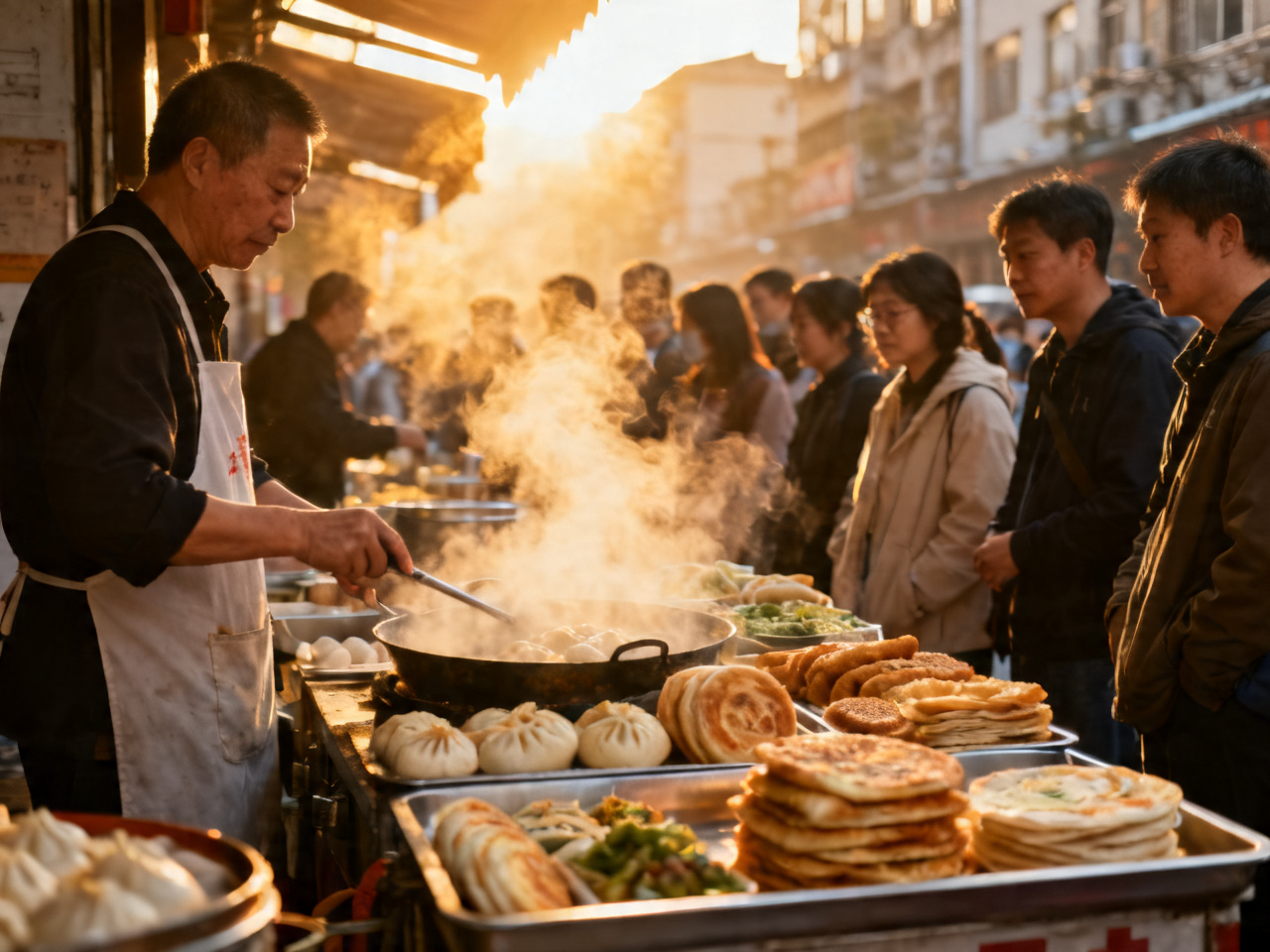
你有没有想过,一个城市最诚实的样子,往往不在博物馆里,不在五星酒店的餐厅里,而是在早上六点半、某条还没完全醒来的小巷里,一口冒着热气的锅边上?
Have you ever considered that a city's most honest face isn't found in museums or five-star hotel restaurants, but at half past six in the morning, beside a steaming pot in some alley that hasn't quite woken up yet?
中国的街头食物,是这个国家最民主的东西之一。它不需要预约,不需要着装要求,不需要懂得看菜单上的法语注释。你只需要站在那里,递出几张零钱,然后接过一份热腾腾的、带着烟火气的食物。从哈尔滨到广州,从西安到上海,每座城市的街头都有自己的味道密码,破译它,你就真正进入了这座城市。
China's street food is one of the most democratic things about this country. No reservations, no dress code, no need to understand French annotations on a menu. You simply stand there, hand over a few coins, and receive something hot and alive with the smell of real cooking. From Harbin to Guangzhou, Xi'an to Shanghai, every city's streets carry their own flavor code — crack it, and you've truly entered the city.
西安:一碗羊肉泡馍的时间哲学
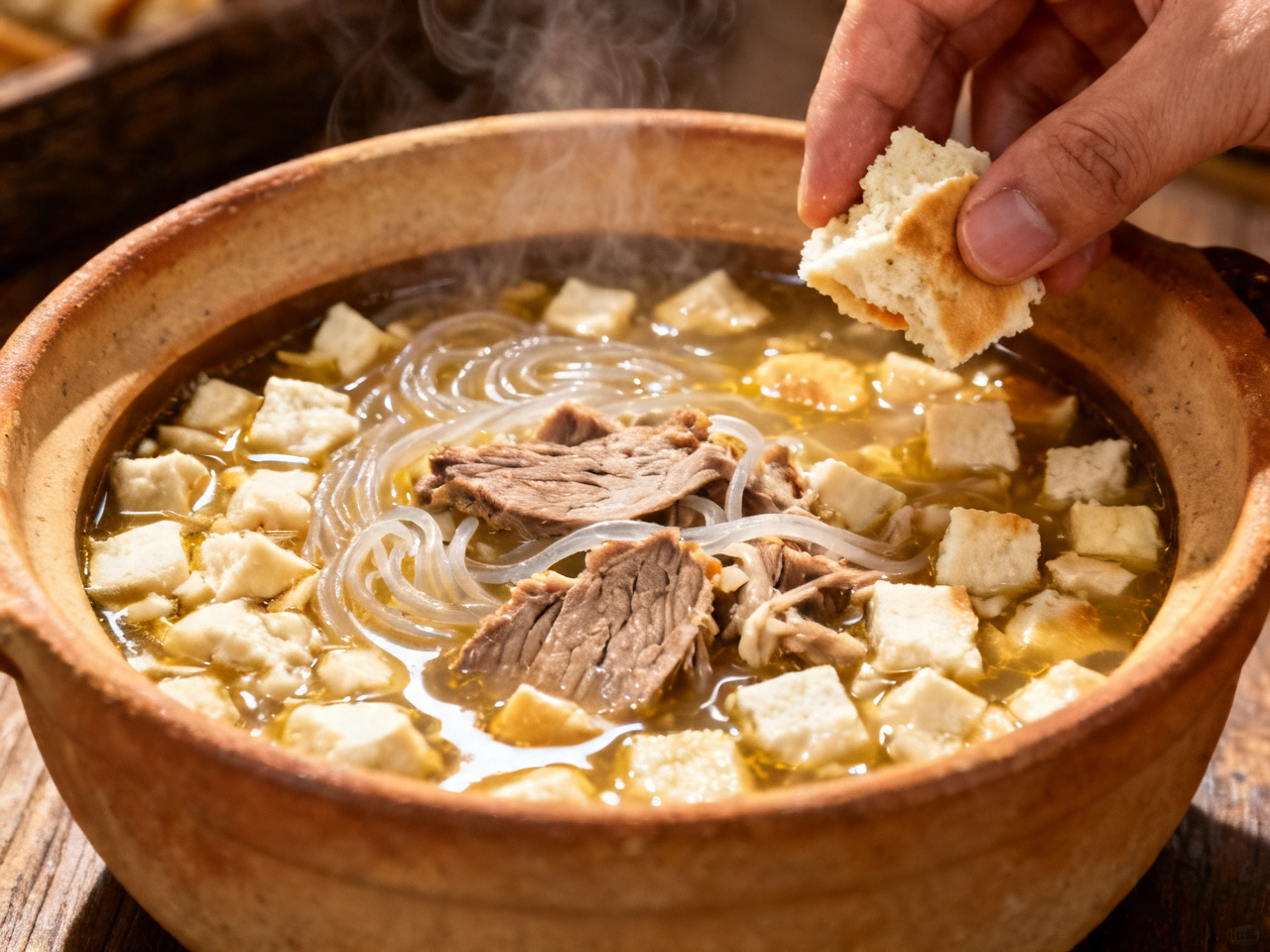
清晨七点,西安回民街的羊肉泡馍馆子里,已经坐满了人。这里有一个外地人永远看不懂的仪式:每个食客面前都放着一个空碗和两个白面饼,他们低着头,用手把饼掰成黄豆大小的碎块,一块一块地放进碗里。有人掰得快,有人掰得慢,有老人掰了二十分钟还没掰完,神情却无比平静。
Xi'an: The Time Philosophy of a Bowl of Lamb Pao Mo
By seven in the morning, the lamb pao mo restaurants on Xi'an's Muslim Quarter street are already full. There's a ritual here that outsiders never quite understand: every diner has an empty bowl and two flatbreads in front of them, and they sit with heads bowed, tearing the bread by hand into soybean-sized pieces, dropping them in one by one. Some tear quickly, some slowly; an old man has been at it for twenty minutes and isn't done, his expression perfectly serene.
这个掰馍的过程,不是表演,是功能性的——馍块越小,越能吸饱汤汁。但它同时也是一种减速装置,强迫你在快节奏的早晨里,用双手做一件需要耐心的事。掰完之后,碗被端走,厨师根据馍块的大小和数量,决定加多少汤、煮多久。最后端回来的那碗,是你亲手参与创造的。
The tearing process isn't performance — it's functional. Smaller pieces absorb more broth. But it also acts as a deceleration device, forcing you to do something that requires patience with your hands during a rushed morning. Once done, the bowl is taken away; the cook decides how much broth to add and how long to simmer based on the size and quantity of your pieces. What comes back is something you helped create.
上海:生煎包的黄金底壳
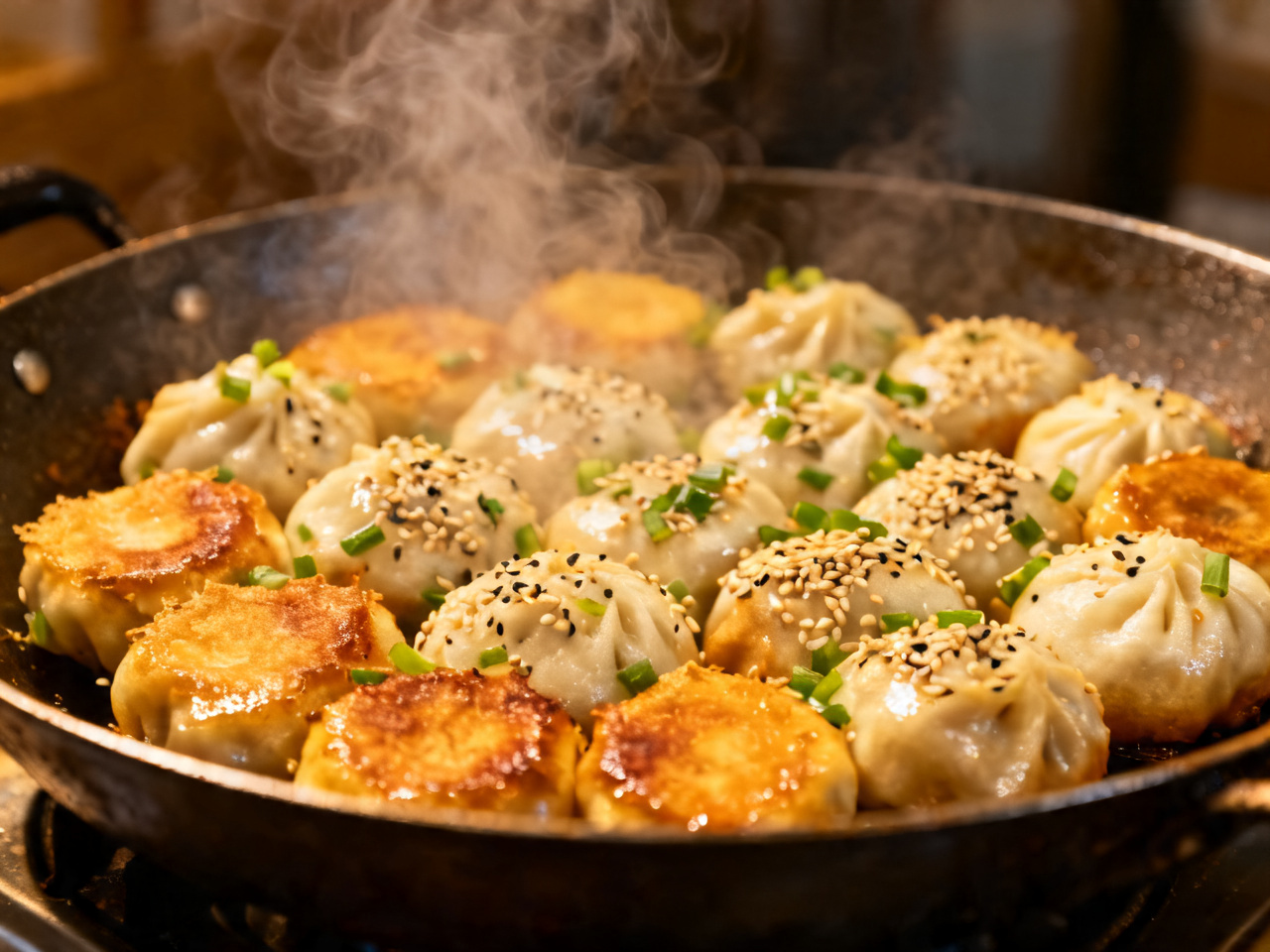
上海人对生煎包有一种近乎宗教的执着。周末上午十点,大壶春或者小杨生煎门口,队伍能排出去二十米。锅里的生煎包在滋滋作响,底部正在形成那层关键的焦脆外壳,上面撒着葱花和芝麻,锅盖一揭,蒸汽扑出来,整条街都能闻到。
Shanghai: The Golden Crust of Sheng Jian Bao
Shanghainese have a near-religious devotion to sheng jian bao. On weekend mornings at ten, the line outside Da Hu Chun or Xiao Yang Sheng Jian stretches twenty meters. The buns sizzle in the pan, forming that critical layer of crispy crust on the bottom, scattered with scallions and sesame seeds — when the lid lifts, steam billows out and the whole street catches the scent.
吃生煎包是有技术含量的。皮薄汤多,咬破的瞬间汤汁会喷出来,烫嘴是常有的事。老上海人的吃法是:先在底部咬一个小口,把汤汁吸出来,再吃皮和肉。这个动作看起来优雅,实际上是几十年被烫出来的经验。
Eating sheng jian bao requires technique. The skin is thin and the soup abundant — bite through and the broth shoots out, burning your mouth is routine. The old Shanghai method: bite a small hole in the bottom first, suck out the soup, then eat the skin and filling. It looks elegant. It's actually decades of getting burned.
成都:串串香的深夜民主
成都的串串香摊子,通常在晚上九点之后才进入状态。一张折叠桌,几个塑料凳,一锅红油翻滚的汤底,竹签上穿着各种食材——毛肚、鸭肠、豆腐皮、土豆片、藕片——价格从五毛到两块不等。
Chengdu: The Late-Night Democracy of Chuan Chuan Xiang
Chengdu's chuan chuan xiang stalls don't hit their stride until after nine at night. A folding table, a few plastic stools, a pot of rolling red-oil broth, bamboo skewers threaded with everything — tripe, duck intestine, tofu skin, potato slices, lotus root — priced from half a yuan to two yuan each.
深夜十一点,我在一家摊子前坐下,旁边是两个刚下班的外卖骑手,头盔还挂在椅背上,正在认真地从锅里捞毛肚。对面坐着一对穿着考究的年轻情侣,女生用手机拍了一张照片,然后放下手机,专心吃了起来。串串香的魔力就在这里:它让所有人都平等地坐在同一口锅边上,没有人在意旁边的人是谁。
At eleven at night, I sat down at a stall beside two delivery riders who'd just finished their shifts, helmets still hanging on their chair backs, carefully fishing tripe out of the pot. Across from me sat a well-dressed young couple — the woman took a photo on her phone, then set it down and ate with full attention. This is the magic of chuan chuan xiang: it seats everyone equally around the same pot, and nobody cares who's sitting next to them.
北京:煎饼果子的早晨速度
北京的煎饼果子是一道需要在移动中完成的食物。摊主的手速极快:面糊摊开、鸡蛋打散、薄脆放上、酱料涂抹、折叠装袋,全程不超过九十秒。买煎饼的人通常不会停下来等,他们站在摊前,接过袋子,转身就走,边走边吃,消失在早高峰的人流里。
Beijing: The Morning Speed of Jian Bing Guo Zi
Beijing's jian bing guo zi is food designed to be eaten in motion. The vendor's hands move at extraordinary speed: batter spread, egg cracked and smeared, crispy wonton added, sauce applied, folded and bagged — the whole process under ninety seconds. Buyers rarely stop to wait; they stand at the cart, take the bag, turn and walk, eating as they go, disappearing into the morning rush.
这种速度本身就是北京早晨的一部分。没有人在煎饼摊前聊天,没有人要求"少放辣"然后等摊主重新做。煎饼果子是一种城市契约:你信任摊主的手艺,摊主信任你不会挑剔,双方在九十秒内完成一次完美的交换。
That speed is itself part of Beijing's morning. Nobody chats at the jian bing cart, nobody asks for "less spice" and waits for a redo. Jian bing guo zi is an urban contract: you trust the vendor's craft, the vendor trusts you won't be fussy, and both parties complete a perfect exchange in ninety seconds.
中国的街头食物从来不是旅游景点,它是日常生活的基础设施。那些摊主,有人做了二十年同一道小吃,有人是从父母手里接过来的配方,有人每天凌晨三点就要起来备料。他们不需要米其林星,他们需要的是明天早上那条队伍还在。
China's street food has never been a tourist attraction — it's the infrastructure of daily life. Some vendors have made the same snack for twenty years; some inherited the recipe from their parents; some wake at three in the morning to prep. They don't need Michelin stars. They need that line to still be there tomorrow morning.
下次你路过一个冒着热气的街头摊子,不妨停下来。那口锅里煮的,不只是食物。
Next time you pass a steaming street stall, stop. What's cooking in that pot isn't just food.
延伸阅读 / Related Reads
- 中国八大菜系全览 | The 8 Great Cuisines of China
- 第一口就着了魔:一个外乡人在成都的麻辣沉沦 | Spellbound at First Bite: A Stranger's Descent into Chengdu's Heat
- 花椒档案:一个植物学者眼中的四川味觉地图 | The Peppercorn Dossier: Sichuan's Flavor Map Through a Botanist's Eyes
- 烤鸭不只是一道菜,它是北京给世界的一封信 | More Than a Dish: Peking Duck as Beijing's Letter to the World
- 华东五城10日经典环线 | 10-Day East China Five-City Loop

- 秦汉唐宋明清——六个朝代串起你的中国旅行 | Six Dynasties That Frame Your China Trip
- 汉服:传统中国服饰 | Hanfu: Traditional Chinese Clothing
- 苏州不是靠滤镜取胜的城市,先后顺序一错,再美也会被看空 | Suzhou Is Not a City Won by Filters; Get the Sequence Wrong and Even Beauty Goes Flat
- 旗袍租赁体验:哪里拍照最好看 | Qipao Rental Experience: Best Photo Spots
- 在广州早茶桌上学会点心 | Learning Dim Sum at a Guangzhou Morning Tea Table
- 我在杭州学会先看公交站牌再上车 | In Hangzhou I Learned to Read the Bus Stop Before Boarding
- 那张被擦亮的桌子,让我看见沙县小吃如何成为日常 | The Polished Table Showed Me How Shaxian Snacks Became Everyday Food
- 桂林米粉先拌还是先喝汤,我在一张小桌前改了吃法 | Mix First or Taste the Broth First? My Guilin Noodle Lesson
- 中国手机上网指南:SIM卡、eSIM与VPN | Getting Online in China: SIM, eSIM & VPN Options
- 我们一家在上海去朱家角的五月雨天里学会,短途旅行也能像长假一样松弛 | A Rainy Day Trip from Shanghai to Zhujiajiao Taught Our Family That Even a Short Outing Can Feel Spacious
Comments (0)