
一锅潮汕牛肉的时间表:从早市吃到深夜粿条 | The Timetable of Chaoshan Beef: From Morning Market to Late-Night Noodles
一锅潮汕牛肉的时间表:从早市吃到深夜粿条 | The Timetable of Chaoshan Beef: From Morning Market to Late-Night Noodles
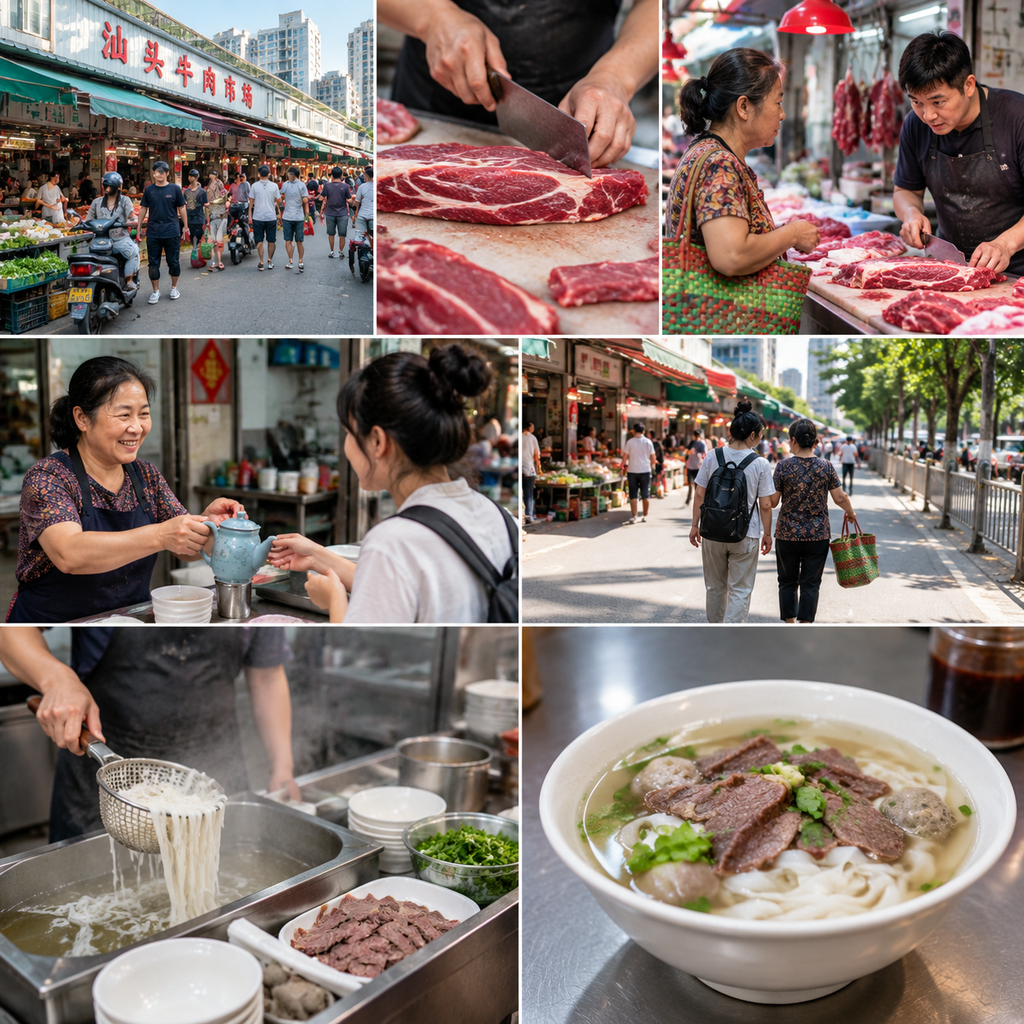
清晨六点,天还带着一层灰蓝色,市场里的牛肉摊已经亮起白灯。阿荣把围裙往腰间一勒,左手压住刚送来的牛腿,右手沿着筋膜落刀,刀背偶尔轻敲砧板,声音短而脆。刀刃不能来回锯,肉片要薄,却不能薄到失去弹性。旁边的阿姨拎着菜篮等他切吊龙,熟客只说一句“今天嫩些”,他便抬眼看肉色,换一块下刀。这里的第一顿饭,其实从早市的这一刀就开始了。
At six in the morning, under a pale blue-gray sky, the beef stalls are already glowing beneath bright white lamps. Ah Rong tightens his apron, pins down a freshly delivered beef leg with his left hand, and guides the knife along the seams with his right. The blade must not saw back and forth. Each slice should be thin, but not so thin that it loses its spring. A woman waiting with a basket simply asks for tender diaolong, and he studies the color before choosing the right section. The first meal begins with this cut at the morning market.
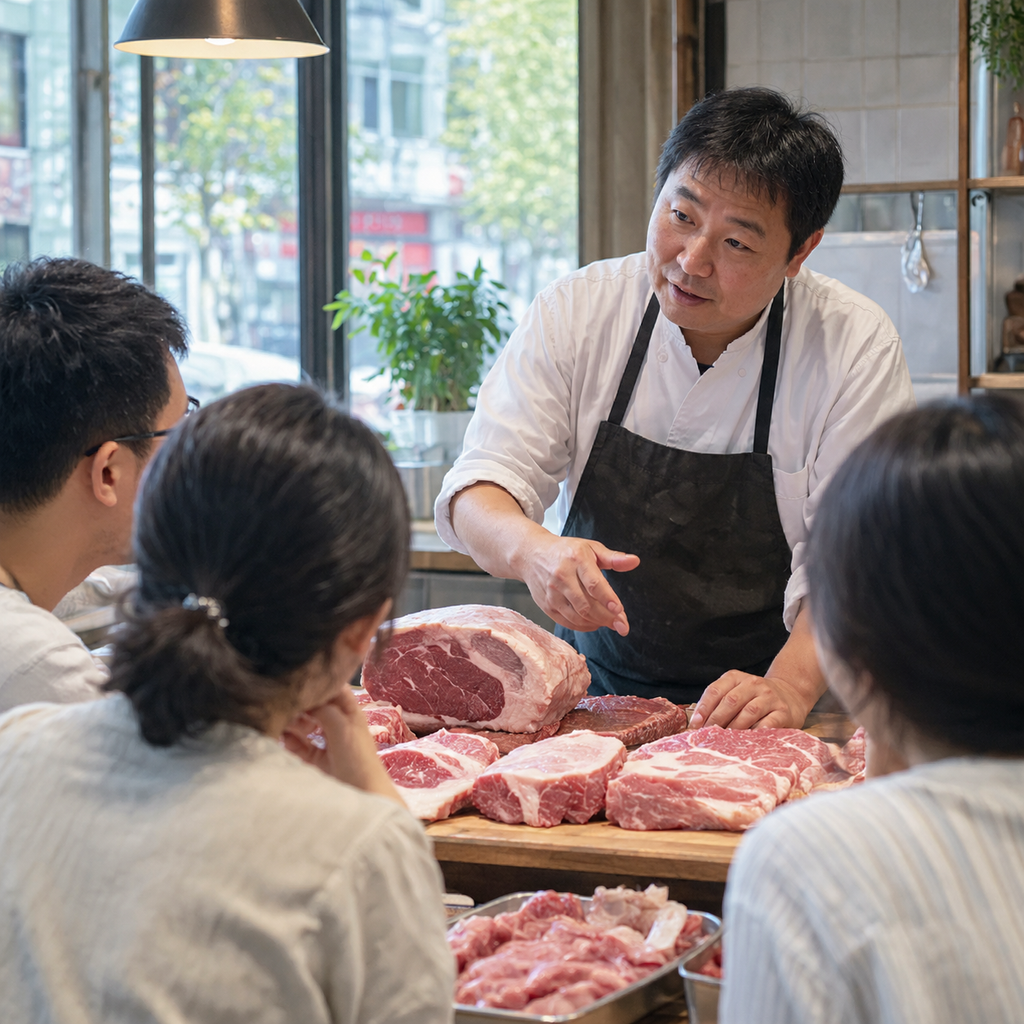
九点多,肉摊上的部位已经排成一张无声的菜单:先上匙柄和脖仁,纤维细、油花轻;接着是吊龙,香气和嚼劲更明显;再往后才轮到胸口朥,靠脂肪把汤底推得丰厚。老板不会把所有肉一股脑儿倒进盘里,他用白纸隔开不同部位,边切边讲火候。旁边学徒把碎肉收进小盆,手指沾水,将它们留给午后的牛肉丸。每一块肉都有自己的出场时间,早一步或晚一步,口感都会变。
By mid-morning, the cuts on the counter have become a silent menu: first the tender shoulder-blade and neck rib, fine-fibered and lightly marbled; then diaolong, deeper in aroma and firmer in bite; only later comes the fatty brisket, whose richness gives the broth its weight. The owner never dumps everything onto one plate. He separates the cuts with white paper and explains the timing as he works. An apprentice gathers the trimmings into a bowl, wets his fingers, and saves them for the beef balls at lunch. Every cut has its own entrance, and a minute too early or too late can change the texture.
中午十二点,我们第一次坐到店里,偏偏把“肉越多越划算”当成了经验。同行的米娅指着菜单上的大拼盘,觉得一桌人点一份最省事,又加了两盘牛筋和一篮炸腐皮。老板娘端来砂锅,先把葱段、芹菜和几片白萝卜放进去,听见我们的点单后笑着摇头:“先别急,第一锅吃不完,后面会后悔。”我们还以为这是客气话,直到匙柄下锅八秒,入口清甜,才发现刚才差点用肥腻的牛筋盖住了牛肉本身。
At noon, we took our first seats in the shop and made the classic mistake of thinking that more meat meant better value. Mia pointed to the large assorted platter, assuming one would be easiest for the whole table, then added beef tendon and a basket of fried tofu skin. The owner’s wife brought over the clay pot, adding scallions, celery, and slices of white radish. When she heard our order, she smiled and shook her head: “Don’t rush. If you finish the first pot too soon, you’ll regret it later.” We thought she was merely being polite. Then the shoulder-blade meat cooked for eight seconds and tasted sweet and clean, showing us how close we had come to burying the beef’s flavor under tendon.
下午三点,店里安静下来,米娅终于学会不拿筷子追着沸水搅。她夹起一片吊龙,等锅面重新冒出细小的泡,再放下去数五秒;阿荣的妹妹站在桌边,手掌向下压了压,提醒她别让肉片卷成一团。第二锅的顺序改成吊龙、匙柄、胸口朥,汤面渐渐浮起亮亮的油珠,芹菜香从蒸汽里钻出来。我们说话的声音慢了,筷子也不再互相碰撞,吃饭从抢速度变成了听锅声。
At three, the shop quieted, and Mia finally stopped chasing the boiling water with her chopsticks. She lifted a slice of diaolong, waited for the surface to settle into tiny bubbles, then lowered it and counted five seconds. Ah Rong’s sister stood beside the table and pressed her palm downward, reminding her not to let the slice curl into a tight knot. For the second pot, we changed the order to diaolong, shoulder-blade, and fatty brisket. Shimmering beads of oil rose on the broth, while celery fragrance slipped through the steam. Our voices softened, our chopsticks stopped clacking, and eating became less about speed than listening to the pot.
傍晚六点,市场重新喧闹起来,刚下班的人拎着雨水未干的伞进门。我们没有再点大拼盘,而是要了少量匙柄、胸口朥和手打牛肉丸,给每人留出判断味道的空隙。丸子下锅后先沉到底,再慢慢浮起,老板娘用漏勺托住它们,轻轻敲了敲碗沿。她说,丸子要吃弹,不必蘸太重的沙茶。米娅第一次只沾了一点,随后抬头说:“原来沙茶不是要遮住肉,而是把香气往后推。”这句话让整桌人都笑了。
At six in the evening, the market grew noisy again as office workers came in carrying umbrellas still wet from the rain. We no longer ordered a huge platter. Instead, we chose small portions of shoulder-blade, fatty brisket, and hand-shaped beef balls, leaving room for everyone to taste and compare. The balls sank first, then slowly rose. The owner’s wife lifted them with a strainer and tapped them gently against the rim of a bowl. She told us that the point was springiness, so the satay sauce should stay light. Mia dipped one only slightly and looked up: “So the satay isn’t meant to cover the beef; it sends the aroma further back.” The whole table laughed.
夜里九点,最后一锅不再追求精细顺序,大家开始把剩下的肉片、萝卜和腐皮交给锅底。汤变得浓,桌面沾着一圈水汽,门外摩托车的灯在玻璃上划过。我们本来准备离开,却被隔壁桌的年轻人招呼着一起吃刚端来的粿条。粿条滑进热汤,吸住牛油和芹菜的香,刚才那些部位像在夜里重新合成了一道菜。老板收拾空盘时问要不要加一碗,我们这次没有逞强,只说“半碗就好”。
At nine at night, the final pot no longer needed a careful progression. We handed the remaining slices, radish, and tofu skin to the broth and let the table decide. The soup had deepened, condensation ringed the tabletop, and motorcycle headlights swept across the glass outside. We were about to leave when the young people at the next table invited us to share their freshly served rice noodles. The noodles slid into the hot broth and caught the flavor of beef fat and celery. All the cuts seemed to reunite in a new dish. When the owner asked whether we wanted another bowl, we did not pretend to be hungry. This time, we asked for only half a bowl.
凌晨一点,街上的摊灯一盏盏熄灭,粿条摊的锅铲声却还在巷口响。我们站在塑料凳旁分最后一份干拌粿条,米娅把手机上的时间递给我看,笑说自己从早市的一块肉吃到了夜里。那天记住的不是“哪一部位最贵”,而是肉片下锅前后的变化:先看刀工,再听锅声,最后给胃留一点余地。潮汕牛肉的时间表,并不催人把一锅吃完;它教人把每一次夹取,都当作对火候和彼此节奏的回应。
At one in the morning, stall lights along the street were going out one by one, but the scrape of a wok spatula still echoed from the alley. Beside the plastic stools, we shared one last serving of dry-mixed rice noodles. Mia showed me the time on her phone and laughed that she had eaten from a single cut at the morning market all the way into the night. What stayed with us was not which cut cost the most, but how each slice changed before and after touching the broth: look at the knife work, listen to the pot, and leave the stomach a little room. The Chaoshan beef timetable does not hurry anyone toward the bottom of the pot. It teaches that every bite is a response to heat, texture, and the pace of the people around the table.
第二天早上,阿荣在市场门口看见我们,第一句话不是问昨晚吃得怎样,而是笑着说:“睡了几个钟头,还敢不敢看刀?”米娅揉着眼睛点头,跟他走到摊前。晨雾贴在塑料棚顶,砧板上已经铺开一排新鲜牛肉,颜色从浅红到深红,油花像细小的白线藏在肌理之间。阿荣拿起一片脖仁,让我们对着灯看:“别只看白,油花太宽,入口反而容易腻;细而均匀,才会在热汤里很快化开。”他说完把肉片折起来,轻轻一弹,薄片立刻恢复平整。
The next morning, Ah Rong saw us at the market entrance. Instead of asking how we had eaten the night before, he laughed and said, “How many hours did you sleep, and are you still brave enough to watch the knife?” Mia rubbed her eyes and followed him to the stall. Mist clung to the plastic roof, while a row of fresh beef lay across the chopping board, ranging from pale red to deep crimson, with tiny white lines of fat hidden in the grain. Ah Rong held up a slice of neck rib for us to examine under the lamp. “Do not look only at the white,” he said. “If the marbling is too broad, it can feel heavy. Fine, even marbling melts quickly in hot broth.” He folded the slice, and it sprang back into shape.
我们请他按一顿午餐的分量帮忙挑肉,他没有立刻动刀,反而先问桌上有几个人、谁喜欢脆一点、谁不吃内脏。米娅说自己想把每个部位都尝一口,阿荣便在纸上画了一个小圆圈,写下“清、香、厚、弹”四个字。“清”留给匙柄,“香”给吊龙,“厚”由胸口朥完成,“弹”则交给牛肉丸。买肉不只是挑贵的,而是让不同口感在一锅汤里轮流说话。旁边的摊主听见后插话:“午饭别买太满,市场还有粿汁等着你们。”米娅马上把第二篮腐皮放回原处,认真向他道谢。
We asked Ah Rong to choose enough meat for lunch, but he did not reach for his knife immediately. He first asked how many people would sit at the table, who preferred a firmer bite, and who avoided offal. Mia said she wanted to taste every cut, so Ah Rong drew a small circle on a sheet of paper and wrote four words: clean, fragrant, rich, and springy. “Clean” belonged to shoulder-blade meat, “fragrant” to diaolong, “rich” to fatty brisket, and “springy” to beef balls. Buying beef was not about choosing the most expensive pieces; it was about letting different textures speak in turn. A neighboring vendor added, “Do not buy too much for lunch. You still have rice-noodle soup waiting.” Mia immediately returned the second basket of tofu skin and thanked him seriously.
十点半,我们把肉送回店里,老板娘已经把砂锅洗净,桌上只摆了蒜泥、沙茶和一小碟盐。她看见米娅想把所有调料倒进碗里,赶紧按住她的手:“先喝原汤,调味是后面的事。”锅底用清水、白萝卜和芹菜梗慢慢煮开,没有复杂的香料,沸腾时只发出低低的咕噜声。第一轮下的是匙柄,夹住肉片的筷子必须贴着锅边滑入,八到十秒后立刻捞起。阿荣站在旁边提醒:“变色到边就够了,别等它完全卷起来。”米娅数到七便抬筷,发现肉心还带着柔软的红,入口却已经温热。
At half past ten, we brought the beef back to the shop. The owner’s wife had washed the clay pot, and the table held only minced garlic, satay sauce, and a small dish of salt. When Mia tried to pour every condiment into her bowl, the woman gently stopped her hand. “Taste the plain broth first. Seasoning comes later.” The pot held only water, white radish, and celery stems, slowly coming to a boil with no complicated spices. The first round was shoulder-blade meat. The chopsticks had to slide the slices in along the rim, and the meat was lifted after eight to ten seconds. Ah Rong reminded us, “Once the color reaches the edges, it is ready. Do not wait for it to curl completely.” Mia lifted hers at seven seconds and found the center tenderly pink but already warm.
第二轮才轮到吊龙,锅面因为前一轮的肉汁变得更亮,细泡从砂锅底部连续往上冒。老板娘把火调小一些,说吊龙不能在大滚里久留,否则香气会被水汽冲散。米娅问:“那胸口朥是不是最后才下?”“对,但也不是等到锅底最浓才下。”她夹起一片给我们看,“肥的东西要趁汤还清时进去,才会慢慢释放甜味;如果一开始就把它和牛筋一起煮,汤会厚得没有层次。”我按照她说的把吊龙分成两次下,每次只放几片,桌上的人终于能听见彼此说话。
The second round was diaolong. The broth had become brighter from the first batch of beef, and fine bubbles rose continuously from the bottom of the clay pot. The owner’s wife lowered the heat and explained that diaolong should not stay in a hard boil, or its fragrance would be washed away by the steam. Mia asked whether fatty brisket should be saved for the very end. “Yes, but not until the broth is at its richest,” she replied, lifting a slice for us. “Fat should enter while the soup is still clear, so it can release sweetness gradually. If it goes in with tendon at the beginning, the broth becomes heavy without layers.” Following her advice, I divided the diaolong into two small batches. At last, everyone at the table could hear one another.
十一点半,胸口朥下锅前,阿荣先让我们把碗里的沙茶减半,又把萝卜片捞出来给汤底腾位置。他说:“下肉有顺序,吃肉也有顺序。先吃最能辨清味道的,再吃香气明显的,最后才用脂肪收住口感。”胸口朥在汤里轻轻摆动,边缘透明起来,汤面很快浮出一层细亮的油。米娅咬了一口,皱眉问是不是太肥,老板娘没有急着解释,只让她喝一口带芹菜的汤。几秒后,米娅点头:“原来肥不是负担,前提是前面已经吃过清爽的肉。”阿荣笑着说,这就叫会安排,不叫能吃。
At eleven thirty, before the fatty brisket went into the pot, Ah Rong asked us to halve the satay in our bowls and removed several radish slices to make room. “There is an order for adding meat,” he said, “and an order for eating it. Start with the cuts whose flavor is easiest to recognize, continue with the aromatic ones, and let fat finish the texture.” The brisket moved gently in the broth, its edges turning translucent as a fine sheen of oil appeared on the surface. Mia took a bite and frowned, wondering whether it was too fatty. The owner’s wife did not explain immediately; she told Mia to drink a spoonful of celery-scented broth. A few seconds later, Mia nodded. “Fat is not a burden after all, as long as the lighter cuts come first.” Ah Rong laughed. “That is planning, not merely having a big appetite.”
午餐接近尾声时,牛肉丸才被推到锅边。老板娘说丸子不怕多煮一会儿,却要等水重新滚起来再放,免得外层松散。丸子下沉、停住、上浮,像在锅里完成三次点名。米娅伸筷子去夹,阿荣马上提醒:“别用力戳,先用漏勺托。”丸子被捞出后,她蘸了一点蒜泥,没有再碰沙茶。我们把剩下的汤分成小碗,加入一撮胡椒和葱花,谁也没有急着添肉。早市的刀声、摊主的玩笑、锅里的八秒和五秒,到这时全都变成了午餐桌上的默契。
As lunch drew to a close, the beef balls finally moved to the edge of the pot. The owner’s wife said they could cook a little longer, but the water had to return to a boil before they went in, or the outer layer might loosen. The balls sank, paused, and rose, as if answering three roll calls in the broth. Mia reached for one with her chopsticks, and Ah Rong quickly warned, “Do not stab it. Lift it with the strainer.” After retrieving one, she dipped it lightly in garlic and left the satay untouched. We divided the remaining broth into small bowls with a pinch of pepper and chopped scallion. No one hurried to add more meat. The knife sounds of the morning market, the vendors’ jokes, and the eight-second and five-second timings had all become a quiet understanding around the lunch table.
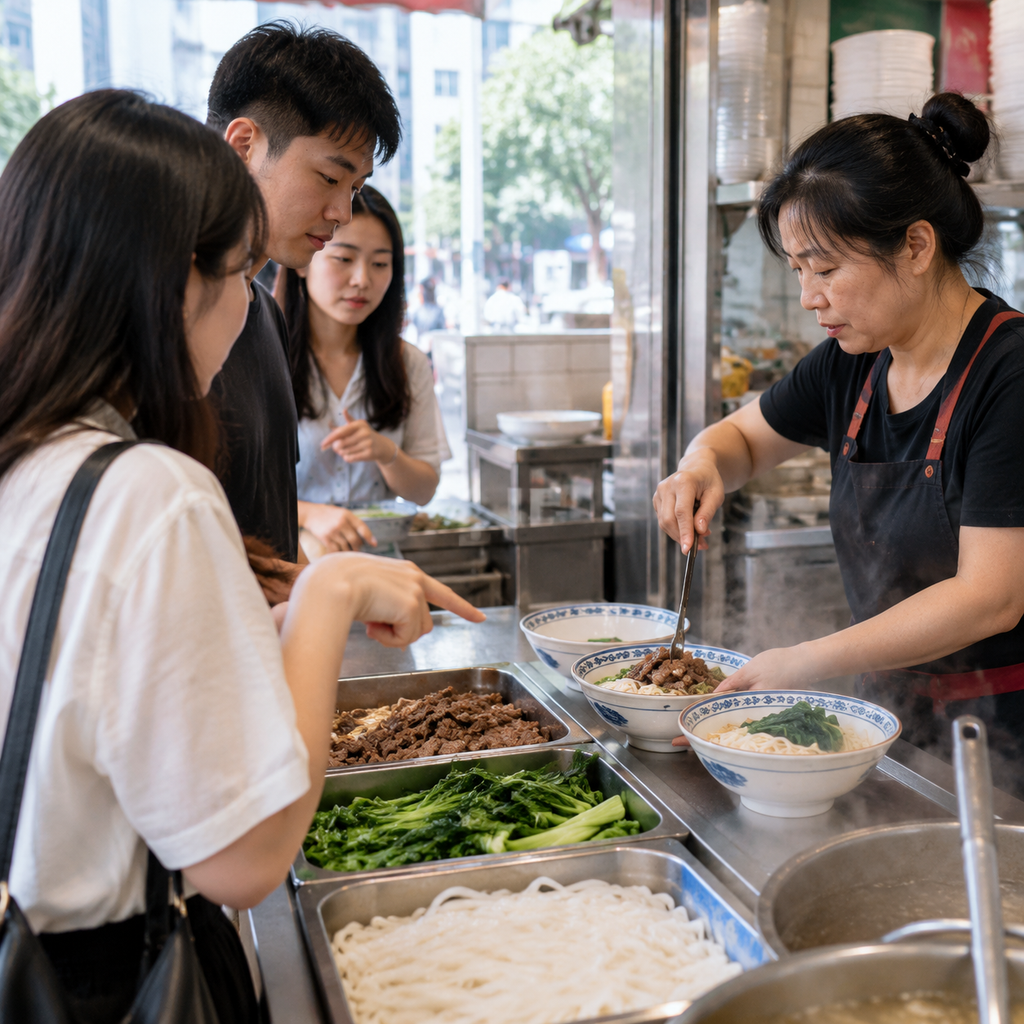
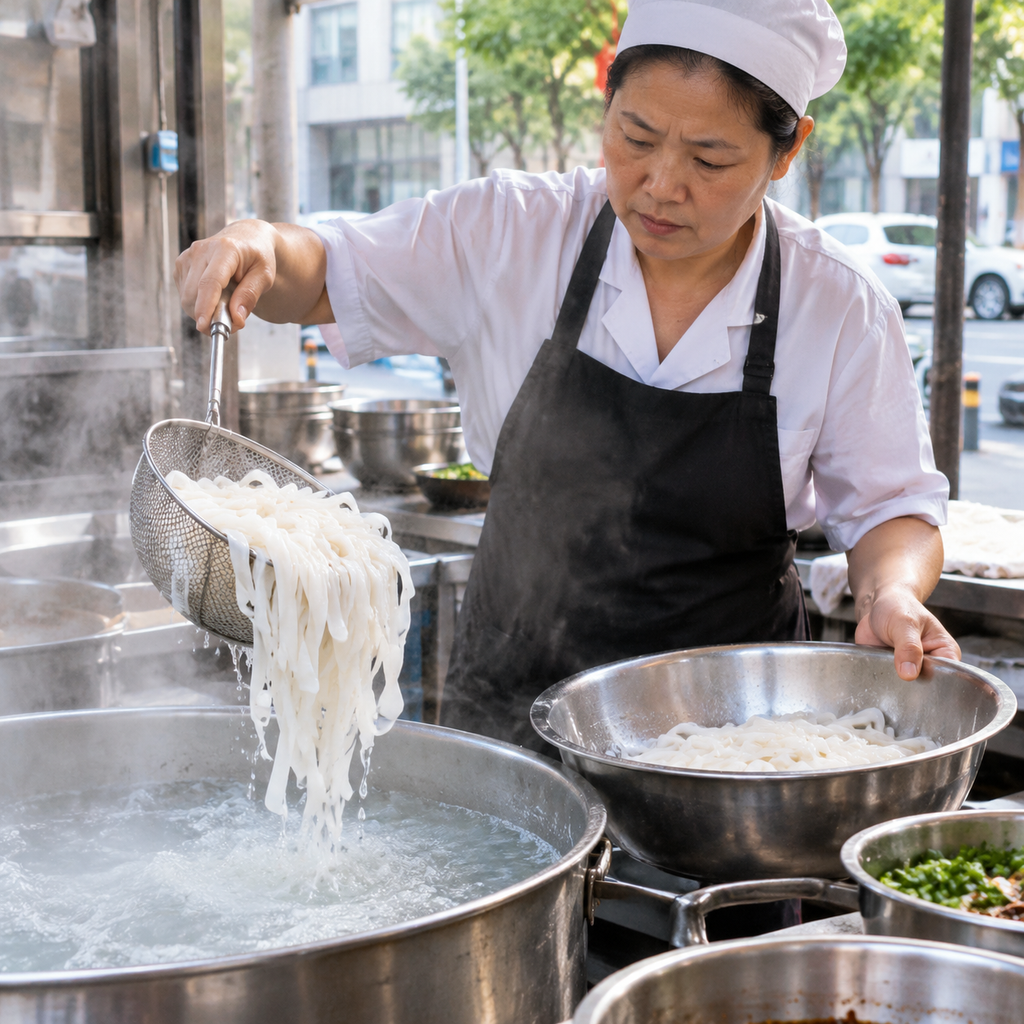
走出店门后,我们没有马上回住处。午后两点,太阳把骑楼的影子压到墙根,刚吃完牛肉的身体反而有些发懒。老板娘把一壶温茶塞到米娅手里,叫我们沿着市场外圈慢慢走,等额头的汗退下去再决定晚饭。米娅起初还想找一家甜品店,走了不到两百步便停在卖粿条的窗口前。铁锅里清水轻滚,老板用长筷拨开米浆做的粿条,动作像把一叠薄纸在水面上展开。
After leaving the shop, we did not go straight back to our lodging. At two in the afternoon, the sun pressed the arcade’s shadows against the walls, and our bodies felt pleasantly lazy after the beef. The owner’s wife pushed a pot of warm tea into Mia’s hands and told us to walk slowly around the market’s outer lane, letting the sweat fade before deciding on dinner. Mia first wanted dessert, but after less than two hundred meters she stopped at a rice-noodle window. In the iron wok, water barely simmered. The cook used long chopsticks to separate the rice noodles, unfolding them on the surface like a stack of thin paper.
下午四点,摊主开始备料。他把牛骨汤从保温桶倒进小锅,火先开大,锅底很快响起密集的细泡;汤边一冒白沫,他立刻把旋钮拧回中小火,拿勺背沿着边缘撇去浮沫。牛肉片不在这时下,只有葱珠、芹菜末和一小撮胡椒先落进碗里。米娅蹲在炉边看得出神,问为什么不让汤一直滚。摊主笑着说:“粿条怕急,急了会断;汤也怕急,急了只剩咸。”说完,他用手腕一抖,把粿条送进漏勺。
At four, the vendor began preparing the ingredients. He poured beef-bone broth from an insulated container into a small pot, starting with high heat until dense, fine bubbles gathered at the bottom. As soon as foam appeared around the edge, he turned the knob down to medium-low and skimmed it away with the back of a ladle. The beef slices did not go in yet; only scallion, chopped celery, and a pinch of pepper entered the bowls. Mia crouched beside the stove, fascinated, and asked why he did not keep the soup boiling. The vendor smiled. “Rice noodles dislike hurry. Hurry makes them break. Soup dislikes hurry too; hurry leaves only salt.” Then he flicked his wrist and lowered the noodles into a strainer.
傍晚六点半,第一批下班客人把窄桌坐满。摊主的手没有停过:左手接碗,右手舀汤,拇指压住碗沿,避开滚烫的瓷面;有人要牛肉,有人只要粿条和青菜,他都不重复确认,只从客人的眼神和手势里判断分量。我们点了一碗牛肉粿条,要求少肉多汤。牛肉片在余温里变色,边缘刚刚收紧,摊主便用漏勺托起,整齐铺在粿条上。米娅夹起第一筷,没有蘸沙茶,只喝了一口汤,脸上的疲倦明显松开。
At half past six, the first wave of office workers filled the narrow tables. The vendor’s hands never stopped: his left hand received bowls, his right ladled broth, and his thumb held each rim while avoiding the scalding porcelain. Some customers wanted beef, others only noodles and greens. He rarely repeated a question, reading the portion from their eyes and gestures. We ordered one bowl of beef rice noodles with extra broth and less meat. The slices changed color in the residual heat; as soon as their edges tightened, he lifted them in the strainer and arranged them neatly over the noodles. Mia took her first bite without satay sauce and drank the broth. The tiredness in her face visibly loosened.
晚上八点,雨又落下来,屋檐下的客人往里挪,塑料帘被风吹得一开一合。锅里的火候因此改得更慢,摊主把每碗粿条分开焯,不让米条在同一锅里挤成团。一个抱着书包的小男孩坐在我们旁边,先把香菜挑到碗边,再小声问米娅是不是第一次来。米娅教他用英文说“nice”,男孩则认真教她潮汕话里的道谢。两个人说得都不标准,却因为互相纠正而笑个不停。雨声盖住了街上的喇叭,桌面只剩筷子碰碗的轻响。
At eight, rain began again. Customers under the eaves moved closer together, and the plastic curtain opened and closed in the wind. The vendor slowed the cooking and blanched each portion separately, preventing the delicate noodles from clumping in the same pot. A schoolboy with a backpack sat beside us. He picked coriander to the side of his bowl, then quietly asked Mia whether it was her first visit. Mia taught him to say “nice” in English, while he seriously taught her a Chaoshan way to say thank you. Neither pronounced everything perfectly, but they kept correcting one another and laughing. The rain covered the horns outside, leaving only the soft tap of chopsticks against bowls.
夜里十点半,客流终于稀下来,摊主把火调到最小,锅底的汤面像一块缓慢呼吸的玻璃。我们本以为这一晚已经结束,老板娘却端来一小碗干拌粿条,让我们比较同一种米条在没有汤时的筋骨。她先把蒜油、酱油和一点沙茶拌匀,再把烫好的粿条倒进去,手腕连续翻了三下,不能用力压,否则粿条会碎。米娅用筷子挑起一缕,油光顺着边缘落回碗里,忽然明白午后那句“怕急”并不只是在说火,也是在说人的手。
At half past ten, the crowd finally thinned. The vendor turned the flame to its lowest setting, and the broth surface looked like glass breathing slowly. We thought the night was over, but the owner’s wife brought a small bowl of dry-mixed rice noodles so we could compare the same noodles without soup. She blended garlic oil, soy sauce, and a little satay first, then added the blanched noodles and turned them three times with her wrist. Pressing too hard would break them. Mia lifted a strand with her chopsticks, watching the oil slide back into the bowl, and suddenly understood that “disliking hurry” referred not only to the flame, but also to the hands of the person cooking.
接近午夜,街口只剩便利店的白光和雨后积水里的红色尾灯。摊主收起第二口锅,把最后几片牛肉留给自己,切碎后铺在一碗热粿条上,坐到门槛边慢慢吃。他没有再招呼客人,也没有急着收桌,只用筷子把粿条分成三口。米娅把下午那张纸拿出来,在“厚”和“弹”后面又添了一个“慢”。凌晨十二点零七分,我们把空碗叠好,向摊主道谢。走出巷子时,她回头看见炉火缩成一粒橘色的光,便把手机上的计时器关掉,说今晚不用再数秒了:粿条已经替我们把最后一段路煮熟。
Near midnight, only the convenience store’s white light and red taillights reflected in puddles remained at the street corner. The vendor put away the second pot and kept a few slices of beef for himself, chopping them over a bowl of hot rice noodles before sitting on the doorstep to eat slowly. He did not call for more customers or rush to clear the tables; he simply divided the noodles into three bites with his chopsticks. Mia took out the paper from the afternoon and added one more word after “rich” and “springy”: slow. At 12:07 a.m., we stacked the empty bowls and thanked the vendor. As we left the alley, she looked back at the stove, now reduced to a single orange point, and switched off the timer on her phone. “We don’t need to count seconds tonight,” she said. “The noodles have already cooked the last stretch of the road for us.”
走出店门时,太阳已经照过屋檐,湿漉漉的街面亮得像刚擦过。米娅把那张写着四个字的纸折好,塞进钱包,说下次要先学会看部位,再学会控制点单。阿荣站在门边送我们,听见她的话便说:“真正的顺序不是我教给你的,是你坐下来以后,愿意让每一片肉慢一点。”我们回头看见砂锅还在冒烟,午餐的香气没有追出来,却留在衣服和记忆里。下一次再进市场,我们知道该从哪一刀开始,也知道什么时候应该把筷子放下。
When we stepped outside, the sun had reached over the eaves, and the wet street shone as if it had just been polished. Mia folded the sheet with the four words and put it in her wallet. Next time, she said, she would learn to identify the cuts before learning to control her ordering. Ah Rong stood by the door and replied, “The real order was not something I taught you. It came when you were willing to let each slice take its time.” We looked back at the smoking clay pot. The aroma did not follow us into the street, but it stayed in our clothes and memories. The next time we entered the market, we would know which cut to begin with, and when to set down the chopsticks.
第二天下午三点,我们又绕回那条骑楼巷子,只是这次没有带着“把所有味道一次吃完”的急切。太阳晒干了昨夜的雨,屋檐下挂着一排刚洗过的竹笊篱,风一吹便轻轻相碰。粿条摊主认出我们,先把一碗温水推过来,又问要不要试他的牛肉粿条。米娅没有看菜单,直接说少量牛肉、粿条分开焯、汤要清一些。摊主挑眉笑道:“学会点菜了,先别急着说学会火候。”
At three the next afternoon, we returned to the arcade lane, this time without the urge to taste every flavor at once. The sun had dried the previous night’s rain, and a row of freshly washed bamboo strainers hung beneath the eaves, clicking softly whenever the wind moved them. The rice-noodle vendor recognized us, pushed over a bowl of warm water, and asked whether we wanted to try his beef rice noodles. Mia did not look at the menu. She asked for a small amount of beef, noodles blanched separately, and a lighter broth. The vendor raised an eyebrow and smiled. “You have learned how to order. Do not hurry to claim that you have learned heat.”
四点十分,摊主让我们自己站到炉边看温度变化。他没有拿温度计,只用汤面判断火:大火时气泡密而急,汤边像被细针连续敲打;转小火后,气泡变成一串串缓慢上升的珠子,表面仍然滚动,却不再翻腾。粿条最怕锅里拥挤,漏勺一次只能放一人份,入水后先别拨,等边缘变软,再从底部轻轻托起。米娅照做,第一次没有把粿条扯断,摊主便把一片刚切好的匙柄放到她的碗里,算是给这份耐心的奖励。
At 4:10, the vendor let us stand beside the stove and watch the heat change. He used no thermometer, reading the flame from the surface of the broth. On high heat, the bubbles were dense and hurried, tapping the rim like a line of fine needles. Once the flame was lowered, they became strings of slow-rising pearls. The surface still moved, but it no longer thrashed. Rice noodles suffer when crowded, so the strainer could hold only one serving at a time. After the noodles entered the water, we were told not to stir immediately. We waited for the edges to soften, then lifted them gently from underneath. Mia did not break the noodles, and the vendor placed a freshly sliced piece of shoulder-blade beef in her bowl as a reward for patience.
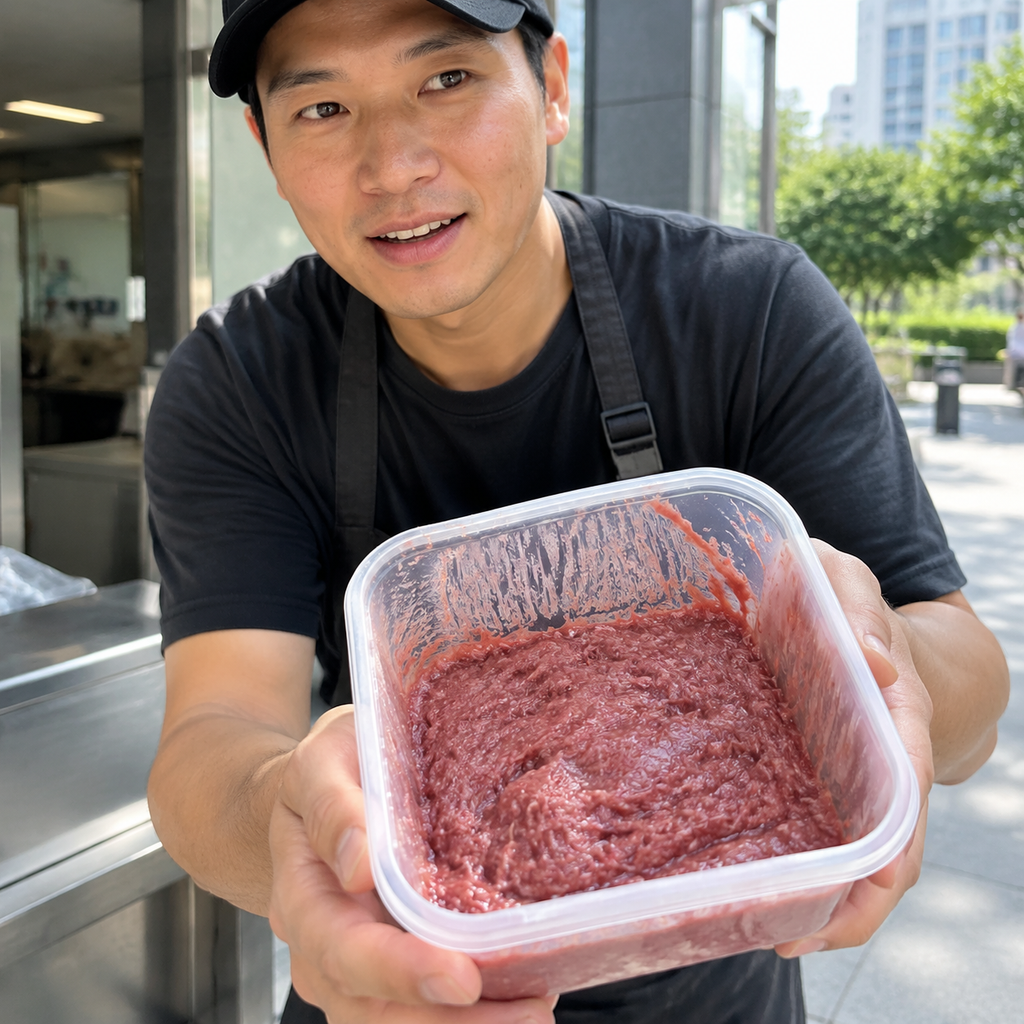
傍晚五点半,市场开始换班,切肉声和锅铲声隔着一排摊位彼此应答。阿荣送来一小盒刚打好的牛肉浆,里面只放盐和冰水,摔打后的纤维在盒壁上留下细密的纹路。摊主把牛肉浆挤成小丸,放进没有沸腾的汤里,让它先定形,再把火调高。丸子没有立刻翻滚,而是在热力里慢慢收紧。等它们浮到水面,摊主用筷子敲了一下,声音清脆,像敲在空心竹节上。我们各吃一颗,才知道“弹”不是硬,而是咬下去以后还有回声。
At half past five, the market began changing shifts, and the sounds of chopping knives and wok spatulas answered one another across the stalls. Ah Rong brought over a small box of freshly beaten beef paste containing only salt and ice water. The beaten fibers had left fine patterns along the sides of the box. The vendor squeezed the paste into small balls and placed them in broth that was not yet boiling, allowing them to set before raising the heat. They did not tumble immediately; they tightened gradually in the rising warmth. When they floated, he tapped one with chopsticks. The sound was crisp, like a hollow bamboo joint. We each ate one and learned that “springy” did not mean hard. It meant the bite still carried an echo.
晚上七点,第一锅牛肉汤被喝得只剩薄薄一层,摊主没有急着续水,而是把锅底的萝卜和芹菜捞出,重新放入一小撮新鲜芹菜梗。第二锅的味道因此没有浑浊,反而多了一点清亮的草木香。我们点了干拌粿条和一碗清汤,先把蒜油拌开,再用筷子将粿条提起、放下、翻面。油不能太多,否则米香会被压住;酱油只能沿碗边淋入,让颜色慢慢渗进每一根粿条。米娅把最后一片牛肉铺在面上,等它借着粿条的热气变熟,而不是重新投入沸汤。
At seven, the first pot of beef soup was nearly empty. Instead of adding water immediately, the vendor removed the radish and celery and replaced them with a small handful of fresh celery stems. The second pot stayed clear and gained a brighter green fragrance. We ordered dry-mixed rice noodles and a bowl of plain soup. First we loosened the garlic oil, then lifted, lowered, and turned the noodles with chopsticks. Too much oil would bury the rice aroma; soy sauce was poured along the rim so its color could seep gradually into each strand. Mia placed the last slice of beef on top and let the heat from the noodles finish it, rather than returning it to the boiling broth.
夜里九点四十五分,巷子里的灯一盏盏亮起来,晚归的人把自行车靠在墙边,进门先说“老样子”。有人要牛肉丸,有人只要一碗热汤醒胃,摊主都按熟客的节奏安排。我们坐在最靠外的位置,看他把火守在一条几乎看不见的蓝线上。火太旺,粿条会失去柔韧;火太小,牛肉的香气又起不来。真正的火候并不是固定的秒数,而是根据锅里剩多少汤、今天的湿度、客人下筷子的速度不断调整。米娅终于把手机计时器收进包里,改用眼睛看颜色,用耳朵听气泡。
At 9:45 p.m., the lights in the lane came on one by one. People returning late leaned their bicycles against the wall and entered with a familiar “the usual.” Some wanted beef balls, while others needed only a hot bowl of broth to settle the stomach. The vendor arranged everything according to each regular’s pace. We sat near the entrance and watched him guard the flame along an almost invisible blue line. Too much heat would rob the noodles of their resilience; too little would keep the beef from releasing its aroma. Heat control was not a fixed number of seconds. It changed with the amount of broth, the humidity, and the speed at which diners reached for their chopsticks. Mia finally put her timer away and began reading color with her eyes and bubbles with her ears.
接近午夜,我们决定只点最后一碗牛肉粿条,不再追加任何配料。摊主把粿条单独焯好,铺进浅口白瓷碗,舀入清汤,再放三片匙柄、一颗牛肉丸和几粒芹菜珠。阿荣站在门边没有说话,只在我们端碗时伸手替米娅擦去碗底的一滴汤。她先喝汤,再夹肉,最后把粿条分成三口慢慢吃完。十二点零三分,摊主关掉炉火,擦净案板,把剩下的牛肉包好放进冰柜。我们付钱、道谢,沿着空下来的巷子往前走。回头时,店招的灯已经熄灭,只有锅盖边残留的热气在夜色里轻轻散开。那一刻我们明白,潮汕牛肉真正的结尾,不是把最后一口吞下,而是在火熄之后,仍然记得一片肉该怎样下锅、一根粿条该怎样被温柔对待。
Near midnight, we decided on one final bowl of beef rice noodles and no additional toppings. The vendor blanched the noodles separately, placed them in a shallow white bowl, added clear broth, then arranged three slices of shoulder-blade beef, one beef ball, and a few green celery beads on top. Ah Rong stood by the doorway without speaking; as Mia lifted the bowl, he reached over and wiped away a drop of soup from its underside. She drank the broth first, picked up the beef second, and slowly finished the noodles in three mouthfuls. At 12:03 a.m., the vendor turned off the stove, cleaned the board, and wrapped the remaining beef for the refrigerator. We paid, thanked him, and walked down the emptied lane. When we looked back, the shop sign had gone dark. Only a little heat drifted from the edge of the pot into the night. Then we understood that the true ending of Chaoshan beef was not swallowing the last bite. It was remembering, after the flame had gone out, how a slice should enter the broth and how a strand of rice noodle should be treated with care.
第二天下午四点四十五分,巷口的风把前一夜留下的潮气吹散,摊主重新架起那口圆底铁锅。我们这次没有坐下就点餐,而是先看他把火分成三段:点火后的两分钟用大火把汤唤醒,接着四分钟保持中火,让萝卜的甜味慢慢出来,最后才压到小火,等粿条入碗时不至于被滚汤冲散。阿荣提着一袋刚切好的肉来到炉边,提醒摊主今天的匙柄切得更薄,最多只要七秒。摊主点点头,把第一碗留给一位拄拐杖的老伯,先放汤,再放肉,端碗时还用手背试了试温度。
At 4:45 the next afternoon, wind at the mouth of the lane swept away the dampness left by the previous night, and the vendor set the round-bottomed iron pot back on its stand. This time we did not order as soon as we sat down. We watched him divide the heat into three stages: high heat for two minutes to wake the broth, medium heat for four minutes to draw out the radish’s sweetness, and low heat at the end so the noodles would not be battered by a violent boil. Ah Rong arrived with a bag of freshly sliced beef and told the vendor that today’s shoulder-blade slices were thinner and needed no more than seven seconds. The vendor nodded and served the first bowl to an elderly man with a walking stick, broth first and beef second, testing the bowl’s temperature with the back of his hand before carrying it over.
五点二十分,放学的孩子和收工的工人挤在同一排矮凳上。一个扎马尾的女孩把书包放在脚边,认真观察每一片肉从粉红变成浅褐。她问摊主为什么不能把肉一次放满,摊主把漏勺举到她眼前,说:“水要有回温的时间,人也要有咀嚼的时间。”女孩似懂非懂地点头,先夹起一片吊龙,数到五秒便捞出,汤汁沿着肉片的褶皱滴回碗里。她的父亲把自己的牛肉丸分成两半,叫她听里面的弹性,父女俩一边吃,一边用筷子轻轻敲碗,像在给傍晚打拍子。
At 5:20, schoolchildren and workers finishing their shifts crowded onto the same row of low stools. A girl with a ponytail placed her schoolbag by her feet and watched each slice change from pink to pale brown. She asked why the vendor could not put all the beef in at once. He raised the strainer for her to see and said, “The water needs time to recover its temperature, and people need time to chew.” She nodded as if partly understanding, lifted a slice of diaolong after five seconds, and let the juices fall back into the bowl. Her father split his beef ball in two and asked her to listen for its spring. They ate while tapping their bowls lightly with chopsticks, giving the evening a rhythm.
六点四十分,雨势忽然变大,摊主把炉口往里收了半寸,避免雨水打湿火焰。汤锅边的温度降得快,他没有盲目加大火,而是先盖上锅盖二十秒,再掀开让蒸汽散掉。粿条在旁锅里只焯十八秒,捞起后铺在大碗底部,利用余热继续变软。米娅问他怎么知道时间,摊主指向粿条边缘:“看它从直线变成有一点弧度,筷子夹起来会垂,不会断,就是刚好。”这时阿荣把一小碟芹菜珠递给邻桌的年轻母亲,孩子怕烫,他便把汤先舀到另一个碗里晾着,等温度合适才送过去。
At 6:40, the rain suddenly grew heavy. The vendor moved the mouth of the stove inward by half an inch so water would not strike the flame. The pot cooled quickly, but he did not simply turn up the heat. He covered it for twenty seconds, then lifted the lid to release the steam. The noodles in the second pot were blanched for only eighteen seconds and spread across the bottom of a large bowl, where residual heat continued to soften them. When Mia asked how he knew the timing, he pointed to the noodle edges. “When a straight line becomes a slight curve, and the chopsticks can lift it so it droops without breaking, it is ready.” Ah Rong passed chopped celery to a young mother at the next table. Her child feared the heat, so he ladled the soup into a second bowl to cool before carrying it over.
晚上八点十五分,熟客老陈推门进来,先把一把湿伞靠在墙角,又从口袋里掏出一张折旧的纸条。上面写着他妻子喜欢的顺序:粿条、萝卜、三片匙柄,最后一颗丸子,不要香菜。摊主接过纸条看了一眼,笑说记得比他还清楚。老陈坐下后没有催,只把手掌放在桌面等着。第一锅水开得太猛,摊主便把粿条捞出重焯,宁可多等半分钟,也不让客人吃到发黏的米条。老陈端碗时说妻子今晚在医院值班,这碗要带给她。摊主悄悄多放了一片肉,却仍把时间控制在七秒内。
At 8:15, a regular named Lao Chen entered, leaned his wet umbrella against the wall, and took an old folded note from his pocket. It listed his wife’s preferred order: noodles, radish, three slices of shoulder-blade beef, and one ball at the end, with no coriander. The vendor glanced at it and joked that he remembered the order even better than Chen did. Chen sat without urging anyone, resting his palm on the table as he waited. The first boil was too forceful, so the vendor blanched the noodles again rather than serve them sticky. Chen said his wife was on duty at the hospital tonight and he was taking the bowl to her. The vendor quietly added one extra slice of beef, while still keeping the cooking time to seven seconds.
夜里十点,客人少了,摊主把白天用过的厚汤换成清水和一小块萝卜,重新熬出适合收尾的淡汤。我们要了最后一份牛肉粿条,他坚持把肉和粿条分开处理:粿条入水二十秒,牛肉在汤面停留六秒,牛肉丸则等汤重新冒泡后再煮两分钟。端上来时,碗里没有多余的装饰,只有一撮葱花和几滴油。米娅没有拍照,先把碗推到我们中间,让每个人喝一口。蒸汽散开以后,牛肉的甜、米香的柔和芹菜的清脆轮流出现,像一天里不同的人在同一张桌边坐下,终于找到了不必抢话的顺序。
At ten that night, with fewer customers remaining, the vendor replaced the heavy daytime broth with water and a small piece of radish, making a lighter soup for the final hours. We ordered one last bowl of beef rice noodles, and he insisted on treating each element separately: twenty seconds for the noodles, six seconds for the beef at the surface, and two minutes for the beef ball after the broth began bubbling again. The finished bowl held no decoration beyond scallion and a few drops of oil. Mia did not take a photograph. She pushed the bowl to the center and asked everyone to drink once. As the steam cleared, beef sweetness, soft rice fragrance, and crisp celery appeared one after another, like different people taking seats at the same table and finally finding an order in which no one had to interrupt.
十一点二十七分,摊主开始收拾案台,先把火调到最小,再用长柄勺把锅底最后一层汤舀进自己的碗。他把粿条剪成短段,拌入一点蒜油和黑醋,坐在门槛上吃了几口,才把炉火彻底关掉。阿荣帮他卷起遮雨布,米娅则把桌上的空碗叠成一摞。我们问明天还来不来,摊主没有回答,只说:“想吃就下午来,别等到饿得发抖才下锅。”凌晨零点整,巷子里只剩水滴从屋檐落下的声音。我们走到转角,米娅回头把那张纸条压在钱包最里面,轻声说,她终于知道具体的结尾是什么:不是再加一碗,而是在炉火熄灭、最后一口粿条咽下之后,和替你守火的人说一声晚安。
At 11:27, the vendor began clearing the counter. He lowered the flame, ladled the last thin layer of broth into his own bowl, and cut the noodles into shorter pieces before mixing them with a little garlic oil and black vinegar. He sat on the doorstep for several bites, then shut off the stove completely. Ah Rong helped roll up the rain awning while Mia stacked the empty bowls. We asked whether he would be there tomorrow. He did not answer directly, saying only, “Come in the afternoon if you want noodles. Do not wait until hunger makes you tremble before putting anything in the pot.” At midnight, the lane held only the sound of drops falling from the eaves. At the corner, Mia tucked the note into the deepest part of her wallet and said softly that she finally understood the precise ending: not ordering another bowl, but saying good night to the person who kept the fire after the last strand of noodles had been swallowed.
我们没有立刻回住处,而是沿着已经安静下来的骑楼慢慢走。刚才坐过的塑料凳还留着一点体温,鞋底踩过积水,发出轻微的啪嗒声。便利店门口的店员正在把纸箱往里搬,见到米娅手里还捏着那张写有“清、香、厚、弹、慢”的纸,便问她是不是在做美食笔记。米娅想了想,没有把它说成食谱,只解释每个字都代表一个动作:看肉色、闻汤气、等脂肪、听丸子的回声,还要给同行的人留出说话和咀嚼的时间。店员听完笑着指了指巷子尽头,说那盏还亮着的路灯,正好可以替她把这张纸照清楚。
We did not return to our lodging immediately. We walked slowly beneath the now-quiet arcades. The plastic stools still held a trace of warmth, and our shoes made soft splashing sounds over the puddles. Outside the convenience store, a clerk was carrying cardboard boxes inside. Noticing the note in Mia’s hand, with the words “clean, fragrant, rich, springy, slow,” the clerk asked whether she was keeping a food journal. Mia thought for a moment. She did not call it a recipe. Instead, she explained that each word stood for an action: read the color of the beef, smell the broth, wait for the fat, listen for the echo of the meatball, and leave room for companions to speak and chew. The clerk smiled and pointed toward the end of the lane, saying that the streetlamp still glowing there could illuminate the note perfectly.
路灯下,米娅把纸摊在掌心,雨水从檐角落下来,刚好避开墨迹。她用英文在背面写了一句给未来自己的提醒:不要因为摊子快收了,就把最后一碗吃得匆忙。写完后,她把笔递给我,让我也加上一句。我写的是,真正值得带走的不是某个固定秒数,而是摊主收火前仍会替客人试温、把剩肉包好、把案板擦到没有油光的那几分钟。那不是服务流程,而是一个人对食物和夜归客人的分寸感。我们走到巷口时,远处传来清洁车倒车的提示音,店里的最后一盏灯也熄了。米娅没有回头拍照,只把纸折成四折收好,确认明天若再来,先说晚安,再问还有没有粿条。
Under the streetlamp, Mia spread the note across her palm. Water fell from the eaves but missed the ink. On the back, she wrote an English reminder to her future self: do not eat the final bowl hurriedly just because the stall is about to close. Then she handed me the pen and asked me to add a line. I wrote that what mattered was not a fixed number of seconds, but the few minutes before closing when the vendor still tested a bowl’s temperature, wrapped the remaining beef, and wiped the counter until no greasy shine remained. It was not merely a service routine; it was his sense of proportion toward food and people returning home late. At the mouth of the lane, a reversing street-cleaning vehicle sounded in the distance, and the shop’s final light went out. Mia did not turn back to take a photograph. She folded the note into four neat squares and decided that if we returned tomorrow, we would say good night first, then ask whether any rice noodles remained.
回到住处已经是凌晨零点二十六分,电梯里的镜面映出我们被蒸汽熏红的脸。米娅把钱包放在床头,没有把那张纸压进抽屉,而是夹在房卡下面,像给第二天留了一条看得见的路。她洗手时闻到指缝里还有一点蒜油,便站在水龙头前多冲了几秒,随后又突然关掉水,笑着说这也算今天学到的火候:该慢时慢,该停时停。窗外的城市没有完全睡着,远处高架上传来一阵车声,很快又散开。我们没有再讨论哪一片肉最好,只约好以后遇见深夜小摊,先坐稳、先听摊主怎么安排,再决定要不要加最后一口。
Back at our lodging at 12:26 a.m., we saw our steam-reddened faces reflected in the elevator mirror. Mia placed her wallet beside the bed, keeping the note beneath the room card rather than hiding it in a drawer, as if leaving a visible path for the next day. While washing her hands, she noticed a trace of garlic oil between her fingers and stood under the faucet for a few extra seconds. Then she suddenly turned off the water and laughed, saying this was another lesson in heat: slow down when slowness is needed, and stop when it is time to stop. The city outside was not fully asleep. A stream of traffic rose from the distant overpass and soon faded. We did not debate which cut was best. We only agreed that whenever we met a late-night stall again, we would sit properly, listen to the vendor’s arrangement, and decide only then whether we needed one last bite.
第二天清晨,我们在窗边醒来,谁也没有先去摸手机。楼下早餐铺的卷帘门刚拉到一半,金属摩擦声从街面传上来,紧接着是扫帚划过水泥地的沙沙声。米娅把那张纸重新展开,发现“慢”字旁边沾了一小粒昨夜的葱花,怎么擦也擦不掉。她没有嫌弃,反而用指甲把纸角压平,说这才像真正的旅行记录:不整齐,有油点,有临时改过的顺序,也有一个摊主在收摊前替客人多放的一片肉。我们下楼买水时,经过那家还没开门的粿条摊,案台已经擦净,锅盖倒扣在墙边,炉口留着昨晚烧过的黑痕。没有食物的时候,摊子显得比夜里小很多,可那道黑痕让我们知道,热气并不是凭空出现的,它来自有人准时起床、挑肉、守火,也来自有人在深夜吃完后愿意把碗叠好再离开。
The next morning, we woke by the window, and neither of us reached for a phone first. The rolling shutter of a breakfast shop below had just risen halfway, sending the scrape of metal up into the street, followed by the soft rasp of a broom across concrete. Mia unfolded the note and found a tiny piece of last night’s scallion stuck beside the word “slow.” It would not rub away. She did not mind. Instead, she pressed the corner flat with her fingernail and said that this was what a real travel record looked like: uneven, marked by oil, changed in the middle, and carrying the memory of an extra slice added by a vendor before closing. When we went downstairs for water, we passed the rice-noodle stall before it opened. The counter had been wiped clean, the lid leaned upside down against the wall, and a dark trace remained around the stove mouth. Without food, the stall looked much smaller than it had at night, yet that black trace reminded us that steam never appears by itself. It comes from someone waking on time, choosing the meat, guarding the flame, and from diners who stack their bowls before walking away.
我们在巷口停了一会儿,米娅忽然说,自己以前总把夜宵理解成“最后的奖励”,好像一天结束后只要再吃一点,疲惫就能被盖住。现在她觉得,深夜粿条更像一扇慢慢关上的门:摊主先收走不再需要的配料,把汤调淡,把火压低,给每个晚到的人留一口不惊扰胃的热气;客人也要配合,少点一点,别催锅,吃完把椅子推回原位。我们没有再进去点餐,只向空着的案台轻轻点了点头。风从骑楼穿过,带走墙角残留的蒜香。米娅把纸条放回钱包,决定把“晚安”留给下一次真正坐到摊前的时候。那一晚的故事于是有了清楚的落点:不是食客找到了一碗永远正确的粿条,而是摊主收起炉火以后,食客终于懂得怎样不打扰一盏灯的最后亮度。
We paused at the mouth of the lane, and Mia suddenly said that she had once treated late-night food as a final reward, as if another bite could cover the fatigue of the day. Now she thought late-night rice noodles were more like a door closing slowly. The vendor removed ingredients no longer needed, lightened the broth, lowered the flame, and left a warm mouthful for those who arrived late without disturbing their stomachs. Diners had to cooperate too: order less, do not hurry the pot, and push the stool back after eating. We did not enter to order again. We simply nodded toward the empty counter. Wind passed through the arcade and carried away the garlic scent lingering by the wall. Mia returned the note to her wallet, saving “good night” for the next time we truly sat at the stall. The story therefore found its precise landing: not that diners had discovered a bowl of noodles that was always perfect, but that after the vendor put away the fire, they finally learned how not to disturb the last brightness of a single lamp.

- 广州真正上镜的,不只是早茶和烧味,而是吃这件事怎样带着整座城往前走 | What Truly Films Well in Guangzhou Is Not Only Dim Sum and Roast Meats but the Way Eating Pulls the Whole City Forward
- 大运河边读一座城市 | Reading a City Along the Grand Canal
- 十月赏银杏:满城尽带黄金甲 | October Ginkgo Season: When China Turns to Gold
- 一锅潮汕牛肉的时间表:从早市吃到深夜粿条 | The Timetable of Chaoshan Beef: From Morning Market to Late-Night Noodles
- 中国陶瓷文化之旅:景德镇与官窑遗址 | Ceramic Heritage Trail: Jingdezhen & Imperial Kilns
- 我第一次看懂明代衣服,不是在博物馆,而是在裁缝铺里看人怎么站 | I First Understood Ming Clothing Not in a Museum, but in a Tailor's Shop Watching How People Stood
- 雨停以后,我在武夷山把茶路走成了溪边慢线 | After the Rain Stopped, I Turned Wuyi Mountain’s Tea Road into a Streamside Walk
- 第一次进广州,最先扑到脸上的往往不是景点感,而是早餐摊那股热气 | When You First Enter Guangzhou, What Hits Your Face Is Often Not Landmark Energy but the Heat from Breakfast Stalls
- 从兰州牛肉面开始理解一座河谷城市 | Understanding a River-Valley City Through Lanzhou Beef Noodles
- 五月在宁波老外滩遇到雨,我一个人看着江面发亮,忽然觉得赶路也值得被原谅 | Rain at Ningbo's Old Bund in May Made Me Feel Even a Hurried Life Deserved Forgiveness
Comments (0)