
苹果园门口那双沾泥的鞋,让我走进昭通的劳动节奏 | Muddy Shoes at an Apple Orchard Led Me into Zhaotong’s Work Rhythm
苹果园门口那双沾泥的鞋,让我走进昭通的劳动节奏 | Muddy Shoes at an Apple Orchard Led Me into Zhaotong’s Work Rhythm
昭通的清晨常常从一双鞋开始被看见。车子离开城市道路后,路面渐渐收窄,灰白的水泥路在山坡间折过去,路旁的房屋、菜地和零散果树交替出现。那天,同行者在苹果园门口下车,鞋底先踩进一小块湿泥。泥没有发出声音,却很快裹住了鞋边,留下不规则的深色痕迹。站在一旁的观察者没有急着把它擦掉,因为在果园里,鞋上的泥不是风景道具,而是土地、天气和劳动共同留下的记录。
In Zhaotong, a morning can begin with a pair of shoes coming into view. After the vehicle leaves the city roads, the route narrows, and pale concrete bends between the hills, passing houses, vegetable plots, and scattered fruit trees. That day, a visitor stepped out at the entrance to an apple orchard and immediately put one sole into a patch of damp soil. The mud made no sound, but it quickly darkened the edge of the shoe. The observer did not hurry to wipe it away. In an orchard, mud on a shoe is not a decorative detail; it records the land, the weather, and the work happening there.
从昭通城区前往乡村果园,路线并不是一条固定的旅游线路。出发时需要先确认目的地所在的乡镇、村组和可识别的路口,再根据当天道路状况选择车辆。城市里的道路标识较为连续,进入山地和村落之后,岔路、坡道以及临时施工路段会增加判断难度。熟悉当地情况的人通常会提醒来访者,在信号不稳定的地方提前保存地图和联系人信息。真正进入果园前,车辆往往只能停在较宽的路边,剩下的路要靠步行完成。
Traveling from Zhaotong’s urban area to a rural orchard is not a single standardized tourist route. Before leaving, a visitor needs to confirm the township, village group, and recognizable junction, then choose transport according to the day’s road conditions. Signs are usually continuous in the city, but forks, slopes, and temporary construction sections make navigation harder in mountain villages. People familiar with the area often advise saving maps and contact information before reaching places with weak signal. Near the orchard, a vehicle may have to stop on a wider roadside, leaving the final stretch to be covered on foot.
山路上的距离容易被低估。地图上短短的一段线,可能包含连续上坡、急弯和被雨水冲刷过的路肩。车窗外的城市声音会一点点减少,轮胎碾过碎石时,车内的人也会自然放低说话声音。观察者留意到,沿途的果树并不总是整齐排列,有些靠近院墙,有些藏在坡地后面,还有些与玉米、蔬菜或杂木共同占据一块地。乡村空间不是为了让游客一眼看懂而整理出来的展台,它首先服务于居住和生产。
Distances on mountain roads are easy to underestimate. A short line on a map may include sustained climbs, sharp bends, and shoulders washed by rain. The sounds of the city gradually fade outside the window, and the people inside the vehicle instinctively speak more quietly as the tires pass over loose stones. The observer notices that the trees are not always planted in perfect rows: some stand beside a courtyard wall, some sit behind a slope, and others share the land with corn, vegetables, or wild-looking trees. Rural space is not arranged as a display for visitors; it is organized first around living and working.
苹果园门口的泥地比园内更容易留下脚印。车辆、胶鞋、拖车或雨水都可能在这里反复经过,把松软的土踩出深浅不同的凹痕。同行者走入园内时,脚步明显放慢,鞋底在硬土和湿土之间不断调整。果园劳动并不从一个醒目的开工信号开始,而是从整理衣物、检查工具、判断地面和寻找合适落脚处开始。对旁观者来说,这些动作似乎零散;对做事的人来说,它们决定了接下来能否稳当地弯腰、伸手和转身。
The muddy ground at the orchard entrance records footprints more readily than the interior paths. Vehicles, rubber boots, carts, and rain may all pass over the same patch, pressing it into hollows of different depths. As the visitor walks in, the pace slows, and the soles adjust repeatedly between firm and wet ground. Orchard work does not begin with a dramatic signal. It starts with arranging clothing, checking tools, reading the surface, and finding stable footing. To an onlooker, these actions may appear scattered; to a worker, they determine whether bending, reaching, and turning can be done safely.
果树下的劳动节奏通常由身体高度决定。需要观察枝条时,人会微微仰头;需要处理低处的杂草或落果时,膝盖和腰背要一起弯下去。伸手不是简单地把果实摘下来,而是要先看清果柄、枝条和周围果实的位置,避免带动枝头或碰伤其他果面。搬运筐子时,手臂承担重量,脚下还要避开树根和泥坑。一个动作完成后,身体并不会完全停住,下一棵树、下一只筐和下一段通道已经在视线里排出顺序。
The rhythm beneath the trees is often determined by the body’s changing height. When a branch needs to be examined, a worker tilts the head upward; when weeds or fallen fruit must be handled, the knees and back bend together. Reaching for an apple is not simply a matter of pulling it free. The worker first reads the stem, the branch, and the surrounding fruit so that the twig is not disturbed and neighboring surfaces are not bruised. Carrying a crate requires strength in the arms as well as careful footing around roots and puddles. One movement hardly ends before the next tree, crate, and path have already entered the field of attention.
采摘季并不是全年果园劳动的唯一重点。不同季节有不同的身体姿态和观察对象。花期需要留意天气变化与花朵状态,坐果和生长期需要关注枝叶、地面与树体管理,成熟时则转向果实的触感、颜色和是否适合分批采下。文章不把无法核实的品种名称或具体农事日期写成确定事实,因为同一地区不同地块的安排可能不同。对旅行者而言,更可靠的做法是观察当日实际发生的工作,并向经营者询问是否方便了解。
Harvest season is not the only important period in an orchard. Each season brings different postures and different objects of attention. During flowering, people watch the weather and the condition of the blossoms; during fruit development, they focus on branches, leaves, soil, and tree care; when fruit matures, attention turns to texture, color, and whether picking should be staggered. This account avoids presenting unverified variety names or exact farming dates as facts, since schedules can differ from one plot to another. For travelers, the more reliable approach is to observe the work taking place that day and ask the manager whether questions are welcome.
分拣环节把果园里的自然差异转化为一套需要耐心执行的判断。果实被放到筐里之后,还要经过搬运、摊开、查看和归置。分拣者的手指会短暂触碰果面,眼睛则在表面、形状和完整程度之间来回移动。动作看上去重复,却很少真正机械,因为每一次放置都涉及轻重、空间和后续搬运。旁观者若靠得太近,会挡住光线或挤占通道;最合适的观看距离往往是让劳动者无需为游客改变手上的节奏。
Sorting turns the orchard’s natural variation into a set of judgments that must be carried out patiently. After the fruit reaches a crate, it may still need to be moved, spread out, examined, and placed in another position. A sorter’s fingers briefly touch the surface while the eyes move between appearance, shape, and completeness. The motion looks repetitive, but it is rarely mindless, because every placement involves weight, space, and the next stage of handling. A visitor standing too close can block the light or narrow the passage. The best viewing distance is usually the one that allows workers to keep their rhythm unchanged.
天气会直接改变泥鞋的重量。晴天之后,土壤表面可能变硬,鞋底带走的泥较少;降雨之后,低洼处容易积水,坡面也可能变滑。阴天的光线柔和,果树下的层次却未必更清楚;雾气出现时,远处山脊和近处枝叶会被压缩在一片灰白里。观察者看到有人经过湿地时先试探地面,再把重心移过去。这种小心不是表演出来的礼貌,而是长期在土地上行走形成的身体记忆。
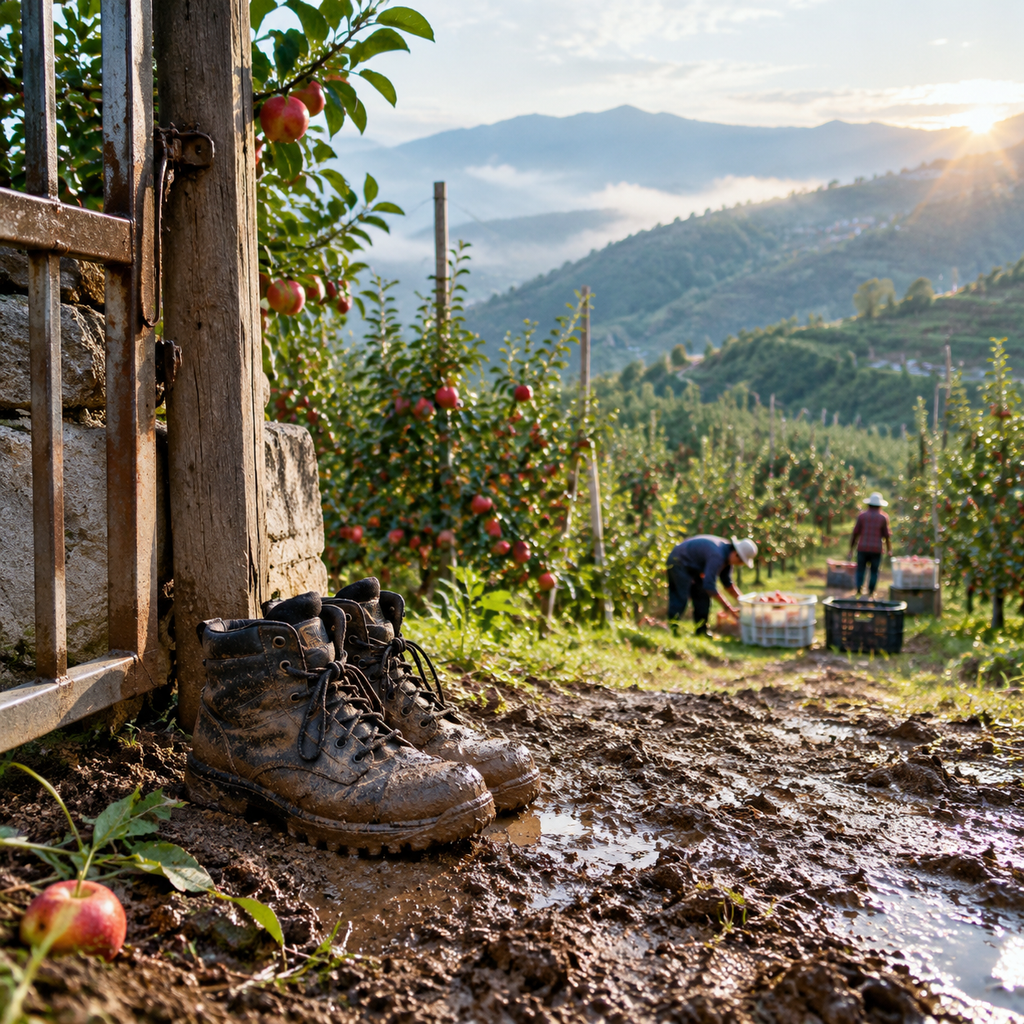
Weather changes the weight of muddy shoes directly. After a dry spell, the surface may harden and less soil sticks to the sole; after rain, hollows can hold water and slopes may become slippery. On an overcast day, the light is gentle, but the layers beneath the trees are not necessarily easier to read. When mist arrives, distant ridges and nearby branches seem compressed into pale gray. The observer sees a worker test the ground before shifting weight forward. That caution is not performed for visitors; it is bodily knowledge formed through years of walking on the land.
昭通的高原山地气候让一天之内的体感变化值得重视。早晨出发时,外套可能仍然必要;走上坡路或在果树间搬运之后,身体又会发热。午后的日照、云层和风向变化,都会影响停留方式。旅行者不应只按照城市天气预报准备一件单薄衣服,也不宜把防晒、饮水和防滑当作可有可无的小事。果园不是平整的公园步道,鞋子要能够应对泥土、碎石和落叶,衣物也最好方便活动。
Zhaotong’s highland and mountain climate makes changes in comfort over a single day important to notice. A jacket may still be needed at departure in the morning, while walking uphill or carrying items among the trees can make the body warm. Afternoon sunlight, clouds, and wind may all change how long one can comfortably remain outside. Travelers should not prepare only a thin layer based on an urban forecast, and sun protection, water, and stable footwear should not be treated as optional details. An orchard is not a level park path; shoes must handle soil, stones, and leaves, while clothing should allow movement.
果园里的交流往往从一个很具体的问题开始:这段路能不能走,筐子放在哪里,今天是否适合参观,拍照会不会影响手上的活。村民或店主未必有时间进行完整讲解,他们的回答也可能随着当日工作安排而变化。旅行者应当先说明来意,再等待对方表示方便,不要把正在忙碌的人当作随时可供采访的对象。若对方只给出简短回应,也应接受这种边界。尊重不是把交流包装得热闹,而是承认别人有自己的时间表。
Conversations at an orchard often begin with practical questions: whether a path is passable, where a crate should be placed, whether visitors are welcome that day, or whether photography would interrupt the work. Villagers and shopkeepers may not have time for a full explanation, and their answers can change with the day’s schedule. A traveler should explain the purpose first and wait for a sign that the other person is available. Someone who is busy should not be treated as an interview subject on demand. If the response is brief, that boundary should be accepted. Respect is not making an exchange sound lively; it is recognizing that other people have their own timetable.
在村口的小店或路边摊前,旅行者同样需要放慢判断。店主可能正在整理货物、照看家人或处理订单,招呼客人并不意味着可以随意进入后场。若想了解苹果如何从果园来到店里,可以询问大致流程,但不应要求对方透露未公开的经营信息,也不要把没有确认过的说法写成确定事实。没有必要为了文章效果制造一段漂亮对话。真实的交流有时只是点头、指路、提醒路滑,或者一句“先放这里”,它们已经足以让人理解场景中的秩序。
At a village shop or roadside stall, a traveler also needs to slow down the impulse to interpret. The shopkeeper may be sorting goods, caring for family, or handling an order, and greeting a customer does not mean that the visitor may enter the back area. A traveler can ask about the general process by which apples move from orchard to shop, but should not demand private business information or turn an unconfirmed claim into a fact. There is no need to invent an elegant dialogue for an article. Real exchanges may consist only of a nod, directions, a warning about slippery ground, or a request to place something in a certain spot. Such small moments already reveal the order of the place.
泥鞋让城市与乡村之间的差异变得具体。城市里的鞋底通常只接触地砖、柏油和室内地面,鞋面沾灰便容易被看作需要清理的痕迹;果园里的鞋则不断接触潮土、枯叶、石块和草茎。它不再只是穿着的一部分,还参与判断地面、保持平衡和完成搬运。观察者低头看鞋时,看到的不是一件纪念品,而是身体与环境发生关系的方式。泥干了会结块,走路时边缘会掉落,回到城市后仍可能在车厢脚垫上留下细小颗粒。
Muddy shoes make the difference between city and countryside tangible. In the city, soles usually meet pavement, asphalt, and indoor floors; a dusty shoe is often seen as something to clean. In an orchard, footwear repeatedly meets wet soil, dry leaves, stones, and grass stems. It becomes more than part of one’s clothing: it helps read the ground, maintain balance, and carry out physical work. When the observer looks down, the shoe is not a souvenir but evidence of how the body relates to its surroundings. As the mud dries, it hardens and flakes away with each step, sometimes leaving grains on the vehicle’s floor mat after the return to town.
采摘并不等同于“摘得越快越好”。速度要服从果实状态、枝条承受力、筐子的容量和人员之间的配合。有人负责从树上取下,有人负责接住或归置,也有人在通道边保持工具和容器可用。不同果园的分工方式可能不同,外来者不应仅凭短暂观看推断全部生产流程。更值得注意的是节奏:手伸出的距离、转身的角度、筐子被放下的位置,以及每隔一段时间对腰背和肩膀的调整,共同构成了劳动的连续性。
Picking does not mean that faster is always better. Speed must follow the condition of the fruit, the strength of the branch, the capacity of the crate, and coordination among people. One person may remove fruit from the tree, another receive or arrange it, while someone else keeps tools and containers ready beside the path. Work is organized differently from orchard to orchard, so an outsider should not infer an entire production system from a brief visit. What deserves attention is the rhythm: the reach of the hand, the angle of the turn, the place where a crate is set down, and the periodic adjustments of the back and shoulders.
分拣台附近的声音与树下不同。树叶摩擦、脚步和风声被更近的碰触声取代,筐子挪动时发出低沉的响动,纸箱或其他包装材料在手中发出窸窣声。观察者可以从这些声音判断工作是否紧张,却不能仅凭声音判断产量或收益。关于收入、成本、销量和市场流向,若没有可靠资料,就应保持克制。旅行文章可以记录劳动的可见部分,也可以说明哪些内容无法从现场确认。少写一个未经证实的数字,通常比写出一个看似完整却不可靠的故事更负责。
The sounds near a sorting table differ from those beneath the trees. Leaf friction, footsteps, and wind give way to closer sounds of handling: crates being moved, cardboard or other packing materials rustling, and fruit touching a surface. An observer may sense whether the work is tense from these sounds, but cannot estimate output or earnings from them. Claims about income, costs, sales, or market routes require reliable sources. A travel article can record what is visible and state what cannot be confirmed on site. Leaving out an unverified number is usually more responsible than adding a complete-looking but unreliable story.
季节性观察也意味着接受“空园”或“未到时节”。如果某次到访没有遇到集中采摘,并不代表果园没有劳动,只是劳动转移到了修整、管理、清理和准备等不显眼的环节。树上没有果实的画面也有信息:它提醒人们,旅行者看到的只是生产周期中的一个截面。把果园写成永远挂满果实、随时可以采摘的景点,会抹去农业需要等待、判断和重复照料的事实。真正的季节感不靠夸张,而靠承认变化。
Seasonal observation also means accepting an empty orchard or a visit outside the main harvest period. Not seeing concentrated picking does not mean that the orchard has no work; labor may have shifted to pruning, care, clearing, or preparation, all less conspicuous tasks. A tree without fruit still carries information: it reminds visitors that they are seeing only one section of a production cycle. Describing an orchard as permanently full of fruit and ready for tourists erases agriculture’s dependence on waiting, judgment, and repeated care. A real sense of season comes not from exaggeration but from acknowledging change.
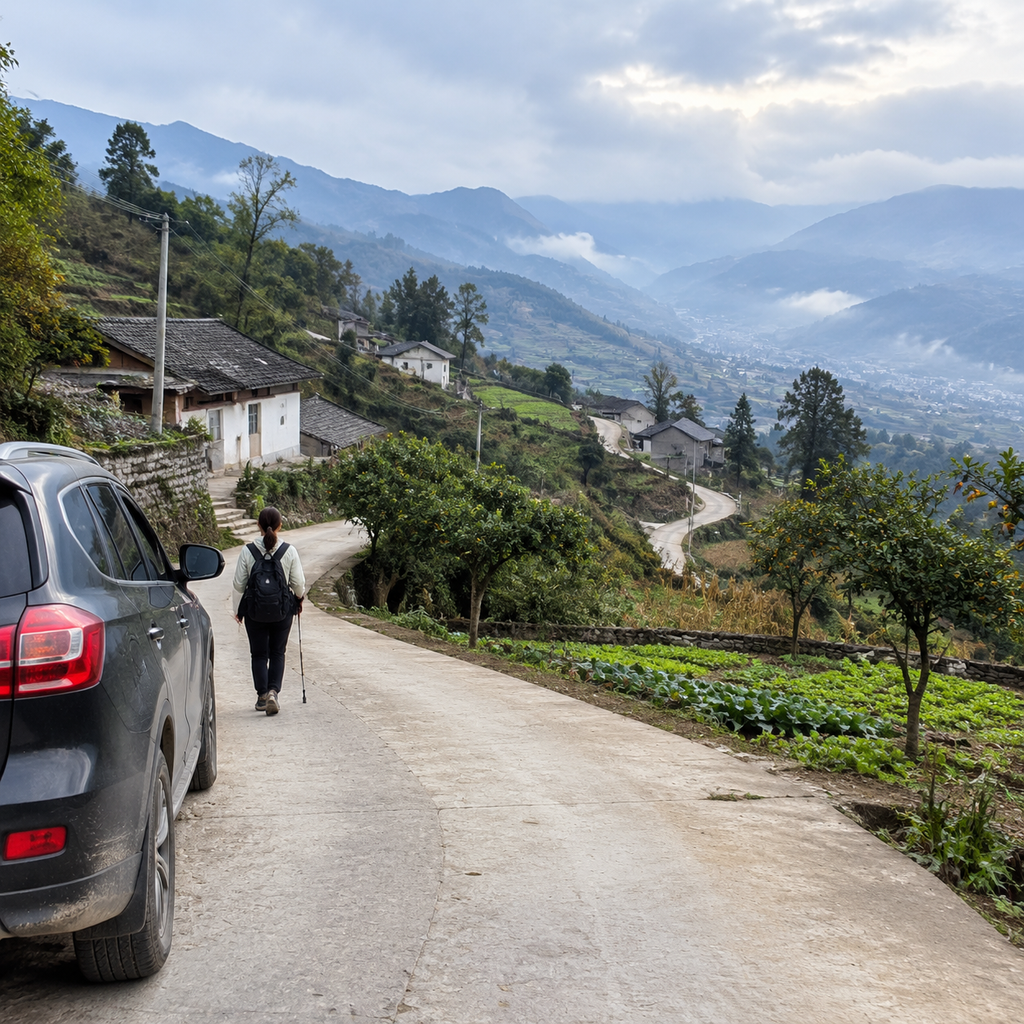
在果园里拍照时,镜头最好先对准环境,再考虑人物。若要拍摄正在工作的村民,应先征得同意;儿童、老人和正在处理私人事务的人尤其不宜被突然近距离拍摄。不要为了取得泥鞋特写而要求别人重复动作,也不要踩进刚整理好的地面或触碰尚未允许接近的果实。手机屏幕上的一张照片可能只占几秒,劳动者却可能要为一个动作承担腰背、手腕和脚下稳定性的压力。旅行礼貌的核心,是不让记录行为增加他人的负担。
When taking photographs in an orchard, it is better to frame the environment before focusing on individuals. Anyone who is working should be asked for permission, and children, older people, or those handling private matters should not be photographed at close range without consent. A visitor should not ask someone to repeat a movement just to obtain a close-up of muddy shoes, nor step onto freshly arranged ground or touch fruit before being invited. A photo may take only seconds on a phone, while the worker may bear the physical strain of the movement in the back, wrist, and feet. The heart of travel etiquette is avoiding extra burden through the act of recording.
如果需要进入果园内部,先确认边界和可走区域。某些地方可能有沟渠、陡坡、农具或正在搬运的物品,游客应按照现场指引行走,不要擅自穿越行列。雨后尤其要避开看似平整却容易下陷的地方。同行者若鞋底沾泥,可以在指定位置清理,不能把泥直接带进店铺、车辆或住宅。垃圾要随身带走,果皮、包装和纸巾不能留在树下。看起来微小的行为,都会在一个生产空间里留下后果。
If visitors are allowed inside, they should first confirm the boundaries and paths that are open. Ditches, steep slopes, tools, and moving loads may be present, so guests should follow local directions rather than crossing work lines. After rain, ground that looks level may still give way. If a visitor’s shoes become muddy, they should be cleaned in an appropriate place instead of bringing soil into a shop, vehicle, or home. Rubbish should leave with the visitor; peels, packaging, and tissues do not belong beneath the trees. Small actions still have consequences in a working environment.
从城市到果园的路,也是一条由消费回溯生产的路。城市里看到的是摆在货架上的整洁果实,乡村里看到的是道路、坡地、筐子、分拣台和人的动作。两者之间没有一条简单的直线,中间还包含天气、运输、储存、销售和家庭安排。观察者站在泥地里,很难把所有环节一次看全,但可以从一双鞋开始,承认食物并不是凭空出现在城市里的。这样的观察不需要把乡村浪漫化,也不需要把劳动写成苦难表演。
The route from city to orchard also traces consumption back toward production. In the city, people see clean fruit arranged on shelves; in the countryside, they see roads, slopes, crates, sorting tables, and human movement. Between the two lies no simple straight line, but weather, transport, storage, sales, and family schedules. Standing in the mud, an observer cannot see every link at once, yet can begin with a pair of shoes and recognize that food does not appear in the city by itself. Such observation does not require romanticizing the countryside or turning work into a spectacle of hardship.
店主或村民的几句提醒,常常比旅游宣传中的完整介绍更接近现场。也许提醒来自哪一边绕行,也许是告诉来访者不要把筐子放在通道中央,也许只是建议等雨小一些再下坡。这类交流没有固定脚本,也不适合被扩写成虚构故事。记录者可以转述信息的性质,却应避免捏造原话、身份、年龄和经营背景。能确认的写清楚,不能确认的留白,文章反而更有可信度。
A few practical reminders from a shopkeeper or villager may be closer to the truth of a place than a complete promotional introduction. Someone may point out which side of a path to use, ask that a crate not block the passage, or suggest waiting for lighter rain before walking downhill. Such exchanges have no fixed script and should not be expanded into invented stories. A writer may describe the kind of information received while avoiding fabricated quotations, ages, identities, or business backgrounds. Stating what is known and leaving uncertain details open makes the account more trustworthy.
泥鞋在回程时已经不再像刚进园时那样湿亮。风吹过之后,鞋边的泥开始发浅,几块松动的土随着脚步落在路面上。同行者回到较平整的道路,走路方式又发生变化,脚步不必一直寻找树根和坑洼。车门关上,果园的气味和潮湿空气被留在车外,但鞋仍把一点乡土带进了城市方向。它没有把乡村完整搬走,只保留了一段可见的接触痕迹。
By the time of the return journey, the mud on the shoes no longer looks as wet and dark as it did at the entrance. After the wind passes, the edges turn pale, and loose clumps fall onto the road with each step. On the smoother surface, the traveler’s gait changes again; there is no longer a need to search constantly for roots and hollows. Once the vehicle door closes, the orchard’s damp air and scent remain outside, but the shoes carry a small trace of soil toward the city. They do not bring the countryside back in full, only a visible mark of contact.
昭通苹果园带给旅行者的观察重点,最终不在于找到一个可以复制的“打卡动作”,而在于学会看见节奏。弯腰有它的频率,搬筐有它的路线,分拣有它的停顿,雨水有它改变地面的方式,村民和店主也有不被打扰的时段。城市来客如果愿意把步子放慢,先问再拍、先看再走,就能在短暂停留中减少误解。果园不必为游客改变自身秩序,游客也不必把每个瞬间变成消费内容。
The most valuable thing to observe in a Zhaotong apple orchard is not a repeatable check-in gesture but the rhythm of work. Bending has its frequency, crate carrying has its route, sorting has its pauses, rain has its way of changing the ground, and villagers and shopkeepers have periods when they should not be interrupted. When city visitors slow down, ask before photographing, and look before walking, they can reduce misunderstanding even during a short stay. An orchard does not need to alter its order for tourists, and tourists do not need to turn every moment into consumable content.
那双鞋离开果园后仍然提醒人们,旅行不是从抵达景点的那一刻才开始,也不是拍完照片便结束。路线选择、天气准备、对陌生劳动空间的判断、与当地人的交流方式,以及离开时是否把垃圾带走,都属于旅程的一部分。昭通的山路把城市和乡村连接起来,苹果园则把季节与身体连接起来。泥附着在鞋面上,劳动的痕迹因此变得可见;而真正需要带走的,不是对乡村的想象,而是对土地、时间和他人边界更准确的理解。
That pair of shoes continues to suggest that travel begins before reaching a destination and does not end when the camera is put away. Route planning, preparation for weather, judgment inside an unfamiliar working space, the way one speaks with local people, and taking rubbish away all belong to the journey. Zhaotong’s mountain roads connect city and countryside, while the orchard connects seasons with the body. Mud makes labor visible on the shoe, but what should truly be carried away is not an imagined countryside. It is a more accurate understanding of land, time, and other people’s boundaries.
清晨进园时,最先需要适应的不是果树,而是脚下的尺度。城市人走路常凭着一条平直的线,视线放在前方,脚步由地砖的缝隙和路缘控制;到了坡地,落脚点变成一块块不完全相同的土面。鞋尖碰到湿泥时,不能只想着跨过去,还要判断下一步是否会滑、鞋底是否会被吸住、身后的同行者有没有足够空间。果园里的慢,并非为了制造悠闲气氛,而是为了让身体及时回应地面的变化。
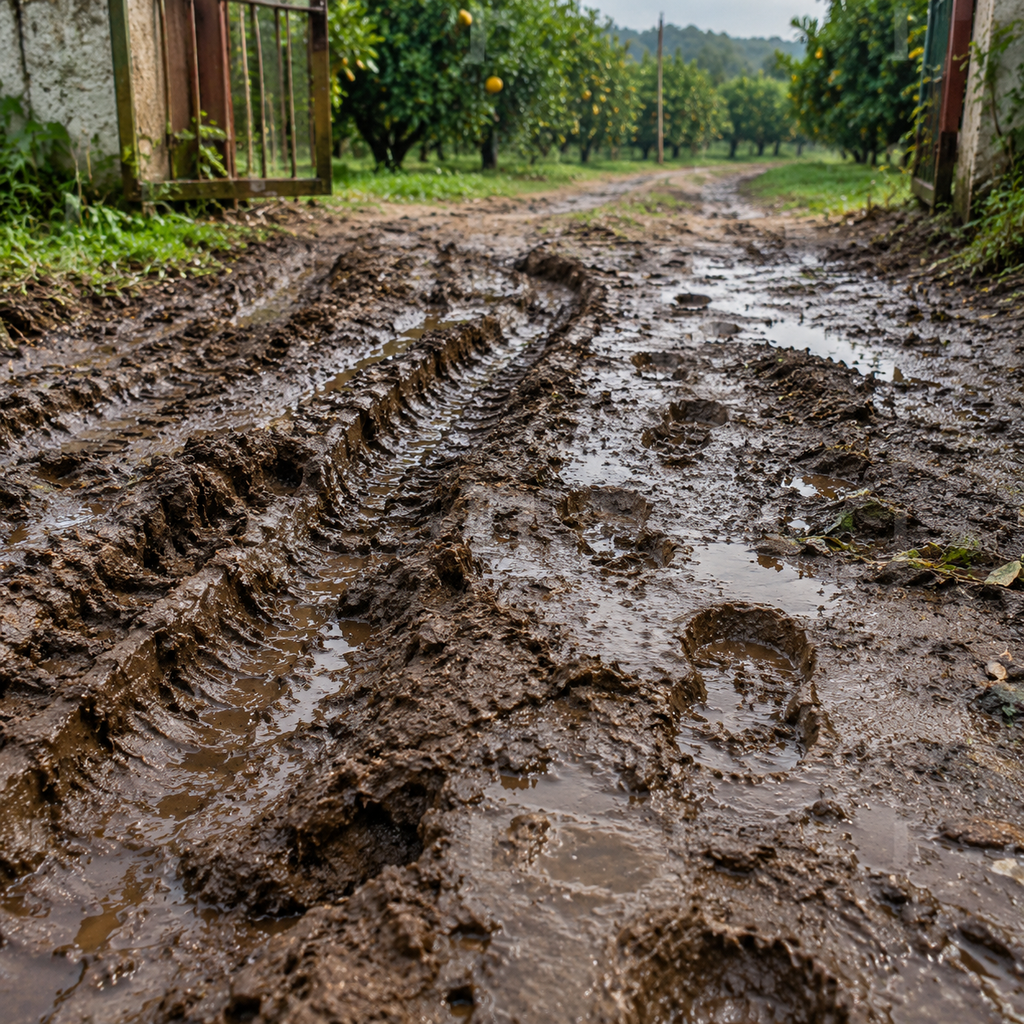
Entering the orchard in the morning requires adapting first to the scale of the ground rather than to the trees. In the city, people often walk along a straight line with their eyes ahead, guided by pavement joints and curbs. On a slope, each landing place is a slightly different patch of soil. When the toe meets damp mud, the question is not merely how to step over it, but whether the next step will slip, whether the sole will be held by the soil, and whether the person behind has enough room. The slower pace is not staged leisure; it allows the body to respond to changing ground.
我注意到,熟悉果园的人很少把注意力全部放在一件事上。他们一边看枝头,一边留意脚边;手上拿着工具时,还会用余光观察通道里有没有人推筐经过。外来者如果只盯着树上的果子,很容易在弯腰起身时碰到枝条,或者把脚放在刚被踩松的边缘。跟随当地人的走法,不意味着模仿每个动作,而是先学会把视线分给三个方向:眼前的树、脚下的土,以及周围正在移动的人。
I noticed that people familiar with the orchard rarely give their full attention to one thing. They watch the branches while also reading the ground, and even when holding a tool they use peripheral vision to notice a crate moving through the passage. A visitor who looks only at the fruit may strike a branch while standing up or place a foot on loosened soil. Following local movement does not mean copying every gesture. It means learning to divide attention among three directions: the tree ahead, the soil below, and people moving nearby.
苹果树下的空间并不宽裕,尤其在枝条低垂、地面有落叶的时候。采摘者需要把身体转成一个较小的角度,避免衣袖勾住枝杈;拿筐的人则要提前把容器放到不妨碍下一步的位置。果实从枝头到筐中,往往经过看、扶、取、放几个短动作,任何一步太急,都可能增加碰撞。旅行者站在旁边观察时,最好不要突然横穿通道,也不要把手伸到别人正在工作的范围内。空间礼貌首先是给动作留路。
The space beneath an apple tree is not always generous, especially when branches hang low and leaves cover the ground. A picker turns the body into a compact angle so sleeves do not catch on twigs; the person carrying a crate places it ahead of time where it will not obstruct the next movement. From branch to crate, the fruit may pass through several brief actions—look, support, remove, and place—and rushing any one of them can increase contact and bruising. Visitors should avoid crossing a working passage without warning or reaching into someone else’s area. Spatial courtesy begins by leaving room for movement.
采摘时的“轻”并不是手指越用力越小,而是让力量集中在必要的位置。手掌如果包得太紧,容易把果面压出痕迹;如果只用指尖拉扯,又可能让枝条跟着晃动。熟练的动作常常短而稳,取下后立即把果实放进合适的位置,不让它在筐里反复滚动。旁观者未必能从远处看清技术细节,但可以留意动作是否有停顿、是否避开相邻果实,以及取果之后枝头有没有被大幅扯动。这些观察比追问“最快能摘多少”更接近劳动本身。
The gentleness of picking does not mean simply using less force everywhere. It means concentrating force only where it is needed. A hand wrapped too tightly around the fruit may mark its surface, while pulling with only the fingertips may make the branch swing. Skilled movement is often short and steady: once removed, the fruit is placed where it belongs instead of rolling repeatedly inside the crate. A distant visitor may not see every technical detail, but can watch for pauses, for care around neighboring fruit, and for whether the branch is pulled sharply. Those observations are closer to the work than asking how many pieces can be picked fastest.
果园劳动还包含许多不容易被照片留下的准备。筐子是否干净、通道有没有障碍、临时放置的物品会不会被雨淋,都是现场判断的一部分。有人把工具靠在树旁,但位置不能妨碍转身;有人先清理一小块地面,方便弯腰时保持平衡。旅行者若想帮忙,不应直接拿起工具或移动物品,而应先询问是否需要协助、可以做什么。未经允许的热心可能打乱分工,真正合适的帮助反而是让开通道、扶稳自己,或者按要求搬动一件明确交付的东西。
Orchard work also includes preparations that photographs rarely capture. Whether crates are clean, paths are clear, and temporarily placed objects will remain protected from rain are all part of on-site judgment. A tool may be leaned against a tree, but not where it blocks a turn; a worker may clear a small patch of ground to create a stable place for bending. If a visitor wants to help, they should not pick up tools or move objects without permission. Unasked-for enthusiasm can disrupt the division of labor. Appropriate help may simply mean clearing a passage, keeping one’s balance, or moving one clearly assigned item.
在不同天气下,果园的颜色和声音会一起变化。晴朗时,叶片边缘容易被光线勾亮,筐里的果实表面也更容易显出细小的擦痕;云层压低时,颜色显得沉静,湿土和树皮的差别却更依赖近距离观察。雨点落在叶面上,先是零碎的沙沙声,随后可能变成连续的声响,人的说话和脚步安排也要随之调整。天气不是背景幕布,它会改变可见度、脚感、劳动速度和游客是否适合继续停留。
Under different weather, the orchard’s colors and sounds change together. In bright weather, leaf edges catch the light and small scuffs on fruit are easier to see; beneath low clouds, colors become subdued and the difference between wet soil and bark requires closer attention. Raindrops begin as scattered rustling on leaves and may grow into a continuous sound, requiring people to adjust how they speak and move. Weather is not a backdrop. It changes visibility, footing, work speed, and whether it is sensible for visitors to remain.
雾气浓时,旅行者容易产生一种错觉,以为远景消失就意味着眼前更安全。实际上,雾会让坡度、沟渠和枝条的边界变得不清楚,湿气也可能让鞋底更快沾上细土。此时应减少拍摄和四处走动,把路线缩短到已经确认的区域;如果现场人员建议暂缓,就不要为了赶进度坚持下坡。看不清并不等于没有风险,放弃一个远处的取景点,常常比在陌生地面上冒险更值得。
Thick mist can create the illusion that the nearby ground is safer because the distant view has disappeared. In fact, fog blurs the edges of slopes, ditches, and branches, while moisture may make fine soil cling to shoes more quickly. In such conditions, visitors should take fewer photographs, limit movement to confirmed areas, and accept a local suggestion to pause rather than insist on descending to keep a schedule. Poor visibility does not mean no danger. Giving up a distant viewpoint is often wiser than taking risks on unfamiliar ground.
从昭通城区出发前,路线准备不宜只写一个大地名。应当确认接送点、预计下车处、最后一段是否需要步行,并把这些信息告诉同行者。山地道路可能因降雨、维修或临时安排出现变化,导航显示的时间也不代表实际体感。手机电量不足时,地图截图、联系人号码和返程集合方式都应提前留存。若由熟悉当地道路的人带路,旅行者可以在出发前再次复述关键地点,避免因为发音、方言或信号问题产生误会。
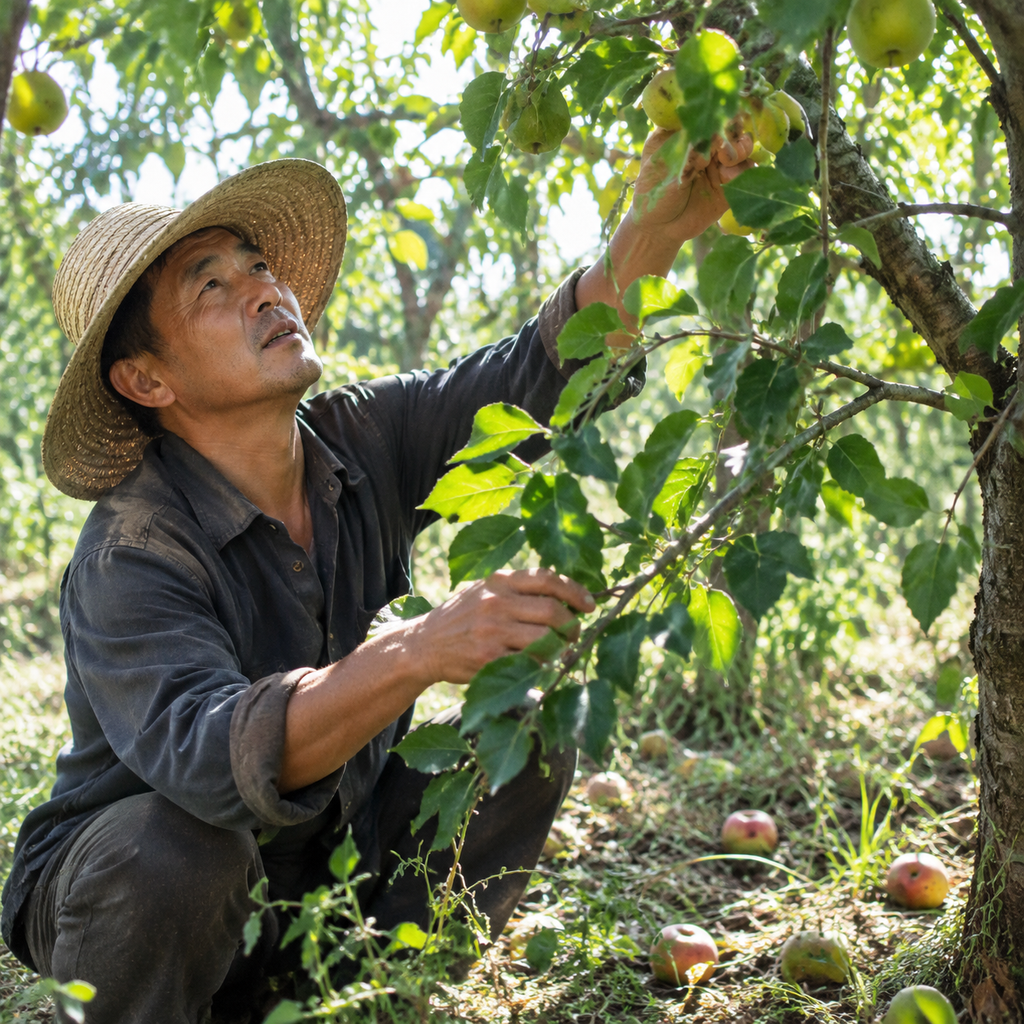
Before leaving Zhaotong’s urban area, route preparation should include more than a broad place name. Confirm the meeting point, likely drop-off location, whether the final stretch requires walking, and share those details with companions. Mountain roads can change because of rain, maintenance, or temporary arrangements, and a navigation estimate does not equal the journey’s physical feel. If the phone battery is low, save a map screenshot, contact numbers, and the plan for meeting again on the return. When guided by someone familiar with the roads, repeat the key locations before departure to reduce misunderstandings caused by pronunciation, dialect, or weak signal.
城市到乡村的转换,往往不是一下子完成的。先是建筑变得稀疏,接着路边出现更长的田地和坡面,车辆速度因弯道而降低,最后才进入需要下车步行的范围。这个过程可以让旅行者提前调整期待:这里的“到达”不一定对应一个门票口或醒目的招牌,而可能是路边的一段可通行地面、一个需要确认的院门,或一位正在忙碌的人指出的方向。不要因为入口不够像景区,就把生产空间误认为管理混乱。
The transition from city to countryside rarely happens all at once. Buildings first become less dense, then longer fields and slopes appear beside the road; vehicles slow around bends, and only later does the route reach a point where the final approach must be walked. This gradual change helps visitors adjust expectations. Arrival may not mean a ticket gate or a prominent sign. It may be a passable roadside stretch, a courtyard entrance that must be confirmed, or a direction indicated by someone busy with work. A production space should not be mistaken for disorder simply because it does not resemble a tourist attraction.
果园里的分拣需要把“好看”与“适合下一步处理”区分开。游客常先注意大小是否整齐、表面是否光亮,工作人员还要考虑是否有碰伤、裂口、压痕或其他需要另行放置的情况。具体标准会因经营安排而不同,不能凭一次观看替所有果园下结论。手指轻轻转动果实时,既是在看表面,也是为了确认拿取和摆放的方式。分拣台不是展示柜,它服务于后续保存、运输或销售的实际需要。
Sorting requires distinguishing between looking attractive and being suitable for the next stage of handling. Visitors may first notice uniform size or a bright surface, while workers also consider bruises, splits, pressure marks, or other reasons to place fruit separately. Standards vary with each operation, so one brief observation should not be generalized to every orchard. When a sorter gently turns a fruit, the gesture examines the surface and also determines how it can be handled and placed. A sorting table is not a display case; it serves practical needs of storage, transport, or sale.
如果有孩子同行,果园会提供很多自然的观察问题,但成人不必把它变成一堂强行安排的课。可以让孩子找出三种脚下材质,比较干叶和湿泥的声音,观察采摘者怎样避免碰到枝条,再请孩子用自己的话说出看到的顺序。孩子若想摸果实、追着拍人或跑向坡边,应先解释边界而不是只说“不可以”。把“先问、慢走、不碰工具、离开时带走垃圾”做成可以模仿的动作,远比空泛提醒更容易记住。
With children, an orchard offers many natural questions, but adults do not need to turn it into a forced lesson. A child can identify three kinds of ground, compare the sound of dry leaves with wet mud, watch how a picker avoids branches, and explain the order of what was seen. If the child wants to touch fruit, chase a photograph of a worker, or run toward a slope, explain the boundary instead of only saying no. Making “ask first, walk slowly, do not touch tools, and take rubbish away” into visible actions is easier to remember than abstract warnings.
和村民交流时,语言越简单越好,问题越具体越容易得到回应。与其连续追问整个产业链,不如先问当天是否方便参观,再问眼前这个环节大概在做什么。如果对方正在弯腰、搬筐或接电话,等候本身就是礼貌的一部分。旅行者还应注意对方使用的称呼和语气,不随意把陌生人称为某种身份,也不把普通寒暄扩写成亲密关系。交流结束时,道谢、让路和不继续追问,都是清楚的结束信号。
When speaking with villagers, simple language and specific questions are more likely to receive a response. Instead of asking about an entire industry chain, first ask whether a visit is convenient, then ask what the visible task generally involves. If the person is bending, carrying a crate, or taking a call, waiting is itself a form of courtesy. Travelers should also pay attention to forms of address and tone, rather than assigning strangers an identity or turning a brief greeting into an intimate relationship. Saying thank you, moving aside, and not continuing to press for details provide a clear ending to the exchange.
店铺里的苹果与树上的苹果处在不同环节,外观相似并不说明它们经历了同样的路线。店主可能只负责售卖,也可能同时处理包装、接货或其他事务,但这些职责需要由对方确认,不能凭店面布置推断。若想购买或品尝,应先了解现场允许的方式,不随手拿取,不打开包装,不把拍摄镜头伸到柜台内侧。涉及商品时,文章可以写观察到的摆放、触感和交流方式,却不应自行补充价格、销量或营业时间。
Apples in a shop and apples on a tree belong to different stages, and a similar appearance does not prove that they followed the same route. A shopkeeper may only sell goods or may also handle packing, receiving, and other tasks, but those roles should be confirmed rather than inferred from the shop’s arrangement. If a visitor wants to buy or taste something, they should first learn what is allowed, avoid taking items without permission, opening packages, or pointing a camera behind the counter. An article can describe visible placement, texture, and the manner of exchange, but should not invent prices, sales figures, or opening hours.
泥鞋也会改变旅行者对“干净”的理解。离开泥地以后,鞋面上的土当然需要清理,但清理并不等于否定刚才的劳动环境。可以在不影响他人的地方轻轻跺掉松土,或用纸袋收好沾泥物,不要把鞋底用力蹭在店门、墙面或住宅台阶上。若乘车回城,先查看脚下是否带入泥块;若进入室内,按照主人或店员的安排处理鞋子。清洁动作既是卫生要求,也是对共享空间的照顾。
Muddy shoes also change how a traveler understands cleanliness. The soil should of course be removed after leaving the orchard, but cleaning does not deny the working environment just experienced. In a place that does not disturb others, loose soil can be gently shaken off, or muddy items can be contained in a paper bag; soles should not be scraped forcefully against a shop entrance, wall, or residential step. Before riding back to town, check whether clumps have fallen onto the floor. Indoors, follow the host’s or shopkeeper’s arrangement. Cleaning is both a hygiene practice and care for shared space.
季节观察最有意思的地方,在于同一棵树可能在不同月份呈现完全不同的任务重点。没有采摘声时,可能有人在看枝条、清理地面或准备容器;有果实挂在树上时,也不代表所有果实都适合同时取下。游客可以把注意力放在“此刻人们为什么这样做”上,而不是急着为眼前画面贴上丰收或萧条的标签。农业现场允许不确定性存在,旅行文字也应保留这种不确定性,不用一句漂亮判断抹平季节的差别。
The most interesting part of seasonal observation is that the same tree may carry completely different tasks from one month to another. When there is no sound of picking, people may be examining branches, clearing the ground, or preparing containers; when fruit hangs from the tree, it does not mean that every piece should be removed at once. Visitors can focus on why people are doing what they are doing instead of quickly labeling the view as abundance or hardship. Agricultural spaces contain uncertainty, and travel writing should preserve it rather than flatten seasonal differences with a polished judgment.
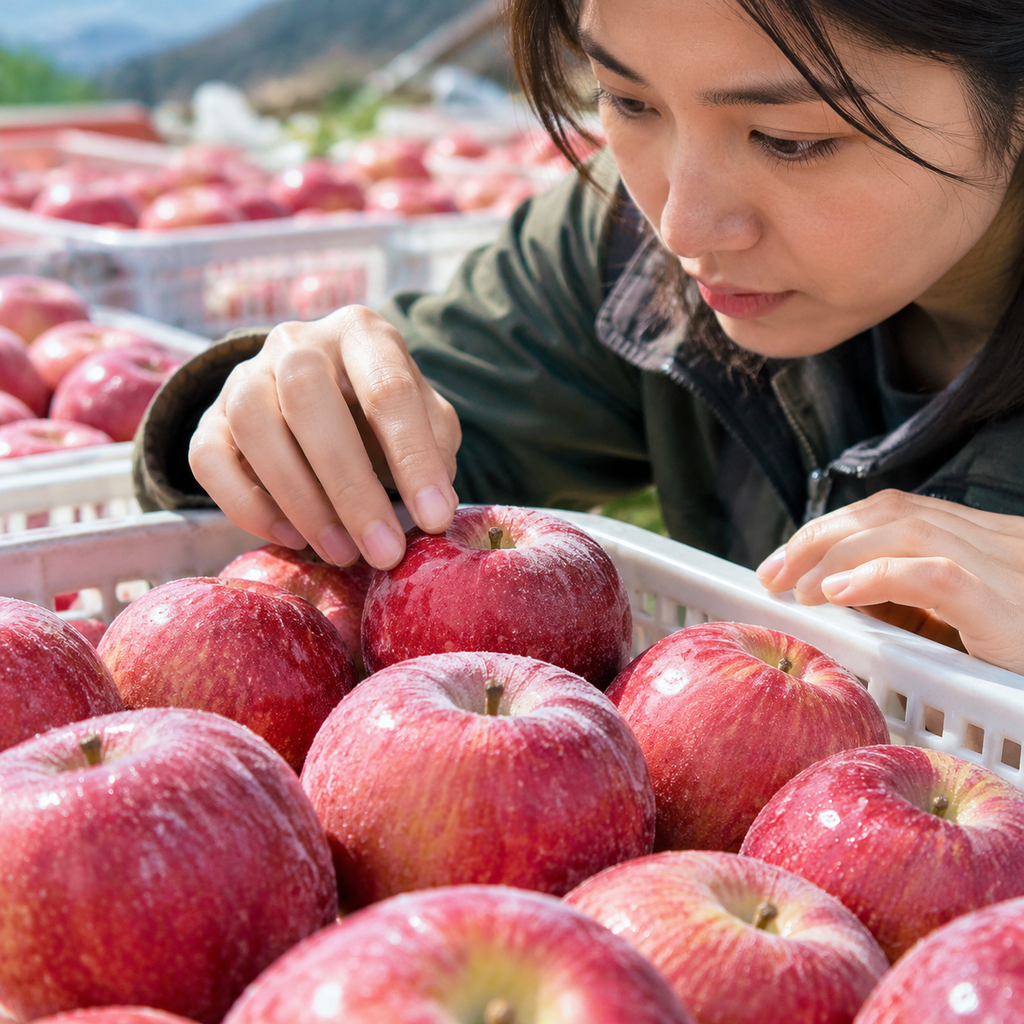
站在分拣台旁边时,我会先看手的方向,再看果实的去向。一个人把果实从筐里移到桌面,另一个人可能只需扫一眼就决定放在左侧还是右侧;如果容器快满,摆放方式又会改变。这里的协作不一定靠长篇交谈,很多时候是位置、眼神和短暂停顿在传递信息。游客若要拍摄,应站在不挡光的位置,拍完立即退开,不把“等待一个更好的角度”变成别人必须配合的额外时间。
Beside a sorting table, I tend to watch the direction of hands before following the fruit. One person moves fruit from a crate to the table, while another may need only a glance to decide whether it belongs on the left or right; when a container nears capacity, the arrangement changes again. Cooperation does not always depend on extended conversation. Position, eye contact, and brief pauses can carry the information. A visitor taking photographs should stand where the light is not blocked and step away after the shot, rather than turning the search for a better angle into extra time that others must accommodate.
如果路面突然变湿,原先的参观计划就应当重新排序。先完成需要在较安全区域观察的内容,再决定是否靠近坡地;把远处取景、长距离步行和搬运体验放到可以确认安全的时候。不要因为已经从城市赶来,就认为必须把每个角落都走完。旅行安排可以有弹性,果园的工作却不能为了游客暂停。愿意删掉一段路线,反而能让剩下的观察更专注,也减少对现场秩序的干扰。
If the ground suddenly becomes wet, the visit should be reordered. Complete observations in safer areas first, then decide whether the slope can be approached; reserve distant views, long walks, and any carrying activity for a time when conditions are clear. Having traveled from the city does not mean every corner must be covered. An itinerary can be flexible, while orchard work cannot necessarily pause for visitors. Removing one stretch of route can make the remaining observation more focused and reduce interference with the working order.
回到道路较平的地方,身体会立刻感到差异:脚踝不再持续寻找支点,肩膀也不必随着每个坡度调整。这个变化让人意识到,果园里的劳动强度不只来自搬运重量,还来自长时间保持平衡、反复弯腰和在狭窄空间转身。旅行者短暂体验几步,不能宣称已经理解劳动者的一整天;能够做的,是把自己的体力边界说清楚,不逞强,不让同伴或现场人员为自己的冒险收拾残局。
Once the path becomes level again, the body notices the difference immediately: the ankles no longer search constantly for support, and the shoulders no longer adjust to every change in slope. The contrast reveals that orchard work is demanding not only because of weight, but also because of prolonged balance, repeated bending, and turning in narrow spaces. A visitor who tries a few steps cannot claim to understand a worker’s full day. What they can do is recognize their own limits, avoid showing off, and prevent companions or local workers from dealing with the consequences of a risky choice.
天气预报可以帮助准备衣物,却不能代替现场判断。出发前查看降雨和温度趋势,抵达后还要看路面、云层和风,听取当天在地面上工作的人怎么安排。若预报与眼前状况不一致,应以安全和现场指引为先。带上一层容易穿脱的衣物、可封存手机的袋子和饮水,都是低成本的准备;至于具体是否需要继续停留,则应根据当日条件,不用为了完成一篇游记而勉强。
A weather forecast helps with clothing but cannot replace judgment on the ground. Check rainfall and temperature trends before departure, then inspect the surface, clouds, and wind after arrival and listen to the people working there that day. If the forecast and conditions disagree, safety and local guidance come first. A removable layer, a bag that protects the phone, and drinking water are modest preparations. Whether to stay longer should depend on the day’s conditions, not on forcing an experience to complete a travel article.
从村道返回城区时,同行者往往重新谈起刚才没有拍到的画面:某个低头分拣的姿势、鞋边掉落的泥块、雨来之前突然加快的收拾动作。这些回忆不需要被写成确定的宏大意义,它们更像一串具体线索,让人重新理解食物、天气和身体之间的联系。若要把观察分享给别人,最好说明哪些是亲眼看到的,哪些只是合理推测,哪些还需要向当地经营者或公开资料核实。
On the road back to the urban area, companions often mention images they failed to photograph: a sorter bending over, a clump of soil dropping from a shoe, or the sudden speed of packing up before rain. These memories do not need to be turned into grand meaning. They are concrete clues that reconnect food, weather, and the body. When sharing the observation, it is better to distinguish what was seen directly, what is only a reasonable inference, and what still needs confirmation from local operators or public sources.
对第一次进入农业生产空间的旅行者来说,最稳妥的顺序可以很朴素:先确认能否进入,再确认能走哪里;先观察劳动,再决定是否拍人;先问清楚能否触碰,再考虑是否参与;离开前检查垃圾、泥土和遗漏物。这个顺序没有把果园变成消费项目,也没有要求游客假装成农人。它只是让来访者在短暂接触中减少冒犯,把注意力放回正在发生的工作。
For a first visit to a working agricultural space, a reliable sequence can remain simple: confirm that entry is allowed, then confirm where walking is permitted; observe the work before deciding whether to photograph people; ask before touching anything or joining in; and check for rubbish, soil, or forgotten belongings before leaving. This sequence does not turn the orchard into a consumer package, nor does it ask visitors to pretend to be farmers. It simply reduces intrusion during a brief encounter and returns attention to the work already taking place.
昭通苹果园的魅力并不只在树上挂着的果实,也在那些常被忽略的过渡处:城市道路结束的地方,鞋底第一次陷入泥里的地方,筐子被放到通道边的地方,分拣者停手看一眼的地方,以及雨后重新选择路线的地方。旅行者若愿意在这些节点停一下,就会发现乡村并不是城市的反面,而是一套有自己的时间、风险和协作方式的生活现场。理解它,需要耐心;尊重它,往往只需要先问一句。
The appeal of a Zhaotong apple orchard lies not only in fruit hanging from the trees, but also in overlooked transitions: where the city road ends, where a sole first sinks into mud, where a crate is placed beside a passage, where a sorter pauses for a glance, and where a route is reconsidered after rain. If travelers pause at these points, they may see that the countryside is not the opposite of the city, but a living environment with its own time, risks, and forms of cooperation. Understanding it takes patience; respecting it often begins with asking one question first.
在果园里等待,也是一种参与方式。若工人正在把一批果实从树下转移到分拣处,游客可以先站到边缘,观察筐子如何避开泥坑,等通道空出来再移动。等待期间不必不断催促,也不必用镜头追着每个人的手。树叶被风吹动,远处车辆偶尔经过,分拣台上的位置一点点腾开,这些间隔本身就是现场节奏。能够忍住“马上要看到更多”的焦急,才不会把自己的时间压力转给别人。
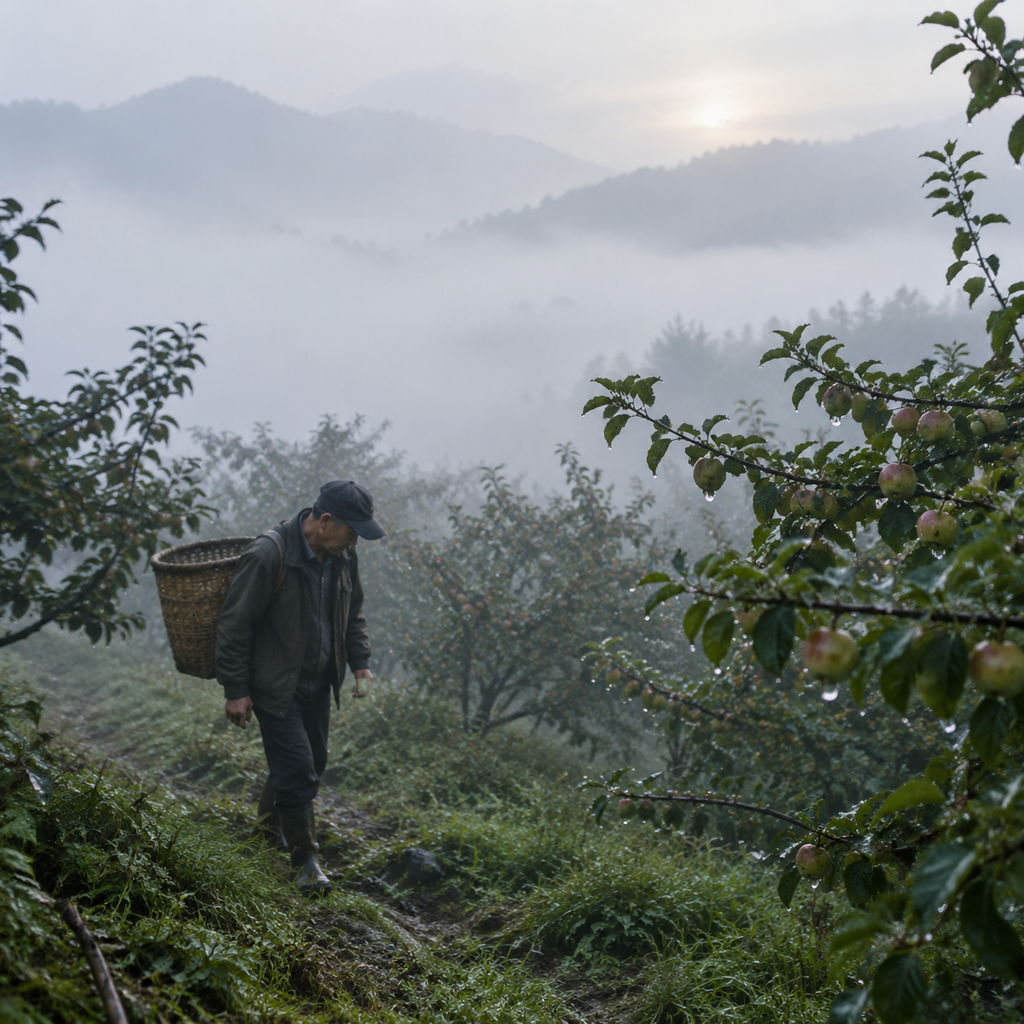
Waiting in an orchard is also a way of participating. If workers are moving a batch of fruit from beneath the trees to a sorting area, visitors can stand at the edge, watch how crates avoid puddles, and move only when the passage is clear. There is no need to keep urging people on or follow every hand with a camera. Leaves move in the wind, a vehicle may pass in the distance, and space on the sorting table gradually opens. These intervals are part of the site’s rhythm. Resisting the urge to see more immediately prevents a visitor’s time pressure from being passed to others.
观察果树时,视线可以从果实慢慢移到枝条、树下和周围的人。这样看,苹果不再是孤立的圆形物体,而是被枝叶托住、被手臂取下、被筐子承接,再经过移动和筛看的一部分。某些果实可能被留在树上,某些落果需要避开,某些枝条需要保持原来的方向。旅行者不需要替工作人员解释每个决定,只要承认这些决定存在,就已经比把果园写成单一的采摘背景更接近现场。
When observing an apple tree, let the eyes move slowly from the fruit to the branches, the ground, and the people nearby. The apple then stops being an isolated round object and becomes part of a sequence: supported by leaves, removed by a hand, received by a crate, moved, and examined. Some fruit may remain on the tree, fallen fruit may need to be avoided, and certain branches may need to stay in position. Travelers do not need to explain every decision for the workers. Recognizing that these decisions exist is already closer to the site than treating the orchard as a single backdrop for picking.
泥鞋的变化还可以帮助判断离开时机。鞋底越来越厚,脚步开始发沉,鞋面上的湿气与风吹后的冷感交替出现,这说明继续在坡地停留的成本正在增加。同行者中若有人明显疲惫、衣物被雨打湿或开始频繁寻找扶手,就应把返回放在拍摄之前。果园不会因为少走一条支路而失去全部内容,反而能让人带着比较清楚的注意力离开。旅行者的安全判断不应由“已经来了”三个字决定。
Changes in muddy shoes can also help determine when to leave. As the sole grows heavier, the steps become slower, and damp fabric alternates with the chill of wind, the cost of remaining on a slope is rising. If a companion is visibly tired, has wet clothing, or begins looking repeatedly for something to hold, returning should come before taking another photograph. An orchard does not lose all its meaning because one path is skipped. Leaving with clearer attention may be better. Safety should not be decided by the words “we have already come this far.”
如果旅行者想把苹果园介绍给没有去过昭通的朋友,最好把路线、季节和礼貌放在同一段说明里。不要只说“那里很适合采摘”,还要说明到乡村后可能需要步行,天气变化会影响泥地,是否能进入或参与要以现场许可为准。这样介绍既不会把农业空间包装成随时开放的游乐设施,也能帮助朋友带上合适的鞋、衣物和耐心。可信的推荐不是把体验说得万无一失,而是把需要准备的地方提前讲清楚。
When recommending an orchard to friends who have never visited Zhaotong, it is useful to discuss route, season, and courtesy together. Do not say only that it is a good place for picking. Explain that the rural approach may require walking, that changing weather affects muddy ground, and that entry or participation depends on permission on site. This helps friends bring suitable shoes, clothing, and patience without packaging an agricultural space as an always-open amusement facility. A trustworthy recommendation does not promise a flawless experience; it explains the preparation that matters.
城市里的水果消费通常很快:挑选、付款、装袋,随后继续赶路。果园里的时间则被许多细小动作拆开,手要停下来确认,脚要绕开障碍,筐子要等通道空出,天气也可能让计划暂停。两种时间都是真实的,只是服务于不同目标。旅行者从城市来到乡村,不必评价哪一种更高级;更有价值的是看懂速度背后的条件,知道一颗果实从枝头到手中需要经过多少次谨慎的处理。
Fruit consumption in a city is often quick: choose, pay, bag, and continue. In an orchard, time is divided by many small actions. Hands pause to check, feet move around obstacles, crates wait for a clear passage, and weather may suspend the plan. Both forms of time are real, serving different purposes. A visitor traveling from the city does not need to decide which is superior. It is more useful to understand the conditions behind each speed and recognize how many careful acts may lie between a fruit on a branch and a fruit in someone’s hand.
离开之前,最后一次回头看不必寻找最整齐的树列。可以看一看刚才走过的泥地有没有被踩乱,工具是否仍在原处,同行者的鞋底是否需要处理,向带路的人是否已经道谢。若有想补充的问题,先判断对方是否空闲;若没有合适机会,就把问题留给公开资料或下一次经过。旅行的礼貌并不要求每次都得到完整答案,它允许知识有边界,也允许一次短暂到访只留下几处可靠的印象。
Before leaving, the final glance does not need to search for the most orderly row of trees. Look at whether the mud you crossed has been unnecessarily disturbed, whether tools remain where they belong, whether companions need to deal with their soles, and whether the person who guided you has been thanked. If another question comes to mind, first consider whether the other person is free. If not, leave it for public sources or a future visit. Travel courtesy does not require a complete answer every time. It allows knowledge to have limits and a short visit to leave only a few dependable impressions.
昭通的苹果园因此适合被慢慢写,也适合被谨慎地访问。它有果实,也有空枝;有清楚的劳动动作,也有无法从一眼看出的安排;有可以交流的人,也有不应被打扰的时刻。泥鞋把这些差别暂时集中在脚下,让城市来的旅行者知道自己已经进入另一种地面、另一种时间。等鞋上的土被清理干净,路线仍然会回到城市,但对“抵达”的理解已经多了一层:抵达不仅是找到地点,还包括学会怎样不妨碍地点原本的生活。
Zhaotong’s apple orchards are therefore best written about slowly and visited carefully. They contain fruit as well as bare branches, visible labor as well as arrangements that cannot be understood at a glance, and people available for conversation as well as moments when they should not be disturbed. Muddy shoes gather these differences beneath the feet and tell a city visitor that another kind of ground and time has begun. After the soil is cleaned away, the route still returns to the city, but arrival has gained another meaning: it is not only finding a place, but learning how not to interfere with the life already there.
Public Source Notes
- 地方公开旅游信息
- 公开地图与道路信息
- 农业与气象科普资料
- 现场观察与访谈礼仪原则
- 古镇民俗体验:赶集、社戏与手工艺 | Ancient Town Folk Culture: Markets, Opera & Crafts
- 九月开学季:短途周末游推荐 | September Weekend Getaways Near the City
- 重庆火锅不需要你懂,它只需要你坐下来 | Chongqing Hotpot Doesn't Need You to Understand It — Just Sit Down
- 北京十大必游景点 | Top 10 Must-Visit Places in Beijing
- 来华支付第一课:现金、银行卡、移动支付怎么搭配 | Payment Setup for China: Cash, Cards, and Mobile Wallets
- 杭州下雨的下午,孩子第一次主动找陌生小朋友一起玩 | On a Rainy Afternoon in Hangzhou, My Child Asked a Stranger to Play Together
- 少数民族服饰巡礼:苗族藏族彝族 | Ethnic Minority Costumes: Miao, Tibetan & Yi
- 我怎么把自己练成一个“半个中国人”:从排队、问路到饭桌节奏的融入笔记 | How I Trained Myself into a Half-Local in China: Notes on Queues, Directions, and Table Rhythm
- 张家界玻璃桥与天门山攻略 | Zhangjiajie Glass Bridge & Tianmen Mountain Guide
- 扬州早茶不是一张菜单:我在园林之间学会给一顿饭留时间 | Yangzhou Morning Tea Is Not Just a Menu
Comments (0)