
重庆火锅不需要你懂,它只需要你坐下来 | Chongqing Hotpot Doesn't Need You to Understand It — Just Sit Down
重庆火锅不需要你懂,它只需要你坐下来 | Chongqing Hotpot Doesn't Need You to Understand It — Just Sit Down
很多攻略会告诉你"重庆火锅就是辣",然后给你一张九宫格的照片,配上几个表情包,完事了。但如果你真的坐在解放碑附近某条巷子里,面前那口翻滚的红油锅,你会发现"辣"这个字根本不够用。
Most travel guides will tell you "Chongqing hotpot is spicy," slap on a photo of a nine-grid pot, throw in a few memes, and call it a day. But if you actually sit down in some alley near Jiefangbei, staring at that churning cauldron of crimson oil, you'll realize the word "spicy" doesn't even begin to cover it.
先说一个可能得罪人的话 / Let's Start With Something Controversial
成都火锅和重庆火锅不是一回事。我知道很多人把它们混为一谈,甚至有些成都本地人会说"都差不多"。但在重庆人听来,这句话的杀伤力大概等于跟意大利人说"披萨和面包差不多"。
Chengdu hotpot and Chongqing hotpot are not the same thing. I know many people lump them together, and even some Chengdu locals will say "they're basically the same." But to a Chongqing native, that statement hits about as hard as telling an Italian that pizza and bread are basically the same.
重庆火锅用的是纯牛油锅底,那种厚重的、凝固后能在碗边挂壁的油脂,是整口锅的灵魂。成都火锅偏清油,口感更柔和,适合慢慢涮。两者没有高下之分,但它们确实是两条路。2019年我第一次在重庆南岸区一家老店吃牛油锅底,筷子提起来的时候,油脂顺着毛肚往下淌,那个画面我到现在都记得。
Chongqing hotpot uses a pure beef tallow base — that heavy, wall-coating fat that clings to the rim of your bowl when it cools. It's the soul of the entire pot. Chengdu hotpot leans toward vegetable oil, smoother and gentler, built for leisurely dipping. Neither is better, but they are genuinely different paths. The first time I had a beef tallow base at an old shop in Chongqing's Nan'an District back in 2019, I lifted my chopsticks and watched the oil drip down a piece of tripe. I still remember that image.
九宫格不是装饰 / The Nine-Grid Isn't Decoration
外地人第一次看到九宫格锅,通常以为是为了好看。不是的。
First-timers often assume the nine-grid pot is just for aesthetics. It's not.
九宫格把一口锅分成九个区域,中间那格火最猛、油温最高,专门涮毛肚、鸭肠这类需要"七上八下"快速烫熟的食材——筷子夹着在沸油里上下提七八次,十几秒就熟,口感脆嫩。周围的格子温度递减,适合放耐煮的食材:老肉片、黄喉、脑花。角落的格子最温柔,丢一块血旺或者豆腐进去,慢慢炖。
The nine-grid divides the pot into nine zones. The center square has the fiercest flame and highest oil temperature — it's reserved for tripe and duck intestine, the kind of ingredients that need the "seven up, eight down" flash-cook technique. You grip them with chopsticks, dip them in and out of the boiling oil seven or eight times, and they're done in about fifteen seconds — crispy and tender. The surrounding squares run progressively cooler, suited for tougher cuts: aged meat slices, yellow throat (aorta), and brain. The corner squares are the gentlest — drop in a block of blood curd or tofu and let it simmer.
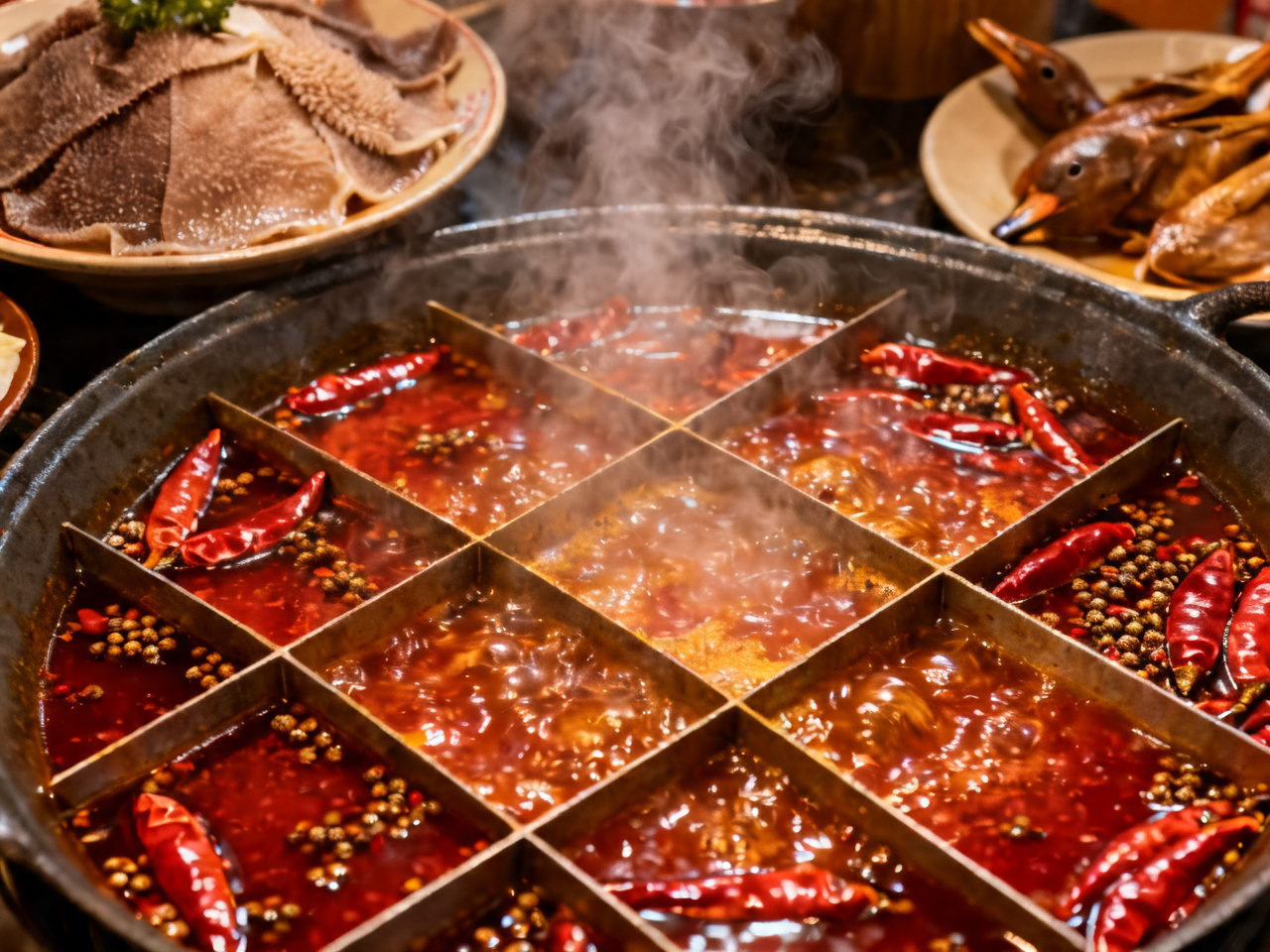
这套系统不是哪个餐厅发明的营销噱头,而是码头工人在嘉陵江边吃火锅时自然演化出来的。上世纪二三十年代,重庆朝天门码头的搬运工收入微薄,买不起好肉,就把牛的内脏——毛肚、黄喉、鸭血——丢进一口大锅里煮。九宫格的分区让不同人可以共用一口锅,各涮各的,互不干扰。
This system wasn't invented as a marketing gimmick by some restaurant. It evolved naturally among dock workers eating hotpot along the Jialing River. In the 1920s and 30s, porters at Chongqing's Chaotianmen Dock earned meager wages and couldn't afford good cuts of meat, so they threw cattle offal — tripe, aorta, duck blood — into a communal pot. The nine-grid division let different people share one pot, each cooking in their own square without interfering with anyone else.
在磁器口,我学会了一件事 / What I Learned in Ciqikou
2023年冬天,我在磁器口古镇附近的一条支路上找到一家没有招牌的火锅店。说"没有招牌"不太准确——它有一块褪色的红布,上面用毛笔写着"老火锅"三个字,挂在一扇半开的铁门上。
In the winter of 2023, I found a hotpot place on a side street near Ciqikou Ancient Town that had no sign. Well, "no sign" isn't quite right — it had a faded red cloth with three brush-painted characters reading "Old Hotpot," hanging on a half-open iron gate.
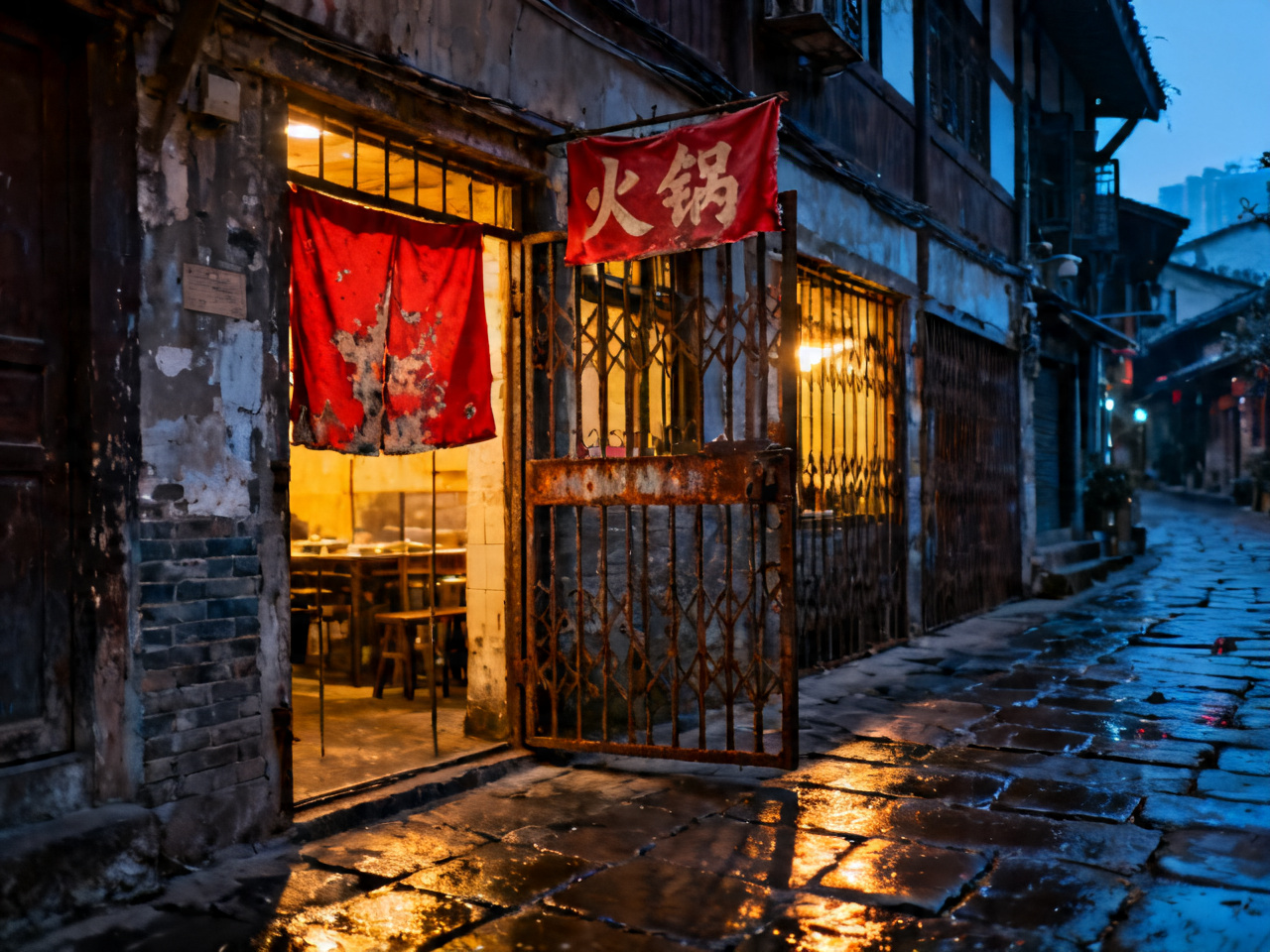
店里只有六张桌子,老板娘一个人管前厅和后厨。锅底端上来的时候,表面浮着一层厚厚的干辣椒和花椒,红得发黑。我当时心想:这个辣度我可能扛不住。
Inside, there were only six tables, and the owner — a woman in her fifties — ran both the front and the kitchen alone. When the pot base arrived, the surface was blanketed with a thick layer of dried chilies and Sichuan peppercorns, so red it looked almost black. I thought to myself: I might not survive this level of heat.
但重庆火锅的秘密不在于"有多辣",而在于辣的层次。第一口是干辣椒的焦香,接着是牛油的醇厚裹住舌头,然后花椒的麻劲儿从舌尖蔓延到两颊,最后是一股回甘——对,火锅是有回甘的,像喝好茶一样。老板娘看我吃得满头大汗,端了一碗冰粉过来,说"慢慢吃,不着急"。那碗冰粉是红糖味的,冰凉的甜刚好压住嘴里的灼烧感。
But the secret of Chongqing hotpot isn't about "how spicy" — it's about the layers of spice. The first hit is the scorched fragrance of dried chilies. Then the richness of beef tallow coats your tongue. Then the numbing tingle of Sichuan peppercorn spreads from the tip of your tongue to both cheeks. And finally, a lingering sweetness — yes, hotpot has a sweet aftertaste, like drinking fine tea. The owner saw me sweating profusely and brought over a bowl of ice jelly, saying "Take your time, no rush." It was brown sugar flavored, and the icy sweetness perfectly countered the burn in my mouth.
蘸料是另一个战场 / The Dipping Sauce Is Another Battlefield
在北方吃火锅,蘸料台上有二十几种调料,芝麻酱、韭菜花、腐乳、蒜泥、香油、辣椒油……你可以调出属于自己的独家配方。但在重庆,蘸料只有一个标准答案:香油蒜泥碟。
In northern China, the hotpot dipping sauce station offers twenty-plus condiments — sesame paste, chive flower sauce, fermented tofu, minced garlic, sesame oil, chili oil... You can mix your own signature blend. But in Chongqing, there's only one correct answer: a dish of sesame oil with minced garlic.
一小碟香油,捣碎的蒜泥铺在上面,有人会加一点蚝油或者香菜。就这么简单。香油的作用不是调味,而是给刚从滚油里捞出来的食材降温,同时在舌头上形成一层油膜,减缓辣椒素的刺激。这是功能性的,不是装腔作势。
A small dish of sesame oil, crushed garlic spread on top, and maybe a touch of oyster sauce or cilantro. That's it. The sesame oil isn't there for flavor — it's there to cool down food fresh from the boiling oil and to form a protective film on your tongue that slows the capsaicin burn. It's functional, not pretentious.
我见过有游客在重庆火锅店的蘸料台前犹豫了五分钟,最后调了一碗芝麻酱。旁边桌的重庆大姐看了一眼,没说话,但那个表情我读懂了——大概是"你开心就好"的意思。
I once watched a tourist hesitate at the dipping sauce station in a Chongqing hotpot restaurant for five minutes before mixing a bowl of sesame paste. The Chongqing woman at the next table glanced over, said nothing, but I could read her expression perfectly — it roughly translated to "whatever makes you happy."
凌晨一点的火锅才是正经火锅 / The Real Hotpot Happens at 1 AM
重庆是一座不睡觉的城市,至少在吃这件事上是这样。晚上十一点,你以为该收摊了,但火锅店门口反而开始排队。凌晨一两点,江北区观音桥附近的几条街上,火锅店的蒸汽和路灯混在一起,整条街像是在冒烟。
Chongqing is a city that doesn't sleep — at least not when it comes to eating. At 11 PM, you'd think places would be closing up, but that's when the lines actually start forming outside hotpot restaurants. At one or two in the morning, on the streets near Guanyinqiao in Jiangbei District, the steam from hotpot restaurants mingles with streetlights, making the whole block look like it's smoking.
这不是旅游营销,这是重庆人的日常。下了夜班的出租车司机、刚从KTV出来的年轻人、加完班的程序员,都会在深夜找一家火锅店坐下来。点一个鸳鸯锅(一半红油一半清汤,照顾不能吃辣的朋友),叫几盘毛肚鸭肠,再来两瓶山城啤酒,这顿饭可以从凌晨一点吃到三点。
This isn't tourism marketing — it's daily life for Chongqing residents. Taxi drivers coming off the night shift, young people fresh from KTV, programmers who just finished overtime — they all find a hotpot place to sit down late at night. Order a mandarin duck pot (half red oil, half clear broth, for friends who can't handle the heat), get a few plates of tripe and duck intestine, crack open two bottles of Shancheng beer, and this meal can stretch from 1 AM to 3 AM.
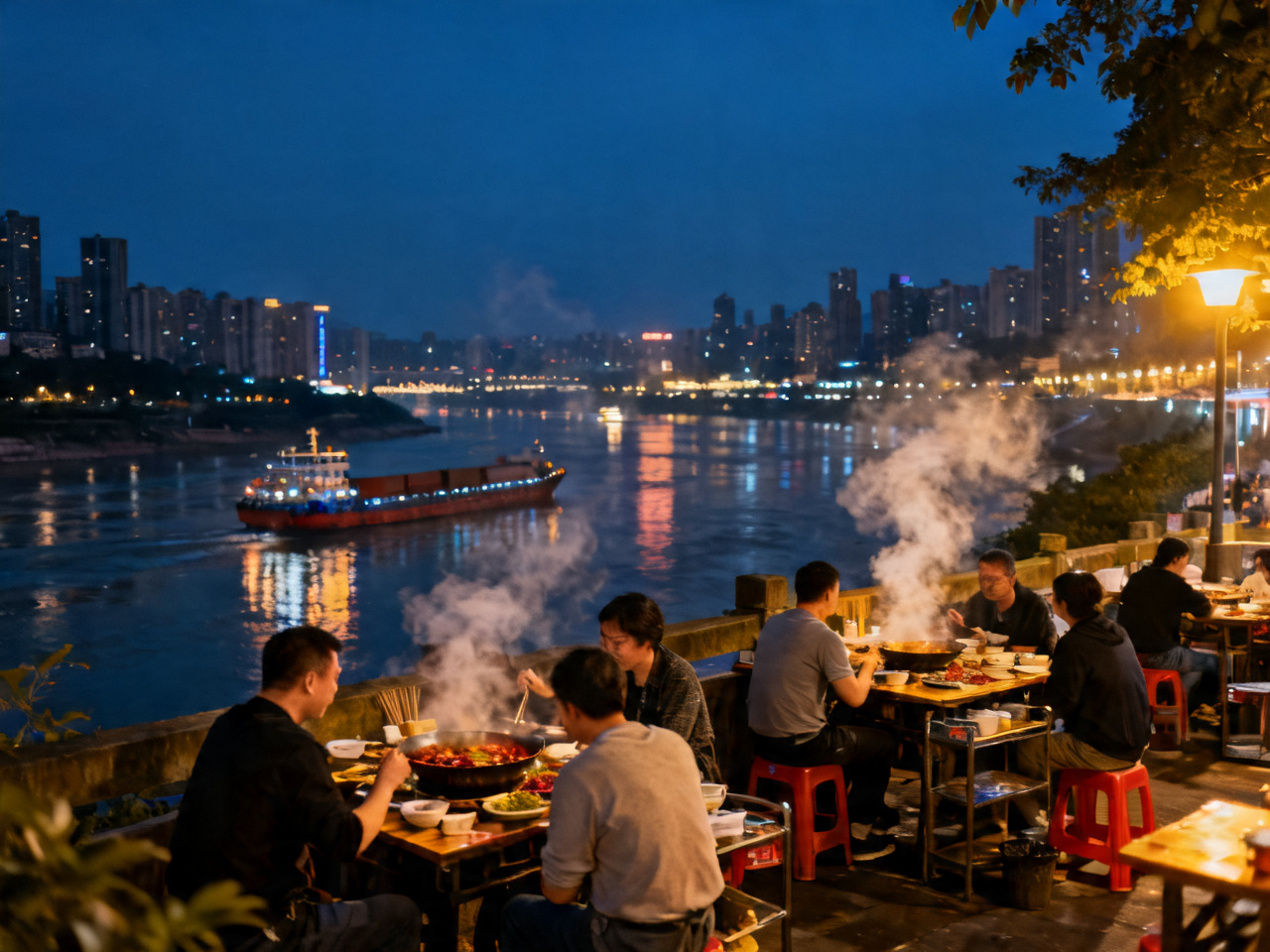
有一次我在南滨路的一家露天火锅店吃到凌晨两点半,对面就是长江,江面上偶尔有货船的灯光划过。旁边桌四个中年男人在划拳喝酒,声音大得整条街都能听见,但没有人觉得吵——在重庆,这就是夜宵的背景音。
Once I ate at an open-air hotpot place on Nanbin Road until 2:30 AM, with the Yangtze River right across from me. Occasionally a cargo ship's lights would sweep across the water. At the next table, four middle-aged men were playing drinking games, loud enough for the whole street to hear, but nobody found it noisy — in Chongqing, that's just the soundtrack of late-night dining.
给第一次去的人几句实话 / Some Honest Words for First-Timers
不要点微辣。重庆的"微辣"大约等于其他城市的"特辣"。如果你真的不能吃辣,直接点鸳鸯锅,吃清汤那边,没人会笑话你。
Don't order "mild spicy." Chongqing's "mild" is roughly equivalent to "extra spicy" in other cities. If you genuinely can't handle heat, just order a mandarin duck pot and eat from the clear broth side. Nobody will laugh at you.
毛肚一定要点。它是重庆火锅的灵魂食材,新鲜的毛肚在红油里烫十几秒,蘸一下香油蒜泥,那个脆劲儿是任何其他食物都给不了的。鸭肠也是同理,但要注意烫的时间——超过二十秒就老了。
You must order tripe. It's the soul ingredient of Chongqing hotpot. Fresh tripe flash-cooked in red oil for about fifteen seconds, dipped in sesame oil and garlic — that crunch is something no other food can replicate. Duck intestine follows the same logic, but watch the timing — more than twenty seconds and it turns tough.
脑花不是每个人都能接受,但如果你愿意尝试,把它放在锅边最温柔的角落,小火慢炖五六分钟,入口是绵密的、几乎没有腥味的奶油质感。配上一点蒜泥和葱花,这是重庆火锅桌上最被低估的食材。
Brain isn't for everyone, but if you're willing to try, place it in the gentlest corner of the pot and let it simmer on low heat for five or six minutes. The texture is creamy, almost without any gamey taste, like a savory custard. With a bit of garlic and scallion, it's the most underrated ingredient at a Chongqing hotpot table.
最后一件事:吃完火锅,你的衣服会带着火锅味至少两天。这不是缺点,这是勋章。
One last thing: after hotpot, your clothes will smell like it for at least two days. That's not a downside — it's a badge of honor.
延伸阅读 / Related Reads
- 中国八大菜系全览 | The 8 Great Cuisines of China
- 第一口就着了魔:一个外乡人在成都的麻辣沉沦 | Spellbound at First Bite: A Stranger's Descent into Chengdu's Heat
- 街头那碗热气,才是中国城市的真实体温 | Street Steam: The Real Pulse of Chinese Cities
- 花椒档案:一个植物学者眼中的四川味觉地图 | The Peppercorn Dossier: Sichuan's Flavor Map Through a Botanist's Eyes
- 华东五城10日经典环线 | 10-Day East China Five-City Loop
- 南京那场雨后,我在梧桐树下把行程表慢慢放下 | After the Rain in Nanjing, I Let My Itinerary Go Beneath the Plane Trees
- 第一次去中国,你可能准备错了 | First Trip to China: You're Probably Preparing for the Wrong Things
- 苏州园林不是用来赶场的,我在一扇漏窗前停了十分钟 | Suzhou Gardens Are Not for Rushing; I Stopped Ten Minutes Before One Lattice Window
- 我在中国景区接驳车排队时,第一次学会先看阴凉处而不是先冲最前面 | At a Chinese Scenic Shuttle Queue, I First Learned to Look for Shade Instead of Charging to the Front
- 去承德看山庄和寺庙之前,我先把手机训练成一天的领路人 | Before Seeing Chengde’s Mountain Resort and Temples, I Trained My Phone to Lead the Day
- 把重庆说成超大城市很容易,难的是教人第一晚从哪层开始不慌 | Calling Chongqing Massive Is Easy; Showing a Visitor Where to Begin on the First Night Without Panic Is Harder
- 山城重庆那条上坡路,教我别低估城市地形 | My First Chongqing Hill Road Taught Me Not to Underestimate City Terrain
- 菜市场早餐摊前,我靠一个“这个”吃到了热豆浆 | At a Wet Market Breakfast Stall, One “This One” Got Me Hot Soy Milk
- 那些把中国拍得像特效片的博主,真正厉害的是懂得怎么给震撼留空拍 | The Creators Who Film China Like Special Effects Know How to Leave Space Between the Shocks
- 茶国度如何爱上咖啡 | How a Tea Nation Fell for Coffee
Comments (0)