
我在中国景区接驳车排队时,第一次学会先看阴凉处而不是先冲最前面 | At a Chinese Scenic Shuttle Queue, I First Learned to Look for Shade Instead of Charging to the Front
我在中国景区接驳车排队时,第一次学会先看阴凉处而不是先冲最前面 | At a Chinese Scenic Shuttle Queue, I First Learned to Look for Shade Instead of Charging to the Front
我第一次在中国景区排接驳车时,完全是靠一种很本能、也很外国游客式的直觉在行动:先冲到最前面,总不会错。那是一个盛夏下午,我在景区外围停车场下车以后,热浪几乎是迎面拍过来的。柏油地面被晒得发白,远处山门方向的广播一遍遍放着乘车提示,排队栏杆在阳光下反光,空气里有防晒霜、矿泉水和发动机余温混在一起的味道。人很多,但队伍并不是乱糟糟地挤成一团,而是被蛇形栏杆分成几列,慢慢往前挪。我当时背着包,额头已经开始冒汗,脑子里只剩一个念头:赶紧站到最前面,这样就能最快上车、最快离开太阳底下。后来我才发现,自己恰恰是用最费力的方式理解了这个场景。
The first time I lined up for a scenic shuttle in China, I acted on a very instinctive and very tourist-like assumption: if I rushed to the very front, I could not possibly be making a mistake. It was a midsummer afternoon. As soon as I got out at the outer parking area of the scenic site, the heat hit me almost like a wall. The asphalt had gone pale under the sun. Loudspeakers near the mountain gate kept repeating shuttle instructions. The metal queue barriers flashed in the light, and the air smelled faintly of sunscreen, bottled water, and the leftover warmth of engines. There were many people, but the queue was not chaotic. It had been divided into several snaking lanes by railings, all inching forward slowly. I had a backpack on, sweat was already starting at my forehead, and my brain had narrowed to one simple idea: get to the very front as fast as possible, then I can board sooner and escape the sun sooner. Later I realized I had understood the whole situation in exactly the most exhausting way.
我当时几乎是下意识地往最前那列挤,看到哪里离上车口近,就往哪里站。问题是,那一段最靠前的区域刚好一点遮挡都没有。太阳直接从头顶压下来,栏杆烫得手都不想碰,前面的人群因为车还没到只能原地慢慢等着,而我站在那个位置,既没有风,也没有树荫,连想换个重心都觉得累。不到十分钟,我就开始头皮发热,水喝得飞快,甚至有一点被晒懵的感觉。就在这时,旁边一位穿工作服的景区工作人员看了我一眼,抬手指向后面说:“你可以去那边排,树荫那列走得更快。”我一开始还没听懂,心里甚至闪过一个怀疑:怎么可能?明明那边看起来离前门更远。
I instinctively pushed toward the lane nearest the front, choosing whichever section seemed physically closest to the boarding point. The problem was that the area closest to the front had absolutely no cover at all. The sun pressed straight down from above. The metal railings were hot enough that I did not want to touch them. The people ahead of me could only wait in place because the next shuttle had not yet arrived, and where I was standing there was no wind, no shade, and barely enough comfort even to shift my weight. In less than ten minutes, my scalp felt hot, I was drinking water too quickly, and I had that slightly stunned feeling that comes from too much sun too fast. Then a scenic-area staff member in uniform glanced at me and pointed behind me, saying, “You can line up over there. The shaded lane moves faster.” At first I almost did not understand him. My immediate internal reaction was disbelief: how could that be true when that side visibly looked farther from the front gate?
我顺着他指的方向往后看,才注意到那片队伍其实排在一排树下面。更重要的是,它并不是“后面随便多开的一列”,而是按照不同班次、不同上车口或临时调度被分流出去的一段。因为我刚来这个景区,不熟悉它的安排,只会用最粗糙的视觉判断——离车门近就是快,站得靠前就是赚到——却完全没意识到,中国很多景区的排队效率,常常不是看你和栏杆前端的直线距离,而是看你有没有看懂现场的组织方式。我拖着包换到树荫下以后,整个人像突然恢复了电量,才几分钟,风感都回来了,呼吸也顺了。
I followed the direction of his hand and finally noticed that another section of the queue was actually lined up beneath a row of trees. More importantly, it was not just “an extra line in the back.” It had been split off according to departure timing, boarding point, or temporary shuttle dispatching. Because I was new to the site, I had relied only on the crudest visual logic—that being closer to the gate meant faster, and being farther forward meant winning something—without realizing that the efficiency of Chinese scenic queues often depends less on your literal distance from the front rail and more on whether you understand the system the staff have arranged on the ground. Once I dragged my bag over into the shade, I felt as if my body had suddenly regained battery power. Within just a few minutes, I could feel the breeze again and my breathing stopped feeling strained.
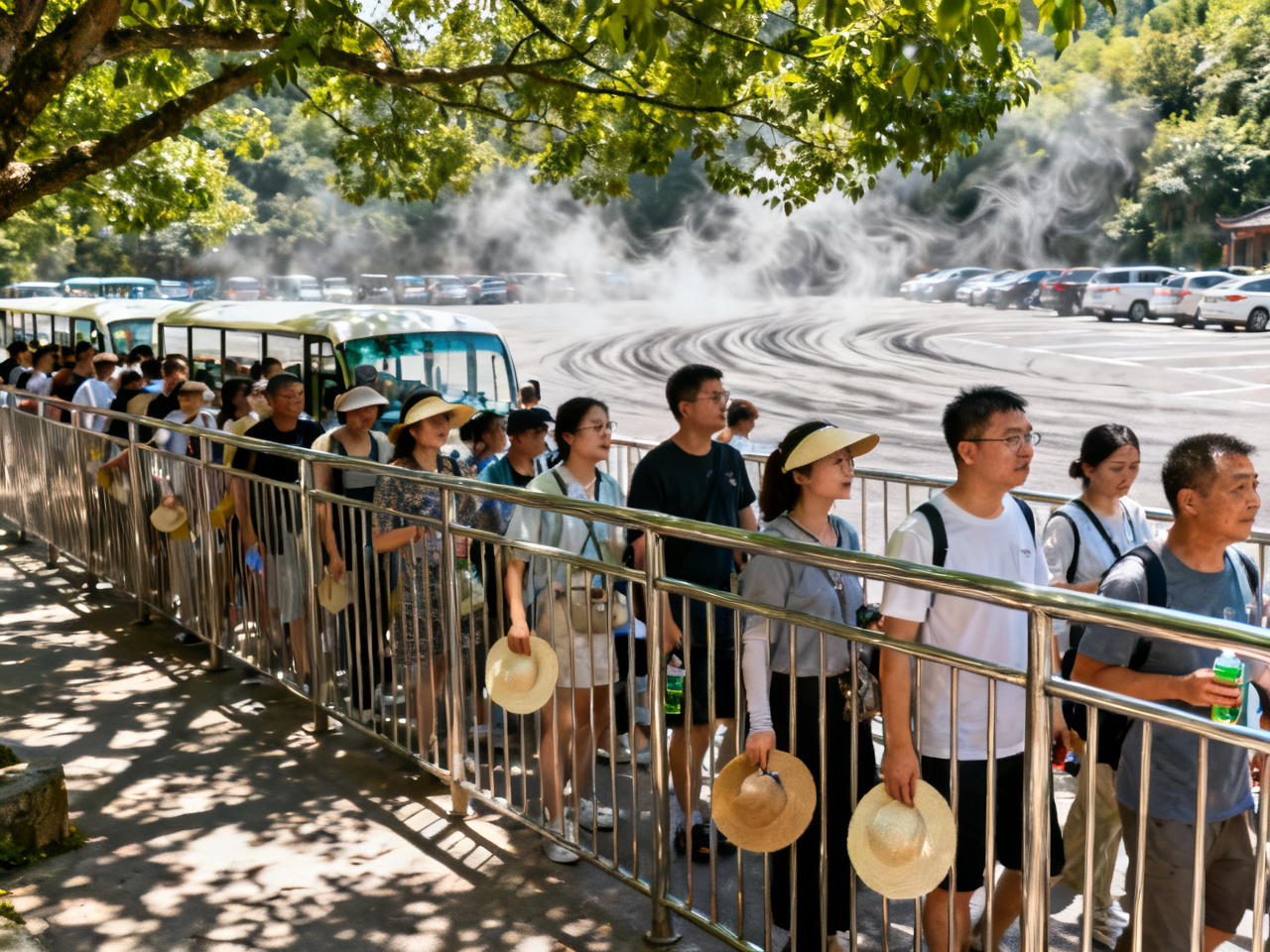
站到树荫那列以后,我开始第一次认真观察周围的人是怎么排这种队的。很多本地游客根本不急着去抢最晒、最靠前的位置,而是先看指示牌、看工作人员怎么挥手分流、看哪一列虽然看似在后面,实际上车门一开就会同步放人。有人甚至先问一句“这边是不是也上山”“下一趟走哪列”,确认了再站稳。那种感觉让我很受震动,因为它和我原先熟悉的“排队就是拼谁先占到前面”很不一样。这里的重点不是抢一个静态位置,而是读懂一个动态流程。你读懂了,哪怕站得没那么靠前,反而更省力;你没读懂,就算人已经顶到栏杆前,也可能白白在太阳下多熬十几分钟。
Once I was in the shaded lane, I finally started observing how other people were handling this kind of queue. Many local visitors were not in a rush to seize the sunniest and most front-facing positions at all. Instead, they first checked the signs, watched how the staff were directing the flow, and noticed which lane might look farther back but would actually release people at the same time once a shuttle door opened. Some people even asked a quick question first—“Does this side also go up the mountain?” or “Which lane is for the next bus?”—and only then settled into place. That difference struck me hard because it was so unlike my old assumption that queueing simply meant fighting to occupy the foremost position. Here, the real skill was not claiming a static spot but reading a dynamic process. If you understood the process, you could stand a little less aggressively and still move more efficiently. If you did not understand it, you could be pressed all the way to the front railing and still waste fifteen extra minutes roasting in the sun.
我后来还发现,景区接驳车这种地方和城市地铁、商场扶梯口很像,表面上看是“大家都在等”,实际上每个人等的方式差别很大。有的人一边等一边不断往前蹭,情绪越来越焦躁;有的人则先找一个身体负担最小的位置,站定以后再根据现场变化调整。特别是在夏天,这两种方式的差别会被无限放大。你以为自己前进了三米,其实代价可能是被直晒二十分钟;你以为自己退后了一点,实际上却换来更舒服的呼吸、更清楚的视野和更稳定的节奏。对外国游客来说,这种判断特别容易失手,因为我们太容易把“排队效率”想成纯粹的名次问题,而不是空间选择问题。
Later I also realized that a scenic shuttle queue resembles metro lines and escalator approaches in cities more than it first appears. On the surface, it looks like “everyone is waiting,” but the way people wait differs enormously. Some keep inching forward every few seconds, growing more irritated the whole time. Others first choose the position that costs their body the least, and then adjust calmly as the situation changes. In summer, the difference between those two methods becomes enormous. You may think you have gained three meters, when what you really purchased was twenty extra minutes of direct sunlight. Or you may think you stepped slightly backward, when what you actually gained was easier breathing, a clearer line of sight, and a steadier rhythm. For foreign visitors, this kind of judgment is easy to get wrong because we tend to imagine “queue efficiency” as a question of rank alone rather than one of spatial choice.
有一次我在另一个景区又遇到类似情况,那次我没再直接往前冲,而是先站在旁边观察了半分钟。果然,最前面一列虽然看着短,但正好暴露在太阳最毒的角度,而且放行节奏也慢;旁边一列在廊檐下,看起来拐了两个弯,却因为工作人员集中在那里引导,上车反而快得多。那一次我几乎没有被晒得难受,心情也完全不同。我突然明白,景区里很多“会不会玩”的差别,并不是你知道多少攻略,而是你能不能在现场迅速看出哪里才是对自己最友好的安排。会排队,本身就是旅行能力的一部分。
At another scenic area later on, I ran into a similar situation and this time I did not rush forward at all. I stood to one side and watched for half a minute first. Sure enough, the frontmost lane looked shorter, but it was exposed to the harshest angle of sunlight and its release rhythm was slower. Another lane under an overhang looked more winding, yet because the staff were funneling people there more actively, boarding was actually much faster. That time I barely suffered from the heat at all, and my mood was completely different. I suddenly understood that much of what separates a traveler who “knows how to move” from one who does not is not how many guidebook tips they memorized, but whether they can quickly identify on site which arrangement is actually friendliest to their body and time. Knowing how to queue is itself part of travel competence.
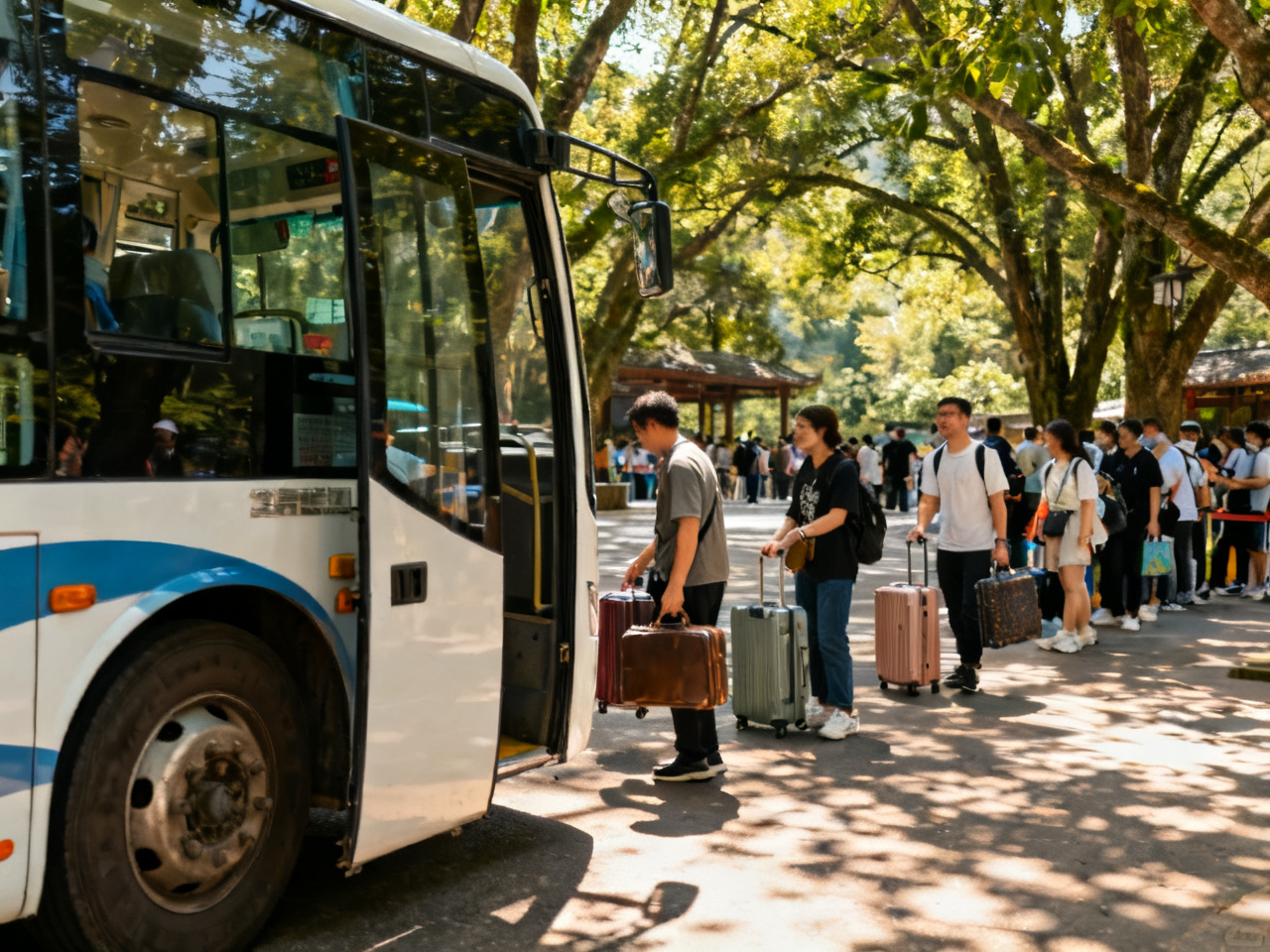
现在如果有刚来中国旅游的朋友问我,在景区坐接驳车最容易忽略的经验是什么,我会很直接地说:先找阴凉,再看分流,不要一上来就只盯着最前面。因为中国很多热门景区的人流组织已经很成熟,真正决定你舒不舒服、快不快的,常常不是你有没有抢到第一排,而是你有没有读懂工作人员给出的线路和环境条件。对我来说,那次在烈日下被工作人员一句话点醒,特别像一个小小的转折点。我学会的不是偷懒,也不是投机,而是别再把“效率”误解成只知道往前冲。很多时候,在中国旅行里真正高效的人,不是最急的人,而是最会看安排、最会给自己找合适位置的人。
Now, if a friend newly traveling in China asks me what experience is easiest to overlook when taking scenic shuttle buses, I answer very directly: look for shade first, then understand the lane split, and do not lock your eyes on the very front from the beginning. In many popular Chinese scenic areas, crowd organization is already highly developed. What really determines whether you stay comfortable and whether you move quickly is often not whether you seized the first row, but whether you understood the route design and environmental conditions the staff were already showing you. For me, that moment in the blazing sun when one worker’s single sentence woke me up felt like a small turning point. What I learned was not laziness and not some clever shortcut. It was to stop misunderstanding “efficiency” as mindless forward charge. Very often in travel around China, the people who move most efficiently are not the most frantic ones. They are the ones who best understand the arrangement and know how to place themselves well inside it.
- 一只陶马,让孩子在西安开始认真追问历史 | A Clay Horse Opened the Door to History for My Child in Xi’an
- 贵阳的酸汤不是一道菜:从菜市场到晚饭桌 | Sour Soup in Guiyang Is More Than a Dish: From Market to Dinner Table
- 五月在宁波老外滩遇到雨,我一个人看着江面发亮,忽然觉得赶路也值得被原谅 | Rain at Ningbo's Old Bund in May Made Me Feel Even a Hurried Life Deserved Forgiveness
- 我第一次在中国用公共洗衣房,才发现洗衣这件小事也有一套共享秩序 | The First Time I Used a Public Laundry Room in China, I Realized Even Washing Clothes Has a Shared Order
- 我在中国景区、酒店和餐厅踩过的支付坑 | Payment Lessons I Learned the Hard Way at China's Tourist Spots, Hotels & Restaurants
- 文创好物推荐:故宫文创到地方博物馆 | Creative Souvenirs: Palace Museum to Local Museums
- 上海外滩与弄堂文化探索 | Shanghai: The Bund & Longtang Culture
- 从汉服到旗袍,我在中国各朝代的衣柜里翻了个遍 | I Raided the Wardrobe of Every Chinese Dynasty and Here's What I Found
- 支付失败怎么办:来华游客应急指南 | Payment Failed? A Visitor's Emergency Guide
- 在景区买票前,我先学会确认日期和入园时段 | Before Buying Scenic Tickets, I Learned to Confirm Date and Entry Time
Comments (0)