
珠海雨停以后,凤凰木下那条不着急的路比海景更先留住人 | After Rain in Zhuhai, the Unhurried Road Beneath the Flame Trees Held Me Before the Sea Did
雨后的珠海,我把赶路改成了慢走 | After Rain in Zhuhai, I Changed Rushing into Slow Walking
雨停下来的时候,珠海的街道像刚刚被轻轻擦过。路面还亮着,树叶上挂着细小的水珠,远处楼群的边缘被湿气柔化,连车灯经过时的反光都显得比平时更长。我没有立刻叫车,也没有急着赶去下一个地点,只是把伞收起来,沿着人行道慢慢走。雨后的城市适合慢走,因为它像刚醒来,还不愿意马上恢复喧闹。
When the rain stopped, the streets of Zhuhai looked as if they had just been gently wiped clean. The road surface still shone, tiny drops hung from the leaves, the edges of distant buildings were softened by moisture, and even the reflections of passing headlights seemed longer than usual. I did not call a car immediately, nor did I hurry to the next place. I simply folded my umbrella and walked slowly along the sidewalk. A city after rain is suitable for slow walking because it feels newly awake, not yet willing to return to noise.
珠海的雨不像北方那样带着明显的冷硬,它更像一层湿润的纱,把海风、植物和街道包在一起。雨停之后,空气里有一种混合的味道:树皮、泥土、海水、柏油路和路边小店刚开火的油烟。这样的味道很难被照片保存,却能让人马上知道自己身在南方。脚下的砖缝里还有水,踩上去会发出很轻的声响。
Rain in Zhuhai does not carry the clear hardness of northern rain. It is more like a moist gauze wrapping the sea breeze, plants, and streets together. After the rain stops, the air holds a mixed smell: bark, soil, seawater, asphalt, and the cooking smoke from small roadside shops that have just turned on their stoves. Such a smell is hard to preserve in photos, yet it immediately tells a person they are in the south. Water still lies in the cracks between bricks underfoot, making a very soft sound when stepped on.
我从一条不太宽的路开始走。路旁的凤凰木被雨洗得发亮,红色花瓣落在地上,被水贴成薄薄一层。几辆电动车从身边经过,车轮压过浅浅的积水,溅起一点细碎的水声。行人都不急,有人把伞夹在胳膊下,有人低头看鞋面有没有湿,有人站在便利店门口等云再散一点。雨后的时间被拉长,像一根湿润而柔韧的线。
I began walking from a not very wide road. The flame trees beside it had been washed bright by the rain, and red petals had fallen to the ground, pasted by water into a thin layer. Several electric scooters passed by, their wheels pressing through shallow puddles and raising small broken sounds of water. Pedestrians were not in a hurry. Some tucked umbrellas under their arms, some looked down to see whether their shoes were wet, and some stood at a convenience store entrance waiting for the clouds to clear a little more. Time after rain was stretched, like a damp and flexible thread.
慢走和散步不完全一样。散步可以有目的地,也可以为了消食;慢走则更像是把速度交给环境。路面湿,就走慢一点;风里有海味,就停一下;树上的水滴落到肩上,就抬头看一眼。珠海在雨后显得很适合这种速度。它不是用壮观的方式抓住人,而是用温润的小细节让人愿意多停留几分钟。
Slow walking is not exactly the same as taking a walk. A walk can have a destination, or it can be done to digest a meal; slow walking is more like handing one’s speed over to the surroundings. If the road is wet, walk more slowly; if the wind carries the smell of the sea, pause for a moment; if a drop falls from a tree onto the shoulder, look up. Zhuhai after rain feels well suited to this speed. It does not seize people with grandeur, but makes them willing to stay a few more minutes through warm and moist details.
我经过一个小公园,入口处的石凳还湿着,没有人坐。草地颜色深了许多,像被雨水重新调过。几只白色的鸟在低处飞,翅膀掠过树影。公园里没有太多游客,只有两个老人撑着伞慢慢绕圈,一个年轻人站在树下打电话,声音被潮湿空气吸收了一半。这里没有什么必须拍下来的景色,却有一种适合被记住的安静。
I passed a small park. The stone benches at the entrance were still wet, and no one sat on them. The grass had become much darker, as if rainwater had adjusted its color. Several white birds flew low, their wings brushing past tree shadows. There were not many visitors in the park, only two elderly people walking slow circles under umbrellas and a young person standing under a tree making a phone call, the voice half absorbed by the damp air. There was no scenery that had to be photographed, yet there was a quietness suitable for memory.
珠海的街道常常有一种边界模糊的感觉。城市和海离得很近,树木和楼房挨得也近,生活和旅行之间的距离不算远。雨后这种感觉更明显。商店招牌倒映在水里,居民楼阳台上的衣服暂时停止晾晒,路边的咖啡店把椅子往里收了一点。所有东西都因为一场雨稍微改变位置,城市因此显出一种柔软的临时状态。
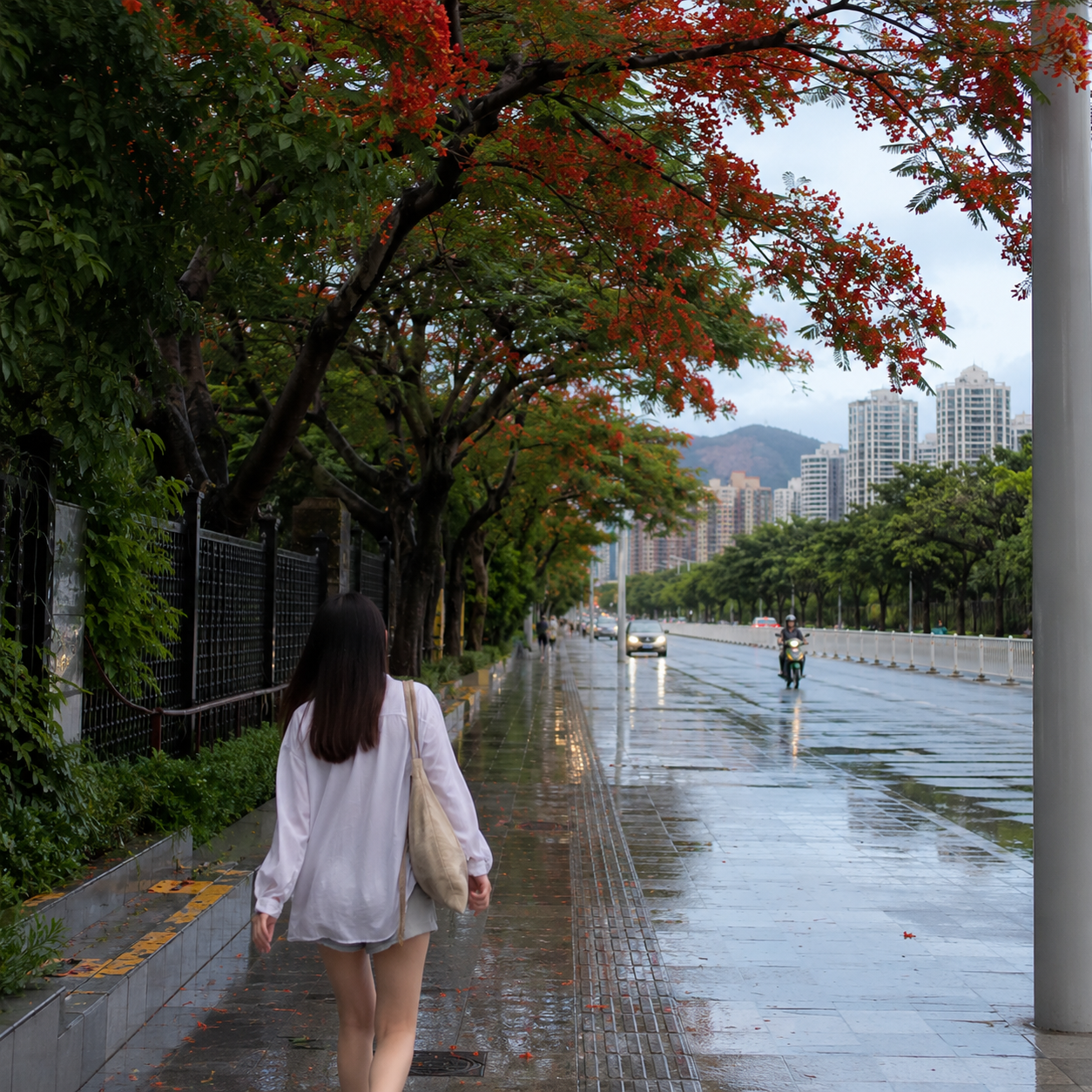
Zhuhai’s streets often have a sense of blurred boundaries. The city and the sea are close, trees and buildings stand close, and the distance between daily life and travel is not far. After rain, this feeling becomes clearer. Store signs reflect in water, clothes on residential balconies temporarily stop drying, and roadside cafés pull their chairs slightly inward. Everything changes position a little because of a rain, and the city therefore reveals a soft temporary state.
我喜欢看雨后的店铺。水果店把塑料筐搬回门口,老板用扫帚把积水往路边赶;小面馆的玻璃上起了一层雾,里面有人低头吃东西;药店门口的红色招牌被水洗得更亮。每一家店都像刚从暂停里恢复过来,但动作不急。珠海的慢,很多时候不是没人忙,而是忙也带着一种被海风稀释过的节奏。
I like looking at shops after rain. A fruit store moves plastic baskets back to the entrance, the owner sweeping pooled water toward the roadside; the glass of a small noodle shop fogs up, and inside someone eats with their head lowered; the red sign at the pharmacy entrance looks brighter after being washed by water. Each shop seems to have just returned from a pause, yet none of the movements are urgent. Zhuhai’s slowness does not always mean people are not busy; rather, even busyness carries a rhythm diluted by sea wind.
走着走着,天空露出一点亮色。不是强烈的阳光,而是云层后面慢慢透出来的白。湿润的树枝把光切成碎片,落在地面的小水洼里。这样的光很短暂,可能几分钟后就会消失,但正因为短暂,才让人愿意站住。雨后的慢走常常会遇到这种小小的奖励,不足以成为景点,却足以让一段路变得值得。
As I walked, the sky revealed a little brightness. It was not strong sunlight, but a whiteness slowly passing through clouds. Wet branches cut the light into fragments, dropping them into small puddles on the ground. Such light is brief and may disappear after a few minutes, but precisely because it is brief, it makes one willing to stop. Slow walking after rain often encounters these small rewards: not enough to become an attraction, but enough to make a stretch of road worthwhile.
我没有打开导航,只凭着大概方向往海边走。人在城市里如果一直看导航,路就会变成一条被屏幕批准的线;如果偶尔收起手机,路会重新变成可以选择的空间。雨后的珠海很适合这种轻微迷路。因为街道干净,风也不冷,即使走错,也不像损失,反而像多得到一段城市的侧面。
I did not open navigation, but walked toward the sea by general direction. If a person keeps looking at navigation in a city, the road becomes a line approved by the screen; if the phone is put away occasionally, the road becomes a space of choice again. Zhuhai after rain is well suited to this slight getting lost. Because the streets are clean and the wind is not cold, even taking the wrong way does not feel like a loss, but like gaining another side of the city.
路边有一排被雨水打湿的共享单车,车座上积着水,没人急着骑走。旁边的公交站台下站着几个人,大家都很安静,只偶尔看一眼远处有没有车来。广告灯箱在湿地面上投出模糊的颜色。一个孩子伸脚去碰水洼,被大人轻轻拉回来。这样的画面普通得不能再普通,可在雨后,它们像被加了一层透明的框。
A row of shared bicycles stood wet by the roadside, water collected on their seats, and no one hurried to ride them away. Under the nearby bus shelter stood several people, all quiet, only occasionally looking into the distance to see whether a bus was coming. An advertising lightbox cast blurred colors onto the wet ground. A child stretched a foot toward a puddle and was gently pulled back by an adult. Such scenes could not be more ordinary, but after rain they seem to have been placed behind a transparent frame.
慢走让我注意到一些平时会错过的东西。比如树根把人行道顶起的弧度,比如墙角苔藓的颜色,比如雨水顺着电线滴落的节奏,比如远处海风把云层推开的速度。旅行中如果总追求效率,这些东西都没有位置。它们太小,不能写进清单;太安静,不能成为结论。但正是它们,让一座城市从地点变成了经验。
Slow walking made me notice things I would usually miss. The curve where tree roots lifted the sidewalk, the color of moss at a wall corner, the rhythm of rainwater dripping along electric wires, the speed at which sea wind pushed clouds apart in the distance. If travel always pursues efficiency, these things have no place. They are too small to enter a checklist and too quiet to become conclusions. Yet it is exactly these things that turn a city from a location into an experience.
越接近海边,风越明显。雨后的风带着湿意,却不沉重,吹在脸上像一只凉凉的手。路旁的椰树叶子还在滴水,每滴水落下都很快被地面接住。我听见远处传来海浪声,或者也可能是车辆经过高架的声音,两者在潮湿空气里混在一起。珠海的好处是,即使还没看见海,你也常常觉得海已经在附近。
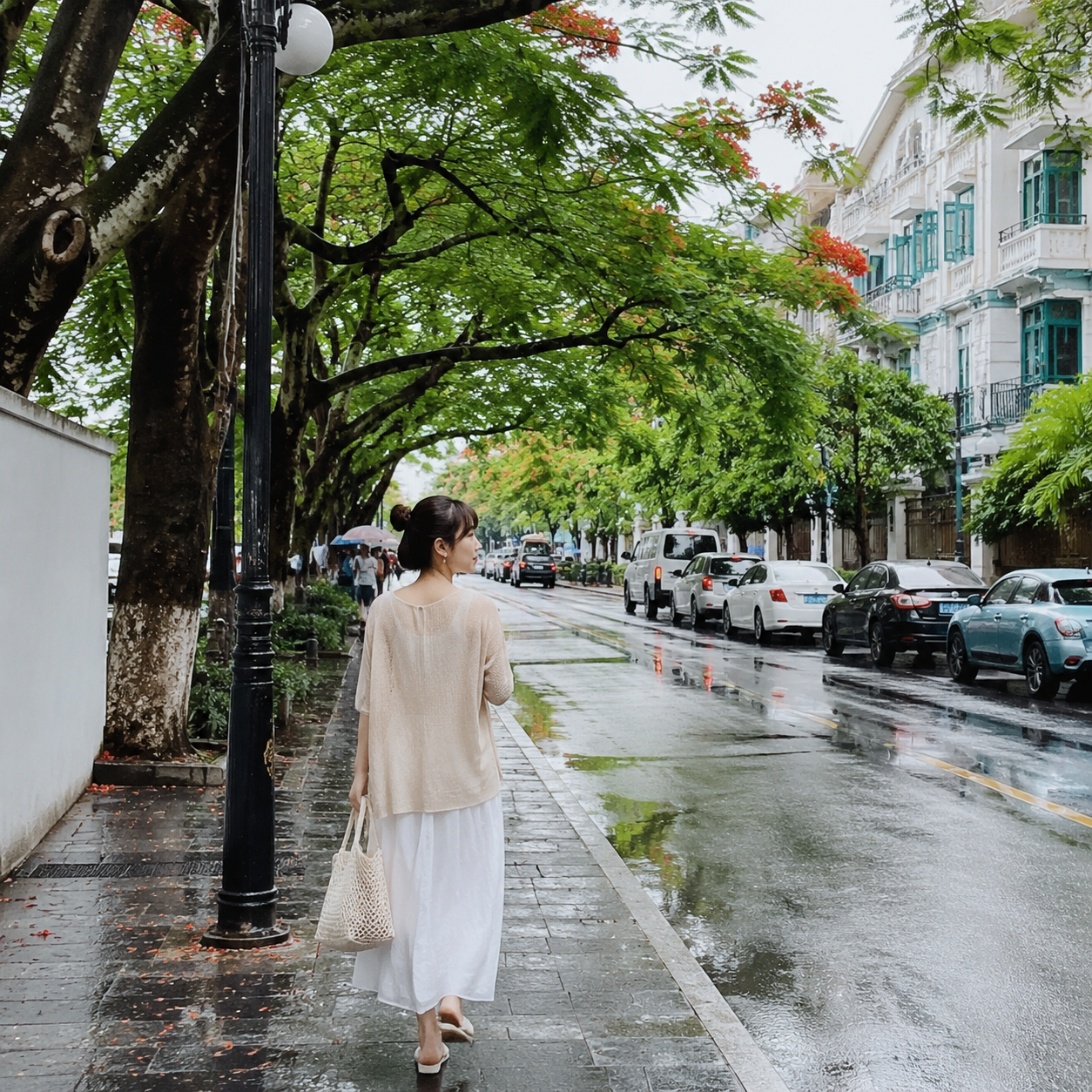
The closer I came to the seaside, the more noticeable the wind became. The wind after rain carried moisture but was not heavy, touching the face like a cool hand. The palm leaves by the road were still dripping, and each drop was quickly received by the ground. I heard the sound of waves in the distance, or perhaps the sound of vehicles passing over an elevated road; in the damp air, the two mixed together. One good thing about Zhuhai is that even before seeing the sea, one often feels that the sea is already nearby.
海边的人不多。雨刚停,栏杆上还有水,长椅也不能坐。几个游客站在石阶上拍照,一个穿雨衣的清洁工推着车慢慢走过,车轮在湿地上留下细细的痕迹。海面不是晴天那种明亮的蓝,而是灰绿色,远处有一层雾。这样的海不适合大声赞叹,更适合沉默地看一会儿。
There were not many people by the sea. The rain had just stopped, water remained on the railings, and the benches were not yet suitable for sitting. A few tourists stood on the stone steps taking photos, while a cleaner in a raincoat pushed a cart slowly past, the wheels leaving fine marks on the wet ground. The sea was not the bright blue of a sunny day, but gray-green, with a layer of mist in the distance. This kind of sea is not suitable for loud admiration; it is better watched in silence for a while.
我靠在栏杆旁,没有把手机拿出来。雨后的海面变化很慢,拍下来也许只是一张暗淡的照片,但用眼睛看,它有许多层次。近处的水被风吹出细纹,远处的雾把船影藏得若有若无,云层在上方继续移动。人站在这样的海边,会自然放低心里的音量。很多想法并没有消失,只是被海风吹得不再尖锐。
I leaned near the railing and did not take out my phone. The sea after rain changes slowly. A photo of it might look dim, but to the eyes it has many layers. Nearby water is brushed into fine lines by the wind, distant mist hides the shadows of boats, and clouds continue moving overhead. Standing beside such a sea, one naturally lowers the volume inside the heart. Many thoughts do not disappear; they are simply made less sharp by the sea wind.
雨后慢走的另一个好处,是不需要给自己安排太多意义。你只是走,绕过水洼,避开湿滑的台阶,看一只狗抖掉身上的水,看一对情侣把伞合在一起,看路灯在天还没完全黑的时候亮起来。意义如果来了,就让它来;如果没有,也不妨碍这段路成立。旅行里有些时刻,不被解释反而更完整。
Another benefit of slow walking after rain is that you do not need to arrange too much meaning for yourself. You simply walk, avoid puddles, step around slippery stairs, watch a dog shake water from its body, watch a couple close their umbrellas together, watch streetlights turn on before the sky is fully dark. If meaning comes, let it come; if it does not, the walk still stands. Some moments in travel are more complete when left unexplained.
我沿着海边继续走,鞋底已经有些湿,但并不难受。路旁的花坛里有水珠,花朵低着头,像在等风把它们吹干。有人从我身边跑步经过,步伐很轻,像怕惊动刚停下来的雨。远处有骑行的人,轮胎带起细细水痕。整条路都在一种恢复中的状态里,既不是雨中,也不是晴天,而是介于两者之间。
I continued walking along the seaside. The soles of my shoes were a little wet, but not uncomfortable. Water drops clung to the flowerbeds beside the road, and the flowers lowered their heads as if waiting for wind to dry them. Someone jogged past me with very light steps, as if afraid of disturbing the rain that had just stopped. Farther away, cyclists left thin water marks behind their tires. The whole road was in a state of recovery, neither in rain nor in sunshine, but between the two.
这种中间状态让我觉得珍贵。很多旅行安排都喜欢追求确定:晴天最好,路线清楚,照片明亮,餐厅有名。但雨后慢走提醒我,不确定也可以很美。云还没散尽,地还没干,计划也可能被雨打乱,可正是因为没有完全恢复秩序,城市才露出平时不容易看见的表情。珠海在这个表情里显得格外真实。
This in-between state felt precious to me. Many travel plans like certainty: sunny weather is best, routes are clear, photos are bright, restaurants are famous. But slow walking after rain reminds me that uncertainty can also be beautiful. The clouds have not fully cleared, the ground has not dried, and plans may have been disrupted by rain, yet precisely because order has not completely returned, the city reveals an expression not easily seen in ordinary times. Zhuhai feels especially real in this expression.
走到一处观景平台时,天色开始变暗。平台边缘的积水映出几块云,风一吹,云影就碎了。我站在那里看了很久,旁边有个小男孩问妈妈:“雨是不是走了?”妈妈说:“走了一点,还在天上。”这句话让我笑了一下。雨确实走了一点,却还留在地面、树叶、空气和每个人收起的伞里。
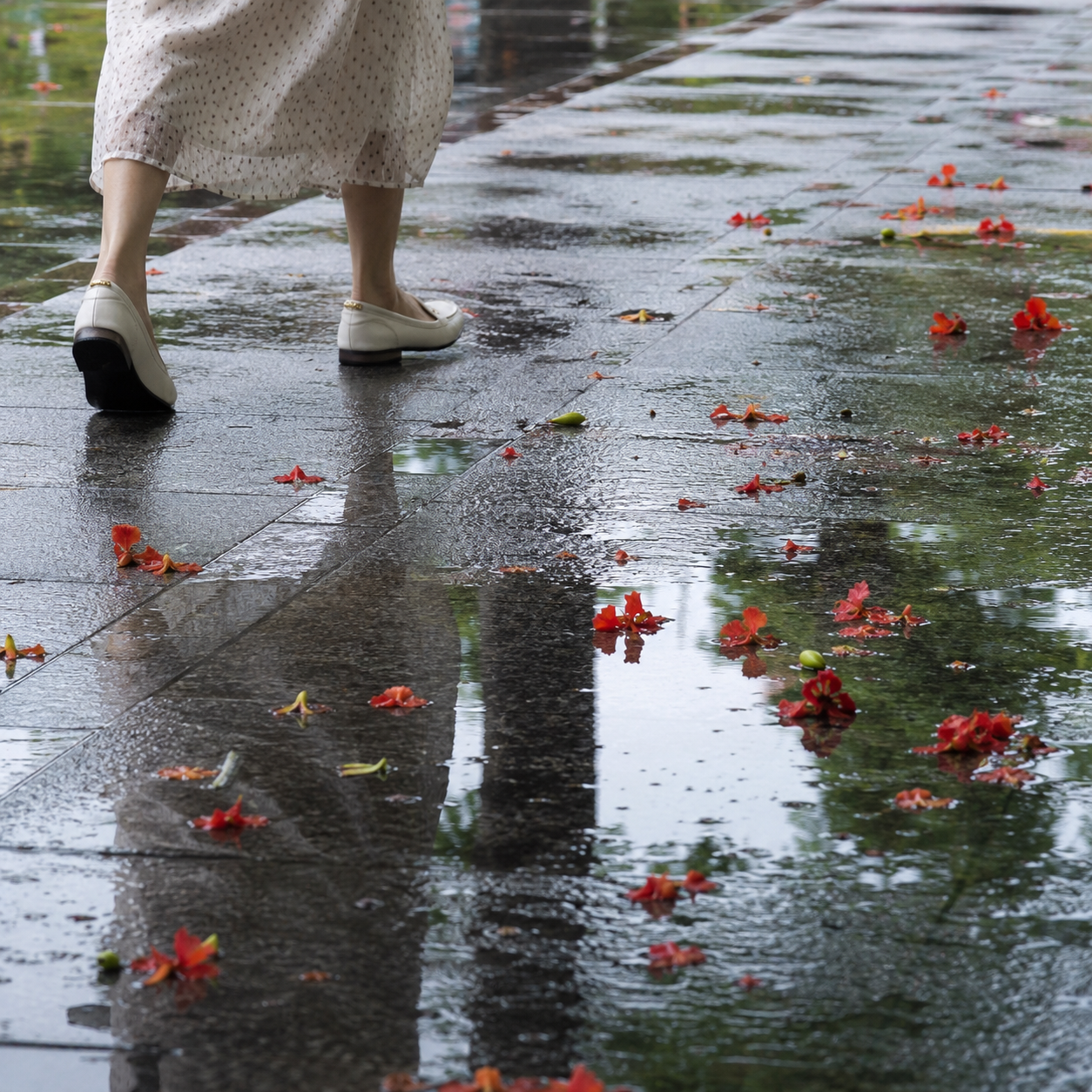
When I reached a viewing platform, the sky began to darken. Puddles at the platform’s edge reflected several clouds, and when the wind blew, the cloud shadows broke apart. I stood there for a long time. Beside me, a little boy asked his mother, “Has the rain gone?” His mother said, “It has gone a little, but it is still in the sky.” This sentence made me smile. The rain had indeed gone a little, but it still remained on the ground, the leaves, the air, and the umbrellas everyone had folded away.
我在附近买了一杯热饮。店员把杯子递过来时,纸杯外壁很快蒙上一层细细的水汽。热气从杯口升起来,和外面的潮湿空气混在一起。喝第一口时,身体终于从雨后的微凉里回过神来。慢走并不意味着一直在外面硬撑,它也包括适时停下,找一点热的东西,把手掌和胃都安顿好。
I bought a hot drink nearby. When the clerk handed me the cup, a fine layer of moisture quickly formed on the paper surface. Steam rose from the opening and mixed with the damp air outside. With the first sip, my body finally recovered from the slight coolness after rain. Slow walking does not mean stubbornly staying outside all the time. It also includes stopping at the right moment, finding something warm, and settling both palms and stomach.
店门口有一个窄窄的屋檐,我站在下面,看街上重新热闹起来。外卖骑手开始加快速度,公交车一辆接一辆经过,路边小摊把盖布掀开,游客也重新往海边走。雨后的暂停正在结束,城市的节奏一点点回到原来的轨道。但我因为已经慢走过一段,心里并不被这种恢复催促。好像我已经拿到雨后最安静的那一份时间。
There was a narrow eave at the shop entrance. I stood beneath it and watched the street become lively again. Delivery riders began to speed up, buses passed one after another, roadside stalls lifted their covers, and tourists moved toward the sea again. The pause after rain was ending, and the rhythm of the city was returning little by little to its original track. But because I had already walked slowly for a while, I did not feel urged by this recovery. It was as if I had already received the quietest portion of time after the rain.
后来我继续往回走,路灯在湿地面上拖出长长的金色。每一步都像踩在一张微微发亮的纸上。珠海的夜色没有一下子降临,而是从树冠、楼缝和海面一点点渗出来。有人在路边打电话,有人牵着狗,有人推着婴儿车小心避开水洼。日常生活重新出现,但因为雨水的缘故,它看起来比平时更柔和。
Later I continued walking back. Streetlights dragged long strips of gold across the wet ground. Each step felt as if it landed on a slightly shining sheet of paper. Night in Zhuhai did not fall all at once, but seeped out little by little from tree crowns, gaps between buildings, and the sea surface. Someone made a phone call by the road, someone walked a dog, and someone pushed a stroller carefully around puddles. Daily life reappeared, but because of the rainwater, it looked softer than usual.
我想到很多城市都可以雨后慢走,但珠海有自己的气质。它的雨后不是萧瑟的,也不是泥泞的,而是带着海边的清洁和南方植物的旺盛。树叶很大,水珠也显得饱满;风从海上来,把湿气吹散,又把新的湿气带来。人在这里慢走,会觉得自己不是在穿过一场天气,而是在穿过一层轻轻变动的生活。
I thought that many cities can be walked slowly after rain, but Zhuhai has its own temperament. Its aftermath of rain is not bleak or muddy, but carries seaside cleanliness and the abundance of southern plants. The leaves are large, and the drops of water seem full; the wind comes from the sea, dispersing moisture and bringing new moisture at the same time. Walking slowly here, one feels not that one is passing through weather, but through a gently shifting layer of life.
雨后慢走也让人更能接受计划的松动。原本想去的地方也许因为雨而错过,原本准备拍的照片也许没有出现,但路上的光、水声和风补上了空缺。旅行并不是每一项都完成才算成功。有时候,一场雨打乱安排,反而把人从安排里救出来。你不再追着时间表跑,而是跟着一条湿润的街道走。
Slow walking after rain also makes one more accepting of loosened plans. A place originally intended may be missed because of rain, and a photo originally imagined may not appear, but the light, water sounds, and wind on the road fill the gap. Travel is not successful only when every item is completed. Sometimes a rain disrupts the arrangement and instead saves a person from the arrangement. You no longer run after the timetable, but follow a damp street.
我回头看刚才走过的方向,远处的海已经只剩一片暗色。栏杆、树影和人影都被夜色收在一起。雨水还没有完全干,空气依然潮湿,但城市已经开始进入晚上的部分。那一刻我觉得,这段慢走没有明确的起点和终点。它更像是雨停之后自然展开的一小段时间,被我刚好遇见,又刚好走完。
I looked back toward the direction I had come from, and the distant sea had become only a dark stretch. Railings, tree shadows, and human silhouettes were gathered together by night. The rainwater had not completely dried, and the air was still damp, but the city had begun entering its evening portion. At that moment I felt that this slow walk had no clear beginning or end. It was more like a small period of time naturally unfolding after the rain stopped, which I happened to meet and happened to finish.
回到住处附近时,鞋面上有一点泥点,裤脚也微微湿了。我没有觉得麻烦,反而觉得这些痕迹像是这段路给我的证明。干净整齐的旅行当然舒服,但带一点雨水的旅行更有触感。它提醒我,我不是隔着玻璃看珠海,而是真的在它的雨后空气里走过,闻到潮湿,踩过积水,被风吹过脸。
When I returned near my lodging, there were a few mud spots on my shoes, and the hems of my pants were slightly wet. I did not find it troublesome; instead, these traces felt like proof given to me by the road. A clean and tidy trip is certainly comfortable, but a trip carrying a little rainwater has more texture. It reminds me that I was not looking at Zhuhai through glass, but truly walked through its post-rain air, smelled the dampness, stepped through puddles, and felt wind on my face.
如果说晴天的珠海适合远望,雨后的珠海就适合贴近。远望时,你看见海岸线、桥、天空和建筑;贴近时,你看见水珠、花瓣、湿鞋印和便利店门口的灯。两种珠海都真实,但雨后的这一种更像低声说话。它不把美摊开给你看,而是藏在路面反光里,等你走慢一点,自己发现。
If sunny Zhuhai is suitable for looking far away, Zhuhai after rain is suitable for coming close. When looking far, you see the coastline, bridges, sky, and buildings; when coming close, you see water drops, petals, wet footprints, and the light at a convenience store entrance. Both versions of Zhuhai are real, but the post-rain one speaks more softly. It does not spread beauty out for you to see; it hides beauty in reflections on the road, waiting for you to slow down and discover it yourself.
那天晚上,我没有把这段路写进任何正式行程。它只是发生了:雨停了,我走了,城市湿着,风吹着,海在远处。我后来想,许多真正留在心里的旅行片段,都是这样没有被提前命名的。它们没有门票,没有预约,没有固定时长,却因为身体亲自经历过,而比许多精心安排的时刻更稳固。
That evening, I did not write this stretch of road into any formal itinerary. It simply happened: the rain stopped, I walked, the city was wet, the wind was blowing, and the sea was in the distance. Later I thought that many travel fragments that truly remain in the heart are unnamed in advance like this. They have no tickets, no reservations, no fixed duration, yet because the body personally experienced them, they become steadier than many carefully arranged moments.
珠海雨后慢走给我的不是惊喜,而是一种被慢慢安放的感觉。像把匆忙的心从口袋里拿出来,放在潮湿空气里吹一吹,再收回去时,它已经没有那么皱。旅行中我们总想带走一些东西,照片、纪念品、餐厅名字、路线经验。但有时候,最值得带走的是一种速度。那天的速度很慢,慢到足够让我看见雨水如何从一片叶子落到地上。
Slow walking after rain in Zhuhai did not give me surprise, but a feeling of being slowly set down. It was like taking a hurried heart out of the pocket, letting it air in the damp atmosphere, and putting it back when it was no longer so wrinkled. In travel, we always want to take something away: photos, souvenirs, restaurant names, route experience. But sometimes the thing most worth taking away is a speed. The speed that day was slow, slow enough for me to see how rainwater fell from a leaf to the ground.
以后再想到珠海,我也许会想到晴朗海岸和开阔道路,但更可能先想到雨后的那段慢走。想到湿亮的人行道,想到栏杆上的水,想到小男孩问雨是不是走了,想到热饮杯口升起的白气。它们都是很小的画面,却组成了一种温柔的记忆。珠海在那场雨后没有刻意招待我,只是允许我慢慢经过。
When I think of Zhuhai later, I may think of sunny coasts and open roads, but more likely I will first think of that slow walk after rain. I will think of the wet and shining sidewalk, the water on the railing, the little boy asking whether the rain had gone, and the white steam rising from the hot drink. They are all small images, yet together they form a gentle memory. After that rain, Zhuhai did not deliberately entertain me; it simply allowed me to pass through slowly.
回到房间后,我把伞摊开晾在门边,鞋放在窗下。窗外还有水声,不知道是树叶滴水,还是楼下有人冲洗地面。我坐了一会儿,没有急着洗澡,也没有急着整理照片。身体里还保留着刚才的速度。雨后的慢走结束了,但它留下的节奏没有立刻散去,像一段轻轻的潮声,继续在夜里陪我。
After returning to the room, I opened the umbrella to dry by the door and placed my shoes under the window. Outside there was still the sound of water, though I did not know whether it came from leaves dripping or someone downstairs washing the ground. I sat for a while, not hurrying to shower or sort photos. My body still kept the speed from earlier. The slow walk after rain had ended, but the rhythm it left did not disappear immediately. Like a soft tide sound, it continued to accompany me into the night.
- 那本被果汁弄湿的拼音本,让本人第一次学会声调不是唱歌,而是方向 | A Pinyin Notebook Spilled with Juice Taught Me That Tones Are Not Singing but Direction
- 云南古城最怕被一句“适合慢下来”说完,真正值钱的是慢下来以后怎么走 | Yunnan’s Old Towns Deserve More Than “Good for Slowing Down”; What Matters Is How You Move Once You Slow
- 我在中国学会外卖自取礼貌,不是学会说哪句话,而是先别挡住别人的流程 | Learning Takeout Pickup Etiquette in China Was Not About Memorizing a Phrase, but About Not Blocking Other People’s Flow First
- 从成都出发的三天川西自驾路线 | A 3-Day Road Trip from Chengdu into Western Sichuan
- 青岛夜里最重要的准备,不在背包里,而在你肯不肯及时收住脚步 | The Most Important Preparation for a Qingdao Night Is Not in the Bag but in Knowing When to Slow Down
- 美国人去中国旅行前必须知道的事 | What Americans Need to Know Before Traveling to China
- 我在中国县城汽车站学会先看人群走向,再找检票口 | I Learned at a Chinese County Bus Station to Watch Where People Flow Before Looking for the Gate
- 广州宵夜:凌晨两点,我在惠福东路吃炒螺 | Guangzhou After Midnight: Stir-Fried Snails at 2am on Huifu East Road
- 脸谱绘制体验:我第一次明白一张脸为什么可以先于台词说话 | Opera Face-Painting Workshop: My First Time Understanding How a Face Can Speak Before the Lines
- 南京五月的雨把我们一家三口困在城墙边,却顺手送来了一顿最好吃的鸭血粉丝汤 | A May Rain by Nanjing's City Wall Stranded Our Family of Three and Delivered the Best Bowl of Duck Blood Soup Instead
Comments (0)