
扬州雨后最动人的,不是园子名气,而是鞋底碰到湿石板的那一下 | In Rainy Yangzhou, the Most Moving Thing Is Not a Famous Garden but the Sound of Shoes on Wet Stone
雨后的扬州,我把赶路改成了慢走 | After Rain in Yangzhou, I Changed Rushing into Slow Walking
雨停后的扬州,像刚被一只温柔的手擦过。天空还没有完全放晴,云层薄薄地铺着,亮光从缝隙里漏下来,不刺眼,只让街道显得湿润而清楚。青石板路上积着浅浅的水,树叶被雨洗得发亮,屋檐偶尔还滴下一两颗水珠。这样的天气不适合赶路,也不适合把行程排得很满。它像是在提醒人:在扬州,雨后最好的事情,就是慢慢走。
Yangzhou after the rain seemed to have been wiped by a gentle hand. The sky had not fully cleared; thin clouds spread above, and light leaked through the gaps without dazzling the eyes, making the streets look moist and distinct. Shallow water rested on the stone pavement, leaves shone after being washed by rain, and one or two drops still fell from the eaves now and then. This kind of weather is not suited for rushing, nor for a packed schedule. It seems to remind people that in Yangzhou, the best thing after rain is simply to walk slowly.
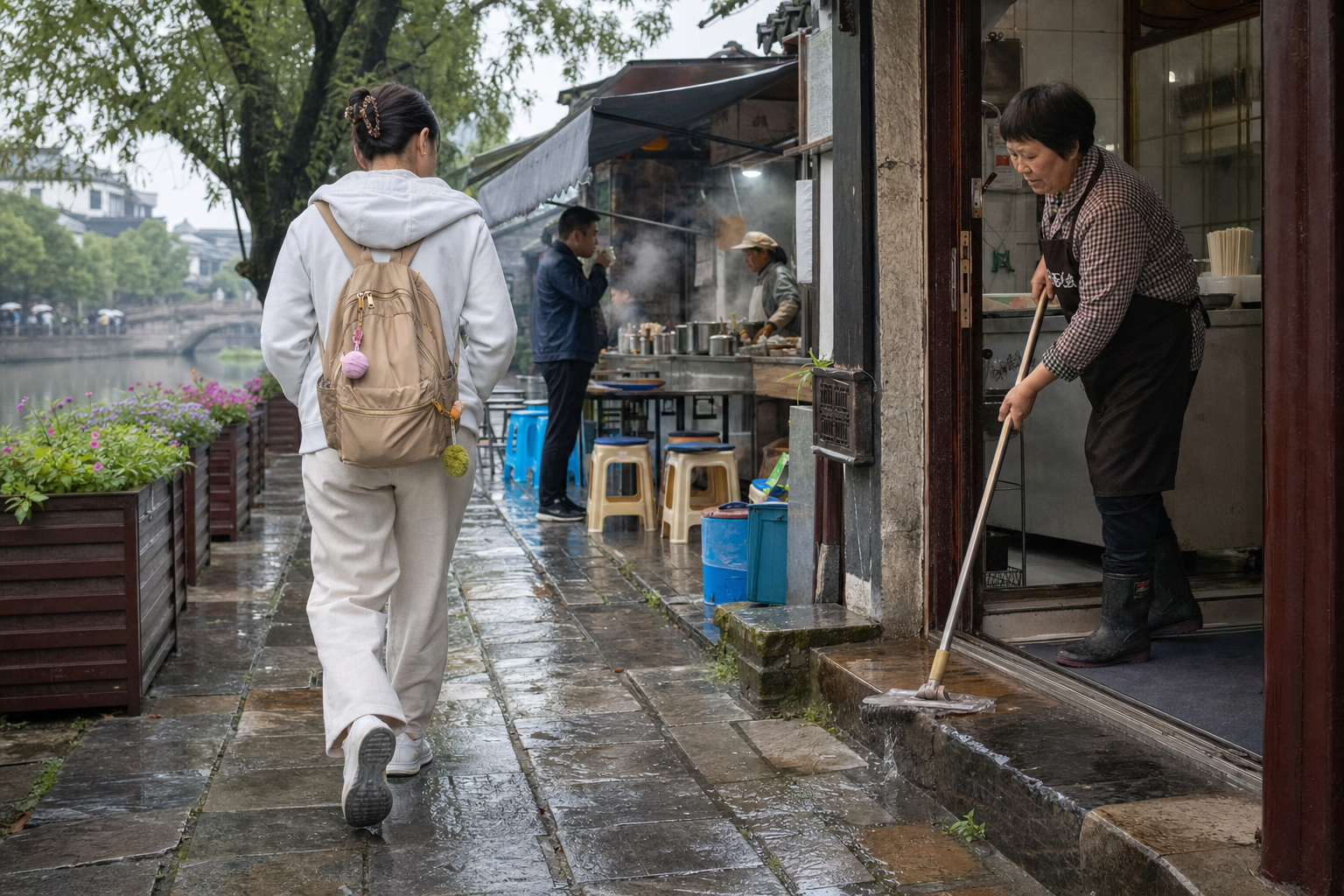
我从住处出来时,没有立刻打开导航。雨后的空气带着草木和河水的气味,混着一点点泥土的湿气。路边的店铺刚把门打开,店主拿着拖把把门口的水往外推,动作不急不慢。早点摊还冒着热气,有人站在棚下喝豆浆,塑料凳上留着雨点。城市并没有因为一场雨停摆,只是节奏被雨水压低了,所有声音都显得柔和一些。
When I stepped out of my lodging, I did not immediately open the navigation app. The air after the rain carried the smell of plants and river water, mixed with a little damp earth. Shops along the road had just opened, and owners used mops to push water away from the entrances, moving without hurry. Breakfast stalls still steamed, people stood under awnings drinking soy milk, and raindrops remained on plastic stools. The city had not stopped because of the rain; its rhythm had only been lowered by the water, making every sound softer.
扬州适合慢走,不只是因为它有古巷、园林和瘦西湖,更因为它的许多美都藏在转角和停顿里。雨后的墙面颜色更深,白墙不再只是白,而带着一点灰,一点旧;黑瓦也不只是黑,边缘有水光,像被重新描了一遍。巷子里的石榴树伸出墙外,叶尖挂着水珠,行人经过时轻轻一碰,水就落到肩上。这样的细节,如果走得太快,就会像没发生过一样。
Yangzhou suits slow walking not only because it has old lanes, gardens, and Slender West Lake, but because much of its beauty hides in corners and pauses. After rain, the walls deepen in color. White walls are no longer merely white, but carry a little gray and age. Black tiles are no longer merely black; their edges hold waterlight, as if redrawn. A pomegranate tree in an alley stretches beyond a wall, with drops hanging from the tips of its leaves. When a passerby brushes it lightly, water falls onto the shoulder. Such details, if one walks too fast, seem never to have happened.
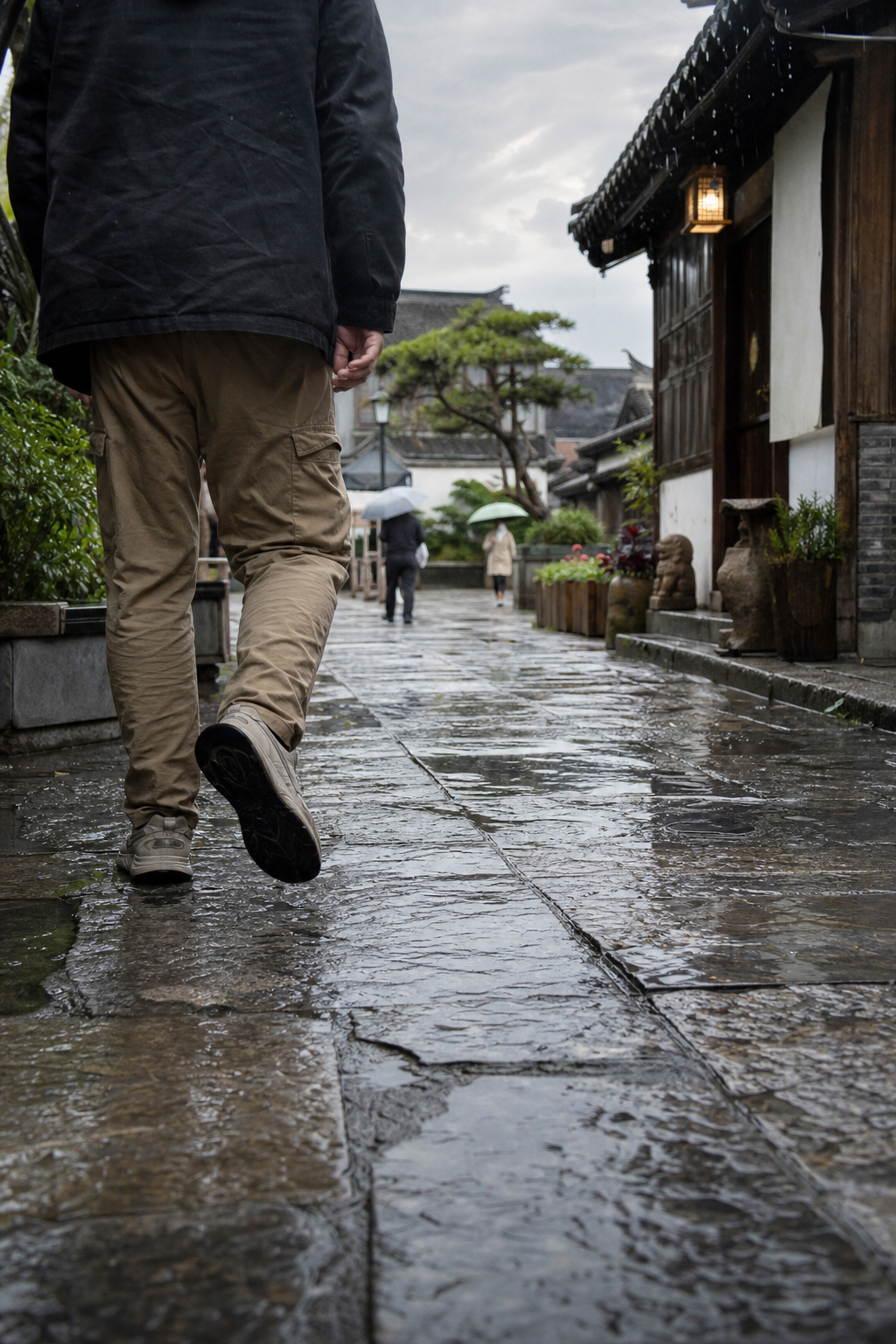
我沿着一条不太宽的街往前走,脚步踩在湿地面上,声音比平时更轻。路边有一条小河,河水因为刚下过雨显得有些浑,却并不难看。几只小船停在岸边,船篷上积着水,绳子湿湿地缠在木桩上。桥洞下传来水声,短促而反复。扬州的水不是摆在远处给人看的,它常常就在身边,贴着街、贴着桥、贴着人家的后门,安静地参与日常。
I walked along a street that was not very wide, my steps landing on the wet ground with a softer sound than usual. A small river ran beside the road. Because of the recent rain, the water looked somewhat muddy, but not unpleasant. Several small boats were moored by the bank, water collected on their awnings, and wet ropes wound around wooden posts. From beneath a bridge came the repeated, brief sound of water. Water in Yangzhou is not placed far away for people to admire; it is often right beside you, close to streets, bridges, and back doors, quietly taking part in daily life.
走到桥上时,我停了一会儿。桥面湿滑,石栏杆被雨洗得发凉。我扶着栏杆往下看,河面上有被风吹散的雨纹,也有从屋檐滴落后扩开的圆圈。对岸一位老人撑着伞慢慢走,伞已经没有必要,却像一种习惯,还留在手里。他走得很稳,路过一扇半开的木门时,里面传出收音机的声音。那一刻,我觉得扬州的雨后不是景观,而是一种生活被轻轻放慢后的状态。
When I reached the bridge, I stopped for a while. The surface was wet and slippery, and the stone railing felt cool after being washed by rain. Holding the railing, I looked down. The river surface carried rain marks scattered by wind, as well as circles widening after drops fell from eaves. On the opposite bank, an old man walked slowly with an umbrella. The umbrella was no longer necessary, but it remained in his hand like a habit. He walked steadily, and as he passed a half-open wooden door, the sound of a radio came from inside. At that moment, I felt that Yangzhou after rain was not scenery, but a state in which life had been gently slowed.
我没有急着去任何著名地方,只是顺着街巷走。路过一家小面馆,门口的蒸汽和雨后的冷气碰在一起,形成一团白雾。老板在门口摆凳子,看到我经过,随口说小心地滑。我点头道谢,没有进去,却把这句话带着继续往前走。旅行中的好意常常很短,短到不值得记在攻略里,但它会改变一个地方给人的温度。雨后的扬州,因为这样的提醒,显得更近了一点。
I was in no hurry to reach any famous place; I simply followed the lanes. Passing a small noodle shop, I saw steam at the entrance meet the cool air after rain, forming a white mist. The owner was arranging stools outside. Seeing me pass, he casually said, “Be careful, the ground is slippery.” I nodded and thanked him. I did not go in, but carried the sentence forward with me. Kindness during travel is often brief, too brief to be recorded in a guide, yet it changes the temperature of a place. Because of such a reminder, Yangzhou after rain felt a little closer.
一阵风吹过,树叶上的水珠落下来,像又下了一场很小的雨。我走到一段粉墙黛瓦旁,墙根长着青苔,颜色新鲜得像刚被点亮。墙内也许是一户人家,也许是一处小园,隔着墙只能看见几枝竹子。竹叶被雨压得微微低垂,风一来,又轻轻弹起。扬州的含蓄常常在这样的地方出现:它不把全部景致推到你面前,而是留一点遮挡,让人自己想象。
A gust of wind passed, and drops fell from the leaves as if another tiny rain had begun. I reached a stretch of white wall and dark tiles, where moss grew at the base, its color fresh as if just lit. Behind the wall there might have been a home, or perhaps a small garden. From outside, I could only see a few bamboo branches. Rain had pressed the bamboo leaves slightly downward, and when the wind came, they lifted gently again. Yangzhou’s restraint often appears in places like this: it does not push all its scenery before you, but leaves a little cover, allowing you to imagine the rest.
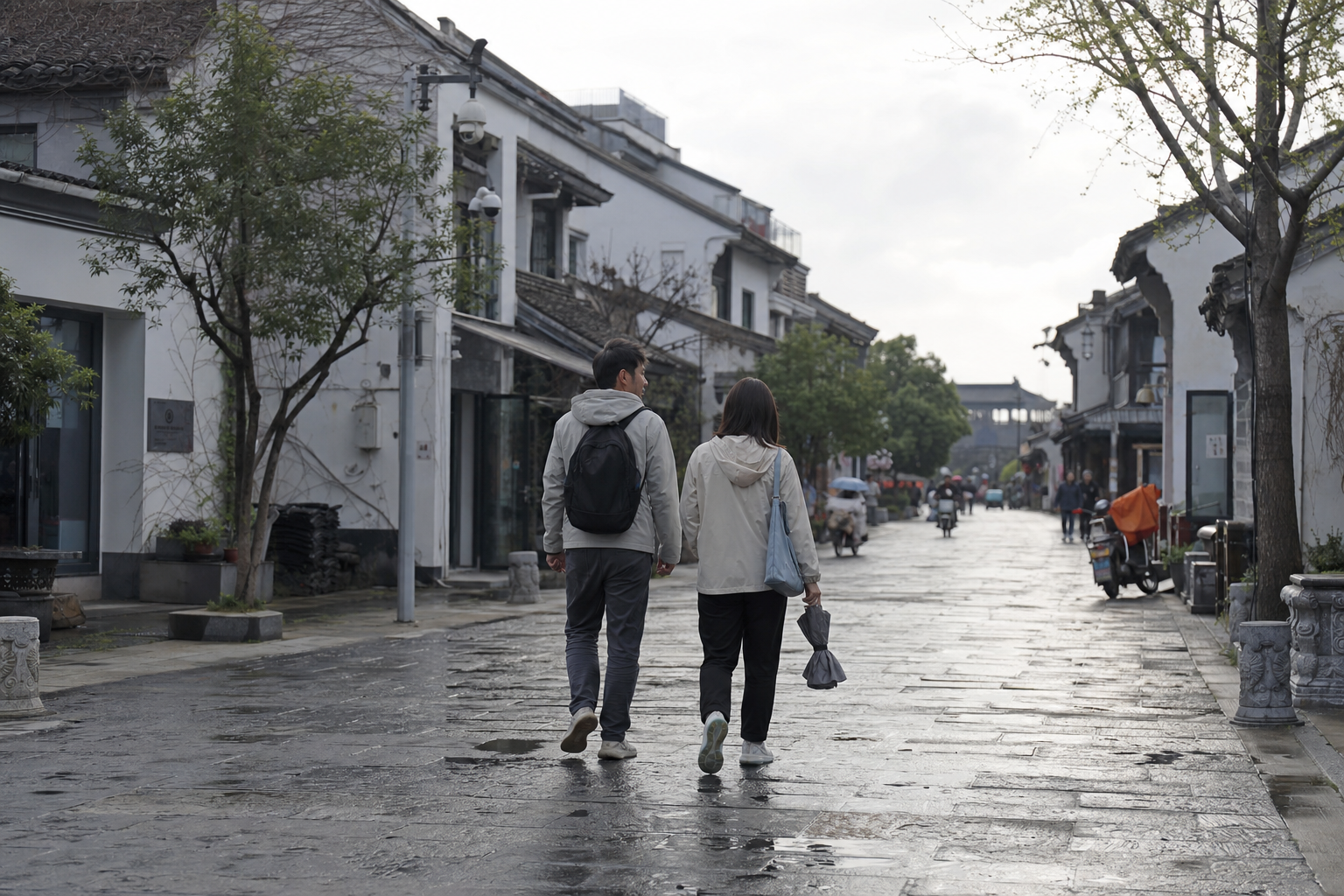
慢走的好处,是人会重新注意到声音。雨后没有强烈的蝉鸣,也没有太多喧闹,只有自行车轮胎压过水面的轻响,远处菜市场的叫卖声,屋檐滴水的节奏,还有偶尔从巷口传来的笑声。每一种声音都不大,却因为空气湿润而显得清晰。城市像一件刚洗过的衣服,被拧干后挂起来,纹理比平常更容易看见。
The advantage of walking slowly is that one begins to notice sounds again. After rain, there was no intense cicada cry and not much noise, only the soft sound of bicycle tires pressing over water, vendors’ calls from a distant market, the rhythm of drops from eaves, and occasional laughter from an alley entrance. No sound was loud, yet each seemed clear because the air was moist. The city was like a freshly washed garment, wrung out and hung up, its texture easier to see than usual.
我走进一条更窄的巷子,两边的房子靠得很近,窗台上放着花盆和晾衣架。雨水还挂在衣架的铁丝上,几件衣服被收进屋里,只剩夹子排成一排。巷子尽头有一只猫蹲在台阶上,认真地舔自己的爪子。它看到我,没有跑,只是抬头看了一眼,又低下头继续整理毛。雨后的动物也像知道时间变慢了,不急着躲开人,也不急着去别处。
I entered a narrower lane, where houses on both sides stood close together. Flowerpots and drying racks sat on windowsills. Rainwater still hung from the wires of the racks; several garments had been taken indoors, leaving only clips lined up in a row. At the end of the lane, a cat crouched on a step, carefully licking its paw. It saw me but did not run, only lifted its head for a glance before lowering it again to arrange its fur. Animals after rain also seemed to know that time had slowed, with no hurry to avoid people or go elsewhere.
巷子转出去,是一条稍宽的路,路边有卖藕粉和点心的小店。玻璃柜台被擦得很亮,里面摆着糕点,颜色温和,不夸张。扬州的甜味在我想象里总是克制的,不像猛烈的糖,而像水汽里慢慢散开的香。我买了一小块点心,站在店檐下吃。糕点入口很软,甜味不急着冲上来,而是在咀嚼之后留下一点余味。雨水从檐角滴下,正好落在我脚边。
The lane opened onto a slightly wider road, where small shops sold lotus root starch and pastries. The glass counters had been wiped bright, and the pastries inside were gentle in color, not exaggerated. In my imagination, Yangzhou’s sweetness is always restrained, not like forceful sugar, but like fragrance slowly spreading through moisture. I bought a small pastry and ate it under the shop eaves. It was soft in the mouth, and the sweetness did not rush forward; it left a faint aftertaste after chewing. Water dripped from the corner of the eaves and landed right beside my feet.
继续往前,路上的游客渐渐多了起来。有人举着相机拍雨后的墙,有人站在桥边等同伴,有人打开伞只为了拍照时好看。即使这样,扬州仍然没有变得吵闹。也许是湿气吸住了声音,也许是雨后的人们本能地放低了音量。大家走得比晴天慢,鞋底沾着水,裤脚偶尔被溅湿。慢,并不是刻意营造的姿态,而是天气自然给出的步速。
As I continued, more visitors gradually appeared on the road. Some raised cameras to photograph walls after rain, some stood by the bridge waiting for companions, and some opened umbrellas only because they looked good in photos. Even so, Yangzhou did not become noisy. Perhaps the moisture absorbed the sound, or perhaps people instinctively lowered their voices after rain. Everyone walked more slowly than on a sunny day, soles wet, trouser legs occasionally splashed. Slowness was not a deliberately created posture, but the natural pace given by the weather.
我终于打开导航看了一眼,发现自己离原本想去的地方已经绕远了。屏幕上的蓝点停在一条我不认识的小路上,像在提醒我偏离计划。但我没有立刻纠正。旅行中偶尔绕远并不是损失,尤其是在扬州这样的城市。直路把人带到目的地,弯路却让人遇见目的地之外的东西。雨后慢走,最重要的也许不是抵达哪里,而是允许自己被一滴水、一面墙、一阵风暂时留下。
I finally opened the navigation app and found that I had wandered far from the place I originally meant to visit. The blue dot on the screen rested on a small road I did not recognize, as if reminding me that I had deviated from the plan. But I did not correct it immediately. In travel, an occasional detour is not a loss, especially in a city like Yangzhou. Straight roads take people to destinations, while winding roads let them encounter what lies outside destinations. The most important thing about walking slowly after rain may not be arriving somewhere, but allowing oneself to be temporarily held by a drop of water, a wall, or a gust of wind.
午后,云层慢慢散开,阳光落到湿地面上,反射出细碎的亮点。刚才还安静的街一下子有了更明亮的颜色,墙面开始变干,树叶上的水珠越来越少。我有一点舍不得,因为雨后的状态正在消失。城市会恢复日常的速度,车声会更明显,游客会更多,店铺的招呼声也会更响。但我知道,刚才那段慢走已经被我保存下来,不是在手机照片里,而是在身体记忆里。
In the afternoon, the clouds slowly broke apart, and sunlight fell onto the wet ground, reflecting into tiny bright points. The street that had been quiet a moment earlier suddenly gained brighter colors. Walls began to dry, and fewer drops remained on the leaves. I felt a little reluctant, because the after-rain state was disappearing. The city would return to its daily speed, traffic noise would become clearer, tourists would increase, and shopkeepers’ calls would grow louder. But I knew that the slow walk I had just taken had already been saved, not in phone photos, but in bodily memory.
我找了一处河边长椅坐下,鞋底还有一点湿。河面上的光比早上亮了许多,有船缓缓经过,船尾划开一条细长的水纹。岸边柳枝低垂,叶子被晒得半干,颜色从深绿变回柔绿。有人坐在旁边剥橘子,橘皮的味道混进湿木头和河水的气味里。扬州并没有给我一个惊人的瞬间,它只是用许多微小的感觉,把雨后这段时间慢慢填满。
I found a bench by the river and sat down, the soles of my shoes still a little wet. The light on the river was much brighter than in the morning. A boat passed slowly, its stern opening a long, thin ripple. Willow branches hung low along the bank, their leaves half-dried by the sun, changing from deep green back to soft green. Someone nearby peeled an orange, and the scent of orange peel mixed with damp wood and river water. Yangzhou did not give me a startling moment; it simply filled the time after rain with many small sensations.
坐着的时候,我想起很多旅行都在追求速度:一天看几个景点,走多少步,拍多少照片,吃几家店。速度能带来完成感,却不一定带来亲近感。慢下来并不意味着什么都不做,它只是把注意力从清单转到当下。雨后的扬州尤其适合这样,因为它的美不是用力喊出来的,而是从湿润的石板、半开的门、低垂的柳枝和一句“小心地滑”里慢慢渗出来。
As I sat there, I thought of how much travel pursues speed: how many sights in one day, how many steps walked, how many photos taken, how many restaurants visited. Speed can bring a sense of completion, but not necessarily a sense of closeness. Slowing down does not mean doing nothing; it simply moves attention from the checklist to the present. Yangzhou after rain is especially suited to this, because its beauty is not shouted loudly, but slowly seeps out from wet stone slabs, half-open doors, drooping willow branches, and a sentence like “be careful, the ground is slippery.”
离开河边时,我没有再走原路,而是顺着另一条小街慢慢返回。路上经过一所学校,墙外贴着通知,门口的梧桐树还在滴水。几个孩子背着书包跑出来,鞋踩进水坑,溅起小小的水花。他们笑得很大声,和此前安静的雨后街巷形成一点活泼的反差。城市的慢不是静止,它只是允许不同的节奏并排存在:老人慢走,孩子奔跑,河水流动,游客停步。
When I left the riverside, I did not take the same route back, but followed another small street slowly. On the way, I passed a school. Notices were pasted outside the wall, and the plane trees at the gate were still dripping. Several children ran out with schoolbags, stepping into puddles and splashing small bursts of water. They laughed loudly, creating a lively contrast with the quiet lanes after rain. The city’s slowness is not stillness; it simply allows different rhythms to exist side by side: old people walking slowly, children running, river water flowing, visitors stopping.
傍晚前,天空终于露出一小片蓝。我回头看走过的路,地面已经干了一半,只在墙根和树荫下还留着湿痕。雨后的扬州正在变成普通的扬州,可我并不觉得遗憾。正因为那段时间短,它才显得珍贵。雨水像临时给城市加了一层透明的注释,让我看见平日可能忽略的线条、气味和声音。慢走则像读这层注释的方法,不急着翻页,也不急着总结。
Before evening, a small patch of blue finally appeared in the sky. I looked back at the road I had taken. The ground was already half dry, with wet marks remaining only at the base of walls and under tree shade. Yangzhou after rain was turning back into ordinary Yangzhou, but I did not feel regret. Precisely because that period was brief, it felt precious. Rain had temporarily added a transparent layer of annotation to the city, letting me see lines, smells, and sounds I might normally overlook. Slow walking was the way to read that annotation, without rushing to turn the page or summarize.
回到住处附近,我才发现自己今天拍的照片并不多。几张湿墙,几张河面,一张猫,一张点心,还有一张模糊的屋檐水滴。它们看起来都很平常,甚至无法说明我到底走过哪些地方。但这正合适。雨后慢走本来就不是为了证明路线,而是为了让自己在一座城市里短暂地放低速度。照片少一点,反而说明眼睛在更多时候没有隔着屏幕。
Near my lodging, I realized that I had not taken many photos that day. A few wet walls, several river surfaces, one cat, one pastry, and a blurry picture of drops from an eave. They all looked ordinary, and could not even prove exactly where I had been. But that felt right. Walking slowly after rain was never about proving a route; it was about briefly lowering my speed within a city. Fewer photos, in a way, meant that my eyes had spent more time without a screen between them and the world.
晚上,窗外又起了一点风,路灯照在仍未完全干透的地面上,反出微弱的光。我想,如果以后再记起扬州,我可能不会先想起某个完整的景点,而会想起雨停后那种清凉的空气,桥栏杆上的水痕,巷口猫的眼神,点心里慢慢散开的甜味,以及脚步不由自主放慢的感觉。城市有时不需要用壮观来留住人,它只要在一个雨后的下午,让人愿意慢慢走,就已经足够。
At night, a little wind rose outside the window, and the streetlights shone on ground that had not completely dried, reflecting a faint glow. I thought that if I remembered Yangzhou in the future, I might not first recall a complete scenic site, but the cool air after the rain stopped, the water marks on bridge railings, the gaze of the cat at the lane entrance, the sweetness slowly spreading in a pastry, and the feeling of my steps slowing almost by themselves. A city does not always need grandeur to keep a person. If, on an afternoon after rain, it makes someone willing to walk slowly, that is already enough.
- 我在长沙坡子街连吃四样小吃:臭豆腐到底怎么选 | Four Snacks in Pozi Street, Changsha: How I Chose Stinky Tofu
- 英歌舞:潮汕街头的战鼓与脸谱 | Yingge Dance: War Drums and Painted Faces on Chaoshan Streets
- 跨境支付的隐藏成本:汇率、限额与手续费,外国游客怎么少花冤枉钱 | The Hidden Costs of Cross-Border Payment in China: Exchange Rates, Limits & Fees That Catch Tourists Off Guard
- 中国凉菜:一桌好饭从凉菜开始 | Chinese Cold Dishes: Every Great Meal Starts Here
- 天津海河边的傍晚,不适合用打卡速度走完 | An Evening by Tianjin’s Haihe River Is Not for Check-In Speed
- 丽江的雨停在屋檐上以后,我开始跟着水渠和石板路慢慢走 | After Rain Stopped Along Lijiang’s Eaves, I Began Following the Canals and Stone Lanes Slowly
- 山西古建筑文化5日游 | 5-Day Shanxi Ancient Architecture Tour
- 三天玩转上海:完整旅行指南 | Shanghai in 3 Days: Complete Travel Guide
- 热海蒸汽打湿车票后,我把腾冲行程缩短了 | Steam at Rehai Wet My Ticket and Made Me Shorten the Tengchong Plan
- 工作日中午排队十分钟后,我才真正听懂中国午饭高峰的节奏 | After Ten Minutes in a Weekday Lunch Line, I Finally Understood the Rhythm of China’s Noon Rush
Comments (0)