
在社区修理铺门口等十分钟,我才明白中国人为什么总说“先看看能不能修” | Waiting Ten Minutes Outside a Neighborhood Repair Shop, I Finally Understood Why People in China Always Say, “Let’s See If It Can Be Fixed First”
在社区修理铺门口等十分钟,我才明白中国人为什么总说“先看看能不能修” | Waiting Ten Minutes Outside a Neighborhood Repair Shop, I Finally Understood Why People in China Always Say, “Let’s See If It Can Be Fixed First”
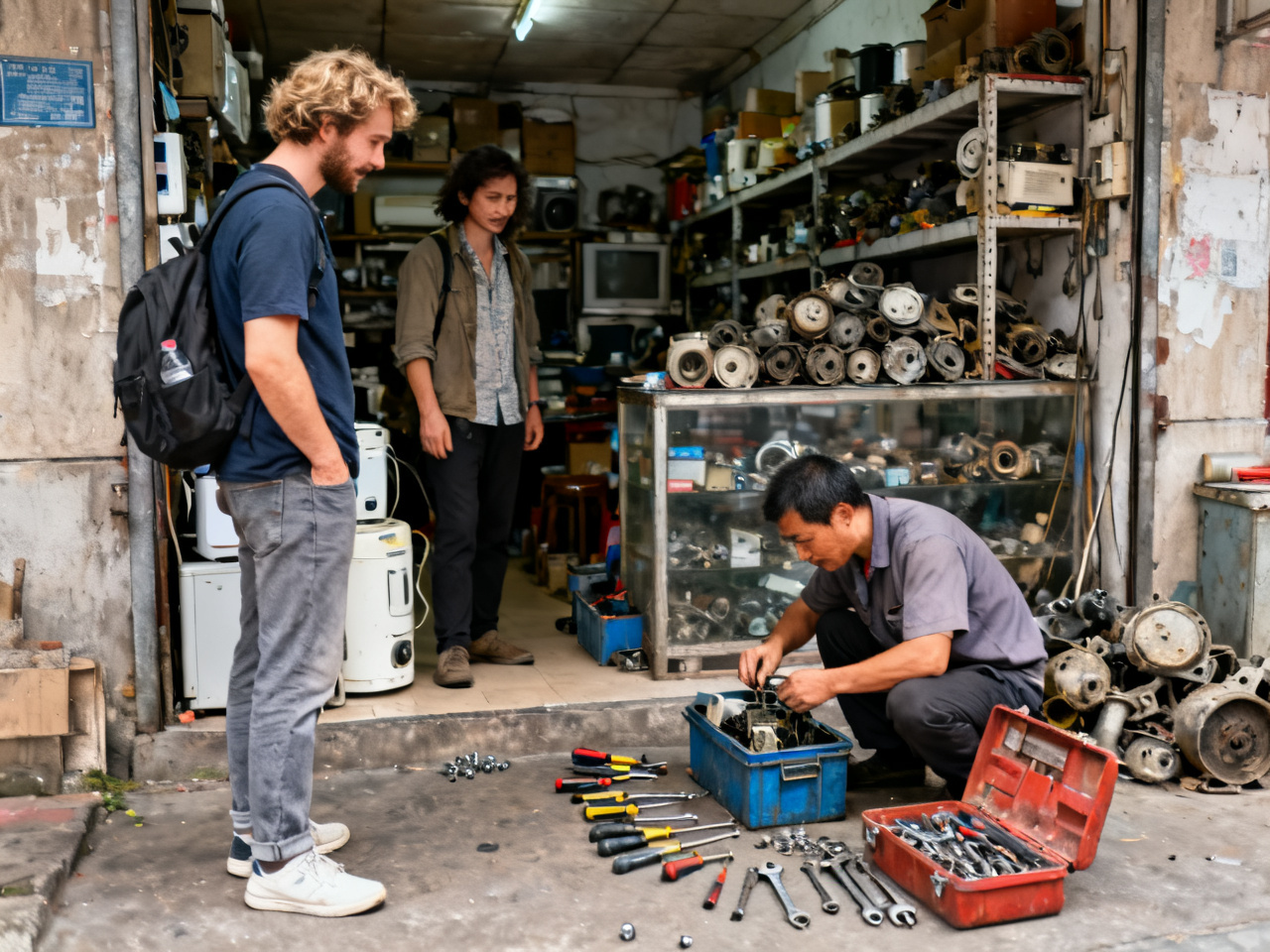
我以前遇到东西坏掉,第一反应往往是算了,看看要不要换新的。尤其是小电器、拉链、台灯、风扇这种不上不下的东西,修起来好像麻烦,丢掉又有点可惜。可我在中国住久了以后,越来越常听到一句话:先看看能不能修。第一次真正让我理解这句话,不是在大型商场或官方售后,而是在居民区边上一家很小的修理铺门口。门头有点旧,玻璃上贴着“修鞋、配钥匙、换拉链、修小家电”,里面灯不算亮,门口还摆着几把等待处理的旧椅子。那地方看起来毫不起眼,却像一个专门替城市挽留零碎物件寿命的小站。
When something broke, my first instinct used to be simple: maybe it was time to replace it. That was especially true for the in-between kinds of things—small appliances, zippers, lamps, fans—items that seemed too troublesome to repair but too wasteful to throw away without hesitation. But after living in China for a while, I kept hearing one sentence: let’s first see whether it can be fixed. The first time I truly understood that phrase was not in a shopping mall or an official service center, but outside a tiny repair shop near a residential neighborhood. The sign was a little faded. The glass listed services like shoe repair, key cutting, zipper replacement, and small appliance repair. The light inside was not bright, and several old chairs waiting for attention stood outside the door. The place looked easy to overlook, yet it felt like a tiny station dedicated to extending the lives of the city’s scattered objects.
那天我拿去的是一盏桌面小台灯,接触不良,灯头总是忽明忽暗。我原本已经开始在网上看新的了,只是路过时突然想起朋友说过,这种店可以先问一嘴。结果我还没开口,前面已经排着几个人:一个阿姨来补鞋底,一个大叔拿着电饭煲内盖,一个年轻人递过去一条卡住的背包拉链。最让我惊讶的是,没有人把这些东西当成“不值一修”。大家说话的口气都很自然,像修理本来就是生活里理所当然的一步。师傅也不急着夸口,只是接过来、翻一翻、按一按、试一试,然后说要么能修,要么得换零件,要么不太划算。整个节奏很平,没有神秘感,也没有过度推销。
That day I brought a small desk lamp whose connection had gone loose. The bulb flickered on and off. I had already started browsing online for a replacement, but as I passed the shop I suddenly remembered a friend saying that places like this were worth asking first. Before I even spoke, several people were already ahead of me: an auntie getting a shoe sole reinforced, a middle-aged man carrying the lid of a rice cooker, a younger person handing over a backpack zipper that had jammed. What surprised me most was that nobody treated these items as beneath repair. Everyone spoke in a matter-of-fact tone, as if repair were simply a normal step in life. The repairman did not boast or overpromise either. He took each thing, turned it over, pressed here and there, tested it, and then said either it could be fixed, it would need a replacement part, or it would not be worth the cost. The rhythm was flat and practical, with no mystique and no hard selling.
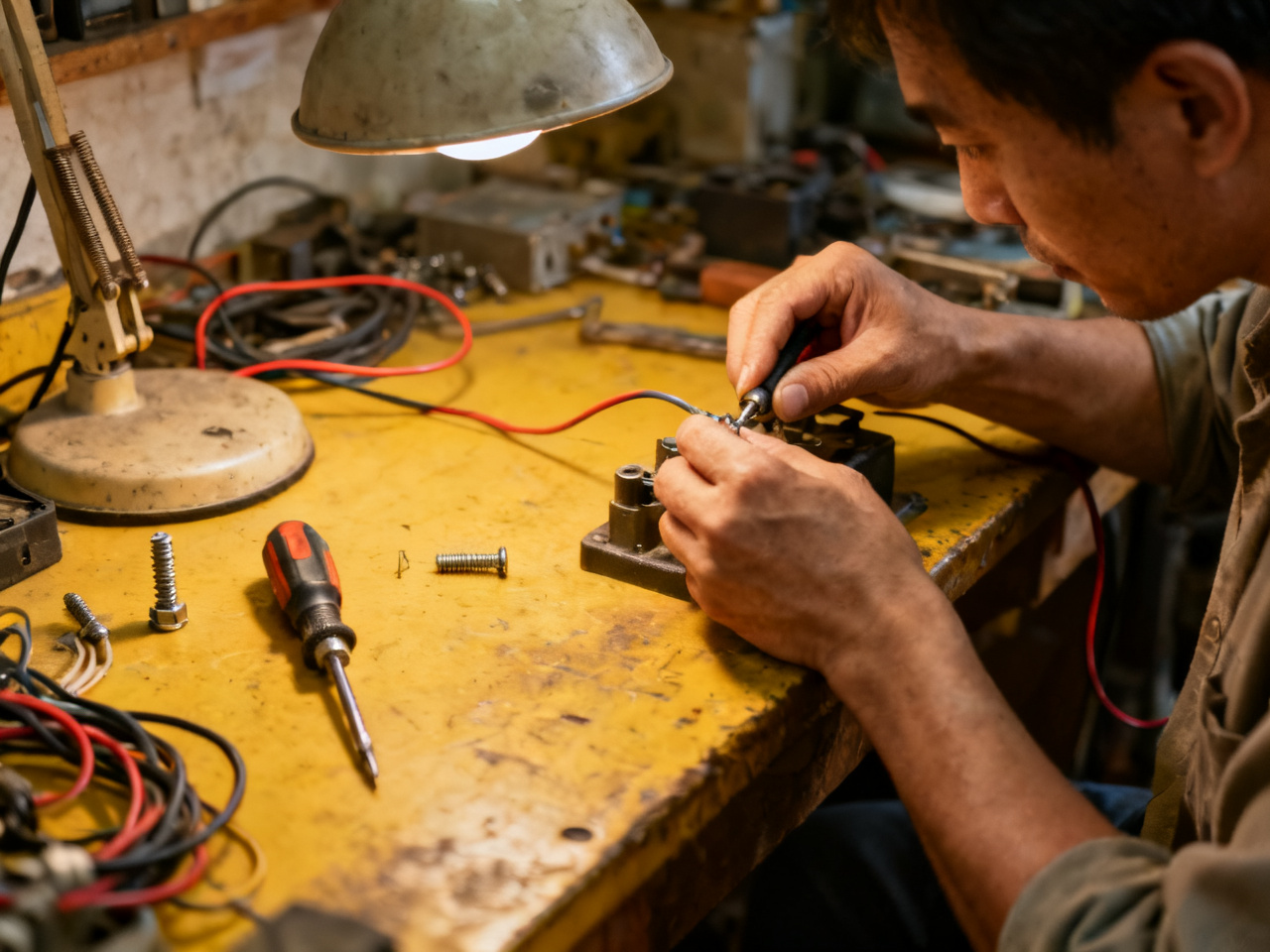
轮到我时,师傅把台灯插上电,轻轻拧了几下接口,又拿小螺丝刀拆开底座,看了不到两分钟,就说不是灯泡问题,是里面一根线松了。他说得很简单,像在宣布一件不值得大惊小怪的事实。我站在一边等,听他顺手和旁边的人聊哪种鞋跟更耐磨、哪种拉链头最容易坏,突然有一种很强烈的感觉:这家小店修的不是单个物件,而是一整套“别急着扔”的生活判断。你把东西带来,不是因为它很贵,而是因为它还没有真正走到结束那一步。
When my turn came, the repairman plugged in the lamp, twisted the connection lightly, opened the base with a small screwdriver, and in under two minutes said it was not the bulb at all. One wire inside had loosened. He said it as simply as if announcing a fact too ordinary to dramatize. I stood to the side waiting, listening as he casually told another customer which kinds of shoe heels wore out faster and which zipper heads broke most easily. Suddenly I had a strong feeling that this little shop was not just repairing isolated objects. It was maintaining an entire habit of judgment built around not throwing things away too soon. You brought something in not because it was expensive, but because it had not truly reached its end yet.
后来我越来越觉得,社区修理铺对外国人特别有启发。因为它会打破一种很常见的误解:现代城市生活并不一定意味着所有东西都只能快速消费、快速替换。在中国很多社区里,修理仍然是一种非常活的日常能力,而且它往往并不高调,只是安静地藏在街角。你会看到人们对物件有一种很务实的耐心——先问能不能补、能不能换个零件、能不能再撑一阵,而不是立刻进入“买新的”模式。我也因此更认同从反复出现的小场景进入中国日常,因为像修理铺这样的位置,往往最能说明一座城市真正的生活纹理。
Later I increasingly felt that neighborhood repair shops are especially revealing for foreigners. They disrupt a very common assumption: modern urban life does not necessarily mean that everything must be consumed quickly and replaced quickly. In many Chinese neighborhoods, repair is still a living daily skill, and it usually is not dramatic. It simply stays there quietly on a side street. You see that people hold a practical patience toward objects. They first ask whether something can be patched, whether a part can be replaced, whether it can last a little longer, rather than immediately entering replacement mode. That is also why I came to believe even more strongly in entering everyday China through small recurring scenes, because places like repair shops often show the true texture of a city’s life better than anything grand.
几分钟后,师傅把台灯重新装好,插电一试,光就稳了。我问多少钱,他报出的数字低得让我有点不好意思,几乎和我买一杯咖啡差不多。旁边那位阿姨拿回补好的鞋,顺手就在门口跺了两下试脚感;那个修拉链的年轻人也把包来回开合了几次,确认顺滑才走。整个门口一直有人来,有人走,没有谁把这地方当成“特别体验”,可我却越看越觉得它珍贵。因为它让人相信,日常生活不是只能不断向前丢弃,也可以通过一双手、一点时间,把很多东西轻轻接回来。
A few minutes later, the repairman assembled the lamp again, plugged it in, and the light turned steady. When I asked the price, the amount was so low that I almost felt embarrassed; it was roughly the cost of a cup of coffee. The auntie beside me took back her repaired shoes and immediately stamped each foot twice outside the shop to test the feel. The younger customer with the backpack opened and closed the zipper several times before leaving, checking for smoothness. People kept arriving and leaving. No one treated the place as a special cultural experience. Yet the longer I watched, the more precious it felt. It suggested that everyday life does not have to move only by constant disposal. Sometimes, through a pair of hands and a little time, many things can be gently brought back.
现在如果有人问我,在中国什么地方最能看出一种务实又不浪费的生活态度,我会想到社区修理铺。那里没有漂亮陈列,也没有复杂叙事,只有各种坏了一点、旧了一点、却还舍不得马上放弃的东西。对我来说,这种地方最迷人的不是“怀旧”,而是它仍然真实地参与着今天的城市运转。它提醒我,很多看似微不足道的修补,其实都在帮人把生活过得更稳一点,也更长一点。
If someone asks me now where in China one can best observe a practical and low-waste attitude toward life, I think of the neighborhood repair shop. It has no polished display and no complicated story, only things that are a little broken, a little old, and not yet ready to be given up. For me, what makes such a place so appealing is not nostalgia. It is the fact that it still truly participates in how the city functions today. It reminds me that many tiny repairs, however insignificant they seem, are quietly helping people live more steadily and make things last a little longer.

- 广州早茶怎么点:两个人也能吃得体面不浪费 | Cantonese Dim Sum for Two: How to Order Smart
- 我怎么把自己练成一个“半个中国人”:从排队、问路到饭桌节奏的融入笔记 | How I Trained Myself into a Half-Local in China: Notes on Queues, Directions, and Table Rhythm
- 汉服:传统中国服饰 | Hanfu: Traditional Chinese Clothing
- 丝绸之路探险之旅 | The Silk Road Adventure
- 一张桌角二维码,让我先核对店名再付款 | A Table-Corner QR Code Taught Me to Check the Shop Name Before Paying
- 在贵阳换乘的三次支付,教我给旅途留一点现金 | Three Payments in Guiyang Taught Me to Keep Some Cash
- 逛中国博物馆前,先学会这套看展方法 | A Practical Method to Visit Museums in China
- 初秋的阿勒泰不只在草原上:我沿河谷重新排了自驾线 | Altay in Early Autumn: Rebuilding a Drive Along the Valleys
- 我如何在中国换城时给自己留出不慌张的缓冲 | How I Build Calm Buffers When Changing Cities in China
- 陪爸妈在湖州的五月细雨里找饭馆,我才知道一家人最稳定的路线其实是“先坐下” | Looking for a Restaurant with My Parents in Huzhou Rain, I Learned the Steadiest Family Plan Begins with Sitting Down
Comments (0)