
风筝制作与放飞:我第一次看懂中国人为什么把春天送上天空 | Kite Making and Flying: My First Real Understanding of How China Sends Spring into the Sky
风筝制作与放飞:我第一次看懂中国人为什么把春天送上天空 | Kite Making and Flying: My First Real Understanding of How China Sends Spring into the Sky
我第一次在中国认真看风筝,不是在大型节庆表演上,而是在一个风很干净的春天下午。公园草地边站着几位老人,手里拿着线轴,天上已经有燕子形、金鱼形、长串蜈蚣形的风筝慢慢升起来。那一刻我突然意识到,在中国,风筝并不只是“可以飞的玩具”。它更像一种把手工、季节、家庭记忆和公共空间连接在一起的民间艺术。作为外国人,我原本以为放风筝的重点只是风够不够、线稳不稳、飞得高不高;但当我开始注意那些骨架、图案、尾部平衡和人们放飞时的表情,我才明白,真正迷人的部分其实从制作阶段就已经开始了。
The first time I truly paid attention to kites in China was not at a large festival performance, but on a clear spring afternoon. A few elderly people stood by the grass in a park holding reels, while swallow-shaped, fish-shaped, and long centipede kites were already rising into the sky. In that moment I realized that in China, a kite is not merely a toy that can fly. It is a form of folk art that connects handcraft, seasonality, family memory, and public space. As a foreigner, I had assumed the main point of kite flying was simply whether the wind was good, whether the line was steady, and whether the kite could go high. But once I started noticing the frame, the painted surface, the tail balance, and the expressions of the people flying them, I understood that the most fascinating part actually begins during the making.
风筝最打动我的,是它把“做”和“飞”连成一件事 | What moved me most is how kite culture joins making and flying into one experience
很多民间工艺适合放在展柜里看,但风筝不是。它的特别之处在于,你不能只看成品。中国传统风筝常用竹篾扎骨,再用纸或绢裱面,最后绘上燕子、蝴蝶、鱼、龙、童子或者花卉图案。骨架要轻,受力要匀,左右要平衡,表面装饰还不能破坏飞行性能。也就是说,它不是先有一个“艺术品”,再勉强让它飞起来;它从一开始就是按照“既要好看,又要能飞”的逻辑被创造出来的。
Many folk crafts are well suited to a display case, but kites are not. Their uniqueness lies in the fact that you cannot appreciate only the finished object. Traditional Chinese kites are often framed with split bamboo, covered with paper or silk, and then painted with swallows, butterflies, fish, dragons, children, or floral designs. The frame must be light, the force evenly distributed, the left and right sides balanced, and the decorative surface cannot undermine flight performance. In other words, it is not that an artwork is made first and then forced into the sky. From the very beginning, it is created according to a logic that demands both beauty and flight.
我很喜欢这种工艺观,因为它让我看到一种非常完整的审美:美不是静止的,美必须经过风的检验。对我来说,这一点很中国,也很动人。它不像某些现代商品那样只追求结果,而是把手艺、观察和使用场景全部放进同一个系统里。一个做得好的风筝,不只是挂在墙上漂亮,拿到空地上也应该有生命力。
I love this way of thinking about craft because it reveals a very complete aesthetic: beauty is not static; beauty must pass the test of the wind. To me, this feels both distinctly Chinese and deeply moving. Unlike many modern products that care only about the final result, this tradition places craftsmanship, observation, and real-life use within the same system. A well-made kite should not only look beautiful on a wall; it should also come alive in an open field.
看制作时,我第一次觉得空气动力学也可以很有温度 | Watching the making, I felt for the first time that aerodynamics could be intimate
如果只是读介绍,风筝制作听起来像一种技术活;但真正看人动手时,它给我的感觉却很有人情味。竹篾要先处理,既要有韧性,又不能太重。扎骨的时候,制作者会很自然地用手去试弯度、看对称、调重心。裱糊看似简单,实际上也需要耐心,因为一旦纸面受力不均,飞起来就容易偏。最后的彩绘更不是附加步骤,它决定了这只风筝会以什么样的性格进入天空。
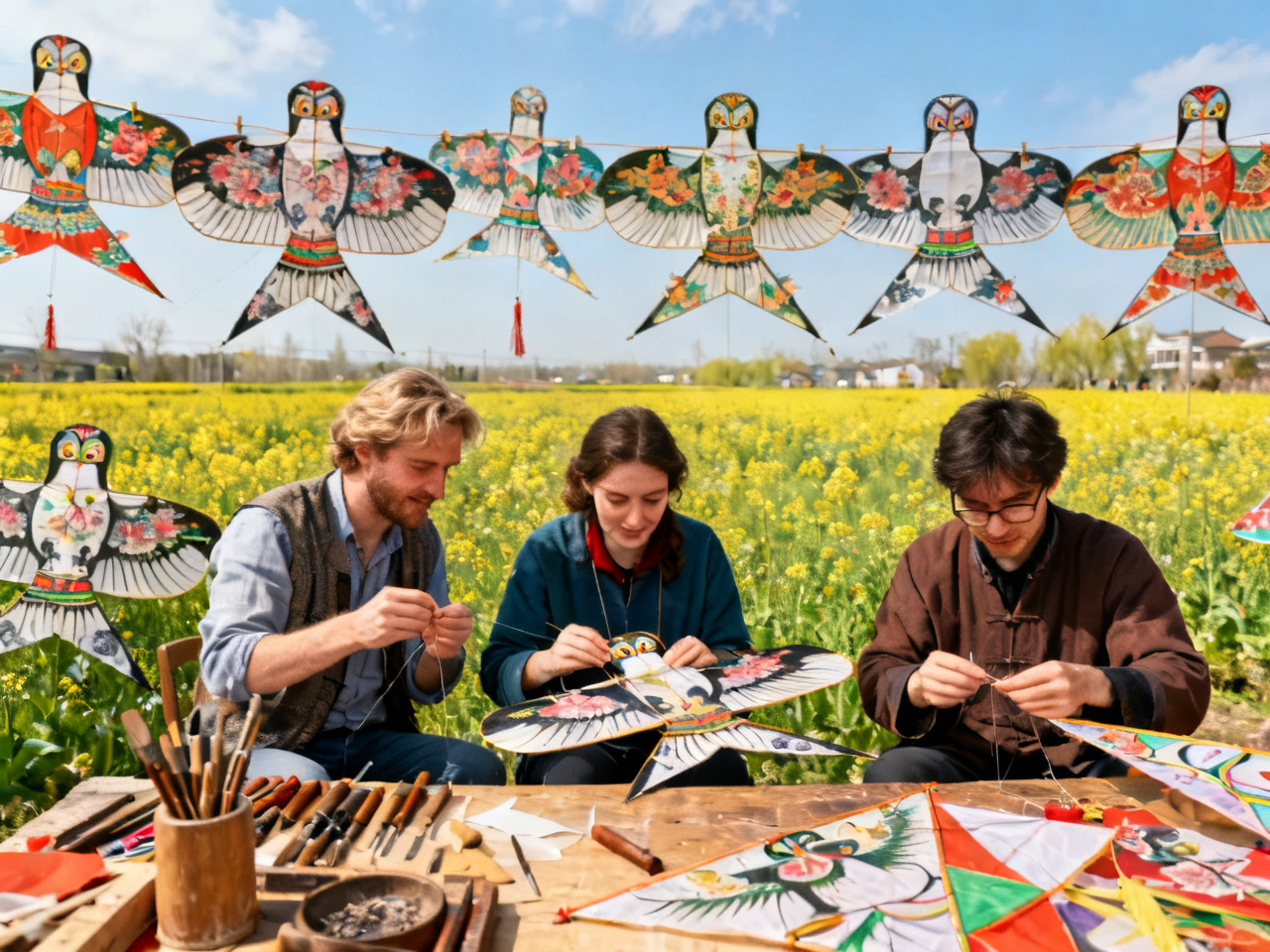
If you only read about it, kite making can sound like a technical procedure. But when you actually watch someone do it, it feels deeply human. The bamboo must be prepared so that it stays resilient without becoming heavy. While shaping the frame, the maker naturally tests the bend by hand, checks symmetry, and adjusts the center of gravity. The covering stage may look simple, but it also requires patience, because if the paper tension is uneven, the kite may pull to one side in flight. The final painting is not an extra decorative step either; it determines what kind of presence that kite will carry into the sky.
我尤其喜欢传统燕子风筝。它们通常线条舒展,姿态轻快,看上去像春天本身被放大了。还有一些鱼形和龙形风筝,则更夸张、更热闹,放上天之后带着明显的节庆感。我以前在别的国家也看过很多风筝,但很少遇到这种“图案本身就带叙事意味”的情况。在中国,风筝上的形象往往不是随便选的,它们常常和吉祥、报春、灵动、丰收或者孩子的想象力有关。
I was especially drawn to the traditional swallow kite. Its lines are usually graceful and lively, as if spring itself had been enlarged and released into the air. Fish-shaped and dragon-shaped kites, by contrast, often feel more exaggerated and festive. I have seen many kites in other countries, but I had rarely encountered this degree of narrative imagery. In China, the figures painted on kites are often not chosen casually. They are tied to auspicious meanings, the arrival of spring, vitality, abundance, or the imagination of children.
它也让我想到巴西,但两种风筝文化的重心很不一样 | It reminded me of Brazil, but the emphasis of the two kite cultures feels very different
因为我的家乡是巴西,所以我很自然会把中国风筝和自己熟悉的经验放在一起比较。巴西当然也有很强的放风筝文化,尤其在海边、空地和居民区,很多人从小就会放风筝。那种快乐非常直接:风来了,线一拉,大家抬头看谁飞得更高、更稳、更久。它更接近日常户外娱乐,也更有街头活力。
Because I come from Brazil, I naturally compare Chinese kite culture with what I know from home. Brazil certainly has a strong kite-flying culture as well. On beaches, in open lots, and in neighborhoods, many people grow up flying kites. The joy there is very direct: the wind comes, the line tightens, and everyone looks up to see whose kite can go higher, steadier, and longer. It feels closer to everyday outdoor play and carries a stronger street energy.
但中国传统风筝给我的感受不太一样。它当然也有娱乐性,可它更强调“这只风筝是什么”“为什么长这样”“是谁做的”“它寄托了什么愿望”。换句话说,巴西的风筝经验常常让我先想到动作和竞争感,而中国的风筝经验更容易让我先想到图像、工艺和季节气氛。一个更偏向飞行现场的兴奋,一个更偏向制作与文化寓意的完整性。
But traditional Chinese kites give me a different impression. They are certainly playful, yet they place more emphasis on what this kite is, why it looks this way, who made it, and what wishes it carries. In other words, kite experience in Brazil often makes me think first of movement and competition, while kite experience in China makes me think first of imagery, craftsmanship, and seasonal atmosphere. One leans more toward the excitement of the flying scene; the other toward the integrity of making and cultural meaning.
这并不是说哪一种更好,而是它们让我理解了同一种物件如何在不同文化里长出不同性格。对外国游客来说,这种比较特别有意思,因为你会发现自己本来很熟悉的事情,在中国竟然可以拥有另一套价值标准。
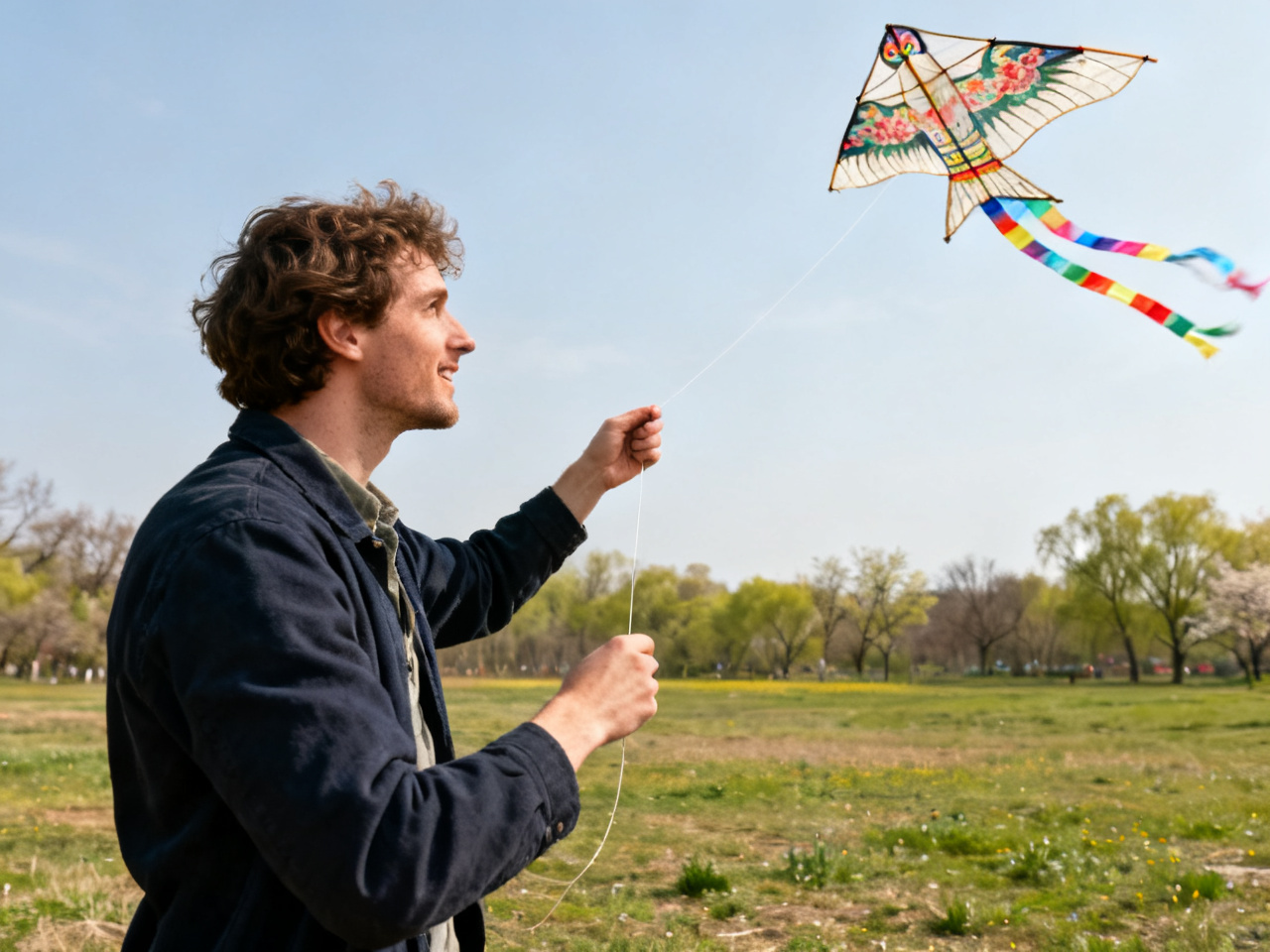
This is not to say one is better than the other. Rather, both traditions helped me understand how the same object can develop very different personalities in different cultures. For foreign travelers, this comparison is especially interesting, because something that once felt familiar can suddenly acquire a completely different set of values in China.
如果旅行中遇到风筝,我建议不要只顾着拍天上的那一只 | If you encounter kites while traveling, do not focus only on the one already in the sky
我后来发现,真正值得看的,往往不是风筝飞得最高的瞬间,而是它起飞前后的那些细节。有人在整理尾巴,有人在检查横杆角度,有人只是轻轻拉一拉线,就知道今天的风适不适合。孩子会先为图案兴奋,大人则更容易盯着结构和稳定性。你站在旁边看一会儿,就会明白这不是一个“把东西放上天”那么简单的活动,而是一种需要经验判断的互动。
Later I realized that the most worth seeing is often not the highest moment in the sky, but the details before and after takeoff. Someone adjusts the tail, someone checks the angle of a crossbar, and someone only needs one small pull on the line to know whether the wind is right. Children may become excited first by the image, while adults are more likely to focus on structure and stability. If you stand nearby and watch for a while, you begin to understand that this is not simply an activity of sending an object upward. It is an interaction shaped by experience and judgment.
如果有机会参加手作体验,我会很推荐。哪怕只是做一个简化版的小风筝,你也会立刻理解为什么“平衡”在这门民艺里这么重要。很多时候,我们旅行时会把民艺理解成购买、观看或拍照,但风筝提醒我,有些传统只有在你亲手碰过材料、真正等待一阵风的时候,才会从知识变成体会。
If you have the chance to join a hands-on workshop, I highly recommend it. Even if you make only a simplified small kite, you will immediately understand why balance is so central to this folk art. When we travel, we often treat folk art as something to buy, observe, or photograph. But kites reminded me that some traditions become real only after you touch the materials yourself and wait for an actual gust of wind.
为什么我会把风筝推荐给第一次来中国的外国人 | Why I would recommend kite culture to a foreign visitor in China
如果有人问我,中国民艺里哪一种最容易让外国游客迅速进入状态,我会认真考虑推荐风筝。原因很简单:它既直观,又有层次。你可以先被颜色和造型吸引,再慢慢理解竹骨、裱糊、彩绘、象征意义和放飞技巧之间的关系。它既适合看,也适合参与;既有儿童能立刻感受到的快乐,也有成年人会越来越欣赏的工艺复杂度。
If someone asked me which form of Chinese folk art allows a foreign visitor to connect most quickly, I would seriously consider recommending kites. The reason is simple: they are immediate, yet layered. You may be drawn in first by the color and shape, and then gradually come to understand the relationship among bamboo framing, mounting, painting, symbolism, and flying technique. It is suitable both for observation and for participation. It offers the kind of joy children feel immediately and the kind of technical complexity adults appreciate more and more over time.
对我来说,风筝最美的一点,是它不会把艺术和生活分开。它来自手上,也进入天空;它属于个人,也属于公共空间;它可以安静地陈列,也可以在风里突然变得很有戏剧性。作为一个来自巴西、习惯把风筝首先当作户外玩乐的人,我很高兴自己在中国学会了另一种看法:原来一只风筝不仅能飞,还能把一个地方的审美、节令感和民间想象一起带上天空。
For me, the most beautiful thing about kites is that they do not separate art from life. They come from the hand and enter the sky; they belong to individuals and also to public space; they can sit quietly on display and then become suddenly dramatic in the wind. As someone from Brazil, where I first learned to think of kites mainly as outdoor play, I am grateful that China taught me another way of seeing: a kite does not only fly. It can carry a region’s aesthetics, sense of season, and folk imagination up into the sky together.
- 南京这座城最难拍准的地方,是城墙底下那些还在发生的今天 | The Hardest Thing to Capture Accurately in Nanjing Is the Living Present Beneath Its Walls
- 中国货币与支付 | Chinese Currency and Payment
- 扬州早茶的一场耐心训练 | A Lesson in Patience at Yangzhou Morning Tea
- 广州雨后那条骑楼街,让我重新理解城市散步 | A Rain-Washed Arcade Street in Guangzhou Changed How I Understand City Walks
- 英歌舞:潮汕街头的战鼓与脸谱 | Yingge Dance: War Drums and Painted Faces on Chaoshan Streets
- 在武汉,我把酒店地址和求助用语先放到了手机最前面 | In Wuhan, I Put My Hotel Address and Help Phrases at the Front of My Phone
- 版画拓印体验:我第一次明白一张纸为什么也能“接住时间” | Print Rubbing Experience: The First Time I Understood How Paper Can Catch Time
- 沙漠变电站:中国西部的太阳能版图 | From Sand to Power: China's Solar Empire in the Western Desert
- 中国烧烤江湖地图 | The Great BBQ Map of China
- 冬至温泉之旅:全国最佳泡汤地 | Winter Solstice Hot Spring Tour
Comments (0)