
磁湖边跑步者递来的纸巾,让我重新安排黄石的一天 | A Runner’s Tissue Changed How I Planned a Day by Cihu Lake in Huangshi
磁湖边跑步者递来的纸巾,让我重新安排黄石的一天 | A Runner’s Tissue Changed How I Planned a Day by Cihu Lake in Huangshi
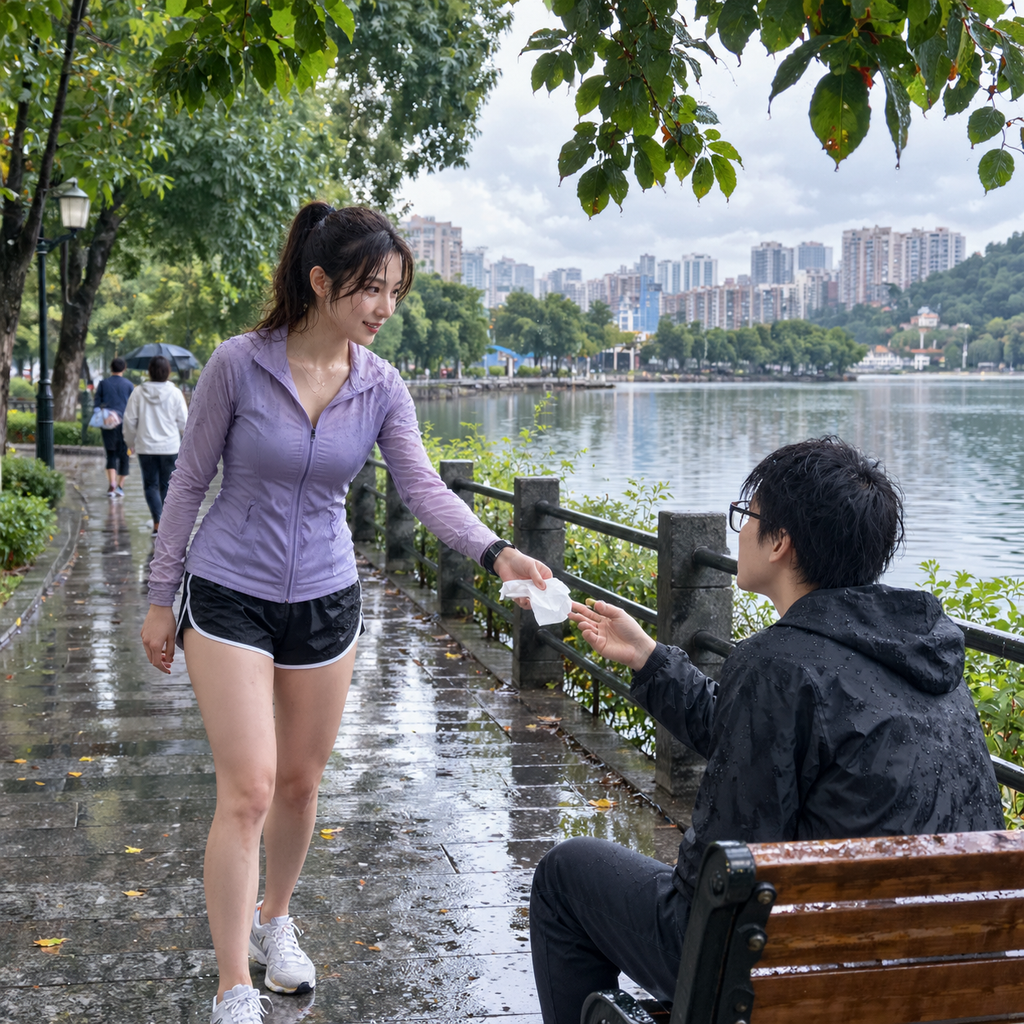
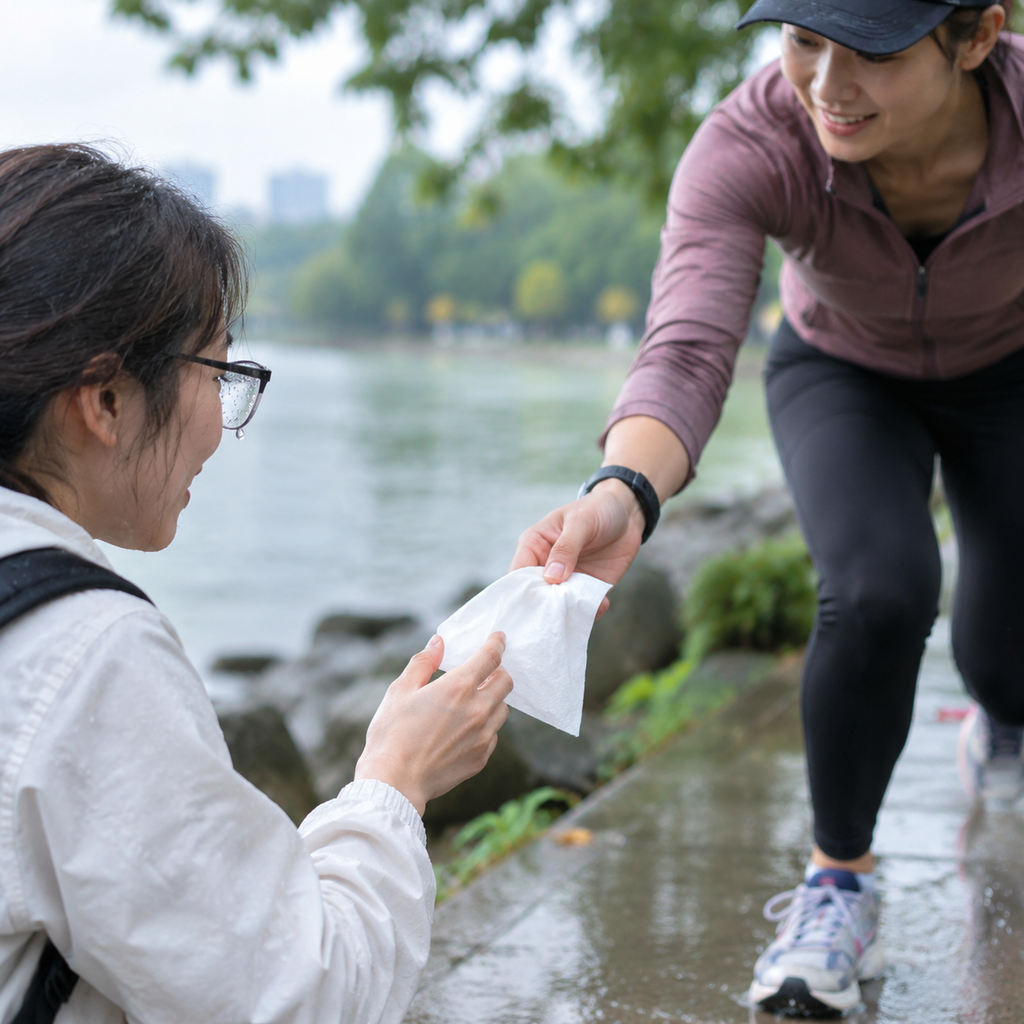
雨停后的磁湖,先把城市的声音压低了一层。湖岸步道还留着细碎水珠,跑道边的树叶被雨打得发亮,鞋底每落下一步,都能听见一点湿润的摩擦声。一个跑步者从旁边经过时,忽然放慢脚步,递来一张纸巾,示意观察者擦一擦被檐角滴湿的眼镜。动作很快,没有停下来寒暄,也没有留下姓名;他把纸巾递出后,继续沿着湖边跑远。正是这个小得几乎可以被忽略的动作,让原本准备把磁湖当作一处“看完就走”的风景点的人,重新安排了黄石的一天。
After the rain, Cihu Lake seemed to turn the volume of Huangshi down by one level. Tiny drops still clung to the lakeside path, while the leaves beside the running track shone under the gray light. Each step made a soft, damp rubbing sound. A runner passing by suddenly slowed and offered a tissue, gesturing that the observer should wipe the water from his glasses, which had been caught by a dripping roof edge. The gesture lasted only a moment. There was no small talk and no name exchanged; after handing over the tissue, the runner continued along the lake. That nearly invisible act persuaded someone who had planned to treat Cihu as a place to “see and leave” to rearrange an entire day in Huangshi.
原先的计划很典型:上午找一个有代表性的城市景点,中午随便吃点东西,下午再去博物馆或老街,若天气不好就把湖边删掉。磁湖在地图上看起来很大,湖岸线也不像一条必须完成的线路;对匆忙的访客来说,它容易被理解成拍几张水面照片的空档。雨后的现场却显出另一种性质:这里不是被城市隔离出来的公园,而是居民运动、散步、接送孩子、短暂停留和调节情绪的共同空间。湖水只是背景,真正让空间成立的是人们在其中反复使用它的方式。
The original plan was familiar: find a representative urban attraction in the morning, eat something quick at midday, then visit a museum or an older neighborhood in the afternoon, dropping the lake if the weather turned bad. On a map, Cihu Lake looks too large to be a simple point on a route, yet its shoreline does not seem to demand completion. To a hurried visitor, it can appear to be merely a gap for taking a few pictures of the water. The scene after the rain revealed something else. This was not a park cut off from the city, but a shared space for exercise, walking, taking children out, pausing briefly, and settling one’s mood. The lake was only the backdrop; the space truly existed because residents used it repeatedly.
递纸巾的跑步者并没有成为故事里一个需要被解释清楚的人物。他的动作之所以留下痕迹,恰恰因为它不带戏剧性。那张纸巾可能只是他随身携带的普通物品,也可能来自附近的便利店或运动补给点;现场没有必要替他补上动机。观察者只记住了三个细节:跑鞋踏过积水边缘时的轻响,手臂递过来的短促弧线,以及那张纸巾在潮气里略微变软的触感。旅行中的许多判断,往往不是由宏大的介绍改变,而是由这种没有被安排的小动作,把陌生城市从“被观看的对象”变成“有人正在生活的地方”。
The runner did not need to become a fully explained character in the story. The gesture stayed in the mind precisely because it contained no drama. The tissue may have been an ordinary item he carried, or something picked up from a convenience store or a nearby exercise station; there is no reason to invent a motive. The observer remembered three details: the faint sound of running shoes at the edge of a puddle, the brief arc of the runner’s arm, and the tissue becoming slightly soft in the damp air. Travel judgments are often changed not by grand introductions, but by an unscheduled movement that turns an unfamiliar city from an object to be viewed into a place where people are living.
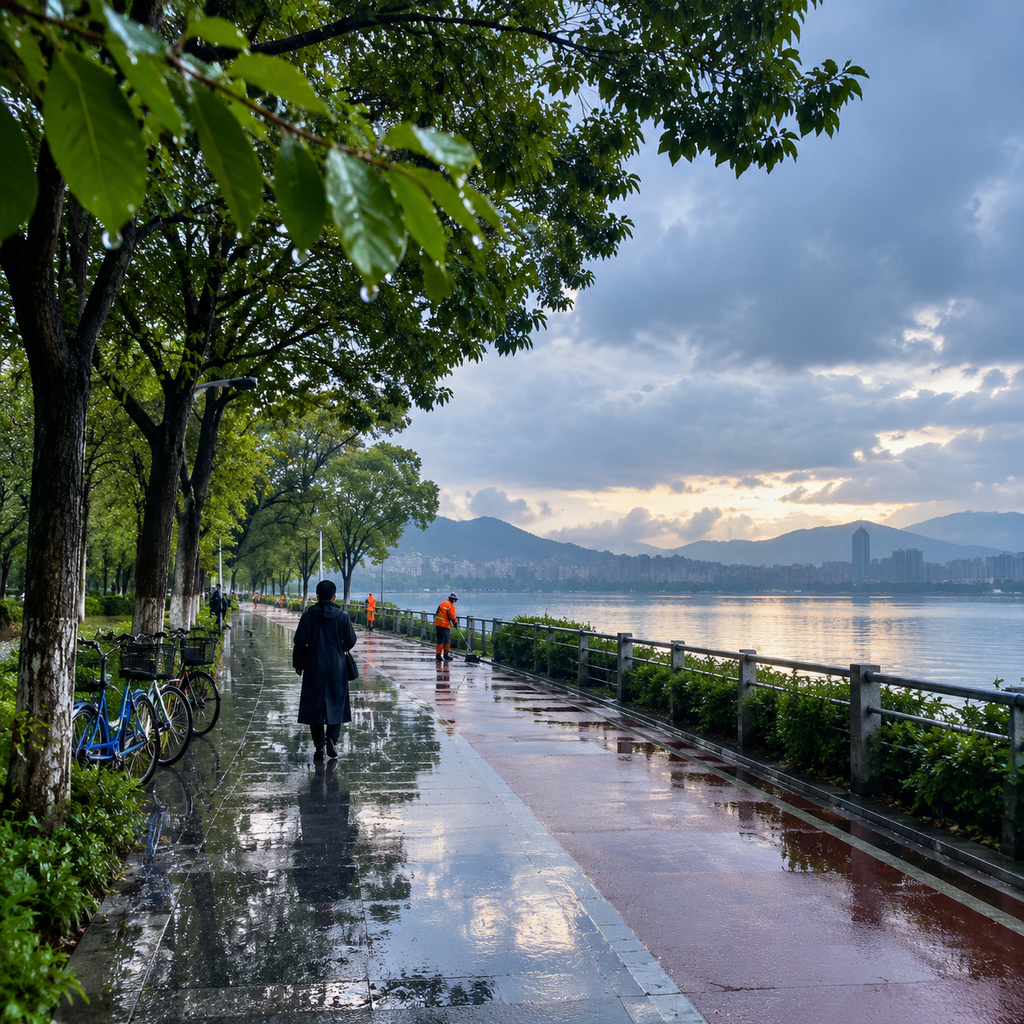
如果把磁湖只安排成“顺路经过”,就很难看见雨后运动空间的层次。靠近湖岸的一侧,路面有宽窄变化,树影、栏杆、座椅和开阔水面不断交替;另一侧的城市界面则更复杂,楼群、道路、商铺和社区出入口把湖边切成许多生活片段。有人穿着整套运动服跑步,有人只穿普通衣物慢慢走,也有人在长椅上看手机,等雨势彻底收住。湿滑路面会让快走变得不舒服,骑行者和跑步者之间也需要彼此留出空间。对访客而言,最好的做法不是追求走得最远,而是找一段能观察人流和地面状况的湖岸,走一会儿,再决定是否继续。
If Cihu is treated merely as something to pass by, the layers of its post-rain exercise space are easy to miss. Along the water, the path changes in width, alternating between tree shadows, railings, benches, and open views. On the city side, the edge is more complicated: apartment blocks, roads, shops, and community entrances divide the lakeside into many small pieces of daily life. Some people run in full athletic clothing; others walk slowly in ordinary clothes; someone else sits on a bench looking at a phone while waiting for the rain to settle completely. Wet pavement makes fast walking uncomfortable, and cyclists and runners need to leave room for one another. For visitors, the wisest approach is not to chase the farthest point, but to choose a section where pedestrian flow and ground conditions can be observed, walk for a while, and then decide whether to continue.
纸巾事件之后,行程的第一个调整是把“湖边散步”从备选项提到开场位置。不是因为磁湖一定应该在一天的最前面,而是雨后的空间有短暂的状态:水汽还没有散尽,路面反光尚未被脚印和车轮完全打乱,跑步者的节奏、保洁人员处理积水的动作、骑车人避开湿滑处的路线,都比晴天更容易被看见。若等到所有室内项目结束,湖边可能只剩下疲惫时的背景。把它放在前面,反而能让后面的博物馆和街区访问有一个尺度参照——先看城市怎样被居民使用,再去看城市怎样保存自己的记忆。
After the tissue incident, the first adjustment was to move a lakeside walk from the backup list to the beginning of the day. This was not because Cihu must always come first, but because a rainy shoreline has a temporary condition. The mist has not yet disappeared, reflections remain on the pavement, and the footprints and bicycle marks have not fully disturbed them. The runners’ pace, the cleaners’ work around puddles, and cyclists’ detours around slippery patches are all easier to notice than on a dry day. If the lake is saved for after every indoor visit, it may become only a tired backdrop. Placing it earlier gives later museum and neighborhood visits a useful scale: first see how residents use the city, then see how the city preserves its memory.
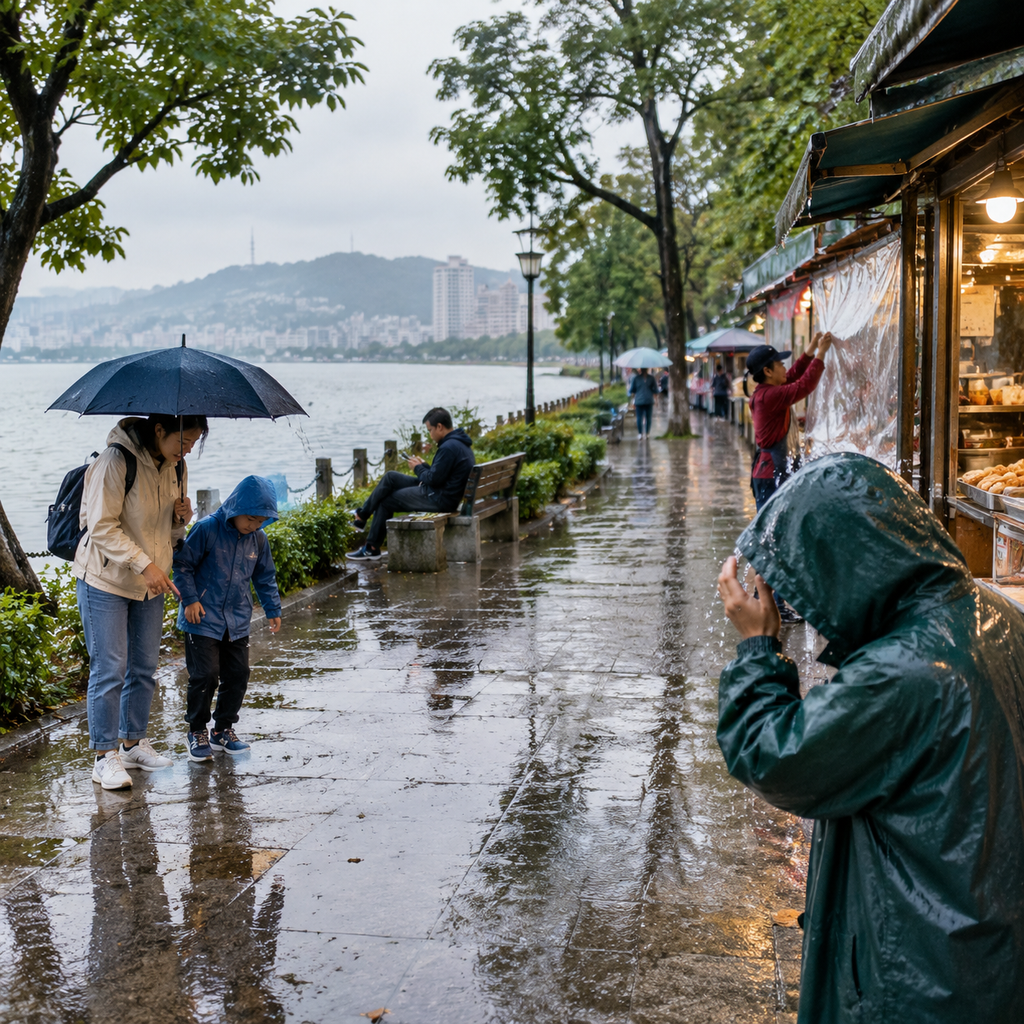
湖岸的城市生活也会改变对“景点密度”的判断。沿着磁湖走,不一定每隔几步就有一个可供打卡的标志,但会遇到更连续的生活信号:运动耳机里漏出的节拍,家长对孩子放慢脚步的提醒,雨衣帽檐上滚落的水珠,卖早餐的店铺把塑料帘重新挂好的动作,路边小店门口湿掉的纸箱。它们没有景点说明牌,却能说明一座城市的公共空间是否被真正使用。观察者后来发现,自己对黄石的兴趣不再只由“有哪些必须去的地方”组成,也包括“谁在什么时刻需要这片湖岸”。这让一日行程从景点列表变成了对城市节奏的试探。
Urban life along the shore also changes the way one judges the density of attractions. A walk around Cihu does not necessarily offer a landmark every few steps, but it provides a continuous stream of everyday signals: a beat leaking from sports earphones, a parent reminding a child to slow down, drops rolling from the brim of a raincoat, a breakfast shop rehanging its plastic curtain, and damp cardboard boxes outside a small store. None of these comes with a sign explaining its significance, yet together they show whether a city’s public space is genuinely used. The observer later realized that his interest in Huangshi no longer depended only on a list of “must-see places.” It also included the question of who needs this lakeside space, and when. A one-day itinerary became a way of testing the city’s rhythm rather than checking off attractions.
博物馆因此不宜被简单理解成雨天的室内替代品。黄石的城市记忆与工业、矿冶、长江沿线的生活和地方发展都有联系,但具体展陈会随馆舍、展览和开放安排而变化,访客不必在行前写下一套过于确定的历史结论。更稳妥的做法,是把博物馆当成一个帮助理解城市的室内观察场:看展柜如何排列材料,看地图怎样说明地理关系,看器物的磨损如何暗示使用者的手势,再把这些细节与上午在湖岸看到的日常动作放在一起。这样一来,博物馆不是把人从街上带走,而是把街上的疑问变得更清楚。
A museum should therefore not be treated simply as an indoor substitute for a rainy day. Huangshi’s urban memory is connected with industry, mining and metallurgy, life along the Yangtze, and local development, although the precise displays vary with each museum, exhibition, and opening arrangement. Visitors do not need to write an overly certain historical conclusion before arriving. A more reliable approach is to use the museum as an indoor way of observing the city: notice how materials are arranged in cases, how maps explain geographic relationships, and how wear on an object suggests the gestures of its users. Then place those details beside the everyday movements seen by the lake in the morning. The museum does not remove the visitor from the street; it clarifies the questions brought in from the street.
安排博物馆时,真正需要取舍的是注意力,而不只是路线。雨后湖边已经提供了大量开放信息,如果上午走得太久,进入展馆后容易只记住几个醒目的展品;如果完全跳过湖岸,又会失去理解当地生活节奏的入口。比较合适的安排是保留一段不追求完整的湖边观察,再把一个主题相对集中的博物馆作为中段。进入展馆前,不妨先写下两个问题:黄石的城市生活如何与水和产业发生关系?普通人的日常物件怎样被保存、解释或重新观看?带着问题看展,比带着“必须全部看完”的压力更能留下东西。
When planning a museum visit, the real trade-off concerns attention, not only distance. The lakeside after rain already offers a large amount of open information. If the morning walk goes on too long, the visitor may enter the museum remembering only a few striking objects; if the lakeside is skipped entirely, the entrance to local daily rhythm disappears. A balanced arrangement is to keep one section of shoreline observation without trying to complete the route, then make a relatively focused museum the middle of the day. Before entering, it helps to write down two questions: how does urban life in Huangshi relate to water and industry, and how are ordinary objects preserved, explained, or seen anew? Looking with questions leaves more behind than trying to see everything.
街区的安排也不应只看“老”字。老街、旧社区和商业街各有不同的观看方法:前者适合留意建筑表面、门面尺度和道路转折,社区更适合观察居民如何买菜、取快递、接孩子和在楼下停留,商业街则能看见年轻人、游客和本地消费混合后的气氛。某一处街区是否值得加入行程,不只取决于照片是否漂亮,还取决于它能不能和磁湖形成对照。湖岸给出的是舒展、移动和间隔,街区给出的是门槛、交会和近距离声音。把两者放在同一天,城市就不再只有一张远景。
A neighborhood should not be judged simply by the word “old.” An old street, an older residential area, and a commercial district each require a different way of looking. The first invites attention to building surfaces, storefront scale, and turns in the road. A residential area reveals how people buy vegetables, collect deliveries, pick up children, and pause downstairs. A commercial street shows the atmosphere created by the mixture of younger residents, visitors, and local consumption. Whether a neighborhood belongs in the itinerary depends not only on whether it photographs well, but on whether it can contrast with Cihu. The lake offers openness, movement, and distance; the neighborhood offers thresholds, encounters, and close-range sound. Seeing both in one day gives the city more than a single wide view.
午餐是另一处容易被安排得过于随意的节点。磁湖附近的餐饮选择会受到具体街段、当天营业情况和个人口味影响,不能凭空替某家店写出固定招牌或精确价格。观察者最后没有把午饭当成“快速补充能量”的空白,而是把它作为判断城市生活的机会:看店内座位怎样被家庭和独自用餐的人分配,服务节奏是否适合继续赶路,菜单上本地口味与常见家常菜怎样并置,雨天进店的人会不会先处理湿伞和外套。点餐时少一些“把热门全点一遍”的冲动,留出一道能与当地口味建立联系的菜,再配一份熟悉的选择,通常比堆满桌面更容易感到差异。
Lunch is another point that is often planned too casually. Dining options near Cihu depend on the exact stretch of road, the day’s business hours, and personal taste, so it would be wrong to invent a fixed signature dish or precise price for a particular restaurant. The observer eventually stopped treating lunch as a blank space for quickly refueling and used it to read the city instead: how tables are shared by families and solo diners, whether the service rhythm allows a relaxed continuation, how local flavors sit beside familiar home-style dishes, and how people deal with wet umbrellas and jackets on a rainy day. Rather than ordering every popular item, it is usually more revealing to choose one dish that connects with the local palate and one familiar option, leaving enough room on the table—and in one’s attention—to notice the difference.
如果同行者口味不同,餐饮取舍会直接影响下午的体力和心情。有人喜欢辛香浓郁,有人需要清淡,也有人对内脏、鱼类或辣味有明确避讳。与其把“最有地方特色”当作唯一标准,不如把一顿饭分成共享菜和个人安全选项,并在点单前确认分量、辣度和是否适合继续步行。这里不需要精确计算花费,重要的是避免因一时兴奋点得过多,随后为了消耗食物而拖慢行程。旅行中的节制不是降低体验,而是让下一站仍然有力气去看、去听、去问。
If travel companions have different tastes, the lunch decision directly affects the afternoon’s energy and mood. One person may enjoy strong spice, another may need lighter food, while someone else may avoid organ meats, fish, or chili altogether. Instead of treating “the most local” as the only standard, divide the meal into shared dishes and safe personal choices, confirming portion size, spice level, and whether the meal suits a continued walk. There is no need for exact cost calculations here. The key is to avoid ordering too much in a moment of excitement and then slowing the itinerary simply to finish it. Restraint on a trip does not reduce the experience; it leaves enough energy to look, listen, and ask at the next stop.
纸巾的小事件还改变了对人与人距离的理解。跑步者没有把帮助变成一场需要双方交换信息的社交表演,也没有因为对方是外地人而刻意停下来解释。递出、接住、点头,事情就完成了。中国城市公共空间里常见的善意,有时就是这种低声量的协助:有人替后面的人扶住门,有人提醒台阶湿滑,有人把被风吹走的纸张压在栏杆下。它们并不代表每一次陌生相遇都会如此,也不能被写成城市性格的绝对证明,但它们会提醒访客,公共礼貌常常依靠短促而准确的动作,而不是长篇说明。
The tissue incident also changed the observer’s understanding of distance between strangers. The runner did not turn help into a social performance requiring an exchange of information, nor did he stop to explain himself simply because the other person was a visitor. He offered, the other person accepted, they nodded, and the moment was complete. In Chinese urban public spaces, kindness often appears as this low-volume assistance: holding a door for the person behind, warning someone that a step is slippery, or pressing a windblown sheet of paper under a railing. Such moments do not mean every encounter will be the same, and they should not be turned into absolute proof of a city’s character. They do remind visitors that public courtesy often depends on brief, accurate actions rather than lengthy explanations.
下午是否继续走湖岸,要看雨后身体反馈,而不是看原先写好的清单。湿气会让衣物贴在皮肤上,鞋袜若没有及时处理,脚底的不适会逐渐放大;湖边风向变化也可能让体感比想象中更凉。观察者后来把“继续”拆成几个小判断:路面是否仍然容易打滑,同行者是否开始频繁看手机或寻找座椅,是否还有足够注意力进入下一处展馆,返程方向是否清楚。若答案不理想,缩短湖岸、先去室内休整并不是失败,而是让城市观察保持质量。旅行路线应该服务于感受,而不是反过来惩罚感受。
Whether to continue along the lake in the afternoon should depend on the body’s response to the post-rain conditions, not on a list written earlier. Humidity can make clothing cling to the skin; if damp socks and shoes are ignored, discomfort underfoot gradually becomes impossible to overlook. A change in wind can also make the air feel cooler than expected. The observer later broke the decision to continue into smaller questions: Is the pavement still slippery? Are companions checking their phones or searching for benches more often? Is there enough attention left for another museum? Is the return direction clear? If the answers are unfavorable, shortening the lakeside section and resting indoors is not a failure. It protects the quality of observation. An itinerary should serve perception, not punish it.
这一天还需要给街区留下不被安排的缝隙。磁湖让人看到城市的开放面,博物馆提供解释的框架,街区则把解释重新压回生活尺度;三者之间如果衔接得太紧,访客会只剩下移动和拍照。留出一段没有明确目标的步行,可能只是从一条街走到另一条街,看看药店、菜市场、小吃铺、文具店和居民楼入口,不急着把每个地方都称为“特色”。有些城市信息正藏在普通处:店员把外卖袋放到取餐架上的顺序,老人坐在树下的姿势,雨水从遮阳棚边缘落下的位置。它们没有必要被夸大,却值得被看见。
The day also needed an unassigned gap for the neighborhood. Cihu reveals the city’s open side, the museum provides a framework for interpretation, and the streets press that interpretation back into the scale of daily life. If the connections are too tight, the visitor is left with nothing but movement and photographs. A walk without a fixed goal—perhaps from one street to another, past a pharmacy, a market, a snack shop, a stationery store, and the entrance of a residential building—can be more informative than labeling every place “distinctive.” Some urban information hides in ordinary details: the order in which a worker places delivery bags on a shelf, the posture of older residents under a tree, or the exact point where rainwater falls from an awning. These details need not be exaggerated. They simply deserve to be noticed.
在磁湖边重新安排一天,也意味着重新看待“效率”。如果效率只是一天内覆盖更多地点,纸巾事件不会改变什么;如果效率包括让每个地点都留下可辨认的经验,那么慢下来反而更有价值。跑步者递来的纸巾并没有提供旅游攻略,也没有告诉观察者下一站该去哪儿,却让他意识到自己此前只在规划“看什么”,没有规划“怎样在别人使用的空间里待着”。于是路线开始出现新的顺序:先观察湖岸,随后进入博物馆理解地方背景,再到街区看生活如何延续,最后根据体力选择一顿不急不挤的饭,或者把饭提前,给雨后夜色留出余地。
Rearranging a day by Cihu also means reconsidering what “efficiency” means. If efficiency is only about covering more locations, the tissue incident changes nothing. If it includes leaving each place with a distinct experience, slowing down becomes more useful. The runner’s tissue did not provide a travel guide or tell the observer where to go next. It simply revealed that the earlier plan had considered only what to see, not how to remain in a space that other people were actively using. The route then gained a different order: observe the lakeside first, enter a museum to understand local context, move into a neighborhood to see how life continues, and finally choose an unhurried meal—or eat earlier and leave room for the post-rain evening, depending on energy.
对第一次到黄石的人来说,磁湖未必需要被包装成一处“必须打卡”的答案。它更像一张城市的横截面:水面连接着天气,步道连接着运动习惯,社区连接着家庭生活,街区连接着餐饮和交易,博物馆连接着记忆的整理方式。访客若只寻找壮观景观,可能会觉得这里缺少一个强烈的高潮;若愿意把注意力放在居民怎样经过、停下、互相避让和偶尔帮忙,就会发现湖岸本身已经在讲述城市。故事没有集中在一个纪念碑上,而是散在许多人的重复动作里。
For a first-time visitor to Huangshi, Cihu does not need to be packaged as a place that must be checked off. It is more like a cross-section of the city. The water connects to the weather, the path to exercise habits, the communities to family life, the streets to food and trade, and the museum to the way memory is organized. Those seeking a spectacular climax may feel that the lake lacks one. Those willing to watch how residents pass, pause, yield space, and occasionally help one another may find that the shoreline is already telling a story. It is not concentrated in a monument, but scattered through the repeated movements of many people.
如果把这条经验转成可执行的安排,重点不是复制某一个人的路线,而是保留几个弹性节点。雨后先看湖岸是否适合步行,湿滑时减少速度;博物馆选择能回答当日疑问的一个主题,不追求把所有展厅都走完;街区安排一段不设拍摄任务的闲走,让普通店铺和社区动线进入视野;餐饮上把口味、分量和体力放在同一张桌子上考虑;一天结束前,再回想哪个动作真正改变了判断。这样的行程不依赖精确到分钟的表格,也不需要虚构一个“本地人秘密点位”,但能随着天气和人的状态调整。
If this experience is turned into a practical plan, the point is not to copy one person’s route but to preserve several flexible points. After rain, first check whether the shoreline is suitable for walking and reduce speed on wet surfaces. Choose one museum theme that answers the day’s questions rather than trying to finish every gallery. Leave room for an unassigned neighborhood walk so ordinary shops and community paths can enter the view. Consider taste, portion size, and physical energy together when choosing lunch. Before the day ends, ask which small action actually changed the judgment. This kind of itinerary does not depend on a schedule accurate to the minute, nor does it require inventing a “secret local spot.” It can adjust to weather and human condition.
真正留在观察者记忆里的,最后不是纸巾有多特别,而是它把一整天的尺度悄悄改小了。湖岸不再只是一个需要抵达的地点,博物馆也不再只是避雨的房间,街区更不是拍照之后立刻离开的布景。那张被潮气弄软的纸巾后来被放在随身小包的夹层里,直到离开黄石前才被丢掉。它没有纪念价值,却像一枚很轻的书签,夹在“景点”与“生活”之间。下一次再看城市地图时,观察者大概仍会标出磁湖、博物馆和街区,但也会给跑步、停步、擦水和彼此让路留出位置。
What remained in the observer’s memory was not anything extraordinary about the tissue itself, but the way it quietly reduced the scale of the whole day. The lakeside was no longer merely a destination to reach; the museum was no longer just a room for escaping rain; and the neighborhood was not a set that disappeared after a photograph. The tissue, softened by moisture, stayed in the inner pocket of a small bag until just before leaving Huangshi. It had no sentimental value, yet it felt like a light bookmark placed between “attractions” and “life.” The next time the observer looked at a city map, he would still mark Cihu, a museum, and a neighborhood—but he would also leave room for running, pausing, wiping away water, and making space for one another.
走进湖岸之后,城市不再只是路线 / When the Shoreline Becomes More Than a Route
雨后的运动空间还有一个容易被忽略的层面:它让不同年龄的人以不同速度共处。跑步者需要连续的步幅,散步的人需要回头看路,推婴儿车的人会优先寻找平整位置,带孩子的人则会在靠近栏杆和水边时放慢。看似宽阔的步道,实际上一直在进行细小的空间协商。递纸巾的跑步者或许只是完成了一个个人动作,但他放慢速度的瞬间,也显示出运动并不等于把别人排除在外。访客若站在路边拍摄,应先判断自己是否挡住了通行线;若要停下来读介绍牌或整理雨具,最好靠向不影响人流的一侧。这些动作很普通,却是进入公共空间的基本礼貌。
The post-rain exercise space has another easily missed quality: it allows people of different ages to share one place at different speeds. Runners need a continuous stride, walkers need room to look back, people pushing strollers look for even ground, and adults with children slow down near railings and water. A path that seems spacious is actually full of small negotiations. The runner who offered a tissue may simply have performed a personal gesture, yet his brief change of pace also showed that exercise does not have to exclude everyone else. A visitor taking photographs should first check whether the stopping point blocks the flow. Anyone pausing to read a sign or adjust rain gear should move to the side. These actions are ordinary, but they are the basic etiquette of entering a shared public space.
观察者后来注意到,湖岸边的人并不都把运动当成训练。有人在跑步结束后站在树下拉伸,双手扶着膝盖,等呼吸从急促变得平稳;有人带着保温杯绕湖走一段,再折返回熟悉的方向;还有人把散步当作买菜和回家的中间过程,手里提着袋子,步子不快,却很少真正停下。对这些人来说,磁湖不是一项需要专门完成的旅游活动,而是城市生活中可以被反复调用的一条边界。它连接了家、工作、学校和商铺,也给人一个暂时不必坐在室内的理由。访客若只寻找“景点感”,容易错过这种使用频率带来的真实感。
The observer later noticed that not everyone on the shore treated exercise as training. Some stretched beneath a tree after running, hands on their knees, waiting for their breath to settle. Others walked with a thermos, making a loop before returning in a familiar direction. Some used the walk as the space between buying groceries and going home, carrying a bag and moving without hurry. For them, Cihu was not a tourist activity to complete but an edge of the city that could be used again and again. It connected homes, workplaces, schools, and shops, while offering a reason to be outdoors for a while. Visitors who search only for the feeling of an attraction can easily miss the authenticity created by this repeated use.
这也影响了博物馆前后的注意力分配。若先看展,再到湖边,访客可能会带着展柜里的材料、地图和旧照片去理解现实中的道路;若先看湖边,再进博物馆,则更容易在展览中寻找“这些生活为什么会在这里发生”的线索。两种顺序没有绝对优劣,关键在于当天更需要哪一种帮助。雨势刚停、衣物尚未干时,先在室内处理身体的不适更现实;天气稳定、精神状态好时,先走一段湖岸则能让展览不至于悬在抽象概念里。合理安排不是找到唯一正确顺序,而是把天气、体力和兴趣一起纳入判断。
This also affects how attention should be divided before and after a museum visit. If the museum comes first, maps, materials, and old photographs may shape the way visitors read the roads by the lake. If the shoreline comes first, the museum may help answer why certain forms of life developed there. Neither order is universally correct. The useful question is what kind of support the day requires. When rain has just stopped and clothes are still damp, an indoor pause may be the practical choice. When the weather is stable and energy is good, walking by the lake first can keep the museum from feeling detached from real life. A sound itinerary is not about discovering one correct sequence; it is about considering weather, energy, and curiosity together.
在博物馆里,访客还可以把上午遇到的纸巾事件当作一种观察方法,而不是当作感人故事反复讲述。看一件器物时,可以问它原本由谁使用,使用时需要怎样的手部动作,磨损发生在什么位置,以及它为什么会被保存下来。看一张城市地图时,可以留意水系、道路、工厂、居住区和公共设施之间的关系。这样的阅读方式不会自动给出完整答案,却能让“城市历史”回到人的尺度。一个杯口的磨痕、一件工具的重量、一张照片里人们站立的距离,都可能比抽象的年代标签更能帮助外地人理解地方。
Inside a museum, the tissue incident can become an observation method rather than a sentimental anecdote to repeat. When looking at an object, a visitor can ask who used it, what hand movements were required, where wear appeared, and why it was preserved. When reading a city map, it helps to notice relationships among water, roads, industrial sites, residential areas, and public facilities. This approach will not produce a complete answer automatically, but it brings urban history back to human scale. A worn rim on a cup, the weight of a tool, or the distance between people in an old photograph may help a visitor understand a place more than an abstract date label does.
离开展馆后,街区访问最好不要立刻变成寻找“最值得拍”的门面。雨天的城市表面会暴露许多平时不显眼的结构:屋檐如何接住水,店铺怎样把门口留给顾客,路面排水是否让人必须绕开某个角落,外卖骑手在哪里短暂避雨,居民楼下的座椅是否会被湿气占据。街区的价值有时就在这些不够上镜的地方。它们帮助访客判断一座城市怎样处理日常摩擦,也能解释为什么湖岸需要座椅、遮蔽和足够宽的通行空间。城市不是由漂亮立面单独组成的,而是由大量让人顺利生活的细节支撑。
After leaving the museum, a neighborhood visit should not immediately become a search for the most photogenic storefront. Rain reveals structures that are easy to overlook in dry weather: how awnings catch water, how shops keep space clear for customers, where drainage forces people to detour, where delivery riders pause, and whether the seats below residential buildings remain usable in damp air. A neighborhood’s value may lie in details that are not especially picturesque. They show how a city handles everyday friction and help explain why the lakeside needs benches, shelter, and enough width for movement. A city is not made of attractive façades alone; it is supported by countless details that allow ordinary life to proceed.
餐饮安排若与街区观察相连,也会变得更具体。访客可以留意一间店是否有适合短暂停留的座位,菜单能否看懂,店内是否需要排队取号,雨具放在哪里不妨碍别人。若语言沟通不够熟练,提前把想确认的问题写在手机上,比临场凭感觉猜测更轻松,例如是否辣、是否有骨、是否适合一人分食。没有必要把每顿饭都写成“发现宝藏”,也不要为了追求所谓本地感而勉强接受自己无法适应的口味。真正有效的地方体验,应该允许访客在陌生与熟悉之间找到一个能继续观察的平衡。
When food planning is connected to neighborhood observation, it becomes more concrete. A visitor can notice whether a restaurant has seats for a short pause, whether the menu is understandable, whether customers take a number, and where wet umbrellas can be placed without blocking anyone. If communication is difficult, writing questions on a phone in advance is easier than guessing in the moment—for example, whether a dish is spicy, contains bones, or can be shared by one person. There is no need to describe every meal as a hidden discovery, and no visitor should force an unsuitable taste simply to perform local authenticity. A useful local experience allows a balance between unfamiliarity and comfort, leaving enough energy to keep observing.
纸巾被递过来的那一刻,观察者其实处在一个很小的尴尬里:镜片上的水让远处的路牌变得模糊,手上没有可以擦拭的东西,若转身回到檐下,又会打断刚刚形成的散步节奏。跑步者没有把这份尴尬说出来,只是用一个可立即使用的物件解决了它。这个动作提醒人们,旅行中的“帮助”并不总是宏大的指引,有时只是让下一步变得容易。之后在黄石行走时,观察者也开始留意自己能否减少别人的不便:过窄处先让出位置,开伞前看看身边是否有人,进店时把湿伞收好,拍照时不把镜头和身体同时伸到别人面前。
At the moment the tissue was offered, the observer was caught in a small embarrassment. Water on the lenses blurred the signs ahead; there was nothing in hand to wipe them with; returning to the shelter would have broken the walking rhythm that had just formed. The runner did not name the awkwardness. He simply solved it with an object that could be used immediately. The gesture suggested that help during travel is not always a grand direction. Sometimes it only makes the next step easier. While walking in Huangshi afterward, the observer began noticing whether he could reduce inconvenience for others as well: give way at narrow points, check nearby people before opening an umbrella, fold a wet umbrella when entering a shop, and avoid extending both camera and body into someone else’s path.
这种改变并不意味着访客要把自己变成一名“湖岸观察员”,也不意味着每个细节都需要写进笔记。它更像一种轻微的校准:看风景时,也看空间的规则;看建筑时,也看谁在门口进出;吃饭时,也看一张桌子如何容纳不同的人;参观展览时,也想想展柜外的生活如何继续。黄石的一天可以有明确目的,也可以保留空白。磁湖、博物馆、街区和餐饮并不是互相竞争的四个项目,它们分别回答不同问题:人们怎样使用城市,城市怎样解释自己,日常生活怎样展开,以及身体如何在其中保持舒适。
This does not mean that a visitor must become a professional shoreline observer or record every detail. It is more like a small recalibration: while looking at scenery, also notice the rules of the space; while looking at buildings, notice who enters and leaves; while eating, notice how a table accommodates different people; while viewing an exhibition, imagine how life continues beyond the display case. A day in Huangshi can have clear purposes and still keep some blank space. Cihu, the museum, the neighborhood, and the meal are not four competing items. They answer different questions: how people use the city, how the city explains itself, how daily life unfolds, and how the body remains comfortable within it.
到了傍晚,如果雨云再次聚拢,行程可以在湖边短暂收束,而不是执着于把剩余路段走完。水面颜色会随着光线变暗,运动者的身影变成一段段经过栏杆的剪影,商铺的灯光在湿地面上形成不规则的亮斑。此时最适合做的不是再寻找一个必须到达的终点,而是确认返程方向、整理随身物品、让同行者决定是否还要吃饭或直接休息。若白天已经看过展览和街区,夜色中的磁湖不必承担更多解释任务;它只需要作为一天里最后一个公共空间,让人安静地把看到的东西放回心里。
If rain clouds gather again toward evening, the day can end with a brief return to the lake rather than an insistence on completing every remaining section. The water darkens with the light, runners become silhouettes passing between railings, and shop lights form irregular bright patches on wet ground. The useful action at that point is not to seek another mandatory endpoint, but to confirm the way back, organize belongings, and let companions decide whether to eat or rest. If the museum and neighborhood have already been visited, the evening lake does not need to explain anything further. It can simply be the final public space of the day, giving the mind a quiet place to put its impressions back in order.
那张纸巾所带来的安排变化,最终落在很实际的层面:不把湖边当成天气好的奖励,不把博物馆当成下雨时的补偿,不把街区只当成购物和拍照的通道,也不把餐饮压缩成可以随意牺牲的空格。每一项都需要根据当天的身体、天气和城市使用状况调整。旅行者无法预先掌握所有细节,却可以保留这种调整能力。对黄石来说,一日行程最可贵的部分也许不是覆盖了多少地点,而是访客在离开时能说清楚:自己在哪里看见了城市如何被使用,在哪里感到历史与生活相连,又在哪个小动作里学会了给陌生人留出一点余地。
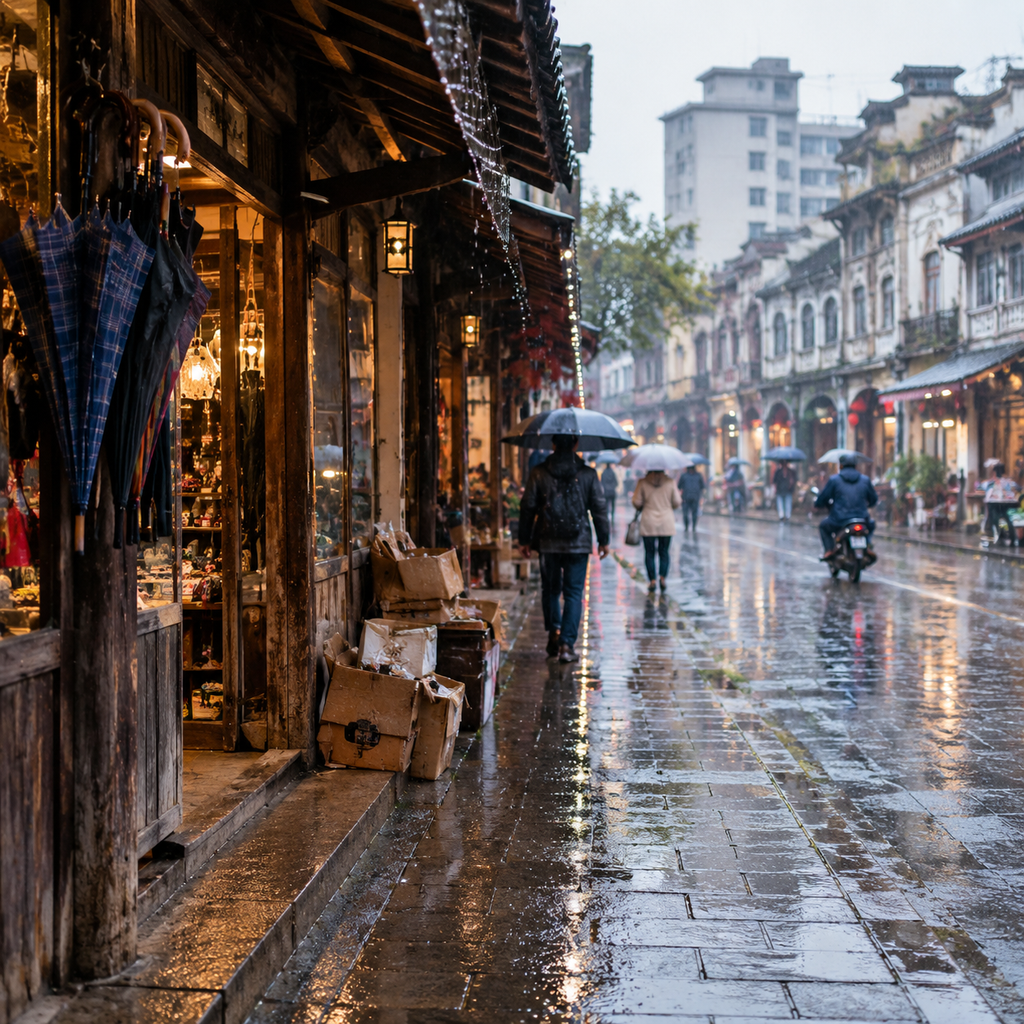
The change brought by the tissue eventually became practical: do not treat the lake as a reward reserved for good weather, the museum as compensation for rain, the neighborhood as merely a route for shopping and photographs, or food as a blank space that can always be sacrificed. Each part should respond to the body, weather, and the way the city is being used that day. A traveler cannot know every detail in advance, but can preserve the ability to adjust. The most valuable part of a day in Huangshi may not be the number of places covered. It may be leaving able to say where the city was seen in use, where history and daily life met, and where a small gesture taught the visitor to leave a little room for strangers.
旅行者若把这一天重新画成一张地图,地图上留下的不会只有几个名称。磁湖边可以标出一处适合观察跑步者和散步者交错的位置,也可以标出雨后需要放慢脚步的路段;博物馆旁边可以写下一个尚未解决的问题,而不是只写“已参观”;街区里可以记住一家店门口的遮雨方式、某段路上居民进出的方向,以及一顿饭让身体恢复到什么程度。这样的记录不追求把城市变成一套标准答案,它承认天气会变、展览会变、店铺会变,人的体力和兴趣也会变。真正可靠的旅行经验,常常就是在这些变化中仍然知道怎样重新选择。
If a traveler redraws this day as a map, it will contain more than a few names. The lakeside may include a spot for watching runners and walkers cross paths, along with a section where the wet ground calls for slower steps. Beside the museum, there may be an unanswered question rather than a simple note saying “visited.” In the neighborhood, the record may preserve how one shop shelters its doorway, which direction residents take through a lane, and how much a meal restores the body. This kind of record does not try to turn a city into a fixed answer. It accepts that weather, exhibitions, shops, energy, and curiosity all change. Reliable travel knowledge often means knowing how to choose again when those conditions shift.
把雨后的磁湖放进路线判断 / Reading Cihu After Rain
雨后走磁湖,首先要处理的不是“从哪里开始最漂亮”,而是步道在这一刻是否适合继续使用。观察者从靠近城市道路的一段进入,先没有急着贴着湖边走,而是在树下看了几分钟:水洼集中在哪些接缝处,排水口有没有被落叶盖住,跑步者通常从哪一侧超越慢行者,座椅是否仍然潮湿。这样的停留看起来没有景点动作,却能避免一开始就把湿滑路面、迎面人流和自己的拍照位置混在一起。递来纸巾的跑步者正是在这段观察里经过的,他放慢脚步的动作让访客意识到,湖岸不是只供一个人取景的空旷背景,而是一条有速度差、有方向感的日常通道。
After rain, walking beside Cihu begins with a practical question rather than a search for the prettiest starting point: is the path usable in its present condition? The observer entered from a section near the urban road and did not immediately press toward the water. For several minutes, he watched where puddles gathered, whether leaves covered the drains, which side runners used to pass slower walkers, and whether the benches were still wet. This pause had no obvious sightseeing value, but it kept slippery ground, approaching traffic, and photography positions from becoming one confused problem. The runner who offered the tissue passed during this observation. His change of pace made the visitor realize that the shoreline was not an empty backdrop for one person’s view, but a daily corridor with different speeds and directions.
如果步道上出现连续积水,绕开水洼并不等于偏离湖岸体验。靠近道路的一侧可能更方便接触公交站、便利店和临时避雨处,靠水的一侧则更适合看开阔水面、树影和运动者的路线。观察者原本把“贴湖走”当成唯一目标,后来才把两条边界看成互相补充的空间:一侧告诉他人们怎样到达湖边,另一侧告诉他人们怎样在湖边停留。这样安排还能减少折返,尤其适合鞋袜已经受潮、同行者不愿意长距离绕行的下午。路线的价值不在于每一步都离水最近,而在于它能让访客在安全、舒适和观察之间保持平衡。
Avoiding a continuous puddle does not mean losing the lakeside experience. The side nearer the road may provide easier access to bus stops, convenience stores, and temporary shelter, while the water-facing side offers open views, tree shadows, and a clearer picture of how people exercise. The observer had first treated staying closest to the lake as the only goal. Later, he understood the two edges as complementary spaces: one showed how people reached the lake, and the other showed how they remained there. This arrangement also reduced unnecessary backtracking, which mattered in the afternoon when shoes and socks were damp and companions no longer wanted a long detour. A route is valuable not because every step is nearest the water, but because it keeps safety, comfort, and observation in balance.
跑步者递纸巾之后,观察者开始注意到跑步线路的连续性。对跑步者来说,一段突然停满拍照者的窄路会打断呼吸和步频;对散步者来说,连续被从身后提醒让路也会破坏轻松感。于是他把拍照点从步道中央移到座椅旁或树下,把需要读手机地图的时间放在不妨碍通行的位置。若想记录雨后路面的反光,先等一小段没有人经过的间隙,再快速完成取景;若有人正在接近,就先收起手机。这个调整不是为了表现礼貌,而是因为只有不改变别人原有节奏,访客才能真正看见公共运动空间的样子。
After the runner offered the tissue, the observer began noticing the continuity of running lines. For a runner, a narrow section suddenly filled with people taking photographs interrupts breathing and cadence. For a walker, being repeatedly asked to move aside from behind destroys the ease of a quiet stroll. The observer therefore moved his photography points beside benches or under trees and checked the map only where he would not block passage. To record reflections on the wet pavement, he waited for a brief gap in traffic and took the picture quickly. When someone approached, he put the phone away first. This was not a performance of politeness. It was a way to avoid altering the rhythm that made the shared exercise space visible in the first place.
磁湖与黄石其他城市文化点之间,交通取舍也应从“能不能到”推进到“到达后还剩多少精力”。若上午先从较远处赶到湖边,再连续换乘去博物馆,地图上的距离也许不长,但等车、过街、收伞和处理湿鞋都会消耗注意力。观察者后来采用分段思路:把磁湖安排在一个交通容易退出的位置,湖岸只走能够随时转向道路的区段;离开时优先确认下一站是否有稳定的公交或网约车上车点,再决定去展馆还是先用餐。对于同行者较多的情况,步行十分钟的差别可能不如少一次换乘重要;对于独自旅行的人,沿湖多走一段再转车则可能更值得。路线不是越直越好,而是要把转场成本算进体验里。
Transport planning between Cihu and Huangshi’s cultural sites should consider not only whether a place can be reached, but how much energy remains after arrival. If a visitor travels from a distant point to the lake in the morning and then makes several transfers to a museum, the map may show a short distance, yet waiting, crossing roads, closing umbrellas, and dealing with wet shoes all consume attention. The observer later used a segmented approach: place Cihu where it was easy to leave, walk only a shoreline section with frequent exits toward the road, and check for a dependable bus connection or ride-hailing pickup point before choosing a museum or a meal. For a larger group, avoiding one transfer may matter more than saving ten minutes of walking. For a solo traveler, a longer lakeside walk before changing transport may be worthwhile. A route does not need to be straight; it needs to include the cost of moving between places.
运动空间和城市文化参观之间,最容易发生的冲突是时间被一方完全占满。湖边多走一个小时,可能意味着博物馆只能匆匆浏览;展馆停留过久,又可能让访客错过雨后湖面最清晰的光线。观察者没有再给自己设定“湖边必须走完、展馆必须看全”的双重任务,而是为两者各保留一个核心动作:在磁湖观察一段人流与水面,在博物馆认真看懂一个展览主题。这样即使因为天气或交通缩短其中一段,也不会觉得整天被打乱。城市文化并不靠数量证明,能把一个场景看出关系,往往比在多个地点留下相似照片更有意义。
The easiest conflict between exercise space and cultural visits is allowing one side to consume the entire day. An extra hour by the lake may reduce a museum visit to a hurried glance, while staying too long indoors may miss the clearest post-rain light on the water. The observer stopped setting two absolute tasks—completing the shoreline and seeing every gallery—and kept one core action for each: study the flow of people and the water along one section of Cihu, then understand one exhibition theme in the museum. Even when weather or transport shortened one part, the day did not feel broken. Urban culture does not prove its value through quantity. Understanding the relationship within one scene can mean more than collecting several similar photographs.
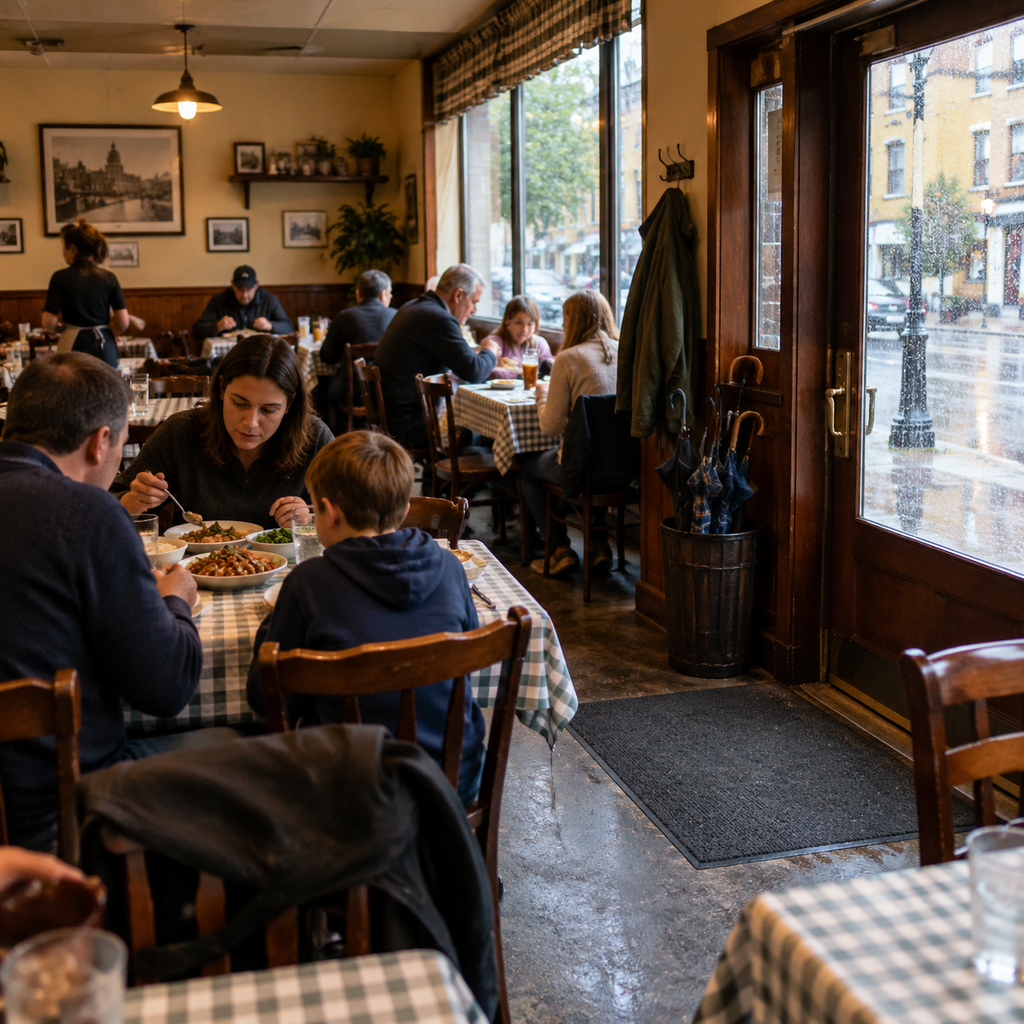
午餐位置的选择也会反过来决定下午的线路。若在湖岸附近解决,优点是不用为吃饭再次长距离移动,雨具和湿衣物也能较快安顿;缺点是热门时段可能需要排队,湖边店铺的具体选择还会随街段和营业状况变化。若把午餐放到博物馆或老街附近,交通衔接可能更顺,却要承担上午走累后再寻找座位的风险。观察者最后把“吃什么”与“下午要走多远”一起判断:计划看展并在街区慢行时,午餐优先选择出餐稳定、能坐下来整理物品的店;若下午只保留短程文化参观,则可以把更多时间留给寻找地方口味。餐饮不是路线之间的填缝剂,它决定了人能否继续以清醒的状态看城市。
The choice of lunch location also determines the afternoon route. Eating near the lake avoids another long transfer and makes it easier to settle wet umbrellas and clothing. The drawback is that busy hours may bring a queue, and the actual options vary by street and business conditions. Placing lunch near a museum or an older neighborhood may make the transfer smoother, but it creates the risk of searching for a seat after the morning walk has already taken energy. The observer eventually judged food and distance together. When the afternoon included an exhibition and a slow neighborhood walk, he favored a restaurant with steady service and enough seating to organize belongings. When only a short cultural visit remained, he could spend more time looking for local flavors. Food is not filler between routes; it determines whether a person can continue seeing the city with a clear mind.
观察者还把磁湖的雨后状态与黄石的城市记忆放在同一条线上理解。水面上的雾气会让远处建筑显得退后,步道上的跑鞋声却把人的存在拉到近处;博物馆里的旧地图和器物,则把这种“水与人的关系”放到更长的时间里。一个上午看见的是今天的人如何跑步、散步和互相让路,下午看到的可能是过去的人如何工作、运输、居住和使用物件。两者不能简单互相证明,但可以互相提问:今天的公共空间为何需要这样的宽度,过去的产业和交通又怎样塑造城市边界。带着这些问题走进街区,普通道路也会出现更多层次。
The observer also began to read Cihu’s post-rain condition alongside Huangshi’s urban memory. Mist on the water pushed distant buildings backward, while the sound of running shoes brought human presence close. Old maps and objects in a museum then placed this relationship between water and people in a longer time frame. In the morning, the visitor saw how people run, walk, and make room for one another today. In the afternoon, he might see how earlier residents worked, transported goods, lived, and handled objects. The two views cannot simply prove each other, but they can ask questions of each other: why does today’s public space need its particular width, and how did earlier industry and transport shape the city’s edges? With those questions, an ordinary street begins to reveal more layers.
一日行程最后可以用几个实际检查来收尾,而不必用一句“这座城市很有温度”概括。回看手机里的照片,是否有一张能说明雨后步道怎样被使用,而不只是水面倒影;回想那个跑步者,是否记得他递纸巾前后人流的变化,而不只是把他写成善意符号;检查路线,是否因为过度追求景点数量而牺牲了吃饭、休息和转场;再问自己,博物馆、街区与湖岸之间是否形成了相互解释的关系。若这些问题能得到具体回答,黄石的一天就不只是完成了一串地点,而是留下了一套可以在下一次旅行继续使用的判断方法。
A day can end with practical checks instead of the vague conclusion that a city is simply “warm.” Looking back at the photographs, is there one that shows how the post-rain path was used rather than only reflecting the water? Thinking of the runner, does the memory include the flow of people before and after the tissue was offered, rather than reducing him to a symbol of kindness? Reviewing the route, did the pursuit of more attractions sacrifice food, rest, or transfer time? Finally, did the museum, neighborhood, and lake help explain one another? When these questions have concrete answers, a day in Huangshi becomes more than a sequence of places. It leaves a method of judgment that can be used on the next trip.
来源说明 / Source Notes
本文为基于黄石磁湖公共湖岸空间、城市步行观察和公开可查城市文化信息所作的原创观察式重写,不是对某篇游记、新闻或视频的逐段翻译。文中没有使用未经核实的精确价格、时间、人物姓名或直接引语;餐饮、展馆和街区的具体安排应以到访当天的官方公告、现场标识及商户实际营业情况为准。磁湖边递纸巾的事件为本文叙事中的生活化小事件,用于连接公共空间观察与行程取舍,不应被理解为可独立核验的采访记录。可进一步核对的资料方向包括:黄石市人民政府及文化和旅游部门公开信息、黄石市博物馆等相关馆方公告、磁湖周边公共空间现场信息。
This is an original observational rewrite based on the public lakeside environment of Cihu Lake, walking observations of urban life in Huangshi, and publicly available cultural information about the city. It is not a paragraph-by-paragraph translation of another travel article, news report, or video. No unverified exact prices, opening hours, personal names, or direct quotations have been used. Specific restaurant, museum, and neighborhood arrangements should be checked against official notices, on-site signs, and actual business conditions on the day of a visit. The tissue gesture is a small narrative incident used to connect public-space observation with itinerary choices; it should not be read as an independently verifiable interview record. Further checking may refer to public information from the Huangshi municipal government and culture-and-tourism authorities, notices issued by relevant museums such as the Huangshi Museum, and on-site information around Cihu Lake.
- 四个人一桌火锅,谁来先付?我在成都学会了中国式AA的真正节奏 | Four People, One Hot Pot Bill: In Chengdu I Learned the Real Rhythm of Splitting Cost
- 陪爸妈在湖州的五月细雨里找饭馆,我才知道一家人最稳定的路线其实是“先坐下” | Looking for a Restaurant with My Parents in Huzhou Rain, I Learned the Steadiest Family Plan Begins with Sitting Down
- 在中国夜间抵达后,我怎样判断回酒店的路最稳妥 | How I Judge the Safest Way Back to My Hotel After Arriving Late in China
- 五月去绍兴的那场朋友旅行,最后记住我们的不是黄酒,是雨里那段走错的路 | On a May Friend Trip to Shaoxing, What Stayed with Us Was Not the Wine but the Road We Missed in the Rain
- 唐装:传统与现代之美 | Tang Suit: Modern Traditional Wear
- 一笼一世界:在茶楼里读懂广东人 | One Basket, One World: Reading Cantonese Culture Through Dim Sum
- 那些把中国拍得像特效片的博主,真正厉害的是懂得怎么给震撼留空拍 | The Creators Who Film China Like Special Effects Know How to Leave Space Between the Shocks
- 夏季避暑胜地:高原与海岛 | Summer Escapes: Plateaus & Islands
- 中国礼仪与风俗 | Chinese Etiquette and Customs
- 泉州古城的香火与街巷 | Incense and Lanes in Quanzhou Old City
Comments (0)