
一场突来的雨,让我在中国学会把屋檐下当成一种临时公共空间 | A Sudden Rain in China Taught Me to See the Eaves as Temporary Public Space
一场突来的雨,让我在中国学会把屋檐下当成一种临时公共空间 | A Sudden Rain in China Taught Me to See the Eaves as Temporary Public Space
我第一次在中国真正体会“屋檐下的默契”,不是在什么名胜古迹,而是在一个很普通的下午。天原本只是阴着,路边水果店还把西瓜堆在门口,电动车照样来来回回,谁也没有特别紧张。结果十分钟不到,雨突然就砸下来了,先是大颗大颗地打在地砖上,接着整条街的人都开始同步加快脚步。我也跟着跑,最后和几个陌生人一起挤进了一家小店外面那道不算宽的檐下。那一刻我才发现,在中国,躲雨并不只是个人动作,它常常会自然变成一种临时形成的小型公共秩序。
The first time I truly felt the unspoken logic of standing under the eaves in China was not at any famous old building, but on an ordinary afternoon. The sky had only been gray. A fruit shop still had watermelons stacked outside, electric scooters were still passing by, and nobody looked especially alarmed. Then within ten minutes the rain crashed down, first in heavy drops on the pavement, and suddenly the whole street sped up in sync. I ran too, and ended up squeezed with several strangers beneath the narrow awning outside a small shop. In that moment, I realized that taking shelter from rain in China is not only an individual act. It often becomes a small temporary public order all by itself.
那道屋檐下什么人都有:一个拎着外卖袋的小哥,一个刚从菜市场回来、塑料袋里还露着香菜的阿姨,一个背双肩包的学生,还有我这样明显不知道该站在哪儿的外国人。最有意思的是,没有人真的发号施令,可大家会很自然地一点点调整位置。有人把最靠里的地方让给抱孩子的人,有人把雨伞稍微收斜一点,免得水甩到别人裤脚,还有人明明已经站稳了,看见后面又冲来一个躲雨的人,会再往边上挪半步。这个过程非常安静,但一点也不冷漠。它像是在几秒钟里,把一群本来互不相识的人临时拧成一个能共同避雨的小集体。
Under that awning were all kinds of people: a delivery rider holding a takeout bag, an auntie returning from the market with cilantro sticking out of a plastic bag, a student with a backpack, and a foreigner like me who clearly did not know where to place himself. What interested me most was that no one truly gave instructions, yet everyone kept adjusting position little by little. Someone gave the innermost spot to the person holding a child. Someone tilted an umbrella inward so water would not shake onto another person’s trouser legs. Someone who was already settled still moved half a step aside when another rain-soaked stranger rushed in. The process was quiet, but not cold. In a few seconds, it twisted a group of unrelated people into a tiny collective capable of sharing shelter.
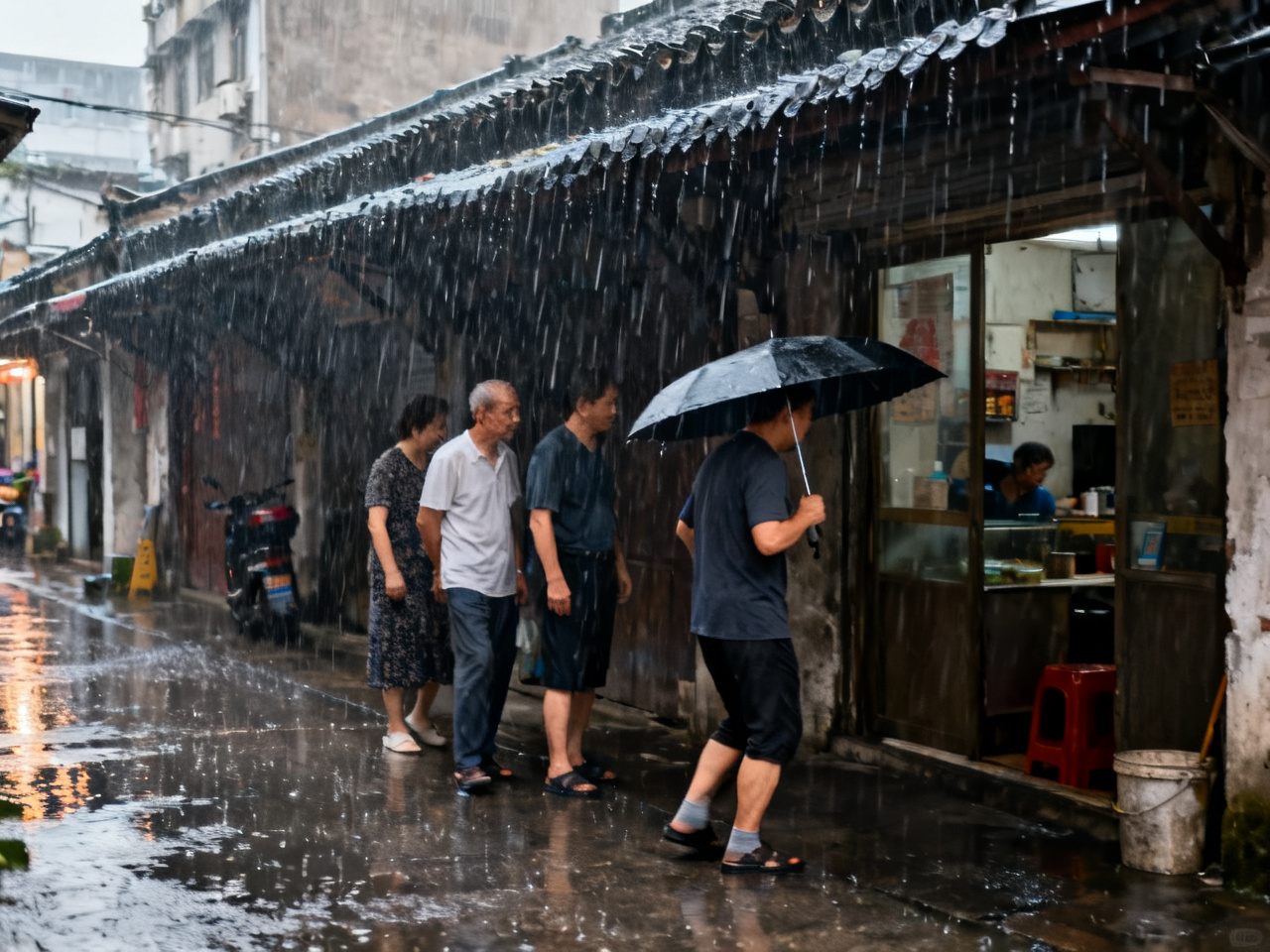
我后来慢慢看懂,屋檐下的规则和排队有一点像:它不是写出来的,却很稳定。你不能只想着自己有没有地方站,还得随时看别人是不是更需要那块干一点的位置;你不能把伞当成个人边界无限展开,因为在这种时候,伞和包都得缩小一点,给共同空间让路。对外国人来说,这种场景特别值得观察,因为它不会给你很大压力,却能非常直接地展示中国城市里的日常协调能力。大家并不是一下子变得特别亲热,而是先把彼此都安放到一个勉强舒服、也勉强体面的状态里。
Later I slowly understood that the rules beneath the eaves are a little like the rules of queueing: they are unwritten, yet very stable. You cannot think only about whether you personally have room to stand. You also have to keep noticing whether someone else needs that drier corner more than you do. You cannot treat your umbrella as an endlessly expandable private border, because in that moment umbrellas and bags both need to shrink to make room for shared space. For foreigners, this kind of scene is especially worth observing because it carries little pressure while showing very directly how everyday coordination works in Chinese cities. People do not suddenly become intimate. They first place everyone into a state that is roughly comfortable and roughly dignified.
那天下雨时,店里老板还顺手把门口的纸箱往里拖了一点,给大家多腾出一条窄窄的落脚线。有人笑着说这雨来得真急,另一个人接了一句“再大五分钟,路口肯定积水”,接着大家又安静下来,各自看雨幕。没有人非要聊天,可也没有人把气氛弄得很僵。我当时站在最外侧,鞋尖已经被溅湿,旁边那位阿姨看了我一眼,往里让出一点地方,说了句“里面一点,不然裤子全湿了”。那句话特别普通,却让我一下放松了,因为它不是热情表演,而是一种非常生活化的接纳。
While it was raining, the shop owner casually dragged a stack of cardboard boxes farther inside, freeing a thin extra strip of standing room. Someone joked that the rain had arrived fast. Another person replied that if it kept going for five more minutes, the intersection would definitely flood. Then everyone went quiet again, each watching the curtain of rain. Nobody insisted on conversation, but nobody made the atmosphere stiff either. I was standing on the outer edge with the tips of my shoes already wet when the auntie beside me glanced at me, shifted inward slightly, and said, “Stand a bit more inside, or your trousers will get soaked.” It was an ordinary sentence, yet it relaxed me immediately because it was not performative warmth. It was a very lived-in kind of inclusion.
这种经验后来让我越来越理解,中国很多温和的人情味,未必出现在大场面里,反而常常藏在这种短短几分钟的共同应对中。你不需要先认识谁,也不需要把自己表达得多完整,甚至不需要说很多话。只要你也愿意稍微挪一步、收一收伞、给别人腾一点位置,你就已经进入了这个临时规则里。我也因此更认同先观察公共空间里的小默契,再决定怎么参与这件事,因为很多时候,真正帮助你理解中国日常的,不是宏大的解释,而是一场雨里的站位。
This experience later helped me understand that much of the gentler warmth in China does not necessarily appear in grand moments. It often hides inside short episodes of shared response like this one. You do not need to know anyone first. You do not need to express yourself perfectly. You do not even need to say much. As long as you are willing to shift half a step, close your umbrella a little, and make a bit of room for someone else, you have already entered that temporary set of rules. That is also why I came to believe even more strongly in observing the small tacit habits of public space before deciding how to join them, because often what truly helps you understand everyday China is not a grand explanation, but a standing position during a rainstorm.
后来雨小下来,大家开始陆续散开。有人重新撑伞,有人低头看手机确认是不是该继续赶路,那个外卖小哥第一个冲出去,车胎压过一片浅水。阿姨也提起菜走了,只留下地上几滴混在一起的雨水。我自己则故意多站了半分钟,看着这个刚刚还很拥挤的小空间一下恢复成普通门口,心里有种说不出的轻微感动。原来我以为躲雨只是狼狈地等天停,后来才明白,它也可以是一堂很安静的城市课:教你怎么和陌生人一起临时使用同一个边界。
When the rain lightened, people gradually dispersed. Some reopened umbrellas, some checked their phones to decide whether to continue on, and the delivery rider rushed out first, his tires cutting through a patch of shallow water. The auntie lifted her vegetables and left as well, leaving only a few drops mingled on the ground. I stayed under the awning for half a minute longer on purpose, watching the little space that had just been crowded return to being an ordinary storefront. I felt a faint but real tenderness. I had once thought taking shelter from rain was only a matter of waiting awkwardly for the weather to pass. Later I understood that it can also be a quiet lesson in city life, teaching you how to share one temporary boundary with strangers.
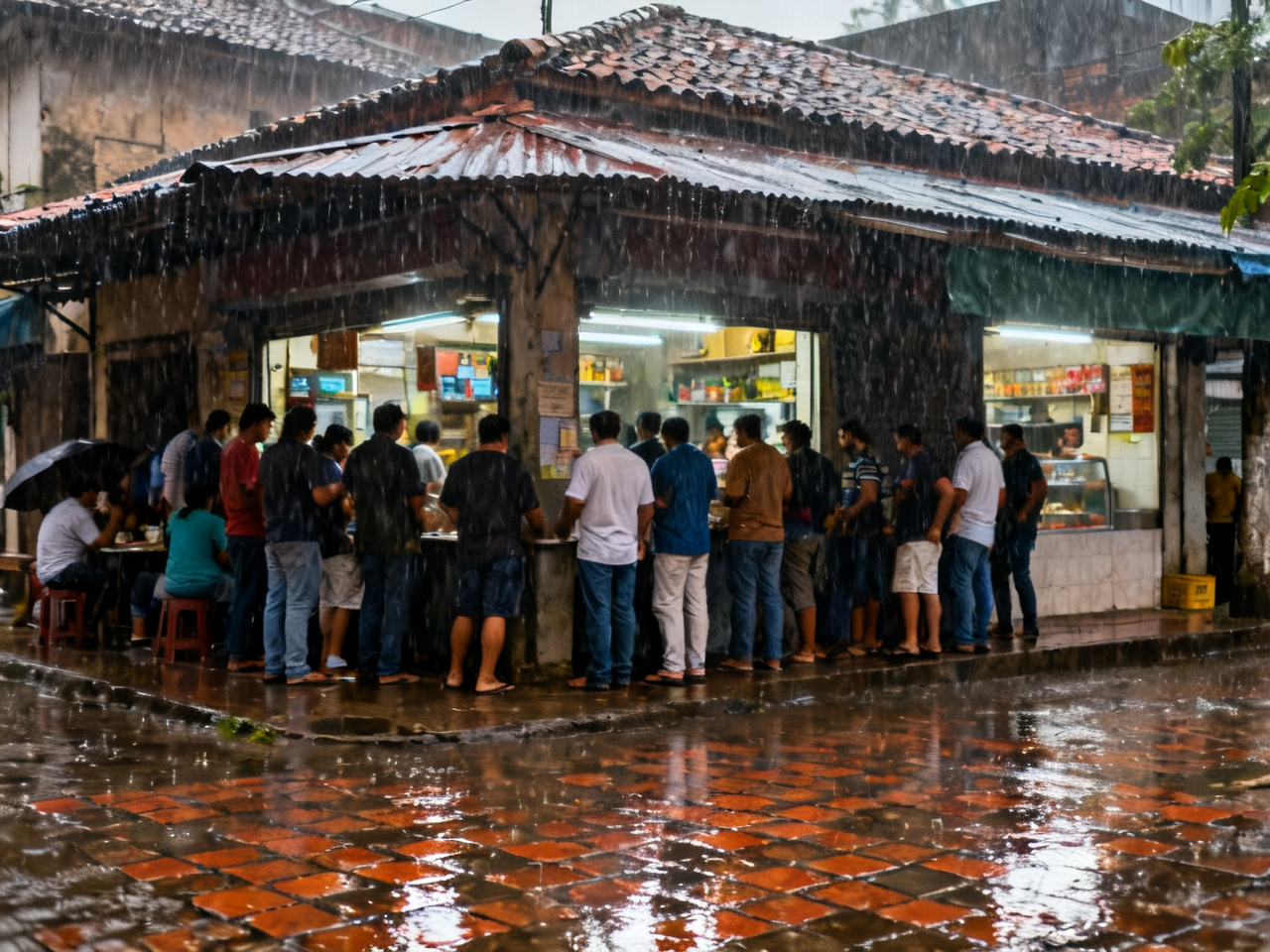
现在如果有人问我,在中国最适合观察“陌生人之间如何迅速形成默契”的地方是哪里,我很可能会说:下雨时去看一眼屋檐下。那里没有正式规则,没有人介绍流程,却能在最短的时间里看见让位、收伞、提醒和照应怎样自然出现。对我来说,这种短暂而具体的协作,比很多抽象的文化说明都更有说服力。因为它不是讲出来的中国生活,而是你站进去以后,立刻就能感觉到的中国生活。
If someone asks me now where to best observe how strangers in China quickly form tacit coordination, I would very likely say: look beneath the eaves when it starts raining. There are no formal rules there and nobody explains the procedure, yet in a very short time you can watch yielding, folding, reminding, and accommodating appear naturally. For me, this brief and concrete cooperation is more convincing than many abstract cultural explanations. It is not China explained to you. It is everyday China that you can feel the moment you step into it.
- 中国医疗就诊指南:看病买药与保险 | Medical Care in China: Hospitals, Pharmacies & Insurance
- 在写字楼大厅等外卖时,我第一次明白站得近不一定拿得更快 | Waiting for Takeout in an Office Lobby Was the First Time I Learned That Standing Closer Does Not Mean Getting Food Faster
- 逛中国博物馆前,先学会这套看展方法 | A Practical Method to Visit Museums in China
- 我在上海小学门口等放学时,第一次真正听懂“你吃了吗”为什么不是在问饭 | Waiting Outside a Shanghai Primary School, I Finally Understood Why “Have You Eaten?” Is Not Really About Food
- 我在杭州把西湖走成一天慢电影:从晨雾到夜船都不赶 | I Turned West Lake into a Slow Day Film from Morning Mist to Night Boat
- 中国住宿选择指南:酒店民宿客栈 | China Accommodation Guide: Hotels, B&Bs & Inns
- 学打中国结之后,我终于理解“吉祥”为什么可以握在手里 | After Learning Chinese Knotting, I Finally Understood How Auspicious Meaning Can Be Held in the Hand
- 小区门口那段广场舞音乐,让我第一次不再把它只当成噪音 | The Square Dance Music at My Compound Gate Was the First Time I Stopped Hearing It as Just Noise
- 中国气候分区与最佳旅行季节 | China Climate Zones & Best Travel Seasons
- 敦煌老街真正留人的,常常不是夜色多辽阔,而是灯下那口杏皮水和炉火 | What Truly Holds You on Dunhuang’s Old Street Is Not the Vast Night but the Apricot Drink and Firelight Under the Lamps
Comments (0)