
第一次在中国水果店买西瓜,我学会先说想现场切还是带走 | The First Time I Bought Watermelon in a Chinese Fruit Shop, I Learned to Say Whether I Wanted It Cut to Eat Now or Taken Home
第一次在中国水果店买西瓜,我学会先说想现场切还是带走 | The First Time I Bought Watermelon in a Chinese Fruit Shop, I Learned to Say Whether I Wanted It Cut to Eat Now or Taken Home
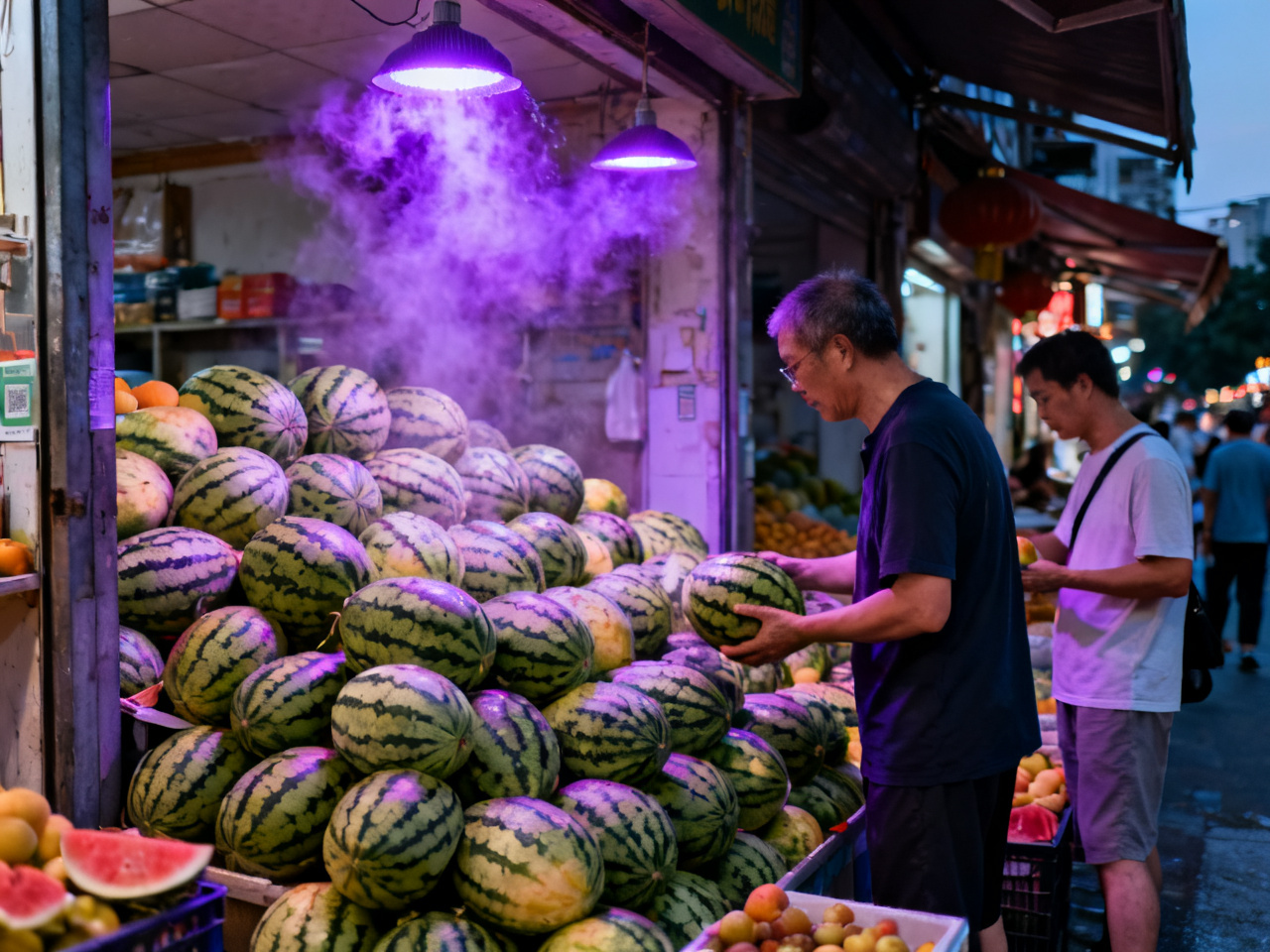
我第一次在中国街边水果店买西瓜的时候,脑子里想的其实非常简单:挑一块看起来红一点的,称重,付款,拿走。那是一个闷热的夏天傍晚,我刚从地铁站出来,整条街都带着一天热气还没散尽的潮闷感。水果店门口堆着成排西瓜,外皮被喷过水,灯光一照亮得发青,地面还有一点细细的水珠和瓜叶碎片。店里一边是冰柜往外吐冷气,一边是老板切水果时砧板发出的闷响,空气里混着哈密瓜甜味、桃子的香气和刚切开西瓜那种很直接的清凉气息。对于一个还在适应中国街头购物节奏的外国人来说,我以为买水果和在很多别的地方一样,重点只是选品和价格,没想到真正让我卡住的,是买完之后“怎么吃”这个问题。
The first time I bought watermelon from a street-side fruit shop in China, my plan was extremely simple: choose a piece that looked red, weigh it, pay, and leave. It was a humid summer evening just after I came out of the metro, and the whole street still held the sticky warmth of a day that had not fully cooled. Rows of watermelons were stacked outside the shop, their rinds freshly misted with water and shining bluish-green under the lights. There were tiny droplets and bits of melon leaf on the ground. On one side of the store, refrigerated cases pushed cool air outward; on the other, the owner’s knife landed on the chopping board with a dull heavy sound. The air mixed the sweetness of Hami melon, the fragrance of peaches, and the direct refreshing smell of watermelon just cut open. As a foreigner still adjusting to the rhythm of street shopping in China, I assumed fruit buying would work the way it often does elsewhere: selection and price are the main things. I did not expect the part that would stall me was the question of how the fruit was meant to be eaten after purchase.
那天我挑了半个西瓜,老板称好以后,抬头很自然地问我:“切开吗?带走还是现在吃?”我手里抱着那半个瓜,当场愣住了。因为在我以前的经验里,买水果大多停在付款这一步,顶多装袋走人;可这里老板问的却是下一层:你准备现场吃,还是带回家?要不要切块?要不要装盒?那几秒钟我站在那里,突然发现自己并没有想过这个最实际的问题。我要回住处还得走一段路,半个西瓜抱在手里虽然能带走,但显然不够方便;如果当场切,怎么装、怎么吃、有没有勺子,我也完全没准备。
That evening I chose half a watermelon. After weighing it, the owner looked up and casually asked, “Want it cut? Taking it away or eating now?” I stood there holding that half melon and froze on the spot. In my earlier experience, buying fruit usually ended at payment, perhaps with a bag and then departure. But here the owner was asking the next layer of the decision: were you going to eat it now or take it home? Did you want it cut into pieces? Packed into a box? In those few seconds, I suddenly realized I had not thought through the most practical question at all. I still had some walking to do before reaching my place. Carrying half a watermelon in my arms was technically possible, but clearly inconvenient. If I had it cut on the spot, I had not thought about how it would be packed, how I would eat it, or whether I even had a spoon.
老板看我没反应过来,又很快接着问:“插勺吗?切块给你装盒?”这一下我才意识到,中国很多水果店卖的根本不只是“水果本身”,还包括一整套围绕食用场景展开的服务。你可以买一整个,带回家冰着慢慢吃;也可以买半个,但请店里帮你切成小块,装进透明盒,插上小叉子或勺子,边走边带,或者回办公室直接放进冰箱。那种服务意识让我特别惊讶,因为它不是高调地推销,而是默认帮你把“这水果接下来怎么进入你的生活”也一起考虑了。
Seeing my hesitation, the owner quickly continued, “Want a spoon in it? Cut into chunks and packed in a box?” That was the moment I realized that many Chinese fruit shops are not selling only “fruit itself.” They are also selling a whole layer of service built around the eating scenario. You can buy a whole watermelon and take it home to chill. Or buy half and have the shop cut it into bite-size pieces, pack it into a clear box, and add a small fork or spoon so you can carry it on the way, bring it back to the office, or place it straight into a refrigerator. That service mentality surprised me deeply because it was not some theatrical sales technique. It was simply a default assumption that the shop could also help think through how the fruit would actually enter your life after purchase.
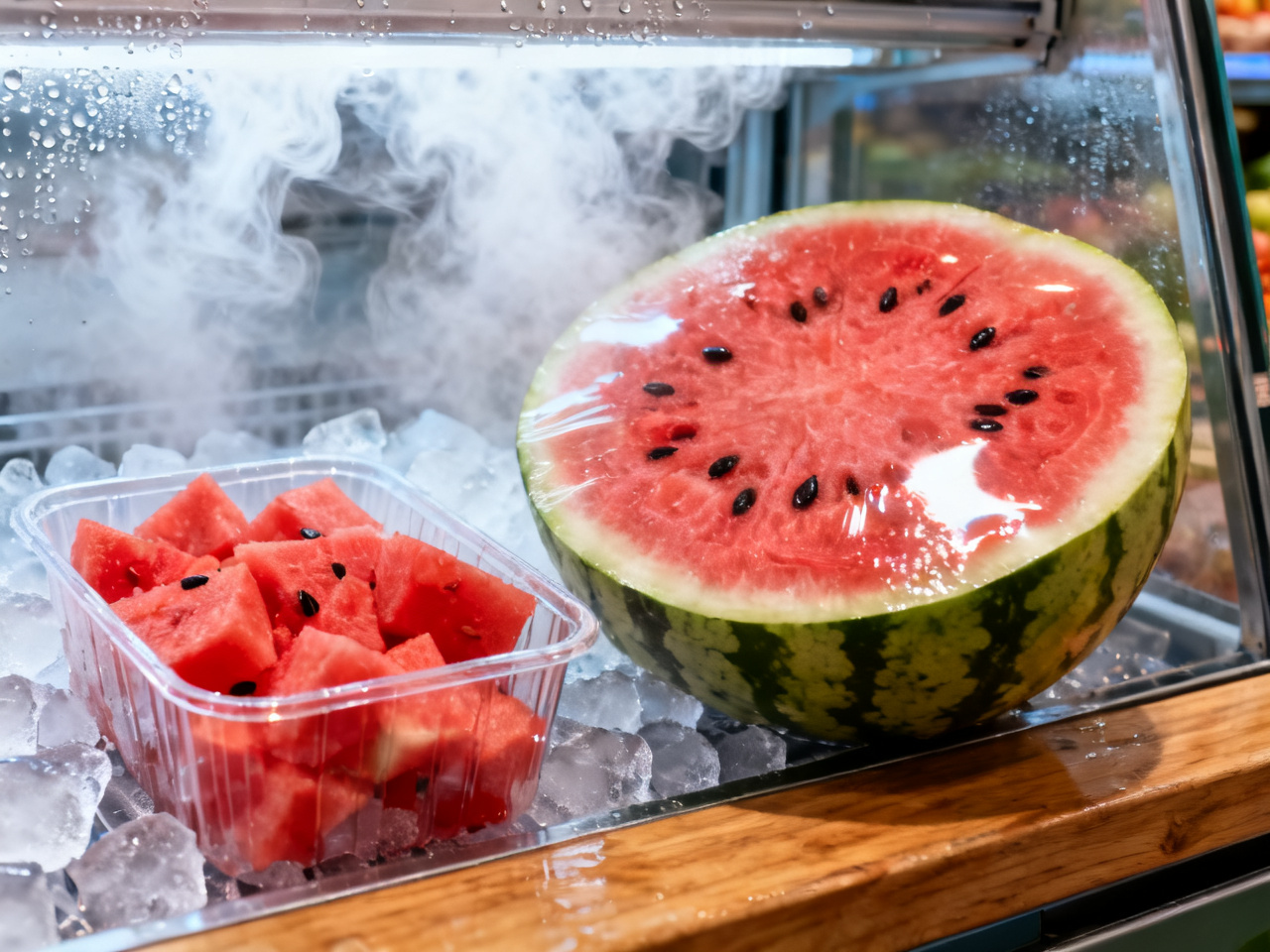
我最后选了切块装盒。老板把半个西瓜放到案板上,几下就切成整齐的大块,再改刀成适合入口的小块,红色瓜肉在白灯下显得特别亮,黑籽被很利落地剔掉大半。然后他把这些西瓜码进透明塑料盒里,盖上盖子,又顺手递给我一个小勺。我站在一边看着那个过程,忽然觉得自己刚才抱着半个西瓜发愣的样子特别像一个还没进入状态的局外人。因为对老板来说,这根本不是额外麻烦,而是每天都在发生的标准流程:先问你怎么吃,再决定怎么切,最后决定怎么装。
In the end, I chose to have it cut and boxed. The owner placed the half watermelon on the board, sliced it into large neat sections in a few strokes, then cut those down into bite-size pieces. Under the white shop light, the red flesh looked especially vivid, and most of the black seeds were removed with quick efficiency. Then he arranged the pieces into a transparent plastic container, snapped on the lid, and handed me a small spoon. Standing there watching the process, I suddenly felt that the image of myself just moments earlier—hugging half a watermelon and staring blankly—looked exactly like someone who had not yet entered the logic of the scene. For the owner, none of this was extra trouble. It was part of an ordinary daily routine: first ask how you want to eat it, then decide how to cut it, and finally decide how to pack it.
后来我去别的水果店,也慢慢发现这种“先问用途”的习惯非常普遍。并不是所有顾客都买回家自己处理,有的人是路上解暑,有的人是带去办公室和同事分着吃,有的人是晚上回家放冰箱,有的人则只是想在店门口站着吃两口再继续走。不同的场景会对应完全不同的处理方式:切不切、切多大、要不要盒子、要不要保鲜膜、要不要小叉子。中国街头很多服务让我印象深刻的一点就在这里——店家并不把交易理解成“钱货两清就结束”,而是会往前再想一步,帮你把使用这一层也接住。
Later, in other fruit shops, I found that this habit of asking about use first was very common. Not every customer is taking fruit home to handle personally. Some people want relief from the heat while still on the street. Some are bringing fruit back to an office to share with coworkers. Some plan to put it in the fridge for later that evening. Others only want to stand outside the shop, eat a few bites, and continue walking. Different situations call for entirely different treatment: whether to cut it at all, how large the pieces should be, whether a box is needed, whether plastic wrap makes more sense, whether to include a fork. That is one of the things that has most impressed me about many forms of street-level service in China. The shopkeeper does not treat the transaction as ending the moment money and goods change hands. They often think one step ahead and help catch the actual use of the item too.
我也慢慢学会了,买西瓜前先把自己的下一步想清楚。要是马上回家,可能整块带走更划算;要是还要继续逛街或者搭车,切块装盒就轻松得多;如果是几个人一起吃,直接让老板切成共享方便的大小,往往比回去自己找刀更省事。这个变化听起来特别小,却真的改变了我买水果时的状态。以前我总把自己放在一种“先买到再说”的匆忙里,后来才发现,很多中国店铺之所以让人觉得顺手、周到,就是因为它们早就默认,买到并不是结束,而是使用的开始。
I gradually learned to think one step ahead before buying watermelon. If I was heading straight home, taking a larger uncut piece might be more economical. If I still had shopping to do or another ride to catch, having it cut and boxed was far easier. If several people were going to eat it together, asking the owner to cut it into shareable pieces was usually much simpler than going home and looking for a knife. The change sounds tiny, yet it genuinely transformed the way I felt when buying fruit. Before, I always put myself into a rushed mindset of “just buy it first and figure it out later.” Later I understood that much of what makes Chinese shops feel so smooth and considerate is precisely that they already assume the purchase itself is not the end. It is the beginning of use.
有一次我还看到一个刚下班的年轻女孩买了一小块西瓜,老板几乎没等她多解释,就问:“办公室吃还是回家吃?”她笑着说带回公司,老板立刻切得更小一些,装得也更平整,方便塞进工位旁边的小冰箱。那一幕让我印象很深,因为老板问的不是抽象偏好,而是很具体的生活场景。也正因为这样,回答“切不切”其实不是一个技术问题,而是一个生活路径问题:你接下来要去哪儿,这块西瓜就该以什么形态陪你去。
Once I even saw a young woman just off work buy a small section of watermelon, and before she had explained much at all, the owner asked, “Eating it at the office or taking it home?” She laughed and said she was bringing it back to work, and he immediately cut it smaller and packed it flatter so it would fit more easily into a little office fridge. That scene stayed with me because the question was not about some abstract preference. It was about a concrete life setting. And because of that, answering whether the melon should be cut is not really a technical issue. It is a route-of-life issue: where are you going next, and in what form should this watermelon accompany you there?
现在如果有刚来中国生活的外国朋友问我,去水果店买西瓜最容易漏掉的一句话是什么,我会说:先告诉老板你想现场切着吃,还是整块带走。因为这句话一说出来,后面的很多事情都会顺起来:装袋还是装盒,要不要勺子,要不要切块,甚至要不要挑半个还是四分之一,都会更自然。对我来说,第一次在水果店里抱着半个西瓜发愣,是一个很小却很典型的时刻。它让我看到,中国街头日常服务里最打动人的地方,常常不是多豪华,而是别人会比你快半步想到你的下一步。从那以后,我每次走进水果店,脑子里先问自己的就不再只是“买什么”,而是“我准备怎么吃”。
Now, if a foreign friend newly living in China asks me what sentence is easiest to forget when buying watermelon from a fruit shop, I say this: tell the owner first whether you want it cut for immediate eating or taken away whole. Once that sentence is spoken, many of the following details fall into place naturally: bag or box, spoon or no spoon, chunks or larger slices, even whether half a melon or a quarter makes more sense. For me, that first moment of standing in the fruit shop hugging half a watermelon and blanking out was tiny, but also very typical. It showed me that one of the most appealing features of everyday Chinese street service is not luxury at all. It is that someone often thinks half a step ahead of you about what comes next. Since then, every time I walk into a fruit shop, the first question in my mind is no longer only “what should I buy,” but “how am I actually going to eat it?”

- 成都:大熊猫之都 | Chengdu: Home of Giant Pandas
- 过节吃什么:中国三大节日的餐桌密码 | What to Eat at Chinese Festivals: The Table Code of Three Major Holidays
- 中医传统疗法 | Traditional Chinese Medicine
- 雾江边的一晚重庆火锅 | A Foggy-River Evening of Chongqing Hotpot
- 外国人第一次夜游中国城市的安全感 | The Sense of Safety I Felt on My First Night Walk in a Chinese City
- 在中国点外卖全流程:美团饿了么实操 | Ordering Food Delivery in China: Meituan & Ele.me Guide
- 在景德镇看一只碗如何被做出来 | Watching a Bowl Take Shape in Jingdezhen
- 五月的苏州雨丝落进园林时,我一个人学会把行程放轻一点 | In Suzhou's May Drizzle, I Learned to Travel Alone with a Lighter Grip
- 从广州吃到潮汕:一条被低估的美食公路 | Guangzhou to Chaoshan: An Underrated Foodie Road Trip
- 龙舟不只是比赛:一个外国人看懂端午的三年 | Dragon Boats Aren't Just Racing: 3 Years of an Outsider Learning Duanwu
Comments (0)