
我在中国老小区晾衣绳下学会的,是先看天气,也先看邻里的节奏 | Under the Laundry Lines of an Old Chinese Residential Compound, I Learned to Watch the Weather and the Neighborhood Rhythm First
我在中国老小区晾衣绳下学会的,是先看天气,也先看邻里的节奏 | Under the Laundry Lines of an Old Chinese Residential Compound, I Learned to Watch the Weather and the Neighborhood Rhythm First
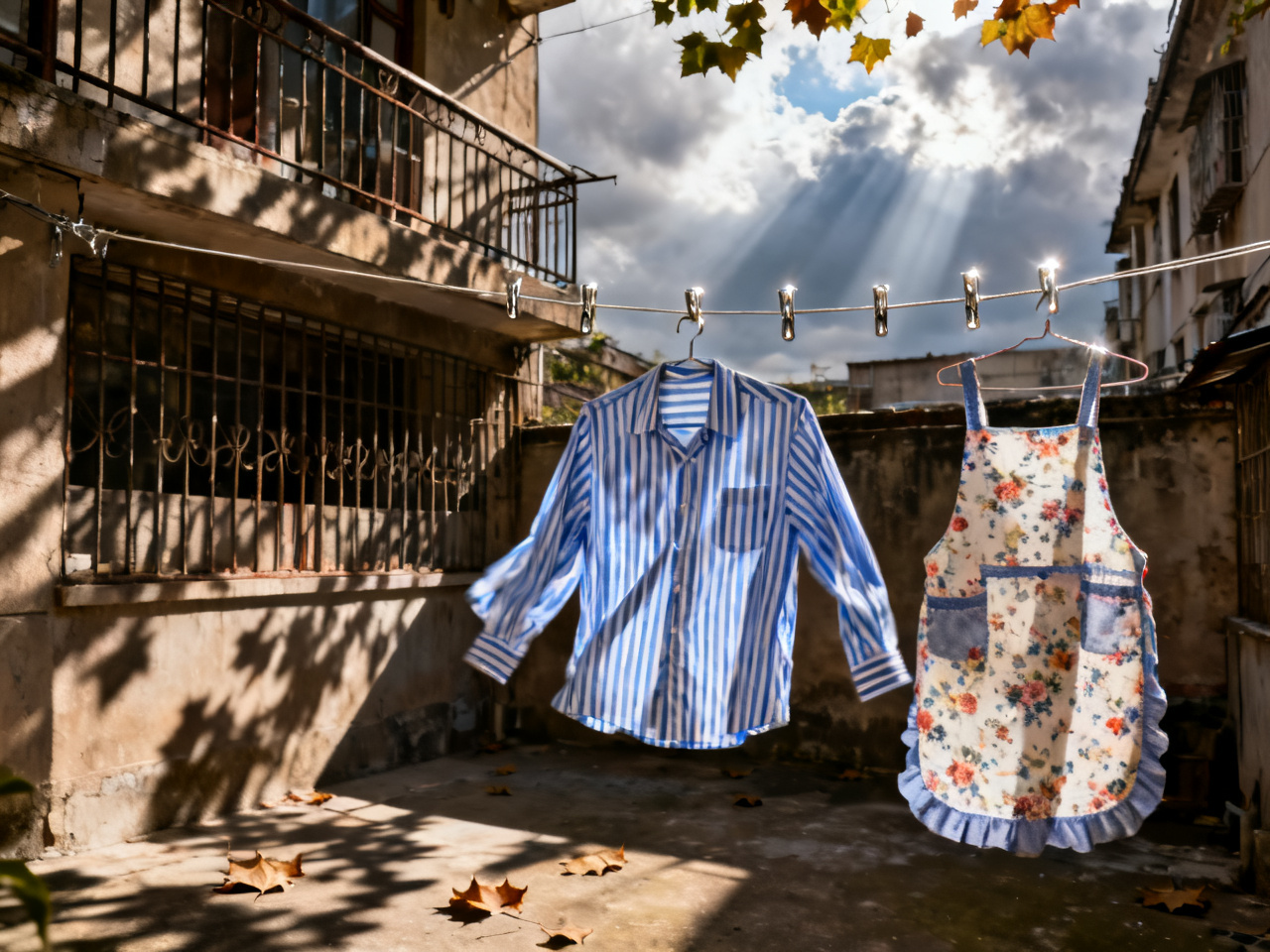
我第一次真正注意到中国老小区里的晾衣绳,是在一个风忽然大起来的午后。院子不大,几栋旧楼围出一个半开放的空地,墙皮有些地方已经微微起翘,楼下停着带挡风被的电动车,树荫下摆着几张小板凳。几根长长的晾衣绳从一楼窗外拉到院子另一头,床单、衬衫、毛巾和孩子校服被夹子固定住,在风里一下一下拍打,发出轻脆又规律的声响。阳台上还伸出晾衣杆,挂着深色裤子和花格子睡衣。阳光把湿衣服边缘照得发亮,空气里有洗衣液的清香,也有水泥地被晒热后的干燥气味。我以前一直以为,晾衣服不过是很私人的生活小事,谁家什么时候晒、什么时候收,无非是门一关就结束的琐碎日常。
The first time I truly paid attention to the laundry lines in an old Chinese residential compound was on an afternoon when the wind suddenly rose. The courtyard was not large. Several old apartment buildings enclosed a semi-open patch of space. In places the paint on the walls had begun to lift. Electric scooters with winter windshields were parked downstairs, and a few small stools sat under the trees. Long clotheslines stretched from windows on the first floor across the yard to the other side, holding sheets, shirts, towels, and school uniforms with rows of clips. In the wind they slapped lightly and rhythmically against the air. Laundry poles extended from balconies too, carrying dark trousers and plaid pajamas. Sunlight made the wet edges of the fabric glow. The air smelled of detergent and of sun-warmed concrete. I had always assumed that hanging laundry was merely a private domestic detail, the kind of small routine that begins and ends behind someone else’s door.
可住进这样的老小区以后,我才发现,晾衣这件事远比我想得更“公共”。不是说谁会来评论你洗了什么,而是因为衣服一旦挂出去,它就立刻进入了天气、空间和邻里共同作用的范围。哪一边先有太阳,哪一阵风是往院子里灌的,下午几点开始容易起云,谁家阳台更容易积潮,哪根绳子离树太近会落灰,这些细节都不是一个人关起门来就能决定的。更有意思的是,院子里的人似乎都天然地对这些变化特别敏感。有人下楼倒垃圾时会顺手抬头看一眼天,有人经过绳子底下会本能地绕开,不碰到滴水的衣角,还有人明明只是坐着择菜,耳朵却像一直在替全院子听风。
But after living in that kind of old compound, I realized that hanging laundry is far more public than I had imagined. That does not mean people comment on what you wash. It means that the moment clothes go outside, they enter a shared zone shaped by weather, space, and neighborhood awareness. Which side gets sunlight first, what kind of wind blows into the yard, what time in the afternoon clouds usually gather, which balconies collect dampness more easily, which line sits too close to a tree and catches dust—none of these things can be managed entirely behind a closed door. What interested me even more was that people in the courtyard seemed naturally sensitive to all these changes. Someone taking out the trash would glance up at the sky without thinking. Someone passing beneath the lines would automatically walk around the dripping edge of a shirt. Someone sitting quietly trimming vegetables would somehow still seem to be listening to the wind on behalf of the whole yard.
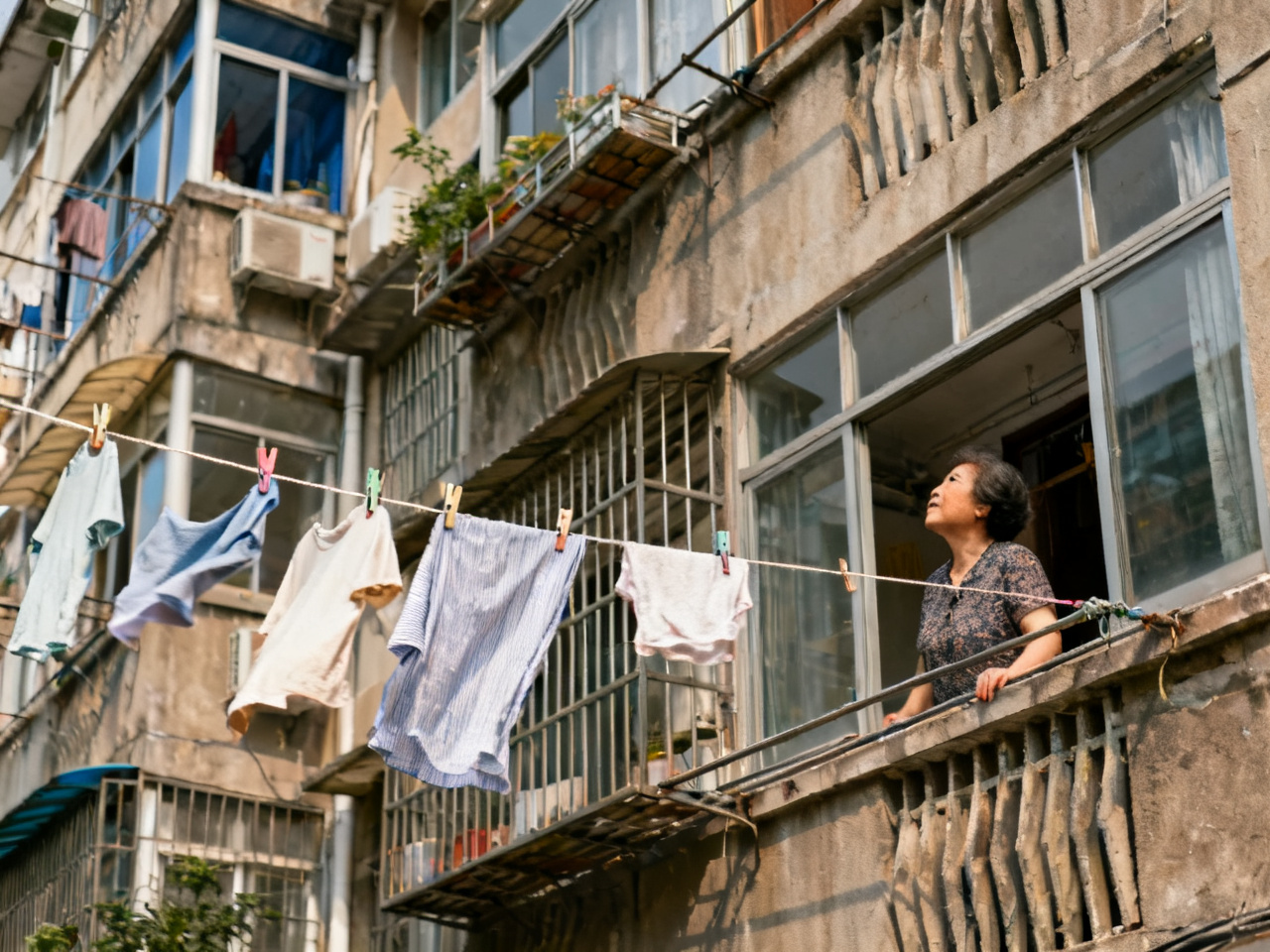
我真正明白这一点,是一次差点把刚洗好的衣服全淋湿。那天中午太阳很好,我看天空亮堂堂的,就把洗好的T恤和床单全挂了出去。衣夹一一夹上时,我还觉得自己终于有点进入本地生活的样子了。结果下午风向一变,院子里的树叶开始翻面,原本很干净的蓝天在楼顶那边慢慢压过来一层灰白。我还在楼上慢吞吞收拾东西,楼下突然传来一声阿姨的喊话:“要下雨了,赶紧收衣服!”我探头一看,隔壁楼的一位阿姨正站在窗边朝院子里张望,手里还拎着几件刚收下来的衣服。我几乎是跑着冲下楼,才在第一批雨点落下来之前把床单和衣服抱回去。那时候我才意识到,原来在这样的院子里,天气变化从来不是一个人的事,收衣服也常常不是只靠自己先发现。
I understood this fully the day I nearly let a whole load of freshly washed clothes get soaked. The noon sun had been excellent, and with the sky looking bright and open, I hung up all my T-shirts and sheets outside. As I clipped each one into place, I even felt a small satisfaction, as if I were finally beginning to live locally in a real way. But later the wind shifted. The leaves in the courtyard turned over, and a gray-white layer began pressing in above the roofline where the sky had been clear. I was still upstairs moving slowly through other chores when a voice suddenly rose from below: “It’s going to rain—hurry and bring your clothes in!” I leaned out and saw an auntie from the neighboring building standing at her window looking into the courtyard, several pieces of laundry already gathered in her hands. I practically ran downstairs and managed to pull in my sheet and clothes just before the first drops began to fall. That was when I understood that in a courtyard like this, changes in the weather are never only one person’s concern, and even collecting laundry often does not depend solely on noticing it yourself first.
那位阿姨后来还顺嘴对我说了一句:“这种风一起来,十分钟内就可能变天。”她说得特别自然,好像不是在传授什么知识,只是在讲一件住久了谁都知道的常识。可对我来说,那简直像一堂非常具体的中国居住课。我过去更多依赖手机天气预报,觉得看见应用上写着“多云”或“降雨概率20%”就够了。可老小区的生活告诉我,天气并不总是以数字和图标最先出现,它很多时候先出现在晾衣绳晃动的幅度里,先出现在对楼阿姨开始频繁探头的动作里,先出现在几家人同时把阳台窗户推上的细小声音里。那些住了很多年的人,几乎是用身体记住了这里的风和云。
The auntie later added casually, “When this kind of wind starts, the weather can turn within ten minutes.” She said it so naturally that it did not feel like instruction at all, just an ordinary fact that anyone who had lived there long enough would know. But to me it felt like a highly specific lesson in Chinese residential life. I had relied mostly on weather apps before, assuming that seeing “cloudy” or “20 percent chance of rain” on my phone was enough. But life in an old compound taught me that weather does not always arrive first as numbers or icons. Often it appears first in the strength of movement on a laundry line, first in the frequency with which the auntie across the building leans out to look, first in the small synchronized sounds of several households sliding their balcony windows shut. People who have lived there for years seem to remember the local wind and clouds with their bodies.
我也慢慢开始注意,晾衣服在这里其实有一种隐形的邻里节奏。上午太阳出来后,院子里会陆续多出颜色不同的衣物,像一块块被挂起来的日常;有些人习惯早洗早晒,中午前就已经挂满;有些人下午才洗,利用的是傍晚前最后一段风;一旦天气不稳,收衣服的动作会像波纹一样从一户传到另一户。谁先开始收,谁在楼上喊一声,谁顺手帮家里老人把竹竿递出去,这些细节都让我觉得,所谓邻里并不一定要天天坐下来聊天,也可以只是通过这些重复的小动作,彼此知道该在什么时候提醒一下、搭把手一下。
I also gradually noticed that hanging laundry here followed an invisible neighborhood rhythm. Once the sun came out in the morning, clothes of different colors began appearing one after another in the courtyard, like daily life itself hung up in pieces. Some people prefer to wash early and fill the lines before noon. Some do it in the afternoon, using the final stretch of wind before evening. And once the weather grows unstable, the act of collecting laundry spreads from household to household like ripples. One person starts bringing things in, another calls down from upstairs, someone else hands out a bamboo pole to an elderly family member. All of this made me feel that being neighbors does not always require sitting down for long conversations. Sometimes it exists simply through these repeated small actions by which people know when to remind one another and when to lend a hand.
这也让我纠正了一个很常见的误解:我原来觉得晾衣服只是私人选择,顶多关乎谁家洗衣液比较香,或者谁更勤快。可在中国很多老小区里,它同时也是一种对公共微环境的适应能力。你得知道什么时候晒不会挡到别人常走的路,什么时候滴水可能落到楼下人家的窗台,什么时候风太大该换更牢的夹子,什么时候天色一变就别再拖。这里没有谁专门开会讲这些规则,但大家都在日复一日地实践。对一个外来者来说,最开始看见的也许只是衣服在风里晃,可慢慢看久了,你会意识到,真正被晾出来的不只是衣服,还有一种在共享空间里生活的经验。
This also corrected a very common misunderstanding of mine. I used to think hanging laundry was simply a private choice, at most reflecting whose detergent smelled better or who was more diligent. But in many old residential compounds in China, it is also a form of adaptation to a shared micro-environment. You need to know when drying clothes might block a path people often use, when dripping water might fall onto the windowsill below, when the wind is strong enough to require firmer clips, and when the sky changes quickly enough that delay is a bad idea. No one holds a meeting to explain these rules, yet everyone practices them day after day. To an outsider, the first thing visible may be only clothes moving in the wind. But if you watch for long enough, you realize that what is really being aired out is not just laundry. It is a whole body of experience about living in shared space.
后来我自己再晾衣服,已经不会只看手机上的天气图标了。我会先打开窗户感受一下风,看看院子里别家有没有已经把厚床单收起来,听听树叶的声音是不是比平时更急。要是看到隔壁阿姨中午就开始收衣,我几乎也会立刻去看一眼自己的阳台。奇怪的是,这并没有让我觉得被邻里节奏束缚,反而让我觉得自己终于开始和这个地方同步了。从前我只是住在这里,现在我会读这里的天,也会一点点读这里的人。
Later, when I hung up my own laundry again, I no longer relied only on the weather icon on my phone. I would first open the window to feel the wind, look to see whether other households had already taken down heavier sheets, and listen to whether the leaves sounded more urgent than usual. If I noticed the auntie next door starting to collect her laundry at noon, I would almost immediately check my own balcony too. Strangely, this did not make me feel controlled by neighborhood rhythm. It made me feel that I was finally moving in sync with the place. Before, I had merely been living there. Now I was beginning to read its weather, and little by little, its people as well.
顺着这个判断方法继续看,中国生活里的天气感和在中国社区里慢慢找到节奏也能互相印证。
Following the same way of reading a scene, 中国生活里的天气感 and 在中国社区里慢慢找到节奏 also reinforce this habit from other angles.
现在如果有人问我,在中国老小区里最容易被低估的生活学问是什么,我很可能会说,就是晾衣绳底下那套关于天气和邻里的默契。它看起来太普通了,普通到很多人根本不会专门注意。可正因为普通,它才最能说明一种真实的居住经验:生活不是只靠自己关起门来安排好就够了,还得学会把目光稍微放到门外,看看天空,看看别人,听听风向。那位提醒我收衣服的阿姨,其实没有做什么惊天动地的大事,但她那一嗓子让我记住了,在中国很多老社区里,所谓邻里感并不总表现为热闹寒暄,更多时候,它只是当雨快来了,有人愿意先替你看见。
Now, if someone asks me what kind of everyday knowledge is easiest to underestimate in an old Chinese residential compound, I would probably say it is the quiet understanding beneath the laundry lines about weather and neighbors. It looks too ordinary to deserve special attention. But precisely because it is ordinary, it reveals a very real kind of residential experience: life cannot be organized only behind your own closed door. You also have to learn to cast your attention slightly outward—to the sky, to other people, to the direction of the wind. The auntie who warned me to bring in my clothes did not do anything dramatic, yet that one shout fixed something in my memory. In many older communities in China, what we call neighborliness does not always appear as warm chatter or obvious friendliness. More often, it appears when rain is coming and someone is willing to see it for you a few minutes earlier.
- 少数民族服饰巡礼:苗族藏族彝族 | Ethnic Minority Costumes: Miao, Tibetan & Yi
- 读懂中国历史 | Understanding Chinese History
- 我为什么开始放心把手机拿在手里:在中国街头学到的日常安全判断 | Why I Began Carrying My Phone in My Hand Without Fear: Everyday Safety Judgments I Learned on Chinese Streets
- 中国八大菜系全览 | The 8 Great Cuisines of China
- 从灰色水泥到绿荫长廊:中国城市道路绿化的二十年蜕变 | From Grey Concrete to Green Canopies: Two Decades of Urban Road Greening in China
- 丽江的雨停在屋檐上以后,我开始跟着水渠和石板路慢慢走 | After Rain Stopped Along Lijiang’s Eaves, I Began Following the Canals and Stone Lanes Slowly
- 我在大理的风里,重新听见自己说话 | In Dali’s wind, I heard myself speak clearly again
- 十一月最适合旅游的城市 | Best Chinese Cities to Visit in November
- 十月赏银杏:满城尽带黄金甲 | October Ginkgo Season: When China Turns to Gold
- 我在苏州学会先找一条不费力的厕所路线 | In Suzhou I Learned to Find a Low-Effort Restroom Route First
Comments (0)