
第一次在中国自助快餐学会先找托盘回收口 | The First Thing I Learned in a Chinese Self-Service Fast Food Place Was to Find the Tray Return Area First
第一次在中国自助快餐学会先找托盘回收口 | The First Thing I Learned in a Chinese Self-Service Fast Food Place Was to Find the Tray Return Area First
我第一次在中国商场里的自助快餐店吃晚饭,是在一个周五傍晚。楼下超市刚开始做打折广播,扶梯口不断有人提着购物袋上来,空气里混着炸鸡、米饭、热汤和刚拖过地的清洁剂味道。快餐区亮得有点晃眼,塑料托盘一层层叠在取餐口旁边,学生、带孩子的家长、刚下班的年轻人几乎把每张桌子都坐满了。我以前对这种地方有个很简单的理解:排队点餐,找位子吃,吃完起身离开,剩下的自然会有人收走。可在中国的很多自助快餐店里,真正决定你是不是“跟上节奏”的,常常不是怎么点,而是吃完以后你知不知道该把托盘送去哪里。
The first time I had dinner in a self-service fast food place inside a Chinese mall, it was on a Friday evening. The supermarket downstairs had just started its discount announcements, people kept coming up the escalator with shopping bags, and the air carried a mix of fried chicken, rice, hot soup, and the sharp smell of recently mopped floors. The dining area was almost glaringly bright. Plastic trays were stacked beside the pickup counter, and nearly every table was occupied by students, parents with children, and young office workers just off work. I used to have a very simple idea of places like this: line up, order, find a seat, eat, and then leave, with the rest naturally handled by staff. But in many self-service fast food spots in China, what really determines whether you have understood the rhythm is not how you order. It is whether, after eating, you know where your tray is supposed to go.
那天我点了一份盖饭和一碗紫菜蛋花汤,端着托盘好不容易找到一个靠角落的小桌。周围很吵,但不是乱,是一种被晚餐高峰压得很紧的热闹:小孩敲勺子的声音,手机付款提示音,椅脚摩擦地面的轻响,还有后厨不断传来的“下一份好了”。我吃完以后,下意识就站起来准备走,甚至已经把外套搭到手臂上了。可就在那一刻,我看见旁边一桌的两个中学生把纸巾、骨头和空杯简单收拢好,端起托盘朝转角走去。我愣了一下,低头看看自己桌上的空碗和饮料杯,突然不太确定该不该直接离开。
That evening I ordered a rice set and a bowl of seaweed egg soup, then carried my tray around until I found a tiny table in the corner. The place was noisy, but not chaotic. It was the compressed liveliness of dinner rush: children tapping spoons, phone payment alerts, chair legs scraping the floor, and the kitchen constantly calling that another order was ready. When I finished eating, I instinctively stood up and prepared to leave, even slipping my jacket onto my arm. But at that exact moment, I saw two middle school students at the next table gather up their tissues, bones, and empty cups, lift their trays, and walk toward a corner. I paused, looked down at my own empty bowls and drink cup, and suddenly was no longer sure whether I should just walk away.
我端着空托盘站了几秒,有点尴尬地左右看。回收口并不在最显眼的地方,而是在一根柱子后面的转角,旁边还有“餐盘回收处”的字样和一个不锈钢台面。那两个学生里一个男生看我站着没动,顺手朝那边点了一下,说:“那边回收。”他语气很自然,没有笑我,也没有表现得不耐烦,可我一下子就明白了自己刚刚差点犯的错。原来在这里,吃完以后直接走人,不一定算失礼,但至少说明你还没真正看懂这类空间默认的合作方式。
I stood there holding my empty tray for a few seconds, awkwardly looking around. The return area was not in the most obvious spot. It was around a corner behind a pillar, with the words “tray return” above a stainless-steel counter. One of the boys, noticing that I had frozen in place, casually pointed in that direction and said, “Return it there.” His tone was completely natural. He was not mocking me, and he did not sound impatient. But I understood at once the mistake I had nearly made. In a place like this, simply walking away after eating may not always be treated as rude, but it does show that you have not yet understood the default form of cooperation the space depends on.
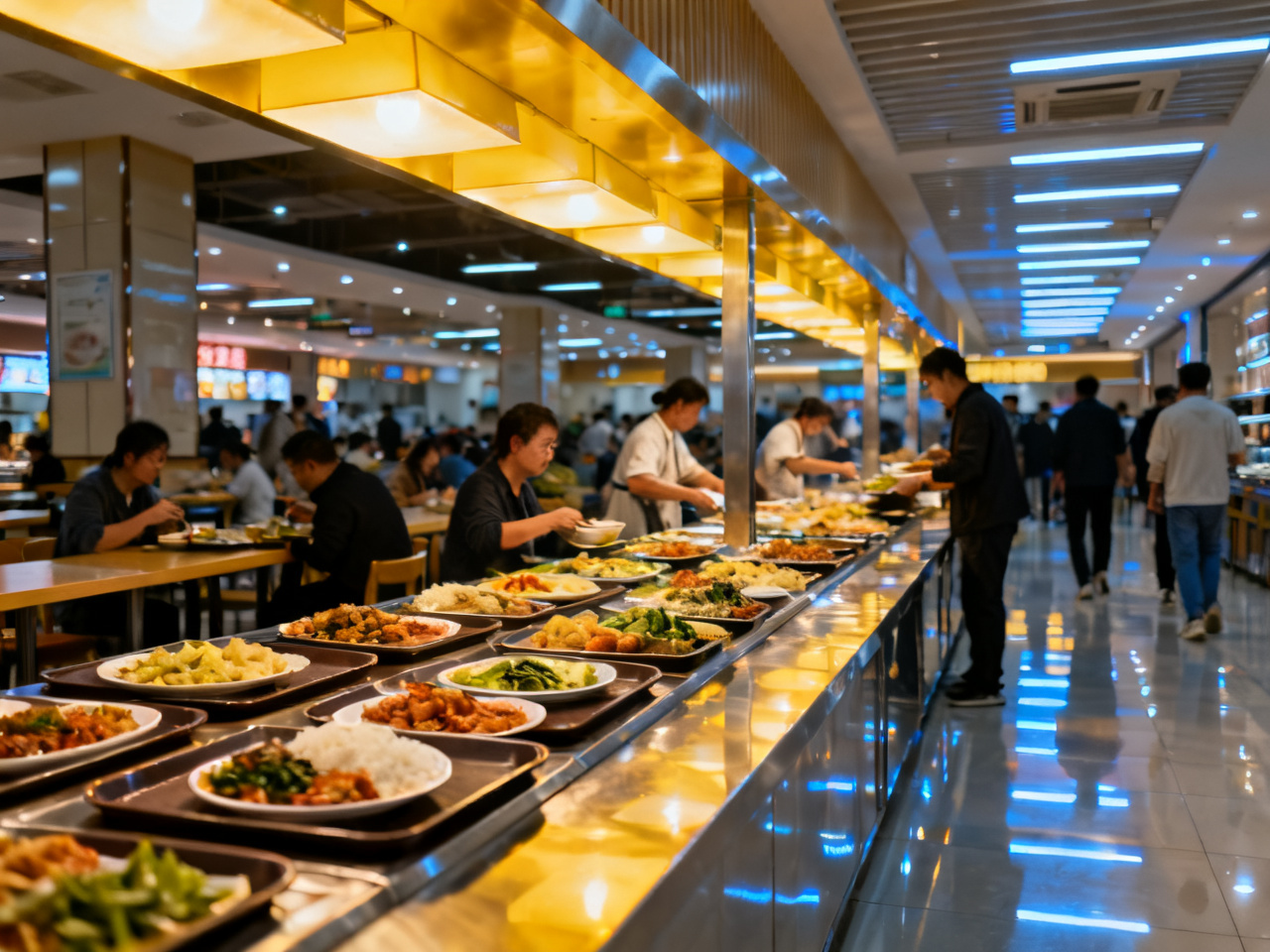
后来我开始留意这种快餐店里的动线,才发现它们比我想象中更讲究“自己完成最后一步”。点餐区、取餐区、找座位、吃完后的回收区,其实是一整套连在一起的流程。真正熟悉这里的人,通常从拿到托盘那一刻起,就已经大概知道自己吃完后要往哪里走。有人会先把汉堡包装纸压进纸盒里,再把杯盖扣好,避免一路滴得到处都是;有人会把剩饭剩菜先集中在一个碗里,方便后面清洁;还有人会在离开前顺手把椅子轻轻推回去,不让下一位顾客还得先腾地方。没有谁在大声规定这些动作,但它们把高峰期原本很容易变乱的用餐区,维持在一种忙而不堵的状态里。
Later I began paying attention to the flow inside these fast food places and realized that they rely much more than I had imagined on customers completing the final step themselves. The ordering area, pickup area, seating search, and post-meal return corner are really one connected process. People familiar with the space often seem to know, from the moment they pick up their tray, roughly where they will head after eating. Some press wrappers neatly into the cardboard box and put the lid back on the cup so nothing spills on the way over. Some gather leftovers into one bowl to make cleanup easier. Others gently push the chair back in before leaving so the next person does not have to make room first. Nobody loudly announces these rules, but they are exactly what keep a dinner rush from turning into a jam.
这件事也让我慢慢改掉了一个很典型的外来者误区:总觉得“有人负责清洁”就等于“我什么都不用管”。在中国很多半自助、快节奏的公共餐饮空间里,员工当然会做最后的深度清理,可顾客也默认承担一小部分整理责任。不是因为谁想省事给你,而是因为人流真的太大了。尤其到了周末晚上,商场里一批人刚吃完,下一批人已经端着托盘在找位子。如果每个人都把空碗、骨头和饮料杯原样留在桌上,桌面翻台的速度就会明显慢下来,连带着后面的人也得多等几分钟。理解这一点以后,我对“回收托盘”这件小事的看法完全变了:它不是额外劳动,而是让整个系统继续顺畅运转的一部分。
This also slowly corrected a very typical outsider misunderstanding in me: the idea that if there are staff cleaning, then I do not need to handle anything at all. In many semi-self-service, fast-paced dining spaces in China, workers absolutely do the deeper cleaning in the end, but customers are also assumed to carry a small part of the organizing work. Not because anyone is trying to offload labor onto you, but because the volume of people is genuinely so high. On a weekend evening especially, one wave of diners has barely finished before the next wave is already standing there with trays looking for seats. If everyone leaves bowls, bones, and drink cups spread across the table exactly as they were, turnover slows immediately, and the people behind them wait longer. Once I understood that, my view of returning a tray changed completely. It was not extra labor. It was part of how the whole system keeps moving smoothly.
我后来还注意到,回收口本身也像一个小小的公共礼仪考场。有人会在台前先停半秒,看清楚哪里放餐盘,哪里倒剩汤,哪里丢纸杯;有人虽然赶时间,也不会把托盘猛地一推就走,而是尽量放稳,免得汤水溅到别人鞋上;如果回收台前已经有人,后面的人多半会稍微让出通道,不把转角堵死。这些动作都不大,甚至很容易被忽略,可我越来越觉得,中国很多日常秩序就是靠这些不起眼的细节撑住的。它们不会被写成长篇规则,但会在一次次重复里变成一种大家都默认知道的分寸。
I later noticed that the tray return area itself functions like a tiny test of public courtesy. Some people pause for half a second to see clearly where the tray goes, where leftover soup should be poured, and where paper cups belong. Even when in a hurry, many do not slam the tray down and rush off, but place it steadily so liquid does not splash onto someone else’s shoes. If someone is already using the return counter, the next person usually leaves just enough passage space instead of blocking the whole corner. These are all small actions, easy to miss. But I have increasingly felt that much of everyday order in China is supported by exactly these understated details. They are rarely written as long formal rules, yet repetition turns them into a sense of proportion that everybody quietly understands.
顺着这个判断方法继续看,中国午饭高峰的节奏和在中国公共空间里学会合作也能互相印证。
Following the same way of reading a scene, 中国午饭高峰的节奏 and 在中国公共空间里学会合作 also reinforce this habit from other angles.
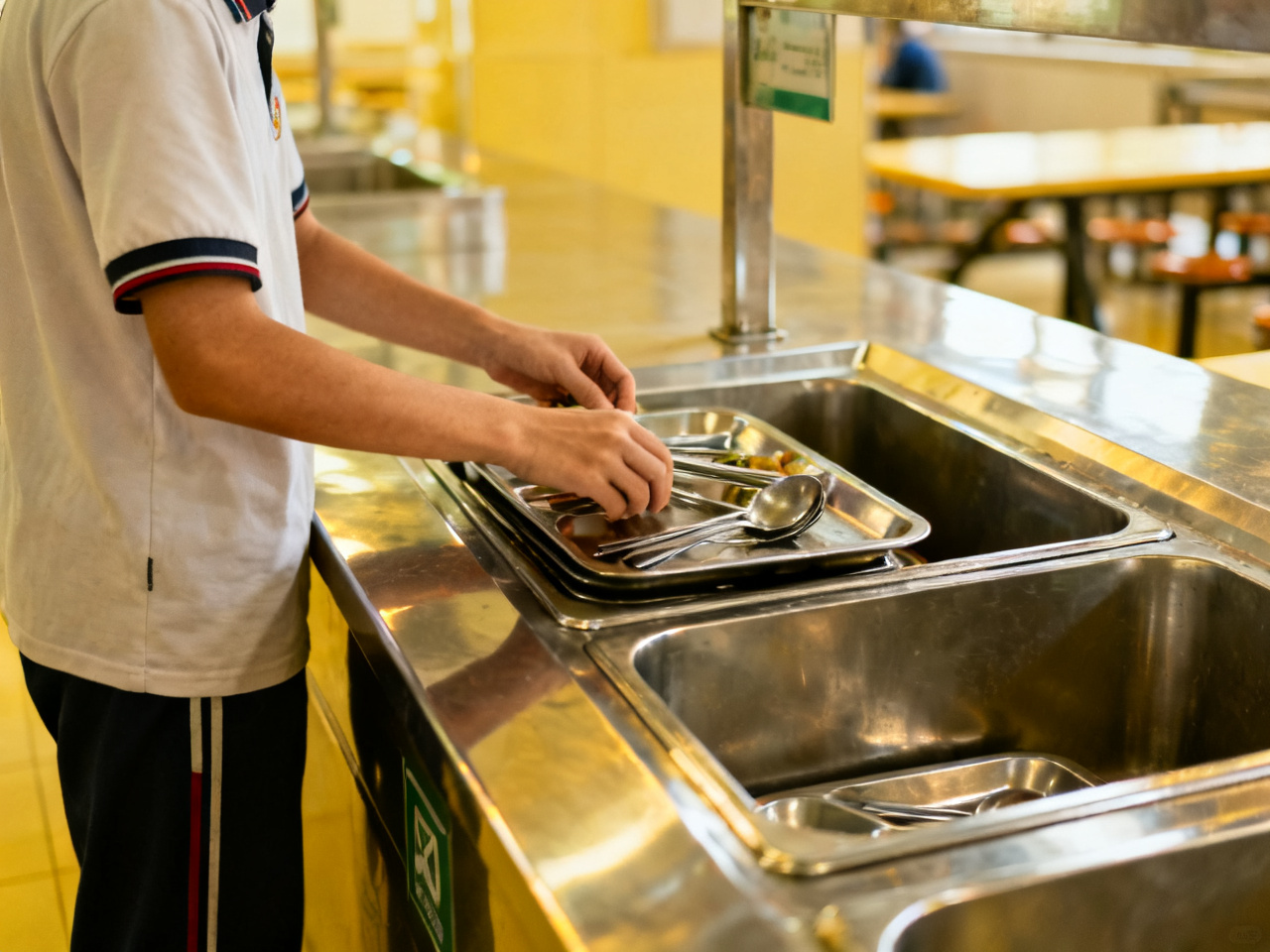
现在如果有刚来中国的朋友问我,第一次进这种商场快餐店最容易忽略什么,我会说,不是点餐码,不是餐具放哪儿,而是先用眼睛扫一遍回收区在哪。你一旦知道吃完后该怎么收尾,整顿饭的感觉都会不一样。你会更自然地处理包装,更容易判断该坐哪里,也不会在起身那一刻突然手足无措。对我来说,那晚那个学生随手指向转角的动作,几乎像一堂缩小版的中国公共生活课:很多空间看起来只是让你来消费,但它们真正顺畅运行,靠的是每个人都愿意多做那最后一步。先找托盘回收口,听上去很小,可它让我第一次真正读懂了这里晚餐高峰的合作逻辑。
Now, if a friend newly arrived in China asks me what is easiest to overlook the first time they enter one of these mall fast food places, I would say it is not the payment code and not where the utensils are. It is looking once, with your own eyes, for the tray return area first. Once you know how the meal is meant to end, the entire experience feels different. You handle the packaging more naturally, choose your seat more intelligently, and do not suddenly feel lost at the moment you stand up. For me, that student’s casual gesture toward the corner was almost like a miniature lesson in Chinese public life. Many spaces appear to be asking only for your consumption, but what allows them to run smoothly is that each person is willing to do the final small step. Finding the tray return area first sounds minor, yet it was what made me truly understand the cooperative logic of the dinner rush here.

- 学会说“麻烦了”之后,我在中国的人际距离一下子变顺了 | After I Learned to Say Máfan Le, My Social Distance in China Suddenly Became Smoother
- 我在中国学会求助,不是因为无助,而是因为这里的回应速度太真诚 | I Learned to Ask for Help in China Not Because I Was Helpless, but Because People Responded So Honestly
- 贵阳晚饭最先把人叫醒的,往往不是招牌菜,而是那口酸汤 | In Guiyang, What Wakes You at Dinner Is Often Not a Signature Dish but the Sour Broth
- 旗袍租赁体验:哪里拍照最好看 | Qipao Rental Experience: Best Photo Spots
- 苏州夜里最会骗人的,不是方向,而是那种“看着很轻松”的安静 | What Misleads Most at Night in Suzhou Is Not Direction but the Quiet Ease It Seems to Promise
- 长沙宵夜:嗜辣之城的深夜食堂 | Late-Night Changsha: The Spice Capital's After-Dark Kitchen
- Long Time No See——那些偷偷混进英语的中式表达 | Chinese Expressions That Snuck Into English When Nobody Was Looking
- 中国书法艺术 | The Art of Chinese Calligraphy
- 版画拓印体验:我第一次明白一张纸为什么也能“接住时间” | Print Rubbing Experience: The First Time I Understood How Paper Can Catch Time
- 盐业历史博物馆的楼梯声,把自贡的地下记忆带到了地面 | The Sound of Wooden Stairs Brought Zigong’s Underground Memory to the Surface
Comments (0)