
扬州早茶的一场耐心训练 | A Lesson in Patience at Yangzhou Morning Tea
扬州早茶的一场耐心训练 | A Lesson in Patience at Yangzhou Morning Tea
清晨六点四十分,我在扬州一间老茶社门外排队,手里捏着还没喝完的矿泉水,前后都是说着方言的本地客。玻璃门里灯光暖黄,蒸笼掀开时白汽贴着窗子往上爬,门外却有一点河边清晨的凉。号码纸已经发到八十多号,我一看队伍拐了两个弯,心里立刻盘算换一家。排在前面的叔叔回头说:“别急,早茶就是从等开始。”他说完又低头看报纸,仿佛这半小时本来就在早餐里。
At 6:40 in the morning, I joined the line outside an old teahouse in Yangzhou, still holding a half-finished bottle of water. Local customers speaking in dialect stood before and behind me. Warm yellow light glowed beyond the glass doors, and white steam climbed the windows whenever a bamboo steamer was opened, while the cool air of a riverside morning lingered outside. The queue number had already passed eighty, and after seeing the line bend twice, I immediately considered going elsewhere. The uncle ahead of me turned and said, “Don’t rush. Morning tea begins with waiting.” Then he returned to his newspaper, as if those thirty minutes were already part of breakfast.
七点过后,队伍忽然移动得比想象中快。服务员一边收走号码牌,一边把散客拼进空位。我被领到二楼,与一对老夫妻共用一张圆桌。桌面留着刚擦过的水痕,木椅稍硬,四周却热闹得让人坐稳:瓷杯碰碟的脆响、拖鞋擦地的沙沙声、跑堂报菜名的长调混在一起。老先生替我挪开茶壶的位置,老太太把菜单转过来,没有客套,只说了一句:“先坐,坐下才好想。”我原以为拼桌会尴尬,真正入座后,反倒像临时加入了一个清晨家庭。
After seven, the queue suddenly moved faster than I expected. A server collected number slips while fitting solo diners into spare seats. I was taken upstairs and placed at a round table with an elderly couple. The tabletop still showed damp marks from a recent wipe, and the wooden chair was rather firm, yet the lively room made it easy to settle in: porcelain cups clicked against saucers, slippers brushed the floor, and servers called out dish names in long, musical tones. The gentleman shifted the teapot to make room for me, while his wife turned the menu my way. Without ceremony, she said, “Sit first. You can think better once you’re seated.” I had expected sharing a table to feel awkward; instead, it felt as though I had briefly joined a family’s morning.
第一壶茶送来时,我急着表现自己懂规矩,抓起壶便把杯子倒满。滚热的绿杨春一入口,舌尖立刻发麻,我只好装作若无其事。老先生看见了,笑着用杯盖拨开浮叶,只斟七分,还把第一口吹凉些再喝。他告诉我,茶不是开场前必须完成的步骤,它会陪着点心慢慢续水。我这才注意到周围没人催菜:有人聊孙子的功课,有人看窗外自行车经过,有人只用两根手指扶杯。第一壶茶教我的不是品种和香气,而是别抢在水温前面。
When the first pot arrived, I was eager to show that I understood the etiquette, so I grabbed it and filled my cup to the brim. The scalding Lüyangchun tea numbed my tongue at once, and I tried to pretend nothing had happened. The gentleman noticed and smiled. He used the lid to move aside the floating leaves, poured his cup only seven-tenths full, and blew gently before taking the first sip. He explained that tea was not a preliminary task to finish before the food; it would stay through the meal and be topped up slowly. Only then did I notice that nobody around us was hurrying the kitchen. Some discussed a grandchild’s homework, some watched bicycles pass outside, and others rested just two fingers against a cup. The first pot taught me less about aroma than about not trying to outrun the temperature.
真正的误判发生在点单。我把早茶当成一次“每样都尝”的早餐,勾了蟹黄汤包、三丁包、翡翠烧卖、千层油糕、烫干丝,又顺手加了肴肉和一碗阳春面。服务员盯着单子问我几个人,我说一个,她没有嘲笑,只用铅笔敲敲纸面:“包子按只点,先上三样,不够再加。”我却担心错过招牌,坚持留下大半。第一笼端来时,我还很兴奋;第二只包子吃完,面前已经摆满碟子;等油糕出现,甜香都变成了压力。隔壁老太太夹起一缕干丝,提醒我:“早茶不是比赛,吃不完也不算见得多。”
My real mistake came with ordering. I treated morning tea as a breakfast where I had to sample everything, marking crab-roe soup buns, diced-pork buns, emerald shaomai, layered sweet oil cake, blanched shredded tofu, sliced cured pork, and a bowl of plain noodles. The server looked at the slip and asked how many people were eating. When I said one, she did not laugh; she merely tapped the paper with her pencil and said, “The buns can be ordered individually. Start with three things and add more later.” Afraid of missing the specialties, I insisted on keeping most of my choices. I was delighted when the first steamer arrived, but after my second bun, small plates already covered the table. By the time the sweet cake appeared, even its rich aroma felt like pressure. The elderly woman beside me lifted a strand of tofu and said, “Morning tea isn’t a contest. Ordering more doesn’t mean you’ve seen more.”
于是我停下来,把手机上的必吃清单收进口袋。汤包要先提起褶口,放进小碟,咬开一点皮再慢慢吸汤;烫干丝则趁热夹一小撮,让姜丝和酱香在嘴里散开。三丁包的馅并不靠重味取胜,笋丁清脆,肉丁柔软,鸡丁藏在热气里。食物一旦不再排队等我“打卡”,味道才有了前后。服务员帮我撤掉空碟,又把尚未蒸的两样划掉。她说早茶客常坐到九点,不是因为菜慢,而是因为一壶茶会把一顿饭拉长。我第一次觉得,取消一道菜也可以算作会吃。
So I stopped and put the must-eat list on my phone back into my pocket. A soup bun needed to be lifted by its pleated top, placed in a small saucer, opened with a tiny bite, and sipped slowly. The shredded tofu was best taken in a warm, modest pinch, allowing the ginger and soy fragrance to unfold. The diced-pork bun did not rely on forceful seasoning: bamboo shoots gave a crisp bite, pork stayed tender, and bits of chicken hid in the steam. Once the dishes were no longer waiting in line for me to check them off, their flavors acquired an order and rhythm. The server cleared the empty plates and cancelled two items that had not yet been steamed. She said regulars often sat until nine, not because the kitchen was slow, but because a pot of tea stretched the meal. For the first time, I understood that cancelling a dish could also be part of knowing how to eat.
八点左右,茶楼最忙,门口仍有人探头问号,桌边却出现一种奇怪的从容。老夫妻把最后半只烧卖分给我,问我是不是第一次来扬州。我承认自己原计划四十分钟吃完,好赶去园林。他们笑了,说园林不会跑,包子凉了却真会变味。那句话听着朴素,却替我改了当天的行程。我把下一站推迟,给壶里添水,看茶色由浓转淡。窗外太阳越过屋檐,照亮旧街的青砖,楼下自行车铃短短响了两声。等待不再像被行程偷走的时间,反而成了我终于看见扬州早晨的空隙。
Around eight, the teahouse reached its busiest point. People still leaned through the doorway to ask about their numbers, yet an odd calm had settled around the tables. The elderly couple shared their last half of a shaomai with me and asked whether this was my first visit to Yangzhou. I admitted that I had planned to finish breakfast in forty minutes so I could hurry to a garden. They laughed and said the garden would not run away, but a bun truly would lose something when it cooled. The remark was simple, yet it changed my day. I delayed my next stop, added water to the pot, and watched the tea fade from deep to pale. Outside, sunlight crossed the eaves and brightened the gray bricks of the old street; a bicycle bell rang twice below. Waiting no longer felt like time stolen from my itinerary. It had become the opening through which I finally noticed a Yangzhou morning.
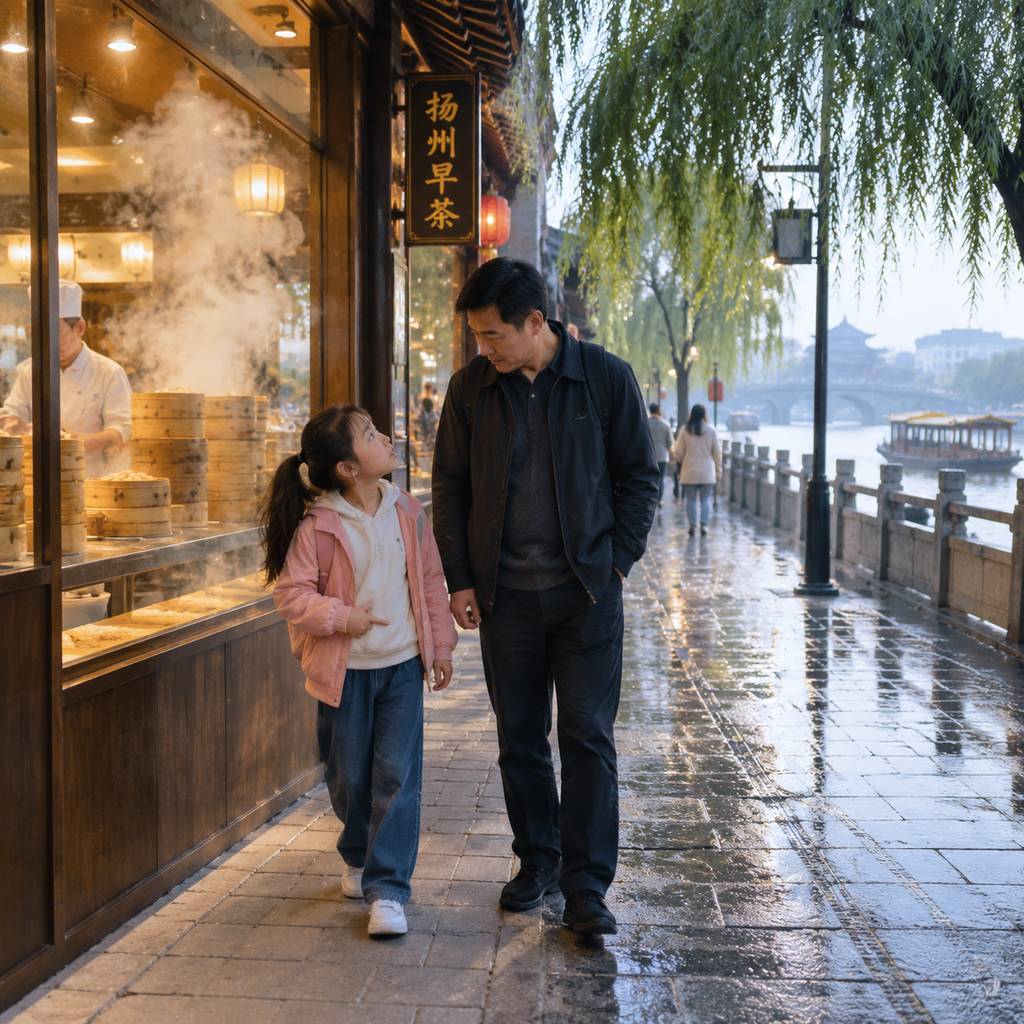
结账时,服务员把打包盒扎得很紧,并将汤包与甜糕分开,免得挤坏。我拎着早餐走下楼,门外的新一轮客人正沿墙排开,队伍依然漫长。若是两小时前,我会替他们着急;此刻却明白,他们等的不只是一张空桌。扬州早茶把“慢”做成了一连串具体动作:少倒一点茶,少点一道菜,多听一句提醒,多留几分钟给热气散去。走到街口时,纸袋里那只三丁包还温着。我没有边走边吃,只在河边长椅坐下,解开绳结,耐心等下一口不再烫嘴。
At the cashier, the server tied my takeaway box firmly and separated the soup buns from the sweet cake so they would not be crushed together. I carried breakfast downstairs, where a fresh group of customers had formed another long line along the wall. Two hours earlier, I would have felt anxious on their behalf. Now I understood that they were waiting for more than an empty table. Yangzhou morning tea turns slowness into a sequence of practical gestures: pour a little less tea, order one dish fewer, listen to one more piece of advice, and give the steam a few extra minutes to settle. At the street corner, the diced-pork bun inside my paper bag was still warm. I did not eat it while walking. I sat on a bench beside the river, loosened the string, and patiently waited until the next bite would no longer burn.
几天后,我又在七点前走进同一家茶社。这回没有先盯墙上的招牌,而是站在楼梯口看服务员怎样安置客人:带孩子的一家被引到靠墙的大桌,拄手杖的老人坐在离茶水间较近的位置,像我这样的散客则被问一句“愿不愿意拼桌”。轮到我时,我点头说可以,还主动把背包抱到腿上,没有用它占旁边的椅子。服务员将一块写着“留座”的小牌收走,手掌向里一引,我侧身让过端着蒸笼的跑堂,再拉开椅子坐下。这个入座过程不过十几秒,却比第一次少了许多慌乱。
A few days later, I returned to the same teahouse before seven. Instead of staring at the specialties on the wall, I paused by the stairs and watched how the servers seated people. A family with children was guided to a large table against the wall, an elderly man with a cane was placed near the tea station, and solo diners like me were simply asked whether we minded sharing. When my turn came, I nodded and held my backpack on my lap rather than occupying the spare chair. The server removed a small reserved sign and gestured inward. I stepped aside for a waiter carrying steamers, pulled out my chair, and sat down. The whole process lasted perhaps ten seconds, yet it contained far less confusion than my first visit.
这次同桌的是一位穿灰夹克的父亲和他的女儿。女孩把筷子横放在碟边,双手扶着菜单,一项一项念给父亲听;父亲不替她决定,只问“咸的先来,还是甜的先来”。我原本又想勾五样,听见这句话便停了笔,先选烫干丝、三丁包和一只蟹黄汤包,并请服务员把油糕放到第二轮。她接过单子后,用铅笔在汤包旁画了一个圈,提醒要等,接着把“油糕稍后”写在空白处。不是所有要求都靠说得很复杂,只要把先后次序讲清楚,厨房和餐桌就都有余地。
My tablemates this time were a father in a gray jacket and his daughter. The girl rested her chopsticks across the edge of her saucer, held the menu in both hands, and read each item aloud. Her father did not decide for her; he only asked, “Something savory first, or something sweet?” I had been about to mark five dishes again, but that question stopped my pencil. I chose blanched shredded tofu, a diced-pork bun, and one crab-roe soup bun, asking for the layered oil cake in a second round. The server circled the soup bun to show that it would take time, then wrote “oil cake later” in the margin. A request does not need to be elaborate. Once the order is clear, both kitchen and table gain breathing room.
茶点送来后,我也不再把每只蒸笼都拉到自己面前。三丁包落桌时,父亲先用手背试了试笼边的热度,再把笼盖斜靠在旁边,让蒸汽散开;女孩夹包子没夹稳,父亲没有伸手抢,只替她把小碟推近。她重新夹住褶口,稳稳放下,得意地抬了一下眉。我照着做,把汤包先移到碟里,又请服务员添一只浅口小勺。汤汁从咬开的小口流进勺中,我等热气薄下来才喝。邻桌有人催着拍照,我们这桌却只听见勺沿碰瓷的一声轻响。
When the food arrived, I no longer dragged every steamer toward myself. As the diced-pork buns landed on the table, the father tested the rim with the back of his hand and propped the lid at an angle to release the steam. His daughter failed to grip her bun on the first try. He did not snatch it from her; he merely pushed her saucer closer. She caught the pleated top again, lowered the bun safely, and raised an eyebrow in triumph. I copied them, moving my soup bun onto a saucer before asking the server for a shallow spoon. The broth ran through a small opening into the spoon, and I waited for the steam to thin before tasting it. Someone at the next table was hurrying to take photos, while at ours there was only the soft click of spoon against porcelain.
第二轮点单时,服务员俯身问油糕是否照上。我看了看桌面:干丝剩一小撮,包子已经吃完,茶壶还有半壶,便说油糕只要一块,另外加一碟肴肉,不要面。她复述一遍,我却听成了“两块油糕”,赶紧抬手修正。她把单子转给我看,原来自己写得没错,还笑着说:“慢慢讲,来得及。”这句回应让我不再因为口音和嘈杂而胡乱点头。后来每次增单,我都先说数量,再报菜名,最后重复“现在上”或“稍后上”;若没有听清,就请她再说一次,而不是等错误的蒸笼来到桌边。
When the server bent down to ask whether she should send the oil cake, I first looked over the table. Only a small pinch of tofu remained, the buns were gone, and half a pot of tea was still there. I asked for one piece of oil cake, added a plate of cured pork, and declined the noodles. As she repeated the order, I mistakenly heard “two pieces of cake” and quickly raised my hand to correct it. She turned the slip toward me; she had written it correctly all along. Smiling, she said, “Speak slowly. There’s time.” Her response stopped me from nodding blindly whenever dialect and room noise blurred together. From then on, when adding food, I gave the quantity first, then the dish, and finally said “bring it now” or “later.” If I missed something, I asked her to repeat it instead of waiting for the wrong steamer to reach the table.
那碟肴肉端上来,肉冻在晨光里微微透亮。我夹起一片,差点直接送进口中,女孩却把桌边的香醋往中间推了推。父亲解释,蘸不蘸都随意,但先尝原味,再碰一点醋,能吃出变化。我照他说的把一片分成两半:前半口咸鲜扎实,后半口添了醋,凉意里多出一点清亮。女孩则把油糕撕成两小块,一块放在自己的碟里,一块递给父亲。她手指沾了油,立刻捏住纸巾角擦干净,又把纸巾折好压在碟下。这些细小动作没有谁讲解,却让整张桌子显得有章法。
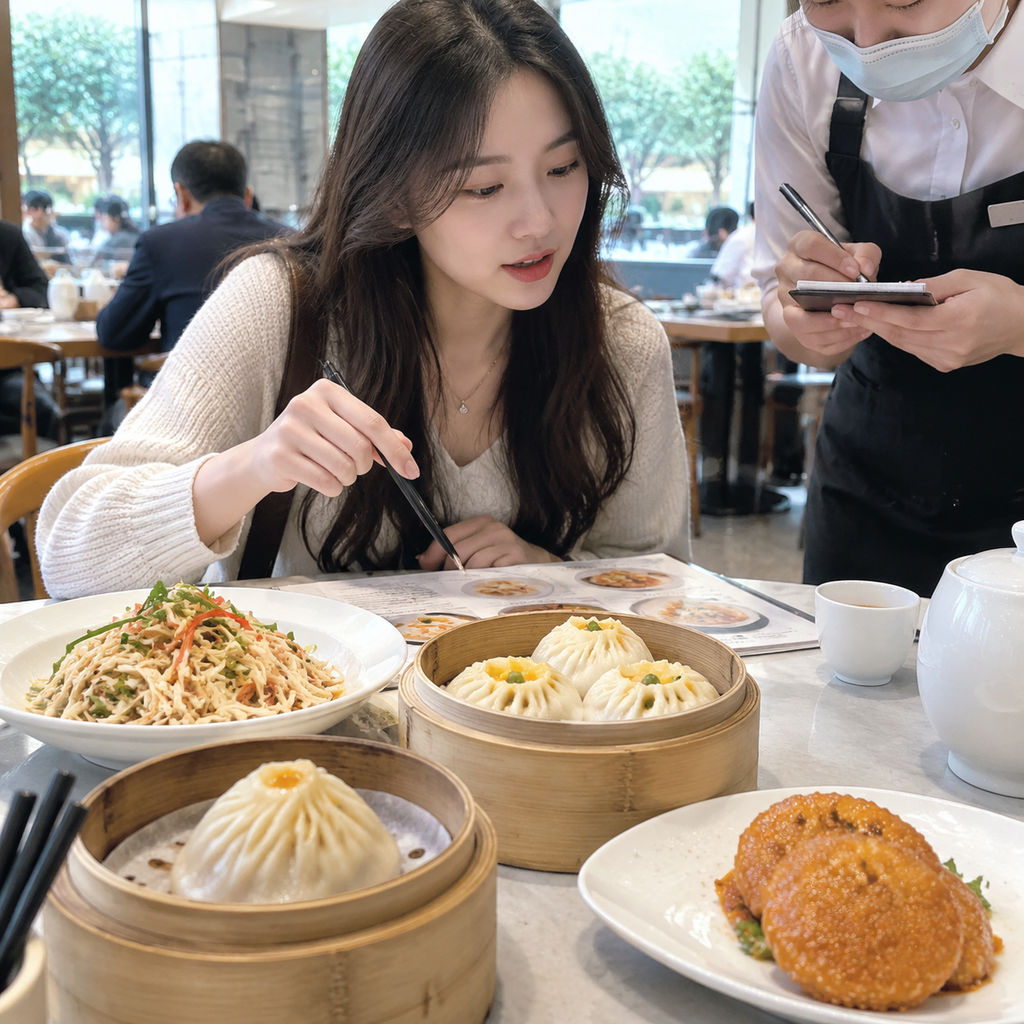
The plate of cured pork arrived with its aspic shining faintly in the morning light. I lifted a slice and nearly ate it at once, but the girl nudged the table’s vinegar toward the center. Her father explained that dipping was optional, yet tasting the meat plain first and then with a little vinegar revealed the change more clearly. I divided one slice in two. The first half was firmly savory; the second, touched with vinegar, gained a bright edge beneath its cool texture. The girl tore her oil cake into two small pieces, kept one on her saucer, and passed the other to her father. When oil touched her fingers, she pinched the corner of a napkin, wiped them clean, folded the napkin, and tucked it beneath the plate. Nobody explained these gestures, but together they gave the table an easy order.
快到九点,女孩说还想要烧卖,父亲没有马上答应,而是让她指一指肚子,判断是真的饿,还是舍不得结束。她想了一会儿,只点一只。服务员提醒现蒸要等十分钟,她便把手缩回袖口,望着笼屉进出的方向。烧卖送到时,她没有独占,用筷子从中间分开,把稍大的一半推给父亲。我也把剩下的肴肉装进小盒,不再为了清盘硬吃。茶水员提着长嘴壶经过,见壶盖斜放便停步续水;细长水线落进壶口,几乎没有溅出一滴。
Near nine, the girl said she wanted another shaomai. Her father did not agree immediately. He asked her to point to her stomach and decide whether she was truly hungry or simply reluctant for breakfast to end. After thinking, she ordered only one. The server warned that a freshly steamed one would take ten minutes, so the girl drew her hands into her sleeves and watched the steamers moving in and out. When it arrived, she did not keep it whole. She divided it with her chopsticks and pushed the slightly larger half toward her father. I packed the remaining cured pork into a small box rather than forcing myself to clear the plate. A tea attendant passed with a long-spouted kettle, noticed our lid resting at an angle, and stopped to refill the pot. The narrow stream landed neatly in the opening without scattering more than a drop.
临走前,我把账单逐项看了一遍,发现那碗阳春面已经删掉,油糕数量也是一。服务员将小票压在茶壶旁,顺手把桌沿一只快掉下去的勺子推回去。父亲给女儿穿外套,她先抬左臂却钻错了袖口,两个人笑成一团;我起身时也先把椅子收进桌下,再让端盘的人从身后过去。楼梯口又站着几位等座的客人,我没有停在通道里整理背包,而是走到门外才系紧肩带。原来所谓熟悉早茶,不是能背出多少招牌,而是知道每一个动作都要给别人留一点位置。
Before leaving, I checked the bill item by item. The plain noodles had been removed, and the oil cake quantity was indeed one. The server set the receipt beside the teapot and, in the same motion, pushed back a spoon that was about to slip over the table’s edge. The father helped his daughter into her coat; she raised her left arm but found the wrong sleeve, and both burst out laughing. When I stood, I tucked my chair beneath the table and let a server carrying plates pass behind me. Several guests were waiting for seats near the stairs. Rather than stopping in the passage to adjust my backpack, I went outside before tightening the straps. Being familiar with morning tea, I realized, was not about memorizing the most specialties. It was about leaving a little room for others in every movement.
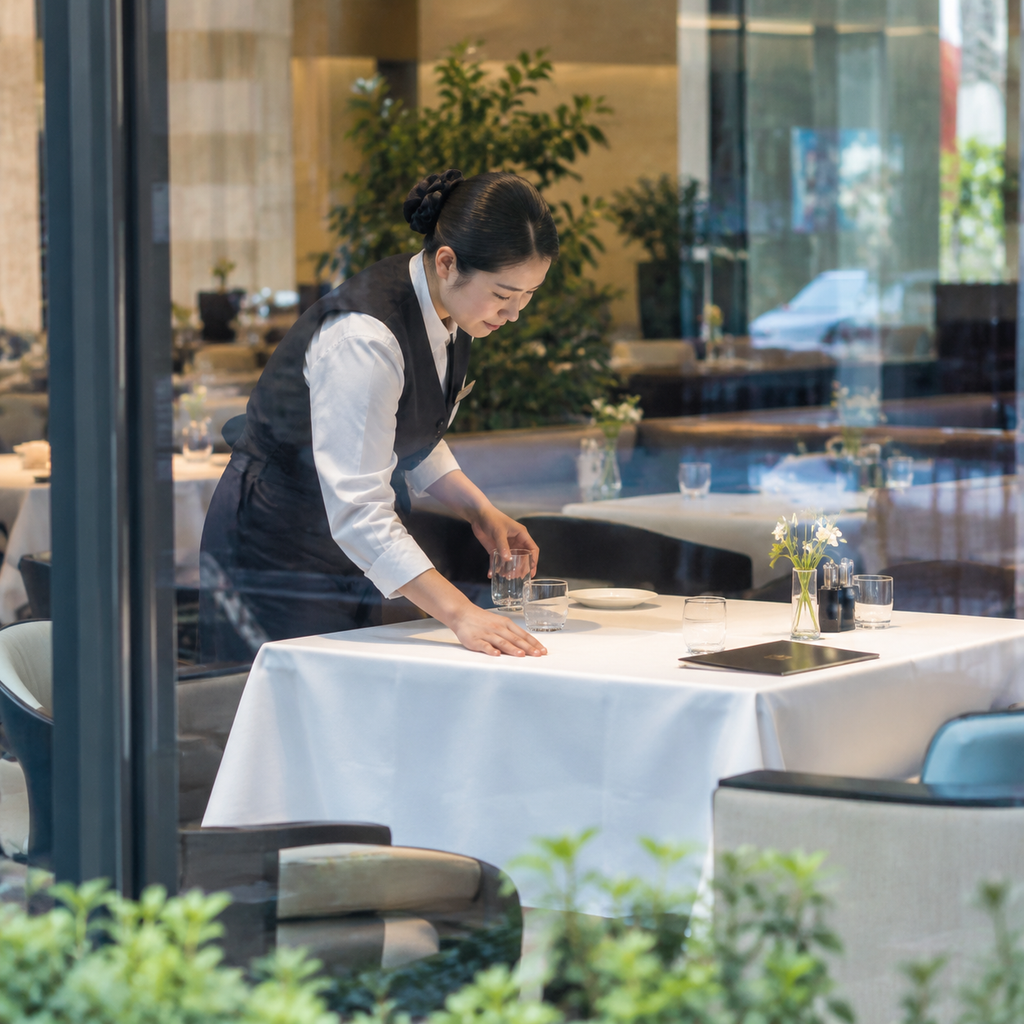
门帘在身后落下时,里面又传来一声清亮的“几位”。我隔着玻璃看见服务员抹平桌布,换上新杯,又把菜单摆到将入座者伸手就能拿到的位置。女孩贴着窗向我挥了一下手,父亲正低头扣她没扣齐的衣扣。我抬起打包盒回应,没有急着走。盒里只剩几片肴肉,轻得不会勒手;茶香却还留在袖口。第二次来,我依旧没把菜单吃遍,却终于会在坐下、加菜、改口和起身之间,把这一顿早茶吃得从容一点。
As the curtain fell behind me, a clear call of “How many?” rose inside again. Through the glass, I watched the server smooth the tablecloth, replace the cups, and position the menu where the next guest could reach it upon sitting. The girl waved at me through the window while her father bent down to fix the buttons she had misaligned. I raised my takeaway box in reply and did not hurry off. Only a few slices of cured pork remained inside, light enough not to pull at my hand, while the scent of tea still clung to my sleeve. On my second visit, I still had not eaten through the whole menu. But between taking my seat, adding a dish, correcting an order, and standing to leave, I had finally learned to let a Yangzhou breakfast move at its own ease.
我以为那一下挥手已经是告别,刚走出十来步,却听见女孩在身后喊:“你的伞!”原来我把折伞挂在了椅背,父女俩结账出来时顺手带上。她举着伞跑得太快,鞋底在湿青砖上滑了一下,父亲赶紧扶住她的肩。我接过伞,说了两遍谢谢,又把打包盒打开,请他们带走剩下的两片肴肉。女孩先看父亲,得到点头后才捏起一片,还认真问我是不是不爱吃。我告诉她,不是不好吃,是早茶已经把我喂得很饱。她笑着纠正:“那就留着中午吃呀。”我们站在茶社门侧分食最后几片,既不像同桌的陌生人,也还算不上熟人,只是都不愿把一句再见说得太仓促。
I thought her wave had already been our goodbye, but after barely a dozen steps I heard the girl call behind me, “Your umbrella!” I had left the folding umbrella hooked over my chair, and the father and daughter had brought it out after paying. She ran too quickly and slipped slightly on the damp gray bricks, so her father caught her by the shoulder. I took the umbrella, thanked them twice, then opened my takeaway box and offered them the last two slices of cured pork. The girl looked to her father first and took one only after he nodded. With complete seriousness, she asked whether I disliked it. I explained that the food was good; morning tea had simply filled me. “Then save it for lunch,” she corrected me with a grin. We stood beside the teahouse sharing those final slices—not quite strangers from the same table anymore, not yet friends, and all reluctant to rush the word goodbye.
他们要往学校方向走,我则没有马上去园林。父亲指着茶社旁一条窄巷,说沿着它慢慢走,能绕到河边,途中会经过酱菜铺、修鞋摊和一口仍在使用的老井。他没有把这条路说成景点,只提醒我九点半前送货的电动车多,要贴着墙走,听见铃声就先让。我照他的说法拐进去,茶楼里的喧闹一下被砖墙压低。巷口还闻得到包子的甜面香,走深几步,气味换成酱缸的咸、煤炉上开水的潮气和晒被子留下的太阳味。窗台不高,搪瓷盆里泡着青菜,一只橘猫从空调外机跳上雨棚,震落几滴昨夜的水。这里没有需要停下拍照的“标准画面”,脚步却自然比大街上短了一半。
They were heading toward the school, while I chose not to hurry to the gardens. The father pointed to a narrow lane beside the teahouse and said it would curve toward the canal, passing a pickle shop, a shoe-repair stand, and an old well that was still in use. He did not describe it as an attraction. He only warned that delivery scooters were busiest before half past nine, so I should keep near the wall and yield when I heard a bell. I turned in as he suggested, and the brick walls immediately softened the clamor of the dining room. Near the entrance, the sweet, floury scent of buns still lingered. Deeper inside, it gave way to the salt of pickle jars, damp steam from a kettle on a coal stove, and the sun-warmed smell of bedding hung to air. Low windowsills held enamel basins of soaking greens. An orange cat jumped from an air-conditioning unit to an awning, shaking loose a few drops of last night’s rain. There was no standard postcard view demanding a photograph, yet my stride naturally shortened to half its length.
修鞋摊前只摆着一张矮凳,摊主正给一双布鞋钉后跟。他每敲三四下便停手,让一位提菜篮的邻居把话说完,然后再低头找准钉子。我问老井在哪儿,他没抬头,只把锤柄朝前一指:“听见水桶响就是。”再往前,果然传来木盖碰石沿的闷声。一位阿姨把桶放下,用瓢把井水舀进塑料盆,旁边的小男孩蹲着洗掉小葱根上的泥。水溅到他裤脚,他抬头告状,阿姨只把盆往外挪了一寸,让他继续。早茶桌上那种不慌不忙的分寸,在巷子里换了形状:一句话说完再落锤,一桶水放稳再递瓢,一辆车通过后才把晾衣杆伸出来。
Only one low stool stood before the shoe-repair stall, where the cobbler was nailing a new heel onto a pair of cloth shoes. After every three or four taps, he stopped to let a neighbor with a vegetable basket finish her sentence, then lowered his eyes and found the nail again. I asked where the old well was. Without looking up, he pointed ahead with the hammer handle and said, “You’ll hear the bucket.” Sure enough, farther down came the dull knock of a wooden cover against a stone rim. A woman set down a bucket and ladled well water into a plastic basin, while a little boy squatted beside her washing soil from scallion roots. When water splashed his trouser cuff, he looked up to complain. She merely shifted the basin an inch and let him continue. The measured calm of the breakfast table had taken another form in the lane: finish a sentence before striking the nail, steady a bucket before passing the dipper, wait for a scooter to pass before extending a laundry pole.
我给这段路定了一个很松的节奏。走五六分钟,在桥边停三分钟;看见有人推车,就靠进门洞让路;手机只在需要确认方向时拿出来,不边走边找构图。九点四十五分,巷子开始从早餐时辰转向白天。酱菜铺把半扇门彻底推开,老板用长柄勺翻动酱缸,深褐色汁水在阳光下亮了一圈。送煤气的师傅把车停在巷口,扛着钢瓶一步一步往里走,居民听见他的吆喝便从窗内回应。十点整,修鞋摊旁多了一壶新泡的茶,摊主端起来抿一口,仍是七分满。我这才明白,茶社里的慢并没有在结账时结束,它顺着客人的脚步散进了街巷,而且有明确的拍子,并非漫无目的地消磨时间。
I gave this stretch of road a deliberately loose rhythm: walk for five or six minutes, pause by a bridge for three; step into a doorway when someone pushed a cart through; take out my phone only to confirm the direction, never to hunt for compositions while moving. At 9:45, the lane began shifting from breakfast hours into the working day. The pickle-shop owner pushed the half-open door all the way back and stirred a crock with a long-handled ladle, making a ring of dark brown brine shine in the sun. A gas-cylinder deliveryman parked at the entrance and carried his load inward one deliberate step at a time; residents answered his call from their windows. At exactly ten, a freshly brewed pot appeared beside the cobbler. He raised his cup for a sip, and it too was only seven-tenths full. I understood then that the teahouse’s slowness did not end at the cashier. It dispersed into the lanes with the footsteps of departing diners, following a distinct beat rather than wasting time without purpose.
河边比巷里亮,水面被风切成细碎的银片。桥脚下停着两辆买菜自行车,车把上挂着莲藕和青菜,塑料袋碰在一起窸窣作响。我在石栏边坐了十二分钟,特意没有打开地图。先看一艘清洁船从桥洞出来,船上的人用长网捞起一团水草;再看穿校服的女孩骑车经过,后座书包随着石板路一下一下弹动;最后才听见远处钟声。早茶之后若立刻钻进景点,我大概只会记住又一处门票和讲解。绕进这条后巷,胃里的饱胀慢慢落下去,耳朵也从茶楼的密集声响,适应到水拍石岸的稀疏节奏。所谓消食,原来不只是多走几步,也是让刚刚认识的人和听见的话有地方安顿。
The riverside was brighter than the lane, and the wind broke the water into small silver pieces. Two grocery bicycles rested below the bridge, lotus roots and greens hanging from their handlebars, plastic bags whispering against one another. I sat by the stone railing for twelve minutes and deliberately left the map closed. First, a cleaning boat emerged from the arch, its worker lifting a tangle of weeds with a long net. Then a schoolgirl cycled past, her backpack bouncing on the rear rack with every seam in the paving. Only afterward did I notice a distant bell. Had I rushed straight from breakfast into a formal attraction, I might have remembered little beyond another ticket and another commentary. By entering this back lane, I felt the heaviness of breakfast settle, while my ears adjusted from the teahouse’s dense clatter to the spare rhythm of water touching stone. A digestive walk, I learned, is not simply about taking more steps. It also gives the people just met and the words just heard somewhere to come to rest.
十点半,我才在河边岔口与他们真正告别。父女俩原来从另一条巷子绕来,女孩远远认出我的蓝伞,刹住自行车喊我。她父亲把车扶稳,问我有没有找到老井。我说找到了,也学会听水桶的声音。他笑着说:“那你今天没白慢。”女孩催着要上课,只来得及挥手,说下次别再把伞忘下。我答应了,看着她蹬过小桥,灰夹克的父亲跟在后面,到了转角还回头举了一下手。两辆车铃一前一后响起,很快被街上的叫卖声盖住。我没有追着拍背影,只把折伞放进包里,拉好拉链,确认这一次确实带走了它。
At half past ten, we finally said a proper goodbye at a fork beside the canal. The father and daughter had circled around through another lane, and from a distance the girl recognized my blue umbrella, braked her bicycle, and called out. Her father steadied his bike and asked whether I had found the old well. I said yes, and that I had even learned to listen for the bucket. He laughed. “Then slowing down wasn’t wasted today.” The girl was anxious not to be late for class. She had time only to wave and tell me not to forget my umbrella again. I promised. She pedaled across the small bridge, her father in the gray jacket following behind; at the corner, he turned and raised one hand. Their bicycle bells rang one after the other, then disappeared beneath the calls of street vendors. I did not chase their backs with my camera. I folded the umbrella into my bag, pulled the zipper shut, and made sure that this time I had truly taken it with me.
我到十点四十分才重新看当天的安排,把原定四十分钟的早茶改成了一个完整上午:六点四十分排队,七点入座,八点让茶续到第二壶,九点结账,九点一刻走进后巷,十点在河边停下,十点半告别。这个次序并不适合每一天,却很适合扬州的这个清晨。它让我记住的不是“慢游”两个轻巧的字,而是每一步到底慢在哪里:汤包等三十秒再入口,别人说完话再敲锤,铃声靠近时先贴墙,告别时停下来把对方看清。后来走进园林,我仍会看时间,但不再拿分钟追赶分钟。袖口的茶香已经很淡,桥那头的车铃也听不见了,脚下却还保留着从茶桌带出来的拍子。
I did not reopen the day’s itinerary until 10:40. By then, the forty minutes I had allotted to morning tea had become an entire morning: queue at 6:40, sit down at seven, let the tea reach a second pot at eight, pay at nine, enter the back lanes at 9:15, stop by the canal at ten, and say goodbye at half past. That sequence would not suit every day, but it suited this Yangzhou morning. What stayed with me was not the airy slogan of “slow travel,” but precisely where each pause belonged: give a soup bun thirty seconds before biting, let a neighbor finish speaking before striking the hammer, move to the wall when a bell approaches, and stop long enough to see someone clearly when saying goodbye. Later, inside the garden, I still checked the time, but I no longer used one minute to chase the next. The scent of tea on my sleeve had nearly faded, and the bicycle bells beyond the bridge were gone, yet my steps still carried the beat learned at the breakfast table.
下午两点多从园林出来,扬州已经换了一层光。早晨湿润的青砖被晒得发白,屋檐下的阴影收得很窄,巷口卖桂花藕粉的小车却仍冒着热气。我没有沿游客最多的路返回,而是顺着一位送桶装水的师傅拐进旧城。他把三轮车停在墙边,抬头认准窗台的红色夹子,便扛起水桶上楼。这个动作让陌生巷子忽然有了门牌之外的关系,也让我放慢脚步,不再只寻找地图上的名字。
A little after two, when I left the garden, Yangzhou had changed its light. The damp gray bricks of morning had dried almost white, shadows tucked tightly beneath the eaves, while a cart selling sweet osmanthus lotus-root starch still sent up steam at the lane entrance. Instead of taking the busiest visitor route back, I followed a bottled-water deliveryman into the old quarter. He parked his tricycle against a wall, found the windowsill marked by a red clothes peg, then shouldered a bottle upstairs. That small action gave the unfamiliar lane relationships beyond its house numbers, and slowed me enough to stop searching only for names printed on a map.
午后的街巷比清晨松散。裁缝铺门口支着熨衣板,热熨斗压过蓝布时发出轻微的嘶声;杂货店老板坐在竹椅上剥毛豆,把空豆荚准确丢进脚边纸箱;两个放学早的孩子蹲在树荫里弹玻璃珠,谁的珠子滚进排水沟,谁就趴下来用树枝往外拨。我在一处没有招牌的岔口犹豫,一位摇蒲扇的奶奶问我要去哪儿。我说想走到运河边,她没有报路名,只教我认一面画着白鹭的墙:“走到那里闻见米香,向左,水就在风来的地方。”
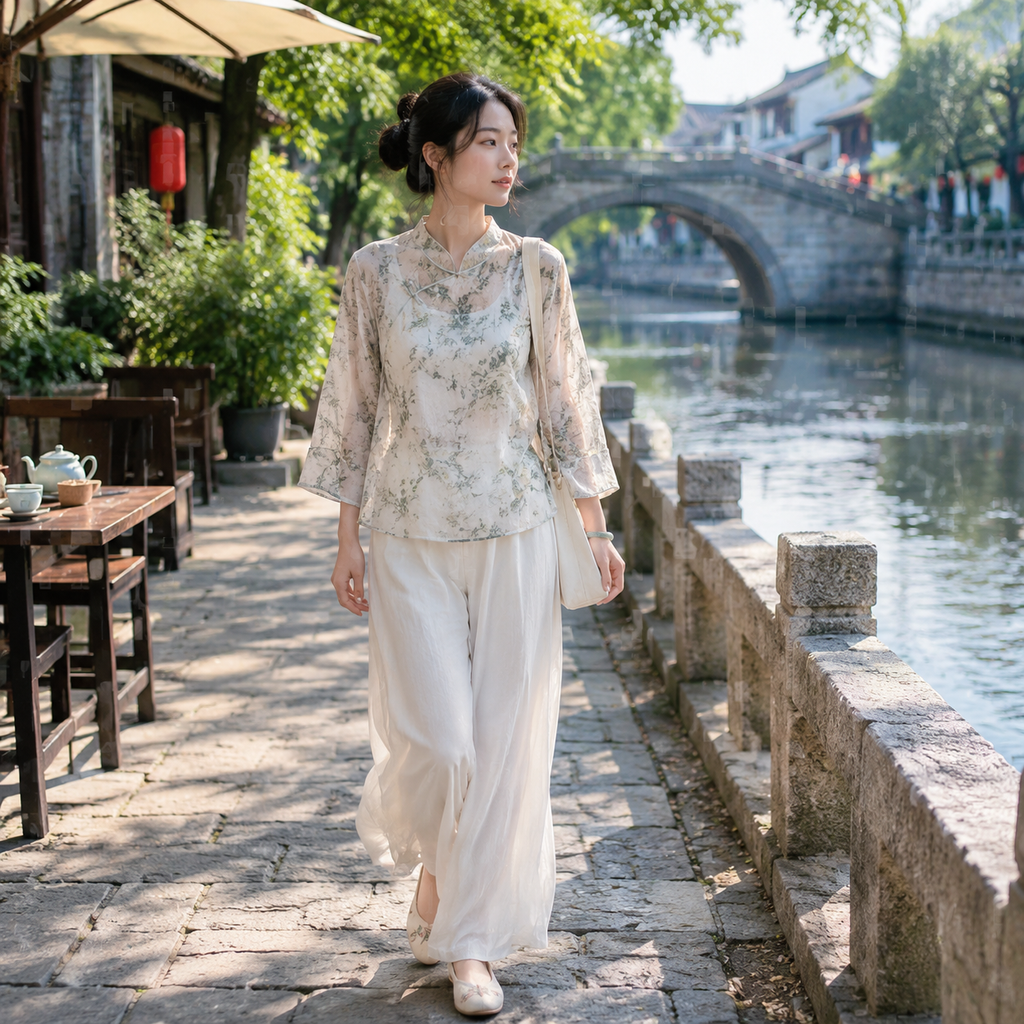
The afternoon lanes were looser than they had been at dawn. Outside a tailor’s shop, a hot iron sighed over blue cloth. A grocer shelled edamame from a bamboo chair, tossing each empty pod neatly into a carton by his feet. Two children released early from school crouched in the shade playing marbles; whenever one rolled into the drain, its owner lay flat and teased it out with a twig. I hesitated at an unsigned fork, and a grandmother fanning herself asked where I was going. When I said the canal, she gave no street name. Instead, she told me to look for a wall painted with an egret: “When you reach it and smell rice, turn left. The water is where the breeze comes from.”
她的指路方法起初让我不放心,手机上的蓝点又在密集屋顶间轻轻漂移。我走到白鹭墙前,果然先闻见蒸米的甜气。旁边小作坊刚揭开木桶盖,一名年轻工人戴着厚手套把米糕盘端上架。他见我来回看屏幕,便用沾着米粉的手背朝左一挥,说运河不过两百步。我收起手机照着走,路面从平整砖块变成被车轮磨亮的石板,风也由闷热转为带水的凉。巷子没有突然结束,而是先露出一截栏杆、半个桥洞,最后才把整片水面慢慢交出来。
At first, her directions made me uneasy, especially as the blue dot on my phone drifted between the tightly packed roofs. Yet when I reached the egret wall, the sweet smell of steaming rice arrived exactly as promised. A young worker in a small workshop had just lifted the lid of a wooden vat and was carrying trays of rice cakes to a rack in thick gloves. Seeing me turn repeatedly to my screen, he waved left with the back of a flour-dusted hand and said the canal was barely two hundred steps away. I pocketed the phone and followed. Even paving bricks gave way to stone polished by wheels, while the close heat changed into a coolness carrying water. The lane did not end abruptly. It offered first a length of railing, then half a bridge arch, and only afterward the whole surface of the canal.
运河边没有我想象中的整齐安静。货船发动机从远处压来低沉的震动,桥下有人冲洗拖把,水珠落回河面;一位穿荧光背心的保洁员沿栏杆夹烟头,夹子每合一次都咔哒作响。石阶上坐着三个钓鱼人,其中年纪最大的一位把小马扎往旁边挪,示意我可以坐。他并不问我从哪来,只看了看我的鞋,说这双鞋底薄,别踩青苔。话音刚落,一条游船掀起的水波推到岸边,湿痕在最低一级石阶上升了半掌,又缓缓退回去。他用鱼竿点点那条湿线:“看水,别只看船。”
The canal was neither as tidy nor as silent as I had imagined. The low vibration of a cargo-boat engine traveled from far away. Beneath the bridge, someone rinsed a mop, droplets falling back into the river, while a sanitation worker in a fluorescent vest picked cigarette ends from beside the railing, her grabber clicking shut each time. Three anglers sat on the stone steps. The oldest shifted his folding stool aside to make room for me. He did not ask where I came from; he glanced at my shoes and warned that their thin soles would slip on moss. Just then, the wake from a sightseeing boat reached shore. A wet line climbed half a hand up the lowest step and slowly retreated. Tapping that line with his rod, he said, “Watch the water, not only the boats.”
我陪他看了二十多分钟,才发现水上的时间也分层。游船来时,讲解声和相机快门先经过;船走远后,驳岸缝里的小鱼才重新浮上来。老人姓周,年轻时在运河上跑运输,如今每周来两三次,鱼获多少并不重要。他指给我看对岸卸货的小码头、桥栏上较新的修补石,以及一扇常在傍晚打开的木窗。谈到早茶,他说自己年轻时总把包子抓在手里赶船,退休后才肯坐下来等第二遍水。我说上午刚学会不催汤包,他笑得鱼线都颤了一下:“那还早,等你能空着手坐半天,才算毕业。”
I watched beside him for more than twenty minutes before realizing that time on the water had layers. When a tour boat passed, commentary and camera shutters arrived first. Only after it receded did tiny fish rise again from cracks in the embankment. The old man’s surname was Zhou. He had carried freight on the canal when he was young and now came two or three times a week, caring little about the size of his catch. He pointed out a small unloading wharf across the water, newer repair stones in the bridge rail, and a wooden window that usually opened toward evening. At the mention of morning tea, he said that in his working years he had always grabbed buns and rushed back to his boat; only after retirement had he learned to sit through a second refill. I told him I had just learned not to hurry a soup bun. His laughter made the fishing line tremble. “You have a long way to go. You graduate when you can sit half a day with empty hands.”
四点前后,岸边的人渐渐多起来。有人牵着小狗,有人把折叠椅卡在电动车后座,还有一对夫妻拎来保温杯,坐下后各看各的水面。周师傅终于钓上一条手指长的小鱼。他用湿手托给我看,鱼鳞闪了一下,随即把鱼放回河里。小鱼在浅水中停了两秒,尾巴一摆就没入暗处。他收线时没有戏剧性的告别,只把装饵的小盒盖紧,提醒我太阳落低以后石阶更滑。随后他将空塑料瓶塞进网兜,把马扎夹在腋下,慢慢走上桥。我看着他融进买菜回家的行人里,才懂得他并非在这里逃开城市,而是在城里守住一块不必赶路的位置。
By around four, more people had gathered along the bank. Some walked dogs, some carried folding chairs wedged behind electric-bike seats, and one couple brought thermos flasks, then sat looking separately at the same water. At last, Master Zhou caught a fish no longer than a finger. He showed it to me on his wet palm; its scales flashed once before he returned it to the canal. The fish paused for two seconds in the shallows, flicked its tail, and vanished into shadow. His departure was undramatic. He tightened the lid on his bait box and warned me that the steps grew more slippery when the sun dropped. Then he tucked an empty bottle into his net bag, held the stool under one arm, and climbed slowly toward the bridge. As he merged with residents carrying groceries home, I understood that he did not come here to escape the city. He came to preserve within it one place where movement was unnecessary.
我沿运河继续走,经过一段爬满藤蔓的院墙,又看见早上那位穿灰夹克的父亲。他独自站在桥头,车篮里装着一把芹菜和女孩的粉色水杯。原来学校临时留堂,他提前来接,索性到河边等。我说伞已经好好放进包里,他故意让我拉开拉链检查。蓝伞露出一角,他才点头。我们没有再谈旅行,只聊孩子最近总丢橡皮、茶社哪天人少、这段河堤下雨后哪里容易积水。几分钟后,女孩从巷口跑来,书包拉链没合严,作业本露出白边。她看见我,先指伞,再竖起拇指,像验收一件终于做对的小事。
I continued along the canal, passed a courtyard wall covered in vines, and saw the father in the gray jacket from breakfast standing alone at the bridge. A bunch of celery and his daughter’s pink water bottle sat in the bicycle basket. Her class had been kept late, he explained; he had arrived early to collect her and simply waited by the river. I said the umbrella was safely in my bag, and he jokingly made me open the zipper for inspection. Only when one corner of blue appeared did he nod. We did not speak about travel. We talked instead about his daughter’s habit of losing erasers, which weekday was quietest at the teahouse, and where rainwater collected along this bank. A few minutes later, the girl ran out of the lane, her schoolbag partly unzipped and the white edge of a workbook showing. On seeing me, she pointed at the umbrella and raised her thumb, as though approving one small task I had finally performed correctly.
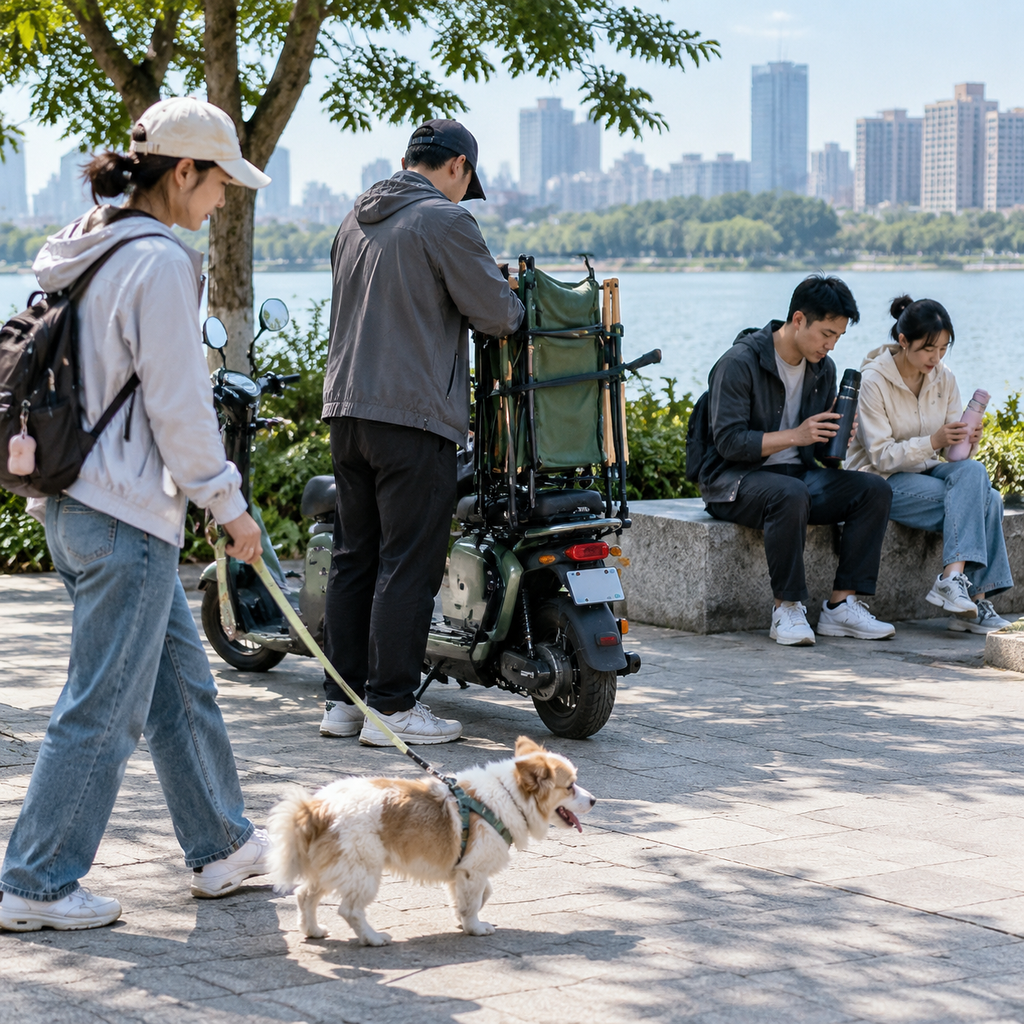
父亲替她合上书包,女孩却从侧袋摸出一块独立包装的米糕递给我,说是同学分的,她还留了一块。我撕开包装,米香与下午岔路口的气味恰好接上。三个人靠着桥栏吃完,没有谁建议合影。女孩讲起老师今天让他们写“耐心”,她写的是等烧卖的十分钟,父亲说这个例子太馋,她马上反驳,等待本来就可以是香的。我想起早晨那壶渐淡的茶、修鞋摊停下的锤子、周师傅放回水里的小鱼,发现她用一句孩子气的话,把我的整天都说完整了。
Her father closed the schoolbag, but the girl reached into a side pocket and offered me an individually wrapped rice cake. A classmate had shared two, she said, and she had saved one. When I opened it, the scent of rice joined perfectly with the smell that had guided me at the afternoon fork. We ate against the bridge rail, and nobody suggested taking a group photograph. The girl said her teacher had asked the class to write about “patience.” She had chosen the ten minutes spent waiting for a shaomai. Her father joked that the example sounded too greedy, and she protested at once: waiting was allowed to smell good. I remembered the morning pot of tea fading with each refill, the cobbler’s hammer pausing for conversation, and the little fish Master Zhou had released. In one childlike sentence, she had somehow completed my entire day.
他们推车下桥时,女孩没有再回头,只在坐上后座前说了一声“明天还要早起”。父亲把粉色水杯塞进她怀里,确认书包带没有卷住,才踩上踏板。暮色尚未落下,运河已经开始收进两岸的影子,白墙、树梢和桥洞都在水里轻轻晃。我站到保洁员刚清理过的栏杆旁,等自行车铃彻底远去,又听见另一艘货船从桥后低低驶来。这次我仍没有举起手机。蓝伞安稳地躺在包里,掌心留着米糕包装的细小折痕,而扬州从一顿早茶延长到午后街巷,再沿着运河,把几个原本偶遇的人慢慢送回各自的生活。
When they wheeled their bicycle down from the bridge, the girl did not look back. Before climbing onto the rear seat, she only said, “I have to get up early again tomorrow.” Her father tucked the pink bottle into her arms and checked that no schoolbag strap was twisted before mounting the pedals. Dusk had not yet fallen, but the canal was already gathering reflections from both banks; white walls, treetops, and the bridge arch moved softly in the water. I stood beside the railing the sanitation worker had cleared, waited until the bicycle bell disappeared, and heard another cargo boat approach with a low engine note beyond the bridge. Again, I did not raise my phone. The blue umbrella lay securely in my bag, tiny creases from the rice-cake wrapper remained on my palm, and Yangzhou had extended one morning meal through its afternoon lanes and along the canal, quietly returning several people who had met by chance to their own lives.
第二天清晨六点二十,我没有再回那间茶社,沿运河东岸南行,另尝扬州早茶。昨晚的风把水面吹得很净,薄雾贴在桥洞下,一排临河人家的窗灯刚亮。卖菜船靠岸时,船主把一筐蒲菜递给石阶上的妇人,两个人隔着半级台阶核对斤两;晨练的老人从他们身后绕过,保温杯在布袋里轻轻碰响。走到一座小桥旁,我看见两家都在营业:街角的大茶楼门前已有二十多人,河埠旁的小店只坐了三桌,灶台却正对着水。我没有只凭队伍长短决定,而是先看蒸笼周转、桌面大小和食客停留的速度。大茶楼适合慢慢尝点心,小店更像附近居民上班前的一顿热早餐。前一天已经坐了两个多小时,这一早我选择了河埠旁的小店。
At 6:20 the next morning, rather than returning to the teahouse I knew, I walked south along the canal’s east bank to try a different kind of Yangzhou breakfast. The previous night’s wind had cleared the water, mist clung beneath the bridge arch, and lights were just coming on in the riverside homes. When a vegetable boat moored, its owner passed a basket of cattail shoots to a woman on the steps, and they checked the weight across the half-step between them. Elderly morning walkers curved around the pair, thermos flasks tapping softly inside cloth bags. Near a small bridge, I found two places open: more than twenty people waited outside a large corner teahouse, while a tiny shop by the landing had only three occupied tables and a stove facing the water. Instead of choosing by queue length alone, I watched how quickly the steamers turned over, how large the tables were, and how long diners stayed. The large teahouse suited a leisurely sampling of dim sum; the small shop served the hot, practical breakfast of nearby residents before work. Having spent more than two hours over tea the day before, I chose the shop by the landing.
店里没有厚菜单,墙上小黑板只写着几种包子、饺面、烫干丝和茶。我按前一天学到的办法,先报人数,再报数量:一客烫干丝、一只三丁包、一只翡翠烧卖,茶要小壶,暂时不要面。老板娘问我要不要汤包,我看见邻桌的蒸笼刚落下,便说等吃完再决定。这个选择比“全部来一份”具体得多:若想体验完整茶点和聊天的节奏,可以去大茶楼,预留两小时;若第二天还要赶车或逛园林,小店的一包、一烧卖、一干丝足够,四十到六十分钟也不仓促;若同行两三人,再加汤包和油糕分食,既能尝味道,也不会被甜咸点心压住胃口。老板娘听完用粉笔在桌号旁画了三笔,说:“这样点,后面还吃得动。”
There was no thick menu inside. A small blackboard listed only a few buns, dumpling noodles, shredded tofu, and tea. Following what I had learned the previous day, I gave the number of diners first and then the quantities: one serving of shredded tofu, one diced-pork bun, one emerald shaomai, and a small pot of tea, with no noodles for now. The owner asked whether I wanted a soup bun. Seeing a fresh steamer land on the next table, I said I would decide after finishing the first dishes. This was far more useful than ordering one of everything. For the full rhythm of dim sum and conversation, choose a large teahouse and allow two hours. If you need to catch a train or visit a garden on your second morning, one bun, one shaomai, and one plate of tofu make a satisfying meal in forty to sixty unhurried minutes. With two or three companions, add soup buns and one oil cake to share, gaining more tastes without letting sweet and savory pastries weigh down the rest of the day. The owner marked three strokes beside my table number in chalk and said, “Order like this, and you’ll still have room afterward.”
七点十五分,太阳越过低屋顶,光从店门一直铺到河埠。烫干丝的姜香先到,接着是竹蒸笼的湿热。我吃完三样,胃里刚好暖起来,没有再加汤包,只请老板娘续半壶水。她把壶放回时提醒我,沿河再走一刻钟有一处渡口,早晨能看见货船调头,但石阶有露水。扬州第二天的早茶没有重复第一天:少一张大桌,少几只蒸笼,却多了一条可以直接走进清晨运河的路。
At 7:15, the sun cleared the low roofs and laid a band of light from the doorway to the landing. Ginger from the shredded tofu arrived first, followed by the humid warmth of the bamboo steamer. After my three dishes, I felt comfortably warm and chose not to add the soup bun, asking only for half a pot of fresh water. As the owner returned it, she mentioned a ferry landing fifteen minutes along the canal where freight boats turned in the morning, warning that dew made the steps slick. My second Yangzhou breakfast did not repeat the first: there was one large table fewer and fewer steamers, but there was a path leading directly into the canal morning.
临近八点,我把蓝伞从包里拿出来看了一眼,又原样放回去。桥边茶社正掀开新一笼包子,白汽越过门楣,和河面的薄雾混在一起。我没有第三次走进店里,也没有再给行程增加一个必须完成的项目,只把当天车票确认好,沿岸返回住处。经过那面白鹭墙时,米糕作坊刚开始第一轮装盘,年轻工人认出我,隔着门举了举沾米粉的手。我也抬手回应,脚步没有停。十点退房前,我把昨晚剩下的肴肉吃完,将折伞放在行李最上层。离开扬州时,早餐的最后一幕不是满桌点心,而是车站安检口前,我摸到包顶那截伞柄,想起女孩竖起的拇指,然后把包重新拉好。车开动后,运河只在窗外闪过短短一段;我终于没有遗落东西,也没有催它多停一会儿。
Near eight, I took the blue umbrella from my bag, checked it once, and put it back exactly where it had been. At the bridge, a teahouse opened another steamer, and white vapor crossed the lintel to mingle with mist above the canal. I did not enter a third shop or add another compulsory stop to the day. I simply confirmed my train ticket and followed the bank back to my lodging. At the egret wall, the rice-cake workshop was arranging its first trays. The young worker recognized me and raised a flour-dusted hand from the doorway. I returned the gesture without stopping. Before checking out at ten, I finished the cured pork left from the previous day and placed the folding umbrella at the very top of my luggage. The final scene of breakfast in Yangzhou was not a table crowded with dim sum. It came at the station security line, when my fingers found the umbrella handle near the zipper and I remembered the girl’s raised thumb before closing the bag again. Once the train moved, the canal flashed briefly beyond the window. For once, I had left nothing behind, and I did not ask the view to remain a moment longer.
- 冬至温泉之旅:全国最佳泡汤地 | Winter Solstice Hot Spring Tour
- 那张被擦亮的桌子,让我看见沙县小吃如何成为日常 | The Polished Table Showed Me How Shaxian Snacks Became Everyday Food
- 传统服饰购买指南:网购与实体店推荐 | Where to Buy Traditional Chinese Clothing
- 重庆让国外大博主上头的,从来不只是洪崖洞那一层灯火 | What Hooks Major Foreign Creators in Chongqing Is Never Only the Glow of Hongyadong
- 七月避暑:中国最凉快的地方在哪里 | July Cool Escapes: Where to Beat the Heat in China
- 洛阳牡丹花期里,我学会把热闹拆成几个小时 | During Luoyang Peony Season, I Learned to Divide Crowds by the Hour
- 外国人在中国用高铁:从订票到进站全流程 | China High-Speed Rail for Foreign Travelers: End-to-End Guide
- 杭州西湖:人间天堂 | Hangzhou West Lake: Paradise on Earth
- 火锅点单避坑指南:第一次吃别踩这些雷 | Hot Pot Ordering Survival Guide: Avoid These Mistakes on Your First Visit
- 天还没热起来,长安早市已经把一天的味道摆出来了 | Before the Heat Rose, Chang'an's Morning Market Had Already Laid Out the Flavor of the Day
Comments (0)