
秦淮河灯影之外,我在夫子庙听见一堂夜课 | Beyond Qinhuai's Lantern Reflections, I Found a Night Lesson at Fuzimiao
秦淮河灯影之外,我在夫子庙听见一堂夜课 | Beyond Qinhuai's Lantern Reflections, I Found a Night Lesson at Fuzimiao
大多数人对夫子庙的印象停在灯影和游船上。我到南京的第一晚也差点如此:晚饭后顺着人流走到泮池边,看灯、拍照、被劝上一次画舫,然后回酒店。改变行程的是一个卖雨花石的小摊主。他看我对着一排几乎一样的石头犹豫,说了一句:"看石头要看纹,看城要看夜。白天的夫子庙是给游客的,夜里的夫子庙是给南京人的。"我问他这话什么意思,他指了指庙后的巷子:"十点以后你再回来。"
Most people's impression of the Fuzimiao quarter stops at lantern reflections and pleasure boats. On my first night in Nanjing I nearly left it at that too: follow the crowd to the Pan Pool after dinner, look at lanterns, take photographs, be persuaded onto a painted barge, then return to the hotel. What changed my itinerary was a vendor of Yuhua stones. Watching me hesitate over a row of nearly identical pebbles, he said: "To read a stone, read its grain; to read a city, read its night. The daytime Fuzimiao belongs to tourists; the nighttime Fuzimiao belongs to Nanjing people." I asked what he meant. He pointed at the lanes behind the temple: "Come back after ten."
十点零五分,我重新穿过贡院街。变化比我想的快:卖纪念品的铺子半数落了卷帘,旅游团的喇叭消失了,代之以拖把桶在石板上的辘辘声和店员之间懒洋洋的南京话。小吃街还亮着,但客人换了一茬——穿睡衣出来遛弯的居民、下晚自习的学生、外卖骑手。鸭血粉丝汤的店里坐着的不再是举着手机的游客,而是一边看店门口电视一边吃饭的街坊。同一个物理空间,两小时内完成了一次居民的换场。我找了个角落坐下,点了一碗粉丝汤,决定把这一晚当成一门课来上。
At ten past ten I walked back through Gongyuan Street. The change came faster than expected: half the souvenir shops had rolled down their shutters, the tour-group loudspeakers were gone, replaced by the rumble of mop buckets over flagstones and the unhurried drawl of shop assistants talking. The snack street was still lit, but the customers had turned over—residents out in pajamas for a stroll, students back from evening study, delivery riders. In the duck-blood vermicelli shop the diners were no longer tourists holding up phones but neighbors eating in front of the shop's TV. The same physical space had completed a change of cast within two hours. I found a corner seat, ordered a bowl, and decided to treat the night as a class.
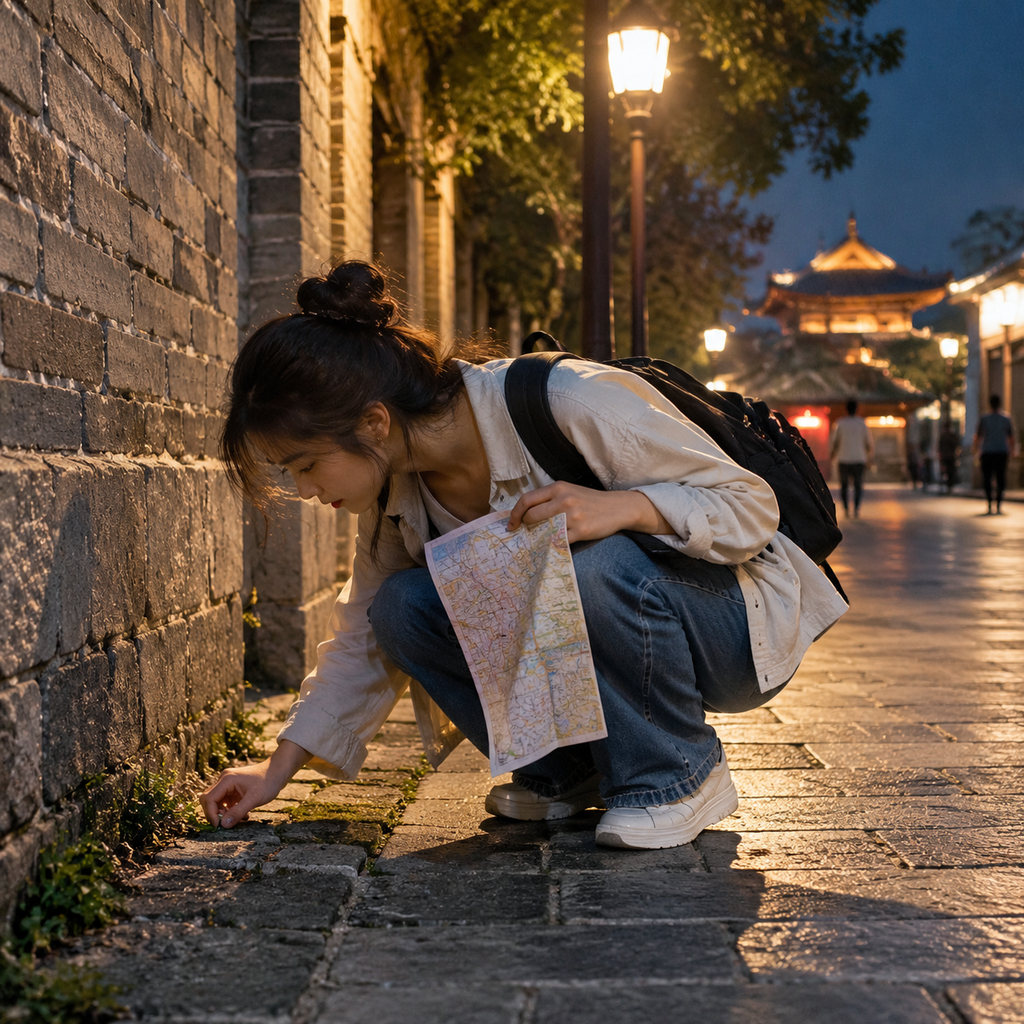
这堂课的第一节来自一位扫街的环卫工。他在贡院街口停下喝水,看我拿着地图找"乌衣巷"的牌子,主动说:"找乌衣巷啊?牌子在前面,巷子没什么看头,王谢故居要买票。你要看真的乌衣巷,跟我走两步。"他领我到巷口一处不起眼的院墙边,指着墙根的青砖:"这些是老砖,六朝的料子后来砌进去的。游客看字,我们看砖。"说完他继续扫他的街。我蹲下来看那截墙:砖缝里的石灰深浅不一,最里面一层确实颜色更深、风化得更旧。历史在这座城市里不供在展柜里,它砌在墙根,和电线杆、空调外机共享同一截立面。
The first session of this class came from a street sweeper. He stopped for water at the mouth of Gongyuan Street, saw me hunting the sign for Wuyi Lane on my map, and volunteered: "Wuyi Lane? The sign's ahead, but there's little to see—Wang and Xie's residence charges admission. If you want the real Wuyi Lane, walk with me a few steps." He led me to an unremarkable section of courtyard wall at the lane's mouth and pointed at the blue-gray bricks at its base: "These are old bricks—Six Dynasties material, reused in later walls. Tourists read the signs; we read the bricks." Then he went back to his sweeping. I crouched to examine the wall: the mortar lines varied in depth, and the innermost course was indeed darker, more weathered. History in this city is not kept in display cases; it is mortared into wall bases, sharing a facade with utility poles and air-conditioning units.
第二节在江南贡院的后身。白天的贡院是明信片,夜里的贡院才露出骨相。明远楼在夜色里只剩轮廓,但正因为看不见细节,它四百年前作为监考塔的功能反而清晰了:站在楼上,考棚区的每一条巷子都在视线里,考生的一举一动无所遁形。我沿着外墙走,一位下夜班的保安从侧门出来,见我对着墙发呆,聊了几句。他说贡院最震撼他的不是展览,是数字:清末这里有两万多间号舍,一场乡试连考九天,考生带着干粮、被褥和夜壶进去,考完出来,"胡子能长出一截"。他用了"熬"这个字形容科举,我后来在博物馆的展板上看到同一个字,觉得不如他说的有力。
The second session took place at the rear of the Jiangnan Examination Hall. By day the hall is a postcard; by night it shows its skeleton. The Mingyuan Tower was reduced to a silhouette in the dark, but precisely because the details vanished, its four-hundred-year-old function as a surveillance tower came clear: from the top, every lane of the examination cells lay in view, and no candidate's movement could hide. As I walked the outer wall, a guard coming off the night shift emerged from a side gate, saw me staring, and chatted. He said what stunned him about the hall was not the exhibits but the numbers: in the late Qing there were over twenty thousand examination cells; one provincial exam ran nine days straight, candidates carrying dry rations, bedding and chamber pots inside, and coming out with "a visible growth of beard." He used the word "endure" for the imperial exams. I later saw the same word on a museum panel and found it weaker than his.
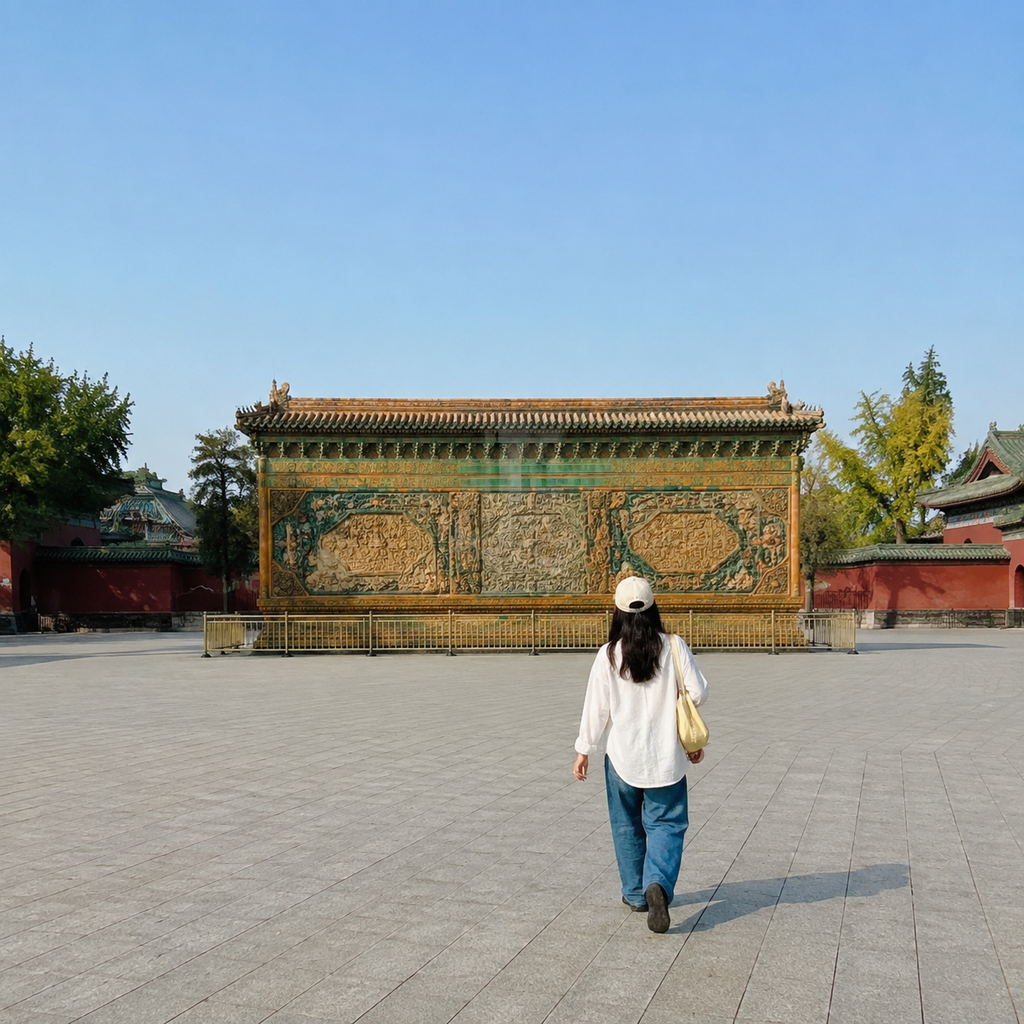
第三节在大照壁前的泮池边。夫子庙的照壁是全国最大的,白天它只是一堵长墙;夜里,灯影全熄后,它反而显出真正的体量。我到的时候是十一点半,最后一个画舫刚靠岸,船工在收缆绳。他看我一个人站在池边,说:"白天你看到的是灯,现在你看到的是池。"这句话起初像绕口令,后来我懂了:灯亮时,水面全是灯的倒影,你看的是人造的繁华;灯灭后,水恢复了水的性质——它在流,缓慢但持续,流向秦淮河的下游。船工说秦淮河的水"白天替灯干活,夜里替自己干活"。我沿着他的话看下去,发现泮池的水确实没有停:倒影消失的地方,水的皮肤在路灯下泛着细密的纹理。一条被灯光包装成布景的河,在深夜里悄悄找回了自己的流速。
The third session was by the Pan Pool in front of the Great Screen Wall. Fuzimiao's screen wall is the largest in the country; by day it is merely a long wall, but at night, once the lanterns were out, its true mass asserted itself. I got there at half past eleven just as the last pleasure boat docked and the boatman gathered the mooring ropes. Seeing me alone at the pool's edge, he said: "In daylight you saw the lanterns; now you see the pool." It sounded like a riddle until I understood: when the lights are on, the water is all their reflection—you are watching manufactured splendor; once they are off, the water recovers its nature—it flows, slowly but constantly, toward the lower Qinhuai. The boatman said the river water "works for the lanterns by day and for itself by night." Following his words I noticed the pool had indeed not stopped: where the reflections ended, the water's skin showed a fine grain under the streetlamps. A river dressed up as scenery by lantern light quietly recovers its current at midnight.
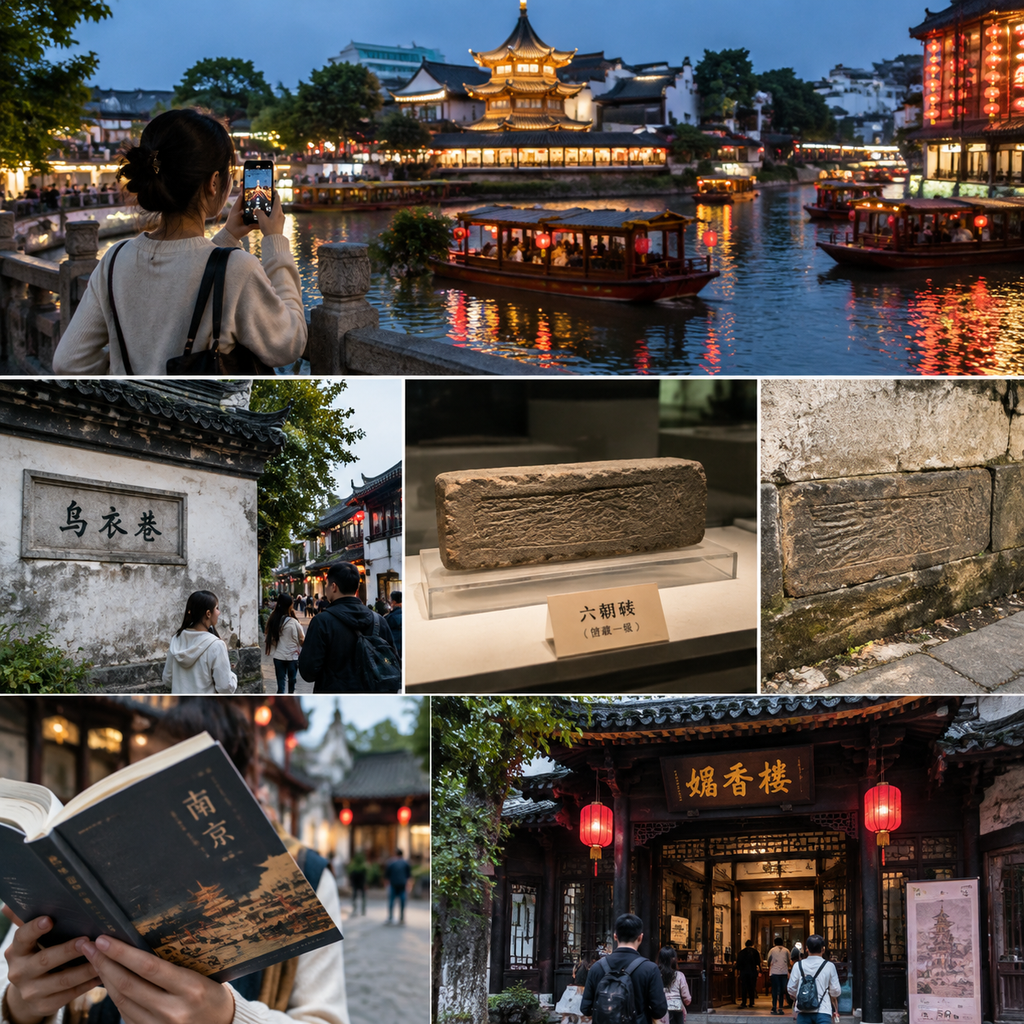
第四节回到街面,在小巷里偶遇一间还亮着灯的旧书店。店面不到十平米,老板娘在给一摞旧书上塑封,说是第二天有书市。我问夜里还有多少人买书,她说:"游客买雨花石,南京人买旧书。"这句话和卖石头那位摊主的话前后呼应,我干脆把这一晚的主题定为"居民的地名"。她给我指了几条白天游客不会拐进去的巷子:箍桶巷、钓鱼台、饮马巷——每条巷名都是一截被压缩的旧生活。她说这些巷子的名字比地图老得多,"地图改版十次,巷名还是那一套。"我买了一套八十年代的南京老地图复印本,二十块钱,当作这堂夜课的教材。
The fourth session took me back to the street surface, where I stumbled on a small old-bookshop still lit. The shop was barely ten square meters; the owner was shrink-wrapping a stack of used books for a book fair the next day. I asked how many people still buy books at night. She said: "Tourists buy Yuhua stones; Nanjing people buy old books." The line echoed the stone vendor's, so I named the evening's theme "the residents' place names." She pointed me to lanes tourists never turn into: Barrel-Hooping Lane, Fishing Terrace, Horse-Watering Lane—each name a compressed segment of an older way of life. She said those names are far older than the maps: "The map has been revised ten times; the lane names are still the same set." I bought a facsimile of a 1980s Nanjing map for twenty yuan, as the textbook for this night class.
拿着那张老地图,我做了这个夜晚的最后一次尝试:按地图的巷名走一段"游客区之外的秦淮"。从书店出来往西,穿过升州路,地图上这条街在八十年代叫"升州路",更早叫"益仁巷"。城市在这里骤然降了一个音量:旅游区的边界其实是一条看不见的等响线,过了升州路,喇叭声、促销声、导游声全部消失,剩下的声音是麻将馆的洗牌声、馄饨担子的梆子声(现在换成电动三轮的倒车提示音)和狗叫。我按老地图找到了"牛市"——一个已经不存在的地名,旧址上是一家还在营业的老浴室,门口的灯箱写着"营业到十二点"。一位刚泡完澡的大爷坐在门口的长凳上乘凉,头发还湿着。他见我看地图,说:"看老地图的年轻人不多喽。"我们聊了二十分钟,他讲这条街的澡堂史:牛市的老浴室从民国开到现在,锅炉换了三代,"票价从一毛涨到二十八"。他说南京人管泡澡叫"水包皮",管吃鸭子叫"皮包水"——一句话把这座城市的两大日常压缩成一副对子。
With that old map in hand I made the night's final attempt: to walk a stretch of Qinhuai "outside the tourist zone" following the map's lane names. West from the bookshop, across Shengzhou Road—on the 1980s map the street still bore that name, and earlier still it was Yiren Lane. Here the city dropped a whole notch in volume: the tourist district's boundary is in fact an invisible isophone; past Shengzhou Road the loudspeakers, the sales pitches, the guides' amplifiers all vanished, leaving the shuffle of mahjong tiles, the knock of the wonton cart (now replaced by the reverse beep of an electric trike), and dogs barking. On the old map I located "Niushi," the Ox Market—a place name that no longer exists; on its site stands an old bathhouse still in business, its lightbox reading "open until twelve." An old man fresh from a soak sat on the bench outside, hair still damp. Seeing me study the map, he said: "Not many young people read old maps." We talked for twenty minutes; he gave me the bathhouse history of the street: the old baths of the Ox Market had run from the Republican era to the present, three generations of boilers—"tickets went from one mao to twenty-eight yuan." Nanjing people, he said, call bathing "water wrapping skin" and eating duck "skin wrapping water"—one couplet compressing the city's two great dailies.
十二点半,我循着老地图原路返回夫子庙。核心区的灯这时已经全部熄灭,只有泮池边留了几盏低亮度的路灯。白天的拥挤完全无法想象:此刻的广场空旷得能听见自己的脚步声在照壁上反弹。我在庙前的石牌坊下站了十分钟,第一次看清了坊上的字和纹样——白天人潮里,没人抬头看牌坊,夜里它才被看见。那座四百年的照壁、那些贡院的号舍、那截六朝的老砖、那条会自己流动的泮池,此刻全都安静下来,像一堂课结束后留在黑板上的板书。游客的夫子庙在灯里,居民的夫子庙在灯外;白天的城在表演,夜里的城在呼吸。
At half past twelve I traced the old map back to Fuzimiao. All the lights of the core zone were out by now, leaving only a few dim streetlamps by the Pan Pool. The daytime crush was unimaginable: the square was empty enough to hear my own footsteps echo off the screen wall. I stood ten minutes beneath the stone archway in front of the temple and for the first time read its characters and carvings—in the daytime crowd no one looks up at an archway; only at night does it get seen. The four-hundred-year wall, the examination cells, the course of Six Dynasties brick, the pool that flows on its own—all had gone quiet, like the writing left on a blackboard after class has ended. The tourists' Fuzimiao lives inside the lanterns; the residents' Fuzimiao lives outside them. By day the city performs; at night it breathes.
回酒店的路上,我把这一晚总结成三行笔记。第一行:灯影是夫子庙的戏服,脱下戏服才看到身体。第二行:这座城市的历史不在门票里,在墙根的砖缝、澡堂的锅炉和卖石头人的口诀里。第三行:想认识一座城市的居民,就去它的夜里——十点以后,城市会做一次人口置换,留下的才是本地的心跳。三行笔记写完,手机显示一点十分。卖雨花石的摊主说得对:看城要看夜。这门课的学费是一碗鸭血粉丝汤加一张老地图,一共三十六块钱,比任何一场夜游船便宜,也深得多。
On the way back to the hotel I summarized the night into three lines of notes. Line one: the lantern reflections are Fuzimiao's costume; only when the costume comes off do you see the body. Line two: this city's history is not inside admission tickets but in the brick seams at wall bases, in bathhouse boilers, and in the spoken formulas of stone vendors. Line three: to meet a city's residents, go into its night—after ten o'clock the city performs an exchange of population, and those who remain are its local heartbeat. When the three lines were done, the phone read ten past one. The Yuhua stone vendor had been right: to read a city, read its night. The tuition for this class was one bowl of duck-blood vermicelli plus one old map, thirty-six yuan in all—cheaper than any night cruise, and far deeper.
第二天我按白天的夫子庙重新走了一遍,把夜里的发现逐一核对。泮池的水白天确实被灯影覆盖,完全看不出在流动;乌衣巷口的砖墙白天挤满拍照的人,没人看砖;贡院的号舍在讲解词里是"科举文化",在保安嘴里是"熬"。昼夜两份资料叠在一起,夫子庙的完整档案才算合上。我在洋池边遇到一个带研学团的历史老师,把夜里学到的东西讲给她听,她听完说:"你这一夜比我们三天研学团的有效。"我请她把这堂"夜课"的方法讲给学生:一是等灯灭,二是问扫地的人,三是买一张旧地图。她把三条记在了教案本上。这是这堂夜课的第一次再传播。
The next day I walked the daytime Fuzimiao again and verified each of the night's findings. By day the Pan Pool is indeed covered by lantern reflections, showing no sign of flow; the old bricks at the mouth of Wuyi Lane are mobbed by photographers, none reading the bricks; the examination cells are "examination culture" in the guide script and "endurance" in the guard's mouth. Only when the day and night files are stacked does Fuzimiao's complete archive close. By the pool I met a history teacher leading a study group; I recounted what the night had taught, and she said: "Your one night beat our three-day study tour." I asked her to pass the method of the "night class" to her students: first, wait for the lights to go out; second, ask the sweepers; third, buy an old map. She wrote the three rules into her lesson book. That was the first retransmission of the night class.
核对中还有几处惊喜。白天的贡院展览里,我找到了保安说的"两万多间号舍"的出处——清代鼎盛期的确是两万零六百四十四间,他只说"两万多",比展板更谦虚也更准。乌衣巷口那截墙的六朝砖,后来我在市博物馆的展柜里见到同类:尺寸、纹路一致,展柜里那块标着"馆藏一级",墙根那块标着"没标"。同一个朝代的砖,一块进了展柜,一块留在巷口接雨水。历史在南京的分配方式就是这样不均匀——它把最贵重的部分散在街头,让买不起门票的人也摸得到。
The verification brought several surprises. In the daytime exhibition at the examination hall I found the source of the guard's "twenty-odd thousand cells"—at the Qing peak there were precisely 20,644; he had said "twenty-odd thousand," humbler than the panel and just as accurate. As for the Six Dynasties bricks at the mouth of Wuyi Lane, I later found their twin in the municipal museum's display case: same dimensions, same patterns; the one in the case was labeled "Grade One collection," the one in the wall labeled nothing. Bricks of the same dynasty—one entered a display case, one stayed at the lane mouth catching rain. That is how unevenly history is distributed in Nanjing: it scatters its most precious parts along the streets, so that those who cannot afford a ticket can still touch them.
下午我又去了一次那家旧书店,想再买一份不同年代的老地图,店主推荐了一九四九年的版本。两份地图并排看,秦淮河的河道几乎没有变,巷名变了三分之一。书店老板娘说得对:河道是这座城市的骨架,巷名是它的皮肤,皮肤一直在换,骨架没动过。游客看到的是最新的皮肤,旧地图能让你摸到骨架。我后来在行程里加了一个自创的环节:按一九四九年的地图找三条已经改名的巷子,站在巷口对比新旧。三条巷子我都找到了,其中一条现在是一家网红奶茶店的门面。历史不负责保持原样,它只负责被找到。
In the afternoon I returned to the old bookshop for a second map of a different decade; the owner recommended the 1949 edition. Laid side by side, the river course of the Qinhuai had barely changed, while a third of the lane names had. The bookseller was right: the river is the city's skeleton, the lane names its skin—skin keeps changing, the skeleton never has. Tourists see the latest skin; old maps let you touch the skeleton. I added a self-designed item to my itinerary: using the 1949 map to find three renamed lanes and compare old and new at their mouths. I found all three; one now fronts an internet-famous tea shop. History is not responsible for staying unchanged; it is only responsible for being found.
离开南京前,我把两份老地图、一张知识笔记和那张夜景的数码照片打包发给了那位历史老师。她回了一句:"明年研学团加一站:夫子庙十点以后。"我算了算,如果真有成班的学生在十点以后走进灯影之外的夫子庙,他们听到的第一句话应该还是那位环卫工的:"游客看字,我们看砖。"这句话比任何教案都适合当这门夜课的开场白。
Before leaving Nanjing I packed the two old maps, the notes, and a digital photo of the night scene and sent them to the history teacher. She replied with one line: "Next year's study tour adds a stop: Fuzimiao after ten." I reckon that if a whole class of students really walks into the Fuzimiao beyond the lantern light, the first sentence they hear will still be the sweeper's: "Tourists read the signs; we read the bricks." No lesson plan makes a better opening line for this night class.
这篇夜课的记录写完了。它的结论可以压缩成一句:白天的夫子庙属于所有人,夜里的夫子庙属于肯留下来的人。灯影之外的那个秦淮河,水一直在流,砖一直在墙根,号舍一直在讲述"熬",牌坊一直在等人抬头。它们不需要门票,只需要你在十点以后,还在。
This record of the night class is finished. Its conclusion compresses to one sentence: the daytime Fuzimiao belongs to everyone; the nighttime Fuzimiao belongs to those willing to stay. In that Qinhuai beyond the lantern light, the water keeps flowing, the bricks keep holding the wall's base, the examination cells keep narrating endurance, and the archway keeps waiting for someone to look up. They charge no admission; they only ask that after ten o'clock, you are still there.
再补一些实用信息,给想复刻这堂夜课的人。时间:夫子庙核心区的商户大约十点开始收摊,十点半之前到达能同时看到"两种夫子庙"的换场过程;十二点后全部熄灯,广场进入"空场模式"。交通:地铁三号线夫子庙站出来即到,末班车到十一点半,正好衔接散场。餐饮:夜里十点后还在营业且值得吃的,按我的体验排序是鸭血粉丝汤(第二碗半价)、街口的汤圆摊(芝麻馅,只在夜里出摊)、和乌衣巷对面的小馄饨(皮薄,汤头是骨头汤,夜里比白天稠)。注意十点后大部分店只收移动支付,现金反而有时候找不开。
Some practical details for anyone who wants to re-take this night class. Timing: the shops of the core zone begin closing around ten; arriving before ten-thirty lets you watch the changing of the two Fuzimiaos. After midnight all lights go out and the square enters its "empty-stage mode." Transit: Metro Line 3's Fuzimiao station opens right onto the quarter, with last trains until eleven-thirty, timed neatly for the dispersal. Food: among the places still open and worth eating at past ten, my ordering was duck-blood vermicelli (second bowl half price), the tangyuan stall at the street's mouth (sesame filling, night-only), and the small wontons across from Wuyi Lane (thin skins, bone broth thicker at night than by day). Note that after ten most shops take mobile payment only; cash sometimes cannot be changed.
安全方面也不必过度担心。夜里十点后的秦淮片区并非空城,居民区的活动会持续到十二点以后,主要巷子都有路灯和监控。真正需要注意的是方向:老地图上的巷名和现行路牌不完全对应,我在牛市附近走错过两次,都被散步的居民纠正。他们的纠正方式都出奇一致:不说"你走错了",说"你要去的地方在这边"——把你送回轨道,而不是评判你脱轨。这种城市待客的分寸感,我后来在很多南京人身上都见到。
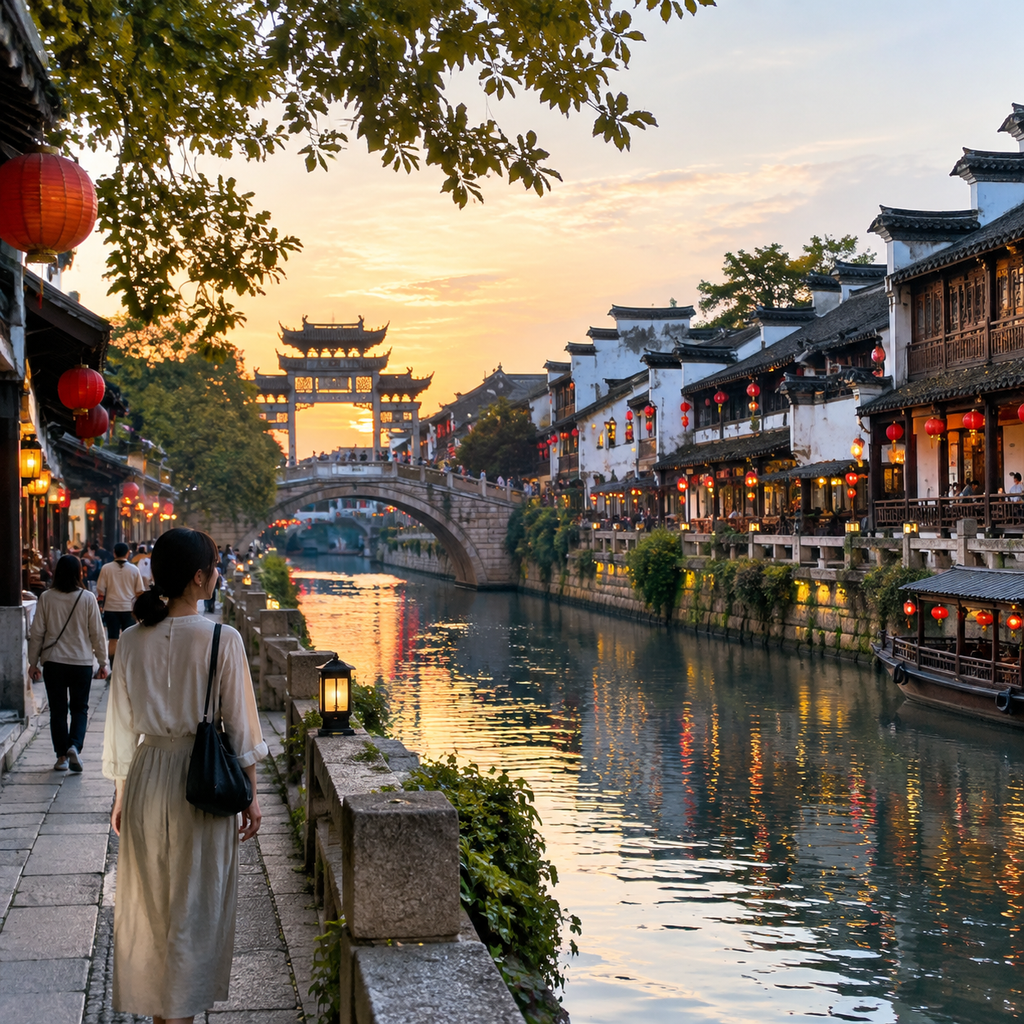
Nor is safety much of a worry. After ten the Qinhuai quarter is not an empty city; residential life continues past midnight, and the main lanes have streetlights and cameras. The real concern is orientation: the lane names on old maps do not fully match current signage. I went wrong twice near the Ox Market and was corrected both times by residents out walking—and in strikingly the same way: never "you're going the wrong way," but "what you're looking for is over here"—returning you to the track rather than judging you off it. That sense of proportion in hosting guests I later met again and again in Nanjing people.
最后是这门夜课的"课外阅读"清单。如果夜里那几小时激起了兴趣,白天可以补三处:南京市博物馆(看乌衣巷砖的"展柜版本",和巷口的"墙根版本"对照);江南贡院历史陈列馆(把保安的"熬"字放进两万零六百四十四间号舍的数字里);以及任何一家旧书店(把一九四九年的地图和现在的卫星图并排打印)。三处加起来门票不到五十块,但它们能把夜里的碎片缝成一张网。我自己的做法是把三处都走了,然后把网织进这篇文章。
Finally, the "outside reading" list for this night class. If those midnight hours caught your interest, three daytime stops complete it: the Nanjing Municipal Museum (to see the "display-case edition" of the Wuyi Lane bricks and compare it with the "wall-base edition" at the lane mouth); the Jiangnan Examination Hall museum (to set the guard's word "endurance" inside the figure of 20,644 cells); and any old bookshop (to print the 1949 map beside a current satellite image, side by side). Together the three cost less than fifty yuan in tickets, yet they stitch the night's fragments into a net. My own practice was to visit all three, and then weave the net into this piece.
还有一个只属于个人的结尾。离开南京那天的高铁上,我翻出手机里最后一张照片:凌晨一点的夫子庙牌坊,空无一人的广场,低亮度的路灯,照壁的黑影横在画面下方。照片拍得不好,曝光不足,牌坊上的字糊成一团。但我把它设成了那一个月的手机壁纸。理由和把重庆的轨迹图设壁纸一样:不是好看,是诚实。那是一堂三十六块钱的夜课留下的结业证明——证明我看见过灯影之外的部分,那部分不发光,但一直是这座城市的底色。
One more ending, personal this time. On the high-speed train out of Nanjing I scrolled to my last photograph: the Fuzimiao archway at one in the morning, the empty square, dim streetlamps, the black silhouette of the screen wall lying across the bottom of the frame. It is a poor photograph, underexposed, the archway's characters smeared. I set it as my phone's wallpaper for the following month, for the same reason I once set the Chongqing route trace: not because it is beautiful, but because it is honest. It is the certificate of completion from a thirty-six-yuan night class—proof that I saw the part beyond the lantern light, the part that does not glow but has always been the ground color of this city.
写到这里我意识到这堂夜课还有一节没讲:声音。夜里的秦淮是一套完整的声学标本。十点收摊期的声音是卷帘门落下的哐当声连成一串,像一场即兴打击乐;十一点后的声音分层清晰——远处内环高架的车流是底噪,近处馄饨摊的燃气灶是中频,卖汤圆的阿姨和熟客的对话是高频;十二点后只剩两种声音:环卫车的洒水声和护城河边不知谁家的电视声。我在备忘录里给每个时段的声音都起了名字:十点是"打烊交响",十一点是"生活频率",十二点是"城市呼吸"。这套声学标本没有任何博物馆收录,它每天上演,也每天消失。
Writing this far I realized the night class has one session still untold: sound. Midnight Qinhuai is a complete acoustic specimen. The ten o'clock closing hour is a string of shop shutters crashing down like an improvised percussion session; after eleven the sounds sort into clear layers—the distant traffic of the inner ring is the noise floor, the wonton stall's gas burner the midrange, the sesame-ball seller's talk with her regulars the treble; after twelve only two sounds remain, the spray of the sanitation truck and a television from some unseen house by the moat. In my notes I named each hour's soundscape: ten o'clock, the "closing symphony"; eleven, the "frequency of living"; midnight, "the city breathing." No museum holds this acoustic specimen; it is performed nightly, and nightly it vanishes.
夜里的秦淮还有一种白天的游客永远遇不到的气味结构。十点后,餐饮街的油烟散尽,空气里剩下的依次是:河水的湿气(带一点淤泥的腥)、老巷青苔的凉、偶尔飘过来的桂花香(十月正是南京桂花的尾声)、以及凌晨环卫车留下的水汽。这四种气味在白天的灯影区全被人群的香水和小吃油烟盖住。气味的时间性比声音更严格——桂花只有十月有,湿苔只有雨后有。如果你也去,记得在十一点到十二点之间做一次"闭眼漫步":从贡院街走到泮池,全程闭眼,让鼻子替眼睛工作五分钟。那五分钟里我对夫子庙的理解超过之前一小时的拍照。
Midnight Qinhuai also has an architecture of smell that daytime visitors never meet. After ten, the cooking fumes of the snack street disperse, and what remains layers itself in order: the damp of the river (carrying a faint mud-fish edge), the cool of moss on old lane walls, an occasional drift of osmanthus (it was October, the tail of Nanjing's season), and the water vapor left behind by the sanitation trucks after midnight. In the daytime lantern zone, all four are buried under crowd perfume and frying oil. Smell keeps stricter hours than sound—osmanthus only in October, damp moss only after rain. If you go, try the "eyes-closed walk" between eleven and twelve: from Gongyuan Street to the Pan Pool, eyes shut the whole way, letting your nose work for five minutes. In those five minutes I understood Fuzimiao more than in a full hour of photographing.
这堂夜课的最后一节,我想留给"重复"这个动作本身。离开南京后的第二个月,我出差又路过了一次,特意留了三个小时在晚上十点走进夫子庙。一切都变了:卖雨花石的摊主换了位置,鸭血粉丝汤的店里装修过,旧书店的老板娘去带孙子,看店的是她儿子。但泮池的水还在流,乌衣巷口的砖还在墙根,环卫工的扫帚声还是那个节奏。一晚的变化和不变的,我记在同一页笔记里。这让我最终确认了这堂课的核心结论:城市的深夜不是白天的剩余物,而是白天的原型。灯影是临时加上去的,拆掉灯影,剩下的才是秦淮河两千年来真正的作息。夜课教的不是"夜里去哪儿",是"把加上的东西拆掉之后,还剩什么"。
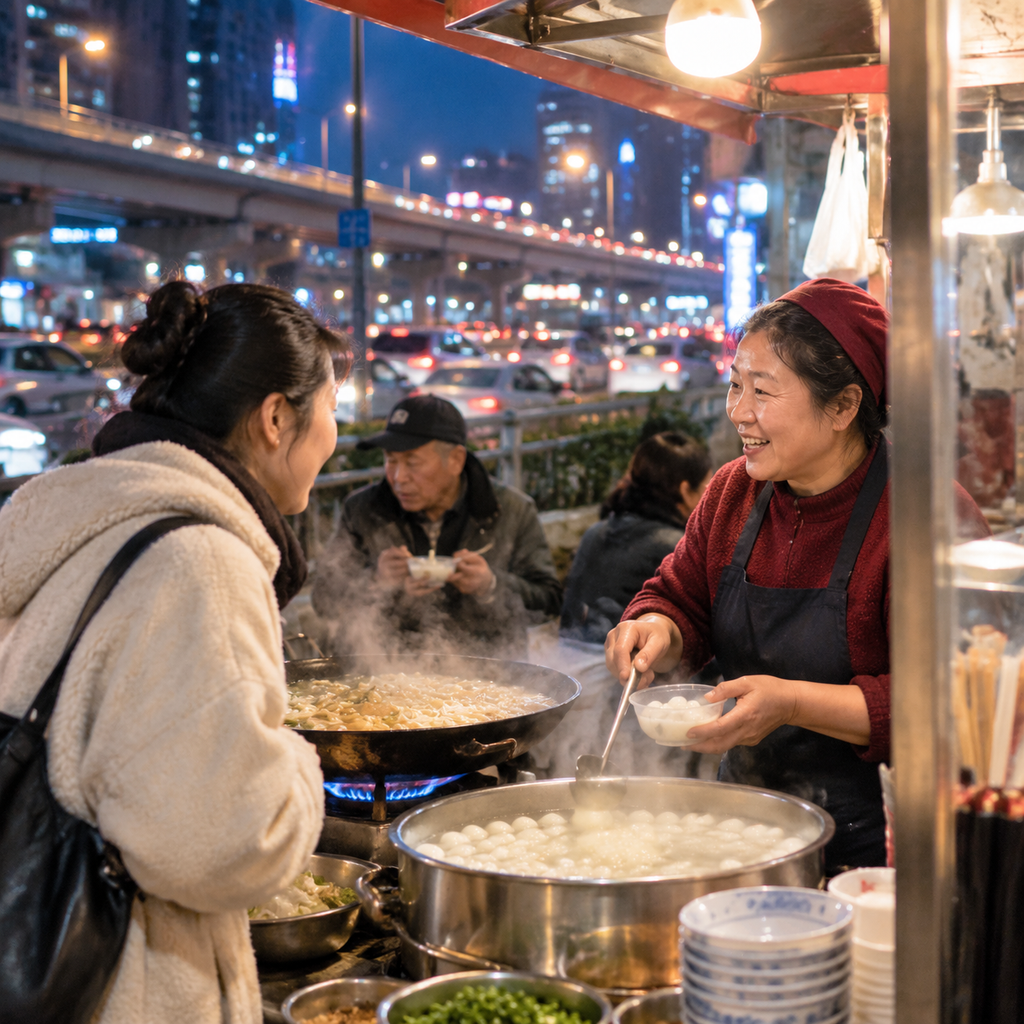
The last session of this night class I want to leave to the act of repetition itself. Two months after leaving Nanjing I passed through again on business and deliberately kept three hours to walk into Fuzimiao at ten at night. Everything had changed: the Yuhua stone vendor had moved, the vermicelli shop had been redecorated, the bookshop owner was away minding her grandson—her son minded the store. But the Pan Pool still flowed, the bricks still held the wall at Wuyi Lane's mouth, and the sweeper's broom kept the same rhythm. The changed and the unchanged of one night I entered on the same page of notes. That finally confirmed the class's core conclusion: a city's late night is not the residue of its day; it is the prototype of its day. The lantern light is a temporary addition—strip it away, and what remains is the true two-thousand-year schedule of the Qinhuai. The night class does not teach "where to go at night"; it teaches "after you remove what has been added, what remains."
为了把这堂夜课讲得完整,我还想补一段关于"秦淮八艳"的当代观察。白天的游船讲解词里,这个话题是浪漫化的桃色传说;夜里的旧书店里,它有另一个版本。老板娘的儿子(就是替她看店的那位)是历史系毕业,他把八艳的故事讲成了另一堂课:"李香君的血溅桃花扇,柳如是的投水殉国,这些都是传说加工过的版本。但你去看她们留下的诗,看她们与文人唱和的集子,就会知道她们是当时南京文化生产的实际组织者——文人沙龙的主持人、出版物的赞助人、书画流通的中间人。"他的结论是:"游客消费她们的美,读书人消费她们的才,只有夜里还亮灯的书店记得她们的工作。"我在他的推荐下买了一册《板桥杂记》的影印本,二十块。这本书我后来在灯影区的一座媚香楼旧址前翻过一次,门票五十,展览的内容,还不及书里的三页。
To make the night class complete I want to add one more observation, on the "Eight Beauties of Qinhuai" as seen today. In the daytime boat narration the topic is a romanticized legend; in the nighttime bookshop it has another edition. The bookseller's son—the one minding the store—was a history graduate, and he taught the story as a different lesson: "Li Xiangjun's blood on the peach-blossom fan, Liu Rushi's drowning herself for the dynasty—these are processed legends. But read the poems they left, the collections of exchanges with the literati, and you will see they were the actual organizers of Nanjing's cultural production of their day—hostesses of scholar salons, sponsors of publications, intermediaries of painting and calligraphy." His conclusion: "Tourists consume their beauty; scholars consume their talent; only the bookshop that keeps its lights on at night remembers their work." On his recommendation I bought a facsimile of Random Notes from the Plank Bridge for twenty yuan. Later, in front of the Meixiang Tower site in the lantern zone, I read from it—the admission was fifty, and the exhibition held less than three pages of that book.
夜课还有一个"现代史"的补充段落值得记录。老地图的比对中我发现,一九四九年的夫子庙片区和现在的最大区别不在建筑,在"入口"。当年的入口有七个,现在只有两个(贡院街和琵琶巷)。七个入口意味着它曾经是一片有机生长的城市街区,人们从各个方向自然汇入;两个入口意味着它已经变成了一个"景区",人流被规划为单向的进出。入口的数量是判断一个历史街区被"景区化"程度的最快指标。夜里数入口比白天容易——熄灯后哪里还有人流汇入,哪里就还是活的城市;完全黑掉的入口,就是已经被规划收走的通道。这个方法我后来在平遥、在福州都验证过,屡试不爽。
The night class also has a "modern history" supplement worth recording. In comparing the maps I found the biggest difference between the 1949 quarter and today's is not the buildings but the entrances. Then there were seven; now there are two (Gongyuan Street and Pipa Lane). Seven entrances meant an organically grown city district into which people converged naturally from every direction; two entrances means it has become a "scenic zone," its flow engineered into one-way in and out. The number of entrances is the fastest indicator of how deeply a historic street has been "scenicized." Counting them is easier at night—after the lights go out, wherever people still converge, the living city remains; whichever mouth has gone entirely dark is a passage already reclaimed by planning. I have since tested the method in Pingyao and in Fuzhou, and it has never failed.
给夜行动物们的最后一条建议:夫子庙的夜课不用一次上完。这门课最合理的学习节奏是分两晚——第一晚上"换场课"(十点到十一点半,看城市如何换班),第二晚上"空场课"(十一点半以后,看城市换班后的素颜)。两晚住同一间酒店,中间那白天去博物馆和旧书店自习。我第二次路过南京时就是这么安排的,效果比第一晚连轴转好一倍。城市和人一样,素颜要分两次才看得真切:第一次看轮廓,第二次看纹理。
One last suggestion for the night owls: the Fuzimiao night class need not be completed in one sitting. The best rhythm is two evenings—the first for the "changing of the shift" (ten to eleven-thirty, watching how the city hands over), the second for the "bare face" (after eleven-thirty, seeing the city unmade-up after handover). Stay in the same hotel for both nights and spend the daytime between at the museums and the bookshop for self-study. That is how I arranged it on my second pass through Nanjing, and it worked twice as well as the single marathon night. A city, like a person, shows its unadorned face truly only in two sittings: the first for the outline, the second for the grain.
现在这份夜课的讲义真的写完了。合上笔记本,最后一页写着那句开场的台词:白天的夫子庙是给游客的,夜里的夫子庙是给南京人的。而我想在后面加一个注脚:游客也可以走进夜里去——只要愿意在十点以后还站在灯影之外,愿意蹲下来看一次墙根的砖,愿意买一张比现在的自己更老的地图。夜课不点名,夜课永远有空座。
The lecture notes of this night class are truly finished now. Closing the notebook, the last page still carries the opening line: the daytime Fuzimiao is for tourists; the nighttime Fuzimiao is for Nanjing people. To which I would add a footnote: tourists, too, can walk into the night—provided they are still standing beyond the lantern light after ten, willing to crouch once to read the bricks at a wall's base, willing to buy a map older than their present self. The night class takes no attendance; the night class always has empty seats.
补最后一块拼图:关于"灯影经济"的一次定量观察。我在两晚的夜课里做了一次小小的计数实验:十点整站在贡院街口,数每分钟经过的游客人数;十一点整换到泮池边,同样数一分钟;十二点整再到乌衣巷口,数一分钟。结果是:十点每分钟四十人上下,十一点降到十人,十二点只剩两人(其中一个是我自己,另一个是外卖骑手)。三个数字连起来,就是"游客的秦淮"向"居民的秦淮"移交的完整曲线。如果把这三个点画在图上,曲线的拐点出现在十点四十——那一刻起,城市的支配权完成移交。夜课选在这个时刻开始,正好卡在交接线上。
One last piece of the puzzle: a quantitative observation of the "lantern-light economy." Across the two nights I ran a small counting experiment: at ten sharp, stand at the mouth of Gongyuan Street and count the passers-by per minute; at eleven, move to the Pan Pool and count again; at twelve, at the mouth of Wuyi Lane, one more minute. The results: at ten, roughly forty people a minute; at eleven, down to ten; at twelve, two—including myself and a delivery rider. Those three numbers connected trace the complete handover curve from "the tourists' Qinhuai" to "the residents' Qinhuai." Plotted, the curve's inflection falls at ten forty—from that moment, governance of the city completes its transfer. The night class begins precisely on that handover line.
还有一个数字也值得记:两个晚上我在灯影区之外遇到并交谈过的本地人,一共二十三位。他们的职业清单如下:环卫工两位、保安一位、书店店主两位(母亲与儿子)、鸭血粉丝汤店员三位、汤圆摊主一位、馄饨摊主一位、船工两位、澡堂大爷一位、遛狗的居民五位、下晚自习的学生两位、外卖骑手两位、还有一位不知身份的钓鱼人(在泮池下游的河道里,凌晨一点,钓上来的却是小龙虾)。这二十三个人没有一个出现在白天的夫子庙宣传页上,但他们是夜里两小时内的全部人口。如果为夫子庙做一次"深夜人口普查",名单大概就是这二十三个人,外加一条钓鱼的线和一盆小龙虾。
One more number worth keeping: across both nights, in the quarters beyond the lantern light, I met and spoke with twenty-three locals. Their occupational list runs: two street sweepers, one guard, two bookshop owners (mother and son), three vermicelli-shop workers, one tangyuan seller, one wonton seller, two boatmen, one bathhouse elder, five residents walking dogs, two students back from evening study, two delivery riders, and one fisherman of unknown trade (in the channel below the Pan Pool at one in the morning, whose catch turned out to be crayfish). Not one of the twenty-three appears on the daytime brochures of Fuzimiao, yet they were the entire population of those two night hours. A midnight census of Fuzimiao would come down to those twenty-three people, a fishing line, and a basin of crayfish.
这门夜课的讲义至此写满了一整本。从雨花石摊主的第一句话到钓鱼人的最后一只小龙虾,中间隔着两晚、二十三个本地人、三张地图(一九四九、一九八零、现在)、一册《板板杂记》和一次每分钟的人口计数。把这一切串起来的不是知识,是时间——在同一个地点站得比灯影更久,城市就会一层一层向你打开。这就是"夜课"这个名字的全部含义:它不收学费,只收时间。
The lecture notes of this night class now fill an entire notebook. From the Yuhua stone vendor's first sentence to the fisherman's last crayfish, the span covers two nights, twenty-three locals, three maps (1949, 1980, present), one volume of Random Notes from the Plank Bridge, and one per-minute headcount. What strings it all together is not knowledge but time—stand in one place longer than the lantern light lasts, and the city opens to you layer by layer. That is the whole meaning of the name "night class": it charges no tuition, only time.
还有最后一段,写给可能会把这篇当攻略用的人。夫子庙夜课的完整课表如下:十九点晚饭(鸭血粉丝汤打底);二十点泮池灯影区自由活动(这是唯一该当游客的一小时);二十一点四十五分提前到位贡院街口;二十二点整看"打烊交响"(卷帘门打击乐约持续二十分钟);二十二点半跟环卫工学看乌衣巷的砖;二十三点旧书店自习(如果还开着);二十三点半泮池边"闭眼漫步"五分钟;零点空场模式,牌坊下站十分钟;零点三十分牛市方向散步(核实老地图);一点回程。总花费参考:粉丝汤十三块、汤圆六块、馄饨八块、老地图二十块、板桥杂记影印本二十块,合计六十七块。这是我在南京上过的最便宜也最贵的一堂课——便宜在账单,贵在它要求你把一整个夜晚交给一座已经睡了两千年的河。
One final passage for those who may use this piece as an itinerary. The complete schedule of the Fuzimiao night class: 19:00, dinner (duck-blood vermicelli as the base); 20:00, free hour in the lantern zone (the one hour you may legitimately be a tourist); 21:45, take position early at the mouth of Gongyuan Street; 22:00 sharp, the "closing symphony" (the shutter percussion runs about twenty minutes); 22:30, learn to read the Wuyi Lane bricks with the sweepers; 23:00, self-study at the old bookshop (if still open); 23:30, the five-minute eyes-closed walk by the Pan Pool; 00:00, empty-stage mode—stand ten minutes under the archway; 00:30, walk toward the Ox Market (verifying the old map); 01:00, return. Reference budget: vermicelli thirteen yuan, tangyuan six, wontons eight, the old map twenty, the Random Notes facsimile twenty—sixty-seven in all. It is the cheapest and the most expensive class I have taken in Nanjing—cheap on the bill, expensive in that it asks you to hand an entire night to a river that has slept for two thousand years.
写完这段课表,这篇讲义就真正合上了。最后一页的最后一行,我抄下那个钓鱼人的一句话作为全篇的结尾。凌晨一点,他收起钓竿准备回家,我问他一晚上能钓到几条,他看了看桶里的小龙虾,说:"钓多少是运气,坐得住是本事。"这句话和卖石头摊主、船工、老板娘的话一样,都是这堂夜课的结业赠言——它们不写在任何展板上,但每一句都值得抄进笔记本。夫子庙的两千年,白天的部分被讲解词讲完了,剩下的部分,夜里的这些人还在用各自的方言续写着。
With the timetable written, these lecture notes truly close. On the last page, the last line, I copy a sentence of the fisherman's as the ending of the whole piece. At one in the morning he folded his rod to go home; I asked how many he could catch in a night. He glanced at the crayfish in his bucket and said: "How many you catch is luck; being able to sit is the skill." Like the stone vendor's, the boatman's, and the bookseller's, this is one of the class's parting gifts—written on no display panel, yet each line worth copying into a notebook. Of Fuzimiao's two thousand years, the daytime part has been finished by the guide scripts; the remaining part is still being written, each in their own dialect, by these people of the night.
行文至此,按惯例还应有一段"给后来者的三句话"。第一句:去夫子庙别只带手机,带一支笔——夜课的板书都在人的嘴上,转瞬即逝。第二句:地图要买旧的,问路要问扫地的——官方的信息告诉你"在哪里",居民的信息告诉你"是什么"。第三句:灯影里的照片发给朋友,灯影外的笔记留给自己——前者证明你来过,后者证明你看见过。三句话写在讲义的封底,这门夜课就算结课了。秦淮河会继续流,白天继续演戏,夜里继续卸妆;下一个站在十点钟的贡院街口数人头的人,也许就是你。
By convention, one more passage "in three sentences for those who come after." First: go to Fuzimiao with a pen, not just a phone—the night class writes its boards on people's lips, and they vanish in an instant. Second: buy old maps, and ask your directions of the sweepers—official information tells you "where"; residents' information tells you "what it is." Third: send the photographs from inside the lantern light to your friends, and keep the notes from outside it for yourself—the former proves you came; the latter proves you saw. With three sentences on the back cover, the night class is concluded. The Qinhuai will keep flowing, the city will keep performing by day and unmasking by night; and the next person counting heads at the mouth of Gongyuan Street at ten o'clock may be you.
- 我花了三个月搞明白中国龙到底是什么东西 | It Took Me Three Months to Figure Out What the Chinese Dragon Actually Is
- 春季赏花地图:全国最美花海 | Spring Bloom Map: China's Most Beautiful Flower Fields
- 潮州早茶的一张小桌 | A Small Table at Chaozhou Morning Tea
- 深夜便利店里那几分钟,让我第一次觉得自己也进入了中国城市的夜班节奏 | A Few Minutes in a Late-Night Convenience Store Made Me Feel I Had Entered the Night Rhythm of a Chinese City
- 四月江南烟雨游 | April in Jiangnan: Misty Rain and Ancient Water Towns
- 新疆最容易拍出大片,可真正决定一条线能不能走顺的是那些留白路段 | Xinjiang Is Easy to Film Spectacularly, but the Blank Stretch Between Highlights Determines Whether the Route Works
- 十二月的中国:北方玩雪,南方过冬 | December in China: Snow Up North, Warmth Down South
- 一个普通工作日的公交站,让我学会了中国排队不是只看队形 | On an Ordinary Weekday Bus Stop, I Learned That Queueing in China Is Not Just About the Shape of the Line
- 热海蒸汽打湿车票后,我把腾冲行程缩短了 | Steam at Rehai Wet My Ticket and Made Me Shorten the Tengchong Plan
- 西藏拉萨朝圣之旅:布达拉宫与大昭寺 | Lhasa Pilgrimage: Potala Palace & Jokhang Temple
Comments (0)