
皮影戏:光与影之间的千年叙事 | Shadow Puppetry: A Thousand Years of Storytelling Between Light and Shadow
皮影戏:光与影之间的千年叙事 | Shadow Puppetry: A Thousand Years of Storytelling Between Light and Shadow
老作坊里的光 / Light in an Old Workshop
冬日午后,陕西华县柳枝镇的一条土巷尽头,七十三岁的刘华忠正坐在自家作坊的窗前,用一把磨得发亮的刻刀,沿着一张驴皮上墨线的边缘缓缓推进。阳光从木格窗棂间漏进来,落在他布满老茧的手指上。作坊不大,四面墙上挂满了已经上色的皮影人物——关公的红脸、穆桂英的凤冠、孙悟空翻飞的筋斗云,色彩在昏暗中仍然鲜烈。空气里弥漫着牛皮胶和矿物颜料混合的气味,那是一种干燥的、略带甜腥的味道,闻过一次便很难忘记。刘华忠没有抬头,只是说了一句:"你来得正好,这块皮子今天该透了。"
On a winter afternoon, at the end of a dirt lane in Liuzhi Township, Huaxian County, Shaanxi, seventy-three-year-old Liu Huazhong sat by the window of his workshop, pushing a well-worn carving knife along the ink lines traced on a piece of donkey hide. Sunlight filtered through the wooden lattice, falling on his calloused fingers. The workshop was small, its four walls hung with painted shadow figures — Guan Yu's crimson face, Mu Guiying's phoenix crown, Sun Wukong mid-somersault on a painted cloud. The colors remained vivid even in the dim light. The air carried a scent of ox-hide glue mixed with mineral pigments, dry and faintly sweet-metallic, the kind of smell you remember long after a single encounter. Without looking up, Liu said simply: "Good timing. This hide is ready to be worked through today."
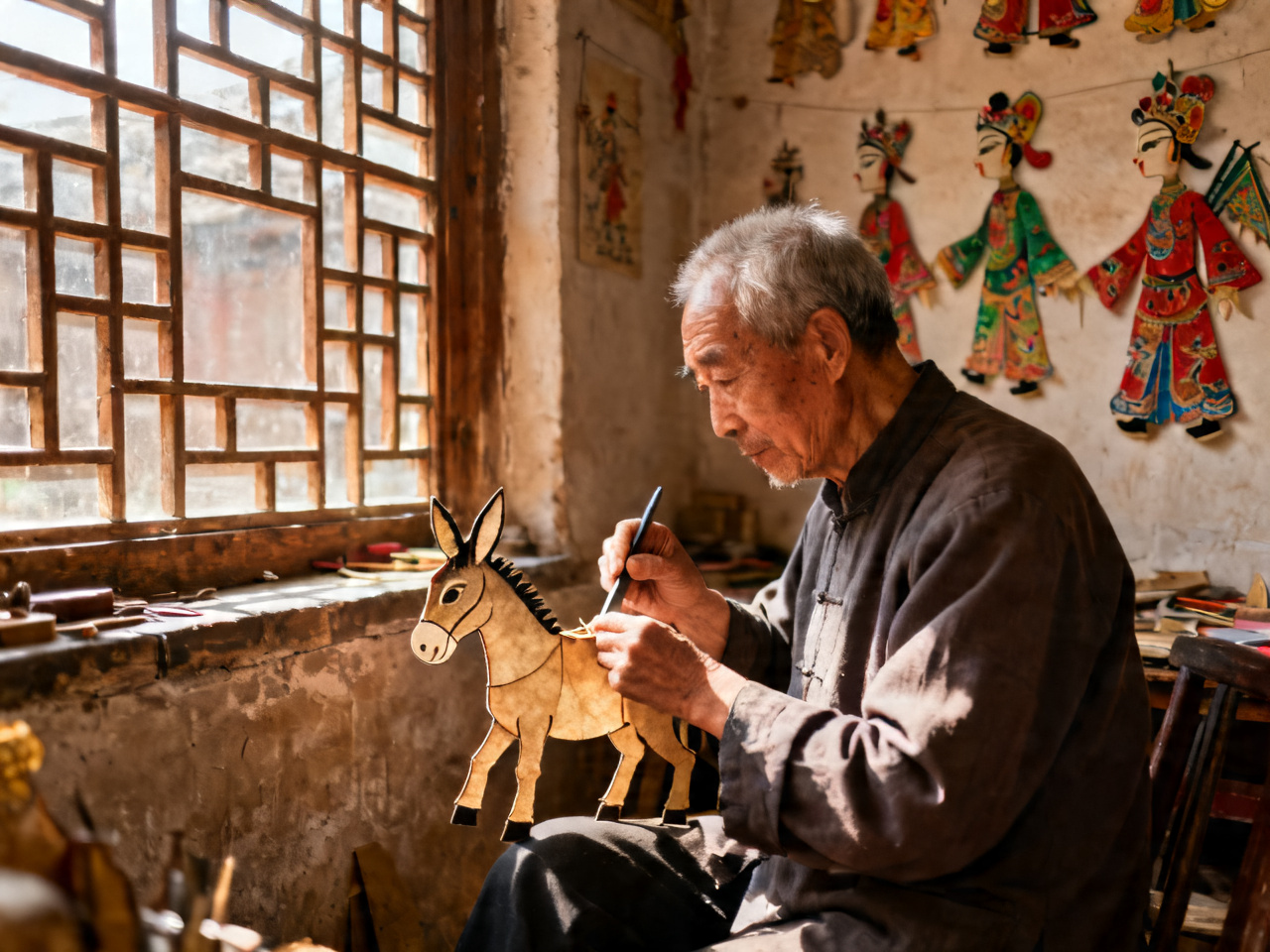
"透"是华县皮影制作中的关键一步。选好的驴皮要经过浸泡、刮制、阴干,最终达到半透明的状态,才能在灯光下呈现出那种独特的、介于实体与幻影之间的质感。刘华忠告诉我,一张好皮子从生皮到可以雕刻,至少需要半年。急不得。他年轻时跟父亲学艺,父亲跟祖父学,祖父的师傅据说能追溯到清同治年间的一个戏班子。这条手艺的河流就这样在家族内部静静流淌了一百多年,没有文凭,没有证书,只有一双手从另一双手那里接过刻刀。
"Working through" is a critical step in Huaxian shadow puppet making. Selected donkey hides must be soaked, scraped, and air-dried until they reach a semi-translucent state — only then can they produce that unique texture under lamplight, hovering between solid object and phantom. Liu told me a good hide needs at least half a year from raw skin to carving-ready. There is no rushing it. He learned from his father, who learned from his grandfather, whose master reportedly traced back to a theater troupe in the Tongzhi reign of the Qing Dynasty. This river of craft has flowed quietly within the family for over a century — no diplomas, no certificates, just one pair of hands passing a carving knife to the next.
千年来路 / A Thousand-Year Road
皮影戏的起源至今没有定论,但流传最广的说法与汉武帝有关。据《汉书》记载,武帝因宠妃李夫人病逝而悲痛不已,方士李少翁用棉帛裁出人形,在帷幕后借烛光投影,让武帝隔帘看到了"李夫人"的身影。这个故事是否真实已无从考证,但它揭示了皮影戏最原始的冲动——用光和影来召唤不在场的人,对抗消逝。到了唐宋,皮影戏已经从宫廷走入市井。北宋汴京的瓦舍勾栏里,皮影艺人与说书人、杂耍艺人同台竞技,演出三国故事和民间传奇。南宋时期,皮影戏甚至跟着商路传到了波斯和阿拉伯地区,比欧洲的幻灯机早了好几百年。这或许是中国最早的"电影输出"——一块白布,一盏油灯,几个皮人儿,就构成了人类最古老的动态影像叙事。
The origin of shadow puppetry remains debated, but the most widely told story involves Emperor Wu of the Han Dynasty. According to the Book of Han, the emperor was grief-stricken after the death of his beloved consort Lady Li. A court shaman named Li Shaoweng cut a human figure from cotton silk and projected it behind a curtain by candlelight, allowing the emperor to glimpse "Lady Li's" silhouette through the screen. Whether this tale is factual is impossible to verify, but it reveals shadow puppetry's most primal impulse — using light and shadow to summon the absent, to push back against loss. By the Tang and Song dynasties, the art had moved from palace to marketplace. In the entertainment quarters of Bianjing during the Northern Song, shadow puppeteers competed alongside storytellers and acrobats, performing tales of the Three Kingdoms and folk legends. During the Southern Song, shadow puppetry even traveled along trade routes to Persia and the Arab world — centuries before Europe's magic lantern. This may be China's earliest "cinema export": a white cloth, an oil lamp, a few leather figures, composing humanity's oldest form of moving-image narrative.
一场演出的内部 / Inside a Performance
二〇二三年十月的一个傍晚,我在西安大唐不夜城附近的一间小剧场里,看了一场完整的华县皮影戏。剧目是《卖杂货》,一出流传了几百年的滑稽小戏。演出班子只有五个人,却要完成所有的唱腔、对白、操纵和乐器伴奏。主演坐在白色幕布后面的一条长凳上,双手各持一根细竹竿操控皮影人物,同时嘴里唱着碗碗腔——那是一种高亢而略带沙哑的声腔,尾音拖得很长,像是从黄土高原的风里刮出来的。他的脚下还踩着一个木制踏板,用来控制打击乐器的节奏。一个人,同时是演员、歌手、鼓手和木偶师。
On an October evening in 2023, I watched a full Huaxian shadow puppet performance in a small theater near Xi'an's Great Tang All Day Mall. The play was "The Peddler," a comedic short piece passed down for centuries. The troupe had only five members, yet they handled all singing, dialogue, puppet manipulation, and musical accompaniment. The lead performer sat on a bench behind the white screen, each hand gripping a thin bamboo rod to control the puppet figures while singing wanwan qiang — a high-pitched, slightly raspy vocal style with long trailing notes that sound as if scraped from the winds of the Loess Plateau. His feet worked a wooden pedal below, controlling the rhythm of percussion instruments. One person, simultaneously actor, singer, drummer, and puppeteer.
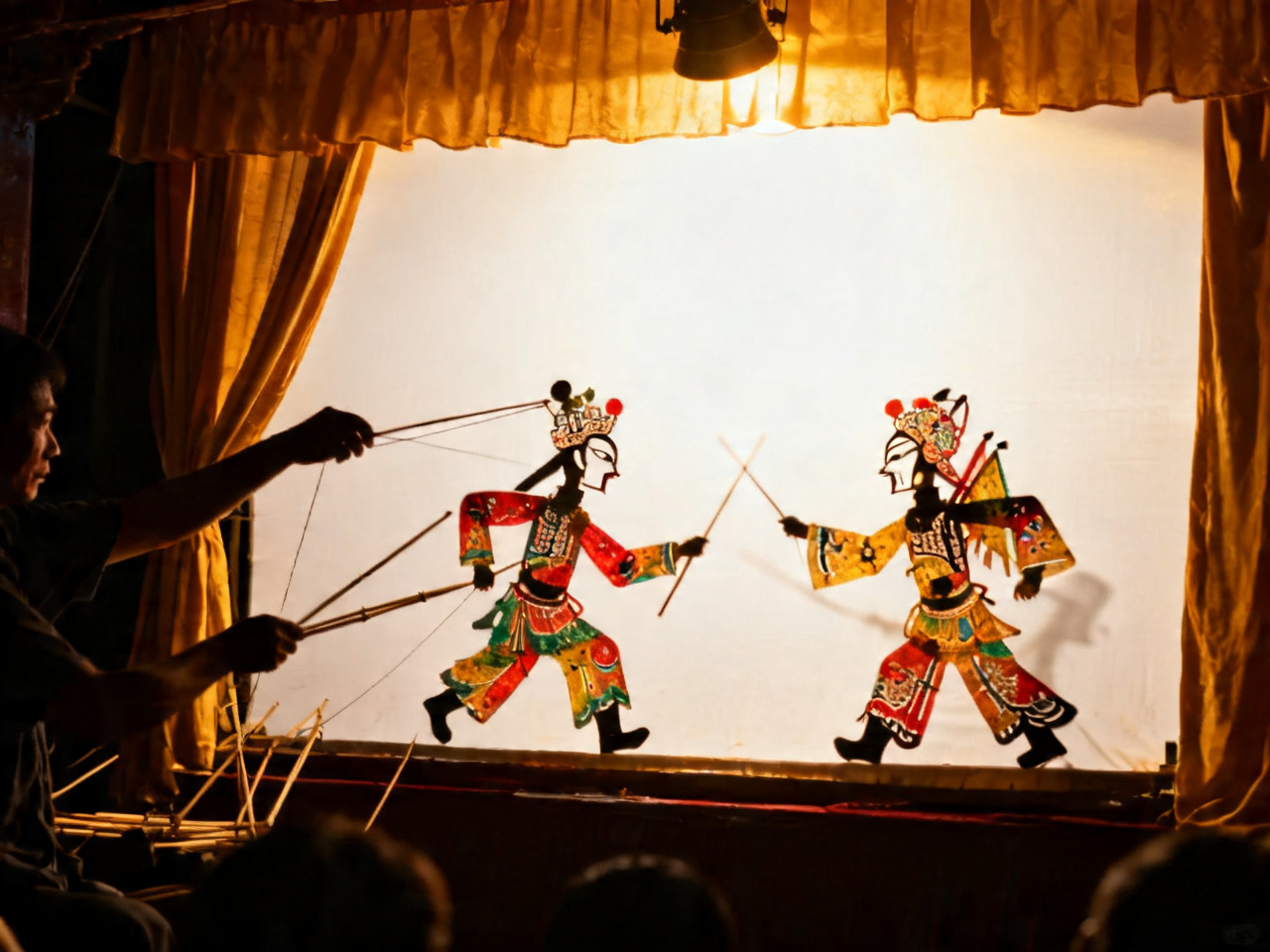
幕布前面坐着大约三十个观众,大部分是游客,也有几位本地老人。当皮影人物在幕布上快速翻转、打斗时,一个五六岁的小女孩从座位上站了起来,走到幕布跟前,伸手去摸那些移动的影子。她的手指穿过了光,什么也没有抓住。这个画面让我想起了皮影戏最本质的魔力:它制造的是一种你明知虚幻却仍然想要触碰的真实。那些皮影人物在灯光下呈现出的色彩——石榴红、靛蓝、明黄——比真实的颜料更加饱和,因为光穿透了它们,让颜色从内部发亮。这是任何数字屏幕都无法复制的效果。
About thirty audience members sat before the screen, mostly tourists with a few local elders. When the puppet figures flipped and fought rapidly on the screen, a girl of five or six stood up from her seat, walked to the screen, and reached out to touch the moving shadows. Her fingers passed through the light and caught nothing. That image reminded me of shadow puppetry's most essential magic: it creates a reality you know is illusion yet still want to touch. The colors the puppet figures display under lamplight — pomegranate red, indigo, bright yellow — appear more saturated than actual pigment, because light passes through them, making the color glow from within. No digital screen can replicate this effect.
刀下的世界 / A World Under the Knife
制作一个完整的皮影人物,需要经过选皮、制皮、画稿、过稿、镂刻、敷彩、发汗熨平、缀结合成等二十多道工序。其中最考验功力的是镂刻。华县皮影的刀法有推皮走刀和拉刀两种基本技法。推皮走刀是华县独有的——刀不动,手推着皮子在刀刃上转动,线条因此格外流畅圆润。刘华忠给我演示了一个武将头茬的雕刻过程:头盔上的鱼鳞纹,每一片只有米粒大小,却片片分明,刀刀到位。他说一个头茬要刻三千多刀,花两到三天时间。我数了数他作坊里挂着的成品,粗略估算,那面墙上至少凝结了十万刀的功夫。
Creating a complete shadow puppet figure requires over twenty steps: selecting the hide, processing it, drafting the design, transferring the pattern, carving, applying color, heat-pressing to flatten, and assembling the jointed parts. The most skill-demanding step is the carving. Huaxian shadow puppetry uses two fundamental knife techniques: "pushing the hide against the blade" and "pulling the knife." The push technique is unique to Huaxian — the knife stays still while the artisan rotates the hide against the blade, producing exceptionally smooth, rounded lines. Liu demonstrated carving a warrior's headdress for me: the fish-scale pattern on the helmet, each scale no larger than a grain of rice, yet every one distinct, every cut precise. He said a single headdress requires over three thousand cuts and takes two to three days. I counted the finished pieces hanging in his workshop and roughly estimated that the wall held at least a hundred thousand cuts' worth of labor.
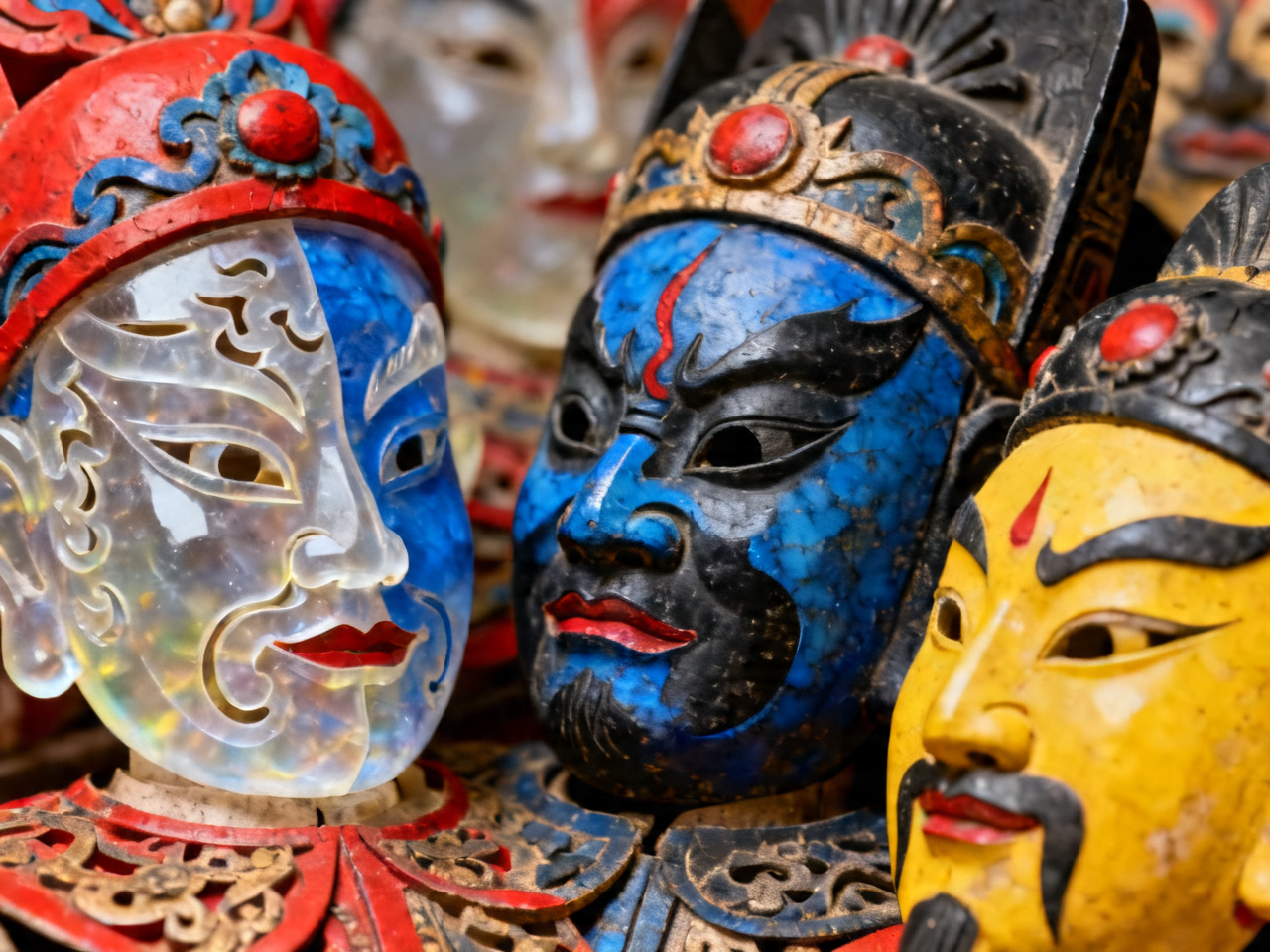
令我意外的是,皮影人物的面部设计遵循着一套严格的"相术"体系。正面人物多为阳刻——镂空面部线条,让光透过来,脸部明亮通透;反派则用阴刻——保留大面积皮革,面部显得阴沉压抑。额头的高低、眉眼的角度、嘴角的弧度,都有固定的程式。一个老艺人看一眼皮影的脸,就能判断这个角色是忠是奸、是文是武。这套视觉语法比京剧脸谱还要古老,却鲜为人知。
What surprised me was that the facial design of shadow puppet figures follows a strict system of "physiognomy." Positive characters typically use yang carving — the facial lines are cut away, allowing light through so the face appears bright and open. Villains use yin carving — large areas of leather are retained, making the face look dark and oppressive. The height of the forehead, the angle of the brows and eyes, the curve of the mouth — all follow fixed conventions. An experienced artisan can glance at a puppet's face and immediately tell whether the character is loyal or treacherous, scholarly or martial. This visual grammar is older than Peking Opera face-painting, yet far less known.
灯灭之后 / After the Lamp Goes Out
演出结束后,我回到后台。主演老汪正在把皮影人物一个个夹进一本厚厚的线装册子里,动作轻柔得像在安顿睡着的孩子。他今年六十一岁,从十四岁开始学戏,演了将近半个世纪。我问他现在还有年轻人愿意学吗。他沉默了一会儿,说:"愿意看的多,愿意学的少。学这个苦,三年才能上手,五年才能登台,十年才敢说入了门。现在的年轻人等不了这么久。"
After the show, I went backstage. The lead performer, Old Wang, was tucking the puppet figures one by one into a thick thread-bound album, his movements as gentle as settling sleeping children. He is sixty-one this year, started learning at fourteen, and has performed for nearly half a century. I asked if young people still want to learn. He was quiet for a moment, then said: "Plenty want to watch. Few want to learn. It's hard work — three years before you can handle the basics, five before you can go on stage, ten before you dare say you've crossed the threshold. Young people today can't wait that long."
华县曾经有几十个皮影戏班子,农闲时节走村串户,红白喜事都少不了一台皮影。如今能完整演出的班子不超过五个。二〇〇六年,华县皮影戏被列入第一批国家级非物质文化遗产名录,政府拨了保护资金,也建了展览馆。但刘华忠对此有自己的看法:"进了博物馆的东西,说好听是保护,说难听是已经半截入土了。皮影是活的,它得在台上动,得有人在底下叫好,才算活着。"这句话粗糙却精准,道出了所有非遗保护中最核心的悖论。
Huaxian once had dozens of shadow puppet troupes that traveled from village to village during the farming off-season; no wedding or funeral was complete without a shadow play. Today, fewer than five troupes can still perform a full show. In 2006, Huaxian shadow puppetry was inscribed on the first national list of Intangible Cultural Heritage. The government allocated preservation funds and built an exhibition hall. But Liu Huazhong has his own view: "When something enters a museum, the polite word is 'preservation,' but the blunt truth is it's already half-buried. Shadow puppets are alive — they need to move on stage, they need an audience cheering below, to count as living." The words are rough but precise, naming the central paradox of all intangible heritage protection.
离开华县那天是个阴天。车窗外,渭河平原的麦田在薄雾中铺展到天际线。我想起作坊里那盏还没有点亮的灯,想起幕布上那些曾经翻飞的影子。皮影戏用一千年的时间证明了一件事:人类最深的叙事冲动,不需要高清屏幕,不需要杜比音效,只需要一束光、一张皮、一双手,以及黑暗中愿意相信的眼睛。
The day I left Huaxian was overcast. Outside the car window, the wheat fields of the Wei River plain stretched to the horizon through thin mist. I thought of the unlit lamp in the workshop, of the shadows that once danced across the screen. Shadow puppetry has spent a thousand years proving one thing: humanity's deepest storytelling impulse needs no high-definition screen, no Dolby surround sound — only a beam of light, a piece of hide, a pair of hands, and eyes willing to believe in the dark.
延伸阅读 / Related Reads

- 龙舟不只是比赛:一个外国人看懂端午的三年 | Dragon Boats Aren't Just Racing: 3 Years of an Outsider Learning Duanwu
- 我在中国小区楼下听懂收废品吆喝后,第一次不再把它当噪音 | After I Learned to Understand the Scrap Collector’s Call Below My Chinese Apartment, I Stopped Hearing It as Noise for the First Time
- 唐装:传统与现代之美 | Tang Suit: Modern Traditional Wear
- 海口出门前那几分钟,天气、潮气和路线都先挤进了手机里 | In the Minutes Before Going Out in Haikou, Weather, Humidity, and Route All Crowd into the Phone
- 景德镇陶瓷伴手礼选购指南 | Jingdezhen Ceramics Souvenir Buying Guide
- 中国节假日全解:春节、黄金周与调休制度 | Chinese Holidays Explained: Spring Festival, Golden Week & the Adjusted Schedule System
- 微信支付开通全流程(境外用户) | WeChat Pay Setup for Foreign Visitors
- 窑火没有替我把碗烧好:景德镇一只歪口杯的诞生 | The Kiln Could Not Fix My Crooked Cup in Jingdezhen
- 成都大熊猫与宽窄巷子 | Chengdu: Giant Pandas & Kuanzhai Alley
- 泉州古城的香火与街巷 | Incense and Lanes in Quanzhou Old City
Comments (0)