
腾冲:火山热海之间的边地温度 | Tengchong: A Borderland Journey Between Volcanoes and Hot Springs
腾冲:火山热海之间的边地温度 | Tengchong: A Borderland Journey Between Volcanoes and Hot Springs
我在九月的一个清晨抵达腾冲县城,天还没有完全亮,客运站外的路灯把湿漉漉的地面照成一条条淡金色的线。我的小巴停下时,司机老杨先跳下车,拍了拍车门,提醒我别把相机落在座位上。我拖着箱子走到街角,闻见米线汤里酸腌菜的气味,也听见早点摊老板用铁勺敲锅沿,清脆的声音穿过薄雾。这里的早晨不急着展示风景,而是先用热气、油烟和人声把我从旅途的疲惫里叫醒。
I reached Tengchong county town on a September morning before the sky had fully brightened. Streetlights turned the wet pavement into thin golden lines. When my minibus stopped, the driver, Mr. Yang, jumped out and tapped the door, reminding me not to leave my camera behind. At the corner I smelled pickled vegetables in rice-noodle broth and heard a breakfast vendor tapping the rim of his pot with an iron ladle. The sound crossed the mist. The morning did not rush to display scenery; it first woke me with steam, smoke, and human voices.
我住在一间靠近叠水河的小客栈,老板娘阿琴把钥匙放在柜台上,又从厨房端出一碗温热的稀豆粉。她说县城清晨最适合用脚丈量,因为六点半以后电动车和送货三轮车会逐渐多起来。我沿着石板路走,卖豆浆的年轻人把塑料袋提到车把上,穿校服的孩子踩着水洼跑过,河边一位老人把鸟笼挂到树枝上。鸟叫和远处摩托车的突突声混在一起,像一首没有刻意编排的晨曲。
I stayed at a small guesthouse near Dieshui River. The owner, Qin, put a key on the counter and brought me a warm bowl of rice-flour porridge. She said the county town was best measured on foot before six-thirty, when electric scooters and delivery tricycles began to multiply. I walked over flagstones: a young soy-milk seller hung a plastic bag from his handlebar, schoolchildren ran through puddles, and an old man placed a birdcage on a branch beside the river. Birdsong mixed with the cough of a distant motorbike, an unarranged morning melody.
我原本以为边地县城会很安静,几乎没有可以停留的细节,这是我抵达后最早的误判。阿琴听完笑了,说如果只把腾冲当成去景区的中转站,当然什么也看不见。她带我绕到菜市场后门,那里有卖火山石烤豆腐的摊子,豆腐在铁网上滋滋冒油,辣椒、蒜末和薄荷碎落在表面。摊主杨姐一边翻豆腐,一边问我从哪里来,得知我是外国游客后,她把最焦的一块夹给自己,把嫩的一块放进我的纸碗。
I had assumed that a borderland county town would be quiet to the point of having little to pause over. That was my first mistake. Qin laughed and said that if I treated Tengchong only as a transfer point for scenic areas, I would see nothing. She led me to the back entrance of the market, where a vendor grilled tofu on volcanic stones. Oil hissed on the iron mesh as chili, garlic, and chopped mint fell across the surface. The vendor, Yang-jie, asked where I came from. When she learned I was a foreign visitor, she kept the most charred piece for herself and put the tender one in my paper bowl.
我吃完那块豆腐才明白,腾冲的温度并不只来自热海。杨姐的手指被辣椒染成橘红色,她用围裙擦了擦,又指着摊后堆好的黑色石头,说这些石头从火山附近运来,受热均匀,豆腐才会外脆里软。她并不把这件事讲成地理课,只是顺手递给我一小撮薄荷,让我压住辣味。我站在菜市场门口,嘴里是清凉和辛辣,鼻子里是炭火味,忽然觉得旅行不是收集名词,而是接受陌生人替你调整一口食物。
Only after eating that tofu did I understand that Tengchong’s warmth did not come only from the hot springs. Yang-jie’s fingers were stained orange by chili. She wiped them on her apron and pointed to the black stones stacked behind the stall, explaining that they came from near the volcanoes and heated evenly, making the tofu crisp outside and soft within. She did not turn it into a geography lesson. She simply handed me a pinch of mint to cool the spice. At the market gate my mouth held both freshness and heat, while charcoal smoke filled my nose. Travel, I realized, is not collecting names; it is letting a stranger adjust one bite for you.
早餐后我去找去和顺古镇的公交车,站牌上的信息让我犹豫了几分钟。阿琴说可以坐城乡公交,也可以和人拼车,若想看清晨的古镇,最好不要太晚出发。我把零钱放在掌心,站在站台旁看一辆辆电动车经过。一个背着竹筐的妇女告诉我,公交车会在街口慢慢停,不一定正好贴着站牌。她说完便抬手拦车,司机探出头确认方向,车里一位老人往旁边挪了挪,给我留出放背包的位置。
After breakfast I went looking for the bus to Heshun Ancient Town, and the information on the stop made me hesitate. Qin said I could take a local rural bus or share a car, but if I wanted to see Heshun in its morning light, I should leave early. I held my coins in my palm and watched electric scooters pass. A woman carrying a bamboo basket told me the bus slowed near the corner rather than stopping exactly at the sign. She raised her hand, the driver leaned out to confirm the direction, and an elderly passenger moved aside to make room for my backpack.
车厢里有湿竹筐、橡胶雨靴和豆浆的味道,司机老周把音量很小的收音机调到一段地方戏。我把手机支付页面提前打开,却发现网络信号忽强忽弱,最后还是掏出纸币。老周接过钱,没有不耐烦,只把找零放在我手背上,然后用普通话和方言交替告诉我在哪里下车。车从县城边缘驶过时,我看见屋檐下晾着的腊肉、墙角堆着的煤球,以及一个女孩把红色雨衣甩到阳台栏杆上。
The bus smelled of wet bamboo baskets, rubber rain boots, and soy milk. The driver, Zhou, tuned his quiet radio to a piece of local opera. I opened my mobile-payment screen in advance, but the signal rose and fell, so I finally used banknotes. Zhou accepted them without impatience, placed the change on the back of my hand, and told me where to get off, switching between Mandarin and the local dialect. Along the county’s edge I saw cured meat beneath eaves, coal briquettes by walls, and a girl shaking a red raincoat over a balcony rail.
和顺古镇的入口比我想象中朴素,石阶上有昨夜雨水留下的深色痕迹。售票处的工作人员小何看见我研究地图,便用笔在背面画了一个弯弯的路线,提醒我先走到野鸭湖,再从图书馆一带慢慢回望古宅。我没有急着拍照,跟着一位推菜车的阿叔穿过巷子。车轮碾过石缝,发出咯噔声;一扇木门半开着,里面传出剁菜声;墙根的青苔沾着水,散发出土腥而清凉的气味。
The entrance to Heshun was plainer than I had imagined, and the steps were marked by dark traces of overnight rain. He, the ticket-office worker, saw me studying a map and drew a winding route on its back, suggesting that I begin at Wild Duck Lake and return slowly through the library area toward the old houses. I did not rush to take photographs. I followed an uncle pushing a vegetable cart through the lanes. The wheels clicked over gaps between stones, a half-open wooden door released the sound of chopping, and wet moss along the wall smelled earthy and cool.
我在一座祠堂前遇见一位正在擦门槛的老人,他叫寸伯,袖口卷到手肘,手里握着一块已经发灰的棉布。他没有阻止我看,只问我是否听得懂这里的故事。我摇头后,他指了指屋梁、石鼓和门上的旧对联,用极慢的语速说起几代人怎样从商、怎样把远方带回来的木料修成房屋。我听不全,只记住他擦完门槛后把布折成四方形,压在桶沿上,那是一个很安静、很有秩序的动作。
In front of an ancestral hall I met an elderly man wiping the threshold. His name was Cun-bo; his sleeves were rolled to the elbows and he held a gray cotton cloth. He did not stop me from looking. He only asked whether I understood the story of the place. When I shook my head, he pointed to the beams, stone drums, and faded couplets, speaking very slowly about generations who traded and turned timber from distant places into houses. I could not catch everything. I remembered how he folded the cloth into a square after wiping, then rested it on the bucket rim—a quiet, orderly gesture.
古镇里最让我放慢脚步的不是一座完整的宅院,而是一家卖饵丝的小店。店主小段把米线在热水里抖开,筷子碰到铝锅边缘,发出密集的轻响。他先给本地客人加一勺酸菜,又问我要不要少辣。我说可以接受辣,他便没有按游客口味改淡,而是在碗底放入一小勺当地辣椒油,告诉我先搅匀再吃。饵丝柔软,肉酱有烟熏味,韭菜和薄荷把汤底提亮,我额头慢慢冒汗,却舍不得停筷子。
What slowed me most in the ancient town was not a perfectly preserved residence but a small shop selling er si rice noodles. The owner, Duan, shook the noodles loose in hot water; chopsticks made a quick music against the aluminum pot. He added pickled greens to a local customer, then asked whether I wanted less chili. I said I could handle spice, so he did not flatten it for a tourist. He put a spoonful of local chili oil at the bottom and told me to stir first. The noodles were soft, the meat sauce smoky, and chives with mint brightened the broth. Sweat gathered on my forehead, but I did not want to stop.
午后我离开和顺,准备去火山地质公园。我原先计划在同一天把大小空山、柱状节理和热海全部看完,地图上的距离看起来并不长。阿琴在电话里听到这个安排,沉默了一秒,说景区之间没有我想象中方便的步行连接,山风、等车和排队都会吃掉时间。我还是相信自己的判断,叫了一辆网约车。司机小董把车停在古镇外,看到我手里那张密密麻麻的路线表,只说了一句:“今天别把自己赶成导游。”
In the afternoon I left Heshun for the volcanic geopark. I had planned to see Daxiaokong Mountain, the columnar joints, and the hot springs all in one day; on the map the distances did not look great. Qin fell silent for a second when I told her, then said the scenic areas were not connected on foot as conveniently as I imagined, and wind, waiting, and queues would consume time. I still trusted my own plan and booked a ride. The driver, Dong, stopped outside the town, looked at my crowded itinerary, and said only, “Do not rush yourself into becoming a tour guide today.”
到达火山地质公园后,风比县城大得多,草叶一片片朝同一个方向伏下。入口旁的讲解员罗师傅用手杖点着远处的火山口,说岩石表面的颜色并非简单的黑,而是被阳光、雨水和年代磨出不同层次。我爬上观景台,鞋底踩在粗糙的火山渣上,细小颗粒钻进鞋边。风里没有花香,只有晒热的石头、松针和一点尘土味。远处的山脊像沉默的波浪,把天空托得很高。
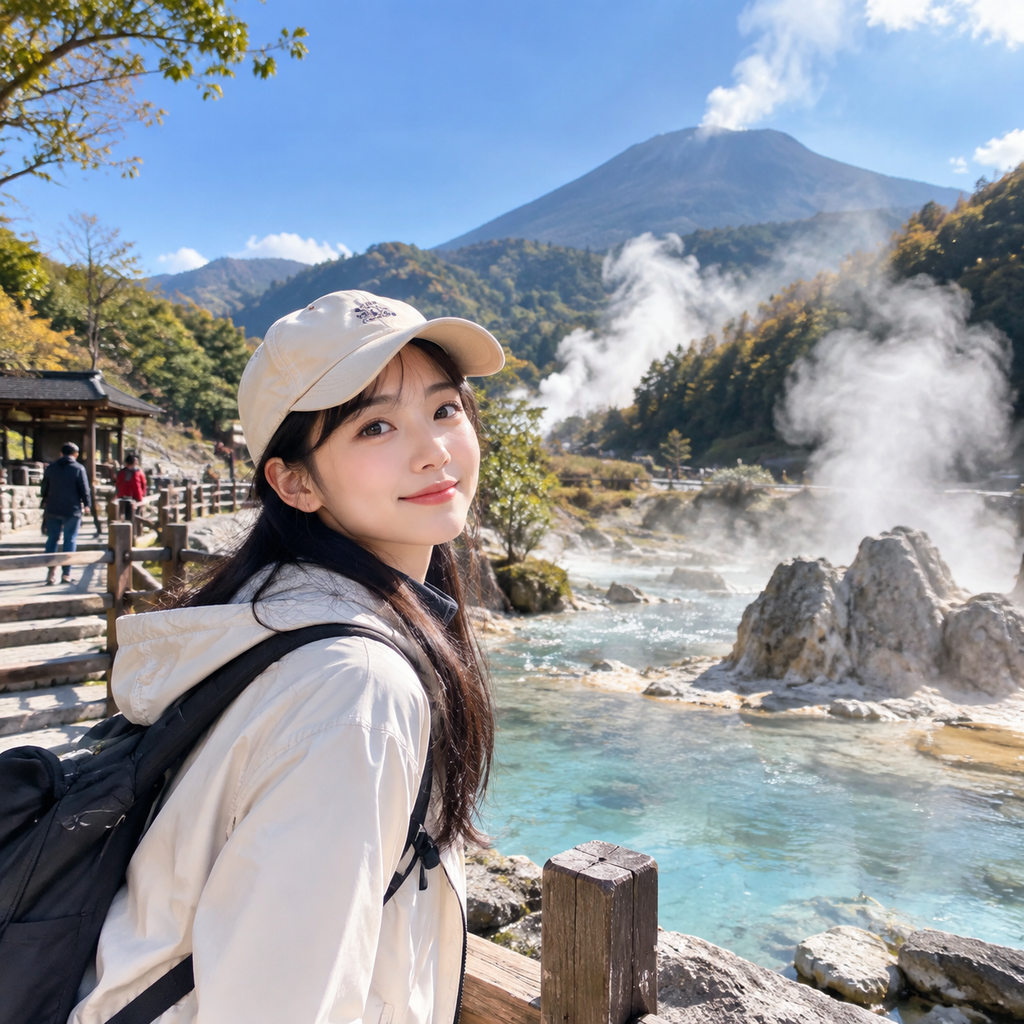
At the volcanic geopark the wind was much stronger than in town, bending every blade of grass in one direction. Near the entrance, Luo, an interpreter, tapped his walking stick toward a distant crater and explained that the rocks were not simply black; sunlight, rain, and age had given them layers of color. I climbed to a viewing platform, my soles grinding against rough volcanic scoria as grains slipped around my shoes. There was no floral fragrance in the wind, only warm stone, pine needles, and dust. Ridges in the distance resembled silent waves holding up a vast sky.
我在大小空山之间犹豫了很久,最后选择先去小空山,因为罗师傅说上坡比较缓,也更适合我带着行李的状态。其实那天我最想看的,是火山口边缘那种突然向下收拢的地形。我把背包交给入口寄存处的姑娘,她贴好标签,还叮嘱我回程别忘了取。没有了肩上的重量,我走得快起来,却在一处岔路口差点跟错队伍,幸好一个戴蓝色帽子的男孩回头喊我,指向真正的观景方向。
Between Daxiaokong and Xiaokong Mountain I hesitated for a long time. I chose Xiaokong first because Luo said its slope was gentler and better suited to me while I was carrying luggage. What I really wanted was the sudden inward drop of the crater rim. I left my backpack with a girl at the storage counter; she attached a tag and reminded me to collect it on the way back. Without the weight, I walked faster and nearly followed the wrong group at a fork. A boy in a blue cap turned and called me back, pointing toward the correct viewpoint.
站在火山口边缘时,我听见自己的呼吸声比风声更近。坑底长着低矮灌木,雨水聚在凹处,像一面不稳定的暗镜。旁边一位父亲扶着女儿的肩膀,女儿拿着望远镜找鸟,找到后兴奋地拍了三下手。那一刻我没有拍照,只把手放在护栏上,感到金属被太阳晒得温热。火山并不喧哗,它把很久以前的爆裂藏在地层里,让今天的人用脚下的沙砾慢慢读出来。
At the crater rim I heard my own breathing closer than the wind. Low shrubs covered the floor, and rainwater collected in a hollow like an unstable dark mirror. Nearby, a father held his daughter’s shoulder while she searched for birds through binoculars; when she found one, she clapped three times. I did not take a photograph. I placed my hand on the rail and felt metal warmed by the sun. The volcano was not loud. It had hidden an ancient explosion in the strata, leaving people today to read it slowly through the gravel beneath their feet.
看完火山景观,我发现时间已经比计划晚了一个多小时。小董在停车场等我,递来一瓶常温水,说热海不必硬挤进今天。我最初有些失望,因为我把“火山与热海”看成一条必须完整打勾的路线。可当车驶向热海时,我看见云层压低,山路被一阵急雨打得发亮,立刻明白如果继续追赶,最后只会在蒸汽和人群中匆匆走过。于是我删掉了一个点,把晚餐和热海留给更宽松的时间。
After the volcanic sights, I realized I was more than an hour behind schedule. Dong was waiting in the parking lot and handed me a bottle of room-temperature water, saying I did not need to force the hot springs into the same day. At first I was disappointed because I had treated “volcanoes and hot springs” as a route that had to be checked off in full. But as we drove toward Rehai, clouds lowered and sudden rain polished the mountain road. I understood that chasing the schedule would leave me hurrying through steam and crowds. I removed one stop and kept the hot springs and dinner for a calmer stretch of time.
热海入口的空气和火山公园完全不同,湿热像一条看不见的围巾绕住脖子。石阶旁的水沟冒着白气,硫磺的味道先抵达鼻腔,随后才是青草和潮湿木头的气息。工作人员小林拿着扩音器提醒大家不要越过护栏,她说某些岩石看起来干燥,内部却仍然滚烫。我跟在她身后走,鞋面很快蒙上一层细小水珠,镜头也起雾,只好停下来用衣角轻轻擦拭。
The air at Rehai was entirely different from the volcanic park. Humidity wrapped around my neck like an invisible scarf. White steam rose from channels beside the stone steps; sulfur reached my nose first, followed by grass and wet wood. Lin, a staff member with a loudspeaker, reminded visitors not to cross the rails. Some rocks looked dry, she said, but remained boiling inside. I followed her, and tiny droplets soon covered my shoes. My camera fogged, so I stopped and wiped the lens gently with the edge of my shirt.
我在珍珠泉边遇见一位卖温泉煮鸡蛋的老人,他把鸡蛋从竹篮里一个个夹出来,壳上挂着水珠。他叫马叔,告诉我不同池子的温度不一样,不能凭颜色判断。我买了两个,坐在木凳上等他敲开其中一个。蛋白比普通水煮的更紧,蛋黄带着淡淡硫磺味,我蘸了一点椒盐,吃起来竟然像一份来自地下的简单午餐。马叔看我皱眉,便笑着递来一片橘子。
Beside Pearl Spring I met an old man selling eggs cooked in the hot spring. He lifted them one by one from a bamboo basket, droplets clinging to their shells. His name was Ma-shu. He told me that each pool had a different temperature and that color was not a safe guide. I bought two and sat on a wooden bench while he cracked one open. The white was firmer than an ordinary boiled egg, and the yolk carried a faint sulfur taste. With a little pepper salt it became a simple meal from underground. When I frowned, Ma-shu laughed and gave me an orange slice.
热海大滚锅附近的声音很特别,水泡破裂时不是单一的咕噜,而是一阵高低交错的爆响,蒸汽把周围人的说话声推远。小林示意我站到侧面,那里能看清滚锅上方的白雾如何随风散开。一个穿黄色雨衣的女孩伸手想靠近,被母亲及时拉住,母亲用袖口替她擦掉脸上的水汽。女孩没有哭,只踮脚看锅边,我忽然觉得安全提示并不是风景的敌人,而是让人有机会继续看下去。
Near the Big Boiling Pot the sound was extraordinary. When bubbles broke, they did not make one simple gurgle but a layered burst of high and low notes, while steam pushed nearby voices away. Lin motioned me to stand to one side, where I could see white vapor spreading with the wind. A girl in a yellow raincoat reached toward the railing, and her mother pulled her back just in time, wiping moisture from her face with a sleeve. The girl did not cry; she rose on tiptoe to watch. Safety instructions were not the enemy of scenery. They allowed us to keep looking.
我原以为热海会像一个被安排好的拍照背景,走过几个池子就结束了,可真正让我记住的是一条不起眼的木栈道。栈道下方有细小水流穿过黑石,水面不断抖动,像有人在地下轻轻敲鼓。一个清洁工阿姨弯腰捡起落叶,把叶片夹在夹子里,动作很慢却没有遗漏。她抬头问我是不是觉得热,我说是,她便指向前方的凉亭,说那里有风,也能听见山里的蝉声。
I had expected Rehai to be a staged background for photographs, a few pools to cross and then leave. What I remember most was an unremarkable wooden walkway. Small streams moved beneath it through black stones, their surfaces trembling as if someone were tapping a drum underground. A cleaner bent to collect fallen leaves, slowly but without missing any. She asked whether I felt hot. When I said yes, she pointed toward a pavilion ahead, where there was a breeze and the cicadas of the mountain could be heard.
我在凉亭里把当天的路线重新写了一遍。原计划里还有一个远处的观景点,需要再换一次车,我最后把它删掉,决定把傍晚留给县城。这个调整看起来很小,却让我第一次不再把旅行当成考试。我给阿琴发消息,她回了一个笑脸,并说晚上可以带我去看本地人买菜的夜市。小董把我送回客栈时,天边刚好亮起一条橙色,车窗上的雨痕把街灯拉成细长的线。
At the pavilion I rewrote the day’s route. The original plan included a distant viewpoint requiring another vehicle transfer. I removed it and decided to keep the evening for the county town. The change was small, yet it was the first time I stopped treating travel like an examination. I messaged Qin, and she replied with a smiling face, saying she could take me to the night market where locals bought groceries. When Dong returned me to the guesthouse, a narrow orange band had appeared on the horizon, and rain on the window stretched the streetlights into long lines.
夜市从一条不宽的街巷里慢慢长出来,摊主把折叠桌支在屋檐下,雨伞边缘滴着水。阿琴先带我看一种我叫不出名字的野菜,摊主用手指掐断茎部,说明哪一截最嫩。隔壁卖粑粑的大叔把面团拍在案板上,砰、砰、砰的声音比吆喝更有力量。油锅里甜香和腌肉味交叠,我本来只想随便吃一点,最后却坐在塑料凳上,接过三种不同蘸料。
The night market slowly grew out of a narrow lane. Vendors set folding tables beneath eaves, and rain dripped from umbrella edges. Qin first showed me a wild vegetable whose name I could not pronounce; the seller snapped the stem and explained which part was tender. Next door, a man making sticky rice cakes slapped dough onto his board with a forceful thump, thump, thump. Sweet oil and cured meat aromas overlapped. I had planned to eat only a little, but ended up on a plastic stool accepting three different dipping sauces.
支付在夜市里又成了一个小插曲。卖烤乳扇的女孩手机电量只剩百分之八,她把二维码举在灯下,屏幕一闪一闪。我先尝试扫码,页面转了很久没有反应,后面排队的大姐把自己的零钱递给女孩,说先替我付,等我找到现金再还。我赶紧翻遍钱包,找到一张折皱的纸币,大姐却摆手不肯要,只说外地人第一次来,别让一串烤乳扇把心情弄坏。后来我在客栈把钱交给阿琴,请她第二天转给那位摊主。
Payment became another small episode at the night market. The girl selling grilled rushan cheese had only eight percent battery. She held her QR code under a lamp, but the screen kept flickering. I tried to scan it; the page hung while a woman behind me offered her own change and paid first, telling the girl I could repay her after finding cash. I searched my wallet and found a wrinkled banknote, but she waved it away, saying a first-time visitor should not let a skewer of cheese spoil the mood. Back at the guesthouse I gave the money to Qin and asked her to pass it to the vendor the next day.
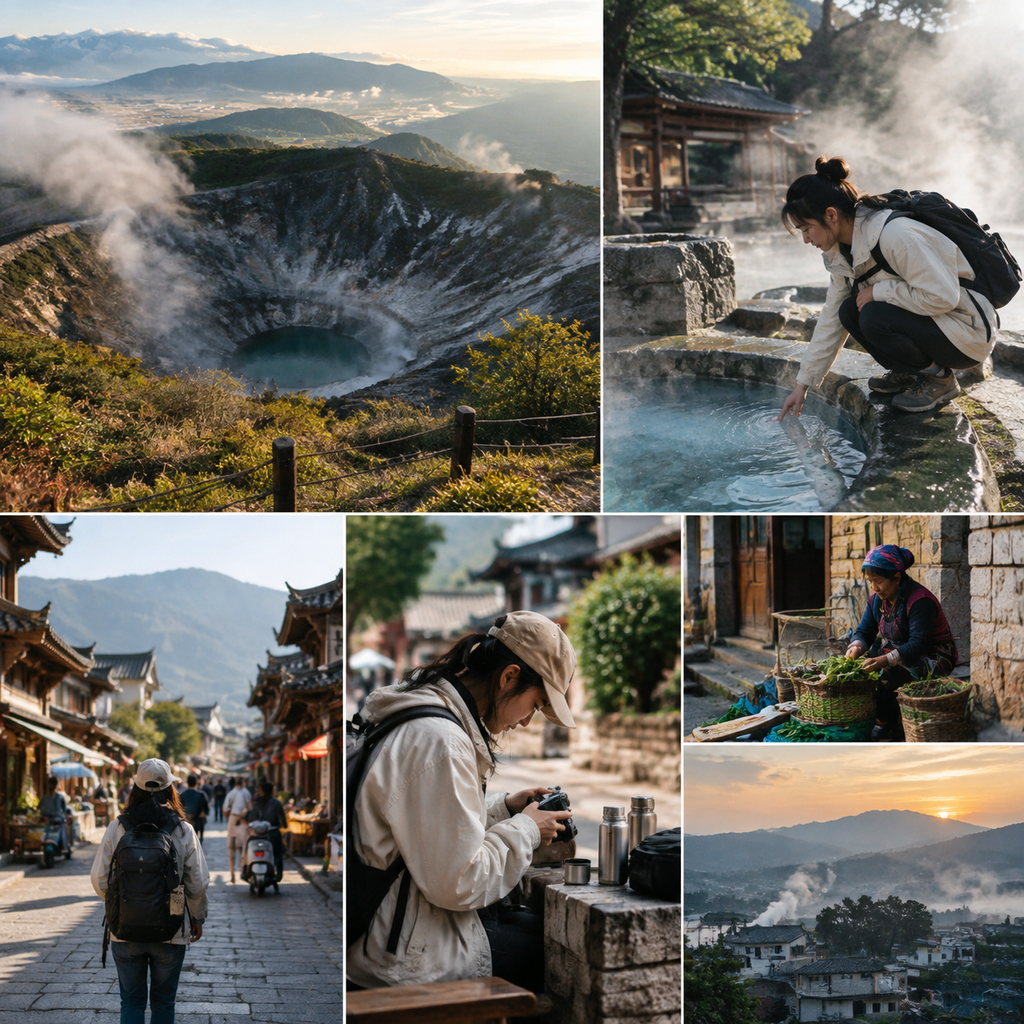
那位大姐姓董,买完菜后没有马上离开,反而坐到我旁边,问我是否去过缅甸边境一带。我说还没有,她便讲起自己年轻时做生意时走过的山路,说雨季的雾会把路和天混在一起。她的手指沾着葱叶汁,讲到某个转弯处时在桌面上画了一条线。我们语言并不完全相通,但她说到家人、天气和食物时,眼神里的停顿让我听懂了许多。她临走前把一把小葱塞给阿琴,说明早煮面用。
The woman’s surname was Dong. After buying vegetables she did not leave immediately, but sat beside me and asked whether I had visited the border areas near Myanmar. I had not. She told me about mountain roads she had traveled for business when young, saying that rainy-season fog could blend road and sky together. Her fingers were stained with scallion juice, and she drew a line on the table when describing a turn. Our languages did not fully meet, yet pauses in her eyes made family, weather, and food understandable. Before leaving, she pressed a handful of scallions into Qin’s hands for noodles the next morning.
第二天清晨我没有急着赶车,而是在叠水河边坐了半小时。水声从石头之间穿过,偶尔被桥上公交车的刹车声截断。一个男孩蹲在岸边用树枝拨水,旁边的爷爷提醒他不要靠太近;男孩把树枝收回去,又认真看着一片叶子被水流带走。我买了一杯豆浆,纸杯外壁很烫,卖豆浆的年轻人用两层塑料袋替我套好,还问我昨晚是否吃饱。
The next morning I did not hurry toward a vehicle. I sat beside Dieshui River for half an hour. Water passed between stones, occasionally cut by the brakes of a bus on the bridge. A boy crouched at the bank, stirring water with a twig; his grandfather warned him not to lean too close. The boy withdrew the twig and watched a leaf travel downstream. I bought soy milk, its paper cup hot against my palm. The young vendor wrapped it in two plastic bags and asked whether I had eaten enough the night before.
我把剩下的一天交给县城的小路,重新走过前一天匆匆经过的地方。邮局门口,一位穿蓝色外套的工作人员帮我把明信片地址写清楚;药店里的店员根据我手臂上被蚊虫叮出的红点,拿出一瓶止痒药,并用手势说明每天涂几次。街边修鞋的师傅把胶水瓶盖拧紧,抬眼看我拍照,便把自己的老式收音机往旁边挪了挪,好让我拍到整块招牌。
I gave the rest of the day to the county’s side streets, revisiting places I had hurried past. At the post office, a worker in a blue jacket helped me write an address clearly on postcards. In a pharmacy, a clerk saw red mosquito bites on my arm, brought out an anti-itch lotion, and used gestures to show how often to apply it. A shoe repairer tightened the cap of his glue bottle. When he noticed me taking a photograph, he moved his old radio aside so the whole sign would be visible.
中午我回到那家卖饵丝的小店,小段已经认出我来。他没有问我昨天辣不辣,只把碗放在桌上,说今天的汤底多加了一点青菜。我告诉他我要离开腾冲了,他停下手里的筷子,把一张写着店名的纸条递给我,说如果朋友来,可以让他们找这条巷子。他的女儿在收银台后面做作业,听见我要走,抬头用英语说了一句“Have a safe trip”,然后马上低下头继续写字。
At noon I returned to the er si shop, and Duan recognized me. He did not ask whether the chili had been too strong; he simply placed a bowl before me and said he had added more greens to today’s broth. I told him I was leaving Tengchong. He stopped his chopsticks, handed me a slip with the shop name, and said my friends could find this lane if they came. His daughter was doing homework behind the counter. Hearing that I was leaving, she looked up and said, “Have a safe trip,” then lowered her head and continued writing.
离开之前,我又回想起自己那次把行程排得过满的错误。那并不只是少看一个景点的问题,而是我一开始把腾冲想成几张必须按顺序拼好的明信片:火山、热海、古镇,之间没有空白。真正走过以后,我才发现空白里有最清楚的声音:公交车里硬币落下的声响,祠堂门槛被擦过的细响,热泉水泡破裂的闷响,还有夜市大姐推开纸币时的一声笑。
Before leaving, I thought again about my overfilled itinerary. The problem was not simply missing one viewpoint. At first I had imagined Tengchong as several postcards that had to be assembled in order: volcanoes, hot springs, ancient town, with no blank space between them. After walking through the place, I found that the blanks held the clearest sounds: coins dropping on a bus, cloth passing over an ancestral threshold, bubbles breaking in hot water, and the laugh of the market woman pushing away my banknote.
我的最后一晚住在客栈屋顶,远处的山被暮色压成深蓝。阿琴把一盏小电热壶放在桌上,里面煮着董大姐送来的小葱和一把米线。她问我最喜欢哪里,我没有立刻回答,因为我想到的不是某个最高的观景台,而是杨姐把嫩豆腐夹进我碗里,马叔递来的橘子,罗师傅指向火山口的手杖,以及小董劝我不要把自己赶成导游的那句话。
On my final evening I sat on the guesthouse roof, where distant mountains had darkened into deep blue. Qin placed a small electric kettle on the table, cooking scallions from Dong’s gift with a handful of rice noodles. She asked which place I liked best. I did not answer at once. I was thinking not of the highest viewpoint, but of Yang-jie placing tender tofu in my bowl, Ma-shu offering an orange, Luo’s stick pointing toward the crater, and Dong telling me not to rush myself into becoming a tour guide.
我在屋顶吃完那碗面,把车票和零钱放进同一个口袋,确认手机和相机都已经充电。第二天五点五十分,老周会在客栈巷口接我去车站;阿琴说她会把我的明信片带去邮局,董大姐的烤乳扇钱也会转到。我走下楼时,院子里的雨刚停,瓦片一滴一滴往下落。街口早点摊已经亮灯,锅盖掀开,白汽冲向黑蓝色的天。我回头看了一眼这座还没完全醒来的县城,知道自己带走的不是一条完成的路线,而是一种会在别处突然闻到酸菜、听见水声时重新发热的边地温度。
I finished the noodles on the roof and put my ticket and remaining coins in the same pocket, checking that my phone and camera were charged. The next morning at five-fifty, Zhou would meet me at the guesthouse lane and take me to the station. Qin would carry my postcards to the post office and transfer the money for Dong’s grilled cheese. When I went downstairs, rain had just stopped, and drops fell one by one from the tiles. The breakfast stall at the corner was already lit; when its lid lifted, white steam rose into the black-blue sky. I looked back at the town that had not fully awakened and knew I was taking away not a completed route, but a borderland warmth that would return whenever I smelled pickled greens or heard running water somewhere else.
离开前我在县城夜色里又看了一遍天气。白天的阳光暖,傍晚却很快转凉,山风把湿气推过屋檐,路边刚收摊的米线店留下淡淡的汤香。前台告诉我,若第二天清早走山路,最好把外套放在随手可取的位置,也别把出发时间卡得太紧。我把这句话和车票放在同一个小袋里,顺便记下从客栈到上车点要经过的药店、桥边和一面褪色的蓝色招牌。这样的夜间观察看似琐碎,却让我更准确地理解腾冲的气候:温差、雾气和坡路会共同改变行程,可靠的安排必须能够随时提前、延后或折返。
Before leaving, I checked the weather once more in the county town after dark. The sun had felt warm during the day, but the evening cooled quickly; mountain wind pushed dampness beneath the eaves, and the noodle shop that had just closed left a faint broth scent by the road. The receptionist told me to keep a jacket within reach for an early mountain drive and not to schedule departure too tightly. I placed that advice with my ticket in one small pouch, noting the pharmacy, the bridge, and a faded blue sign along the walk from the guesthouse to the pickup point. This nighttime observation seemed minor, but it clarified Tengchong’s climate for me: temperature shifts, mist, and slopes can jointly alter a schedule, so a reliable plan must allow for moving earlier, delaying, or turning back.
第二天如果只能在火山和热海之间选一个,我会先看当天的云层、体力和出发时间,而不是先看宣传册上的“必打卡”。火山公园更适合早上抵达,光线能把火山渣的纹理照出来,风也通常还没有把人吹得发冷;热海则需要在不赶末班车的前提下慢慢走,湿热会让爬坡比想象中更耗力。若前一晚下过大雨,我会把火山口远眺放在前面,把热海留给天气较稳定的半日,因为蒸汽、湿滑石阶和拥挤通道同时出现时,拍照的兴致很快会变成扶栏休息。
If I had to choose between the volcanoes and Rehai on a second day, I would begin with the clouds, my energy, and the departure time rather than a brochure’s “must-see” list. The volcanic park suits an early arrival, when light reveals the texture of the scoria and the wind has not yet become chilling; Rehai deserves a slow visit without worrying about the last ride back, because humidity makes every slope more tiring than expected. After heavy rain, I would put the crater views first and save Rehai for a steadier half-day. When steam, slippery steps, and crowded passages arrive together, the desire to take photographs quickly turns into a need to hold the rail and rest.
火山景区里,真正值得预留时间的不只是登上观景台。入口处的地质说明牌需要读完,才能分辨黑色火山弹、碎屑坡和植物重新占据的边缘;走到小空山附近,还可以观察同一片石面在阴天与晴天时的颜色变化。罗师傅提醒我,别为了把两个山口都拍进相册而跳过脚下的路。我后来把相机收进胸包,沿着护栏数了几段不同大小的岩块,才意识到这里的“看”包含触感、坡度和风向,而不是只寻找一个适合发布的远景。
At the volcanic area, the crater viewpoint is not the only place worth allowing time for. The geological panels should be read carefully to distinguish black volcanic bombs, loose scoria slopes, and edges where plants have returned; near Xiaokong Mountain, the same rock surface changes color between cloudy and sunny weather. Luo reminded me not to skip the path simply to photograph both craters. I eventually put my camera into my chest bag and counted stretches of rocks of different sizes beside the rail. Only then did I understand that seeing here includes texture, slope, and wind direction, not just finding a distant view suitable for posting.
热海的判断标准也不能只看温泉池的数量。若鞋底已经被雨水打湿,先买一双防滑鞋套,比多看一个池子更实际;若镜头在入口处反复起雾,就应把相机收好,改用眼睛观察蒸汽在树叶间的走向。马叔说得很直白,温泉煮蛋可以尝,但不能靠近没有护栏的水沟,更不能把手伸进看似平静的泉眼。我按他说的做,站在木栈道外侧看水珠落到黑石上,听见每一声细小的嘶响都像是在提醒游客保持距离。
At Rehai, the number of pools is not the only measure that matters. If rain has soaked the soles of your shoes, buying anti-slip covers is more practical than squeezing in another pool; if the lens keeps fogging near the entrance, put the camera away and watch how steam moves through the leaves. Ma-shu put it plainly: try the spring-boiled eggs if you like, but stay away from unrailed channels and never put a hand into a pool that merely looks calm. I followed his advice and watched droplets fall onto black stones from outside the walkway. Each tiny hiss sounded like a reminder to keep a respectful distance.
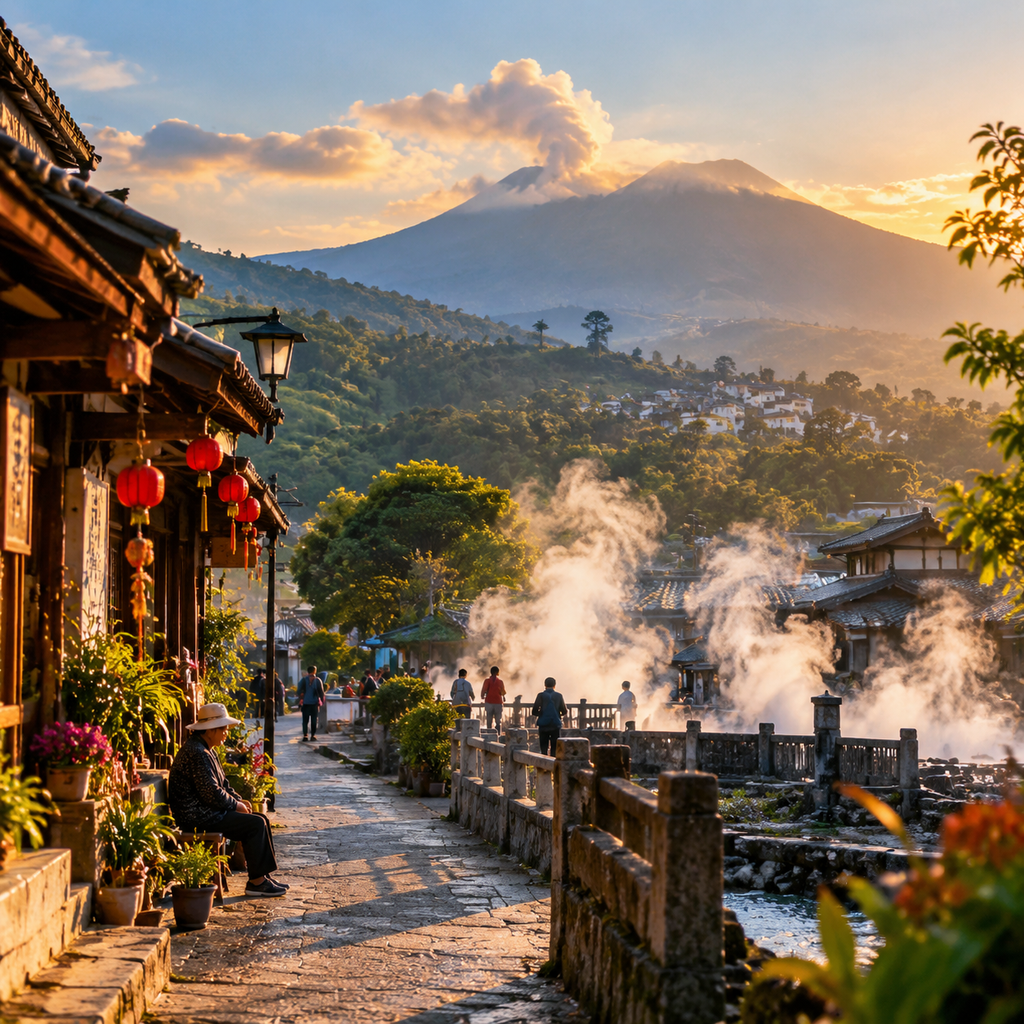
住在县城还是住和顺,取舍并不只是房间风格。县城靠近客运站、药店和更多餐馆,临时改去火山或提前离开时更省心;和顺的优势是清晨巷子安静,晚上关门后仍能听见水声和屋檐滴雨。若行程重点是连续两天跑景区,我会住县城,把节省下来的转车时间换成睡眠;若只安排和顺半天并想拍古镇无人时的石路,住在古镇边缘更合适,但行李要轻,夜间叫车也要提前确认。
Choosing between the county town and Heshun is not merely a matter of room style. The town is closer to the bus station, pharmacies, and a wider range of restaurants, making a last-minute change to the volcanoes or an early departure easier; Heshun offers quiet lanes at dawn and, after closing time, the sound of water and rain from the eaves. If the plan centers on two consecutive days at scenic areas, I would stay in town and trade saved transfer time for sleep. If I wanted only a half-day in Heshun and empty stone lanes at dawn, the edge of the ancient town would be better, provided I traveled light and confirmed a night ride in advance.
从县城去和顺,公交的优点是便宜,也能看到沿线居民的日常;拼车或网约车的优点是不用在雨里等车,尤其适合带相机、老人同行或需要赶景区开门时间的人。可是车并不会替你解决所有问题,古镇内部仍要靠双脚,石板路也不适合拖着硬壳箱穿行。小董建议我把大件寄存在客栈,只带水、薄外套和一支笔。我照做后,才有余力在一条窄巷里停下来听完一段木门后的剁菜声,而不是盯着手机计算下一次换乘。
The bus from the county town to Heshun is inexpensive and exposes you to residents’ daily routines; a shared car or ride-hailing vehicle avoids waiting in rain and is useful for cameras, older companions, or an early scenic-area opening. Yet a car cannot solve everything: Heshun still requires walking, and stone lanes are awkward with a hard suitcase. Dong advised me to leave large items at the guesthouse and carry only water, a light jacket, and a pen. Once I did that, I had enough energy to pause in a narrow lane and hear the chopping behind a wooden door instead of calculating the next transfer on my phone.
腾冲的天气会直接改写体力分配。清晨雾重时,湿度让衣服贴在背上,太阳出来后却可能很快晒热火山坡;热海的蒸汽又会把身体的热感放大。我的做法是把一天拆成“一个需要爬坡的点”和“一个可以慢走的点”,中间安排真正坐下来的时间,而不是把午餐也变成车上的面包。罗师傅看见我喘得厉害,叫我先喝水再讲话;那句提醒让我明白,体力不是行程表上的剩余数字,而是决定你能否认真看景的条件。
Tengchong’s weather directly changes how energy should be allocated. Heavy morning mist can make clothes cling to the back, while sunshine quickly heats a volcanic slope; Rehai’s steam then magnifies the sensation of heat. I divide a day into one stop that requires climbing and one that can be explored slowly, with time to sit down properly rather than turning lunch into bread eaten in a car. When Luo saw me breathing hard, he told me to drink before speaking. His reminder made me understand that energy is not a leftover number on an itinerary; it determines whether you can truly pay attention to a place.
当地人的一句话,往往比网上的路线图更能推动行程。阿琴让我清晨去河边,杨姐让我认识火山石烤豆腐,小何把和顺的路线画在旧地图背面,寸伯让我从门梁而不是门面看古宅,马叔则教我判断热泉旁的安全距离。每个人只改变了我十几分钟,却把路线从一串景点变成一连串有人照看的选择。旅行者当然仍要自己核对车次、门票和天气,但这些人的提醒使我不再把“当地经验”当作抽象标签,而是落实成该在哪个路口下车、哪块石头不要踩。
A local person’s single sentence can move a journey more effectively than an online route map. Qin sent me to the river at dawn; Yang-jie introduced me to tofu grilled on volcanic stone; He drew Heshun’s route on the back of an old map; Cun-bo taught me to read an old house from its beams rather than its façade; and Ma-shu showed me how to keep a safe distance from the springs. Each person changed my schedule by only a few minutes, yet together they turned a string of attractions into choices cared for by real people. Travelers still need to check transport, tickets, and weather, but these reminders made “local experience” concrete: where to get off and which stones not to step on.
如果同行者体力不同,最好不要用“大家都走到最高处”作为公平标准。火山公园可以约定在同一处凉亭会合,一人继续上坡,另一人看讲解牌或在阴影处休息;热海则可把大滚锅和木栈道拆成两个段落,不必让怕热的人一路硬撑。阿琴说她接待过一家三口,父亲想看所有泉眼,孩子只想吃鸡蛋,最后他们用轮流陪伴的办法都没有发脾气。这个细节比“合理安排时间”更有用,因为它给出了一个可执行的分开行动方式。
When companions have different energy levels, fairness should not mean that everyone reaches the highest point. At the volcanic park, agree on a pavilion as a meeting place: one person can continue uphill while another reads the panels or rests in the shade. At Rehai, split the Big Boiling Pot and the wooden walkway into two sections instead of forcing someone sensitive to heat to endure the whole route. Qin said she once hosted a family of three: the father wanted every spring, while the child wanted only eggs. They took turns accompanying one another and avoided an argument. That detail is more useful than “manage your time well” because it offers a workable way to separate and reunite.
夜里回到县城后,我没有再打开景点软件确认漏掉了什么。阿琴把前台的旧搪瓷杯洗干净,给我倒了一杯温水;院墙外有人收伞,伞骨碰到铁门,发出一串短促的金属声。和顺的古宅、火山口的风、热海的硫磺气味在脑中交替出现,却没有哪一处需要被宣布为“冠军”。我把当天捡到的两粒普通黑色石屑留在口袋外侧,按规定没有带走,只在笔记里写下它们落回地面时的轻响。
Back in the county town at night, I did not reopen a scenic-area app to check what I had missed. Qin washed an old enamel cup at the front desk and poured me warm water. Outside the courtyard wall, someone folded an umbrella; its ribs struck the iron gate in a short metallic sequence. Heshun’s old houses, the wind at the crater, and Rehai’s sulfur smell moved through my memory, but none needed to be declared a champion. I kept two ordinary black grains of volcanic material at the outside of my pocket, not taking them away as required, and wrote down the soft sound they made when returned to the ground.
最后的收束应该具体到下一步,而不是停在一句空泛的感慨里。我把闹钟设为五点二十,给相机电池贴上“已充满”的纸条,把湿外套挂在窗边,确认老周接车的位置不是客运站正门而是客栈巷口。阿琴把一袋温好的饵丝放在桌上,叮嘱我上车前再吃几口;楼下的街灯照着刚拖过的地面,水痕像一条尚未干透的路。五点五十分车灯转进巷子时,我拎起背包,没有回头寻找遗漏的景点,只回头看了一眼屋檐下那盏还亮着的灯。
A proper ending should lead to a concrete next step, not stop at a vague feeling. I set the alarm for 5:20, marked the camera battery with a note saying “fully charged,” hung my damp jacket by the window, and confirmed that Zhou would pick me up at the guesthouse lane rather than the front entrance of the bus station. Qin placed a bag of warmed er si noodles on the table and told me to eat a few bites before boarding. Streetlights shone on the freshly washed pavement below, where water marks looked like a road not yet dry. When headlights turned into the lane at 5:50, I lifted my backpack. I did not turn back to search for missed attractions; I looked once at the lamp still burning beneath the eaves.
火山地质最容易被“看起来像一座山”这件事遮住。真正站在腾冲的火山地貌旁,脚下的黑色碎石并不整齐,有的表面发亮,像刚被雨水擦过;有的孔洞密集,拿在手里轻得出乎意料。讲解员老杨没有让我们急着拍照,而是先蹲下来拨开一层细土,指出石块里留下的气泡通道。他说,火山口不是一只已经冷却的碗,地表的裂隙、坡面的松散物和雨水冲出的沟纹,都在记录过去发生过什么。我沿着木栈道走时,开始注意脚边颜色的变化:深黑处吸热更快,灰褐处夹着风化颗粒,几株小草从石缝里探出来。这个观察比“这里很壮观”更能留在脑中,因为它把远古的喷发变成了眼前可以辨认的纹理。
Volcanic geology is easy to miss when the landscape looks simply like a mountain. Beside Tengchong’s volcanic landforms, the black fragments underfoot are far from uniform: some gleam as if polished by rain, while others are full of holes and surprisingly light in the hand. Yang, the guide, did not rush us into taking photographs. He crouched first, brushed aside the thin soil, and pointed out the channels left by trapped gas bubbles. A volcanic crater is not merely a cooled bowl, he explained; cracks, loose slope material, and channels cut by rain all preserve clues about what happened long ago. As I followed the boardwalk, I began noticing shifts in color: deep black surfaces absorbed heat quickly, gray-brown patches held weathered grains, and small grasses emerged from cracks. That stayed with me longer than saying the place was “spectacular,” because an ancient eruption had become a pattern I could actually read.
热海的地热不是只靠一阵白雾来证明存在。靠近泉眼时,空气先变湿,鼻腔里出现淡淡的硫磺味,鞋底下的木板也被蒸汽熏得发暖。工作人员把一只小木桶放到水汽边缘,提醒我们不要越过黄色警戒线,也不要为了取景把手伸向翻滚的水面。大滚锅旁边的水声并不持续同一个节奏,有时像厚重的沸腾,有时突然细碎起来;石壁上的水珠顺着矿物沉积留下浅色的线。同行的朋友原本以为看十分钟就够了,后来却盯着泉水颜色变化了很久,因为阳光穿过蒸汽后,蓝白、乳黄和灰绿会在同一处交替出现。热海值得慢看,但慢看不等于靠近危险,而是站在安全距离外观察温度、声音和水流如何共同构成现场。
Rehai’s geothermal activity is not proven only by a plume of white vapor. Near the springs, the air grows damp first, then a faint sulfur smell reaches the nose, while the wooden boards underfoot feel warmed by the steam. A staff member placed a small wooden bucket at the edge of the vapor and reminded us not to cross the yellow line or reach toward the boiling water for a photograph. The Big Boiling Pot did not make one unchanging sound: at times it rumbled heavily, then broke into a fine, sudden fizz. Droplets on the rock walls traced pale lines through mineral deposits. A friend who had expected ten minutes to be enough ended up watching the water for much longer, because sunlight passing through the steam made blue-white, milky yellow, and gray-green tones alternate in the same spot. Rehai rewards a slower look, but slowing down does not mean approaching danger; it means observing from a safe distance how heat, sound, and moving water create the scene together.
和顺古镇的生活感,不在于把每一扇老门都解释成历史符号,而在于看见门里的人怎样安排一天。清晨的巷子还带着夜雨的潮气,卖饵丝的阿姨把案板擦了两遍,才把切好的米线推到碗边;隔壁院子里有人收床单,竹竿碰到墙头,发出轻轻的咔嗒声。午后我在一处小院门口停下来,里面的老人没有邀请我进去,只把藤椅往旁边挪了挪,让送菜的三轮车通过。那一刻我明白,古镇不是供游客连续穿过的布景,它首先是居民的通道、厨房、晒衣处和邻里见面的位置。拍照时我把镜头放低,等人先走完自己的路;这并没有减少画面,反而让我看见石板路上留下的水印、门槛边磨亮的木头和一只趴在火塘旁打盹的黄狗。
The lived character of Heshun Ancient Town is not found in turning every old doorway into a historical symbol. It appears in the way people organize an ordinary day behind those doors. Early in the morning, the lanes still held the dampness of night rain. A woman selling er si noodles wiped her chopping board twice before sliding the cut noodles beside the bowls; next door, someone gathered bed sheets, and a bamboo pole clicked softly against the wall. In the afternoon I paused outside a small courtyard. An elderly resident did not invite me in; he simply moved a rattan chair aside so a vegetable tricycle could pass. I understood then that the town was not a set built for visitors to cross continuously. It was first a residents’ passage, kitchen, laundry space, and meeting place. I lowered my camera and waited for people to finish their own routes. The frame did not become emptier; it gained the water marks on the stone, the polished wood at a threshold, and a dog dozing beside the fire pit.
从县城出发去几个点,最费心的往往不是距离,而是回程的确定性。去火山地质公园时,包车能把早上的时间交还给观察,却意味着要提前说清楚回县城的等待费用和上车位置;坐公共交通更省心,但班次间隔会让人在景区门口多留一段时间。去热海则要把体力和返程放在同一张纸上算:上午先走火山、下午再进热海,身体已经被坡路和湿热消耗,回城时就不该再安排一顿需要排长队的晚餐。老周开车时没有夸自己的路线,只问我第二天是否要赶早班车。他把车停在客栈巷口,绕开县城一段正在施工的路。我这才发现,交通取舍不是“哪种方式最好”,而是把景点开放时段、天气、行李和最后一班车放在一起,看哪一个环节最不能出错。
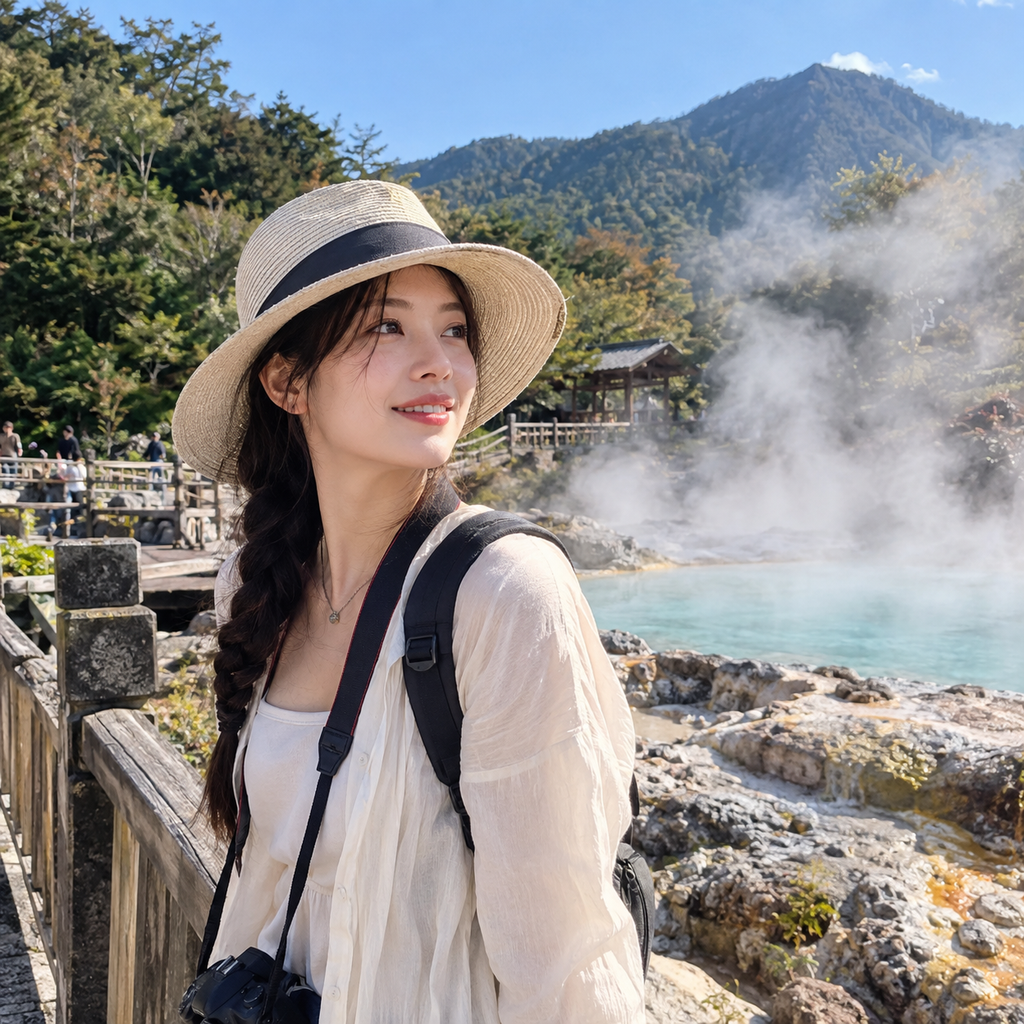
Traveling from the county town to several sites, the hardest part is often not distance but the certainty of getting back. A hired car to the volcanic park gives the morning back for observation, but only if the waiting fee and pickup point are agreed in advance. Public transport may feel simpler and cheaper, yet a long interval between services can leave a traveler standing outside the scenic area longer than expected. Rehai requires energy and the return trip to be considered on the same sheet of paper. If the volcano comes first and the hot springs later, the body has already paid for slopes and humid heat; it is unwise to add a long dinner queue after returning to town. Zhou, the driver, did not praise his own route. He asked whether I needed to catch an early bus the next day and stopped in the guesthouse lane, avoiding a section under construction. That was when I understood that transport is not about finding one universally best option. It is about placing opening hours, weather, luggage, and the last departure together and identifying the link that cannot fail.
腾冲的天气会把同一条路改写成两种难度。太阳出来时,火山坡面的黑石很快发烫,帽檐下面却还留着高地的凉意;云层压下来后,风一过,薄外套立刻变得必要。热海的湿热又是另一种负担,刚开始只是额头出汗,走过一段木栈道后,小腿会出现迟钝的酸。那天午后雨点来得突然,同行的女孩把相机塞进防水袋,原本还在说要走完全程,转眼便扶着栏杆慢下来。阿琴没有催她,只递来一颗话梅,说先坐五分钟,看看雨会不会把雾压低。雨没有马上停,我们便删掉了最后一个观景点,改去县城吃饭。少看一处并不等于行程失败,真正要紧的是让衣服、鞋子和呼吸恢复到可以安全移动的状态;天气变化时,体力不是计划里的一个数字,而是现场不断变化的条件。
Tengchong’s weather can rewrite the difficulty of the same path. When the sun appears, the dark stones on a volcanic slope heat quickly, even while cool highland air remains under the brim of a hat. When clouds settle, one gust can make a light jacket essential. Rehai adds a different kind of strain: first there is only sweat on the forehead, then a stretch of boardwalk leaves the calves dull and sore. One afternoon, rain arrived abruptly. A young woman put her camera into a waterproof bag; moments earlier she had insisted on completing the route, but soon she was moving slowly with one hand on the railing. Qin did not urge her on. She offered a preserved plum and suggested sitting for five minutes to see whether the rain would lower the mist. It did not stop quickly, so we dropped the final viewpoint and went back to the county town for dinner. Seeing one place less did not make the trip a failure. What mattered was letting clothes, shoes, and breathing return to a condition in which everyone could move safely. In changing weather, energy is not a number on a plan; it is a condition that keeps changing in front of you.
真正推动这趟路的人,常常只占用几分钟,却改变了判断的方向。火山公园入口的保洁师傅看见我把石头翻来翻去,提醒我不要从保护区边缘捡样本;他说如果想观察孔洞,现场看、记下位置就够了。热海的检票员发现我把厚外套系在腰间,指了指前面的蒸汽区,让我先把衣服收进包里,免得走热后背部闷住。和顺卖茶的年轻人听说我想找安静的巷子,没有给一张“必去清单”,只说傍晚去东边的水沟旁坐一会儿,那里能听见居民收摊。每个人提供的都不是宏大知识,而是把我从一个不合适的动作边上轻轻推开。旅行因此不再是我对着地图逐格打勾,而是不断接住别人递来的小判断,再决定自己下一步怎么走。
The people who truly moved this journey forward often took only a few minutes, yet changed the direction of my judgment. At the volcanic park entrance, a cleaner saw me turning stones over and reminded me not to collect samples from the edge of the protected area. If I wanted to study the holes, he said, observing them there and noting their location was enough. At Rehai, a ticket checker noticed my heavy jacket tied around my waist. She pointed toward the steaming area and suggested putting it in my bag before the heat made my back uncomfortable. A young tea seller in Heshun heard that I was looking for a quiet lane. Instead of handing me a checklist, he suggested sitting beside the eastern water channel near dusk, where I could hear residents closing their stalls. None of these people offered grand theories. Each gently moved me away from an unsuitable action. The trip stopped being a matter of ticking boxes on a map and became a series of small judgments received from others, followed by my own decision about where to place the next step.
夜间的县城不需要再加一个景点来证明一天充实。吃完一碗稀豆粉,我沿着不宽的街道走回住处,药店卷帘门已经落下一半,里面的灯还照着柜台上一排白色药盒;水果摊的老板把剩下的橙子往里收,塑料筐在水泥地上拖出短短的摩擦声。白天那些关于地貌、温泉和古镇的词,到了晚上都变成身体能感到的东西:鞋袜有些潮,肩膀被相机带勒出一道红印,鼻尖还残留着热海的气味。阿琴在门口问我明早要不要把早餐改成清淡一点,我说想再吃一口饵丝,她便笑着把锅盖掀开。那一小团热气比任何总结都更准确:腾冲不是把景观堆在一天里,而是让火山的冷硬、地热的湿暖、古镇的慢生活和县城的烟火,在同一个人的步伐里彼此校正。
A county town does not need one more attraction at night to prove that the day was full. After a bowl of xi dou fen, I walked back along a narrow street. A pharmacy’s rolling shutter was halfway down, yet its light still fell across a row of white medicine boxes. The fruit seller pulled the remaining oranges inward, and plastic crates made a brief scraping sound on the concrete. The daytime words—landform, hot spring, ancient town—had become sensations in my body: damp socks, a red mark from the camera strap, and a trace of Rehai’s smell at the tip of my nose. At the doorway, Qin asked whether I wanted a lighter breakfast in the morning. I said I still wanted a few bites of er si noodles, and she smiled as she lifted the pot lid. That small cloud of steam said more than a summary could. Tengchong does not pile landscapes into a single day; it lets volcanic hardness, geothermal warmth, the slower life of Heshun, and the everyday glow of the county town correct one another through the rhythm of a traveler’s steps.
第二天离开时,车窗外的山影被晨雾削得很薄。老周把音量调低,经过一段稻田时指给我看远处的水渠,说雨季这里的颜色会更深;我没有拿相机,只把这句话记在手机备忘录里。口袋里没有带走火山石,鞋底却还夹着一点黑色细尘,到了车站门口才被我用纸巾擦掉。那一刻,腾冲留下来的不是一张景点合影,也不是“看完了什么”的清单,而是几种更具体的判断:面对火山要看纹理,面对热海要守距离,进入和顺要给居民让路,安排交通要给回程留余地,遇到天气和疲惫则允许自己改变计划。车开出县城后,阿琴塞给我的温饵丝在纸袋里轻轻晃动,我忽然觉得这座边地城市最难忘的部分,正是它没有催我把一切立刻说完。
When I left the next morning, mountain outlines beyond the window had been thinned by mist. Zhou lowered the volume and pointed toward a canal beside the rice fields, saying its color would deepen during the rainy season. I did not reach for my camera; I saved the sentence in my phone instead. I had taken no volcanic stone, yet fine black dust still clung to the soles of my shoes and had to be wiped away with a tissue at the station entrance. Tengchong stayed with me not as a group photograph or a list of completed attractions, but as a set of practical judgments: read the textures around a volcano, keep distance from the hot springs, make room for residents in Heshun, leave room for the return trip, and allow weather or fatigue to change the plan. After the car left the county town, the warm er si noodles Qin had packed swayed gently in the paper bag. I suddenly felt that the hardest part of this borderland city to forget was its refusal to hurry me into explaining everything at once.
若把火山、热海和和顺分成两天,最稳妥的安排不是平均分配小时数,而是按身体的消耗来排。第一天可以在县城吃过早饭后去和顺,把巷道、祠堂和饵丝店放在同一段步行里;下午回县城休息,再决定第二天去火山还是热海。体力充足、天空清朗时先去火山,坡路和风会消耗腿力;前一晚睡得不好或细雨不断时,热海的短线更容易调整。小董说,真正懂路线的人不是每个地方都到,而是知道什么时候该把车停在回程的方向。
If volcanoes, Rehai, and Heshun are divided across two days, the safest plan is not to distribute hours evenly but to arrange them according to physical effort. On the first day, eat breakfast in town and go to Heshun, keeping lanes, ancestral halls, and an er si shop within one walking stretch; return to town for a break in the afternoon, then decide whether the next day should be the volcanoes or Rehai. With good energy and clear skies, start with the volcanoes, where slopes and wind tire the legs; after poor sleep or persistent drizzle, Rehai’s shorter paths are easier to adjust. Dong said that someone who truly understands a route does not reach every place, but knows when to park the car facing the way home.
我最后把这趟腾冲行程写成了一张很短的纸卡:火山看地形,不追两个山口;热海看蒸汽,先确认脚下安全;和顺看生活,别只在门楼前停留;县城留给吃饭、补水和改变计划。纸卡背面还写着几个名字,阿琴、杨姐、老周、小何、寸伯、罗师傅、马叔和小董。它们不是景点清单,却比清单更像一条可以走回来的路。夜班车驶出县城时,车窗外的早点摊仍在冒白汽,我闻到纸袋里的饵丝香,终于把腾冲从地图上的地点变成了有人声、有湿气、也允许旅人慢下来的地方。
In the end I reduced my Tengchong plan to a small card: read the terrain at the volcanoes without chasing both craters; watch steam at Rehai while keeping the ground safe; look for daily life in Heshun instead of stopping at the gate tower; and reserve the county town for meals, water, and changes of plan. On the back I wrote several names: Qin, Yang-jie, Zhou, He, Cun-bo, Luo, Ma-shu, and Dong. They were not an attraction list, but they felt more like a path I could walk back to. When the early bus left the county town, breakfast stalls still sent white steam into the air. The scent of er si in my paper bag turned Tengchong from a point on a map into a place with voices, damp air, and permission for travelers to slow down.
离开热海以后,夜里的县城比景区安静许多,却并不空。我们从热海出口上车时,鞋底还带着木栈道的潮气,车窗很快被山里的冷雾蒙上一层白。车一进入县城,路边药店、烧烤摊和水果铺的灯便接连亮起来,穿短袖的人站在门口扇风,刚从山上下来的人却把外套拉链一直拉到下巴。我在客栈门口下车,先把相机放回房间,再绕到街角买一杯热豆浆。热海的蒸汽留在头发和衣领上,夜风却从袖口钻进去,十几分钟的车程像把身体从湿热推到微凉。老板娘摸了摸我冰凉的手腕,叫我别急着洗澡,先坐在前台把水喝完。
After leaving Rehai, the county town was much quieter than the scenic area, but it was not empty. When we got into the car, dampness from the wooden walkway still clung to my shoe soles, and mountain mist quickly whitened the windows. As soon as we entered town, the lights of pharmacies, barbecue stalls, and fruit shops appeared one after another. People in short sleeves stood outside fanning themselves, while visitors coming down from the hills zipped their jackets up to the chin. I left my camera in the room, walked to the corner, and bought hot soy milk. Steam from Rehai stayed in my hair and collar, yet cool night air slipped through my sleeves; a short drive had moved my body from wet heat to mild chill. The guesthouse owner touched my cold wrist and told me to sit at the desk and finish some water before taking a shower.
我把这一天重新摊在桌面上复盘,没有只写“去了和顺、火山、热海”这种结果,而是按体感和决定记下来:早上走和顺时,雾气让石板路滑,慢走反而看见了门槛和厨房;下午到火山公园,风比预想更硬,帽檐被吹得不断拍额头,所以我放弃继续追远处的山口;傍晚在热海,我原本想多泡几个点,却在闻到硫磺味变重、肩膀开始发沉后提前折返。复盘到这里,我在纸上画了三个小箭头:哪里消耗体力,哪里需要保暖,哪里应该把“看完”改成“看够”。这几个动作比打勾景点更能帮助我判断下一次怎么走。
I reviewed the day on the desk without reducing it to “visited Heshun, the volcanoes, and Rehai.” I recorded it through bodily feeling and decisions. In Heshun, mist made the stone lanes slippery, and walking slowly let me notice thresholds and kitchens. At the volcanic park, the wind was harder than expected and kept striking my forehead with the hat brim, so I stopped chasing a distant crater. At Rehai, I had planned to see more pools, but turned back after the sulfur smell grew stronger and my shoulders began to feel heavy. I drew three small arrows on the paper: where energy was spent, where warmth was needed, and where “see everything” should become “see enough.” Those actions helped me judge a future route better than ticking attractions off a list.
第二天的路线因此没有在睡前草率决定。我把窗帘拉开一点,看见县城上空没有明显的星光,远处山脊被低云压住,便先把“再去高处看远景”列为备选,而不是硬排成主线。若清晨天气放晴,我会把火山公园放在前面,带上薄羽绒、帽子和足够的水,走到一处视野开阔的观景台就收,不再把两个山口都塞进上午;若雨丝持续,就留在县城吃早饭,再沿叠水河慢慢走,下午去一个交通更容易回转的室内小馆。出门前我还把鞋垫取出来烘干,把备用袜子塞进侧袋,并给司机发了准确的上车巷口。路线判断不是预测天气有多准,而是提前给变化留出位置。
That was why I did not make a rushed decision about the second day before sleep. I pulled the curtain aside and saw few stars above the county town; low clouds pressed down on the distant ridge. I listed a high viewpoint as an option rather than forcing it into the main route. If the morning cleared, I would start at the volcanic park with a light down jacket, a hat, and enough water, stop at one open viewpoint, and no longer squeeze both craters into the morning. If drizzle continued, I would eat breakfast in town, walk slowly along Dieshui River, and spend the afternoon at an indoor place with an easier return route. Before leaving, I dried the insoles, put spare socks in the side pocket, and sent the driver the exact lane for pickup. Route planning is not about predicting weather perfectly; it is about leaving room for change.
车离开前我还特意把热海和火山的门票、雨具和水瓶分开收好,避免临时换计划时手忙脚乱。窗外的和顺方向被晨雾遮住,只剩屋脊一层层浮在灰白天光里;县城的路面却已经响起送货车的轮胎声。这个差别让我记住,腾冲不是一张平整的景区地图,而是由坡地、天气、车流和人的作息共同组成的地方。愿意根据这些变化调整脚步,才不会把一次真实的边地旅行压缩成几个匆忙的名称。
Before the vehicle left, I carefully separated the Rehai and volcano tickets, rain gear, and water bottle so that a last-minute change would not become a scramble. Fog hid the direction of Heshun, leaving only rooflines floating in gray-white light, while delivery vehicles were already sounding along the county streets. The contrast reminded me that Tengchong is not a flat map of attractions, but a place shaped by slopes, weather, traffic, and people’s routines. Adjusting one’s pace to those changes is what keeps a borderland journey real instead of compressing it into a few hurried names.
- 我在重庆学会先看楼层关系,再看地图距离 | In Chongqing I Learned to Read Vertical Space Before Map Distance
- 网络变慢那一分钟,让我知道截图有多重要 | One Slow Network Minute Taught Me the Value of Screenshots
- 江南水乡7日慢行:苏州杭州乌镇 | 7-Day Jiangnan Water Towns: Suzhou, Hangzhou & Wuzhen
- 去济南之前,我先把会让人慌张的那几样信息收进同一屏 | Before Jinan, I Gathered the Few Panic-Making Essentials onto One Screen
- 在中国点外卖全流程:美团饿了么实操 | Ordering Food Delivery in China: Meituan & Ele.me Guide
- 我原以为古装秀会很“复古”,直到看见现代妆发把整场秀台点亮 | I Expected an Ancient-Costume Show to Feel Purely Historical Until Modern Hair and Makeup Lit Up the Entire Runway
- 在广州早茶桌上学会点心 | Learning Dim Sum at a Guangzhou Morning Tea Table
- 糖画摊前的几分钟,让我第一次觉得“甜”也可以被画出来 | At a Sugar Painting Stall, I Realized for the First Time That Sweetness Can Be Drawn
- 一顿家常饭把我教会了中国式礼貌:什么时候该夹菜,什么时候别急着说不 | One Home-Style Meal Taught Me Chinese Politeness: When to Accept Food and When Not to Refuse Too Fast
- 支付失败怎么办:来华游客应急指南 | Payment Failed? A Visitor's Emergency Guide
Comments (0)