
在平遥城墙内看一座县城醒来 | Watching Pingyao Wake Inside Its City Walls
在平遥城墙内看一座县城醒来 | Watching Pingyao Wake Inside Its City Walls
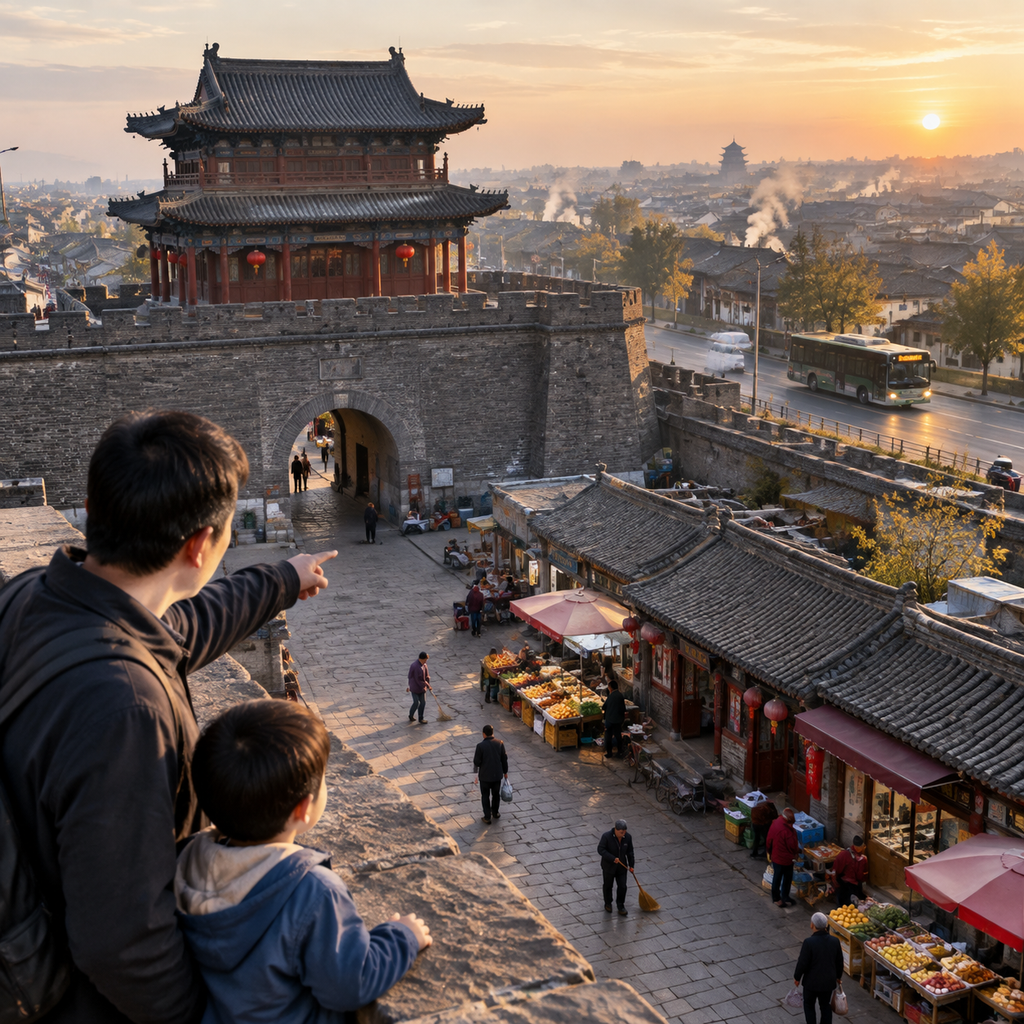
清晨六点多,我从南门附近的客栈出来,天色像一张尚未晾干的灰纸。城墙上的砖吸着夜里的凉气,鞋底踩过时发出轻而空的回声。远处屋脊被第一层淡金色慢慢描亮,街面却还安静。我原以为平遥最动人的时刻一定在灯笼全部点亮以后,古城应当靠夜色和游客才有精神。站在高处往下看,那判断很快显得草率:院门后已有扫帚擦地,烟囱边也升起了细细的白烟。
A little after six in the morning, I left my guesthouse near the South Gate beneath a sky that looked like a sheet of gray paper not yet dry. The wall bricks still held the night’s chill, and my footsteps made a soft, hollow echo. A pale gold line slowly touched the distant rooftops while the streets remained quiet. I had assumed Pingyao was at its best after the lanterns came on, as if the old town needed darkness and visitors to feel alive. From the wall, that judgment quickly seemed careless: brooms were already moving behind courtyard gates, and thin white smoke had begun to rise beside the chimneys.
一位穿深蓝外套的大叔推着自行车从墙根经过,后座绑着两筐青菜。他停下来重新勒紧绳子,抬头见我举着相机,便朝东边指了指,说太阳会从那排屋顶后出来。几分钟后,光果然越过瓦脊,先落在城楼,再滑进一条狭窄巷子。大叔没有等这场“日出表演”,只蹬上车往早市去。他的背影让我意识到,这里醒来的方式并不戏剧化,而是有人赶着把当天的新鲜菜送上桌。
A man in a dark blue jacket passed beneath the wall, pushing a bicycle with two baskets of vegetables tied to the rear rack. He stopped to tighten the rope, saw my camera, and pointed east, saying the sun would come up behind that row of roofs. A few minutes later, the light crossed the tiles, touched the gate tower first, and then slipped into a narrow lane. The man did not wait for the “sunrise show.” He mounted his bicycle and headed toward the morning market. His retreating figure made me realize that this town wakes without theatrics—someone simply has fresh vegetables to deliver for the day’s meals.
下城墙后,我转进西大街。昨夜挤满拍照人群的店铺还闭着门,灯笼褪成暗红,石板上留着冲洗过的水痕。一家早餐铺最先掀开棉门帘,老板娘端出一盆热水泼向门前,白汽贴着地面散开。她把小凳一只只摆正,又用抹布擦掉桌角的油光。锅里的小米粥咕嘟作响,面饼碰到铁鏊时冒出焦香。古城的早晨并不是从锣鼓开始,而是从一块抹布、一勺粥和一扇被推开的木门开始。
After coming down from the wall, I turned onto West Street. Shops that had been crowded with photographers the night before were still shuttered; the lanterns had faded to a muted red, and washed streaks of water marked the stone paving. A breakfast-shop owner lifted the padded curtain, carried out a basin, and threw hot water across the threshold, sending steam close along the ground. She lined up the stools and wiped the shine from the corners of the tables. Millet porridge bubbled in a pot, and flatbread released a toasted aroma when it met the iron griddle. Morning in the old town did not begin with drums or gongs, but with a cloth, a ladle of porridge, and a wooden door pushed open.
我坐下要了一碗粥,以为老板娘会急着招呼难得的早客。她却先把装好饼的纸袋递给门外等候的环卫工,又转身问一名背书包的男孩是不是还要加鸡蛋。男孩点头,把硬币放在桌上,接过早餐便小跑进巷子。轮到我时,她只问“甜的还是原味”,手上没有停。那种熟练的次序纠正了我的第二个误判:清晨的古城并非专为早起游客保留,它首先属于要上班、上学和开门做生意的人。
I ordered a bowl of porridge and expected the owner to fuss over an unusually early visitor. Instead, she first handed a paper bag of flatbread to a sanitation worker waiting outside, then turned to ask a schoolboy with a backpack whether he still wanted an egg. He nodded, placed his coins on the table, took his breakfast, and jogged into the lane. When my turn came, she merely asked, “Sweet or plain?” without pausing her hands. That practiced order corrected my second mistake: the old town at dawn is not reserved for early-rising travelers. It belongs first to people going to work, going to school, and opening their businesses.
再往前,日昇昌附近的街巷逐渐有了声音。木门闩被抽出的闷响从一侧传到另一侧,店员搬出牌匾,用袖口抹去边沿的灰;一位老人坐在门槛上,把成叠纸币般整齐的票据夹进账本。票号旧址尚未开门,“汇通天下”的故事却仿佛从这些手势里接上了今天。过去的银两、信局和账房并没有真的重现,真正延续下来的,是人们对开门时间、货物位置和一笔小账都不含糊的认真。
Farther on, the lanes near Rishengchang gradually gathered sound. The dull knock of wooden door bars being pulled free traveled from one side of the street to the other. A shop assistant carried out a signboard and wiped dust from its edge with his sleeve; an elderly man sat on a threshold, slipping receipts—stacked as neatly as banknotes—into a ledger. The former draft bank had not yet opened, yet its old story of remitting money across the country seemed to join the present through these gestures. Silver ingots, courier firms, and historic counting rooms had not returned. What endured was the care people gave to opening time, the position of their goods, and even the smallest account.
临近八点,街上的节奏忽然快了一点。送水车贴着墙慢行,司机探头避开晾在门边的被单;两名年轻店员合力抬出沉重的木柜,一个喊“慢些”,另一个用脚把门槛旁的纸箱拨开。刚才那位记账老人合上本子,顺手替他们扶住柜角。没有人特意停下来展示“古城生活”,他们只是彼此让出半步,让一条窄街同时容得下生意、家务与来往的人。我也收起相机,免得站在路中央成为最碍事的那一个。
Close to eight, the street’s rhythm suddenly quickened. A water-delivery vehicle crept along the wall, its driver leaning out to avoid a quilt hanging beside a doorway. Two young shop assistants carried out a heavy wooden cabinet together; one called, “Slowly,” while the other nudged a cardboard box away from the threshold with his foot. The elderly bookkeeper closed his ledger and steadied one corner for them. No one paused to perform “life in an ancient town.” They simply yielded half a step to one another, allowing business, housework, and passing feet to share the narrow street. I put away my camera too, so I would not become the person blocking everyone’s way.
回到南大街时,阳光已经照亮招牌上的金字,第一批旅行团也从街口聚拢。导游举起小旗,店家开始招呼客人,平遥重新变成许多人熟悉的热闹模样。但我记住的不是这次开场,而是更早那段不起眼的时间:青菜筐在车后轻晃,男孩咬着饼跑远,热水在石板上留下一小片深色。城墙围住的当然是一座保存完好的古城,也是一座每天必须准时醒来、把普通日子过下去的县城。
By the time I returned to South Street, sunlight had lit the gold lettering on the shop signs, and the first tour groups were gathering at the intersection. Guides raised their flags, shopkeepers began greeting customers, and Pingyao resumed the lively appearance most visitors know. Yet what stayed with me was not this public opening, but the quieter hour before it: vegetable baskets swaying behind a bicycle, a boy running off while biting into his flatbread, hot water leaving a dark patch on the stone. The walls enclose a remarkably preserved old town, certainly, but also a county town that must wake on time each day and carry on with ordinary life.
第二天我换了个走法,没有一早登墙,而是沿着城墙内侧慢慢绕。墙体挡住了斜风,砖缝里长着几簇颜色发白的草,几户人家把白菜放在背阴处,窗台上晾着洗净的红枣。隔着不远就是供游客登临的高墙,墙下却有人蹲着修自行车链条,扳手碰到车架,叮的一声格外清楚。我此前把城墙理解成观看平遥的最佳看台,走到墙根才明白,它还是街坊辨方向、躲风和安排日常杂物的一条边界。
The next day I changed my route. Instead of climbing the wall at dawn, I walked slowly along its inner foot. The masonry blocked the slanting wind; pale tufts of grass grew from the joints, several households had stored cabbages in the shade, and washed red dates were drying on a windowsill. The elevated wall used by visitors was only a short distance away, yet below it someone crouched to repair a bicycle chain. His wrench struck the frame with a remarkably clear ring. I had treated the wall as the finest platform from which to view Pingyao. At ground level, I understood that it also serves the neighborhood as a landmark, a windbreak, and an edge around which ordinary chores are arranged.
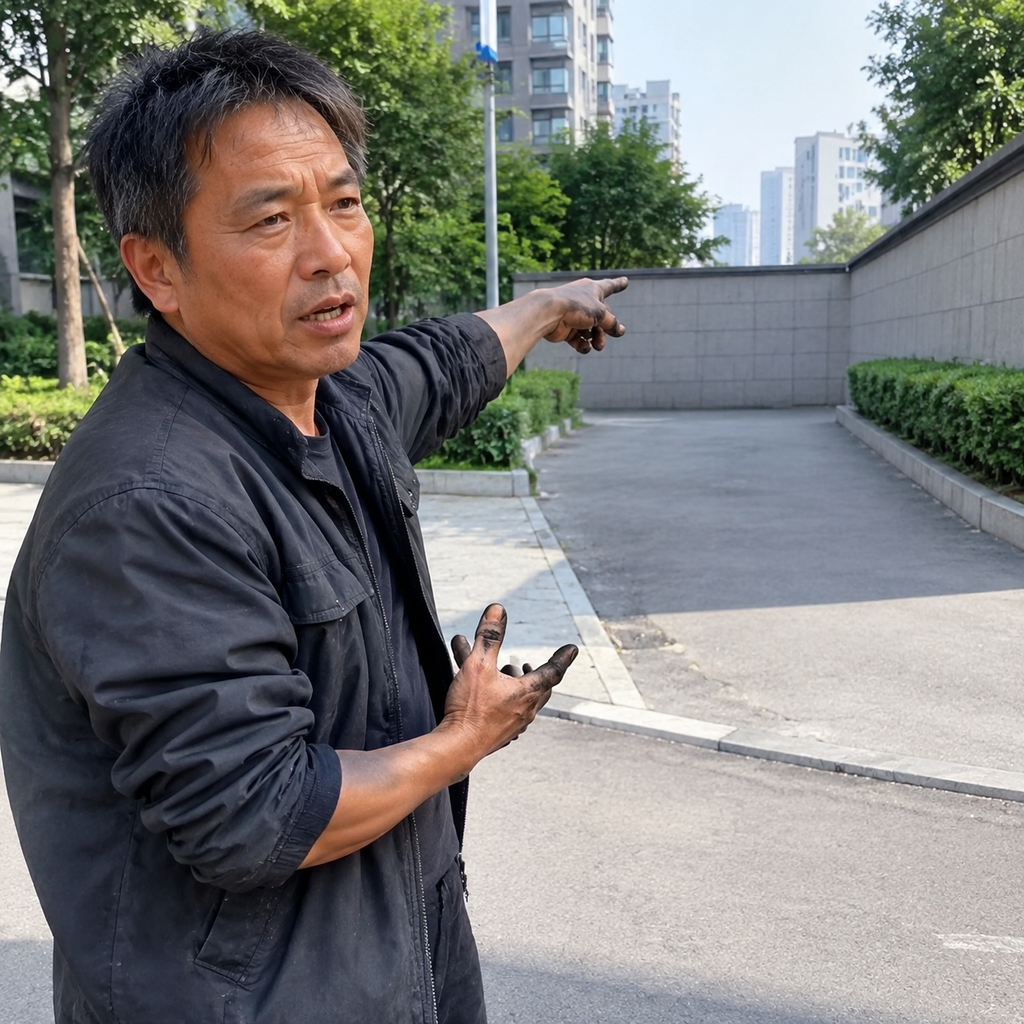
我在一处拐角问修车师傅,顺着墙走能不能直接到北门。他抬起沾黑油的手,先指前方,又画了一个往回兜的小弯,说有段路看着通,其实会被院墙截住。我听懂了“往左”,却没听懂后半句,十分钟后果然走进死胡同。一个正在倒煤灰的阿姨看我又看地图,笑着说:“刚才是不是没听完?”她领我退回岔口,还提醒蓝色门楼之后再转。那次绕路修正的不只是方向:在古城里,地图上的直线常被院落、门洞和居民真正使用的路径重新定义。
At a corner I asked the bicycle repairman whether following the wall would take me straight to the North Gate. Raising a hand stained with black grease, he pointed ahead and then traced a small loop back, explaining that one section looked open but ended at a courtyard wall. I understood “turn left” and missed the rest. Ten minutes later I was predictably standing in a dead end. A woman emptying coal ash glanced from me to my map and laughed: “Did you stop listening halfway?” She led me back to the fork and told me to turn only after the blue gatehouse. The detour corrected more than my direction. In the old town, straight lines on a map are repeatedly reshaped by courtyards, gateways, and the paths residents actually use.
回到票号集中的街段时,铺门已经全开。我本来只盯着高悬的匾额,以为所谓票号街巷的价值主要在建筑立面和金融史。可在两条支巷交会处,一名送货人正逐张核对单据,店主报出数量,旁边卖醋的姑娘把纸箱侧过来,让他看清标签。双方没有长篇交谈,数字、姓名和货物去向却确认了两遍。这种谨慎当然不能被草率地说成旧票号习惯的直接遗存,但它让我看见,商业街的可信感从来不只靠一块老招牌,也靠今天每次交接都不嫌麻烦。
When I returned to the streets clustered around the former draft banks, every shopfront was open. I had been watching only the lofty plaques, assuming the value of these lanes lay mainly in their façades and financial history. At the meeting of two side alleys, however, a delivery worker was checking his slips one by one. A shopkeeper called out the quantities, while a young woman selling vinegar turned a carton so he could read its label. Their exchange was brief, but the number, name, and destination of each item were confirmed twice. It would be careless to call this a direct survival of draft-bank practice. Still, it showed me that trust in a commercial street rests not only on an old signboard, but also on present-day handovers in which no one resents checking again.
早市快散时,我又见到昨天卖菜的大叔。他的两个筐已经空了,车把上多挂了一袋馒头。他没有认出我,正帮旁边摊主把没卖完的萝卜装进编织袋。卖豆腐的女人则拿一块湿布盖住木板,边收秤边和熟客商量明天少留两块。游客常把早市想成热闹、便宜、适合拍照的地方,我也曾这样想;可临近散场,真正显眼的是他们如何判断余货、照看邻摊、把损耗压到最小。人物不是镜头里的地方风情,而是做着一连串具体决定的人。
As the morning market was winding down, I saw the vegetable seller from the previous day again. Both baskets were empty, and a bag of steamed buns now hung from his handlebars. He did not recognize me; he was helping the neighboring vendor pack unsold radishes into a woven sack. The tofu seller covered her wooden board with a damp cloth and, while putting away the scale, agreed with a regular customer to reserve two fewer pieces the next morning. Travelers often imagine a morning market as lively, cheap, and photogenic—I had done the same. Near closing time, what stood out was how people judged their leftovers, watched one another’s stalls, and limited waste. They were not pieces of local color framed by my camera, but people making a chain of practical decisions.
靠近街口还有个卖花椒和干枣的小摊。摊主是一位戴绒帽的老太太,面前没有仿古布幌,只有几只封口夹颜色各异的透明袋。一个骑电动车来买花椒的男人嫌香气不够,她没有急着争辩,而是捏开另一袋让他闻,又把两种颗粒倒在掌心比较。男人最后只买了半斤,她仍把秤盘上的碎梗一点点挑出去。我原先以为旅游区里的买卖多半讲究迅速成交,老太太却让我看见,熟客生意宁可慢半分钟,也不能让一句夸口毁掉下一次见面。
Near the street entrance stood a small stall selling Sichuan peppercorns and dried dates. Its elderly owner wore a padded cap; instead of a nostalgic cloth banner, she had only transparent bags fastened with clips of different colors. A man who arrived by electric scooter complained that one batch of peppercorns was not fragrant enough. She did not argue. She opened another bag for him to smell, then poured samples of both into her palm so he could compare the grains. He eventually bought only half a jin, yet she still picked every broken stem from the weighing tray. I had assumed sales in a tourist district were mostly about closing quickly. She showed me that business with regular customers can afford another half minute, because one boast is not worth ruining the next meeting.
我买了两只梨,摊主称完后又拿出一只,发现果柄处碰伤,便换了新的。我以为她担心游客挑剔,随口说那一点没关系。她把坏梨放进自己的袋子,回答得很平常:“卖出去就得是好的,碰的自己吃。”这句话没有戏剧性,却比我听过的许多商业传奇更能解释那条街的秩序。旧票号讲的是远距离的信用,眼前这一秤梨讲的是近距离的信用;规模不同,认真确认“交到别人手里的是什么”却同样重要。
I bought two pears. After weighing them, the vendor picked one up, noticed a bruise beside the stem, and replaced it. Assuming she was worried that a visitor might be fussy, I said the small mark did not matter. She dropped the bruised pear into her own bag and replied matter-of-factly, “If I sell it, it should be good. We eat the bumped ones ourselves.” There was nothing theatrical in her answer, yet it explained the order of that commercial street better than many grand legends I had heard. The old draft banks dealt in trust across great distances; this scale of pears dealt in trust at arm’s length. The scale differed, but the care taken over what passed into another person’s hands mattered in both.
午后我再次上城墙,脚下的街巷已被人声填满。上午走过的死胡同缩成屋顶间一道不起眼的缝,早市的位置只剩几辆停好的三轮车。从高处看,路线似乎重新变得简单,我却不再相信俯瞰能说明全部。城楼给人完整轮廓,墙根、柜台和菜摊才补上生活里的阻力:风从哪边来,货该放哪里,谁要先过门槛,哪只梨不能递给客人。平遥之所以耐看,不是因为所有旧事都在原样继续,而是过去留下的空间仍被今天的人认真使用。
I climbed the wall again in the afternoon, when voices had filled the lanes below. The dead end I had entered that morning had shrunk to an inconspicuous slit between rooftops, and only a few parked three-wheelers marked the place where the market had stood. From above, the routes looked simple again, but I no longer trusted an aerial view to explain everything. The gate towers provide the outline; the foot of the wall, the counters, and the vegetable stalls supply the friction of life—which way the wind comes from, where goods should be placed, who must cross a threshold first, and which pear should not be handed to a customer. Pingyao remains compelling not because every old practice continues unchanged, but because spaces inherited from the past are still being used attentively in the present.
傍晚下墙时,那位修车师傅已经收起工具,只在墙边留下一小圈擦不掉的油印。蓝色门楼旁,早晨替我指路的阿姨正把空簸箕靠回墙上。她见我这次走对了,隔着街抬了抬下巴。我也抬手回应,没有再停下来确认地图。身后城楼的影子渐渐拉长,前面票号街巷开始亮灯;我终于不把明暗交替误认成古城从“生活”切换到“表演”,因为同一条街从清早到入夜,一直有人在过自己的日子。
When I came down at dusk, the bicycle repairman had packed away his tools, leaving only a small ring of oil that could not be wiped from the ground. Beside the blue gatehouse, the woman who had redirected me that morning was propping her empty dustpan against the wall. Seeing that I had taken the correct turn this time, she lifted her chin from across the street. I raised a hand in reply and did not stop to check the map. Behind me, the gate tower’s shadow lengthened; ahead, lamps began to glow along the former draft-bank streets. I no longer mistook that change of light for a switch from “daily life” to “performance.” From early morning until night, people had been living their own days on the same streets all along.
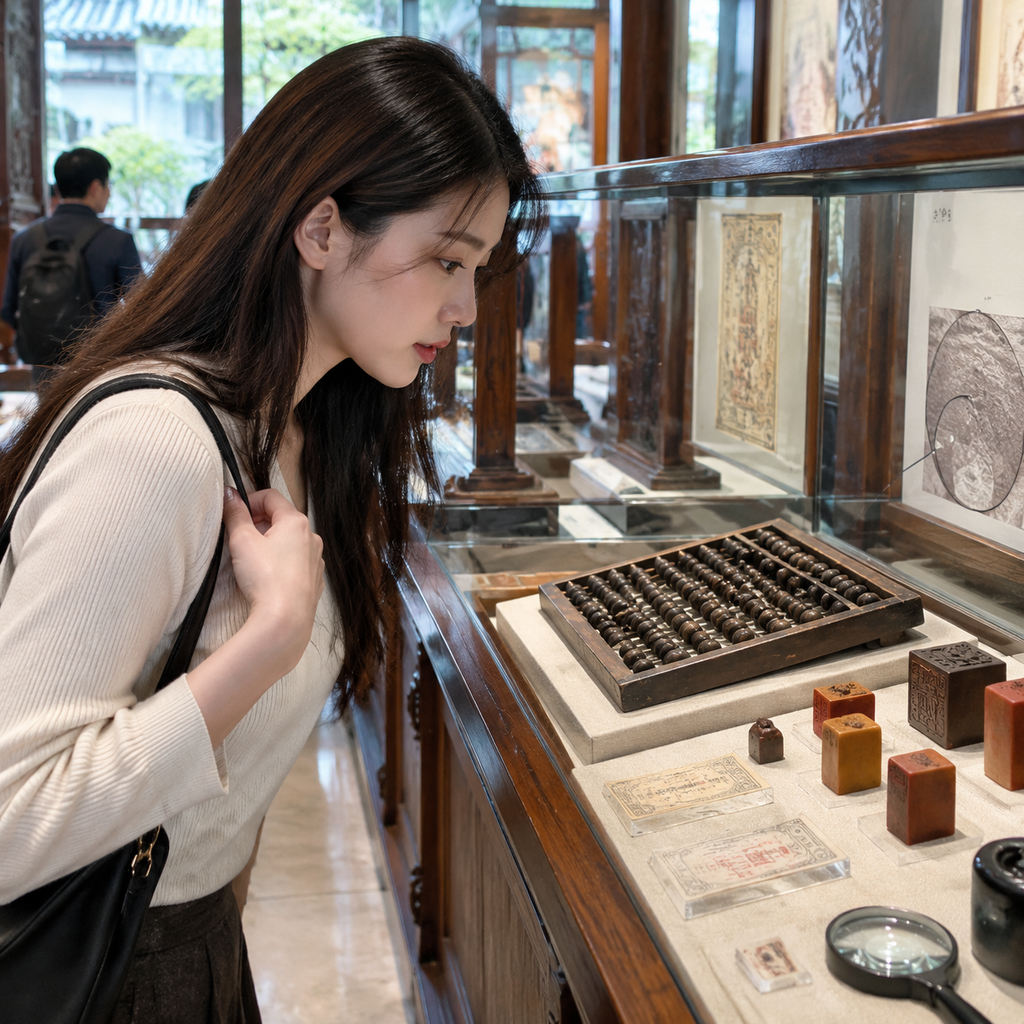
午后两点半,我从西大街又拐进日昇昌旧址附近。正午的旅行团刚散去一拨,石板被太阳晒得发白,屋檐投下窄而硬的阴影。柜房里陈列着算盘、印章和防伪暗记,我起初把票号简单理解成古代银行:柜台收钱,异地凭票取钱,仅此而已。讲解员小梁听见我这么概括,没有立刻反驳,只把一张仿制汇票翻过来,指给我看背后的批注、经手人和约定暗号。她说真正困难的不是写一张票,而是让相隔千里的分号认人、认字、认规矩,还要在路途迟滞和消息不畅时承担判断失误的代价。
At half past two, I turned off West Street once more and entered the area near the former Rishengchang premises. One wave of midday tour groups had just dispersed. The sun had bleached the paving stones, and the eaves cast narrow, sharp shadows. Inside the counting room were abacuses, seals, and examples of coded anti-forgery marks. I had reduced the draft bank to an ancient bank: money deposited at one counter, then collected elsewhere with a document. That was all, I thought. Xiao Liang, the interpreter, heard my summary but did not argue immediately. She turned over a replica draft and pointed out the endorsements, handlers’ names, and agreed codes on its back. The hard part, she explained, was not writing the paper. It was enabling branches a thousand miles apart to verify the person, the handwriting, and the rules—and to bear the cost of a wrong judgment when travel was delayed and news moved slowly.
她带我走到后院几间不显眼的小屋,提醒我别只看临街的大匾。前柜负责接待,后院才容纳账房、信件和住宿,院落的层层门槛也在安排谁能走到哪里。我又犯了一个容易发生的误判,以为深院只是晋商富足后的排场。小梁用手敲了敲一扇包铁的木门,说空间既要防火、防盗,也要把公开交易和内部核账分开。窗格里的光落在旧桌面上,尘粒缓慢漂动;票号所谓的秩序并非抽象美德,而是被写进门、锁、院落和每一次复核之中的工作方法。
She led me toward several plain rooms in the rear courtyards and told me not to look only at the grand sign facing the street. The front counter received clients; the inner rooms held accounts and correspondence and sometimes accommodated staff, while successive thresholds controlled who could go where. I made another easy mistake, reading the deep courtyard merely as a display of merchant wealth. Xiao Liang tapped an iron-clad wooden door and explained that the layout helped guard against fire and theft while separating public transactions from internal reconciliation. Light through the lattice rested on an old tabletop, with dust drifting slowly through it. The draft bank’s celebrated order was not an abstract virtue. It was a working method built into doors, locks, courtyards, and repeated checks.
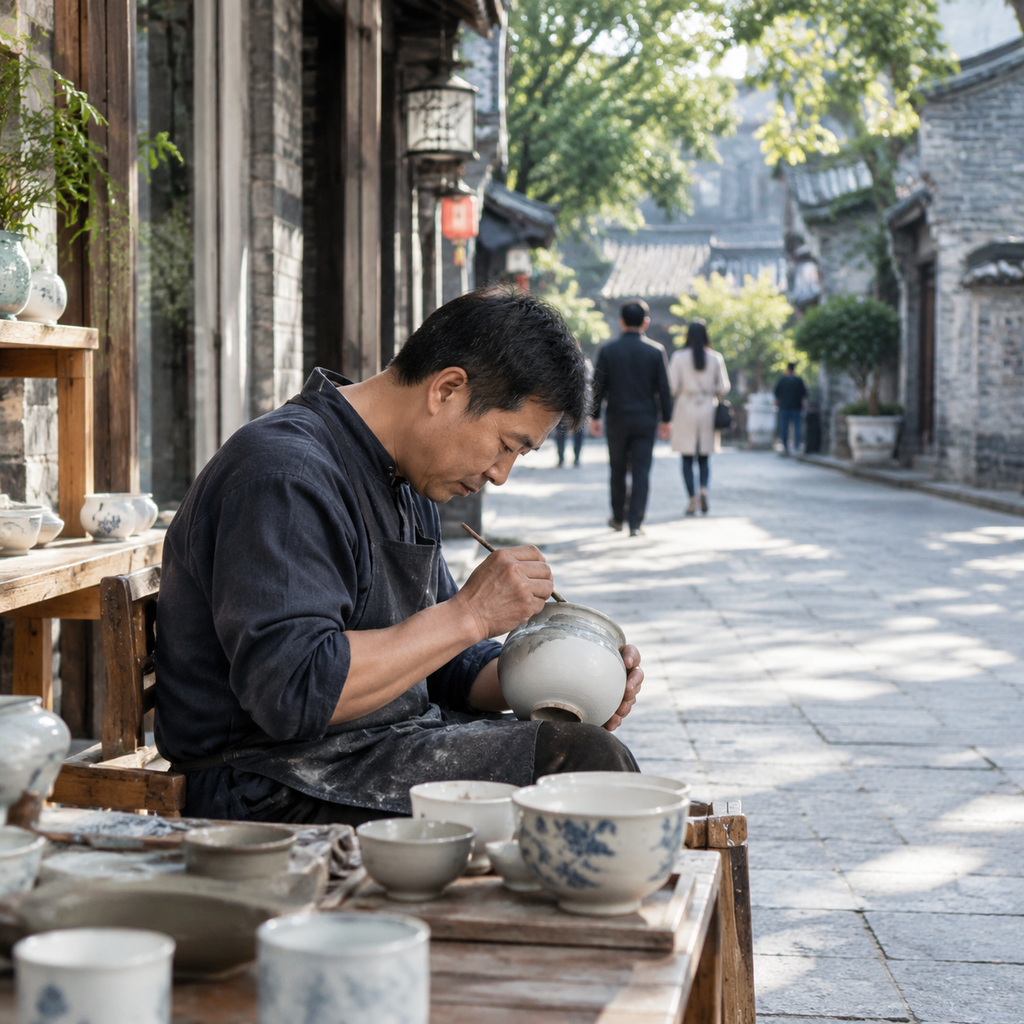
离开旧址后,我没有立刻去下一处院落,而是在一条卖漆器和布鞋的支巷里坐下。下午的风把门帘吹得一下贴住门框,一下又鼓起来;隔壁院子传出切菜的笃笃声,墙外则是导游扩音器忽远忽近的讲述。修鞋的冯师傅正给一双黑布鞋压边,针从厚鞋底穿不过去时,他用顶针抵住,再拿小钳子把线拉出来。我问他是不是专做游客喜欢的老式鞋,他摇头,把柜台下几双鞋尖磨白的旧鞋拖出来,说附近老人来换底、店员来补开线,比买纪念品的人更挑脚感。
After leaving the historic premises, I did not rush to another courtyard. I sat in a side lane lined with lacquerware and cloth-shoe shops. The afternoon wind slapped a doorway curtain flat against its frame, then filled it like a sail. From a neighboring courtyard came the steady knock of vegetables being chopped, while a guide’s amplified voice rose and faded beyond the wall. Master Feng, a shoe repairer, was binding the edge of a black cloth shoe. When his needle would not pass through the thick sole, he braced it with a thimble and pulled the thread through with small pliers. I asked whether he mainly made old-fashioned shoes for visitors. He shook his head and drew several worn pairs from beneath the counter. Local elderly residents came for new soles, and shop workers came to repair split seams, he said; they cared more about how the shoe felt than souvenir buyers did.
我把布鞋与票号都归进“古城传统”,冯师傅却把这种说法拆得很细。他说展示柜里的新鞋可以摆得端正,真正穿一天的鞋必须看脚背高低、袜子厚薄和走路习惯。说话间,一名卖饮料的姑娘拿来一只开胶的运动鞋,催着问晚班前能不能修好。师傅先捏了捏裂口,告诉她胶要有时间定型,赶着穿反而会再次张开。他借给她一双旧拖鞋,让她下班来取。那双亮白运动鞋放在旧木案上并不“古典”,却使午后的街巷显出最真实的一层:这里的手艺不只负责被观看,还得解决四点钟之后谁能继续站柜台的问题。
I had placed cloth shoes and draft banks together under the broad label of “old-town tradition,” but Master Feng broke that phrase into practical distinctions. New shoes in a display case could be arranged neatly, he said; a pair worn all day had to account for instep height, sock thickness, and walking habits. As he spoke, a young woman from a drinks shop brought in a modern sneaker with a separated sole and asked whether it could be ready before her evening shift. He pinched the split and told her the adhesive needed time to set; wearing it too soon would only open it again. He lent her a pair of old slippers and told her to collect the sneaker after work. The bright white shoe looked anything but “historic” on his old wooden bench, yet it revealed the truest layer of the afternoon lane: craftsmanship here was not merely displayed. It had to decide whether someone could remain on her feet after four o’clock.
街口卖醋的姑娘后来给我倒了一小杯闻香。我见瓶签上写着年份,便把颜色越深、年份越久等同于越好。她让我先闻两杯,又叫我蘸一点尝:一杯香气厚,入口却更柔;另一杯酸味直接,适合拌凉菜。她说家里买醋先问怎么吃,不会先问哪瓶最贵。旁边一位来打醋的老人把塑料壶放上秤,接话说炖肉、蘸饺子、拌面用法不同。我此前总把地方特产理解成一场等级考试,仿佛必须选出“最正宗”的那瓶才算懂行;两个人用厨房里的具体用途提醒我,真正的判断不是背年份,而是知道它要落进哪一只碗。
At the lane entrance, the young vinegar seller later poured two small samples for me to smell. Seeing years printed on the labels, I assumed that darker and older automatically meant better. She asked me to smell both and then taste a drop of each. One had a deeper aroma but a gentler finish; the other delivered a direct acidity suited to cold dishes. Families buying vinegar, she said, first asked what it was for, not which bottle cost the most. An elderly man setting a plastic jug on the scale joined in: braised meat, dumpling dip, and noodles each called for something different. I had treated local specialties like an exam in ranking, as if choosing the single “most authentic” bottle proved understanding. Their kitchen examples corrected me. Sound judgment did not mean memorizing an age; it meant knowing which bowl the vinegar would enter.
三点以后,主街的人流又密起来,我便跟着两个放学的女孩钻进较窄的巷子。她们推着自行车并排说话,遇见送煤气罐的三轮车,不等司机按铃就一前一后贴到墙边。车过去后,年纪小的那个发现车筐里的练习册滑了出来,后面的面馆老板追了几步替她捡起,还顺手拍掉封面的灰。女孩先喊了一声“谢谢叔叔”,走出几米又回头问他晚上还卖不卖刀削面。巷子里的熟悉感并非人人彼此认识,而是人们知道怎样让路、怎样把掉落的东西递回去,也知道一句话可以把短暂交会接成下一顿饭。
After three, the main street grew crowded again, so I followed two schoolgirls pushing bicycles into a narrower alley. They walked side by side, talking, but when a three-wheeler carrying gas cylinders approached, they moved against the wall in single file before the driver needed to ring his bell. Once it passed, the younger girl failed to notice a workbook sliding from her basket. The owner of a noodle shop ran several steps to retrieve it and brushed the dust from its cover. She called, “Thank you, uncle,” then turned back a few meters later to ask whether he would still be serving knife-cut noodles that evening. Familiarity in these lanes did not mean everyone knew everyone else. It meant knowing how to yield, how to return what someone had dropped, and how one sentence could extend a passing encounter into the next meal.
到近四点半,屋檐下的阴影终于变宽,卖枣摊主把椅子挪到门外,冯师傅也将修好的运动鞋摆到通风处。我原以为午后只是早晚景色之间一段疲软的空档,适合回客栈休息;实际走下来,它恰好暴露一座古城如何运转。前柜核对的是票据,鞋铺判断的是胶干没干,醋摊问的是用途,窄巷协调的是谁先通过。它们不能被浪漫地说成同一种古老制度,却共享一种朴素的尺度:先弄清眼前的事实,再把东西、话语或道路交给下一个人。
By half past four, the shade beneath the eaves had finally widened. The dried-date vendor moved her chair outside, and Master Feng set the repaired sneaker where air could reach the adhesive. I had imagined the afternoon as a weak interval between the more photogenic morning and evening, a convenient time to retreat to the guesthouse. Walking through it showed the opposite: these hours exposed how an old town actually operates. The front counter checked documents; the shoe shop judged whether glue had set; the vinegar stall asked about intended use; the narrow lane negotiated who should pass first. It would be romantic and inaccurate to call them one surviving ancient system. What they shared was a modest standard: establish the immediate facts before passing an object, a word, or a stretch of road to the next person.
我离开时,卖饮料的姑娘穿着借来的拖鞋来取运动鞋。冯师傅按了按鞋边,没有因为她着急就提前交货,只让她再等十分钟。她坐在门槛上回手机消息,拖鞋大了半码,每晃一下都拍出轻响。斜阳越过屋脊,正好照亮案头那圈尚未收起的白线。这个不肯省掉的十分钟,比任何关于古城“慢生活”的说法都具体:慢不是摆给游客看的姿态,而是胶尚未干时,谁也不假装它已经干了。
As I was leaving, the drinks-shop worker returned in the borrowed slippers for her sneaker. Master Feng pressed the repaired edge and, despite her hurry, refused to hand it over early; she would need to wait another ten minutes. She sat on the threshold replying to messages, the slippers half a size too large and slapping softly whenever her feet moved. Slanting sunlight crossed the rooftops and lit the coil of white thread still lying on the bench. Those ten minutes he would not omit explained the old town’s supposed “slow life” better than any slogan. Slowness was not a pose for visitors. When the glue had not dried, no one pretended that it had.
她穿回鞋后,我没有跟着主街上渐亮的灯笼走,而是趁城门关闭前又登了一次墙。傍晚的砖面还存着白天的热,手掌贴上垛口却能摸到风带来的凉意。太阳已经压到西边屋顶上方,瓦片不再是清晨那种薄金色,而是一层一层变成铜红、褐灰和将要沉下去的蓝。游客大多聚在城楼附近等落日,我沿较空的一段慢走,听见旗绳敲击旗杆,啪、啪两声之后停一会儿,再被下一阵风重新提起。早晨站在这里,我看到县城开始一天;到了傍晚,高处显出的不是结束,而是许多日常正在换班。
After she put her own shoes back on, I did not follow the lanterns beginning to glow along the main street. Instead, I climbed the wall once more before the gate closed. The bricks still held the day’s warmth, while the parapet felt cool under my palm where the wind crossed it. The sun had dropped above the western roofs. The tiles no longer carried dawn’s thin gold, but shifted layer by layer into copper red, brown-gray, and a blue about to deepen. Most visitors gathered near the tower to wait for sunset. I walked along a quieter section, listening to a halyard strike its flagpole—two sharp taps, a pause, then another gust lifting it again. In the morning I had watched the county town begin its day from here; at dusk, the height revealed not an ending but a change of shifts.
墙下,一辆接孩子的电动车停在巷口,后座的小女孩把书包抱在胸前,母亲替她扣好头盔才起步。再远一点,面馆把折叠桌搬到门外,伙计弯腰逐条擦凳腿;快递员靠着三轮车打电话,请收件人到蓝门旁取包裹。晒了一天的被子被人从绳上收下,布面在风里鼓起又落进臂弯。城墙让这些动作显得很小,却没有把它们变成抽象的“烟火气”。谁在等孩子,谁准备晚饭,谁还差最后一件货没有送完,都有明确的去处。县城的傍晚不是一片统一亮起的布景,而是不同人把白天一件件收好,再腾出手去接住夜晚。
Below the wall, an electric scooter waited at the mouth of an alley. A schoolgirl held her backpack against her chest while her mother fastened the helmet before setting off. Farther away, a noodle shop carried folding tables outdoors, and a worker bent down to wipe each stool leg. A courier leaned against his three-wheeler, calling a customer to collect a parcel beside the blue gate. Quilts aired all day were taken from their lines, billowing once in the wind before falling into waiting arms. The wall made these movements look small, but it did not reduce them to an abstract idea of “local atmosphere.” Someone was collecting a child, someone was preparing dinner, and someone still had one final delivery to complete. Evening in the county town was not a stage set illuminated all at once. It was the hour when different people put away the day piece by piece and freed their hands to receive the night.
落日碰到城外田野的边缘时,城楼附近有人连续按快门,一位带着孙子的老人却始终背对夕阳。他蹲下来整理孩子松开的鞋带,又把一只歪掉的水壶塞回书包侧袋。孩子催他看天,他站起后只望了一眼,便指着墙外公路上亮起车灯的公交车,说那班车再晚就赶不上了。祖孙俩快步往出口走,孩子仍不时回头。我本来也想等天空完全变紫,被这句提醒带得看了一眼时间,才发现观景也受关门、公交和晚饭约束。平遥的黄昏因此没有被削弱,反倒更可信:再漂亮的光,也落在需要准时回家的人身上。
As the sun touched the edge of the fields beyond the wall, cameras clicked repeatedly near the tower. An elderly man with his grandson, however, kept his back to the sunset. He crouched to retie the child’s shoelace and pushed a crooked water bottle back into the side pocket of the schoolbag. The boy urged him to look at the sky. The grandfather stood, glanced once, then pointed toward a bus whose headlights had appeared on the road outside the wall, saying they would miss it if they left any later. They hurried toward the exit, though the child kept turning around. I too had planned to wait until the sky turned fully purple. His warning made me check the time and remember that sightseeing is also bounded by gates, buses, and dinner. That did not diminish Pingyao’s twilight. It made it more believable: even the finest light falls on people who need to get home on time.
下墙后,主街的灯笼已经亮了,支巷却仍保持着县城寻常的晚饭声响。有人端着不锈钢盆去公共水龙头前洗菜,水柱打在盆底,脆响盖过远处的扩音器;一户人家的纱门开了一条缝,葱花下锅的香味随热气钻出来。上午捡回练习册的面馆老板正在门口削面,刀片贴着面团飞快向锅里掠,两个放学女孩果然又来了。年纪小的那个把自行车靠稳,先问能不能少放辣椒。老板没有提下午帮她捡东西的事,只朝里喊了一声“一个少辣”,像这不过是每天会发生许多次的小照应。
By the time I came down, the lanterns on the main street were glowing, while the side lanes still carried the ordinary sounds of a county-town supper. Someone took a stainless-steel basin to a shared tap to wash vegetables, the water striking its bottom loudly enough to cover a distant loudspeaker. A screen door stood slightly open, releasing steam scented with scallions hitting hot oil. The noodle-shop owner who had retrieved the workbook that afternoon was shaving strips of dough into a pot, his blade flashing quickly over its rim. The two schoolgirls had indeed returned. The younger one parked her bicycle carefully and asked for less chili. The owner did not mention helping her earlier; he simply called toward the kitchen, “One with less spice,” as though this were one of the many small acts of attention that make up an ordinary day.
我在隔壁桌坐下,等面时看见卖饮料的姑娘已经换回修好的白鞋。她站了一下午,脚边堆着刚拆开的纸箱,冯师傅从巷口经过时特意问了一句还开不开胶。姑娘跺了两下脚,说“牢着呢”,又从冰柜里拿一瓶水递给他。师傅摆手不收,她便把瓶子放进他车筐,转身继续理货。早晨指路的阿姨也来买酱油,认出我后问这回还走没走错。我说只错过一次,她笑我总算把蓝门记住了。到这时,文章里出现过的人不再各自停在一个孤立的镜头中:修鞋、卖货、指路、吃面,原来都在几条相接的巷子里不断碰面。
I sat at the next table. While waiting for noodles, I noticed that the drinks-shop worker was back in her repaired white sneakers. After an afternoon on her feet, she stood beside newly opened cartons. When Master Feng passed the alley entrance, he made a point of asking whether the sole had separated again. She stamped twice and said, “Holding firm,” then took a bottle of water from the cooler for him. He waved it away, so she placed it in his bicycle basket and returned to arranging stock. The woman who had corrected my route came to buy soy sauce and asked, after recognizing me, whether I had lost my way again. I admitted to one wrong turn; she laughed and said I had finally learned the blue gate. By then, the people in my account no longer occupied isolated snapshots. Repairing shoes, selling goods, giving directions, and eating noodles kept bringing them together within a few connected lanes.
面端上来后,老板把醋壶放到我手边。我这次没有问哪一种最正宗,只先尝了一口汤,再倒进少许。卖醋的姑娘教我的那点判断,在一顿普通晚饭里找到了位置。桌面被热碗烘得发暖,门外自行车铃响了两声,两个女孩为谁先写完作业争了几句,很快又低头分一碟凉菜。我突然明白,认识一座县城并不等于收集更多典故,而是让白天听到的话在晚上的生活里彼此印证。票号关于信用的宏大叙述、摊主换掉碰伤梨的小动作、师傅等待胶干的十分钟,都在提醒同一件朴素的事:日子要靠具体的人把具体的小事做稳。
When the noodles arrived, the owner placed a vinegar cruet beside me. This time I did not ask which kind was the most authentic. I tasted the broth first, then added a little. The judgment the vinegar seller had taught me found its place in an ordinary dinner. The hot bowl warmed the tabletop; a bicycle bell sounded twice outside; the two girls argued briefly over who would finish her homework first, then bent their heads over a shared plate of cold vegetables. I realized that knowing a county town does not mean collecting more historical anecdotes. It means allowing words heard during the day to be tested against life in the evening. The grand story of trust told by the draft banks, the vendor replacing a bruised pear, and the repairman’s ten-minute wait for adhesive to set all pointed toward one modest truth: daily life holds together because particular people do particular small things properly.
第二天真正要离城的清晨,我在五点四十分被院里收拾床单的声音叫醒。天还没有亮透,客栈老板把洗好的白布从竹筐里抖开,布角掠过青砖,带起一点潮湿的凉气。他见我拖着行李出来,先帮我把箱子提过高门槛,又提醒预约的车只能停在城门外,石板路这一段仍得自己走。我原以为离开只是一段从房间到车站的移动,推开院门才发现,告别也要服从古城真实的尺度:轮子会卡进砖缝,清早不能大声拖箱,临街人家还在睡,赶时间也得把脚步放轻。
On the morning I was actually due to leave, the sound of sheets being handled in the courtyard woke me at 5:40. Dawn had not fully broken. The guesthouse owner shook a clean white sheet open above a bamboo basket; one corner skimmed the gray bricks and lifted a trace of damp coolness. Seeing me emerge with my suitcase, he first carried it over the high threshold, then reminded me that the booked car could wait only outside the gate. I would still have to cross this section of stone paving myself. I had imagined departure as a simple transfer from room to station. Once the courtyard door opened, I saw that farewell also had to obey the old town’s physical scale: wheels caught in brick joints, luggage should not be dragged loudly at dawn, neighboring households were asleep, and even a traveler in a hurry needed to tread lightly.
我把拉杆收回去,提着箱子走过昨晚吃面的支巷。灯笼已经熄了,只剩面馆后厨一盏白灯,老板正把一盆和好的面盖上湿布。他听见箱扣碰响,从门里探出头,认出我后没有问还吃不吃面,而是告诉我东边路面更平,绕几十米会比直穿小巷省力。我照他说的走,果然避开了那段高低不齐的旧砖。途中经过蓝色门楼,门洞下停着冯师傅的自行车,车筐里那只水瓶已经喝空。熟悉的物件都在原位,人物尚未出现,这让清晨显得不像一次供我回看的谢幕,更像他们新一天尚未说出第一句话的片刻。
I collapsed the suitcase handle and carried the case through the side lane where I had eaten noodles the previous night. The lanterns were dark. Only a white light remained in the noodle shop’s rear kitchen, where the owner covered a basin of kneaded dough with a damp cloth. Hearing the suitcase clasps knock together, he looked out, recognized me, and—rather than asking whether I wanted noodles—said the paving to the east was smoother. A detour of a few dozen meters would be easier than cutting straight through the alley. He was right; that route avoided the worst of the uneven old bricks. At the blue gatehouse, Master Feng’s bicycle stood beneath the arch, the water bottle in its basket now empty. Familiar objects remained while their owners had not yet appeared. The dawn felt less like a farewell staged for my benefit than the brief moment before these people spoke the first words of another working day.
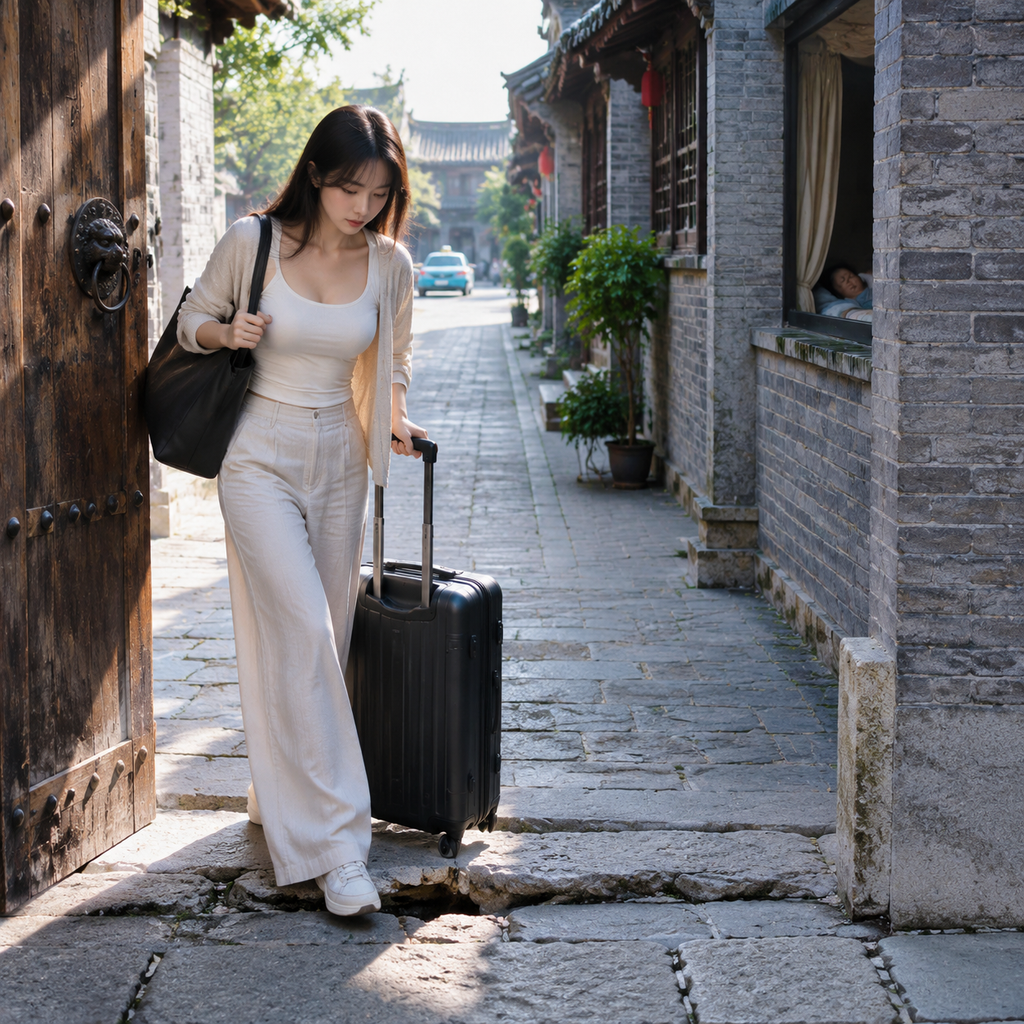
走到早餐铺时,棉门帘刚被挂起。老板娘一手转动鏊上的饼,一手给豆浆锅调小火,动作和我第一天看见的几乎一样。不同的是,这次我知道先站到门边,不挡送货人搬鸡蛋;也没有急着追问车会不会迟到,只报了原味饼和一杯不加糖的豆浆。她装袋时认出我,问是不是今天走。我点头,她把饼从纸袋里露出一小截,说路上吃就别全封住,热汽闷久了会软。那不是郑重的送别话,却准确照顾了从城门到车站之间的二十来分钟。
The breakfast shop had just fastened up its padded curtain when I arrived. With one hand the owner turned flatbread on the griddle; with the other she lowered the flame beneath the soybean milk, repeating almost exactly the motions I had seen on my first morning. I behaved differently this time. I waited beside the doorway so the egg delivery could pass, and instead of anxiously asking whether my car might be late, I simply ordered plain flatbread and unsweetened soybean milk. She recognized me while packing the food and asked whether I was leaving today. When I nodded, she left the top of the bread peeking from the paper bag. “If you’re eating on the road, don’t seal it completely,” she said. “The trapped steam will make it soft.” It was not a ceremonial farewell, but it took precise care of the twenty-odd minutes between the gate and the station.
出了南门,天边才显出一条淡粉色。城外的柏油路比城内石板平整,箱轮突然不再颠簸,我的手臂反而还保留着一提一放的节奏。预约司机把后备厢打开,先问我是不是去平遥古城站,接着看了车票时间,说不必赶,清晨这段路车少。他没有催我上车,而是等一位推垃圾桶的工人从车尾经过,才放下后备厢盖。坐进车里后,我回头看见门洞里的灯仍亮着,两名晨练老人一边压腿一边聊天,卖菜的小货车正从另一侧进城。游客离开的方向和居民开始工作的方向在城门口交错,谁也没有为谁暂停。
Outside the South Gate, a pale pink line had only just appeared along the horizon. The asphalt beyond the walls was smoother than the stone lanes, and when the suitcase wheels suddenly stopped jolting, my arm still continued the rhythm of lifting and lowering them. The driver opened the trunk, confirmed that I was heading to Pingyao Ancient City Railway Station, then checked my departure time and said there was no need to rush because traffic was light this early. He did not hurry me into the car. He waited for a sanitation worker pushing a bin to pass behind the vehicle before closing the trunk. From my seat I looked back at the lamp still burning inside the gateway. Two elderly exercisers chatted while stretching their legs, and a small vegetable truck entered the town from the other side. At the gate, the direction in which visitors departed crossed the direction in which residents began work, and neither had to pause for the other.
车子经过护城河边时,司机把广播音量调低,指着一段刚被晨光照到的墙问我是不是已经绕过一圈。我说墙上走过,墙根也走过,还因为没有听完指路进过死胡同。他笑了一声,说在平遥问路要听到最后,很多人说“直走”之后还会补一句“见什么门再拐”。随后他告诉我,自己小时候进城上学也靠门楼和店铺认路,哪家门换了颜色,头几天就容易走过。他这句话使蓝色门楼不再只是我个人旅程里的趣味标记。对一座巷道弯折的县城来说,颜色、树、铺面和门洞共同组成居民脑中的地图,那张地图靠反复经过,而不是靠缩放屏幕建立。
As we passed the moat, the driver lowered the radio and pointed to a section of wall just touched by morning light, asking whether I had walked all the way around it. I said I had walked on top and along its foot—and had entered a dead end because I failed to listen to the end of someone’s directions. He laughed and said that in Pingyao one must always hear the final clause: after “go straight,” people often add, “then turn when you see a certain gate.” He told me that as a child going to school inside the town, he too navigated by gatehouses and shops. Whenever a household repainted its entrance, he would overshoot it for several days. His comment made the blue gatehouse more than an amusing marker in my private journey. In a county town of bending alleys, colors, trees, storefronts, and arches form the map residents carry in their heads—a map built by repeated passage rather than by pinching a screen.
红灯前停车的几十秒里,我看见一名父亲骑电动车送孩子到校。孩子的围巾被风吹到肩后,父亲伸手替他塞进外套领口,绿灯亮了才重新握住车把。司机没有按喇叭,只把车缓缓跟在后面,等电动车靠边后再超过去。我想起前一晚赶公交的祖孙,也想起早餐铺先递给上班人的纸袋。第二天清晨并没有复制第一天的画面:同样是送孩子、送货、开门,每个人面对的钟点和任务都不同。正因如此,古城的重复才不单调。每天都有人把门推开,但门外等候的天气、订单和一句临时的提醒,从不会完全相同。
During the few seconds at a red light, I watched a father taking his child to school on an electric scooter. Wind had blown the child’s scarf behind one shoulder. The father tucked it into the coat collar and did not return his hand to the handlebar until the light changed. Our driver did not sound the horn. He followed slowly and passed only after the scooter moved aside. I thought of the grandfather and grandson hurrying for the bus the previous evening, and of the breakfast shop handing its first paper bags to people on their way to work. This second morning was not a copy of the first. Even when people were again taking children to school, delivering goods, and opening doors, each faced a different hour and task. That is why repetition in the old town never became monotonous. Doors opened every day, but the weather, orders, and last-minute reminders waiting beyond them were never exactly the same.
车子拐上站前大道时,太阳已经越过低矮屋顶,车窗上的薄雾退成一圈水痕。司机提醒我检查身份证和手机,我摸过外套口袋,又确认豆浆杯没有遗在座位上。他把车停稳后帮我取出箱子,只说“时间正好”。我道谢,关门前看见他在导航上接了下一单,目的地仍是南门。我的离开没有给清晨划下句号;同一辆车掉头以后,又会去接另一个刚走出门洞的人。
By the time the car turned onto the avenue leading to the station, the sun had risen above the low rooftops, and the mist on the window had withdrawn into a ring of water marks. The driver reminded me to check my identity document and phone. I felt both coat pockets and made sure I had not left the soybean-milk cup on the seat. After parking, he lifted out my suitcase and said only, “Perfect timing.” I thanked him. Before closing the door, I saw him accept his next trip on the navigation screen; the destination was the South Gate again. My departure did not place a full stop on the morning. Once the same car turned around, it would collect someone else who had just emerged from the gateway.
车驶上通往平遥古城站的路后,城墙很快被沿街房屋遮住,又在一个路口短暂露出完整的灰色轮廓。我没有隔着玻璃抢拍,手里仍握着那半块尚有余温的原味饼。咬到最后一口时,纸袋底落下几粒芝麻,我把它们拢进掌心,没有弹到车厢地板上。抵达车站,我把空纸袋折好塞进口袋,行李轮越过候车厅门槛,轻轻震了一下。平遥留给我的结尾不是城楼远景,也不是一句适合写在明信片上的感叹,而是我终于学会在别人每天经过的门口让半步,把收到的东西稳稳接住,再把自己留下的碎屑带走。
Once the car joined the road toward Pingyao Ancient City Railway Station, the wall disappeared behind roadside buildings, then briefly revealed its full gray outline at an intersection. I did not rush to photograph it through the window. Half of the plain flatbread was still warm in my hand. With the last bite, a few sesame seeds fell into the bottom of the paper bag; I gathered them into my palm rather than flicking them onto the floor. At the station, I folded the empty bag into my pocket, and the wheels of my suitcase gave a small jolt as they crossed the terminal threshold. Pingyao’s ending for me was neither a distant view of a gate tower nor a sentiment made for a postcard. It was the simple fact that I had learned to yield half a step at a doorway others used every day, to receive what was handed to me with care, and to carry away the crumbs I had made.
- 沙漠变电站:中国西部的太阳能版图 | From Sand to Power: China's Solar Empire in the Western Desert
- 中国白酒与黄酒:送礼自饮怎么选 | Chinese Baijiu & Huangjiu: Gift & Tasting Guide
- 中国对游客安全吗?一个在华生活多年的人告诉你真相 | Is China Safe for Tourists? An Honest Answer from Someone Who Lives Here
- 中国城市地铁出行技巧 | Tips for Using Metro in Chinese Cities
- 元旦跨年旅游目的地盘点 | New Year's Eve Travel Destinations Roundup
- 成都大熊猫与宽窄巷子 | Chengdu: Giant Pandas & Kuanzhai Alley
- 网络变慢那一分钟,让我知道截图有多重要 | One Slow Network Minute Taught Me the Value of Screenshots
- 中国旅游网络与上网指南 | Internet & Connectivity Guide for China Travel
- 青岛夜里最重要的准备,不在背包里,而在你肯不肯及时收住脚步 | The Most Important Preparation for a Qingdao Night Is Not in the Bag but in Knowing When to Slow Down
- 在中国保持联网 | Staying Connected in China
Comments (0)