
糖画摊前的几分钟,让我第一次觉得“甜”也可以被画出来 | At a Sugar Painting Stall, I Realized for the First Time That Sweetness Can Be Drawn
糖画摊前的几分钟,让我第一次觉得“甜”也可以被画出来 | At a Sugar Painting Stall, I Realized for the First Time That Sweetness Can Be Drawn
我原本以为,糖的作用很简单:好吃、提神、让人心情变好。作为一个来自土耳其的外国人,我从小也很熟悉糖在街头和节庆里的存在。无论是玻璃罐里亮晶晶的糖果,还是集市上带着一点表演性的甜食,糖常常都是热闹的一部分。可我在中国第一次站到糖画摊前时,还是立刻安静了下来。因为那一刻我突然发现,糖在这里不只是味道,而是一支会流动的笔。师傅拿着小勺,把融化的糖浆倒在石板上,手腕一转,一条线立刻生出来,再绕几下,鱼、龙、蝴蝶、兔子就慢慢出现了。那几分钟让我很震撼:原来“甜”不只是吃进嘴里的感觉,它还可以先被眼睛看见。
I used to think sugar had a simple purpose: it tastes good, gives energy, and lifts the mood. As a foreigner from Turkey, I also grew up with sugar as part of street life and festive life. Whether in shining jars of candy or in sweets sold with a little theatrical flair in open markets, sugar was often part of the excitement. But the first time I stood in front of a Chinese sugar painting stall, I became quiet almost at once. In that moment I suddenly understood that here, sugar is not only flavor. It is also a pen made of liquid light. The artisan held a small ladle, poured melted syrup onto a stone slab, turned the wrist, and a line immediately came alive. A few circles later, a fish, a dragon, a butterfly, or a rabbit slowly appeared. Those few minutes startled me. Sweetness, I realized, does not only enter through the mouth. In this craft, it first arrives through the eyes.
真正吸引我的,不只是图案,而是那种“一次成形”的勇气 | What drew me in was not only the image, but the courage of making it in one continuous motion
糖画最迷人的地方之一,就是它几乎不给人犹豫的空间。糖浆一旦离开勺子,温度就在下降,线条也在迅速固定。你不能像画素描那样慢慢修改,也不能像写字那样停下来反复试。师傅的手必须稳,心里也必须已经有图。那种感觉让我特别佩服,因为我站在旁边看时,明明觉得线条好像很轻松,可一想到如果换成自己去画,我大概第一笔就会断掉,第二笔就会黏成一团。糖画看上去轻巧,实际上却要求极快的判断力和非常成熟的手感。
One of the most charming things about sugar painting is that it leaves almost no room for hesitation. The moment the syrup leaves the ladle, its temperature is already falling and the line is already beginning to set. You cannot revise it slowly the way you might correct a sketch, nor can you pause repeatedly as if writing on paper. The artisan’s hand must be steady, and the image must already exist in the mind. I found that deeply impressive. Watching from the side, the movements looked effortless, but I knew that if I tried it myself, my first line would probably break and my second would collapse into a sticky lump. Sugar painting appears light and playful, yet it demands quick judgment and highly trained touch.
老师后来也让我试了一小段最基础的线条。只是画一个简单的弯钩,我就已经感觉到紧张。糖浆流得太快,线会变粗;手抬得太慢,糖会堆在一起;动作如果不够连贯,图案马上就失去那种轻盈感。那时我第一次真正明白,为什么街头民艺常常最容易被低估。因为它看起来离生活很近、离孩子很近、离热闹很近,人们就容易误以为它“应该不难”。可真正上手以后你才知道,越是要在短时间里让普通人看懂、喜欢、惊叹的东西,背后越需要长期积累。
Later the instructor let me try a very basic line myself. Even shaping a simple curved hook made me tense. If the syrup flowed too quickly, the line became too thick. If I lifted my hand too slowly, the sugar pooled. If my movement lost continuity, the image immediately lost its airy grace. At that moment I truly understood why street folk arts are so often underestimated. Because they seem close to daily life, close to children, and close to festivity, people assume they must be easy. But once you try them, you realize that anything capable of making ordinary passersby understand, enjoy, and marvel within seconds usually rests on years of practice.
它最打动我的地方,是把“短暂”变成了一种美感 | What moved me most was the way it turns brevity into beauty
糖画当然不是一种能永远保存的艺术。它怕热,也怕碰,拿在手里甚至都会让人有一点小心翼翼。可也正因为这样,我反而更能感受到它的特别。很多艺术品的价值,来自耐久、昂贵、稀少;糖画却几乎反过来。它知道自己会碎,会化,会被吃掉,所以它不把意义压在“永久保留”上,而是把魅力放在制作和观看的那个瞬间。你先看它诞生,然后惊讶于它居然这么快就完成,最后甚至可能亲口把它吃掉。这个过程很短,却非常完整。
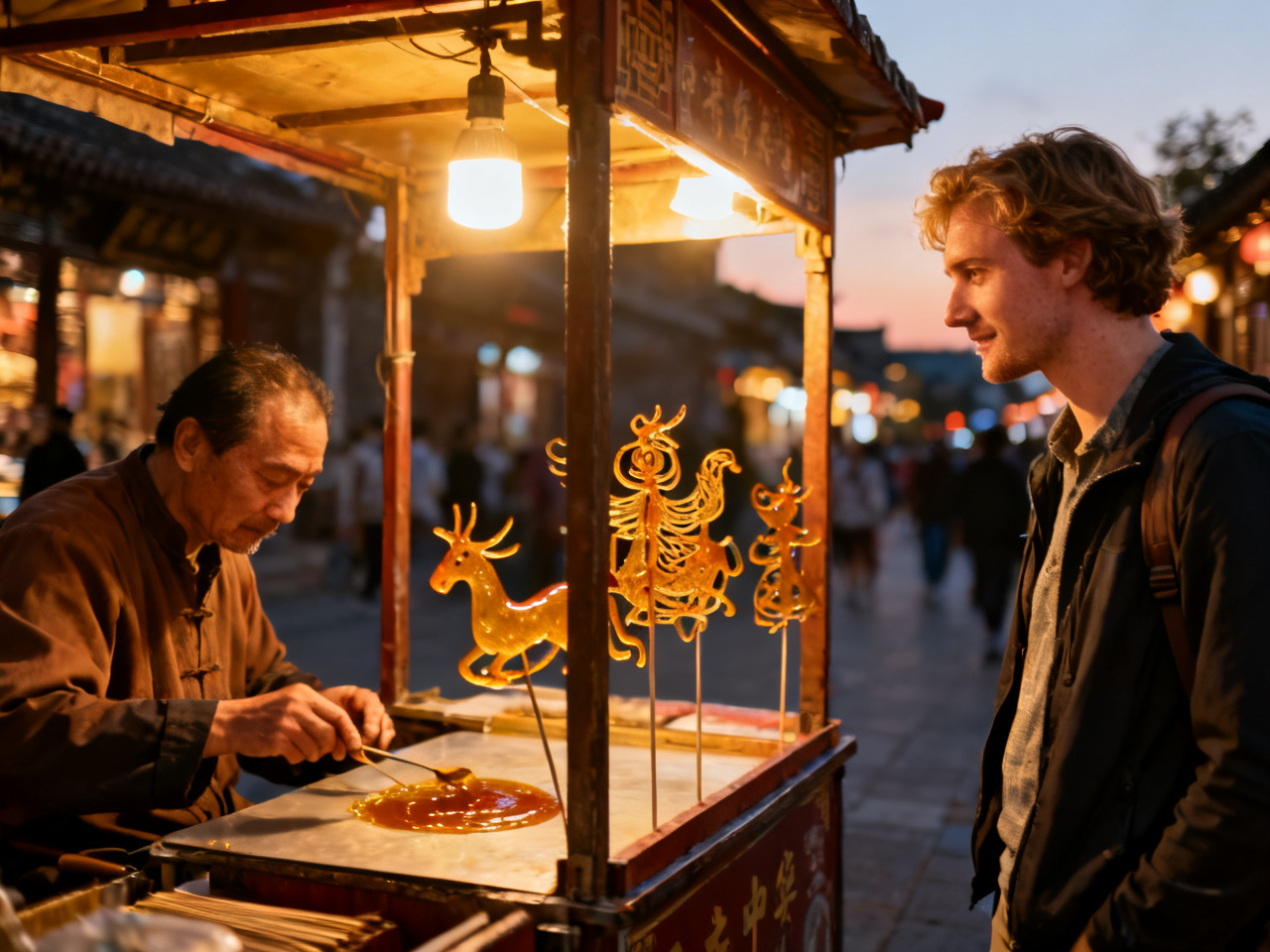
Sugar painting is, of course, not an art meant to last forever. It fears heat, it fears pressure, and even holding it in your hand makes you a little careful. Yet that is precisely why I found it so special. Many art forms derive value from durability, expense, or rarity. Sugar painting almost reverses that logic. It knows it will crack, melt, or be eaten, so it does not place its meaning in permanent preservation. Instead, it places its charm in the act of appearing. First you watch it come into being. Then you marvel at how quickly it is completed. Finally, you may even eat it yourself. The whole process is brief, yet strangely complete.
这种“短暂的完整”让我印象特别深。旅行时我们总想把值得纪念的东西带走:一张照片、一件纪念品、一块布、一只杯子。可糖画提醒我,有些文化体验最珍贵的部分偏偏带不走。你带走的不是物件本身,而是那条糖线在石板上绕开的瞬间,是旁边孩子突然睁大的眼睛,是糖刚刚变硬时那种轻轻发亮的表面。它像一场很小的表演,却把手艺、食物、童年记忆和街头气氛全部装在了一起。
This sense of brief completeness stayed with me. When we travel, we often want to bring worthy things home: a photograph, a souvenir, a piece of cloth, a cup. But sugar painting reminded me that some of the most valuable cultural experiences are valuable precisely because they cannot really be carried away. What you keep is not the object itself, but the moment when the sugar line curls across the stone, the widened eyes of a child nearby, and the faint shine that appears just as the sugar hardens. It feels like a tiny performance, yet inside it are craft, food, childhood memory, and the atmosphere of the street all at once.
它让我想到土耳其街头的甜食表演,但表达方式完全不同 | It reminded me of Turkish street sweets, though the mode of expression is completely different
作为土耳其人,我看到糖画时,很自然会想到自己熟悉的一些街头甜食传统。土耳其的糖果和节庆甜食同样常常带着表演感:摊主会用夸张一点的动作吸引人,糖果会被做得鲜艳、发亮、让孩子一眼就想靠近。有些甜味记忆并不只是“吃”,而是连同叫卖声、街头节奏和节庆氛围一起留在脑子里。也就是说,在土耳其,甜食也常常不仅仅属于味觉,它同样属于公共空间的热闹。
As a Turkish traveler, seeing sugar painting naturally made me think of some street-sweet traditions from home. Turkish candies and festive sweets also often carry a performative quality. Vendors use slightly exaggerated gestures to attract attention, and sweets are made bright and glossy enough to pull children closer at first glance. Some of our sweetest memories are not only about taste, but about the calls of the seller, the rhythm of the street, and the festive atmosphere around them. In that sense, sweets in Turkey also belong not just to flavor, but to the liveliness of public space.
但中国糖画给我的感觉更像“用糖来画一个故事”。它并不主要靠堆满颜色,也不主要靠夸张体量,而是靠线条。那条线像书法一样讲究快慢、转折和轻重,又像民间图案一样直接、明快、容易辨认。土耳其很多街头甜食给我的第一感受往往是香气、热闹和节日感先冲过来;而中国糖画让我先停下来看的,是手。一个是糖在空气里的诱惑感更强,一个是糖在图像里的造型感更强。两者都很快乐,但快乐的组织方式不一样。
But Chinese sugar painting felt to me more like using sugar to draw a story. It does not depend mainly on piled-up color or exaggerated size. It depends on line. That line carries something almost calligraphic in its speed, turn, and pressure, while also retaining the directness and readability of folk motifs. Many Turkish street sweets strike me first through aroma, liveliness, and festival energy. Chinese sugar painting makes me stop first for the hand. In one case, sugar seduces the air around you; in the other, sugar becomes image. Both are joyful, but they organize joy differently.
如果一定要找一个最贴切的区别,我会说:土耳其街头甜食常常把“分享的气氛”做得很强,而中国糖画则把“瞬间成形的惊喜”做得特别强。前者更像大家一起进入节日,后者更像你站在摊前,看着一个动物或神话形象从无到有突然出生。那种突然出现的感觉,非常中国,也非常民间。它让人明白,原来一门街头手艺也可以同时带着游戏感、技艺感和图像传统。
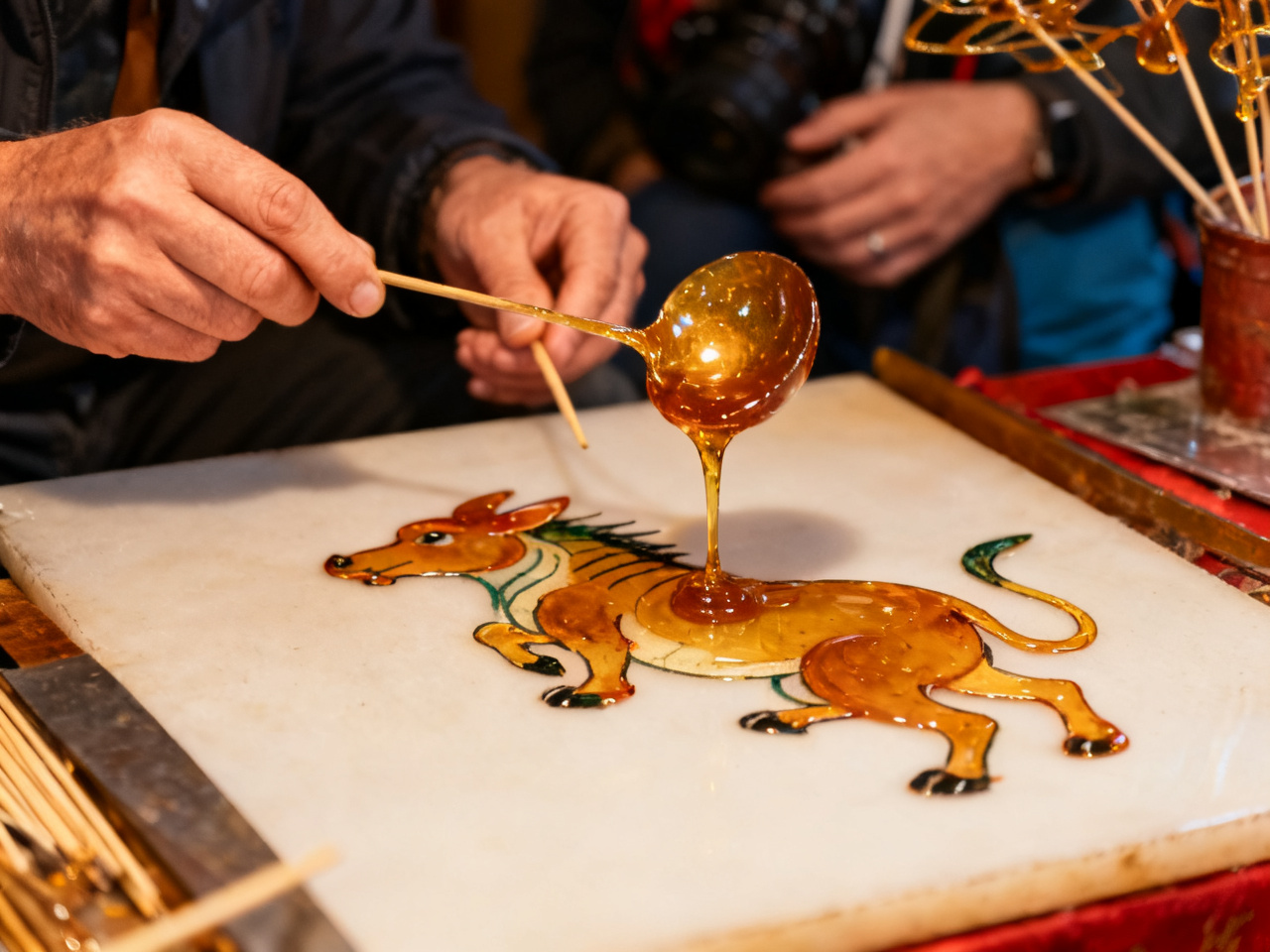
If I had to name the clearest distinction, I would say this: Turkish street sweets often amplify the atmosphere of sharing, while Chinese sugar painting intensifies the surprise of instant formation. The first feels like entering a festival together. The second feels like standing at a stall and watching an animal or legendary figure suddenly come into existence from nothing. That sudden emergence felt deeply Chinese to me, and deeply folk in the best sense. It showed me that a street craft can carry playfulness, technical mastery, and visual tradition all at once.
如果你在中国旅行时遇到糖画,我真的建议你别只拍照 | If you encounter sugar painting while traveling in China, I truly recommend doing more than taking a photo
现在如果有朋友问我,哪一种中国民艺最容易让外国游客在几分钟内就产生好感,我一定会提到糖画。因为它门槛很低:你不需要先懂很多历史,也不需要先进博物馆,你只要站在摊前看一会儿,就已经会被吸进去。但我也会提醒他们,最好不要只把它当成“很适合拍照的视频素材”。真正让糖画迷人的,不只是完成后的样子,而是你看着它被画出来的过程。那几秒钟里,糖还是液体,又马上变成图案,这种转换本身就是这门手艺的灵魂。
If friends now ask me which Chinese folk art can win over a foreign traveler within minutes, I would definitely mention sugar painting. Its threshold is low. You do not need to know much history first, and you do not need to enter a museum. You only need to stand by the stall for a little while, and it already begins to pull you in. But I would also warn them not to treat it only as photogenic video material. What makes sugar painting wonderful is not just the finished form, but the process of watching it be drawn. In those few seconds, sugar is still liquid and then suddenly becomes image. That transformation is the soul of the craft.
如果可以的话,最好亲自试一笔,哪怕只是一小段线。你会立刻知道,这种看似轻松的民艺其实非常诚实。你的手稳不稳、节奏顺不顺、心里有没有图,糖都会马上把答案写出来。对我来说,这正是旅行体验最有价值的时刻之一:你原本只是旁观者,忽然之间却因为一次失败的小尝试,真正理解了别人的厉害。
If possible, try making even one small line yourself. You will immediately discover how honest this seemingly effortless folk art really is. Whether your hand is steady, whether your rhythm is smooth, whether the image exists in your mind—sugar writes the answer instantly. For me, this is one of the most valuable moments in travel. You begin as a spectator, and then, through one failed little attempt, you finally understand how skilled someone else truly is.
这次糖画体验让我重新理解了“甜”的文化含义 | This sugar painting experience changed the way I understand the cultural meaning of sweetness
离开的时候,我手里拿着一只并不复杂的小糖画,边缘已经有一点点脆。它当然不是我吃过最精致的甜食,也不是最昂贵的纪念品,可它却比很多东西都更容易留在记忆里。因为它让我第一次意识到,甜不一定只是味道上的满足。它还可以是一种街头观看的快乐,一种民间手艺的即兴展示,一种孩子与大人都能立刻理解的图像语言。
When I left, I was holding a small sugar painting that was not especially complicated, and its edge had already become a little brittle. It was certainly not the most refined sweet I had ever eaten, nor the most expensive souvenir. Yet it remained in my memory more easily than many other things. It made me realize for the first time that sweetness is not only gustatory satisfaction. It can also be the pleasure of street watching, the improvisational display of folk skill, and a visual language that both children and adults can understand immediately.
对我这个来自土耳其、原本就熟悉街头甜食氛围的人来说,中国糖画最珍贵的地方,不是它让我认识了一种陌生的糖,而是它让我看见了糖还能承担另一种任务:不是只负责让人开心,而是负责在几分钟之内,把一门手艺、一种地方气氛和一个小小的惊喜一起送到你眼前。那种感觉很轻,却留得很久。
For me, coming from Turkey and already familiar with the atmosphere of street sweets, the most precious thing about Chinese sugar painting was not that it introduced me to an unfamiliar kind of sugar. It showed me that sugar can do another kind of work. It can do more than make people happy. Within a few minutes, it can deliver a craft, a local atmosphere, and a small burst of wonder right in front of your eyes. The feeling is light, but it lasts for a very long time.
- 上次七月从贵阳绕到昆明,我才把暑假旅行走顺了 | Last July, I Only Got Summer Travel Right After Rerouting from Guiyang to Kunming
- 丽江古城深度游:纳西文化与雪山美景 | Lijiang Old Town: Naxi Culture & Snow Mountain Views
- 元旦跨年旅游目的地盘点 | New Year's Eve Travel Destinations Roundup
- 和大学朋友去嘉兴的五月周末,我们在南湖边把成年人的心事聊开了 | A Rainy May Weekend in Jiaxing Let My Old Friends and Me Finally Talk Through What Adulthood Had Done to Us
- 青岛的啤酒不只在海边喝:一顿旧城晚饭把我留下来 | Qingdao Beer Took Me Beyond the Coast for an Old-City Dinner
- 汉服入门指南:形制、场合与穿搭 | Hanfu Beginner's Guide: Styles, Occasions & Outfits
- 都江堰的水没有被堵住:我沿着分流口看一座工程怎样工作 | Dujiangyan’s Water Was Not Blocked: How I Read Its Flow
- 九月金秋草原:中国最美的秋天从这里开始 | September on the Grasslands: Where China's Most Beautiful Autumn Begins
- 佛山老街那家杂货铺门前的圆灯,把一整条街照得比名片更真实 | The Round Lamp Outside a Foshan Old-Street General Store Lit the Street More Truthfully Than Any Brochure
- 如果八月只能挑几站,笔者会把海风、馆藏和夜路留给这三座城 | If August Only Leaves Room for a Few Stops, the Writer Would Save Sea Breeze, Museums, and Night Walks for These Three Chinese Cities
Comments (0)