
张家界的山还没出现以前,我先学会把手机变成一把可靠的小工具 | Before Zhangjiajie’s Peaks Even Appeared, I Learned to Turn My Phone into a Reliable Tool
在张家界出门前,我把手机准备做得更笨也更稳 | Before Going Out in Zhangjiajie, I Made My Phone Setup Simpler and Safer
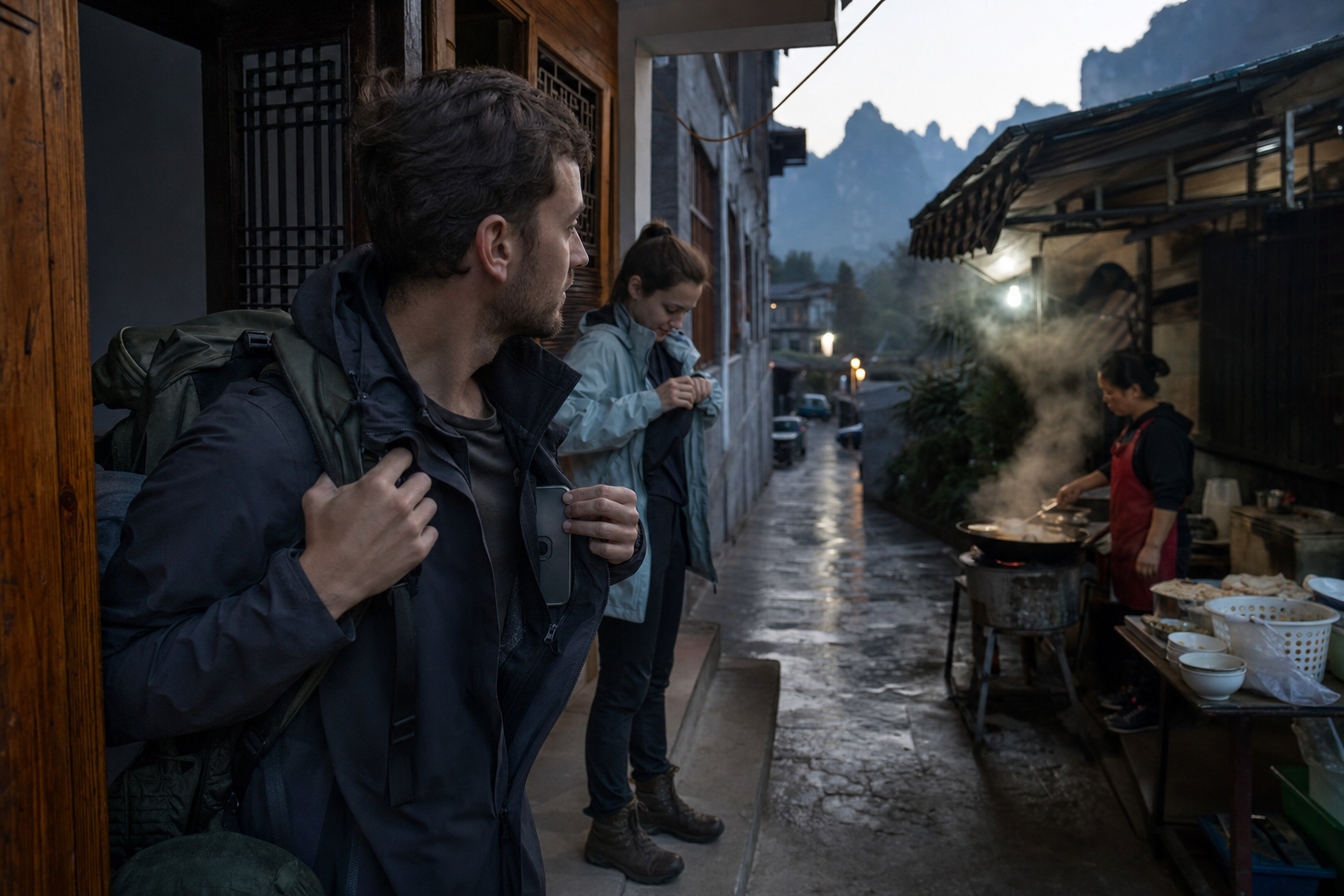
2025年10月18日早上六点二十,我站在张家界武陵源一家小客栈的木门口,一只手拉着背包肩带,一只手把手机从外套内袋里摸出来。天还没有完全亮,巷子尽头的早餐摊已经冒着白汽,老板娘在铁锅旁翻着米粉,远处山体像一堵湿冷的影子。我是一个从欧洲来的游客,同行的是我的大学同学米拉,她还在楼梯口整理雨衣。我们准备去天子山、袁家界和金鞭溪一带,昨天晚上客栈老板提醒过我们:山里天气变得快,索道和环保车排队时手机信号常常忽强忽弱,最好出门前把能准备的都准备好。那一刻我没有急着走,而是站在门口,把手机重新检查了一遍。我想让它少一点花哨,多一点可靠,因为在张家界这样的山地景区,手机不是拍照玩具那么简单,它更像当天行程的票夹、地图、天气站、翻译器和求助工具。
At 6:20 a.m. on October 18, 2025, I stood at the wooden doorway of a small guesthouse in Wulingyuan, Zhangjiajie, with one hand pulling the strap of my backpack and the other taking my phone from the inner pocket of my jacket. Dawn had not fully arrived. Steam was rising from a breakfast stall at the end of the lane, where the owner was turning rice noodles beside an iron pot, and the mountains in the distance looked like a damp, cold wall of shadow. I was a traveler from Europe, and my university friend Mira was still adjusting her raincoat near the stairs. We were heading toward Tianzi Mountain, Yuanjiajie, and Golden Whip Stream. The guesthouse owner had warned us the night before that mountain weather changed quickly, and that phone signal could become uneven while waiting for cable cars and shuttle buses. At that moment I did not rush out. I stood by the door and checked my phone again. I wanted it to be less fancy and more dependable, because in a mountain scenic area like Zhangjiajie, a phone is not just a camera. It becomes the ticket pouch, map, weather station, translator, and emergency tool for the day.
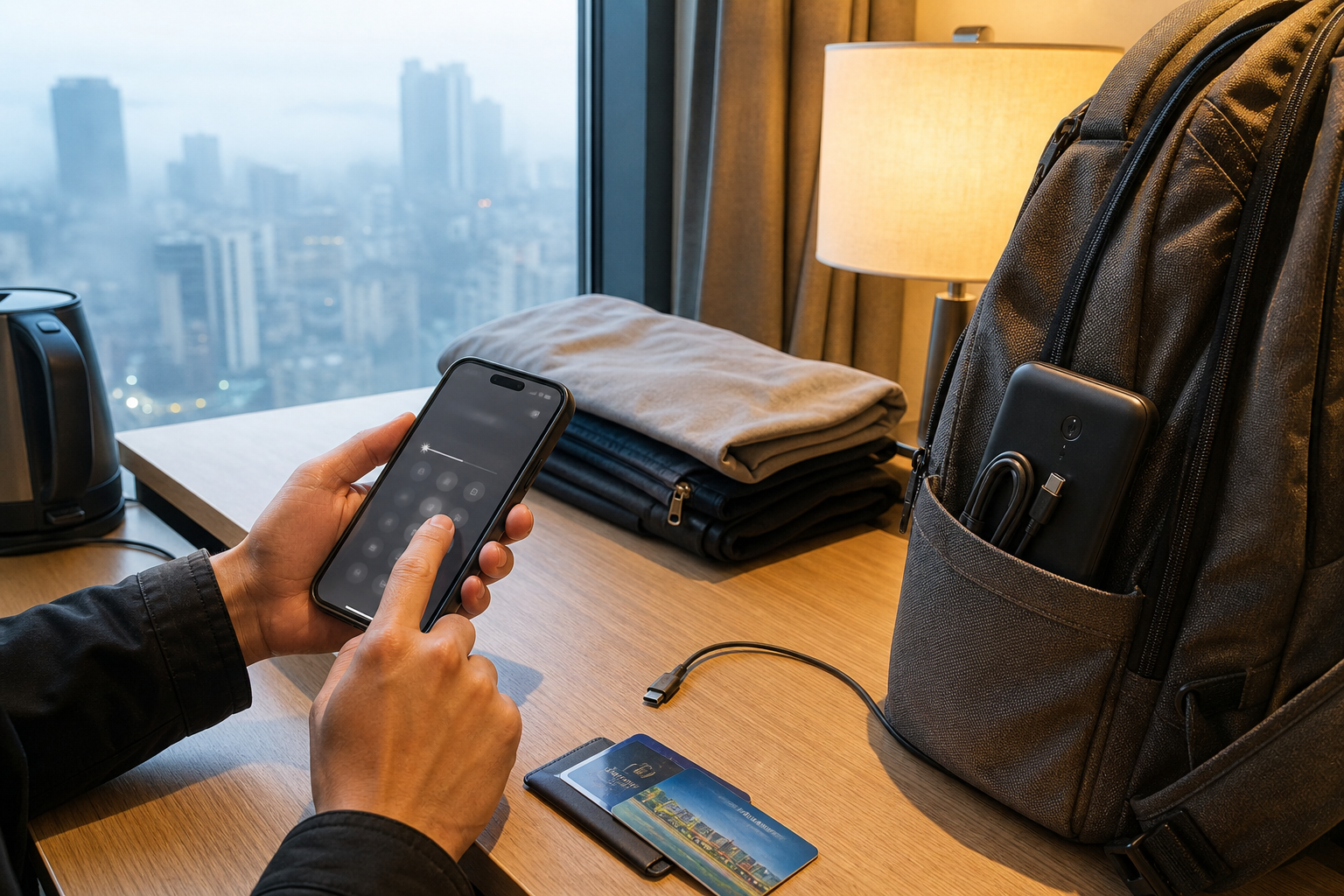
我先做的不是打开相机,而是把手机屏幕亮度调到一个在晨雾里能看清、又不会太耗电的程度。昨晚充满电以后,我没有让它整夜连接充电器,而是拔下来放在床头,早上电量还有百分之九十八。充电宝也在包侧袋里,短线缠好,接口朝外,方便排队时不用翻包。我把省电模式打开,关闭自动下载、自动更新和不必要的后台刷新,只留下天气、地图、支付、翻译、通信和景区相关应用的权限。以前旅行时我喜欢把手机当作移动办公室,邮件、云盘、社交软件都开着;在张家界出门前,我把它改得更像一把朴素的小工具刀,每个功能都要能在潮湿、拥挤、信号不稳的环境里派上用场。
The first thing I did was not open the camera. I adjusted the screen brightness to a level that was visible in the morning mist but not wasteful for the battery. After charging the phone fully the night before, I had unplugged it instead of leaving it connected all night, and in the morning it still showed ninety-eight percent. The power bank was in the side pocket of my bag, with a short cable coiled neatly and the connector facing outward, so I would not need to search through the bag while standing in a queue. I turned on battery saver mode, disabled automatic downloads, automatic updates, and unnecessary background refresh, and kept only the permissions for weather, maps, payment, translation, communication, and scenic-area services. On earlier trips I had treated my phone like a mobile office, with email, cloud storage, and social apps all active. Before going out in Zhangjiajie, I changed it into something more like a plain pocket tool, where every function had to be useful in damp, crowded, and unreliable conditions.
天气是我检查得最仔细的一项。张家界的山不是城市公园里的小坡,海拔、峡谷和雾气会把同一天分成几个季节。客栈门口还算温和,可天气应用显示山上体感温度更低,中午有短时小雨,下午风力会加大。我没有只看一个应用,而是把国内天气应用、景区公告页面和客栈老板发来的截图放在一起对照。手机里我保存了一张当天小时预报的截图,重点圈出可能下雨的时段和风速变化。这样做的好处不是让我变得紧张,而是在没有网络时仍然知道什么时候该穿上雨衣,什么时候不要在狭窄观景台停留太久,什么时候要给索道排队留出更宽的时间。
Weather was the item I checked most carefully. The mountains of Zhangjiajie are not small slopes in a city park; elevation, valleys, and mist can divide one day into several seasons. At the guesthouse door the air felt mild, but the weather app showed a colder perceived temperature higher up, light rain around midday, and stronger wind in the afternoon. I did not rely on a single app. I compared a Chinese weather app, the scenic-area notice page, and a screenshot sent by the guesthouse owner. I saved a screenshot of the hourly forecast and marked the likely rain period and the wind changes. The point was not to make myself nervous. The point was to still know, without internet, when to put on the raincoat, when not to linger too long on a narrow viewing platform, and when to allow more time for a cable-car queue.
地图也不能只靠在线定位。我在出发前把张家界国家森林公园周边、武陵源入口、天子山索道站、百龙天梯附近、袁家界换乘点和金鞭溪主要步道下载成离线地图。下载完成后,我关掉移动网络试了一次,确认路线、地名和收藏点还能显示。山里很多路径并不复杂,但游客一多,环保车站台、岔路口和观景平台会让人分不清方向,尤其是当标识被雨伞和人群挡住时。我的离线地图里不只标了景点,还标了厕所、医疗点、游客中心、出口方向和我们客栈的位置。我还把“今天最晚返程时间”写在一个离线备忘录里:如果下午三点半还没到某个换乘点,就不再临时加景点,而是直接往下山交通走。
Maps could not depend only on live positioning. Before leaving, I downloaded offline maps for the area around Zhangjiajie National Forest Park, the Wulingyuan entrance, Tianzi Mountain Cableway Station, the area near Bailong Elevator, the Yuanjiajie transfer points, and the main walking route of Golden Whip Stream. After the download finished, I turned off mobile data and tested it once to make sure the routes, place names, and saved points still appeared. Many mountain paths are not complicated by themselves, but when crowds gather, shuttle stops, forks, and viewing platforms can become confusing, especially when signs are blocked by umbrellas and people. My offline map included not only scenic spots but also toilets, medical points, visitor centers, exit directions, and the location of our guesthouse. I also wrote the latest return time in an offline note: if we had not reached a certain transfer point by 3:30 p.m., we would not add another stop and would head directly toward the downhill transport.
门票和预约信息我没有只放在一个应用里。景区电子票、身份证件照片页、护照号码、客栈地址、当天入园口、索道购票记录和环保车换乘提示,我全部截屏,并把这些图片放进一个名为“张家界当天”的相册。每张截图我都提前放大检查过,确保姓名、日期、票种和入口信息清楚。为了防止手机相册在弱网环境里加载云端内容,我把这些截图设置为本机保存,并在飞行模式下打开测试。米拉也把同样的票据保存了一份,我们互相拍下对方的护照信息页,但没有发到公开聊天群里,只存在各自手机的加密相册。这样的准备听起来笨,却能减少在闸机前、售票窗口边和队伍转弯处临时找信息的慌乱。
I did not keep ticket and reservation information inside only one app. I took screenshots of the scenic-area e-ticket, the photo page of my identity document, my passport number, the guesthouse address, the entrance for that day, the cable-car purchase record, and the shuttle-bus transfer notes, then placed all those images in an album named “Zhangjiajie Today.” I enlarged each screenshot beforehand to confirm that the name, date, ticket type, and entrance information were clear. To prevent the phone gallery from trying to load cloud-only files under weak signal, I made sure those screenshots were stored locally and opened them once in airplane mode. Mira saved the same ticket information on her phone as well. We photographed each other’s passport information page, but we did not send it into any public chat group; we kept it inside encrypted albums on our own devices. This kind of preparation may sound plain, but it reduces the panic of searching for details at ticket gates, service counters, and corners of crowded queues.
支付准备也要做得保守一点。中国的移动支付很方便,但山地景区里便利店、索道站和小摊附近的网络不总是稳定。我确认支付宝和微信支付都能打开,常用银行卡状态正常,也在钱包里放了少量现金,装在防水小袋里。手机里我没有保存完整银行卡照片,只在离线备忘录里写了发卡行客服电话和卡片尾号,便于丢卡时联系。为了减少误触,我把免密支付额度调低,出门后不再连接陌生免费网络。遇到人多的入口,我把手机放在胸前内侧口袋,不让它一直露在外面。张家界的风景会让人频繁举手机拍照,但在排队和上车时,我更愿意让手机安静地待在一个固定位置。
Payment preparation also needed to be conservative. Mobile payment in China is very convenient, but the network near small shops, cable-car stations, and stalls inside a mountain scenic area is not always stable. I confirmed that both Alipay and WeChat Pay could open, that my usual bank card was active, and that I had a small amount of cash in a waterproof pouch. I did not store full photos of bank cards on the phone. Instead, I kept the bank customer-service number and the last digits of the card in an offline note, in case I needed to report a lost card. To reduce accidental charges, I lowered the no-password payment limit and decided not to connect to unfamiliar free Wi-Fi after leaving the guesthouse. At crowded entrances, I kept the phone in an inner pocket near the front of my jacket instead of letting it remain visible. Zhangjiajie’s scenery makes people raise their phones constantly for photos, but during queues and boarding, I preferred the phone to stay quietly in one fixed place.
我还把手机语言和翻译设置调整得更适合当天使用。平时我的系统语言是英文,但我把常用地图和支付应用里的地区设置确认了一遍,避免在售票或检票页面跳出我看不懂的错误提示。翻译应用下载了中文和英文的离线包,还提前保存了几句话:我们要去哪个入口、请问最近的游客中心在哪里、这里能不能乘环保车、如果索道暂停应该从哪里下山、我们需要帮助但没有受伤。把这些句子放在收藏夹里,比现场对着风声和人群临时输入要可靠。米拉笑我像在准备一次小型考察,我说这不是紧张,是把求助这件事提前变得简单一点。
I also adjusted language and translation settings to suit the day better. My system language is usually English, but I checked the region settings in the map and payment apps to avoid unexpected messages that I could not understand during ticket purchase or entry checks. The translation app had offline Chinese and English packs downloaded, and I saved several sentences in advance: which entrance we wanted, where the nearest visitor center was, whether we could take a shuttle bus there, where to descend if the cable car was suspended, and that we needed help but were not injured. Keeping these sentences in favorites was more reliable than typing them under wind, noise, and crowds. Mira laughed and said I looked as if I were preparing for a small field expedition. I told her it was not anxiety; it was simply making the act of asking for help easier before help was needed.
同行人的联系安排不能只依赖即时消息。山里信号弱的时候,消息可能延迟,语音通话也可能断断续续。我和米拉在手机通讯录里互相标了紧急联系人,把客栈老板的电话、景区服务热线、旅行保险电话和国内朋友的号码都存在本机通讯录里,而不是只放在聊天记录里。我们约定,如果在人群里走散,先不用边走边找,而是在最近的明确地点停下,比如某个环保车站台、游客中心门口或厕所外侧空地;如果十五分钟内消息不通,就按离线地图上的集合点走。我们还把当天路线发给了住在上海的朋友,告诉她如果晚上八点还没收到我们的报平安信息,可以先打电话给客栈。
Contact planning between travel companions cannot rely only on instant messages. When mountain signal is weak, messages may arrive late, and voice calls may break up. Mira and I marked each other as emergency contacts in our phone address books. We saved the guesthouse owner’s number, the scenic-area service hotline, the travel insurance number, and a friend’s number in China directly on the phones, not only inside chat history. We agreed that if we got separated in a crowd, we would not keep walking while searching for each other. Instead, we would stop at the nearest clear place, such as a shuttle-bus platform, the entrance of a visitor center, or the open space outside a restroom. If messages failed for fifteen minutes, we would move toward the meeting point marked on the offline map. We also sent the day’s route to a friend in Shanghai and told her that if she had not received our safe-arrival message by 8:00 p.m., she could call the guesthouse first.
手机的防水和防摔比我想象得重要。张家界的雾不是只挂在远处,它会落在栏杆、台阶、背包带和屏幕上。我的手机没有新款旗舰那么强的防护,所以我把它放进透明防水袋里,袋口卷紧,再放进外套内袋。拍照时我才拿出来,拍完马上收回。防水袋不适合长时间充电,因此我在包里单独放了一个干燥的小布袋,给充电时临时使用。手机壳背面贴着一张小纸条,上面写着我的名字、客栈电话和一个国内朋友的号码,外面用透明胶封住。这样即使手机没电,别人捡到后也有机会联系到我们,而不是只能面对一块黑屏。
Water and drop protection mattered more than I had expected. The mist in Zhangjiajie does not stay only in the distance; it settles on railings, steps, backpack straps, and screens. My phone was not a new flagship with the strongest protection, so I placed it in a transparent waterproof pouch, rolled the opening tightly, and kept it inside my jacket. I took it out only when I wanted a photo and put it away immediately afterward. A waterproof pouch is not ideal for long charging sessions, so I kept a small dry cloth bag inside the backpack for moments when I needed to connect the power bank. On the back of the phone case, I attached a small paper label with my name, the guesthouse phone number, and the number of a friend in China, sealed under clear tape. That way, even if the phone ran out of power, someone who found it would have a chance to contact us instead of facing only a black screen.
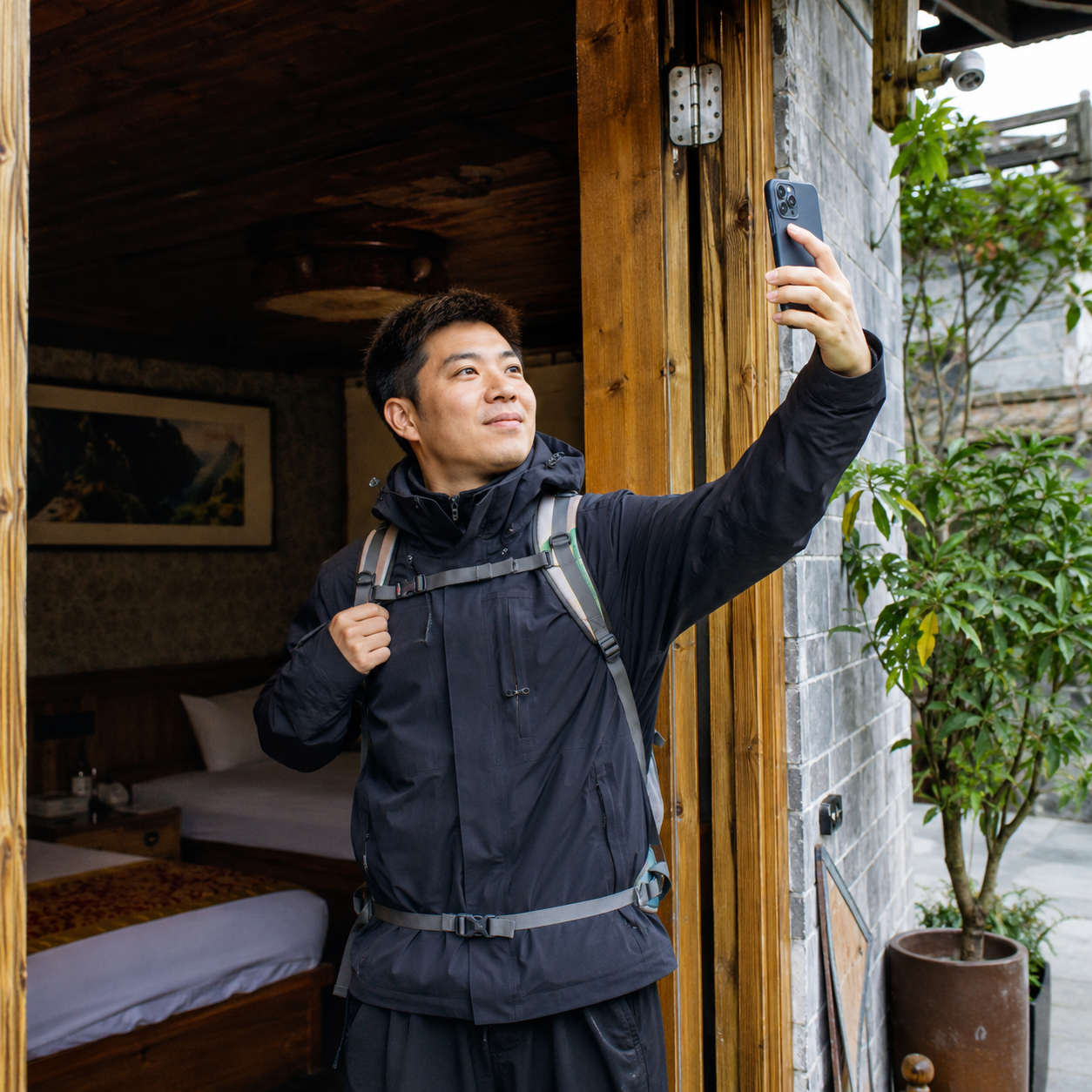
为了让手机更稳,我也让它更少说话。通知声音关掉,震动保留;娱乐应用从首页移走,只留下六个图标:天气、地图、票据相册、支付、翻译、电话。相机放在锁屏快捷入口,但我关闭了会自动上传的云同步。这样做有两个原因。一个是省电,另一个是减少分心。张家界的栈道和石阶有些地方湿滑,人的注意力如果一直被点赞、消息和新闻标题拉走,很容易忽略脚下。我不想在看山的时候不断被手机叫住,也不想在过窄路时为了回复一条并不紧急的信息停下来。那天手机需要服务行程,不需要指挥我的注意力。
To make the phone more reliable, I also made it speak less. I turned off notification sounds but kept vibration. I removed entertainment apps from the home screen and left only six icons: weather, maps, the ticket album, payment, translation, and phone. The camera stayed available from the lock screen, but I disabled automatic cloud upload. I did this for two reasons. One was battery life, and the other was attention. Some boardwalks and stone steps in Zhangjiajie can be slippery. If attention is constantly pulled away by likes, messages, and news headlines, it becomes easy to miss what is underfoot. I did not want the phone to keep calling me back while I was looking at the mountains, and I did not want to stop on a narrow path to answer a message that was not urgent. That day, the phone needed to support the journey, not command my attention.
在客栈门口检查完以后,我们走向早餐摊。我一边吃热米粉,一边做最后一次离线测试:打开票据相册,打开离线地图,打开翻译收藏句,打开通讯录里的景区电话。每一个都能在没有移动网络的情况下显示。老板娘看见我认真得像检查登山装备,笑着说今天雾大,山上照片会很好看,但别只顾看屏幕。我点头,把手机放回内袋,拉上拉链。她的话提醒我,准备手机不是为了更久地盯着手机,而是为了把必须依赖手机的时间缩短。真正上山以后,我希望大部分时间都用眼睛看路、看云、看岩壁,而不是在应用之间来回切换。
After finishing the check at the guesthouse door, we walked toward the breakfast stall. While eating hot rice noodles, I did one final offline test: opening the ticket album, the offline map, the saved translation sentences, and the scenic-area phone number in the contacts. Each one appeared without mobile data. The stall owner noticed how carefully I was checking and laughed, saying that the fog would be heavy and the photos would be beautiful, but we should not look only at screens. I nodded, put the phone back into the inner pocket, and zipped it closed. Her words reminded me that preparing the phone was not about staring at it longer. It was about reducing the amount of time I had to depend on it. Once we were on the mountain, I wanted most of my time to be spent using my eyes to watch the path, the clouds, and the rock walls, not switching between apps.
进景区时,第一个考验就来了。入口人多,大家撑着伞,检票口旁边的提示音、脚步声和导游喊话混在一起。我的手机在内袋里震了一下,显示网络从满格掉到两格。我没有急着刷新票务页面,而是直接打开本机相册里的门票截图,再把证件页准备好。工作人员看了一眼信息,提醒我们当天有一段步道因为维护需要绕行,旁边公告牌上写着替代路线。我马上拍下公告牌,又在离线地图上给绕行点加了星标。这个动作只花了不到一分钟,却避免了我们在山上听到不同说法时犹豫。手机在这里没有变聪明,只是把清楚的信息留住了。
The first test came at the entrance. There were many people, umbrellas were open, and the sounds of ticket machines, footsteps, and guides calling out mixed together. My phone vibrated inside my jacket, and the signal dropped from full bars to two. I did not try to refresh the ticket page. I opened the ticket screenshot stored on the phone and prepared the document page. A staff member glanced at the information and told us that one section of trail required a detour because of maintenance, with an alternative route written on a notice board nearby. I photographed the notice board at once and added a star to the detour point on the offline map. The action took less than a minute, but it prevented hesitation later when we might hear different explanations on the mountain. The phone did not become smarter there; it simply kept clear information from disappearing.
环保车排队时,我更能体会到“笨一点”的好处。车站旁边的游客一边看路线一边拍视频,信号忽然拥挤起来,很多页面转圈加载。我没有打开社交软件,也没有搜索临时攻略,只看提前保存的换乘说明:从武陵源入口到某站,再换乘去索道方向。米拉负责看站台标识,我负责看时间和电量。我们约定每次上车前确认目的地,下车后先站到边上再看手机,不在车门口停住。山路弯多,环保车启动和刹车都比较快,如果在上车台阶上低头找页面,很容易挡住别人,也容易让自己站不稳。手机准备得再好,也不能替代基本的身体安全。
The shuttle-bus queue made me appreciate the benefit of making the phone simpler. Around the station, visitors were checking routes and filming videos, and the signal suddenly became crowded, with many pages spinning as they loaded. I did not open social apps or search for last-minute guides. I looked only at the transfer note saved in advance: from the Wulingyuan entrance to one stop, then transfer toward the cable car. Mira watched the station signs, and I watched the time and battery. We agreed to confirm the destination before each ride and, after getting off, step aside before checking the phone, instead of stopping at the vehicle door. Mountain roads have many bends, and shuttle buses start and brake quickly. Looking down for a page while standing on the boarding step can block others and make you unstable. No amount of phone preparation can replace basic physical safety.
索道站附近风更明显,雾从山谷往上涌,人群移动速度也慢下来。我把天气截图重新打开,确认中午前后可能有小雨,于是我们在进索道站前就把雨衣从包底拿到上层,而不是等到雨点落下时在队伍里翻找。手机电量这时还有百分之八十七,我没有趁排队刷视频,而是把屏幕朝下放在内袋里,让它休息。排到一半时,广播提示风力变化,运行速度会调整,等待时间可能增加。因为我们提前给下午行程留了余量,所以没有焦躁,也没有马上修改整天路线,只把备忘录里的最晚返程点又看了一遍。
The wind became more obvious near the cable-car station. Mist rose from the valley, and the crowd moved more slowly. I opened the weather screenshot again and confirmed that light rain was possible around midday, so before entering the station we moved the raincoats from the bottom of the bag to the top instead of searching for them in the queue after the rain began. The phone still had eighty-seven percent battery, and I did not use the wait to watch videos. I placed it screen-down inside the inner pocket and let it rest. Halfway through the queue, a broadcast announced that wind conditions had changed, the operating speed would be adjusted, and the waiting time might increase. Because we had already allowed extra time for the afternoon, we did not become irritated and did not immediately rewrite the whole route. We simply checked the latest return point in the note again.
到了山上,信号开始像天气一样变化。有时消息一下子全跳出来,有时地图定位停在几分钟前的位置。我没有把这当作手机坏了,而是按预先想好的办法处理:看纸质指示牌,看离线地图的地形方向,看人流主要去向,再向穿制服的工作人员确认。袁家界一带观景台多,名字相近,手机定位的蓝点如果漂移,会让人误以为已经到了另一个平台。我给几个关键点拍了带路牌的照片,照片本身带时间信息,即使地图不准,也能回看我们经过的顺序。这样的记录不漂亮,却在雾大、人多和岔路密集时很实用。
On the mountain, the signal began to change like the weather. Sometimes messages appeared all at once; sometimes the map location froze where we had been several minutes earlier. I did not treat this as a phone failure. I followed the method I had prepared: read physical signs, check the terrain direction on the offline map, observe the main flow of people, and confirm with uniformed staff. Around Yuanjiajie there are many viewing platforms with similar names, and if the blue location dot drifts, it can make you think you have already reached a different platform. I photographed several key points together with their signs. The photos carried time information, so even if the map became inaccurate, we could review the order of places we had passed. The record was not elegant, but it was useful in thick mist, heavy crowds, and areas with many forks.
拍照当然是张家界行程的一部分,但我给相机也设了边界。站在栏杆后、脚下干燥、旁边不堵路时,我才拿出手机拍。自拍时我不用身体往后仰,也不把手机伸到栏杆外面。看到有人在狭窄台阶中央停下来拍长视频,我会先等一等,不从他背后硬挤过去。手机里的广角镜头能收下更多山峰,可它也会让人误判脚边距离。我宁愿少拍几张,也不愿为了构图把注意力放错位置。照片可以补拍,山路上的一次滑倒却不会因为照片好看而变得值得。
Photography was naturally part of the Zhangjiajie trip, but I set limits for the camera as well. I took out the phone only when I was behind a railing, standing on a dry surface, and not blocking the way. When taking selfies, I did not lean backward and did not extend the phone beyond the railing. If someone stopped in the middle of a narrow step to record a long video, I waited rather than squeezing past from behind. The wide-angle lens could fit more peaks into the frame, but it could also make the distance near my feet feel misleading. I preferred taking fewer pictures to placing my attention in the wrong place for a better composition. A photo can be taken again. A slip on a mountain path does not become worthwhile just because the picture looks good.
中午小雨落下来时,提前做的几件事都派上了用场。雨衣在包上层,防水袋已经准备好,天气截图告诉我们这阵雨不会太久,离线地图显示前方不远有游客服务点。我们没有站在树下临时研究路线,而是走到服务点屋檐下,喝水、吃带来的饼干,同时给手机和充电宝之间接了一会儿短线。充电时我把手机放在干布袋里,避免防水袋内壁的水汽影响接口。十几分钟后雨变小,我们没有急着冲出去,而是先确认下一段路是否经过长台阶。山里手机安全的一部分,其实是让充电、查路和休息尽量发生在安全、干燥、不挡人的地方。
When light rain arrived around noon, several preparations became useful at once. The raincoats were near the top of the bag, the waterproof pouch was ready, the weather screenshot told us the shower should not last long, and the offline map showed a visitor service point not far ahead. We did not stand under a tree trying to rethink the route. We walked to the eaves of the service point, drank water, ate the biscuits we had brought, and connected the phone to the power bank for a short while. While charging, I placed the phone in the dry cloth bag to prevent moisture inside the waterproof pouch from affecting the port. After more than ten minutes, the rain weakened. We did not rush out immediately. We first checked whether the next section included a long stairway. Part of phone safety in the mountains is making charging, route checking, and resting happen in places that are safe, dry, and not blocking others.
下午在金鞭溪附近,手机的角色又变了。峡谷里树多,光线暗,溪水声会盖住提示音,定位也变得迟钝。这里不需要频繁看票据,却需要注意同行人距离。我把手机从静音改成震动加强,放在能感觉到的位置;米拉走在前面时,每隔一段会在宽一点的地方停下,不让我们之间隔着太多旅行团。我们还约好不戴双耳耳机,因为水声、车辆提示和游客提醒都可能是安全信息。手机里有音乐和播客,但那一段我没有打开。自然的声音已经足够丰富,更重要的是,它们能告诉我周围正在发生什么。
In the afternoon near Golden Whip Stream, the phone’s role changed again. The gorge had many trees, the light was dim, the sound of water covered notification tones, and location became slower. This area did not require frequent ticket checks, but it did require attention to the distance between companions. I changed the phone from silent to stronger vibration and kept it where I could feel it. When Mira walked ahead, she stopped every so often in a wider place so that too many tour groups would not come between us. We also agreed not to wear earbuds in both ears, because the sound of water, vehicle alerts, and reminders from other visitors could all be safety information. The phone contained music and podcasts, but I did not open them on that section. The natural sounds were already rich enough, and more importantly, they told me what was happening around me.
有一次我们差点走错方向。一个路口的临时标识被几把伞挡住,人流分成两边,手机定位又停在原地。我没有凭感觉选择,也没有继续往前赌一段,而是让米拉站在原地看包,我走到旁边的工作人员岗亭询问。为了避免翻译误会,我打开提前收藏的句子,再指给他看离线地图上的目标点。工作人员很快指出正确方向,还提醒我们那边台阶湿,慢一点。回到米拉身边时,我把这个路口拍下来,并在地图上做了一个简短备注。这个小插曲让我更确信,手机最可靠的用法不是假装它永远知道答案,而是在它不确定时帮助我更清楚地问人。
At one point we almost went the wrong way. A temporary sign at a junction was partly hidden by umbrellas, the crowd split in two directions, and the phone location remained frozen. I did not choose by instinct, and I did not keep walking just to see what happened. I asked Mira to stand still with the bag while I went to a nearby staff post. To avoid a translation misunderstanding, I opened a saved sentence and pointed to the destination on the offline map. The staff member quickly showed the correct direction and reminded us that the steps there were wet and that we should go slowly. When I returned to Mira, I photographed the junction and added a short note on the map. That small moment made me more certain that the most reliable use of a phone is not pretending it always knows the answer, but helping me ask a clearer question when it does not.
电量管理到下午四点变得关键。许多人这时已经拍了大量照片,手机发热、相册同步、导航和短视频一起消耗电量。我看了一眼自己的电量,还有百分之五十八,充电宝几乎没动。这个数字让我们有余地处理返程信息:查看环保车末班提示、确认下山方向、给客栈发消息说我们大概几点回到武陵源。发送消息后,我等它显示已送达,再截了一张聊天记录,避免山区网络回跳时误以为没有发出。剩下的路我只在必要时拿手机,尽量让屏幕保持关闭。手机电量不是越省越好,而是要留给真正需要判断和联系的时刻。
Battery management became important around four in the afternoon. By then many visitors had taken a large number of photos, and phone heat, gallery syncing, navigation, and short videos were consuming power together. I checked my own battery and saw fifty-eight percent, with the power bank barely used. That number gave us room to handle return information: checking the last shuttle reminders, confirming the downhill direction, and messaging the guesthouse about roughly when we would return to Wulingyuan. After sending the message, I waited until it showed as delivered, then took a screenshot of the chat so I would not wonder later whether the message had failed during a signal jump. For the remaining route, I took out the phone only when necessary and kept the screen off as much as possible. The goal is not to save battery for its own sake, but to reserve it for moments that truly require judgment and contact.
返程的环保车上,大家都显得疲惫,车窗起雾,手机屏幕的光在每个人脸上闪动。我没有立刻整理照片,而是检查当天的几个安全点是否完成:我们还在同一辆车上,客栈知道大概返程时间,手机有足够电量,支付应用能打开,离线地图仍然显示客栈位置。下车前我把背包拉链摸了一遍,确认充电宝、证件袋和手机都在。走出车站时天色已经暗下来,武陵源街上的灯亮起,早餐摊变成了晚饭摊。我给上海的朋友发了报平安信息,也给客栈老板回了一句快到了。那时手机重新接近城市网络,却没有必要马上恢复所有通知。
On the return shuttle, everyone looked tired. The windows were fogged, and phone screens flickered across people’s faces. I did not immediately organize photos. Instead, I checked the day’s safety points: we were still on the same vehicle, the guesthouse knew our approximate return time, the phone had enough battery, the payment apps could open, and the offline map still showed the guesthouse location. Before getting off, I touched the zippers of my backpack to confirm that the power bank, document pouch, and phone were all there. When we left the station, the sky had darkened, and the lights on the Wulingyuan street were on. The breakfast stalls had become dinner stalls. I sent a safe-arrival message to the friend in Shanghai and replied to the guesthouse owner that we were almost back. By then the phone was returning to a city network, but there was no need to restore every notification immediately.
回到客栈房间后,我才把手机从这一天的“山地模式”里慢慢放出来。先擦干防水袋和手机壳,再检查充电口有没有水汽;然后把重要票据、绕行公告和带路牌的照片备份到本地硬盘,而不是只依赖云端。无用的重复照片可以晚点删,关键截图要先留好。我也把当天实际路线和原计划对照了一下,发现真正帮上忙的不是某个神奇应用,而是几个朴素动作:提前保存、离线测试、减少通知、固定放置、分工确认、在安全地点操作。张家界的山很壮观,但它不会因为游客的手机更智能而降低自己的复杂性。
After returning to the guesthouse room, I slowly released the phone from its “mountain mode.” First I wiped the waterproof pouch and phone case dry, then checked whether there was moisture near the charging port. After that, I backed up the important ticket images, detour notice, and signpost photos to a local drive instead of relying only on the cloud. Useless duplicate photos could be deleted later; key screenshots needed to be preserved first. I also compared the actual route with the original plan and found that what had helped most was not a magical app, but several plain actions: saving information in advance, testing it offline, reducing notifications, keeping the phone in a fixed place, confirming roles between companions, and using the phone only in safe spots. Zhangjiajie’s mountains are magnificent, but they do not become less complex just because a visitor’s phone is smarter.
如果有人问我在张家界出门前应该怎样准备手机,我不会给出一串炫目的应用清单。我会说,先想清楚当天手机必须完成的任务,再把其他东西暂时关小。天气要能离线看,地图要能离线用,门票和证件信息要能在无网时打开,索道和环保车信息要提前保存,充电宝要容易拿到,同行人要有不靠网络也能执行的集合办法。支付要方便,但不要把所有安全感都押在网络上;拍照要尽兴,但不要为了屏幕里的山忽略脚下的路。这样的手机准备不显得高级,却很适合张家界:山里有雾、有雨、有排队、有高度差,也有让人一抬头就忘记屏幕的风景。
If someone asks me how to prepare a phone before going out in Zhangjiajie, I would not give a dazzling list of apps. I would say: first decide what the phone must accomplish that day, then turn down everything else. Weather should be viewable offline, maps should work offline, ticket and document information should open without signal, cable-car and shuttle-bus details should be saved in advance, the power bank should be easy to reach, and companions should have a meeting method that does not depend on the network. Payment should be convenient, but not all confidence should rest on connectivity. Photography should be enjoyable, but the road underfoot should not be ignored for the mountain inside the screen. This kind of phone preparation does not look sophisticated, but it fits Zhangjiajie well: the mountains have mist, rain, queues, elevation changes, and scenery so powerful that one glance upward can make you forget the screen.
那天晚上九点左右,我坐在窗边给手机充电,外面街上还有游客拖着行李经过,雨水从屋檐滴到石板路上。米拉在旁边翻看照片,笑着说我们拍得不算多,但每张都记得是在哪里停下来的。我看着手机屏幕重新亮起,通知开始慢慢回来,却没有立刻打开所有应用。白天那种更笨也更稳的设置让我轻松了一整天:需要它时,它有电、有资料、有路线、有联系人;不需要它时,它不会不断把我从山里拉回屏幕里。对我来说,这就是张家界出门前最值得做的手机准备。它不追求完美控制,只是在天气、山路、人群和信号之间,为自己留出一点清醒和余地。
At about nine that night, I sat by the window and charged the phone. Outside, visitors were still pulling luggage along the street, and rainwater dripped from the eaves onto the stone pavement. Mira looked through the photos beside me and laughed, saying we had not taken that many, but we remembered exactly where each one had been taken. I watched the phone screen light up again as notifications slowly returned, but I did not reopen every app at once. The simpler and steadier setup from the day had made everything easier: when I needed the phone, it had power, information, routes, and contacts; when I did not need it, it did not keep pulling me out of the mountains and back into the screen. For me, that was the most worthwhile phone preparation before going out in Zhangjiajie. It did not aim for perfect control. It simply gave me a little clarity and room between weather, mountain paths, crowds, and unstable signal.
- 云南15天深度路线:大理丽江香格里拉 | 15-Day Yunnan Route: Dali, Lijiang & Shangri-La
- 我在上海小学门口等放学时,第一次真正听懂“你吃了吗”为什么不是在问饭 | Waiting Outside a Shanghai Primary School, I Finally Understood Why “Have You Eaten?” Is Not Really About Food
- 国庆出行避坑指南 | National Day Travel Tips: Avoiding the Crowds
- 我在大理的风里,重新听见自己说话 | In Dali’s wind, I heard myself speak clearly again
- 天津海河边的傍晚,不适合用打卡速度走完 | An Evening by Tianjin’s Haihe River Is Not for Check-In Speed
- 黄河、桥和夜市之间,我先把兰州装进了一块手机屏幕里 | Between the Yellow River, Bridges, and Night Markets, I First Fit Lanzhou into My Phone Screen
- 中国凉菜:一桌好饭从凉菜开始 | Chinese Cold Dishes: Every Great Meal Starts Here
- 从成都出发的三天川西自驾路线 | A 3-Day Road Trip from Chengdu into Western Sichuan
- 我第一次坐中国夜间高铁,发现安静也是一种旅行服务 | On My First Evening High-Speed Train in China, Quiet Became Part of the Service
- 打车前多看一眼上车点,能少走很多冤枉路 | Checking the Pickup Point Before Hailing a Ride Saves Many Steps
Comments (0)