
火锅点单避坑指南:第一次吃别踩这些雷 | Hot Pot Ordering Survival Guide: Avoid These Mistakes on Your First Visit
火锅点单避坑指南:第一次吃别踩这些雷 | Hot Pot Ordering Survival Guide: Avoid These Mistakes on Your First Visit
第一次吃火锅,很多人犯同一个错误:点太多。
菜单上什么都想试,结果桌上堆满了还没下锅的食材,最后打包带走一半。火锅不是自助餐,是一个需要节奏感的饮食体验。
First-time hot pot diners make the same mistake: ordering too much.
Everything on the menu looks interesting, so the table ends up piled with uncooked ingredients, and half gets packed to go. Hot pot isn't a buffet — it's a dining experience that requires pacing.
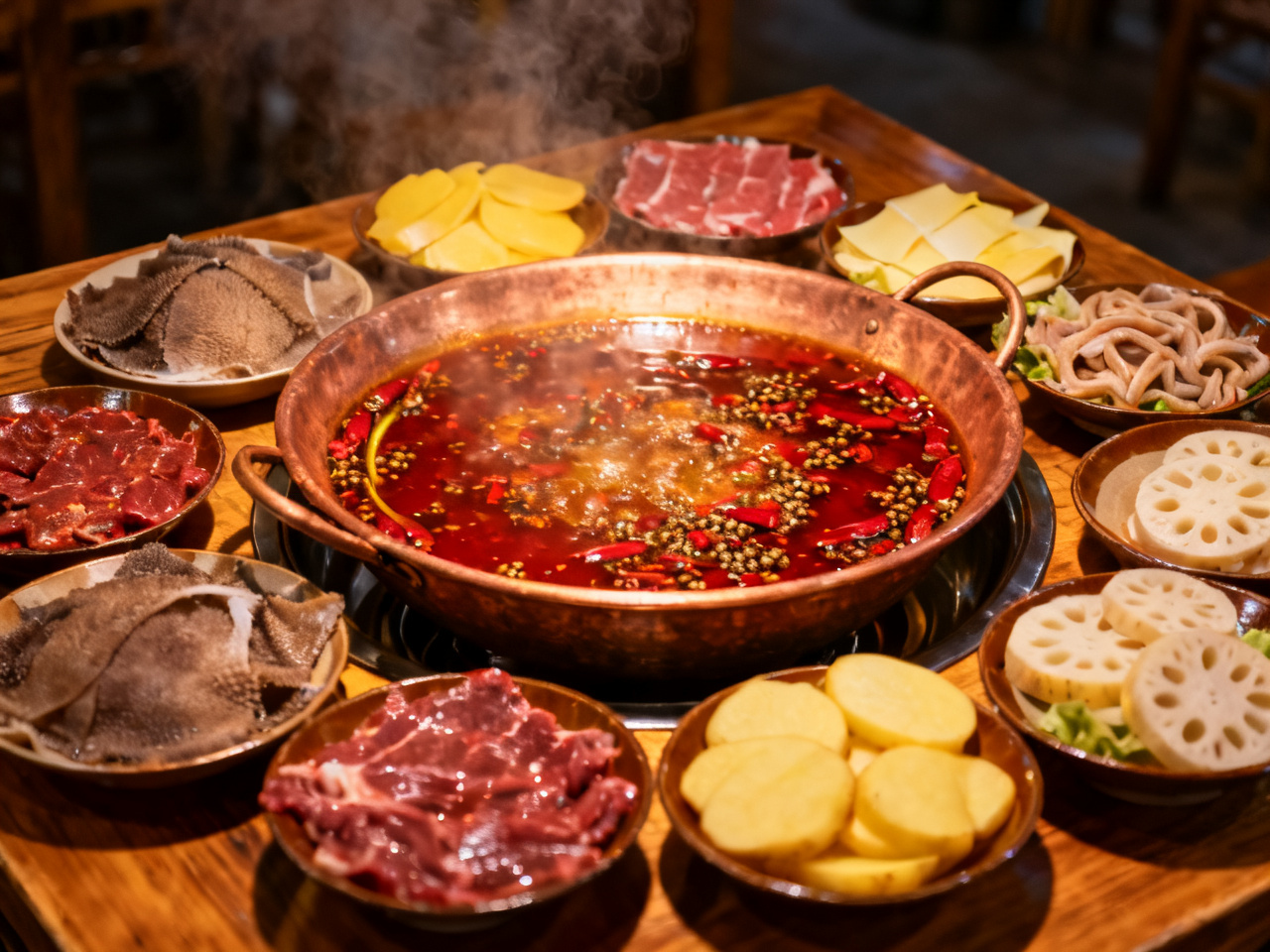
先选锅底 / Choose Your Broth First
锅底是整顿饭的基础,选错了后面怎么补救都没用。
重庆/四川红汤:麻辣,花椒和辣椒的组合。如果你辣度耐受一般,选"微辣"或"中辣",不要直接点"特辣"——那是认真的。
清汤/骨汤:适合不吃辣或想品尝食材本味的人。北方涮羊肉(铜锅涮肉)通常用清汤。
鸳鸯锅:半红半清,两种都能吃,适合同桌口味不一的情况。
番茄锅/菌菇锅:近年流行的"轻辣"选项,酸甜或鲜香,适合第一次尝试的人。
The broth is the foundation. Get it wrong and nothing else saves the meal.
Chongqing/Sichuan red broth: Mala — the combination of Sichuan peppercorn and chili. If your spice tolerance is moderate, order "mild" or "medium." Don't go straight to "extra spicy" — it's serious.
Clear/bone broth: For those avoiding spice or wanting to taste the ingredients themselves. Northern-style lamb hot pot (copper pot) typically uses clear broth.
Yuanyang (half-and-half): Half red, half clear — good when the table has mixed spice preferences.
Tomato/mushroom broth: Popular "light spice" options in recent years, tangy-sweet or umami-rich. Good for first-timers.
必点 vs 可跳过 / Must-Order vs Skip
必点(几乎不会踩雷): - 毛肚(牛百叶):火锅灵魂食材,涮7-10秒,脆嫩 - 鸭肠:涮5-8秒,口感弹脆,比听起来好吃得多 - 薄切牛肉/羊肉:涮10-15秒,嫩滑 - 豆腐/冻豆腐:吸汤,百搭 - 宽粉/土豆粉:收尾必备,吸饱汤汁
第一次可以跳过: - 脑花(猪脑):口感特殊,接受度两极分化 - 黄喉(猪主动脉):需要掌握涮的时间,否则太硬 - 各种内脏拼盘:建议先单点一样试试
Must-order (almost never disappoints): - Maodu (牛百叶, beef tripe): The soul of hot pot. Blanch 7–10 seconds, crispy and tender. - Duck intestines: Blanch 5–8 seconds, springy texture, much better than it sounds. - Thinly sliced beef/lamb: Blanch 10–15 seconds, silky smooth. - Tofu/frozen tofu: Absorbs the broth, pairs with everything. - Wide sweet potato noodles: Essential for finishing — they soak up all the flavor.
Skip on your first visit: - Brain (脑花, pig brain): Polarizing texture. - Yellow throat (黄喉, pig aorta): Timing-sensitive; too hard if over-cooked. - Mixed offal platters: Try one type first before committing to a platter.
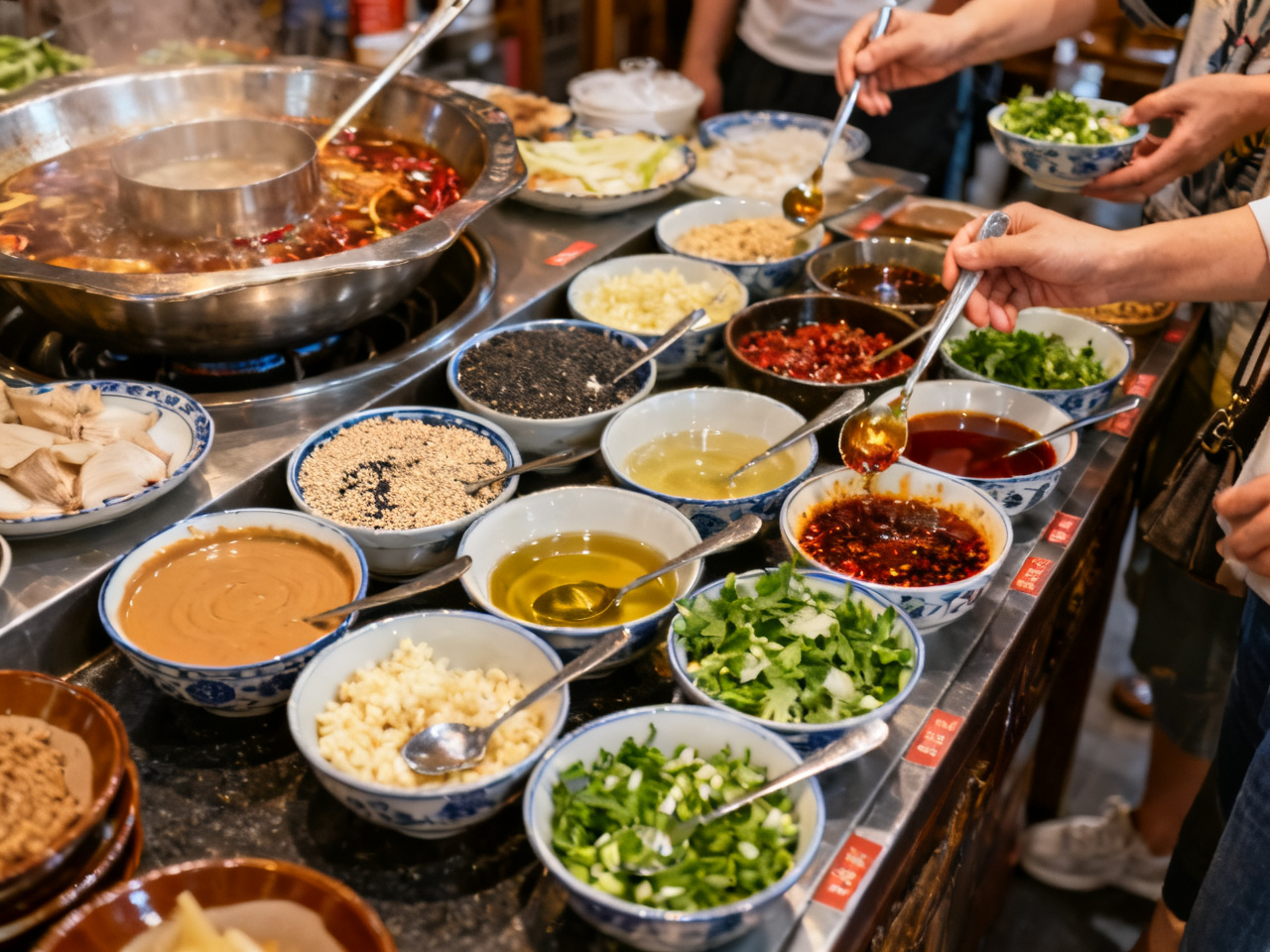
蘸料怎么调 / How to Make Your Dipping Sauce
火锅蘸料是个人发挥的空间。常见基础配方:
麻酱碟(北方风格):芝麻酱+腐乳+韭菜花+少量香油,适合涮羊肉。
油碟(川渝风格):香油+蒜末+葱花,有时加少量醋,适合红汤火锅降辣。
万能公式:香油打底 + 蒜末 + 葱花 + 少量生抽 + 根据口味加辣椒/芝麻酱。
The dipping sauce is your personal canvas. Common base formulas:
Sesame paste bowl (northern style): Sesame paste + fermented tofu + chive flower paste + a little sesame oil. Classic with lamb hot pot.
Oil bowl (Sichuan/Chongqing style): Sesame oil + minced garlic + scallions, sometimes a splash of vinegar. Cuts the spice from red broth.
Universal formula: Sesame oil base + minced garlic + scallions + a little soy sauce + add chili or sesame paste to taste.
涮的时间 / Blanching Times
| 食材 Ingredient | 时间 Time |
|---|---|
| 毛肚 Beef tripe | 7-10秒 7–10 sec |
| 鸭肠 Duck intestines | 5-8秒 5–8 sec |
| 薄切牛羊肉 Thin beef/lamb | 10-15秒 10–15 sec |
| 虾滑/鱼丸 Shrimp paste/fish balls | 2-3分钟 2–3 min |
| 豆腐 Tofu | 3-5分钟 3–5 min |
| 宽粉 Wide noodles | 5-8分钟 5–8 min |
时间是参考值,红汤沸腾程度影响实际时间。毛肚和鸭肠宁可短不可长——过了就老了。
These are reference times; actual time depends on how vigorously the broth is boiling. For tripe and duck intestines, err on the shorter side — overcooking makes them tough.
价格参考 / Price Reference
人均消费因城市和档次差异很大:
- 街边小店(重庆/成都):人均50-80元
- 连锁品牌(海底捞、呷哺呷哺):人均100-150元
- 高端火锅:人均200元以上
海底捞以服务著称——等位时有免费零食和美甲,服务员会帮你把头发扎起来、给手机套保护袋。价格比普通连锁贵约30%,但体验值得至少去一次。
Per-person cost varies widely by city and tier:
- Street-level shops (Chongqing/Chengdu): ¥50–80/person
- Chain brands (Haidilao, Xiabu Xiabu): ¥100–150/person
- Premium hot pot: ¥200+/person
Haidilao is famous for its service — free snacks and nail art while waiting, staff who tie your hair back and put a protective bag over your phone. About 30% pricier than average chains, but worth experiencing at least once.
吃完火锅,身上会有味道——这是正常的,所有人都一样。建议火锅之后不要安排需要正式着装的活动。
After hot pot, your clothes will smell — this is universal and expected. Don't schedule anything requiring formal attire afterward.
如果你对中国食物还想深入了解,中国早餐地图展示了完全不同的饮食面貌。关于中国饮食文化的更多背景,茶国度如何爱上咖啡和一块豆腐的两千年旅程都值得一读。
For a completely different side of Chinese food, China's Breakfast Map covers eight cities' morning meals. For more food culture background, How a Tea Nation Fell for Coffee and A Block of Tofu's 2,000-Year Journey are both worth reading.

- 中医传统疗法指南 | Traditional Chinese Medicine
- 第一次进广州,最先扑到脸上的往往不是景点感,而是早餐摊那股热气 | When You First Enter Guangzhou, What Hits Your Face Is Often Not Landmark Energy but the Heat from Breakfast Stalls
- 丽江古城深度游:纳西文化与雪山美景 | Lijiang Old Town: Naxi Culture & Snow Mountain Views
- 新疆最容易拍出大片,可真正决定一条线能不能走顺的是那些留白路段 | Xinjiang Is Easy to Film Spectacularly, but the Blank Stretch Between Highlights Determines Whether the Route Works
- 第一次用中国公共厕所,我学会提前看标识和纸巾 | My First Public Toilet Lesson in China Was to Check Signs and Tissue First
- 版画拓印体验:我第一次明白一张纸为什么也能“接住时间” | Print Rubbing Experience: The First Time I Understood How Paper Can Catch Time
- 一场突来的雨,让我在中国学会把屋檐下当成一种临时公共空间 | A Sudden Rain in China Taught Me to See the Eaves as Temporary Public Space
- 春节民俗全攻略:年夜饭到庙会 | Spring Festival Guide: New Year Dinner to Temple Fairs
- 水果摊前站了十五分钟,我才学会在中国买水果不是只看价格 | Fifteen Minutes at a Fruit Stall Taught Me That Buying Fruit in China Is About More Than Price
- 东北冬季路线:哈尔滨雪乡长白山 | Northeast Winter Route: Harbin, Snow Town & Changbai
Comments (0)