
第一次在中国夜市买烤串,我学会先控制手,而不是先追最热闹的摊子 | The First Lesson I Learned Buying Skewers at a Chinese Night Market Was to Control My Hand Before Chasing the Busiest Stall
第一次在中国夜市买烤串,我学会先控制手,而不是先追最热闹的摊子 | The First Lesson I Learned Buying Skewers at a Chinese Night Market Was to Control My Hand Before Chasing the Busiest Stall
我第一次在中国夜市买烤串,是在一个夏天偏晚的晚上。天已经黑透了,摊位上的灯把路边一层薄薄的油烟照得发亮,风里全是孜然、辣椒面、炭火和甜口酱料混在一起的味道。塑料凳歪歪扭扭地排在路边,啤酒瓶碰桌子的声音、孩子跑过去时拖鞋拍地的声音、老板一边翻串一边喊“这边好了”的声音,全都挤在同一条街上。我那时候刚到中国没多久,对夜市有一种很典型的外来者兴奋:只要看到人多、烟大、声音热闹,就觉得那一定是最值得冲过去的一家。
The first time I bought barbecue skewers at a Chinese night market, it was late on a summer evening. The sky was already fully dark, and the stall lights made the thin layer of oily smoke over the roadside glow. The wind carried cumin, chili powder, charcoal, and the sweet smell of sauce all mixed together. Plastic stools sat unevenly along the curb. Beer bottles knocked against tables, children slapped the ground with their sandals as they ran past, and stall owners flipped skewers while shouting that an order was ready. Everything was crowded into the same stretch of street. I had only been in China a short time then, and I carried a very typical outsider excitement about night markets: if a stall had a lot of people, a lot of smoke, and a lot of noise, I assumed it must be the one worth rushing toward.
结果我那天差点犯了一个特别直接的错误:还没想清楚我们两个人到底能吃多少,就先在最热闹的摊子前拿起小铁篮,见什么顺眼夹什么。羊肉串、鸡翅、烤茄子、豆皮、金针菇、掌中宝、馒头片,我一边闻着香味一边越夹越快,心里只想着“来都来了,多试一点”。摊前的冰柜门开开合合,烤架上的火苗被油脂滴下去时猛地窜一下,旁边桌的几个人正把刚烤好的肉串往盘里一把一把地放,看得我更容易失去判断。就在我快把篮子装满时,老板抬头看了我一眼,笑着问:“几个人吃?”我说两个人。他立刻回了一句:“先少拿点,不够再加,夜市最怕一上来拿太多。”那句话像一盆冷水,不是把我浇灭了,而是把我从纯粹兴奋里拉回了现实。
That night I almost made a very direct mistake: before thinking clearly about how much two people could actually eat, I grabbed a small metal basket at the busiest stall and started loading anything that looked appealing. Lamb skewers, chicken wings, grilled eggplant, tofu skin, enoki mushrooms, cartilage, toasted bread slices—I kept picking faster and faster, breathing in the smell and thinking only, “Since I’m here, I should try more.” The freezer doors at the stall kept opening and closing. Flames jumped up when fat dripped onto the grill. At the table beside us, several people were dropping cooked skewers onto a plate by the handful, which made it even easier for me to lose perspective. Just as my basket was getting too full, the owner looked up and asked with a grin, “How many people are eating?” I said, “Two.” He answered immediately, “Take less first. You can always add more. The worst thing at a night market is grabbing too much at the start.” It felt like cold water, not because it killed the excitement, but because it pulled me out of excitement and back into reality.
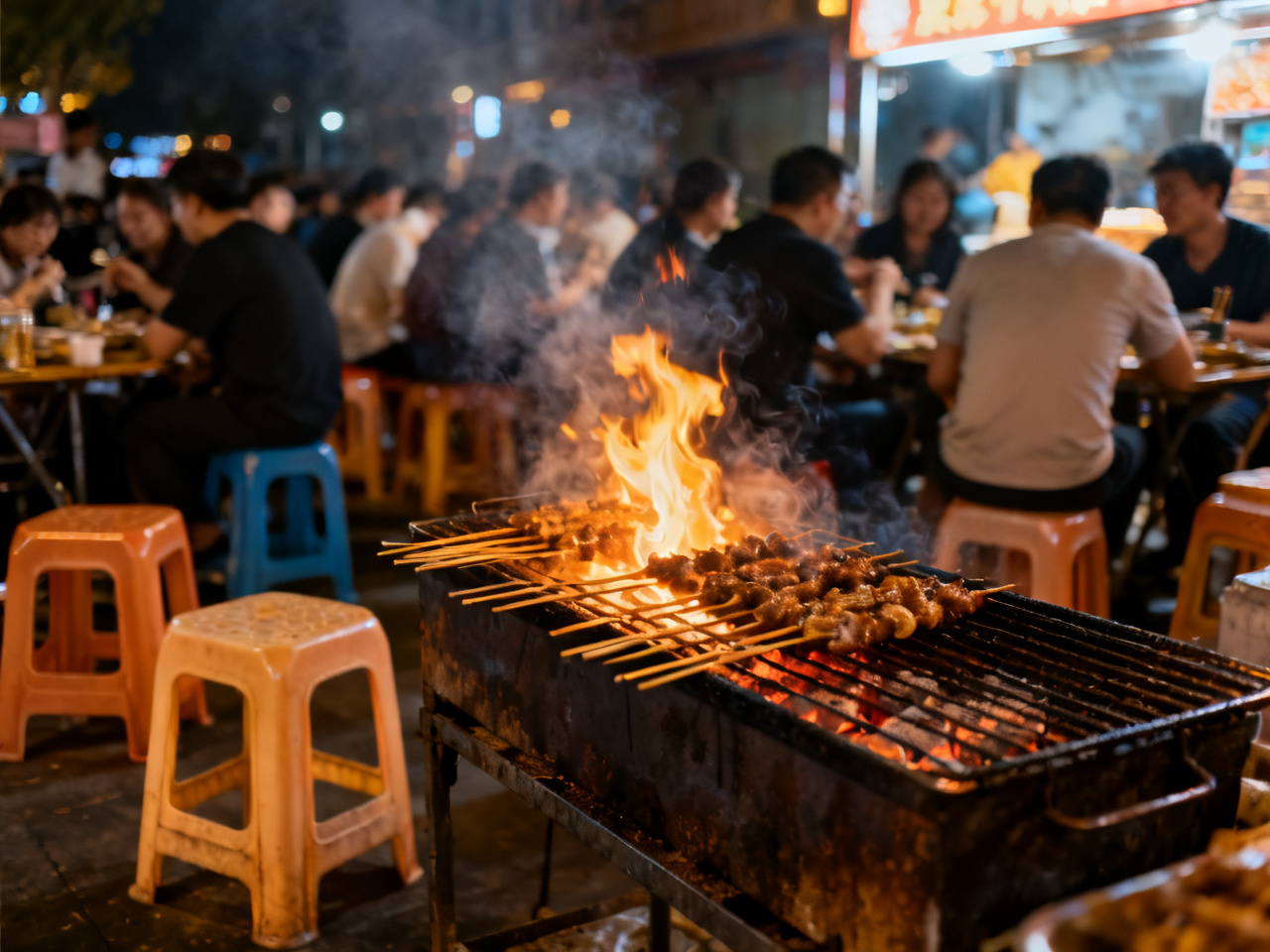
后来我才明白,中国夜市的热闹并不是催你失控,而是考你会不会在热闹里保持判断。真正熟门熟路的人,很少一上来就把篮子塞满。他们会先看烤架节奏,看看哪类串翻得快、哪类出得慢;也会先确认同行的人想吃肉多一点还是蔬菜多一点;如果摊子生意特别火,还会先拿那些最稳妥、最能判断口味的基础款,比如羊肉串、豆皮、韭菜、烤馒头片,吃过第一轮再决定要不要加大件。那种克制看起来一点也不扫兴,反而像一种更成熟的参与方式。你不是被夜市推着走,而是在烟火里慢慢找到自己的节奏。
Later I understood that the liveliness of a Chinese night market is not there to push you into losing control. It tests whether you can keep your judgment inside the noise. People who truly know what they are doing rarely fill the basket at once. They first watch the pace of the grill, noticing which kinds of skewers turn over quickly and which take longer. They check whether the people they are with want more meat or more vegetables. And if the stall is especially busy, they often begin with dependable basics that let them judge the flavor of the place—lamb skewers, tofu skin, garlic chives, grilled bread slices—before deciding whether to add larger items in a second round. That kind of restraint does not kill the fun at all. It feels more like a mature way of taking part. You are not being dragged by the night market. You are finding your own rhythm inside the smoke and noise.
那天老板还顺手教了我一个特别中国式、也特别实用的点单逻辑。他把我篮子里那几样最占肚子的东西挑出来一点,说两个人第一次来,先保证“每样能尝到,又别把自己吃撑到后面走不动”。他说夜市和坐馆子不一样,重点不是一次点到位,而是边吃边调。你可以先来十几串,坐下来听听旁边桌在点什么,看看哪一盘几乎每桌都会再加;如果某样味道特别对,你第二轮再拿,老板也更容易给你现烤得准。那一刻我才发现,夜市真正迷人的地方不只是食物多,而是它允许你在不断调整里参与。不是做一张完美订单,而是做一连串小判断。
That owner also showed me a very Chinese, very practical ordering logic. He removed a few of the most filling items from my basket and said that for two people coming the first time, the goal is to “taste a bit of everything without getting so full you can barely walk afterward.” He explained that a night market is different from sitting in a restaurant. The key is not placing a perfect order at once, but adjusting while you eat. You can start with a dozen or so skewers, sit down, listen to what nearby tables are ordering, and notice which dishes seem to get reordered everywhere. If one flavor really suits you, you grab more in the second round, and the stall owner can grill it fresh with better timing. That was when I realized the real charm of a night market is not simply variety. It is the permission to participate through constant adjustment. You are not making one perfect order. You are making a series of small judgments.
我后来去别的夜市时,也开始留意那些“看起来最会吃的人”怎么拿东西。有人会先把荤素比例想好,不让整盘都是重口味;有人会先问一句辣度能不能分开,照顾同行人;有人明明很饿,第一轮也还是只拿一个烤茄子、几串肉和一份主食垫底,给后面留空间。还有一个细节我特别喜欢:很多摊前虽然人挤人,但真正懂行的人并不会堵在最前面慢慢研究,而是先让自己想清楚,再上前拿,拿完就立刻把位置空出来。这一点和我后来在中国很多公共餐饮空间里看到的节奏很像——快,不等于慌;热闹,也不等于乱。
Later, when I went to other night markets, I started paying attention to how the people who looked most experienced handled their choices. Some balanced meat and vegetables from the start so the whole plate would not become too heavy. Some asked whether the spice level could be separated to suit the people they were with. Some were obviously hungry, yet still limited the first round to one grilled eggplant, a few meat skewers, and a staple to create a base while leaving room for more later. There was another detail I really liked: even though people crowded tightly around many stalls, those who truly knew the rhythm did not stand in front forever studying every option. They thought first, stepped forward, took what they wanted, and then cleared the space immediately. That felt similar to the rhythm I have since seen in many eating spaces across China—fast does not mean frantic, and lively does not have to mean chaotic.
顺着这个判断方法继续看,中国夜市和深夜城市节奏和中国街头美食里的判断方法也能互相印证。
Following the same way of reading a scene, 中国夜市和深夜城市节奏 and 中国街头美食里的判断方法 also reinforce this habit from other angles.
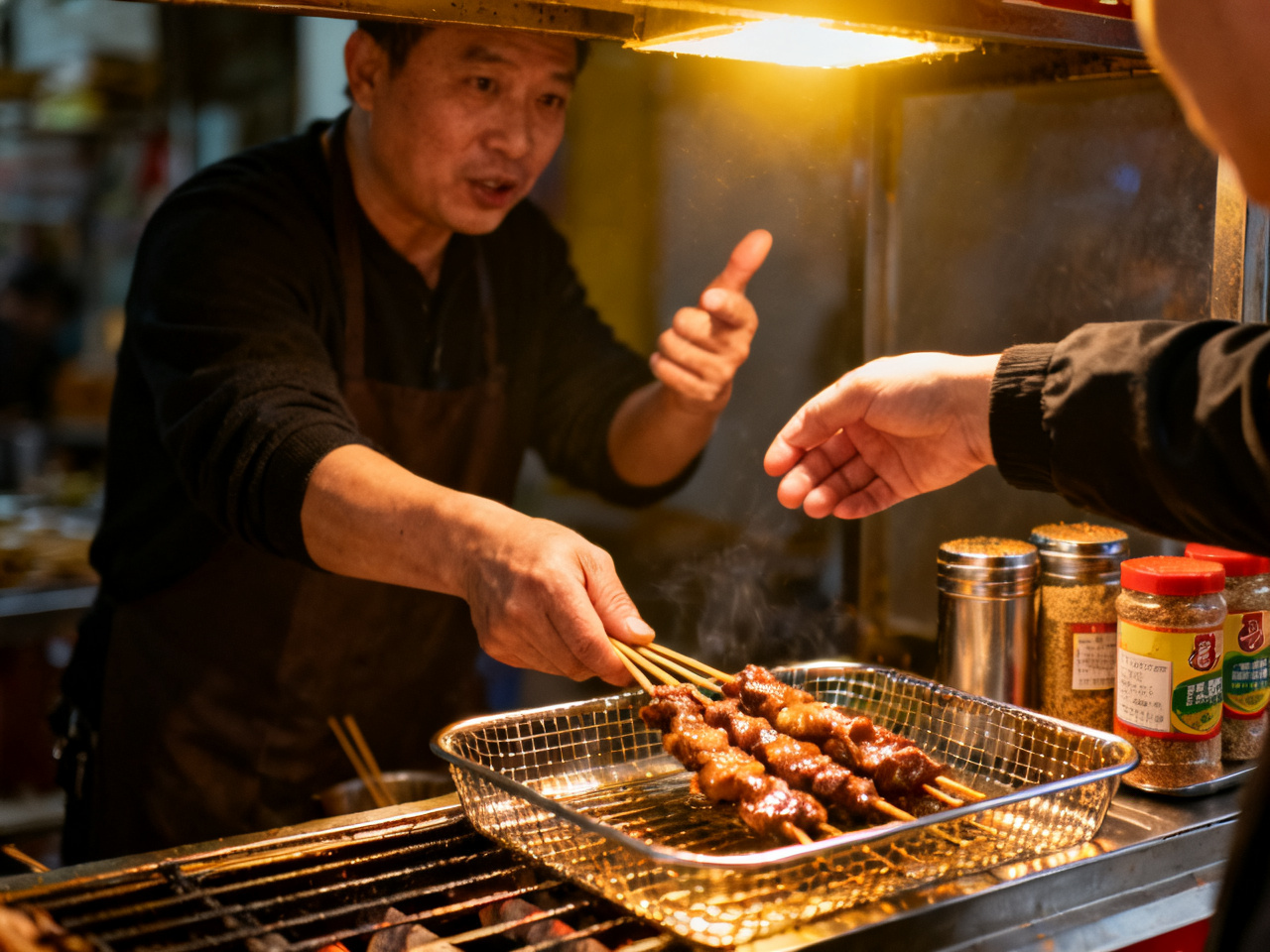
现在如果有刚到中国的朋友问我,夜市烤串最容易踩的坑是什么,我一定会说:不要因为气氛太好,就让手比脑子快。先看一眼摊子的节奏,先想一想几个人吃、能不能再加、哪些是最值得先试的,再开始拿。这样做一点都不扫兴,反而会让你更像是在真正享受夜市,而不是被夜市冲昏头。对我来说,那晚老板那句“先少拿点,不够再加”后来几乎变成了一个很好用的中国生活提醒:很多看起来最热闹的场景里,真正让你玩得舒服、吃得舒服、融入得舒服的,从来不是抢得最快,而是先控制住手,给自己留出第二轮判断的空间。
Now if a friend newly arrived in China asks me what the easiest mistake is when buying skewers at a night market, I always say this: do not let your hand move faster than your brain just because the atmosphere is great. First look at the rhythm of the stall. First think about how many people are eating, whether you can add more later, and which items are most worth trying first. Then begin picking. That approach does not reduce the fun at all. If anything, it makes you feel more like you are truly enjoying the night market instead of being overwhelmed by it. For me, the owner’s sentence that night—“Take less first. You can always add more.”—later became a useful reminder for life in China more broadly: in many of the liveliest settings, what makes you comfortable, well-fed, and better integrated is not grabbing fastest, but controlling your hand first and leaving yourself room for a second round of judgment.

- 海南环岛自驾7天:三亚万宁博鳌 | 7-Day Hainan Island Drive: Sanya, Wanning & Boao
- 我在中国早餐摊第一次学会豆浆要先问甜不甜 | The First Time I Learned at a Chinese Breakfast Stall to Ask Whether the Soy Milk Was Sweet
- 在景德镇看一只碗怎么出生:窑火、白粉和老师傅的手势 | Watching a Bowl Be Born in Jingdezhen: Kiln Fire, White Clay Dust, and a Master's Hands
- 汉服:传统中国服饰 | Hanfu: Traditional Chinese Clothing
- 14天丝绸之路深度行程规划 | 14-Day Silk Road In-Depth Itinerary
- 中山装与唐装:男士传统服饰怎么穿 | Zhongshan Suit & Tang Suit: Men's Traditional Wear
- 一块豆腐的两千年旅程 | A Block of Tofu's Two-Thousand-Year Journey
- 孔氏南宗家庙门口的豆腐脑,让我重新认识衢州的早晨 | A Bowl of Tofu Pudding Outside the Southern Confucius Temple Changed How I Saw Quzhou Mornings
- 中国跨城旅行怎么管钱:预算分桶法实战 | Budget Buckets for China Trips: A Practical Money System
- 苏州夜里最珍贵的经验,常常不是多走一座桥,而是在最好看的地方及时收住 | The Most Valuable Lesson in Suzhou at Night Is Often Not One More Bridge but Knowing When to Stop at the Beautiful Moment
Comments (0)