
阿坝雨后的路面只给我半个答案 | Aba’s Wet Road Gave Me Only Half an Answer
阿坝雨后的路面只给我半个答案 | Aba’s Wet Road Gave Me Only Half an Answer
雨后的阿坝,最先改变的往往不是目的地,而是人对“按时到达”这四个字的理解。一支自驾小组离开停靠点时,手机上的路线仍把下一处停留写在当天的安排里;屏幕上的预计抵达时间也还在跳动,仿佛雨水只是地图背景上的一个小图标。可车驶出不久,山谷里的低云没有像预想那样迅速散开。远处的坡面时隐时现,近处的护栏、弯道和路边反光被雨后的湿气切成一段一段。车内没有人把这种变化称为封路,也没有人能据此断言前方的具体状况;现场真正能确认的,只有眼前这一小段路的可见范围、轮胎经过湿面时传来的细碎水声,以及驾驶者不得不放慢的动作。计划给出的是一个时间,路面给出的却是一连串尚未结束的问题。
After rain in Aba, the first thing to change is often not the destination but the meaning of being “on time.” A small self-drive group left a stopping point with the next halt still listed on the day’s schedule and an estimated arrival time still moving on a phone screen. Soon, however, low cloud remained in the valley instead of lifting quickly. Slopes appeared and disappeared, while guardrails, bends, and roadside reflections were broken into short visible sections by damp air. No one called this a closure, and no one could honestly declare the exact condition farther ahead. What could be verified was only the sightline in front of the vehicle, the fine sound of water under the tires, and the slower pace required of the driver. The plan offered a time; the wet road offered a series of unfinished questions.
这类矛盾并不需要靠戏剧化的险情来成立。雨停之后,柏油路面看上去往往比下雨时更安静:雨滴不再砸在挡风玻璃上,雨刷可以停下来,车里的人也容易误以为最麻烦的阶段已经过去。但安静不等于信息完整。薄雾会把远处的线条擦淡,湿路会把天光和车灯拉成反射,阴影里的积水边缘不一定一眼可辨。道路观察者记录的不是“这条路危险”这样的结论,而是一个更有限的事实:在能看清的距离内,驾驶需要更多余量;看不清的部分,不能由乐观补上。小组原定在下午某个时段抵达的安排因此失去了一部分权威。不是时间表完全无用,而是它必须排在当下能见度之后。
The conflict needs no dramatic incident to be real. After rain stops, asphalt can look calmer than it did during the shower: drops no longer strike the windshield, the wipers can rest, and people inside the car may assume that the difficult part has passed. Quiet, though, is not complete information. Thin mist can erase distant edges; wet pavement can stretch light into reflections; the boundary of water in a shadow may not be obvious at first glance. A road observer does not reduce this to the claim that a road is “dangerous.” The narrower, more useful fact is that driving needs more margin within the distance one can actually see, and the unseen part cannot be filled in with optimism. The planned afternoon arrival therefore loses some authority. The timetable is not useless, but it has to come after current visibility.
车队在一个允许停靠、且不妨碍通行的位置短暂停下,并不是为了把雨后的山景拍得更完整。停车首先是一种重新获得信息的方式。发动机声降下来后,车内的人能更清楚地听见路面被经过车辆带起的水声,也能看见前车在弯道外消失的速度。有人下车前先确认脚下是否稳当,有人没有离开车门附近,只把视线投向云层压住的山口方向。这样的停留很短,却让“还剩多少公里”退到第二位:如果下一个弯道之后的轮廓仍被雾吞没,那么多走一段并不会自动换来更多把握。观察并不提供预测,它只是阻止人把未知误当成正常。
The group made a brief stop where stopping was permitted and did not obstruct traffic, not in order to perfect a photograph of the rain-washed mountains. Parking first became a way to recover information. With the engine quieter, those in the vehicle could better hear water lifted from the road by passing vehicles and notice how quickly the car ahead disappeared around a bend. Before stepping out, one person checked the footing; another stayed close to the door and watched the cloud pressing toward the pass. The pause was short, yet it moved remaining distance into second place. If the outline beyond the next curve was still swallowed by mist, covering another stretch did not automatically produce more certainty. Observation did not predict the road. It stopped the group from treating the unknown as ordinary.
从报道的角度看,雨后路面的信息应当被拆开,而不是压成一个笼统判断。可见的是颜色:深色的湿沥青、被泥水染浅的路肩、反光处近乎发白的水膜。可见的是形状:弯道边缘、排水沟口、落叶或细小碎屑聚集的位置。不可见的,则包括前方是否仍有同样的湿度、山体另一侧的云雾是否更厚、下一段道路上是否存在需要额外留意的情况。没有现场核实,就不该替这些未知填上具体名词。也正因此,小组没有把一次普通的雨后行驶包装成某种“挑战路线”。他们只是接受一个朴素规则:鞋底会在停车时告诉人路面是否湿滑,方向盘会在行驶中提醒驾驶者保持克制,而其余判断必须等新的观察出现。
For reporting purposes, information from a wet road should be separated rather than compressed into one broad verdict. What is visible includes color: dark asphalt, a shoulder lightened by muddy water, and a film of water that turns nearly white in reflection. It includes shape: the edge of a curve, a drainage opening, and places where leaves or small debris gather. What remains invisible includes whether the same dampness continues ahead, whether cloud is thicker on the other side of a slope, and whether the next section requires additional attention. Without verification, those unknowns should not be filled with invented labels. That is why the group did not frame an ordinary wet drive as a heroic route. They accepted a plain rule: footwear tells a person something about the surface when stopped, the steering wheel asks for restraint while moving, and the rest of the judgment waits for new observation.
高原天气让这份等待显得格外具体。平原上,人们习惯把一场雨理解成前后分明的事件:下雨、雨停、天晴。山地环境中的变化却更像移动的层次。车从一片较亮的河谷驶向背阴坡,光线可能立刻变暗;刚刚露出轮廓的山脊,又会被一团缓慢推来的云重新遮住。这里没有必要把每一次云影都解释成天气预报中的术语,也没有必要假装掌握了短时变化的规律。道路上的实际任务更简单:把“看见蓝天”与“看清前路”分开。前者是一种景观感受,后者才关系到下一次转弯、停车或缩短行程的决定。
Highland weather makes this waiting especially tangible. On a plain, people often treat rain as a clean sequence: rain, then a stop, then clear weather. In mountain country, change behaves more like moving layers. A vehicle can leave a brighter valley floor for a shaded slope and find the light reduced at once; a ridge that has just come into view can be covered again by a slow bank of cloud. There is no need to force every shadow into a weather-forecast term or pretend to know the rule behind every short-term change. The road task is simpler: separate seeing blue sky from seeing the road clearly. The first is a scenic experience. The second is what informs the next bend, the next stop, or the choice to shorten the day.
原本的行程把抵达某个点位当作下午的核心目标,后续还接着安排了步行、拍摄和返回住处。这样的安排在纸面上很连贯,因为每一段都能接上前一段的预计时间。可纸面并不承担视野收缩的后果。车内重新讨论时,没有人需要证明谁的安排错误;需要回答的是,若按原计划继续推进,是否会把停车、步行和回程都挤到更不确定的光线里。于是他们把问题从“能不能赶到”改为“赶到以后还能看见什么、还能安全地做什么”。这个改写看似只差几个字,实际却改变了取舍的顺序。目的地从必须完成的任务,变成可以重新评估的选项。
The original itinerary made arrival at a particular stop the center of the afternoon, with walking, photographs, and the return to lodging arranged after it. On paper, the sequence looked coherent because each segment connected to the previous estimated time. Paper, however, does not bear the consequence of shrinking sightlines. When the group discussed the situation again, no one needed to prove that another person’s plan was wrong. The question was whether continuing as planned would push stopping, walking, and the drive back into less certain light. They changed the question from “Can we make it?” to “What can we see and safely do after we make it?” The wording changed only slightly, but the order of tradeoffs changed completely. The destination stopped being a compulsory task and became an option to reassess.
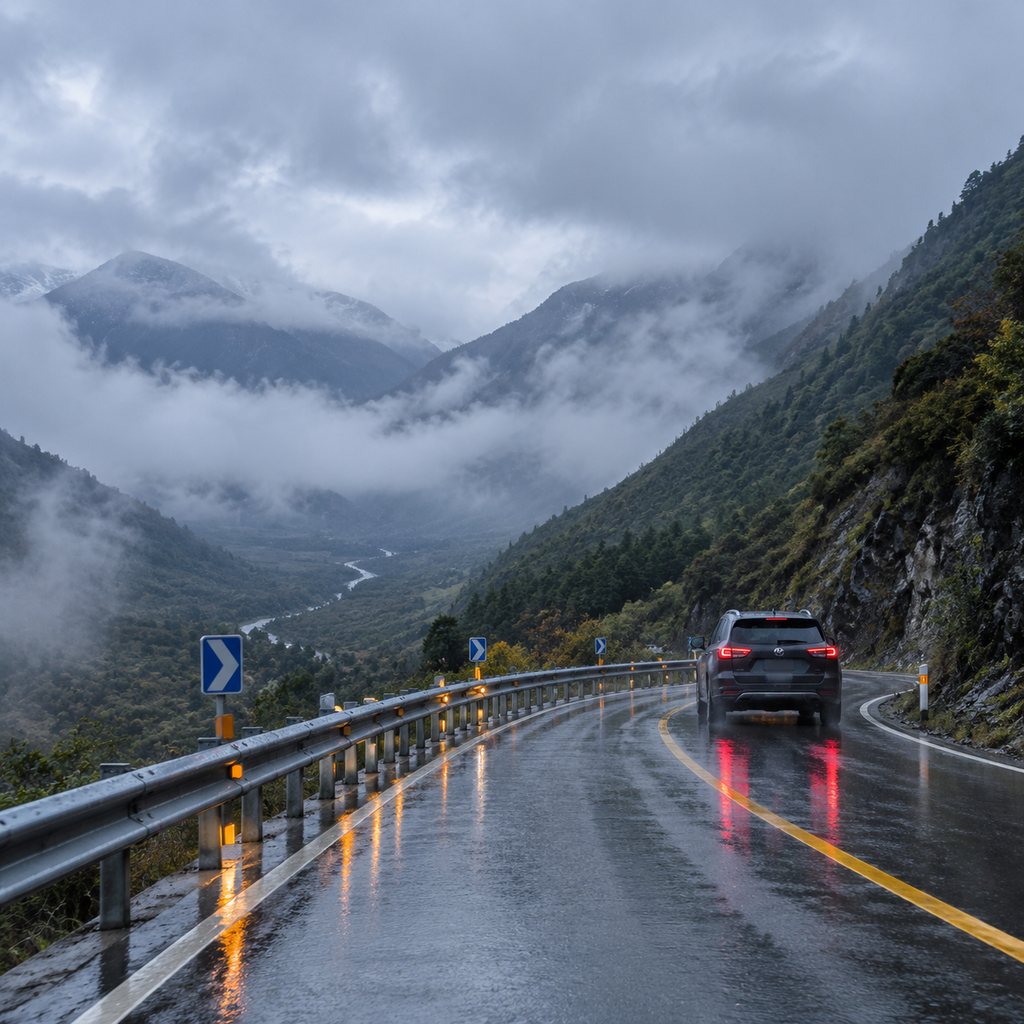
停车观察也暴露出一个常被忽略的差别:旅游中的停留并不全是“到达景点”。在雨后的道路上,停靠有时只是为了让人的身体和判断重新同步。长时间盯着湿亮路面,眼睛会疲劳;车厢里暖一些,车门外的空气更冷,人在下车的几步里才会意识到风的方向和地面的软硬。小组没有把每一次短停都变成内容生产,也没有追逐“云开一瞬”的镜头。他们把车停好后先确认周围是否适合停留,随后再决定要不要拿相机、要不要沿路边走几步。这个顺序没有浪漫色彩,却避免了人在赶时间时把道路边缘、车辆来往和脚下湿滑同时忽略。
Parking also revealed a difference that travel writing often misses: not every stop is an arrival at an attraction. On a wet road, a halt can simply allow the body and judgment to synchronize again. After looking at reflective pavement for a long time, the eyes grow tired. The cabin may be warmer than the air outside, and only in the first few steps after opening the door does a person register the wind direction and the firmness of the ground. The group did not turn every short stop into content production or chase a brief opening in the cloud for a picture. After parking properly, they first checked whether the surroundings suited a pause, then decided whether to take a camera or walk a few steps near the roadside. The order was unromantic, but it reduced the chance of overlooking the edge of the road, moving vehicles, and wet footing at the same time.
雨后能见度的变化还影响人与人之间的沟通方式。晴天行车时,同行者容易围绕“下一站有什么”“能拍多久”展开讨论;当山谷里的轮廓不断收近,谈话会自然变成更短、更实用的问题:前车是否还看得见,前方的颜色是否有变化,是否需要再看一会儿再走。这样的交流不需要制造紧张感,也不应被写成某种惊险的集体决策。它的价值在于让驾驶者不必独自承担所有观察。副驾驶关注地图不等于替代驾驶判断,后排留意天气也不等于提供专业预报;但每个人说出自己确实看见的东西,能减少车内凭想象做决定的倾向。
Changing visibility after rain also changes how people communicate. In clear weather, companions may talk about what the next stop offers or how long photographs will take. When the outlines in a valley keep drawing closer, conversation naturally becomes shorter and more practical: Is the car ahead still visible? Has the color of the road changed? Should the group watch for a moment before moving on? This does not need to be dramatized into a tense collective decision. Its value is that the driver does not have to carry every observation alone. A passenger following the map does not replace driving judgment, and someone in the back noticing the weather does not become a forecaster. Yet when each person states only what they have actually seen, the vehicle is less likely to make decisions from imagination.
道路上最容易被计划遮住的,是回程的余量。人们常把抵达时间当成当天效率的证据,却不总会把离开时间、光线变化和身体疲劳一起算进去。小组在一处停靠后重新看了一遍当天剩余安排,发现如果仍坚持进入更远的路段,之后每一个动作都会带着“快一点”的压力:步行要快一点,拍照要快一点,找车要快一点,回到已知路段也要快一点。雨后的高原路面不需要给人一个明显的阻止信号,才值得改变计划。仅仅是这种连锁的催促感,就足以说明日程已经失去缓冲。于是他们删去的是最远的一项,不是因为它不值得,而是因为它把返程的选择压得过窄。
The margin for the return is what planning most easily hides. People often treat arrival time as evidence of efficiency without always calculating departure time, changing light, and accumulated fatigue together. After one stop, the group looked again at the rest of the day and saw that insisting on the farther section would put every later action under pressure to be faster: walking faster, photographing faster, finding the car faster, and even reaching familiar road faster. A wet highland road does not need to issue an obvious warning before an itinerary deserves revision. The chain of hurry alone can show that the schedule has lost its buffer. The group removed the farthest item, not because it lacked value, but because it narrowed the choices for getting back too much.
这种取舍对旅行者而言并不等同于放弃。被取消的点位没有消失,它只是从“今天必须完成”变回“条件合适时可以再来”。报道者在现场最该警惕的,是把删减行程写成某种高明的顿悟。事实上,多数调整很普通:把地图上的标记留在原处,把住宿的抵达时间往后挪出一段不作承诺的空白,把车内准备的热饮和干衣物当作恢复的一部分。普通恰恰是它的可靠之处。旅程没有因为少去一处而失去内容,反而因为不再把每一分钟都押给一个目标,而保留了观察路面、留意身体状态和应对天气变化的能力。
For travelers, such a tradeoff is not the same as surrender. The canceled stop has not disappeared; it has simply moved from “mandatory today” back to “possible when conditions suit.” What a reporter should avoid is presenting a reduced itinerary as a grand revelation. Most adjustments are ordinary: leaving the map pin where it is, adding an unpromised blank stretch to the lodging arrival time, and treating warm drinks and dry clothing in the vehicle as part of recovery. Its ordinariness is precisely what makes it dependable. The journey does not lose content because one stop is omitted. It gains the ability to watch the surface, notice physical condition, and respond to changing weather instead of wagering every minute on one objective.
路面本身没有语言,但它会通过细节改变动作。车轮经过浅水时的声音、前挡玻璃边缘重新聚起的细小水珠、对向车灯在湿地面上拖出的光带,都会提醒人:天气虽已从降雨转入间歇,却并未退出行程。观察者不该据这些细节推断某一段道路的工程状况,更不能把它们夸张为不可通行的证据。它们的意义在于让驾驶节奏不被“雨停了”这句话劫持。雨停只说明天空中的水暂时少了,不说明所有表面已经恢复干燥,也不说明前方视线会保持稳定。对经过的人而言,承认这一点比给出一句漂亮的路况结论更有用。
The road itself has no language, but it changes behavior through details. The sound of tires passing through shallow water, fine droplets gathering again at the windshield edge, and the trail of an oncoming headlamp across wet pavement all remind people that weather has moved into an interval, not exited the trip. An observer should not use those details to infer engineering conditions on a section of road, much less exaggerate them as proof that passage is impossible. Their purpose is to keep driving rhythm from being captured by the sentence “the rain has stopped.” Rain stopping only means less water is falling from the sky for the moment. It does not mean every surface is dry, or that sightlines ahead will remain stable. For those passing through, admitting that limit is more useful than offering a polished road verdict.
阿坝的山地风景常被期待为开阔、清晰、可以一眼读懂的画面,而雨后恰好反过来:景物分层出现,远近被云雾重新排序。对小组来说,这种景观并没有因为不完整而失去价值,只是它不再适合被当成准点抵达后的奖励。有人透过车窗看见河谷一侧短暂亮起来,另一侧仍在阴影里;有人注意到湿草坡的颜色比晴天更沉。这样的观察可以保留,但不能被误用为催促继续前行的理由。看见一束光,不等于下一段道路也会变得清楚。风景提供的是感受,不是通行承诺;把两者分开,才不会让审美期待替代道路判断。
Aba’s mountain scenery is often expected to be wide, clear, and readable at a glance. After rain, the reverse can be true: the landscape appears in layers, and cloud rearranges what is near and far. For the group, this did not make the view less valuable; it only made it unsuitable as a reward guaranteed by punctual arrival. One person saw one side of the valley brighten briefly through a window while the other remained in shade. Another noticed that wet grass slopes carried a deeper color than they would in sunshine. Such observations can remain, but they should not be misused as a reason to hurry onward. Seeing a shaft of light does not mean the next road section will become clear. Scenery offers an experience, not a promise of passage. Keeping those separate prevents aesthetic expectation from replacing road judgment.
在道路观察中,停车点的选择也比“哪里好看”更重要。一个看起来开阔的位置,未必适合临时减速或下车;一个没有足够空间让车辆完全离开行车部分的地方,即使景色更好,也不应成为停留的理由。小组后来形成的做法很简单:先看是否有明确、合适的停靠条件,再考虑是否值得停。没有条件,就继续以低调的方式通过,不把犹豫留在车道上。这不是给任何具体路段下指令,而是对行程心理的提醒。雨后的人容易被能见度和景色同时牵动,越想确认,越可能突然停下。把“确认”放在不妨碍通行的场合里,才让观察真正成为帮助,而不是新的风险来源。
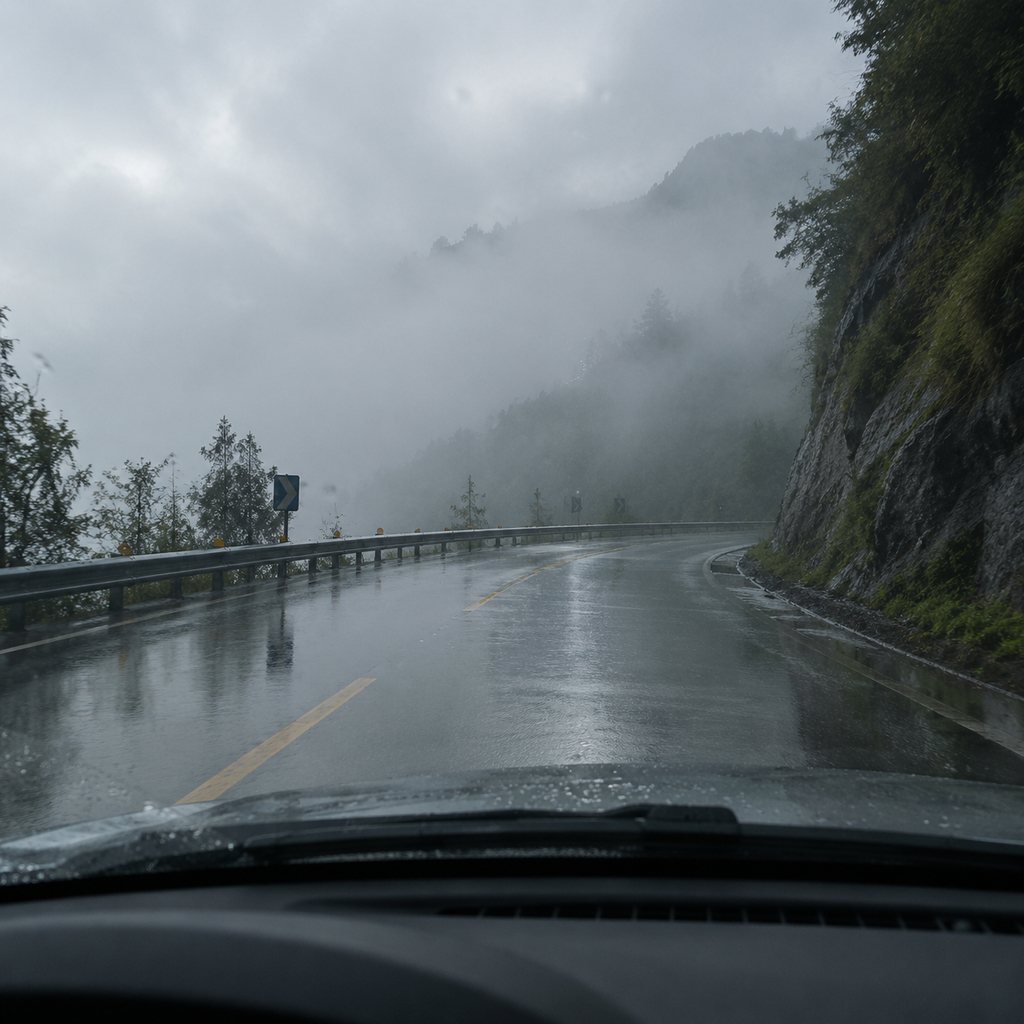
In road observation, the choice of a stopping place matters more than the question of where the view is best. A spot that looks open is not necessarily suitable for slowing down or getting out; a place without enough room for a vehicle to leave the traffic flow should not become a pause merely because the scenery is better. The group’s later practice was simple: first decide whether there is a clear and suitable condition for stopping, then decide whether stopping is worth it. Without that condition, they continued quietly rather than leaving hesitation in a traffic lane. This is not an instruction about any specific road section. It is a reminder about travel psychology. After rain, visibility and scenery can pull attention at once; the more someone wants to confirm, the more tempting a sudden stop becomes. Keeping confirmation to places that do not obstruct passage makes observation a help rather than a new source of risk.
原定抵达时间与现场可见度冲突时,导航仍会继续给出新的数字。它会根据车辆的移动更新剩余时间,却不会替人衡量眼睛在雾里能接收多少信息,也不会记录停车后重新出发时那一点犹豫。小组没有把导航关闭,也没有把它当成对现场判断的反证。他们把它降回工具的位置:用于知道大致方向、估算补给和住宿衔接,而不是用于要求现实配合屏幕。这个位置的调整很关键。技术工具可以压缩不熟悉感,却无法取消山谷里正在发生的天气变化;它能提示路线,却不能替代对路面、光线和自身疲劳的感受。
When planned arrival time conflicted with visibility on site, the navigation app kept offering new numbers. It updated the remaining time as the vehicle moved, but it did not measure how much information human eyes could take in through mist, nor did it record the small hesitation when the group set off after a stop. They neither turned navigation off nor used it as evidence against what they were seeing. They returned it to the position of a tool: useful for general direction and for estimating supplies or lodging connections, but not for demanding that reality conform to a screen. That shift matters. Technology can reduce unfamiliarity, but it cannot cancel weather moving through a valley. It can indicate a route; it cannot replace a felt assessment of pavement, light, and fatigue.
高原行程里还有一个不那么显眼的变量:人在车内对时间的感受会被景色和等待拉长或缩短。连续弯道使短距离显得漫长,云雾忽然散开时又会让人误以为耽搁已经结束。报道记录的重点不是给这种感受贴上专业标签,而是说明它怎样影响选择。小组把原本计划中的一个步行段改成了在较近处短暂活动,并为返回住宿保留更多不被项目占用的时间。他们没有宣称这是唯一正确的安排,因为每个人的车辆、同行者和身体状况都不同。可以确认的是,调整之后,车内谈话不再围绕“还来不来得及”,而转为“现在看起来是否仍适合继续”。前一种问法追着钟表走,后一种问法回到现场。
There is another less visible variable in highland travel: time feels longer or shorter inside a vehicle because scenery and waiting reshape perception. Repeated curves can make a short distance feel long, while a sudden opening in the cloud can make people assume that delay has ended. The report need not give that feeling a technical label; it only needs to show how it affects choice. The group changed one planned walking segment into a brief activity closer by and kept more time free for the return to lodging. They did not claim this was the only correct arrangement, since vehicles, companions, and physical condition differ. What could be observed was that the conversation no longer centered on “Is there still enough time?” It became “Does it still look suitable to continue?” The first question chases the clock. The second returns to the site.
雨后的停车观察还让人看见行程中常被省略的恢复环节。有人把外套的帽檐抖干,有人把沾湿的鞋底在车门边仔细擦过,车里的人喝了几口温水,再把安全带扣好。这些动作并不构成戏剧,也不能被拔高成高原旅行的神秘仪式;它们只是说明,路上的决定不仅发生在方向盘上。冷、湿、饥饿、疲劳和急躁会一起改变人的注意力。若行程只计算景点之间的移动,而不允许这种短暂恢复,它就把人当成可以无限连续运行的部件。小组在当天的选择,是把这段恢复时间当作行程的一部分,而不是抵达延误后的浪费。
Parking after rain also made a neglected part of travel visible: recovery. One person shook water from a jacket hood, another carefully wiped a wet shoe sole by the door, and those inside took a few sips of warm water before fastening their seat belts again. These actions are not drama, nor should they be elevated into a mysterious highland ritual. They simply show that road decisions do not happen only at the steering wheel. Cold, dampness, hunger, fatigue, and impatience can alter attention together. If an itinerary counts only movement between attractions and leaves no room for such recovery, it treats people as components that can run without interruption. The group’s choice that day was to count recovery time as part of the journey rather than as waste caused by a later arrival.
有些旅行叙事喜欢在这种时刻安排一个决定性的人物提醒,但现场未必需要,也不应凭空添加。没有可核实的对话,就没有必要让某位司机、店主或工作人员说出恰好概括主题的一句话。更可信的推进来自可见的行为:前车在湿路上留出距离,停靠的车辆先让出通行空间,同行者在需要重新规划时把手机放低、转而看向窗外。这些行为并不能证明每个人都作出了同样判断,却能构成一个朴素的观察:在不确定条件下,人们往往先减少不必要的动作,再讨论下一步。报道体的克制不在于把现场写得无趣,而在于不拿无法证实的声音替代已经足够说明问题的画面。
Some travel narratives like to place a decisive warning from a memorable person at this point, but a real scene may not need one, and none should be invented. Without a verifiable conversation, there is no reason to give a driver, shopkeeper, or worker a perfect line that summarizes the theme. A more credible progression comes from visible behavior: the vehicle ahead leaves distance on wet pavement, a parked vehicle first leaves room for traffic to pass, companions lower their phones when replanning and look out the window instead. These actions do not prove that everyone reached the same judgment, but they support a plain observation: under uncertain conditions, people often reduce unnecessary movement before discussing the next move. Restraint in reportage does not make a scene dull. It means not using an unverified voice in place of images that already say enough.
下午后段,云层没有按照行程表的需要给出一个整齐的答案。某些时刻,前方景物似乎比刚才清楚;再经过一段路,视野又回到需要耐心辨认的状态。小组最终没有追问“天气到底好了没有”,因为这个问题太大,也太容易诱导一个虚假的肯定。他们只处理更小的判断:此刻是否适合继续开到下一个确认过的停靠位置,此刻是否还保有回程余量,此刻是否应把未完成的部分留给另一天。这样的判断没有让旅程显得更英雄,却让计划从僵硬的承诺变成可以呼吸的框架。对雨后高原道路而言,这比任何一次准点打卡都更接近可靠。
Later in the afternoon, the cloud did not provide the neat answer the itinerary wanted. At some moments, the view ahead seemed clearer than before; after another stretch of road, it returned to a state that required patient reading. The group did not keep asking whether the weather had “really improved,” because the question was too large and too likely to invite a false yes. They handled smaller judgments instead: whether it suited the moment to continue to the next confirmed stopping place, whether there was still margin for the return, and whether unfinished parts should remain for another day. These judgments did not make the trip look heroic. They turned the plan from a rigid promise into a framework with room to breathe. On a wet highland road, that is closer to reliability than any punctual check-in.
在更早的一次短停里,车内曾有人试图把等待压缩成一个简单的问题:再等一会儿,云会不会散?道路观察没有把这个问题当成可以被现场回答的承诺。云会不会移动、光线会不会改变,都属于尚未发生的部分;当时真正可以做的,是辨认近处的路缘、查看车窗外的湿度是否仍在加重视线的模糊感,并把下一段行驶控制在不依赖猜测的节奏里。这个区分并不消极。它把注意力从控制天气,转向控制自己能控制的事:不把停靠安排在不合适的位置,不把时间留得过满,不因一瞬间的明亮而提前宣布条件已经恢复。
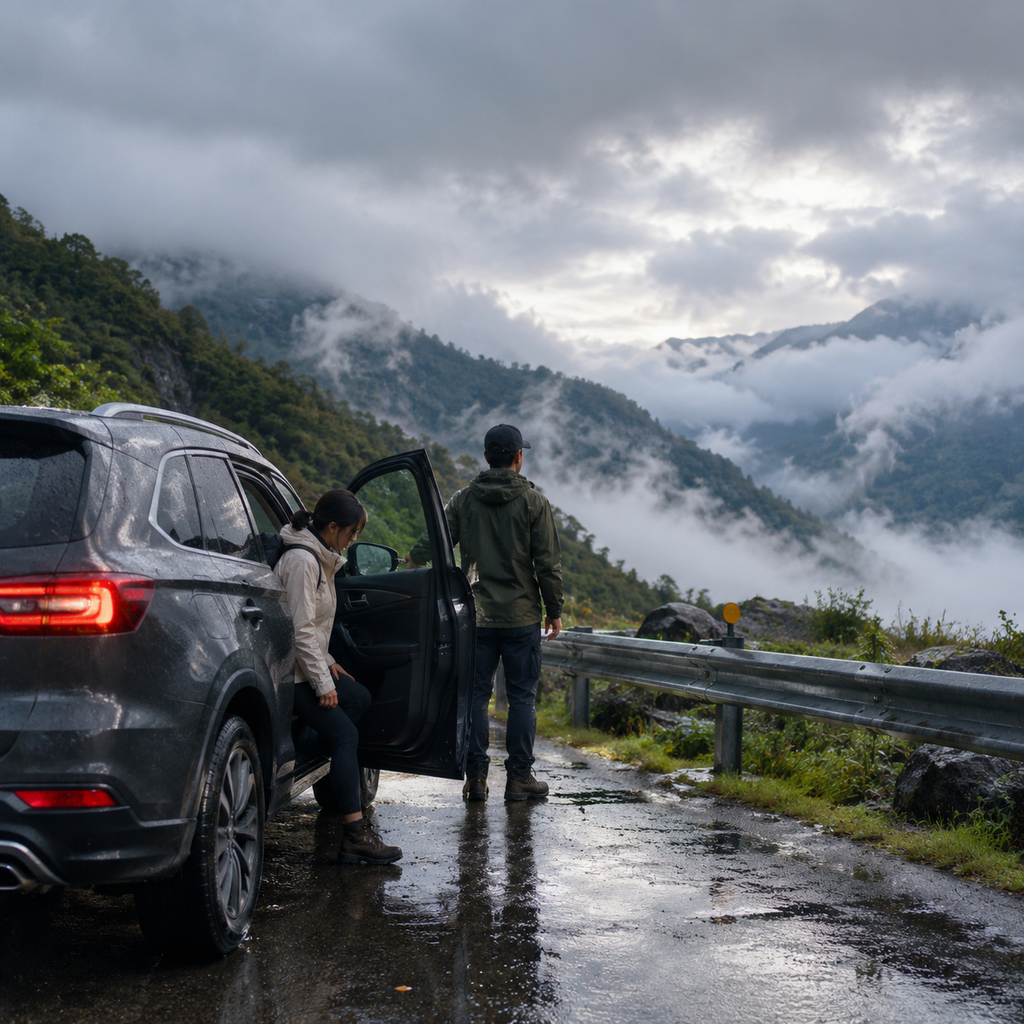
At an earlier short stop, someone inside the vehicle tried to compress the wait into a simple question: would the cloud clear if they waited a little longer? Road observation did not treat that question as a promise that could be answered on site. Whether cloud would move or light would change belonged to what had not happened yet. What could be done was to read the nearby road edge, notice whether damp air was still thickening the blur beyond the window, and keep the next stretch of driving at a pace that did not depend on guessing. This distinction was not passive. It shifted attention from controlling weather to controlling what the group could control: avoiding unsuitable stopping places, leaving time unfilled, and not declaring conditions restored because of one brief bright interval.
雨后行驶中,视线的边界并不总是以浓雾的形式出现。有时,远处山坡仍然可见,只是颜色和纹理逐渐失去层次;有时,前方道路的走向可以判断,弯道外的细节却不再足以支持快速决定。这样的半清晰最容易令人放松警惕,因为它不像完全遮蔽那样明显。小组后来把观察的重点放在连续性上,而不是某一个瞬间的“看得见”。他们不需要测量距离,也没有假装获得了精确数字,只反复确认:上一段与下一段之间,视野是否正在稳定;路面反光是否让车道边界更难辨认;经过一个弯道后,是否仍能以同样从容的方式读懂前方。若答案不稳定,计划的速度就不应比观察更快。
On a wet drive, the boundary of sight does not always arrive as dense fog. Sometimes distant slopes remain visible but lose color and texture layer by layer. Sometimes the direction of the road can be read while details beyond a curve are no longer sufficient for quick decisions. This partial clarity is easy to underestimate because it is less obvious than complete concealment. The group later focused on continuity rather than on any single moment of being able to “see.” They did not measure distance or pretend to have a precise number. They repeatedly checked whether sightlines were becoming stable from one section to the next, whether pavement reflections made lane edges harder to distinguish, and whether the road beyond a bend could still be read with the same calm. When the answer was unstable, the itinerary should not move faster than observation.
行程取舍还包括对补给和休息的重新排序。原本被安排在抵达之后处理的吃饭、换衣和整理物品,在天气拖慢道路节奏时不能一直往后推。人饿着、冷着或因为湿衣服不舒服时,对时间的耐心会变短,对“再往前一点”的诱惑会变强。小组没有把这种状态说成高原反应,也没有据此做医学判断;他们只是把它视作旅行中会影响选择的普通事实。因此,路线讨论不只问还有没有机会去下一处,也问现在是否值得先让每个人恢复到能清楚判断的状态。把休息提前,表面上减少了行程密度,实际减少的是后面每一步被疲惫牵着走的可能。
Reprioritizing supplies and rest was also part of the itinerary decision. Food, dry clothes, and organizing belongings had originally been left until after arrival, but they could not always be pushed later once weather slowed the road rhythm. When people are hungry, cold, or uncomfortable in damp clothing, patience with time grows shorter and the temptation to go “just a little farther” grows stronger. The group did not label this as altitude illness or make a medical judgment. They treated it as an ordinary travel fact that can affect choices. The route discussion therefore asked not only whether there was still a chance to reach another place, but whether it was wiser to restore everyone to a condition in which they could judge clearly. Moving rest earlier appeared to reduce the day’s density; in practice, it reduced the chance that later decisions would be pulled along by fatigue.
雨后路边的颜色常常会让人误判时间。湿润的草坡更深,河谷中的石头更亮,云缝里漏下来的光在某些角度显得像傍晚前的晴朗。可视觉上的丰富并不等于道路条件已经简单。对报道者来说,关键不是描述这些颜色有多美,而是写清它们如何分散注意力。车里的人会自然想多看一眼、慢一点拍照、为突然出现的光线找一个停留点;而驾驶者仍需要同时处理弯道、湿面和来车。小组最终把欣赏与决策分成两步:先确保车辆处在合适状态,再允许自己停下来观看。这样做没有减少雨后山地的魅力,反而避免把魅力变成催促行动的理由。
Roadside color after rain can make people misread time. Wet grass slopes deepen, stones in a valley brighten, and light leaking through cloud can resemble the clear period before evening from certain angles. Yet visual richness does not mean road conditions have become simple. For a reporter, the point is not to praise the colors but to show how they divide attention. People in the car naturally want another look, a slower photograph, or a stopping point for sudden light, while the driver still has bends, wet pavement, and other traffic to process. The group eventually separated appreciation from decision in two steps: first ensure the vehicle is in a suitable state, then allow time to stop and look. This did not reduce the appeal of the rain-washed mountains. It prevented that appeal from becoming a reason to hurry into action.
在回程问题被提到之前,原计划其实已经把时间分配得很紧:到达、下车、停留、再上车,几个动作之间几乎没有留出天气的空白。它并非不合理,而是建立在道路信息足够连续的前提上。雨后,前提松动了,时间表就需要随之松动。小组没有尝试用更密集的安排弥补前面的延迟,也没有把晚饭、住宿联络或车辆整理压缩成零碎的缝隙。他们先保留可撤回的选择,再决定哪些项目值得继续。这样的顺序尤其适合陌生山地:先确保有返回和停下来的余地,再讨论还能把什么放进当天。它不是效率的反面,而是避免效率只在纸面上成立。
Before the return became an explicit question, the original schedule had already distributed time tightly: arrival, getting out, stopping, and getting back in left almost no blank space for weather. The plan was not unreasonable; it depended on road information remaining sufficiently continuous. After rain, that premise loosened, so the timetable needed to loosen with it. The group did not try to compensate for earlier delay with denser scheduling, nor did they squeeze dinner, lodging contact, or vehicle organization into stray gaps. They preserved choices that could be reversed before deciding which items were worth continuing. This order suits unfamiliar mountain terrain: first keep room to return and stop, then discuss what can still fit into the day. It is not the opposite of efficiency. It prevents efficiency from existing only on paper.
“只给半个答案”并不意味着道路毫无信息。恰好相反,雨后现场的信息很多,只是每一条都有限。湿路面说明刚刚有过降水,却不能说明前方每一处都相同;低云遮住山口,提醒人远处不清楚,却不能代替对下一段道路的核实;一辆车平稳通过某个弯道,只能说明那辆车刚刚经过,并不能替后来者保证什么。把信息拆成这样,写作会少一些结论性的快感,却多一些对读者有用的边界。旅行者不需要一篇文章替他宣布阿坝某条路此刻如何,他需要知道,面对雨后高原环境时,哪些判断可以从眼前获得,哪些判断必须留空。
“Only half an answer” does not mean the road provides no information. Quite the opposite: after rain, the site offers much information, but every piece is limited. Wet pavement shows that precipitation has occurred, not that every section ahead is the same. Low cloud covering a pass shows that the distance is unclear, not what the next section will be. A vehicle moving smoothly through one bend shows only that it has just passed that bend; it guarantees nothing for those behind it. Separating information this way produces less of the pleasure of a sweeping conclusion, but more boundaries that help a reader. A traveler does not need an article to announce the current state of a road in Aba. They need to know which judgments can be drawn from what is in front of them and which judgments must remain open.
车辆里的物品也会在这种天气里重新获得意义。雨具不只是下雨时才使用,擦拭镜片的布、备用外层、可以放在容易拿到位置的水和简餐,都能减少人在临时停车时手忙脚乱。这里不需要把任何装备写成万能清单,更不该暗示携带某一种物品就能解决高原天气带来的全部问题。它们只是降低摩擦:当决定暂停时,不必翻遍行李;当衣物受潮时,不必硬撑到下一个预定点;当计划缩短时,也不必把补给完全寄托在一个尚未抵达的地方。道路报告中的这些细节,和能见度一样,服务的是一个原则:把不确定留在可管理的范围里。
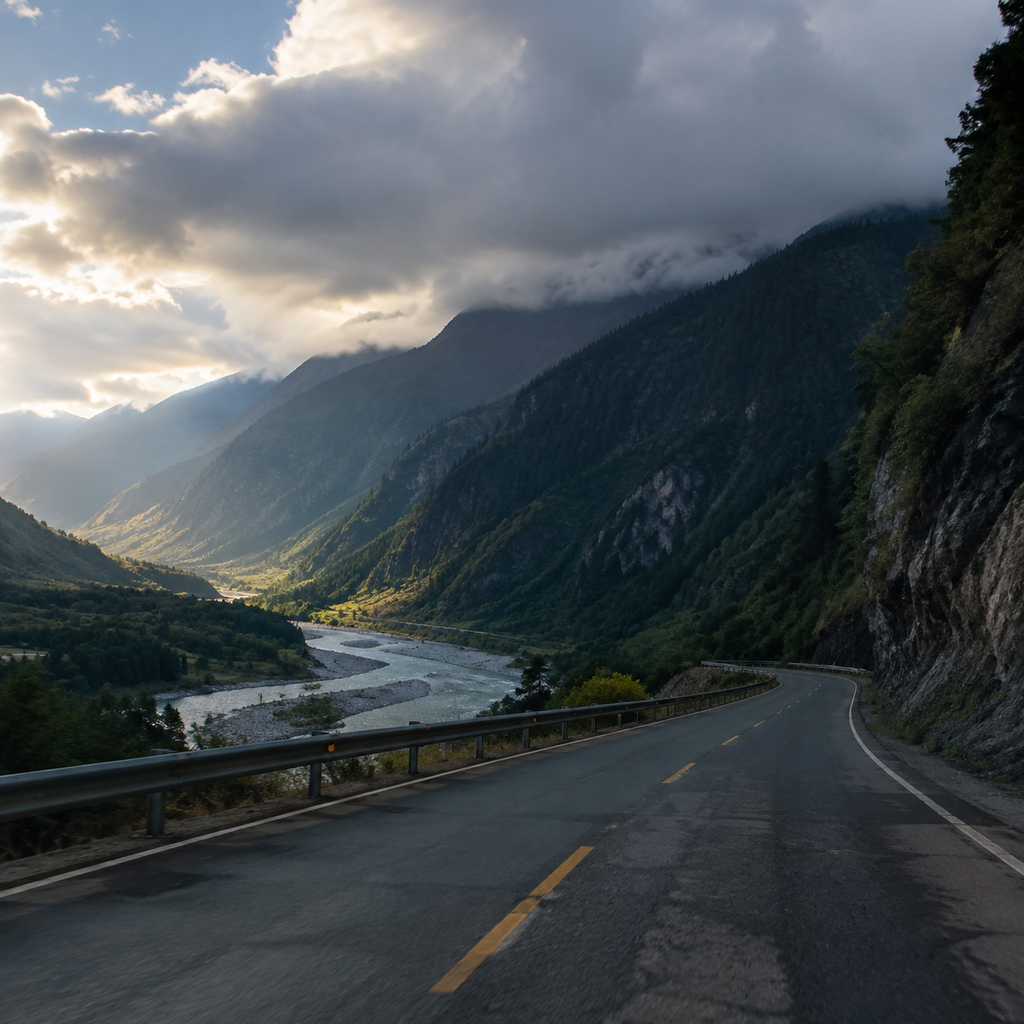
Items inside the vehicle also regain meaning in this weather. Rain gear is not useful only while rain is falling. A cloth for wiping lenses, a spare outer layer, and water or a simple snack kept within reach can reduce the scramble during an unexpected stop. There is no need to turn any item into a universal checklist or suggest that carrying one thing solves every difficulty created by highland weather. These items merely reduce friction: when pausing becomes necessary, no one has to search through all the luggage; when clothing becomes damp, no one has to endure it until a planned stop; when the itinerary shortens, supplies do not have to depend entirely on a place not yet reached. In a road report, such details serve the same principle as visibility: keep uncertainty within a manageable range.
这次调整还改变了拍摄的意义。晴朗天气里,拍摄往往是抵达后的固定环节:到了,停下,取景,离开。雨后,镜头前的景象会让人愿意多等一会儿,但拍摄不应反过来决定车辆在哪里、何时停留。小组没有否认雨雾、湿坡和断续光线值得被记录;他们只是让记录服从于已经完成的停车判断。相机拿出来之前,先确定人站在哪里、车是否停妥、周围是否允许停留。这样,照片即使没有得到完整的远景,也保留了当时真实的层次。更重要的是,它没有用一个“必须拍到”的目标,把本来已经需要放缓的行程重新拉紧。
The adjustment also changed the role of photography. In clear weather, photographs can become a fixed step after arrival: arrive, stop, frame, leave. After rain, mist, wet slopes, and broken light can invite people to wait longer, but the desire to photograph should not decide where or when a vehicle stops. The group did not deny that the scene was worth recording. They simply made recording follow a parking decision that had already been made. Before taking out a camera, they established where people could stand, whether the vehicle was properly stopped, and whether the surroundings allowed a pause. In this way, even a photograph without a complete distant view retained the real layers of the moment. More importantly, it did not tighten an itinerary already asking to slow down around a goal that had to be captured.
对同行者而言,最难的部分有时不是接受天气,而是接受自己准备了很久的安排会被缩短。地图上每个保存过的地点都带着期待,删掉其中一个容易让人觉得这趟路少了证明自己来过的凭据。可道路现场并不奖励这种证明欲。小组把取消的项目记在次日的备选里,而不是在车内反复计算损失。他们承认今天看见的景象不完整,也承认没有办法用一个更快的决定把完整性追回来。这个承认给了行程新的弹性:未抵达不再自动等于失败,保留以后再判断的权利也不再等于缺乏决心。
For companions, the hardest part is sometimes not accepting weather but accepting that a carefully prepared plan will be shortened. Every saved map pin carries expectation, and removing one can feel like losing proof that the trip happened as intended. The road does not reward that desire for proof. The group put the canceled item on the following day’s list of possibilities instead of repeatedly calculating the loss inside the car. They accepted that what they saw that day was incomplete and that no faster decision could recover completeness. That acceptance gave the itinerary new flexibility: not arriving no longer automatically meant failure, and preserving the right to judge again later no longer meant a lack of resolve.
雨后继续行驶还有一项不适合被忽略的观察:光线变化会让同一段路在很短时间内呈现不同的阅读难度。云层压低时,远处与近处的色差缩小,路面上的水膜会更突出;云缝透光时,反射又可能突然增强。小组没有把这种变化归结为某种固定规律,只把它当作提醒,即使路线没有改变,注意力也要随之调整。驾驶者没有义务在每一段都维持相同的速度感,同行者也不必因为地图显示距离不长,就把环境当作稳定不变。能见度不是一个在出发前填好的数字,而是沿途不断重新读取的条件。
Continuing after rain involves another observation that should not be ignored: changing light can make the same stretch of road different to read within a short time. When cloud presses lower, the contrast between near and far shrinks and the film of water on the pavement can stand out more. When light breaks through, reflection may suddenly increase. The group did not reduce these changes to a fixed rule. They treated them as a reminder that attention must adjust even when the route does not. A driver has no duty to maintain the same sense of speed on every section, and companions need not treat the environment as stable simply because the map shows a short distance. Visibility is not a number filled in before departure; it is a condition read again and again along the way.
雨后的路面还会改变车内的节奏。晴天里,乘客更容易低头看照片、处理消息或讨论下一餐;当视线反复被雾气和反光收紧,车内的安静反而有实际作用。不是所有人都必须盯着前方,而是说话和动作不再争夺驾驶者的注意力。小组在一段连续弯道里把音量放低,等到停靠条件合适时才集中查看地图和照片。这个细节不具有普遍命令性,却说明行程设计并非只由地点组成,也由车厢里如何分配注意力组成。把讨论放到停下之后,常常比在行驶中抢着得出结论更可靠。
Wet pavement also changes the rhythm inside a vehicle. In sunshine, passengers more easily look down at photographs, handle messages, or discuss the next meal. When mist and reflection repeatedly narrow sightlines, quiet in the cabin can serve a practical purpose. This does not mean everyone must stare ahead. It means that talk and movement do not compete for the driver’s attention. On one sequence of bends, the group lowered its volume and waited until a suitable stopping condition before reviewing maps and photographs together. The detail is not a universal command, but it shows that an itinerary is not made only of places. It is also made of how attention is distributed inside the car. Moving discussion until after stopping is often more dependable than racing to a conclusion while in motion.
天气的不确定还会暴露预订与联络安排中的脆弱处。若住宿、用餐或会合只按一个精确抵达时刻运转,那么道路上的任何放缓都会立刻变成心理压力。小组没有把联络说成解决所有问题的办法,但他们在重新选择路线后,先确认当晚的基本衔接是否仍然可行,而不是把这件事拖到天色更暗之后。这样做的重点不在于获得某种特殊待遇,而在于让后续决定少背一层焦虑。旅行中的时间通知应当描述变化,而不是伪装成保证;对方能否立即回复、现场如何安排,仍然需要以实际情况为准。保留这种边界,能防止一通消息被误写成万无一失的通行证。
Weather uncertainty also exposes the fragile parts of bookings and contact arrangements. If lodging, meals, or a meeting point operate only around one exact arrival time, any slowing on the road quickly becomes psychological pressure. The group did not portray communication as a solution to every problem, but after revising the route they first checked whether the basic connection for the evening was still workable instead of postponing that question until light was lower. The point was not to secure special treatment. It was to let later decisions carry one less layer of anxiety. Time updates in travel should describe change rather than masquerade as guarantees; whether someone can reply promptly or arrange something on site still depends on actual conditions. Keeping that boundary prevents one message from being written as a fail-safe pass.
道路观察也需要容纳“什么都没有发生”的时段。车行过一段湿路,没有突发状况,也没有出现能够被写成高潮的转折,这并不意味着这段路没有价值。恰恰是这些平静的片刻,让人看见克制如何落到具体动作里:不急着超过前车,不为了一处景色临时变线,不在视线不稳时催促同伴给出结论。报道若只寻找险情,就会把雨后行驶写成失真的冒险;若只追求抒情,又会漏掉道路上的判断劳动。小组所经历的大部分时间介于两者之间,普通、缓慢,却持续要求人把注意力放在正在发生的事情上。
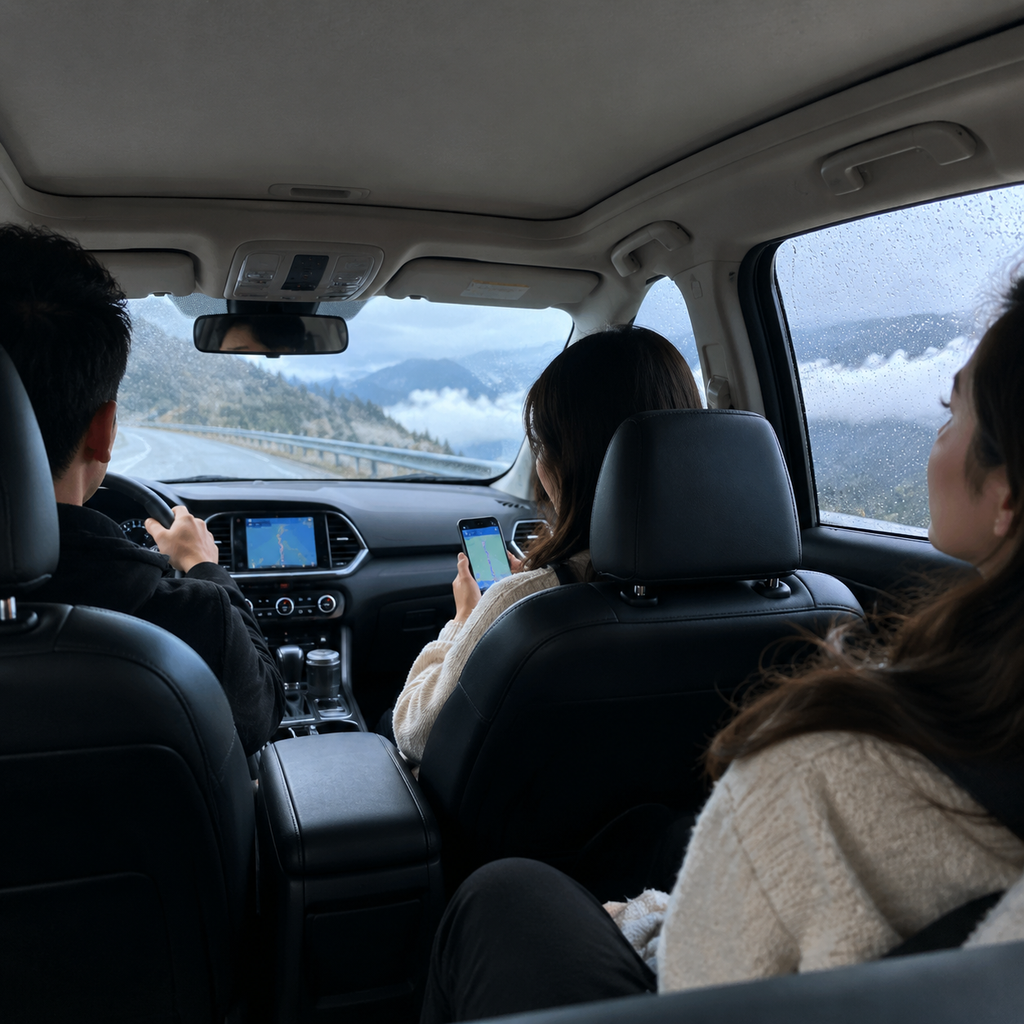
Road observation also needs room for periods in which nothing dramatic happens. A vehicle may pass a wet stretch without an incident or a turn that can be written as a climax, and that does not make the stretch meaningless. Those calm intervals show how restraint becomes concrete: not rushing to pass the vehicle ahead, not changing position suddenly for a view, and not pressing companions for a conclusion while sightlines remain unstable. A report that searches only for danger turns wet driving into distorted adventure; one that seeks only lyricism misses the labor of judgment on the road. Most of the group’s time lay between those poles: ordinary and slow, yet continually asking them to attend to what was actually happening.
到达住处的时间比最初设想靠后,但“晚”在这里并不是一个足以说明成败的词。小组仍在能安排的范围内结束了当天的行驶,车上的湿气、鞋底的泥点和窗外未散的云都提醒着他们:被改变的不是一处打卡顺序,而是对行程控制感的想象。第二天是否重访那个被删去的点位,取决于新的天气、新的体力和新的道路观察,而不是前一天没能完成的遗憾。这个结尾没有宣告雨后道路已经安全,也没有假装天气最终完全转晴。它只保留了一项较小、也较诚实的收获:当计划抵达时间与现场可见度发生冲突时,先尊重眼前能确认的半个答案,剩下的半个,留给下一次看得更清楚的时候。
Arrival at the lodging came later than first imagined, but “late” was not enough to describe success or failure here. The group still ended the day’s driving within a manageable range. Dampness in the car, mud on shoe soles, and cloud still outside the window reminded them that what had changed was not merely the order of stops but their idea of control over an itinerary. Whether they would revisit the omitted point the next day depended on new weather, new energy, and new road observation, not on regret about what had not been completed. This ending does not declare the wet road safe, nor does it pretend the weather finally became fully clear. It keeps one smaller and more honest conclusion: when planned arrival time conflicts with visibility on site, respect the half-answer that can be confirmed now, and leave the other half for a time when the view is clearer.
第二天重新查看路线时,小组没有把前一天的判断当成永久结论。地图上仍然保留着那个没有抵达的方向,但标记旁边多了一层谨慎:它需要新的天气、新的视线和新的时间余量共同支持。道路观察的价值正在这里显现。一次经过只能说明某一时刻的路面让车辆完成了移动,不能替下一次出发预先作出保证。同行者先看出发前能确认的条件,再决定是否靠近那段路;他们没有因为昨天没有完成而急着补偿,也没有因为曾经放弃而把它永远排除。
When the group reviewed the route the next day, it did not treat the previous judgment as permanent. The direction they had not reached remained on the map, but the marker now carried a further condition: new weather, new sightlines, and new time margin would all have to support it. This is where road observation proves useful. One passage shows only that the pavement allowed a vehicle to move at one particular moment; it cannot make a promise for the next departure. The companions first considered what could be confirmed before setting out, then decided whether to approach that stretch. They did not hurry to compensate for yesterday, nor did they remove the place forever because it had once been postponed.
道路上的可见度也需要放在连续变化中阅读,而不是用一个瞬间的清楚替代整段路的状态。车前一小段路被看见,不代表弯道外的轮廓也已经恢复;云层散开一个缺口,不代表湿气不会再次把远处压低。小组在行驶中留意的不是某一次突然变亮,而是亮度和边缘是否持续,路面反光是否仍在干扰判断。这样的观察没有精确仪器,也不产生精确数值,却能提醒他们不要把偶然的好转误当成稳定条件。计划的下一步必须跟随连续的现场信息,而不能只跟随最令人兴奋的那一秒。
Visibility on the road also had to be read as a continuous change rather than replaced by one clear instant. Seeing a short section ahead did not mean the outline beyond a bend had recovered. A gap in the cloud did not mean damp air would not lower the distant view again. While moving, the group watched not for one sudden brightening but for whether brightness and edges remained consistent and whether reflection still interfered with judgment. This observation required no precision instrument and produced no exact number, yet it discouraged them from treating an accidental improvement as a stable condition. The next step of the itinerary had to follow sustained information from the scene, not the most encouraging second.
停车时,人与车辆的位置关系同样不能被风景冲淡。雨后想看清山口或河谷,往往会让人下意识地寻找视野更开阔的地方,可开阔不等于适合停靠。小组先确认车辆是否完全处在不妨碍通行的位置,再看车门外的地面是否允许短暂站立。有人只在车旁观察,有人隔着玻璃继续看云层;他们没有为了得到更完整的画面,把车辆和身体放进未经确认的边缘。停车的意义不是把道路变成观景台,而是让判断从移动中暂时脱离出来。
During a stop, the relationship between people and the vehicle could not be blurred by scenery. Wanting to see a pass or valley after rain can make people instinctively search for the widest view, but openness does not equal suitability for parking. The group first checked that the vehicle was fully out of the way, then considered whether the ground outside allowed a brief and stable pause. Some watched only beside the car; others continued observing the cloud through the window. They did not place vehicle or body at an unconfirmed edge merely to obtain a fuller frame. The purpose of stopping was not to turn the road into a viewing platform, but to let judgment briefly step out of motion.
在车内等待时,导航上的预计抵达时间仍然会向前滚动。这个数字容易制造一种错觉,好像只要车辆继续保持原来的节奏,前方就会自动回到安排之中。可驾驶者面对的是不断变化的光线、路面和弯道,副驾驶面对的是地图无法显示的视线收缩。小组因此把预计时间改看成一个范围内的参考,不再把它当作必须兑现的承诺。抵达时间可以帮助安排住宿和补给,却不能命令雨后的高原路面在某个时刻变得清楚。数字越具体,越需要提醒自己它遗漏了什么。
While the group waited inside, the estimated arrival time on the navigation screen continued to move forward. The number could create the illusion that if the vehicle maintained its former rhythm, the road ahead would automatically return to the schedule. Yet the driver was dealing with changing light, pavement, and bends, while the passenger was dealing with a narrowing sightline that the map could not display. The group therefore treated the estimate as a reference within a range rather than a promise that had to be fulfilled. Arrival time could help with lodging and supplies, but it could not command a wet highland road to become clear at a particular hour. The more precise the number looked, the more important it was to remember what it left out.
雨后路面还会把远处和近处的风险感受混在一起。近处的水膜能够被看见,远处的路缘却可能因为灰白的湿气失去层次;一段路面看起来平整,也不意味着所有变化都能从车窗里判断。报道者没有把这种不完整写成某种特殊危险,而是把它作为信息边界记录下来。人只能根据已经看见的内容调整动作,不能用熟悉的路线印象替代当前的视线。对于曾经走过相似道路的人,这一点尤其重要:熟悉会减少陌生感,却不会自动恢复被天气遮住的细节。
Wet pavement can also mix the sense of distance and immediacy. A film of water may be visible nearby while the road edge farther ahead loses its layers in pale damp air. A section may look even, yet not every change can be judged from inside the vehicle. The reporter did not turn this incompleteness into a claim of special danger. It was recorded as a boundary of information. People can adjust their actions only to what they have seen; they cannot replace the current sightline with a memory of a familiar route. For anyone who has traveled similar roads before, this matters especially: familiarity reduces unfamiliarity, but it does not restore details hidden by weather.
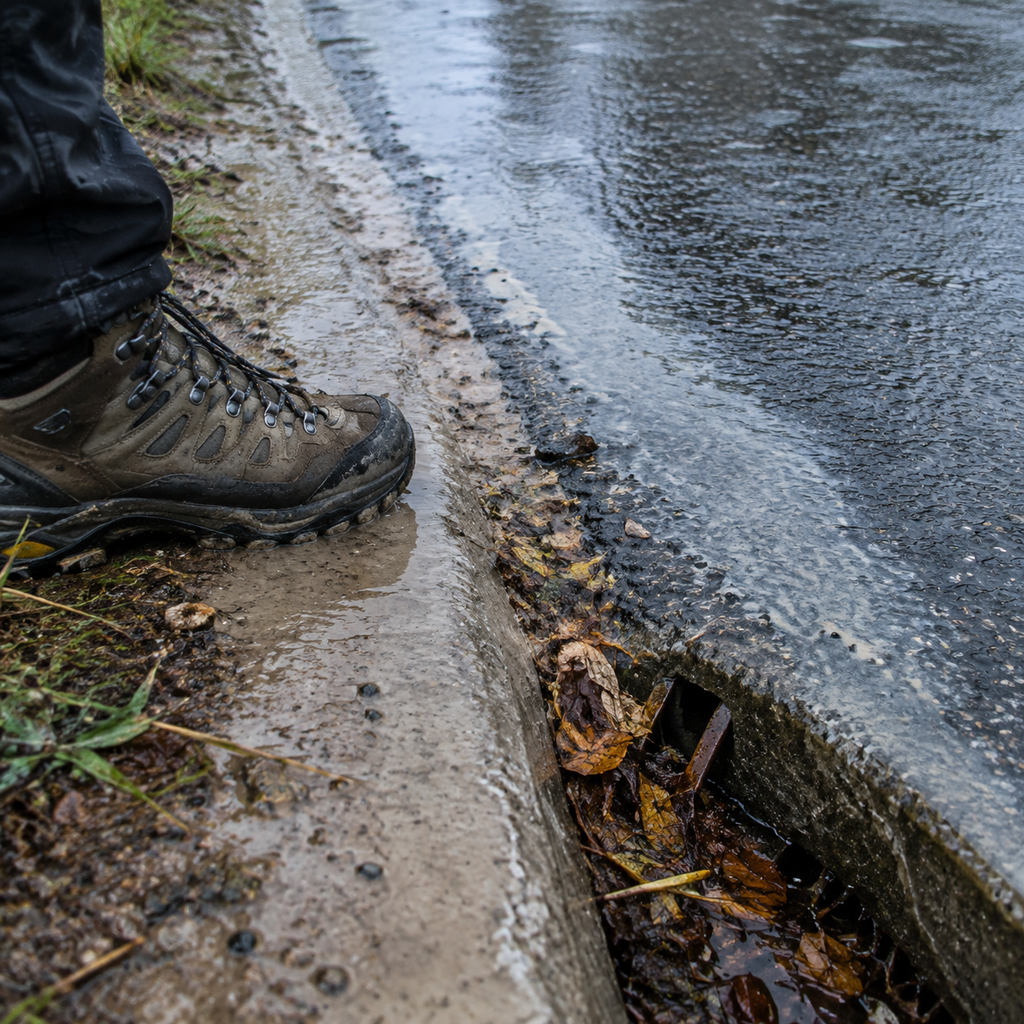
小组把原先较远的停留改为更接近已确认路段的位置后,行程的节奏并没有完全停滞。短距离的活动仍然可能包括下车、观察、整理和重新上路,只是每个动作之间不再被理所当然地压缩。有人先擦拭被水汽影响的镜片,有人把湿外套放在车内较容易取到的位置,驾驶者则在重新出发前恢复对前方的观察。这样的安排没有增加新的景点,也没有制造额外的故事,却让身体、车辆和天气拥有了重新对齐的机会。对高原道路来说,可持续的节奏有时比多完成一个标记更能保留当天的余地。
After the group moved the planned stop closer to a confirmed section of road, the itinerary did not come to a complete halt. A short activity could still include getting out, observing, organizing belongings, and setting off again, but the actions were no longer compressed as a matter of course. Someone wiped moisture from a lens, another placed a damp outer layer where it could be reached easily, and the driver restored attention to the road before moving. This arrangement added no attraction and created no extra drama. It gave body, vehicle, and weather a chance to align again. On highland roads, a sustainable rhythm can preserve more of the day’s margin than completing one more map marker.
计划与现场冲突时,同行者之间还需要接受不同的人对“看清”的标准并不完全一致。驾驶者关注的是能否连续读懂前方,拍摄者关注的是画面是否出现短暂的层次,负责路线的人关注的是停车和返程如何衔接。任何一项观察都不能单独代表全部条件。小组没有要求所有人先达成同样感受才行动,而是把分歧放在讨论里,让较谨慎的判断也有位置。这样的沟通不是为了制造共识口号,而是为了避免某一个瞬间的兴奋压过其他人对视线或体力的真实感受。
When the plan and the scene conflicted, the companions also had to accept that people do not use exactly the same standard for “seeing clearly.” The driver cared whether the road ahead could be read continuously. The photographer cared whether a brief layer of landscape appeared. The person handling the route cared about the connection between stopping and returning. No single observation represented all conditions. The group did not require everyone to feel the same before acting. They let the more cautious judgment remain part of the discussion. This communication was not about producing a slogan of agreement. It prevented a moment of excitement from overriding another person’s genuine concern about sight or energy.
回程余量并不是只在最后一段路上才有意义。它从决定继续前进的那一刻开始,就影响是否还能在合适的位置暂停、是否能够应对再次变暗的路面,以及是否有时间让同行者恢复。小组把返程看成行程的一部分,而不是完成主要目标后的附带任务。于是,删去较远项目带来的变化并不只体现在抵达时间上,也体现在车内少了一层催促。没有人需要为了证明原计划仍然成立而把每个停留压短。看似少走的距离,换来的是更多能够根据现场重新判断的空间。
Return margin mattered from the moment the group decided whether to continue, not only during the final stretch. It affected whether they could pause in a suitable place, respond to pavement becoming dim again, and give companions time to recover. The group treated the return as part of the itinerary rather than an afterthought following the main objective. Removing the distant item therefore changed more than arrival time. It removed a layer of pressure inside the vehicle. No one had to shorten every stop to prove that the original plan still held. The distance not traveled became room for judgments that could respond to the scene.
高原天气常常使旅行者同时面对两种相反的愿望:既想等到视野打开,又不想在等待中耗尽当天的时间。小组没有试图解决这种矛盾,而是把等待变成有边界的观察。能确认的,是此刻近处的路面、车道边缘和停车条件;不能确认的,是云层下一刻的位置和更远处的连续视线。到达某个时间点后,如果这些信息仍未改善,他们就让未完成的路线退出当天安排。这样做不是宣布天气会继续恶化,也不是预测天气一定转好,只是承认等待本身也会消耗返程余量。
Highland weather often places travelers between two opposite wishes: waiting for the view to open while not using up the whole day in the process. The group did not try to solve that contradiction. They gave waiting a boundary and used it for observation. What could be confirmed was the nearby pavement, the lane edge, and the stopping condition. What could not be confirmed was the cloud’s next position and the continuity of the distant sightline. Once enough time had passed without those details improving, they let the unfinished route leave that day’s plan. This did not predict worsening weather or promise clearing. It acknowledged that waiting itself consumes return margin.
最终的道路记录没有把当天写成一次对天气的胜利,也没有把提前结束写成失败证据。它保留了几个互相牵连的事实:雨停后路面仍可能持续反光,低云会让远近关系变得不稳定,停车需要先满足通行条件,导航可以估算移动却无法估算人的观察压力,而计划抵达时间必须接受现场可见度的修正。小组抵达得比预想晚,放弃了一项更远的安排,却没有因此失去对路线的掌握。掌握在这里不是让所有事情按表发生,而是知道何时继续、何时停下、何时把尚未确认的部分留到以后。
The final road record did not describe the day as a victory over weather, nor did it treat the early finish as proof of failure. It kept several connected facts: pavement can continue reflecting after rain stops; low cloud can make near and far unstable; a stop must first meet the conditions of traffic; navigation can estimate movement but not the pressure of human observation; and planned arrival time must accept correction from visibility on site. The group arrived later than expected and dropped a farther plan, yet it did not lose control of the route. Here, control did not mean making everything happen on schedule. It meant knowing when to continue, when to stop, and when to leave unconfirmed details for later.
这条雨后的道路没有给出整齐的答案,正因为它不断把已经看见的部分和仍然看不见的部分并置在一起。对经过阿坝的旅行者而言,能够带走的不是某个固定的抵达时刻,也不是对所有天气都适用的判断,而是一种更具体的阅读方式:先看眼前,确认车辆与人的位置,再看时间是否仍有意义;先保留返程余量,再决定目的地是否值得当天完成。那半个答案足以支持下一步,但不足以替未知作证。剩下的部分,只有在下一次现场真正清楚时,才有资格被补上。
The wet road did not provide a neat answer because it kept placing what had been seen beside what remained unseen. For travelers passing through Aba, what could be carried away was not a fixed arrival time or a judgment valid for every kind of weather. It was a more concrete way of reading: look first at what is in front, confirm the position of vehicle and people, and then ask whether the time still has meaning; preserve return margin before deciding whether a destination should be completed that day. The half-answer was enough to support the next step, but not enough to testify for the unknown. The rest could be filled only when a later scene was genuinely clear.
- 鸡鸣寺到城墙下那一段夜路,让我读懂南京为什么适合慢慢看 | The Night Stretch from Jiming Temple to the Foot of the Wall Showed Me Why Nanjing Rewards Slow Looking
- 读一面敦煌壁画的次序:从洞窟入口开始 | How to Read a Dunhuang Mural: Begin at the Cave Entrance
- 我在清晨的老街,跟着一碗热汤慢下来 | In the old street at dawn, I slowed down by following a bowl of hot soup
- 北京到西安:穿越历史之旅 | Beijing to Xi'an: A Journey Through History
- 第一次在中国夜市买烤串,我学会先控制手,而不是先追最热闹的摊子 | The First Lesson I Learned Buying Skewers at a Chinese Night Market Was to Control My Hand Before Chasing the Busiest Stall
- 从广州吃到潮汕:一条被低估的美食公路 | Guangzhou to Chaoshan: An Underrated Foodie Road Trip
- 广州真正上镜的,不只是早茶和烧味,而是吃这件事怎样带着整座城往前走 | What Truly Films Well in Guangzhou Is Not Only Dim Sum and Roast Meats but the Way Eating Pulls the Whole City Forward
- 秦皇岛那晚我没去找海鲜名店,只想找一张能坐下来吃热饭的桌子 | In Qinhuangdao, I Skipped the Famous Seafood Spots and Looked for a Table Where I Could Eat Something Hot
- 扎染工作坊:我第一次把一块白布慢慢等成风景 | Tie-Dye Workshop: The First Time I Waited for a White Cloth to Become a Landscape
- 从汉服到旗袍,我在中国各朝代的衣柜里翻了个遍 | I Raided the Wardrobe of Every Chinese Dynasty and Here's What I Found
Comments (0)