
木版年画体验:我第一次在一张纸上看见“过年”被印出来 | Woodblock New Year Print Experience: The First Time I Saw New Year Spirit Printed onto Paper
木版年画体验:我第一次在一张纸上看见“过年”被印出来 | Woodblock New Year Print Experience: The First Time I Saw New Year Spirit Printed onto Paper
在中国旅行的时候,我常常会被那些“节日气氛不是抽象概念,而是真的能看见、摸到、买回家”的传统打动。木版年画就是这样。最开始吸引我的,其实只是它鲜亮得几乎不讲道理的颜色:大红、明黄、草绿,人物的表情饱满得像一开门就要把福气直接推到你面前。可当我真的参加了一次木版年画体验之后,我才明白,这种民艺真正迷人的地方,不只是图像喜庆,而是它把祝愿、工艺和家庭空间紧紧绑在一起。
When I travel in China, I am often moved by traditions in which festive feeling is not abstract at all, but something you can truly see, touch, and bring home. Woodblock New Year prints are exactly like that. At first, what attracted me was simply their almost unreasonable brightness: deep red, vivid yellow, grassy green, and figures whose expressions feel so full that they seem ready to push good fortune straight through the door. But once I actually joined a woodblock New Year print experience, I understood that the real charm of this folk art lies not only in its celebratory imagery, but in the way it ties blessing, craft, and domestic space together.
作坊里摆着几块已经刻好的木板,旁边是颜料、刷子和一叠吸水性很好的纸。老师先让我们看成品,再倒过来讲过程:线条为什么要刻得这么明确,颜色为什么要一版一版地上,人物的五官和衣纹为什么必须在版上先被安排得很清楚。她一边说,一边把墨刷开。我当时最直接的感受是,这门手艺有一种非常坦率的秩序感。它不像有些绘画那样强调临场发挥,而是先把结构搭好,再让色彩和图像在这个结构里稳稳落下。
In the workshop, several carved woodblocks were laid out beside pigments, brushes, and a stack of absorbent paper. The instructor first showed us finished prints and then explained the process in reverse: why the lines had to be carved so clearly, why each color was applied block by block, and why the faces, garments, and decorative details had to be precisely organized in advance on the block. As she spoke, she brushed ink across the surface. My immediate feeling was that this craft possessed a remarkably frank sense of order. Unlike some forms of painting that emphasize improvisation, it first builds structure, and then allows color and image to settle firmly within that structure.
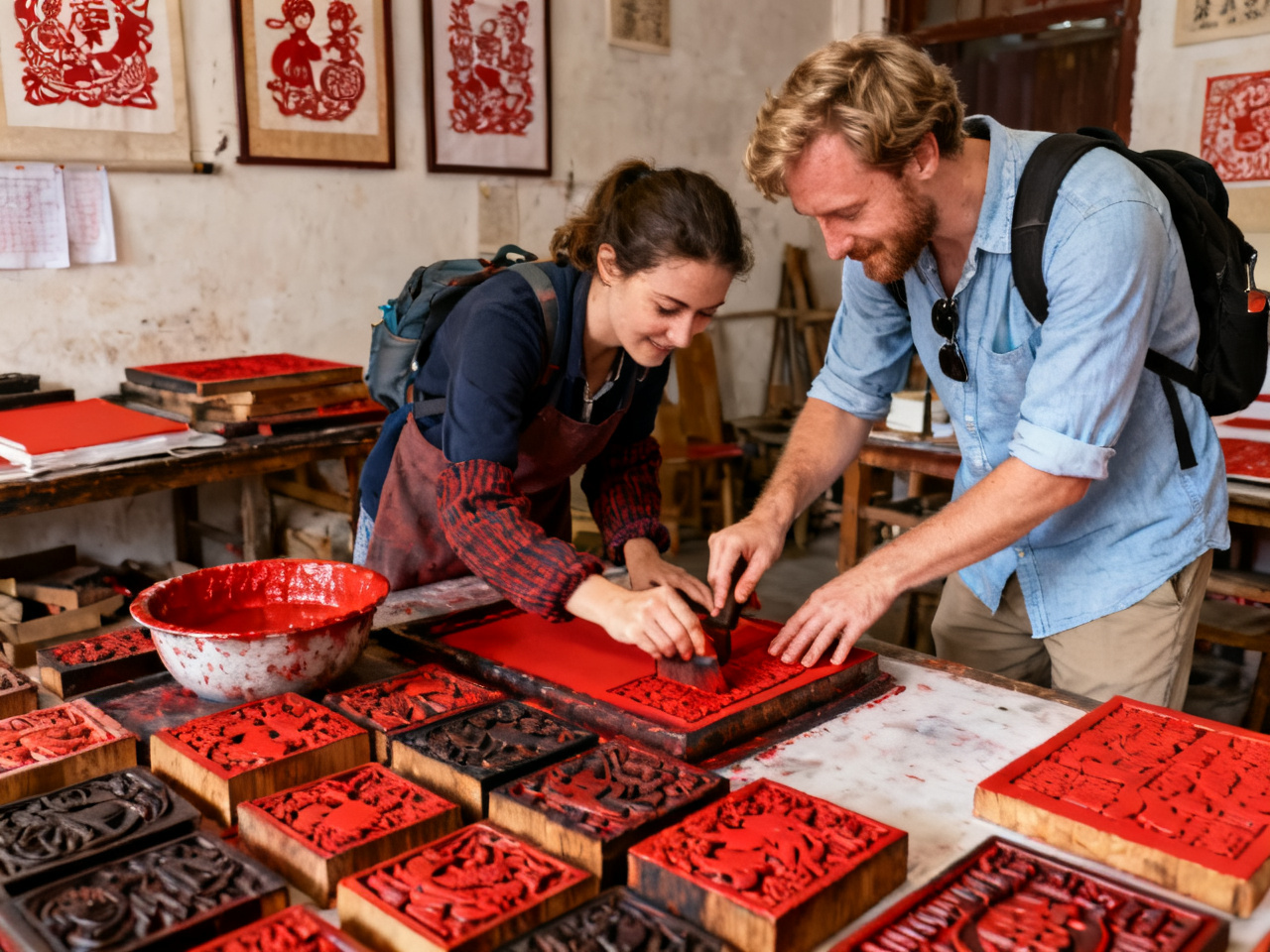
我尝试的是一张相对简化的小幅年画,不算复杂,但足够让我明白“套印”为什么会让人紧张。第一步看起来很简单:把颜料刷匀,把纸盖上,用工具压实,再小心揭起来。可真正做的时候,你会发现每一步都有风险。颜料太多会糊,太少会虚;纸偏一点,位置就会歪;手一急,边角就容易压得不均匀。尤其是第二种颜色压上去时,我几乎能感觉到自己在屏住呼吸,因为我知道图案能不能站住,往往就看这一下对得准不准。
I tried a relatively simple small print, not very complicated, but enough to show me why multi-block printing makes people tense. The first step looks easy: brush on the pigment evenly, place the paper, press it firmly with a tool, and then lift it carefully. But when you actually do it, every step carries risk. Too much pigment and the image blurs; too little and it turns weak. If the paper shifts even slightly, the alignment slips. If you hurry, the corners do not receive even pressure. When I added the second color, I could almost feel myself holding my breath, because whether the image would really stand up often depended on whether that one layer landed in the right place.
揭纸的瞬间特别有戏剧性。木版年画和很多手作体验一样,都有“最后一秒见真章”的魅力。纸离开木板时,图像不是慢慢出来的,而是一下子完整出现:线条、色块、人物、吉祥意味,全部同时站到你眼前。那一刻我突然理解,为什么这种图像会在春节前后对家庭空间产生那么强的存在感。它本来就不是含蓄的,它要的就是一进门就让人感到热闹、稳定、吉利。
The moment of lifting the paper felt theatrical. Like many hands-on crafts, woodblock New Year prints have the charm of revealing their truth in the final second. When the paper leaves the block, the image does not emerge gradually. It appears all at once: lines, color areas, figures, and auspicious meaning arriving together before your eyes. In that instant, I understood why these prints can have such a strong presence in domestic space around the Spring Festival. They are not meant to be subtle. Their purpose is to make a room feel lively, stable, and fortunate the moment you enter.
也正是在这个时候,我想起了德国的一些木刻版画和节庆图像传统。德国当然也有很深的木刻历史,从宗教图像到书籍插图,再到更强调艺术家个人风格的版画表达,木版媒介在那里同样重要。但我在中国木版年画体验里感受到的重点不太一样。德国木刻常常更强调线条表现力、叙事张力或宗教与历史意味,而中国年画则更明确地服务于生活中的节日时刻:它要被张贴、被看见、被祝福性地使用。也就是说,它不仅是“图像”,更是家庭和时间秩序的一部分。
That was also when I thought of German woodcut traditions and festive printed imagery. Germany, of course, has a deep history of woodcut, from religious images to book illustration and later printmaking that foregrounded individual artistic expression. The medium matters there too. But what I felt in the Chinese New Year print experience emphasized something different. German woodcuts often place more weight on line, dramatic narrative, or religious and historical resonance, while Chinese New Year prints are more explicitly tied to festive use in everyday life. They are meant to be posted, seen, and used as vehicles of blessing. In other words, they are not only images. They are part of domestic order and seasonal time.
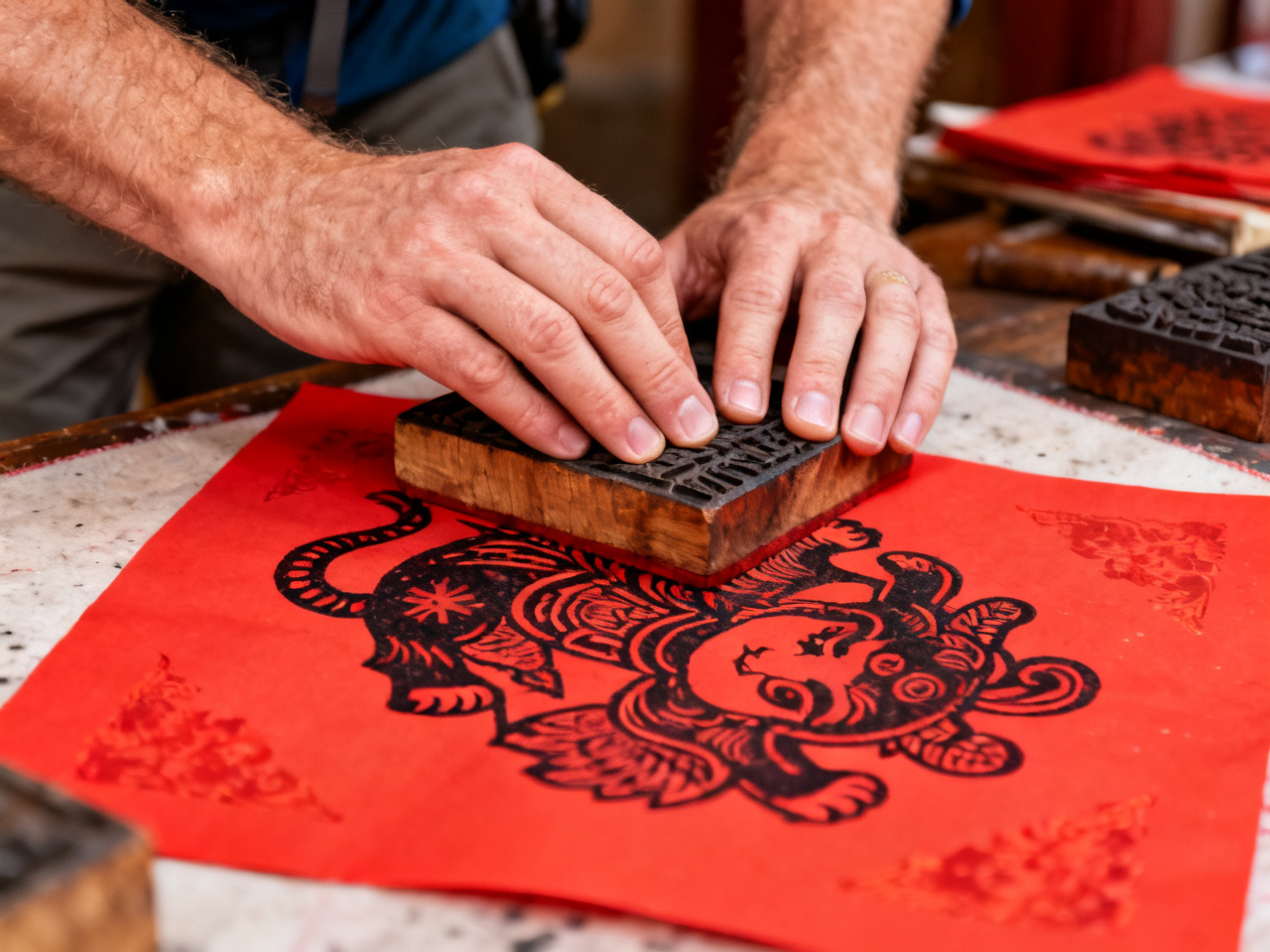
老师后来还给我们讲了一些常见题材,比如门神、娃娃、鱼、元宝、戏曲人物,以及这些图像为什么会不断重复出现。她讲得很朴素,没有把它包装成高深的艺术理论,只是告诉我们:这些图案能流传下来,是因为人们真的需要它们。需要它们来迎接新年,需要它们来表达愿望,也需要它们来让家里看起来像“过年了”。我很喜欢这种解释,因为它让民艺重新回到生活本身,而不是只留在博物馆式的欣赏距离里。
Later, the instructor explained common subjects such as door gods, chubby children, fish, ingots, and opera figures, and why these images recur so often. She explained them plainly and did not package them as lofty theory. She simply told us that these designs survive because people genuinely need them: to welcome a new year, to express wishes, and to make a home visibly feel like New Year has arrived. I liked that explanation very much, because it returned folk art to life itself instead of leaving it at a museum distance.
对我这样的外国体验者来说,木版年画还有一个特别大的吸引力:它能非常直接地帮助我理解中国春节为什么不仅是时间上的新年,也是视觉上的新年。很多文化都会在节日期间装饰家庭,但中国年画的独特之处在于,它把祝愿变成可以复制、可以传播、可以贴在门上和墙上的图像语言。你不需要先读很多书,光是站在作坊里刷一次颜色、压一次纸,就会明白这种图像为什么能够在民间活这么久。
For a foreign participant like me, woodblock New Year prints have another powerful attraction: they help me understand very directly why the Chinese Spring Festival is not only a new year in time, but also a new year in visual terms. Many cultures decorate their homes during festivals, but Chinese New Year prints are distinctive because they turn blessing into an image language that can be reproduced, circulated, and posted on doors and walls. You do not need to read a stack of books first. Just by brushing color once and pressing paper once in the workshop, you begin to understand why this imagery has lived so long among ordinary people.
如果今天有人问我,在中国民艺体验里哪一种最能把“节俗”说得明白,我会很愿意推荐木版年画。它既好理解,又不肤浅;既有工艺门槛,又保留了民间图像特有的直接和热闹。更重要的是,当我把自己印好的那张小年画拿在手里时,我会很清楚地感觉到:我带走的不是一张装饰纸,而是一种关于家庭、愿望和新年秩序的视觉观念。这种理解,比单纯看展板要深得多。
If someone asked me today which Chinese folk-art experience explains festival custom most clearly, I would gladly recommend woodblock New Year prints. They are easy to approach without being shallow; they involve real technical discipline while preserving the directness and liveliness of popular imagery. Most importantly, when I held my own finished print in my hands, I could clearly feel that I was not carrying away a decorative sheet of paper. I was carrying a visual idea about home, wish, and the order of the New Year. That kind of understanding goes far deeper than simply reading labels on a display.

- 在景德镇看一只碗如何被做出来 | Watching a Bowl Take Shape in Jingdezhen
- 我在重庆磁器口边走边吃陈麻花:现金和扫码怎么备份 | Walking and Snacking in Ciqikou, Chongqing: Payment Backup Plan
- 暑期亲子游最佳目的地 | Best Family Travel Destinations for Summer
- 手机支付失败后,我给自己准备了三套备用方案 | After Mobile Payment Failed, I Prepared Three Backup Plans
- 苏州夜里最珍贵的经验,常常不是多走一座桥,而是在最好看的地方及时收住 | The Most Valuable Lesson in Suzhou at Night Is Often Not One More Bridge but Knowing When to Stop at the Beautiful Moment
- 一块豆腐的两千年旅程 | A Block of Tofu's Two-Thousand-Year Journey
- 在中国用手机支付:支付宝和微信支付外国人能用吗? | Mobile Payments in China: Can Foreigners Use Alipay and WeChat Pay?
- 中式婚礼服饰 | Chinese Wedding Attire
- 五月在宁波老外滩遇到雨,我一个人看着江面发亮,忽然觉得赶路也值得被原谅 | Rain at Ningbo's Old Bund in May Made Me Feel Even a Hurried Life Deserved Forgiveness
- 广州雨后那条骑楼街,让我重新理解城市散步 | A Rain-Washed Arcade Street in Guangzhou Changed How I Understand City Walks
Comments (0)