
第一次在中国药店买感冒药,我学会先说症状再看品牌 | The First Time I Bought Cold Medicine in a Chinese Pharmacy, I Learned to Describe Symptoms Before Looking at Brands
第一次在中国药店买感冒药,我学会先说症状再看品牌 | The First Time I Bought Cold Medicine in a Chinese Pharmacy, I Learned to Describe Symptoms Before Looking at Brands
那天晚上下过雨,我从地铁口走出来时,鞋底还会带起一点潮湿的灰。街边的便利店很亮,水果店正在收摊,而小区门口那家药店的白灯在玻璃门后面显得格外冷静。我那天鼻子堵得厉害,喉咙也有点发紧,脑子里想得却还是自己以前的习惯:进药店,先找熟悉的包装,看到“感冒药”三个字就差不多可以结账走人。作为一个在中国生活的外国人,我以为这件事很简单,甚至带着一点“我已经会了”的自信走进那扇门。可就是在那家雨后夜晚安静得几乎能听见空调声的社区药店里,我第一次真正明白,在中国买感冒药,最重要的不是认牌子,而是先把自己哪里不舒服说清楚。
It had rained that evening, and when I came out of the subway station, the soles of my shoes still lifted a little damp dust from the ground. The convenience store on the corner was bright, the fruit shop was closing, and the pharmacy by the residential gate looked especially calm behind its cool white lights and glass door. My nose was badly stuffed up and my throat felt tight, but my mind still followed the habit I had learned elsewhere: walk into a pharmacy, look for familiar packaging, find something labeled “cold medicine,” and leave. As a foreigner living in China, I assumed this would be simple. I even entered with the quiet confidence of someone who thought, I already know how this works. But inside that small neighborhood pharmacy, still and quiet after the rain, I understood for the first time that buying cold medicine in China is not really about recognizing a brand first. It is about explaining clearly what exactly feels wrong.
药店不大,门口是一排促销的口罩和维生素,往里走是整整齐齐的药架,标签分得很细:退烧、止咳、咽喉、鼻炎、肠胃、外用。柜台后面的店员抬头看了我一眼,没有催,也没有立刻推荐什么,只是等我开口。我先是站在感冒药那一排前面看盒子,试图从颜色和熟悉感里找到答案。问题是,越看越乱。很多盒子上都有我认识的一两个词,但我并不能靠包装判断它们到底更偏向退烧、止咳、化痰,还是缓解鼻塞。我当时的想法其实很典型:感冒不就是感冒吗,买一盒“综合型”的应该就行。可真正站在那些药盒前,我突然发现自己所谓的“会买药”,很多时候只是建立在我熟悉原有市场和品牌的前提上。
The pharmacy was not large. Near the entrance stood a row of promotional masks and vitamins, and farther inside were neat shelves divided with surprising precision: fever relief, cough medicine, throat remedies, rhinitis, stomach problems, external use. The clerk behind the counter looked up at me without rushing or immediately recommending anything. She simply waited for me to speak. I first stood in front of the cold-medicine section and stared at the boxes, trying to find an answer through color and familiarity. The problem was that the longer I looked, the less certain I felt. Many boxes carried one or two words I recognized, but I could not tell from the packaging alone whether they were mainly for fever, cough suppression, phlegm, or nasal congestion. My assumption at that moment was very typical: a cold is just a cold, so some broad all-purpose medicine should be enough. But standing there in front of those shelves, I suddenly realized that my idea of “knowing how to buy medicine” depended heavily on already knowing a specific market and its brands.
我拿起一盒止咳药,正准备走向柜台,店员先问我:“是咳嗽多,还是鼻塞?喉咙痛不痛?发烧了吗?”她问得很快,但一点也不敷衍,像是在把我从“随便拿一盒”的思路里拉出来。我愣了一下,因为我原本根本没打算把症状拆开说。在我以前的习惯里,很多时候是我自己选好药,店员最多问一句要不要别的;可在这里,柜台前最先发生的不是品牌确认,而是症状确认。我赶紧用自己不算流利但足够用的中文回答:没有明显发烧,主要是鼻塞、流一点鼻涕,晚上喉咙干,偶尔咳两声。她听完以后立刻把我手里那盒放回去,说那种更偏止咳,如果我现在最难受的是鼻塞和上呼吸道的不适,应该看另一类。
I picked up a box of cough medicine and was about to walk toward the counter when the clerk asked first, “Is it mostly coughing, or nasal congestion? Does your throat hurt? Do you have a fever?” She asked quickly, but not carelessly. It felt as if she was pulling me out of the lazy logic of just grabbing something. I hesitated, because I had not planned to break my symptoms down at all. In my old habit, I often chose the medicine myself and the clerk might ask only whether I wanted anything else. Here, though, the first thing happening at the counter was not brand confirmation. It was symptom clarification. I answered in Chinese that was not elegant but good enough: no obvious fever, mainly a blocked nose, a little runny nose, a dry throat at night, and only occasional coughing. After hearing that, she immediately put the box back and explained that it leaned more toward cough relief, while what I was describing sounded closer to nasal congestion and upper-respiratory discomfort.
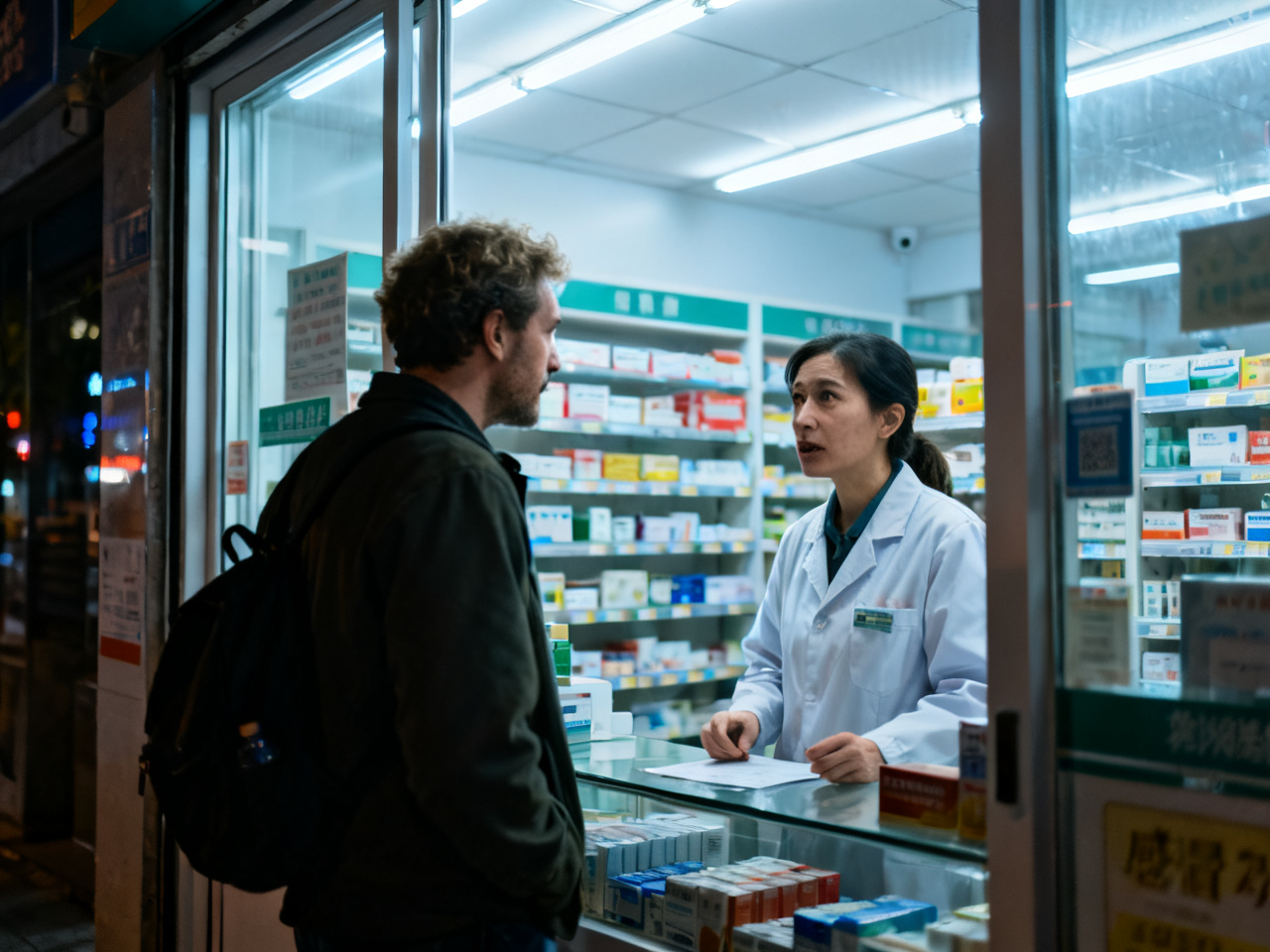
她接着给我看了另外两种药,还顺手指着盒子上的功能说明,一边说一边确认:“白天要不要吃了不困的?晚上鼻塞严重吗?有没有其他在吃的药?”那一刻我才意识到,药店里的对话其实也是一种很细的生活翻译。对一个外国人来说,真正的难点不是“感冒”这个词不会说,而是你能不能把自己的不舒服说得足够具体。鼻塞和咳嗽虽然都可能来自同一场感冒,但应对方式未必一样;喉咙干和喉咙痛,店员听到后想到的方向也可能不同。她没有把这件事做成一种高高在上的专业审问,反而像是在帮我整理身体发出的混乱信号。也正因为这样,我第一次感到,在中国药店里买药,语言不是一道简单的翻译题,而是一种把模糊感受变清楚的能力。
Then she showed me two other medicines and pointed to the functional descriptions on the boxes while continuing to confirm details: “Do you need something that won’t make you sleepy in the daytime? Is the nasal blockage especially bad at night? Are you taking any other medicine?” That was the moment I realized pharmacy conversation is also a very fine-grained form of everyday translation. For a foreigner, the real difficulty is not whether you know the Chinese word for “cold.” It is whether you can describe your discomfort specifically enough. Nasal congestion and coughing may come from the same cold, but they do not automatically call for the same solution. A dry throat and a painful throat can also lead a clerk in different directions. She did not turn the interaction into some superior medical interrogation. Instead, she seemed to be helping me organize the mixed signals my body was sending. Because of that, I felt for the first time that buying medicine in a Chinese pharmacy is not a simple vocabulary exercise. It is the ability to turn vague discomfort into something clearer.
后来回想,那一晚真正让我印象最深的,并不是我最后买了哪一盒药,而是我差点买错那一盒止咳药的那几秒钟。如果店员没有追问,我很可能会按照“包装差不多、用途大概也差不多”的思路把药带回家。可是中国药店的实际经验告诉我,很多常见问题在柜台前都会被拆得更细一点:你到底是鼻子的问题多,还是喉咙的问题多;你是白天要保持清醒,还是晚上想睡得舒服一点;你有没有发烧,咳的是干咳还是有痰。这些问题看起来琐碎,却比品牌更接近真正有用的信息。以前我总觉得,买药时看品牌是一种效率;那天之后我才明白,先讲症状其实才是更可靠的效率。
Looking back, what stayed with me most from that evening was not the exact box I bought, but the few seconds in which I almost bought the wrong cough medicine. If the clerk had not asked follow-up questions, I probably would have taken it home under the logic that the packaging looked close enough and the purpose was probably close enough too. But the real experience of a Chinese pharmacy taught me that common discomforts are often sorted more carefully at the counter: is your problem more about the nose or the throat; do you need to stay alert in the daytime or sleep more comfortably at night; do you have a fever; is the cough dry or productive. These questions seem small, but they are much closer to useful information than brand recognition alone. I used to think looking at brands was efficient. After that night, I understood that describing symptoms first is actually the more reliable form of efficiency.
而且这种“先说症状”的方式,也让我慢慢学会了在中国生活里另一种很实际的表达习惯。很多时候,中文交流并不要求你一开始就说得特别完整、特别标准,但你要把关键点说出来。比如“鼻塞比较严重,晚上更明显”“喉咙有点干,不太痛”“没有发烧,但是头有点沉”,这些句子不需要多高级,却非常有用。它们不只是帮你买药,也帮对方判断怎么回应你。对于刚到中国不久的人来说,我们常常会因为怕说错而尽量少说,最后把自己困在一个很笼统的词里:感冒、难受、不舒服。可日常生活真正顺起来,往往靠的就是把笼统拆开,把模糊说细。
That symptom-first approach also gradually taught me another very practical habit of expression in China. In many everyday interactions, Chinese does not require you to sound perfectly polished from the beginning, but it does help enormously if you can state the key points clearly. “The congestion is pretty bad, especially at night.” “My throat feels dry, but not really painful.” “No fever, but my head feels heavy.” None of these sentences are advanced, yet they are extremely useful. They do not only help you buy medicine; they help the other person decide how to respond. For people who have not been in China very long, there is often a tendency to speak less because we are afraid of speaking incorrectly. The result is that we trap ourselves inside broad words like cold, unwell, uncomfortable. But everyday life usually becomes smoother precisely when you break the broadness apart and make the vagueness more specific.
我还注意到,中国药店里那种明亮、规整、略带功能性的气氛,会让人误以为一切都只是标准流程:拿药、扫码、付款、走人。可真正让这个流程顺起来的,恰恰是那几句口头确认。那位店员最后把药递给我时,还提醒我如果两三天没有缓解,或者开始发烧,就别自己一直扛着,及时去医院看看。那句话很普通,却让我觉得这个空间并不只是卖药的货架,它也是一个城市日常照顾系统的小节点。你走进去,也许只是因为鼻塞、头沉、想快点回家睡觉,但柜台前那几句问答,往往会把你从“随便买点什么”拉回到“先判断自己到底怎么了”。
I also noticed that the bright, orderly, slightly functional atmosphere of a Chinese pharmacy can easily make you assume that everything is just a standardized procedure: pick medicine, scan, pay, leave. Yet what really makes the process work is those few spoken checks in the middle. When the clerk finally handed me the medicine, she also reminded me that if it did not improve in two or three days, or if I started developing a fever, I should not just keep enduring it on my own and should go to a hospital. The sentence was ordinary, but it made me feel that the place was not merely a retail shelf for medicine. It was also a small node in an urban system of everyday care. You may walk in because your nose is blocked, your head feels heavy, and you want to go home and sleep, but the short exchange at the counter often pulls you back from “I’ll just buy something” to “let me first figure out what is actually wrong.”
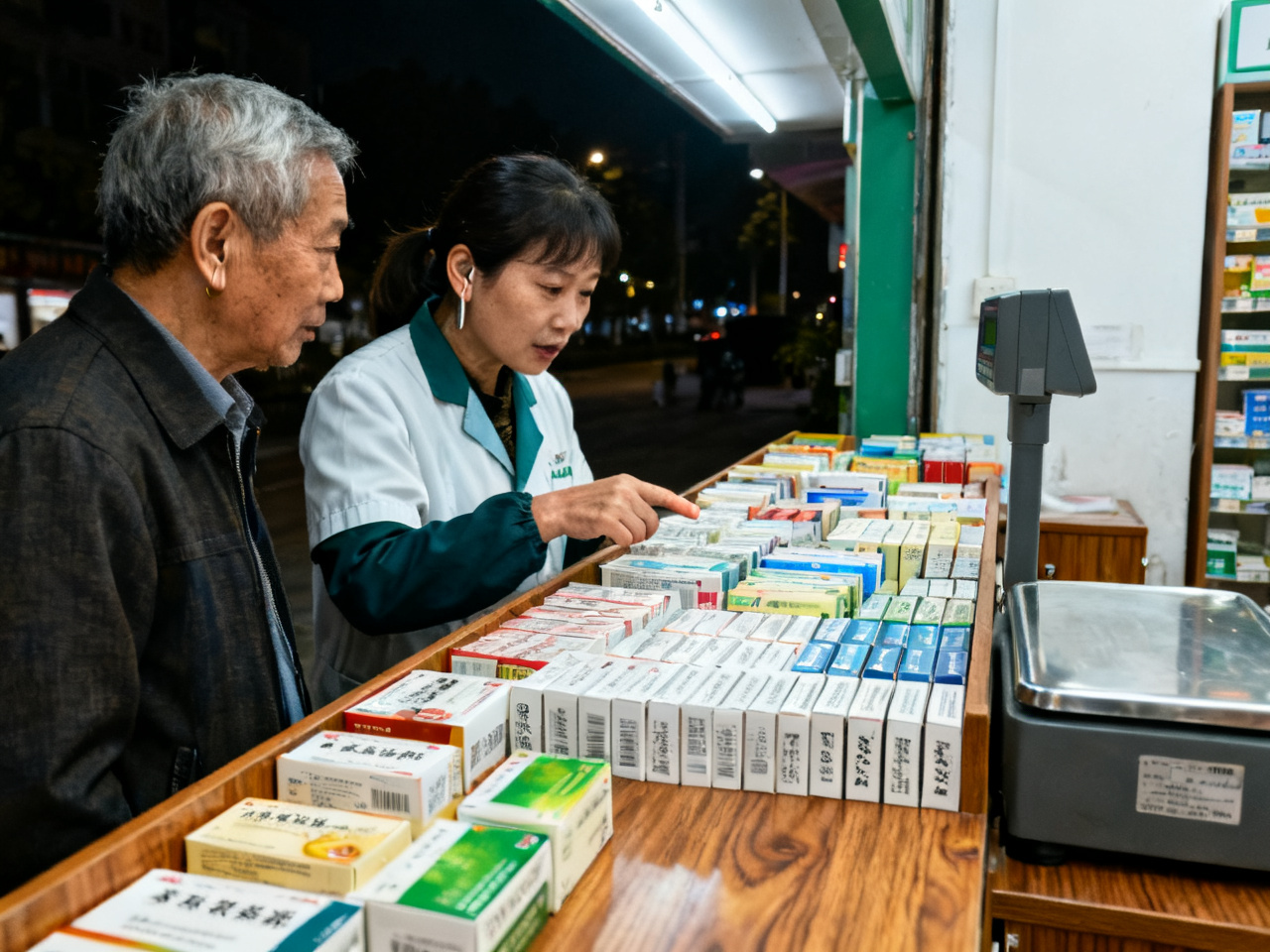
现在如果有别的外国朋友问我,在中国药店买感冒药最容易犯的错误是什么,我会说,不是不会读药盒,也不是不知道哪个牌子更有名,而是太快把“感冒”当成一个不用继续展开的词。中国药店教会我的,是先别急着认包装。先说自己哪儿不舒服,什么时候更明显,有没有发烧,是鼻塞还是喉咙痛,是咳嗽还是只是嗓子干。只要这些信息说出来,后面的选择往往反而更简单。让我真正记住的,不是哪盒药的名字,而是那晚柜台前那种被追问后反而更安心的感觉:原来把不舒服讲清楚,本身就是在照顾自己。对于一个在中国慢慢长出生活经验的外国人来说,那比记住任何一个品牌都更重要。
Now, if another foreign friend asks me what mistake is easiest to make when buying cold medicine in China, I would say it is not failing to read the box and not failing to know the famous brands. It is treating “a cold” too quickly as a word that requires no further explanation. What Chinese pharmacies taught me is: do not rush to recognize packaging first. First explain where you feel bad, when it feels worse, whether you have a fever, whether the problem is congestion or throat pain, whether you are coughing or your throat is simply dry. Once those details are spoken aloud, the later choices often become much easier. What I truly remember is not the name of a box of medicine, but the feeling of becoming more reassured precisely because the clerk asked follow-up questions. It taught me that describing discomfort clearly is itself a form of self-care. For a foreigner slowly building real life experience in China, that matters more than memorizing any single brand.

- 我在中国学会先看队伍,再决定吃什么 | In China I Learned to Read the Queue Before Choosing What to Eat
- 孔氏南宗家庙门口的豆腐脑,让我重新认识衢州的早晨 | A Bowl of Tofu Pudding Outside the Southern Confucius Temple Changed How I Saw Quzhou Mornings
- 成都出发的周末逃离:三条路线,三种节奏 | Weekend Escapes from Chengdu: Three Routes, Three Rhythms
- 我坐绿皮火车从昆明晃到北京 | I Took a Slow Train from Kunming All the Way to Beijing
- 十个值得你慢下来的中国古镇 | Ten Chinese Ancient Towns Worth Slowing Down For
- 凌晨一点我还敢一个人走回酒店:在中国把安全感走成了日常经验 | At 1 a.m. I Still Walked Back to My Hotel Alone: How Safety in China Became Ordinary to Me
- 陪爸妈在湖州的五月细雨里找饭馆,我才知道一家人最稳定的路线其实是“先坐下” | Looking for a Restaurant with My Parents in Huzhou Rain, I Learned the Steadiest Family Plan Begins with Sitting Down
- 中国书法艺术 | The Art of Chinese Calligraphy
- 一块豆腐的两千年旅程 | A Block of Tofu's Two-Thousand-Year Journey
- 灯彩作坊里的一小时:我第一次发现光也可以被“做出来” | In a Lantern Workshop: The First Time I Realized Light Can Be Crafted by Hand
Comments (0)